
In short
How Benjamin Netanyahu has repeatedly secured U.S. concessions, and what that means for his tense Monday meeting with Donald Trump amid a proposed Gaza plan and UN backlash.
Guests
Lise Doucette, BBC chief international correspondent (speaks from New York; recently met foreign leaders and officials at/around the UN).
Key claims
Netanyahu’s “American” education and communication style help him work U.S. presidents across parties; he has consistently opposed a Palestinian state and the Oslo process; he extracts support through flattery and “playing to” what Trump wants to hear; even when Trump and Netanyahu clash, Netanyahu can still secure major policy shifts.
Notable examples
Netanyahu’s opposition to Oslo after Yitzhak Rabin’s 1995 assassination; Clinton-era friction over peace efforts; Obama-era tension over the 2015 Iran nuclear deal plus a reported $38 billion military aid package; Trump moves including embassy relocation to Jerusalem (2017), recognition of Israeli sovereignty over the Golan Heights, easing settlement policy, and the Abraham Accords; recent friction over Israel strikes in/near Qatar and Trump criticism of West Bank settlement expansion; Netanyahu’s reported Gaza-war messaging that he “said no” to Americans while still praising U.S. support.
Written by AI. May contain mistakes. Listen to the episode to check what was said.
Chapters
Tap a time to open that second in VONetanyahu's Ties to the US
3:05 to 5:42
Discussing Netanyahu's historical relationship with the US and its implications.
“From the BBC, I'm Tristan Redman and this is The Global Story.”
The Impact of Yitzhak Rabin's Assassination
5:42 to 9:39
Analyzing the aftermath of Rabin's assassination and its effect on Netanyahu's career.
“because it feels like he's managed to work things out over the years to his advantage so often.”
Netanyahu's Elections and Relationship with Clinton
9:39 to 13:15
Examining the 1996 elections and Netanyahu's relationship with President Clinton.
“being very critical of the Palestinian leader.”
Netanyahu's Stance Against Palestinian Statehood
13:15 to 14:00
Understanding Netanyahu's consistent opposition to Palestinian statehood and its repercussions.
“He really did push for some kind of an agreement with the Palestinians.”
Clinton's Diplomatic Efforts
14:04 to 15:01
Exploring President Clinton's attempts to negotiate with Netanyahu during the 1990s.
“for pressuring Prime Minister Netanyahu to do a deal.”
Netanyahu's Consistency
15:01 to 15:42
Analysis of Netanyahu's unwavering stance against a Palestinian state throughout his career.
“even though, of course, he was at pains to emphasize just how important this relationship was with, of course, the American government providing the arms, providing the finance to equip Israel to keep itself safe.”
Netanyahu and Obama
15:42 to 16:47
Examining the relationship and tensions between Netanyahu and President Obama.
“office but in 2009 he comes back into office and he finds himself opposite Barack Obama.”
Opposition to the Iran Deal
16:47 to 18:27
Discussion on Netanyahu's opposition to the Iran nuclear deal and its implications.
“It was kind of one step forward, two steps back.”
Trump's Support for Israel
18:27 to 21:16
Overview of how President Trump's policies favored Netanyahu and Israel.
“Obama gives way to Donald Trump and Donald Trump has been described by Netanyahu as, quote, the greatest friend Israel has ever had in the White House.”
The Abraham Accords
21:16 to 22:01
Insights into the Abraham Accords and their significance for Israel and the region.
“After decades of division and conflict, we mark the dawn of a new Middle East.”
Show all 12 chapters
Frictions in Trump's Second Term
22:01 to 24:12
Analyzing recent tensions between Trump and Netanyahu in the current political landscape.
“About two weeks ago or so, Israel launched missiles into Qatar.”
Netanyahu's Diplomatic Tactics
24:12 to 26:53
Discussion on Netanyahu's ability to navigate relationships with U.S. presidents.
“And Prime Minister Netanyahu has shown that he has a way of playing to President Trump, of flattering him.”
Transcript
Automatic transcript. May contain errors.0:00This BBC podcast is supported by ads outside the UK.
0:30No bouncing between tabs. And best of all, no spreadsheets. Stop managing software and start managing your business with one unified system. Try for free today at odoo.com. That's O-D-O-O dot com. Self-directed investing. Trading. Full-service wealth management. Automated investing. Financial planning. Thematic investing. Retirement planning. Phew. And to think, that's just a small taste of what Schwab offers. Because Schwab knows that when it comes to your finances, choice matters. No matter your goals, investing style, life stage or experience, Schwab has everything you need, all in one place, so you can invest your way.
1:11Visit schwab.com to learn more.
1:19It was one of those split-screen moments.
1:27At almost exactly the same time that Donald Trump was telling the press that he may have a deal in Gaza on Friday, Benjamin Netanyahu was saying the complete opposite at the UN in New York. We're not done yet. The final remnants of Hamas are holed up in Gaza City. They vow to repeat the atrocities of October 7th. That is why Israel must finish the job. Over the weekend, the details of President Trump's proposed Gaza deal began to emerge. A 21-point peace plan to end Israel's war on Gaza. That's what US President Donald Trump has proposed to Arab and Muslim leaders. Trump's plan calls for the release of the remaining hostages in Gaza and a phased withdrawal of Israeli troops from the Strip.
2:15But it also contained an unexpected clause recognizing statehood as an aspiration for Palestinians. This is sheer madness. And Netanyahu wasn't on the same page with that either. Giving the Palestinians a state one mile from Jerusalem after October 7th is like giving al-Qaeda a state one mile from New York City after September 11th. Netanyahu and Trump meet on Monday in Washington for talks that could define the future of the conflict. There is this cry, a growing cry saying it is time to end the war. And it is a measure of our times that it seems to come down to this meeting in the White House between two leaders, President Trump and Prime Minister Netanyahu.
3:00That may sound simplistic, but sadly that is what it's coming down to. From the BBC, I'm Tristan Redman and this is The Global Story. Benjamin Netanyahu has a proven history of getting exactly what he wants from U.S. presidents, including Donald J. Trump. Today on the show, how has Netanyahu learned to extract so many concessions from the White House over the decades? And will today be any different?
3:40I'm sitting in this quiet studio in London and I can hear the kind of maelstrom of New York where you are, Lise, all the sirens and protests and everything. It sounds like you're in a different universe from me. I've got the BBC's chief international correspondent, Lise Doucette, on the line. When I spoke to her, she was outside the United Nations, having met with foreign leaders and top officials. Lise, President Trump and Benjamin Netanyahu are meeting on Monday in Washington. It's a very tense moment for Israel on the world stage. We saw on Friday there were diplomats walking out of the UN chamber when Netanyahu addressed the UN General Assembly.
4:16Israel needs America. America is Israel's greatest friend, its biggest military backer. What are the stakes for this Monday meeting in Washington? Well, of the many messages in Prime Minister Netanyahu's speech at the world's top table was just how strong his relationship with President Trump is. And when he praised him, there was applause from the U.S. delegation sitting in that hall where, as you mentioned, so many diplomats walked out in protest. He made it absolutely clear that he was going to stand up in the face of this growing momentum by countries who have been recognizing a Palestinian state.
4:59Because the only relationship which matters for Prime Minister Netanyahu, the only relationship which really makes a difference to him, is this meeting in the White House face to face with President Trump. A political, personal, financial and military relationship that is still rock solid. Yes. So on Monday, we're really going to see laid out before us the state of the U.S. relationship with Israel. But before we go into the specifics of Trump and Netanyahu right now, we want to take a bit of a step back and just to understand how Netanyahu has navigated his relationship with America over the decades.
5:42because it feels like he's managed to work things out over the years to his advantage so often. How far back do his ties with the United States go, Liz? Yes, I took note recently and I was surprised when Prime Minister Netanyahu gave one of his rare press conferences for international media. A correspondent remarked on how good Prime Minister Netanyahu's English was And I thought, that's a strange comment because he's very much, in some ways, the most American Israeli leader. He was educated in the United States in the early years. He then did a degree at MIT. He worked at the Israeli embassy in the United States where he was credited with shaping the Israeli embassy's communication strategy.
6:35That was the very beginning of what we have seen to be Prime Minister Netanyahu, his use of visual aids and cartoons, the way he speaks in his perfectly Philadelphia accent. That kind of he speaks the language of the United States. But more than that, he understands the language of the United States and his relationship with the United States, which is solid to this day. Well, when he comes back to Israel and soon finds himself in high political office, isn't that around the time when you first became aware of him? What impression did he make on you? So I was in, I first moved to the Middle East, to Jerusalem in 1994, where the beginning of the implementation of the Oslo Accords began.
7:26ever since Harry Truman first recognized Israel every American president Democrat and Republican has worked for peace between Israel and her neighbors now the efforts of all who have labored before us bring us to this moment it wasn't a perfect agreement it was a temporary agreement it was meant to deal with the toughest questions of peacemaking but it was truly a breakthrough. A moment when we dare to pledge what for so long seemed difficult even to imagine, that the security of the Israeli people will be reconciled with the hopes of the Palestinian people and there will be more security and more hope for all.
8:12But I think we have to fast forward then to 1995 and that day, that shocking day in a square in Tel Aviv. Within the last hour, a Jewish gunman shot the Israeli Prime Minister Yitzhak Rabin at the end of a big peace rally in Tel Aviv. Truly shocking news from the Middle East. Tonight, Israel's Prime Minister Yitzhak Rabin has been assassinated. Evening spent dreaming of peace turns into a national nightmare. Where Prime Minister Yitzhak Rabin, the peacemaker, was assassinated by a hardline Israeli Jew who didn't like his peacemaking. A previously unknown extremist group called the Jewish Avenging Organization has said it carried out the attack.
8:58In his speech, Mr Rabin had said Israel must give peace with the Palestinians a chance. And about that time, that was when I first became conscious of Netanyahu. He had been making inflammatory speeches about the Oslo Peace Accords, about Prime Minister Rabin. Can you explain why that was, Lise? Why was he so against it and consequently so opposed to Yitzhak Rabin? He has always been consistent in his politics, refusing to accept the need for a Palestinian state, believing that the Oslo Accords would not be good for Israeli security, being very critical of the Palestinian leader. And I remember the protests after the assassination of Yitzhak Rabin and the accusing figures being pointed at Benjamin Netanyahu, saying that your kind of inflammatory rhetoric has created this atmosphere which allowed a right-wing Israeli Jew to take the life of the Israeli leader.
10:03And to this day, many say that shot not just killed Prime Minister Rabin, it also killed the best chances of peacemaking in Israel. And so that's when Benjamin Netanyahu found himself on the back footage of defending that he had not actually done anything to contribute to this terrible day, this dark day in Israeli history. Then came the 1996 election, where Shimon Peres had stepped into the shoes of Yitzhak Rabin. Shimon Peres, who had never won an election, was widely believed that he would win. He would be able to capitalize on that sympathy after the death of Yitzhak Rabin. But there was also a spate of terrible suicide bombings.
10:51This just cemented Benjamin Netanyahu's view that the Oslo Accords were actually making Israel less safe. And I remember just how closely fought that election was. To this day, whenever I see an Israeli colleague, I still meet when I go to Israel, he recounted the story of watching the Israeli elections from home and falling asleep in his chair, watching the election results coming in. And just before he fell asleep that night, Shimon Peres had been predicted to win the election. He then wakes up in the early hours of the morning with a jolt. The television screen is still on. The results couldn't have been closer, but Mr Netanyahu, 46 years old, American-educated and highly telegenic, pipped it.
11:40And Prime Minister Netanyahu is the new leader of Israel. Benjamin Netanyahu, 50.4%. Shimon Peres got 49.5%. It was that close at the time. So it's a huge surprise when Netanyahu wins then. I mean, his election in 1996 was kind of a referendum on the peace process in some ways in Israeli society. Bill Clinton is president of the United States at that moment, and he's a man of the center left. Bill Clinton is also a man who backed the Oslo Peace Accords. Benjamin Netanyahu was deeply opposed to them. What was their relationship like, given all these differences? I have to say that just watching one after another, the presidents who have gone through the White House, whether a Democrat or Republican, all of them have had a very difficult relationship with Prime Minister Netanyahu.
12:47they felt that he was jeopardizing, putting at risk, blocking, being a main obstacle to the aspirations of one American president after another to try to secure that most elusive apprises to have on their watch, that final peace deal between Israelis and Palestinians and the emergence of a Palestinian state alongside Israel. And so on President Clinton's watch. He really did push for some kind of an agreement with the Palestinians. I vividly remember when Madeleine Albright was the U.S. Secretary of State, she was said to have in her office on her desk two look-alike figures of Yasser Arafat, the Palestinian leader, and Benjamin Netanyahu.
13:37And occasionally for visitors, she would squeeze one or the other, depending on which one she was most angry with at that day. She even described in private Prime Minister Netanyahu as an Israeli Newt Gingrich, who during the Clinton administration, he was the Speaker of the House, and he was very, very much against this peace process. And he described Madeleine Albright as the agent of the Palestinians for pressuring Prime Minister Netanyahu to do a deal. And President Clinton was said to have said privately in the White House in 1996, as he and his Secretary of State were spending hours and hours doing shuttle diplomacy to try to move that process forward.
14:21And whenever they would meet Prime Minister Netanyahu, and he said to have grumbled to his staff, who the expletive does he think he is? Who's the expletive superpower here? And this was very much the hallmark of Prime Minister Netanyahu. And with every new American administration, every new American president, he pushed the envelope even further, always sticking to his message that there would not be a Palestinian state. He's been consistent throughout his time at taking on publicly and privately the American leadership, even though, of course, he was at pains to emphasize just how important this relationship was with, of course, the American government providing the arms, providing the finance to equip Israel to keep itself safe.
15:24Well, one of the nicknames that he has, which I read about when preparing to talk to you, Lisa, was the magician, which I think is quite evocative because he does seem to have this knack for getting what he wants in spite of, you know, personal frictions with Bill Clinton, for example. Nonetheless, even magician or not, he's voted out of office in 1999 and he spends 10 years out of office but in 2009 he comes back into office and he finds himself opposite Barack Obama. Do he and Obama get along any better than he did with Clinton? Were things any better? There were many moments where Prime Minister Netanyahu and President Obama were at cross purposes.
16:16President Obama, like President Clinton before him, wanted to push forward, wanted to make progress on achieving a Palestinian state which they saw as the best way to provide security to Israelis. That two-state solution which was the bedrock of American Middle East policy. And And President Obama, like President Clinton, found himself at odds with Prime Minister Netanyahu. It was kind of one step forward, two steps back. And one of the moments of the greatest tension was where Prime Minister Netanyahu went behind the backs of the White House and accepted an invitation from the Republicans in Congress to speak against what was for President Obama one of the main achievements of his time in office, which was the 2015 landmark multilateral Iran nuclear deal.
17:19Prime Minister Netanyahu was firmly against it, vehemently against it. So he took this opportunity to go behind the backs of the White House to address Congress directly and say this is a bad deal. My friends, for over a year, we've been told that no deal is better than a bad deal. Well, this is a bad deal. It's a very bad deal. But there were other really points of friction. And President Obama was able to use the power of the United States, to use this strategic relationship between Israel and the United States, no matter who's in power. Well, he also got a$38 billion military aid package out of Barack Obama.
18:11In spite of all the tensions between them over Iran, Obama still is a strong backer of Netanyahu, which to me feels like, you know, some evidence that Netanyahu really does get a lot of what he wants from the United States. Obama gives way to Donald Trump and Donald Trump has been described by Netanyahu as, quote, the greatest friend Israel has ever had in the White House. What's happened during Trump's first and second administrations that's given him that impression? in one policy shift after another during president trump's first time in office israel prime minister netanyahu are reassured that this is an administration that is more pro-israeli as they see it let me let's be clear every administration in the united states is pro-israeli ironclad commitment.
19:10But President Trump took it one step further just to list them. Today we officially opened the United States embassy in Jerusalem. Congratulations. It's been a long time coming. He moved the U.S. embassy to Jerusalem in December of 2017, officially recognizing Jerusalem as the capital of Israel. That was a key election promises. Whereas all All presidents before had said that the status of Jerusalem is one of the most sensitive issues to be resolved in negotiations with the Palestinians. President Trump made the decision to recognize that that hard-fought real estate, that important place is proper to be a sovereign part of the state of Israel.
20:00President Trump recognized Israeli sovereignty over the Golan Heights. That is territory captured during the Six-Day War of 1967. Again, that move broke decades of U.S. foreign policy as well as the prevailing international consensus. It is a shift that could both have a major impact on America's relationship with the Arab world and potentially boost the political fortunes of Mr. Trump's close ally, Israeli Prime Minister Benjamin Netanyahu. He also reversed the U.S. policy on settlements in the occupied West Bank. Secretary of State Mike Pompeo softening the U.S. stand on Israeli settlements and changing what the Obama administration had declared in 2016.
20:46The Trump administration said it no longer viewed Israeli settlements as inconsistent with international law. And that was a reversal of previous legal rulings by the State Department. Then Secretary of State John Kerry had said the settlements were a violation of international law. But on top of it, President Trump pushed through what he still regards, he and his supporters, as his most important diplomatic achievement of his first term. After decades of division and conflict, we mark the dawn of a new Middle East. And that is the Abraham Accords, a series of normalization agreements five years ago between Israel and several Arab states, including most of all the United Arab Emirates, as well as Bahrain, Sudan and Morocco.
21:36These agreements prove that the nations of the region are breaking free from the failed approaches of the past. That is something that President Trump holds on to this day and in fact has made it clear he wants to build on in his second term. The received wisdom, Lise, is that Netanyahu has kind of obtained everything he could have hoped for from the Trump presidencies. But just in the last couple of weeks, we have seen some moments of friction between Donald Trump and Benjamin Netanyahu. About two weeks ago or so, Israel launched missiles into Qatar. Donald Trump and the United States' great ally in the last few days.
22:16Donald Trump has said that settlement expansion in the West Bank is becoming too much and has to stop. But I don't know if you've seen, in the last few days, the podcaster Tucker Carlson has said that Netanyahu is bragging to leaders around the world that he runs America and he runs Trump. BB is running around, this is a fact, I'm not guessing about this, because I talked to people he said it to, is running around the Middle East, his region and his own country and telling people, point blank, just stating it, I control the United States, I control Donald Trump. Is that your read of the situation?
22:55well let's go back to the beginning of trump 2 where the situation was was really different because how does donald trump proceed in his second presidency by completely ignoring benjamin netanyahu he embarks on direct talks with hamas without informing the israelis He makes it clear he wants to have a negotiated deal with Iran, completely the reverse, what Prime Minister Netanyahu wants to do. He announces an agreement with the Houthis of Yemen, again, completely against what Prime Minister Netanyahu wants. So President Trump, the second time round, seems to be proceeding with complete disregard for his personal friend, Benjamin Netanyahu.
23:47So, of course, the Israelis start getting worried. Were they right to be secretly hoping that Donald Trump will return to the White House? But, of course, month on month, the situation starts changing. Are there red lines for Donald Trump as far as Benjamin Netanyahu is concerned? And is Netanyahu starting to bump up against those red lines? No one is really clear what the red lines are for President Trump because he often changes his narrative. And Prime Minister Netanyahu has shown that he has a way of playing to President Trump, of flattering him. The last time he went to the White House, he suddenly announced when they were at the table that he had nominated President Trump for the Nobel Peace Prize and that many others should do the same.
24:43He plays to President Trump's love of compliments, of being flattered. Leaders the world over are doing it. But Prime Minister Netanyahu seems to have a particular knack at playing to what he knows President Trump wants to hear. But it's really been noticeable, Tristan. I remember one of the speeches to the Israeli people that Prime Minister Netanyahu has made over the past two years of the Gaza war and how he boasted, how he says, I have said no to the Americans, and how he has seen how this plays in Israel, that he has taken on the Americans. While in the same breath, he talks about how wonderful the support of the Americans has been, how close an ally, but at the same time, how he still has the will and the ability to be able to say no to the world's most important power when it serves Israel's interests.
25:40It's very finely honed, this tactic of Prime Minister Netanyahu, as how he manages to work with and against President Trump. Lise, thank you so much. Thank you.
26:02That was Lise Doucette, the BBC's chief international correspondent, speaking to us from New York. On Sunday, in an interview with Fox News, Prime Minister Netanyahu was asked about President Trump's 21-point plan to end the war in Gaza. 21-point peace plan, and if you plan to declare support for it at the White House tomorrow. Well, we're working on it, Jackie. It's not been finalized yet, but we're working with President Trump's team, actually, as we speak. and I hope we can make it a go. He gave little indication that he would make concessions he hadn't previously agreed to, and he seemed to respond directly to the rumor that he'd been bragging about controlling America and controlling Trump.
26:43I read somewhere this ridiculous, I mean, this ridiculous lie. He is the most independent leader and amazing leader that I've seen in all my years, and I think many people in the world see that. So the idea that I, in any ways that I boast that I control him, that's ridiculous. It's a lie. Trump and Netanyahu will meet in Washington today, where we'll discover whether the U.S. president really does have a deal to end the war.
27:16We've been following events in Gaza and Israel on The Global Story closely with Lise and other BBC correspondents. You can delve back into our feed for more episodes. And if you're enjoying the show, please take a second to rate us wherever you're listening. That's it for the global story for today. We'll be back tomorrow. Cheerio.
27:48What if your favorite way to unwind could actually reward you? With Mistplay, it can. Stop scrolling social media for nothing. Mistplay lets you earn points just for discovering and playing mobile games. Redeem them for gift cards from brands you love, simply for doing what you already do to relax. Download Mistplay today and make your downtime more rewarding.
From the publisher
Israel’s Prime Minister Benyamin Netanyahu visits the White House later today, as details from the Trump administration’s 21-point plan to end the war were revealed over the weekend. As Israel continues its offensive in Gaza City, Netanyahu has vowed to ‘finish the job’ against Hamas and shows little sign of making concessions to end the war. Netanyahu has a proven history of getting what he wants from US presidents – so will the same happen at Monday's meeting?
Today we speak to the BBC’s chief international correspondent Lyse Doucet who has reported on Netanyahu for three decades.
Producers: Sam Chantarasak, Xandra Ellin, Aron Keller and Cat Farnsworth. Executive producer: Annie Brown Mix: Travis Evans Senior news editor: China Collins
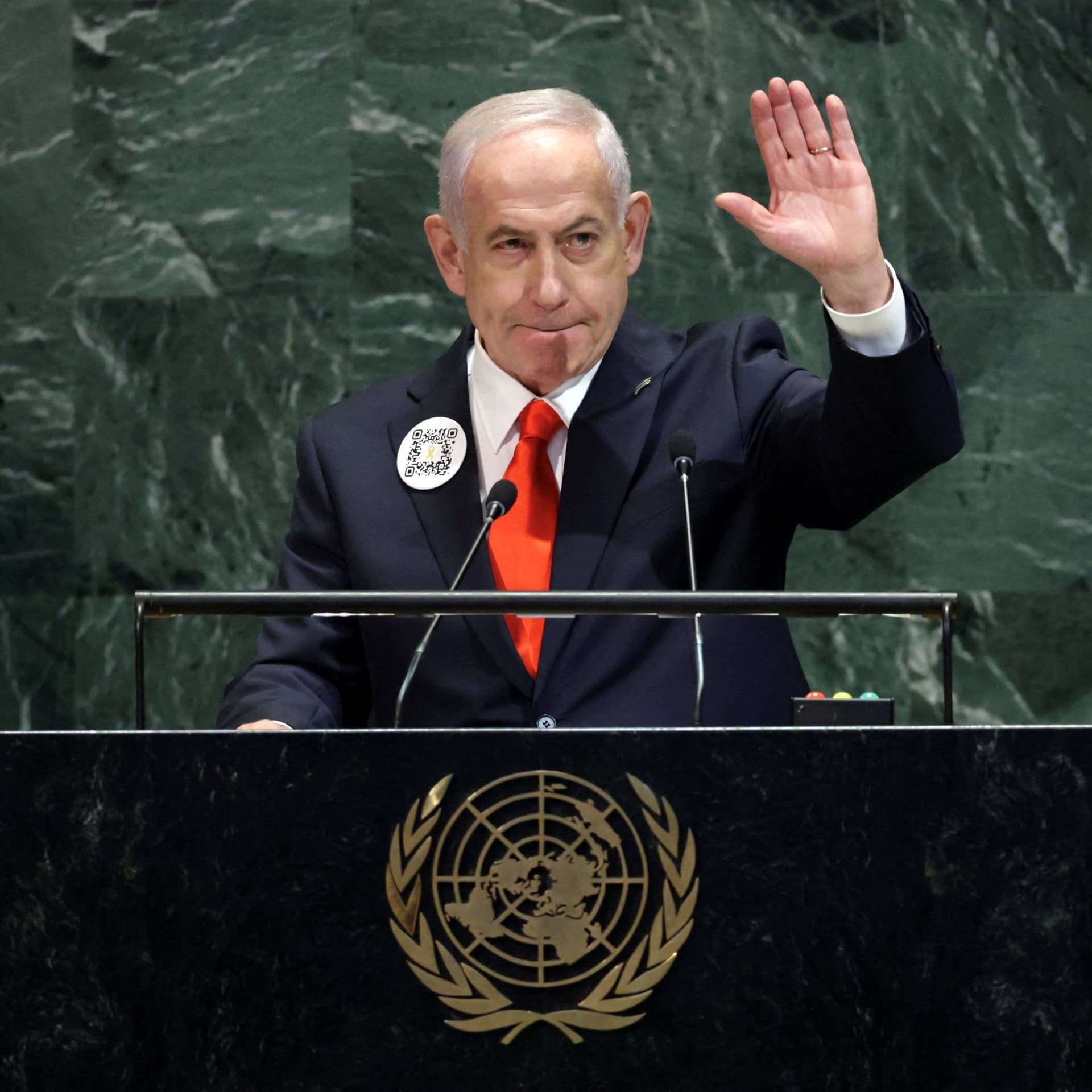
Image: Israeli Prime Minister Benjamin Netanyahu addresses the 80th United Nations General Assembly (UNGA) at U.N. headquarters in New York City, U.S., September 26, 2025. REUTERS/Jeenah Moon