In short
The episode examines why some Westerners are relocating to Russia, focusing on Russia’s “shared values visa” and the conservative, anti-“liberal” narratives promoted by influencers. Guests/backgrounds: BBC World Service presenter/producer Dan Hardoon interviews Western migrants, including the Texas-based Hare family (Leo and Chantel with three sons) who moved in late 2023 after asylum; Kerry from Ontario (Canada) who moved after hearing about the visa; Philip Hutchinson (UK) who runs a business encouraging Westerners to move; Ben (UK) who moved for love via a private family visa; and Russia expert Mark Gagliotti (podcast In Moscow’s Shadows).
Key claims
migrants cite safety, cleanliness, and “traditional values,” and some allege Western media lies.
Notable examples
Owens praising Moscow’s beauty; the Hares’ initial asylum broadcast on Russian state TV, then alleged money being stolen and later separation; Leo criticizing low expectations and restricted freedoms (“digital gulag”); Kerry citing fewer drugs/homelessness and “friendly” people; Gagliotti arguing Russia is multi-confessional, has higher divorce/abortion rates, and restricts speech (e.g., Ukraine labeling).
Written by AI. May contain mistakes. Listen to the episode to check what was said.
Chapters
Tap a time to open that second in VOControversial Influencers Visit Russia
0:20 to 1:07
Discussion on the visit of right-wing influencers to Russia and their impressions.
“Andrew Tate and his brother Tristan, the British anti-immigration campaigner Tommy Robinson, and YouTuber Candace Owens.”
Introduction to Western Migration
1:07 to 1:44
Exploration of why some Westerners are moving to Russia permanently.
“only visited for a few days, some in the West are making the move to Russia permanently.”
The Hare Family's Journey
1:44 to 2:43
The story of the Hare family, their motivations, and their initial experience in Russia.
“the global story, who are the Westerners moving to Russia?”
Experiences of the Hare Family in Russia
2:43 to 5:01
The Hare family's challenges and experiences adjusting to life in Russia.
“Tell us about this family, the Hares, who've become quite prominent in this field of Westerners who've moved to Russia.”
Leo's Perspective on Life in Russia
5:01 to 7:49
Leo shares his mixed feelings about living in Russia compared to America.
“When they get there, what's their initial experience?”
Positive Experiences of Newcomers
7:49 to 10:34
Other Westerners share optimistic experiences in Russia, highlighting cultural appreciation.
“Like in some cases, they say it's illegal to like surf the Internet for what's termed subversive material.”
Diverse Perspectives on Free Speech
10:34 to 12:16
Discussion on free speech perceptions between Westerners in Russia and their home countries.
“No matter what I dream up, if I'm willing to put in the hard work, the infrastructure and opportunities exist, that I can pull it off.”
Influencers' Role in Promoting Russia
12:16 to 13:26
Examining how American influencers shape the narrative around moving to Russia.
“It's important to say that the numbers of people applying for this specific shared values visa are small.”
Candace Owens' Endorsement of Russia
13:26 to 14:02
Candace Owens' enthusiastic remarks about visiting Russia and its appeal.
“He spent two hours doing an interview that many felt was not particularly challenging.”
Influencers and the Russia Narrative
14:02 to 16:30
Learn how Western influencers are reshaping perceptions of Russia as a conservative haven.
“So I think that video was a key moment because the narrative there was Russia is not what you're being told by the Western media, you know, everything you've been told about Russia is wrong.”
Show all 14 chapters
The Reality of Life in Russia
16:30 to 18:06
Discover the disparity between Russia's projected image and its actual social realities.
“Ben is a young guy from Derby in the UK, and he moved to Russia for love.”
Expert Insights on Western Migration to Russia
18:06 to 19:58
Explore expert opinions on whether Westerners can find the values they seek in Russia.
“He's the host of the podcast In Moscow's Shadows, and he's one of the world's top Russia experts.”
Western Voices and Russian Propaganda
19:58 to 22:30
Understand how Western figures are co-opted into Russia's propaganda efforts.
“as Kim Philby, the British spy, or more recently Edward Snowden.”
Russia's Global Messaging Strategy
22:30 to 26:10
Examine Russia's strategies for projecting a welcoming image to the world.
“We're here to interview the president of Russia, Vladimir Putin.”
Transcript
Automatic transcript. May contain errors.0:00This BBC podcast is supported by ads outside the UK. Odoo, providing tools for businesses across industries into one fully integrated platform. Whatever your business needs, Odoo is committed to providing it. Learn more at odoo.com. Earlier this summer, a group of controversial right-wing influencers visited Russia. Andrew Tate and his brother Tristan, the British anti-immigration campaigner Tommy Robinson, and YouTuber Candace Owens. Appearing at a conference in St. Petersburg, Owens was effusive about Russia. I've just been stunned by the beauty. I was in Moscow and Moscow was positively stunning.
0:45Back in the US, she said her visit showed that Western narratives about Russia were false. My takeaway from visiting Russia is that it is our society that is on the decline, not theirs. They are lying to you about the state of Russia. The country was beautiful. I want to go back. I absolutely will visit. I will stay a longer time in Moscow. It felt futuristic. But whilst Owens and Co. only visited for a few days, some in the West are making the move to Russia permanently. Like Owens, they're awed by Russia's culture and disillusioned with the state of the West. So they're taking up Vladimir Putin's offer of a special new visa called a shared values visa that makes it easier for Westerners to move to Russia if they share its supposed traditional, spiritual and moral values.
1:40From the BBC, I'm Tristan Redmond. And today on the global story, who are the Westerners moving to Russia? And will they find the traditional values they're seeking?
1:58For the last few months, BBC World Service presenter and producer Dan Hardoon has been speaking to people from the West who've made the move to Russia. So I first saw the shared values visa being talked about almost two years ago now. It was part of a decree called the 702 decree that Vladimir Putin introduced in August 2024. And it invited people from the West who shared Russia's traditional spiritual and moral values to go and stay in the country for up to three years on the proviso that they rejected their home country's liberal values. And I was very curious about these people. What would prompt them to do that at a time that Russia was at war with Ukraine?
2:40And I just was curious to follow the stories of these people. Tell us about this family, the Hares, who've become quite prominent in this field of Westerners who've moved to Russia. So the Hares family originally come from Texas. It's a husband called Leo and a wife called Chantel and their three sons. They had a carpet cleaning business in the US and a mobile snack business. But over time, there were several issues in America that they felt disillusioned with. I do believe that, strangely enough, that there is a slight threat of people who are more on the conservative side for religious purposes as Christianity.
3:18They will be targeted at some point. Things like the promotion of what they call the gay agenda, things like immigration. The husband, Leo, was also at the same time getting very interested in Vladimir Putin as a political figure and watching his speeches. We really appreciated what he was saying, even to the American people. Russia is not your enemy and has never had any evil intentions regarding the European countries and the United States. And we know that we have many friends there. And the Hare family told me about this time where they were sitting in the kitchen. Leo was watching one of President Putin's speeches on the television.
3:59My husband made some comment like, gosh, I wish we had a president like President Putin. Putin for president. And then our younger son, he made a comment, well, dad, why don't we just move to Russia? And that was the seed that was planted. And it grew from there. What was the appeal to them of Russia when their son said to them, why don't we move to Russia? They saw President Putin as a protector of family values. Traditional values are moral guidelines that have been laid down by our ancestors for centuries. They are at the heart of our civilization and identity. Things that President Putin was saying, he seems to be a very conservative man, he has family values, he's against the LGBTQ movement and the gay agenda.
4:49There's a lot of rhetoric about how Russia protects the traditional nuclear family and the children are protected from influences of what they would consider gender ideology and talk about sexuality. OK, so they decide to move to Russia. They pack their bags. When they get there, what's their initial experience? So they arrived in December 2023. The Hare's story predates the shared values visa. They actually applied for asylum. I saw myself as kind of on a cutting edge of an unprecedented piece of immigration legislation. Come to our country and bring your family and we're here to support your values.
5:29The asylum ceremony where they received their asylum was broadcast on Russian state TV. Oh, wow. I feel like I've been put on an arc of safety for my family and it's very important. Thank you so much. Big smiles and kind of seemed like a really promising start. There's also a video that was made early on in their time in Russia. Hi, Nita. Where they're going around Russia sampling dumplings and borscht and Leo's milking a goat. Fresh out of the goat. Can't get me better than that. And initially, it seems like, you know, they found an amazing place. So what happens next in their Russia journey?
6:09So they arrive with some money, which is supposed to set them up in Russia. It's the equivalent of about$50 ,000. And through quite a convoluted story, they get conned out of this money. That's what they say. And it ends up in a situation where they don't have anywhere to live. They eventually do find work. Leo and Chantel set up as English tutors. And then two of their three sons actually end up going back to the United States because they can't get on in their schooling. They don't speak Russian. But Leo and Chantel stay in Russia. And by the time I caught up with them, they'd had almost two years in Russia to kind of assess how their experience had turned out.
6:50What did they tell you? Unfortunately, by the time I spoke to them, They were separated. Chantel was still very positive about her experience. She listed several things in Russia she felt were better than the United States. Yeah, actually, I felt really comfortable here. It just felt safe to be on the streets. It's much cleaner. Leo, on the other hand, said he's found real joy in the new Russians that he's got to know, some of whom have helped him. I consider the redeeming foundational power of Russia is the decency of just normal people. But he had criticisms. I have learned what the Russian expectations are, and they're pretty low.
7:28He spoke to me about the particular city he lives in, which is called Ivanova, which is northeast of Moscow. There's dirt everywhere. There's so many things that are kind of like, I would say, more third world status, if you will. He also said that he was starting to miss some of the freedoms he'd been used to in America. Russia, you don't have these human rights values. They have these different laws. Like in some cases, they say it's illegal to like surf the Internet for what's termed subversive material. I mean, what's that? Whatever they want it to be that day. You know, the freedom of information, the freedom of speech, basic human freedoms are being manipulated and channelized into what I would call a digital gulag.
8:10However, he interestingly still felt that it was his destiny to stay in Russia. I could go back at any time, but I don't really believe that's my divine calling, if you will. I think I'm supposed to stay here. When you're talking to Leo, do you get the impression he's able to speak to you freely or does he have to hold something back? So I asked him exactly this question. We're obviously having this conversation while you're in Russia and you are freely telling me your opinions. I mean, do you feel able to freely express what you think there or is part of you worried about repercussions, especially because you were originally held up as this model family?
8:54You know, here's a reason I don't fear repercussions, not because they couldn't come, but because I value truth more than I value my life. Some of the other people I spoke to were much more cautious. Some didn't want to talk about the political situation at all. And others only gave what I would call a very pro-Russian point of view. You've spoken to others. What have they told you? And how have their experiences differed from the hares? There are actually other people I spoke to who seem very happy with the decision they've made. Russia feels very hopeful. Oh my gosh, as I said, that the sun came out.
9:31I spoke to one woman called Kerry. She's from Ontario in Canada. She made money trading in the stock market. And she really, for decades, has been really in love with Russian culture, Russian language, and at the same time disillusioned with Canada, what she felt were restrictions on free speech. I have not been excited about the direction of Canada for quite some time, where the money is spent, the priorities. It makes no sense to me. So when Russia, out of nowhere, announced this all-new shared values visa, how did I feel? Oh my gosh, I freaked right out. Are you kidding? Yes, please. She signed up instantly.
10:09And when I spoke to her, she was in her first week in Moscow. There is a calmness here that I just love. I'm guessing that the lack of homeless and the lack of drugs is a big part of it. You don't have to keep looking over your shoulder. You can just let your guard down a bit. It's very safe here. But by and far, the best part about this place is the people. Russians are so friendly. She was full of optimism. Russia feels very hopeful. No matter what I dream up, if I'm willing to put in the hard work, the infrastructure and opportunities exist, that I can pull it off. I want to understand what she said about the free speech issue.
10:46So was she under the impression that speech is freer in Russia than it would have been back home for her in Canada? People like Kerry and someone else I spoke to from the UK, Philip Hutchinson, they were talking about free speech in the sense of an ability to speak out and say things on social media. People are being locked up for the wrong crimes in the UK. Well, you've got violent criminals on the streets that aren't getting any jail time, terrorists, grooming gangs, all of this stuff that we need to take care of. Yet they're worried about what people are writing on Facebook. And, you know, I don't think that sort of thing is right.
11:20They were reacting against this idea that you can't say certain things in British-Canadian society anymore. And it's also important to mention about Philip that he does actually run a business encouraging other Westerners to move to Russia. So he obviously has an incentive to talk up the positives. I did put to these people, you know, Russia doesn't have free speech. If you speak out against the government, that could leave you in a very perilous position. they just resorted to the line that, well, we have no interest in going against the politics of Russia or speaking out, so that doesn't really apply to us.
11:55Look, I don't really get involved in that. I mean, I'm not here as a politician. I'm here to live a nice, quiet life with my family. I run a business. How representative would you say these people are of a broader movement? How many people are actually moving to Russia from the United States and Europe? It's important to say that the numbers of people applying for this specific shared values visa are small. I mean, Russia's own estimates are 3 ,400 applications as of spring 2026, and that's since the visa was introduced. But if you look online and the way that this message is being pushed that Westerners are disillusioned and they're going to Russia instead, that message has actually been amplified quite a lot.
12:42And these families and their stories are played all over Russian media. Russian TV will interview these people and they'll be saying that the West is terrible and that's why I've come here. So it plays a propaganda role at home as well as abroad. But it's not just Russia promoting this. There have been some prominent American influencers going to Russia, talking about the benefits of the lifestyle in Russia and quote unquote Russian values. Tucker Carlson, Candace Owens. What's their role in all of this? So that's right. So certain very famous American influencers have taken up this cause. I think of Tucker Carlson in 2024.
13:25If you remember, he went to interview President Putin. He spent two hours doing an interview that many felt was not particularly challenging. But at the same time, he visited a grocery store in Moscow. But these are all seem to be Western products. Mars, Twix, Snickers. He went round kind of picking items off the shelf. So we were guessing what this would cost and we all came in around 400 bucks, about 400 bucks. It was$104 US here. And that's when you start to realize that ideology maybe doesn't matter as much as you thought. Not really accounting for the fact that incomes are quite different in the two countries.
14:02So I think that video was a key moment because the narrative there was Russia is not what you're being told by the Western media, you know, everything you've been told about Russia is wrong. Coming to a Russian grocery store, the heart of evil, and seeing what things cost and how people live, it will radicalize you against our leaders. That's how I feel anyway, radicalized. And that theme has really carried through to lots of influencers today. In June 2026, Candace Owens spoke at Spief, which is in St. Petersburg. It's sort of Russia's answer to Davos. I didn't really have any expectations, but if I had any, they would have been defied by just how clean, how safe, how beautiful, how historic the city is.
14:46And in this video that she put out, she said she would recommend everyone visit Russia. I encourage literally every person in the world to visit Russia. Apply for a visa. Go see the Kremlin Museum. You will be spiritually moved by Russia. We've seen lots of personalities from the Tate brothers to Elon Musk's father, Errol Musk, and Tommy Robinson in Russia recently. And a lot of them are pushing this line that Russia isn't what you've been told. Among these influencers, Russia has become very tied to the idea of, you know, this conservative country that has the antidote to everything that's wrong with America.
15:30It was almost like a metaphysical experience is the only way I can describe it. And you feel it, like you feel the experience and you recognize that something has gone wrong and you seek to know what it is that has gone wrong. Like why our society doesn't look like this? Why is this safe? Why is it clean? Why are they lying to me about how safe and how clean it is? pornography, welfarism, nonstop war, debt. People telling us that this is freedom. Right? This is great. This is you being free. You wouldn't want to live in Russia. That's the boogeyman syndrome. Right? They're comparing it to something that you've never seen so that you don't, I don't know, riot in the streets demanding change.
16:23Kerry and Philip, it sounds like, bought into this idea of Russia as a conservative paradise. Who did you meet who gave you a different vision of things? That's right. I also spoke to Ben. Ben is a young guy from Derby in the UK, and he moved to Russia for love. He actually met his now wife through a language exchange website. he's not on the shared values visa. He took a private family visa. But the reason I spoke to him is because he is a YouTuber who blogs about his experience of being a Westerner in Russia. And whereas most of that ecosystem is entirely filled with just the positive things about Russia, Ben made a video saying, you know, the image of Russia is not quite what it seems.
17:08Many people believe that Russia is some kind of conservative paradise and it's the last bastion of moral religious values in Europe. I would personally say that it's not entirely the truth. He was very open and balanced, told me some things he enjoys about Russia, but he was really pushing back on this Kremlin narrative that Russia is this really conservative place. There's a prevalence of single-parent households and abortion being very widely accepted and divorce rates in many regions being extremely high. And so there was this kind of disparity between this very strong family image and the reality of life in Russia.
17:59To delve deeper into the disparity between how Russia projects itself and the reality, we called up Mark Gagliotti. He's the host of the podcast In Moscow's Shadows, and he's one of the world's top Russia experts. I asked Mark if the Westerners who've made this move to Russia are likely to find the conservative Christian values they're looking for. I suppose the glib answer is it depends how hard they look, and more to the point, how hard they work at not noticing all the things that contradict and challenge those kind of assumptions. It's a massively multi-confessional country with a huge Muslim and indeed other Buddhist and so forth, even shamanic populations.
18:44A country with substantially higher divorce rate than the UK, with still higher levels of, for example, abortion. And we're also talking about a country in which, although there has been a particular pushback against, for example, LGBT plus perspectives, you will still find gay bars in all the major cities. I think people tend to not really appreciate the very variety of perspectives that you'll find there. What about free speech, Mark? The idea that if you go to Russia, you can say things in Russia that you would not be able to say in the West, not so much on political issues, but on cultural ones.
19:27Well, here's the thing. Exactly. I mean, you have carved out that crucial exception. You can say a lot more when it comes to, for example, pushing back against some of the cultural freedoms and the degree to which some people in the West regard these cultural freedoms as having gone too far. So you might be able to say something nasty about LGBT plus communities, but don't try calling what's happening in Ukraine a war rather than a special military operation. So, you know, this is absolutely by no means a free speech society. If we zoom out a little bit, there is a long history of Russia co-opting Westerners who either move to Russia or defect to Russia for propaganda purposes.
20:09as Kim Philby, the British spy, or more recently Edward Snowden. Why are these sorts of foreigners so valuable in the Russian perspective? There are several reasons. The Russians have always had an odd chip on their shoulder, to be perfectly honest, about their relationship with the West, that sense that they've always been considered the poor and backward cousins. And therefore, there is this sense that when you find Westerners coming to want to live in your country, it does have this great opportunity to basically say, look, these are people who are meant to be from the notionally more advanced societies, but who prefer us.
20:53In the period of the Soviet Union, that had a particular ideological dimension because it was actually these people are turning their back on the wicked capitalist ways, and they have seen the light. And those who would have gone there would have probably gone there exactly with this idea they're heading to a socialist paradise. which again absolutely didn't exist. And now it's different because it doesn't have that same immediate ideological edge but instead there is that sense of a cultural war that is being waged. And in that struggle, the way that Putin frames it is in some ways the Russians are the true Europeans.
21:26That Europe has lost its way and therefore when these Westerners come to live here they too are recognising that. You can say this is proof essentially that history is on our side. Well, there have been a number of quite prominent Westerners, Mark, haven't there, who've gone to Russia over the last few years. Candace Owens is one of them. We've mentioned her earlier on in this programme. Also, the podcaster Tucker Carlson. Where do they fit into all of this? I mean, for these people, in some ways, they get their attention, their audience, their clicks precisely from being counter narrative voices.
22:04In other words, they have to be shocking. They have to be saying something different. And at a time when there is a, and I have to be honest, sometimes quite tiresome vein of Russophobia in a fair amount of Western coverage, being able to stand against that gets you the outrage factor. So, I mean, I think that there is an element of that that's in it for them. In some cases, the ego factor, the fact that you can go to Russia and then you will be feted. You will be given extraordinary access. We're in Moscow tonight. We're here to interview the president of Russia, Vladimir Putin. We'll be doing that soon.
22:38So you will treat as if you were important. You will get high profile precisely because you're getting to do things that no one else does. And you are getting a chance to buck the Western mainstream. These are the sorts of advantages that it offers to these people. Well, there's no suggestion, Mark, that Tucker Carlson or Candace Owens have any links to the Russian government. But how much time and effort does the Russian government spend on these kinds of information campaigns to promote itself around the world? It is a significant element, but I think we have to realise that this is not just simply designed to influence Westerners.
23:15It's also designed to shape the views of Russians themselves. But the audience that is often ignored is actually in the global south, where actually Russia still has a really quite considerable degree of, let's say, social capital, and in part just simply by not being the West. but also where there are often more traditional religious and social movements and that the Russians can pitch themselves to that. So although it's not a huge sum by the standards of what the Russian state is spending on its sort of wider geopolitical campaigns, from the Kremlin's point of view, it feels that it precisely, by targeting in a way these three audiences simultaneously, it actually gets, I would say, bang for its buck, but maybe in this case for its ruble.
24:02How does Russia target those audiences, Mark? What are the nuts and bolts of how they do it? It's a variety of ways. I mean, firstly, they're actually building their own network of media companies throughout the global south. We're seeing increasing various foreign language services growing. We also see a great effort to essentially try to take advantage of the fact that we do live in an age of fragmented and diversified sources of media. a lot of the packages of video and the like that are put out by Russian news agencies are free to reuse. So, you know, in many cases, what you actually have are people who end up recycling Russian material just simply because it's easily available and it's free.
24:47And the final element of all this is precisely that there are clearly cases in which, and again, no suggestions of the people we've mentioned so far, But certainly, you know, certain influences, influencers and other sort of media figures being offered either direct payments or indirect ones to be nudged towards saying what the Kremlin would regard as the right things. Is Russia winning the global PR game, Mark? Earlier in this episode, we were speaking to Dan and he said that around 3 ,400 Westerners have applied to move to Russia on the so-called shared values visa. Does that suggest that Russia's having some success?
25:27Those numbers are trivial in the grand scheme of things. We're talking about a country with a population of 140 million. That doesn't matter. But the very fact that they have this shared values visa, it says something about this attempt to project Russia as both welcoming and open, as well as something that stands for something. And for every one person who moves there, There will be many others who follow their YouTube video feeds or who are just simply aware of this. And they are aware that in that respect, at a time when so many Western countries are trying to close their borders, that Russia, if you're the right kind of person who believes the right kind of things, is willing to welcome you.
26:10That, I think, is much more important, the psychological messaging, rather than just simply the individuals who happen to take the plunge.
26:25Thank you to Mark Gagliotti and the BBC's Dan Hardoon. You can listen to Dan's documentary, The Russian Dream, if you click on the link in the description of this episode. That's it for today's programme. It was produced by Lucy Paul and mixed by Travis Evans. It was edited by Bridget Harney and James Shield. Our technical producer was Mike Regard. Our digital producer is Matt Pintus. Our senior news editor is China Collins, and I'm Tristan Redman. Thanks so much for listening. Cheerio.
From the publisher
A group of prominent, controversial influencers made a visit to Russia this summer. They included Andrew Tate, Candace Owens and British far-right anti-Islam activist Tommy Robinson. They argue that Russia is upholding the traditional conservative values they fear are in decline at home.
It is certainly an image Vladimir Putin is keen to project. Two years ago Russia set up a special “shared values” visa, which makes it easier for Westerners to move to the country if they align with its supposed ‘traditional spiritual and moral beliefs’. Russia claims thousands of Westerners have applied.
We speak to the BBC’s Dan Hardoon, whose documentary ‘The Russian Dream’ follows Westerners who have moved to Russia, and to Russia expert Mark Galeotti, host of the podcast In Moscow's Shadows.
Listen to Dan Hardoon’s BBC documentary, ‘The Russian Dream’: podcasts.apple.com/us/podcast/the-russian-dream/id73802620?i=1000773196519
Producer: Lucy Pawle
Executive producers: Bridget Harney and James Shield
Mix: Travis Evans
Senior news editor: China Collins
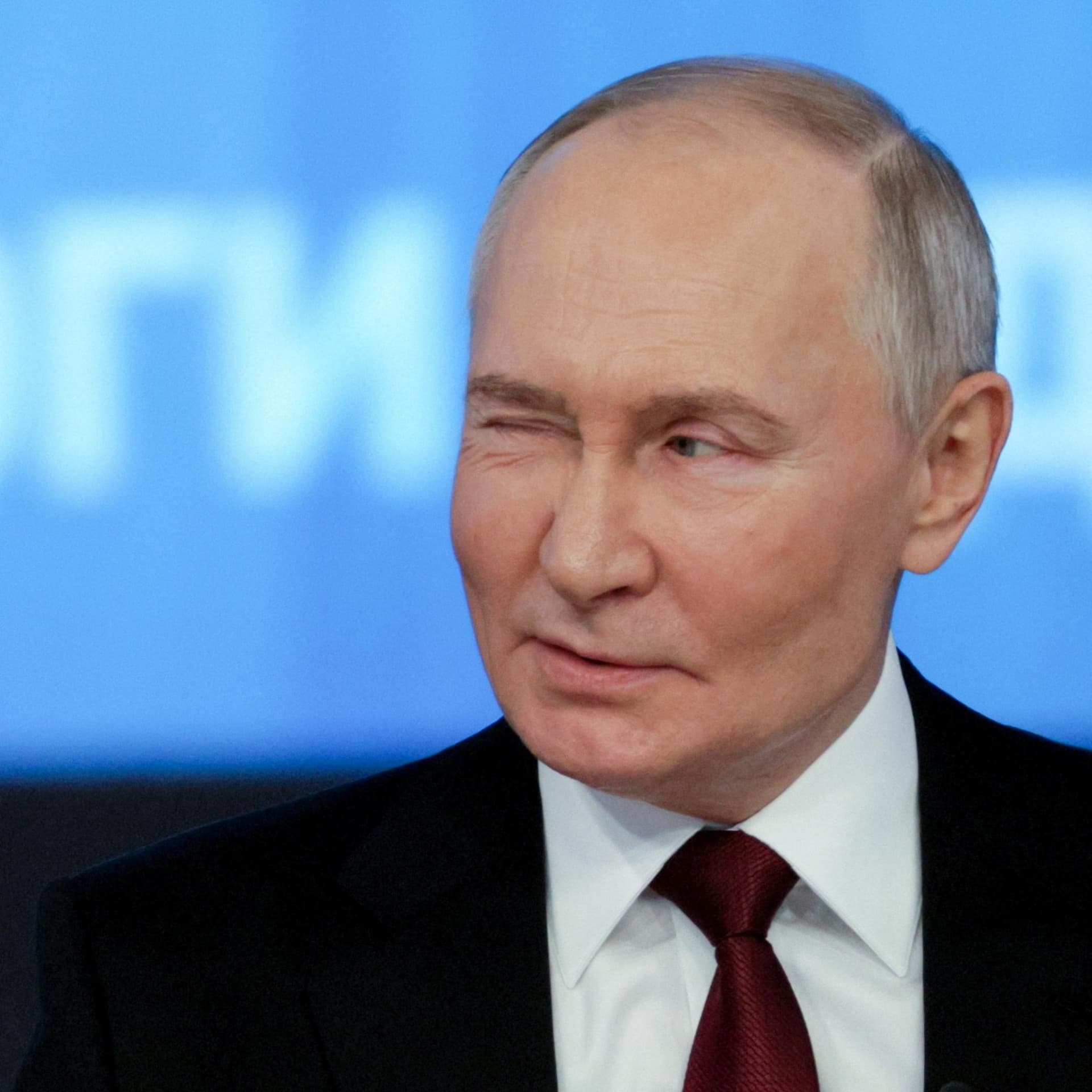
Photo: Russian President Vladimir Putin winks during his annual televised year-end press conference. Credit: Sputnik/Gavriil Grigorov/Pool via Reuters