In short
The episode examines why the UK denied entry to left-wing commentators Hasan Piker and Cenk Uygur, and whether this reflects a broader UK “free speech problem.” It claims the UK Home Office used broad discretion to bar them as “not conducive to the public good,” without specifying the exact speech or reasons, and that this is being debated as a limit on free expression. Key examples include Piker’s remarks about voting for Hamas over Israel and accusations of antisemitism (e.g., calling Orthodox Jews “inbred,” which he regrets), plus Uygur’s Israel-focused criticisms and denials of antisemitic tropes. It also compares to prior UK bans of far-right activists (e.g., Tommy Robinson’s “Unite the Kingdom” rally) and explains UK free-speech limits under Article 10/ECHR and hate-speech/incitement laws.
Guests
Shabbos Kestenbaum (Harvard lawsuit plaintiff; free-speech advocate) and Joelle Grogan (BBC legal expert, host of The Law Show).
Written by AI. May contain mistakes. Listen to the episode to check what was said.
Chapters
Tap a time to open that second in VOBanned from the UK: Cenk Uygur and Hasan Piker
0:38 to 1:42
Discussion about the bans of commentators Cenk Uygur and Hasan Piker from the UK.
“On Sunday, the American left-wing commentator, Cenk Uygur, was at the airport in L.A., about to travel to the U.K.”
Government's Stance on Free Speech
1:42 to 2:45
Exploration of the UK government's rationale for banning these individuals and its implications for free speech.
“If you're coming into our country from abroad with that kind of intention, you have no right to be here.”
Profile of Hasan Piker
2:45 to 3:10
Overview of Hasan Piker's background and controversial statements regarding Israel.
“Now, coming up, I'm going to speak with one of the people who was supposed to be in a London TV studio this week with Cenk Uygur.”
Controversies Surrounding Piker and Uygur
3:10 to 4:24
Discussion of the accusations of anti-Semitism against Hasan Piker and Cenk Uygur's views on Israel.
“You might know Hassan Piker as this left-wing guy who hosts these marathon streaming sessions on Twitch, sometimes seven to eight hours in a day.”
Cenk Uygur's Perspectives on Free Speech
4:24 to 6:37
Cenk Uygur's beliefs about free speech and the criticism he faces.
“His uncle, Cenk Uygur, hosts The Young Turks.”
The Debate on Free Speech in the UK
6:37 to 8:07
Discussion with Shabbos Kestenbaum on the implications of the bans and the state of free speech in the UK.
“Free speech must be protected and advanced even when and especially its ideas you do not like.”
Legal Landscape of Free Speech in the UK
8:07 to 14:00
A conversation with legal expert Joelle Grogan about the UK laws on free speech and entry bans.
“It's entirely arbitrary and it's entirely undefined.”
Reasons Behind the Banning of Piker and Uygur
14:00 to 16:27
Explore the broad powers of the UK government in banning individuals and the specific case of Piker and Uygur.
“So we're almost kind of retrospectively constructing reasons as to why they were barred.”
Historical Context of Entry Bans
16:28 to 19:09
Understand the historical context of individuals being barred from entering the UK and why it matters now.
“limitations are not just in the speech of people who are on the left end of the political spectrum.”
Free Speech and Legal Framework in the UK
19:10 to 22:20
Learn how free speech is defined and regulated under UK law compared to the US.
“And together we're the hosts of the Global Story podcast from the BBC.”
Show all 11 chapters
The Impact of Banning on Public Discourse
22:21 to 24:56
Discuss the implications of banning individuals from the UK and its effects on public discourse.
“But if you said it on X, if you said it in public to a large audience, it can potentially be criminal.”
Transcript
Automatic transcript. May contain errors.0:00This BBC podcast is supported by ads outside the UK.
0:30Just tap into iHeart to start watching. And we hope you enjoy the show.
0:38On Sunday, the American left-wing commentator, Cenk Uygur, was at the airport in L.A., about to travel to the U.K. when he says this happened. I was going to get on a flight to go to London, and they said, I'm sorry, sir, there's a problem. I said, what's the problem? They said, you've been banned from the United Kingdom. As it turned out, the same had happened to his nephew, one of the most prominent left-wing internet personalities, Hassan Piker. My visa has also been revoked. We just found out. As it stands currently, I don't believe that I'll be able to go to the United Kingdom this upcoming week.
1:14Both men say the British government blocked them from entering the country because of their criticism of Israel. On Monday, the British government confirmed that it had denied entry to Uyghur and Piker on the grounds that their presence in the UK may not be conducive to the public good. There was no mention of Israel in their statement. But the news of these bans has sparked fresh conversations about the limits of free speech in the UK. If you're coming into our country from abroad with that kind of intention, you have no right to be here. This is just the latest example of what is the largest assault on free speech since the 1950s.
1:57So I think what the Home Secretary has done is good in a way as long as it's done for genuine reasons. The reasons apparently the British government used, I just find completely ridiculous and shameful. From the BBC, I'm Asma Khalid in Washington, D.C. And today on The Global Story, does Britain have a free speech problem?
2:28Now, on today's show, we're talking about where a government draws the line in deciding what speech is acceptable. So, as you can imagine, this episode does contain language and examples that you all might find offensive. And I just want to let you know that at the outset. Now, coming up, I'm going to speak with one of the people who was supposed to be in a London TV studio this week with Cenk Uygur. And I'll also talk to a legal expert who explains what exactly the laws are around free speech in the UK, which, by the way, does not have a First Amendment. But first, in order to understand the context in this story, you need to know a bit more about who exactly Hassan Piker and Cenk Uygur are.
3:11You might know Hassan Piker as this left-wing guy who hosts these marathon streaming sessions on Twitch, sometimes seven to eight hours in a day. He has millions of followers, and in recent months, he has been dividing the Democratic Party. In April, he appeared on the Pod Save America podcast hosted by Obama alums. And he stood by comments that he made earlier in the year that he would vote for Hamas 1 ,000 times over Israel. When you say Hamas is a thousand times better, do you actually mean that? Or is that a rhetorical move or like a solidarity signal? I mean, it's all of the above. I do mean it.
3:49I think it's a rhetorical move because it frustrates a lot of people. I've also said I'm a harm reduction voter. I'm a lesser evil voter. And therefore, I would vote for Hamas over Israel every single time. Some Jewish groups have accused him of being anti-Semitic. They point to comments he's made, such as referring to Orthodox Jews as inbred, a term he has subsequently said he regrets. Piker insists he is not anti-Semitic, that he's anti-Israel. And at a speech at the Oxford University Union last year, he had this to say. I am terrified of the conflation of anti-Zionism and anti-Semitism. The conflation is dangerous.
4:25His uncle, Cenk Uygur, hosts The Young Turks. It's a left-wing populist online show. Like Piker, Uygur has denounced Israel and accused Israel of controlling American politics. Israel controls America. Saying anything otherwise is absurd. It's counterfactual. In a video posted by the Young Turks on Monday, Uyghur rejected criticism that he uses anti-Semitic tropes. It's about Israel. So it's not anything I said about Jewish people because I've never said anything bad about Jewish people. Because I don't believe that. Because I don't say anti-Semitic things because I'm not anti-Semitic. Uyghur and Piker were planning to visit the U.K.
5:04this week because they were slated to speak at the South by Southwest Festival in London and at the Oxford Union. Uyghur was also scheduled to be on Pierce Morgan's show from London in person debating the American commentator and activist Shabbos Kestenbaum. He's a vocal supporter of President Trump's. And what's interesting is that when the news broke that the U.K. had blocked Uyghur's visit, Kestenbaum took to social media to denounce the decision. I wanted to know why, so I called him up. I'll tell you just a quick funny anecdote. I was actually on my way to the airport to fly into London to do the - Because you both were supposed to be in person.
5:41I was supposed to be in London. So I actually saw his tweet on the way, and then I called the producers of Piers Morgan. I say, does this mean, you know, we reschedule? So thankfully, Cenk tweeted that an hour earlier, because had he not, I would have already been on the flight. But anyway, the reason I tweeted that is because when I think of the United Kingdom, my parents were born and raised there. My entire extended family lived there. This is a civilization that brought us the concept of free speech. Thinkers like Edmund Burke, John Locke, to see how free speech has really eroded is not only a warning to those in the UK, but really to Western civilization, broadly speaking.
6:17And we still had the debate. It was virtual. The conversation was really just on the fact that Cenk was no longer allowed into the United Kingdom as opposed to the substantive topics we wanted to discuss. But ultimately, it's a damning indictment on civil society and the flourishing of democracy or lack thereof in the UK. I abhor almost every single political stance that Cenk Uygur has taken. I really do. And I also really believe that not only does he have the right to say it, but the only way I'm going to convince Cenk, his audience, or the middle ground of the people watching is by engaging in intellectual discourse and not censoring.
6:50Free speech must be protected and advanced even when and especially its ideas you do not like. And obviously, the United Kingdom is within its legal rights to do so. I'm arguing from a political, cultural, and dare I even say moral standpoint, this was the wrong decision. Shabos, the British government has not given specifics on why Cenk Uygur or Hassan Piker were barred from entry. But in previous cases, we've seen the British Prime Minister Keir Starmer say in previous cases that we will block those coming into the UK who seek to incite hatred and violence. Now, you alluded to this earlier, and that is the fact that the British government has the right, you say, to determine who can legally enter the country in the way that we see now under the Trump administration.
7:36They have said that they are going to be vetting people's social media profiles for those who want to come into the United States and use that as a determination for who, for example, could have a visa. And I guess I want to understand from you, given that a number of countries have rules around who they will allow to enter or not enter, what's the specific criticism you have of what the UK government is doing in this moment? My criticism of the UK government is multifaceted. First of all, their dictum or their definition of what's considered a public nuisance is entirely subjective. It's entirely arbitrary and it's entirely undefined.
8:13They don't actually tell people. So on Piers Morgan's show yesterday, Cenk and I were openly speculating. Was it because of Cenk's anti-Israel biases? Probably, but we don't actually know that. Maybe it's because of the odd comments he made about the Muslim grooming gangs. We don't actually know because the British government hasn't spelled any of those things out for us. Our Secretary of State Mark Garuvi has been entirely consistent. He's on the record in public about it. He says, we are looking through your social media posts to see if you have support for terrorism, for example, because why would we want you, if you're identifying yourself with Hamas as well as the Houthis, why would we want you on American institutions of higher learning, which I think is an entirely fair point to say.
8:44My critique with the United Kingdom, and this is why I said from the very beginning, from the get-go, they have a legal right to do it. I just disagree with it politically. They don't explain what any of those values are. You can't just say we abhor hate speech. Okay, what is hate speech? You can't say that if you're a threat to the public good. Okay, what's being a threat to the public good? Especially when you allow dozens, if not hundreds, of migrant boats monthly to arrive on your shores. You're pretty lax about those laws, but you're going to enforce, you know, Cenk Uygur and Hassan Piker, who you won't even articulate what they did wrong.
9:11It's a total double standard. Cenk Uygur did not expect to be banned from the United Kingdom. I didn't expect him to be banned from the United Kingdom because they don't articulate what are our values, what are our policies, what are the ideologies that we abhor and don't abhor. And once we can have clearly defined stances, then we can talk about whether it's accepted or not. You know, we've been speaking here with you in the context of what we're seeing in the United Kingdom. But our show, The Global Story, it's a transatlantic show. And I will say that we've been having a sort of live and active debate also around the ideas of rep-free speech looks like in the United States.
9:43And it's within that context, I want to ask you about this, that in 2024, Shabbos, I saw that you were a plaintiff in a lawsuit filed against Harvard University, accusing it of becoming a bastion of rampant anti-Jewish hatred and harassment. Some of your claims included harassment and assaults on Jews, but also claims of anti-Semitic hate speech. Harvard, to be clear, has said that they are resolute in efforts to confront anti-Semitism. And I understand you settled eventually with the university. Is that right? In May 2025. But the reason I'm asking you about this is that that lawsuit happened within the context of some bipartisan concerns here in the United States over a crackdown on free speech on U.S.
10:22college campuses under the Trump administration. And I want to understand from you, why are you focused on the U.K. when there is also a live and active debate around free speech, particularly as it relates to college campuses here in the U.S. over the course of the last year? Well, I would have to strongly disagree with your characterization. If you go through my Twitter, I've been very clear from day one that individuals in the United States have an absolute right to be anti-Semitic, to be Islamophobic, to be sexist, to be homophobic. I don't like those ideologies, but on a free speech First Amendment grounds, you have an absolute right to say those things.
10:53The way you described the lawsuit, I would not say is accurate. The overwhelming majority of the lawsuit is pertaining to physical acts of violence. And even the issues of speech, we're talking in the context of a private institution that was ranked by the Foundation for Individual Rights and Expression 248th out of 248 American universities when it came to free speech. This is an institution that continuously disinvites controversial speakers who are being transphobic or racist. So all we were saying with Harvard is whatever policies you want to have vis-a-vis free speech, that's your right as a private institution.
11:23But you have to be consistent. So I've made this point incredibly clear and publicly since day one. If Harvard University says we will allow all speech on campus, great. I would prefer that. I would be in favor of it. But if Harvard is going to say we are not going to allow speakers who are racist, we are not going to allow speakers who are transphobic, but we will allow speakers who are anti-Semitic, then my legal claim is not that you're promoting anti-Semitism, but you have a legal double standard. And I would also just add quickly that anti-Semitism, Islamophobia, all these other forms of patriot, while I don't agree with them, obviously, again, you have a right to call for an intifada.
12:02You have a right to call for the freeing of Palestine from the river to the sea. What you don't have the right to do, for example, is to set up tents in the middle of campus and impede students' free access to the classroom. That was Shabbos Kestenbaum.
12:20We wanted to know more about what exactly the U.K. laws are on free speech and banning people from entering the country. So I called up Joelle Grogan, the legal expert I mentioned earlier. She hosts this BBC podcast called The Law Show. We don't have the details of exactly why they were blocked, but we do know the power that they were blocked under. The Home Office, the Home Secretary, and a lot of immigration officials have a very broad discretionary power, it's really up to them, to bar certain people from entry if they believe it's not conducive to the public good. The Home Office for American audiences is like a hybrid between the Department of Justice and the Department of Homeland Security.
13:05Okay. And you say they have broad discretion. What are they looking at? They have broad discretionary powers, and they are using a certain power to look at these individuals and say they're not going to be here in a way that is, under the technical term, conducive to the public good. Not conducive to the public good. I mean, it feels a bit vague. I mean, it feels, what does that mean? It's previously been used in the context of terrorism or more frequently in criminality. If they look at an individual and think they're likely to commit a crime, then they can be barred from entry. Now, one very important fact that we need to underline in this is the only reason we know about this is we were told on social media.
13:50The two individuals involved told us they were barred. So typically the Home Office doesn't give a list of people who have been barred. They don't say why they've been barred. So we're almost kind of retrospectively constructing reasons as to why they were barred. What's also interesting is this power is very broad and it doesn't really have a right of appeal. So you can't complain that the Home Secretary has told you you cannot enter the country because we are concerned that you would not be conducive to the public good. Once you're barred, you're barred. You mentioned that the British government has said these two men, their entry to the UK would not be conducive to the public good.
14:30We've also seen Hassan Piker and Cenk Uygur say that they were barred from entering the country because they criticized the state of Israel. Has the British government responded to that? We haven't seen the British government come out and say, here are exactly the reasons, here is exactly the speech you gave, here's exactly the terms you used. but I know that in the UK right now it's an incredibly politically sensitive issue. What's so difficult is the current context in which we've seen attacks on Jewish communities. It's something that has informed so much of what the government are doing. What we can say in terms of previous decisions of Home Secretaries to ban certain individuals from entry, it's been on the basis that they promoted extremism, that they glorified terrorism, or that they fostered hatred likely to contribute to community discord.
15:23So we have these very, very strong thresholds that we would expect before the Home Secretary made those decisions on banning individuals from entry. The way that this is being presented in the United States is that Hassan Piker and Cenk Uygur are fitting into a broader pattern of the United Kingdom blocking visitors from entry. The reason I'm asking this, Joelle, is the Washington Post. editorial board wrote, I'm going to quote them, the United Kingdom has developed a bad habit of blocking visitors to the country if the government doesn't like what they have to say. Do we know if the numbers have actually been increasing?
16:01I know there's a public perception that there is an increasing number of people being banned from entry based on their speech, be it far right or far left. But the reality is the numbers aren't really telling us this. We don't get official numbers, we don't actually even get names officially given by the Home Office. But we know based on the publicly available data that the numbers are quite low in real terms. It might be a few hundred people over the last decade. Joelle, you've alluded to the fact that these limitations are not just in the speech of people who are on the left end of the political spectrum.
16:35In fact, this whole issue actually first caught my attention last month, went ahead of a far-right march in London called Unite the Kingdom. This was a rally that was being organized by the anti-Islam activist Tommy Robinson, and a number of people were barred from entering the United Kingdom. This caught my attention in part because there's this right-wing influencer, Valentina Gomez, who was one of the people who was blocked from entering. She took to social media, announced this all, and suggested that she was going to hop on a boat and make her way over to the United Kingdom anyhow. I would not recommend that.
17:14But a long journey, I was going to say. But I want to understand what the concern was in the British government, why those 11 far-right activists were blocked from entering the country. This really goes to the root of a very core distinction in the law between free expression and the importance in the democracy of freedom of expression-free speech and hate speech. The idea of agitation is really, really key in the understanding. Is that speech calling for agitation? Is that speech calling for violence, for action against communities? So they were concerned that these people would come and call to potentially to violence, to action taken against Muslim communities.
18:03And so that's a a core reason that they were barred from entry. I want to understand why this is happening now, because Hassan Piker and Cenk Uygur have both visited the United Kingdom in recent years. So why would they be barred from entering the country now, but they were allowed in in the past? So this can be an issue of, well, politics and exposure. So you can look at prior speech that has been given and say, well, this is actually quite concerning. What they've said in the UK context is quite concerning. So just having a prior entry doesn't guarantee you future entry. And I think that is something that was very much considered in this case.
18:42What has happened since? But another element that's become important is that a lot of groups have often campaigned against individuals. They've highlighted speech to the government, to the Home Secretary, to the Home Office. Of course, in the end, it's always up to the Home Office to make that balance, make that measure and ultimately to justify that measure as to why they're banning individuals. But what's changed? Exposure. Hi there, I'm Asma Khalid. And I'm Tristan Redmond. And together we're the hosts of the Global Story podcast from the BBC. For those of you who might be new to our show, we here at the Global Story dive deep every weekday on one big story at the intersection of where the world and America meet.
19:25And you can now watch the global story on the iHeart app. Catch every brand new episode every weekday. Just tap into iHeart to start watching. And we hope you enjoy the show.
19:40So thus far in our conversation, we've been talking about people being barred from entry into the United Kingdom. But there's also been a narrative that the UK has a free speech problem. You know, I will say that, yes, these concerns have been elevated by some on the conservative end of the American political spectrum. Our vice president, J.D. Vance, for example, has brought up free speech as a concern very publicly. But it's not just on the right. I will say you see some on the left end of the political spectrum as well now raising concerns about what free speech looks like in the U.K. for British people.
20:16I know that you all do not have a written constitution. You don't have a First Amendment enshrined in stone and cherished, I guess, the way we do. But where does your perception of free speech originate from? So I always need to emphasize at the beginning, we do have a constitution. We absolutely have a constitution. It's a working legal system. But you're absolutely correct. It's not in a single document, which has led to a lot of complications. We do have a right to free speech. and that is contained within Article 10 of the European Convention on Human Rights. That's an international human rights document that came in the 1950s in the ruins of post-World War II.
20:56So we have that international document and we've brought it into UK law through the Human Rights Act. But what we need to think about in the US versus UK is very different standards. So the freedom of expression under the European Convention on Human Rights, under human rights law essentially, That is a qualified right. It's not absolute. But the qualification when a government can step in and restrict your freedom of expression is prescribed. So it has to be what's called necessary in a democratic society. So if you want to restrict the freedom of expression, you have to make it through a law.
21:34So you can't arbitrarily say, I don't like what you're saying, you're banned. I don't like what you're saying, you're going to jail. So it has to be through law. it has to be necessary that means you only do what you have to do in order to achieve what's called a legitimate aim now in the european convention on human rights they list a number of legitimate aims so very importantly in the context in which we're speaking national security public security and public morality are all legitimate aims in which you can restrict the freedom of expression now what this means in the uk context what this means in reality is we do have a confusingly large number of laws which criminalize certain speech, broadly understood as hate speech.
22:18Okay. So if you said something incredibly racist or incredibly awful in a private home to your friend, that's fine. That's protected speech. But if you said it on X, if you said it in public to a large audience, it can potentially be criminal. Criminal meaning you could go to jail, you could face a fine. So serious stirring up hatred offenses can lead up to seven years imprisonment. But one of the confusions on this area is it's very, very difficult to police. So, for example, we have provisions against grossly offensive speech. What does that even mean? Exactly. Exactly. Exactly. Exactly. I'm reminded of that judge who I'm probably going to grossly misquote.
23:08I think it was in the context of porn. So how do you define pornography? I think the judge said something along the lines of, I don't know how to define it, but I know it when I see it.
23:26Mm-hmm. versus hate speech, including incitement to violence, intention to cause racial hatred, to sow division in many contexts, is that it's always going to be that little bit debatable. Is it political satire? Or is it sincere? Or is it something that could really cause damage? So when we actually look at some of the cases that have come through on these myriad of offenses, sometimes it does turn on intent. So did the person intend to sew up these divisions? To give one example, we had a case where a protester had a sign and they were accusing certain individuals in the British government of being coconuts.
Read the full transcript
24:12And one of the... Exactly. Brown on the outside, white on the inside. Exactly. And one of the key debates in the court was, is this meeting the threshold of a racially aggravated offense? Ultimately, the courts didn't find there was sufficient intent to cause offense in the context that met that threshold. But it again turns on this idea of what is that point that pushes it past, protects the speech into something that could be, well, incredibly grossly offensive or incitement of violence or incitement of racial hatred. What is that threshold? We began this conversation by looking at the case of Hassan Piker and Cenk Uyghur, who were barred from entering the UK.
24:56I want to get your sense of how meaningful it really is to ban someone from a country. It feels a bit like an analog response in a digital age. whether you're on the left like Hassan or on the right like Valentina Gomez, you have millions of followers around the world that you can speak to regardless of what physical space you exist in. And so is banning them from the UK pointless or perhaps even counterproductive, giving them a larger platform? It's so true then. I mean, how great is that for your platform that you were banned for your free speech? We're literally talking about it on a podcast.
25:36It gives you an incredible argument to stand on that I have been deprived entry to a supposedly democratic country and they have deprived me of my right to free speech. But one of the decisions that has to be behind the Home Office and the decision to ban is what statement it might make by allowing people into the country. It seems like such a key philosophical difference. The philosophical challenge here in the U.S. has often been the need to defend speech that you abhor and you're saying in the UK the thinking is if you allow that speech in the perception is perhaps that you agree with it? I mean this is the great difficulty.
26:14I recently found out that it was actually misquotation of Voltaire. I may disagree with what you say but I will defend to the death your right to say it and that is a very very strong stance on the importance of free speech which is so essential in a democratic society. But the choice that not just the UK, but actually European countries have made generally is to say there has to be limits to this. Because ultimately, speech is so powerful. We could sit here all day and decide whether or not some speech is or is not okay. And this is why it's so difficult for the police. It's why it's so difficult for governments.
26:56It's why it's so difficult for advocates, for lawyers is to find those lines, because things shift so quickly. Well, on that note, Joelle, thank you so much for joining us on the show. Thanks so much for having me.
27:13That was Joelle Grogan. She's the host of The Law Show from the BBC. And earlier, we spoke to the political activist Shabas Kestenbaum. And a quick reminder that if you all have any questions or story ideas for us, you can drop us a note. Our email address is theglobalstory at bbc.com. And I think you all know it is extremely uncomfortable for me to ask for praise. But if you all enjoyed today's show, then I do have a favor to ask. If you can take a moment to write us a review or rate us wherever you listen, it really does help other people find The Global Story. And that's it for our show today.
27:47This episode was produced by Sam Chantarasek, Lucy Paul, and Aaron Keller. It was edited by James Shield and mixed by Travis Evans. Our digital producer is Matt Pintus. Our senior news editor is China Collins. And I'm Asma Khalid. We'll be back again tomorrow and talk to you then. Thanks as always for tuning in.
28:14Hi there, I'm Asma Khalid. And I'm Tristan Redmond. And together we're the hosts of the Global Story podcast from the BBC. For those of you who might be new to our show, we here at The Global Story dive deep every weekday on one big story at the intersection of where the world and America meet. And you can now watch The Global Story on the iHeart app. Catch every brand new episode every weekday. Just tap into iHeart to start watching. And we hope you enjoy the show.
From the publisher
On Sunday, two prominent left-wing political commentators in the US — Hasan Piker and his uncle, Cenk Uygur – said they had been barred from visiting the UK.
Both men were due to appear at the SXSW London festival, but say the British government blocked them from entering the country because of their criticism of Israel. The British government confirmed that it had denied them entry on the grounds that their presence in the UK “may not be conducive to the public good” but did not elaborate further. Their cases have sparked renewed debate about the limits of free speech in the UK.
We speak to American political activist Shabbos Kestenbaum – who was due to debate Cenk Uygur in London – and to the legal academic and host of the BBC’s The Law Show, Joelle Grogan.
Producers: Sam Chantarasak, Lucy Pawle and Aron Keller
Executive producer: James Shield
Mix: Travis Evans
Senior news editor: China Collins
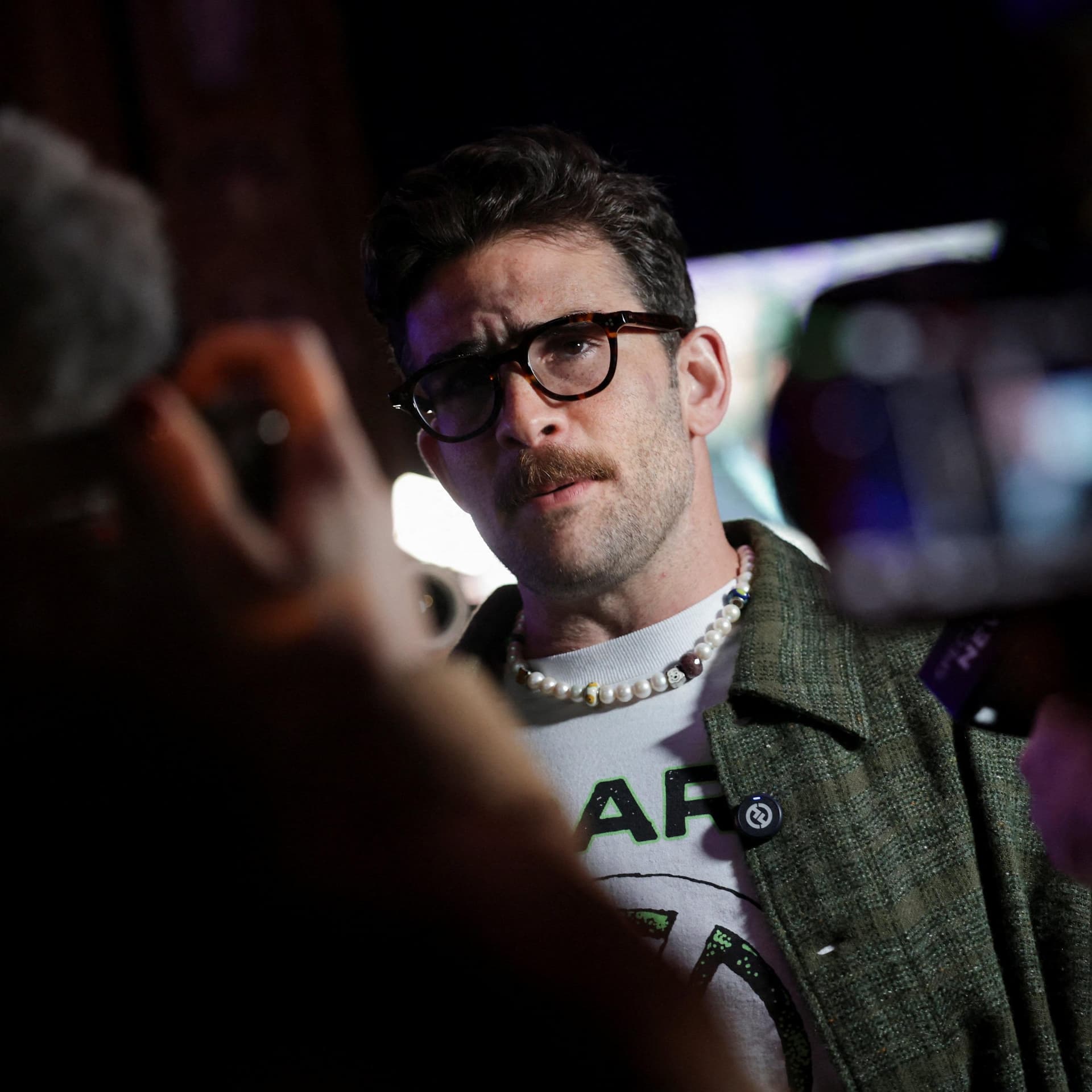
Photo: Hasan Piker speaks to members of the media at the venue for New York City mayor Zohran Mamdani's election night rally in Brooklyn, New York, November 4, 2025. Credit: Jeenah Moon/Reuters