In short
The BBC “The Global Story” episode examines how the Trump administration’s new national security strategy has alarmed Europe, including its claim that Europe faces “civilizational erasure.” It argues the strategy marks a radical shift toward economic nationalism, skepticism of multilateral institutions (EU/UN), and opposition to mass migration, while downplaying Russia and China as military threats.
Guests and backgrounds
Tom Bateman, BBC State Department correspondent in Washington, covers foreign policy to the Trump administration.
Key claims
The strategy transposes Trump’s ideology globally; Europe is portrayed as decaying internally (migration, censorship/free speech retreat). The US is said to “cultivate resistance” to opposition parties in Europe (e.g., AfD, UK Reform, Marine Le Pen). For Russia-Ukraine, it implies Ukraine must accept territorial losses for viability.
Notable examples
J.D. Vance’s Munich Security Conference speech criticizing European “liberalism” and censorship; references to Trump’s Oval Office confrontation with Zelensky; US “Trump corollary” to the Monroe Doctrine focused on the Americas and China (e.g., Venezuela).
Written by AI. May contain mistakes. Listen to the episode to check what was said.
Chapters
Tap a time to open that second in VOUnderstanding Trump's National Security Strategy
0:00 to 0:37
Discussion on the implications of Trump's national security strategy for Europe.
“This BBC podcast is supported by ads outside the UK.”
Understanding Trump's National Security Strategy
2:16 to 4:04
Discussion on the implications of Trump's national security strategy for Europe.
“I am the BBC's State Department correspondent based in Washington, so I cover all things foreign policy to do with the Trump administration.”
The Alarm in Europe
4:04 to 5:56
An overview of how European leaders reacted to the strategy's impact.
“It was getting a lot of traction on social media, you know, a very big response, particularly in Europe.”
The Deteriorating US-Europe Relationship
5:56 to 7:40
An analysis of factors contributing to the declining relationship between the US and Europe.
“And you say the Europeans, it seems, were quite miffed by some of these things that were said about them.”
Europe's Reaction to US Policies
7:40 to 9:01
Discussion on how European leaders perceive US foreign policy under Trump.
“Vance in the Oval Office, where he was called disrespectful and ungrateful.”
Media Perspectives on US Policy
9:01 to 11:28
Exploring how the media in Europe is framing the US's foreign policy changes.
“Well, I mean, I think privately, leaders have been absolutely aghast.”
Fixation on Europe's Identity
11:28 to 14:01
Examining the Trump administration's focus on European identity and values.
“How much should European leaders prepare for your administration to push to reshape the continent's politics?”
US-EU Relations and National Identity
14:01 to 16:29
Explore the ideological foundations of the US's view on European identity and stability.
“supremacy of the nation state not being sort of undermined by multilateral institutions, so the United Nations or the European Union.”
The Focus on the Western Hemisphere
17:25 to 22:51
Discuss the evolving US strategy towards the Western Hemisphere and Latin America.
“AT &T Fiber, limited availability in select areas.”
China's Role in US National Security
22:51 to 26:58
Examine the perceived military threat posed by China and its implications for US policy.
“What do you understand exactly about the kind of military threat that China is deemed to pose the US at this point?”
Show all 12 chapters
Implications for Europe and Ukraine
26:58 to 28:00
Analyze the potential impact of the current US administration's strategy on Europe and Ukraine.
“and positions on the basis of personal interactions with leaders.”
Discussion Wrap-Up with Tom Bateman
28:00 to 28:30
Learn about the concluding thoughts from Tom Bateman on US-European relations.
“What the strategy does is to emphasize that is really the position of this administration.”
Transcript
Automatic transcript. May contain errors.0:00This BBC podcast is supported by ads outside the UK.
0:30business needs in one place, saving you time, headaches, and serious money. Stop paying for missing pieces. Go to odoo.com. That's O-D-O-O.com to learn more. Self-directed investing, trading, full-service wealth management, automated investing, financial planning, thematic investing, retirement planning. Phew. And to think, that's just a small taste of what Schwab offers. because Schwab knows that when it comes to your finances, choice matters. No matter your goals, investing style, life stage or experience, Schwab has everything you need, all in one place, so you can invest your way. Visit schwab.com to learn more.
1:14Europe is facing the prospect of, quote, civilizational erasure. That's the official view of the Trump administration as put in a radical policy document that was released late last week. The U.S. government's new national security strategy has left European leaders reeling.
1:36In the days since, we've dug into the strategy. Tristan and I have read the whole thing. It paints the most complete picture yet of who the administration sees as its allies and its adversaries. From the BBC, I'm Tristan Redmond in London. And I'm Asma Khalid in Washington, D.C. And today on The Global Story, how Trump's national security strategy has upended traditional U.S. foreign policy and why it's causing alarm in Europe.
2:12So, Tom, would you be able to introduce yourself for us, please? Yep, I'm Tom Bateman. I am the BBC's State Department correspondent based in Washington, so I cover all things foreign policy to do with the Trump administration. Well, thank you so much for joining us, Tom. It's great to have you back, friend of the podcast. Trump's administration released the new national security strategy last week, and it made huge news. And that's not always the case. National security strategy documents pass by without anyone paying any attention, but not in this case. Why has it gained so much attention? The reason it's gained so much attention is because unlike the national security strategies of previous administrations, it is a radical departure from what we have seen broadly from both Republican and Democrat administrations since arguably the end of the Second World War.
3:07This is a document that I think takes part of the most ideological strains of the Trump worldview, as far as the United States is concerned, and effectively transposes those onto the rest of the world. It largely sees the world as an investment opportunity for the United States. This is very much about economic nationalism, a Trump worldview, which pushes against what it sees as multilateralism. So big multilateral institutions like the European Union. It castigates the idea of mass migration, says that this has been basically a kind of corrupting influence on what it calls Western identity. It declines to say that democracy is a value that the US should be in the business of trying to spread.
3:59but also it doesn't push for American dominance in the world and it's very clear about that but it says that it wants America to continue to be the greatest and most powerful country on earth and it should do that effectively through its bilateral economic relations with other parts of the world and it is a document I mean first of all it came out sort of late on Thursday night no one had been expecting it but I think it was really over the weekend when the Europeans started to notice it. It was getting a lot of traction on social media, you know, a very big response, particularly in Europe. And it has sort of built since then.
4:33Why particularly in Europe? So the section on Europe is devastating for the Europeans because throughout this document, which usually is an expression of American global values and a document in which the US will sort of name and shame its rivals and adversaries. Throughout this document, there is really no criticism or very little criticism of America's traditional rivals and adversaries. And if you compare this to the 2017 Trump first term national security strategy, which named Russia and China as adversaries of the United States and acting against the US's core national interest, there's none of that in this at all.
5:18Then suddenly you get to this section on Europe, which is absolutely devastating. And it says that Europe has basically suffered this kind of decay and rot from within because of this multilateralism, its open doors to mass migration, and also this idea of censorship and not allowing free speech in Europe, and goes so far as to say that Europe risks facing civilizational erasure. Strong words there, Tom. Very, very strong. Well, you described this document as one that came out late on a Thursday, didn't have a lot of fanfare. But over the weekend, we started seeing all these headlines about Europe.
5:56And you say the Europeans, it seems, were quite miffed by some of these things that were said about them. So I actually want to start there with the United States' relationship with Europe, because the Trump administration essentially presents Europe as a problem to be managed. and I want to understand how things got so bad in the US-Europe relationship to reach this point. I mean, under this administration, it happened reasonably quickly. The first signal of it was what has become a very well-known moment now, which is Vice President J.D. Vance's speech to the Munich Security Conference earlier this year.
6:34The threat that I worry the most about vis-a-vis Europe is not Russia, it's not China, It's not any other external actor. And what I worry about is the threat from within. In which he stood up in front of European leaders and basically berated them for their feckless liberalism and for, he suggested, not allowing free expression and censoring certain views. In Britain and across Europe, free speech, I fear, is in retreat. The Europeans have basically closed their minds to arguments around the problems of mass migration and cultural identity. It was an extraordinary attack on the status of European politics.
7:23If you're running in fear of your own voters, there is nothing America can do for you.
7:34so since munich has the relationship between the united states and europe further deteriorated well i think the way this relationship largely practically plays out is in the russia ukraine negotiations and we've had this extremely protracted attempt to try and reach some kind settlement between russia and ukraine which has sort of lurched back and forth over the months notoriously, of course, you know, the ambush of Vladimir Zelensky by President Trump and J.D. Vance in the Oval Office, where he was called disrespectful and ungrateful. I think the White House sees that there are important, big, economically dominant powers in the world, and they must be respected.
8:17And, you know, President Trump sees Russia as one of those. And actually, the strategy document suggests that up against a power like Russia, the Europeans have failed to understand and accept the power dynamics and that therefore they need to give more and they need to accept that there will be in part a sort of semi-capitulation by Ukraine in order for it to remain as a viable state. The document does say that Ukraine has the right to remain as a viable state or implies that but it says that has to be through this recognition that in the end Vladimir Putin should be able to take at least what he's got and more already and that the Europeans have to recognise this.
8:58And what's been the reaction from Europe to all this, Tom? Well, I mean, I think privately, leaders have been absolutely aghast. I think they're not surprised that this is the ideological position of parts of the administration, but to see it articulated in a policy document like this is pretty worrying for them. I think there is now an acceptance among the Europeans that this is the Trump administration's foreign policy, and it is now being very clearly articulated by the president himself. Well, can I ask here, because I think we're so fortunate to have a show that is truly transatlantic, and Tristan, you're joining us from your perch in London.
9:34You also spend loads of time in Paris. What have you been seeing in press headlines of how the story has played out over the last couple of days? Well, I've been having a little dig around, Asma, and particularly in the French press, the response is not being great. So Le Monde, which is a left-wing paper, has called this the divorce. They say the divorce is consummated now for the division of property. But then I thought what was most interesting in terms of the French press was actually the right-wing conservative newspaper, the Figaro, which points out this contradiction between what they say is the US pretension to non-interventionism on the one hand, and then explicit interventionism in the case of European countries, because in the document, it actually says that the United States intends to cultivate resistance of opposition parties in European countries, which the Figaro points out is specifically intervening in other states' affairs.
10:35And the interesting contrast it draws is between its Middle Eastern strategy, as laid out in this document, where the United States says that it needs to stop hectoring other countries into abandoning their traditions and historic forms of government. So it really focuses on those contradictions and how that seems to be unreasonable in the case of Europe. There's a couple of things there. The cultivating resistance, you know, is a clear sign that they intend to support political parties in Europe that are economic nationalist parties that are opposed to migration. They call them patriotic parties.
11:13But clearly you'd be talking about the AfD in Germany, potentially the Reform Party in the UK, Marine Le Pen in France and others. That is not hidden at all in this document. It has led to a concern already. If you look at the way the Trump administration has acted when it comes to Latin America, for example a bailout for Argentina which helped Millet who is an ideological ally of Trump to be elected recently was clearly seen by his opponents as election interference by the United States a similar sort of support in Honduras ahead of the election there Brazil supporting Bolsonaro and attacking the courts there that level of interference there is therefore a concern that this kind of thing is going to happen in Europe and Donald Trump was asked about this repeatedly actually in this Politico interview this week, where he said that Europe is in such trouble that he believes that it's got a major, major problem.
12:11How much should European leaders prepare for your administration to push to reshape the continent's politics? Well, Europe is a different place. What do you mean by that? And if it keeps going the way it's going, Europe will not be, in my opinion, many of those countries will not be viable countries any longer. Their immigration policy is a disaster. What they're doing with immigration is a disaster. But the other point is, what you point out there, is about this idea of inconsistency and that the administration is saying, well, when it comes to the Middle East and other countries around the world, it's not our place to interfere except for Europe.
12:48There is an acknowledgement of the inconsistency in the document itself. And it says there is nothing inconsistent or hypocritical, it says, of maintaining good relations with countries whose governing systems and societies are different. as opposed to, it says, our like-minded friends. So it's saying that because Europe is effectively, you know, a bit like America, democratic, and we have some shared values, that we have the right to basically try and push it around. I want to get a sense from you, Tom, as to why you see the Trump administration so fixated on Europe, because there's a lot in this document about the need in their view for Europe to remain Europe, that if it doesn't adjust, that it will lose its Western identity over the next several years.
13:37Why are they so fixated on Europe from your vantage point? I mean, it's a really good question. I think when you look at the sort of ideological positions of key people in the administration, like Stephen Miller, like J.D. Vance, there has always been a bit of an ideological fixation with Europe as a sort of next front line for these values that they believe have been under attack in the United States. And largely, it is about migration. It is about the idea of the supremacy of the nation state not being sort of undermined by multilateral institutions, so the United Nations or the European Union.
14:10And they believe fundamentally that Europe has sort of caved in to all of these things, that it's losing its identity because of that. And they call it Western identity. And this is spelt out in some ways in the document that America needs Europe. It is the next front line against what have traditionally been seen as America's rivals and adversaries. It is an absolutely key trading partner with the United States. And so it's in the interests of the US that Europe should remain aligned, that it should remain strong and stable, which is another key word that crops up repeatedly in the document. And so I suppose in the sort of post-war concept, post-Second World War period, up until the advent of the Trump doctrine, that was always understood to be supporting Europe's unity, political unity, and its security, which was paid for with blood and treasure by the United States and then supported through the communist era by, you know, vast troop numbers, the advent of NATO and so on.
15:11So it's quite ideological, but I suppose what they would argue what would underpin it is the stability of Europe. The thing that also stood out to me about this document is how little there was about Russia. The desire, it seemed, was to have smooth, stable relations with Russia, but it struck a remarkably different tone than what we saw in this very same document during President Trump's first administration. I mean, what's absolutely striking about the document is there is literally not a word of criticism of Russia. Instead, it sees Russia as effectively a point of interaction with the Europeans that the Europeans have failed to manage properly.
15:50And therefore, the US has to come in, expend diplomatic time and energy to stabilize Europe. So there is an implicit acknowledgement that it sees Russia as basically the sort of dominant power that needs to be respected. Who pays the price in the middle of all that is Ukraine. I think it's not surprising that the Kremlin has effectively endorsed this document. I mean, they came out and described it as a positive step and something that sort of roughly aligns with their positions.
16:29Chicago talks a lot. Hold on, let me step over here. People are talking too much. We debate about food, deep dish, tavern style, who's got the best beef. We yell across rooms. across blocks, across generations. Yes, nice earrings, Grammy. And now we're doing it on our phones, too. Video calls from the L train, group chats that never shut up. Neighbors texting you the score before your TV catches up. Come on! Get a load of this guy. Catch up on a dog. Yeah, we've got thoughts. Too loud? In Chicago, you're gonna hear it. Because nothing here gets built without conversation. Nothing moves without connection.
17:06So if you think you know AT &T, it might be time to rethink that because their network has improved, like, a lot. So Chicago can keep speaking its mind with AT &T Wireless and AT &T Fiber. Chicago won't stop talking. Our improved network backs it up. AT &T, connecting changes everything. AT &T Fiber, limited availability in select areas.
17:33so if relationships with europe seem to be going on the back burner here in this document what region of the world would you say really is elevated in a new way or what is the administration's focus i mean i was struck by what we saw about the western hemisphere yeah i mean it is without question the elevation of what they call the western hemisphere which i know to american audiences is uh is understood those of our listeners in europe and elsewhere don't hear that term so much but basically we're talking about the americas you know the the very first section when it breaks down into regions is about the western hemisphere uh the document gets really quickly into uh what it calls the this almost unpronounceable term which is the trump choralry sorry i'm gonna say that again the trump choralry to the monroe doctrine so that it's not very It's not.
18:25We should pause and explain the Monroe Doctrine to listeners. I mean, I had to learn about this. I think it was 11th grade history class, but it's worth a reminder to folks. Yeah. So James Monroe was president of the United States in the early 1820s. This was after multiple wars in the region in which the last breaths of European colonialism and imperialism was still taking place in the Americas. And he basically said, put his foot down, said enough is enough. and any interference, basically either economic or military, by Europe in the Americas will be seen as a hostile act and dealt with accordingly.
18:58And that was also about, in effect, the supremacy of the United States over the rest of the Americas in terms of the sort of military and... Central America, South America, all of that. Exactly, as the sort of military and economic force. So what this document talks about is Trump being the sequel, really, to the Monroe Doctrine in terms of re-emphasizing the importance of the United States to the Western Hemisphere, but also keeping others out. And what is not named, but what is meant by that is China and the role and influence of China in Latin American countries. I had to look up the word corollary to understand what a corollary is.
19:36And it's just sort of basically an addendum, isn't it? So the Trump addendum or the Trump corollary is aimed therefore at keeping China out specifically. Is that right? It is. Although the first foreign trip that Secretary of State Rubio made, and I went on that trip, was to Panama and to other Latin American countries. And I watched him stand in an office overlooking the Panama Canal. This was a kind of reassertion of American dominance in Central and South America. And the reason the administration says it needs to do that is because, I mean, you heard President Trump say, He said China's basically taken over the Panama Canal, which isn't true in a literal sense.
20:16But of course, it had core economic interests there, the Chinese, and lots of Latin American economies do have significant Chinese investment. I mean, so does the US economy. But in terms of a recognition of that, that all American administrations have been concerned about, but here you have one that is saying, at least in quite a muscular sense, it intends to do something about it. And Venezuela is, you know, a key part of that. We now have the world's biggest aircraft carrier off the coast of Venezuela, multiple American battleships and thousands of military personnel to say to the leadership in Venezuela that you start doing what we want or that is the threat of military force.
21:03Interesting, though, the document doesn't sort of get into the military element of it much. It's much more about trying to sort of promote American business investment as a sort of favoured nation in the Americas. Tom, the control of the Western Hemisphere, though, is a thing that I don't entirely understand. Because, I mean, it seems from a distance that there isn't really that much dispute that the United States controls the Americas one way or another in terms of trade, militarily, etc., economically. what is the thing that they are scared could happen in the americas well i mean you're right in that of course every administration has attempted to maintain that level of control but what the trump administration argue is that actually it has been neglected because they say the results are decades of mass migration into the united states which they you know they argue has been sort of corrupted by human and drug trafficking um that has had this they argue corrosive influence in the US that hasn't been managed, both on the United States own borders, but also in terms of putting pressure on governments abroad to try to prevent this happening.
22:15Now, of course, the counter arguments that is, if you want to tackle that, it's not just about, you know, bullying foreign governments and closing your borders, it's about trying to prevent the reasons that people want to leave their countries, which is often to do with war, instability, poverty, climate change, and so on. None of that, of course, is in this document. But the argument is that this hasn't been managed. And within the US, in terms of the importance of economic nationalism that the Trump administration sees, they see this as being a huge corrosive influence and the biggest national security risk to the US, they will argue, and therefore why it needs to be managed in the US's own hemisphere.
22:50China is obviously a present subject in this document. What do you understand exactly about the kind of military threat that China is deemed to pose the US at this point? This is something that's really interesting about the document. And again, it's another departure from previous national security strategies, which have labeled China as being averse to the US's national interests and its national security role globally. what previous administrations have generally tended to do was to try to do something that they saw as managed competition so seeing China as a peer rival but also militarily to try not to create escalation to be very aware and concerned about the military threat that a growing China posed but there is none of that latter part in this document at all I mean there is there's very very little about trying to manage the dominance of China in the South China Sea.
23:52The Philippines, for example, which is a treaty ally of the United States, which is very concerned about coercion by China. It's not even mentioned in this document. There is mention of Taiwan. It maintains the position when it comes to Taiwan. But the military threat around China is not really there. largely sees this as a kind of economic relationship to be managed. Tom, this document reads so differently than the document we saw President Trump, his team issue in that first term when he was president. I mean, one of the things I have also been struck by is this is a president that has long campaigned on an isolationist vision for the United States.
24:36And when he was asked recently about someone within his party having concerns about him spending a lot of time looking at international issues, he said, and these were his words just last month, he said, I have to view the presidency as a worldwide situation, not locally. I mean, we could have a world that's on fire where wars come to our shores very easily if you had a bad president. And so I want to understand from you what has changed over the course of the last eight years, that we now have a president really leaning into his world, its peers, on the world stage. I think that the difference between the first and the second terms has been the people around the president.
25:15And there were a lot more people in the White House and in the State Department and in parts of the national security infrastructure in very key and prominent positions in the first term that were prepared to resist and push against some of the things Donald Trump was saying. And that was why you had a far more chaotic administration with multiple firings and resignations, particularly in foreign policy, you know, secretaries of state, national security advisors. There has been a very, very focused and concerted effort involving people like Susie Wiles, his chief of staff, and others, Stephen Miller, deputy chief of staff, to make sure that that didn't happen.
25:53And people would argue the sort of purging, basically, of people within the national security policy world, in the Pentagon, to create a climate in which the president isn't challenged on what he was elected to do and to stand for. So I think there's a far, far, far more focused execution of foreign policy. But my experience of covering this administration is there is a degree of dysfunction, part of which I think is deliberate, part of which isn't, which ensures that nobody ever really knows exactly what the policy or decision is going to be. because you have an administration officials in which are effectively waiting for their orders about what to do by looking at truth social every morning.
26:41There is a vacuum of strategy often. And that's why I think, although this document has led to huge amounts of panic and anxiety, particularly in Europe, there is also a reality that President Trump may change his mind and positions on the basis of personal interactions with leaders. I think leaders in Europe, they believe they have understood a way to do the diplomacy with Donald Trump, which is largely around sort of flattery and trying to have a very strong personal relationship with him, which can work a lot in pushing against the policy positions actually as laid out in a document like this.
27:20The next time Donald Trump meets with European leaders, is it going to be awkward and uncomfortable. Has something broken there for good? I don't think so, because I think they're used to it.
Read the full transcript
27:35The document has, I think, only just sort of articulated a lot of the things they already knew. But where this really matters is on Russia, Ukraine. Donald Trump is losing patience with Ukraine and Europe over this. It's clear the expectation is the pressure is on the Europeans to concede into a position that the Ukrainians will basically see as a capitulation. And so the stakes are extraordinarily high. What the strategy does is to emphasize that is really the position of this administration. And the Europeans are going to have to live with that reality.
28:14Well, thank you, Tom. I know you've got to run to the State Department. So we'll let you go. But thank you very much. Thanks, guys. Great to see you. Thanks a lot, Tom.
28:26That was Tom Bateman, the BBC's State Department correspondent. That's it for The Global Story. Today's episode was produced by Viv Jones, Lucy Paul and Hannah Moore. It was edited by James Shield and mixed by Travis Evans. And our senior news editor is China Collins. If you have any questions, thoughts or story ideas for us, please email us on theglobalstory at bbc.com. See you tomorrow. Cheerio.
29:15We yell across rooms, across blocks, across generations. Yes, nice earrings, Grammy. And now we're doing it on our phones, too. Video calls from the L train, group chats that never shut up. Neighbors texting you the score before your TV catches up. Come on! Get a load of this guy. Catch up. On a dog. Yeah, we've got thoughts. Too loud? In Chicago, you're gonna hear it. Because nothing here gets built without conversation. Nothing moves without connection. So if you think you know AT &T, it might be time to rethink that because their network has improved like a lot. So Chicago can keep speaking its mind with AT &T Wireless and AT &T Fiber.
29:55Chicago won't stop talking. Our improved network backs it up. AT &T, connecting changes everything. AT &T Fiber, limited availability in select areas.
From the publisher
Europe is facing the prospect of ‘civilizational erasure’. That is the official view of the Trump administration, as put in a radical policy document that was released late last week.
The US government’s new National Security Strategy paints the most complete picture yet of who the administration sees as its allies and its adversaries, and it has left Europe’s leaders reeling.
Today, we speak to the BBC's State Department correspondent, Tom Bateman, about how Trump has turned traditional US foreign policy on its head.
Producer: Viv Jones, Lucy Pawle and Hannah Moore
Executive producer: James Shield
Sound engineer: Travis Evans
Senior news editor: China Collins
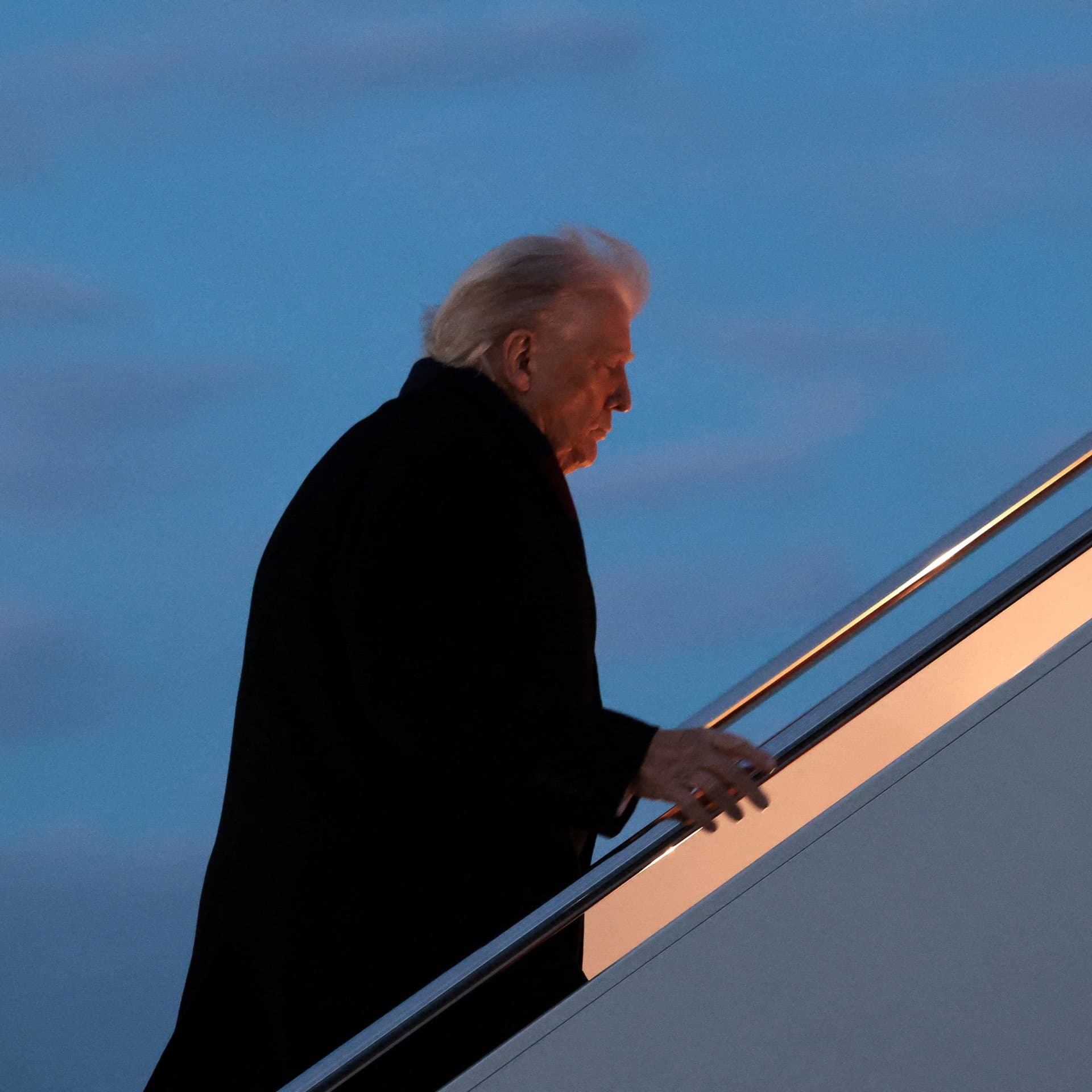
(Photo: US President Donald Trump boards Air Force One, 9 December, 2025. Credit: Jonathan Ernst/Reuters)