In short
The BBC’s Global Story asks whether Bad Bunny’s Super Bowl halftime performance will trigger political backlash, and what his politics and Puerto Rican identity mean in that context.
Guests
Asma Khalid and Tristan Redmond host. Karina Dalvayeshorsky is a freelance culture writer/translator; she profiled Bad Bunny for New York Times Magazine in 2020.
Guest backgrounds
Dalvayeshorsky wrote the 2020 profile after meeting Bad Bunny during the pandemic, including time in a makeshift studio with him.
Key claims
Bad Bunny is highly political; he has criticized Trump’s immigration and disaster response. Puerto Rico is a US territory (citizenship without voting rights in US elections). His music is framed as an “archive” of Puerto Rico’s crises (PROMESA austerity, Hurricane Maria, 2019 protests, blackouts).
Notable examples
Grammys Album of the Year; his Jimmy Fallon “Estamos Bien” remarks after Maria; 2019 leaked governor chat; songs about blackouts and potholes; 2025 album “Debe Tirar Más Fotos” and viral “take more photos” Gaza trend.
Written by AI. May contain mistakes. Listen to the episode to check what was said.
Chapters
Tap a time to open that second in VOBad Bunny's Political Impact
0:38 to 1:52
Discussion on Bad Bunny's rise and political significance leading up to the Super Bowl.
“Um, before I say thanks to God, I'm going to say eyes out.”
The Bad Bunny Primer
1:52 to 6:31
An overview of Bad Bunny's biography, musical background, and breakout success.
“My name is Karina Dalvayashorsky and I am a freelance culture writer and translator.”
Puerto Rico's Political Context
6:31 to 8:21
Exploration of Puerto Rico's territorial status and its historical crises.
“Rico is neither a sovereign state nor is it a U.S.”
Bad Bunny as a Cultural Voice
8:21 to 12:41
How Bad Bunny's music reflects and responds to Puerto Rico's crises and challenges.
“And since 2016, they've imposed an austerity agenda that has had really large scale impacts on the daily lives of Puerto Ricans.”
The Global Story Podcast
12:41 to 13:24
A brief overview of the podcast format and viewing options.
“And together we're the hosts of the Global Story podcast from the BBC.”
Reflections on Recent Works
13:24 to 14:05
Discussion of Bad Bunny's recent album and its themes of memory and identity.
“Karina, we want to fast forward a little bit to 2025.”
Cultural Resonance of Bad Bunny's Music
14:05 to 18:04
Explore how Bad Bunny's music connects with global audiences through cultural expression.
“bombardment of, you know, how the city looked when people were eating, going to the beach, gathering, dancing, laughing, spending time with family.”
Super Bowl's Impact on Puerto Rico
18:04 to 20:37
Discuss the financial implications of Bad Bunny's residency for Puerto Rico's economy.
“Its hottest megastar, Bad Bunny, is putting the island on the map as one of the hottest global destinations this summer.”
MAGA Reactions to Bad Bunny's Super Bowl Performance
20:37 to 23:10
Analyze MAGA's backlash against Bad Bunny's inclusion in the Super Bowl halftime show.
“I mean, football, American football is an American sport with not a huge necessarily following amongst people who play the sport elsewhere.”
Political Significance of Bad Bunny's Performance
23:10 to 24:58
Examine the potential political messages Bad Bunny may convey during the Super Bowl.
“I would also say that, you know, these are huge artists and, you know, Bad Bunny, as you said, is the biggest artist in the world.”
Transcript
Automatic transcript. May contain errors.0:00This BBC podcast is supported by ads outside the UK.
0:30Just tap into iHeart to start watching. And we hope you enjoy the show.
0:38Um, before I say thanks to God, I'm going to say eyes out. Bad Bunny is one of the biggest music stars in the world right now. And one of the most political. We're not savage. We're not animals. We're not aliens. We are humans. And we are Americans. At Sunday's Grammys, where he won Album of the Year, he criticized President Trump's immigration policy. Now, this Sunday, Bad Bunny, who performs only in Spanish, is playing the biggest stage in America, the Super Bowl halftime show. And some supporters of President Trump are not happy about it. It's so shameful that they've decided to pick somebody who just seems to hate America so much to represent them at the halftime game.
1:33From the BBC, I'm Asma Khalid. And I'm Tristan Redmond, and we're in Washington, D.C. And today on The Global Story, could Bad Bunny set off political fireworks at America's biggest sporting event?
1:52My name is Karina Dalvayashorsky and I am a freelance culture writer and translator. And in 2020, I profiled Bad Bunny for the cover of New York Times Magazine's culture issue. We're delighted to have you here today because even I, who's a bit of a cultural doofus, Bad Bunny is on my radar. I mean, it would be hard to overstate how popular Bad Bunny is right now. He was the most streamed artist in the world last year. He's just won a bunch of Grammy Awards. He's about to play the Super Bowl. But not everyone knows that much about him. Could you just give us the Bad Bunny primer? Absolutely. I mean, you know, biographically speaking, he was born in 1994 and grew up in a kind of sleepy seaside town called Vega Baja, about 40 minutes from Puerto Rico's capital of San Juan.
2:43He's from a very humble, typical family. That's how he's described it himself. His dad was a truck driver and his mom was a teacher. And he always loved music. Puerto Rico is a very musically sophisticated culture. That's been true for centuries. And so he grew up listening to classic salsa. But he really came of age and he's part of a generation whose defining genre was reggaeton. Probably some of the most famous artists are, you know, Daddy Yankee, Don Omar. This is party music, you know. And Puerto Rico really became the incubator for this genre of reggaeton. And he also benefited from the fact that he came of age when these kind of cheap at-home production software was becoming common.
3:28So he could make beats with his friends at home on a computer program called Fruity Loops. And he came up through SoundCloud. You know, he was a SoundCloud rapper and specifically made his entry onto the scene through a genre called Latin trap, which is obviously takes its inspiration from Black Atlanta, from the trap music that we know in the United States. OK, so he first starts to be heard of on SoundCloud. But how does he then transfer that success over to the charts? I think that probably the major breakout year for Bad Bunny for an international audience was 2018, both with his first album Por Siempre and also with his feature on the Cardi B mega hit I Like It alongside the Colombian reggaeton artist J Balvin.
4:21And so I would say that's probably when people outside of like a Puerto Rican diaspora community started to hear about Bunny and notice him. He's a great rapper. He's funny. You know, he has a very distinctive sound to his voice. But it also has always been about how he occupies space, even before he started being really explicitly politically outspoken. You know, he's had a huge impact on style. You recognize those little colored sunglasses, the painted nails, the kind of cheeky, gender bending, sartorial performance, I think really caught people's eye even before his music came on. And even his name, you know, Bad Bunny, there's something so irreverent, tongue in cheek about that name.
5:03Well, Karina, you wrote a beautiful profile of him for The New York Times back in 2020, by which time, as you said, he was already having commercial success by then in the United States. And you spent time with him. What was that like? I feel so lucky that I got to speak with him at that moment, which I think was a really key turning point for his career. It was still high pandemic. So at first, like I met up with them and we went to lunch with a lot of his friends from high school. And then afterwards, we went to a little makeshift studio he'd set up at his manager's house. And I feel like that's where the conversation got really serious.
5:40And he was in a very reflective mood. He was kind of just beginning to confront like what it meant to be a Puerto Rican star on the world stage. And he told me that he first realized that he had been raised in a colony, which is what he said, when he toured abroad. And people asked him, you know, kind of like, what is Puerto Rico? You know, like, they didn't really understand what it was. Or in Latin America, he's like, you know, he heard from Latin Americans saying, oh, you guys are some bootlickers, you know, a kind of disrespect for Puerto Rico's subordinated status in relation to the US. And he started to ask himself, OK, why are things the way they are?
6:25Karina, you mentioned that Puerto Rico is a territory of the United States. And I think we should just pause for a moment and clarify this to listeners that Puerto Rico is neither a sovereign state nor is it a U.S. state. It is it is a territory of the United States. And so that means that Puerto Ricans are U.S. citizens, but they don't have the right to vote in U.S. elections unless they are on the U.S. mainland. Yeah. So, you know, Puerto Rico has had an ambiguous status in relationship to the United States since 1898, when the U.S. acquired Puerto Rico in the midst of really what was a war to acquire a lot of the former colonies of the Spanish Empire.
7:06The U.S. has other territories such as Guam, American Samoa. Puerto Rico isn't the only one, but it's the most populous. It's the nearest and it's the most prominent. But yeah, I mean, I think that part of the reason people are so attached to Bad Bunny in Puerto Rico is because his career has directly paralleled this period of crisis. Sometimes people call it la bella crisis, like the beautiful crisis, you know. So in 2016, which was the first year that Bad Bunny had a major hit, President Obama passed a bill called PROMESA.
7:45Carina del Valle Schorske:We've got millions of our fellow citizens in Puerto Rico who've been suffering under one of the worst financial crises, fiscal crises in memory. that essentially took control of Puerto Rico's debt crisis and installed an unelected board of seven essentially hedge fund managers to have final say over Puerto Rico's budget. We finally have legislation that at least is going to give Puerto Rico the capacity, the opportunity to get out from under this lingering uncertainty with respect to their debt, to start stabilizing government services and to start growing again. And since 2016, they've imposed an austerity agenda that has had really large scale impacts on the daily lives of Puerto Ricans.
8:33And Bad Bunny has been our soundtrack since the passage of Bromesa, through Hurricane Maria, through the protests of 2019, through all the blackouts and beyond. And so his music is a kind of archive of this really special, difficult and important period in Puerto Rican history. In your article in which you profiled him, you track key moments in Puerto Rico and how Bad Bunny responded to them. And one huge moment was when Hurricane Maria hit Puerto Rico. This was in 2017. It was a Category 5 hurricane. It killed more than 3 ,000 people. And at the time, President Trump was in the White House. This was his first term.
9:20And Bad Bunny criticized how Donald Trump handled that, didn't he? And I'm curious if you can help us understand what was going on in that moment and why he did indeed criticize President Trump. Yeah, I think you're referring to his appearance on Jimmy Fallon in 2018. Performing Estamos Bien. Give it up for Bad Bunny! Like near the anniversary of Maria when he said, you know, over 3 ,000 people died. It's a year later. Some people still don't have electricity and Trump is in denial. You know, Trump famously threw this roll of paper towels into a press conference after the hurricane. Now, I hate to tell you, Puerto Rico, but you've thrown our budget a little out of whack because we've spent a lot of money on Puerto Rico and that's fine.
10:04We've saved a lot of lives. We should add here that, you know, President Trump claimed at the time that the U.S. government had spent some$91 billion on disaster relief. My understanding is Congress has actually allocated only about half of that,$42.5 billion. And then reports show that only a fraction of that had actually reached the island even several years later. And, you know, I went to Puerto Rico after Hurricane Maria. I mean, the devastation was still widely apparent throughout the island. And I don't know how things are at this point. Yeah, it's still legible. I mean, there are still streetlights that don't work from the hurricane nearly 10 years ago.
10:41the island is permanently marked by that disaster and the bungling of the recovery. You know, there are infamous photographs of huge trucks full of bottles of water, miles from where people had nothing potable to drink in the mountains. So, you know, Bad Bunny did name Trump's name, but he has also been really consistent in his criticism of the Puerto Rican government's handling of the storm.
11:10In 2019, he'd gone to his first street protest ever, which was part of these massive protests of the summer of 2019 in Puerto Rico. Mounting pressure for Puerto Rico's embattled governor, Ricardo Rosselló, to step down as tens of thousands continue to take their outrage to the streets. One in three Puerto Ricans participated. That's crazy level of participation. The anger stemming from a group chat leaked more than a week ago between the governor and his inner circle. A chat that had leaked between the governor and some of his collaborators, disrespecting many, many sectors of Puerto Rican society.
11:47Nearly 900 pages laced with sexist and homophobic language. In one exchange, an aide mocking dead bodies piled up at a morgue from Hurricane Maria. And they were celebrating the notion of a Puerto Rico without Puerto Ricans. People think it's just the chat. It's not just the chat. There is a lot of stuff underneath. Corruption, the sense of trauma about Maria.
12:14and took also the kind of like disaster capitalism to privatize a lot of Puerto Rico's infrastructure that's been an absolute disaster constant blackouts bad bunny has even has an entire song called the blackout right that comments on this kind of infrastructure failure or he has a love song on the most recent album about potholes and so his music is a kind of archive of this really special, difficult and important period in Puerto Rican history.
12:57Hi there, I'm Asma Khalid. And I'm Tristan Redmond. And together we're the hosts of the Global Story podcast from the BBC. For those of you who might be new to our show, we here at the Global Story dive deep every weekday on one big story at the intersection of where the world and America meet. And you can now watch the global story on the iHeart app. Catch every brand new episode every weekday. Just tap into iHeart to start watching. And we hope you enjoy the show.
13:32Karina, we want to fast forward a little bit to 2025. So back in January of that year, Bad Bunny brought out his latest album, Debe Tirar Mas Fotos. I wish I'd taken more photos. Is that the correct translation? I should have taken more photos. Kind of both ends. And it's been seen as a love letter to Puerto Rico. What does he talk about on the album? Yeah, I mean, I think it's really about what it means to live in the present and value where you are and who you are with. I think one of the most sort of telling viral moments in the wake of the album was seeing people in Gaza, the TikTok trend of posting photographs of Gaza prior to the Israeli bombardment of, you know, how the city looked when people were eating, going to the beach, gathering, dancing, laughing, spending time with family.
14:29you know, people wishing they had taken more photos of the life that they had lost. And there was also another viral TikTok trend of Latin Americans posting family photographs, like to the tune of David Tirarmas Fotos. And these are people who maybe only have three or four photographs that people have preserved in their pocket through really difficult journeys of migration. And so I think it's about honoring and keeping alive some of those ties to our homeland and the people that we love, but it's also about what does it mean to use that material creatively, you know? So when he is doing his own version of a folkloric Puerto Rican genre like Plena, what does it mean for that to sound totally modern?
15:17You know, this isn't about honoring tradition in a super faithful, conservative way. It's about what we do with what we inherit and how we can make it work for the challenges of the present. I used to work at NPR and he performed it at the Tiny Desk concert. I was there. It was amazing. I don't speak really a lick of Spanish. We were all jamming to it. And Karina, that is what strikes me about Bad Bunny's music is that it is so widely resonant with an audience of people, certainly as you say, in Spanish-speaking countries, but also amongst people here in the United States, Europe, you mentioned Gaza, elsewhere, people who don't necessarily know Spanish.
16:00We just saw him win Album of the Year at the Grammys, right? So what is it, in your view, about the music that makes it resonate? Absolutely. I mean, I think when we're talking about this album in particular, we're talking about, like, the magic of call and response. You know, he has, this album was... Yeah, that happened at the tiny desk. It happened at the tiny desk. And these are really old technologies. It's really, I would say the oldest technology, you know, this is what like enslaved African people brought over. You know, these are very, very old rhythms and they're sticky for a reason.
16:31They've been effective, you know, carriers of culture for hundreds of years. And, you know, Puerto Rican music is Caribbean music is Black music. And those drums, the call reaches you and it reaches you in a really deep place. And in Puerto Rico, genres like Plena and also the Afro-Puerto Rican genre of Bomba is really, that's the fundamental unit. And it's something that's really hard to scale. You know, David Tearar Mas Fotos, the album was recorded live. It's the first of Bad Bunny's albums recorded live. And he assembled this amazing band of young Puerto Rican musicians from public music schools that he's been calling Los Sobrinos, the nieces and nephews.
17:16So you can hear him really invoking that very local practice of like, you know, you need to be in hearing distance of the singer in order to be able to sing it back. And his proposition with the Super Bowl is like, is it possible to take that magic that's based on like a really kind of intimate vernacular form and to scale it globally? And I think there are some contradictions to that, but it's also a really exciting ambition. Well, that's interesting. So it's specifically about performer and audience being in quite close contact. That's right. Because he started this world tour, didn't he, with a 31-date residency in San Juan in Puerto Rico.
18:01Something unprecedented is happening in Puerto Rico. Its hottest megastar, Bad Bunny, is putting the island on the map as one of the hottest global destinations this summer. His residency could be shaping the future of the island's struggling economy. How impactful and how big of a deal was that in Puerto Rico? There are different ways to calculate it. some economists have estimated that the residency brought over$176 million to Puerto Rico, which obviously is nothing to sneeze at. And Bad Bunny has been very deliberate about partnering with indie makers, musicians, whether it's costumes or set designers or the Plena musicians.
18:42He's been collaborating with Los Pleneros de la Creta, and he's really urged people to shop local when they were visiting for the concert, all of that. But still, at the end of the day, this is a visitor economy. This is a version of tourism, right? Which is not, economists all agree that tourism is not a sustainable basis for an economy. You know, he, Bad Bunny has been singing. You mentioned his residency there in Puerto Rico. But crucially, he has not been playing any dates, any concerts here in the United States. He said in an interview back in September that he was worried about ICE agents being outside his concerts if he held them here in the U.S.
19:25mainland. But then, you know, it was announced that he would be the Super Bowl halftime artist. Anyways, you might not know these, but I'm doing the Super Bowl halftime show.
19:43And I'm very happy. I'm very happy, and I think everyone is happy about it. And he will be performing in California on Sunday to a huge audience, not just to people in the stadium, right, but huge audiences around the world expected to tune in. I want to understand from you why he decided to take that opportunity. Yeah, I mean, I think that quote about ice, I've always kind of taken that with a grain of salt because ice is also very active in Puerto Rico. where there are also migrants, especially from the Dominican Republic. So it was also true that ICE could be present. ICE has been very active in San Juan.
20:23So I think there are other reasons he decided not to perform in the U.S. and that it was more perhaps symbolic than actually an issue of safety. I see. So with that in mind, were you surprised that he decided to take on the chance to perform at the Super Bowl halftime show? I mean, football, American football is an American sport with not a huge necessarily following amongst people who play the sport elsewhere. Absolutely. I mean, Puerto Rico is all about baseball and basketball. So definitely football isn't the main thing. I mean, this man has always wanted to be famous. You don't get to be this big, you know, without wanting to be that big.
21:00So it's not surprising at all to me that he would seize on this opportunity. Well, Karina, the NFL's choice of putting Bad Bunny in the Super Bowl halftime show has definitely angered some people in MAGA world.
21:14Carina del Valle Schorske:The NFL just chose the Bad Bunny rabbit or whatever his name. This guy who hates ice, he accuses everything he doesn't like of racism. Are you going to be watching the Super Bowl this weekend? Sean, you know, as much as I would love to indulge in that halftime show and see Bad Bunny possibly in a dress trashing our federal law enforcement officers in this great country, I think I'm going to sit that one out. Do you think maybe we should just kind of entertain blowing off the NFL like a boycott or something along those lines? He's against ICE. I mean, I feel like we might want to send ICE down to his compound.
21:51I never heard of him. I don't know who he is. I don't know why they're doing it. It's like crazy. Then they blame it on some promoter that they hired to pick up entertainment. I think it's absolutely ridiculous. So much show that Turning Point USA, which is the late Charlie Kirk's organization, has organized an alternative halftime show. Why did Turning Point have to have an alternative halftime to the NFL? And I think it's that, you know, half this country is just underserved entertainment wise. For people who didn't want to watch what they thought was too politically tinged a performance, maybe from Bad Bunny, because that's what some of the critics have said.
22:29So many of us got tired of just, you know, having Hollywood tell us how things are going to be and hearing all their political this and that. You know, I guess we're just going to have to have our own stuff for right now. Is having a Spanish speaking halftime artist at the Super Bowl, I mean, there are two ways of looking at it. Is it something that might bring Americans together at a particular moment of social division in the country? Or is it a choice that risks deepening divisions in the U.S. by alienating some people? You know, Bad Bunny is not the first halftime performer that conservatives have been angry about.
23:05They were angry about Beyonce. They were angry about Rihanna. They were angry about Kendrick Lamar. So that's not new. I would also say that, you know, these are huge artists and, you know, Bad Bunny, as you said, is the biggest artist in the world. So I think also the people doing the programming are thinking about, OK, maybe we've got the conservatives on lock to tune into the game. Maybe the halftime show is an opportunity to bring in the rest of the audience that isn't interested in football. And that's an economic consideration and an entertainment consideration as much as it is artistic or political.
23:40I hear what you're saying, and yet it strikes me that this is happening in this cultural context, in this time in which we saw President Trump last year put forth an executive order designating English as the official language. Now, some would say that that was a symbolic move, but it's the context and the cultural context in which we're living in. And so that makes me wonder, what might we expect from Bad Bunny on Sunday? Yeah, I mean, we can 100 % expect 100 % Spanish language songs because that's the music that he makes, right? And standing in that identity, as you've said, is political and a choice he's made throughout his career.
24:16I think we've also saw, we saw at the Grammys, him say explicitly ice out, you know, I know that he'll say something or do something that kind of amplifies the dignity of migrants and of people from Latin America, for sure. I think what I'm most curious about is will he use it as a stage to promote Puerto Rican sovereignty? Because that's something that he has articulated explicitly on the lyrics of this most recent album, saying he wants to be buried with the light blue independence flag. That's a message that's hard to assimilate to the American dream. Freedom for Puerto Rico and self-determination for Puerto Rico.
24:58So that's something that really will confront Americans in a place that's hard to reconcile with the pageantry of the Super Bowl.
Read the full transcript
25:15Well, Karina, thank you so much. Thanks for bringing your reporting, your insights, having actually spent time with Bad Bunny. We really appreciate it. Thank you so much, Karina. It was a real pleasure. Thank you so much for having me.
25:32That was the writer Karina Delvayeshorsky. And a quick recommendation before we go. If you're looking to catch up on the very latest headlines from around the world, check out our sister show, The Global News Podcast. And that's it for The Global Story today. Our episode was produced by Hannah Moore and Sandra Ellen. It was mixed by Travis Evans. Our senior news editor is Chyna Khalids. And I'm Asma Khalid. And I'm Tristan Redman. Thanks for listening. We'll see you again tomorrow. Cheerio.
26:27on the iHeart app. Catch every brand new episode every weekday. Just tap into iHeart to start watching. And we hope you enjoy the show.
From the publisher
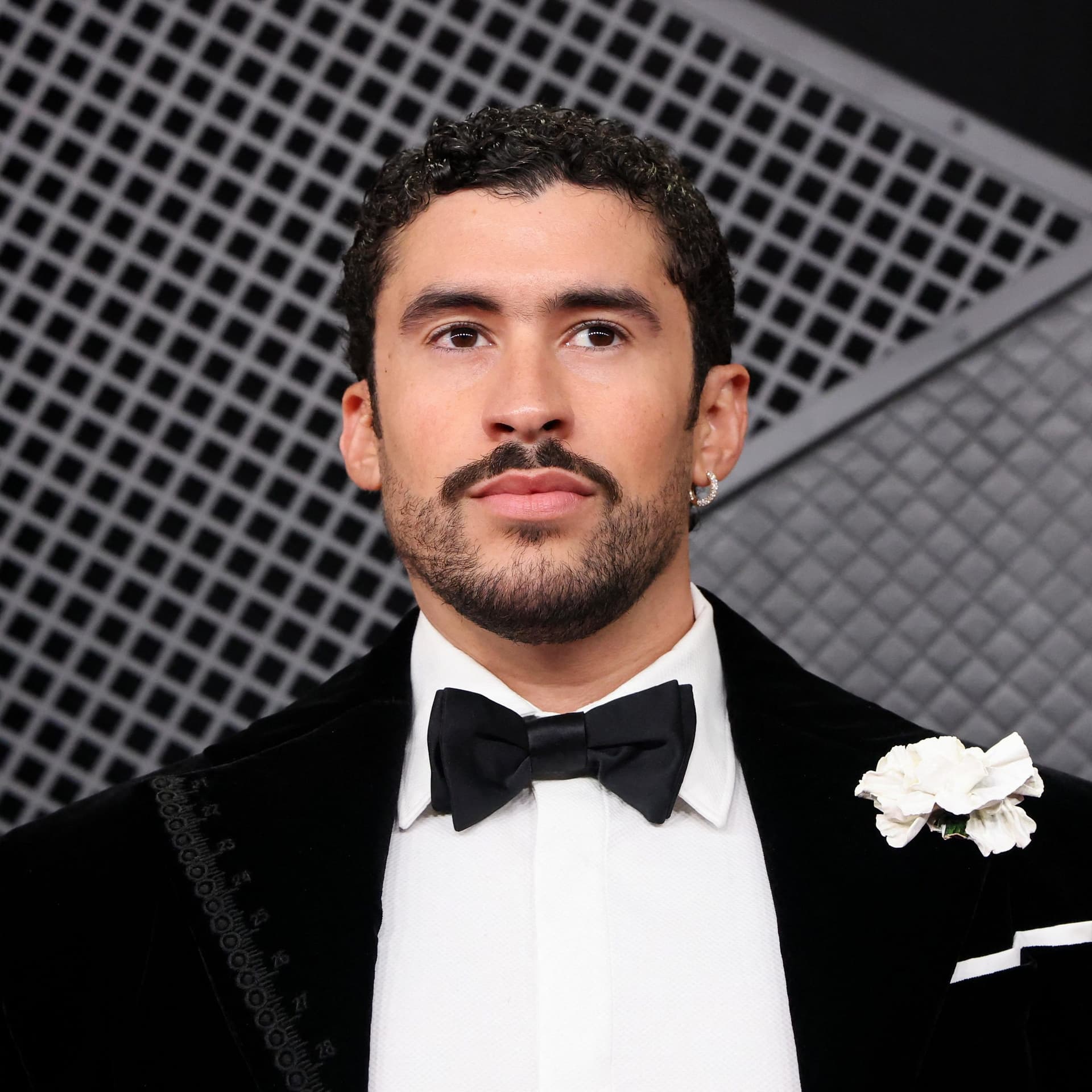
On Sunday, Bad Bunny will perform at the Super Bowl half time show to an audience of more than 100 million people across the world. But the NFL’s choice of the Puerto Rican star has proven controversial, because he has long been outspoken in his criticism of the US government, including most recently at the 2026 Grammy Awards, when he called for ICE agents to be removed from the streets.
In today’s episode, Puerto Rican cultural critic Carina del Valle Schorske, who profiled Bad Bunny for The New York Times Magazine, explains how the artist’s pride in his homeland is infused throughout his music, and considers how he might use the US’ biggest stage this weekend to challenge the president’s policies.
This episode was updated on 5 February 2026 for music rights reasons.
Producers: Hannah Moore and Xandra Ellin
Mix: Travis Evans
Senior news editor: China Collins
Photo: Bad Bunny poses on the red carpet during the 68th Annual Grammy Awards. Credit: Mario Anzuoni/Reuters