
In short
Gen Z-led protests in 2025 (and their “blueprint” origins) and whether they’ll spread or intensify in 2026, focusing on how social media accelerates organization and visibility.
Guests
Marianna Spring, BBC social media investigations correspondent (studies social media’s real-world impact).
Key claims
Youth protests connect across borders via shared tactics and online amplification; internet/social media shutdowns can backfire by increasing frustration; clear single-issue messaging (jobs, corruption, police brutality) helps movements snowball; algorithm-driven feeds and political targeting can also reduce youth unity in places like the US.
Notable examples
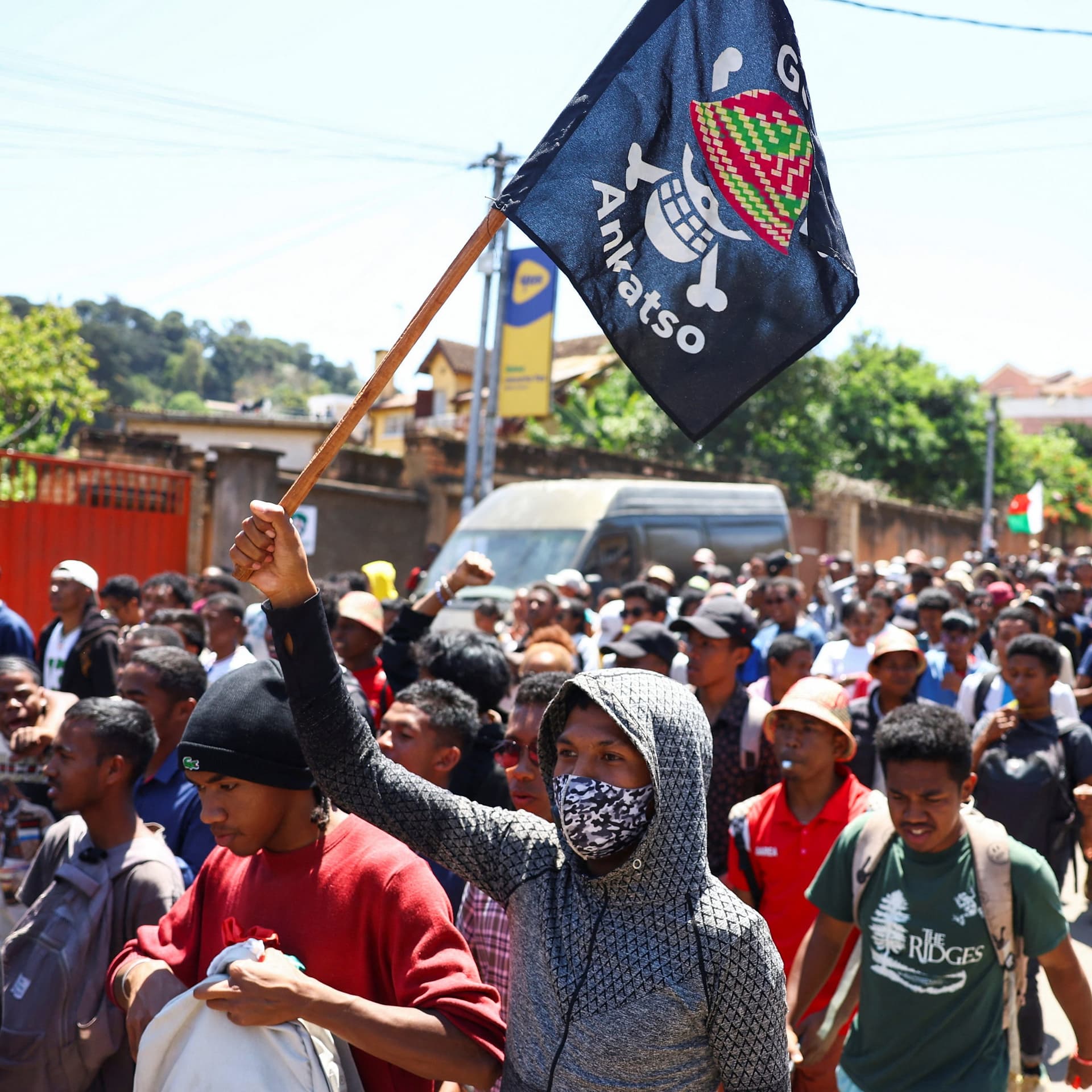
Bangladesh’s July 2024 student protests over civil service job quotas, “July massacre,” and a 10-day internet shutdown leading to PM Sheikh Hasina’s resignation; Nepal’s anti-corruption “nepo baby” anger and a social media ban triggering protests and toppling the government; Kenya’s Albert Ojuang blogger case—arrest, death in police custody, and charges after autopsy findings; shared imagery like the One Piece–inspired skull/pirate flag and rapid TikTok-style dissemination.
Written by AI. May contain mistakes. Listen to the episode to check what was said.
Chapters
Tap a time to open that second in VOThe Rise of Gen Z Protests
0:37 to 1:50
Exploring the emergence of global protests led by young people in 2025.
“The other day on this show, we talked about the people who could change the world in 2026.”
Protests in Bangladesh: The Blueprint
1:50 to 3:35
Analyzing the protests in Bangladesh and their impact on youth movements.
“And today on The Global Story, how social media helped spark a movement that transcended borders.”
Social Media's Role in Protests
3:35 to 6:26
Discussing how social media fueled protests and government responses.
“But the reason that it evolved into this kind of proper mass uprising was because of protesters being killed in something that was dubbed the July massacre.”
Global Spread of Protests: Case of Nepal
6:26 to 11:00
Examining the significant protests in Nepal and their social media dynamics.
“And Mariana, you've described that protest movement in Bangladesh as being a sort of blueprint for other movements that we then continue to see throughout 2025.”
Comparison with Historical Protests
11:00 to 14:00
Reflecting on how current protests differ from historical young-led movements.
“And so you've got a movement that is kind of snowballing.”
The Impact of Social Media on Protests
14:00 to 15:06
Explore how social media accelerates protests and shapes public perception.
“You know, that was at the beginning of Twitter.”
Symbolism in Gen Z Protests
15:06 to 16:56
Discussion on the Gen Z branding and imagery used in protests globally.
“I don't think it would have not happened without it.”
The Bangladesh Uprising
16:56 to 18:58
Examine the events leading to the death sentence of Bangladesh's prime minister.
“And it's quite hard to pinpoint kind of exactly when it first popped up and started appearing.”
Youth Engagement in US Protests
18:58 to 21:43
Analyze the differences in youth protest engagement in the US compared to other regions.
“And like a whopping 1 ,400 of those protesters died during the unrest, which is a huge, huge, huge number of people.”
Iran's Unique Protest Landscape
21:43 to 25:04
Discover the current state of protests in Iran and their connection to global movements.
“There were big protests when Trump was in office his first term, and we actually haven't seen a mass movement of young people here in the U.S.”
Show all 11 chapters
Future of Gen Z Protests
25:04 to 26:21
Speculate on the evolution of Gen Z protests and government responses in 2026.
“And before I let you go, I want to ask where you see this movement going from here.”
Transcript
Automatic transcript. May contain errors.0:00This BBC podcast is supported by ads outside the UK.
0:30so you can monitor and engage with the account while your teen learns how to invest and manage money. Learn more at schwab.com. The other day on this show, we talked about the people who could change the world in 2026. And one group of people we didn't really talk about because they're so big, so diverse, so spread all over the world, are the young people who sparked a global protest movement in 2025. We deserve to be heard, and we deserve to have freedom of speech, and we deserve to live in better conditions. From Bangladesh to Nepal to Morocco to Kenya to the Maldives, young people have been taking to the streets.
1:14They've been demanding, among other things, job security, improved standards of living, and an end to corrupt governments. And in some cases, their ambitious demands have been met. Thousands celebrated in the Bangladeshi capital, Dhaka, after its prime minister, Sheikh Hazina, resigned. And the prime minister of Nepal was forced to resign. Everyone is happy. Everyone is cheerful. Everyone is celebrating. So how did it happen? And could this movement grow and spread even further this year? From the BBC, I'm Asma Khalid in Washington, D.C. And today on The Global Story, how social media helped spark a movement that transcended borders.
1:56And where does this Gen Z revolution go from here?
2:05Marianna Spring:My name is Marianna Spring and I am the BBC's social media investigations correspondent, which basically means I spend too much time scrolling on social media and looking at its impact. And yet you keep going back to that. So I'm impressed. Clearly, you know, despite the dooming gloom so many of us feel from the online world, you find these very interesting stories out there. So thank you for coming back on to talk to us today. Thank you for having me. And Mariana, what we wanted to talk about today are Gen Z protests. And I'm calling them Gen Z protests here for shorthand. But it's this idea that throughout 2025, we saw protests in a number of countries that seem to be connected to some degree.
2:44So why don't I very much begin there? Where does this protest movement that we saw in 2025 originate? What was essentially ground zero for the youth-led protest movements we saw?
2:55Marianna Spring:So I think it's important here that we talk about Bangladesh and some protests that happened there, which actually happened before 2025, the year before, but they've become a bit of a blueprint really for some of the protest movements. So if we go back to July of 2024, It was actually dubbed the kind of Gen Z revolution or the July revolution in Bangladesh. It began with a kind of discontent about jobs and the economy. And it was led mainly by students, a group of students, students against discrimination. Bangladesh remains tense with some students having vowed to continue protests. Over the past week, students marched on the streets against quotas and government jobs.
3:38But the reason that it evolved into this kind of proper mass uprising was because of protesters being killed in something that was dubbed the July massacre. More than 300 people have been killed since a student protest over civil service job quotas began. Three of my friends are dead. See, there are bloodstains on my hand. Why are my hands coloured with the blood of my brothers? The killing of particular protesters was what escalated the movement very, very significantly. And there were charities like Amnesty International, for example, who came out to say that the governments, they described it as a heavy-handed response, had led to the deaths of students and journalists and innocent bystanders and people who should not have been killed, essentially.
4:22And there were really serious concerns about human rights abuses that were highlighted by other groups as well. And so that then really galvanised the movement. And this was happening on the streets, sure, but it was also happening on social media because a lot of the people taking part were Gen Z, and that was the place where they were posting content, encouraging people to get involved, to participate. And once these kind of killings had happened, that was ultimately what led to the ousting of the prime minister at the time, Sheikh Hasina. It's been a day of enormous upheaval in Bangladesh, where after weeks of protests and violent clashes, the prime minister, Sheikh Hasina, has resigned and fled the country.
4:59who fled to India and triggered this whole kind of constitutional crisis. The Honourable Prime Minister has resigned from her post and we will form an interim government to run the country.
5:10Marianna Spring:And that's why it's seen as kind of such a pivotal moment and as this kind of blueprint, this ground zero, because it was a protest. You know, there have obviously been lots of protests involving young people throughout time, but this resulted in, like, government change. Yeah, massive. This is not just the end of the Tyrant Sheikh Hasina. With this, we put an end to the mafia state that she has created.
5:39Something that really sort of made it worse, aside from obviously the protesters who were killed, was that there was this decision to shut down the internet across the country.
5:50Marianna Spring:And basically in a bid to kind of quell the protest movement, they began this shutdown. It was on the 18th of July and it went on for about 10 days. so until the 28th of July. So the social media platforms like, you know, WhatsApp, TikTok, YouTube, Facebook, all remain restricted. And rather than that kind of calming it all down, it sort of had the opposite effect. Everyone was even more frustrated because the place where they were able to express their discontent and to organize themselves had gone away. And so it really sort of made it a lot worse. And then when it came back, obviously, the movement was even more energized.
6:27So that was in the summer of 2024. And Mariana, you've described that protest movement in Bangladesh as being a sort of blueprint for other movements that we then continue to see throughout 2025. Can you tell us about some of the other examples of protest movements that we then saw spread up across the globe? Yeah, so I mean, there's a whole list of them that we could talk about, Togo, Madagascar, Morocco, but I think it's actually really important that we talk and focus quite a lot on Nepal. So the protests that happened in Nepal
6:57Marianna Spring:were probably especially significant because they really, really cut through on social media all around the world. So a lot of these protests... I remember seeing images of this, yeah. Yeah, and they were really almost quite... I don't know if dystopian is quite the right word, but almost a little bit dystopian. You had young protesters doing kind of TikTok dances in front of like burning buildings. And it felt like this, wow, this is revolution or protest or whatever you want to call it in the age of social media. So if we go back to the start of why these protests happened in Nepal, they were very much about corruption.
7:34Marianna Spring:And this feeling that politicians in particular were abusing their power, making huge amounts of money. And this whole Nepo baby thing, which you may or may not have heard of. Protest anger has extended online to videos like this, mocking so-called nepo kids, the entitled children of officials. Basically, this idea that the children of rich and powerful people, in this case kind of politicians, were being given favourable treatment, were being allowed to kind of abuse their positions or their parents could kind of abuse their positions to help their children. And often people use that term Nepo baby to refer to like actors and if an actor's kid then becomes an actor as well, kind of suggesting that you've got a bit of a you've got a bit of a leg up, you've got a bit of help.
8:16Marianna Spring:And when it came to Nepal, it kind of starts with social media. It's protesters seeing social media posts from the very affluent families, politicians, kids showing like, you know, really lavish birthday parties and just, you know, lots of extravagance in a way that they found quite offensive and distressing, not least because they were concerned about the economy and jobs and everything else. So in a way, it's not miles away from how the protests started in Bangladesh as well. It sounds like there were similar socioeconomic concerns. Yeah, it's socioeconomic concerns that are compounded by this feeling that you're experiencing those socioeconomic concerns and the politicians are not, basically.
8:51Marianna Spring:I see. And in the case of Nepal, social media was very significant because it seemed to both be really a bit of a trigger, like people showing off their lives and that feeling of, hang on a second, we're not okay with this. and we're going to go out and protest these nepo babies and then again a social media ban really sort of heats up the the issue here i mean they specifically said the nepalese government at the time that social media platforms needed to be regulated to tackle fake news hate speech and online fraud and so they said right actually we are gonna ban social media platforms including facebook x youtube tiktok so on and so forth and that was what really triggered a load of gen z protesters to go outside the parliament building in Kathmandu and to be like, right, we're not having this.
9:36We really, really want to have social media. And, you know, there's a valid, I mean, I spend most of my time investigating the bad stuff on social media. So there's a valid conversation to be had about the way that people can be protected from harmful stuff, you know, disinformation, hate, particularly kids and teenagers.
9:51Marianna Spring:But their feeling was that, and lots of the protesters were saying this, that this was kind of about like government control. It felt like a restriction of their freedom and their ability to post and express their views and opinions rather than about those harms. And it just, I mean, it really escalated. I really, I remember so well scrolling on my feed and seeing those clips of like the parliament building and flames and people kind of dancing. And I was like, I can't really believe this is, this has sort of happened. And in the end, they toppled the existing Nepalese government. I mean, that was the headline, Mariana, that shocked me.
10:23Marianna Spring:Yeah. And this is what, but this is again, a bit like with the protests in Bangladesh and why it's so interesting. It's like these movements have been so forceful that they have brought about like very, very serious political change, often that some protest groups try to bring about for absolutely ages and have struggled to. And I think the reason for that is in part the kind of focus and a very sort of unified message. I mean, something like corruption is a very sort of frustrating topic that gets a lot of people all on side, even if you have slightly different views. I think that social media copes well with those kind of very clear single issue protests.
11:00Marianna Spring:And so you've got a movement that is kind of snowballing. You think about the first person who, you know, saw a video of a kid, a politician's kid's birthday and thought, oh, I don't like this very much, suddenly being like, oh, wow, we've actually brought about this like quite serious change. You mentioned other countries as well, Mariana. And I do want to have you briefly touch on where else you saw similar movements, because in listening to you talk about Nepal and Bangladesh, I mean, it does strike me that both of these countries are in South Asia. And so I'm wondering if there was something sort of regionally unique to them.
11:32Marianna Spring:It's interesting because several South Asian countries have been involved or participated in these kinds of protests, but we've also seen several countries in Africa where that's happened as well. One of the protests that really stood out to me was actually some that happened in Kenya. a blogger, a 31-year-old blogger who's really popular for posting content on X and YouTube, who basically would talk about social issues in Kenya, was a teacher. His name was Albert Ojuang. He was arrested after Kenya's deputy police chief filed a complaint accusing the blogger of deflaming him on social media. So again, it kind of all comes back to what's unfolding on social media.
12:09So he gets arrested and then he dies in police custody. And later, three police officers were charged along with three civilians for his death. And police had initially said that he died of self-inflicted wounds, but they were forced to retract that because the autopsy found that he likely died from assault wounds. And this just triggered outrage.
12:29Marianna Spring:I mean, in this case, particularly about police brutality and police corruption. But, you know, the audience, the people who were following this blogger are all young. And I think one thing that's interesting as well is you see this gap in how government officials perhaps underestimate how crucial some of these, you know, people that they might not realise are a big deal because they're not a big deal in their world in, you know, maybe more traditional media or other places are a massive deal to huge amounts of the public, particularly younger people. And so someone like this dying, who was like really, really popular, had a massive reach online, is a really big deal for people.
13:03Marianna Spring:They were absolutely outraged. And I think that was really at the root of it as well. This was about that real disconnect, I think, that Gen Z are having with the political establishment. Does that feel different from your vantage point than other protests we've seen in history that are led by young people? I mean, I'm thinking here in the US of the Vietnam War protests led on college campuses, right, by young people. You think of the Arab Spring movement, very much championed by young people in a number of countries through the Middle East. Does this feel different in some ways from your perspective?
13:36Marianna Spring:Yeah, it's interesting because ultimately, I guess, the raw ingredients are quite similar, which is you've got younger people getting involved and organising often around a single issue, which is really important to them. And it's a kind of boiling over of real sort of frustration and discontent, particularly at politicians. I think the difference with these protests, so if you think about the Arab Spring, for example, You know, that was at the beginning of Twitter. It was that kind of different age of social media where social media was actually pretty instrumental in helping people to organize and coordinate.
14:10Marianna Spring:But content wouldn't be being sort of actively recommended and pushed to as many people in quite the same way as now. I think if you think of, you know, you're talking about the Vietnam War protests. I mean, there's loads of iconic images from lots of these protests. But if you think about the speed at which they would be disseminated and how they would be disseminated, like you'd see them in print. You'd see that, you know, and the time it takes for that to happen. And it just means that the effect now is different. Like you can post yourself dancing outside parliament on fire and it will be on TikTok within 10 seconds.
14:38Marianna Spring:And it can be basically halfway around the world within 10 minutes. And so I think that's why people were quite taken aback because it happened at kind of such speed. It was sort of like, whoa. If it was lightning speed. Yeah, it was like, oh, wow, this has suddenly happened. It wasn't like the kinds of protests where it's been going on for months and people have been sitting in a particular square or turning up at a particular place. And I think that social media absolutely contributed to the kind of speed and the sort of ferocity with which it happened. That's interesting. It sort of exacerbates what might have happened otherwise, you're saying.
15:09Yes, yeah. I don't think it would have not happened without it.
15:11Marianna Spring:because I think lots of the underlying issues here, whether it's economy or corruption, exist whether social media exists or not. I think that social media makes some of those things more visible because you can see, for example, lavish parties, all that kind of stuff. You can see the content, one. And I also think that you can share your discontent with other people more easily than you could even back at the time of the Arab Spring. You've mentioned the image of seeing people in Nepal dancing in front of a burning building. in front of the burning parliament, you said, right? Were there any messages or images that were shared in one protest movement that were sort of replicated in other places?
15:52Marianna Spring:I think what's been interesting in other places is how much movements have lent into the Gen Z branding of it all. So people will like very deliberately have placards where they'll have like, you know, Gen Z and a skull. So there's images of just young people with these kind of like, we are representing our generation. So I'd say you mentioned the skull. Are you referring to that the flag that had the kind of pirate image? I saw reporting about that after some of these protests. Yeah. So there's quite a few kind of different ones. There's a few people have had these ones where they're like skulls and they've got a.
16:25Marianna Spring:It looks like a pirate flag, right? Yeah, like a pirate. Yeah, yeah, exactly that. So it's like this Gen Z skull pirate, which shows this kind of skull and crossbones, and it'll often be wearing like a kind of hat, basically comes from this anime, which is like manga, like a type of graphic art cartoon in Japan. And there's this anime called One Piece, and this symbol was from that. And this symbol has essentially become a kind of emblem of anti-establishment feeling among younger people. And it's quite hard to pinpoint kind of exactly when it first popped up and started appearing. Because actually, if you look at almost all of the photos from any of the protests we've been describing, whether it's ones that have happened in countries in Africa or South Asia, or even some of the ones that have happened in South America as well, you can see pictures of this flag in kind of like different shapes and forms, but people will have it like.
17:15Marianna Spring:And what's interesting as well is it's very sort of social media friendly because it's quite striking. And obviously it's kind of like a little bit, it's a skull, it's a little bit shocking. It's also quite kind of like graphic and punchy, which perhaps is explained a little bit by its anime roots. Like it's quite visually pleasing. And it traveled really well on social media because you can then express your kind of solidarity by saying, all right, I'm going to reshare images of this on my Instagram story or wherever it might be on X.
17:49Mariana, we began this conversation by you talking about the protest movement that, in your view, kicked off this year of Gen Z activism, and that was the uprising in Bangladesh, which actually took place back in 2024. I recently saw headlines that the prime minister at the time, she has now been sentenced to death in absentia. This happened in November. And my understanding is that this was all tied to the student protests. Can you tell us what happened there? I mean, it feels unfathomable to me that a protest movement wouldn't lead not just to the ousting of the leader of a country, but then to that leader being sentenced to death.
18:32Marianna Spring:Yeah, and I think as well that most of the people who took part in the protest would not have foreseen that. So she has been sentenced to death, and specifically for crimes against humanity, over her crackdown on student-led protests, which led to her ousting. So it's actually the response to the protests themselves rather than what triggered the protests in the first place. I see. And what she's been found guilty of is allowing lethal force to be used against protesters. And like a whopping 1 ,400 of those protesters died during the unrest, which is a huge, huge, huge number of people. Hasina has, you know, denied all of these charges and had said that the trial was biased and politically motivated to quote it.
19:15leader. Where is she now, by the way? You said she was in India. Yes, she's still in India at the moment. And this is a little bit of a kind of diplomatic challenge, really, because obviously, Dhaka have requested that she be extradited, but Delhi's not at the moment shown that it's going to comply. And therefore, I'm looking at some different kind of experts who know more about the way these systems work than me, and think it's unlikely that her death sentence will actually ever be carried out. And in some ways, I mean, the counter argument would be, well, if you're now in charge of Bangladesh, this is quite an effective way of trying to quell those movements by saying, look, look, there's some accountability for the people who carried this out.
19:54But actually, do we really have to go through with that accountability if she's not here, which she's not? So it's a symbolic accountability. But nonetheless, I mean, it does feel like But it's a huge deal for the protesters. An extreme accountability, right? I mean, and so that makes me wonder, does this outcome in Bangladesh suggest anything about the impact and the future of these movements?
20:13Marianna Spring:I think that what it really shows is that they can be very effective, these protest movements, at bringing about political change when they're carried out in this way. I think what's particularly interesting actually is comparing the way that this has happened in regions like, you know, South Asia, for example, or some countries in Africa, versus what's actually happening in places like the United States or the United Kingdom or other European countries. There have been some very united protest movements, particularly around, for example, the war in Gaza. But there hasn't been that kind of same Gen Z type protest thing happening, for example, in the United States where...
20:55No, certainly not against the government, right? I mean, when we talk about the context here in the United States, I think it's fairly obvious that you have not seen large numbers of young people out in the streets protesting against the Trump administration in this White House. In fact, there have been these occasional protests dubbed No Kings protests that have been in several cities. And, you know, they are protesting the Trump administration and what they view as threats to democracy. And I've driven by some of them and you'll see that there's a lot of what we would describe as the baby boomer generation, right?
Read the full transcript
21:28the generation after World War II, who say they're out there to protect democracy for the young people, but you don't see all the young people at these protest rallies. And that has piqued my curiosity because it seems different than what we saw when Trump was first elected in 2016. There were big protests when Trump was in office his first term, and we actually haven't seen a mass movement of young people here in the U.S. in a similar vein this time around.
21:52Marianna Spring:Yeah, I think that there's a kind of combination of factors that have contributed to the lack of kind of in real life action from younger people. I think that some of it is to do with the fact that actually some politicians in the US, I mean, particularly Donald Trump, has been very effective at gaming the algorithmic system, at gaming social media feeds and getting that content out to younger voters, particularly through kind of like streamers or podcasts, alternative media. And therefore, there's a section of that demographic we're talking about who actually are kind of on board with Donald Trump and they're not feeling that frustrated with the government.
22:26Marianna Spring:I do think that it's worth kind of better understanding how algorithms in general are shaping younger people's views as well and how that can affect sort of what people believe. I mean, as people are pushed kind of further to the extremes on either side of the political spectrum, you find that they are less kind of united around universal issues, perhaps in the same way as they would have been even 20, 30 years ago. And that's kind of interesting. Like people who are feeling disillusioned with politics or unhappy about the economy could actually sit on kind of totally opposite ends of the political spectrum and therefore choose to express their discontent in slightly different ways.
23:05Marianna Spring:I think all of that kind of goes part of the way to explaining why that's happened in this way. So we're having this conversation in early January. And if we look around the globe, the protests that are capturing the most attention in this moment are in Iran. And I want to understand if you see what is happening in Iran, having any connection to some of these other protest movements that we've been talking about. I realize the context, the history, everything is very unique within Iran. And I'm not saying, and I don't want to suggest that any place is like duplicative of another place. So maybe this has nothing to do with what you are describing in the Gen Z protests.
23:46But I feel like it's germane to ask you how, if at all, you see Iran fitting into this broader context.
23:54Marianna Spring:Yeah, it's interesting because, I mean, the situation is still evolving at the moment. And so we kind of can't definitively say exactly where it kind of sits within this framework, I guess. What I would say is, if we go back earlier than Bangladesh, and I think it's important to talk about this, there was this uprising that happened in 2022, which was sparked by the death of a young woman, Masa Amini, a young woman who was accused of by the morality police of not wearing her veil properly. And that, like, the scale of that on social media, there were huge numbers of young people, particularly younger women in Iran posting content kind of in defiance against this.
24:30Marianna Spring:And I would say that this time around, when it comes to these protests, I haven't seen that scale of content in the same way. But I would say that it's not kind of only Gen Z in a way. And it's not only young people, right? Yeah. No, I guess because of the particular political context as well in Iran. But there is an element of it's posted on social media and that becomes a useful tool. Although also, again, as is the case with some of these other protests, social media use can be restricted both in terms of what we can see coming out of a place and what people can post and see and I think particularly when it comes to Iran where it's you know very difficult for journalists on the ground our colleagues at BBC Persian to know exactly what's going on as well it can be even more difficult than some of these other places we're talking about like Nepal or Bangladesh to actually figure out what exactly is happening here and the kind of exact demographics of who's getting involved.
25:21So we're now in 2026. And before I let you go, I want to ask where you see this movement going from here. I think that there is absolutely a
25:31Marianna Spring:blueprint that has been set for these kinds of Gen Z protests. And I would be very surprised if there were no more this year. I think what will be interesting is whether the politicians in those places, having seen what's happened in Nepal or Bangladesh, realise, oh, hang on a second, And we're not kind of getting this right strategically and we need to do something else about it. Otherwise, we're going to have lots of these things on our hands. And I was thinking about, you know, places like Australia, for example, where they've banned social media for under 16s. You're talking about a social media ban that we saw Australia recently announced.
26:03Marianna Spring:And you haven't seen, I mean, obviously it's under 16, so it's a younger group of people. It's actually more gen alpha. But you haven't seen, I mean, you've seen some people who are not very happy, but you haven't really seen protests and stuff like that. This year, one of the big focuses will be about kind of the impact of social media and how is it regulated or not and how does that work? I'd be interested to see if in some places other governments try to carry out these kinds of things and they are met with some level of resistance.
26:31Well, Mariana, thank you so much. You've been so generous with your time and it's always a treat to have you on the show. So thanks for coming back. Thank you so much for having me.
26:45That was the BBC's social media investigations correspondent, Mariana Spring. By the way, before we wrap, I've got a quick announcement. We have something exciting coming up that we would love to get your help with. All next week, we're going to be looking at the new world order and the so-called spheres of influence around the globe. Who has power and how are they using it? It'll be a special collaboration with some of our sister podcasts here at the BBC. Shows like Ukrainecast and Focus on Africa. and we would love to get your questions or ideas. So drop us a line at theglobalstory at bbc.com.
27:20And that's it for The Global Story for today. This episode was produced by Zandra Ellen and Kat Farnsworth. It was edited by James Shield and mixed by Travis Evans. Our senior news editor is Chyna Collins. Thanks as always for listening. Have a great weekend and we'll talk to you again on Monday.
27:42Thank you.
From the publisher
Throughout 2025, a massive youth protest movement took shape across the world. From Bangladesh, to Nepal, to Morocco, to Kenya, to the Maldives, young people were taking to the streets to demand, among other things, job security, improved standards of living, and the toppling of corrupt regimes. And in a number of cases their ambitious demands were met.
Today we speak to the BBC's social media investigations correspondent, Marianna Spring, about how social media helped spark a movement that transcended borders, and where the so-called, 'Gen Z Revolution' goes from here.
Producers: Xandra Ellin and Cat Farnsworth
Sound engineer: Travis Evans
Senior news editor: China Collins
(Photo: A protester carries a banner featuring a Malagasy version of the logo of the popular Japanese manga One Piece, during a nationwide youth-led demonstration over frequent power outages and water shortages, in Antananarivo, Madagascar, October 13, 2025. Credit: Siphiwe Sibeko/ Reuters)