
In short
Whether President Trump’s “Board of Peace” plan for Gaza can realistically lead to Hamas disarmament, given conflicting Israeli/Hamas positions, missing logistics, and ongoing fighting.
Guests
Jeremy Bowen, BBC international editor; reported from 90+ countries over 40+ years. Rushdie Abu-Aloof, BBC Gaza correspondent; grew up in Gaza and maintains contacts inside Gaza.
Key claims
Hamas agreed to decommissioning, but Israel says it will wait until Hamas fully decommissions weapons; Israel has no intention of withdrawing. The roadmap’s timetable is vague and depends on non-existent elements like an International Stabilization Force and a technocratic “NCAG” body not yet in Gaza. Decommissioning is linked to phased Israeli withdrawal and disarming other Palestinian militias.
Notable examples
“Yellow line” expansion to ~70% of Gaza; UN-reported reliability of Hamas-run health ministry figures (1,200+ killed since October ceasefire).
Written by AI. May contain mistakes. Listen to the episode to check what was said.
Chapters
Tap a time to open that second in VOContext of the Peace Agreement
1:16 to 2:15
Discussion on President Trump's announcement regarding Hamas disarmament and Israeli withdrawal.
“our show about where the world and America meet.”
Israeli Position on Disarmament
2:15 to 4:10
Jeremy Bowen discusses Israeli hesitations and the implications of Hamas's agreement.
“Under the agreement, Israeli forces will withdraw as a new Palestinian police force is put in place.”
Details of the Disarmament Process
4:10 to 6:34
Analysis of the logistics, timelines, and challenges of the disarmament agreement.
“And I think this government, actually, the evidence is, has no intention of so doing, despite what the Americans may hope for.”
Background of the Peace Deal
6:34 to 8:27
Exploration of the geopolitical context and actors involved in the peace negotiations.
“The entry of NCAG, this is the National Committee for the Administration of Gaza, of the technocratic body and the deployment of the International Stabilization Force, the ISF.”
Hamas Response and Internal Challenges
8:27 to 12:20
Discussion of Hamas's reaction to the deal and the conditions in Gaza affecting their stance.
“What do we know about the backstory on how this deal came about?”
Understanding Hamas's Perspective
12:20 to 14:02
Insights into how journalists like Rushdie Abu Aloof gather information about Hamas's views.
“Of course, there are plenty of people who used to have actually not bad lives at all, who now are living in tents and have lost everything.”
Understanding Hamas's Perspective on the Deal
14:02 to 16:34
Gain insights into how Hamas's stance on the deal evolved and the context of their acceptance.
“Gaza and, you know, significant people in the Palestinian side, inside and outside Gaza.”
Life in Gaza Post-Ceasefire
16:34 to 21:00
Explore the ongoing struggles and conditions faced by Palestinians in Gaza since the ceasefire.
“is not maintaining pressure on Israel to commit to its part of the agreement.”
The Political Landscape Affecting Peace Talks
21:00 to 24:15
Understand the political complexities that hinder progress in peace negotiations between Israel and Hamas.
“I want to ask you about what life has been like in Gaza for Palestinians since the ceasefire was initially announced last October.”
Challenges of Trust and Verification in Peace
24:15 to 27:17
Learn about the importance of verification in peace agreements amidst deep-seated mistrust.
“Board of Peace from Bulgaria, he's very experienced in the way that things have happened in the Middle East.”
Transcript
Automatic transcript. May contain errors.0:00This BBC podcast is supported by ads outside the UK. If you are currently overpaying on software to run your business, remember this number, 10 ,000. That's the number of new businesses that join Odoo per month. Join Odoo today at odoo.com. That's O-D-O-O dot com. It's now been one week since President Trump announced that his Board of Peace had reached a historic agreement in Gaza for the complete disarmament of Hamas. The U.S. president described it as a monumental step toward peace and security. It's a great breakthrough. Nobody's ever thought that would be possible, to disarm Hamas. Trump said that as Hamas disarms, Israeli forces would withdraw.
0:48So it's a big step for the Middle East, and people are really impressed by it. But the question of who goes first still seems unresolved. Hamas confirmed that it agreed to the plan. The Israeli prime minister says his country did not agree to the terms. And in the days since this deal was all made public, Israeli strikes in Gaza have continued. From the BBC, I'm Asma Khalid in Washington, D.C. And welcome to The Global Story, our show about where the world and America meet. Today on the show, could this board of peace plan actually work?
1:30Jeremy Bowen is the BBC's international editor. He's reported from more than 90 countries over more than 40 years. You know, Jeremy, we were speaking on our team just the other day about whatever happened with this Board of Peace that we heard about from the Trump administration. It was nearly six months ago that it had its first big meeting. And candidly, we have not heard very much about the Board of Peace. or from the Board of Peace, I would say, in the interim. And then a week ago, President Trump announced that the board had reached, in his words, a major milestone in the Gaza peace plan.
2:09President Trump announced his Board of Peace has reached an agreement which will completely disarm Hamas. Under the agreement, Israeli forces will withdraw as a new Palestinian police force is put in place. Well, if Israel doesn't go along, Hamas says it will back out of the deal. Here we are a week after that announcement was made by the White House. Do you have any greater clarity of whether Israel is on board with this deal and whether Hamas is on board with this deal?
2:39Jeremy Bowen:Let's start with Israelis. The Israelis have said they will essentially wait and see until Hamas have decommissioned all their weapons. And of course, Hamas does not want to disarm. Now, what shifted Hamas to accept the idea of decommissioning their weapons? I think the arguments being made by the intermediaries who they believe have their interests at heart, Palestinian interests at heart, the categories of Turks, is that, look, if you want to get any kind of a political role in the future, Hamas has to evolve. and the new overall political leader of Hamas, Halil Ahaya, is a man who is, he's identified with some, you know, very sort of hardline Hamas views, but also, I mean, I've met him, I interviewed him a year into the Gaza war, and he struck me as a guy with a wide understanding of what was going on, in no sense some kind of ranting and raving ideologue, Plus, what this does by accepting this form of words, it bats the ball back into Israel's court.
3:52Jeremy Bowen:And I think they're well aware of the fact that President Trump and his people will be keen to have a deal. And so then the question is the pressure might go on to Israel to do their side of the bargain, which is supposedly to withdraw from Gaza. And Israel, I think, has no desire whatever to pull back from Gaza. And I think this government, actually, the evidence is, has no intention of so doing, despite what the Americans may hope for. So that's more or less where they got to at the point where the deal was announced. Can I ask you a few questions about the process and the logistics of this deal?
4:32What about timeline? Has a timeline been specified?
4:36Jeremy Bowen:There is apparently a document which has a timetable on it. But at the moment, you know, they haven't reached the start line. But look, I think we can get a bit too lost in the detail of stuff that actually hasn't really emerged. And of course, there's always ambiguity in diplomatic conversations, because sometimes that's the only way you can get a deal. And so some things were left deliberately vague, you're saying. So sometimes it's a cloak. It can be a cloak. But it only works if there is impetus behind the process and both sides essentially feel that they don't have a choice and they have to move towards some kind of agreement.
5:17Jeremy Bowen:And I question whether that point is at all reached in this process. I mean, what there is, and it's available online, is a document which has got 15 points. I've got it in front of me at the moment. If anyone is watching this visualized podcast, you'll see me looking at it. I've printed it out. It has 15 points. It's called A Roadmap for Completing the Implementation of President Trump's Comprehensive Peace Plan in Gaza. And it came out just at the same time as that agreement. This is essentially what they're supposed to have signed up to. So it sounds like time frame, not entirely sorted out yet.
5:55What about the actual weapons? Do we have any sense of how many and what weapons Hamas has?
6:01Jeremy Bowen:No, they talk about things like heavy weapons. What does that mean? Well, yes, heavy weapons means things which aren't Kalashnikovs, are not light weapons, probably aren't heavy machine guns, but they're things where you might fire a shell out of it, rocket launcher. It's not clear how much of that stuff they've actually got left, anti-tank weapons. And so you're asking about decommissioning. I'm just looking at point eight. A process to decommission and store heavy weapons, military production sites, depots of weapons and tunnels shall begin after completing the remaining commitments under the Shamal-shaped protocol.
6:38Jeremy Bowen:The entry of NCAG, this is the National Committee for the Administration of Gaza, of the technocratic body and the deployment of the International Stabilization Force, the ISF. There is no ISF, right, at this point. This is meant to be a kind of peacekeeping force. It doesn't exist. And this commission is a Palestinian technocratic official? Yes, a sort of new government. So the weapons would not be going to the Israelis? No, a new government. And they would be, and it's not quite sure what the details would be, But these weapons would be under the sort of overall control of the National Committee for the Administration of Gaza, which is this new technocratic body, this NCAG, I don't know how they're calling themselves, that hasn't entered Gaza.
7:27All right.
7:28Jeremy Bowen:So none of that has happened. I mean, this sounds very far away from actually happening. It is. But it also, this is crucial, also in point eight. this process shall be linked to an Israeli withdrawal in phases from the areas under its control in Gaza and the decommissioning of armed militias. Now, armed militias is a reference to the militias of Palestinians that Israel supports there. And in some of the areas that they control, say in the South, they have armed and established militias, which a lot of Palestinians say They basically were formulated on, some of them are criminal gangs. And they have been doing, you know, some of the Israelis, you might say, dirty work in Gaza.
8:13Jeremy Bowen:And Palestinians who've chosen to work with the Israelis in return for Israeli protection, no doubt for a lot of money, and also for weapons. And so they will have to lose their weapons as well, according to the agreement. What do we know about the backstory on how this deal came about? Because it didn't seem to be that Gaza was really, quite frankly, the chief foreign policy priority for this White House for the last several months. Well, of course, the White House and Donald Trump himself have had a lot of other things to think about, notably the war with Iran. And President Trump's attention span is notoriously brief.
8:55Jeremy Bowen:And you'll remember back in, well, it was last October when they had the ceasefire in the Gaza War. He welcomed it. He went out there. He was in Israel. He went to Egypt. He said it was the most significant thing that's happened in the Middle East for 3 ,000 years, that there would now be peace. You know, he's never won, as you know, to undersell a deal. But the reason why you probably haven't heard from the Board of Peace all that much in the last six months or so is because I don't think, And apart from their director of the Board of Peace, who's been doing a lot of diplomacy, there hasn't been a great deal going on because, you know, a lot of it depends on America's focus.
9:37Jeremy Bowen:And Trump's two favorite envoys, Steve Witkoff and Jared Kushner, his son-in-law, have been very much involved in other things, notably Iran. So what's been happening, though, is that there is mediation going on. The Qataris are very involved. The Turks have been very involved with Hamas, the Egyptians, and Mr. Nikolai Mladanov, who is the director of the Board of Peace, who is a Bulgarian diplomat, former defense minister, a man who's had a number of jobs in the Middle East and is well connected. And so they've been trying to get this thing going. We've heard from Trump administration officials who say that Israel was consulted at every step along the way.
10:25We heard from President Trump himself characterize Israel as being very happy with this deal, and yet that does not seem to be the tone and response that, at least publicly, we have seen from anyone in the Israeli government.
10:37Jeremy Bowen:One of the great ironies of this, and again, this is from sources involved in the talks, is that essentially, again, as one source said to me, the Israelis were in the room. I mean, not literally in the room with Hamas, but they were involved in the negotiations because Mladenov would be talking to them. But they talk as well to the Egyptians. The Israeli government itself isn't very happy about talking to the Turks, and they're not keen on the Qataris either. And they're also said to be unhappy about this whole idea of concept of decommissioning. What does that mean? what they'd like to see is the whole lot of them either in Israeli hands or put into some gigantic metal grinding machine that will destroy them all.
11:19Jeremy, I get a sense now from you of what the Israeli response to this deal has been. What has Hamas' response been and how did you glean what they were thinking? Look, Hamas have agreed to the deal and that in itself is significant because it is the only time up to now that they have agreed to disarm. What Hamas believes is a legitimate armed struggle against Israel is deep in their DNA as a movement. Hamas is an Arabic acronym for the Islamic resistance movement. And resistance means fighting, right? And so you need weapons for that. So this for them is potentially a very big deal. There are sweeteners in this whole thing for them.
12:05but I think that they're essentially at a point where they are aware of the appalling conditions inside Gaza. They're aware as well that they need to try to regain some credit with while they have a hard core of support inside Gaza. Of course, there are plenty of people who used to have actually not bad lives at all, who now are living in tents and have lost everything. There's disease. There are problems with getting clean water. There is more food getting in than there was. And don't forget that even before this war started, when Palestinians had the whole of Gaza, not a big area, but the whole of Gaza, it was still one of the most overcrowded places on the planet.
12:54And now that same number of people are in basically a third of the territory that once they occupied. So that is desperate. And while, believe you me, they blame Israel, they also blame Hamas for all of that. Now, look, people like me, journalists like me, are not allowed into Gaza by the Israelis. And I think that's clearly because the Israelis do not want free reporting by foreign media on the ground, because they essentially have things they don't want the world to see. but we do have people who know way more about gaza and the person who i always talk to is uh one of my most esteemed colleagues who is our gaza correspondent rushti abu aloof now rushti got out with his family some months into the war but he's kept very much in close touch with what's happening there.
13:51He grew up in Gaza. I've known and worked alongside Rushdie for, gosh, best part of, I suppose we're getting on for 30 years, certainly 25 years. He talks to everybody inside Gaza and, you know, significant people in the Palestinian side, inside and outside Gaza. So I know you've been talking to him and believe you me, he is well worth listening to.
14:22Rushdie, I want to understand how you go about understanding what Hamas thinks about this deal. Do you pick up the phone? And if so, who do you call? Well, first, I was lucky to be in the right place in the right time, because Hamas delegation was in Cairo almost in the same time I arrived to Cairo. And I was in contact all the time with them. And that night, early in the evening, I was talking to the Egyptians and to Hamas, and they were not expecting an announcement overnight. They said, if it happened, it will happen within like 48 hours. And so I felt a bit relaxed, and I was like driving back home when I got the alert about Trump, you know, posting about it.
15:11But I pulled out the car nowhere in the middle of like highway. And then I started straight away talking to contacts here in Hamas, in Cairo and in Doha and everywhere. And then we, within, I think, 30 minutes, I received, you know, a text saying that Hamas accepted. And I know that you're still reporting on the situation inside of Gaza. You're in touch with people inside to gauge how they're doing and how they're reacting to some of these latest developments. When this announcement came down from President Trump just the other week, how surprising did it seem to you? It was a surprise. No one was engaged.
15:55No one wanted to talk. No one believed what happened because this is not the first time, you know. Every few weeks they said, wow, there is Hamas delegation in Cairo going to make a deal. and it failed. So the people were very frustrated about it. And I mean, the announcement came almost overnight and Gaza has no electricity and very little people who have access to the internet because most of the infrastructure for the communication was destroyed. You feel that the people after this, like almost three years, they lost hope. And also they believe that America is not maintaining pressure on Israel to commit to its part of the agreement.
16:42And many Palestinians equally accuse Hamas of causing all of what is going on in Gaza, and they speak openly about it. And one of them was like posting like a small sentence saying, this is the same offer that was in the table back in March when Hamas first rejected this roadmap presented by the Peace Council. Why, they said, why are you accepting something that you rejected about five months ago and you caused all of this? Had you been hearing rumblings from Hamas officials that something might change that would lead them to accept this deal in this moment? Well, to be honest, it was a surprise for many people, but not for somebody like me who's following day by day everything.
17:31So tell me more.
18:01And now we have a leader who is from Gaza, who is backed by the militants in Gaza and by most of the members in Gaza. So just to pause on that, Rushdie, in the past you were saying there were these five members and they had to collectively agree nobody could dissent. Exactly. And it's hard to reach an agreement. Yes, yeah. It's hard to make a decision. And the man who won this position was the head of Hamas, his chief negotiator. So he's the one who is struggling. Khalil Hayyah. between Qatar, Turkey, and Egypt. He made the first deal. He has a very good connection with the mediators. And he knew how to play this game, you know, if we call it a game.
18:43Second, I think Hamas was not secret. They were supporting Iran in the war with America from the very beginning. And they were hoping that the result, if it works in the Iran hand, then Hamas will have leverage from it. They were not hiding this. They upset the Qataris who host Hamas for a very long time. And Qatar had to deport some of the Hamas supporters because by the time they were supporting Iran, Iran was hitting Qatar, Kuwait, the Gulf countries, and Jordan and everywhere. So they were, I think, also pitting on time. Back in October, there was a very good ground for making it a better deal.
19:26But Hamas decided to delay all of the important issue, including the disarmament and the future government of Gaza, as long as possible. Keep delaying it until something has changed. either Netanyahu coalition is you know collapse or regional shift to Iran and then Hamas can benefit from it and they realize that they face a dead end it is going to be a very complicated and very long process because the committee which is called Technocrat Committee which was appointed by the Peace Council to replace Hamas government in Gaza are still in Cairo they work from a a hotel lobby in Cairo, and they don't have the money or the men or the security.
20:17Have you met them, Rushdie? I met them. I met all of them. I met the head of this committee. He's a good guy, but, I mean, he has nothing in his hand. I did ask him, do you have money to spend in Gaza? They said no. So did you have any idea how you're going to work in Gaza? How the disarmament process is going to take? Who's going to take the women from Hamas and put it somewhere? They have no idea about anything. So you feel that it is almost unfinished deal. Too many missing details. Who's going to pay for it? What's the time frame? When and how? So there is too many details, unanswered questions.
21:00I want to ask you about what life has been like in Gaza for Palestinians since the ceasefire was initially announced last October. More than 1 ,200 people have been killed by Israeli strikes since that October deal. That's according to the Hamas-run health ministry, whose figures are considered reliable by the United Nations. And given that stat, I am curious to understand what the ceasefire actually feels like for people in Gaza. How tangibly has it really changed the reality on the ground? Well, since October, when they announced the ceasefire, yes, there are less Israeli strikes comparing to before the ceasefire.
21:43And there are more Israeli aid allowed into Gaza, but not as enough as people wanted to be. And the ceasefire was not as good as the people hoped for.
21:59Every day there is explosions. Israel is expanding what is called the yellow line, the yellow area. The yellow area is the area that under Israeli control. And it's now reaching almost 70 % of Gaza. So 70 % of Gaza is under Israeli fully control. Palestinians are not allowed to enter it. And that has expanded since the ceasefire. It is expanded because it was originally back in October, it was 56. And now it's almost 70. So every day they are pushing people back into this very small strip of land where about 2 million people, medical facilities are destroyed. Cancer patients are dying every day because of the lack of medication.
22:48There's no running water in Gaza. I would be able every morning to take you for hours to get some clean water. So the suffering has not stopped.
23:04Well, Rishi, thank you for joining us and thank you for bringing your reporting and your insights. Not at all.
23:17Jeremy, hearing how much of this deal still, it seems, is unresolved, I'm left wondering how this actually moves forward, because it sounds like the Israelis want Hamas to do something first. They want them to completely disarm. And it sounds like Hamas is saying, no, you've got to do this other thing. And the question is, who goes first? And ultimately, it almost sounds like you need these things to happen simultaneously. You need Israel to withdraw from Gaza and you need Hamas to disarm, but you need them to happen at the same time. And it sounds like there is limited political capital from a party like the United States right now to be able to nudge this along and make sure it happens at the same time.
23:57You have been all over the world for the last 40 years covering wars and conflicts. Have you ever seen peace come out of a situation like this with two sides so fundamentally far apart who do not seem to trust one another?
24:12Jeremy Bowen:Look, Mr. Mladanov, who is the diplomat, who is the director of the Board of Peace from Bulgaria, he's very experienced in the way that things have happened in the Middle East. He's had various, he had a big UN job dealing with the Middle East, so he knows what he's on about. And what they've said is that they appreciate that there is zero trust between both sides. That's why the documentation that's come out has been very detailed. It's a step-by-step basis. And essentially, the idea is that it's verifiable as you go. You don't have to trust, but you can verify. That's realistic. But it's also a sign of how really hard all this is.
Read the full transcript
24:55The thing is, everything is political.
24:59Jeremy Bowen:And the political side of thing on the Israeli side is that there's an election coming up at the end of October. And Netanyahu is on the ballot. He's not just on the ballot, he's behind in the polls. And the presumption among Israeli politicians is there are no votes, zero votes in being seen to be soft on Hamas. so any kind of concession towards Hamas is a potential vote loser and don't forget Netanyahu's language when after the 7th of October attacks throughout the war he said there will be total victory Hamas will be wiped off the face of the planet and now actually Hamas is a player in negotiations they they are they are still there they've lost most of their senior people and thousands of their fighters, but they are still there.
25:54Well, Jeremy, thank you for taking the time.
25:57Jeremy Bowen:Thank you very much. Thanks for having me.
26:06That was Jeremy Bowen, the BBC's international editor, and Rushdie Abu-Aloof, the BBC's Gaza correspondent. A reminder that if you all have any questions, thoughts, comments, we always appreciate hearing from listeners. You can email us at theglobalstory at bbc.com. And thank you to Luis, who sent in this kind note praising Will Grant's excellent reporting on our show from Venezuela. By the way, Will says your email made his day. We couldn't agree more ourselves. Will brought such humanity to a story that has fallen off the news agenda in many, many places. And that, in fact, is what we try to do here on The Global Story.
26:44We try to go deep every weekday on one big story about where the world and America meet. If you're also looking for a way to catch up on the latest news headlines, then we recommend checking out our sister show, The Global News Podcast. Today's episode was produced by Hannah Moore and Zandra Ellen. It was mixed by Travis Evans and edited by James Shield. Our technical producer was Ricardo McCarthy. Our digital producer is Matt Pintus. and her senior news editor is Chyna Khalids. I'm Asma Khalid. Thanks, as always, for spending some time with us, and we'll be back again tomorrow.
From the publisher
It has been a week since President Trump announced that the Board of Peace had reached an, "historic agreement” in Gaza for the, “complete disarmament” of Hamas.
But in the days since, the situation has become more uncertain. Hamas has said that it will only disarm when Israel withdraws its forces from Gaza, but Israeli officials insist they will not withdraw until the weapons are handed over. On Tuesday, Israeli Prime Minister Benjamin Netanyahu said Israel had not agreed to the plan.
To explain what comes next, we turn to the BBC’s international editor, Jeremy Bowen, and the BBC's Gaza correspondent, Rushdi Abualouf.
Producers: Hannah Moore and Xandra Ellin
Executive producer: James Shield
Mix: Travis Evans
Digital producer: Matt Pintus
Senior news editor: China Collins
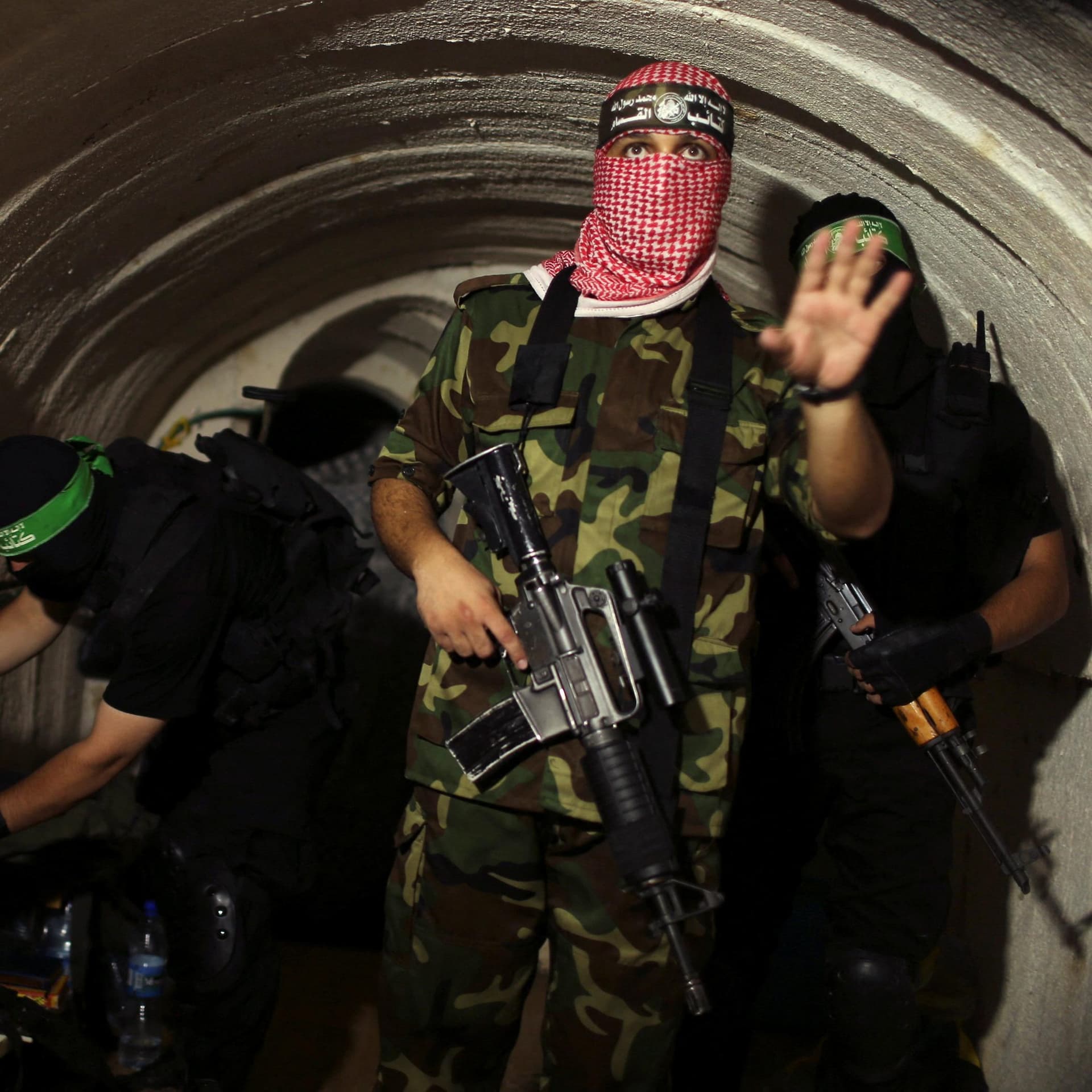
Photo: A Palestinian fighter from the Izz el-Deen al-Qassam Brigades, the armed wing of the Hamas movement, gestures inside an underground tunnel in Gaza. Credit: Reuters/Mohammed Salem/File Photo