
In short
Whether a Trump-announced Gaza ceasefire will hold, and what “phase one” means for hostages, prisoners, aid, and Israeli withdrawal.
Guests and backgrounds
Asma Khalid (BBC, reporting from New York/JFK); Tristan Redman (BBC, reporting from London). Liran Berman, Israeli relative of hostage twins Gali and Ziv (held in Gaza for two years), traveling back to Israel after the announcement. Leila Ezat El Shanna, 22, married to disabled Mohammed, mother of two boys (one born during the war), speaking from Gaza amid drones and tank activity. Tom Bateman, BBC U.S. foreign policy correspondent, analyzing the deal.
Key claims
Ceasefire is “first phase,” not comprehensive; deal not yet published; living hostages released within 72 hours after signing; dead-hostage bodies may take longer. About 1,700 Palestinian prisoners from Gaza since Oct 7, 2023, plus 250 “life sentence” prisoners. 400 aid trucks daily. Israel withdraws to a “yellow line,” with further withdrawal unclear; Hamas disarmament/governance issues deferred.
Notable examples
Leila describes gunfire/explosions while she speaks, reliance on donations for food/diapers, and her sons having known only war; Liran stresses he wants all 48 hostages released, not just his brother.
Written by AI. May contain mistakes. Listen to the episode to check what was said.
Chapters
Tap a time to open that second in VOEmotional Reactions to the Ceasefire Announcement
2:56 to 6:24
Interviews with families regarding their feelings about the ceasefire.
“And today on The Global Story, is this really the beginning of a lasting peace?”
Voices from Gaza: Leila's Story
6:24 to 8:53
Leila shares her experiences and hopes amidst the ongoing conflict.
“Well, I wish you a happy reunion with your brothers.”
Struggles and Survival in Gaza
8:53 to 14:00
Leila discusses the hardships faced by her family during the war.
“but unfortunately they are active till now, as you hear in the background.”
Personal Impact of the Conflict
14:00 to 15:18
Hear a personal account of loss and resilience during the conflict in Gaza.
“And even my home was destroyed, but it's still standing.”
Revisiting the Conflict with Tom Bateman
15:20 to 15:36
Tom Bateman discusses the ongoing situation and complexities in Gaza.
“Thank you for coming back to be with us.”
Understanding the Ceasefire Details
15:38 to 16:48
An overview of the ceasefire agreement and its implications for hostages.
“So there is still a long way to stability for Israelis and Palestinians.”
Palestinian Prisoners and Hostage Exchange
16:49 to 19:43
The conditions and implications of prisoner exchanges for Palestinians.
“prisoner exchange, Israeli withdrawals, and then moving into this whole idea of how Gaza is governed, what the security arrangements are, what happens to Hamas, what happens to its weapons, long-term stuff.”
Humanitarian Aid in the Ceasefire
19:44 to 21:05
Discussion on humanitarian aid strategies in the context of the ceasefire.
“Of course, to Israelis, these are people who in some cases have killed Israelis.”
Israel's Withdrawal and Future Plans
21:06 to 23:05
Details on Israel's withdrawal plans and the geopolitical implications.
“And so, you know, it's been very important, I think, for the Arab countries and for the international aid community to have got that provision in there.”
The Role of Hamas Moving Forward
23:06 to 26:23
Exploring Hamas's potential disarmament and political role in Gaza.
“Tom, I want to understand what is expected to happen over the next few days.”
Show all 11 chapters
The Complexity of Peace Efforts
26:24 to 27:12
Understanding the challenges of achieving lasting peace in the region.
“because, you know, the White House created this enormous momentum, which got it done really from zero to 100 miles an hour in, you know, virtually no time at all.”
Transcript
Automatic transcript. May contain errors.0:00This BBC podcast is supported by ads outside the UK.
0:30No bouncing between tabs. And best of all, no spreadsheets. Stop managing software and start managing your business with one unified system. Try for free today at odoo.com. That's O-D-O-O dot com. Self-directed investing. Trading. Full-service wealth management. Automated investing. Financial planning. Thematic investing. Retirement planning. Phew. And to think, that's just a small taste of what Schwab offers. Because Schwab knows that when it comes to your finances, choice matters. No matter your goals, investing style, life stage or experience, Schwab has everything you need, all in one place, so you can invest your way.
1:11Visit schwab.com to learn more. Big day, Asma. A lot has happened. Yeah, a lot has happened in the last 24 hours. We saw President Trump announce news of a ceasefire in Gaza. In Tel Aviv, people have been gathering since first thing this morning to celebrate The mood is completely different today Hopefully you'll be able to see behind me that the square is completely full Celebration started inside the Gaza Strip at the same time I can't believe I'm finally saying this to tell my boy that you are safe now. And I would say everyone is asking if this is really going to hold, if this could be the end of the now two-year war in Gaza.
2:10I called up a family whose relatives have been held hostage for two years. I want my brother so much, but I want all 48 to come back and I will be there until the end. When the last of the people come back, then Israel as a nation, us as people, can look for the future. And we've been speaking to a young mother in Gaza who's ecstatic at the prospects of peace for her two young sons. Every day when we wake up, we are telling ourselves who will die, who will injure, who will lose. Finally, it ends and I hope that it will continue to end. From the BBC, I'm Asma Khalid in New York. And I'm Tristan Redman in London.
2:56And today on The Global Story, is this really the beginning of a lasting peace? And how likely is it that this ceasefire holds?
3:15Liran, can you hear me okay? This is Asma from the BBC. Okay. And you are at JFK Airport? Yes, I am. Okay. And you are on your way back home to Israel? Yes, I am. Finally. Asma, you've been speaking with a relative of a hostage today. Tell me how that's gone. Yeah. I mean, if folks heard our episode on Tuesday, you all may have heard my interview with Liron Berman. His twin brothers, Gali and Ziv, are among the last hostages who are still being held in Gaza. And so after we heard this news of the ceasefire and plans that the remaining hostages will be released, I called up Liran. So we saw this news that President Trump said the ceasefire deal has been agreed upon.
4:04And that means the remaining hostages will be released. And I just wanted to check in and see how you're feeling. Wow. So emotional. like so many emotions that I can't even say what they are like we got the announcement yesterday and like it was it was such a crazy evening and night and we couldn't sleep and like wow it's amazing are you feeling happy or are you feeling like a bit of trepidation still about it all going through? I think I can breathe better. I will be completely happy once I hug them. I can feel it that I can start inhaling and exhaling again like normally, but not yet here. And then it's really tense.
5:01I'm on my way, like I'm waiting for the plane and I'm trying to get back to Israel as soon as I can. We just hope that we get there before they come It sounds like you're feeling like a sigh of relief, but you're at the same time not 100 % yet feeling like the two-year quest that you have been on to get your brother's release is fully over. Is that right? it's right it's not fully over and i will get my two little brothers back but i i i'm in it so deep so i i need all 48 and israel needs all 48 so i i i'm i want my brother so much but i want all 48 to come back and i will be there until the end and when the last talk will come back then israel as a nation, us as people can look for the future.
5:58And until the last one arriving, then we can't fully, like 100 percent, can breathe again. How do you feel about President Trump? For me, I'm not an American citizen. I don't live here in the U.S. For me, he brought my brothers back. He made it happen. So I'm entirely grateful for him. Okay. Well, I wish you a happy reunion with your brothers. I imagine it has been an emotional day for you and a very busy day, as well as you sort out your travel back to Israel. So thank you for taking the time. Thank you, Asma. Okay, safe travels. Bye-bye. Thank you. Bye. That was Liran Berman, whose twin brothers Gali and Ziv have been held hostage in Gaza for the last two years.
6:58Tristan, I know that you have also been making calls today. I want to hear what you've been up to. Yeah, that's right. So we wanted to hear from inside Gaza to get a sense of how this news is being received there. The Israeli government doesn't let international journalists to report freely inside Gaza. So it's only through calls like this one that we can actually speak directly to Gazans.
7:23Yes. Ah, hello. How are you doing? Hi. Nice to see you, Leila. So I spoke to Leila Ezat El Shanna, who's 22 years old and she's married to Mohammed, who's disabled. And she's the mother of two little boys. One of them who's so young, he just turned one, that he has only ever known Gaza at war. And I wanted to know how Leila felt, whether she felt relieved or worried about what's to come. How do you feel? What are your emotions today? I cannot express my feelings because I'm so happy finally. And after two years of suffering and displacements, evacuation orders. So finally, we are comfortable. We want to sleep on our beds and without any fear that we don't know.
8:17Like every day when we wake up, we are telling ourselves who will die, who will injure, who will lose. Finally, it ends. And I hope that it will continue to end. And what really surprised me was just how happy she seemed, even though there was literally gunfire and explosions within earshot as I was talking to her on the phone. Unfortunately, as you hear, there is a drone. OK, are you safe where you are, Leila? There's no safe places. They are telling us that they end this process, but unfortunately they are active till now, as you hear in the background. OK, well, if you have to go inside, please go inside, Leila.
9:02No, it's OK. Oh, wow. And by the way, Leila refers to the war in my conversation with her as the genocide, as some people in Gaza do. Israel, I should say that Israel has always strongly denied claims that it's committing a genocide. And the International Court of Justice is considering a case on this. I want to show you the area in Gaza City. So there is like a dust in the sky. Yes. OK, so there is there. Is there still some fighting happening? Yes, there's a bumping, as you see. Did you see the dust there? I mean, it's very distant, but yeah, I think I can see some smoke in the distance there.
9:42Has it been calm today? What's the situation been where you are? It's like the other days. There's no difference. There's no updates. There's nothing. They are shooting. The tanks are active and the drones are active. Leila, on your Instagram, you said that you feel like a survivor, that you feel like a hero. Can you tell us about that feeling? Yes, of course. Like being a survivor of two years of genocide and being a mother who is 22 years and being pregnant and having the baby. It's like it's a miracle to stay alive till now and serving others. I mean, you mentioned your son, Ibrahim. He turned one year old the other day, didn't he?
10:26Yes, he turns one year. Happy birthday. Thank you. And imagine that, that I'm pregnant. I was pregnant during the genocide. I gave birth of him during the genocide. He becomes a year during the genocide. So he's like tall and he's big right now. So since he was born, he has only known the war in Gaza. How does that feel to you now, knowing that he might experience peace in Gaza? Unfortunately, he born during the genocide, but I will create the best life for him. And I'm trying very hard to create joy and happiness for my sons all the time, not only during the genocide, all the time. Leila, so there's your husband, Mohamed, who's disabled, and your two little ones.
11:17Tell us about your family and how they've got through the last couple of years. Yes, my husband, he got injured in the war 2014. He was walking on the street and an airstrike shot a rocket toward him and he got injured, which has led for him to walk with a crutches since more than 11 years. And he is still suffering. How have you managed to get food and look after your family for the last two years? It was so difficult to find food because it was so expensive, because it's so limited, the food that was entering Gaza. I was able to help them to get food and to feed them through the donations that I'm getting from others.
12:02I'm not ashamed from telling this truth because I was relying completely on the donations to feed my babies. We survived. When your boys grow older, Leila, how will you explain all of this to them? I will tell them about what they have been through. Leila, what was that that we just heard in the background? There are some drones, some shootings. So is that drone attacks we can hear in the background? Yes. Are you sure you don't want to go inside, Leila? No, it's okay. I used to come here and the drones everywhere. It's okay. It's no danger. Inshallah. Yeah, I can't see the drone. It's all the time like this.
12:51We have drones and we have tanks and we... It's okay. We must continue our lives. Okay. Well, when your boys grow older, how will you explain all of this to them? I would love to see how much I suffered for them during the genocide and how I tried very hard to buy for my son's diapers. It was more than$100, the one packet. So I suffered a lot for trying to get this, the diapers, baby formula and food. It's so difficult, but because I'm here, I can do this. What's the first thing you'll do when the ceasefire comes into effect? Actually, one of my plans is to go to the market and try to buy as much as I can toys for my children.
13:47Okay. Because they have been deprived from these things. I want also to hug my children very hard and my husband because we are alive and we survived this genocide and this nightmare. and we are together. We are together. We don't displace. We will not move around. We will be calm, comfortable. And even my home was destroyed, but it's still standing. It's better than a tent. And do you have members of your family who live close to you as well? So maybe around in the home, around 40 people are staying in the home. Have you lost people during the war from your family? Yes, unfortunately, I lost my lovely person.
14:39He is my grandfather and I lost also my uncle. He got a cancer and he passed away because there is no medication. So he's stuck here in Gaza and he cannot get out to take the treatment. Unfortunately, he passed away. And I lost some of my cousins also, my family. I'm sorry to hear it, Leila. It sounds like what you're saying is that one of the most important things right now is that Gazans have access to medical cover again. Is that right? Yes.
15:12Leila, thank you so much for your time and please stay safe and good luck to you and your family, okay? Thank you, bye. All right, thank you.
15:26Ah, hello, Tom. Thank you for coming back to be with us. I know this is the second time we've had you on the show this week, but I think that's just a testament, honestly, Tom, to how busy it is. I'm honored. Thank you. I'm sitting in my camping chair outside the White House, which has been like the biggest breakthrough I've made in the last few months, is I found this tiny camping chair so I can sit down. So there is still a long way to stability for Israelis and Palestinians. And a big remaining question is, can they trust that this ceasefire will hold? We wanted to talk to a friend of the podcast, Tom Bateman.
16:04He covers U.S. foreign policy for the BBC, and he has been following the ins and outs of this deal. Well, I mean, the first point is, as we're recording this at about midday on Thursday, the deal hasn't been published yet because they're they're waiting until it is signed in Shamashik and you know both the Israeli and Hamas delegations are still there as we speak and so we're waiting for that crucial moment where the Israeli government will sign off on it and then there is due to be a ceasefire declared in Gaza but what is already clear is that this is a very very partial agreement compared to the thing we were talking about last week, which is Donald Trump's 20-point plan, which was meant to be a comprehensive framework for the hostage and prisoner exchange, Israeli withdrawals, and then moving into this whole idea of how Gaza is governed, what the security arrangements are, what happens to Hamas, what happens to its weapons, long-term stuff.
17:07I mean, none of that is addressed at all. That is abundantly clear. and the statement from the White House last night referred to this as a first phase. So clearly first phase means hostage and prisoner exchange and an agreed upon line of Israeli withdrawal. Well, can we take that bit by bit then? When you talk about the hostages being released and a significant number of Palestinian prisoners also being released, what does that mean? What's the scope of what you're discussing there? So there are 20 living hostages, stored around 28 dead hostages. and what the agreement says, according to what we understand, is that within 72 hours of the signing and the implementation of a ceasefire, Hamas will release the living hostages.
17:54Now, this is where there's a bit of lack of clarity because some of the things Donald Trump was saying last night seemed to suggest that the bodies of dead hostages would also be expected in that timeframe. But all of the information that's emerged from Sharm el-Sheikh is that there is more time for the bodies of the dead hostages to be handed back. And that is because Hamas has been saying many of them are in almost irrecoverable places, under rubble, potentially even in areas where the IDF is still occupying the territory. So it's a complex process. OK. And how many Palestinian prisoners? Well, this is an absolutely crucial and core issue for Palestinians.
18:33I mean, there is barely a Palestinian family that hasn't had a member detained or imprisoned by the Israelis since the start of its military occupation in 1967. It goes to the very heart of the way that Palestinians feel about the military occupation by Israel and the denial of their self-determination. What was in the framework published a week and a half ago at the White House was getting out the number of 1 ,700 Palestinian prisoners from Gaza who had been detained by the Israelis since October the 7th, 2023. And then 250 was described in the agreement as life sentence Palestinian prisoners.
19:15So the reason that that is specified is because Hamas had complained that in previous deals, those released tended to be people that Israel had jailed quite recently for what Israel would describe as lower level offences. But often things like, you know, social media posts of people in the West Bank who would be seen from the Palestinian side as comparatively sort of lower value than other people that wanted released to show that its deal making had been effective. And that's why, you know, for Hamas, this has always been a crucial part of what they will try to proclaim as a victory in terms of doing these kinds of deals, getting out what they see as the highest value prisoners.
19:56Of course, to Israelis, these are people who in some cases have killed Israelis. And so for them, it's a very bitter pill to swallow. But it's a critical part of making the deal function. Tom, we've just spoken today with a Palestinian woman in Gaza called Leila. She was saying that it was really vital that there was medical care, access to doctors, access to treatment. What do we know about the humanitarian aid that might follow a ceasefire? So from what we understand, there is agreement between the two sides now as part of this first phase for 400 aid trucks to enter Gaza daily. that's a breakthrough because you know we've seen over recent months a declaration of famine by the ipc the international body that monitors food insecurity we've seen the establishment with full backing from the trump administration of this so-called gaza humanitarian foundation which has militarized the aid supply from the israeli side and israel has sought to control food supply to palestinians in its view to starve out hamas but this is a sort of colonial era mechanism or system or approach to aid distribution has been fully fundamentally rejected by international aid organizations.
21:12And so, you know, it's been very important, I think, for the Arab countries and for the international aid community to have got that provision in there. So, you know, that's desperately needed. Tom, I want to ask you about one other part of this so-called phase one plan, and that is that Israel will withdraw to an agreed-upon line. What do you know about where the IDF has agreed to withdraw to? Well, there was a map released by the White House as part of the 20-point plan and there was a picture actually of Donald Trump sitting next to Benjamin Netanyahu in the Oval Office sort of showing him this very tiny map.
21:51And according to that map, it would have left the Israelis in control of about 55 % of the territory of Gaza. And then obviously the momentum, according to the 20-point plan, is supposed to move towards a fuller Israeli withdrawal. Now, it seems that that line has been renegotiated a bit during these negotiations over the last few days, and the Israelis will pull back a bit further. So just to be clear, you're saying there's an agreed-upon line for this first phase, and then there is a further line, of which is murky as to where and how far Israel may withdraw. Yeah, I think they're calling it the yellow line at the moment that the Israelis will be drawn to during the ceasefire.
22:30And this is what the Arab and Muslim countries, I think, had insisted on was in effect a full withdrawal from Gaza. Although the Israelis have always insisted on this idea of a buffer zone that's still within the territory of Gaza to secure the communities that were attacked on October the 7th and to ensure there couldn't be any repeats of that. So all of these things have the potential to be real points of contention. And the sort of idea of the insistence that Israel should fully withdraw from Gaza, I think it's going to become one of the sticking points in that phase two negotiations. Tom, I want to understand what is expected to happen over the next few days.
23:11We are seeing reports that President Trump is going to be headed to the region. Can you walk us through what is expected to happen? Yeah, so, I mean, it's clear now Donald Trump's going to fly to the region over the weekend. He will obviously meet Netanyahu when he goes to Israel, he'll meet President Sisi in Egypt. And I think this will be something of a victory lap, but also an attempt to keep up momentum. People are talking about Sunday, Monday, in terms of the hostages being released. So what we've seen in the past is Hamas driving hostages to handover points where the International Committee of the Red Cross take them and then drive them to, it's either been Kerem Shalom, which is one of the crossings into Israel proper, or Rafa over to Egypt, so not sure kind of where it will be yet.
24:03You tend to see the hospitals in Israel getting prepared, particularly the big ones around Tel Aviv, to receive hostages, because obviously nobody knows what their condition is going to be. They've been in captivity for two years. The family's been gathered on the Israeli side. what we saw in that second ceasefire was hamas creating these sort of public spectacles where the hostages were brought on stage and there was a signing ceremony now that outraged the israelis there had been since then an agreement in a more recent handover for that not to happen so you'd expect that they you know would have got an agreement that that kind of thing won't be happening again but you know still a lot of potential bumps in the road in that process I want to talk for a second about the next phase of this plan, because Israel is insisting that Hamas disarms and plays no role in the future governance of Gaza.
24:56But are Hamas really going to write themselves out of the story at this stage, give up their weapons, give up their role? How realistic is that? I think it's pretty unrealistic, to be honest. And it's, you know, their response last week to the Trump plan was to say yes to the hostage and prisoner exchange and to a technocratic government in Gaza, a Palestinian technocratic government. I mean, that is significant. And actually, in the sort of in all of this, there's so much going on that it doesn't get talked about as much. But we are talking about Hamas agreeing to relinquish its control in terms of governance of Gaza.
25:37That matters. That's that's significant. But what they went on to say in their response to Trump was they were sort of holding back on the idea of disarmament and on their role as part of future Palestinian self-determination. And saying that had to be done by agreement with the other Palestinian factions, that it was a matter for the Palestinians to determine what role Hamas has to play. And also the idea that they would just sort of disappear, go into exile or an amnesty to sort of accept Israel and give up armed struggle as they would see it. So that question, you know, is going to be a very acute one and one with the potential to open up a wider gulf when it comes to the negotiations.
26:23The speed with which this agreement has been done is both its sort of blessing and its curse potentially. because, you know, the White House created this enormous momentum, which got it done really from zero to 100 miles an hour in, you know, virtually no time at all. But within that, I think, is the potential for things to go wrong because there are clearly areas they just kicked off into the longer grass or the medium length grass as it probably is now. Or just, you know, glossed over because Donald Trump wanted to get the hostages out. That was the primary thing he wants to be able to stand up and say and take credit for.
27:01And yes, he wants to say he's ended the war, but that's a far more complex and difficult and intractable issue that starts to bring in the history of this entire conflict. Well, it's a rare promising moment, and it seems like it's an exceedingly finely balanced one as well. Thank you so much for helping to explain it to us, Tom, and we hope we'll see you again very soon. Thanks, guys. Great to talk to you again.
27:31That was Tom Bateman, the BBC's State Department correspondent. And earlier, we heard from Leila Ezat El Shanna in Gaza and Liran Berman on his way back to Israel. And you can hear a longer interview with Liran in our episode that was published on October the 7th. This is a fast-moving story, and I'm sure we'll be covering it again next week. Until then, that's it for the global story. Today's episode was made by Aaron Keller, Sam Chantarasek, James Shield, and China Collins. It was engineered by Travis Evans. See you on Monday. Cheerio.
From the publisher
Israel and Hamas have approved President Trump’s plan for a ceasefire and approved a framework including the release of all the hostages and the withdrawal of Israeli troops from parts of Gaza. It is being described as the first phase of a wider agreement, but is the deal secure enough to last?
We speak to Liran Berman, whose brothers Gali and Ziv are amongst the last hostages, Laila Ezzat Al Shana, a mother in Gaza, and the BBC’s state department correspondent, Tom Bateman.
Producers: Sam Chantarasak and Aron Keller Executive producer: James Shield Senior news editor: China Collins Mix: Travis Evans
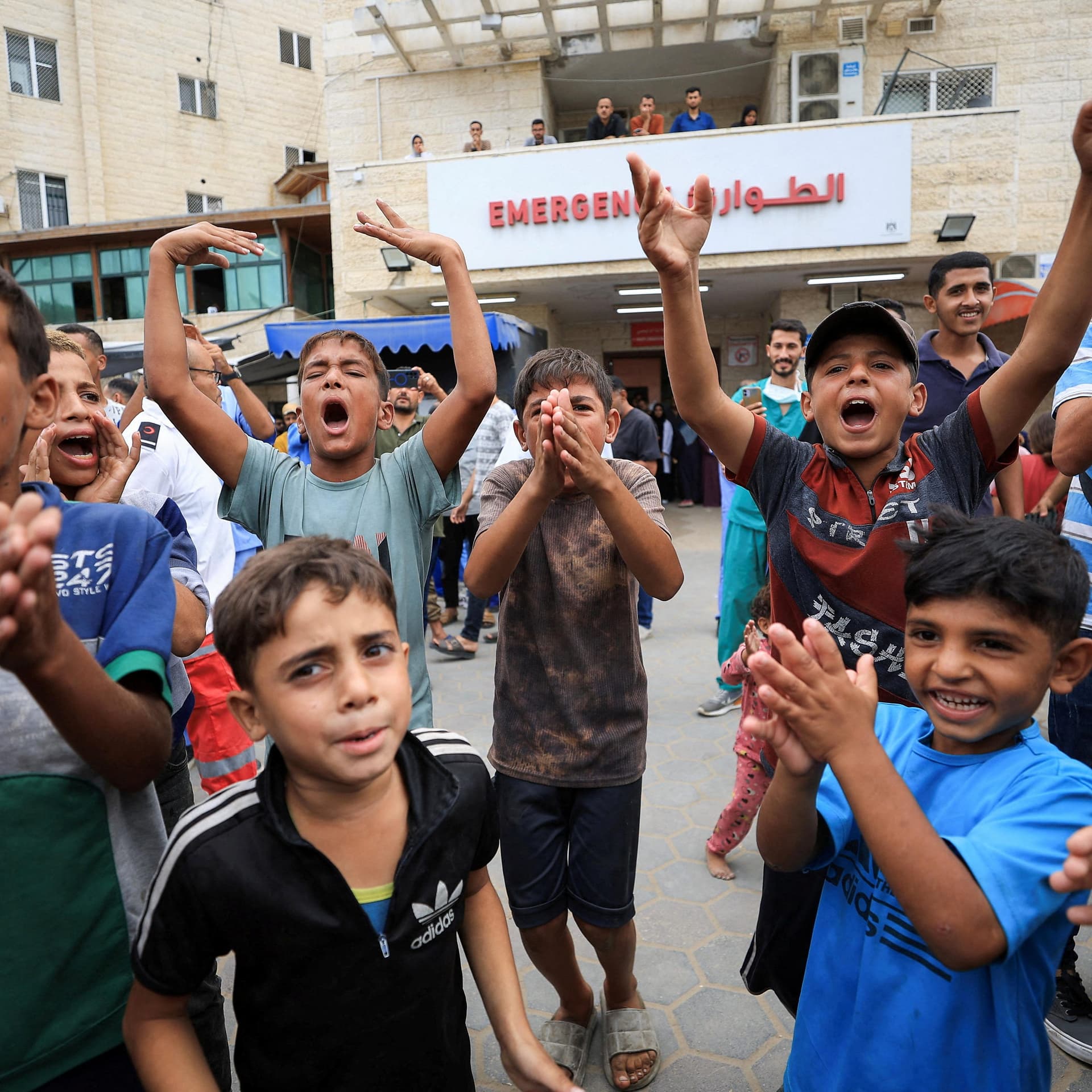
Image: Reactions in Gaza after President Trump announced that Israel and Hamas agreed on the first phase of a Gaza ceasefire. Dawoud Abu Alkas/Reuters