In short
Whether Jimmy Lai’s 20-year prison sentence under Hong Kong’s National Security Law signals the “death knell” for Hong Kong democracy and whether the West has abandoned him.
Guests
Danny Vincent, BBC Hong Kong reporter; previously worked in Beijing for 10 years and has covered Hong Kong for years, including being the last journalist to interview Lai in 2020 while filming a documentary about Apple Daily.
Key claims
Lai is a pro-democracy symbol whose case reflects rapid erosion of freedoms promised after the 1997 handover. Beijing says he colluded with foreign forces; critics say the law is vague and designed to silence dissent. Supporters argue the West must do more; some hope for behind-the-scenes negotiations involving leaders like Trump and UK PM Keir Starmer.
Notable examples
Lai’s Apple Daily newsroom livestream during his 2020 arrest; his 2019 meeting with US officials (Mike Pence/Mike Pompeo) cited as “evidence”; 2014 “umbrella protest” and 2019 protests; trial details including solitary confinement and health deterioration claims.
Written by AI. May contain mistakes. Listen to the episode to check what was said.
Chapters
Tap a time to open that second in VOContext of Jimmy Lai's Imprisonment
0:30 to 2:28
Discussion on Jimmy Lai's activism and the implications of his sentencing.
“If you were the media tycoon Jimmy Lai back in 2024, in jail awaiting trial in the Chinese territory of Hong Kong, you might be encouraged by what Donald Trump had to say about your case.”
The Significance of Jimmy Lai
2:28 to 3:57
Exploration of why Jimmy Lai's case matters beyond Hong Kong.
“is Jimmy Lai's imprisonment the death knell for democracy in Hong Kong?”
Danny Vincent's Perspective
3:57 to 5:24
Insights from Danny Vincent, BBC's Hong Kong reporter, on Lai's significance.
“And many people feel that those values are being eroded here in Hong Kong.”
The Early Life of Jimmy Lai
5:24 to 7:58
Narrative of Jimmy Lai's background and rise from hardship to success.
“He was seen by many people as the number one target of the national security law.”
Jimmy Lai's Activism and Media Career
7:58 to 10:40
Details about Lai's transition into media and his pro-democracy stance.
“He's a very religious man and he spoke about his faith, but he also spoke about fear.”
Protests and National Security Law
10:40 to 12:58
Examination of major protests in Hong Kong and the introduction of the national security law.
“Jimmy Lai started to become more political, especially after 1989.”
Jimmy Lai's Growing International Profile
12:58 to 14:01
Discussing Lai's increased visibility on the international stage and its effects.
“First of all, there was a protest in 2014.”
The Rise of Jimmy Lai and the National Security Law
14:01 to 17:54
Explore Jimmy Lai's role in the Hong Kong protests and the implications of the national security law.
“It became a very violent protest movement, violence from the protesters and also from the police.”
Jimmy Lai's Trial and Sentencing
17:55 to 24:44
Delve into the details of Jimmy Lai's trial, its fairness, and the sentencing impact.
“So in December 2020, Jimmy Lai is arrested.”
Implications of Lai's Sentencing for Democracy
24:45 to 27:27
Discuss the broader implications of Lai's sentencing on democracy in Hong Kong and the international response.
“I think that supporters of Jimmy Lai would say that this sentencing essentially marks one of the ends of the pro-democracy movement.”
Transcript
Automatic transcript. May contain errors.0:00This BBC podcast is supported by ads outside the UK.
0:30Just tap into iHeart to start watching. And we hope you enjoy the show.
0:38If you were the media tycoon Jimmy Lai back in 2024, in jail awaiting trial in the Chinese territory of Hong Kong, you might be encouraged by what Donald Trump had to say about your case. That will be a great victory for freedom around the world. And he's an old man. He needs to come and be in America. 100 % I'll get him out. He'll be easy to get out. But we don't have people that even talk about it. But the Jimmy Lai of this week, after being sentenced to 20 years in prison, might be less heartened by what Trump had to say a few days ago. And he was an activist, to put it mildly, but a positive activist.
1:17But if you're President Xi, he wasn't a positive activist. I spoke to President Xi when I was in South Korea, and we had a great talk about it and I left it with him. He didn't give me an answer one way or the other, but obviously... Jimmy Lai is a pro-democracy activist and he's a long-standing opponent of Beijing's increasing control over the former British colony of Hong Kong, which was supposed to enjoy special freedoms after it was returned to China in 1997. On Monday, Lai was convicted for colluding with foreign forces under a controversial law known as the National Security Law, a law which critics have said is designed to crack down on dissent.
2:02Marco Rubio, the US Secretary of State, has since called for Lai's release on humanitarian grounds. Nevertheless, Lai's supporters say the West needs to do more to stand up for him and for his values. We uphold the spirit of freedom and human dignity. will win the war because history is on our side. From the BBC, I'm Tristan Redmond in London. And today on The Global Story, is Jimmy Lai's imprisonment the death knell for democracy in Hong Kong? And has the West abandoned the territory?
2:41All right, are we ready to kick off then? Yeah, I think we're ready to record now. Danny Vincent is the BBC's Hong Kong reporter. He's been following Jimmy Lai's case for years. And in 2020, he was the last journalist to interview Lai whilst he was making a documentary about Lai's now-shuttered newspaper, Apple Daily. Before moving to Hong Kong, I worked in Beijing for 10 years. So I've seen the transformation of this city. In many ways, Hong Kong is beginning to look like an ordinary Chinese city. It's something that many Hong Kong people feared. And for some people, they feel this is now the reality, especially now Jimmy Lai has been sentenced to 20 years in prison.
3:22Well, it's great to have you with us, Danny. We want to understand today who Jimmy Lai is, why he has ended up being sentenced to this very long jail sentence, and why he's such a significant figure and what his story means. This week, his case has made global headlines. US and UK lawmakers from the left and the right have called for his release. For listeners who don't know Jimmy Lai, why is Jimmy Lai's story so important? Why should people outside of Hong Kong and China pay attention? I think because Jimmy Lai essentially represents the values of Hong Kong, especially British Hong Kong, before the handover.
4:05And many people feel that those values are being eroded here in Hong Kong. So Hong Kong was a British colony for over 100 years. It was returned to China in 1997. That was known as the handover. And as part of that deal, when it was returned, there's essentially a treaty that guaranteed Hong Kong certain political freedoms that simply are not enjoyed in the rest of the country. They include freedoms like freedom of press, independent judicial system, the right to protest, of course, the right to criticize the authorities. So for many years, Hong Kong was described as perhaps the freest city in Asia.
4:43But many critics have been describing what they call, originally they said it was a slow motion erosion of those freedoms. Now, since the national security law was introduced in 2020, many people say that those freedoms have been eroded at a rapid pace. Well, we're here today to talk about Jimmy Lai. and the story of Jimmy Lai is deeply intertwined with the story of Hong Kong. You've met Jimmy Lai. You were the last journalist to interview him before he was detained and went to prison. What was that experience like and what did he tell you when you spoke with him? Well, Jimmy Lai was first arrested in August 2020.
5:24He was seen by many people as the number one target of the national security law. Some people felt that the Communist Party, Beijing, essentially created this law effectively to try to target people like Jimmy Lai, who had been speaking out for decades, criticizing the Hong Kong authorities, criticizing the Beijing authorities. So in 2020, in August, he was arrested.
5:50He was paraded around his newsroom in Apple Daily. It's now a defunct newspaper, but it was once the only opposition newspaper in Hong Kong. That's how it described itself. This was live-streamed across the world. He was released from prison and he continued working. He went back to Apple Daily. At that time, I started a documentary about Jimmy Lai.
6:17It's Thursday morning and on the ground floor of the Apple Daily newsroom, Jimmy Light is preparing for his weekly live stream. I went to meet him at home. I went to meet him when he was going to court. I went to meet him in his newsroom and I spent significant time with him while he was out on bail. There was an expectation that eventually he would be charged. There was an expectation that possibly he would be imprisoned. But during this period when I spoke to him, it was quite surreal because he didn't know what would happen. Hey, good morning, everybody. This is a very, very nice day in Hong Kong today.
6:50He was also continuing his activism. He was continuing to lead Apple Daily, this newspaper, which was critical of the authorities. He was continuing speaking to international figures. Yeah, I think the freedom speech is in danger here in Hong Kong. I think the significant thing for me that I noticed while speaking to Jimmy Lai was he spoke a lot about the different value systems between China and the rest of the world. We are very different from Chinese and China. I don't think they can subdue us the same way that they subdue the Chinese in China. And he felt that Hong Kong was, because it was a former British colony, more aligned with Western values.
7:31And he felt that the Communist Party essentially is not compatible with many of these international universal values. The free world will be on our side. that the free world will be supporting us because they know that we are fighting in the frontier for their value if we lose. That means the defeat of the value system. They can't let us down. Jimmy Lai has been described by his supporters as a very brave man. He's a very religious man and he spoke about his faith, but he also spoke about fear. You must fear some things for your family, for Hong Kong, for your loved ones.
8:15Yes, I do have fear. You're right. And sometimes he broke down in interviews when he was worried about what would happen to his family, his loved ones, what would happen to Hong Kong. But the final time I interviewed him, he was different. So how are you feeling, Mr. Lye? I'm pretty good.
8:39You could see that he was emotional, but he told me the clothes that he was wearing was essentially he was preparing himself for prison. You know, he made sure that his clothes were warm enough and appropriate because these might be the clothes that he's wearing when he was detained. And I think that the thing that really stuck with me, what he told me in that final interview. Don't let fear frighten you. The only way to defeat the way of intimidation is to face up to fear and don't let it right again. He said that he believes that fear is the most powerful way to control people. It's the cheapest way to control people.
9:18And I think that that has proved to be quite true here in Hong Kong. It turned out that by December 2020, he was finally imprisoned and he's been imprisoned for five years since then.
9:34All right. Well, Jimmy Lai's story is something of a rags to riches story. Let's start with the rags. Where's he from? Jimmy Lai was born in Guangdong province in mainland China. I was from a very rich family. So, you know, when the communists came, we became the enemy of the people. My mother had to go through labor camp and all that when we were young. He smuggled himself into British Hong Kong as a boy. So we were all, you know, crowed into the bottom of a fishing boat. So everyone was rocking and vomiting. Once in Hong Kong, he first started working as a child laborer. He worked in garment factories, literally on the factory floor.
10:18He very quickly rose up the ranks. No matter how tired I was, I studied English myself because I knew that I got to get ahead. I can't just get stuck there. Eventually, he was able to own his own factory. He set up his own business. He became a millionaire. He became a billionaire. He became incredibly successful. Jimmy Lai started to become more political, especially after 1989. The noise of gunfire rose from all over the center of Peking. It was unremitting. During the crackdown in Beijing, hundreds, possibly thousands of student protesters were killed when the Chinese army, the People's Liberation Army, put an end to pro-democracy protests in Tiananmen Square.
11:05The troops have been firing indiscriminately, but still there are thousands of people on the streets who will not move back. Jimmy Lai started to become very critical of the authorities and at this point he decided to change industry. As Hong Kong enters the final two years of British rule, pro-democracy groups in the colony are claiming that local journalists are already censoring themselves. He decided to change from the clothing industry into the media industry. This concern for the freedom of the press has prompted one leading businessman to set up his own pro-democracy daily newspaper. And his thought was that by speaking freely and sharing information, that would change Hong Kong, but it would also influence mainland China.
11:52So he decided to launch Apple Daily, a controversial newspaper that basically became the most popular newspaper here in Hong Kong. I have been rich, but the feeling of being honest is much better than being rich. and they just love it. They just love to be honest. It was also controversial. Some people criticized some of the methods. It was a typical tabloid newspaper. It sometimes got involved in scandals. It did celebrity news. It did stories about sex and a wide range of issues, but it also did stories about politics. And Jimmy Lai, he said that the motivation behind this newspaper, the reason why he founded it, was to try to be a pro-democratic newspaper At what point does Beijing, at what point does the People's Republic of China start to realise that they have this rebellious character on their hands and that they ought to do something about it?
12:51So Jimmy Lai has been a thorn in the side of the Beijing authorities for decades. But there have been a number of protest movements in recent years in Hong Kong. First of all, there was a protest in 2014.
13:08that was student-led and tens of thousands of people took to the streets. Using umbrellas to protect themselves from batons and pepper spray, pro-democracy demonstrators have clashed with police in Hong Kong. That's the umbrella protest. Then in 2019... The people of Hong Kong have taken to the streets again this weekend. There was another series of protests. This has been Hong Kong's summer of discontent. Which lasted almost a period of a year. Oh, my God. I think this scared the Beijing authorities. At one stage, there was the military stationed in the Chinese city Shenzhen, which is just across the border from Hong Kong.
13:50And many people feared what was about to happen next. Many of the protesters, they coined an expression which roughly translates to, if we burn, you burn with us. It became a very violent protest movement, violence from the protesters and also from the police. It became a cycle of violence. So the authorities felt that situation was getting out of control. It was a real threat to their control. So they introduced the national security law. But critics, they say that the law is simply an excuse used to try to silence people that criticise Beijing. But the authorities maintain that it was introduced to return stability after a year of protests.
14:33Well, during those 2019 protests, Jimmy Lai went to the White House. Hong Kong entrepreneur Jimmy Lai met U.S. Vice President Mike Pence and Secretary of State Mike Pompeo to discuss concerns about the controversial election. This is back in the Trump first term. Is that when Jimmy Lai starts to get more of an international profile? And did the act of going to Washington in that way make him more visible and more of a perceived as more of a threat to Beijing? The way you've described the situation is the way the authorities have described the situation. They say that Jimmy Lai was essentially a mastermind of the protest movement.
15:12And activities like going to America and speaking with foreign officials, that's the evidence they've used to convict Jimmy of colluding with foreigners. But many people in Hong Kong, they don't see things that way. They would say Jimmy Lai wasn't a leader of this movement. And in 2019, there was a big drive from the protesters to make sure that the movement was what they called leaderless. Well, if the meeting between Jimmy Lai and Mike Pence has actually been used against Jimmy Lai as evidence that he was colluding with foreign powers, I think it's important to understand actually what happened when he went to the White House.
15:49What happened between Lai and Pence? Well, the understanding is that Jimmy Lai's associates organized a meeting with Mike Pence and a number of other officials. Now, the authorities say that Jimmy Lai called for sanctions against Hong Kong and against Chinese and Hong Kong officials. Now, I sat in court during Jimmy Lai's trial, and his barristers, his lawyers, his legal team, they tried to make it clear that these alleged actions took place before the national security law was even introduced. So they would argue that these meetings shouldn't be used as an example of violating the national security law, because the national security law didn't even exist at that time.
16:43And then critics say that this national security law was designed in a way effectively to target people like Jimmy Lai because of the vagueness of the law. The international legal community, many international governments, they say that the vagueness of the law means that it's wide sweeping. It means that people could possibly break the law even accidentally. And they say it's not really in line with international standards. That's something the authorities here would completely disagree with. But these are the main criticisms of the law.
17:53Transcription by CastingWords into iHeart to start watching. And we hope you enjoy the show.
18:03So in December 2020, Jimmy Lai is arrested. He's put on trial in Hong Kong. What was the trial like? Was it fair? So when Jimmy Lai's trial started in 2023, he'd already been in prison for a number of years. He's been in solitary confinement. And his family members say that His health has deteriorated significantly during that time. During the trial, Jimmy Lai was able to speak. He spoke for a number of days and he gave testimony and he was cross-examined and also questioned by his defense team. Jimmy Lai went on to explain the reasons why he started Apple Daily, his whole political position, and he attempted to defend himself.
18:50There was a number of days in the trial where there were almost arguments between Jimmy Lai himself and the judges. There were three appointed national security judges. But the trial went on for years. And his supporters say that this is one of the reasons why he's deteriorated. He's obviously a 78-year-old man now. Even the idea of going to court all those days, waking up early and sitting in the dark and sometimes giving testimony. They say this was something that's also worn him down over that time. My personal observations of Jimmy Lai when he was speaking in court, you can see he's in some ways still the same man that he was when I interviewed him.
19:34He's very sharp. He's still rebellious, even speaking against the judge. He still criticised the system here. But you can see that he's also lost weight. You can see that he's aging, but his family members say it's much more than that. They say that they're very concerned about his health. We know one day in court, we were told that Jimmy Lai had heart palpitations at one point, and court proceedings were stopped at one point because he needed to have a heart monitor. The authorities have made it very clear their position. They think that Jimmy Lai is being cared for adequately in prison, but his family will say that he's deteriorated.
20:20Well, on Monday, Danny, Jimmy Lai was sentenced to 20 years in jail. What was the scene when that sentence was pronounced? I think there was always an expectation that Jimmy Lai's sentencing would be harsh. Jimmy Lai had been described in court as the mastermind of a conspiracy to collude with foreigners. Even years before, I remember sitting in court and the prosecutor said that what Jimmy Lai had been accused of was comparable to murder. So the authorities made it very clear how they saw this case as extremely serious. Many supporters lined up outside of the court, even days before the sentencing.
21:02They thought this might be the last time to see Jimmy Lai. Now, the mood was very solemn. Even before the sentencing, I remember seeing Jimmy Lai's wife, Teresa Lai. She was surrounded by supporters, and some supporters were crying, and she was consoling them even before the sentencing. After the sentencing, a group of supporters just waited outside the courtroom. They just waited in silence, just looking on to see what the response would be. And as Jimmy Lai's wife came out, she was wearing sunglasses. And you can see she's trying to hide back the tears. She was clearly crying. Jimmy Lai was sentenced with 20 years in prison.
21:45Many people expected a harsh sentence, but that also took many people by surprise. When we compare that to other national security cases, it's essentially double what other people that have been seen as opposition voices have got. There's also a sense of inevitability. Some people say, including his son, he says that even a few years more in prison is essentially a death sentence. Hong Kong's an extremely international city. It's also a symbol of democracy, certainly in Asia. Do Hong Kongers feel abandoned by the rest of the world, by Western democracies like the United Kingdom and the USA at this point?
22:28In 2019, during the protest movement, sometimes protesters would hold up flags, British flags, American flags, and they would try to get the attention of the international community. I remember in 2020, when reporting inside Apple Daily, many of the staff, many Hong Kongers were looking for international support. But since the introduction of the national security law, it means that colluding with foreign forces, colluding with foreigners, that's essentially one of the most dangerous things that people can do here in Hong Kong. So Jimmy Lai's sentencing is an example of that. And I would say that there's a lot of fear in this city working as an international journalist.
23:08It's now very difficult to get interviews, to speak to people about issues like we've spoken about today. And very often it feels like the only time I can speak to people on camera about issues like democracy in Hong Kong is outside court when people go to support people like Jimmy Lai. Well, Danny, Donald Trump's position on all this seems to have evolved subtly over the years. A couple of years ago, he suggested it would be easy to have Lai released. He said, 100%, I'll get him out. But then in the last few days, he said he's talked to Xi Jinping, but he's left it to him. What do you make of that?
23:46The Hong Kong authorities and Chinese authorities have criticised international governments for condemning Jimmy Lai's verdict and condemning the sentencing. But here in Hong Kong, many observers, they think and they hope that possibly there's still room for negotiating. There's still the possibility that there is behind the scenes conversations between the Chinese leadership and between Donald Trump. We know that Keir Starmer, the British prime minister, visited China. And when asked, he said that he raised issues relating to Jimmy Lai with the Chinese president Xi Jinping. So while the Hong Kong authorities say that Hong Kong is a city ruled by law and the judicial system has been fair, there is also a sense here in Hong Kong that politics is at play here.
24:38And there's a possibility that there are still further discussions when it comes to Jimmy Lai's future. Is Jimmy Lai's imprisonment the death knell for democracy and civil rights in Hong Kong? It's a good question. I think that supporters of Jimmy Lai would say that this sentencing essentially marks one of the ends of the pro-democracy movement. But even before the sentencing, the majority of Hong Kong's political opposition had either been detained or they'd fled the city. So Hong Kong has been completely transformed. But many people here see this sentencing as perhaps the end of this transformation, the end of the city which was once a free and open society.
25:27And now it's a city where a newspaper publisher has been sentenced 20 years in prison. His supporters also tell me that Jimmy Lai never wanted political power. He wasn't looking for political power himself. He was more of somebody that just spoke his mind. The authorities criticize this. The authorities say that Jimmy Lai is the mastermind of a very serious conspiracy that was essentially going to hurt China. They call him a traitor. They also say that Hong Kong has now been returned to stability because of the national security law. So it seems that it's a new era here in Hong Kong, but it depends on who you ask in terms of understanding how much the city's changed.
Read the full transcript
26:18You're saying that because of his age, there's a high chance that Jimmy Lai could actually die in prison. With such a harsh sentence, is Beijing sending a strong message to political opponents or are they actually creating a political martyr? Well, critics will say that Jimmy Lai's arrest, the verdict, and the sentencing is an example of political persecution. They would say that the authorities effectively are taking revenge on Jimmy Lai for what he's been doing, all the criticism that he's been directing towards the authorities for decades. They also say that they've made an example of him to silence the entire pro-democracy movement.
27:03Now I spoke to his daughter recently.
27:06Danny Vincent:Of course I worry that my father is going to be a martyr, but... And I don't want him to be a martyr, but... She is now living in exile. I would not be speaking out if I didn't think this was his best chance of reuniting. she's calling for more international support more negotiations behind the scenes and hoping that international governments will continue to call for the release of jimmy lye and she hopes that she may one day see her father again
27:44well thank you so much for talking this all through with us dan we really appreciate it thank you
27:53That was Danny Vincent, the BBC's Hong Kong reporter. If you have thoughts or ideas for future episodes of The Global Story, you can email us on theglobalstory at bbc.com. And if you want to catch up on the latest news from around the world, then look for our sister show, The Global News Podcast, wherever you listen. And that's it for The Global Story. Today's episode was produced by Sam Chantarasek and Chris Benderev. Our studio managers are Ricardo McCarthy and Mike Regard. It was edited by James Shield and mixed by Travis Evans. Our senior news editor is Chyna Collins. And I'm Tristan Redman.
28:25See you tomorrow. Cheerio.
28:48big story at the intersection of where the world and America meet. And you can now watch the global story on the iHeart app. Catch every brand new episode every weekday. Just tap into iHeart to start watching. And we hope you enjoy the show.
From the publisher
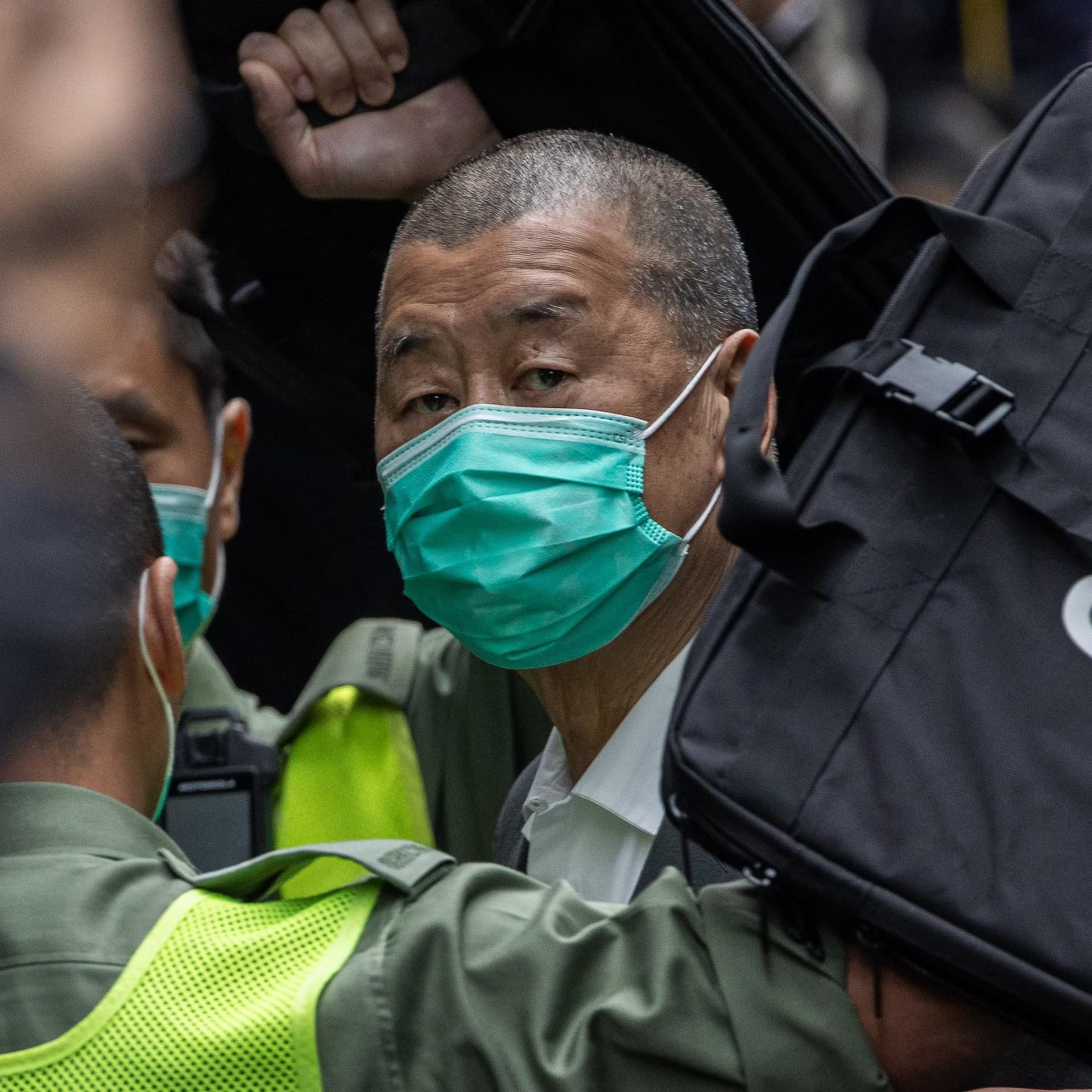
On Monday, Hong Kong's pro-democracy media tycoon Jimmy Lai was sentenced to 20 years in prison for colluding with foreign forces under the city's controversial national security law. The family of the 78-year-old, who is a British citizen, have appealed to foreign governments to call for Lai’s release. Lai’s sentence, which is the harshest yet under this law, has caused global concern over whether this is an attempt by Beijing to crackdown on dissent and democracy in the Chinese territory. We speak to Danny Vincent, the BBC’s Hong Kong reporter, who was the last journalist to interview Jimmy Lai. Producers: Sam Chantarasak and Chris Benderev Executive producer: James Shield Mix: Travis Evans Senior news editor: China Collins Photo: Jimmy Lai is escorted out of a Correctional Services Department vehicle and into the Court of Final Appeal in Hong Kong, China, 09 February 2021. Credit: Tyrone Sui/Reuters