In short
The BBC Global Story episode “Xi’s axis of frenemies” argues China is using military spectacle and high-level summits to project dominance, but the supposed “axis” is actually a coalition of uneasy partners.
Guests
Celia Haddon, BBC veteran China watcher (covered China 20+ years; lived in China 15 years; BBC China correspondent until 2016).
Key claims
Xi Jinping is modernizing the military and staging parades to signal readiness and global leadership. The Shanghai Cooperation Organization (SCO) summit in Tianjin—preceding the Beijing parade—shows coordination, but member tensions persist. “No new world order,” more “axis of frenemies.”
Notable examples
China–Russia “no-limits” friendship lacks binding treaty; Russia reportedly frustrated by limited Chinese support; leaked NYT document calls China a potential enemy. China–India: Quad ties vs SCO membership; India attends amid Trump-era tariff pressure; border conflict as recent as 2020. North Korea’s Kim Jong-un visits China, reflecting historical ties but driven by Russia-linked “meal ticket” concerns. SCO also announced a development bank to reduce reliance on the US dollar.
Written by AI. May contain mistakes. Listen to the episode to check what was said.
Chapters
Tap a time to open that second in VOAnalyzing the Military Parade in Beijing
1:12 to 3:08
Discussion on the significance of the military parade in Beijing and its implications.
“When they did what they did, I thought it was a beautiful ceremony.”
China's Global Strategy and Xi Jinping's Vision
3:08 to 4:54
Insights into Xi Jinping's political maneuvers and the implications for China's military strength.
“And today on The Global Story, is Xi Jinping really assembling an axis of upheaval to rival the United States?”
The Shanghai Cooperation Organization Summit
4:54 to 6:50
Overview of the Shanghai Cooperation Organization meeting and its significance.
“And so it's a time when I think that Xi Jinping is not shying away.”
Dynamics of Power Among World Leaders
6:50 to 8:11
Discussion of the interactions among world leaders at the summit and the symbolism behind them.
“Haven't you seen those photos of Putin and Modi and Xi Jinping?”
The Concept of 'Axis of Frenemies'
8:11 to 13:19
Exploration of the relationships between China, Russia, and India and the tensions that exist.
“What does Xi actually say at the summit?”
Historical Tensions between China and Russia
13:19 to 14:00
Examination of the historical conflicts and current dynamics between China and Russia.
“but I would describe it as an axis of frenemies.”
Historical Tensions Between China and Russia
14:00 to 15:44
Explore the long-standing tensions and the complexity of Sino-Russian relations.
“Well, there's been a lot of tension over the years, you know, dating back to the times of Soviet Russia and early communist China.”
The No-Limits Friendship and Its Implications
15:44 to 17:44
Discuss the implications of the declared friendship between Putin and Xi amidst imbalanced economic ties.
“So that's one really big point of tension.”
India's Diplomatic Balancing Act
17:44 to 20:19
Analyze Narendra Modi's recent engagements with both China and the U.S. amid a changing geopolitical landscape.
“I was intrigued to see he was there, in major part because the United States has been courting the Indian government for decades, both Republicans and Democrats.”
North Korea's Relationship with China
20:19 to 24:35
Examine the historical and current dynamics between North Korea and China amidst nuclear tensions.
“But if India needs China right now, because things might be souring slightly with the United States, what does China have to gain from its relationship with India?”
Show all 11 chapters
Potential Shift in Economic Alliances
24:35 to 26:06
Discuss the formation of a development bank aimed at reducing reliance on the U.S. dollar and its implications.
“So it seems like all the attention of this week has really focused on the spectacle of this all, the military parade, the camaraderie between some of these world leaders.”
Transcript
Automatic transcript. May contain errors.0:00This BBC podcast is supported by ads outside the UK.
0:30an award-winning behavioral scientist and author of the best-selling book, How to Change, as she shares true stories from Nobel laureates, authors, athletes, and everyday people about why we do the things we do and how to make better choices to help avoid costly mistakes. Each episode covers the latest research in behavioral science and dives into themes like the power of self-control, shaping your mindset for success, navigating new beginnings, and why starting over can feel so hard. Listen to choiceology at schwab.com slash podcast or wherever you listen.
1:12When they did what they did, I thought it was a beautiful ceremony. I thought it was very, very impressive, but I understood the reason they were doing it and they were hoping I was watching and I was watching.
1:26Well, we're watching. Asma and I are in the studio, and we're watching the pictures from the parade in Beijing on Wednesday morning. In Tiananmen Square. It's just enormous. I mean, look at it. It's enormous. You just see seas and seas of people. Happy people. Happy people. Happy people.
1:52Happy people. enumerating China's victory over Japan in World War II that took place 80 years ago. But it feels like this parade is about a whole lot more. It's about projecting China's dominance on the world stage.
2:12It's clearly sending a message.
2:18Some of the team were chatting this morning before we started recording, and one of our team members said, this parade looks like the first five minutes of a history documentary about the war that's about to happen. Gosh, that sounds a bit bleak. The other thing that struck me this week was this parade isn't happening in isolation. It's happening at the end of several days of political theater. More than 20 countries with their leaders coming together. An economic forum with Xi Jinping. and it feels like they are coordinating themselves directly in opposition to U.S. power. It felt like collectively, these guys have a plan.
2:59Oh, totally. Like they're more organized than the West.
3:05From the BBC, I'm Asma Khalid. And I'm Tristan Redman. And today on The Global Story, is Xi Jinping really assembling an axis of upheaval to rival the United States?
3:25We wanted to speak to a veteran China watcher at the BBC to see whether the reality matches up with all these images that we have been seeing come out of China this past week. Celia Haddon has been covering China for more than 20 years. You might detect in my accent that I'm not British. I don't come from the UK. I'm Canadian. But I moved to China originally in 2001, and I ended up staying there for 15 years. So until 2016, the last few years of that time, I was with the BBC as a China correspondent. How's your Mandarin? I wish I was in China full time. It would definitely be better if that was the case.
4:04Did you speak Mandarin before you went? No, I rocked up into Beijing with a backpack, and I learned how to speak Chinese on the fly. So this huge parade in Beijing, what's the significance of it? This really goes back to Xi Jinping and his longstanding drive to modernize the Chinese military, to make it into a force, he says, that can fight and win wars. And so he wants to put the Chinese military and its dominance on the world stage really right in front of our faces. The Chinese military is stronger than it was when China last held this kind of military parade. Many are thinking that China is preparing to invade Taiwan when China is asserting its claims over the South China Sea and other disputed bodies of water.
4:52And so this is a time when fears, global fears over China's military rise are really coming to the forefront. And so it's a time when I think that Xi Jinping is not shying away. He's not trying to make us feel better about what was once described as China's peaceful rise. So this week, we have seen more than 20 world leaders descend on China, people like Vladimir Putin of Russia and Narendra Modi of India. And they were there for this big economic and security summit. And I will say from afar, at least from my vantage point of American politics, I don't know that I've seen the Chinese hold a meeting like this at this scale.
5:36What has the scene been like? So this was a meeting of the Shanghai Cooperation Organization, which most people have never heard of. I understand. This was an organization set up by China in 2001, so long before Xi Jinping came to power. Fast forward to the present, and we now have this massive summit in the Chinese port city of Tianjin. Again, a city most people have never heard of. It's a city of— I confess I did not know it. More than 13 million people live in Tianjin. It's one of those Chinese cities that not that many people know, but are actually huge. Well, in China, it's a very important city.
6:11It's got a huge industrial base, a huge research and development base. But that's where the city was. It's not that far away from Beijing. So this organization, which was set up in 2001, now meets in this city. And we can see how big a deal this organization has become. It now tackles things like artificial intelligence and the digital economy. It was a big deal, and it was engineered by China to be a big deal. They wanted leaders like Narendra Modi and Vladimir Putin to be there, along with others. And they wanted it to precede this massive military parade. It's been a multi-day affair in China.
6:53And they all looked really chummy. I mean, I've seen those photos. Haven't you seen those photos of Putin and Modi and Xi Jinping? and they all look really happy. There's a quite awkward one of Modi and Putin in a limo together looking pretty miserable. They were in that limo together for almost an hour. So it was a big time. Yes. Wow, I didn't know that. Do we know what they talked about? Well, I wish I'd been in that limo with them. I could tell you. I wonder what language they were talking in. That's a really good question. Actually, Putin does speak some English, doesn't he? He speaks okay.
7:26Maybe they had their translators in the limo with them. I'm not quite sure. But they spent quite a bit of time. But the images from that summit were just jaw-dropping. To watch Modi and Putin walk into this massive summit room, holding hands, laughing, and walking towards Xi Jinping. I think it should be noted that he did not take a step towards them. They approached him. He was kind of the host, but he didn't feel the need to kind of meet them in the middle. It was this big smiling huddle. You know, the term bromance could have been in neon letters over the heads of these three men. It was sort of engineered to make us feel like they were old friends, that they knew each other well and they genuinely like each other.
8:11What does Xi actually say at the summit? I mean, I've seen a lot of pictures, but I haven't heard what he's actually said. He said all of the things that you might have expected a major Western leader to have said.
8:27So let me give you a couple of the little bits. Let me get a speech. He said we should abide by the international rule of law. He said we should practice multilateralism. He said that we should advocate the people-centered approach. And he goes on, we should support the UN. I mean, it was the kind of speech you would have expected anyone else but Xi Jinping. It sounded like the type of speech you'd hear from an American leader in years past. Right? And so an American leader in the age before America first. And what's funny is that China has had a China first approach for such a long time, for decades.
9:13So let me go back in time to 2006, when China came under some quite fierce criticism from the United States. Robert Zelick was the U.S. Deputy Secretary of State at the time, and he lobbed some quite tough words at Beijing. He said that China needed to become a responsible stakeholder. It needed to get invested in global affairs, not just profit from them.
9:41The accusation was that China was just looking out for itself. In this speech, China is clearly trying to say, hey, you know what? We can continue on with the global world order. And he's obviously saying, look, we are the alternative to the United States. Can you give us a sense, though, of how Xi Jinping has himself evolved as a world leader from when he first took power? and how he's presented himself on the world stage. Because it seems like what you're saying is that his vision of, like, diplomacy and his vision of China's leadership role has evolved. When Xi Jinping came into power in 2012, I just remember that we all just kind of sat up straight.
10:25Because in comparison to Hu Jintao, who was Xi Jinping's predecessor, who was quite a gray bureaucrat, you know, he kind of melded in with the rest of the party. Xi Jinping was different. He is a leader. And he came into power with a vision. He had the China dream. He wanted Chinese people to become equally prosperous, for the whole country to kind of rise up, for China to reclaim territory that it felt belonged to it, including Taiwan or the South China Sea, for its military to modernize. He just came in with this idea that China could be one of the greatest countries, if not the greatest country in the world.
11:07And he carried the whole country along with him. All of the news headlines that I've seen about the summit seem to suggest that there's some sort of new world order that's developing. But Celia, my question for you is, is it an actual real new world order that we're seeing? You know, we look at the pictures, you see them all lined up. Are they really one big happy family? I'm going to answer this in a bit of a strange way, but it's the image that comes to mind for me when you ask me that question. picture the typical kind of murder mystery where all the guests are kind of seated around a dinner table they all look like they're having a nice meal and suddenly there's a scream there's a murder and then it all kind of unravels that each one of the guests had different motives and you realize that they didn't quite like each other as much as you maybe thought that they did at the start of of the story that's kind of what I think of when I look at this picture because as these leaders are shaking hands, they're also kind of looking behind their backs.
12:08They all have tensions, longstanding tensions between them. So are they really allies? Yes, for now and for certain issues. But whether those partnerships will stand the test of time, whether this Shanghai Cooperation Organization really will become what Xi Jinping wants it to become, I'm not so sure because I look at those tensions and I think those tensions have not gone away. The tensions between China and Russia, tensions between China and India, the list goes on and on. I mean, the Shanghai Cooperation Organization has both India and Pakistan as members. So, you know, those are two... Not the best of friends.
12:49Not the best of friends, you know, at all. You know, they were engaged in open conflict not that long ago. So I would say this is really not the New World Order as far as I can see at the moment.
13:09Because it's been described some places as the axis of upheaval, but you wouldn't go with that. You know, some people have described this as an axis of upheaval, but I would describe it as an axis of frenemies. Okay, go on.
13:30Coming up next, what exactly is an axis of frenemies? And why are they sticking together for now?
13:44Right, Celia, so if what we're seeing right now maybe isn't actually the beginning of a new world order and is actually more of a frenemy situation as you describe it, Could you start by explaining to me, please, what the tensions that exist between China and Russia might be? Well, there's been a lot of tension over the years, you know, dating back to the times of Soviet Russia and early communist China. Even when you look at Chinese maps to this day, you know, Soviet Russia annexed nearly 2 million square kilometers of Chinese territory. And that's still referenced in Chinese maps to this day.
14:27China hasn't really forgotten that. So there's a long history of tensions. Yes, they've been friends over the years, but we have to remember these two countries share a massive border. And so it's important for them to stay on each other's good sides, even though they're not really in alignment when it comes to their economic interests or their security interests. A lot of people have been focusing on the fact that back in 2022, just before Russia's full-scale invasion of Ukraine, Putin and Xi at that time declared a no-limits friendship, and a lot was made of this at the time. I remember that, yeah.
15:02War in Ukraine and the images out of Moscow today where Russia and China marked a, quote, new era of strategic partnership. But, you know, that was never formalized. Tonight, in the grandest of halls inside the Kremlin, President Putin and China's President Xi putting on a show. There is no binding treaty between the two. And there has been real frustration in Moscow that China hasn't done more, hasn't lent more support to Russia. So yes, China buys Russia's cheap energy, but China hasn't gone far enough to really extend its full support, its full military support, its full diplomatic support in the way that Russia would like.
15:44So that's one really big point of tension. And I think trade is a big problem. It's really imbalanced. China is an elephant when it comes to global trade. It has the world's second largest economy. Russia is hurting and it really is dependent on China's continued purchases of cheap Russian energy. So China really does have something over Russia when it comes to that. So even though we Talk about this bromance between Vladimir Putin and Xi Jinping. The two have met more than 40 times. More than 40 times? Yeah. In fact, it might even be closer to 45 times, but let's just say more than 40 times. That is a really astounding stat.
16:22Yeah. So you do sense that there is a genuine warmth between the two men. They do want to push a new world order, for lack of a better term. They're both members of the UN Security Council. Well, I was going to say, I mean, they almost always aligned Russia and China and the UN Security Council on votes and vetoes. and such like. Almost always. Yeah. So the idea that they could actually be kind of out of line with each other seemed incongruous to me. Yes. Although we've also been having reports within the past year. There was a report in the New York Times that surfaced in June that reported on a leaked Russian security document that refers to China as the enemy.
17:01And it says that Beijing has been trying to recruit Russian spies to steal military technology. It says it's been spying on Russian operations in Ukraine to learn more about Western warfare and Western weapons. And they also outline concerns about espionage in the Arctic. So when we look at these two countries, they're not as close as we might think they are. There are still tensions bubbling below the surface. That's really interesting. Though I will also say, Celia, you know, hearing just the sheer number of times you say Putin and Xi have met, I'm struck by how different the dynamic seems with Xi and another man, Narendra Modi, who attended this week's economic meetings in China.
17:44I was intrigued to see he was there, in major part because the United States has been courting the Indian government for decades, both Republicans and Democrats. And so I thought it was really interesting to see him seem all chummy-chummy now with the Chinese. Yeah. I mean, India for a long time has been kind of walking a bit of a fine line in trying to stay neutral on the world stage. So yes, India is a member of the Quad. That's It's a security alliance that includes the United States, Australia, and Japan. But India is also a member of the Shanghai Cooperation Organization. And so, yes, it's interesting to see Narendra Modi in Tianjin attending.
18:21He hasn't been to China, right, in a number of years. He hadn't been to China in seven years. He hadn't met with Xi Jinping on Chinese soil in seven years. So quite striking. And what do you see then as the impetus for him going at this moment? is essentially the Trump administration's 50 % tariffs, and that's pushing him further towards China? Absolutely. I mean, he needs to look at other options. And so I think this is, you know, he couldn't have made it clearer when he walked into that summit room, halting the hand of Vladimir Putin, and then going up and sort of basically patting the back of the situation.
18:52He seems to be trying to troll Donald Trump a bit too. Oh, yeah. You see, they're like public sparring on social media. It's like they were trying to make one another feel, you know, it wasn't sparring, but it was like, look at me and my great new life that I have. Exactly, exactly. It's kind of like, you know, you're fresh on a breakup and then you show up and you're looking great and you've got a new partner and everything's wonderful. That's really what it felt like. But, you know, it's interesting because China and India really do also have a lot of tensions. I mean, not to bring the mood down again, but, you know, there are economic concerns.
19:23India has really benefited in the past five years, I'd say, from this pressure on China for countries to move their manufacturing lines out of China. You know, for example, a lot of Apple products are now made in India. So India is really concerned now with the new economy under Donald Trump. Are we going to see a lot of cheap Chinese imports flooding into India, you know, as China looks for new markets, new places to send its manufacturing products? And so there are concerns. And they're also the border. The two fought a conflict as recently as 2020. They've only recently patched things up along that border.
20:03So, again, we have the frenemy idea, this idea that, yes, things are looking OK for now. The two leaders were in the same room and shared the same space. But, you know, are China and India, have they buried the hatchet? I'm not so sure. But if India needs China right now, because things might be souring slightly with the United States, what does China have to gain from its relationship with India? Look, if Xi Jinping wants to portray himself as a global leader, you know, not just a regional leader, not just the head of, you know, the world's second most populous country or, you know, an emerging superpower.
20:44If he really wants to be a global leader, then he needs countries like India on board. And yes, this was also aimed at really giving a poke to Donald Trump to say, oh, look, you're kind of turning India away. Oh, well, we're welcoming India into our club. And we have to remember these are the countries with the world's two biggest populations. They carry real heft. And so people pay attention when those two leaders stand together.
21:15There's just one other country that we'd like to ask you about. The elaborate stages have been set, but there's a latecomer. Now, I mean, we can't do a kind of total list of everyone who was there at the summit, but I have to ask you about North Korea. North Korean leader Kim Jong-un has crossed the border into China aboard his signature armoured train. The third generation dictator is on his way to Beijing's victory parade on Wednesday, though he did have time to stop for a smoke. I mean, the pictures of Kim arriving in China in his armoured train He very rarely leaves North Korea. I mean, he hasn't been to China very often recently, has he?
21:54He hasn't been to China since before the pandemic. You know, we have to remember that North Korea was the first country to close its borders to China at the start of the pandemic. That was a bit of a slap in the face to Beijing. I mean, on its face, you'd expect China, one massive communist nation, and North Korea, its communist neighbor, to be close. What's the story between these two? Well, historically, they were very close. In fact, North Korea is the only country that has a binding security treaty with China, a mutual defense pact. The only country in the world that Beijing has signed anything with.
Read the full transcript
22:29That was back in 1961. You know, the communist revolutionary leader Mao Zedong once described China and North Korea as being as close as lips and teeth. But I would say that North Korea's nuclear ambitions have really driven the two countries apart. North Korea is now a de facto nuclear state. And tensions really grew for years over the fact that Beijing hadn't stepped in the way of the United Nations imposing sanctions on North Korea. North Korea has a golden ticket now. It's developed its own very close and profitable relationship with Russia. It's supporting Russia in its war on Ukraine. It's even sending its own soldiers to fight on the front lines.
23:13But there are some concerns I've heard among people in North Korea, and you can sort of understand this, that if that conflict ends, the Ukraine conflict ends, well, North Korea's meal ticket goes away as well. You know, so it's put all its eggs in the Russia basket. It's really profited from that relationship. But now it's kind of looking back to its old benefactor, this country, China, which is right on its border, which for decades was its main supplier of food and fuel aid. And so Kim Jong-un showing up in Beijing is partly a nod to say, oh, yeah, we have a very close relationship, historical relationship with China.
23:53I would also say, you know, Kim Jong-un also had a bit of a personal reason to show up in Beijing. You know, he didn't show up alone. He showed up with his 15-year-old daughter, who was thought to be his chosen heir. And so we have all these world leaders and a 15-year-old watching the military parade. And so I think that's also the message. This is, from what I understand, her first trip, her first big trip to kind of hobnob with other world leaders. It's frankly his first time on a world stage hobnobbing. This is a man who comes from what we describe as the hermit state, and he's now being treated almost like another world leader.
24:35It's a very strange sight. So it seems like all the attention of this week has really focused on the spectacle of this all, the military parade, the camaraderie between some of these world leaders. But underneath all of this, did you feel like there was something substantive that's come out of it? Well, there was something that kind of made me pause because I've just explained to you why I think all of these countries actually distrust each other. But when I read the readouts, the official Chinese readouts from the foreign ministry, I read Xi Jinping's speech, there were some things that made me think, ah, actually maybe this, you know, the Shanghai Cooperation Organization is growing and might actually carry some heft in the future.
25:18And it really focuses around money. They announced a decision to establish a bank. So for years, Xi Jinping has wanted to establish a development bank within the Shanghai Cooperation Organization. Now, it sounds very boring. Development banks don't really keep me up at night. But this bank's goal is really to establish an alternative payment system to reduce reliance on the U.S. dollar. And that's a big deal because these are huge economies we're talking about. So that's what made me pay attention. That is really interesting because it sounds like what you're saying is the goal is to fundamentally shift a number of these economies away from the United States.
26:01And that would be new. And it feels like maybe they think there's an opportunity in this moment. I still think it's a relationship of convenience at the moment. And we still need to see if that will really lead to anything substantive. ...delivering common sense for the American people. Ladies and gentlemen, here's Scott Jennings. So on Tuesday, Donald Trump was talking to a radio station in the US. Mr. President, are you concerned about an axis forming against the United States? And he said... I'm not concerned at all. No, I'm not at all. We have the strongest military in the world by far. but they would never use their military on us.
26:44Believe me, that would be the worst thing they could ever do. What's your response to that? Do you think he's justified in that position? I just think it's interesting that he kind of immediately focuses on the military threat and not the economic challenge that these countries, in theory, might pose to the United States if they begin trading more with each other and really begin to turn away from the idea that in order to succeed economically, one needs to have a really robust trading relationship with the United States.
27:18Celia, thank you so much. Thanks, Celia. Thank you.
27:27That was our colleague Celia Hatton. And that's it for The Global Story. Until tomorrow, catch you then. Cheerio.
28:04Thank you. costly mistakes. Listen to choiceology at schwab.com slash podcast or wherever you listen.
From the publisher
President Xi Jinping said humanity faces "a choice between peace and war” as China paraded a huge arsenal of weapons – including nuclear missiles – in Beijing yesterday. Xi's military parade, watched over by Vladimir Putin and Kim Jong Un, seemed a provocation to the west – most notably, Donald Trump – and a signal of his will to redraw the world order, lessening China’s reliance on the US. In today's episode, the BBC's Celia Hatton considers: how long will China's friendships last with world leaders who have for years been its rivals? Producers: Hannah Moore and Lucy Pawle Executive Producer: James Shield Mix: Travis Evans Senior News Editor: China Collins
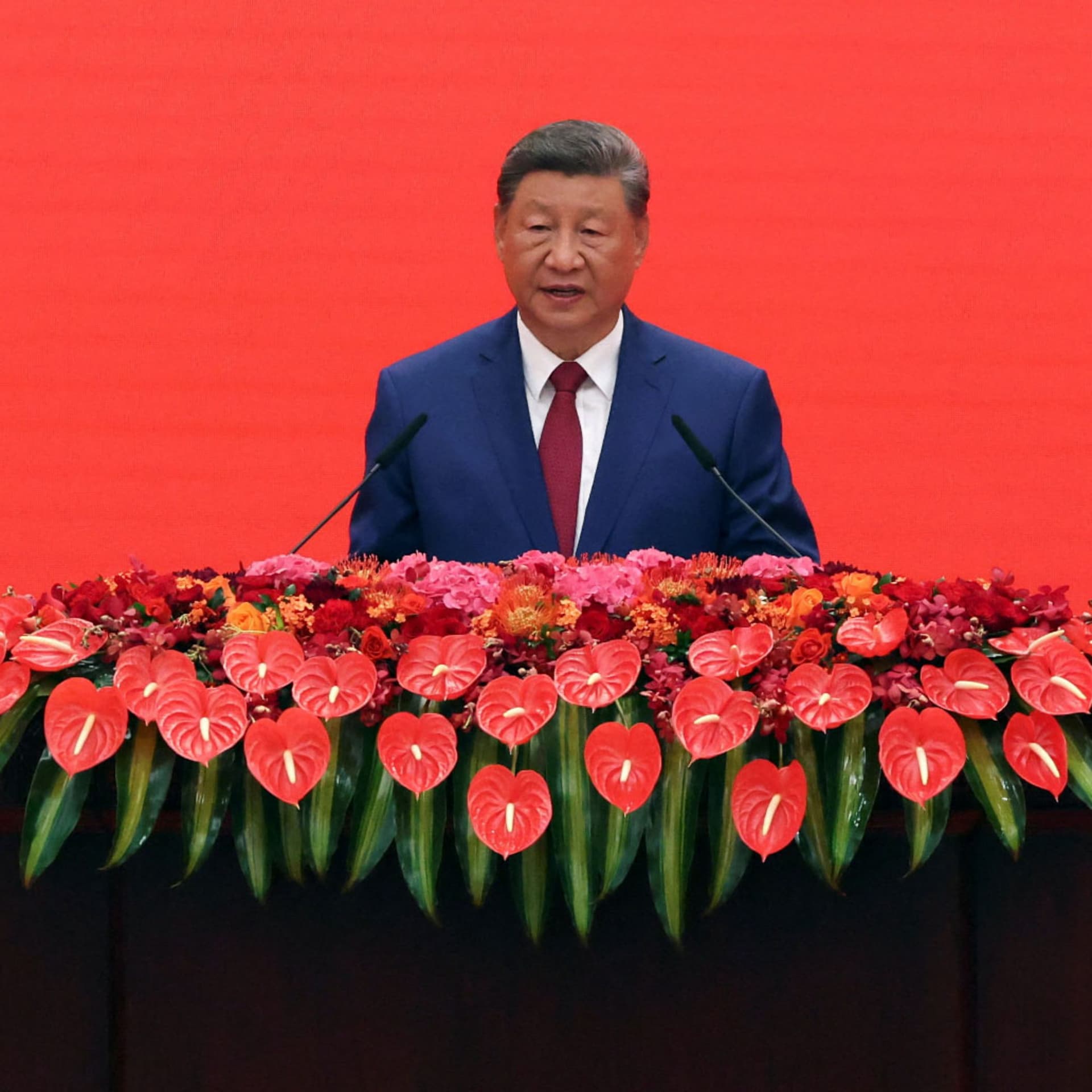
Image: Xi Jingping at a WW2 anniversary reception at the Great Hall of the People in Beijing. Florence Lo/Reuters