
- Podcasts
- The Healthtech Podcast
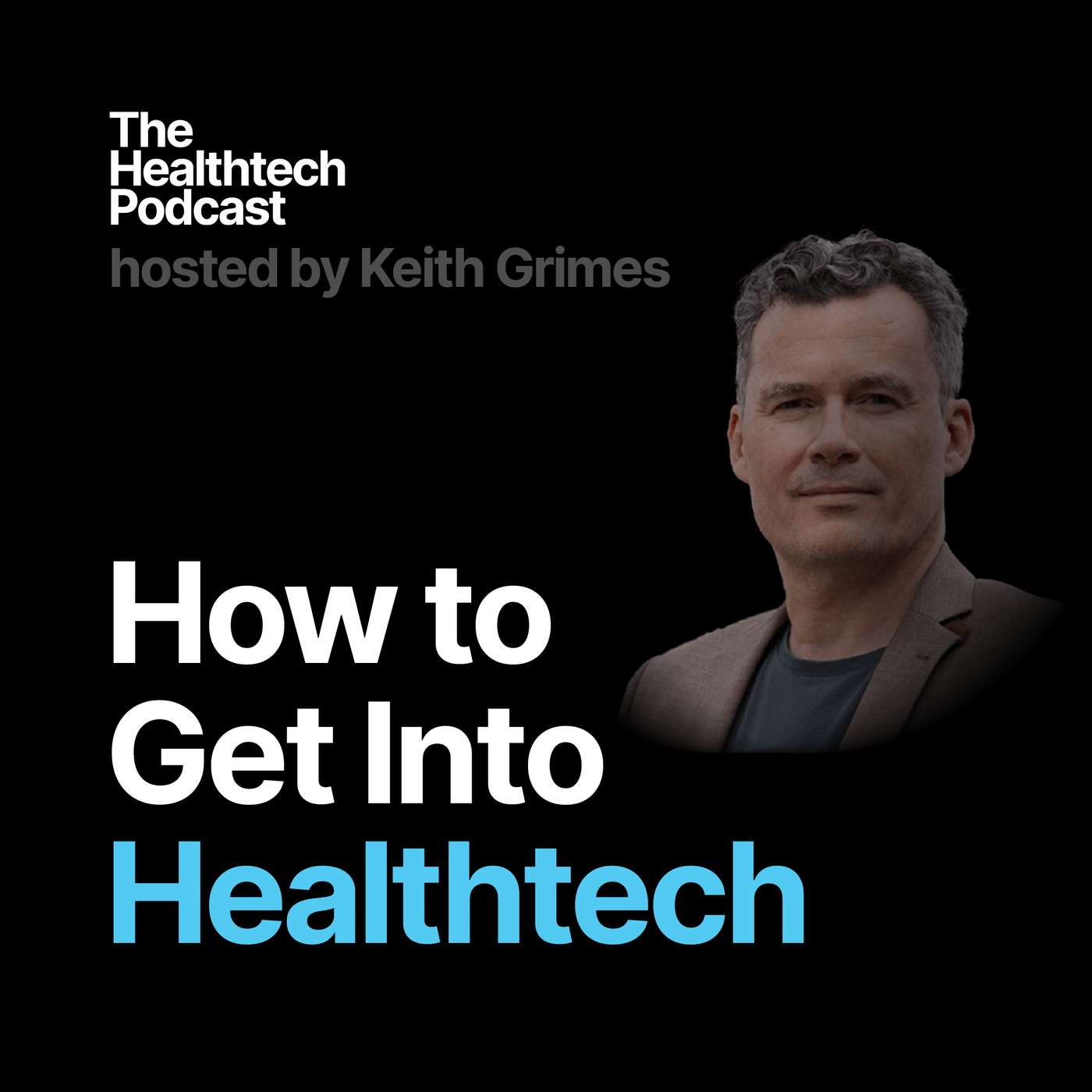
- #4 How to Get Into Healthtech: Dr Lucinda Scharff, Doctor, Teaching Fellow, Digital Transformation
The Healthtech Podcast18 Jun 2025 · 52m
#4 How to Get Into Healthtech: Dr Lucinda Scharff, Doctor, Teaching Fellow, Digital Transformation

 Add vo to ChatGPT or Claude to ask about everything you hear
vo listened to this episode to put together the overview and transcript, so there may be the odd mistake.
In short
How to get into health tech without a clear pathway, using Dr Lucinda Scharff’s journey from medicine to digital health/product work at Google.
Guest background
Lucinda Scharff wanted to be a doctor from age 11–12; studied medicine at Oxford (Queens College). She rotated through specialties, did an elective in neurology, and disliked ward-round repetitiveness. She later worked clinically in F1/F2 and A&E, then joined startups and moved into tech roles.
Key claims
Health tech entry often happens by “floating in” through problem-solving and collaboration, not formal courses. Clinician expertise matters but is not more important than other domain expertise. Tech skills are learned “just in time” via people and networking. Career “ladders” are less relevant in modern tech.
Notable examples
Missing discharge summaries after patient death; inability to transfer CT images due to login/access issues; early startup work at Pando/Forward; later roles at Google including AI-driven alerting and Care Studio with Ascension; current EMEA work on clinical enterprise partnerships and applying DeepMind/Gemini-era research to healthcare.
Transcript
0:00Welcome to the Health Tech Podcast. Here we talk about everything healthcare and technology and I'm your host James Summeru. Hey everyone, you're listening to one of our special episodes, a mini-series hosted by Dr Keith Grimes called How to Get into Health Tech, where, you guessed it, Keith speaks to an incredible mix of guests who have each taken a different path into the space so you can learn how they did it and what they do now. This is all part of our mission to make careers in health tech far more accessible. So whatever your background, I hope you enjoy it. We'll be back with our usual episode soon.
0:38And here is another superb conversation in that series. Hello, everyone. I'm Dr. Keith Grimes, digital health doctor, and I am delighted to welcome you back to another episode of how to get into health tech. What is this podcast about? Clues in the title, but simply speaking for all those people that want to work in this wonderful world of health tech, you'll be wondering how you get into it. There's no obvious routes. Certainly I didn't have an obvious route, and I'm asked this question all the time. I'm not going to spend today telling you about how I got into this. I've done that many times.
1:11But what I find really interesting, because there's no official way in, is speaking to other people who have made it into health tech. and today I am delighted to have Lucinda Scharf who is going to be telling us a bit about herself and then we're gonna go back in time and come all the way back to the future and see what happens next and hear about her story. So hello there Lucinda, how are you? Hi Keith, I'm great, how are you? Thanks for having me. I'm good. The sun at the moment, the sun is shining here on the south coast and spring is definitely here so I'm pretty chipper. Yeah it's pretty nice here in London too sun's definitely spring is making its appearance so yeah very happy goodness for that yes a lovely time of year so um well spring is starting people are starting to get all that energy and everything and they're thinking right this is the year this is the year that I get into health tech um so they're listening to the podcast and uh so we're here to talk to you today so um as with everyone that comes on the podcast we're gonna go way back and start and say Lucinda what did you want to be when you grew up?
2:13Well I do think my answer to this is quite boring in that from about the age of 11 or 12 I wanted to be a doctor. So I mean prior to that I guess in sort of a childhood fantasy way I did lots of ballet. I think I wanted to be a ballerina at one point in time. I think my mum has clear memories of me saying I would be a teacher in the morning and a dentist in the afternoon. So I was obviously portfolio career was obviously a top of mind at a young age. but yeah I have a really I guess clear memory of being maybe maybe 12 sort of year eight kind of phase and being asked by a head of year you know what did I want to do which in a way seems like just a terrible question to ask a 12 year old but um but I wanted to be a doctor I think I was we don't have any doctors in my family so I think I was probably heavily influenced by things like casualty or Hobie City of the time.
3:09But yeah, I think I couldn't, I couldn't think of anything that was more interesting than the human body. And yeah, that was what I wanted to be. Yeah. Well, the human body is definitely very interesting, as we all know. And yeah, so I mean, this is not going to be a totally atypical story. You know, people come into medicine because they want to be a doctor or a nurse or whatever it is. and so you've got that in your mind at 12 and I suppose like many people who are going into medicine that kind of casts the die as to what happens next in some regards although you say you got an interest in ballet and everything before how did you mix the the different studies in school like you know oh I don't think I was mixing the studies in school I think that was that was really just like a very involved hobby uh of my childhood that the dance was just a big a big love of mine outside of school I think in school to be honest I was probably one of those sort of insufferable all-rounders like I did well at everything um as it's true for lots of people in medicine right so I probably I could I could have picked when it came to A levels for example or GCCs could have picked any of those subjects I suppose but but um yeah I mean even you know in a way saying that you decided at 12 you're going to be at a doctor sounds early but actually given the way that the system is and needing to pick your GCSE options and then needing those to dictate your A-level options and that sort of support your application.
4:36Actually, you do have to sort of, in many cases, make that decision quite early on, even if not maybe as early as 12. But yeah, so it definitely coloured, I remember, being in my GCSE options conversations conversations and having lots of debate about whether I should do this will probably age me but like double science or triple science and whether it was the my school still taught latin um and whether it was the right thing to do latin and I think um that was sort of one of my like few and this this will this will tell you everything you need to know one of my few teenage rebellions was that I didn't want to do latin and instead I did drama so there you go so there's the performer in there and you're wanting to do drama one of the things that when I speak to everyone about this sort of stage either here or elsewhere is that um some of these other interests kind of get ironed out of you as you have you get closer to the application side you know people their musical ass you know not their musical aspirations but their interest in music art and so on sometimes get kind of crowded out to the detriment of medicine as a whole I think but but but you managed to hold on with a bit of drama a bit of that and then I did yeah I guess my other one was I did Spanish at A-level, which was because I really also, I think I had a really hard time to, in some ways a really hard time choosing my A-levels, in some ways very easy because I knew I wanted to do, I already knew I was applying for medicine, right?
5:58So there's, you know, only got maybe, maybe four choices. And so, you know, you've got to do your chemistry and you've got to do something else. And I love maths, still love maths, could have done a degree. I would have happily, would still happily do a degree in maths.
6:14And, and then biology was sort of the obvious. I think somebody tried to tell me that if I did biology, it would make medicine easier, which in hindsight feels ridiculous. But like at the time, that felt like that felt very true, very important. But I loved I also wanted to do physics. I did French and Spanish. And I also wanted to do Spanish. I did I did further maths for a while. So I see. I know what you mean. It's somewhat medicine and somewhat just the fact that we narrow narrowed down so quickly. I guess I was lucky to keep lots of those interests going in sport and dance and drama, light operatics and all that sort of thing going outside of school.
6:58Yeah, it's a really important thing for anyone actually to, you know, I'm speaking sort of further on and I've been fortunate to be able to come back and combine a lot of these things and be a bit less apologetic about it. But there's a reason that you do these things when you're younger and those don't tend to go away. so preserving it is really important also contributes towards just the sort of joy in the work that you do too so yeah just like well-being right like I'm at a funny stage and jumping forward now I'm at a funny stage where I have two small children and so finding the you know my my interests and hobbies are squeezed for other reasons um but yeah you do like yeah oh I actually what last year went back to tap dancing I was like oh actually this is something I loved when I was younger why did I you know I went off to university I gave this up why do they do that so um yeah there's always there's always a reason for these things to be squeezed out but they do provide so much to your life even if it's not necessarily you have to live your life too yeah so so you're making this way through school and you're getting closer and close to medical school so tell me a bit about like that you know where did you go how did you find it what was a was medicine all you hoped it to be a medical school so i think if i go back to like maybe sixth form there are a few elements i went to oxford um queen's college in oxford for my university um there were definitely and i i think i'm grateful for this there was definitely sort of a voice from there was a lot of pressure from school so it was a selective girls school as generally a high pressure environment um there was some noise around like are you sure this is what you want to do um you only got sort of rather than the five options that most people got if you're doing medicine you can only put down four I think was the case at the time and so there was sort of a well do you want to put biomedical science as a fifth option and I remember having sort of sort of an argument really with our careers advisor saying no because I don't want to do biomedical science I don't if I I want to do medicine um and so not putting down a fifth option um there was also a lot of i guess debate in my mind around which university to go to um i guess there were kind of broadly in my mind two categories well okay so then there was the oxbridge but i grew up very near to cambridge and i thought if i went go if i applied to cambridge um my mom will be there all the time yes i can't get away at least a little bit cambridge was where we went shopping so i was like no okay yeah but it's got to be oxford it's got to be oxford if applying for that one um and then there were sort of two buckets there was the bucket of ones that were more I think it was called problem-based learning where it was more group work and I it seems silly now given the way that I work is so sort of multidisciplinary as is the work of medicine but I just thought I can't I I almost didn't I didn't want to rely on other people to do some of the learning for me I felt like I really wanted to be in control of that and so I went I remember for ages being obsessed with the idea of going to Manchester and then realizing the course probably wasn't for me um so i went down the more sort of scientific options so where did i apply southampton bristol birmingham um so they yeah but uh the the oxford thing was interesting so there was sort of a cohort of us at school that were applying for oxford there was also this sort of weird narrative from my school around like the choice of college that you applied for um or even what within oxford within oxford yeah and it seems again like in high school so uninformed and like so ill-informed and so ridiculous but but they were sort of saying well you should apply for one of the smaller colleges or one of the um one of the new i guess more modern colleges um because they felt i guess they felt that i would have a better chance which is not not how it works for medicine at all i don't think for any other subject no of course so I guess I stuck to my held my ground there and I applied for Queensland and that's where I went there's a theme of you holding your ground on this one, that's quite a brave thing to say no I'm not going to go for the backup, I'm just this is it four, here we go I guess so, is it braver?
11:02is it naivety? I don't know but I guess I think I was so I was so confident, not that I would get into Oxford I wasn't confident I would get into Oxford I remember being there and crying after one of my interviews and having to take off my makeup and reapply it before my next one. But I was confident I would get into medicine. I don't think there was any doubt in my mind. I don't know whether that came from just sort of academic ability or home or school. You know, it was a very feminist environment, I would say, in my school. There was very much the you can do anything and be anything you want to be.
11:42And I wanted to be a doctor. Quite right. I could do it. Like, I don't think there was any doubt in my mind that I would get in somewhere and that that's what I would do. And I think there was, and I didn't, I don't think I had any doubt that that was what I wanted to do. There was, I think it was a doubtless environment. Well, you see, this is a brilliant setup as we go forward because you're not a traditional doctor now. So this is where we get into the meat of things. As we sort of go through medical school, everyone's gonna be going where did these things happen so anyway so you're at your oxford here we go landed actually first little doubt we won um i remember being and it could have been because i was very tired and hungover and a bit homesick but i remember being in a lab and doing something to do with red blood cells and my lab partner he actually left after one term and went and did physics at his college he wasn't particularly sociable and just thinking like oh gosh this is I don't know like did I make the right choice here then I really settled in and I I loved university I would go back and do it I would happen to go back and do it all over again I had a really Oxford's interesting because within your so the year group is small there's like 150 and then you're split between your colleges so in my colleges there was only six of us in my year, six per year, in a year of, say, 100 and something.
13:10And it was all boys and me, which having been at a girl school was interesting. Oxford's one of the few colleges, I don't know if it's still true now, but there was more men in medicine than women, which is unusual in general. Yeah, well, it's definitely not the case now in terms of statistics. The whole profession shifted now, right? Like the statistics, but even then most universities were more women and Oxford was a little bit more men. and it was all these boys and me, which was a completely different dynamic and we cycled to and from lectures and we had a great friendship group. I loved, it was so intense, but the way Oxford worked, you're almost in these eight-week sprints of terms.
13:48You're like, barely slept, did so many extracurriculars, worked really hard. My first year, I think I'd come from school still very much in that mindset of like, well if I work hard enough I'll be the top um because and I think the interesting thing in Oxford is like probably in medicine in general everyone's been that person everyone was top of the class and now you're all the all the alphas will turn up oh yeah um and so I think the first year I really tried to hold on to that and it and I did really well but I think I realized towards the end of the year like oh um you you have a choice like and maybe this was more going into second year I realized this you have a choice you can either do all these social things and be on all these teams and do all this extracurricular stuff I guess back to our point about things being squeezed out and accept that you might not always get the top grade or you can lose all of that you can work really hard and you probably still won't get the top grade and I think it took me then probably a couple of years of like readjusting maybe longer readjusting your mindset to being like what what does it mean to not be the cleverest person in the room um the most academic for it not to be easy like I I mean in hindsight school was very easy um and then suddenly it was not easy um either like managing your time but also just like sometimes the academic work was really hard sometimes we used to have these little like quite casual exams at the start of every term that your college ran and I remember going into one and just like um in fact actually going in to get my results from my teacher afterwards and him pointing like gun fingers at me like I'm gonna get you but like I'd literally answered one question because I couldn't find three on the paper that I even could begin to answer so There was like a real mindset shift in that, but I loved it.
15:41I really loved it. In my second year, we had to, also second into third, we had to do a research study, which was interesting because I think in school, people had always said to me, oh, you'll be an academic. It was like, you'll be an academic. And I got into the lab and realised that I will not, I do not, I still do not have any research papers to my name to this day, which I'm almost sort of like holding out on. um I've only just started collecting those things as well don't worry about it um I kind of like pipetting things it's not for me that like level of attention attention to detail it's just just isn't actually how my brain works um I said that was good that's a good thing to learn um because I could easily have gone off at that point and gone oh I'll do a PhD and I'll do something academic or that's what I'll be and I realized that that wasn't the case um so you're going through and you're sort of finding these things out and there's something about it's interesting as you talk about this one of the things that I love about health tech is um you have a very important role if you're a clinician in this space bringing that kind of clinical expertise but you hopefully very very quickly realize that that is no more or less important than the expertise brought than anyone else in that space and the only way to achieve the things that you want to achieve is through collaboration um so it's a lesson that you have to learn at some point um and i suppose it's good that it's in there so so you're saying i don't want to be in the wet labs i don't want to do any of that sort of stuff you're was there any particular part in medicine though because some of the other people spoke about the sort of specialisms they're interested in like you know how how did that sort of latter part and into the junior doctor stuff go so interestingly like the way the course is structured at oxford years four five and six almost like entirely on the wards um and you're rotating through all sorts of different specialties the one I guess that piqued my interest was neuro I did my elective in neurology thought that was really interesting and actually my wet lab stuff had been tied to neurology so that interested me through early um I think one of the things I I what did I learn about myself during that period of time I didn't like the ward round I love the tape why didn't you like the ward round not that I'm saying the ward round is like something you like what was it I know I know I just remember being in fourth year so not that long into it and thinking oh my gosh if this is the rest of my career I can't do this it's the repetitiveness and I think I have this maybe I just have this buzzy energy in me that needs to get stuff done right now or not at all and this translated into when I was a junior doctor I would like to try and get all the tasks done by the time the order out was finished and some consultants don't like that so then they don't like you yeah Yeah, I think what specialties, do you know what, I liked all of the specialties for a month, and then I would get bored, which I think carried over somewhat into the work that I did.
18:32So I guess the piece that's conspicuously missing from all of med school, and even all of the final parts of med school, is technology. Technology did not break. Well, yeah, I mean, but that, you know, it's interesting to see where this arrives. I'm thinking here in the background, you know, I'm thinking about where you are now, and you're like, you like to get stuff done. you're easily bored you like the neurology and now where are you google and you know so i'm saying who are some little little little flakes here but yeah tech yeah so it didn't it really didn't appear i remember like tech wasn't something i was i cared about i think it didn't get in my way is the truth like it it just was part like i had an iphone i had a blackberry one point that's just part of my life like i had a laptop there you go i saw i remember i remember being in and this was neurosurgery seeing a very some very cool sort of like you know sort of the geolocation of a tumor using a ct scan and some i'm gonna butcher it but some die in a probe and i'm thinking like wow like but it wasn't it was what they were achieving whether it wasn't like oh you built that it was i don't know um but i guess in terms of just finish on the specialty point i think even when I was practicing and in my foundation years I liked everything for a month I liked things if I had a good team but the things I ended up loving were general practice and emergency medicine which are for really for the same reasons of I like the variety I liked that it wasn't I mean obviously those those specialties also have their breads and butters but they have the I I remember being sat with a cardiologist once and him saying to me if you don't love the bread and gastroenteritis specialty that he shouldn't do it like he was like i love dealing with af and mis yeah and if you're a neurologist you've got to love i think you said epilepsy or headache or something like this and if you're you know if you're spiritual or cbd whatever it is someone specialists will argue with you i thought them wrong or something but yeah and i think i what i liked was i like variety i like i get bored easily i want lots of different things and i liked a and more than GP because I like them coming at me fast.
20:42Yeah, yeah. Well, that fits as well. It's that kind of energy. This feels like therapy, Keith, as opposed to a podcast. That's the trick. Well, I am a GP of some vintage. Oh, my gosh, yes. Of course. So I guess tech, take a step back. I go into F1 and F2. I go into F1. Tech has never been of any importance to me. The thing I always laugh about is that today I wear an Android lanyard for work. and I did not know that iOS and Android were operating systems or even different. I had no idea and it didn't care. But you start working and suddenly the tech was in my way. And it was like front and center in my life because it was so damn difficult.
21:25And this is like an era, right, of like iPhones and consumer tech being like very seamless, Uber, right, like delivery, all these things. And yet I'm like, I have like seven logins. and I literally at one point I worked in a mental health unit which was next to the main hospital but I had to use like three different logins to try and like somebody else's password to guess and then I had two incidents happen um so I worked in northwest London that like were both the drivers of my sort of push into tech and also that will like stay with me the kind of like stay with you forever so one was um I was working on a straight unit and I had a GP you call me and quite rightly in many ways that wasn't really my fault give me an absolute can I swear I'll be you can swear I was gonna say give me a bollocking down the phone that's not swearing you're allowed to say that go um because this GP you know it was it was Wembley area lots of multi-generational families third and fourth generations and he'd looked after this family their entire life, all of them.
22:33And one of the patients had come in, he'd had a stroke, he'd sadly died. He was an older man. And because of the way the hospital system worked, it basically meant that if you died, it never issued a discharge summary to the GP. So he had no idea. No one had told him. And the family had come in a few days later, obviously devastated, and they'd been supported by this man, this GP, their whole life and he knew everyone and he had no idea and he called me up and he was like late I mean quite late away quite rightly sort of laying into the computer system really but I was just on the receiving end of it and I was just like oh yeah that is actually like you are actually right and that is unacceptable so I thought that started off sort of I guess like little project one which was how do we can we do something about that can we make it so it triggers something even if it's short right you don't need the whole discharge summary but like you need something and the second one was a much so I started working on that the second one was a much younger person who had come in and had a really big um a really big like middle cerebral artery stroke and it was likely to be unsurvivable but I was on call as the F1 that week looking after the ward that weekend and he in you know sort of 24 hours after he came in as often happened the pressure in his brain went up and he deteriorated and I needed to transfer him to one of the other hospitals with a neurosurgical department and I had you know I literally had a crash team there and the stroke reg and and the the we were transferring him over to this hospital but the thing I needed to do was would re-CT him and was to get those images transferred over and I could not log into the system to do it and I remember like I've got all these other patients I've made a call to see and I've got this you know I think the man was 42 or something like that so like you know not far off where I am now dying on the ward and I can't send a CT scan a few miles down the road and I remember just like the the feeling of just like this is like number one crying as you do number two like being like this is just insane this is insane like how can this and it and it wasn't in hindsight it wasn't that it didn't stop him from going he was going anyway it wasn't like he had to wait for the ct but like it it was my job to do that and i couldn't do it and so i think both of those things sparked a real interest in like this has to be different and better um and then during my sort of chugged along during my f2 um got back in touch with some people i had been at med school with lived with one of them and they had started um like a basically a project i'm gonna call it a project this is sort of like the end of 2016 um because like many of us they were fed up with using pages and the fact that everyone was using WhatsApp.
25:32And I actually, I keep them on my phone for almost for like posterity. Like I have Ahmed at RBH and Amir in cardio and all these numbers on my phone. And they probably don't really work anymore. And I have all these WhatsApp, old WhatsApp groups, because that's how we were communicating. They were fed up with it and they wanted to do something about it. And I was like, oh, that sounds like a cool project. Working on GP, I often have a bit of time in the middle of the day. so I got into doing we were doing like some little surveys and I think I was doing like Facebook posts and things like that and then I went on to work in A &E and again the like communication challenges that we were sort of trying to deal with with this side project to be perfectly honest which later became Forward and then Pando which people might have heard of Pando yes that's right were ongoing but because I was working in A &E and I was an F2 I basically always had Monday and Tuesdays off and so no one's off on a Monday Tuesday none of my friends so I kind of would do this stuff this project work and go pitch it sometimes to people in other hospitals or try and onboard people um and that was really like the beginning of being I guess drawn into tech work for me being in a startup being an entrepreneur here we go you just bumbled into it like that Keith I didn't think of it like that and that's why often when people say to me oh how did you make the decision to leave I'm like oh actually not very helpful but I didn't um the decision for me came in like to leave clinical medicine has come in like 20 different pieces over the course of five years or so um but yeah so I mean I didn't know what I wanted to do for F3 I'd had I applied I hadn't even applied for anything because I didn't know what I wanted to do I thought maybe I would do emergency medicine but I was also like well lots of people are doing an F3 I'll just work in A &E there's lots of shifts I'm working there anyway my husband's from the US and so I was actually and we were married by that point so I was thinking like maybe I'll do my USMLE and that'll give us like another option never did do it so that that fell by the wayside um and we have AI to do USMLEs now of course well yeah much better than I would um but that was sort of where we were at so I was like okay well and then I guess it must have been some point in that summer Philip who was the until literally last week because the CEO said to me well do you want to come and do this well we've got some funding now do you want to come and do this for a couple of days a week and so I think we agreed I would do like three days at the startup and then I was doing a few shifts a week as well and that was kind of the setup and it really quickly escalated from there to be honest um so at first gosh what was I doing bits of social media and community posting and then like in the way that you do when it's a very early startup like you push something out into the world and you realize oh gosh we need a clinical safety officer and so I did that and then we needed somebody to do information governance that was the first really meaty thing and we didn't have 10 that we had some consultant not hospital consultant like a consultancy yeah they could do it for like 10 grand over six weeks and I was like we were like number one we haven't got that money number two I can do it I can figure it out I do have I probably wrongly have that streak of like I can't be that hard I'm a smart I think we've heard how you got here so I'll figure it out um so I did that and then it just evolved over time it got bigger and bigger and we were in hospitals onboarding people and um in the end I uh I ended up becoming the product manager I guess probably not not that long after after that work and I was still working in I was still working in A &A I didn't even know what product manager was um but I was really lucky in that we had an outsourced engineering team who were in Poland, pardon me, in Krakow.
29:18And at one point, I think we had about 20, and I had a really good technical project manager over there, well, we called him Mike McHale. And I used to go over once a month, and they were so patient with me. I must have been so annoying at the start, and I would go over, and we would look at all the, we worked in two, we did two weeks sprints, it very, very quite strict agile sprints, which was great, actually. I still love working that way. Me too. I feel very at home when people are running on agile. Oh, yeah, like a sprint. I know it starts and ends. And they were so patient with me, and they, I guess, they both taught me and then gave me the support for me to just learn.
30:00And then, like, I think one of the key differences with, like, there's lots of things to reflect on that sort of different between medicine and other careers, but in terms of learning, I like the thing of well medicine you learn everything just in case like I could tell you you know all the antibodies for Sjogren's disease which is a piece of information I've never used and probably never will um but in the world of tech I was learning things like just in time and actually often not in time but just soon afterwards um and learning from not from tech but from other people and from the internet and from networking and and figuring it out um and I think in all of this time my thinking about my career was beginning to change I really liked what I was doing I also in that time applied for an anaesthetics post and I got to the interview and quite rightly the consultant turned to me and said you don't want this job if anything you want an A &E job but you don't want an anaesthetics job and I didn't get it obviously and like it's probably a good job but I didn't get it because she was right like I didn't I didn't really want turn um and that gave me some like clarity i guess um and i guess what else helped me make decisions in that time that i hadn't really left i was still doing probably a good full weekend a month if not sometimes i went through a horrible phase of working in an office nine to five and then an a and e eight till or six till two which is something you don't do in your 20s can't you isn't it yeah i was doing what i was thinking yeah well we we know we have heard the story of your university career and and school so we all know why and then I guess other things that helped decision making in that time one thing me and my husband as we sat down we sort of tried to like map out what you know it was prior to me not getting the anesthetics job like what does the next 10 years of our lives look like if we go down this route what how could it be different and what is it that we really want um and I think we do this like really strange thing in medicine where we take 15 year olds right and we say to them oh your your job and your career and your whole personal identity which are three separate things for most people i would say are actually one you're a medic now you're going to go off to university you're going to dedicate your life to this you're going to go off to university you're going to be a medic you're going to change your name when you leave university we're going to give you a different title to everyone else so everyone knows and you're going to like dedicate yourself to this cause and i think the beginnings of sort of like for me separating those three things out like job career and self was probably around like this time um and probably a forever ongoing process right sounds so philosophical no no well doesn't really it says you're right it It's going to take care.
32:54It doesn't end. It goes on forever. But then I guess the thing that really made a big difference was I met Kian from Deep Mad Hell. And I think I met him through, in fact, I know. I met him because I think we were asked to do a pitch, or maybe we just, I think it's more likely that we convinced them to let us pitch. And so I met him for breakfast, and it kind of opened my eyes to what else was going on in the industry and there were these other people. It wasn't just what was going on at Fortwood Pando. And we kind of became, I guess, like, professionally friendly. Enough so that I could say to him, well, if a job comes up, will you let me know?
33:40And then I did see a job come up. I don't even think he did let me know. I think I found it. And I looked at it and I thought, oh, that is, I can't do that job. that job is too the person that does that job is too clever and then but I had not long before read a news article that said men apply for jobs when they only meet 50 % of their criteria and women have to hit 90 something percent it was that sort of thing and I thought to myself no I will not be that person I won't be that statistic so I applied for it
34:23and four months and maybe 11 interviews or maybe it was more later I did get the job and that was a congratulations thank you this is now six years seven years six years even so as a lot of people will be listening to this thinking working at Google what a place to end up yeah oh yeah I do not take that for granted for a second um particularly given like at the time I just don't think it was as competitive as it is now um for any of these things I I see the people that we are now and I think that imposter syndrome kicks in for sure um and but I think that was like another inflection point of like oh I'm not going to just be like doing some and I was working full time at the startup by that point for sure but like oh this isn't just an f3 and an f4 or I think I decided calling it a ct zero or a ct minus one or something you know silly um this is like this is what we're doing this is it for us like this is our career um and yeah so I think that was like a real that was like an inflection point for sure like oh actually I'm I'm making active steps in my career rather than sort of like passively letting this happen happen to me and I am really serious about working in health tech I suppose I'm gonna what I'm gonna do is I'm gonna take a pull we're gonna get into Google in a moment but it's just really interesting at this point to sort of pull as I've listened here and for people listening, I think your story illustrates a lot of kind of common threads.
35:50In a world where there's no clear path, what you've described is this kind of floating into the role. Like at Pando, this was something that you did on the side as something that was helpful and you sort of merged into it. There was that bit, there was figuring it out. That's one of the great joys that I found that's so different to medicine. Everyone says, I want to get into health tech, what courses can I do? and you're just like well the course is you get the job and then you hang out and you listen to people and you work it out um and that's a big big difference you know but this is how you've kind of come into it and then and then and then you begin to see this much wider world don't you yeah I think you know because I like you I mean I'm grateful for this podcast I talked to a lot of people about careers I think one of the things that was a benefit to me was that my family weren't all doctors so it was a bit unusual that I'd gone off to do medicine rather than being the one that says you know if you're from a family of doctors and you're the one that says you're not going to do it you know being that sort of like there was no sort of like oh you're the black sheep for going off and doing these things I also come from a family that mostly run their own businesses um all right I know that's a really important point here so like Like, my whole life, my dad and my mum, they co-run a business.
37:07And actually, at the moment, my siblings work for them. So in a way, I'm still the black sheep. It's just that they're all in that business. But, you know, if I look back, either very entrepreneurial or, you know, my grandma was a teacher until she was in her 70s. Like, very driven, hardworking, I guess. but the entrepreneurial side definitely came through I suppose in that sort of start up piece and it felt quite comfortable to be like oh yeah of course you can start these things from scratch I think the bit that is often so uncomfortable but again I think I've been sort of maybe somewhat shielded from that by like the way my family is and also my husband doesn't work in medicine which definitely sort of helps in a way is this whole like a ladder medicine is this ladder um and you in a way i think when i was younger so i think when i when i was like 18 17 18 and applying i remember some of my friends that didn't know what they wanted to do at university and thinking oh gosh well i'm so lucky because i know what i'm doing for the next six years and when you're 18 six years feels just like absolutely forever um and i liked that ladder and structure and no um until it didn't i guess until it felt stifling um and so and that and i yeah that is like one of the i guess the key differences right there in most careers there is no ladder there or we could maybe go up a ladder within a company but people don't often now stay at a company for life and so that comfort with that like oh i'm not really sure where i'm going next and if i look ahead i'm not really sure who particularly in an industry like health tech which is maybe more nascent like to I can't necessarily always look forward and see people who are yeah even if I think about my manager my manager's career is entirely different to mine he was a Harvard professor and ICU consultant for years and years and years and then he moved into tech and there's this whole generation of us now who's moved into tech very very early on and I guess I'm lucky at Google and a demand to have been surrounded somewhat by people who made that decision and maybe there's some support in that I think if the one within a business that might feel very different um but yeah that that the ladder is is is gone we're on a climbing wall i guess it sounds like at this point you know it's not neomorphous turns up and says there is no ladder once you accept that that's fine yeah but but it's true and it's interesting you know so i'm i'm further on the career and you know i i my sort of sincere hope in some regards is that people don't have to go through the sort of career that I did to get into health tech at this point and we've got lots of people much earlier on getting into it as well I also struck by you know that you what you said about you know you're at university and there was a sort of group of six of you in your college this sort of we cohort and it's kind of almost well maybe what's the you know what it's like being at Google and your time there but but you know it sounds like there's a little cohort there as well forging your way yeah for sure I mean I think one of the things I always say about working at Google is like the best thing is the people um and and maybe it also harks back to Oxford in terms of like you know I'm I almost always feel like the least the least knowledgeable person in the room or the the you know the expertise of the people in the room in in different domains are just wild and I also have great clinical and some other health health colleagues and and we've been able to also to like to do some of that more meta thinking about like well what does it you know um Michael Howell who's sort of Ultimately, my boss and Karen DeSalvo wrote a paper about what does it take to build a healthcare team or build a clinical team within an organization, right?
40:53We're able to do some of that thinking and supported to do some of that. Supported, I suppose, to figure it out. But yeah, I guess when people say to me, how do you get into Google, how do you get into health tech? I say, well, there's about 50 clinical people here in about 50 different career paths. So where would you like to? Maybe now I'll just say, go and listen to Keith's podcast. um it's all our podcast or whatever else you say that as well there's a lot of people into it yeah it's um no it's funny you mentioned Karen DeSalvo's paper when I did my I did my master's a couple of years ago he got master's in medical leadership and my dissertation was how do you get how do health tech organizations realize the greatest value from their clinical subject matter experts and I did a literature search and Karen DeSalvo's paper is literally the one thing that spoke to it you know is there a literature search to be done there not really well I've got my distation has to be converted and all that kind of stuff and but um no it's it's unknown but what a joy isn't it like i i remember it's best in medicine was when you're working with people to work out what to do and there was and you were saying we don't have the answer but together we're going to work out what the best way forward is on this and latterly in my medical career i felt that that vanished to a great degree it was just like which which production line does this person go on to you know but then then health tech all of a sudden particularly when you're using new technologies you know there's this vast field in front of you and you you're working with people that you really respect what what a thing to be in a room is that's what you want to be is you want to feel like you're the least smart person in the room because then you know that's great they'll probably be feeling the same thing is just like incredible yeah I think I think you're right and I think um you know my even my the role that I've had has changed a lot I've been here for six years now has changed a lot in that time too and a lot of that's been figuring out like you know well what does it mean to be a health team what should a health team look like what what work is good for the world um how do you square that with what work is good for google how where do you sit yourselves as a team on that spectrum of like things that you know we often work within product areas right things that search wants to do and things that health wants to do and then where's the you know create the finding those pen diagram uh I guess opportunities um it's another it's another problem it's another problem to solve isn't it again you know you know there's the you know the should we do it could we do it how do we do it how do we do it in a way that satisfies that this is a viable thing for the business all these are you know additional overlapping circles and and it becomes an even more high dimensional problem that if you're a person that enjoys problem solving becomes even more enticing because there's you know that there's this point that you're trying to get to um and the ability to be able to to find it which within medicine I found was very hard it was either done this way or not yeah I think I think the medicine that I was sort of sold I suppose at medical school was that like it was a bit more house-like than reality um it was a bit more problem-solving.
44:00And it feels unfair of me to be too critical because I had, even in my relatively short time, say on the wards, I had some excellent teams, excellent stroke teams, excellent care of the elderly teams, people who I would pay to look after my family. But I think I found there were a couple of things I did struggle with. And one is like, if I see a problem, I have to fix it. I am not very good at like leaving it alone. And that when you're quite junior in a hospital, that makes you annoying um and i think you probably uh it gets old quite quickly to people i think you move around a lot and so like you might spot a problem and try and fix it but then you're like shifted off some other ward and you gotta go and do that um i felt there was a lot of like i think one of the and i guess i'd forgotten about this until i was talking now but i graduated and then there were strikes began not long afterwards not the most all right not that young but like there were some strikes and I and I found that sort of quite jarring with like graduating from a job that I'd wanted for such a long time and then to have people telling me oh it's awful and you shouldn't want to be here um and I think the I guess the last point in that was I found there was a lot of like don't worry about it now once you're a consultant then you'll be in charge and you can make it different and I remember just thinking well like number one it's going to be a really long time till I'm a consultant because I don't even know what I want to do and I think I already had an inkling that that wasn't true but and I see now you know some of my colleagues from medical school are becoming consultants or I have friends that are you know further ahead and I don't think it is true I think even once you're it's not like I know it's not true that once you become a consultant suddenly you like run the show and can do things exactly how you want that it's just not how it works um and so I'm glad I didn't hold out for that I'm glad I recognized that early but it did mean I needed to like put myself in an environment where I was allowed to think that things could be different and more importantly like I can't just do that thinking about what could be different but I like to do the building and I like to do the product work and like amen to that the research translation I like to like see it change in the world I guess no that's great so this is a well we're sort of coming up towards the end of the sort of time and we're sort of up to date on this and you're in Google working on of the top secret things.
46:24What sort of things are you interested or sort of excited about now in the work that you're doing? Gosh, so I guess I describe my role now. I mean, I would say my role has changed a few times since I've been at Google. I started off in much more of a sort of product position. I was working on streams. Oh yeah. Which people might be familiar with. It was sort of an alerting platform, really. We were working with Imperial and the Role Free. And in many ways, it was sort of the basis of what then would be like AI-driven alerting. It was software as a medical device. learned a lot through doing that I then moved into sort of other I guess AI healthcare platforms I worked on something called Care Studio which we were working on really more in the US with the Ascension Hospital system which was really I guess like my first go like hands-on like AI and evaluation and working actually with fire data and what does it mean to try and implement these platforms not even in the UK but elsewhere and learn a lot about the US healthcare system At the moment, my work looks a little different.
47:23So I would say I want something called the clinical enterprise team. And I guess unusually for Google, still a lot of my work is with healthcare or healthcare adjacent industries, I guess I'd describe it. And some of the work is about taking things that are coming from, say, DeepMind or research and saying, well, are these applicable to healthcare? And if so, how? And do they need to be different? or actually could they just be cloud tools in and of themselves and healthcare can pick them up if they want. And a lot of my work now, and it's mostly EMEA focused and based in London, is that it's working with strategic partners or big partners, whether they're the clouds, ads, other sort of multi-product partners and figuring out what are things that we can do together that we can do apart.
48:14so are there new technologies coming up the pipeline and it's it's generative AI based now it's all Gemini um are there things that we can do that are innovative are the first in a region um are actually could have a really big health impact that use cloud tooling and our expertise but their expertise and their systems and and to like really make a difference but honestly the hardest one of the hardest parts about the job is that there's too much to do, there's so many things we can do well there's always too much to do good opportunities for everyone and make those things happen, I mean the tech is I mean we're at a fascinating point in time, the pace of it is I try and keep up with the launches coming out of Google I mean I can't post on LinkedIn fast enough but yeah it's it's incredible the things that people i that we're that we're able to do with partners but also then that partners just do for themselves um with the checkup i think it was literally two days ago when we're recording this and um this week and and you've got princess maxima hospital in the netherlands using um generative ai to do literature searches in a few minutes that we're taking them a couple of days to try and find the best treatment plans for children's oncology teams like the the pace and the impact is wild um in a very exciting time to be here yeah it is and what what a great opportunity to be in there and i suppose as we kind of wrap up i think we've sort of heard we've heard some really interesting atypically typical or typically atypical route into health tech isn't it you know there's no and sometimes you know i think it would be great if there was a clear way.
50:09I'm increasingly thinking like maybe we should make sure there's never a clear way because actually it's to the benefit for us all that we have such diversity of experience. I think I don't worry too much about there being a clear way. I think number one, you should always help other people up, right? It's the kind of like raise others. But also like make people comfortable with the fact that it's not clear. like and and coming from medicine that could be really hard i think yeah yeah absolutely look well lucinda thank you very much that's been absolutely brilliant hopefully that's okay hopefully not too much like a therapy session i just had to listen and i was like at one point but like not too much we'll let the listeners judge right let the listeners judge well look thank you thank you very much really good to have you on and thanks everyone for listening today and we'll be back soon with more about how to get into health tech hopefully you've gleaned a few things and feeling that you've got another angle in there but maybe also to feel that it's okay not to be entirely sure and that before you know it you might pop up there anyway so um great thanks again thank you hey everyone thanks for listening and making it all the way to the end of this episode remember to subscribe rate us and leave a review and you can head to the description of this episode to follow me on all of my social media so you don't miss out on any of the latest health tech content.
From the publisher
In the fourth episode of the "How to Get Into Healthtech" mini-series, Curistica's Dr Keith Grimes is joined by Dr Lucinda Scharff, Senior Clinical Specialist at Google. Starting her career as a doctor at London North West University Healthcare Trust and having held product management roles at Pando and Google Deepmind, Lucinda has extensive US and UK healthcare and product experience. She now provides clinical leadership to product and engineering teams building pioneering products to improve health at scale.
Connect with Lucinda: https://www.linkedin.com/in/lucindascharff/
Get in touch with Keith: https://www.linkedin.com/in/drkeithgrimes/
Apply to be a guest: www.thehealthtechpodcast.com
Subscribe to Healthtech Pigeon 🐦: www.healthtechpigeon.com
Learn more about SomX for your healthtech company at somx.health
More from The Healthtech Podcast
All episodesWe use cookies.They keep vo running smoothly and help us improve it. Privacy policy
Scan the code with your iPhone camera
Listen in the app.
- Play everything vo finds for you
- vo remembers everything you hear
Go to the App StoreFree on iPhone