In short
Matthew Postlethwaite (Peaky Blinders actor) co-founded Proda, a protein soda, and explains how he built it from a family health problem into a retail product now in Sprouts.
Guests
Matthew Postlethwaite, British actor (twin brother also involved in casting), known for Peaky Blinders; founder/CO-CEO of Proda. Madju (host), runs Hot Start podcast.
Key claims
Proda is “refreshing light soda” with 10g protein, 0 sugar, 3g fiber, no chalky heaviness; uses monk fruit + stevia (no artificial sweeteners). He says Proda’s differentiation is taste plus “complete protein” (9 essential amino acids). He stepped back from acting for stability and credits acting for resilience and storytelling in fundraising.
Notable examples
Grandma wouldn’t drink chalky protein; he started by consulting Chachupy Tea for a beverage builder (Madju/Jeff Church later). Jeff Church previously co-founded Suja Juice. Early hero flavors include “Shirley Temple” (world’s first protein soda Shirley Temple), “Golden Apple,” and “Strawberry Lemonade.”
Written by AI. May contain mistakes. Listen to the episode to check what was said.
Chapters
Tap a time to open that second in VOFrom Acting to Entrepreneurship: The Journey Begins
0:45 to 2:55
Matthew shares his transition from acting to disrupting the beverage industry.
“Madju I'm excited to have you here thank you so much for coming on.”
Behind the Scenes of Peaky Blinders
2:55 to 6:50
Matthew discusses his experience on the set of Peaky Blinders and its unexpected popularity.
“When she co-founded the Honest Company, she didn't act for several years to really focus on that.”
Balancing Acting and Business Ventures
6:50 to 9:50
Matthew talks about managing his acting career alongside launching Proda.
“But like the whole fundraising aspect, pitching, very similar.”
How CPG Passion Developed
10:00 to 12:15
Matthew elaborates on his love for the CPG space and how it led to Proda.
“And after two weeks of me trying to dig around, I found someone who knew him and she was like, oh, I'll just connect you straight away.”
Creating Proda: The Founding Story
12:15 to 14:00
Matthew details the inception and formulation of Proda, a unique protein soda.
“They were looking for, I mean, Sprouts is a phenomenal retailer and a healthy retailer.”
Building a Quality Beverage Brand
14:00 to 22:40
Learn about the challenges and dedication involved in creating a high-quality beverage product.
“But I think it really comes down to one who just wants a great tasting product.”
Navigating Flavor Development and Capital Raising
23:00 to 28:01
Insights on flavor development, capital raising, and leveraging celebrity influence.
“Cause you have seven skews in market, if I'm correct.”
Finding Motivation and Surrounding Yourself with Talent
28:01 to 28:55
Learn about the importance of passion, motivation, and building a strong team.
“It's going to be so hard to motivate yourself for like 16 hours work days that you have to do if you're like just half in it.”
Transcript
Automatic transcript. May contain errors.0:00I thought acting was a little crazy. This is crazy times 10. You might recognize Matthew Postlethwaite from his roles in Peaky Blinders amongst others. But instead of spending his time on film sets nowadays, he spends it disrupting the Baffert space. It started with his grandma. She was not getting enough protein and it was starting to affect their health. So Matthew sent her protein drinks to help, but she barely touched them. They were chalky, boring and made for guys in the gym, not for her. Matthew told there has to be a better option than this. There was not so he set out to make one. One problem he had never created the drink before so he opened Chachupy Tea and asked it who's the best person in America to build a soda with.
0:36It gave him a name, Madju picked up the phone and together they built Proda short for protein soda. Now on shelves at Sprouse across the country. On today's episode of the Hot Start podcast Madju tells the full story. Madju I'm excited to have you here thank you so much for coming on. Thanks for having me Scott I'm very excited to be here. So you have been acting ever since you have been three years old and one of the series that you played in was Peaky Blinders. So could you kind of tell me how you were casted for that role? And also like when you were on set, did you kind of already know that it would become as popular as it did?
1:06Good question. So how I was casted, well, I was 20 years old in the UK. I'm British, but I talk in this American accent now because I've been here for 14 years. But it was just a normal run-of-the-mill audition. I think we did three callbacks. I say we, I have a twin brother who was casting the show as well. And we just got it. And it was about a week and a half later, we were on set. And it was kind of life-changing to start with because you showed up to set and then there's this legend, Killian Murphy, like just standing in front of Killian, but also Helen McCrory. Phenomenal actress. Yeah, it was a great experience.
1:43Was that the question? What did you, did I answer? Yeah, I'm definitely curious also about like you being on set with Peaky Blinders and obviously now in hindsight, seeing how popular it was, did you kind of already know from like the atmosphere, from the energy that like, hey, this could actually become as big as it is? You know, we didn't. And every time you're on set, you always hope for it. But what set Pinky Blinders apart was just, first off, the way it was shot. It was shot like a film. It's shot very thoughtfully. Not that everything isn't shot thoughtfully, but it was just such an emphasis on cinematography.
2:18The directors, we had multiple, was, They were just so, they came, everyone came to set putting their best foot forward and you could feel that energy on set. But to the extent of, did I know it was going to be as big? No, we did not at all. In fact, when we were doing it, it was just BBC show. Netflix hadn't even taken it. And it wasn't until I think two years, almost two and a half years when then Netflix acquired it and then it became a Netflix original. Yeah. It's always so interesting to hear those stories also with like Squid Games and like La Casa of papel that people like actually meant for one season and then it blows up right so yeah we obviously hear about the successes but 99 of these series and movies they actually fail and i've done a couple that haven't been as successful yeah so yeah you have continued to act and also produce and you're now also like a founder and we will definitely get to the company that you're actually just taking a sip of but i'm curious because i've seen several actors actually launching their own companies and oftentimes they're also taking a step back from acting.
3:22Take Jessica Alba as an example. When she co-founded the Honest Company, she didn't act for several years to really focus on that. So I'm curious, do you plan to continue acting and how are you going to balance that with launching your own company? Balance? There's no balance. But I actually have taken a step back for the last year. I've just been so engrossed in this company. Acting is such a big part of my life and it's who I am. And luckily you can act until the day I die. So I'm always going to act. I'm never not going to act. But to the extent of, is that my emphasis right now in my career and just in my life?
3:58I actually made a decision. I was like, I want a little bit more stability. Acting is a great world, but you can get a role and then you can't get a role for maybe a year, a year and a half. So it's a lot of ups and downs. So I was like, oh, well, let's go into CBG. that seems a bit more stable and I have never experienced anything like CBG in my life like I thought acting was a little crazy this is crazy times 10.
4:24Matthew Postlethwaite:Hey quick one before we get back to the episode if you love conversations like this one you would love the fame game our weekly newsletter in which we break down how celebrities and creators build billion dollar brands sign up for free via the link in the description and now back to the episode. Yeah because I read online that you have been visiting the Expo West, for example, already for 10 years. So did kind of the passion of like the CPG space come from like you attending that or like where did it come from? You know, actually, that's a good point. I love Expo West and I have been there for, just as a consumer.
4:56I think I've been the face of different protein brands for six years in my career, mainly as an actor and then started to be the face of some brands like Perfect Aminos, some RTDs. But I love product. I love finding something. LA is fascinating for me. Like when I came to LA from the UK, there's like a whole peripheral of like so many different products out there. And I think I just got really excited by what you can create in LA in America compared to Europe. Things always take off here four to five years before they make it over to Europe. So yeah, I definitely see that. That's also why I'm actually doing entrepreneurship more in the States than in the Netherlands where I'm originally from and Europe.
5:38So what would you just say that acting has taught you about entrepreneurship? Acting's taught me about entrepreneurship. Entrepreneurship is show creative confidence. There's a whole struggle that you go through as an actor to get the roles and get into the position that you're in. There's a whole, struggle is the wrong word, but it's like, it's resilience. There's a whole resilience factor that you have to go to in the CPG world and definitely using a lot that I've learned there. I think a big part of entrepreneurship for me is creativity and problem solving as it is for a lot of people. But I think my ability to be creative and hold the right people together, I think that's one of my strengths.
6:16I'm a good connector, which I think is, yeah, I can say that. Can I? Yeah. Yeah, 100%. Like, and I want to stop you. I'm curious, like, before we actually started recording, we talked briefly about fundraising, for example. Would you say that acting has also helped in like fundraising or sales, like kind of the emotional part and playing a specific role storytelling? Yeah, I think so. I think that's fun. It has. And it's not that much different from raising money when you're producing a film. But with a film, you're usually doing it for a year and a half, two, three years with product. There's an end goal of five years.
6:53So it's a little bit longer. But like the whole fundraising aspect, pitching, very similar. I mean, CPG is definitely more finance, Cogs led, whereas film is more vision, dream. But also I can bring some of that more into my business as well and be like, this is the goal. And I think people are starting to really like that and like that approach. And then I have a partner that's really good with the Cogs of finance that he like swoops in and knocks it out of the park. Yeah, that makes sense. You always need to find partnerships where it's like a win-win situation and everyone can just focus on their strengths.
7:23Yeah, we already talked a little bit about you being an entrepreneur and you're obviously now taking a sip of the product. So could you tell us more about what is Prota and what is also the founding story behind it? Yeah, Prota is a refreshing light soda. It's 10 grams of protein, zero sugar, three grams of fiber. The whole goal of it is that you can just drink it like a regular soda and there's no chalky taste to it or heaviness that protein usually has. I created it 19 months ago. And I said that I was a face of some protein brands. And my grandmother called me and she told me that she was losing her hair.
7:59And a doctor told us she needed more protein in her diet. And she was like, Matt, you're the expert in protein in the family. Can you send me things? So I was sending her like these really thick shakes to drink. I was sending her Perfect Amino tablets since she's 85 years old. And she just couldn't consume them. They were too hard for her. Then it sent me down this path of how do I create a product that one, my grandmother can consume and get a great daily value protein added to her diet, but almost where she can't detect it. And it's just a really fun, refreshing vehicle for her. And also at the same time, I was working out as well.
8:34And this is where it really clicked. I was had an intense workout. It was really hot. And I was like, I need protein, but I also, I need to cool down. And I was like, if there's just a refreshing beverage that I could have that could hit those two key points. I think there's a massive white space in the market for it. And when I created it, it took a long time to formulate. It was so important to me that it was all nine of the essential amino acids. So a complete protein, not a collagen, which is three. I really wanted people to be able to hit like MPS when you're drinking this. So it took a while, but I think we're pretty much, I mean, it can also, it will always develop and continue to improve.
9:08But for the most part, I'm ecstatic by the product, to be honest. But a lot of smarter people working on it than me. Let's talk about that for a second, because you obviously co-founded this company with a very experienced Befferidge founder. So his name is Jeff Church. He co-founded previously Suja Juice, which is, I think, just listed to IPO. So it obviously talks a lot about the skill of that. So how did that all came about? Well, Jeff Church came about, I'll tell you the actual story. I don't think I've told this before. I was searching, doing some deep research on ChatGBT. I kid you not. And I typed in who are the best beverage entrepreneurs in the country alive today that just recently had an exit that could be looking to get into something else.
9:56And Jeff was like the number second on that list. And I read about him. I kind of locked into him. I messaged him on LinkedIn. He did not reply to me on LinkedIn. I still hold that to him. And after two weeks of me trying to dig around, I found someone who knew him and she was like, oh, I'll just connect you straight away. She's a great woman. And we connected. He was on holiday for three weeks. And I don't think he spent that much time on vacation after we connected because he was inside working for those three weeks while he was on vacation because he became so passionate about the product straight away.
10:31So the reason why I found Jeff is because I know my strengths. I know what I'm really good at in business. I'm good at branding. I'm good at creating a buzz around something. I think that comes more naturally from my acting career. What I'm not as good at is the cog side, the operations side. And Jeff is. It's a great match where we talk for sometimes 12 hours each day. His wife loves it. But it's a great partnership. It really is. We're co-CEOs. And everyone's like, well, that's a bit weird. But we love it. It works. And if it works right now, we'll keep it as it is. because there's such a deep respect that I have for him, but also he has for me, which is really nice as well.
11:13I love that story. It's crazy how good ChatGPT and those types of tools connect. That was like a year ago as well. That was at the very start. And ever since, obviously, as you mentioned, you have spent like 19 months and thousands of hours actually developing the product because you really wanted to create the best product on the market. So what would you say makes this so meaningfully different from what else exists on the market today? But it's funny that you say that because when I actually created it, it was this total light bulb moment where there was nothing on the market. Nobody had even talked about protein being in a soda.
11:47So when I created it, it was so hard to explain to people what it was. So the traction at the start was a little hard to get. But what differentiates us massively is I believe we're the best tasting and healthiest protein soda on the market by far. We don't use any artificial sweeteners. We have a mixture between monk fruit and a stevia. It's a really good, nice blend where you can't really tell the stevia. I'm very sensitive to stevia. But there's just such a good halo around it. And that's why Sprouts took it. They were looking for, I mean, Sprouts is a phenomenal retailer and a healthy retailer.
12:25And they were looking for one that fit their portfolio to lean in hard with. And they jumped, I don't want to say they jumped at it. They did jump at it. I think we both jumped at it together because we really wanted to be with them and they saw the value in Proto. They saw the value in Proto before the retailers. Yeah. Yeah. And I'm also curious because like when I kind of think about protein soda, I'm already thinking of like multiple target audiences. So if you look at the spectrum, on one end, you have like people who are like deep into fitness and are just looking for an alternative way to get more proteins or get proteins in in a more like enjoyable way.
12:58Or on the other hand, you have people who just want to drink a soda and love your flavors. Or you have people like your grandma who actually just want to get more proteins in like a nice way. So what would you say is actually the core customer audience of you? It's funny. If you asked me this three months ago before we went into market, I'd have exactly them pinpointed. What we're finding right now is there's a lot of different groups gravitating to it and taking a hold of it. I call them the gym bros because I'm partially one of them. But we're seeing a lot of the really fitness heavy lead influencers switching out their Olipop for Prota so they can add an extra 10 grams of protein to their meals and three grams of fiber.
13:37So it takes like your meal, if you have 30 grams in a meal, it takes, it's a really easy switch to get another 10 to 40. I just saw there's a Jacob posted, great influencer posted about 30 minutes ago and he just did the exact same thing. So that's why I mentioned that. But I think it's people that are just, you know, they don't take themselves too seriously, but they still want substance. It's the consumers, people that just want to, they want more enjoyable ways to support their goals. I think it comes down to. So, yes, they are the gym bros. They're the cool moms. They're the cool grandmas.
14:10But I think it really comes down to one who just wants a great tasting product. Like taste is first and foremost for us, but also people that just want to add a little bit more protein into their diet. We all need more protein in our diet. I mean, even me, I need more protein in my diet. Even when I'm working out so much right now, it's 55 grams for the average person. But then when you're working out, you need more and more. So I drink four or five of these a day. So if we look at the broader landscape of celebrities and creators now launching their own companies, one of my biggest frustration is that so many have a really influential platform.
14:47And what they do is they just launch a very superb product that has like white labeling attached to it and like no quality or whatsoever. What I really like about your story is that you really spend like 18 months, like thousands of hours on producing the best product on the market. So why do you think it's the case that so many celebrities and creators are trying to take shortcuts when it comes to launching their own companies? Yeah. I also think people are getting smarter and wiser. I think that used to happen a lot more where celebrities would just add their name to it. I think it's very transparent.
15:19You can see it kind of more clearly now which celebrities are doing that and which aren't. For me, I work on this like 16, 18 hours a day. I'm fully obsessed with it. And I don't even say that to brag. I say it as like, there must be something wrong. Because I have never worked this hard in my life. It is one of the most challenging things in my life. but it's also one of the most rewarding. You saw me just before I was jumped on this call. I was like, I'm running 10 minutes late because I'm jumping on an investor. And then I got another thing after. Like, it's fantastic. It gives me a great sense of purpose.
15:53Are there any celebrity or creative founder brands that you take inspiration from? Like the strategies that they're applying or how they're building it or whatsoever? One that comes to mind right now, just because she just killed it is Alex Earl, just in terms of her marketing. When I saw those marketing efforts, I was like, we need to figure out how to leverage at least 1 % of that or work towards that. But other celebrity brands, I mean, George Clooney created a fantastic brand. It was just very cool. It was right on. It was at the great time with alcohol. There was this alcohol boom. But as equal as I think that people are stepping away from alcohol now and they're consuming more health conscious things.
16:34So where George Clooney had the boom with his alcohol brand, I think we could have the with the protein soda. Yeah, I love that. George Clooney obviously just launched a non-alcoholic beer company. I don't know if you've seen that. I tried it. It's good. I like the design on the can. I'll caveat that with I didn't like it when I first seen it, but then I held it in my hand and I was like, oh, this is, it's out there. It's unique. It's different. And I respect that because one of the biggest things when you're trying to create a product is that it's easily recognizable and that hits it on the head.
17:04You just launched actually in 500 Sprout stores. So is retail like a big focus for you guys or is D2C also like a large component in this first year? You know, retail is a focus. Sprouts specifically is our major focus this year. We don't want to spread. We're a new company. We don't want to spend our marketing dollars too thin, spread them too thin. So we're leaning as hard with Sprouts as they'll let us. And they're also phenomenal at leading back. Nick and Kim and Brody and Jorge, like they're all phenomenal people. They've all been very supportive of us. So we're right now in the forager set.
17:42We have seven SKUs in the forager set. And next month on the 11th, we go into the cold. We take five SKUs into the cold and then we'll be in Ambien just after that as well. So there'll be three distribution points within the store. It's a little Sprouts takeover. We have massive end caps in every store right now. And there's some other really cool things we're doing. Our promo strategy with them is pretty intense for a new company. And to be honest, that comes with Jeff's experience and knowledge on how to navigate that. Because when I looked at the promos, which are great, and they're great for customers, I'm like, can we even do this in a profitable way?
18:21And we can. But yeah, Sprouts is fantastic. They're my dream retailer to launch with, to be honest. So leading in really hard with Sprouts. D2C is a focus of ours. Amazon. We have a great team working on Amazon. TikTok has always been a dream of mine. And I say a dream because every time I went to do it, candidly, it is difficult to navigate the shipping unless you're fulfilling directly through TikTok. We're not there yet with TikTok, but we'll get there. It's definitely a platform we want to be on. I mean, Instagram is a massive awareness driver for us. We're really leaning in hard on that. And I built up my network for the last six years in the protein space.
19:07We sent product out to everyone kind of in my close network and we've reached over 170 million people just with people posting. And we've never paid one influencer either, which I'm shocked at because I'm like, I know how much these influencers charge. I know how much they charge. So yeah, let's talk about that for a second, because obviously the benefits of like having an influential founder like yourself or a lot of these celebrity creative founded brands is that like you have an audience that you can actually leverage to put free eyeballs on your own company um and in addition to that you often have a network of other influential friends uh who are willing to support their friends right because that's what friends do if like um a random protein soda company would approach them they would be like hey i charge five thousand dollars for a story but obviously when you send it it's like hey yeah i love what you're doing let me know how and I'll support you.
19:59So basically, how are you able to leverage your own platform and your own network to bring a unique advantage and an unfair advantage to product? An unfair advantage. I love that because it is unfair because it is fantastic. No, we gathered all my top network that I've had in the last six years in the fitness space. But then beyond that, in the acting space, being an actor since I was three years old, we really, we sent pretty much every influential person that is my friend, a product. And we sent it with just the intent, like we'd love you to try it. There's no need to post or anything. Like I wasn't even asking anyone to post.
20:38And what we started to see was one, they want to support me, but two, like they think the product's fantastic. Like we're seeing, I can't, there's certain celebrities that have posted about it that you'll be able to see on the Instagram. I don't want to call them out by name, but like they're now buying it. They're not even asking for it free. Like they're like subscribed on Amazon because they just love it so much. And I'm like, I'll send you products for free. They're like, no, we like, I'll buy it. But I think it's one of the best advantages that there's, we have a lot of great things going for us in the company, the Jeff Church, like Goat, the greatest of all time beverage entrepreneur.
21:15But I think this, this ability to get the eyeballs on the product is really helping us so far. And it's creating the awareness, the buzz. people are starting to post organically that are finding it in sprouts in the ways that certain celebrities have been posting it like a lot of people post on a white background and now all of sudden people are buying it and posting on a white but i'm posting on a white background now following some people so um yeah it's great yeah now you see that distribution becomes really important but obviously the product has to be there as well because like as a creator you can help customers to buy the first product but the quality of the product is going to determine if people are going going to buy it the second, third and fourth time.
21:54And that's obviously where you built a real business. So it's super excited to hear that these people are actually buying the product with their own money just because of how much they love it. You are an influential person yourself. So I assume that you receive a lot of free products and you try it and you're like, I'm never going to buy it or so use this ever again. Yeah, that's true. We're seeing a lot of repeat rate on certain SKUs. It's fascinating as a founder to see what people are grabbing a hold of. There's three SKUs popping out right now. the Shirley Temple. This is the world's first protein soda Shirley Temple.
22:25But the Shirley Temple, there's a golden apple, which is like Olipop's crisp apple that people are loving. One of my friends just bought three cases of this alone. And then the strawberry lemonade is, that's just a great.
22:37Matthew Postlethwaite:Hey, quick one before we get back to the episode. If you love conversations like this one, you would love The Fame Game, our weekly newsletter in which we break down how celebrities and creators build billion dollar brands. Sign up for free via the link in the description and now back to the episode. So there's hero skews emerging and we kind of knew what they were going to be, but not really. So it's a nice, it's like a little science experiment going on right now. Yeah. Cause you have seven skews in market, if I'm correct. Like how did the whole process of lending those flavors that came about?
23:08We chose the first five and then we really wanted to collab with sprouts on it. We asked them for their suggestions and what the other two should be. and they chose a root beer and a Shirley Temple. Shirley Temple also happens to be Jeff Church's favorite drink in the world. So maybe he did push that one a little hard as well. But yeah, it was a really collaborative effort. Yeah, and we're still learning. Like we have flavors in development right now. There's one flavor that I'm obsessed about getting right. We're on our 512th version of it. And it's not right yet. It's not ready for market. So like there's a lot of work that goes into like making sure their flavors are good.
23:46And you have also raised capital for this company. What has your experience been like raising capital as an actor? Do investors tend to see you as a risk? Do they see you as a mode? Both? Does it even come up? Yeah, it comes up. First off, they're like, are you still doing acting? And the answer to that is I'll always act, but I'm not doing acting right now. Probably not for the year. Might do one film each year for the next four years until we exit. Because I love it so much. It's good for me to have another hobby outside of this. But I think it definitely helps to get the first meeting. But then beyond that, it is all about the business and finances and team that you have behind it.
Read the full transcript
24:25I will say that I can't get meetings with most people, but they're just as hard on me as they would be for like anybody else. I would imagine. Certainly we've been in some rooms where questions are very, very tough. I think it's interesting, especially around like being an actor, right? Because on one hand, you're like, hey, I don't want you to focus all your time on acting because I actually want you to focus on building the company. But on the other hand, you can also say, hey, let's say you keep on acting and you happen to be in the next Peaky Blinders or you happen to be in the next Euphoria and you really take off.
24:57You can then obviously leverage all the extra press moments and distribution that you're building to also create an even more unfair advantage for your company. So I think it's kind of a split there as well. Well, you're so smart with saying that because what we're doing is we're not going to, I'm not going to do a film, I don't imagine, unless Christopher Nolan calls me. But we're not going to, I don't plan to do a film this year. Now, next year, the way I'm seeing the industry go is longer form content is taking more of a priority with businesses. I think the companies that really lend into creating good quality content can create a almost great following around them.
25:35So our plan and our ambition, and I don't mind putting this out into the world, into the universe, is that we're going to, I want to create at least one film each year. When I say I'll do one film each year, I want to produce it. And I want Proto to be in front and center. There's a script that was presented to me. I'm giving too much away, but where Proto is woven in entirely during it. So it's a very creative outlook we have with this business. Like, how do we differentiate ourselves? How do we stand apart from other people? And you are entirely correct. Like, if you can have, like, even the product in a film, then there's one to two or three years of marketing embedded in that, which is a great ROI, I think.
26:17So, yeah, I mean, I'll still, I go to Cannes Film Festival next month. So I'm still doing small things here and there. But when I did Paris and Milan Fashion Week a couple months ago, I worked the entire time on Proto other than like when I had to leave the house. And then I came back and then I was working on Proto again. I immediately had to think of a scene of James Bond where Daniel Craig is laying on bed where he's holding like a Heineken. And reportedly Heineken paid like 20 to 40 million dollars for that ad slot. Yeah, I'm really thinking of the impact it can have having your product also in like, yeah, real movies.
26:54What is next for a pro down? What is something that you're most excited about? We're at the very early stages of our relationship with Sprouts. I'm excited. We're going to cold next month. We have a big promo schedule planned with them for summer. A couple of things happening around Christmas, come January, lean in. I'm excited just to build it. It's nice that it's out into the world and I can talk about it because I hadn't talked about it for until we pretty much launched. Some people knew, but it wasn't really out there into the world. It's nice that it's finally out there. It's nice that it's getting such great reaction.
27:26And I think the biggest thing is making sure our velocities are, it sounds so stupid, are high. And we want to be competing with the velocities of Olipop in Sprouts. And we have a plan for that. So if we get to that stage, then I think a lot of other retailers will grab a hold of it. Last question on my end, what would be your number one piece of advice for other actors or influential people who actually want to launch their own company as well? One piece of advice is find something that you're really passionate about that you feel like it needs to be in the world or you can do it better. Go into it from an authentic place.
28:02It's going to be so hard to motivate yourself for like 16 hours work days that you have to do if you're like just half in it. So I love this. Like I'm a little too obsessed. I sleep about it. I go to bed with all these problems in my head and I sleep through them. and then my brain figures them out and then I wake up in the morning and I'm like, great, I have all these tasks to do now that I've figured them out. But yeah, and if, know what you're good at. I think that, okay, this is probably one of the best parts of advice. Know what you're good at, know what your strengths are and find people and surround yourself with people that know the gaps that you don't.
28:37Or find like everyone in my company, I think it's fair to say is smarter than me in their specific aspect. And that's why they're in my company. Like I talked to them and half the time they're educating me and I'm like, well, that's why you're in this room. That's why we hired you. Surround yourself with smart people. Yeah. I think that's great advice. Well, Matthew, thank you so much for coming on. Yeah. Thanks, Scott. Pleasure. Thank you for listening to the Hot Start VC podcast. If you enjoyed this episode, make sure to subscribe and leave a rating or review. It really helps us grow. You can also subscribe to our newsletter at hotstart.vc for more breakdowns on how celebrities and creators build billion dollar brands.
29:14Thanks again for tuning in and we will see you in the next episode
From the publisher
Matthew Postlethwaite is best known for his role in Peaky Blinders, but these days, he's spending less time on set and more time disrupting the beverage industry with Proda, a protein soda with 10 grams of protein, zero sugar, and the taste of an actual soda.
It started with his grandmother. She was losing her hair from protein deficiency, so Matthew sent her protein shakes. She barely touched them. Too thick, too chalky, made for gym bros, not for her. That frustration became the catalyst for Proda.
One problem: Matthew had never built a beverage before. So he opened ChatGPT, asked it who the best beverage entrepreneur in America was, picked up the phone, and called him. That call led to a partnership with Jeff Church, the co-founder of Suja Juice, and over 1,000 hours of formulation before a single can hit shelves. Proda launched 19 months ago and is now in 500 Sprouts locations nationwide across seven SKUs, with expansion into the cold section and major endcaps across every store.
Matthew breaks down how he balances acting with working 16-hour days on Proda, how he generated 170 million impressions without paying a single influencer, and why he plans to produce one film per year with Proda woven into the storyline as a long-term marketing strategy.
He explains:
Why protein doesn't have to taste like chalk and how Proda is redefining functional beverages
How ChatGPT led him to his co-founder and why that partnership changed everything
The 512 iterations on one flavor that still isn't ready for market
Why Sprouts jumped at Proda before other retailers
How he generated 170 million impressions by sending product to his network without paying anyone
His #1 advice for actors and creators launching companies
Chapters:
Chapters
00:00:00 Introduction: From Peaky Blinders to Building Broda Protein Soda
00:00:52 The Peaky Blinders Experience: Working with Cillian Murphy
00:07:34 The Founding Story: When Grandma Couldn't Consume Protein
00:09:35 Finding Jeff Church: Using ChatGPT to Find a Co-Founder
00:07:34 What is Broda: The World's First Protein Soda
00:11:32 Product Development: 19 Months and 512 Iterations
00:13:11 Target Customer: From Gym Bros to Cool Grandmas
00:17:05 The Sprouts Launch: 500 Stores and Three Distribution Points
00:19:39 The Celebrity Advantage: 170 Million Impressions Without Paid Influencers
00:23:50 Fundraising as an Actor: Getting the Meeting vs Closing the Deal
00:25:35 The Content Strategy: Producing Films with Broda Front and Center
00:27:52 Advice for Celebrity Founders: Passion, Self-Awareness, and Smart People
HotStart VC
Subscribe to the HotStart VC newsletter: https://hotstart.beehiiv.com/
Become a HotStart Angel and co-invest with us in celebrity-founded brands starting from $5,000: https://www.hotstart.vc/hotstart-angels/
Check out our fund: https://www.hotstart.vc/
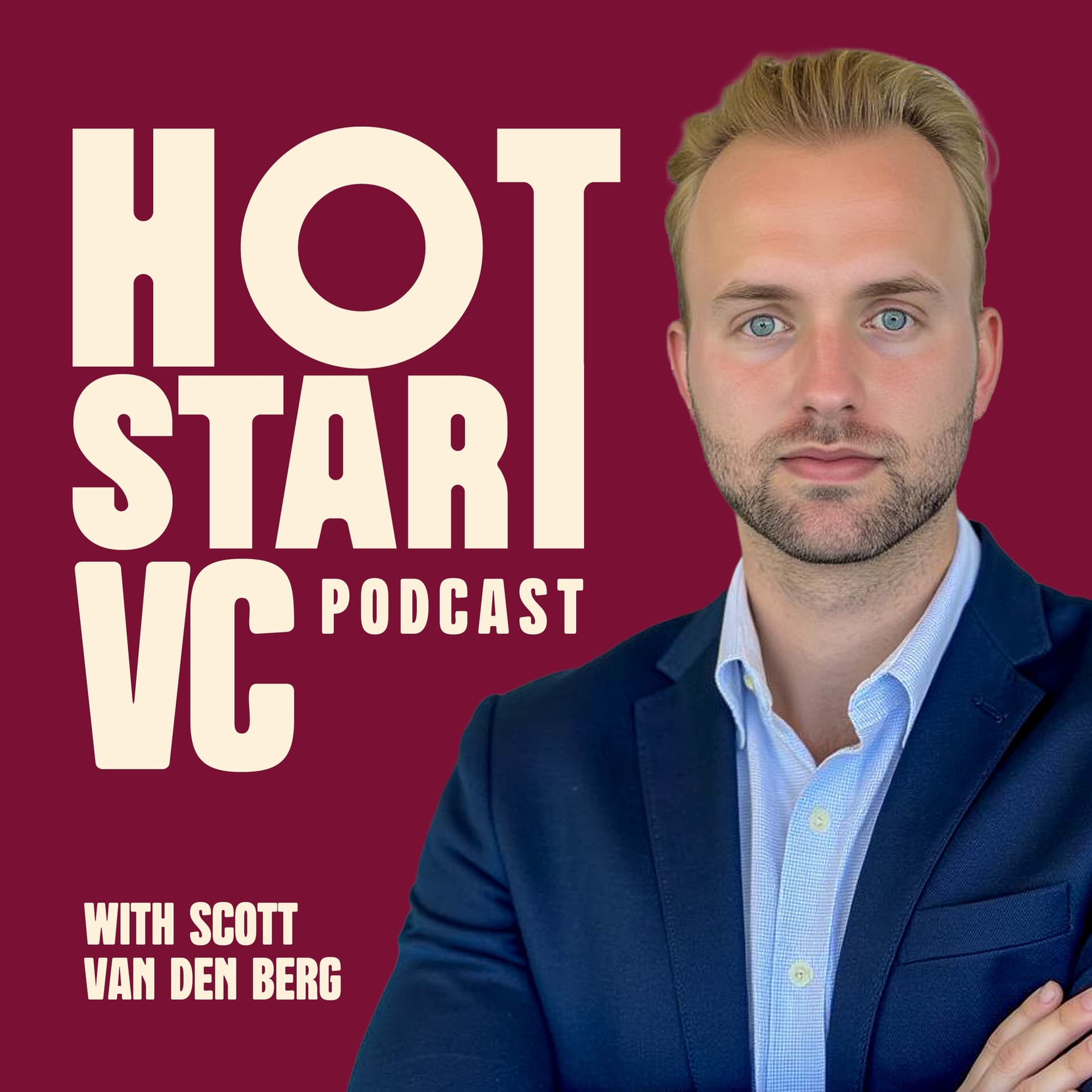
Scott van den Berg
LinkedIn: https://www.linkedin.com/in/scott-van-den-berg-22b534150/
Instagram: https://www.instagram.com/scottvandenberg_/
TikTok: https://www.tiktok.com/@scottvandenberg_
YouTube: https://www.youtube.com/@scottvandenbergvc
Matthew Postlehwaite
Proda: https://drinkproda.com/
Instagram: https://www.instagram.com/matthewpostlethwaite/
HotStart VC is a fund that exclusively invests in brands founded by celebrities and creators. We're the go-to platform for celebrities and creators launching brands, providing capital, strategic support, and the infrastructure to scale.