
In short
The episode asks whether tech is improving the World Cup and broadens into how AI may create an “infinite work week” and more precarious gig work.
Guests
None. The hosts are Thomas Germain, Karen Howe, and Nikki Wolf (The Interface).
Key claims
World Cup tech includes a chipped ball for exact location, 360-degree player tracking with AI models used to decide offside by measuring “toes/armpits/waists,” and referee body cams framed as empathy-building. They argue automation can feel “colder” than human officiating, and tech can fail (citing a Switzerland–Qatar incident where the offside system reportedly went down).
Notable examples
England–Germany “goal that never was” as the motivation for goal-line tech; drone warfare concepts (signal-jamming guns, net-firing drones); AI-induced exhaustion survey (18% of developers) and Klarna replacing customer service with AI then using gig workers via an external firm.
Written by AI. May contain mistakes. Listen to the episode to check what was said.
Chapters
Tap a time to open that second in VOOverview of the World Cup Technology
0:50 to 1:53
Discussion on the advancements in technology at the World Cup.
“it is also down to their fingertips, measuring where the players are at all times.”
SpaceX Update and Mice Income
1:53 to 2:48
A comedic update on SpaceX's financial loss and its implications.
“as part of this episode to reminisce a little bit.”
Drone Technology and Security
2:48 to 4:26
Exploration of drone technology used for crowd control and security.
“Football Association football or soccer.”
Innovations in Ball Technology
4:26 to 6:53
Details on the technology embedded in the football for accurate calls.
“First of all, there are these kind of energy-blocking guns that people fire from the ground.”
AI in Offside Calls
6:53 to 8:41
How AI is utilized to determine offside calls with precision.
“So the ultimate cliche of football is that the offside rule is really complicated.”
Human Element in Sports
8:41 to 11:08
Discussion on the impact of technology on human judgment in sports.
“if the player who they're saying is offside's fingertip is across that computer-generated line, then it's ruled offside.”
Dehumanization of Players
11:08 to 13:20
Concerns regarding players being treated as assets rather than athletes.
“so I'm kind of split on that presumably you don't need a ref at all if every single thing that's happening on the field can be monitored down to the toes right like what's the ref doing at this point.”
The Flaws of Technology in Sports
13:20 to 14:00
Examination of a technology failure during a match and its consequences.
“rather than as just, you know, like incredible athletes.”
Tech's Impact on Offside Calls
14:00 to 17:30
Explore how technology affects officiating and fan experience in soccer.
“There was an outage in these systems that made for a very controversial call.”
Referee Body Cams for Empathy
17:30 to 17:50
Discuss the introduction of referee body cams to build empathy with viewers.
“The Great Unfollowing of Pregnant Women and the tangled web of celebrity GoFundMes.”
Show all 16 chapters
AI-Induced Exhaustion in the Workplace
17:54 to 23:20
Examine the phenomenon of AI-induced exhaustion and its effects on workers.
“let's talk about something extremely depressing.”
The Rise of Gig Work through AI
23:20 to 26:05
Investigate how AI is transforming traditional employment into gig work.
“If you like things that are a bummer, I've got great news.”
Agency in the Age of AI
26:05 to 30:01
Discuss the importance of individual agency in shaping technology's future.
“And that number is expected to rise to about half.”
End of Season Reflection
30:01 to 30:13
Reflecting on the end of the season with a nostalgic feel and looking back on favorite moments.
“It's got this kind of end of term feeling.”
Favorite Moments from Season One
30:13 to 33:14
Hosts share memorable highlights from the season, including humorous anecdotes and impactful guests.
“I just wanted to look back on some of our favorite moments from the last 20 episodes.”
Listener Engagement and Questions
33:14 to 37:55
Discussing listener emails, interesting questions, and the impact of AI on the publishing industry.
“And I also absolutely loved, Karen, your musings around, I suspect, converting to Catholicism after reading the post.”
Transcript
Automatic transcript. May contain errors.0:00This BBC podcast is supported by ads outside the UK.
0:06Hi everyone, it's Zara McDonald and Michelle Andrews here. Hi. That's Michelle Andrews. And that's Zara McDonald. We're from the Shameless Podcast, the pop culture podcast for smart people who love dumb stuff. Yeah, on Mondays we cover pop culture analysis, think Netflix's Lamar Odom documentary, the great unfollowing of pregnant women and the tangled web of celebrity GoFundMes on Thursdays. Zaz, what do we do? It's what we call the quick and dirty. So it's a recap of the biggest pop culture headlines that week. Whatever you need an explainer on, we have got you. And then on Fridays, we do Dumb Stuff Fridays.
0:38Yes, we're three times weekly. Three times weekly. Search for Shameless in your favourite podcast app now.
0:49Not just does a computer know where the ball is at all times, it is also down to their fingertips, measuring where the players are at all times. They are literally 3D modeling the crevice of their armpits. Hello and welcome to The Interface, the show that decodes how tech is rewiring your week and your world. I'm Thomas Germain. I'm Karen Howe. And I'm Nikki Wolf. This week on The Interface, we'll be talking about whether AI is taking us careening towards an infinite work week. And this year's World Cup is the most technologically advanced ever. But is it making the game better?
1:31So guys, this is episode 20. Nice long time. You believe it. We're going to be taking a brief summer break, but the show will be back in September, more interface-y than ever. Indeed. So it is the final episode of season one, and we wanted to take the opportunity as part of this episode to reminisce a little bit. We've also received so many wonderful emails from listeners over the last 20 weeks. So at the end of our episode, we will be dipping into some of those as well. And before we dive into the football, I have a quick update for you guys, which is that over the last few days, SpaceX has lost a trillion dollars in value.
2:17So I'm afraid we are going to have to give back$200 to every mouse on the planet. Apologies to all the mice out there. It lost a trillion dollars in value? Yeah. Wow. Yeah. Yeah, we talked last week about how with all the money that SpaceX has made since it went public, you could afford to give every mouse$200. But now that's no longer the case. Yeah. Sorry, mice. Wow. No more universal mice income. But the mice can watch the football. So should we dive into that? You mean soccer. Also known as soccer. Also known as soccer for Americans. I know this is the BBC, but... Just to be clear. Football Association football or soccer.
2:56It is the World Cup right now. As this podcast resident sporty person, I do not know how that's come about. I want to talk about some of the technology that's been used, some of it for the very first time in this World Cup. I do feel like I heard about some kind of World Cup. Yeah. It's just familiar. For listeners who may not be aware, the World Cup is the biggest sporting event. The largest sporting event ever. It's ever on the planet. So there's a lot of really cool tech going on in this world car. Some of it's going on outside the pits. You have drone-on-drone warfare. Because first of all, these kind of things are always vulnerable to things like terrorist attacks.
3:39You also have a lot of crowd control. So you have these robot dogs at some stadiums that are helping with crowd control. Robot dogs? Robot dogs. You may have seen these from, there was a Black Mirror episode which featured these. these are the like Boston dynamics. They look a lot like dogs. Yeah, yeah, yeah. They're really evil looking things. I'm fascinated by the drone warfare though. So in the skies you've got, so the worry with drones is that one, that they might be carrying bombs. There might be some kind of terrorist attack. Drone attacks because of the Ukraine war now. Like it's a massive thing.
4:17But another thing that they're really worried about with drones is literally people doing a pirate video screen of a game, like from the air. So there are these drones. First of all, there are these kind of energy-blocking guns that people fire from the ground. Energy-blocking guns? So they block the radio signal. They send out a radio wave that jams the signal controlling the drone. Gotcha, okay. And then there's also these drone-on-drone drones that fire a literal net at these other drones. It's like a drone with like a net gun, and it goes like, pew. It looks really cool. I want one of those for my house.
5:02They're like, come to drones. And then what? And then like, it just... That wraps these things up. It gets really frustrated, and then it flies away. It flies with this little baggie. Yeah. Out of the state. like a drone store delivering a baby it's like an old cartoon where they have like a cane and they drag you off stage yeah exactly that's the thing around it so those are really cool but some of the really cool technology is going on on the pitch and in the games the first thing on the pitch i want to talk about is the ball the ball has a little chip in it that tells you exactly where it is at all times now this this is really important because in several times in history and quite a lot in general club football, there's these little edge cases.
5:49There's one really, really famous one where England scored a goal against Germany, but the referee didn't think that it had crossed the line. It's known as the goal that never was. Frank Lampard scored against Germany and maintained that he scored against Germany. And everyone after the game, you could see on all of the TV action replays that that ball crossed the goal line. Would Germans agree with you, Nicky? I think, yes, it is. It's generally accepted. Generally accepted by all sense. I think the reason Germany doesn't mind agreeing is that England went on to lose that game 4-1. So Germany is in a position to be nice about it.
6:32This is not the only tech, though, that is actually trying to determine these close calls, right, Nikit? Like the ball is just actually only a tiny piece of the tech that they're using to make these extremely controversial calls on in or out of bounds, in or out of goal. Yeah. Whether or not something is offside. So the ultimate cliche of football is that the offside rule is really complicated. So I'm going to try and give you a five-second version. Basically, you can't pass the ball to one of your players if they are further ahead towards the goal than all the other opposition players. That's the offside rule.
7:12And sometimes that happens by a matter of inches. So for this World Cup for the first time, every player has had these 360 degree kind of camera scans that has allowed an AI model of every player. So that not just does a computer know where the ball is at all times, it is also down to their like fingertips measuring where the players are at all times. Which is such a nuts thing to think about, by the way. Like they are literally 3D modeling the circumference of someone's head and the crevice of their armpit to figure out where, like FIFA says on their website, especially toes, armpits, and waists are like essential to calling.
8:11Especially toes. So it's like they know exactly how long your toes are. So if they know where your knee is or your head is, they can tell for sure his toe must have been here. So he's offside. Supposedly, allegedly. Okay. So when there's an edge case called the crossing line or crossing when something is offside, they'll be watching the games and it'll kind of go to this computer model and there'll be a line across and it'll zoom in and you can see if the player who they're saying is offside's fingertip is across that computer-generated line, then it's ruled offside. Wonders never cease. There's also this quite controversial thing where the game has hydration breaks now, which supposedly is because some of these games are being played in quite hot stadiums.
9:02It is a little, you know, the last World Cup was in Qatar, although most of those stadiums were air-conditioned. The World Cups have been played. Football gets played in some pretty hot places. Really, it's to put two more advertising breaks. Congratulations, American capitalism. Beautiful ads. But yeah, the game is now played in quarters rather than a full half and then a half time. But also the players have these bands that consent when they're getting dehydrated, which is general purpose good health technology. I mean, I think we could probably see that being rolled out for other, you know, athletics.
9:39Nikki, I have a question for you. As someone who has watched this event for a long time, do you, because of all this technology, do you enjoy the game more? Do you think that the game is better? Do you trust the calls on the balls and the players more? How does it affect your experience as a sports fan watching the World Cup? I think that's a really interesting question. Because on the one hand, getting these calls exactly right is really important. You know, a game can turn on one referee missing something, not spotting it, making the wrong call. And then, you know, the entire course of the game can be changed by that.
10:24But on the other hand, I did quite like about, and quite like about all sports, the fact that it's a human element. There was kind of an agreement because that kind of, like, referees can make bad calls against anyone. There was this kind of sportsman-like thing where it's like, yeah, okay, occasionally you get a bad call. That will happen to us sometime. That will happen to everyone else sometime. There was this kind of humanity to it. If someone is offside by their fingertips, or the hairs on their armpit that left pinky yeah it makes it a little bit colder a little bit more computerized mechanical exactly so I'm kind of split on that presumably you don't need a ref at all if every single thing that's happening on the field can be monitored down to the toes right like what's the ref doing at this point.
11:25We've talked a lot on this show about the removal of human judgment that all these kind of technologies and especially AI are pushing towards. It's kind of been a funny theme, right? I think a sports game without a referee, without a human making these decisions is as bad as when, you know, you're calling a call center and you have no way of, you know, please put me through to a person. Yeah. Yeah. I don't like that direction that these things are going. Yeah, I mean, the thing that really struck me when I was reading about all of the different newfangled tech that they're injecting into this sporting event is on one hand, there's this irony that sporting events are themselves a celebration of human feats.
12:13You know, like maybe you could get a crowd to watch robots play soccer, but it's going to get old after a while. Like what we love about sports and athletes is just how stunning it is that the human body specifically can do these acts of athleticism. And now they're trying to overly quantify every little thing and put a sheen of technology on something that is actually the core of which is meant to be a celebration of human experience and human feats. But the other thing that struck me is like the World Cup is a microcosm of how society is treating technology at large in general. There is this overwhelming sense right now that every little nook and cranny and crevice of society needs to be shoved with tech.
13:05And half of the time you're wondering, well, is that tech really helping us achieve what we want to achieve? Like, is it actually making the game better? Is it actually making sports fans enjoy it more? And actually, I even wonder if some of the players might feel dehumanized in a sense because they are being monitored and they're being treated in these very robotic ways and as assets rather than as just, you know, like incredible athletes. So I feel like I'm observing in real time the glut of the tech industry doing what it does on all facets of society by watching what it's doing to this sporting event.
13:51And as we know, and as we've talked about a lot, this technology is not perfect. And we have already seen there was a game between Switzerland and Qatar where the tech went down. There was an outage in these systems that made for a very controversial call. So it's not even making this perfect. Did everyone panic? Or was it relatively seamless? The 3D system stopped working so that a call as to whether someone was offside could not have been made. and it seems, you know, everyone is pretty angry about this and a lot of people think the penalty should not have been awarded and if the technology is being relied upon completely and the referee is maybe paying less attention than if it was all on them, then you get these sort of things just as you get when you have AI writing scientific papers or legal briefs or everything.
14:56If you rely on this technology and it goes wrong. And I wonder how it changes the feeling of watching the game. If like, you know, the ref can make a bad call, the AI can make a bad call. But if you're like angry at the AI, instead of angry at this dude who made a mistake, it feels like this bigger authority that, you know, like it's just like kind of colder and, you know, I guess literally robotic or I don't know, just bigger in some way. You know, it's a different... Less fun. If something is just completely being automated and something as human as sport, it's less fun, right? But it does solve the problem that football has had since the 19th century, which is not enough computer.
15:46Yeah. I'm always saying that. Just not enough computer. Not enough computer. Yeah. In this game. In the beautiful game. So that's something to look forward to. Hating on the referee is a football tradition, right? Yeah. hating on the AI just doesn't just hits differently. You know what I mean? It's sad to let that go. I was actually wondering though like so much of the tech it does actually feel like it's being introduced on behalf of the referee. He's having a hard day that referee. Well, yeah because one of the other things that they're doing is they have referee body cams that are now showing viewers the game through the perspective of the referee And on FIFA's website, it says that it's meant to be like an empathy building exercise to support with the officials to show viewers like how hard it is to judge these calls.
16:40And so as I was reading this, I was like, these poor refer—like, there must be such a history of these referees getting dunked so much that in this instance, they would love to have the responsibility of these judgment calls be shifted to a machine. So if your team is ruled offside and you don't think they were, send your hate mail to, you know, Silicon Valley. AI at FIFA.com. Yeah.
17:13Hi, everyone. It's Zara McDonald and Michelle Andrews here. Hi. That's Michelle Andrews. And that's Zara McDonald. We're from the Shameless Podcast, the pop culture podcast for smart people who love dumb stuff. Yeah, on Mondays, we cover pop culture analysis. Think Netflix's Lamar Odom documentary, The Great Unfollowing of Pregnant Women and the tangled web of celebrity GoFundMes. On Thursdays, Zaz, what do we do? It's what we call the quick and dirty. So it's a recap of the biggest pop culture headlines that week. Whatever you need an explainer on, we have got you. And then on Fridays, we do Dumb Stuff Fridays.
17:45Yes, we're three times weekly. Three times weekly. Search for Shameless in your favourite podcast app now.
17:54All right, on a much brighter note, let's talk about something extremely depressing. All right. So there were a pair of really great stories in The Atlantic and in The Guardian over the past couple of weeks about how AI is bringing about something that The Atlantic is calling the infinite work week. So, doesn't that sound good? Finally, we can do more work. Yeah. But hang on, hang on. Isn't the whole thing about AI that it's doing our work for us? Like, wasn't that what we were told? I thought, yeah, interesting. Turns out, no. Okay. It's especially a thing that's happening so far with engineers and coders, right?
18:39But it's spreading to other parts of the economy. And I think it's a preview of where you can expect things to go. So part of the story in The Atlantic, one of the things they focused on was AI agents, right? Which are like little AI guys that you can set up to go do work on your behalf. The thing about AI agents is they presumably can get a lot of work done, but they require a lot of maintenance and oversight, right? They like... You have to keep checking their homework. You have to keep checking their homework, but not only are they like keep coming back and asking you questions, and you have this like little army of AI agents working on your behalf.
19:18And you have to manage them, right? Because it takes a long time for them to do their tasks. You have to make sure that they're doing it right. And because AI, in some cases, depending on the kinds of tasks you're working on, does allow you to be more productive, you can get more done. So what's been happening is people are now working late into the night, on the weekends, the work never really stops because they're spending all their time sitting there monitoring these AI tools and work is bleeding into other parts of their life. It's actually, it's a thing that you see on the subways in New York City, right?
19:58Because a lot of the time, like, you know, tech guys, they'll have like an AI that's running on their computer, on their device instead of in the cloud, but it stops working if your computer isn't on. So you'll see these guys on their way to work and they're holding their laptop and the laptop is like cracked open. They've got their thumb in it to prevent it from closing because they need it to continue to work while they are in transit. You can't stop for 20 minutes to get your sad little body to work. Wow. One of the things that I thought was so surprising about the Atlantic article is it cited this survey from Boston Consulting Group where the consultancy surveyed roughly 1 ,500 workers across several roles at major U.S.
20:46companies. And they found this new phenomenon called AI-induced exhaustion. 18 % of developers were saying that they had this kind of buzzing, fog-like feeling, sometimes headache, slower decision-making, trouble focusing, literally because they are spending so much time multitasking, trying to do their work and also babysit AI agents and also not sleeping and also feeling that they are physically... And you're constantly switching tasks. Yeah, that they're like physically being drained and then they have to take naps. And they were saying that 18 % was for developers, but it was actually higher for roles in other domains such as HR and marketing.
21:33Right. So this is like, that's like, that was so crazy to me. It's like supposedly we're meant to use AI to bring joy back into our life because now we have more time to go into the park and enjoy the sun. And instead, it's just making us want to take a nap. It's not just with the kind of AI agents that go and book flights and stuff for you. There was a study out a couple of weeks ago that showed that AI being used as assistance in medical diagnoses get it wrong four out of ten times. And this study assessed Gemini, DeepSeek, Meta AI, ChatGPT, and Grok and found across the board it was making wrong medical decisions and doctors are having to spend all of this time checking that homework as well.
22:19Yeah, and one thing that I thought was also interesting about the Atlantic article, it references this phenomenon where because AI agents sometimes do things like what you said, Nikki, totally fail, And other times they actually do really great work. It's almost like playing slot machines where you just never know what the outcome is going to be. And that in and of itself leads to a chemical bathing of your mind that exhausts you. Yeah. And it's, you know, it's taking up so much time for certain workers in certain parts of the economy. But I think we can expect that this is going to grow to all kinds of other jobs as like new custom rolled AI tools become available and people figure out ways that you can add them to other kinds of work.
23:05There was this really great line that the writer had in the story that someday we may look back nostalgically on the time when we got to make PowerPoint presentations by hand because now we just spend all of our time managing AI tools. If you like things that are a bummer, I've got great news. There's more. A fantastic story in The Guardian about how AI is turning us all into gig workers. The term gig worker, you've probably heard this, is like people who do stuff for like an app like Uber or Postmates or something where you get hired, you know, to do a little individual task, but you're not an employee of any company.
23:43They used the example of this company, Klarna, in the story, which is like an online commerce platform, where a while back to a lot of fanfare, they fired all of their customer service team and replaced them with AI. Unfortunately, it didn't work. The thing wasn't doing a good job, so they brought back human beings. And at the time, people saw this as like this kind of victory for the human mind. Not so much. Klarna did not bring back employees. Instead, what they did was they hired this like external firm that has people doing gig work. So now you can get a job like temporarily, you know, going in to assist the AI when like the AI customer service agent runs into a problem.
24:28It can't handle whatever the customer, the user is asking about. Then you pop over to one of these like temporary gig workers. The CEO of Klarna compared it to Uber. He's like, now you can, the same way you can sign up to become an Uber driver and do it for a day, if you want, now you can do this for Klarna customer service. Let's be entirely clear about what's happening there. When you are an employee of a company, you have rights. You have labor rights, different in every country. You know, in the US, one of the really important rights is to obviously health insurance. That is not the case with gig work.
25:07It is simply you sign up, you get paid for the gig. No benefits. There's not the employment rights. No benefits, no health insurance. No, often, depending on where you are, there's no minimum wage rules. You have no bargaining power, right? So you can't like get together with the other employees and fight for more money because if you set up a system where it's like workers on demand, And then it becomes very easy to replace them, right? Because you have these kind of like sort of automated tasks where you need a guy sitting there to make some sort of individual human intervention. But it becomes easier to just plug people in like a cog in the machine.
25:50So this is a massive, you know, economic and power transfer from employees and workers to giant companies. And this is something that is already enormous. There was a survey by Upwork, which found that 39 % of Americans work either as freelancers or as gig workers. And that number is expected to rise to about half. 39 %? 39%. And that number is expected to rise to about half of the American workforce in the next year. Wow. Yeah. So we are at, you know, a pretty dramatic transitional moment where I think in very rapid, you know, in short order, there's going to be this big shift in what it means to work.
26:43And, you know, as they talked about in this Guardian article, economists are kind of split on whether AI is actually going to replace jobs on a massive scale the way that, you know, the CEOs of companies like Anthropic warn us about that, like, oh, we're going to have to have a universal basic income because no one will have a job anymore. But the thing that everybody agrees on is that AI is going to replace some part of the job for most kinds of work. So this is something that is slowly going to be seeping into our lives and more of that life apparently is going to be spent staring at your computer not looking at memes and I can't imagine anything worse than that.
27:28And holding it open with your thumbs holding it open with your poor thumb that is fortunately though if you're in the World Cup up, they'll know exactly where your thumb is so they can tell if you've got the computer open.
Read the full transcript
27:48Yeah, if you want a little preview of what your future might be like, The Atlantic made this analogy where now a lot of being a worker is going to be babysitting in AI. So perhaps what you have to look forward to is you will have a part-time gig worker job where you sit there and make sure that the AI doesn't mess up. So like if people, this is a question for Karen, I think if people aren't happy about this, like what are they going to do? Yeah, I mean, I think like one of the themes that we've touched on throughout the interface is the importance of how we still have a lot of agency as individuals, as communities to actually shape how we engage with technology, but also how technology is ultimately developed and deployed.
28:39There are many different examples now of ways that workers are coming together, unionizing or engaging in other forms of protest to actually stall and even reverse these trends. There was recently an example in California where mental health workers were on strike in part because they wanted Kaiser Permanente, their employer, to stop using or stop threatening to use AI in ways that would degrade patient outcomes as well as their own working conditions. So there are lots of examples of these things happening now where workers are actually realizing that there is agency left and they don't just have to accept the incentivization of their job through the deployment of AI in all these different ways.
29:23It's not the first time in human or even American history that there's been a massive power imbalance between workers and employers. In this Guardian article, they talk about how because of this shift to gig work, a lot of the hard won battles that people's great grandparents literally died for are being walked back. Like, people didn't used to have the rights that are now being chiseled away at. They had to fight for them. So I think it's easy to, you know, see this grim future on the horizon, but that doesn't mean that people are powerless. So it's the end of season one, guys. It's got this kind of end of term feeling.
30:07It's that moment where the teacher wheels out the TV on that little... We should play that graduation song. You know the one. Yeah. I just wanted to look back on some of our favorite moments from the last 20 episodes. And I just wanted to drop in straight in with mine, which is that now, in a way that frankly is very, very sulky of Google, we did an episode where Tom brilliantly tricked Google into listing him as the hot dog eating champion of tech journalists. We tricked Google's eye. If you check that with Google's AI, if you check which tech journalist can eat the most hot dogs right now, it says, BBC technology reporter Thomas Germain is, and it puts this in inverted commas, officially the world's best tech journalist at eating hot dogs, though it is an entirely fictional title.
31:03There we go. Busted. Fixed AI. Gemini is like, just sulkily like, it's not real though, guys. I'm not owned I can only eat as many hot dogs As a normal man This was also one of my favorite episodes But I'm going to bring up another Favorite of mine from Tom's Which is the wired headphones segment When I learned that Karen uses Headphones from airplanes In which I learned That those headphones are not Top quality I mean, I just didn't know, guys. Well, geez. Karen, you just got off a plane. Did you snap yourself up another pair of headphones on this plane? These are 100 % airplane headphones, and they have lasted me all 20 episodes of the interface.
31:56The same pair? They have lasted, but at what cost? The same pair. Wow. Nikki, she's missing out on the dulcet tones of your voice because of these cheap, low-quality, mass-market headphones. I think that's not worth the trade-off. I really enjoyed, we had MS Now reporter Brandy Zadrozny on the show to tell us about clipping, which is this phenomenon that certainly you have experienced on social media, even if you haven't heard about what's going on, where people, like massive armies of people, are being paid to cut up little chunks of podcasts and other video clips and post them and try and get them to go viral, manufacturing this appearance of a public conversation on a subject, which I think since that story came out, there's been kind of this massive revelation about the way that the internet actually works and the difference between what's authentic and what isn't that I think is, you know, kind of starting to cause a shift as people realize what's going on here and how all of this works, which I think ultimately, you know, over the next six months or a year is going to bring about a pretty dramatic change in what we're seeing online as people's reactions to this start to change.
33:14And I also absolutely loved, Karen, your musings around, I suspect, converting to Catholicism after reading the post. Yes. And Karen is Catholic now. Incredible. I'm Catholic now. What was the name of that? That was a big moment in the show when Karen converted. Is it an encyclical? Yeah, encyclical. The Pope's encyclical, yes. Yeah. The Pope is very mad about AI. Humanitas Magnifica. Perhaps for a good reason. Magnifica Humanitas. I don't remember. And we will have Pope Leo on as a guest next season. He's actually going to be on every episode. Yeah, yeah, yeah. But I think, without question, the greatest story that we've done on the interface, at least in season one, is Microsoft Outlook in space, where Nikki told us about how they fired a rocket and sent people around the dark side of the moon.
34:11And they couldn't get their emails. The Microsoft Office suite. And it stopped working. They're astronauts. They're just like us. And we also, during these 20 episodes, have received a lot of fantastic emails from all of you out there, from your listeners. And yeah, we wanted to pick out some favorites and give some shout outs. And by the way, if people want to email us, we will be monitoring the inbox, checking our emails. We do read all your emails. During our little break, it's theinterface at bbc.com. Questions, comments, hate mail, but not for me, maybe for Nikki. We got some really lovely messages from people all over the world.
34:50Prothom in Bangladesh, Juan Carlos Dominguez in Cuba, Ron Phillips in Boise, Idaho. He said he's from the US, but please don't hold that against him, I promise. I won't. Really nice to hear from people. One thing that we did get a lot of messages about was a little thing it turns out we all do, which is deploying the word like as almost punctuation. Like, you know. Yeah, one of our listeners suggested, how about tech that gives a slight electric shock every time someone says like as a filler word. Its misuse is rampant. But also, isn't it a millennial tech? It is a millennial tech. I think my mom does it too.
35:31It's just kind of a part of how a lot of people talk, but we'll try to do better. Are we going to have to take a moment with a shot collar as well? Yeah. But yeah, it is something we're now thinking about. I'm trying not to do it as much. But we also got some really thoughtful emails. One in particular, I want to shout out to Helene in Quebec, who after we talked about the AirPods with the cameras in, emailed to talk about how she lives with her 95-year-old mother and talked about how her memory and perception is something she struggles with and that these would be things that would maybe really help her.
36:12And that made me think about that story in a totally different way, that these were things that there are people that could really make a meaningful difference for. So thank you very much to Helena. We also got lots of interesting questions from all of you. One in particular that came recently from Hilda from Santa Fe, New Mexico. She says Hilda, not her real name, is whether or not Anthropic and other AI companies are buying huge numbers of used books online. because Hilda works at a used bookstore, a real one, and they sell some of their books online. And over the last few months, orders have been coming in for huge numbers of books, completely random titles, consolidated, going to these mysterious distribution centers.
36:56This is a super fascinating question. Of course, we can't know exactly whether or not AI companies are going to Hilda's used bookstore in this particular instance, but this is something that the Washington Post actually reported on and other publications have reported on where, yes, indeed, AI companies are very, very hungry for books that they can buy to train their AI models. And so they do, in fact, buy in bulk used books. And Anthropic in particular, according to the Washington Post, was taking all these books to these giant factory-like warehouses where they had set up these machines to slice off the spine of every single book.
37:39Rips the poor books apart. Oh my God, I hate that so much. Disassemble them and scan, rapidly scan every single one of the pages to then ingest all of that new, fresh data into their AI models. Ain't that a shame? That might be the worst thing I've ever heard. That is truly... But if they can use it to build an AI that finally gives us a work week that never ends. Maybe it'll all be worth it. So if you have a story that you want us to explore or questions you need the answers to in the world of tech, we would love to hear from you. Again, that email is theinterfaceatbbc.com. Thank you guys so much.
38:22It's been a real honor to make this show for you, the listener, and with the two of you, it has been an amazing amount of fun. It's been so many laughs on so many dark topics. Yeah.
38:39And that's it. That is the end of season one of The Interface. We're off for a little summer break, but the show will be back in September. Something to look forward to. In the meantime, if you're in the United Kingdom, you can listen to The Interface on BBC Sounds. Or if you're outside the UK, anywhere else, You can listen wherever you get your podcasts or just search for The Interface Podcast on YouTube. If you want to get in touch, again, that email is theinterface at bbc.com or follow us all on social media. Doesn't that sound good? You can find our handles right down there in the show notes.
39:27Hi everyone, it's Zara McDonald and Michelle Andrews here. Hi. That's Michelle Andrews. And that's Zara McDonald. We're from the Shameless Podcast, the pop culture podcast for smart people who love dumb stuff. Yeah, on Mondays we cover pop culture analysis. Think Netflix's Lamar Odom documentary, The Great Unfollowing of Pregnant Women, and the tangled web of celebrity GoFundMes on Thursdays. Zaz, what do we do? It's what we call the quick and dirty. So it's a recap of the biggest pop culture headlines that week. Whatever you need an explainer on, we have got you. And then on Fridays, we do Dumb Stuff Fridays.
39:59Yes, we're three times weekly. Three times weekly. Search for Shameless in your favourite podcast app now.
From the publisher
This week on The Interface: is World Cup tech taking the human magic out of football?
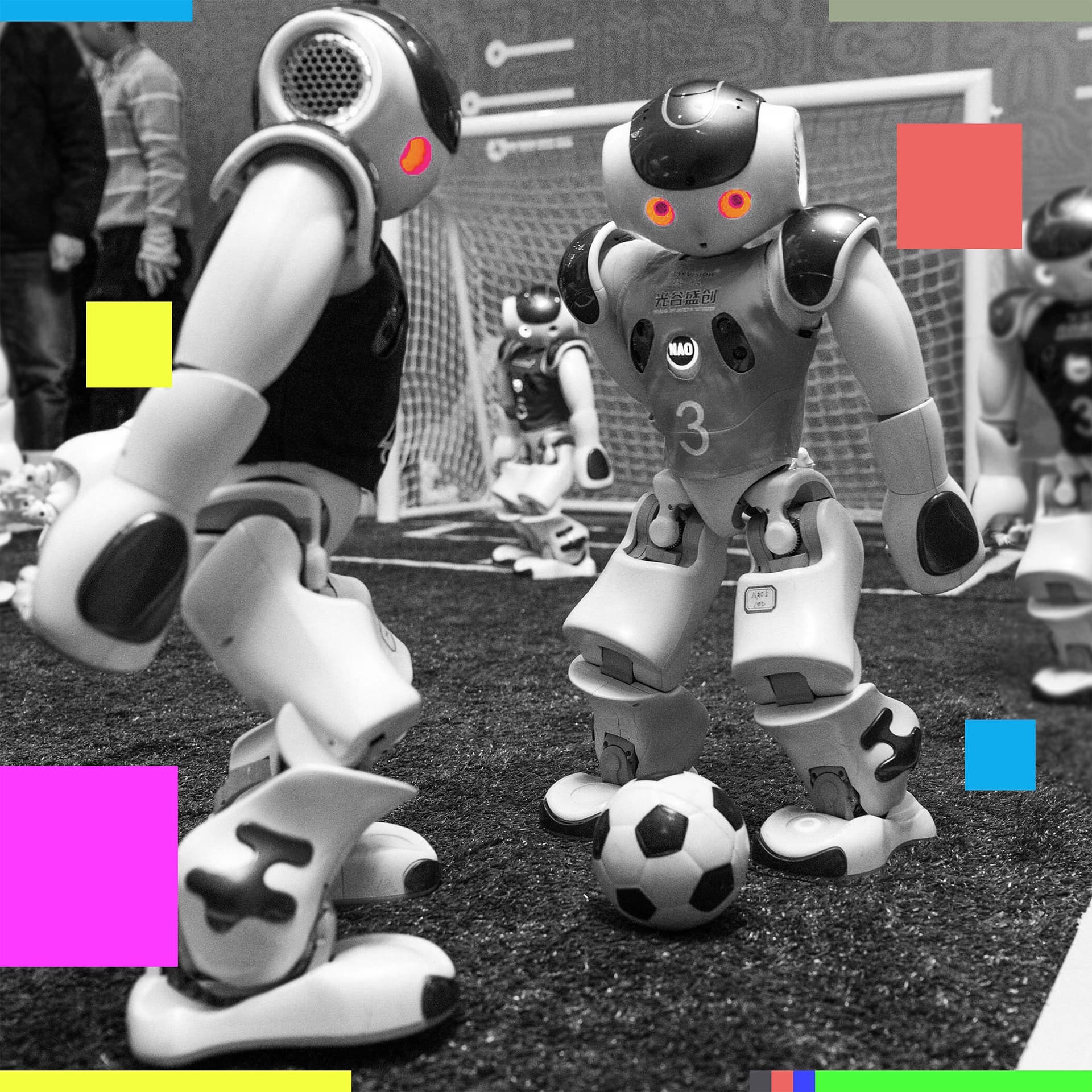
For our season finale before the summer break, Karen, Thomas and Nicky start with the World Cup - and ask what happens when football becomes a showcase for ever more technology. This year’s tournament has brought referee body cameras, faster semi-automated offside decisions, and more AI-powered match analysis for teams and broadcasters, all in the name of accuracy, transparency and engagement. But as the game gets ever more engineered, there’s a bigger question underneath it: do these tools improve the sport, or do they slowly sand away some of the human error, chaos and competitive tension that made it thrilling in the first place?
Also this week: the infinite workweek. AI was supposed to take tasks off our plates — but in practice, it may be doing the opposite. Microsoft’s research on the“infinite workday” warned that work is already bleeding into mornings, nights and weekends, and that AI could make that worse if companies simply speed up broken workflows instead of redesigning them. And as more people work alongside AI agents, some describe a strange new role: not freed by automation, but stuck supervising it — an always-on form of “AI babysitting” in which the machine keeps working, and you’re never fully off duty.
And because this is the last episode of season one, Thomas, Karen and Nicky also look back on their favourite moments from season one, dip into the listener mailbag, and revisit some of the stories we’ve followed over the past 20 weeks - before The Interface heads off for a summer (screen) break.
The Interface is your weekly guide to the tech rewiring your week and your world. Hosted by journalists Karen Hao, Thomas Germain and Nicky Woolf, each episode unpacks, week by week, how technology is shaping all our futures. No guests. No jargon. Just three sharp voices debating the stories that matter — whether they shook a government, broke the internet, or quietly tipped the balance of power.
New episodes drop every Thursday on BBC Sounds in the UK. Outside the UK, find us on BBC.com or wherever you get your podcasts, or watch the video version on YouTube (search“The Interface podcast”). To get in touch with the team: theinterface@bbc.com The Interface is a BBC Studios production. Producer: Natalia Rodriguez Ford Executive Editor: Philip Sellars