
In short
Podcast Episode Notes: The Interface - "Is Your Doorbell Using AI to Spy on You?"
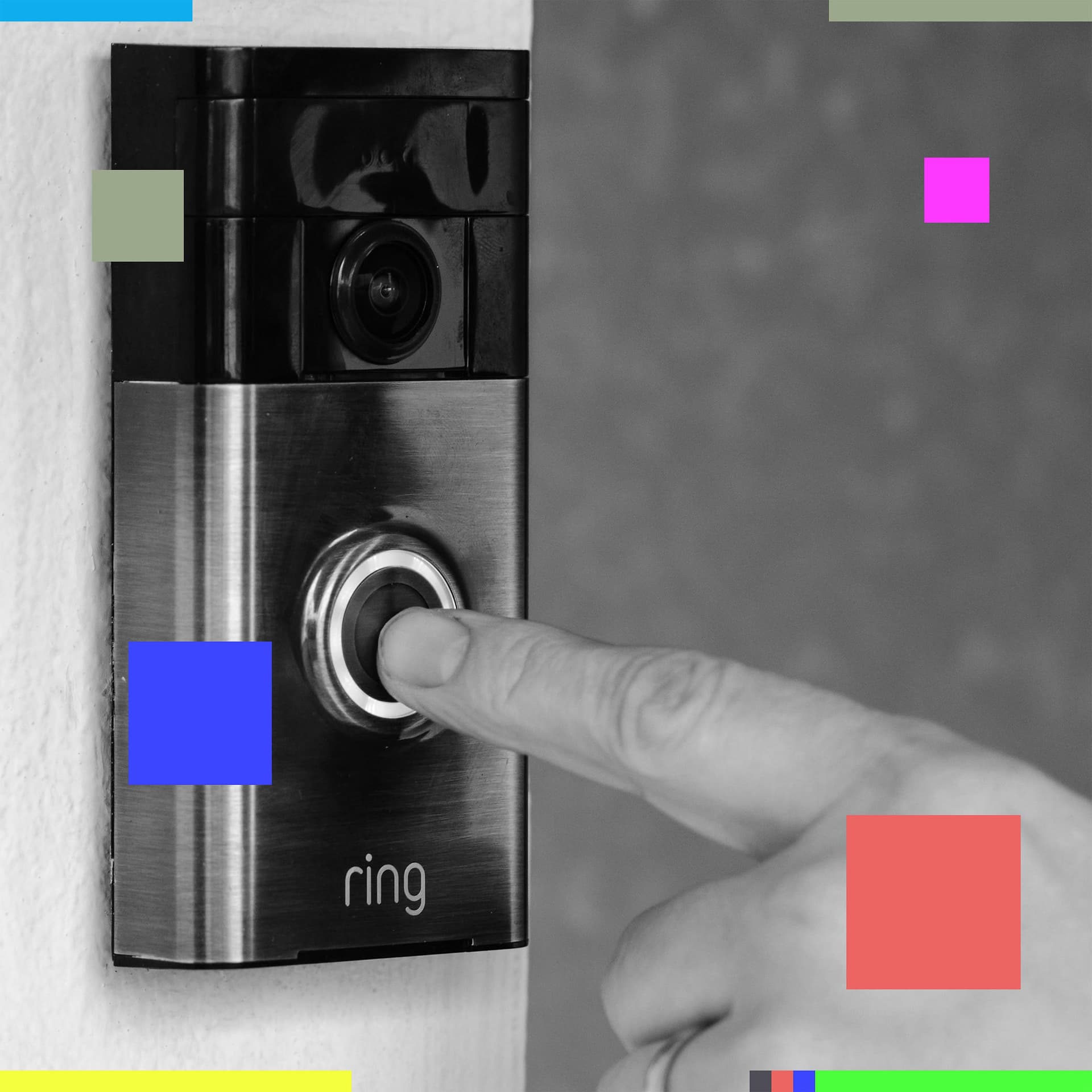
Episode Overview In this episode of The Interface, hosts Tom Germain, Karen Hao, and Nicky Woolf dive into the implications of Ring's new AI feature, the Search Party, which aims to reunite lost pets with their owners. The discussion revolves around the potential privacy risks associated with this technology and its ability to create a vast surveillance network. Additionally, the episode touches on the recent changes with TikTok's U.S. operations and a competitive ad campaign between OpenAI and Anthropic.
---
Key Topics Discussed
- Ring's Search Party Feature
- Overview of the Feature:
- Announced during the Super Bowl, the Search Party feature allows users to activate doorbell cameras in the neighborhood to locate lost pets.
- Claim of saving 99 lost dogs in 90 days, which raises questions about its effectiveness given there are approximately 10 million lost dogs worldwide (0.005% success rate).
- Privacy Concerns:
- The hosts express concerns regarding the broader implications of such a feature, hinting at a potential surveillance network.
- The ad’s visuals raised alarm bells, depicting homes lighting up as they scanned for lost animals, reminiscent of police surveillance and governmental overreach.
- Historical Context:
- Ring has a controversial history involving partnerships with police departments, raising concerns over the sharing of video footage without user consent.
- The Federal Trade Commission had previously investigated Ring over these practices.
- Company Response:
- Ring asserts robust security protocols and clarifies that video sharing is optional; however, concerns remain regarding the potential misuse of technology in the future.
- Implications of TikTok's U.S. Operations
- Ownership Changes:
- Following regulatory pressures, TikTok's U.S. operations have been sold to a consortium of companies, including Oracle and MGX.
- Cultural Impact:
- The hosts argue that TikTok, while perceived as a platform for younger generations, significantly influences digital culture and societal trends.
- The app’s algorithm is undergoing retraining, leading to concerns over potential censorship and ideological bias, particularly given the political affiliations of new owners.
- User Experience:
- Anecdotes of sudden changes in content visibility and engagement on the app reflect deeper issues related to algorithm transparency and user trust.
- The OpenAI vs. Anthropic Ad Campaign
- Ad Content:
- Anthropic launched a humorous ad campaign during the Super Bowl targeting OpenAI's ChatGPT, highlighting its potential to monetize with ads.
- Industry Rivalry:
- The hosts discuss the underlying tensions between AI companies, emphasizing how personal vendettas and competition shape technological developments.
- The drama surrounding these companies can influence user experience and product direction.
---
Key Takeaways
- Technology & Surveillance:
- New tech features, while designed for convenience, can open the door to mass surveillance and privacy erosion.
- Users must be vigilant about their privacy settings and the implications of connected devices in their homes.
- Cultural Relevance of Platforms:
- Platforms like TikTok are not just for entertainment; they are pivotal in shaping culture and political discourse.
- Intercompany Dynamics:
- The rivalry between tech companies can lead to significant shifts in product offerings and user experiences, showcasing the impact of corporate competition on everyday life.
---
Conclusion This episode of The Interface delves into the complex relationship between technology, privacy, and cultural influence. As companies continue to innovate, listeners are encouraged to stay informed about the implications of these technologies on their lives and society at large.
For more insights, tune in to new episodes released every Thursday on BBC Sounds or wherever you get your podcasts.
Written by AI. May contain mistakes. Listen to the episode to check what was said.
Chapters
Tap a time to open that second in VOEpisode Overview
1:50 to 2:15
Discussion of today's topics including doorbell surveillance.
“I do the weird internet subculture and national security stuff.”
The Super Bowl Ad: Ring Doorbell
2:15 to 4:00
Analysis of the controversial ad by Ring during the Super Bowl.
“The only Brit in this recording is the only one who watched the Super Bowl, I guess, for the football.”
Public Reaction to Surveillance
4:00 to 6:00
Exploring the public's concerns over surveillance implications.
“there were two things that made this ad, I think, really bad for the company.”
Historical Context of Ring and Police
6:00 to 7:20
Discussion of Ring's partnerships with police and surveillance practices.
“And that is a huge leap of faith that I don't think tech companies have really earned.”
Broader Surveillance Concerns
7:20 to 9:10
Connecting Ring's practices to wider surveillance issues faced by the public.
“And like you were saying, this search party feature that for now is just about finding lost dogs is on automatically.”
Pros and Cons of Smart Cameras
9:10 to 11:15
Examining the benefits and drawbacks of using smart cameras at home.
“But if you name yourself after literally the ultimate evil in one of the largest stories, I mean, help us help you guys, Silicon Valley.”
Managing Privacy Settings
11:15 to 13:42
Advice on how to adjust privacy settings for smart devices.
“Loads of people feel like this makes them safer.”
Digital Hygiene Discussion
13:42 to 14:06
Encouraging listeners to evaluate their digital privacy practices.
“So this is easy to turn off if you're not comfortable with it.”
The Impact of Internet-Connected Devices
14:06 to 15:43
Explore how smart home devices collect data and the importance of digital hygiene.
“But just think for a second about all of the products in your house that are connected to the Internet.”
The TikTok Takeover and Algorithm Concerns
16:16 to 22:00
Discuss the implications of TikTok's change in ownership and algorithm retraining.
“So we've been talking about the power that all these technology companies have over our lives.”
Show all 14 chapters
Analyzing Political Influence on TikTok
22:00 to 27:14
Examine the potential for political bias and content suppression on TikTok.
“And it's worth saying there is precedent for this, right?”
The AI Ad Rivalry: OpenAI vs. Anthropic
28:04 to 29:15
Learn about the competitive tension between OpenAI and Anthropic sparked by a humorous ad campaign.
“next to him who has this like deadpan expression and then goes perfect that is a clear well established goal.”
How ChatGPT Was Born Out of Competition
29:15 to 33:13
Discover the backstory of ChatGPT's rapid launch due to competitive pressures within the AI industry.
“So he says, Anthropic serves an expensive product to rich people.”
The Long-Term Impact of AI Competition
33:13 to 35:34
Understand how the ongoing rivalry among AI companies shapes user experiences and industry dynamics.
“There's this moment that we're getting right now with AI that we haven't had in technology for a long time, which is that there is actual competition, right?”
Transcript
Automatic transcript. May contain errors.0:00Kara Swisher:This BBC podcast is supported by ads outside the UK.
0:30Kara Swisher:they want to do. To see how ServiceNow puts AI to work for people, visit servicenow.com.
1:18Scott Galloway:This literally is the beef of the century because this is the beef that is still fueling so many decisions in the AI race today.
1:30Kara Swisher:From the BBC, this is The Interface, the show that explores how tech is rewiring your week and your world. I'm Thomas Germain, a tech columnist at the BBC who covers how we use technology and how technology uses us.
1:47Scott Galloway:I'm Karen Howe, investigative reporter covering all things AI.
1:50Kara Swisher:And I'm Nicky Wolfe. I do the weird internet subculture and national security stuff.
1:54Scott Galloway:Today on The Interface, we will be discussing...
1:57Kara Swisher:Is your doorbell spying on you and your neighbors? Why the U.S. TikTok takeover matters even if you don't use the app.
2:06Scott Galloway:And the beef that launched ChatGPT.
2:14Kara Swisher:So who caught the Super Bowl on Sunday? I can't. Not I. The only Brit in this recording is the only one who watched the Super Bowl, I guess, for the football. Yeah. Yeah, I had a friend come over for dinner and I was like, oh, we should watch something. Like, what do you what do you want to put on? He's like, oh, the Super Bowl is right. I'd completely forgotten that, which makes me feel like I'm not a real American. Not a real American.
2:39Scott Galloway:Are you guys like big fans of the ads?
2:41Kara Swisher:I was this time. Yeah, there's one ad in particular that we want to talk about now, right? Yeah. And it got people very riled up because of what it what it implied. and that ad was by Ring, the doorbell company. Loads and loads of people I know use it. I'm sure that's the same for you guys. It's very useful. You know, someone rings the doorbell, you have an app on your phone, you can see who stood outside. What they announced during the Super Bowl ad was a new feature that they've been soft rolling out for a little while called Search Party. They announced it for Lost Dogs. They were like, we have already saved 99 missing dogs because someone someone whose dog runs away you can hit the app and it will turn on everyone's ring door cameras and look around for the lost dog i like finding lost dogs i mean that sounds nice but it also means that your camera is part of this giant surveillance network a lot of people totally freaked out about this right yeah and and i think fairly rightly so i mean we live in an era where surveillance, mass surveillance, and law enforcement overreach, if we can very diplomatically put it like that, is top of the news.
4:00Scott Galloway:I saw this ad too, and I feel like the thing that was, there were two things that made this ad, I think, really bad for the company. Like the first one is that they talked about how this search party feature has successfully found 99 dogs in 90 days of operation. There are 10 million lost dogs in the world. So it's like not even a good functioning product. Like people have been talking about. That's pretty good. That's literally a 0.005 % success rate.
4:32Kara Swisher:Like 99 dogs, that's more than no dogs. You gotta, I like that. That's true.
4:37Scott Galloway:That's true. But the problem number two is that I think the visuals of the ad, I think that's why it set off alarm bells for everyone, because they literally showed all of the homes suddenly lighting up and scanning the streets with blue light to find a dog. And in a moment right now where so much of the U.S. has ICE on the top of their minds and all the things that have been happening with confrontations between ICE and citizens.
5:05Kara Swisher:Immigration and Customs Enforcement.
5:07Scott Galloway:Yeah, this is why the ad has gone instantly viral in the wrong direction for the company. Like so many hundreds of thousands, millions of people now are talking about how they never knew that this was a possibility. They had no idea and they want to immediately opt out of the future or ditch the product.
5:26Kara Swisher:And what a lot of people describe it as was a Trojan horse. Who could object to lost dogs? But the functionality of this, the potential for this to be used for other things, even if we say that the U.S. government will be absolutely above board with this, and we already know that the U.S. government has successfully requested and received ring camera footage. You know, you're trusting every government and a massive tech company here. And that is a huge leap of faith that I don't think tech companies have really earned. And Ring in particular, these aren't like hypothetical concerns. Like sharing Ring camera footage with law enforcement for a long time was the point.
6:18Kara Swisher:Ring partnered with police departments all over the United States. passed out these cameras, encouraged them to distribute them in neighborhoods, specifically as a tool to set up police surveillance. In fact, they had this system set up where police could create, bring accounts, and they could get access to camera footage from people's houses without a warrant. They could just request it from the company and they would hand it right over. This caused a big controversy. There were cases where people were like, Like they didn't realize that they were handing over like their home security footage to police departments and they shut that feature off.
6:58Kara Swisher:But there's all kinds of other concerns, right? There was this big Federal Trade Commission. But I think a lot of people who pay really close attention to Ring saw this ad and were like, yeah, duh, what did you think this was? There's this giant tech company that has all of these cameras all over the United States and all over the world. And yeah, they are in control of that footage. It's stored on their servers. And like you were saying, this search party feature that for now is just about finding lost dogs is on automatically. If you don't want to participate, you have to go. This is a huge turn off.
7:32Kara Swisher:They've opted you in.
7:34Scott Galloway:It's worth saying as well, like the reason why I think people were so freaked out is because of the ICE stuff that's happening right now. And just as you were saying, Tom, that Ring has a history of giving data to law enforcement. ICE also has a history of trying to use different types of technology platforms like this one to engage in more surveillance. Like there was this zine that 404 Media published that actually documented a bunch of the different tech apps and tech platforms that ICE has used, including ones that they have partnerships with, like with Palantir, where Palantir is developing this immigration OS platform that's integrating all this data from different government agencies to track immigrants, but also from tech companies that they don't actually have official partnerships with.
8:23Scott Galloway:So the 404zine talks about Flock, which is this network of cameras that do automated license recognition in the U.S. And what 404 found was that ICE will ask local police departments that have access to Flock to do searches at the behest of ICE. So think about like Flock is 80 ,000 cameras and it's specifically license plate recognition. Like Ring is millions and millions and millions more cameras like this is the largest private camera network in the world. And that just completely expands to a different scale. The level of visibility that a law enforcement agency like ICE could have if they wanted it.
9:09Kara Swisher:palantir of course is a tech company founded by the billionaire peter teal that does a lot of data processing for the u.s government and the military and now ice immigrations and customs enforcement yeah and the uk government just signed a huge um just a few months ago signed a huge uh deal with palantir so they're also working in security here i mean palantir is literally named for the scrying device that sauron uses in the lord of the rings i mean it could not be more
9:40Scott Galloway:These tech companies are not subtle.
9:42Kara Swisher:But if you name yourself after literally the ultimate evil in one of the largest stories, I mean, help us help you guys, Silicon Valley. Now, Ring, in their defense, says they have like really robust security practices. We also aren't here to say like Ring is evil. This is bad. No one should use it. It's a personal choice. So we did get in touch with Ring and they got back to us with a response, which says that right now this particular feature, Search Party, can only recognize dogs. They said they do have an optional feature called Familiar Faces that does use human facial recognition. They said that video sharing is never automatic and you can, with Search Party, share by choice to share the video with the dog owner.
10:28Kara Swisher:They also said that Ring has no partnership with ICE, but they did say that they do hand over data to law enforcement, but only when they're legally required to do so. Yeah, I mean, those are pretty robust protections, right? But I think what a lot of critics are concerned about, and also like what a lot of people who saw this ad are worried about is like it shows you like the potential of this technology and the kinds of things it could be used for if the company, you know, changes its policies or changes its strategies at some point in the future. The in fairness is that these are very useful.
11:03Kara Swisher:My dad, who's disabled, has a, I don't think it's Ring, but another similar camera installed in his flat so that his carer can always check in and make sure that he hasn't had a fall, make sure that he's safe. Loads of people feel like this makes them safer. But, you know, there's a trade-off that people are making. Like you're saying, Nikki, there's a very real way in which these can help promote the safety of your house and your family. That's an absolutely realistic possibility and outcome of using these products. But there is a trade-off, which is giving up control over what is happening on your own property, sometimes inside your own house.
11:46Kara Swisher:And it opens you up to potential consequences in the future. I mean, you could think about people talk about your data. Maybe no one's doing anything bad with it right now. But the fact that it exists means that someday in the future, it can be used for a purpose that you don't like or you're not comfortable with. Yeah. And it is possible to say, I can see the argument that this is worth it for the chance at saving a life, even for the chance at finding your dog. Right. But that's the question that we're being asked. And because it's opt out rather than opt in that's not even a question we're being asked and in terms of questions being answered for you let's say you're not comfortable with having a ring camera if your neighbor across the street puts one on their door and it's pointed towards your house and you're filming there's nothing you could do about that so it's like other people are deciding and i think this speaks to one of the key questions that surrounds all of tech which is how much privacy are you willing to sacrifice for convenience?
12:51Scott Galloway:Yeah, I mean, this is one of the things is like, these companies kind of use the convenience to erode privacy, but they don't actually have to do that, right? Like, they could provide these features without also accessing the footage. So they kind of use the convenience doorway into being able to monetize off of really intimate data and intimate moments in people's lives.
13:19Kara Swisher:If you want to turn this off, it's very easy to do. If you have a Ring camera, you open up the Ring camera app, you go to the homepage. There's like a little menu up at the top that you can click on. And then you go to the control center and there should be a feature there called search party or it'll say something like opt into or opt out of helping to find lost pets, which I mean, why would you want to do that? We all we love lost pets. So this is easy to turn off if you're not comfortable with it. There are a whole bunch of other privacy settings that you can go switch off as well, which is something that I really think everyone should go look at.
13:53Kara Swisher:Like even if you're totally comfortable with Ring, if you've got one of these things on the front of your house or inside your house, just go look at what privacy settings they offer you with and make sure you're comfortable with it.
14:05Scott Galloway:A hundred percent.
14:07Kara Swisher:Yeah, we're fixated on ring here. But just think for a second about all of the products in your house that are connected to the Internet. All of them are collecting information. I know at Karen's house, it's like you're a Luddite. So it's just like a bunch of rocks and stones, like nothing. I don't even know if you have Wi-Fi. But for the rest of us, there's even I worry about this stuff and it's worth just putting in any effort that you can. you know after you're done listening to the show just check it out see what's out there it's worth
14:36Scott Galloway:your time i i love that i like surprisingly do not have a digital hygiene routine so i feel like
14:42Kara Swisher:after this episode i'm immediately gonna go yeah i'm gonna yeah and look at my two technology objects in my house right you're like uh like 2005 nokia brick cell phone yeah and you're abacus you know.
15:43Kara Swisher:It's 2009 and we're in the German mountains. A man straps himself into a car on the world's most dangerous racetrack. He whispers to himself, It's time to put my balls on the dashboard. As he starts the engine. In 15 minutes, he's in an ambulance, unconscious. in 15 years, he's a billionaire. This is Toto Wolff, Formula One's most powerful team boss and the breakout star of Drive to Survive. This week on Good, Bad Billionaire, how Toto Wolff made his billions. Listen wherever you get your BBC podcasts.
16:16Kara Swisher:So we've been talking about the power that all these technology companies have over our lives. And I think there's one in particular right now that perhaps like culturally in the conversations we're all having that has more of an influence than any other. And that is TikTok. And it's a good moment to be talking about it because there was this huge transition. There's a TikTok takeover, right, where the company that owns TikTok, a Chinese company called ByteDance, was forced to sell the U.S. operations of the app to a consortium of other companies in order to keep operating in the U.S. because of a bunch of laws that the government passed over, privacy and security and national security concerns.
16:59Kara Swisher:So now as of January 22nd, TikTok's US version of the app is now owned by three different companies, including Oracle, which is a big data processing company owned by Larry Ellison, who's a major Trump donor and ally, and a company called MGX, which is based in Abu Dhabi, which did a big crypto deal with the Trump family and then like another like investment farm. So what's been happening on the app is absolute chaos over the past couple of weeks. And I know a lot of people, you know, hear this and they go, oh, TikTok, like whatever. I don't care about that. I think we've kind of gotten over some of the Gen Z.
17:42Kara Swisher:Like, what's right? It's like there's you still hear people go, oh, that's where the kids are dancing. This matters to your life, whether or not you use TikTok. You hate TikTok. You've never watched a TikTok video. in your life, it still has a major influence over your life and your future. TikTok is, I think, without a doubt, it's like the sun at the center of the solar system of the internet, right? It's not the biggest app in the world of social media, not even close, but it has become like the locus of online digital culture. It's the place where conversations start and then branch out into other parts of the internet and then leak into the real world.
Read the full transcript
18:22Kara Swisher:It's the cultural engine room right now. Exactly.
18:24Scott Galloway:This is the most compelling explanation of TikTok that I've ever heard. Like, I personally don't use TikTok, but now I'm feeling FOMO.
18:31Kara Swisher:Yeah, it is a really, really important ecosystem. And what people are freaking out about now is the app is undergoing some major changes. So part of this deal that was struck among the big concerns is that the Chinese government might have control over the algorithm and they might like spread propaganda. There was this amazing hearing in the U.S. Senate where the CEO of ByteDance. Oh, well, that was the CEO of TikTok, not the CEO of ByteDance. That was. Oh, right, right. So that's it. But yeah, I think it was Tom Tillis. The senator was like, have you ever been a member of the Chinese Communist Party?
19:09Kara Swisher:And the guy's like, he was like, so I'm Singaporean. The guy's like, have you ever been a citizen of China? And the guy's like, I'm Singaporean. Yeah, it's a really beautiful moment. But there is no reason to think that, I mean, Tom, maybe you can correct me on this, but there's no reason to think that your data is less safe with TikTok than it is with, say, Meta or Elon Musk's Twitter. There was never that we've been talking about TikTok freaking out about it for years. There has never been a single shred of actual evidence that has been produced that anything untoward happened with the Chinese government and American TikTok data.
19:54Kara Swisher:Never. There hasn't been one shred of evidence. It's all been speculation about things that could go wrong. So this new set of companies took over. It's called the U.S. Joint Venture is what TikTok is calling it. And part of their plan is that they were going to retrain the algorithm, like take the algorithm and start over from scratch and like build a new one. And in the first few days, like the first week after the app rolled out, things just went nuts.
20:24Scott Galloway:What do you mean by that? Like what happened?
20:28Kara Swisher:so it seemed to a lot of people like there was censorship so the tiktok account the official account for the democrats in the united states like usually their videos get like millions of views all of a sudden they were posting videos they were getting like zero views or like a couple of thousand there were uh some examples screenshots online where people said like they were trying to send messages that had the word epstein in them and they weren't getting sent and also there was all this weird stuff. Like if you looked at the search page, it was suggesting all of this like weird, creepy stuff.
21:03Kara Swisher:Like it would suggest that you search, like, don't look at that mirror in your house, like just the weirdest stuff in the world. It turned out that what was happening was that there was this big snowstorm a couple of weeks ago across the United States. And according to TikTok, a data center had a power outage and the app was just going haywire because things weren't working. Then very quickly, everything kind of went back to normal. But what we do know is the app is retraining the algorithm, right? They're going to shift how it recommends videos, what it recommends. And people are worried that these companies that now have control over this app have these ties to the Trump administration.
21:49Kara Swisher:And perhaps they could use this new power that they have to promote ideas that are beneficial to Trump or the American government or suppress criticism. And it's worth saying there is precedent for this, right? This is, um, people, people are not worried for no reason. This is exactly what did happen after Elon Musk took over Twitter is that the algorithm started favoring things based on differing political. He openly said that Twitter at the time was basically in that same position of being a cultural engine room. and it really changes conversation off the app in a way that affects people's lives, even if you've never been on Twitter or TikTok.
22:29Scott Galloway:Tom, to take a step back, when you said that they're retraining the algorithm, like how is it actually working between all of these companies? Like is Oracle the one that's going to be retraining the algorithm? Is the other company? And have they said anything about why they're retraining the algorithm or what they're going to retrain the algorithm with?
22:45Kara Swisher:That's a really interesting question. So part of the agreement in the sale of the app is that they have to retrain the algorithm because the algorithm is intellectual property and ByteDance, the company that, you know, owns most of TikTok, they still have like a 20 % share in this new company, the TikTok joint venture. So any concerns that you had about China, it's not like those have gone away, right? Like China still has major control over the app. I think it's like there's this new company called the TikTok joint venture and like the company is doing it. So Oracle, the giant tech company that Larry Ellison owns, is certainly involved in that process.
23:25Kara Swisher:But like you can just kind of feel that things are different on there. The videos that are getting recommended are just different. And like the order of whatever reason, they just have Larry Ellison's face in every single one. So weird. I've never been on TikTok. I've seen things that are TikToks because they come through Instagram rails. I think one of the things I want to do is join TikTok and sort of get an idea of how TikTok works and get a sense of it. You've been on TikTok for a while, right? I'm a big TikTok user. I actually joined it because I felt like, well, I'm writing about it. I have to be using this app in order to understand what's going on there.
24:04Kara Swisher:And I really had to force myself to do it. I was like, this is so uncool. I don't want to be using it. And then I got completely addicted to it like i have to force myself to put it down but yeah i uh i'm a big tiktok user at this point would you be up for teaching me you would you give me the i think we have to yeah we gotta get you because you're like really you're not participating in the modern era if you're not on there i mean karen i don't know if we can we can get you involved but i feel
24:29Scott Galloway:like i feel like this is a situation where tom you're the earthling and nikki is an alien that's coming to earth well and i am like the relative that's still on the other planet and nikki's just gonna have to call home every once in a while and explain to me what's happening on earth let's talk
24:45Kara Swisher:let's set you up with an account i'll tell you how to make a video like what you can try and do to go viral and get people to pay attention that could be like a nice project we're working on in the background stay stay tuned although hang on in the uk will i be getting the ellison algorithm or the OG TikTok algorithm? Outside of the US, it's the same TikTok it always was. It's connected to the US TikTok app, so the content is flowing back and forth. But you, Nikki, if you set it up, you're still getting that pure, original, it's like classic Coke, right? You're getting the original TikTok algorithm.
25:21Kara Swisher:But what I do want to talk about for a second is maybe why you shouldn't be worried. There are real concerns what's going to happen with TikTok now, who's in control, what's going to happen in the algorithm. What we saw with Twitter now called X, right, is that Elon Musk turned it into an ecosystem to promote his political agenda. Like he openly said that's what he was doing. And this was, it seems, catastrophic for the app. They lost a ton of users. They lost a ton of advertising revenue. It seemed like this wasn't a great business decision. It certainly wasn't handled in a smooth way that didn't upset lots of people and push them off the app.
26:01Kara Swisher:I think with TikTok, there's like three different companies who are investing along with TikTok. I think that these people are more concerned about business and the TikTok app itself making money. And I think they're very worried about upsetting TikTok's users and losing the cultural cachet and the force and the power of this app. We reached out to TikTok to ask them to comment. They declined. But certainly the company's position is that they are as concerned about protecting people's privacy and promoting free speech as they ever have been. That's the company line. That's what it's always been.
26:44Kara Swisher:But in the time that follows, like the future of this app, people are going to be looking for examples of where things are going wrong, where it's, oh, they're suppressing this kind of content. They're promoting this and I don't want them to. Is that happening because TikTok and its allies and, you know, people from the Trump administration are putting their thumbs on the scale? Or is it just that people are making bad videos that no one wants to watch? You'll never know because the algorithm is a total mystery to the people who are using the app.
27:13Scott Galloway:Okay, I need to talk to you guys about a different Super Bowl ad. I know that we already talked about one Super Bowl ad, but there was another one that a lot of people were talking about,
27:24Kara Swisher:which was the anthropic ads i love this i i think this is so funny yes anthropic is an
27:32Scott Galloway:opening eye competitor they make the chatbot clod and this is anthropic basically made four different variations on an ad where there's a user of a chatbot and then there's a chatbot personified in another person who is then basically responding to the person as though they were the chatbot so one of the ads is like this guy who's trying to work out and he's struggling to work out and he's like can i get a six-pack really quickly and then the chatbot personified is like it's like his personal trainer right yeah it's like this is like really buff dude standing next to him who has this like deadpan expression and then goes perfect that is a clear well established goal.
28:18Scott Galloway:Let's start with, and then whatever. And it goes through this whole thing. The chatbot then suddenly goes, and you know what else you should do instead of working out? Have you considered getting these insoles that will make short kings stand taller? And like every single one of these ads then has this tagline, ads are coming to AI, but not Claude. I think for most people who saw this ad, it was probably just really funny because obviously OpenAI and Anthropic are competitors and OpenAI just announced that they are going to be rolling out ads to JadGPT.
28:52Kara Swisher:This was an attack ad, right?
28:54Scott Galloway:This was basically a subtweet back in the day when there were subtweets because OpenAI is not explicitly mentioned anywhere. There's just this reference that ads are coming. And of course, OpenAI is the only only company that's rolling out ads this deeply triggered sam altman yeah ceo of opening eye he tweets out this really long dramatic essay where he's like first of all these ads were funny second of all seriously dishonest and then he just like insults anthropic with like more and more intense insults as like the essay goes on. So he says, Anthropic serves an expensive product to rich people.
29:40Scott Galloway:And then he goes, one authoritarian company won't get us there on their own to say nothing of the other obvious risks. It is a dark path.
29:50Kara Swisher:Yeah. I mean, we should talk about why OpenAI was so freaked out about this Anthropic. Like the whole AI industry is in this super precarious position. And this like weird petty fight between the billionaires who own these different companies actually ultimately will have a direct effect on the experience that you're having on the Internet. It seems like, you know, just this like high school drama. But this this actually matters in some surprising ways.
30:25Scott Galloway:Yeah. So this literally is the beef of the century because this is the beef that launched ChatGPT. I don't know if you guys know this story. Like, basically, OpenAI did not actually intend to launch ChatGPT as a product. When they were in November of 2022, they were actually working on a totally different product, which was this super assistant. It was going to be like a chatbot, but it was going to be built on GPT-4 and they were supposed to launch it in the spring of 2023. But in the fall of 2022, rumors started circulating within OpenAI that Anthropic might launch a chatbot before them. And so the executives literally made a decision on the spot to accelerate the launch of the chatbot in two weeks time using not GPT-4, which the entire company was working on, but using an older model, GPT -3.5, and just smacking on the user interface that they were already developing for the launch in spring of 2023 onto this older model.
31:35Scott Galloway:and they messaged it to the entire company and also to the public as this is going to be a low key research preview. It's not going to be a real product. It's going to maybe have a small viral moment on the internet. They wanted specifically to get the data flywheel going. So they wanted that virality to then generate a bunch of interest, get a lot of user data, and then use that user data to train up and refine the real product launch, GPT-4, that was going to happen later. And instead, like they pop this out and it just blows up and completely changes history. Right. And the reason why OpenAI made that decision in that moment is also because of the history of Anthropic.
32:20Scott Galloway:So Anthropic was founded by a splinter group from OpenAI. Right.
32:26Kara Swisher:So this is personal.
32:27Scott Galloway:Yeah. In late 2020, Dario Amadei, CEO of NowAnthropic, was actually a executive at OpenAI, gathers up a bunch of his buddies who were in critical roles within OpenAI, and they decide to leave to start this competitor because they fundamentally disagreed with Sam Altman's approach to running OpenAI and also fundamentally did not trust Altman's character. and did not believe that he would be capable of continuing to run an AI company well. This is like a multi-year, extremely personal vendetta that has literally shaped the entire trajectory of the industry and of people's lives around the world.
33:12Scott Galloway:And it is the beef that is still fueling so many decisions in the AI race today.
33:19Kara Swisher:That's the interesting thing, right? There's this moment that we're getting right now with AI that we haven't had in technology for a long time, which is that there is actual competition, right? Most of these giant tech companies have these monopolies, right? Google has a monopoly over search engines. Amazon, like that's where you go to buy things on the internet. There's all these companies that have their little fiefdoms and nobody really competes with them and they can make their products worse and worse and or like in the pursuit of making more money and there's nothing you can do about it.
33:50Kara Swisher:With AI, there's all these different companies that make a product that is kind of the same.
33:55Scott Galloway:Yes.
33:56Kara Swisher:So there's like this desperate competition to be the cool kid in high school and like Anthropic launching this ad that makes OpenAI look bad. Like that's a code red. Like they're freaking out right now because, you know, in a month, OpenAI's empire could collapse. Like I'm not saying that's going to happen, but they're like everybody is right on the razor's edge right now.
34:19Scott Galloway:So we talked about how this beef had a historical importance in actually launching ChatGPT, but it also is going to continue to affect your experience with these chatbots moving forward. Because, for example, the New York Times reported late last year that when OpenAI started seeing this drop in its market share, the company internally declared a code orange to try and figure out how to get their user numbers and their user engagement back up. And when OpenAI declared that code orange and when they were tinkering with the way that the model behaves, it had a direct effect on users. Like people are worried that the company is going to make the product more addictive.
35:06Scott Galloway:And we have already seen the effect that that had earlier last year when OpenAI accidentally made the product more addictive. And then it led to this entire new phenomenon of AI psychosis. So this beef and the competition between all of these companies is literally driving how hundreds of millions of people are going to be experiencing their AI product. And it's worth noting that it's like not just a beef between open AI and Anthropic, like the CEOs of every single AI company has beef with one another. You think that this industry is primarily driven just by profit and business competition, but actually a huge, huge component of the moves that these companies make and how it's ultimately going to affect your experience on your phone is because these individuals hate each other.
36:03Kara Swisher:It's so childish. And that's our show. Join us next week. If you're in the UK, you can listen on BBC Sounds. Or if you're outside the UK, you can listen wherever you get your podcasts. Or just search for The Interface Podcast on YouTube. If you want to get in touch with us over email, you can reach us at theinterface at bbc.com.
36:34Kara Swisher:You don't need AI agents, which may sound weird coming from ServiceNow, the leader in AI agents. The truth is, AI agents need you. Sure, they'll process, predict, even get work done autonomously. But they don't dream, read a room, rally a team, and they certainly don't have shower thoughts, pivotal hallway chats, or big ideas. People do. And people, when given the best AI platform, they're freed up to do the fulfilling work they want to do. To see how ServiceNow puts AI to work for people, visit ServiceNow.com. Thank you.
From the publisher
Ring’s new AI “lost dog” feature promises to reunite missing pets with their owners using doorbell camera footage. But could this same technology be used to build a far more sinister surveillance network? Our hosts take a closer look at Search Party, announced in an ad during this year’s Super Bowl, and explore why this seemingly feel-good function is sparking privacy concerns.
Also on The Interface this week: Why does the TikTok takeover in the US affect you, even if you've never touched the app? And how did one ad campaign at the Super Bowl reveal the fierce rivalry between OpenAI and Anthropic?
The Interface is your weekly guide to the tech rewiring your week and our world. Hosted by journalists Tom Germain, Karen Hao, and Nicky Woolf, each episode unpacks week-by-week the unfolding story of how technology is shaping all of our futures. No guests. No jargon. Just three sharp voices debating the tech stories that matter - whether they shook a government, broke the internet, or quietly tipped the balance of power.
New episodes drop every Thursday on BBC Sounds in the UK. Outside the UK, find us on BBC.com or wherever you get your podcasts, or watch the video version on YouTube (search “The Interface podcast”).
The Interface is a BBC Studios production.
Producer: Natalia Rodriguez Ford Executive Editor: Philip Sellars