
In short
The Interface episode argues that Apple’s iPhone future may change due to leadership turnover and hardware-first strategy, while AI and attention economies face backlash.
Guests
none listed; hosts are Nicky Wolf, Karen Howe, and Thomas Germain.
Key claims
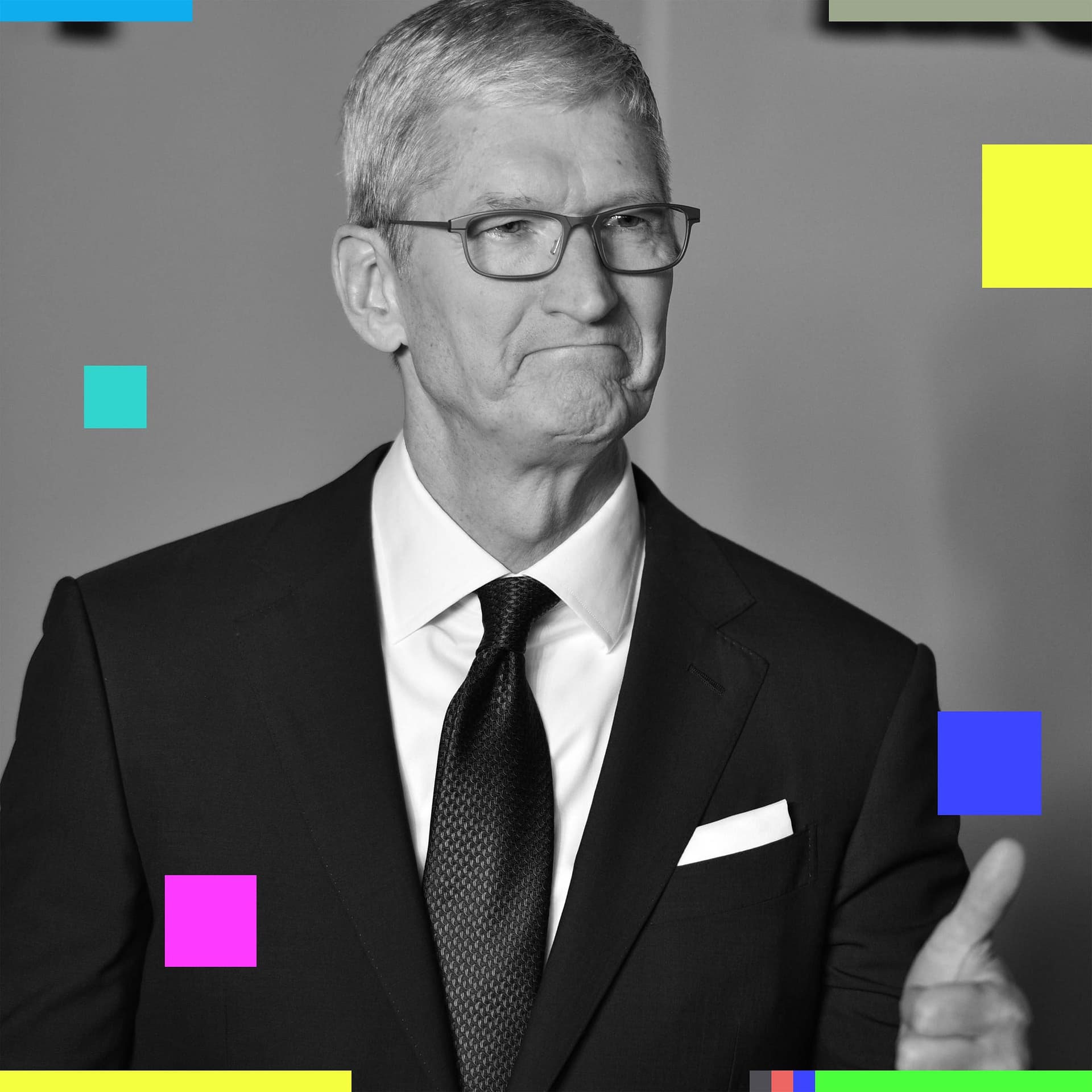
Tim Cook is resigning; John Ternus (head of engineering) will replace him, likely “doubling down on hardware” and signaling a new era without announcing an AI push. Apple’s prior AI efforts are cited as bungled: a revamped Siri that never arrived (leading to a class action), and “Apple Intelligence” news-summary notifications that reportedly summarized a BBC story about Luigi Maggioni and had to be pulled.
Notable examples
Chaotic Good’s alleged astroturfing campaign to boost band Geese (fake fan accounts; called a “psyop”/astroturfing), and growing US data-center resistance—Maine considering a moratorium through Nov 2027, plus claims that protests are constraining AI compute (OpenAI shutting down Sora due to resource limits).
Written by AI. May contain mistakes. Listen to the episode to check what was said.
Chapters
Tap a time to open that second in VOTim Cook's Resignation: Implications for Apple
2:12 to 4:28
Discussion on Tim Cook's resignation and its potential impact on Apple.
“And has the AI boom finally met its match, the people?”
AI's Role and Apple's Future
4:28 to 6:03
Exploration of AI's impact on Apple's products and market position.
“I think being the head of Apple has got to be one of the most intense jobs in the world.”
Challenges Ahead: The Need for Innovation
6:03 to 8:31
Insights into Apple's recent struggles and the need for a new direction.
“And there's this fear that Apple needs to make a major change.”
John Ternus: The Future of Apple
8:31 to 12:39
Speculation on John Ternus's leadership and upcoming changes at Apple.
“AI without an actual clear articulated vision of what that would actually bring to the product.”
The Rise of Geese and Marketing Secrets
15:07 to 28:00
Uncover the story behind the band's rapid rise and the marketing tactics involved.
“If you hadn't gotten enough of me talking on this episode yet, I've got great news.”
Casual Banter about Music
28:00 to 28:25
The hosts engage in light-hearted discussion about a song and its lyrics.
“I really like the song where he yells about how there's a bug in his car over and over.”
Introduction to Data Centers Discussion
28:25 to 28:45
The hosts shift focus to discuss the recent news concerning data centers.
“So I wanted to talk with you guys about my favorite topic in the world, data centers.”
Legislative Changes Affecting Data Centers
28:45 to 30:12
Discussion on the temporary ban of data centers in Maine and the changing public opinion.
“Specifically, there was news recently that Maine is about to become the first state in the U.S.”
Local Resistance to Data Center Projects
30:12 to 31:42
Exploration of grassroots movements opposing data centers, including protests at historic sites.
“And in that state in particular, there's also been this massive plummet in public opinion against data centers.”
Growing National Opposition to Data Centers
31:42 to 33:59
An examination of the rapid increase in grassroots organizations fighting data centers across the U.S.
“of these guys in their costumes, like firing cannons.”
Show all 13 chapters
Public Sentiment on AI and Data Centers
33:59 to 35:37
Discussion about the public's increasing awareness and concerns regarding AI and data centers.
“So there was resistance against data centers in Missouri, Ohio, Wisconsin, North Carolina, Michigan, Texas, California, New Mexico within 14 days.”
Impact of Public Sentiment on AI Development
35:37 to 37:06
How public backlash is influencing AI companies and their operations.
“That is the kind of political unity that you...”
People Power in Politics
37:06 to 39:30
The hosts discuss how public protests have led to political changes and consequences for politicians.
“is it is actually having a direct effect now on the ways that these AI companies operate and the strategies that they have.”
Transcript
Automatic transcript. May contain errors.0:00This BBC podcast is supported by ads outside the UK.
0:29CFO. LinkedIn has a word for that. Bull spend. Now you can invest in what looks good to your CFO. LinkedIn ads generates the highest ROAS of all major ad networks. You'll reach the right buyers because you can target by company, industry, job title, and more. So cut the bull spend. Advertise on LinkedIn. The network that works for you. Spend$250 on your first campaign on LinkedIn ads and get a 250 credit for the next one. Just go to linkedin.com slash broadcast. That's linkedin.com slash broadcast. Terms and conditions apply.
1:28for a break without breaking the bank, save up to$150 at applevacations.com or contact your travel advisor. Apple Vacations, where your story starts.
1:42They're calling this a psyop. To go to the point where you're actually creating fake fans, that's where things kind of cross into a kind of betrayal. Hello and welcome to The Interface, the show that decodes the tech, rewiring your week and your world. I'm Nicky Wolf. I'm Karen Howe. And I'm Thomas Germain. Today on The Interface, Apple's Tim Cook is resigning. What does that mean for your smartphone? Is the world's biggest new band a psyop? And has the AI boom finally met its match, the people?
2:24Okay, so big news broke this week that Tim Cook, Apple's longtime CEO, is stepping down. He'll be replaced by John Ternus, who was the head of engineering at Apple. This is a seed change. The CEO of Apple is a role in Silicon Valley, almost like kind of king of Silicon Valley. Would that be a... I don't know if he's the king of Silicon Valley, but he's definitely one of the most influential people in the world. Like if you just think about the sheer number of people who use iPhones alone, but when you add all of Apple's other products and the fact that like so many other tech products are designed to work with Apple, like the level of influence is just enormous.
3:09Yeah. And the fact that the way phones are, the way we use all of our technologies, Apple's kind of led the way in terms of hardware at least, right? Yeah, totally. And it feels like because Tim Cook has been in this role for 15 years, that there is, he was a mainstay within the upper echelons of the tech industry that is going to be changing it. And that doesn't change often, you know, for any of the companies. So it is a pretty big shakeup. Tim Cook took over from... From Steve, right? From Steve Jobs. Yeah, that's just blanked on Steve Jobs. Yeah. For some reason. So there was this guy named Steve.
3:52Steve Jobs. May have heard of him. But yeah, we don't yet know exactly what this means for Apple. We have seen that they're doing a major shakeup of the engineering division. They're merging technologies with platform engineering. That, unclear exactly what will change of that now. But they have said they're going to hire, quote, thousands more engineers. So it seems like this will be a doubling down on hardware. This probably comes as a surprise to a lot of people who don't follow this stuff closely, but there have been rumors for years now that Tim Cook is getting ready to step down. I think being the head of Apple has got to be one of the most intense jobs in the world.
4:34Like, it's the biggest, most valuable company on earth. It's a trillion dollars, Apple. Four trillion dollars. Mind-bending amount of money. Unbelievable. It's an amount of money that, like, it doesn't even make sense if you think about it. But Apple's been at this kind of, you know, precarious, like edgier moment than it's been in quite a while. And there's this conversation happening that AI, large language models, you know, the technology that runs tools like ChatGPT, is going to completely change the way we interact with our computers. And there was this huge debacle where Apple announced that it was going to launch a new revamped Siri that was going to run on the latest AI, and then it never arrived.
5:22There was like a class action lawsuit because they said, if you buy our new phone, then you'll get this new tool. And then it never came because they just couldn't get it together inside the company, apparently. But also there's been this other shift where they became one of the biggest companies in the world from telling the iPhone more than anything else. But over time, the technology has gotten so good that it's hard to make a new, exciting phone. Like for a while, like years and years and years, the CEO of Apple would get on stage, whether it was Tim Cook or before him, Steve Jobs, and announce some new phone.
5:59and it would be like way different and really exciting. But it just got so good that they like hit a wall. And iPhone sales have slowed down. They're lasting longer. People are keeping them for longer. And there's this fear that Apple needs to make a major change. And there have been a number of things that Tim Cook kind of bungled, right? Yeah, the vision. The Apple Vision Pro. Was it kind of disaster? Yeah, they launched this product. It wasn't like really clear who it's for. Sales were terrible. than last year. You know, usually Apple launches a big new product at its developer conference. But as we got closer and closer, people didn't know what that product was going to be.
6:39And then it turned out the big thing they were announcing was iOS 26, a new operating system for the phone, which was kind of universally panned, right? You might remember, like, it was this weird, like, they called it liquid glass, like it was clear. People really didn't like it. It seemed like it was kind of thrown together at the last minute. I'm sure it wasn't literally. They've probably been working on it for a while. But there's been this perception that the company is faltering. And I think what's happening now is they're trying to signal to the world and to investors that Apple is entering a new era where everything is going to change.
7:12And it's a critical moment for the company. Like basically right now, it's sink or swim. They need to prove that they've still got a vision, that they're going to continue to change the world the way that they have for, you know, decades now. and they aren't, you know, falling behind, which it's something that inevitably happens. If you look at all the biggest companies in the world, you know, they reach the top and then they kind of fade away. They don't always disappear. But it's hard for one company to stay as big as Apple has for this long. Right. And I think the message they want you to take is that everything's going to be different now.
7:48We're switching it up. And what struck me was reading through the announcement, reading through Kirk's letter that he sent out to the team, no AI play was announced in this thing. We've just become so used to every big announcement from every big tech company being like, we're going to pivot to AI. And I think it's kind of notable that Apple didn't mention AI once in any of these hints and announcements at what they're going to do. They're very, very big on doubling down on hardware. And I think that's a very loud silence on AI in terms of part of their plans. There's been such a series of weird bungled attempts with Apple trying to catch up to AI without an actual clear articulated vision of what that would actually bring to the product.
8:42So in addition to the upgraded Siri that failed, there was also that attempt to create Apple intelligence with these news notifications. Do you remember this? Where they were supposed to summarize the news and send it out on notification as part of a new AI feature. And one of the first weeks, I think, that the feature was deployed was during Luigi Maggioni's unfolding trial. And it summarized a headline about shooter Luigi Maggioni something, something, something into Luigi Maggioni shoots himself. And it was actually a BBC story that it was summarizing. And it branded the notification with the BBC logo.
9:26So it looks like the BBC had actually pushed that out. And there was such a backlash that they actually had to pull that feature almost immediately after it was launched. And so I think Apple's probably being a lot more cautious now because of these series of mishaps. And at the end of the day, like that's not really the company's strength. So it is, yeah, to me, it's personally refreshing. Like I recently was in an Apple store, just buying some new accessories for my various Apple products. And the sales rep tried to upsell me on the latest iPhone and the latest Mac and whatever, da da da. By saying, hey, these new products are going to have Apple intelligence and it's going to be AI enabled.
10:11And I looked her straight in the eye and was like, and that is why I want nothing to do with them and walked out of the store. Yeah, you're talking to them like, yeah, yeah. Do you know who I am? Yeah. Right. The other thing that's interesting about the AI stuff is like our relationship with apps, everyone is expecting is about to be completely different. Like until a couple years ago, if you wanted to do something on your phone, it required a guy or a team of engineers, sometimes a huge team, to make a little computer program, to make a little app that would do the thing that you wanted. And Apple's App Store was a huge, I think,$100 billion a year business, like not the biggest moneymaker in Apple's toolkit here, but pretty significant.
10:59and there's some speculation that that's all about to change that if ai gets a little better and you can just ask chat gpt or whatever ai tool you're using to go do stuff for you that you won't need as many apps you won't need to go through the app store like one individual app or one device will be able to take on a lot of those projects so you know there's all these different parts of apple's businesses, because there are many of them that it's in, are changing. And then simultaneously, Johnny Ive, who's Apple's like famous designer, golden boy who left the company a long time ago, has now partnered up with Sam Altman, the CEO of OpenAI.
11:40They are apparently working on a hardware product that no matter what it is, will be a direct competitor with Apple. And then if we talk about one more headwind, China, enormous, you know, important factor for Apple here, both because all of its products, for the most part, are manufactured in China, and because Chinese tech companies like Huawei are eating into its market share in Asia. That's another big wild card. And I think we're about to enter a really, you know, kind of rocky period for the company. And it'll be up to this new guy, John Ternus, to be like, no, no, no, everything's fine.
12:19Don't worry. We've got it under control. We'll see how things go. Yeah, his first job is definitely to kind of steady the ship, steady the ship for investors, steady the ship for customers, and then see exactly what is needed in order to bring this behemoth company into this uncertain future. I think the one thing we have to look forward to is Apple's going to have this big event in the fall around the time that Tim Cook says he's stepping down, he's going to take over as, you know, the leader of Apple's corporate board. John Turner steps in. He's going to give a speech. He's going to address the public for the first time.
13:00And one thing I think is absolutely certain is he is going to paint a picture of a way that this company is changing in radical ways. And that will have a big impact in the way that you stare at your phone and what kind of phone you're staring at in the future. So I think this is something for people to look forward to because he's going to present a big new vision. And don't worry, we will be following that very, very closely as it unfolds. So stay tuned. Yeah. Hi, I'm Cindy Crawford, and I'm the founder of Meaningful Beauty. When Dr. Sabah and I decided to do a skincare line together, he said to me, we are going to give women meaningful beauty.
13:41And I said, that's exactly right. We want to give women meaningful beauty, which means each and every product is meaningful. It has a reason to exist. It's efficacious. You're going to get results. And then you just go out and live your life. Meaningful Beauty. Confidence is beautiful. Learn more at MeaningfulBeauty.com. Apple Vacations, where your story starts. Need a vacation? The Apple Vacations foundational sale is here. So you can save up to$150 on your next escape. Book by April 30th for instant savings on trips to Mexico, the Caribbean, Hawaii, Central America, and top U.S. destinations.
14:20If you're ready for a break without breaking the bank, save up to$150 at applevacations.com or contact your travel advisor. Apple Vacations, where your story starts. $30 concert tickets, all your favorite artists. It's Summer of Live, presented by Live Nation. $30 tickets to over 4 ,000 shows throughout the year. Your chance to see Kesha, Kid Cudi, Luke Bryan, MGK, the Pussycat Dolls, and so many more. Make it a summer of live music. On sale for one week only, April 29th through May 5th. Go to livenation.com slash summer of live.
15:07Now let's talk about geese. If you hadn't gotten enough of me talking on this episode yet, I've got great news. because now we're going to ship it over to my story. Because now Tom is going to sing. Finally, I get a minute to speak, you know. I want to talk to you guys about this band, Geese. Have you heard of Geese? Yeah. Not until you brought it up. I think Geese is kind of a pretty cool band. I heard about them for the first time maybe, I don't know, six months ago or so. They've been around for a while. You know, they've been putting out albums for years. Never heard of them before. And over the course of like a month, it felt like they had become the biggest thing in the world.
15:53They went from like, I think a band that almost no one, you know, not no one, but like they certainly weren't a household name to like playing Saturday Night Live. They just played one of the biggest slots at the music festival, Coachella. They exploded everywhere. Yeah, there's been a bit of a backlash to this, right? People were saying, this is an industry plant. How could this be organic? How could something go from zero to absolutely everywhere? And in our age where what you experience is a lot of the time algorithmically determined, the question is how much can the industry, how much can a record label game that system to put a band that they want in front of everyone and get it into that sudden superstardom non-organically.
16:52And that's what the backlash is about, is because people feel like there's no longer any choice. And there's also no longer that feeling of kismet where you discover something, and a lot of the time this is kind of pretentious, where you get like music snobs. But music as a genre is all about that kind of feeling of discovery, you know, going into record stores, finding something obscure. And if that is gone, if basically the music we like is just the music that has been decided will be the big music of this month, of this year, people are really angry about that. And I can totally see that anger.
17:31Yeah. So this conversation was happening. people who were suspicious. Turns out their suspicions were correct. There's a marketing company called Chaotic Good. And at South by Southwest, which is this big music festival and now also like a tech conference that happens in Austin, Texas, the head of this company, Chaotic Good, got on stage to talk about their new techniques. And he explained that it was his company that was behind the rise of geese. they said they had this coordinated campaign where they set up all these like fan accounts, essentially, to promote a band, in this case, Geese, but they've done it for plenty of others, and make it look like they've got this kind of, you know, organic attention that it's just like people posting about how much they love this band.
18:27And he essentially said, we can make anything go viral. and like through this coordinated campaign where they had, according to him, thousands of fake accounts that they're running, like posting and commenting. When you say a fake account, are these people who are being paid to have these opinions, but they're real people or are they completely fake accounts? Yeah, so there was some discussion about, is this bots, right? Are these like automated, you know, fake accounts that are operating on their own? Chaotic, good, like stop short of saying that? They didn't say they're using bots, but it's like not, it's like accounts that the company is running.
19:05They're posing as just like some regular guy who likes to post about the band Geese, but there's like one or a couple people that are running hundreds add up to like, you know, a thousand or a couple thousand accounts. They aren't real. And people are saying, they're calling this a psyop. That like, Nikki, can you explain what a psyop is? I think you're conspiracy theory term it's like uh psychological operation basically it's a casual term for when your attention when you know the the body of human culture and human communication is being gamed essentially and there's a specific word for what's going on here which is astroturfing which is fake grassroots campaign and it's not just in music you see this when a movie comes out, for example, you also, this has been, you know, a point of controversy for at least 10 years now, you see it a lot in politics.
20:05So you get this in almost everywhere where in, you know, there's that old saying, on the internet, nobody knows you're a dog. Anything, anything you see. You haven't seen the comic that might not translate. You haven't seen the comic. Yeah, it's a far side comic, I think. No, it's the New Yorker. It's like it's a little dog. He's sitting at a computer. He's talking to another dog. He says on the Internet, nobody knows your dog. It's like the funniest thing in the whole world. Yeah, because you don't know whether what you're seeing at any given point is authentic or paid for or what the backstory might be of any piece of content you're seeing.
20:45It's very easy to make fake support for something like a band, like Geese. Well, the funny thing here, right? If you've like started a fake grassroots political movement that doesn't exist, or if, you know, like the government is convincing people to believe something that isn't real, some crazy conspiracy, that's one thing. In this context, there's another word for psyop and it's marketing. And what I think is so interesting about this is people were shocked, outraged that this band grew and it wasn't, you know, just the fans. It wasn't real people promoting this. It didn't just get big because it's great.
21:32And what I think is so interesting about that is we've got this idea that social media is a meritocracy, that things rise and fall because the algorithm is in general, most of the time, responding to people liking or not liking something. and that is just not true. 20 years ago, Justin Bieber became super famous because he was just posting great, you know, people loved it songs on YouTube and he became the biggest thing in the world and then like he got so many views, they invited him on Ellen DeGeneres. That's not how it works anymore. There's a formula to this. There's a reason that some things go viral.
22:18There's people whose whole job it is to figure it out and make it happen again. Here's where I think we disagree. If we go back 20 or 30 years ago, right? If you go back to the 90s, no one would be shocked to hear that a band that was playing on Saturday Night Live had manufactured attention through a coordinated marketing campaign, right? That they'd gotten people to write and talk about them on TV and in print. but social media feels like you're just talking to another person. It feels like it's real. There's this veneer of authenticity. And I think that's what it is. I think it's a veneer. I think it's not real and that's not actually how the world works.
23:06And we've all gotten a little bit mixed up about what is happening when we go on the internet. At the end of the day, there's sort of a spectrum with how much marketing involves fake accounts. Like, I think most people would say it's totally acceptable to pay for ads for marketing. And maybe it's also accessible to pay for influencers, like real influencers for marketing. But then to go to the point where you're actually creating fake fans, that's where things kind of cross into, okay, people know that that happens, but to find out that a beloved band used those kinds of tactics, like I think it gives this sense of this feeling of, oh, that's kind of dirty.
23:50You know, like there's certain brands, certain personalities, certain celebrities, whatever, that you want to feel like a feel-good story about their rise. And if they lean into that brand as well and say like, you know, we're the folksy one that like we worked really hard. This was all based on pulling ourselves up by our own bootstraps. And then you discover, actually, they're one in the same with all of these other inauthentic brands that kind of gamed their way to the top. That does make it's a kind of betrayal. No, you're not wrong. And I also I want to defend Geese here. Like, it wouldn't have happened if they, you know, weren't good at what they were doing, if their music wasn't interesting.
24:35And they do have this kind of indie outsider feel. I think people felt like, oh, I'm watching onto this thing. It's special. It's just for me. I get it and other people don't, which you don't feel. I don't think anyone would be shocked to find out that something like this was happening with Sabrina Carpenter. It might be like, oh, well, yeah, sure. Right. Exactly. It's a major act. Yeah, exactly. But on the other hand, the shock and the outrage, I think people know this happens, but I don't think they get the scale that it's happening on. I mean, so one of the things that's kind of because I didn't really know this story.
25:10So I didn't I didn't realize until you just mentioned it, Tom, that the people found out about the quote unquote sci-off that was happening because the marketing firm just went on stage and announced it at South by Southwest. And so the other thing I would say in defense of Geese is this marketing company could also just be like really tooting their own horn and ascribing way more of Geese's popularity to their tactics than the music of the band. And so like this is this kind of an extra layer of intrigue here, which is why would they have announced this to the world? I mean, one, probably because it is so normalized for them, for people who work within this industry.
25:57But the second one is that they are also just trying to get more clients. They're trying to talk themselves up. So they might also convey an outsized impact of the work that they're doing. And to your point, Tom, people could also, they could just like the fact that Gisa's music is good, you know? So it is kind of an interesting situation where it's really hard to determine in hindsight how much of these inauthentic coordinated campaigns might have actually floated Deese to the top or whether Deese would have floated to the top anyway. Maybe they just simply got to the top faster and a little bit bigger.
26:38But yeah, it's because everything is so enmeshed now, the authenticity and the inauthenticity, it's impossible to disentangle. It's the fact that it's unfair, I think, is what's got people really upset about this. And with Geese and every time this kind of thing comes up is that it is unfair. It's pay to play. it's if you aren't cheating, then you're going to get pushed out by someone who is. And rightly, people are upset about that. I would love to hear from people. There's definitely people who are listening to this who like this band that have feelings about this. If you're upset about how Geese is a psyop, reach out.
27:21Our email is theinterface at bbc.com. I kind of feel bad for Geese. I think they're almost like a victim here. Probably some people are upset about that. But like, you know, you hire, you know, somebody say, we want to help your band go viral. We think your music is great. Sure, go ahead. This probably stinks if you're like a real indie musician. You know, there's some people who are like legitimately outraged about the way that the music industry manipulates things and makes it impossible for like the little guy to succeed. That's absolutely real. But geese, they're just like, this is just what big bands are doing right now.
27:53And they're paying the cost. Serious reputational damage. I mean, it's hard to get your street cred back as an indie band after something like this. But they're pretty good. I really like the song where he yells about how there's a bug in his car over and over. It's a pretty good lyric. How much are you being paid to say this, Tom? Well, they told me the checks in the mail. I'm actually not even a real guy. Are you a dog, Thomas? This is a wig. So I guess what I'm saying is just like what you like. Like if it's a marketing ploy, like, and that's bugging you, you know, just go listen to the music and decide if it's resonating with you or not.
Read the full transcript
28:31Isn't that what really matters? Yeah. Amazing. So I wanted to talk with you guys about my favorite topic in the world, data centers. We're doing a segment on data centers? As you both know. Specifically, there was news recently that Maine is about to become the first state in the U.S. to temporarily ban data centers by law. And this is temporary because it is meant to only be a moratorium until November of 2027. The legislature has already passed it and it's on the governor's desk. And the reason why this is so interesting is because this is a pretty big inflection point in a broader array of data center protest and data center resentment that is sweeping across the U.S.
29:25and also around the world. So at least 12 other states right now are also considering similar data center moratoriums, according to the National Conference of State Legislatures. And 62 % of Americans in one of the latest polls say that data centers, the costs outweigh the benefits and they don't actually want them anymore. And this is a pretty big shift from just a few years ago when a lot of communities were, in fact, welcoming data centers in with open arms, especially in the state of Virginia, which is the data center capital of the world. There were all these tax breaks for data centers. there was this idea that data centers would bring in economic benefit, economic opportunity, and a lot of tax revenue as well.
30:12And in that state in particular, there's also been this massive plummet in public opinion against data centers. And it is getting to the point where this state is considering rolling back some of the privileges that they gave to data centers before to prevent more of them coming in. Yeah, there was, we did a really great story. I had this freelancer named Aidan Walker go to a battlefield in Virginia, like a major historic Civil War battlefield. It's called the Manassas National Battlefield Park, which is, was going to be the site of one of the biggest data center projects in the world. And like the local government like rushed the approval through.
30:57and these Civil War reenactors, these guys who, you know, like dress up like in period correct uniforms and do like a fake battle because I think it's so awesome. I love these guys. They were protesting because they're going to, on this historic battlefield, they're going to like tear down this land and build these giant, you know, closed off data center campuses. and they pushed back, you know, like Civil War reenactors and a lot of other local... That I don't know, but we did. You've got to check this story out. We went down and took a bunch of photos of these guys in their costumes, like firing cannons.
31:47Like really some of the best images that we've published in quite a while. Highly recommend this story. But yeah, there was this local grassroots movement that pushed back against what was going to be one of the biggest data center projects in the world. And they just canceled it. They just pulled it back because the public's sentiment about this issue is changing. The whole data center issue has become like, I think maybe not the, but one of the most important inflection points in the conversation about AI. And things are really changing. And as well as recapping, right, I think why people exactly have come to hate these data centers.
32:23and it's one, that they have very little staff. They don't bring a huge amount of employment. Two, they eat up extraordinary amounts of electricity. I mean, they are just draining the grids from a lot of these places. That is the very issue that has stalled, actually, an open AI data center in the UK because there's just not enough electricity to power the facility. So that's kind of like why people are angry. I mean, there's kind of very little benefits to the community, but then there are all of these very visceral costs. And so to the story that you commissioned, Tom, I mean, this is playing out across the country.
33:08This is a crazy stat. Apparently, grassroots orgs fighting data centers has doubled over the past year to now 400 different grassroots organizations. This is according to Data Center Watch, which is a project, a kind of a curious project that is tracking data center resistance activity across the country. That's actually funded by an AI company. So a little bit interesting there. But yeah, so like just in the last few weeks, I mean, if you if you just search all the news articles about data center resistance in either the local level, state level or or even the national level, there's just an insane number of articles like I was going to compile a list of all of the things that have been happening.
33:57and it got too long just in the last few weeks. So there was resistance against data centers in Missouri, Ohio, Wisconsin, North Carolina, Michigan, Texas, California, New Mexico within 14 days. Like it's nuts out there. This is becoming a big issue in the midterm elections, right? We're like halfway through the presidential term, like all these congressional seats are up for grabs. Data centers are like now a focal point. Yeah. Yeah, the way that one policy analyst put it is that data centers are becoming a kitchen table issue, which I thought was such a good way of putting it. It's also kind of nuts to think about, like, we're talking about massive pieces of computational infrastructure, like these inert, giant buildings.
34:45And people are talking about that at their kitchen table and getting extremely fired up about this because of the way that it consumes and extracts all of these resources from these communities. And you're right to say, Tom, that this has become also a gateway issue into a much broader resistance and resentment towards the AI industry because people are starting to make the connection. Wait a minute. The reason why all of these facilities are popping up at such speed and such scale and with a complete and total lack of transparency is because Silicon Valley is just trying to land grab all over the country, all over the world and put up the facilities that they need, supposedly need to train the next generation of their technologies that are then potentially automating away a lot of jobs.
35:36So now, like in the latest polls, 80 % of Americans are also feeling either very concerned or concerned about AI. Like, that's pretty remarkable. 80 %? 80%. That is the kind of political unity that you... I'd hate to be a chatbot right now. You don't see that outside, like, you know, 75%, 25 % of Americans will disagree that, like, up is down. Like this is... Right. Yeah, right. Like the last time Americans, 80 % of Americans read on anything is, you know, beyond our recollection. Yeah. It was hating the British in 1776. Right. We did kind of all get on board with that. So for me, the takeaway of this is that it is kind of an amazing example of people power actually working.
36:27Like people are reacting to this and people in power, politicians, are taking note and are actually listening to people. And real change is coming from these objections and these protests. It's like the opposite of the astroturfing type stuff we were talking about in the music industry. This is real people expressing real views and enough of them doing so that it's being listened to. It's kind of a really outful story for me. The fact that this data center issue has pivoted here, How are things going to change? What does this mean for the way the next couple of years are going to play out? Yeah, so this is what's been so remarkable about seeing this rapid growth of data center resistance and the backlash against the industry more broadly, is it is actually having a direct effect now on the ways that these AI companies operate and the strategies that they have.
37:22So a couple, a few weeks back, OpenAEA announced quite dramatically that it was shutting down one of its products, Sora, which is its video generation tool, which originally there was a lot of fanfare from the company about. And they just completely terminated the product line. And the reason was, according to reporting from The Wall Street Journal, that the company is deeply constrained on computational resources. And the reason why they're constrained is because they are not able to build out these data center facilities at the speed and scale that they need to to support the full portfolio of projects.
38:06Of course, there were other reasons that OpenAI had shut it down as well. It also just was flatlining in usage. It wasn't that popular. But this is, you know, they were directly being squeezed by this bottleneck in computational resources. And so this goes back to what you were saying, Nikki, about how this is like a really optimistic story. I 100 % agree because this kind of resistance leading to real tangible changes in the trajectory of AI development is one of the ways that I think really illustrates how anyone, anyone in the world can actually have a significant say in the future of technology and the future of AI development.
38:53And it's this thing you hear all the time where it's like, call your representative. And it feels so impotent. Like, oh, yeah, like they're going to listen. Like, no, these guys, you know, if you reach out to politicians, it actually can make a difference because they need you to be pleased for them to get reelected. You know, it's like it's not necessarily going to change everything every time, but it actually does matter. And I think that's what happened here. That is exactly what happened here. Elected officials picked up on the fact that people are upset about this and changed their tune. Politicians actually are starting to get unelected from their seats because of this issue.
39:35This has already happened in multiple localities across the U.S. There was one that just happened recently in Festus, Missouri this month, where four city council members were unelected, half of the city council members, because they had approved a data center. And so this is, I mean, like I've talked with representatives myself who say it doesn't matter how much money ends up in politics. If you ultimately hear from your constituents that they will fire you from the job, that is the best way to counter even millions, hundreds of millions of dollars of moneyed interest being pumped into a campaign.
40:19And maybe some people have forgotten, but if you've been on the ride with us from the beginning, one of our first episodes, Karen said that data centers were going to become one of the biggest issues in technology. And I think we should take all the credit for this happening, right? On our show, no one had ever spoken about the subject before. And we showed up. and we told people to call their representatives. It is pretty world-changing podcasting that we're doing right here. So, I mean, I guess, like, have you guys heard from the Pulitzer Committee yet? Maybe that comes later. But no, Karen, you called it.
41:01The one thing we didn't call is the involvement of the Civil War reenactors. That one must have fired. That was kind of a curveball. We didn't see that one coming.
41:14so join us next week if you're in the uk you can listen to us on bbc sounds or if you're outside the uk anywhere else you can listen wherever you get your podcasts or just search for the interface podcast on youtube and i want to give a shout out to everyone who's been getting in touch with us and sending us messages we really appreciate that it's been a lot of fun if you want to get in touch with the three of us, you can reach out on email at theinterface at bbc.com. Or if you're into WhatsApp, you can send us a message there at plus 44-333-207-2472. Or if you really want to follow along with us, you can get us on social media.
41:58The links to our accounts are right down there in the show notes.
42:09Hi, everyone. It's Zara McDonald and Michelle Andrews here. Hi. That's Michelle Andrews. And that's Zara McDonald. We're from the Shameless Podcast, the pop culture podcast for smart people who love dumb stuff. Yeah, on Mondays, we cover pop culture analysis. Think Netflix's Lamar Odom documentary, the great unfollowing of pregnant women, and the tangled web of celebrity GoFundMes on Thursdays. Zaz, what do we do? It's what we call the quick and dirty. So it's a recap of the biggest pop culture headlines that week. whatever you need an explainer on we have got you and then on Fridays we do dumb stuff Fridays yes we're three times weekly three times weekly search for shameless in your favorite podcast app now
From the publisher
Tim Cook resigns: what does a new Apple boss mean for your smartphone?
Apple CEO Tim Cook is stepping down later this year, with John Ternus — a long‑time hardware leader — named as his successor. We look past the boardroom drama and asks what this means for the thing most of us hold all day: your phone. Apple’s design choices set the tone for the entire industry; when Apple shifts, everyone else tends to follow. And if the next era is led by a hardware engineer, does that point to a different kind of iPhone future — in how it looks, behaves, and what Apple chooses to prioritise (or drop)?
Also this week:
Geese — psyop or marketing?
A band called Geese seemed to come out of nowhere - and now they’re playing Coachella. But alongside their rise, a bigger question has caught fire: how much of what we think is “organic” online is actually engineered? A WIRED report digs into “trend simulation”: networks of accounts, seeded clips and manufactured discourse designed to push an artist up the algorithmic ladder. None of this is entirely new - the music industry has always shaped what we hear - but the machinery is now quieter, faster, and harder to spot. And that changes the emotional core of fandom: when something breaks through, we don’t just ask “is this good?” — we ask “did I choose this… or was it chosen for me?”
Maine becomes the first state to ban data centres
Maine lawmakers have approved what’s being described as the first statewide pause on large data centres - driven by fears over electricity demand, rising bills, water use and environmental strain. This isn’t just a Maine story. Across the US, analysts are already warning that a huge chunk of planned data‑centre capacity for 2026 is being delayed or cancelled - not only because of local pushback, but because power, transformers and other basic electrical kit are becoming the bottleneck.
At the same time, cracks are showing in the AI boom’s confidence game: OpenAI has shut down its standalone Sora video app, citing a wind‑down timeline, after reports that the economics and compute costs didn’t add up. And in one of the most surreal signs of the hype cycle, Allbirds has announced it’s selling off its shoe business and rebranding as an “AI compute infrastructure” company.
So Karen asks the question beneath the headlines: are we looking at normal growing pains — or early signs that the AI bubble is hitting real limits: energy, hardware, planning, and public consent?
The Interface is your weekly guide to the tech rewiring your week and our world. Hosted by journalists Thomas Germain, Karen Hao, and Nicky Woolf, each episode unpacks, week by week, how technology is shaping all our futures. No guests. No jargon. Just three sharp voices debating the stories that matter — whether they shook a government, broke the internet, or quietly tipped the balance of power.
New episodes every Thursday on BBC Sounds in the UK. Outside the UK, find us on BBC.com or wherever you get your podcasts, or watch the video version on YouTube (search “The Interface podcast”).
To get in touch with the team: theinterface@bbc.com
The Interface is a BBC Studios production. Producer: Natalia Rodriguez Ford Executive Editor: Philip Sellars