In short
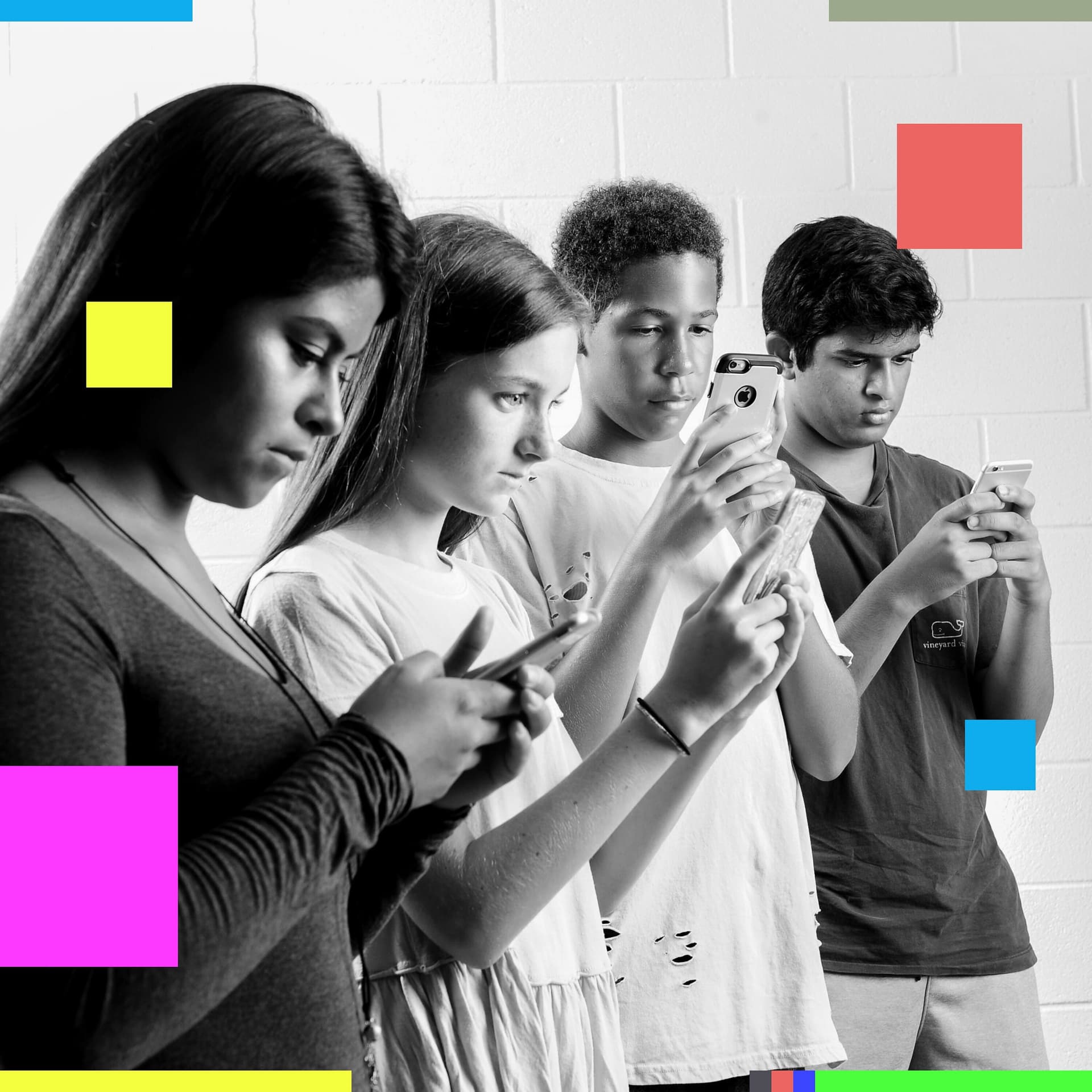
The Interface episode “Teens banned from social media - what next?” (BBC) discusses the UK’s announced plan to ban under-16s from social media, possible curfews for 16–18, and whether it will actually improve safety.
Guests
Karen Howe, Thomas Germain, and Nicky Wolf (hosts/tech commentators).
Key claims
parents largely support the ban (YouGov: 77% support; 45% think it’ll be effective), but implementation is flawed (age checks can be gamed; Molly Rose Foundation: 70% of surveyed teens said they could get around the ban; Australian case studies show a 14-year-old bypassed facial recognition). Tech companies and some online-safety experts warn bans may isolate teens and push them to less moderated alternatives (e.g., WhatsApp/Telegram group chats). The episode also notes UK youth-program funding cuts and debates about 16-year-olds needing social media for news. It briefly covers AI-driven fusion hype (e.g., Helion funding; energy needs for AI) and Apple’s revamped Siri (screen- and app-aware, calendar example).
Written by AI. May contain mistakes. Listen to the episode to check what was said.
Chapters
Tap a time to open that second in VOOverview of Upcoming Topics
0:45 to 1:30
Discussion of the key topics for today's episode including social media bans.
“There's problems with the way that you can identify somebody as under 16.”
Elon Musk Becomes Trillionaire
1:30 to 2:30
News about Elon Musk's wealth and its implications.
“There were literally so many massive stories, one of which was that SpaceX IPO'd and Elon Musk became the world's first trillionaire.”
Anthropic and U.S. Government Tensions
2:30 to 3:40
Discussion on Anthropic's issues with U.S. export controls.
“There are fewer mice on the planet, slightly fewer mice than humans.”
UK's Social Media Ban for Teens
3:40 to 5:36
Explaining the UK government's new ban on social media for under 16s.
“no, no, you cannot release it to any foreign nationals, which means that they cannot release it at all.”
Public Reaction to the Ban
5:36 to 6:52
How parents feel about the social media ban and its perceived effectiveness.
“So it's kind of an interesting moment because I think when Australia did it, it seemed a bit anomalous.”
Challenges in Implementing Age Verification
6:52 to 9:00
Issues with age verification methods and their effectiveness.
“Nah, it's not going to work, though, is it?”
Concerns from Tech Companies
9:00 to 10:40
Tech companies' objections to the ban and potential risks for teens.
“One caveat to this survey, though, is that experts have pointed out that six months is really not enough to actually understand a ban like this.”
Potential Consequences of the Ban
10:40 to 12:18
Discussing impacts of the ban on teens and social media behavior.
“in particular in that meta YouTube snap, they've all come out pretty strongly against this impending ban.”
Debating Social Media's Role
12:18 to 14:01
Exploring the debate around social media access for youth.
“The place that they are going to go is gigantic group chats on WhatsApp and Telegram and other parts of the internet, which functionally work just like social media, right?”
The Debate on Social Media Access for Teens
14:01 to 16:04
Explore the implications of social media bans on teenagers and societal dynamics.
“There was this really interesting point that Ursula von der Leyen said, she's the president of the EU Commission.”
Show all 19 chapters
The Debate on Social Media Access for Teens
16:11 to 16:56
Explore the implications of social media bans on teenagers and societal dynamics.
“Republicans at the end of the spectrum supporting it.”
Interest in Fusion Power and AI
17:36 to 20:22
Discover the growing fascination with fusion power among tech billionaires and its implications.
“Okay, I'm psyched to bring this next story to you guys because I've been doing a lot of reporting and actually been obsessed for years and years with fusion power.”
Financing Fusion Energy Ventures
20:22 to 24:12
Examine the financial motivations behind fusion energy startups and notable investors.
“Sam Altman, the OpenAI founder, has a fusion startup called Helion.”
The UK Government's Fusion Partnership
24:12 to 26:06
Understand the UK's partnership with a fusion company and its potential implications.
“I did a scoop, which is that the British government has gone into partnership with a company called TAE Technologies.”
Apple's Revamped AI Siri Features
26:06 to 28:00
Learn about the new AI features in Siri and their potential impact on user experience.
“Let's move on to talk about something that is happening right now in real time, not maybe someday in 30 years.”
The Promise of AI in Everyday Tasks
28:00 to 30:20
Learn how AI can simplify daily interactions with technology.
“But I saw a, there's a band I like that is playing a show in October.”
Skepticism About Voice Activation
30:20 to 32:42
Explore concerns surrounding the adoption of voice interface technology.
“it just feels like a seamless upgrade to the general experience.”
Concerns Over Privacy and Functionality
32:42 to 36:28
Discuss the implications of AI's access to personal data and privacy issues.
“But I think the reason people didn't really adopt Alexa for things other than like checking the weather and setting a timer is because like that's kind of all it can do.”
Frustrations with AI Technology
36:28 to 37:52
Understand why imperfect AI interactions can lead to user frustration.
“I think there's nothing more infuriating.”
Transcript
Automatic transcript. May contain errors.0:00This BBC podcast is supported by ads outside the UK.
0:06Hi everyone, it's Zara McDonald and Michelle Andrews here. Hi. That's Michelle Andrews. And that's Zara McDonald. We're from the Shameless Podcast, the pop culture podcast for smart people who love dumb stuff. Yeah, on Mondays we cover pop culture analysis, think Netflix's Lamar Odom documentary, the great unfollowing of pregnant women and the tangled web of celebrity GoFundMes on Thursdays. Zaz, what do we do? It's what we call the quick and dirty. So it's a recap of the biggest pop culture headlines that week. Whatever you need an explainer on, we have got you. And then on Fridays, we do Dumb Stuff Fridays.
0:38Yes, we're three times weekly. Three times weekly. Search for Shameless in your favourite podcast app now.
0:49There's problems with the way that you can identify somebody as under 16. 70 % of the children who'd got around the band described it as easy. Welcome to The Interface, the show that decodes how tech is rewiring your week and your world. I'm Karen Howe. I'm Thomas Germain. And I'm Nicky Wolf. Today on The Interface, the UK bans teens from social media. What happens next? Why are AI companies getting involved in nuclear fusion? And is Siri finally going to be good?
1:29This past week has been absolutely insane for tech news. Yeah, a lot going on. There were literally so many massive stories, one of which was that SpaceX IPO'd and Elon Musk became the world's first trillionaire. Congratulations. So exciting for all of us. You just cannot wrap your mind around how big this number is. It's actually, there have been studies that have shown that the human brain is unable to accurately assess how much a trillion is. But if you were to stack one trillion pennies on top of each other, that would literally get you to the moon and back twice. That's a lot of pennies. It's funny you should say that, Karen.
2:18If you, a trillion dollars is enough to give every mouse on the planet$200. $200? What? If you were a mouse, what would you do with$200? What is the mouse population? I mean... There are actually... There are fewer mice on the planet, slightly fewer mice than humans. I'm so glad I know that fact now. The rest of the episode is going to be us advocating for a mouse universal basic income. Universal mouse income. I think we could really... Yeah. We're talking about the big issues today. Another massive story that happened this past week was Anthropic faced off with the U.S. government again. For longtime listeners of The Interface, we have talked about Anthropic, competitor to open AI, having a spat with the Department of War.
3:05This time, what happened was the U.S. government put export controls, which is a specific mechanism that the government has power to do, on Anthropic's latest AI model, Claude Fable, which, if you remember, we did an episode on Claude Mythos, this supposedly super scary AI model that was too dangerous to release. Anthropic then added safeguards and renamed the model Fable to release it. And the US government decided, no, no, you cannot release it to any foreign nationals, which means that they cannot release it at all. So Anthropic had to pull the model. But we're not going to talk about any of those things.
3:51Yeah. No, we're done. That's it. Yeah. Let's get to the real news. We're going to talk about a small island off the coast of Europe has just done something massive. You may have heard of it from... Used to have a big empire. Yeah. So what we're actually going to talk about is the fact that the UK banned or announced that it will ban children under the age of 16 from social media. The government has not officially clarified exactly which social media platforms it is going to ban. But it has said that generally speaking, they are going to ban platforms whose purpose is to enable social interaction and allow users to post content.
4:38So they've already said, yes, they're going to ban Snapchat, TikTok, YouTube, Instagram, Facebook X. No, they're not going to ban WhatsApp and Signal. And they're also potentially going to consider overnight curfews and breaks in doom scrolling for teenagers under 18. This is something I think I could use. A legal bedtime would be good for me. You know, like the government says I must go to sleep. Yeah, I guess you don't have to go to bed. You just have to get off. Exactly. You know, you could just raw dog it for the rest of the night. So between the ages of 16 and 18, you can go on social media, just not at night.
5:15Exactly. The UK is following in the footsteps of Australia, which implemented a social media ban for its kids in December of 2025. And the government has already indicated that it is planning on implementing, putting out the policy by Christmas of this year. So it'll be roughly a year after the Australia ban. And then the implementation would happen in around spring of 2027. So it's kind of an interesting moment because I think when Australia did it, it seemed a bit anomalous. But now that the UK is also following in the footsteps, there is this question now of whether this is going to kick off further momentum and have more countries around the world ban social media for kids.
6:01And generally speaking, this is a move that is actually incredibly popular among parents. So this was a move done with significant amounts of public consultation. There was actually 116 ,000 responses to government consultation, period. And there was a poll that came out from YouGov, a data analytics and market research platform that found that 77 % of parents in the UK with kids under 18 support a social media ban like this. Interestingly, though, only 45 % think that it would actually be effective. 46 % think that it could potentially not be effective at all. That's a very British level of cynicism in that whole.
6:52Like, yes, it would be a good idea. Nah, it's not going to work, though, is it? What I'm reading from this survey is that parents think something needs to change. And they are at this point willing to try the nuclear option, just banning everything outright and just seeing what happens because the cost of keeping the platforms around as is they have determined is too high. It's interesting that what it seems like parents are in favor of is the feeling that right now, they are taking all the onus of responsibility on policing their children's internet use, social media use, and this idea that, you know, all the parents I know are exhausted by that experience, and they're like, if the government can have a go at it, that would be really good if someone else can take that responsibility away from them.
7:45Now, there are some pressure groups that are not nearly as positive on it. Right. A lot of them have pointed out the Australia example. They're saying that there's problems with the way that you can identify somebody as under 16, whether you use an ID-based verification or a facial recognition-based verification. So obviously both of those have huge flaws and problems with them. Five companies are already under investigation for noncompliance, including YouTube, Meta, TikTok. There was a study by the Molly Rose Foundation which is a children's digital rights NGO. Three-fifths of 12 to 15-year-olds who did have accounts on social media before still have those accounts.
8:29There have been lots of case studies that the Australian government found. They did a three-month report where a 14-year-old can game the age recognition, the facial recognition software and just convince it that they are 16 and over. 70 % of the children at the Molly Rose Foundation polled who'd got around the ban described it as easy. So there's implementation problems, there's conceptual problems that just goes to demonstrate these things are not easy to implement. One caveat to this survey, though, is that experts have pointed out that six months is really not enough to actually understand a ban like this.
9:12There's not actually enough data to analyze the effects. And a lot of parents, while they understand that their kids are still getting on these platforms, are quite optimistic about what this kind of ban does for kids that will never get accounts. I mean, right now we're talking about the kids who had social media that are in this weird transition where it was taken away from them. But parents are holding out hope that for the generations that never had accounts, like they will end up not having a social media as sort of an integrated part of their upbringing. And that will then lead them to have more healthy, robust offline experiences.
9:55Yeah, and the backdrop to which this is happening in the UK is lots of funding has been cut for social programs, youth programs, youth clubs, youth groups. There are rules being brought in. People don't like when teenagers hang out in parks. There was this thing we talked about briefly when we talked about Helena Syndrome, where you can get shops that have a high-pitched noisemaker that push teenagers away from hanging out. It's a sound that only young people can hear. It's like super high-pitched and it's very annoying and they like put it to like keep kids away. Like we got to give them an alternative.
10:27We have to do something for children aside from saying like, oh, we don't go on social media and then I guess everything will be fine. I don't know if I buy it. Where are kids going to hang out? So it's worth saying that this is deeply unpopular among tech companies in particular in that meta YouTube snap, they've all come out pretty strongly against this impending ban. And they have specifically mentioned that there's a risk to isolating teens and taking away the benefits of social media while also potentially pushing teens to unregulated, anonymous, or less safe options. But interestingly, it's actually not just the tech companies that are pushing back.
11:07There are some online safety experts that I've mentioned as well. They don't think these kinds of harsh bans are actually going to keep kids safer online. And indeed, they also say similarly to the tech companies that it could just pull kids away from real social connections that they're developing in online communities that can be quite beneficial for their development. I think the social media companies have a point here about pushing people to more dangerous parts of the internet. We have tried this with pornography now. In most or something like half of U.S. states, you have to pass an age verification test to get onto a pornography site.
11:47And the thing that has happened is all of the super mainstream sites are following these rules. And then these sketchier sites from other countries that can't be prosecuted aren't. So if you're going to go on the internet, and we can all agree that the internet could be a dangerous place, you're probably a little better off on a giant platform that is more moderated than a small one where there's more weird and illegal and disturbing and upsetting stuff happen. That's exactly what's going to happen here with social media. If it is harder for kids to get on social media, The place that they are going to go is gigantic group chats on WhatsApp and Telegram and other parts of the internet, which functionally work just like social media, right?
12:29It's just like people posting content. But are completely invisible from the outside. And I think a lot of the same problems will just crop up there. It seems like a very blunt and not particularly thoughtful measure. And the other thing that people have pointed out is that also coming in very soon in the UK is a reduction of the voting age to 16. And a lot of people have made the point, and I think this is a pretty good point, that like it or not, social media is the main source of news. It is where the discourse happens. How do you become an informed voter at 16 without access to any of these spaces?
13:10And obviously, places like X are not, there's huge downsides to them being the core source of news. Unfortunately, they just are now. That is the information world we live in. Well, but I think that's also because the kids have access to social media right now. But when you lose those channels, I think news consumption behavior would shift. I mean, I think they're just not going to consume it. I don't think kids are going to be like, God, I can't go on Instagram. I guess I will go to BBC.com. Like, that's not... Well, when I was growing up, when I was growing up, there was a kids' newspaper that was put out by the Sunday Times.
13:50It was called the Fun Day Times. I read it, you know, every week. Yeah, I read kids' newspapers. Yeah, I did that too. As much as I like that idea, I don't think that's where it's going. There was this really interesting point that Ursula von der Leyen said, she's the president of the EU Commission. She was speaking at a G7 meeting on Monday, and she said the debate is not whether young people should have access to social media. The debate is whether social media should have access to our children and teenagers and when. And I think that's exactly right. There's a genuine question now of whether the current implementation of social media can really deliver the benefits that social media could have while protecting kids from those harms.
14:37That's exactly my problem with these bans, though, is built in is this assumption that there's nothing that we can do to change the status quo, that social media is bad. Oh, well, that's just how it is. So let's get kids off of it. What about doing something to address the problems of social media, right? In the United States, we've got laws protecting children's privacy, but not adults' privacy, right? So like, oh, the privacy problem is so bad. Oh, well, like we'll protect kids from it. No, just pass a law that regulates how you can collect and use people's data. The same applies here. We have a problem with the way that social media companies operate.
15:11Why not do something about it? I think it's also interesting how this is going to change social media, right? Like so much of popular culture comes from young people and teenagers, right? That's how it's always been. They're like the main drivers of cultural change. We could be looking at a world where it's just like only old people on Instagram. I mean, I guess they'll still be like 18 and 19 year olds. 16 and up is not old. Yeah, I'm exaggerating. But there is going to be a big change, right? Like the kind of content that's online, what people are making and what gets popular. If this whole cohort of young people is eliminated, there's going to be a dramatic shift.
15:50Kind of hard to predict what it'll be like, but like the stuff that you see online will be different. And there's also a chance that the UK is one of the is one of the first dominoes to fall. And this will be coming to other countries. There is already legislation in the US Senate co-sponsored by Ted Cruz and Chris Murphy, which is kind of unusual for a piece of legislation to have that level of Republicans at the end of the spectrum supporting it. Yeah. And apparently, according to one poll, at least 64 % of Americans are in favor of banning kids from social media. It would probably be a little bit harder to implement in the US because of the First Amendment.
16:30We have much stronger free speech protections in the US than there are in the UK and most of Europe. So even if it does get passed, it might not survive the courts. But this kind of like blunt thinking is how American legislators have been moving. So I would be surprised if we don't see something like this in some way in the United States and the rest of the world very soon.
16:55Hi, everyone. It's Zara McDonald and Michelle Andrews here. Hi. That's Michelle Andrews. And that's Zara McDonald. We're from the Shameless Podcast, the pop culture podcast for smart people who love dumb stuff. Yeah. On Mondays, we cover pop culture analysis. Think Netflix's Lamar Odom documentary, The Great Unfollowing of Pregnant Women, and the tangled web of celebrity GoFundMes. On Thursdays, Zaz, what do we do? It's what we call the quick and dirty. So it's a recap of the biggest pop culture headlines that week. Whatever you need an explainer on, we have got you. And then on Fridays, we do Dumb Stuff Fridays.
17:27Yes, we're three times weekly. Three times weekly. Search for Shameless in your favorite podcast app now.
17:36Okay, I'm psyched to bring this next story to you guys because I've been doing a lot of reporting and actually been obsessed for years and years with fusion power. But suddenly, Silicon Valley and particularly AI companies have joined me in that obsession. Fusion power, just really briefly. Nuclear fusion is the power that, that's the energy that powers the sun, right? We are talking about building small suns on planet Earth that we can potentially get near limitless amounts of energy from. This is kind of the holy grail for power. Right. And has been for a really long time. And fusion, as opposed to fission, right?
18:20Fission is how nuclear reactors work. Now you split the atoms apart. Fusion, you smash the atoms together. And this is, it's cleaner. It's like unfathomably more efficient. Infinite energy, essentially, if you could figure out how to do it. But so far, it's a little bit science fiction, right? And it's been science fiction for 40 years. Yeah, like you do it in a lab under very specific circumstances, but you can't like, you have to put more energy into making it happen than you get out. They haven't figured out how to do it. Right, exactly. There have been a couple of times where there's been, so there have been fusion reactions.
18:55We have created small suns. There's one in France. There's one in the UK. There's one in the US, in Los Alamos. They have a few times created a net energy gain, which means huge amounts of energy have to go into making a fusion reaction. And then that fusion reaction just about produces more energy by tiny, tiny factors than it's put in. And only just, and that's after decades and decades of work. Here's a sign of how long fusion has been just around the corner. When I was in high school, I, fusion was an exciting new technology. Yeah, yeah, it was between the world wars. Yeah, right. We'd be talking late 90s, early 2000s.
19:39I was in high school and became obsessed with nuclear fuel. I don't know if you guys know the TV show Robot Wars. Maybe it's called something different in the US. BattleBots. Yeah, BattleBots. Yeah, it was like fighting robots. We wanted to build a robot that could go on and fight on BattleBots on Robot Wars. And we were planning on, we were like, it's so close. We can build one with a nuclear fusion reactor on it. Because people then were saying fusion is a few years away and they are still saying exactly the same to this day. 25, 30 years later. I love all of the technologies that have been 10 years away for 100 years.
20:21Nonetheless, Sam Altman now has. Sam Altman, the OpenAI founder, has a fusion startup called Helion. A few days ago, they just raised half a billion dollars in a new seed funding round. There's lots of other random fusion companies popping up. We'll get into those in a little bit. But the problem with fusion is it's really, really, really, really hard. And we are still very early on in its development. But Karen, I don't know if you can speak to why AI companies are suddenly obsessed with this. I've actually been reading a relevant book about this. So I wanted to give it a shout out. One of my favorite kinds.
21:00This is called Nuclear is Not the Solution. Oh. That basically carry on, Brian. Talk about giving the whole thing away in the title. I'm just, yeah. The Folly of Atomic Power in the Age of Climate Change by M.V. Ramana. And he talks about how billionaires, tech billionaires, have actually long been obsessed with nuclear, not just fusion, but also fission. And specifically because it kind of helps feed into their ideology that we can continue to grow forever with infinite resources and support that with the physics of our Earth without getting accelerating runaway climate change if we can unlock nuclear as like a viable energy path.
21:49And so the reason why we have seen this obsession for a long time, and it's become even more of an intense obsession now is because of the AI industry and the extraordinary degree of energy that they need to power their supercomputing facilities that they are building all around the world. Recently, OpenAI announced that they are going to try to build a 10 gigawatt supercomputing facility in Ohio. 10 gigawatts is roughly the average power demand of New York City, Los Angeles, and San Francisco combined. Oh. So that is the amount of power that they want to direct to one supercomputing facility.
22:35That's... And... Wow. Yeah. Yep. Private nuclear companies that are invested in biotech billionaires, which has been an ongoing thing for many, many years, are structured in a way that ensures that the tech billionaires will actually be able to profit before the nuclear reactor has ever produced energy. I had a friend of mine who's a quantum physicist who gave the Sam Altman Helion stuff to look through. He looked through what they were doing and he was like, the scale of how far they've got to go, they are talking about, they're promising that they can build a Ferrari when they've just about jury-rigged a spark plug, let alone an engine.
23:26Yeah, and this book actually talks about Sam Altman specifically and how he has put his investments in a number of different nuclear companies. It's not just Helion. There's also nuclear fission companies that he's put his money into. And the way that he structures the deals is such that it doesn't actually matter if the reactor is ultimately going to deliver energy to the public. It is ultimately going to deliver returns on investment to the billionaires. And it's not just Altman. It's Bill Gates has long touted nuclear as a solution, Elon Musk, Peter Thiel. You know, it's the whole cast of characters that we've become so familiar with on this show.
24:04And it's not just Silicon Valley. I just reported a story published this week with New World Magazine here in the UK. Huge scoop. A big scoop. I did a scoop, which is that the British government has gone into partnership with a company called TAE Technologies. It's the UK's Atomic Energy Authority, which regulates and invests in fusion power projects. has gone into a partnership with a company called TA Technologies, which is currently going through a merger with Trump Media Inc., which owns Truth Social. It's like the most insane sentence. It's wild, yeah. Trump's social media platform is merging with a nuclear fusion company, which is wild.
24:46That's already, you know, sense that there's money in the water and British government will pay us to do this partnership. So the British government is partnering, essentially, with a company that's owned by Donald Trump. Yeah, correct. Which is wild. And that's part of this gold rush. They're like, if you put the word... It's like fusion is kind of the new... Maybe even not the new. It's one of those things that you can attach to almost anything. We've seen this with, obviously, with the word AI. You can be like, yeah, AI and anything. We saw it with blockchain. You can be like, blockchain for books.
25:20Blockchain for art. Blockchain for anything. and it's just a thing you can say that immediately puts you forward for getting investment into something. Yeah. And the technology is just not there. Hopefully it will be, but it's just not there right now. So my question, and I know this is why you brought all this up, is how will Fusion benefit our podcast? This is a huge opportunity. I don't know about you guys. I never quite got rid of that dream of the Robot Wars BattleBot. So if we can create an interface, Robot Wars, If you are a nuclear fusion scientist and you want to help us build a killer robot, please get in touch.
Read the full transcript
25:56Do get in touch at theinterface at pvc.com. Slash robot. Slash robot. That's how your mail address is worth it now. New spin-off show. Yeah. All right. Let's move on to talk about something that is happening right now in real time, not maybe someday in 30 years. So last week, Apple had its developer conference and they announced a brand new revamped AI Siri. Maybe you heard this one before. They announced this a couple of years ago and that it never arrived. There was like a class action lawsuit. I think it was two years ago because they promised if you buy the new iPhone, you'll get all these new AI features.
26:35And then the features never came and some people were very upset. But now they are going to deliver on that promise. Those features are here. Some people have tried them out. You can download the beta version of the new iPhone operating system. It only works on, you know, newer phones. Like if you have an iPhone 15 Pro or any phone newer than that, or like newer MacBooks or iPads, you'll be able to have access to this. I think there's like a waiting list. Like some people can't get it immediately. But these features are here. They're in the wild. They are available. This is finally real. Can you run down what it can do?
27:11What are these features? Yeah, so the features on the iPhone, it's fairly basic. But the bottom line is now Siri will have access to like all of the data that's in your text messages and your email if you connect, if you're like using Apple Mail and stuff like that. And it will be context aware. So it will be able to see the stuff that's on your screen. And it will be able to do stuff in all kinds of different apps, which might sound small, but it's a big shift. Right now, if you've tried to use Siri, it is extremely limited. and I think for a lot of people, very frustrating. There's things where you feel like, obviously, it should be able to do it.
27:50Now, all this stuff is going to work a lot better. I'll give you an example of what I think is like actually really, truly useful and cool. It's small, right? There's baby steps. But I saw a, there's a band I like that is playing a show in October. They announced it on Instagram. I have some work travel around that. I'm not sure if I can go, but I don't want to forget. So I want to make a calendar entry to remember this. In order to do that now, I have to tap my phone in very specific places like 20 different times, right? I have to go over to the calendar app. I have to find the date. I have to click.
28:28I have to type in and I got to go back and forth between the two apps to remember the information from Instagram. I got to put the time and the venue and all this stuff. Now you can have your phone and be like, hey, Siri, you see this thing on the screen right now? make a calendar entry for this. What we're really talking about here, to me has been the actual promise of AI, not that like I can have it write me an essay or like give me feedback on an email, the promise of natural language processing for me, right natural language process, that's like computer interaction that uses just human language, is that you can speak to your devices the way that you speak to a person.
29:06And it's much more intuitive. So I don't think this is going to change your life. But there are ways that it could make your interactions with your devices a lot more convenient. But more importantly, what I think this means is suddenly massive amounts of people who don't interact with AI are going to start seeing it and using it in small ways at first. And I think that is a very dramatic shift. And I'm not here to tell you that this is like, hooray for Apple, right? Like we've been talking for six months now, I think this is episode 19, about all of the problems that come with AI. We're going to get all the problems and all the potential benefits here.
29:48But I think what's really changing is that this is a big shift where people are going to see this stuff and they're going to find small ways that it's useful. And I think this is going to be people's entry point into AI. A lot of people who's like, haven't found their way to it yet. And that, I think, is a very dramatic change. Yeah, so I think you're right, Tom, that it is going to become an entry point for a lot of people. And oftentimes, I think people aren't even going to realize that they're actually interacting with AI. And I think that's actually the trick to getting more people to use it is that it's just a seamless, it just feels like a seamless upgrade to the general experience.
30:29Right, exactly. I have genuine questions about to what extent people are actually going to be using the voice interface. I don't know about you, Karen. I am a real skeptic of voice activation as being the next big thing. It's great for people with disabilities. In no way am I saying that voice activation is not a useful technology for anyone. but to me telling the act of saying okay hi Siri can you please wait there's this band wait wait wait can you open the calendar I mean Nikki you used a phone from like 1910 right you're on a Blackberry right like my phone still has buttons Siri this thing on my screen make a calendar entry put this on my calendar that simple I mean so one of the things that makes me skeptical about the voice interface well there are a few reasons I'm skeptical one is that We've literally been talking about voice interface for a long time.
31:31Like I moderated a panel back in 2017 about how voice interface was coming and it was going to transform everything. And that was the time when, you know, the first couple generations of Alexa had just come out. And everyone was like, this is going to revolutionize everything. Everyone's going to be talking to their computers with their voices ever after. And then it turned out that all people want to do with Alexa is ask for the weather, set an alarm and play music. And there's just like never really been that much adoption beyond that. So that's like one point of skepticism. And I will caveat my own skepticism with I could see Siri being different because it's multimodal.
32:11Like you are seeing your screen while also talking to the screen, which is different from the Alexa experience. But the other thing that I'm kind of skeptical about is we have the capability to send voice memos to each other through text message. A lot of people still don't do that because you're often in a noisy environment, you're on the go, and you don't want to be spilling your private life on like a subway, right? And so I'm kind of curious whether or not people are actually going to take to the voice interface specifically. But I think the reason people didn't really adopt Alexa for things other than like checking the weather and setting a timer is because like that's kind of all it can do.
32:52Amazon was really hoping that we would say, hey, please buy toilet paper. People don't want to make purchases that way. It can't do a lot of stuff. It's extremely limited. What we're talking about here is they're unlocking a bunch of new sets of functionality. So it will be able to do way more stuff. Like I think the reason people don't use Siri is because it stinks. Yeah. There's a whole separate set of concerns that I have, which is a Siri and AI, which has screen watch and multi-app use powers. Is that always on? Is it always watching your screen? Is it able to access all of your apps, accessing all of the data from all of your apps all of the time in order to be able to do this?
33:34And then what's happening to that data? Yeah, so that is a very serious concern that Apple is worried about. hilarious, concerned about. They have announced that a bunch of ways that they are going to be protecting your privacy here. Take it with a grain of salt because I think those concerns are real. Apple says that the processing happens on your device, that they're not going to be sharing all this information with Apple. You will be able to determine, like, I don't want Siri looking at this app. And you don't have to use this at all if you don't want it. Like for now, you have to go seek this stuff out and turn it on.
34:14So this is certainly something that they're considering. But yeah, the fact that all of this stuff will be swooped in to Siri is an issue. At the same time, you also got to think about that like Siri is just my phone's operating system. Your phone already can see all the stuff on your phone. So there's like, yeah, not to dismiss that concern entirely. Yeah. But I mean, if you think about what this stuff could do, right? Like there's all this stuff that you can do that required all these multiple steps that will now be simplified. It'll be easier. The example that it gave in one of the articles, and this was in like a pro Apple blog or something that was like, you'll be able to put in a calendar invite for a dinner party and then ask it for recipes for your dinner party.
34:59And I was like, oh, go easy, you're great. So you can find a recipe online. Wow, what a gift. Yeah. Yeah, yeah, yeah. Don't shower me in riches. The thing that I'm hoping right now is to let you into my twisted mind. I get so angry at my phone all the time. I'm constantly freaking out because this thing won't do the stuff that I want it to do. I think I really use... As in because you're pressing the wrong buttons. Because I'm pressing the wrong... Or just like it won't do a thing that I want it to do. Or like, where is that setting? And like, at the very least... at least when I yell at my phone, there will be someone to hear it.
35:41No, they won't. No, they won't. No, they won't. You really think adding a layer of actual shouting is going to make your phone less frustrating in those situations? No, I think once you're yelling at the AI, you've lost the battle for sure. But I just, I find that, like, I have to translate the things that I want to do into computer speak, into the right buttons, And like, I don't know if I'm just in a hurry and I need to relax. But like, my brain just doesn't work the way that my phone works. Sounds like you have road rage. But with your phone. I hope that this will make me less annoyed at my phone.
36:20That's really what I'm banking on here. I really hope for you too, Tom, because I am quite worried that it's going to do exactly the opposite. Not good for my blood pressure. I think there's nothing more infuriating. for example you know when you're on like a call center and it's like um please tell me what your problem is and i'm like lime bike broken and it's like ordering lime ice cream you're like no no no yeah no no no bicycle broken here it's like i'm gonna i'm gonna tell my phone i'm under 16 and it'll just ban me from it and then i won't have to deal with it anymore i can go read like you know Go read the kid's newspaper or something like that.
36:59The thing with voice activation is it doesn't work at all unless it's perfect. If it doesn't quite understand that context that you're going for, it instantaneously becomes more annoying to use than hitting the button. And I will tell you, the number of times that I try to use AI more than I would normally just because I want to be really versed in it for my reporting and my writing, and the number of times that I open up Claw or ChatGPT and it starts doing something and I'm just like, you are out of your mind. What the hell are you talking about? Yeah, yeah. I get that. Don't destroy the world.
37:36Don't fire the nuclear weapons. I wanted to order wine. Give every mouse$200. If Siri could give mice$200, then I would say Apple has finally done it. Thanks so much for tuning in this week. Join us next week. If you're in the UK, listen on BBC Sounds. If you're outside the UK, you can listen wherever you get your podcasts or search for The Interface podcast on YouTube. If you want to get in touch with us, you can email us at theinterface at bbc.com or you can find us on social media. Links in the show notes.
38:19Hi, everyone. It's Sarah McDonald and Michelle Andrews here. Hi. That's Michelle Andrews. And that's Zara McDonald. We're from the Shameless Podcast, the pop culture podcast for smart people who love dumb stuff. Yeah, on Mondays, we cover pop culture analysis. Think Netflix's Lamar Odom documentary, the great unfollowing of pregnant women, and the tangled web of celebrity GoFundMes on Thursdays. Zaz, what do we do? It's what we call the quick and dirty. So it's a recap of the biggest pop culture headlines that week. Whatever you need an explainer on, we have got you. And then on Fridays, we do Dumb Stuff Fridays.
38:51Yes, we're three times weekly. three times weekly search for shameless in your favorite podcast app now
From the publisher
This week on The Interface: the UK’s under-16s social media ban - is America next?
The UK is preparing to go further than almost any other country on children and social media: under-16s will be blocked from platforms including TikTok, Instagram, Snapchat, YouTube, Facebook and X, while messaging apps like WhatsApp and Signal are expected to be excluded. Ministers are also considering overnight curfews and limits on infinite scroll for under-18s, with implementation targeted for spring 2027.
Karen, Tom and Nicky ask the obvious question: will it work? Australia’s early results suggest enforcement is hard: the Molly Rose Foundation found 61% of 12–15-year-olds who had used restricted platforms still had access to at least one account, and 70% of those still using banned sites said it was easy to get around the rules. That raises a bigger issue too: if this all depends on age verification, does everyone end up having to prove their age just to use the internet? And with 64% of US voters already saying they support a ban for under-16s, is Britain about to start a trend?
Also this week: why are AI companies getting involved in fusion energy?
Fusion has been hyped for decades as near-limitless clean power - but it remains hugely difficult, expensive and years away from broad commercial use. So why are AI firms suddenly interested? Because data centres need vast amounts of electricity, and fast. Sam Altman-backed Helion has just raised another $465 million and is trying to build its first plant for Microsoft by 2028, while other fusion firms are pitching themselves as the answer to AI’s energy appetite. Karen and Nicky ask whether fusion is a realistic answer to the data-centre crunch — or just the latest shiny idea being pulled into the AI boom.
And finally: could Siri’s new AI update change how we use our phones forever?
At WWDC 2026, Apple unveiled a rebuilt Siri AI with deeper access to your messages, emails, photos and apps, plus broader “world knowledge” and more natural conversations. Apple is pitching it as a much more capable assistant — one that could make AI feel normal for people who’ve never really used it before.
But not everyone gets the same Siri. Some of the most advanced on-device features are limited to Apple’s newest hardware, including iPhone 17 Pro, and users have to join a waitlist even in beta. Tom asks the big question: if Siri finally works the way Apple has long promised, could that genuinely change how we use our phones — or is this still another catch-up move in the AI race?
The Interface is your weekly guide to the tech rewiring your week and your world. Hosted by journalists Karen Hao, Thomas Germain and Nicky Woolf, each episode unpacks, week by week, how technology is shaping all our futures. No guests. No jargon. Just three sharp voices debating the stories that matter — whether they shook a government, broke the internet, or quietly tipped the balance of power.
New episodes drop every Thursday on BBC Sounds in the UK. Outside the UK, find us on BBC.com or wherever you get your podcasts, or watch the video version on YouTube (search “The Interface podcast”).
To get in touch with the team: theinterface@bbc.com The Interface is a BBC Studios production. Producer: Natalia Rodriguez Ford Executive Editor: Philip Sellars