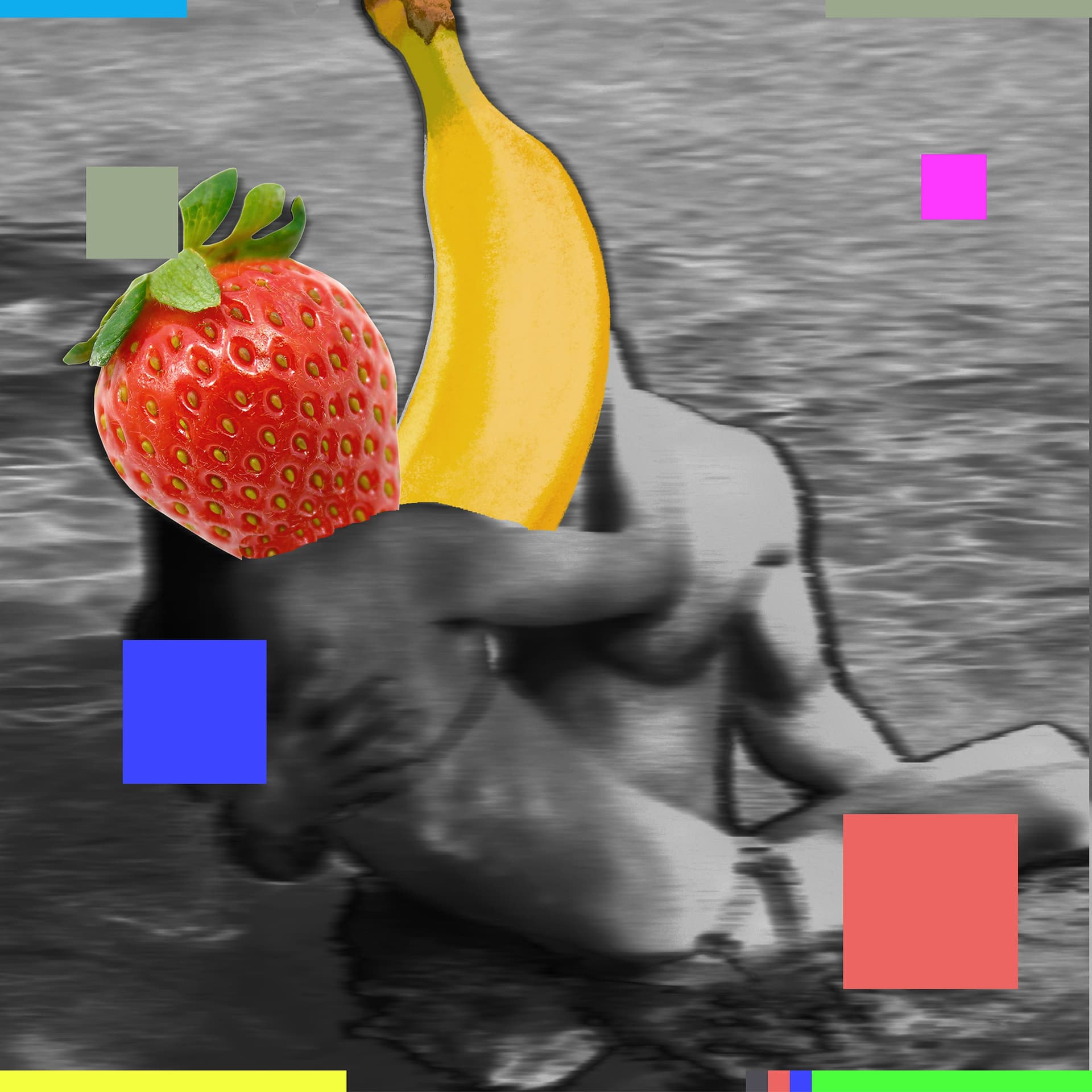

In short
The Interface discusses (1) the viral AI “Fruit Love Island” TikTok dating show and what it suggests about AI entertainment, (2) a major US court ruling that social media platforms were designed to be addictive, and (3) an FCC proposal to restrict foreign-made Wi‑Fi routers over security fears.
Guests
Thomas Germain and Nicky Wolff (Karen Howe absent). No external guests appear; they reference Toto Wolff as a separate BBC segment.
Guest backgrounds
Thomas Germain and Nicky Wolff are BBC podcast hosts; Nicky Wolff is Toto Wolff’s spouse (implied by the intro).
Key claims
Fruit Love Island hit 3.1M TikTok subscribers fast, then “crashed out” after removals and losing TikTok rewards. OpenAI shut down its Sora video platform and a Disney AI-video deal fell apart. US copyright won’t protect AI-generated works (human authorship required), enabling copycats. The addiction ruling may reshape social media liability beyond Section 230. Router restrictions could enable surveillance “kill switches,” though evidence is lacking.
Notable examples
Fruit characters (Bananito, Strawberry, pineapple/coconut heads), hypersexualized and more violent-than-Love-Island scenes; TikTok creator rewards removal; OpenAI Sora shutdown; Meta/YouTube/Instagram addiction lawsuit; FCC router ban; past ASUS router backdoor vulnerability.
Written by AI. May contain mistakes. Listen to the episode to check what was said.
Chapters
Tap a time to open that second in VOIntroduction to AI Fruit Love Island
1:20 to 1:40
Discussion begins on the phenomenon of AI-generated content on TikTok.
“Hello and welcome to The Interface, the show that decodes how tech is rewiring your week and your world.”
Viral Success of AI Fruit Love Island
1:40 to 5:20
Exploration of the rapid growth and virality of the AI fruit dating show.
“which is, why can't people stop watching AI fruit make out on TikTok?”
Violence and Misogyny in AI Content
5:20 to 7:50
Discussion on the themes of violence and misogyny in the AI-generated show.
“So it first comes out, there was a guy who started creating, who used AI text video to generate a series.”
Ethics and Algorithmic Influence
7:50 to 10:00
Discussion on the ethical implications of algorithm-driven content consumption.
“and you don't really have any control over that, right?”
The Future of AI in Entertainment
10:00 to 12:00
Exploration of the future trajectory of AI-generated content in entertainment.
“Like you can, if you're moderately successful at this, it can start paying your rent depending on, and like the rate that you get paid per video is different for different creators.”
Reality TV and AI: A Personal Perspective
12:00 to 14:03
Hosts share personal views on reality TV and the implications of AI-generated shows.
“In the United States, you cannot copyright AI-generated content.”
The Great Reality TV Debate
14:03 to 16:45
Explore differing opinions on reality TV and its impact on society.
“I am personally, I'm a huge fan of reality TV.”
The Rise of AI-Generated Content
16:45 to 17:41
Discuss the implications of AI-generated entertainment and audience preferences.
“But ultimately, the, you know, invention of fast food has not made restaurants obsolete.”
Social Media and Mental Health Lawsuit
17:47 to 19:14
Analyze a recent court ruling regarding the addictive design of social media platforms.
“Here's the thing that's also making them kind of optimistic, right?”
The Impact of Section 230
19:14 to 21:55
Understand the implications of Section 230 in the context of social media accountability.
“And this is, the reason that this is so huge is that for a really long time, there has been this thing called Section 230, which we've talked about before.”
Show all 15 chapters
Addiction and Social Media Usage
21:55 to 24:22
Delve into the complicated relationship between social media usage and addiction.
“And they argued that it's not just that you say one horrible video and it screws you up.”
Comparing Social Media to Tobacco
24:22 to 28:01
Explore comparisons between social media companies and tobacco industry practices.
“I know, Nikki, you've looked into this a lot.”
The Impacts of Social Media Lawsuits
28:01 to 30:45
Explore the implications of recent lawsuits against major social media companies.
“on its platform, that it hid the realities of that issue and chose not to make changes that would have protected its users.”
Future of Wi-Fi Router Regulations
30:46 to 33:07
Discuss the potential consequences of the FCC's router manufacturing regulations.
“Speaking of the internet, Nikki, how's your Wi-Fi router treating you?”
Security Concerns with Router Manufacturing
33:08 to 38:38
Analyze the risks and historical context of government control over router manufacturing.
“which is that America basically does not build Wi-Fi routers.”
Transcript
Automatic transcript. May contain errors.0:00This BBC podcast is supported by ads outside the UK.
0:30Singapore, where business events can create lasting impact. It's 2009 and we're in the German mountains. A man straps himself into a car on the world's most dangerous racetrack. He whispers to himself, It's time to put my balls on the dashboard. As he starts the engine. In 15 minutes, he's in an ambulance, unconscious. In 15 years, he's a billionaire. This is Toto Wolff, Formula One's most powerful team boss and the breakout star of Drive to Survive. This week on Good, Bad, Billionaire, how Toto Wolff made his billions. Listen wherever you get your BBC podcasts.
1:09The fruits all like fall in love and have sex with each other and cheat on each other. It's exactly like Love Island. Except it's quite violent. Hello and welcome to The Interface, the show that decodes how tech is rewiring your week and your world. I'm Thomas Germain. I'm Nicky Wolff. And sadly, Karen Howe is out this week, but this gives us a great opportunity, Nikki, to finally take over the show. I think we can go rogue here, really get something done, you know? And in her honor, we've got an AI story up first, which is, why can't people stop watching AI fruit make out on TikTok? Next, we'll be talking about whether or not this is big tech's big tobacco moment.
1:50And could there be a kill switch in your Wi-Fi router?
1:57all right let's get into it all right let's talk about ai video generation because there's been something that went extremely viral uh on tiktok which was a ai generated dating show called fruit love island which is based off love island which is a reality tv show format man-made horrors beyond comprehension just put some hot people in a villa on an island and give some challenges and have some create drama that way. This one got to 3.1 million subscribers on TikTok extremely quickly, like within a week. It's one of the biggest growing, most popular TikTok accounts of all time. It's all this AI-generated fruit falling in love with each other.
2:37It's really strange. It's really strange. We'll get into that in a bit more. But basically, the arc of how this has played out has really taught us, I think, a lot about where AI content generation is going to go. Because that's something that everyone is terrified of, AI content generation. In movies, in journalism, God help us, even in podcasting, right? Yeah, next it's going to be Fruit, the interface. And this is coming at a time when the business of AI generation is also going through a period of flux. Tom, you were telling me about the Disney Sora deal. Yeah, so this is, it's crazy. Over the last week, this AI-generated fruit reality show, really weird, it's hypersexual, we'll talk about it in a second.
3:29That has exploded. I think it's fair to say this is the biggest thing that happened in the world of entertainment in the last week. It just like took the world by storm. Every publication has been writing about it. The same week, OpenAI, the maker of ChatGPT, announced that it was shutting down this AI-generated video social media platform that they made called Sora. So you might remember this from a while back. They launched this app. It's sort of like Instagram, except every video is AI-generated and you can make your own AI videos. You can just scroll through them. They've shut that app down.
4:04They said that it had skyrocketed to like a million users when it was first launched, which is not that big in the world of social media apps. It dwindled down to like 500 ,000 users. And it's been losing money hand over fist, reportedly a million dollars a day they were burning up on this thing. The same day that they announced that they're shutting Sora down, they also said that this deal that OpenAI had made with Disney for AI-generated videos was also no longer going to happen. It's like a billion-dollar deal. Apparently, no money actually changed hands. That's fallen apart now. So in one week, the big AI-generated social media app shuts down.
4:46This big deal for AI-generated entertainment with Disney shuts down. But at the same time, the biggest thing on the internet is this AI-generated sexy fruit show that tens of millions of people are watching. So I think the question here is like, is this the future of entertainment? we're all going to be watching, you know, AI slop stuff? Or is this like a flash in the pan and this thing is just a meme? Let's go into more detail about exactly what happened with Fruit Love Island. Because I think the arc that it has taken is pretty illustrative of that question. So it first comes out, there was a guy who started creating, who used AI text video to generate a series.
5:29There were, you know, more than 20 episodes of it, of the arc. And it's literally just Love Island, but made by an AI that's about two, three minutes long. And it's fruit instead of people. You know, there's a pineapple lady. There's a coconut guy. They are incredibly hyper-sexualized. Yeah, can we talk about the characters? Like they have crazy names. There's Bananito is one of the big guys. Strawberry. And it's like a very hot body, a woman or a man. And then like their head is shaped like whatever fruit they are. And then the fruits all like fall in love and have sex with each other and cheat on each other.
6:12It's very, it's exactly like Love Island. Except it's quite violent. There's bits of... It's more violent than the real thing. It's more violent than Love Island. Two of them will make out and then one of them will get angry. and then quite viciously punch them. It's violent. It's weird. It's really strange. It's one of those things that starts off feeling harmless. And then the more you watch it, the more it starts to kind of borrow into your brain and you're like, mm-hmm. Yeah, see, that was not my reaction. The first time I saw it, I was freaking out. I was like, what has happened to us? What has our world become?
6:52Yeah. If you're used to AI slop, it's just more of that, right? You know what this kind of thing looks like. After it started to go hugely violent, the Biggest Watch episode got 38 million views. And it sparked off a fascinating conversation about the misogyny of its tropes. Some of it from the show itself and some of it from copycat shows. I need to be a copycat of the copycat. Right, so there's people who are making their own version of this because it's just AI. Anyone can do it. And some of those go very deeply into sex and violence and misogyny and all kinds of things like that. And it sparked this immediate kind of meta conversation about the kind of content that is being put in front of our eyeballs.
7:42Because on algorithmic social media, you watch maybe a few episodes of the main Fruit Love Island. And then the algorithm takes you through into the darker kind of places and you don't really have any control over that, right? And the visuals of it evoke, you know, Disney, Pixar, and even cartoons for even younger kids. They haven't explicitly said what age range it's targeted at, but it does seem perfectly designed for younger demographics and that does also seem to be the audience that they built. and that's what makes it so jarring when weird sexual references and violence are popped in. Right.
8:26I mean, the problem here could be, Nicky, that we're just too old. Is that why we don't get it? Like maybe if we were, you know, in our 20s, we'd be, you know, jumping up and down. We love Fruit Love Island. I don't know. I kind of have a hard time believing that, but maybe we're just curmudgeons. If you're a parent, I think there is good reason to be worried about both where this content goes and where the algorithm might take them next. Yeah, and I mean, also, like just for a second to think about, imagine we've got like a caveman transported. Maybe not a caveman, like my grandpa, right, comes back to life and listens in on our conversation.
9:05Like some of the weirdest words that have ever been thrown together in human language. But, you know, I heard a lot of people over the last week saying like, here it is, right? We've been talking about how the future of entertainment is AI-generated junk. And this is it. People are loving it. It's exploding. This guy's probably making tons of money. But simultaneously, I think the conversation about how horrible Fruit Love Island is was as loud or louder than the people who were actually enjoying it. It's this really bizarre... Right. Within one week, this thing went huge, global, megaviral. It's the biggest thing in the world.
9:42And then crashed out. Right. People really objected to this concept. And then in the last couple of days, the creator of it did a final post where he was like, basically, screw you guys. It was like, this is why we can't have nice things. Like you people hate AI. You're all AI haters. The way TikTok works is if you get a certain number of followers and you're making content that doesn't violate the rules and you live in the right country, they will add you to what's called like the creator rewards program, where you get paid based on the number of views that your videos are getting and like how people are engaging with it.
10:23Like, are they commenting a lot? Are they sharing it a lot? Are they watching the whole thing? Is it generating conversation? How much money can you make with that? You can make a ton of money, right? Like you can, if you're moderately successful at this, it can start paying your rent depending on, and like the rate that you get paid per video is different for different creators. It's all very complicated. There's not a lot of insight into how the rates are set. But you can make a lot of money. You can pay your rent with this thing. If you're huge, you can ostensibly make a pretty solid, nice, high income on this stuff.
10:58We don't know how much this Fruit Love Island guy was making, but people started reporting the videos. Half of the Fruit Love Island videos got removed from TikTok. and then this guy was kicked out of the rewards program so he's no longer making any money. We don't know exactly why, like what happened here, but some people are suggesting it might be because he was violating copyright. Love Island is definitely copyrighted. You can't just make your own version of that thing under any circumstances. Especially if you use the same name, right? It's called Fruit Love Island. That is not a difficult copyright case to argue.
11:38According to this guy, he says he was kicked out of the rewards program. He also said he was being bullied. Like people are so mean to him about how bad the fruit is. And they're done making this stuff. He's like not working on it anymore. Apparently is what he said over like the last day. But I think there's a more interesting question here, which is like, what is the future of entertainment? It all comes down to money, right? In the United States, you cannot copyright AI-generated content. To get a copyright for something in the United States, the thing has to have been made, it has to have been authored by a human being.
12:17That's really interesting. The Supreme Court has decided in the last month that if you use AI to make a thing, the AI created the work, not the human being, and therefore it is not copyrightable. So the Fruit Love Island guy, maybe he was violating Love Island's copyright, but also he can't protect the thing that he's creating. Hence the proliferation of all the other copyrights. Right. So anybody can go, you create an AI character, it's not yours, right? It belongs to no one, and then anyone can do anything they want with it. So we think about like what's going to happen with entertainment. There's been all this hand-wringing, and that's not to say there aren't any real concerns here, but it would be difficult to, you'd have to do some maneuvering to create intellectual property that you could protect here, which raises some serious questions about whether, you know, this whole idea that AI is the future of TV and movies.
13:15Like, well, is it? It's a little more complicated and difficult to make money here. Right. But also, you know, the real question that I have is like, does anybody actually want this? There's a lot of AI-generated content on social media. It gets a ton of views. But everything I've seen so far with like huge AI generated content on social media, it's all come down to like memes and trends. Is there something like long-term like entertainment business here that is happening or is worth doing for the people who would put in the work to do it? I'm really not sure about that. But I don't know. What do you think?
13:54Here's where I found myself weirdly optimistic after having watched several hours of fruit reality TV. I am personally, I'm a huge fan of reality TV. I think reality TV is its own art form. I'm sorry to hear that. I love it. And I will go to the wall on defending reality TV as a medium. We've got both sides of the spectrum here. You love reality TV. You've probably picked up on this by now. There's no joy in my heart. I can't. There's nothing that I like. Nothing makes me happy. I cannot stand reality TV. It makes me want to die. And I watch Fruit Love Island. And to me, I'm like, it's almost like indistinguishable from the real thing.
14:37It's like, oh, there's this manufacturer. Here's someone literally made it up and there aren't even real people pretending to have this controversy. You know, what is the difference? It's simply, let me give another example, right? We're basically at a technological point where give or take, We can create two football teams of robots or a meaningful football game-looking piece of content. But no one will want to watch it because that is not what people like sports for. That fundamentally misunderstands why people support a team, why people find sport important and engaging to watch. Even if it looks exactly the same, it's not going to be Man United beat Chelsea.
15:20It's not going to be Green Bay Seahawks. You know, you can apply this to any genre of human creation, right? We don't want to watch a fully AI-generated movie. This promise of tell the AI what kind of content you want and it will just provide it to you and there will be no place for art or competition or sport or editing just fundamentally misunderstands what people ultimately like art for. And what Fruit Love Island was doing was just at random jamming tropes together. Yeah. My prediction for what's going to happen. There are some people who aren't going to feel the way that you and I do. They're like, I just want to be entertained.
16:08I don't care what it is. I don't care who made it. And they'll just sit there and they'll watch it. To me, the question is, how is this going to split up the entertainment market? How many people will be satisfied with with slop and how many people will reject it and just want, you know, the more traditional human authored, like you can feel the person behind the camera or whatever it is, style of media. It's hard to say. But I think what we've seen with Fruit Love Island is a world where at least some of us are going to be happy with just the junk. and how big is it going to get? Yeah. But ultimately, the, you know, invention of fast food has not made restaurants obsolete.
16:55That's a great point. So maybe we're fine. Maybe there's nothing to worry about. I'm weirdly optimistic. I'm glad that there's some optimism. It's 2009 and we're in the German mountains. A man straps himself into a car on the world's most dangerous racetrack. He whispers to himself, It's time to put my balls on the dashboard. As he starts the engine. In 15 minutes, he's in an ambulance, unconscious. In 15 years, he's a billionaire. This is Toto Wolff, Formula One's most powerful team boss and the breakout star of Drive to Survive. This week on Good, Bad, Billionaire, how Toto Wolff made his billions.
17:31Listen wherever you get your BBC podcasts.
17:37And on that note, we should move on to another story that's making a lot of people in the, especially in the tech press, a lot of people who are interested in the power of big tech companies. Here's the thing that's also making them kind of optimistic, right? Tom, do you want to just tell us a bit about what happened in the past week? Yeah, so we talked about this on an earlier episode, but last week, a ruling came down in this big social media case where a woman sued Meta, the maker of Instagram and Facebook, Google, the owner of YouTube, and Snapchat and TikTok saying that they had caused her severe mental health crises because the platforms were designed to be addictive.
18:22And the courts ruled in her favor. TikTok and Snapchat had settled before the trial started. But the courts found that indeed, YouTube and Instagram and Facebook were designed to be addictive on purpose, that the companies knew that these apps were causing or could cause their users serious harm and chose not to do anything about that problem. And it has opened the door for what could be a brand new era of social media. Like, it's hard to say exactly how things are going to play out, but this could be the turning point, this trial. It could, in really dramatic ways, change how this business is going to operate in the future.
19:07There's thousands of similar cases kind of queuing up behind this. And there could be tens of thousands more. Yeah. And this is, the reason that this is so huge is that for a really long time, there has been this thing called Section 230, which we've talked about before. And what Section 230, which was a US law, is that it says that any online platform is not responsible for moderating every post that a user posts to it. Yeah, it's like if I post something horrible on social media that causes someone serious harm, or if I libel somebody or something like that, Section 230 says that as long as the platform where I posted is doing its due diligence, they're not responsible for the stuff that I posted I am.
19:58So what happened in this case is that the platform were responsible for the structure of the platform being addictive. And some critics have said that this is sort of like an end run around Section 230 by saying that these platforms were causing harm simply by using things like infinite scroll, notifications that were designed by psychologists. And this is well known, you know, the big platforms, especially MetaHead consultants, where they designed it to keep you on the platform as much as possible. Now, defenders of this will say, yeah, that's what a platform does. What else are they supposed to do?
20:43Where is the line where they have to stop being good to use? And the platform's position in this case was that the woman who sued them was traumatized by stuff she saw on the platform, but that they, as meta, weren't responsible for the content that traumatized them. There's a critic of this called Mike Masnick who wrote that if Instagram, if people only posted images of paint drying, it wouldn't matter how much infinite scroll there is. It would not be as addictive a platform. That the content that people post on the platforms is the important thing that traumatizes people. It's a really interesting argument.
21:27So in these lawsuits, the lawyers who were representing the woman suing these companies wanted to bring up all of this like horrible content that she was exposed to. And the judge said, absolutely not. The content itself, that's a Section 230 issue, right? Like Meta and YouTube and all these other companies, the judge said they're not responsible for what people are seeing. The case came down to, like you're saying, the structure of the platforms. And they argued that it's not just that you say one horrible video and it screws you up. It's that, for example, this woman had issues with eating disorders.
22:10And you can't say, oh, we're suing Metta because they showed me one eating disorder video. Instead, it's that it would feed you in this pipeline of eating disorder stuff. What Meta said is that teen mental health is profoundly complex and it can't be linked to a single app. And that is certainly true, right? Like part of the way that social media companies defended themselves in this case is they said that this woman had all kinds of horrible things happening in her personal life. And that's why she was having all this trouble, which is that certainly contributed to it. But in, you know, in case law, there's this legal theory called the eggshell plaintiff, right?
22:50The plaintiff being the person who's suing, where like, even if your product is safe for most people, if you encounter someone who is incredibly delicate and you cause them harm, you still caused them harm. So it's an interesting debate. I've heard a lot of people criticizing this whole thing being like, social media is not addictive. we're removing all questions about personal responsibility here. Like if you watch too much social media and it messes you up, that's your fault. Yeah. There's an argument to be made there. If you believe that everything comes down to personal responsibility and like if you misuse something, then companies shouldn't be held liable.
23:32I can't really argue with you. But what we do know is that in this case, the social media companies knew that there was a problem here. They did tons of research where they found that people were getting addicted to their platforms and they often used the word addiction. Later, they started calling it problematic use. Yeah. And that came up in the trial. Yeah. And this came up in the trial. There's all these documents where you can see the company saying we did these studies. We know that the way our platform is designed is hurting people. It's how and why this is happening. And they chose not to address it in order to pursue profits.
24:13We could have a debate about where the responsibility lies. But, you know, this question of can you get addicted to a social media app is an interesting one. I know, Nikki, you've looked into this a lot. Yeah, this is what this really, this case really turns on is this concept of addiction. Actually, I studied neurology and did a course, one of the classes I took specifically on the neurology of addiction. And one of the things that people maybe don't quite realize is that there is no set of perfect criteria for addiction that everything falls into, right? The reason that heroin is addictive is different from the reason that alcohol is addictive.
24:58And then you get into much more complicated things where there is a medical set of criteria for sex addiction. There is a medical set of criteria for things like that. There is not... Ambling. Yeah. But there is not in the current DSM, which is the list of... Official diagnoses. Diagnoses. Social media addiction is not currently in that. It is really, really difficult to say definitionally that addiction is exactly what we're talking about here. Because, and I messaged one of my old professors who was telling me that when something reaches certain criteria, and I'll read you what they said, which is when they impair on your healthy functioning life, increased anxiety, reduced self-esteem, etc.
25:54And abstinence from it can lead to withdrawal, then it's in the general area. Physical withdrawal and behavioral withdrawal are different things. No one has their phone taken away and pops a fever. You know, like having the most self described social media addict will not have a seizure if they lose their phone. So it's much more complicated than it at first seems because addiction does not simply mean you're doing something too much. And one of the things that several neurologists have written in terms of this is habit forming is a better way of describing it than addiction. Yeah, and you know, whether or not it's like clinically addictive.
26:46We know that that seems to be the way that the companies often think about it. I've got this document that came out about TikTok in the case where they like had to hand over, you know, stuff to the lawyers who were suing them. Here's a quote. Addiction is a primary reason people have a love-hate relationship with technology. And then a little later, this is arguably the most pervasive issue with popular online platforms and is associated with TikTok as much or more than anything else. So TikTok believed that some of its users were getting addicted. And whether or not you buy the whole addiction narrative, what we know is the companies themselves believe that, or at least some people at these companies believe that they were told by experts who came in to study that the way these platforms are designed is causing people to get stuck in these loops that lead to mental health distress.
Read the full transcript
27:42And this isn't the only lawsuit along these lines. Just before this case came down, there was another one in New Mexico where the court found that Meta had failed to protect users from child sexual predators, right? And sort of similarly, the jury concluded that Meta knew it had a child sexual abuse problem on its platform, that it hid the realities of that issue and chose not to make changes that would have protected its users. So a lot of people are comparing this judgment to what happened with tobacco, which was where they were found liable for causing people cancer, which unarguably they did.
28:26And that they knew about it, and then they were still putting their products after the harms. And this brought down, not fully brought down, You know, people still buy cigarettes, but it was a huge, catastrophic moment for that industry. And people are saying that that is what this could be for the big social media companies. And that it's representative of a growing dissatisfaction, even anger at these big companies for a lot of their business practices, including being designed to keep you on the platform, designed to be addictive, especially to young brands. that this might be a turning point moment.
29:06And especially if this judgment holds up, it opens enormous floodgates to other lawsuits. Even if we're just talking about the money here. In the New Mexico case, the penalty is$375 million. The woman who sued social media companies in California was awarded$6 million. You know, this is like pocket change that these companies might find in the couch, right? It's not that much money. But you have to remember that these are just individual cases. So the penalties could ultimately go up into the billions of dollars. It could be, you know, it could start to get to the level where it has like a serious effect on the bottom lines of these companies.
29:44Then they have to change their practices and do something to make the platform function differently. So they're protected from this legal liability. And that's where we could be entering a new world. I think there are two possible futures opening up. One is where ultimately this legal and regulatory battle goes the way of the tech industry and the protections are enshrined in law and they get to continue operating businesses as usual. The other possibility is the critics of big tech and social media could get their way and we could see some radical differences in the experience of being on these platforms.
30:19The way that they show you content, the way that these companies are allowed to do business. And this could be the moment that everything started to change because of this one little lawsuit where this woman successfully sued Meta and Google. Yeah, I don't think it's going too far to say that if this does make it to the Supreme Court, it will probably be the most consequential Supreme Court case for the internet that there's been. Certainly. I would say that's probably true. Speaking of the internet, Nikki, how's your Wi-Fi router treating you? Well, I mean, usually I use the BBC's own satellite, you know, magic internet.
30:59They sent you one because you have like, what is it, like a dial-up connection in your apartment? What's the deal? It's a British connection. It's basically the same speed as a dial-up connection. So might as well be dial-up. Well, no, actually, a lot of London's internet is very good. Islington's is not. It's just you. Do you know where your router was made? I don't. Well, it was probably made in Asia. And if you were living in the United States, this might start to be an issue at some point in the near future. So the Federal Communications Commission, which, you know, regulates like television and everything that's happening with like radio waves and it governs the internet.
31:34Music industry. Yeah. The FCC has just said that in the future, all routers made outside of the United States will be banned because of very serious security concerns unless they get like special approval from the FCC. So the router you have right now, which was almost certainly made in Asia, you know, no matter where you live, because you have it right now, you'll be fine. But the threat is that at some point in the future, you will not be permitted to buy a router made outside of the United States. I know probably people are like reaching for their phone to turn off the podcast, because it sounds so dull.
32:15But there's actually some really wild stuff happening behind the scenes here. And And I think the main concern that people are raising is if the government suddenly gains more control over how and where routers are manufactured, they could build back doors into these tools that could allow for more government surveillance or in a more dramatic scenario that we might be able to build a system in the United States where the government could choose to shut the internet off functionally altogether the way that we often see in other, you know, more authoritarian governments during periods of civil unrest.
32:57So this like little policy change about where your router is going to come from could ultimately have some serious consequences for your civil liberties. Now, there's one massive problem with this immediately, which is that America basically does not build Wi-Fi routers. Right, yeah. The only ones that are made in the U.S. are made for Starlink. They're made in Texas. Apparently, the routers are assembled in Texas. Yeah. They're kind of not an industry that exists at the moment. Right. They're going to have to start powering one up pretty quickly. Yeah. Or the FCC is just going to give allowances for all of them made overseas, and this is all just kind of Trump administration noise.
33:40Obviously, the Trump administration's been banging that China can do this, China can do that drum. all the time. Their strong implication is that China is putting backdoor hacking entrances into your Wi-Fi router. That is a thing that's happened before. Last year, there was an announcement that 9 ,000 ASUS routers were found to have a backdoor vulnerability. The implication isn't that that was built into them on purpose. Yeah, it was more like it was a problem. It was like a flaw. It was a vulnerability that then was found to be being exploited by hackers. It was quickly patched. Right. It wasn't like, it was an evil aces built in the system to help people spy on you.
34:22And there is no evidence that on some kind of massive scale, China is building backdoors into your Wi-Fi router. And there is no small irony to the fact that, as you're saying, Tom, by saying that there is this serious risk of backdoors being built into your routers, so we're going to have to make them here, meaning that the US government can put a backdoor or a kill switch into your router. That's the weird circularity of this story. Right. So, I mean, these are not necessarily hypothetical concerns in the sense that it is absolutely possible that you could build something into the hardware or the software of a router that would allow a very mean bad guy to spy on everything you're doing, you know, infect your computer, do all kinds of nefarious things.
35:15The sense to which this does appear to be hypothetical is the government has not presented any evidence that any of the router manufacturers are actually doing this. And the other thing is, you know, this is not a new idea. This has been a problem since Wi-Fi routers existed, that this is something that someone could possibly do. So why now are we banning these Wi-Fi routers? Like, did something change? If it has, the government hasn't presented any evidence to suggest that that's the case. And there are some very similar, you know, analogies that we could draw to other times that the Trump administration has banned or attempted to ban other technology products.
36:00So you might have heard, especially if you live outside the United States, one of the biggest phone manufacturers in the world is It's called Huawei. It's a Chinese company. They make all kinds of different technology products. They were banned during the first Trump administration from the United States because of similar concerns that. What if Huawei could build something into the hardware that we use in the US that would allow the Chinese government to spy on us? Same exact conversation with TikTok. During the first Trump administration, when they started this whole process to ban TikTok from the United States, there was this idea that, What if, because TikTok is owned by a Chinese company, what if the Chinese government is stealing all of our data or like pushing propaganda on us?
36:43We talked about this for years and years and years. The government never presented one single shred of evidence that this ever actually happened or that there was reason to believe that it would happen. Even in closed door meetings with members of Congress where the government laid out its argument, some of them came out and said, there's no evidence that this is a real problem. And then ultimately, TikTok wasn't banned. It was, you know, sold in part to a consortium of American companies, many of which have direct ties to the Trump administration. So some security experts are worried that this could be what's going on here, that it isn't really about the Chinese potential security concerns.
37:25It's that we're not even going to ban routers from the US. What we're going to do is they're going to say, well, we won't approve your foreign-made router unless you do X, Y, and Z. And X, Y, and Z might include secretly putting in a backdoor that would allow the U.S. government to spy on everything you're doing or switch off your internet entirely. So maybe that's something that you have to look forward to the next time you go buy a router to pipe that Wi-Fi throughout your home. The other irony here is that the U.S. government, in several cases, has sought to force technologies to put backdoors secretly into its technology.
38:05So this has happened in the UK and the US where the FBI was trying to force Apple to put secret backdoors into an iPhone so that they can unlock and get around encryption. In fairness, there is this kind of great game and that's what we see when the FBI is trying to get a secret backdoor into devices. Is that, to a certain extent, all of the security forces of all the big player nations do want backdoors into people's information devices. Absolutely. It's not crazy to think that. What makes this router thing... Router! See, now you're saying it right. I like that. What makes this router thing a little silly is that no other government, British government, Canadian government, you know, none of the other Five Eyes governments, none of the EU governments have in any way insinuated that there might be a Wi-Fi router problem specifically.
39:01Yeah. That's router, not router, Tom, just to be entirely clear on this. We're going to have problems with this, Nicky. I mean, you know you're saying it wrong, right? It's route 66, not route 66, man. I guess that's true. Mic drop. Yeah, all right. I win. I'm going to keep calling it router because it's correct. Thank you for listening to The Interface. We will see you again next week. We have one. Well, hopefully your Wi-Fi router won't be shut off next week, so you can listen to our next episode. And Karen will be back, which is something to look forward to. If you're in the UK, you can listen to us on BBC Sounds.
39:41Or if you're outside the UK, you can listen wherever you get your podcasts or just search for The Interface podcast on YouTube. If you want to get in touch with us, you can email us at theinterface at bbc.com or you can send us a message on WhatsApp. app. It's plus 44333 207 2472. Or if you want to follow us on social media, which I definitely recommend, you can find links to all of our handles down there in the show notes.
40:13It's 2009 and we're in the German mountains. A man straps himself into a car on the world's most dangerous racetrack. He whispers to himself, it's time to put my balls on the dashboard. As he starts the engine. In 15 minutes, he's in an ambulance, unconscious. In 15 years, he's a billionaire. This is Toto Wolff, Formula One's most powerful team boss and the breakout star of Drive to Survive. This week on Good, Bad, Billionaire, how Toto Wolff made his billions. Listen wherever you get your BBC podcasts.
From the publisher
Infidelity in the fruit bowl; why are so many people watching AI generated fruit fall in and out of love? In a week of contrasting fortunes — Fruit Love Island, the TikTok synthetic‑reality hit, goes viral while OpenAI’s text‑to‑video tool Sora shuts down - Tom and Nicky ask what our love/hate relationship with “AI slop” says about taste, humour and, yes, misogyny. And who actually earns money when the content pipeline is bots all the way?
Also this week:
After the Meta verdict: Is the Meta verdict Big Tech's Big Tobacco moment? In the first verdict of its kind, a US jury found Meta and YouTube liable for designing products that harmed a young user - potentially a huge moment for the social media industry. Nicky and Tom unpack what it actually means for the rest of us: what counts as “addictive” design; why plaintiffs are targeting features like infinite scroll, autoplay and algorithmic nudges rather than user‑posted content; and how legal appeals, copycat cases and potential product changes could reshape the social platforms we use every day.
The FCC has barred new consumer routers made abroad unless they win a security exemption - you can keep existing kit, but future models must be US‑made or cleared. We test the security claims, ask whether US firms have the capacity to build the hardware, and examine the unintended risks of centralising control - from market power to the spectre of a White House “kill switch”.
The Interface is your weekly guide to the tech rewiring your week and our world. Hosted by journalists Thomas Germain, Karen Hao, and Nicky Woolf, each episode unpacks, week by week, how technology is shaping all our futures. No guests. No jargon. Just three sharp voices debating the stories that matter — whether they shook a government, broke the internet, or quietly tipped the balance of power.
New episodes every Thursday on BBC Sounds in the UK. Outside the UK, find us on BBC.com or wherever you get your podcasts, or watch the video version on YouTube (search “The Interface podcast”).
To get in touch with the team: theinterface@bbc.com
The Interface is a BBC Studios production. Producer: Natalia Rodriguez Ford Executive Editor: Philip Sellars