
 Ask ChatGPT



Post-election fallout from the U.S.-Iran war, whether escalation will resume, and how diplomacy (Qatar-mediated) could end it; also Israel’s political reaction to U.S. Republican losses and shifting pro-Israel politics.
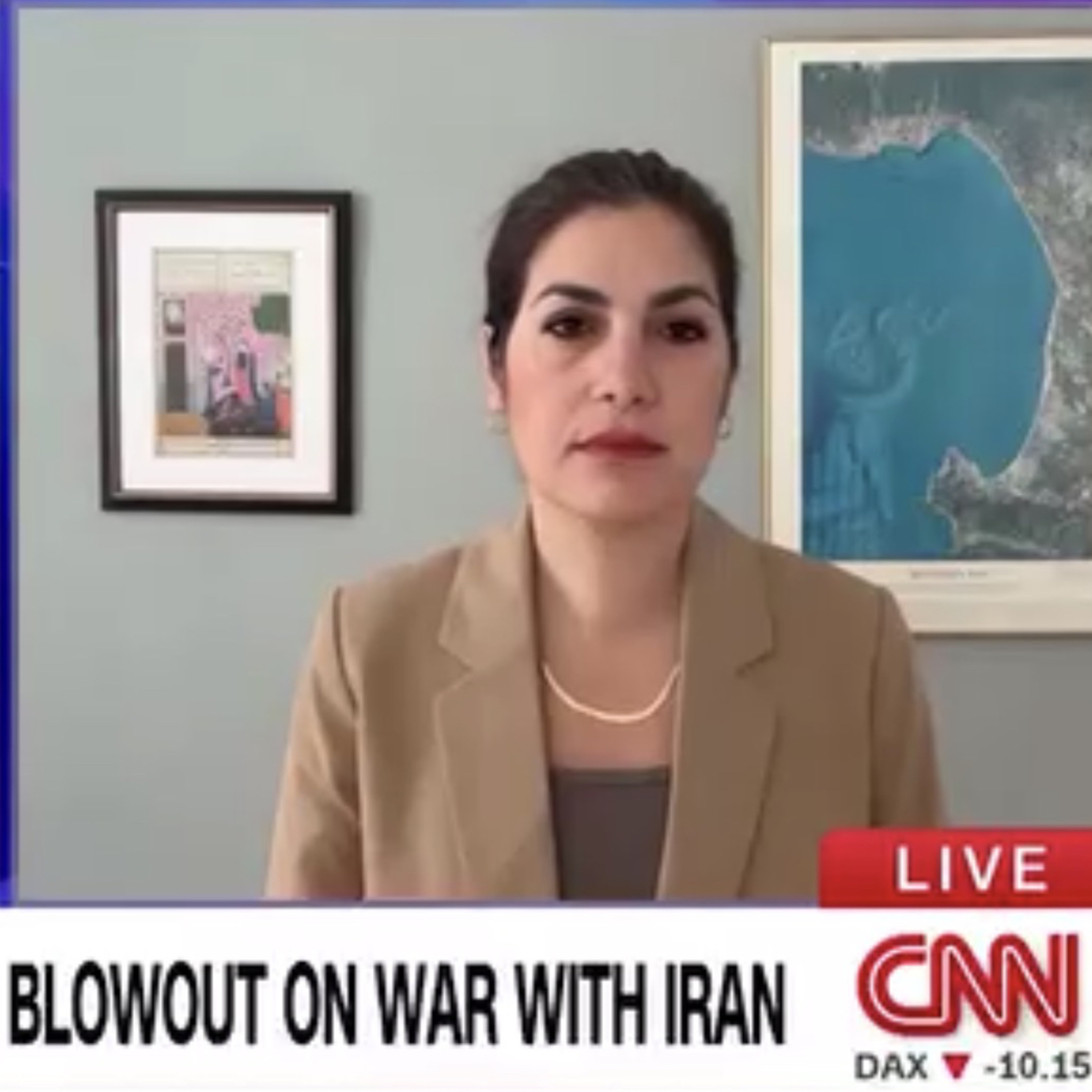
Stephen Collinson (CNN Politics senior reporter). Aaron Liebman (CNN Jerusalem bureau chief). Negar Mortazavi (Center for International Policy senior fellow; Iran Podcast host).
J.D. Vance’s public anti-war stance is framed as “throwing Trump under the bus” and as evidence Republicans lost because the Iran war hurt the economy. Tehran is portrayed as confident it helped bring down Trump’s party, while still seeking a negotiated end with “red lines” (seven points) and flexibility on timeline/sequence. Gulf states can’t stop escalation but urge diplomacy based on war “experience.” Israel is said to be politically preoccupied; Netanyahu and Shin Bet are alleged to be focused on election-fraud claims and internal turmoil rather than U.S. midterms.
Vance’s post mocked by Iran’s Mohammed Ghalibaf; Qatar mediation; possible House vote to impeach Defense Secretary Pete Hegseth; 2006 Rumsfeld resignation analogy; Trump’s shifting nuclear-term and Hormuz reopening timelines (60→30→7 days; reopening in two days).
Written by AI. May contain mistakes.
Analyzing how J.D. Vance's comments reflect Republican sentiment on the Iran war.
“You've said that Vance is throwing Donald Trump under the bus in that post.”
Discussion on the ongoing diplomatic negotiations and their implications.
“not in a domestic political sense, but more in an international sense, is we were all expecting the president to perhaps move ahead and reinitiate war with Iran after this election.”
Exploring how Iranian officials view the U.S. elections and their implications.
“And there is a sense that the kind of real heat and real concern about an attack by the US on Iran as early as this weekend may just have come off slightly.”
Examining Israel's political situation following the U.S. midterms.
“And we know he has been a voice against the war inside the administration, but he just couldn't win that battle at every point.”
Discussion on the fate of Defense Secretary Pete Hegseth amid political turmoil.
“But that, at least from Israel's perspective right now, just isn't the priority.”
Insights on the Gulf's perspective regarding potential U.S. escalation and mediation efforts.
“You'll remember, however, that that didn't really change the position of the United States in the Iraq war.”
Explore the political implications of the Iran War and potential diplomatic solutions.
“But he wants to come out of it with a big win, and the Iranians are just not letting him have that, and they just handed him a big political defeat.”
Understand how media can influence and mitigate escalation in conflicts.
“They're stepping up their game and doing everything they can to stop the next round of escalation, which will hurt millions across the region.”

Get the gist, explore an idea or ask about something said.
 Claude
On The Iran Podcast, what are the key points of this episode?
Searching your listeningAutomatic transcript. May contain errors.
0:00I want to bring in our panel to unpack where the U.S. and this region goes next. CNN Politics Senior Reporter Stephen Collinson, our Jerusalem Bureau Chief Aaron Liebman, and Negar Mortazavi, who is Senior Fellow at the Center for International Policy and host of the Iran Podcast. Good to have you all on board. Stephen, let me start with you. You've said that Vance is throwing Donald Trump under the bus in that post. I think a lot of people will agree with you. It certainly sounds like he's on the campaign trail for himself as president in 2028 already. So take us through both the politics of this and whether, you know, what what J.D.
0:42Vance has said is going to translate to actual policy. That is a willingness to end the Iran war, of course. Yeah, this really is a remarkable post that came out midway through yesterday morning in Washington and caused a huge stir simply because we all knew that J.D. Vance and his national, his nationalist and more isolationist instincts meant that he was less enamored of the Iraq war, of the Iran war than many others in the Trump cabinet. he's made that clear although he's actually been quite loyal to the president on the war in public but come out and basically argue that the war which was the president's sole decision was in itself the biggest trigger of this republican loss this spectacular political catastrophe that's before in the republican party is absolutely huge and as you say he clearly is trying to try to revive or to save his hopes of succeeding Trump in 2028, after the 2028 election.
1:56So this is really something that's quite extraordinary. The big question that poses to me, not in a domestic political sense, but more in an international sense, is we were all expecting the president to perhaps move ahead and reinitiate war with Iran after this election. When his vice president is on the record as saying that he is against that and there should be a diplomatic end to the war, that really fractures support for the war inside the cabinet. Take that together with the fact that one big clear message that the American people sent on Tuesday was that you want this war to end. So if Trump continues to pursue it, nevertheless, he's in an extraordinarily weak political position.
2:46It's interesting. I've been talking to sources around this region in the past sort of 36 hours. And certainly there's a sense here that while these sort of negotiations are ongoing, mediated by Qatar at this point, there is a window here and certainly an opportunity for diplomacy. And there is a sense that the kind of real heat and real concern about an attack by the US on Iran as early as this weekend may just have come off slightly. The risk calculus seems to have sort of reduced slightly, but still concern about escalation here in this region. Negar, one of Iran's top leaders, Mohammed Galibaf, mocked J.D.
3:34Vance, posting in response to Vance's ex-post, quote, Boss is prepping the next war phase while America teeters on an Israel-first cliff. Skip the TED Talk. Why not say this to your boss? It does give you a sense, Negar, of how emboldened Tehran is feeling right now, does it not? How do you read their position vis-a-vis talks or a possible renewal of this war?
4:06Certainly, Becky, putting this next to statements from other senior officials in the parliament, National Security Council and others all the way up to the leader. Tehran feels very confident that they played a key role in this major, major defeat, not necessarily to help the Democrats win, but to make sure they bring down the party of the president. This wasn't his election, but it was the closest it got to him. And essentially the economy, the state of the economy, which is a direct result of the war, is what brought this party down in this major defeat. And you hear that. It's reading between the lines or just very clearly in the statements of the Iranian officials.
4:46One other point I also want to make about the vice president. I mean, it sounds like he's abandoning a sinking ship, but he's the vice captain. I don't really know how this can be reconciled. I mean, his name is on the ticket. He will be in the White House until the end of this presidency. And we know he has been a voice against the war inside the administration, but he just couldn't win that battle at every point. Last year when the war started, June 2025, again this year, every step of escalation. He did try with the Islamabad talks. He went and met with the Iranian Speaker of Parliament. He delivered the MOU, but it soon unraveled.
5:26So I would say he hasn't really been a strong force inside the administration to stop the war, and that's part of the point here. Like, how much power do you actually have? But it's incredible, the rhetoric, to put it out there so publicly and just the day after the election. So all of this is being observed in Tehran. But the one message the Iranians are sending, I think, which is still important, is that they still want to end the war with a negotiated resolution. I don't hear reading between the lines of the statements of the Iranians that they're emboldened, thinking that they want to continue the war.
6:00But they're standing firm on their red lines and still, you know, insisting on their seven points and that diplomacy has to be meaningful with concessions. At the same time, showing some flexibility on timeline and sequencing. Yeah, that's fascinating and important stuff. Oren, let me bring you in at this point. We saw both J.D. Vance and Donald Trump take sort of big shifts, dare I say it, swings at the U.S. relationship with Israel this week, responding to the evidently successful attacks against AIPAC and Israel by many Democrats. How are these midterms being viewed in Israel?
6:46Well, it's interesting that Prime Minister Benjamin Netanyahu hasn't really issued a statement about the midterms at all, nor has he issued a statement about President Donald Trump saying he's going to cut off aid to Israel at the end of this year, nor has he issued a statement about Vice President J.D. Vance saying the U.S. relationship with Israel was part of the reasons Republican lost. What is clear here is that what just a few years ago was bipartisan support for Israel has now become exactly the opposite, bipartisan criticism of Israel. In fact, we spoke with former Israeli ambassador to the U.S., Michael Oren, just yesterday, who said it's one of the only positions that Republicans and Democrats have in common right now, which is criticism of Israel.
7:26And as the U.S. sorts out its own political future with a Senate and a House run very much so by Democrats, Israel is going through its own political turmoil. Netanyahu now claiming the elections were stolen without offering any evidence. His loyalist head of the Shin Bet trying to investigate Arab party leaders and prominent Arab politicians claiming there was voter fraud and foreign money influencing the election once again without presenting any evidence. So post midterms, Israel is trying to sort out its own political future right now. Netanyahu had been pushing Trump for a resumption of the war.
8:03it's unclear if he is still doing so. Perhaps he is, perhaps he isn't. But that, at least from Israel's perspective right now, just isn't the priority.
8:17Fascinating. All right, let's get back to Washington. Stephen, we are getting signals that Republicans are turning on Defense Secretary Pete Hegseth, suggesting he may get thrown under the bus at this point. What more can you tell us? And how do you how long do you think he can last? Well, for now, he seems to be remaining one of the president's favorite cabinet members. That said, there is expected to be a vote to impeach Hexeth in the House. This is the old House, the Republican run House that will reconvene for a lame duck session in the coming weeks. I think that tells you the extent of anger about Hegseth's role, including inside the Republican Party following this election defeat.
9:09And I think the election defeat may well swell the number of votes against Hegseth. A lot of people think he could well be impeached, although he wouldn't be convicted in a Senate trial. But then the question of whether his position has any credibility really does get raised and whether the administration would prefer him to resign and to some extent shield the president and be seen as a scapegoat for the way this war has been conducted. There is some precedence here. In 2006, the Republicans had a massive midterm election wipeout and then Defense Secretary Donald Rumsfeld resigned in the days afterwards.
9:48You'll remember, however, that that didn't really change the position of the United States in the Iraq war. In fact, shortly afterwards, President George W. Bush doubled down and did a troop surge designed to sweep ISIS out of Iraq. So that analogy may be, I think, only so good. But the issue here is, and I think one question to think about is, does President Trump now decide that this war was unsustainable and is unsustainable politically and looks for a way out? Or does he see the possibility that he could be one of those rare presidents who lose a war and everybody knows he lost that war? And when a president takes steps militarily to shore up their own political credibility and their legacies, that's when the US tends to get dragged deeper into conflict.
10:43So I think this is a very serious question that is facing the administration right now. Yeah, absolutely. Negar, trying to read Donald Trump's mind on whether or not he will actually pull the trigger on further escalation on Iran is, of course, a fool's game. So let's park that just for the time being. What is clear is that the Gulf is absolutely sort of laser focused on what happens next. As I say, Qatar still mediating behind the scenes. And even though I don't hear of any particular process, progress over the last sort of 24 hours or so, I mean, that mediation is ongoing. And there was a sense in the Gulf, as you speak to officials here, that we are going to be moving from this sort of, you know, this world, this era of confrontation at some point to somewhat of a sort of accommodation of Iran, whatever that looks like and whoever that is with when it comes to the regime.
11:50What's your sense at this point?
11:55That's right, Becky. I'm also just back from Doha and I had the same sense over there. I mean, let's not forget these regional powers of countries, some of whom are very close allies of the U.S., didn't have the power to stop this war. I mean, they lobbied President Trump before and they lobbied throughout the war to not do this because they knew they were going to pay a very heavy price. And they did. And they couldn't stop it. I mean, at the end of the day, Benjamin Netanyahu was the one who had the final say to convince President Trump to launch the war, to do more escalation, etc. But I think the difference right now is that the war has been experienced.
12:32So before it was threats, it was hypotheses, it was theories of what Iran would do. Now it's an actual experience. So the Gulf countries have this experience to show President Trump, look, this is what happened, this is what's going to happen, potentially even more. Because the Iranian signal is that they won't initiate the next escalation, but they're ready. And if it comes, they're going to respond even more forcefully than before. And I also think it's the economy. I mean, look, there's an election now, an election defeat handed to the Republicans. The vice president is coming out saying this is because of the war.
13:06Americans are feeling it at the pump, grocery prices. So the war has been experienced. It's no longer just people explaining to President Trump what would happen. It's an actual experience in front of him and not from long ancient history. This is just a few weeks ago, a few months ago. So, you know, reading his mind is very difficult. As you said, I'm not going to pretend like I can, but I'm hoping that the indications and the signs and the results of this war would have, you know, would bring some sense and some sanity to the decision making in the White House. I think there is not much more kinetic warfare that the U.S.
13:42can do with Israel that will change anything on the ground. It will just make things worse. Essentially, it would be a swamp that the president would be digging deeper. But I also agree with your colleague in Washington that he wants a victory. President Trump wants a victory out of this war, and that has been the problem. The ball is in his court. He started this war. He can end it today. He can end it tomorrow. But he wants to come out of it with a big win, and the Iranians are just not letting him have that, and they just handed him a big political defeat. defeat. And so the sooner that's understood in the White House, I think the easier it would be to move down a serious diplomatic path for a negotiated solution to the war.
14:25And one thing I want to add, the audience are showing some flexibility. The president just came out and said that they're willing to negotiate new terms on the nuclear program that wasn't discussed before. The timeline, the sequencing has gotten shorter from 60 days to 30 days to seven days. And now they're saying They're willing to reopen Hormuz in just two days, basically day after tomorrow of an agreement, understanding that President Trump has a very short attention span, no patience. So they're trying to work with him a little bit, but also standing firm on some of their red lines. And so, you know, it has to be meeting somewhere halfway, concessions on both sides.
15:01And the role of the media is very, very important. They're stepping up their game and doing everything they can to stop the next round of escalation, which will hurt millions across the region. Yeah, absolutely. It's good to have you and appreciate you all standing by. Thank you very much indeed for joining us.
Negar Mortazavi on CNN with Becky Anderson