
In short
Episode Notes: The Jordan Harbinger Show - Episode 1013: Big Dairy | Skeptical Sunday
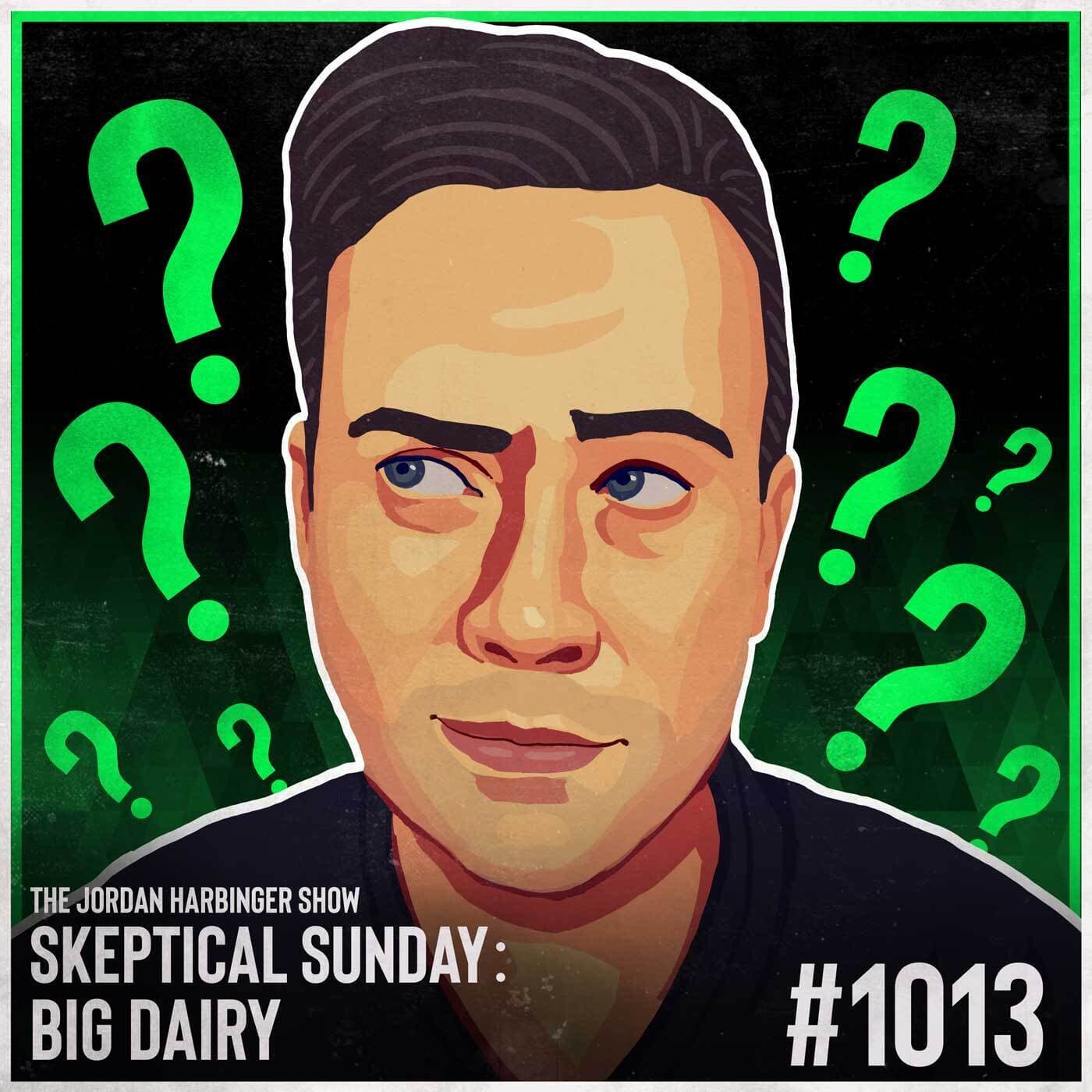
Episode Overview In this episode of The Jordan Harbinger Show, titled "Big Dairy," host Jordan Harbinger is joined by comedian and skeptic Michael Regilio to discuss the controversial aspects of milk consumption and the dairy industry. The episode delves into the history of milk, the marketing tactics employed by the dairy industry, and the implications for health and policy.
Key Topics Discussed
- Milk Consumption and Lactose Intolerance
- Historical Context:
- 65% of the global population has reduced ability to digest lactose.
- Many populations, including South Koreans and those in Africa and Asia, have high rates of lactose intolerance.
- Evolutionary Shift:
- Northern Europeans developed lactase persistence due to necessity, allowing them to digest milk into adulthood.
- The Dairy Industry's Influence
- Government Support:
- The dairy industry has been heavily subsidized by the government, leading to an artificial inflation of the dairy market.
- School milk programs and marketing campaigns (e.g., "Got Milk?") have promoted milk despite health concerns.
- Raw Milk Risks:
- Raw milk poses serious health risks, including diseases like typhoid and tuberculosis, which pasteurization helped to mitigate.
- Nutritional Alternatives
- Alternative Sources:
- Calcium and other nutrients found in milk can be sourced from almonds, figs, kale, tofu, and sweet potatoes.
- Health Misconceptions:
- Recent studies suggest that excessive milk consumption may lead to health issues, including an increased risk of fractures and certain cancers.
- Dairy Marketing and Myths
- Misleading Advertisements:
- The dairy industry has historically manipulated nutritional science to promote milk as essential for health.
- Claims are often exaggerated, e.g., milk being marketed as necessary for strong bones.
- Environmental and Ethical Concerns
- Environmental Impact:
- Dairy farming contributes significantly to greenhouse gas emissions and environmental degradation.
- Ethical Issues:
- Dairy cows are often subjected to inhumane treatment, being repeatedly impregnated and separated from their young.
- Ongoing Issues and Myths
- Raw Milk Movements:
- The episode discusses the ongoing raw milk debate, including the "food freedom" movement advocating for unregulated raw milk sales despite health risks.
- Skepticism Towards Dairy:
- The hosts express skepticism about the necessity of dairy in diets, especially considering alternative nutrient sources.
Key Takeaways
- Dairy Is Not Essential: Milk is not a nutritional necessity, and many alternatives can provide necessary nutrients without the associated health risks.
- Critical Thinking on Marketing: Listeners are encouraged to think critically about food marketing, especially regarding health claims about dairy.
- Awareness of Environmental Impact: Understanding the environmental consequences of dairy farming is crucial for informed dietary choices.
Conclusion This episode of Skeptical Sunday encourages listeners to rethink their dairy consumption habits and consider the broader health, environmental, and ethical implications of the dairy industry, while emphasizing the importance of informed choices based on scientific evidence.
---
Connect with Jordan Harbinger
- [Twitter](https://twitter.com/JordanHarbinger)
- [Instagram](https://www.instagram.com/jordanharbinger)
- [YouTube](https://www.youtube.com/c/THEJORDANHARBINGERSHOW)
Connect with Michael Regilio
- [Twitter](https://twitter.com/Michaelregilio1)
- [Instagram](https://www.instagram.com/michaelregilio/)
- [Podcast](https://www.michaelregiliocomedy.com/podcast)
Additional Resources
- [Full show notes and resources](https://jordanharbinger.com/1013)
Written by AI. May contain mistakes. Listen to the episode to check what was said.
Transcript
Automatic transcript. May contain errors.0:00What can 160 years of experience teach you about the future? When it comes to protecting what matters, Pacific Life provides life insurance, retirement income, and employee benefits for people and businesses building a more confident tomorrow. Strategies rooted in strength and backed by experience. Ask a financial professional how Pacific Life can help you today. Pacific Life Insurance Company, Omaha, Nebraska, and in New York. Pacific Life and Annuity, Phoenix, Arizona.
0:32Welcome to Skeptical Sunday. I'm your host, Jordan Harbinger. Today, I'm here with Skeptical Sunday co-host comedian Michael Regilio. On the Jordan Harbinger Show, we decode the stories, secrets, and skills of the world's most fascinating people and turn their wisdom into practical advice that you can use to impact your own life and those around you. Our mission is to help you become a better informed, more critical thinker. During the week, we have long-form conversations with a variety of amazing folks, from spies to CEOs, athletes, authors, thinkers, and performers. On Sundays, though, it's Skeptical Sunday, where a rotating guest co-host and I break down a topic you may have never thought about and debunk common misconceptions.
1:08Topics such as circumcision, sovereign citizens, diet supplements, the lottery, Reiki healing, ear candling, self-help cults, and more. And if you're new to the show or you want to tell your friends about the show, I suggest our episode starter packs. And these are collections of our favorite episodes on persuasion, negotiation, psychology, disinformation, cyber warfare, crime and cults, and more. and it'll help new listeners get a taste of everything we do here on the show. Just visit jordanharbinger.com slash start or search for us in your Spotify app to get started. Today, milk. It does a body good, or so we're told.
1:39From the picturesque imagery of grazing cows on green pastures to the cartons of milk on our grocery shelves, there's a story being sold. Americans are taught, in order to grow up big and strong, we must drink our milk. But is that true, or is it the big and strong dairy industry that's controlling the narrative? What impact does this dairy have on our health and the environment? And today, skeptic and comedian Michael Regiglio is here to give us the utter truth about dairy. Hey, Jordan. Well, what do you think about milk? Like, a glass of milk. Personally, as an adult, the idea of drinking a big, tall glass of milk kind of grosses me out.
2:14I mean, a big, tall glass of milk? I actually drink a ton of milk pretty much every day, but it does have to be cold or it starts to just be kind of icky. Yeah. I mean, I used to love it. My mother wouldn't allow me to have sugar cereals like Froot Loops, but she would allow me to drown cereal in as much milk as I wanted and then sprinkle a little sugar on top. When she wasn't looking, I would spoon enough sugar onto my cereal that the milk couldn't absorb anymore, and I'd just slurp it up. I loved it. Yeah, that sounds absolutely disgusting, actually. Yeah, okay, fine. I went a bit nuts. But it's normal for human children to drink milk in some form.
2:52If our ancestors could see us now, what they'd think is gross is adults drinking milk. Children are born with an enzyme called lactase to digest milk. Our early ancestors lost the ability to digest milk after childhood. Adults literally couldn't drink the stuff. Look no further than the huge number of adults today who are lactose intolerant. That used to be everyone. Drinking milk made adults sick. So way back when, you basically knew your childhood was over when milk gave you the shits? Okay. Yeah, pretty much. But some humans chose to suffer through the barfing and diarrhea, such as Northern Europeans, who needed to drink milk through the winter or they'd starve.
3:34So diarrhea or die, basically. Yeah. The harsh winters in Northern Europe left them little choice. Other groups surviving on milks were nomadic tribes in the desert and the people of India. But milk drinkers were not the norm. Through necessity, they forced their bodies to adapt. They forced the hand of evolution to produce a genetic mutation to allow their bodies to break down milk well into adulthood. About 6 ,000 years ago, European farmers became lactase persistent. They, as well as other groups, could now digest milk for life. So lactase persistent is basically the opposite of what lactose intolerant?
4:14Yeah, exactly. Got it. Okay. So milk for life for them, but many other groups couldn't deal with that, I take it. Right. In fact, close to 100 % of South Koreans are lactose intolerant. That number kind of blew my mind when I heard it, but it's totally true. Milk is not a universal food. Digesting milk is just a thing some descendants of some people can do because their ancestors forced themselves to get sick or starve. So it's a noble, that explosive diarrhea Korea is a noble tradition, apparently. Yes, you could say that. In fact, places where close to 100 % of the population is, I guess, normal, or that is to say can't digest milk, include Ghana, Malawi, Yemen, and just about all of Asia.
4:57Overall, about 65 % of the human race has a reduced ability to digest milk. Here in the U.S., the groups that have a high percentage of lactose intolerance are Asian, Native, and African Americans. Descendants of Northern and Central Europe, on the other hand, are only about 5 % lactose intolerant. Okay, so white people basically can digest milk. Yeah, well, among other groups. But yeah, white people have been digesting lactose for a long time. The problem for milk drinkers back then was even if you could digest the stuff, you better do it quickly because you sure couldn't digest it for long. Milk goes bad crazy fast.
5:35In order to store it longer, our ancestors learned to take enzymes called rennet from a cow or sheep or goat's belly and mix it with milk. Group photos would never be the same because this process led to the invention of cheese. Wow. That was clever enough that I'm going to let it go. So pretty sure we had yet to invent group photos. So the cheese lasted longer without going back. Well, actually, before we get to that, I have to say I'm still hung up on the 100 % of Koreans are lactose intolerant thing. because Korean food is one of the only Asian foods that has cheese on stuff, right? They have cheese on corn.
6:10There's these like big, I forget what it's called, but it's basically this giant pan full of chicken and rice and stuff like noodles, whatever. And they throw cheese on that. And it's like, okay, so are they just dealing with that? I wonder. I want to hear from our Korean fans. Do you all take an enzyme? Is it a different kind of cheese that doesn't trigger you? Or is everyone just kind of like, you know what? This is tasty enough where I'm just going to have to go home immediately after this and tomorrow's going to be rough. That's what I want to know. I'm curious about that. So just to be clear, I've looked it up.
6:39I said close to 100%. I saw 90 % on a different forum. I'm now seeing up to 75 % of older Koreans have been able to ingest lactose. It's lactose intolerant, lactose resistant. There's varying degrees of it. And it is a good question. It is a good question. Yeah. I mean, there's plenty of Americans that are lactose intolerant. And it's not like ice cream has a hard time being sold around here, or milk for that matter. That's why we're talking about it right now in cheese. So I guess people just either deal with it or take a little pill or have upset stomach all the time and have no idea why. Okay, so cheese lasted longer without going bad.
7:16And it sounds almost like that's the point. The point of cheese was to store milk for longer because otherwise you would die in the winter. Yeah. Well, also butter and yogurt, they also lasted longer. And by creating cheese and yogurt, people could store dairy much longer. They would oftentimes store them in caves or dark places. I mean, they had stuff worked out. And as a result, cows became important, even sacred animals. Many cultures' folklore reveres cows and milk. The Fulani of West Africa believed that the world started with a single drop of milk. There's a Norse legend where a cow made from thawing frost gave milk to the world.
7:53Yeah, very scientific. And the Bible describes the Promised Land as a land of milk and honey as well. That's kind of all I know about that. Yeah. Well, to ancient Hebrews, milk is one half of the ingredients of paradise. I mean, milk was luxurious to many, but not to everybody. The Romans, on the other hand, saw milk as low status because it was the drink of farmers. Julius Caesar was appalled at how much milk was consumed in Britain. Japanese Buddhists didn't get milk at all and called Europeans butter stinkers. I mean, nice dig, but these are the people that brought us natto or fermented soybeans, which smell absolutely horrible and tastes like something that you might put in your car's engine.
8:33So I don't know if they have any room to talk. Well, the truth is, it's odd that anyone was drinking milk at all, since raw milk was really dangerous. It is really dangerous. Milk is a breeding ground for bacteria that has killed lots and lots of people. But despite this fact, yeah, people just kept drinking it. How good is this milk if it was literally killing people and folks were just like, you know what? I'm willing to take the risk. Hit me again. Make it a double. Yeah, it was super dangerous. But in my research, I did find one example of a group where milk didn't kill them, but gave them kind of superpowers.
9:06OK. In the 1800s, people noticed that milkmaids. So these are women that milk cows? Yes. No milk men. Look, you'd think guys were kind of born to do this and had a lot of practice by the time they were teenagers.
9:23Uh, yeah, the milkmen came later. Anyway, in Europe in the 1800s, ladies milked the cows, and it was noticed that milkmaids were pretty much immune from smallpox. Oh, yeah, that is pretty awesome, especially because smallpox is, well, continue. I don't want to interrupt you too much. Yeah, no, trust me. It was totally awesome. If you were in Europe in the 1800s and you could become immune to one thing, you'd want it to be smallpox. It was quite literally the plague. Yeah, it must have been good to be a milkmaid. Maybe they didn't know they were immune. They just didn't get it, which is still really good.
9:55Maybe you didn't sleep as well at night, but at least you didn't get smallpox. Yeah, well, soon that would be the case for everyone because physician Edward Jenner developed a vaccine and he based his research on the idea that milkmaids were immune to smallpox because they had all been exposed to cowpox. And by modern standards, his research was wildly unethical, but it was effective. Oh, really? So wildly unethical how? I mean, he invented a... Oh, no. This is going to be gross, isn't it? Yeah. Well, he deliberately infected an eight-year-old boy with cowpox. Then he exposed the kid to smallpox and the kid didn't get smallpox.
10:29Okay. Well, at least it worked. But it is absolutely insane to think that a scientist would just willingly kind of try to infect a child with smallpox. If you Google smallpox, by the way, folks, it is absolutely horrifying what it does to the body. If you're listening to this on your lunch shower, do it later because it's really, really gross and sad. Yeah. And it wasn't just one kid he did this to. He did it to a bunch of kids, including his own son. Father of the year. He concluded that exposure to cowpox provided immunity to smallpox. Yeah, man, if you're going to expose your son, you better be right.
11:03I mean, I guess if you're going to experiment on kids at all, the best case scenario is that the treatment actually works. So I don't know, good for him and good for humanity, I suppose. For sure. And good for everyone because smallpox wasn't going to kill you anymore, but raw milk still would. In 1858, a newspaper in New York ran a story about Brooklyn and New York dairy distilleries, calling them, quote, milk murderers who had distributed liquid poison. So that seems, well, it seems like clickbait, melodramatic BS headlines were a thing even back then. But was milk really that dangerous? Look, I mean, it may have been hyperbole, but It read, quote, for the midnight assassin, we have the rope and the gallows.
11:45For the robber, the penitentiary. But for those who murder our children by the thousands, we have neither reprobation nor punishment. Strong words. All right. So what was going on with the raw milk? Okay. So these milk producers were churning out what was known as swill milk, which came from feeding cows the worthless byproduct of grain distillation. Basically, the mash used to make booze. When the grain was used up by the spirit distillers, they'd feed it to cows. It was low grade and lacked any real nutrition. The cows were also kept in unsanitary conditions. And as a result, they produced a weak bluish milk.
12:23The milk producers would try and hide the blue color and watery texture by adding chalk and other stuff. And then they'd sell the swill milk as, and this is true, quote, pure country milk. That is super disgusting. So people were feeding chalky booze, alcoholic cow milk to their kids and it was raw. So there's just all just whatever kind of gross germs are in there. And that's literally killing children, which no surprise, I guess, at that point. Right. Yeah. And it wasn't just in New York. Unhygienic facilities were like Petri dishes cooking up diseases like typhoid and tuberculosis, which created a public health crisis that led to skyrocketing infant mortality in cities pretty much everywhere.
13:05Oh, milk. Milk, it does a baby bad. Yeah. And it wasn't until Louis Pasteur and the process of pasteurization that milk became safe to drink. Okay. So I think everyone's heard of Pasteur. He came up with germ theory. Everybody thought he was crazy. And he's the guy who's like, hey, maybe wash your hands before you reach into a pregnant woman to get a child after you've touched a corpse or whatever. Yes. Yeah. That's kind of basically the idea, right? Yeah. And Pasteur understood that microbes in milk made people sick. So he invented a process in which milk was rapidly heated and cooled to kill the deadly organisms.
13:39Right. So pasteurization, which we all know, it says that on the carton, even today. Yeah. It also says homogenization, which is another thing, which is where basically before homogenization, the cream would always rise to the top and you'd scrape off the cream on your milk. Homogenization is a process where milk is forced through like fine fiber cloth that basically makes it consistent. And that's why you no longer have to scrape the cream off the top of your milk. That said, pasteurization, right. And by the way, it worked so well that today you can drink all the spoiled milk you want. I have drank spoiled milk.
14:14I put it in coffee and thought, this coffee is terrible. And then when I had my second cup and a chunk fell out of the carton, I realized, oh, maybe it's not the coffee. Yeah. So when you come back from vacation, you should just go ahead and don't rely on sniffing the milk because if it's only a little bit spoiled, you got to taste it. So I guess it won't hurt you because I didn't puke. Right. No. Pasteurized milk can be totally spoiled and totally safe. The pasteurization is so effective at killing all the microbes in milk that even if it spoils and stinks and looks clumpy, it's safe. Few things are as safe as milk.
14:44You can drink spoiled milk or you can drink spoiled pasteurized milk totally safely. I'm not interested in testing that again, so I'm going to go ahead and take your word for it. But again, you know, sample size one, fine. It didn't kill me. You know what won't give you explosive diarrhea and or kill your children? The fine products and services that support this show. We'll be right back. Don't forget about our weekly newsletter, Wee Bit Wiser. The idea is to give you something specific, something practical, something that will have an immediate impact on your decisions, your psychology, your relationships in under two minutes, making Wee Bit Wiser pretty wee.
15:16If you haven't signed up yet, I invite you to come check it out. It is a great companion to the show. JordanHarbinger.com slash news is where you can find it. So does that mean that we have solved the poison milk problem that we once had in America? Of course not. We're Americans. We prioritize everything above our health, and pasteurized milk was thought to be flavorless. People didn't want it. So people understood that raw milk could literally kill them and their children, but they kept drinking it because they preferred the taste? That, well, I was going to say defies logic, which it does, but also is kind of on brand.
15:54Yeah. I mean, ever met a cigarette smoker or a fast food junkie? We do it all the time.
16:02And it wasn't just the general public. Government officials were openly critical of pasteurization. In the early 1900s, Harvey Wiley, director of the U.S. Bureau of Chemicals, was on record saying pasteurized milk lost all its nutritional qualities. So is there any truth there? I mean, I'm pretty sure milk still has vitamins in it. But yeah, for sure. I looked it up. It loses a little B2. That's about it. There's another conspiracy theory about our health. Again, kind of peak America. Although you expect, I just thought that was a new thing for America, not something we've been doing for centuries.
16:32No, no, no. It's American is apple pie as conspiracy theories. In fact, a government official spouting off about a conspiracy theory. That's very America 2024. And rather than drink safe pasteurized milk, this is so crazy. a medical milk commission was set up to certify raw milk. The commission identified healthy cows and clean dairies and then would certify the milk as safe. So was it safe then or what? No, no, it didn't do much for the mortality rate of children at all. In fact, this is so sad. The founder of the group watched his son die of milk poisoning two years after he set up the commission.
17:10Oh, that's awful. The poor guy. I mean, poor kid, but also that poor guy. Just that's awful. Things had to change and an awareness campaign was launched to try and get people, particularly young mothers, to switch to pasteurized milk. There were shops set up where women were invited to see how pasteurization worked firsthand and then they could buy that pasteurized milk really cheap. It certainly sounds better than poisoning your children. Plus, also, is it just me or would a tour of how they pasteurize milk be kind of cool? Maybe I'm just a big nerd, but I would check that out. In fact, interestingly enough, one of the popular things to do was to buy a home pasteurization kit, and the mortality rate among children was cut in half.
17:49Society women took on the cause, and the International Pure Milk League and the Mothers Club were formed. People were slow to the notion of not drinking poison, but progress was made. Then, in 1908, Teddy Roosevelt had his Surgeon General issue a report that stated childhood mortality rates were directly linked to unpasteurized milk. It's crazy, but even in the report about why you should drink pasteurized milk, there were complaints about the taste. It was presented to the public like it might taste bad, but it's necessary. I'm going to be honest. I kind of want to try some raw milk at this point, because just how good is this stuff where the president's like, hey, I know it's not going to taste as good.
18:30And also people are like, you know what? I'm still going to do it because freedom. And I don't care if my kids die. This stuff tastes delicious. How good are we talking about? Like what's in this dang milk besides cholera and typhoid. Right. I mean, we'll see. But what you just said has echoes of what's going on with raw milk even today. So raw milk must have tasted so good that five years after that government report in 1913, another large typhoid epidemic hit New York City. And this was because people were still drinking contaminated raw milk. Well, New Yorkers are known for being stubborn and putting up a bit of a fight.
19:05You got to give that they're consistent. Yeah. Well, in fact, they put up so much of a fight that at one point there was something called the New York Milk Wars. Farmers were pissed at the distributors, so they organized spilling committees. They would block off roads and spill out hundreds of gallons of their own milk. I feel like calling things like that a war is a little hyperbolic. It's more like a milk melee. I'm assuming they spilled their milk to what, reduce the supply and drive up the price? Or am I overthinking this? Nope. Nope. Bingo. That was it. Milk was becoming big business and everybody wanted a piece.
19:37Well, I guess, is this the beginning of big dairy? Is this why we call it big dairy? Yeah. I mean, well, it gets much bigger as we'll see, but dairy was drinking its milk and growing up big and strong. In the early 20th century, the industry saw the first new threat to their livelihood. And that was the threat from margarine. Threatening margarine, delicious. What is it called? Hydrogenated oil. Is that basically what that is? Yeah, that's basically what it is. Yum, yum. And dairy needed to convince people to stick with butter. And so came the first of many industry scientific studies. And for the record, I am air quoting, these biased studies concluded that milk was not just good for you, but essential for your health.
20:18So milk went from being something that no adult could even drink without barfing or having diarrhea to being essential for everyone. And that's quite a comeback for milk. Yeah. The industry saw a good marketing angle and they ran with it. In fact, it was in studying milk in 1913 that scientists isolated the first vitamin, vitamin A. Vitamins were discovered by the dairy industry? That's surprising somehow. Yes. And this newfangled vitamin A was in milk. So now you had to have milk or no vitamin A for you. You have to have this thing that we just discovered like five minutes ago. That's some solid marketing.
20:53I'm going to give them that. And let me guess, that worked because everyone's like, if you heard about vitamins, you can only get it in milk. They don't exist anywhere else. Exactly. It worked brilliantly. And then the dairy industry did something to change the American experience forever. In 1915, they formed a council, the National Dairy Council. I have heard of that. That still exists, right? Yeah. It's a huge player in American politics and daily life. They have always made sure milk was equated with health. One of their dairy industry-sponsored studies states that milk, and this is what it says, quote, quote, corrects dietary deficiencies and is the greatest factor for the protection of mankind.
21:35Okay, whoa. Drinking milk is suddenly, it's pretty high stakes. Putting the future of mankind on the line. This sounds like something you'd hear about a Marvel superhero movie. Yeah, exactly. They portrayed milk as a cape wearing superfood, a superfood that was about to get another big boost with an unlikely ally, Kaiser Wilhelm II. So this is one of the German leaders before Hitler. I don't think it was like right before Hitler, but whatever. So, okay. Unlike most superhero movies, that was kind of an unexpected plot twist, actually. So what does Kaiser Wilhelm II have to do with milk? Well, debatably, he started World War I.
22:15And during that war, to keep the soldiers healthy, the American government turned to the dairy industry and its new inventions, powdered milk, and condensed milk. These new versions of milk could last just about forever and were easily stored and could be readily sent to the front lines. It made Uncle Sam the dairy industry's biggest customer. Big dairy got bigger. In fact, many farmers walked away from their crops and switched to dairy. It was a literal cash cow. But okay, World War I eventually ended. So didn't things kind of just go back to the way they were before the war? No, no. Okay. No, because there was suddenly way more milk than demand.
22:53And the government and the dairy industry together, working together, made like a really strange move. They decided that instead of making less, they would convince everyone in America to drink more. So the government got in bed with just one industry for the sake of supporting that industry? It's so weird. I mean, particularly the Department of Agriculture, the USDA, they decided to promote all things dairy. It doesn't sound very capitalistic. Like, hey, invisible hand of the market, we can see you. Yeah. Questionable science was used to put out official reports recommending children drink four glasses of milk a day.
Read the full transcript
23:31Big dairy was getting really fat with the government's help. So when the Great Depression hit, new laws were actually passed subsidizing big dairy. Nowadays, what do we say? Too big to fail dairy, I guess? Exactly. And in 1940, the first federal milk program for schools was made. the government implemented a system that put a carton of milk in every student's hand, while Uncle Sam put his thumb on the scale for big dairy. In 1946, Harry Truman signed the National School Lunch Act. In it, three types of lunches were prescribed for schoolchildren, and every lunch included milk. This all makes sense.
24:07My parents were so strict about me drinking milk with dinner, and I could have as much milk as I wanted. And if I finished my milk, they would pour me more milk. This is like every day of my young life. Milk for breakfast, milk for dinner, probably no milk for lunch unless I got it at school. But now it all makes sense because I was just like, how healthy is this stuff? And this is quite a windfall because if every lunch includes milk at school, and I remember there was like a milk cart and you would go and get the milk out of this thing. Was there a provision about everyone getting a bologna sandwich or whatever?
24:37Were they trying to make kids get protein or is it just milk? No, no. There was nothing for big deli, just for big dairy. The government said, whatever you serve, serve it with milk. Man, that's a fat government thumb on the scale then. Right. And we need to understand that the USDA's mission statement reads, quote, to help rural America thrive and promote agricultural production. It's right there in black and white. The USDA is looking out for more than just us. They're out to help American agriculture. The problem is the USDA is the government agency that makes dietary recommendations, and they're putting out recommendations using our tax dollars that don't necessarily have our best interest in mind.
25:17I feel like they should make that better known. Like when you see the USDA stamp on food, it should say the USDA approves you consuming this product because it helps someone's bottom line regardless of its effect on your health. Because when you see that, you're kind of like, oh, this was inspected for safety and quality, Not like, oh, this is directly subsidizing somebody who should probably be doing something else with their time and money and effort, but we're giving them a check. Yeah. Right. That's crazy. Yeah. In fact, during the recession in the 1970s, the government stepped in to help the dairy industry again.
25:51This time it was Jimmy Carter. And he bailed out the dairy farmers to the tune of$2 billion. That's 1970s money. Oh, wow. So$2 billion in 70s. That is a lot of bell bottoms in cocaine. Actually, adjusted for inflation, that's about$11 billion in today's money, or$11 billion in what, Lululemon tights and, well, yeah, well, still cocaine. Yes, cocaine is timeless, Jordan. Actually, I mean this literally and metaphorically. That's a lot of cheese. Jimmy Carter bailed the farmers out by buying up the surplus, and just like thousands of years ago, dairy keeps a lot longer in the form of cheese. So the U.S.
26:33government bought millions of pounds of cheese. What? So do we have like some great cheese reserves stashed away under a mountain next to some like nuclear warheads or something like that? Well, it's ridiculous. Yes. Yes, we do. The cheese was stored in giant warehouses and caves. But here's the thing. Even wrapped up in caves, that cheese wasn't going to last forever. And by the time Ronald Reagan was president, it was close to its expiration date, which, Which, by the way, expiration dates are bullshit, as most of us know from Skeptical Sunday episode 646 on expiration dates. But this cheese was actually really nearing the end of its run.
27:13So what did the Gipper do with all that cheddar? Well, Ronnie went all Marie Antoinette and he said, let them have cheese. But then he actually did it and he gave away all the cheese to the poor. Okay, not a bad Reagan imitation. So that's where the phrase government cheese comes from. I always thought that was an urban legend or some kind of jokey phrase from the 80s. I had no idea that that was actually a real thing, because I guess I've never seen it in a store or whatever. Well, I don't know if you can get government cheese in the store because it's just given away for free. But government cheese wasn't, to be clear, the government coming up with a benevolent plan to feed the poor.
27:50It was about as noble as somebody saying, hey, before I throw out this 200 million pounds of food that's been in my fridge for six years, I don't know, do you want it? So did people actually want it? It sounds kind of gross when you phrase it that way. Yeah, well, cheese actually was a huge hit. Government cheese became a cultural phenomenon. At one point, the U.S. government was buying up one quarter of the cheddar cheese in the whole country. I did not realize the extent to which the government was inflating the cheese market. So it seems like Americans are just going to subsidize big dairy forever from the sound of it.
28:23Well, I mean, in fairness, we're also subsidizing big oil, big pharma, all the bigs. And as such, the supply and demand for dairy are out of whack. So again, rather than the market correct itself, the government and the USDA decided to again convince people to drink more. Enter the 90s. In 1990, Congress passed the Fluid Milk Protection Act to promote the sale of milk and to allow collective advertising for generic milk. What do you mean, generic milk? Got milk? Didn't that ad ever strike you as strange? Like, milk? What milk? Whose milk? Just milk? I mean, what other industry so successfully just advertises the general idea of their product?
29:07I mean, I've never seen a got car commercial. Yeah, that's right. There's no enjoy any brand of soda today, adds. Good point. I had not thought about that. I do, however, remember cheese, glorious cheese. You remember those? Yeah, in fact, glorious indeed. And it's all from the same thing. The Fluid Milk Promotion Act stated, fluid milk products are basic foods and are a primary source of required nutrients such as calcium and otherwise are a valuable part of the human diet. The act mandated that fluid milk products be readily available and marketed efficiently to ensure that the people of the United States receive adequate nourishment.
29:49And so we were all told we need more milk in magazines and TV ads and by celebrities with gross looking milk mustaches. Oh, yeah. The milk mustache ads. Kind of gross. Very catchy and fun at the time. And your favorite celebrity was for sure in there. One of my favorites was the Garfield one because, well, actually, some of them were super cringy. If you have time, y 'all, look up Got Milk and look for like the Dennis Rodman one or the Serena and Venus Williams one where you're just going, who approved this? This is just bizarre. Yeah, I hate to say it. Alex Trebek comes to mind. It was kind of gross.
30:27I mean, a milk mustache on a real mustache. What is gross for$10 ,000, Alex? Again, the USDA was directly involved in all those advertisements. Those were partly our tax dollars selling us big dairies products. And this wasn't just the same old milk they were pushing on us. In 1993, the artificial bovine growth hormone was approved by the FDA. These new dairy cows were getting roided up, so to speak. They were super cows. Super cows. I don't really want my dairy cow to be genetically altered, unless we're damn sure that that's not going into the milk. Yeah, the artificial bovine growth hormone is banned in Canada, and the EU, by the way.
31:08Yet here in the U.S., the FDA concluded that the use of the artificial hormone and the use of additional antibiotics that would accompany the growth hormone due to the fact that it causes a painful inflammation of the udder do not pose a risk to human health. Speaking of bell-bottoms and cocaine, now it's time for a word from our sponsors. We'll be right back. Thank you for listening and supporting the show. Your support of our advertisers keeps us going. All the deals, discounts, and ways to support the show are all in one searchable and clickable place, jordanharbinger.com slash deals. Now for the rest of Skeptical Sunday.
31:44That's really gross. So they take, I remember this is BGH. I remember this being a thing in college and people were like, you don't want BGH in your milk. There's this thing in your milk. And it's banned in Canada and the EU, which is never really a good sign when all of our sort of fellow Western countries are like, hey, you should really not use this stuff. And we're kind of like, ah, it's not that bad. That's never really a good sign. And then they just give the cow additional antibiotics, which is probably also not great because the BGH makes their udder, which is where the milk is, folks, in case your biology isn't up to snuff, because it gets all inflamed.
32:17I just, ugh, that's gross. And even recently, I was reading about how much bird flu they're finding in the milk. I mean, it's dead flu, but it's, ugh. And also, just pus milk comes to mind. Looking back, it seems strange they put all this advertising and cajoling behind milk, but I never thought about it in the moment. Like you said, milk's just not that great. Most people don't drink it, but big dairy is more than just milk, right? I mean, you mentioned cheese before. Right, exactly. And by the way, the industry was getting that message too. Even during the 90s Got Milk campaign, consumption of milk declined, which is why big dairy made the big switch from pushing milk to pushing cheese.
32:54The Got Milk campaign partnered with the Run for the border ads and the stuffed crust pizza promotion and the summer of cheese parties. Right. Stuffed crust pizza. That was, I think, Pizza Hut. Run for the border was Taco Bell. Summer of cheese. What was that? Do you remember that one? So, yeah, no, that was also Pizza Hut. And their big summer of cheese promotion led to them using 102 million extra pounds of cheese. Oh, Mike. Think about how much that is. So they were already using however many million pounds of cheese for their pizza and then summer of cheese, they're like, ah, we need 102 million extra pounds of cheese.
33:31So the government partnered with the fast food industry, which I kind of didn't see coming, but also doesn't come as a huge shock. But that is pretty damning proof that they never really gave a crap about our health, right? If they're now pushing chalupas and stuffed crust pizza, this is, they've lost the plot. Right. Well, I mean, to be clear, the USDA partnered with the Dairy Council. Dairy Council partnered with the fast food restaurants. I see. It's a little more convoluted than it's that the government partnered with them. It's that the Dairy Council pays everything into this fund, which is controlled by the USDA for the advertising.
34:06And by de facto, the USDA is putting their stamp on these ads pushing milk and cheese. And then the Dairy Council goes and partners with the fast food industry. And it's one hand washing the other. just want to be clear about that. Yeah, that's a good clarification. Yeah. And so gone are the got milk ads replaced by the super cheesy fast food ads. I mean, we've all noticed that a bunch of food chains have gone all in on the cheesiest, most loaded, dripping triple cheese products. They're not just shoving cheese into the crust. They're shoving cheese into us. Taco Bell, in partnership with the dairy industry, came up with a quesadilla with eight times more cheese than anything else on their menu.
34:46Domino's increased cheese by 40%. If fast food could stuff something with cheese, they were going to stuff it with cheese, all because Big Dairy wants to move more product and the milk ads weren't cutting it. I'm surprised there's no cheese stuffed cheese, which I'm not going to lie, that sounds really awesome and I would definitely eat that. Yeah, I actually looked into that and I did find cheese stuffed cheese, but in fairness, it was only at one restaurant in Wisconsin. Yeah, that makes sense. Yeah. In my research, I also found that an aficionado of cheese is called a curd nerd. Catchy. Yeah.
35:20And then my skepticism, I was like, I bet the term is another manufactured trick by the industry to just get us to go for more dairy. Big dairy is pushing dairy everywhere. Everywhere. Domino's has a program getting their products into thousands of schools. Oh, my God. That's terrible for kids. That's probably worse than milk, getting pizza into school, especially Domino's pizza. and now you're just eating cardboard with cheese on it. Come on. Yeah, I mean, in a way, none of it should be served in schools because let's talk just for a minute about the actual nutrition in milk. It's not special.
35:53You can get calcium from almonds, figs, kale, tofu, collard greens, and sweet potatoes. You can get protein from any number of foods as well as vitamins. Milk is not essential. It's an option and maybe not even a good one. New studies show that drinking too much milk for teenage boys can increase the risk of fractured bones. How was that possible? How can it increase the risk of fractured bones? I thought we were all drinking milk because it builds strong bones and all that stuff. That was like the core of the 80s ad campaign for us. No, we're drinking milk because an industry found a good marketing angle about strong bones.
36:30But the fact of the matter is that this is through meta-analysis of multiple studies. it's showing that there could be a correlation between not just young men, teenagers drinking too much milk, and then later in life having a higher risk of fractured bones, particularly hips. But the meta-analysis is also showing that there could be a connection between too much dairy can increase prostate cancer in men as they get older. Oof. Yeah, increase the chances of prostate cancer as they get older. And in women, too much dairy in the formative teenage years can lead to breast cancer, they think. Wow.
37:03So not just teenagers. There's basic, it sounds like nobody should be drinking large amounts of milk, which kind of is scary for me because I drink large amounts of milk. Right. Large amounts. Yes, that is a true statement. And by the way, not if they want good skin, because milk has been shown to increase acne by 24 percent. So teenagers are told to drink milk every day and it causes acne and later on might ruin your bones and give you cancer. The acne thing, at least, it kind of explains my high school years. Yeah, well, yet milk programs still make up a huge chunk of the money spent by the government on dairy.
37:35Here's the thing. Poor communities have higher percentages of students with lactose intolerance. So the kids, the food programs are meant to benefit. They can't even drink the stuff because a lot of them are lactose intolerant. That's a good point. I didn't put that together. There are pills that kids can take if they really want it. And we're still buying and distributing government cheese, by the way, and sending it to schools. I had no idea. The USDA lunch program is very dairy heavy. Of the three components of a school breakfast, one of them is milk and another could be partially dairy. Your breakfast could be sugary flavored milk, sugary flavored yogurt, and a sugary cereal with milk.
38:12Oh, man, that sucks. So it's like dairy and sugar with dairy and then some more sugar with dairy and then some crappy empty carbs with dairy. And by the way, a lot of sugar reminds me of when you were a kid and you dumped that bag of sugar in your cereal. Still gross, by the way. Right. But so take my word for it. I get it. Here's the thing. There's no limit on the amount of sugar you can serve to a student during the day. There are limits for fat and sodium, but not sugar. In fact, just this week, the USDA announced that despite pressure to limit sugar and ban chocolate and strawberry milk, they were leaving sugar in schools unrestricted.
38:50That's gross. I didn't even know that they were serving strawberry milk. We had chocolate milk when I was younger, but it wasn't super sugary. Well, maybe it was. It didn't taste as bad as today's sugary chocolate milk, like the stuff my kids like. Strawberry milk just sounds vile, by the way. I'm not even down to... No, I got to fight you on that one, man. Really? I love it. Oh, really? Strawberry Quick, disgusting and delicious. Oh, Quick is so, oh man, oh man. I forgot about Quick. That's some nostalgia that I just don't need. All right, so it seems like all this is because the government didn't know what to do with dairy farmers after World War I, which just boggles the mind.
39:30It's like, should we break the news to these guys that they need to switch crops? It's like, no, let's just throw billions and billions of dollars at the problem. Health consequences be damned. Yeah, it's tough to put the genie back in the bottle. But one thing is for sure. Kids' health should be decided by current good science. I cannot agree more. I mean, milk isn't as essential to a growing body as we once assumed. Certainly strawberry chocolate milk and cheese stuffed cheese curds or whatever are not either. Yeah, well, it's not so great for the planet either. Cows produce a lot of greenhouse gases.
40:04Big dairy is responsible for more greenhouse gases than every airplane combined. I had no idea it was that much. That's a lot of cow farts, man. Yeah. A lot of cow farts. Dairy farming can also degrade water sources and destroy ecologically important lands. Plus, there's the treatment of the cows themselves. Dairy cows are impregnated over and over again, separated from their young, and slaughtered the minute they're no longer productive. I personally can't get over the ethical implications. Yeah, it doesn't sound like dairy has, by the way, I did not know that. That's really horrifying. I knew dairy cows took BGH or whatever and gave a lot of milk.
40:40I didn't know they were impregnated a bunch and then slaughtered when they weren't productive. That's extra gross. It doesn't sound like dairy has a lot of upside. I mean, it's an easy way to get protein and make shakes, which is why I drink it all the time, every day. My kids also, gosh, they won't eat freaking anything, but they love drinking milk. So I feel like I'm kind of stuck with it for now. If I want to, you know, feed my kids some nutrition. Yeah. Hey, look, I hear you. I mean, to some, it tastes good. In fact, this is going to blow your mind, but the raw milk wars continue to this day.
41:13People still insist on raw milk. And guess what? It's still dangerous. That was my next question. I was like, well, surely they've made a way to make it not kill you by now. But I did read about a government raid on a farm that was selling raw dairy. And I think it was quite nearby. And they were selling it at farmer's markets or whatever, like places you can easily get it. It's not like drugs where you got to know where to go. You basically go to the farmer's market and you go to the milk guy and you're like, hey, you got any of that raw stuff? And he pulls it out from one of the folding table.
41:42Yeah. I mean, there's been a bunch of raids. And the one that you're talking about that was nearby, there was a case of a farmer in Fresno who would drive down to my hometown of Los Angeles. and he said he would go to a back alley by Venice Beach and he would be mobbed by hundreds of people coming for the raw milk and that they would drink it on the spot. Like just he would sell it to them. They were throwing the way he put it in the article. He's like they were throwing 20s at him without even asking for change and just grabbing bottles of raw milk and that's vile sucking it down, man. Dude, on Venice Beach on like a 90 degree day.
42:16Right. And Venice Beach is disgusting, folks these days like cool neighborhood but like it's pretty gross and i can't imagine going there and being like oh look there's a guy in an alley selling something that you can drink that's maybe dangerous go there and get it before it sounds like you know what that scene you're telling me about right now you ever see requiem for a dream where that there's no more heroin and the guys with the masks open up a truck and the junkies all come up and they need their fix and they're throwing money in and they're throwing these little baggies that that's that's what this sounds like.
42:45Wow. I mean, it's disgusting. It's a bunch of people. There's an Amish farmer in Pennsylvania. He was famous. His farm was famously raided. And now he's become sort of a folk legend, a hero, because it's actually turned political or ideological or philosophical. These people are kind of intense. It's now called the food freedom movement. Food freedom? In the land of cheese stuffed cheese, what freedom are they fighting for? Come on. The right to get sick as hell, of course. Food freedom fighters, it's a mind-boggling argument they make, but they point out that you can buy raw chicken, raw eggs, and raw meat, but not raw milk.
43:23They want their raw milk, which, by the way, as I said, is still totally dangerous and can still get you really sick. But no one's eating raw chicken. Not on purpose. Right. I mean, you can also buy crystal Drano and drink it if you wanted. The fact that, But look, all it takes is one online article about how raw chicken tastes better and has more nutrients. And then we'll have the raw chicken eaters. I assure you, it's coming. Do you remember the social media trend with the NyQuil chicken? Do you remember this? No. I think it was a gag, but people were still doing it. It was like how to cook a chicken in NyQuil.
44:00It was just one of the grossest things I've ever heard in my life. And I hope nobody actually did it. But it sounds like there's a new campaign coming, though. Like, got death or got listeria, maybe? Yeah, I mean, who knows? Maybe Big Dairy will see the demand and jump into the raw milk market again. But maybe my tax dollars won't have to fund it. Jeez. Yeah, right. I mean, Big Dairy will forever milk the system. Bad pun aside, that sure seems true. Oof. Yeah, I mean, the catchphrase was got milk, but the only thing that was got was us. It sure sounds like it. I have to assume we're the only species that drinks milk that isn't from our own mothers or even from a member of the same species, which is weird if you think about it.
44:47Yeah. And well, unless you count cats who drink the saucers of cow's milk, humans give them, which you shouldn't do because cats lose the ability to digest dairy in adulthood like normal mammals. So, yeah, in conclusion, I guess humans are weird. Humans are weird, but if you're looking for a good grift, go and get some milk, regular milk, and put it in weird jars, and go down to Venice Beach and say that it's raw, and you're not going to hurt anyone because you're selling pasteurized milk and have people literally throw money at you while you run out of mason jars of good old 2%, or maybe use 4 % so that people think it's the real deal.
45:27Ugh. I mean, can you get in trouble? Is that fraud if you tell people that, if you feed people a safe product and they think they're getting something illegal? Who's going to report that? I don't know. I don't know. This is not legal advice. Maybe don't actually do that, but it seems like a pretty good grift, if you ask me. I would say the corollary would be the guys that were selling bags of oregano and saying it was weed. Like, what was the punishment for them? Well, thanks, Michael. I got to run. I'm going to head to Venice Beach today. Totally unrelated. Thank you all for listening. Topic suggestions for future episodes of Skeptical Sunday to Jordan at JordanHarbinger.com.
45:58Show notes at JordanHarbinger.com. Transcripts are always in the show notes. Advertisers, deals, discounts, and ways to support this show, all at JordanHarbinger.com slash deals. I'm at JordanHarbinger on Twitter and Instagram. You can also connect with me on LinkedIn. You can find Michael Rogelio at Michael Rogelio on Instagram. Tour date's up now as well for that comedy, and we will link to that in the show notes because, as always, nobody can spell Rogelio. This show is created in association with Podcast One. My team is Jen Harbinger, Jace Sanderson, Robert Fogerty, Ian Baird, and Gabriel Mizrahi.
46:30Our advice and opinions are our own, and I am a lawyer, but I am not your lawyer, so do your own research before implementing anything you hear on the show. Also, we may get a few things wrong here and there, especially on Skeptical Sunday. If you think we really dropped the ball on something, definitely let us know. We're usually pretty receptive to that. Y 'all know how to reach me, Jordan, at jordanharbinger.com. I'm ready, Michael, for the people who are like, raw milk's not that bad. Here's why. Look, I'll read that email because I don't, I don't know. Maybe it's not that bad. Here's why.
46:56But it sure sounds like it at least used to be really bad. Remember, we rise by lifting others. Share the show with those you love. And if you found the episode useful, please share it with somebody else who could use a good dose of the skepticism and knowledge we doled out here today. In the meantime, I hope you apply what you hear on the show so you can live what you learn. And we'll see you next time. You're about to hear a preview of one of my favorite stories from an earlier episode of the show. My friend Steve Elkins found a lost city in the jungle that most people never even knew existed.
47:26I'm not even kidding. It sounds insane. This has to be one of the most incredible stories I've ever recorded on the show. I know you're going to love this one. The legend of Ciudad Blanca, or White City in English, goes back probably 500 years to the best of my knowledge. People have believed that there is this civilization out there. And the local indigenous people have their own legends. It has about five different names of which I can't pronounce. About this culture, this civilization that lived out in the jungle at one time. One of the other monikers for the city in current times is Lost City of the Monkey God.
48:03Maybe there's some truth to this legend. I kind of felt there was something to it. The Mesquitea jungle where it's located in the eastern third of Honduras is one of the toughest jungles in the world. and by accidents of geography and history, it's remained pretty much unexplored until recently. I have a map made by the British in the 1850s, and on that map, it says Portal del Inferno over that part of the jungle, and it was called the Gates of Hell because the terrain was so tough. A lot of people have gone looking for it. Some went in, and some never came back. A director friend of mine introduced me to a guy named Captain Steve Morgan, And he was a lifelong adventurer, explorer, treasure hunter, raconteur.
48:46Nice guy, really pretty smart. And I said, let's go. And in 1994, we headed out to Honduras for an unknown adventure looking for the lost city.
49:03For more with Steve Elkins, including the details on how they discovered the city and made one of the most important archaeological discoveries of the century, check out episode 299 of The Jordan Harbinger Show.
49:19This episode is sponsored in part by Conspirituality Podcast. You know how I'm always talking about critical thinking and spotting manipulation? Well, there's a podcast that's all about dismantling New Age cults, wellness grifters, and conspiracy-mad yogis, basically the wild overlap of spirituality and misinformation. It's called the Conspiratuality Podcast. The hosts, a journalist, cult researcher, and a philosophical skeptic, dive deep into how this stuff spreads, from Project 2025 and the Heritage Foundation's dystopian vision of the future to how former leftists get pulled into far-right conspiracies.
49:52An interesting episode to check out is called Speaking Truth to Goop, where Jen Gunter breaks down the pseudoscience behind the wellness industry in a way that is super entertaining and eye-opening. It's sharp, funny, and makes you a lot harder to fool, which if you listen to the show, you know I'm all about that. From exploring cults to analyzing our cultural and political landscape, the Conspirituality Podcast will help you stay informed against misinformation and resist fear tactics. Find Conspirituality on Apple Podcasts, Spotify, and wherever you get your podcasts. This episode is sponsored in part by the Something You Should Know Podcast.
50:22Finding a great new podcast can feel like searching for a needle in a haystack. Let me save you some hassle. Check out Something You Should Know with my friend Mike Carruthers. Every episode is packed with fascinating insights that you can actually use. Mike interviews top experts on topics that shape your life, like how to optimize your brain chemistry, the best and worst ways to apologize, probably could have used that recently, why couples hate to talk about money. No matter the topic, Mike asks the questions you'd want to ask, getting straight to the good stuff, and the conversations are always engaging, always insightful, guaranteed to leave you a little smarter than before.
50:50They've got thousands of five-star reviews, but do you even need that? I'm recommending it. You don't need other people's opinion. right at this point i would hope anyway give it a listen just search for something you should know wherever you get your podcasts look for the bright yellow light bulb and start listening to something you should know
From the publisher
Big Dairy's impact on health and policy is udderly shocking. Michael Regilio milks the truth from this cash cow of an industry on Skeptical Sunday!
Welcome to Skeptical Sunday, a special edition of The Jordan Harbinger Show where Jordan and a guest break down a topic that you may have never thought about, open things up, and debunk common misconceptions. This time around, we’re joined by skeptic, comedian, and podcaster Michael Regilio!
On This Week's Skeptical Sunday:- Milk consumption by adults has not been natural for most of human history. About 65% of the global population has reduced ability to digest lactose, with some populations experiencing nearly 100% lactose intolerance.
- The dairy industry, with government support, has heavily promoted milk consumption despite questionable health benefits. This includes school milk programs and marketing campaigns like "Got Milk?"
- Raw milk can be dangerous, potentially causing diseases like typhoid and tuberculosis. Pasteurization made milk safer, but the dairy industry initially resisted it.
- The US government has repeatedly subsidized and bailed out the dairy industry, including buying surplus milk and cheese. This has led to an artificial inflation of the dairy market.
- Good news for the lactose averse: there are many alternative sources for the nutrients found in milk. People can obtain calcium from foods like almonds, figs, kale, tofu, and sweet potatoes. By exploring these options, people can make informed dietary choices that align with their health needs and preferences.
- Connect with Jordan on Twitter, Instagram, and YouTube. If you have something you'd like us to tackle here on Skeptical Sunday, drop Jordan a line at jordan@jordanharbinger.com and let him know!
- Connect with Michael Regilio at Twitter, Instagram, and YouTube, and make sure to check out the Michael Regilio Plagues Well With Others podcast here or wherever you enjoy listening to fine podcasts!
Full show notes and resources can be found here: jordanharbinger.com/1013
This Episode Is Brought To You By Our Fine Sponsors: jordanharbinger.com/dealsSign up for Six-Minute Networking — our free networking and relationship development mini course — at jordanharbinger.com/course!
See Privacy Policy at https://art19.com/privacy and California Privacy Notice at https://art19.com/privacy#do-not-sell-my-info.