
In short
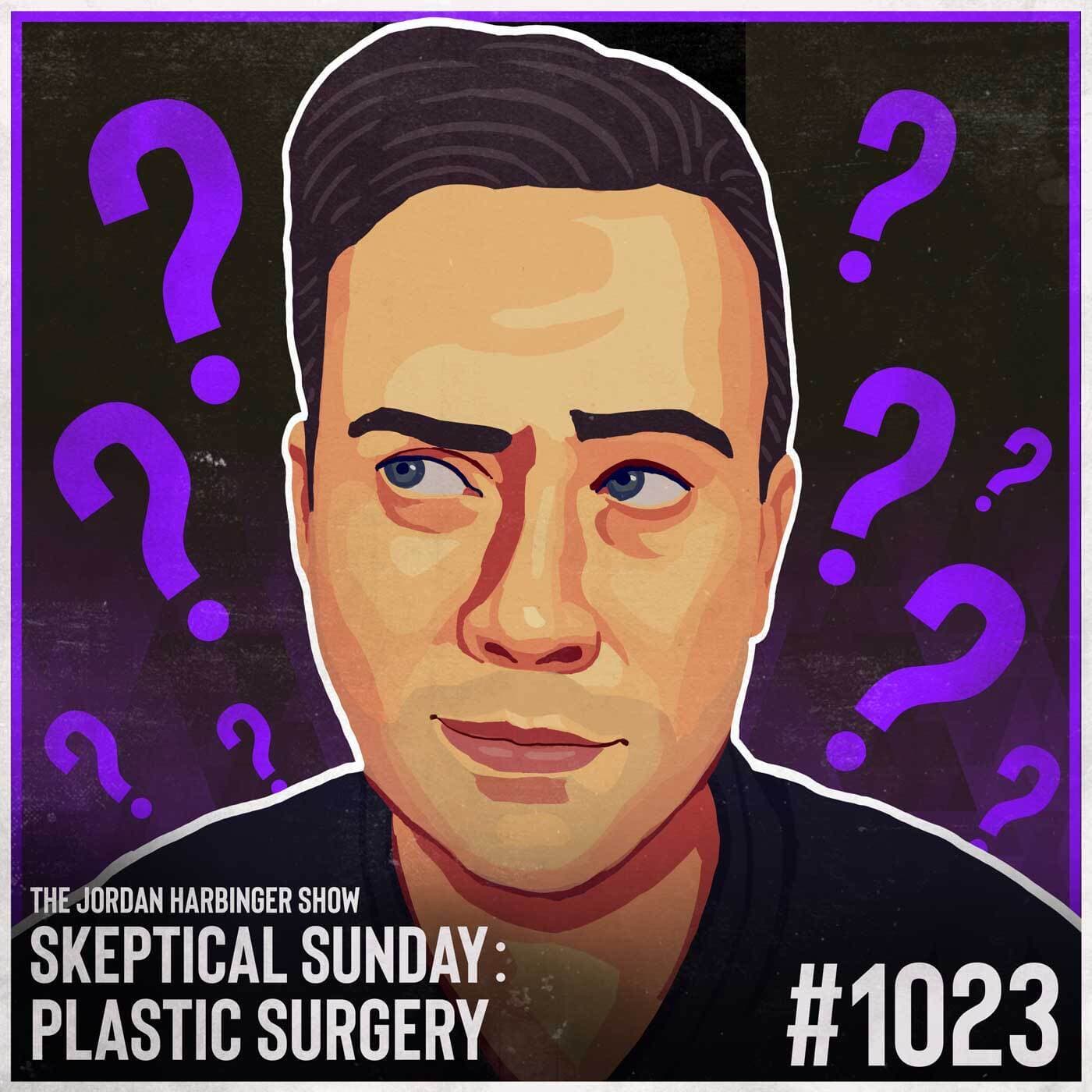
Podcast Notes: The Jordan Harbinger Show - Episode 1023: Plastic Surgery | Skeptical Sunday
Episode Overview
- Title: 1023: Plastic Surgery | Skeptical Sunday
- Guest: Michael Regilio, comedian and podcaster
- Theme: The complex history and modern implications of plastic surgery, including its societal effects, risks, and psychological factors.
---
Key Discussions
Historical Context of Plastic Surgery
- Origins:
- Plastic surgery dates back to ancient times, initially aimed at reconstructing disfigurements from injuries.
- The first recorded plastic surgery was in India during the 6th century BCE, focusing on nose reconstruction.
- Techniques evolved through history, including advancements during the Renaissance and World War I.
Evolution of Plastic Surgery
- From Reconstruction to Aesthetic Procedures:
- Historically performed out of necessity (e.g., accident victims) but has transitioned to cosmetic enhancement.
- Demand for procedures like breast augmentations and facelifts has surged.
Current Trends and Statistics
- Popularity Increase:
- The global plastic surgery rate increased by 20% from 2015-2019.
- 18 million procedures are performed annually in the U.S., with particularly high rates in South Korea and China (up to 50% of women undergoing procedures).
- Cultural Perspective:
- In South Korea, plastic surgery is viewed as a standard and even celebrated, notably becoming a graduation gift.
Psychological Impacts
- Body Image and Self-Esteem:
- Social media heavily influences beauty standards, leading to increased self-esteem issues among young people.
- Discussion on phenomena like "Zoom boom" resulting from increased self-exposure during the COVID-19 pandemic.
- Body Dysmorphia:
- A significant number of patients seeking surgery suffer from body dysmorphic disorder.
- Plastic surgery can exacerbate psychological issues rather than resolve them.
Risks of Plastic Surgery
- Medical Complications:
- Risks include addiction to surgery, psychological issues, and potential physical health complications.
- The episode discusses the rise of untrained practitioners performing surgeries in non-regulated environments.
Critique of Modern Aesthetic Trends
- Chasing Perfection:
- The desire to achieve an unrealistic standard of beauty often leads to multiple surgeries and dissatisfaction.
- Discussion around the dangers of undergoing procedures merely to fit societal trends or influencer standards.
---
Key Takeaways
- Informed Decisions:
- Prospective patients should thoroughly research surgeons and consider non-surgical alternatives.
- Building self-esteem through healthy lifestyle choices and mental health support is emphasized over surgical solutions.
- Cultural Shift:
- The shift towards cosmetic procedures as a normative practice poses questions about societal values regarding beauty and self-acceptance.
- Awareness of Risks:
- Understanding the potential dangers and psychological ramifications of plastic surgery is crucial for those considering it.
---
Conclusion
- The episode underscores the intricate relationship between plastic surgery, societal standards, and individual psychology. It encourages critical thinking about the motivations behind aesthetic procedures and emphasizes the importance of self-acceptance and informed decision-making in the face of pervasive beauty ideals.
Additional Resources
- Connect with Jordan Harbinger:
- [Twitter](https://twitter.com/JordanHarbinger)
- [Instagram](https://www.instagram.com/jordanharbinger)
- [YouTube](https://www.youtube.com/c/THEJORDANHARBINGERSHOW)
- Connect with Michael Regilio:
- [Twitter](https://twitter.com/Michaelregilio1)
- [Instagram](https://www.instagram.com/michaelregilio/)
- Full show notes and resources: [jordanharbinger.com/1023](https://jordanharbinger.com/1023)
---
This markdown document serves as a comprehensive summary and insight into the podcast episode, focusing on the complex themes surrounding plastic surgery discussed by Jordan Harbinger and Michael Regilio.
Written by AI. May contain mistakes. Listen to the episode to check what was said.
Transcript
Automatic transcript. May contain errors.0:03Welcome to Skeptical Sunday. I'm your host, Jordan Harbinger. Today, I'm here with Skeptical Sunday co-host Michael Regilio. On the Jordan Harbinger Show, we decode the stories, secrets, and skills of the world's most fascinating people and turn their wisdom into practical advice that you can use to impact your own life and those around you. Our mission is to help you become a better informed, more critical thinker. During the week, we have long-form conversations with a variety of amazing folks from spies to CEOs, athletes, authors, thinkers, and performers. On Sundays, though, we do Skeptical Sunday, where a rotating guest co-host and I break down a topic you may have never thought about, debunk common misconceptions about that topic.
0:40Topics such as sovereign citizens, circumcision, the lottery, Reiki healing, ear candling, diet pills, energy drinks, and more. And if you're new to the show or you're looking for a handy way to tell your friends about the show, our episode starter packs are a great place to begin. There's a whole starter pack full of Skeptical Sunday. There are also starter packs on persuasion, negotiations, psychology, disinformation, cyber warfare, crime cults, and more. That'll help new listeners get a taste of everything we do here on the show. Just visit jordanharbinger.com slash start or search for us in your Spotify app to get started.
1:10Today, the old expression, I see a lot of familiar faces here tonight, used to refer to recognizing friends in the room. Nowadays, we all see familiar faces everywhere we go for an entirely different reason. People seem to have the same nose, the same jawline, the same forehead, and the same cheekbones. These faces don't look familiar because we've met them before, but because people are having their faces changed by plastic surgery to adhere to ever-changing beauty standards. Procedures that were once incredibly rare are now commonplace. People want to look like the faces they see on Instagram, but the problem is the faces they see on Instagram are filtered and manipulated in the first place.
1:47Are we entering into an insecurity feedback loop? Are we glimpsing at the future of fashion in which we change our faces as often as we change our hairstyle? or is there hope to get off the plastic surgery train and back into the natural station? Today, comedian Michael Regilio takes a scalpel to the plastic surgery trend to see what's beneath the surface. Hello, Jordan. You're looking good. Is that a new nose? It is a new nose. I got one just in time for Yom Kippur. Lucky you. Perhaps one day people will walk into a plastic surgeon's office and ask for a harbinger. Wow, I certainly hope not. People should just be themselves, especially when they're as handsome as I am.
2:25I agree. And initially, that's what plastic surgery was trying to make people look like themselves. Since ancient times, doctors have tried to help people who suffer from accidents and disfigurements. An ancient Egyptian papyrus describes using wood splints to hold broken noses in place that needed resetting and reshaping. But the first real plastic surgery took place in India in the 6th century BCE. And it was an actual nose job, like a literal nose job. It was performed to give people a nose. Give people a nose? Was there a problem in India at the time with people's noses just kind of falling off?
3:06Kind of. Okay, you're gonna have to flesh that one out? Oh boy. Look, in India, there was a practice of removing people's noses. thieves would have their noses cut off so they could be easily identified as dishonest wherever they went. Wow, talk about f*** around and find out. And when women were accused of adultery, they also had their noses cut off. Oh, so it's literally f*** around and find out. Was it just the women? Because if I'm not mistaken, adultery, usually a two-person affair. Yeah, well, that punishment was just for women. But you'll also notice that I said accused, which is all it took to lose your schnoz if you were a woman.
3:48Jeez, that is harsh. How did you know then if somebody was a thief or just banged somebody else's husband? Or was it just like, well, she stole a dick, so the same punishment applies? Hmm, I guess I can follow that logic. But how could a new nose be created back then? Even today, giving someone a nose where there is no nose is not that easy. In writings called the Shushruta Samhita, an Indian doctor, Shushruta, known as the father of plastic surgery, detailed a technique for skin grafts. They would essentially remove skin from your cheek or forehead and build you a new nose while leaving a bit of the skin attached to the host spot on the cheek or forehead so that blood could continue to flow.
4:32after several weeks when the new nose or flapper skin where the nose once was had healed they would sever it from the cheek or forehead and voila a new nose like thing that's just gotta leave you with a messed up cheek or forehead i mean it's inventive but it's still really revolting somehow yeah well better than no nose but a messed up nose too well there aren't any photos we can refer to, but I agree. It must have looked weird. Regardless, it was a remarkable technique that was adapted and improved on for centuries. Then the technique traveled to Greece, which is where the word plastic in plastic surgery comes from.
5:12The Greek word plastikos just means moldable. When I was a kid, I thought it was called plastic surgery because people were trying to look like plastic Barbie dolls and or they were injecting plastic into your body. Back then, I think it was kind of only boobs people really got done for cosmetic reasons. I I mean, I could be wrong, but facelifts and boobs was mostly it, right? Yeah, well, I got news for you. They are still definitely trying to look like Barbie and Ken dolls nowadays. But in 47 BCE, a Roman author published an encyclopedia of surgery with the Indian cheek, skin, nose job now called the Indian method.
5:46In addition to nose jobs, Romans could have their ears repaired, scars removed, and freed slaves could remove their brands. Oh, wow. I hadn't thought about where the word brand comes from, but, well, nowadays we certainly think of brands differently. Oof. Yeah. In fact, I wonder if there were knockoff brands back then, too. Like, hey, this guy's brand says Gucci, but it's spelled with a C-H. Yeah, and they had New York or Staten Island accents back in ancient Rome. I do wonder what hurt more, though, getting the brand or removing the brand. Both of them sound just kind of horrific. Right. Well, either way, the Romans were actually quite good at treating the wounds, which kind of gets me to a side note I learned while researching this episode.
6:30The Romans observed the connection between hygiene and illness. They boiled their tools and washed wounds in like a mild acidic solution. I think that's amazing they had that sensibility at all, because wasn't germ theory just a thousand plus years away at that point? Exactly. And that's the point I'm getting at. Like a thousand years later, the barber was bleeding people with the same razor he just shaved a dude with, like leading to terrible infections and death. Yeah. Well, I guess that's where barbicide comes from. But I'm thinking just some dude's dirty face facial hair. And then it's like, it'll be fine if I cut open your wrists and neck with the same razor.
7:06I spat on it. It's fine. Right. Yeah. Well, set aside the entire mentality behind bleeding as a cure for anything to begin with. and insert Sweeney Todd joke here, by the way. But when studying history, I so often find examples of ancient peoples getting something exactly right, and then the world just forgets about it. And I'm guessing the one reason that we took a big medical step back is that in Europe, surgery stopped because the Catholic Church deemed it sinful to cut human flesh and thought of it as pagan. Well, the Catholic Church has a pretty crappy track record for an institution that claims the guy at the very top is infallible.
7:45Right. And hey, just ask Galileo. Okay. But orbiting back to the nose job, in 1163, Pope Alexander III banned surgery and the dissection of humans. I'm guessing you mean dead humans. That's actually a great point, because if you read about the horrors of the Crusades, the dissection of live humans seemed A-OK with the Catholic Church. This episode is getting gross already. Nice. The church's prohibitions aside, in Renaissance Italy, doctors secretly practiced surgery, and yet again, there was a great need for nose reconstruction due to the popular trend a young man for dueling with rapiers. Weird name aside, the rapier was a very slender, very, very sharp sword, and many a young man came home from a duel short, one nose.
8:34The famous astronomer Tycho Brahe's nose went the way of the rapier after a duel with his cousin over who was the best mathematician in the family. Oh my gosh. That's why is that so funny? It gives the whole got your nose game a new meaning. But that is the worst nerd fight ever. Imagine proving you're better at math, not by using math or anything like that. That would be silly. But by trying to stab someone or kill them and then just slicing off their nose instead. Right. Well, physics actually is indeed math, but your point stands. And in the 1400s, Sicilian physicians took the old Indian method and developed a new method for rebuilding a nose.
9:13A flap of skin came from the arm. It was called the Italian method. Again, the flap had to stay connected to the source, which unfortunately meant they tied the arm to your head for weeks while it healed. A person's arm was tied to their head for weeks while they grew a new nose. Can you imagine what that looked like? That's so insane. It's amazing it even worked, actually. Yeah, and guess what? Because the fact that the arm was the way it was, if it was jostled, it would tear off the new nose. I can imagine doing that in my sleep. You ever do that when you're moving around, you wake up, you hit yourself in the face or something?
9:48I'm having nightmares already. I'm just thinking it would have been easier to just maybe not have dueled with those swords and been known as the second best mathematician in the family. The fact of the matter is I am surprised by the sheer number of noses that have been cut off throughout history. I mean, you never hear about that anymore. Really? I mean, sure. Occasionally someone's distracted and their nose gets cut off. But I never imagined how many times in history an entire industry developed to deal with the whole people be getting their noses cut off dilemma. Nowadays, actually, most of the people who need a new nose built are people who've had so many nose jobs that there's just no nose there.
10:28at all anymore. Yeah, Michael Jackson comes to mind. I'm trying to think, like, if you've, look, email me if you've had your nose cut off and you didn't pay to have it cut off for aesthetic reasons. Like, how does it, I want to just know how it happened. That's all. Yeah, I mean, it's crazy, but we'll get into the whole Michael Jackson thing in a bit, but I'm not actually done with historical no noses yet because we've got to get to the next historical great nose snatcher syphilis. I did not know. So syphilis took people's noses as well? Well, not syphilis, but the treatment for syphilis that existed until the invention of penicillin in 1920.
11:05I see. Before that, syphilis was treated with that good old timey medicine, mercury. Like mercury, mercury, liquid metal mercury, the stuff that makes you go crazy? Yeah. Wow. Yeah, that stuff. It could actually stop syphilis, but it often made the nose collapse in a condition called saddle nose. And And again, doctors were challenged to find ways to rebuild people's noses. So I googled this. And by the way, it still exists. If you do like a ton of blow or you have leprosy, which apparently is still a thing. I really thought that was like we kind of got rid of that around the time of Jesus. But OK, you can have saddle nose.
11:41Your nose will collapse in on itself. And it does look a little bit strange. Oh, my God. Artie Lang. Look up Artie Lang. I just thought of that. I think he lost his nose to cocaine. He was one of Howard Stern's sidekicks back in the day. Let me Google that. Oh, yeah. There you go. That is, oh my God, that's really something. Don't Google this man and don't look at his nose. That is, oh my gosh. If you're doing cocaine, Google him because you'll stop immediately. Wow. Wow, that's really something. Yeah. So surely some people must have just opted for a fake nose over tying your arm to your head for weeks on end.
12:15You nailed it. In fact, in the late 19th century, many syphilis victims had prosthetic noses. Interestingly enough, they would hang them off their eyeglasses. And if you had 20-20 vision, you are shit out of luck. So that's funny, though, because the eyeglasses with the fake nose and the fake eyebrows that you get at Spirit Halloween or whatever actually have historical precedent. And I would never have guessed that. Hey, man, deep history. Additionally, because syphilis also caused extreme sensitivity to light, the glasses had to be darkened. And that's where sunglasses come from. Wow. For real, sunglasses are the result of syphilis.
12:51Yep. So next time I feel all cool in a pair of shades, I'll just thank a noseless brothel hound from 1904. Yeah, if you can find one. I mean, I got a guy. I always have a guy. Look, I'm going to skip the litany of questions that just popped into my head for the sake of moving things along. Okay. Until this point, plastic surgery was a necessity. But around the time sunglasses were being invented, plastic surgery for aesthetic purposes was also being developed. In 1895, Vincenzo Czerny, an Eastern European surgeon, inadvertently performed the first boob job by injecting a woman's own fat into her breast to compensate for a tumor he had removed.
13:32This, actually, by the way, is the technique used today in one of the most dangerous procedures around, the Brazilian butt lift. Only the fat isn't injected into your breast. Yeah, it's into butts, obviously. I kind of gathered that by the name. Wow. Right. Techniques that are common today were first being experimented with ages ago. In 1899, Austrian surgeon Robert Guernsey was the first to try fillers. He used Vaseline and paraffin and injected them into face wrinkles, breasts, and even penises for augmentation. Wow. Ouch. Really? At the risk of being crude, I've certainly heard of men using Vaseline on their penis.
14:09Never heard of it inside the penis. How did that go? And does that even work? Asking for a friend, obviously. Yeah, it worked great. People were totally thrilled with the results until serious complications kicked in and many people died. Oh, so it didn't go that great. Well, it depends on how you feel about dying. Yeah, on most days. Most days I'm against it, especially if I'm just trading. Well, anyway, fine. Yeah, me too, on most days. Turning back to injecting Vaseline, the initial success of the procedure opened a market for untrained hucksters. People would claim to be doctors and shoot people's faces, boobs, and penises up with Vaseline.
14:50It's almost funny to hear that because that still definitely happens today. I heard of a woman going to some fly-by-night clinic somewhere recently for a butt lift, and they injected her with, I want to say, cement or bathroom caulk or something, and of course it didn't go well. She got a horrible infection and or whatever and died. Oh, I'm aware of that story. And that somewhere is, of course, Florida. Sorry, Florida. Yeah. So look, both the cement in the butt and the old Vaseline in the penis shows that there was and is an enormous market for plastic surgery for strictly cosmetic purposes. And as painful as surgery today can be, it's nothing compared to what early patients went through.
15:34A 1910 article in a woman's magazine entitled Getting Pretty Quick details an early facelift performed on a middle-aged woman. Most notably, she was dosed with cocaine and had the facelift performed on her while she was awake. Oh man, for a minute I was like, dosed with cocaine? Tell me, oh, surgery while awake. So am I crazy for thinking a facelift being performed on you while you're just coked out of your mind sounds way more painful? Oh, she was in excruciating pain for weeks, during which time the article says her face was, quote, as red as a carnation. But in the end, it worked. She thought she looked much younger and was happy with the result.
16:17I would just rather look my age, thanks. That sounds like absolute torture. Not nearly as torturous as the nightmare that was World War I. This is the period in which modern plastic surgery improved exponentially. It's so strange, but it does seem like war is almost always the thing that causes innovation like this.
17:01wounded, and 16 % of those battle wounds involved the face. Plastic surgery had to get good and get good quick to help these massively disfigured men. I've read a lot about World War I, I mean, a long time ago. And in addition to plastic surgery, didn't a lot of the injured men wear special face masks, kind of? Because they couldn't really fix your skin, right? Right. Yeah, they did. Anna Coleman Ladd was a sculptor who innovated these face masks. Anyone familiar with the show Boardwalk Empire and the character Richard Harrow has seen a depiction of this work? A cast of the face was made and a mask was custom made to cover the disfigured part of the face.
17:39They used real human hair for the head and mustaches, and then an artist would paint the mask to match the men's skin tone. I remember that guy. He was, wasn't he kind of like a crack shot assassin type character? Yeah. Oh dude, he was a badass. I love that character. That was a really good character. And I'd never seen anything like that in anywhere. I didn't know that existed. And I remember Googling it back then, like, did wounded people wear masks? And sure enough, here we are. Yeah, really, anyone interested should Google this, by the way. It's crazy to think that at one time you could run into somebody in everyday life in what looked kind of like a Guy Fawkes mask from V for Vendetta with real eyes and real teeth.
18:21Yeah. But the rest of the face could have just been blown to hell by World War One kind of crazy weaponry. Unbelievable. Yeah. Well, I mean, V for Vendetta or possibly Anonymous, who also uses those masks, depending on what flavor of pop culture you prefer. But face masks weren't the only innovation. Surgeon Harold Gillies was thrown into the horrors of the war and quickly developed cutting-edge techniques to repair some of these horrible injuries. He improved on the Indian and Italian methods to great success. You know what's better than having your face blown off in trench warfare, Michael? The fine products and services that support this show.
18:58We'll be right back. Thank you for listening to and supporting the show. Your support of our advertisers does keep us going. All the deals, discount codes, and ways to support the show, all in one place. It's jordanharbinger.com slash deals. You can also use the AI chatbot to surface the promo codes. Or if you're for the especially lazy, you can email me directly. Now, back to Skeptical Sunday. So the techniques developed thousands of years ago were so effective that they were still being used in the 1900s. That's really amazing. Yeah, they were so effective that they're still being used now in one form or another.
19:31Chalk another one up for the noseless. I mean, they really are the unsung heroes of history. I just had no idea how much we owed to the noseless and to syphilis and those who went and got it, however they might have gotten it. They sure took one for the team or lost one for the team. Either way, building on these ancient techniques, Harold Gillies propelled us into the modern age of plastic surgery, which is why he is considered the father of modern plastic surgery. These new techniques were quickly seen as having far more vanity-inspired uses, by the way. This is the plastic surgery that I'm familiar with today.
20:11Vanity projects. That's almost where I thought we would start, but of course, it's Skeptical Sunday, so we do a little deep dive. That's right. This is where things have arrived. One of the first things people ran to plastic surgeons for was to change their breasts. There was big money and big boobs. Not surprisingly, plastic surgeons looking to capitalize on this newfound knowledge classified small breasts as a disability called hypomastia. Disabled because of small breasts. How sad. A bunch of surgeries were tried to correct this devastating disability. Well, now you're being cheeky. Actually, I'm being booby, but it's actually a rather sad story.
20:48Women were injected with ivory, wood, bits of rubber, and even ox cartilage. That is horrifying. How did that work out, Michael? Not great. Meanwhile, Japanese doctors experimented with injecting liquid silicone into the legs of polio patients. So American doctors said, hey, why not boobs? Over 50 ,000 women had liquid silicone injected directly into their breasts. Okay. First of all, I got to wonder why someone's like, I want bigger boobs. And the doctor's like, let me pick this hard thing like wood or ivory. Yeah. I mean, the logic is just not there for me. Like, this was on an animal, so the body can tolerate it.
21:28That's kind of as far as I get with the ox cartilage and the ivory thing. Wood is mystifying. Bits of rubber, okay, you're getting there, but yeah, oof. Okay, and I can tell by the way you emphasized directly into their breasts that something about that was problematic. Correct. Over time, the silicone in direct contact with tissue caused chronic inflammation and caused granulomas to form, resulting in hardening and pendulous breasts. Granulomas are described as feeling like hard sand. I'm not sure it's a great look for two dudes to spend too much time discussing breasts, but you gotta tell me, what are pendulous breasts?
22:05Droopy. Droopy boobs. Ah. You know that joke song, do your boobs hang low? Do they wobble back and fro? Yeah, it's to and fro. And I'm embarrassed to admit it, but yeah, I'm obviously very familiar with that tune. Well, that song was about pendulous breasts. Sadly, the direct injection of silicon caused so many problems that often the only thing that could be done was to remove the breasts entirely. That is really unfortunate. Go to the plastic surgeon to get bigger breasts and end up with no breasts at all. Sad trombone. That's actually really tragic and scary. Yeah. And well, in 1961, the problem was at last solved.
22:41American plastic surgeons Thomas Cronin and Frank Gorel, along with Dow Chemical, developed the silicone breast implants. That is to say, silicone balloons, for lack of a better term. There must be a better term. Well, either way, the modern boob job was bored. Women were now able to ask men to not look at their cleavage, eyes up here, pal, and they quickly realized they weren't happy with their eyes either. Ah, enter Botox. Nailed it. In the 1970s, Botox was used to treat facial tics by literally numbing and deadening the nerves. In 1989, Dr. Richard Clark started using Botox to smooth lines of the forehead.
23:23And when told that one could reduce wrinkles by injecting a toxin directly into your face, the entire world said, toxin schmoxin, sign me up. And plastic surgery kind of officially began making plastic looking people. Plastic people seems like a bit of a dig. I don't see any harm in someone improving their looks, but there is a bit of privilege going on here as two dudes who either don't have a problem at all with their looks or, or in your case, clearly don't care at all about their looks. Pass judgment on those that elect to go under the knife. Yeah. Okay. All right. I agree completely. So full mea culpa on my part for being snarky, But we've actually entered a whole new phase, or more appropriately, a whole new craze.
24:07Plastic surgery has, in many cases, ceased to be about fixing little imperfections and turned into chasing perfection. I see. That's fair enough. I mean, you'd have to be blind to not see that plastic surgery rates are skyrocketing from when we were younger. That's right. Rates of plastic surgery increased by 20 % worldwide between 2015 and 2019. In the U.S., 18 million procedures are performed each year. In South Korea, 25 % of women between the ages of 19 and 29 have undergone plastic surgery. That is a crazy high number. And I'm trying not to be judgy, but between the ages of 19 and 29, those are the years that people are naturally most attractive.
24:51But I also understand the temptation to maximize that, right? And with numbers like that, it does seem like people are trying to adhere to a new beauty standard entirely. Right. Plastic surgery is actually not all that different from fashion. I mean, whereas women wanted thin hips and big breasts in the 80s and 90s, big butts and fat lips have become all the rage. These are temporary fads. Look, in Paris in the 1800s, small breasts were considered desirable and big breasts undesirable. So people making permanent changes to their bodies to chase temporary fads is worth discussing. No judgment. What exactly is driving the plastic surgery craze?
25:33Is it just social media? Because we've had TV for a long time and we've had the ability to do this, but the uptick is recent. I mean, you even mentioned 2015 to 2019. That's like a four-year span. It's a myriad of drivers. But one thing that's easy to understand is that little worldwide tragedy that we all lived through. Will Smith slapping Chris Rock at the Oscars? No, the other one. COVID. All that time spent in virtual meetings staring at ourselves had consequences. Plastic surgeons are calling it the Zoom effect or the Zoom boom. But whatever you call it, requests for neck and brow surgery procedures rose 55 % from 2020 to 2021.
Read the full transcript
26:13Ah, pants sales plummeted and facelifts rose. So people, I do understand the neck thing. If you ever look at your neck on Zoom, you're like, wow, it's so flat and wide and pale. And how many chins do I have? So people spent two years staring at themselves on Zoom and they just didn't like what they saw, I'm guessing. More like people spent their time toggling between looking at themselves on Zoom and looking at Instagram models. People became convinced that they couldn't like what they saw. I just I find that so unfortunate. Thankfully, I knew I was ugly before the pandemic. Hey, what can I say?
26:50Should have gotten the Brazilian butt lift, Jordan. I sure love mine. Let me know if you need a referral. The fact is that plastic surgery is trending younger and younger worldwide. Something's happening to the self-esteem of young people, and psychologists are blaming social media. I myself have been devastated while posing for goofy pictures with my 10-year-old niece, only to have her demand I erase the pictures because she doesn't like how she looks. Oh, that's sad. A 10-year-old? Come on. Yeah, I mean, come on. When I was 10, I was still, like, so blown away by how the little man in the camera had time to draw such a detailed picture that I had no time to reflect on how I looked.
27:32Oh, Rogelio, come on, man. By the way, no Brazilian butt lift for me. I already got them cakes. Yeah, I'm working on them. But look, you said it in the intro. People compare themselves to Instagram models who are themselves using filters and internet magic to look that way. but it gets even more insidious. Do you facetune? Do I facetune? I don't know what that is. Jordan, Jordan, Jordan, man. You're so behind the times. Facetune is software that allows users to manipulate and change their appearance. Want a smaller nose? Facetune it. Bigger eyes? Facetune them. So people are getting used to seeing an idealized version of themselves and other people for that matter, and then getting deeply disappointed when they actually look in the mirror.
28:17Exactly. Plastic surgeons have noticed that people used to come into their offices with a picture of a celebrity they want to look like. Now, they come in with a Facetune picture of themselves that they want to look like. Ooh, that's insane. That cannot be good psychologically. True that. No discussion about plastic surgery, however, would be complete if we didn't discuss two countries that also make the news with their obsession of going under the knife, South Korea and China. Let's start with South Korea. In urban areas of South Korea, one out of two women have had plastic surgery. China boasts similar numbers.
28:5550%. Wow, that is shockingly high. It could soon be even higher. One survey found that 90 % of Korean women are open to having plastic surgery. And in China, plastic surgery has become so ingrained in the culture that every year they have the Miss Plastic Surgery pageant for young women. Okay. I'm not sure if I want to know what that is. It does sound a little bit interesting somehow. What could that possibly be? Well, let's just put it this way. Last year's winner said that when the Botox wears off, she is going to be smiling from newfangled ear to newfangled ear. Oh, yeah. I'd smile so big, but I physically can't do it.
29:33Yeah. Physically can't do it right now. But such a pageant does speak to a general acceptance of plastic surgery for young women in the culture. It seems like it's going to be hard to surgically put the genie back in the bottle. When we were younger, it was like women over 50 or 60 got it. And that was kind of it. And maybe certain professional models got boob jobs. But now it's like you're getting in that crap in high school or college. It's actually so true. But look, I won't pretend to have any expertise on Korean and Chinese culture, but I think you're onto something there. Plastic surgery is now a common graduation gift in both countries that parents give to their children.
30:15Oh man, can you imagine? Congratulations, honey. Now go get a new face so people will love you. Seems like there's an awful lot of emphasis on looks over there. I mean, if it's really 50%, that's insane. Well, here's the thing. It's not just about vanity, so to speak. Many Koreans believe they can get a better job if they have plastic surgery. In China, I've actually seen listings that flat out list appearance requirements just for women applicants, of course. I guess it's legal slash possible to write the quiet part out loud in China. To be fair, I think these requirements sort of exist here, too, really being 100 percent honest, but we're legally not allowed and culturally not allowed to say so explicitly.
30:57Right. The pressure on young women is immense. The average age of a person receiving plastic surgery in China is 24, of which 80 % are female. Many Chinese social media apps will show you what you'd look like with plastic surgery, then set you up with a plastic surgeon, and even loan you money to receive plastic surgery. Oh my gosh, don't give Silicon Valley any ideas, but that is not a social media app. That sounds more like a social media trap. Right. And this pressure is actually from the top down. In both countries, their governments are courting foreign customers into their now booming plastic surgery tourism industry.
31:39Get this. At Seoul's Inchin International Airport, you can fit your face into a spectral imaging machine to get your skin analyzed for its health. This is a free service courtesy of the Korean Tourism Board. Just in case you are feeling good about yourself after a 17 hour plus flight to Korea, they've got a machine that's like, no, no, no. Here's a receipt that says here's a medical printout that says you look like crap. And here's a doctor to tell you that you really you look horrible. Right. It's not just the machine. There's actually staffers there to greet you and then kind of look you over and tell you you could look better.
32:13It's not just the machine. Yeah. And then they pair you right there at the airport with a clinic. Oh, my God. This is an enormous industry for both countries. It reaped$51 billion in sales revenue in China in 2020 alone. Wow, 51 billion reasons to bring people to your country for a, literally for a new face. Seoul has more cosmetic surgeons per capita than anywhere else in the world. The Gangnam neighborhood has so many plastic surgery clinics that it's called the, quote, improvement quarter. I've never been insulted by the name of a neighborhood before, but amazing. And you've never been to the you're fat and your mother doesn't love you district in L.A.
32:52Oh, I've been there. The locals call it Hollywood. And Hollywood has been a huge influence on people in terms of how they want to look. Jawline surgery is very popular in Korea. Doctors shave away women's jaws to make them look more narrow and feminine. In 2014, a clinic exhibited over 2 ,000 jaw fragments in two giant glass vessels. Each bone labeled with the name of the patient from whom it was carved. Why? In case you ever want to go visit your old jawbone? I don't understand. I guess so. Look, this whole thing speaks to changing attitudes towards plastic surgery, where it was once a secret.
33:31Now people brag and put it on TikTok. Many American women travel to South Korea to saw the jaw. The Korean government offers tax breaks and tourist packages for medical tourists. In 2009, about 60 ,000 foreigners visited Korea for plastic surgery. By 2019, the number of medical tourists reached nearly half a million. Damn, that's a lot of jaw fragments. And get this, if surgery makes a tourist's face unrecognizable from their passport photo, there's a service for that too. The Korean Tourism Organization issues a plastic surgery certificate that immigration officials accept as proof of identity.
34:13Oh my gosh, that makes sense, right? Because your face is just outrageously swollen. Ugh, stop it. Stop telling me these things. You know what'll make you look good? Supporting one of our sponsors. We'll be right back. Once again, thank you for listening to and supporting the show. All the discount codes are at jordanharbinger.com slash deals. Please consider supporting those who support the show. Now, back to Skeptical Sunday. Korea and China, they might be at the cutting edge, pun intended, obviously, but it seems like this craze is taking place all over the world. Yeah. We haven't even talked about Brazil, where it's also huge, as are many surgically altered butts.
34:50This brings me back to the United States and our changing styles. Big surgically altered butts in Brazil brings us back to the United States? Yeah, because American women once preferred the slender look, as we talked about, and went to extremes to achieve that look. Today, thanks to influencers and celebrities like, obviously, Kim Kardashian, the BBL or Brazilian butt lift is all the rage American women now want to epitomize the Sir Mix-a-Lot song. So if memory serves, when Sir Mix-a-Lot spit those lines, the best way to get that big butt was with cheeseburgers and naps, correct? Correct. And that is a fun way to get a big butt, by the way.
35:29But in Brazil, they developed this technique where a person's own fat cells are directly injected into their rump to give them a little more cushion. Cue Queens fat-bottom girls. I prefer Spinal Tap's big bottom, but I'm with you. BBLs carry a particular risk. BBLs are one of the riskiest procedures, and every year women die from them. But women are willing to undergo this risk. I did not realize it was so dangerous. I mean, I didn't think it was any worse than any other surgery. Why? Would men ever do this? Yes, Jordan. Get with it, my man. The numbers for men are rising too. From Botox to pectoral implants, dudes are jumping on the plastic surgery train.
36:11Men still make up only about 8 % of all patients in the US, but the numbers are rising each year. What procedures are the dudes going for? Not BBLs, I assume. You'd actually be surprised. Some men are going for the plump rump. But dudes like liposuction. That's a little surprising, but maybe it shouldn't be. It is kind of the easy way out. Diet and exercise is tougher than liposuction. Well, it's particularly not surprising when you realize that it's almost impossible to fully get rid of belly fat. Many men you see with the perfect six-pack got that way with lipo. Men scrolling Instagram are made to feel inadequate.
36:47In fact, a 2020 study from the Journal of Social Media and Society found that men exposed to muscular figures on Instagram experienced lower self-esteem. Zero surprise. This all begs the question about the psychology at play here. Look, it's being studied and there's no doubt that the things we've already touched on, Zoom, Instagram filters and Facetune, are helping to drive how young people feel about themselves. They see their favorite celebrities who've had plastic surgery and they want to emulate them. Do you think celebrities have an obligation to talk about the work they've had done? I'm not sure I'd call it an obligation, but if celebrities came out and talked about how much work they've had done, maybe people wouldn't feel so bad about aging naturally.
37:27Yeah, that's an interesting point. The whole craze poses a number of questions. Here's one I was just thinking about. If somebody feels bad about their looks and has their entire face done, they've sawed their jaw, the works, and then they have a child with their old face. Will the child be a constant reminder of their old face? I suppose. I mean, are they going to think their kid is ugly? Damn, that is dark and interesting. Clearly, I'm not qualified to answer, but one has to wonder if plastic surgery is creating or exploiting some people's psychological issues. In South Korea, have you heard this?
38:02I think it was South Korea. This guy married a woman, they have a baby, and the guy ends up suing the wife because the baby, I mean, she's cute, it's this kid, but you can tell that it looks a lot like the wife used to look pre-plastic surgery, So the face isn't really that symmetrical. And then he somehow dug up photos of the wife pre-plastic surgery. And she's had a lot of work done. She looks good now. She was far less attractive before. I feel like a jerk saying that, but it just kind of means she had some stuff going on. So he sued her for, I don't know, I guess the equivalent of false advertising kind of thing.
38:37What? Yeah. And how about this? That baby is going to grow up and learn how to use Google and find out about all this. And that's going to be, that will truly be the ugliest part of this situation. Yeah, you're right. I hadn't thought about that. And what about people who are not all that stable? I'd imagine they should be careful before making lifelong changes. I don't know, people like 19 to 24 year old men and women. Exactly. Look, in the more extreme cases, plastic surgery can exploit those with body dysmorphia. These, in my opinion, are hard to look at. Just Google extreme plastic surgery.
39:14Ooh, I have gone down that rabbit hole. What's going on there? Okay, well, body dysmorphia is a psychiatric condition in which people look in the mirror and see something completely different from what everybody else sees. A new study from Belgium found that 33 % of patients getting nose jobs had some form of body dysmorphia. And for the unfortunate souls afflicted with it, plastic surgery isn't the cure. It starts them down a dark and unsatisfying road. But that's not necessarily what's driving the craze, right? No, but plastic surgery can be addictive. Once you start, you sometimes can't stop.
39:50Kind of like Pringles. Again, I'm not qualified to diagnose anyone, but clearly Michael Jackson was pushing the limits. Some experts estimate that the King of Pop went under the knife around a hundred times. That's a huge number, but it almost seems low for the transformation that he went through. Are plastic surgeons trained to spot these problems and say like, hey, man, you need to go to a shrink instead of getting your 15th nose job or cheek job? Plastic surgeons are. Yes. But. And this is a big but. Like a triple Brazilian butt lift level but. Like six Kim Kardashian butts. We get the point.
40:29We get the point. What is the but? You don't have to be a plastic surgeon to perform these procedures. What? But, okay, that is all the buts. That is every Kardashian. We're not joking. What are you talking about? You don't have to be a plastic surgeon to perform plastic surgery. That is, well, that's terrifying. That's the only word for it. Any doctor can perform plastic surgery. That's the difference between a plastic surgeon and a cosmetic surgeon. Your cosmetic surgeon might just be a podiatrist. No. How? How can that be legal? Because if you go to a hospital for plastic surgery, It's the hospital who looks at the surgeon's credentials and says, yes, you can work here or no, you can't work here.
41:10But. But if you open your own clinic, then you and run the whole thing. Exactly. An ear, nose and throat doctor can inject fat cells into your ass. That is so damn sketchy. So if someone's going to inject something into my ass, actually, I better be real careful about what I say next. Why don't you just continue? Yeah, that was a close one, Jordan. But yes, it's important for anyone looking for surgery to make this distinction. Here's the thing. If you go to the websites for these clinics, they all say board certified. The potential patient needs to ask, what are you board certified in? I want to ask why these doctors are doing this, but I've been around, we've all been around long enough to know that the answer is always money.
41:55Yep. Plastic surgeons are amongst the highest paid doctors in the trade. So the proctologist is trading his honor by deceptively calling himself a board certified cosmetic surgeon when he's certified for proctology. But he's like, I want that money and you want them cakes. Come here. I'm going to give you a Brazilian butt lift. Wow. And by the way, I'm glad you chose a proctologist because that is an honorable discipline. They're the butt of all jokes till you need one. As Kramer said in that classic Seinfeld, if you ever meet a proctologist at a party. Don't leave his side. You will hear the funniest stories of your life.
42:29Yeah. Like that same guy sitting on his daughter's Barbies in the bathtub and then they get stuck in there seven different times. You ever hear that? Like someone goes to the ER and they're like, yeah, sat in the, went to go take a bath with the used bathwater and I sat on a Barbie. Doing that a bunch of times in a row. I don't know. Always a one in a million chance, Doc. It seems like getting plastic surgery comes with a whole host of problems that, that are not actually one in a million. Pretty common. Plus, even if the plastic surgery goes right, you might not get what you're after. One recent study found that liposuction may fix one problem area while creating another.
43:02People who suction fat from their thighs and abdomen destroy these cells. When they put weight back on, it distributes unevenly, usually in weird, unflattering ways. Also, changing one feature can throw off the appearance of others. A liposuction stomach can make the thighs look out of proportion. Plumped lips can make the nose look weird. Then there are the horror stories, the botched procedures. Yeah, we've all heard and seen examples of those. There's actually a show by that name that always seems to be on in hotels that Jen and I would watch kind of before crashing at night. Yeah. In fact, my friend and fellow comedian Tuesday Thomas was on Botched.
43:41And because, well, she got botched. Fortunately, she's a comic and made a career out of laughing about it. She has one great joke where she says, before my surgery, people would look at me and think I looked like Wonder Woman. Now people look at me and wonder if I'm a woman. Oh, poor thing. It's a good joke. No, she's hilarious. It is a good joke. And she wrote to me last night when I told her about this episode to make sure that I say that her episode of Botched is the highest rated episode of Botched to date. So she's actually proud of it. Good for her. Yeah. Turning lemons into lemonade. That's right.
44:14But Tuesday's issues are just aesthetic. I actually read about one woman who had a procedure done to her eyes and 30 surgeries later, she still cannot blink. Oh, not worth it. Yeah. Oh, my God. There are stories of people whose plastic surgery went so poorly that they've become reclusive and are afraid to go out in public now. Oh, man. Damn, that is some sad irony. Modern plastic surgery went from helping World War I veterans show their faces in public to making normal faces so disfigured that the patients don't actually want to show their face in public at all. That is so sad. History loves irony.
44:49Look, don't let the popularity fool you. Plastic surgery is surgery. You can call it a procedure or getting work or a mommy makeover, but this is serious stuff with real risks involved. Joan Rivers famously died from plastic surgery. Just this year, 34-year-old Instagram model and Kim Kardashian twin, Christina Ashton Gorkhani, suffered cardiac arrest and died after undergoing plastic surgery, as did the mother of the children of popular YouTube personality DC Youngfly, Jackie O. She was 32. That is all really tragic, and especially when you hear about the young folks doing this and dying mothers of small children.
45:30I mean, that's just especially tragic. Absolutely. People thinking about getting a little work done need to be aware of the big risks. Look, as far as I'm concerned, I'll just let that double chin come in. The people I meet can see my crow's feet. I'm sold on getting old, naturally. You know, there's still no risk in shaving those hairy-ass ears, dude. That I'm pretty sure about. I don't need to chase any trends, thank you. I mean, it's hardly a trend as much as good hygiene, but, you know, you do you. Thanks. I will. I guess we don't need to chase these trends. If we all just stopped, the trends would go back to looking natural, right?
46:08I mean, long before the plastic surgery craze, people found each other attractive. They fell in love. They had decently high self-esteem, right? I mean, I think we need an app that would show you what you'd look like if you didn't use an app. I think, isn't that just called a mirror? Oh, right. God, I hope they're not developing a mirror with filters and face tune. Oh, man. Hope all you like. We both know that they almost certainly are developing that. But seriously, shave your freaking ears, Regilio. You're creeping me out. Thank you for listening. Topic suggestions for future episodes of Skeptical Sunday to Jordan at JordanHarbinger.com.
46:45Show notes at JordanHarbinger.com. Transcripts are in the show notes. Advertisers, deals, and discounts. Ways to support this show. All at JordanHarbinger.com slash deals. I'm at Jordan Harbinger on both Twitter and Instagram, or you can connect with me on LinkedIn. You can find Michael Regilio at Michael Regilio on Instagram or MichaelRegilioComedy.com. Tour dates are up now as well, and we will link to that in the show notes because, as always, nobody can spell Regilio. This show is created in association with Podcast One. My team is Jen Harbinger, Jace Sanderson, Robert Fogarty, Ian Baird, Emilio Campo, and Gabriel Mizrahi.
47:19Our advice and opinions are our own, and yes, I am a lawyer, but I am not your lawyer. Do your own research before implementing anything you hear on the show. Also, we may get a few things wrong here and there, especially on Skeptical Sunday. If you think we really dropped the ball on something, please do let us know. We're usually pretty receptive to that. Y 'all know how to reach me, Jordan at jordanharbinger.com. Remember, we rise by lifting others. Share the show with those you love. And if you found the episode useful, please share it with somebody else who could use a good dose of the skepticism that we doled out here today.
47:47In the meantime, I hope you apply what you hear on the show so you can live what you learn. And we'll see you next time. You're about to hear a preview of the Jordan Harbinger Show with former Google design ethicist Tristan Harris, who helped build social media and is now sounding the alarm on its issues. YouTube is an engagement platform. TikTok is an engagement platform. Snapchat is an engagement platform because what they have in common is predating on human behavior and human attention as a commodity. It's an extractive business model that's like the exon of human anxiety. It pumps human anxiety and drives a profit from the turning of human beings into predictable behavior.
48:26And predictable behavior means the seven deadly sins, the worst of us. We're worth more when we're the product as dead slabs of human behavior than we are as free thinking individuals who are living our lives. When you are scrolling a newsfeed, you have a supercomputer that's pointed at your brain. They know everything about your psychological weaknesses that you don't even know about yourself. If I had TikTok open on my phone and I watched one video and I said, that's kind of funny and I'll scroll the next one, who's really the author of the choice? TikTok and Instagram both have programs to actively cultivate the influencer lifestyle and make that as attractive as possible because we are worth more when we are addicted, outraged, polarized, anxious, misinformed, validation seeking, and not knowing what's true.
49:09I think it's pretty easy to see that a society in which it's more profitable for each person to be addicted, narcissistic, distracted, confused about reality, not knowing what's true. That is not a society that can solve its problems. That is not a society that can solve climate change. That is not a society that can escape pandemics or agree on anything. And that is incompatible with a future that we want to live in. We need a society that is consciously using tech to make a stronger, healthier, better 21st century open society. And we either do that, or we call the American experiment over, I think.
49:42To hear how technology is hacking human brains and attention spans, check out episode 533 of The Jordan Harbinger Show.
49:55Hey, Ryan Reynolds here. Wishing you a very happy half-off holiday because right now Mint Mobile is offering you the gift of 50 % off unlimited. To be clear, that's half the price, not half the service. and Mint is still premium, unlimited wireless for a great price. So that means a half day. Give it a try at MintMobile.com slash switch. Upfront payment of$45 for three month plan equivalent to$15 per month required. New customer offer for first three months only. Speed slow after 35 gigabytes of network's busy. Taxes and fees extra. See MintMobile.com. This episode is sponsored in part by the Something You Should Know podcast.
50:29Finding a great new podcast can feel like searching for a needle in a haystack. Let me save you some hassle. Check out Something You Should Know with my friend Mike Carruthers. Every episode is packed with fascinating insights that you can actually use. Mike interviews top experts on topics that shape your life, like how to optimize your brain chemistry, the best and worst ways to apologize, probably could have used that recently, why couples hate to talk about money. No matter the topic, Mike asks the questions you'd want to ask, getting straight to the good stuff, and the conversations are always engaging, always insightful, guaranteed to leave you a little smarter than before.
50:57They've got thousands of five-star reviews, but do you even need that? I'm recommending it. You don't need other people's opinion, right, at this point, I would hope. Anyway, give it a listen. Just search for Something You Should Know wherever you get your podcasts. Look for the bright yellow light bulb and start listening to Something You Should Know.
From the publisher
Nip, tuck, and...regret? Michael Regilio examines plastic surgery's complex history — from ancient noses to modern BBLs — on this Skeptical Sunday!
Welcome to Skeptical Sunday, a special edition of The Jordan Harbinger Show where Jordan and a guest break down a topic that you may have never thought about, open things up, and debunk common misconceptions. This time around, we’re joined by skeptic, comedian, and podcaster Michael Regilio!
On This Week's Skeptical Sunday:- Plastic surgery has a long history dating back to ancient times, originally developed to help people with disfigurements or injuries, but has evolved to include cosmetic procedures.
- The popularity of plastic surgery has increased dramatically worldwide, driven by factors such as social media, filters, and changing beauty standards. In some countries, like South Korea and China, it has become deeply ingrained in the culture.
- There are significant risks associated with plastic surgery, including medical complications, psychological issues, and the potential for addiction. Non-specialists performing procedures and the rise of medical tourism add to these concerns.
- Body dysmorphia and societal pressures play a significant role in the plastic surgery trend, particularly affecting young people's self-esteem and body image.
- People considering plastic surgery can take positive steps to make informed decisions: research the credentials of surgeons, ensuring they are board-certified in plastic surgery; consider non-surgical alternatives and natural aging processes; focus on building self-esteem and body acceptance through healthy lifestyle choices and mental health support; and engage in open discussions about beauty standards and the potential impacts of social media on self-image.
- Connect with Jordan on Twitter, Instagram, and YouTube. If you have something you'd like us to tackle here on Skeptical Sunday, drop Jordan a line at jordan@jordanharbinger.com and let him know!
- Connect with Michael Regilio at Twitter, Instagram, and YouTube, and make sure to check out the Michael Regilio Plagues Well With Others podcast here or wherever you enjoy listening to fine podcasts!
Full show notes and resources can be found here: jordanharbinger.com/1023
This Episode Is Brought To You By Our Fine Sponsors:See Privacy Policy at https://art19.com/privacy and California Privacy Notice at https://art19.com/privacy#do-not-sell-my-info.