
In short
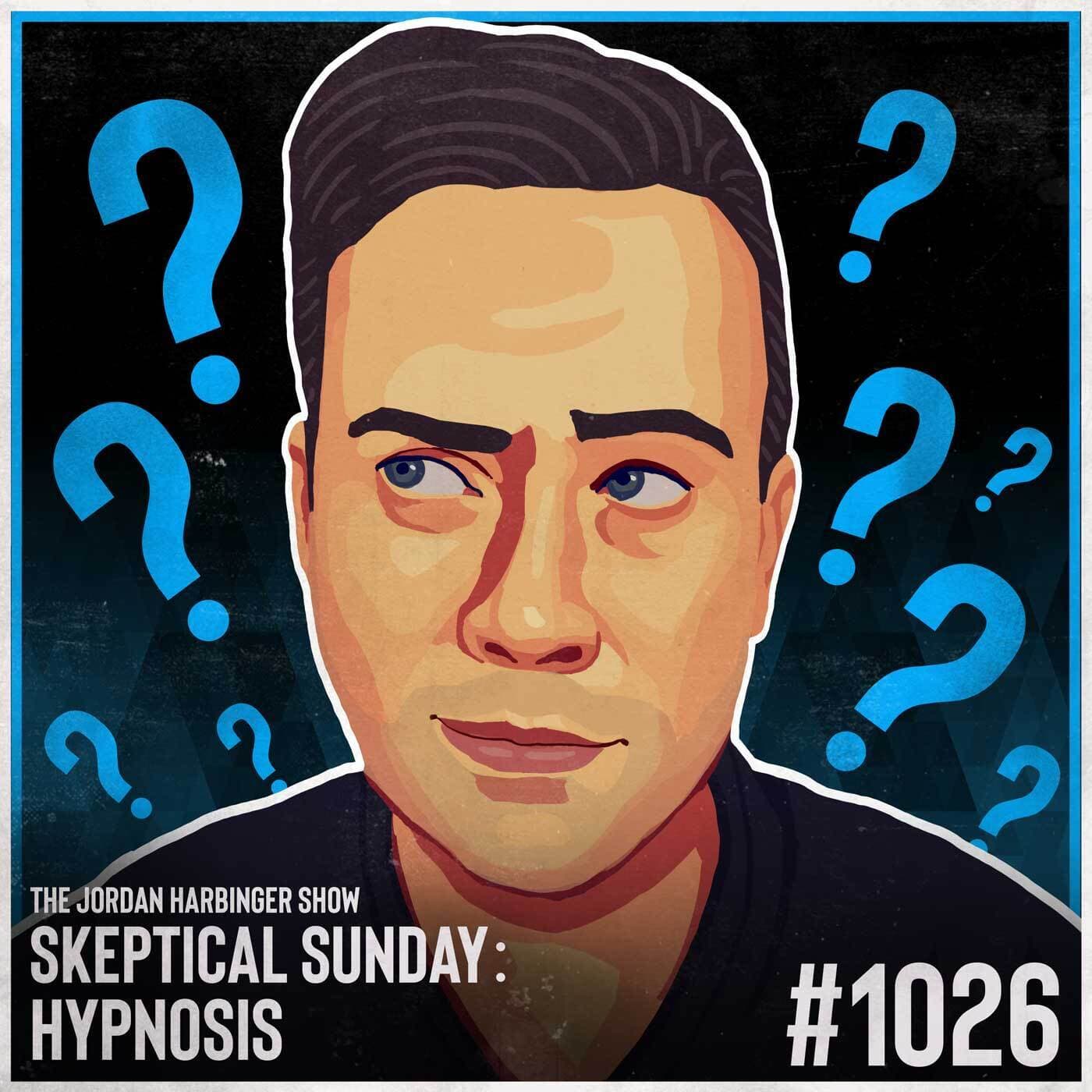
Podcast Episode Notes: The Jordan Harbinger Show - Episode 1026: Hypnosis | Skeptical Sunday
Episode Overview In this episode of *The Jordan Harbinger Show*, titled "Hypnosis | Skeptical Sunday," host Jordan Harbinger and guest Andrew Gold explore the fascinating and often misunderstood topic of hypnosis. They delve into its potential uses, limitations, and the myths that surround it, taking a skeptical approach to common misconceptions.
Key Discussions
Understanding Hypnosis
- Real vs. Misunderstood:
- Hypnosis is not the sensationalized mind control often depicted in media, but more akin to guided concentration or relaxation.
- Applications:
- Effective in various fields, including:
- Pain management
- Anxiety reduction
- Sports psychology
- Scientific Evidence:
- fMRI studies indicate that hypnosis can genuinely affect brain activity related to memory and visualization.
Myths and Misconceptions
- Mind Control Myths:
- Hypnosis cannot make individuals act against their will or moral code.
- The portrayal of hypnosis as a tool for hypnotizing "chicken-cluckers" is largely exaggerated.
- Placebo Effect:
- Many effects attributed to hypnosis may actually stem from the placebo effect or the subject's belief in its efficacy.
Applications in Sports and Therapy
- Visualization Techniques:
- Athletes use visualization as a form of self-hypnosis to enhance performance.
- E.g., Olympic swimmer Michael Phelps employs imagery for success.
- Therapeutic Hypnosis:
- Can help individuals overcome phobias and manage chronic pain conditions.
Limitations of Hypnosis
- Not Universally Effective:
- Approximately 25% of the population cannot be hypnotized.
- Effectiveness can vary based on individual susceptibility, the skill of the hypnotist, and the application method.
- Variability in Results:
- Mixed outcomes reported for weight loss and other therapeutic uses.
Controversial Uses of Hypnosis
- Memory Recovery:
- Debate exists around hypnosis's reliability for recovering memories; potential for creating false memories (confabulation).
- Example: Issues with legal cases where witness testimonies obtained under hypnosis led to wrongful convictions.
Ethical Considerations
- Legal Ramifications:
- Hypnosis in court is contentious; many jurisdictions exclude hypnotically elicited testimonies due to reliability concerns.
- Cases like Ed Ray, who remembered a license plate number under hypnosis, highlight its controversial role in legal settings.
Cultural and Historical Context
- Historical Use:
- Sigmund Freud used hypnosis in early psychoanalysis, later abandoning it for other methods.
- Fiction vs. Reality:
- References to media like "Get Out" and "The Manchurian Candidate" illustrate the fictional dramatization of hypnosis.
Key Takeaways
- Skeptical Approach:
- While hypnosis has legitimate applications, it must be approached with caution and critical thinking.
- Value in Personal Development:
- With the right mindset and expectations, hypnosis can offer benefits, especially in personal growth and performance enhancement.
- Stay Informed:
- Continuous learning about hypnosis and its implications can help demystify its potential.
Conclusion The episode encourages a balanced view of hypnosis, recognizing both its potential benefits and limitations. Jordan and Andrew emphasize the importance of skepticism in understanding complex psychological phenomena.
Connect with the Hosts
- Jordan Harbinger: [Twitter](https://twitter.com/JordanHarbinger), [Instagram](https://www.instagram.com/jordanharbinger), [YouTube](https://www.youtube.com/c/THEJORDANHARBINGERSHOW)
- Andrew Gold: [Twitter](https://twitter.com/andrewgold_ok), [Instagram](https://www.instagram.com/andrewgold_ok/), [Podcast](https://www.andrewgoldpodcast.com/)
Additional Resources
- Full show notes and resources can be found [here](https://jordanharbinger.com/1026).
- For networking and relationship development, explore the *Six-Minute Networking* mini-course at [jordanharbinger.com/course](https://jordanharbinger.com/course).
---
This summary encapsulates the critical elements discussed in Episode 1026 of *The Jordan Harbinger Show*, providing an accessible reference for listeners interested in the complexities and realities of hypnosis.
Written by AI. May contain mistakes. Listen to the episode to check what was said.
Transcript
Automatic transcript. May contain errors.0:28This episode is sponsored in part by LinkedIn. compared that to the cost of a bad hire. Training time, salary, lost opportunities, stress on your existing team, and then the emotional fun of letting them go and starting all over again. When you add that up, spending a bit of energy up front to find the right person is a no-brainer. That's exactly where LinkedIn Jobs shines, helping you get it right the first time so you're growing your business instead of constantly cleaning up hiring mistakes. Hire right the first time. Post your job for free at linkedin.com slash harbinger. Then promote it to use LinkedIn Jobs' new AI assistant, making it easier and faster to find top candidates.
1:00That's linkedin.com slash harbinger to post your job for free. Terms and conditions apply. What can 160 years of experience teach you about the future? When it comes to protecting what matters, Pacific Life provides life insurance, retirement income, and employee benefits for people and businesses building a more confident tomorrow. Strategies rooted in strength and backed by experience. Ask a financial professional how Pacific Life can help you today. Pacific Life Insurance Company, Omaha, Nebraska, and in New York. Pacific Life and Annuity, Phoenix, Arizona.
1:38Welcome to Skeptical Sunday. I'm your host, Jordan Harbinger. Today, I'm here with Skeptical Sunday co-host, Andrew Gold. On the Jordan Harbinger Show, we decode the stories, secrets, and skills of the world's most fascinating people and turn their wisdom into practical advice that you can use to impact your own life and those around you. Our mission is to help you become a better informed, more critical thinker. And during the week, we have long form conversations with a variety of amazing folks from spies to CEOs, athletes, authors, thinkers, performers. On Sundays, though, we do Skeptical Sunday.
2:08We're a rotating guest co-host and I break down a topic you may have never thought about and debunk common misconceptions. Topics such as why tipping makes no sense, astrology, the death industry, weddings, and more. And if you're new to the show or you want to tell your friends about the show, I suggest our episode starter packs. These are collections of our favorite episodes organized by topic that'll help new listeners get a taste of everything we do here on the show. If you're new to the show or you want to tell your friends about the show, I suggest our episode starter packs. These are collections of our favorite episodes organized by topic that'll help new listeners get a taste of everything we do here on the show.
2:42Topics like persuasion and influence, crime and cults and more. Just visit Jordan Harbinger.com or search for us in your Spotify app to get started. Today, we're about to unravel and intriguing subject. We're diving deep into the multifaceted, controversial, and enigmatic world of hypnosis. You're feeling sleepy, really sleepy, but just awake enough to enjoy this episode of the podcast. Joining us now is not a hypnotist, but a man whose voice will probably send you to sleep anyway. It's Andrew Gold from On the Edge with Andrew Gold podcast. He's a journalist that I asked to delve into this with a fine tooth comb.
3:15And I also suggested that he cluck like a chicken, bark like a dog and strip in front of a laughing audience to humiliate himself. It's great to have you with us, Andrew. Thanks so much. Cluck! Woof! And this is an audio podcast, so I suppose you'll never know if I achieved the third of your commands. Thanks for inviting me, Jordan. It's a pleasure to be here, and I am eager to explore this mesmerizing topic together. You're absolutely right that hypnosis does bring to mind comedy acts, people getting up on stage and being made to cluck like a chicken and do all sorts of funny and humiliating things for laughs.
3:49And part of the fun, the sort of electricity in the air, is that between all that laughter from the spectators is a genuine curiosity and confusion because everyone is wondering what is actually going on. We suspect that the chicken clucker actually wants to cluck because he or she is a weirdo or wants to make us laugh and harbors hidden aspirations to be a chicken, who knows? And so that's what we're going to try to uncover today and to go from the magic shows and funny events to governments, cults, and washers of brains or brainwashers, I should say. I'm looking forward to it. I've seen these stage shows during my college orientation, which was a long time ago.
4:35I'll just leave it there. They brought some people up on stage and they did do like the, can you speak another language? Can you cluck like a chicken? Can you do a sexy dance? And some of the people that they picked, I couldn't help but notice later were like the most extroverted people in college, like the male cheerleaders who were in front of 100 ,000 people during a football game and were really popular. I'm like, was that an accident? And I remember seeing that guy and going, was that real? And he goes, eh, you know, and I'm like, well, what does that mean now? Now I don't know. It's 25 years later and I still don't know.
5:08I am very much looking forward to this. Hypnosis has been a topic of intrigue, fear, curiosity for the general populace for years. I do wonder what it is really. It's not going to be an open and shut case. Spoiler alert, we deliberately pick topics that are ambiguous on Skeptical Sunday, some of the time anyway, because it's not fun to do a show like, is water wet? And the answer is yes, and that's the end of the show. Although, I'm sure somebody will email in to tell me that there's dry water, which, by the way, does exist, rendering this particular example worthless. But we also have flat earthers in the audience as well.
5:41So, you know, what can I say? I want to get into the nitty gritty of our complex world. But on a simple level for now, what is hypnosis? Is it mind control? Is it a stage trick? Is it some kind of psychological tool that's somewhere in between? What's going on here? There is no simple level with Skeptical Sunday, Jordan. You know that. Let's start with this. hypnosis is real, but it's not quite the fantastical phenomenon it's often portrayed as in movies and books. Nothing ever is. So it's more about guiding people to concentrate their attention in a specific way, a process more akin to meditation than to the sensationalized version of mind control we often see on the big screen.
6:24Just recently, there was the brilliant film, Get Out, where it became easy for this mum in the film to hypnotize the main character just by stirring her tea. I think that's a little far-fetched because most people aren't susceptible to hypnosis, so she was sort of relying on that character being quite susceptible. But then you get like Office Space, another movie, that iconic film where a character is hypnotized to be more relaxed, leading to hilarious movie-like results. Now that one seems a little bit more legitimate to me. And I've actually seen a hypnotist myself for something similar, so I'll get onto that later.
6:58But hypnosis has been effectively used in various fields, including healthcare for managing pain, anxiety, and even in sports psychology to enhance athletic performance. It's a vast field with numerous applications, which makes it all the more intriguing to delve into. In fact, Sigmund Freud, the founder of psychoanalysis, used hypnosis in his early practice. He studied it under the French neurologist Jean-Martin Charcot in Paris, Paris, in the late 19th century. Freud initially used hypnosis to help his patients recall repressed memories and experiences, believing that their symptoms would decrease when they were able to confront these forgotten traumas.
7:40It's not just therapists. Sports teams have hired hypnotists to varying success. I'm an England soccer, as you guys call it, fan. And so I recall when England used a hypnotist in 1999 to help them win the Euros in the year 2000. Okay, and do they win the Euros? They did not. They've never won the Euros. Despite leading 2-0 in their first game against Portugal, they had a psychological collapse and lost 3-2. They did recover to defeat old rivals Germany, and then were leading again against a quite average team at the time, Romania, and had another psychological collapse to lose and got knocked out in one of their worst tournament performances ever.
8:23So that's a ringing endorsement of hypnosis, I guess. No, they did it terrible. Record-setting horrible. Did the hypnotist remember to wake them up from the trance they were in? I mean, did they even still pay the guy? It sounds like he actually had a negative impact on the players, although, you know, causation and all that stuff, not really a thing. But still, for professionals to hire hypnotists, you'd think there would be a legitimate scientific backing here, maybe. Can you share some instances where hypnosis has demonstrated actual effectiveness instead of the opposite? Of course, although we'll have to, unfortunately, veer far, far away from any of my sports teams because success has evaded them thus far.
9:01But the application of hypnosis and pain management is a great place to start. there's this seemingly mad hypnotherapist who has had operations performed on him during which he's opted out of the use of anesthetic. The hypnotist Alex Lenkai says he simply put himself in a trance while a surgeon soared off his ankle. Ouch. The doctor said he could even... Putting his money where his mouth is, though. I gotta hand him that. Like, okay, I believe it works. Really? I'm gonna cut your leg off. Like, what's that movie with Kathy Bates? That movie, I know that really narrowed it down. misery where she chops the author's ankle off.
9:37I mean, that's, this guy really believed in hypnosis. Okay, continue. Well, the doctor said that he could even correspond with Lenkai while cutting away at his ankle, and it was all fine. In fact, in Liege, which you'll know from your high school geography classes, is in Belgium, they have a hospital that uses hypnosedation on patients being operated on as an alternative to anesthetic. Historically too, of course, it's been a validated source of pain relief. Known as mesmerism, it was often the sole source of pain relief in surgeries in the 1800s. Wow. Okay. So besides a barrel of whiskey or whatever they would drink, I mean, God, there's, I almost, that's unbelievable.
10:18That's got to just be so, I don't even want to think about the level of pain. I mean, you've really got, so, okay, it seems like hypnosis really can work. And I'm thinking that maybe a placebo is involved, but surely a placebo can't anesthetize you while you're getting your ankle sawed off. And even if it does work, I just don't know if I would ever trust it enough or something like that. You really have to be convinced. Really, you do. Yeah, I wouldn't do it either. But anecdotal evidence also abounds with numerous accounts of people overcoming phobias or quitting smoking through the use of hypnosis.
10:51There have even been studies showing hypnosis's potential effectiveness in managing symptoms of conditions such as irritable bowel syndrome. So that's truly remarkable. And stories like these make hypnosis seem, well, it sort of seems like a miracle cure. I'm sure it's got its limitations. I'm sure it doesn't always work, right? I mean, we saw the soccer thing, but every rose has its thorn, as they say. Well, yes. Even in the examples I've given you, we're in the realm of the immeasurable. We're in placebo territory, as you point out. I can't explain how a guy can get his ankle cut off without apparently feeling pain.
11:24But things like quitting smoking and phobias, look, they have deep-rooted causes. But mind over body can help. Hypnosis and suggestion can make you more confident and help you with addictions. We know with placebo, for example, that giving pills containing nothing but sugar can help to calm the symptoms of people with Parkinson's disease. It still helps when the patients know that these are placebos, which is insane. They know they're taking sugar pills, and it still actually helps. We see in their brains that it helps. So it feels like simply visualizing, thinking about the thing, and telling yourself, hey, I've paid good money for this.
12:00I better stop smoking, for example, that can be the motivating factor. Shall I tell you about my own hypnosis? Yeah, please do, as long as it's safe for work. Yes, I save all my blue references for our off-air conversations. So perhaps ironically for a podcaster, I have a fear of public speaking. And I had to give a speech to the Humanist Society about journalism. And I was petrified, couldn't sleep for weeks in the lead up to it. And so I eventually called upon my former podcast guest, hypnotist, Chris Hughes, and I think this was COVID time. So we did it over Zoom and it was all a bit weird because I had to lie down like on my bed while his camera just watched me with my eyes closed and everything.
12:40Well, it's your camera to be fair, right? Yeah, I suppose so, but he was watching through it and he just talked for like 40 minutes about how I was lying on a fluffy cloud and my speech was going to be brilliant that I did for the society. I don't think I'm capable of being hypnotized and that's unfortunate because I was desperate to feel what it was like. But my head is just going like, well, this doesn't feel like a fluffy cloud and my neck hurts and my eyes are straining to shut, you know, because he's saying your eyes are just so relaxed. And all I could feel was like my eyes being really tense and I forgot how to even close them.
13:12So I was like the opposite of hypnotized or the opposite of under a trance. However, it was enjoyable listening to him say nice things about me. And when it came to it, the speech, I was far less nervous than normal. So something had switched and I can't put my finger on it, but I felt either more confident or more like placebo. But it didn't seem to involve like magic and trance and stuff like that. That's interesting. It reminds me, I dated a woman who was a hypnotist for a minute. And I remember once I was like, I can't sleep. She's like, oh, I can hypnotize you. This is over the phone. And she did or tried to.
13:48And I was like, yeah, I'm a little more tired and I fell asleep. And I was like, wow, okay. She's like, see, I told you it worked. but then I noticed that a lot of the times when we were talking on the phone, I would just fall asleep during the conversation. I ended up breaking up with her because she was really boring. So I'm like, wait a minute, was I hypnotized or were you just always this boring and I didn't, I really just wasn't interested in what you had to say. And that's why I fell asleep. I mean, same results, but I don't know if it would work for like giving a speech. You know, if she's trying to get me psyched up for a speech, would I also just feel really bored and fall asleep.
14:21So, okay. So you didn't feel like you entered a trance as such. I think we're on the same page here. Yeah. Not even close. So while hypnosis has shown promising results in various instances, it's not magic. Some studies suggest that about a quarter or you guys say a fourth, right? A quarter, quarter of the population. A quarter, quarter of the population cannot be hypnotized at all. Some say it's much higher than that. And I'm in that group. Of course, you're in that group. It seems. Yeah. I remember hearing magician, Darren Brown say that that has no bearing on your intelligence or anything like that.
14:52It's just an unknown as to why some people are susceptible, although we will go into that a little bit later. I mentioned Freud earlier. He abandoned hypnosis in the end in favor of free association and dream analysis, which a lot of that has been debunked as well. He did this for several reasons, one being that not all of his patients were easily hypnotizable. And even for those who are susceptible to hypnosis, it doesn't always yield the desired results. Hypnosis's effectiveness can greatly depend on the individual's openness to the process, the skill of the hypnotist, and the specific application.
15:27For instance, hypnosis for weight loss has been the subject of many studies with mixed results. Some people report significant weight loss, while others see no effect at all. Many people who practiced hypnosis were better able to shed the pounds initially, but not necessarily to keep the weight off. Again, it's likely that the kind of person going to the trouble of practicing hypnosis is more determined to lose weight than those not trying hypnosis. So results haven't really been great. And it's a reminder that hypnosis, like any other tool, does have its limitations. That's interesting. So this variability in effectiveness, it's got to stir up some skepticism.
16:06I'd imagine it's not all smooth sailing in the world of hypnosis. When you use medicine, sometimes stuff doesn't work because somebody's allergic or has a high tolerance. But I would imagine there are rare instances where it just doesn't work at all. And when it's, what was it, a quarter of the population, when it's 25 % not effective at all, it seems a little bit high. Yeah, exactly. I think it's higher than that as well. I think so too. That's just the sources I found online, but I think it's higher. As with any field that touches on the intricacies of the human mind, there is a spirited debate in the scientific community about the nature of hypnosis and its mechanisms of action.
16:39Some critics argue that the effects of hypnosis might be nothing more than a placebo effect, as we discussed, the result of the individual believing they're being helped. On the other hand, proponents argue that hypnosis induces a distinct psychological state characterized by heightened suggestibility. So it's a totally different thing. You're in a trance, you're in a state, and that's how many who've been hypnotized describe it. Further fueling the controversy is the use of hypnosis in memory recovery. So Freud did that. We've seen this a lot as well in TV and movies. The Hitchcock movie Spellbound from 1945 has an amnesiac using hypnosis to recover his memory to prove his innocence in a murder case.
17:19A movie called The Butterfly Effect takes the idea a little further as Ashton Kutcher self-hypnotizes to actually go back and change lost memories. If he could just go back and change the script, well, we'd have a better movie too. Yeah, indeed. Which is a shame actually, because it's one of those movies where like the premise is like, you really want to enjoy it. I think another one was Bicentennial Man like that, Robin Williams, same kind of time, where I don't know why I grouped those movies together as ones that could have been brilliant and had such a great premise. And I thought were great when I was a kid and have since realized that they have just been slammed critically and not very good.
17:52But anyway, in real life, individuals claim that hypnosis has helped them recall traumatic events hidden deep within their subconscious, while others warn that this practice can lead to the creation of false memories, a phenomenon known as confabulation. That's interesting. That's probably a whole skeptical Sunday with the fake memories. So let's dive deeper into that idea of memory recovery via hypnosis. I find that really interesting. And like with pain relief, I guess it's an example of a really useful side of hypnosis, not just clucking like a chicken, but some of what we've talked about so far can be explained by placebo.
18:27But memory, that seems to imply at least something physical is happening in the brain, right? Yeah, as ever, Jordan, you are correct. There seems to be something happening in the brain, or at least the mind. Perhaps just as interestingly, hypnotists can make people forget stuff rather than just recover it. They seem to be able to create a state that mimics functional amnesia. They tell a patient they will forget, and then they do forget. And amazingly, the forgetting can be cancelled if they ever need to recall those memories. And this is what goes on on stage where magicians and hypnotists get people up from the audience and say, count to 10, but you've forgotten the number seven.
19:08And I've seen this, you know, for the life of them, they go 1, 2, 3, 4, 5, 6, 8, 9, 10, and the audience laughs. And they do it over and over again. And they're asked, what is four plus three? And they just cannot get to the number seven. They can't get there. and all sorts of fun and hijinks can be had until the hypnotist allows them to re-remember. They cancel the forgetting of it. Well fairly recent studies show that the hypnotic state they enter actually does influence brain activity and this is one of the places where we are able to tell the difference between those who are highly susceptible to hypnosis and those who are not.
19:42It's in the relationship in their brains between something called explicit and implicit memory. The memories never go anywhere in hypnotized people. They just aren't able to retrieve them for a certain time. We know the memories are still there because people still react as though they have them. Let me explain that. People with PTSD, for example, who suffered traumatic events, often forget them entirely, but still respond to certain triggers that are related to what happened to them, which show us that somewhere deep down, they still have those memories. Another example is that people in this state might call a friend's number on the phone, but won't actually remember who it is they are calling.
20:23So they've still got sort of the memory, the muscle memory of like calling that number, but they've been made to forget who the person on the other end of the phone is. That seems a little bit limited in utility, right? For the PTSD thing. Because if you forget about the combat that you are in that traumatized you, but you still have a really crazy bad reaction when you hear helicopters or fireworks, It's like, well, okay, that's not great, right? You still have all the problems you had before. You just can't remember the reason for it. But it's like, is that better? Or is that just kind of a nifty party trick where you don't remember how bad it was, but you still have the same problem that you had before?
20:59That just seems very limited. Or maybe it lowers it a little bit, but if you're still 90 % affected by it, well, that's still pretty bad. So while this is all going on, while people are forgetting things at the whim of the hypnotist, what's happening in the brain? Do we have any idea? Yeah, they did quite recent tests in Israel with fMRI scans of the brain. They found 25 people who were all susceptible to hypnosis for their study and had them watch a 40-minute movie. Then a week later, they hypnotized these people to forget the movie and then asked them questions about the movie. So this sounds a bit like torture because it must be so frustrating for them trying to recall what happened and not being able to do.
21:37But they were asking them these questions while they were in the fMRI scanners so we could look at their brains. And yes, the memory loss was severe when hypnotized to lose memory. And when told to get their memories back, they remembered more about the movie. But what was startling is that they didn't seem to be faking it or just being placeboed. When participants couldn't remember the film, their fMRI scans showed no activity in the visualization parts of the brain. And it was full of activity when they could remember parts of the film. So what we learn from that is that they're not just faking it and going along with the hypnotist.
22:10Obviously, some people do that on stage for the audiences and stuff like that. But in general, when you are hypnotized, you know, that does change your brain. And it's quite a remarkable discovery. So this is interesting. The Manchurian Candidate springs to mind. This is a novel and movie about an American soldier, I think, it's been a minute, who is hypnotized into becoming this cold-blooded assassin. Is there any indication that that might be a thing that you can do? Can hypnosis be used to control people to such an extent? I mean, the cluck like a chicken thing is pretty convincing. And if they're not faking it, as we now believe, then can you be held responsible for your actions while under hypnosis?
22:46It seems like we'd have way more hypnosis defenses showing up in court if this was the case. But what do I know? Yeah, well, the Manchurian candidate is an engaging narrative, but it's a work of fiction, of course. In reality, hypnosis can make you forget, recall, staff act a bit silly, but apparently it cannot make people act against their will or against their moral and ethical codes. Even under hypnosis, individuals retain their agency. They are in control and can choose to exit the hypnotic state at any time. So the idea that hypnosis can be used as a form of mind control is a myth, often perpetuated by popular media.
23:21There are laws now being introduced in many countries, including the states, around coercive control. So that's regarding undue influence and can be used to prosecute cult leaders and abusive partners who use things like neuro-linguistic programming, love bombing, and many other techniques to isolate members from the outside world and get them to do all sorts of things. Former Mooney's cult member Stephen Hassan, a guest on both of our podcasts, formed an entire model called the Byte Model about just how that's done, but it's not exactly hypnosis. Interesting. Okay, what about the legal ramifications of admissions obtained under hypnosis.
24:01That'd be prosecutors hypnotizing suspects and witnesses to get to the truth. Well, it would be investigators, I should say, hypnotizing suspects and stuff like that to get to the truth about their memories. That seems dodgy at best. Yeah, well, those are likely to be ruled inadmissible in the UK. It is stated under no circumstances should suspects or persons who may be implicated in the commission of an offense be hypnotized. In the US, things are a little more complicated. Despite the science and reliability of hypnosis confessions being shady at best, some courts are still convicting people over it.
Read the full transcript
24:37The reason that hypnosis has been taken quite seriously in the US dates back to a 1976 case where bus driver Ed Ray saved 26 kids who were kidnapped and buried below ground in a truck trailer. So it was this weird truck trailer that was like half or pretty much submerged below the earth. Ed Ray's bus had been stopped by three armed men and the kids and Ed were taken to this horrible trailer. It's part of a moving van buried underground and it had this intricate system for sucking in fresh air and they were going to demand five million dollars ransom for the kids. So the victims here piled mattresses on top of each other and one of the kids managed to squeeze through a vent to get out and informed a night watchman at the quarry where they were buried.
25:21That's a crazy plan. Can I just put a pin in that for that is a crazy ass plan. I mean, 1976. Okay, but holy cow. This is like something from Grand Theft Auto, where you kidnap them and then they bury the bus. Yeah, it's kind of a brilliant plan. But it's also like, oops, we accidentally killed everyone because the roof of the bus couldn't hold the dirt or they suffocated because our weird pump system broke at night. And they all die. I mean, it's just what the hell it's straight out of a movie, but like not a good one. It's the weirdest thing, man. Very odd. Yeah. I couldn't believe when I was researching this, I couldn't believe what I was reading, to be honest.
25:59And it's not the bus. Yeah. This almost, it sounds fake. Yeah. It's not the bus. It was a moving van. So it was like, they took them out the bus, the kids and the teacher, they took them to this quarry and it was this moving van trailer that they had underground with this weird like breathing system so that they could still breathe. But as you say, yeah, that could have failed. The kids could have all died and they wanted$5 million. The point is that Ed Ray, the bus driver, later under hypnosis, was able to remember the license plate number of the kidnappers. Wow. So Ed died in 2012. In his last days, many of the kids, now 36 years older, came to visit him.
26:33His lasting legacy for good or bad is that the courts sometimes admit hypnosis depending on the state. For example, Texas allows for hypnosis in court. It's a bit mad because although hypnosis does work to help recollect memories can also inspire all sorts of confabulations. So you can't tell what's real and what isn't. So Charles Flores is one example of a man, I think currently still, I couldn't find any sort of recent news about him in the last year. But before that, it seems that he's a man on death row for allegedly shooting a 64-year-old white woman during a robbery, with the main evidence being something a witness recalled under hypnosis.
27:10But that witness initially described two white men with long hair, then underwent hypnosis, and then was shown like a list of Hispanic men or a bunch of photos of Hispanic men, and then identified Flores. Well, if hypnosis was real, I wouldn't have to beg, borrow, and plead for you to patronize the fine products and services that support this show. We'll be right back. Thank you so much for listening to and supporting the show. Your support of our sponsors does keep us going. Please check out the deals for yourself, jordanharbinger.com slash deals. You can also search for any sponsor using the AI chatbot on the website as well.
27:42Please consider supporting those who support this show. Now, back to Skeptical Sunday. It sounds like the whole thing is a bit of an ambiguous mess. There's so many aspects of forensics that we thought were absolute science. What is it? Polygraphed, the lie detector test, and we're starting to realize these are flawed. Like blood splatter patterns is another one, and different ways to work out the difference between arson and accidental fires. So many people are prosecuted and put on death row with pretty weak evidence. And it's terrifying, really. Hypnosis, memory recovery, it just sounds like a high stakes use of hypnosis, given the risk of creating false memories.
28:20Like, look, somebody sees a license plate and they have a bunch of other evidence that these are the guys that did it. The voice matches the recording and they were in the area at the time and they rented the moving van or whatever. It's like, OK, that I get. But when it's like, oh, I picked this guy out of a lineup while I was being hypnotized, but also the guy works at the barbershop where I go. So maybe it was that. It's like, death row for that. I don't know. It's a little dodgy. It actually reminds, so this is a tangent, has nothing to do with hypnosis, but it reminds me of this ridiculous story.
28:49I was in New York and I needed a haircut and I go to a barber. So, you know, I'm waiting to get my haircut. I'm sitting in the chair chatting with the guy. On my left, there's a couple of guys sitting by the window reading a newspaper. And one of the guys has all these tattoos. He's a barber. He just doesn't have anybody working with him right now. And one of the tattoos is like a barber sheer or whatever. I'm like, wow, this guy's really into cutting hair. And he's talking with another person, probably another barber or whatever. And they're reading about this rape that happened to an older lady, like 70, 80 years old in Central Park.
29:22It was really gross. And the guys were reading it. And the guy with the tattoos was like, wow, what happened? Let me see. Oh, they're looking for him. Crazy. And then the cops walk in and they're like, so and so. And he's like, the point to him, the guy with the barber shears on is reading the article. And they go, you're under arrest. He's like, what? What am I under arrest for? They're like, we don't disclose that, but you're under arrest. And he's like, this is a bunch of bullshit. What am I under arrest for? This is crazy. And they go, I don't think you want me to. He's like, I want to know right now.
29:52And they're like, you're under arrest for the rape of an 80 year old woman in Central Park last week. Like she identified you by your tattoo. And he's like, all right, I'll be, you know, he just basically was like, oh, that's it. So the article he was reading that he was interested in was about a crime he had committed. Oh my God. That's like in every TV show. Yeah. Isn't it? You know, in the TV shows, they got the paper out. They're like, oh, oh, look at this guys. This goes, and it was him. Yeah. I love that. It was him. And I couldn't believe that I was right there. And my barber just goes, oh man, he, he's fucked now.
30:22And it was like, nobody stopped cutting hair. the other nobody like got up and left because they were so surprised people talked about it sure if they were like oh man how long has he been working here and they're like oh he's new here you know that was it but it wasn't like everybody stop and go have a cigarette because we're so shocked our colleague raped somebody it was like that was just another day maybe an exciting one in New York and I thought this is just I can't believe what I just witnessed it was like I I expected somebody to yell and cut. Great job, everybody. Take five. Nope. Just a real thing that happened in New York on any given Tuesday.
30:59Show must go on. Unfrickin' believable. Anyway, yeah. So false memories. You were saying you can't really control people or make them do things they don't want to do or give them weird powers, but there have to have been some wacky and controversial attempts, right? I'm thinking projects like MKUltra, which I think included LSD, but wasn't that the plan? Create hypnosis assassins or something for the CIA? Yeah, that's right. That's right. It goes so deep and it's so hard to know what's real and what isn't with MKUltra. But MKUltra was a project conducted by the CIA in the mid 20th century, and it involved attempts at mind control, including the use of hypnosis.
31:35The project was shrouded in secrecy and involved a wide range of experiments, many of them ethically dubious, to explore various methods of manipulating the mind. So hypnosis was often used in conjunction with, as you say, mind-altering drugs such as LSD and other chemicals. Frustratingly, but typical of secretive CIA ops, many of the documents were destroyed by CIA director Richard Helms in the 1970s. So there's a lot we don't know. Although you could watch the movie The Men Who Stare at Goats from the book of the same name by one of my favourite former podcast guests, John Ronson. What we do know is that the CIA was interested in whether hypnosis could be used to force individuals to commit acts they would not otherwise consent to, including assassinations.
32:21Could it help people to resist torture as well? That could be really useful for an army or whatever. But again, the consensus is that hypnosis can't make you do things that are fundamentally against your will or your morals. It's more of a way of suggesting new ways of thinking, new ways of acting, and new ways of remembering. There's no evidence to suggest that these attempts by the CIA were at all successful. Hypnosis simply doesn't have the power to override an individual's free will or make them act against their deep-seated beliefs, or allow them to turn invisible or walk through walls as the CIA allegedly tried to make them do.
32:59That part doesn't make a ton of sense. But I guess while you're drugging people and hypnotizing them, you're like, all right, let's just let's exhaust all of our options here and see what what the limits of belief are. Like, how confident can you be when? No, he no. Now I need stitches. OK, no walking through walls. Check. So stage performers, magicians, they've also adopted hypnosis as a tool for their shows, which we talked about at the top here. So all of this begs the question as to what is really going on, right? If hypnosis can't fundamentally make people do things they don't want to do, does that mean these people secretly harbored the desire to get naked on stage and speak German?
33:35This wasn't a guy who didn't know German. You know, he took German in high school or something. That's the thing. It just seems like you're just asking people nicely to do something they wouldn't normally do and giving them, what, an excuse to do it? And so they can go, I was hypnotized. I don't really want to be a male stripper, but they're like, oh, I can get away with this right now. I don't know. I think there is an element of that. I mean, it's crucial to distinguish stage hypnosis from therapeutic hypnosis. In a stage setting, people are often more willing to go along with the hypnotist suggestions, as you say, partly because of the social context and their expectations.
34:07This can create the illusion of mind control, but it's far from the reality of what hypnosis is. Right. So you get called up on stage. You sort of don't want to let the magician down in the audience. You don't want to let anybody down. They're all here for a good time. You don't want to be the guy who doesn't play along. And I've heard that hypnotists, they screen and target the most susceptible people in the audience. And actually, I have a friend who grew up on the street and he is part Albanian, part French, part Italian, whatever. And he grew up on the streets in Europe and he's basically like a really talented, I hate to say this, like con man kind of.
34:44He's very smooth. And we would go out for drinks and he could do amazing things. Really amazing. He would go, that girl right there. I am going to watch this guys. And he would walk up to her. And I know he doesn't know her because I might even know the person works there because it's my neighborhood. And he just showed up out of the blue because that's how he rolls. And he'll knock on my door at one o 'clock in the morning in New York. And he's like, I'm here. And he's like, we're going out. We're having a night on the town. I'm like, it's Tuesday. So we would go out and he would just pick a woman and he would be like, look at you.
35:17You want to give me a kiss. Look at this deep love you have for me. We just met. And the girl would be like, and melt into his arms. And I'm like, what is happening right now? I know you didn't pay her because you have no money. You're sleeping on my couch. What is going on? And he could do this. And I finally was like, okay, explain this. And he goes, I can tell who's going to be susceptible to this. It's not that I can do this to whoever I want as much as I'd like you to believe that. He's like, I just look around and I see who is feeling the Valentino, his name is Valentino, of course, who's feeling the Valentino vibe.
35:48And I think this is what he is doing. I don't even think he knows that he's doing this. If you would like Jordan Harbinger to keep doing the French accent that's supposed to be Albanian, please send an email to the show. No, he's got an accent that even he friggin can't identify. He just... Maybe that was perfect then. That was like, you just did a perfect one yeah i mean he calls me like poppy yeah but then he also has like all these other he's like baby come i'll do your hair you look fantastic fantastico like i'm pretty sure even he's just like making up whatever street accent he has that he grew up with yeah i'm pretty sure he's just american and he's putting he's just putting on the whole thing that would also not terribly surprise me it would actually make sense but there's times where this guy guy is living in a mansion with a Bulgarian model.
36:34And I'm like, what is going on? And then there's other times where he's like, yeah, I'm just couch surfing. Like what happened to the model in the mansion? And he's like, oh, good things come to an end. Jordan, you know, there's Poppy. That's him. He's like a guy from a gypsy movie. I know you're not supposed to say that, but I mean like traveling, trickster, romantic guy, really amazing guy, really interesting guy. But anyway, way. The hypnosis thing, this is clearly what he's doing, right? He finds people who have a certain look in their eye and he just goes like, oh, I can meet this woman and shack up with her for a week at her nice apartment or her apartment that she has that I don't have because I'm in another city where I'm homeless.
37:14And he just had to do this for so long that it's a survival instinct. Yeah, I think there's something to that. There definitely is being able to see a susceptibility, But again, I wouldn't want to conflate it with being susceptible necessarily to other things. I don't think because you're susceptible to a form of hypnosis, it means that you would also fall for, you know, junk mail spam scams and things like that. I think it's a different kind of thing. No, I don't think they're gullible. I think they're just susceptible to this particular thing. It's not like, and I met some of the women that he's done this to.
37:45They're not idiots. These aren't like people where you go, oh my gosh, this person will fall for anything. It's like a server at a place who's been perfectly nice to me for months at a time. And she meets him and she just somehow falls in love immediately. And he'll bring her back to our apartment and she's like dancing and singing. And I'm like, this shy girl is now in a completely different mode. And looking back, I'm like, oh, there's some consent issues here now that I think about it, right? Like with what's going on. But at the time, I'm like 25 and I'm just thinking, wow, this guy's got crazy game.
38:14Well, given what we've looked into about the moral issues and how you can't really hypnotize someone to do something against their will, then I wonder if there really are consent issues. That would be something to do a deeper dive on. We don't really know. I guess it's a tricky ground, isn't it? Yeah. Look, at the end of the day, again, I know some of the women that he met, none of them were like, where's your friend who's screwing me over? They were just like, where is he? He's so interesting. What is his deal? How do you know that guy? Nobody that I met after they met him was like feeling burned by it.
38:46They were just kind of like, what a whirlwind that was. It was like something out of a romance novel for them. This is a guy who would write them a goodbye letter, leave at four o 'clock in the morning. And he even did this to me. He would write a letter like, thank you for letting me stay at your place. But when you open the letter, the money he owes you comes out. And so do a bunch of flower petals that he got from like some person's flowers in New York. Jesus. Yeah. This guy, what a showman. Such a showman. Yeah. Speaking of showmen, I was at a Derren Brown show recently, the magician and mentalist.
39:16And I saw how he, and he does this publicly on his TV shows as well. So I'm not like giving out any secret here, but he sort of tried to hypnotize or influence the entire audience. There's like 20 ,000 people there. So what he does is he keeps adding layers and layers to this hypnosis process. So he gets everybody to like stand up, put your hands behind or put your hands together and like they're stuck. Right. And yeah, and your hands are supposed to be stuck. And I really wanted mine to be stuck. Cause again, I wanted to experience what that would be like, but you know, It was just easy to move my hands apart, and it was a bit disappointing.
39:49So he keeps doing all these things where he says, right, well, if your hands are stuck, stay standing. And he does trick after trick like that, and eventually you're left with the five most susceptible people in an audience of 20 ,000 people. And then they come up on stage, those five people. And he just clicks his fingers. That's how easily these people fall into a trance, and he's just carrying them then. and these kinds of people who can easily fall into a trance are supposed to make up about 10 % of the population. So scientists have measured what again what happens in the brain during a trance and they found a decrease in activity in an area called the dorsal anterior cingulate and a decrease in the links between the part of the brain for moving your body and the part for understanding what you're doing with your body.
40:36So it is really like a science and it's pretty impressive. Although whenever I've heard Darren Brown talk about it, he seems to have no idea what's going on. But a bit like that movie Get Out, there does seem to be this voice at the back that is still there. And so if you are being told to go murder someone, that voice can kick in and go, hang on a minute, you know, wake up. So to get the effects they need on stage, magicians need to mix the hypnosis with a range of stage tricks. So I ended up going up on stage with Darren Brown, and he did all these amazing things. And the audience were there in hysterics, and everyone was laughing at me and I was embarrassed because he was able to reveal some pretty embarrassing stories about me to 50 ,000 people or 20 ,000 or whatever it was.
41:15It was just a big number of people. And I was amazed at the time, like how has he got like looked into my eyes and found out all this stuff? And look, you're not supposed to give away the magician's tricks. He's an amazing magician, hypnotist and showman, but he's also a comedian and he puts on the most fantastic show. But being up on stage and thinking it all through later, I was able to see exactly how he did each bit. And if you knew, it's actually a little disappointing and simplistic, but that's magic. You know, magic is dressing up really simple, boring things to make them look incredibly interesting.
41:49I really want to come up with some sort of corny pseudo hypnosis phrase for getting you to buy a mattress, but I'm coming up a little bit dry in lieu of that. Let's just hear from some of our sponsors. We'll be right back. Thank you once again for listening to the show. The support of our advertisers keeps the lights on around here. All the deals, all the sponsors are in one place, one searchable place, jordanharbinger.com slash deals. You can also search for any sponsor, any promo code from any time on the show using our AI chatbot on the website as well. Please consider supporting those who support the show.
42:18Now for the rest of Skeptical Sunday. Darren Brown is amazing. He's been on this podcast. We talked a lot about what he's done, but you're right. When I saw Penn and Teller and I knew those guys from, I went backstage with them too because they were friends with a friend of mine and they'll tell you that it's all tricks even on their tv stuff they're like this is a trick don't try to practice catching a bullet with your like this is fake and yeah i'm like wow this stuff must be so elaborate and pen will say something like actually this one is so shockingly simple that if we told you you would never want to see another one of our shows again because you'd be like you'd be offended at how simple this trick is.
42:59Yeah. And I believe that, right? Because it's probably something obvious, like, well, the bullet is in his mouth and he hides it well initially. And then they check the gun, but then we swap the gun. Or like the gun is never real. It has fake real, you know, it's all designed to look like, and then it just, yeah, it has a blanket it. And then something, something, when I shoot him, it produces the bullet. Like, it's going to be so simple that he's like, you're just going to be angry with us. You're going to want your money back if you find out how simple some of these are. But more importantly, what were these embarrassing stories that he revealed about you to the audience of 50 ,000 people, Andrew?
43:32Yeah, that you'll have to hypnotize me to find out. That's between me, Darren, and the 20 or 50 or whatever thousand people who were there. You know what? I wouldn't ever have a gun pointed at me like that. Even in a magic trick, even I know it's a plastic gun. I just feel like obviously there was that rust shooting with Alec Baldwin. You just think like somehow something could have gotten confused and now that's a real gun and not doing it. Yeah. I mean, this is Penn shooting at Teller, not like, okay, random audience guy, come on up here and just trust me. You know, this is like him checking the gun.
44:04But even then, yeah, you'd rather be Penn than Teller in that particular trick. I would be, yeah. But yeah, that trick, you know, with Darren and all that, there's no way he can know from looking at me secret stories about my life, right? So I don't need to give a, this isn't giving away too much. obviously somebody who was with me was asked things i don't want to be that guy who gives away too many things but you can't that magic doesn't exist where you can like find out what happened when i was 15 and i was doing this and someone else saw me you know that had to be person i was with me wrote it down and later that was confirmed so that's what's happening but the show was incredible suffice to say it was a huge audience derren brown and i was very red in the face you know you know when you're so red that your eyes water oh god eyes were like dripping I suppose that's crying, actually.
44:48I wasn't crying. Yeah, that's called crying because you've been humiliated in front of 50 ,000 people. Yeah, my eyes, it's a sort of very 1950s man way of describing crying, isn't it? My eyes watered for some reason. I have no idea what was going on. I felt flushed due to the lights. My eyes became dehydrated as they seeped some sort of liquid. I have no idea what it might have been. But yeah, look, it was still a great time. And hypnosis in magic acts really can be a lot of fun. Yeah, even if that fun is at your expense. It does seem like a lot of fun. And I think one of the things that I like about Darren Brown is he, again, like Penn and Teller, doesn't pretend to have magical powers.
45:25He makes it clear from the start. It's all an act. It's a trick. There was a Netflix special he did called Miracle, where he basically pretended to be, I think, a faith healer or an evangelical pastor of some kind. and he got people up on stage and he somehow cured their blindness and their pains and all the while explaining to the audience that he was using psychological tricks. He's not channeling God or whatever. And I think he even wanted to train someone else to kind of do this, but it didn't. It was too hard because you're teaching somebody to be an amazing stage magician, basically. But I think the proof of what he's trying to do is show that everybody who's doing this is using these same tricks.
46:03Yeah. Just a little aside, did you see that one where he managed to beat a lot of chess grandmasters. No, but that's incredible. What if he just got them to make mistakes, I guess? There you go. And I'm going to get into that in a minute about the psychology of it. That's what he probably wants to make you think is happening. But he explained it on the show. So again, it's okay, I think, to reveal it. He got like 12 of them of the biggest grandmasters in the world at chess, and he's not very good at chess. But all he did was he got the first person to make the first move. Then he went around the circle and he made the same move that the person before did.
46:33And he remembered everybody's moves. So he basically used their own moves against them as he went around the circle playing each of these chess people. And he won six, lost six, and drew one. So I think it was like 13 people he played against. Right. Even beating one in 12 would have been incredible because it's a chess grandmaster and you're just some schmo making a TV show. Well, it's Darren Brown, but still, you're not a chess grandmaster. So to do that by using their moves is so smart, but yeah, so simple, right? Like he didn't trick them into forgetting their strategy. He just used their strategy.
47:03Exactly. So that miracle show you talked about, that reminded me a little of the exorcist that I investigated for a BBC documentary. You can still find that on YouTube. Just type my name and Andrew Gold, exorcism, you find that. And I hung around his church while he exercised people. I'm quite sure that some of the people I saw him exercise went into a hypnotic trance or something similar to that. And the amazing thing was that they did seem to get better and recover from their various psychological ailments. It only worked temporarily, but it was amazing to see how placebo and hypnosis combined to seemingly heal these people for months and months.
47:38And I remember thinking, if only he was honest about his work, like, hey guys, come and see me. You've got like this psychological problem at the moment. I can cure you for like three or four months. Maybe you've got exams to do and you want to be in a good state of mind. I'll cure you for a few months. This is placebo. It's a kind of hypnosis and it will cure you temporarily. It wouldn't have been such a bad thing. But in the end, he turned out to be a charlatan who was charging extortionate fees to people who couldn't afford it. And he nearly killed me when we exposed him. So it was a bit of a bad.
48:05We talked about this on the show the first time. That was episode 596, by the way. Didn't he have like an underage assistant that was one of the girls that he supposedly cured from demonic possession and he was taking her on trips and there's photos of him snogging her a bunch. He's just kind of a pedo, gross guy. Yeah, well, allegedly. Allegedly. The woman was over 18, but he was in his mid-50s and he's a priest, and he's wandering around with this 19-year-old girl who had schizophrenia. Right, so it's not illegal, it's just really gross. Yeah, yeah. Okay. And charging poor people extortionate fees to say that he can channel God and cure them.
48:40Yeah, bad. Gross. Darren Brown, also on the show, discusses his shows as well, episode 150. We've since become friends. He's a really great guy, as are you, my friend. Well, thank you so much for saying so. Of course. I have to. Otherwise, it's going to be so awkward. So I kind of didn't have a choice. It's written into my contract. Every episode, you have to compliment me at least once. I've made my fiancé sign a similar deal. I think that's wise. That's wise. Good writer. Darren Brown was also, I mean, he was, I think he watched my Exorcism film as well, but he didn't recognize me when he hit me up on stage.
49:09His memory isn't that good. But at least he didn't seem to recognize. He can remember chess moves from Grandmasters and their whole strategy, but he can't remember a face from a YouTube video. Yeah. Yeah. Well, I'd lost a bit of weight, you know. But I think you've touched on a big problem, and that's being misled, right? So to an extent, we're being misled even with Derren Brown and other magicians. There are often several layers to the deceit. Something is supposed to look like it's magic. We know that it's not, right? We're paying to go to the theater to be misled. The thrill is in being misled, you know?
49:39And so a lot of magicians will let you believe that what's really going on is not magic, but that they're reading you psychologically, which is almost as impressive that they're spotting body language, slight movements in your eyes and reading your mind. And they sort of, they're admitting to you, okay, magic isn't real, but this is the real magic behind the magic, you know, the psychological stuff. But there's another deeper layer behind that because you and I have already debunked body language on this podcast. And we know you can't just look at someone's body language and know their secrets.
50:07So as we were saying, the reality is usually a bit rubbish. The use of stagehands, hidden cameras, just information they found out about you before, things like that. But we go there for the spectacle. The problem is people like my exorcist guy, or famous or infamous charlatans who really claim to have magical or supernatural powers and mislead people in that sense. So Yuri Geller comes to mind. He gives false hope to people by claiming, for example, that he can locate missing passengers from a plane crash. His most famous act is bending a spoon with his mind. But unlike other stage magicians, he appears to really want us to believe that he's doing it with his mind, right?
50:46Yeah. Most of them are like, isn't it cool that I can make it look like I'm doing it with my mind? He really wants you to think it is that. The late skeptic, James Randi, offered$1 million to anyone who could prove they genuinely had supernatural abilities, and Geller hasn't yet stepped forward. Surprise, surprise. Yeah, he's really a sort of a dangerous fellow and a charlatan of kind of the grossest kind. And it does remind me, the mentalism stuff is incredible, though. I went to a show where a guy said, write down a place that you want to or did go on vacation. And I remember like writing under the chair, North Korea, thinking he's never going to guess this.
51:22And, you know, he doesn't have to pick us. He can go with the whole audience. And he was like, this is a place that most people wouldn't go. And we're so far away from him that we can, you know, we're not next to him at all. And he guessed North Korea. And so the only thing I could think of was there's cameras under the seats that look under. But even then, he didn't say write it under the seat. We just happened to do that. So I don't know. He's got to have - But the pen, was it his pen? I don't even think it was his pen. It might've been though. And that's pretty important if it was. It might've been though.
51:51I can't remember. It's been a long time, but it was really incredible. I felt like, how the F did you do that? Yeah. Although my best mentalism memory here would be, we went to another show because it's, you know, there's a lot of that stuff in San Francisco. And this guy who worked at Google, but was also doing mentalism and it was really good at it. He had a show and it was like his first or second time doing it, I think, in front of a large audience. And we met his parents who were there. And I said, oh, you must be so proud of your son. We're talking about it. And I go, oh, you know what? Let's play a trick on him.
52:17What's something he had as a child that only he would remember potentially? And they told me the name of like this guy's stuffed animal. And I went up to him after the show. There's like a drinks thing after. And I was like, wow, that was so good, man. You're really amazing. He's like, hey, thanks. I was like, I'm a little bit into mentalism. Nowhere near at your level. But, you know, like when I look at you, I'm thinking something, something. I can't remember exactly how I brought it up, but I was like, you know, you look like the kind of guy who would name his teddy bear, like Rockspin or whatever the hell the name was.
52:45And he was, his eyes widened so much. And then he went, wait a second. And I was like, yeah, I met your parents. They're very lovely people. And he, it was a really fun sort of trick. But when you get to Uri Geller, he's kind of doing the same thing, but he's telling you he has supernatural powers and that he can talk to your dead relatives for 10 grand. And he's a complete friggin bastard because of that. Yeah, opinion. This is Jordan's opinion about a man who allegedly did the things we said. Right, correct, yes, allegedly, because he's a... But my opinion, professionally, is that he's a complete charlatan bastard.
53:16We want the magicians misleading us to be honest about their deception. I think that's what I'm getting at. And that makes sense, right? Snake oil salesmen who managed to con others into believing their magic powers is terrible. Part of the reason is, one, scams are bad, but it also targets the most desperate and vulnerable almost all the time. That's what really gets in my craw. If you're tricking a rich guy into giving up his money, that's unfair. That's fraud. That's a scam. It's a crime. But it's even worse when you're doing it to a mother whose son was kidnapped and you're saying, like, I know where he is.
53:47He's looking for you. Pay me the money you would normally need to take care of the rest of your children so that I can help you find him. And what you're doing is like screwing around with her emotions, you know, and that's worse than fraud. With respect to hypnosis, it appears we have a tool that can be both powerful and controversial. So what's the bottom line here? Is it something people should consider for some uses or approach with caution or not at all? Well, can I just say, can we add another episode called Jordan Harbinger, What Gets in My Craw? Yes. I like that. Sure. Why not? I've never heard that expression before and it sounds fantastic.
54:22Yeah, it gets in my craw. Like we have to make a cool alliteration, like Jordan's craw. What crawls in my craw. Jordan's craw unloaded. Somehow that's really disgusting. I don't know. Anyway, continue. Yeah. Yeah. Well, look, hypnosis, bottom line, as with many things, it's not black and white. Hypnosis can be a powerful tool when used appropriately and with consideration for its limitations. At the start of this episode, we talked about hypnosis in sports and joked about how it didn't help the England soccer team, but hypnosis under the label of visualization is taken a little more seriously in the world of sports today.
54:58One study in India looked at 22 cricket team players and found better throwing accuracy and all-round performance in players who were hypnotized. Visualization has athletes focusing on all their senses as they imagine themselves scoring points, winning games, and so on. It seems to work to an extent. The reason for this is that neurometer pathways are often the same or similar. That's neuromotor for people who are not British, but continue. Oh yeah. In fact, I think that's for everyone. It might be. Neurometer sounds like something that measures neuromotor pathways. Yeah. We've just given away that I'm not a neuroscientist.
55:36These are all foreign words to me. Neuromotor pathways are often the same or similar when someone is carrying out the action and when they're just visualizing it. So if you have to step out in front of 90 ,000 fans for a nerve-wracking big game, it might help to have visualized it many times. I think that's what happened with my own hypnosis when I had to give that talk. It no longer felt like the first time I'd done it before a bunch of times in my head. One advocate of visualization, which is also known as mental maps or simply just as imagery, is swimmer Missy Franklin, who won four gold medals at the London Olympics.
56:12Swimmer Michael Phelps and soccer star Ronaldinho are also big proponents of visualization. Perhaps you and I should imagine ourselves putting out brilliant podcasts time and time again. Yeah, no imagination necessary, frankly. Yeah, yeah, exactly. In most cases, this visualization is not really hypnosis, at least not in the sense we all imagine it with a swaying object, a ticking clock, or a stirring spoon. You don't go into a trance. Hypnosis itself is not a magic bullet that can solve all problems or unlock all secrets of the mind. but visualization can help. Still, it's pretty impressive, Justin, how it can help you recall old memories.
56:51That's amazing. And, you know, send some people into a trance that really shows up differently in brain scans. That's sort of hard to fake, I would imagine. And I suppose it's important for people to approach it with an open mind, but also a healthy dose of skepticism, just as we might guard against dismissing its potential outright. We should also be wary of attributing to it powers that it doesn't possess at all, right? So placebo, cool, certain types of memory things cool, curing your actual disease instead of getting real medicine not cool. So thanks, Andrew. I appreciate your balanced perspective on this complex and often misunderstood topic.
57:26And that's all we got for today, folks. Remember, stay curious, stay skeptical. And as always, we'll see you next time. And if you have a topic suggestion for the show, email me, jordan at jordanharbinger.com. A lot of really good suggestions coming into the inbox there. Show notes at jordanharbinger.com. Transcripts in the show notes, advertisers, deals, discounts, ways to support the show, all at jordanharbinger.com slash deals. I'm at Jordan Harbinger on both Twitter and Instagram or connect with me on LinkedIn. You can find Andrew Gold on his podcast On the Edge with Andrew Gold anywhere you get your podcasts.
57:57This show is created in association with Podcast One. My team is Jen Harbinger, Jace Sanderson, Robert Fogarty, Ian Baird, Milio Campo, and Gabriel Mizrahi. Our advice and opinions are our own, and I'm a lawyer but not your lawyer. Do your own research before implementing anything you hear on the show. Remember, We rise by lifting others. Share the show with those you love. And if you found the episode useful, please share it with somebody else who could use a good dose of the skepticism that we doled out today. In the meantime, I hope you apply what you hear on the show so you can live what you learn, and we'll see you next time.
58:28You're about to hear a preview of the Jordan Harbinger show with the one and only Dr. Drew Pinsky of Loveline fame. It's like a movie script. This person was saying a bunch of crap, didn't make any sense. And then you said something along the lines of, is there someone else in there I can talk to? And then they were like, sure. Yeah, I could tell it was multiple. Yeah, that's a pretty easy thing for me to tell. You listen with your whole body. You don't listen with your ears. And that really started happening dealing with drug addicts out in the clinic because they pull you into a vortex. If I hear the sound, you know the little cartoon where these go, yuggity, yuggity, yuggity, yuggity.
59:02Yeah, sure. I know I'm with a drug addict. Okay. When I hear that yuggity, yuggity sound in my head, I go, somebody's doing drugs. I just know. I'm just going to be sitting here listening to somebody going, huh, huh, huh. And all of a sudden I go, oh, okay, I got it. I can stop listening now and just start asking what they're taking, how much they're on, that kind of stuff. I'm thinking right now of this guy that called us and wanted to know. Women always forget when they find out what I was in jail for. And all of a sudden Adam goes, wait a minute, find out that you were in jail or find out what you were in jail for?
59:29He goes, what I was in jail for. And we go, oh, well, what were you in jail for? I broke into a mausoleum and I twisted off the head of an old lady and boiled it to a skull because I needed it for my little brother's snake's aquarium. And I thought, wow. And you don't understand that might be a little disturbing to me. Well, why? Okay, so he was psychopath. Psychopath, yeah. Self-esteem obviously doesn't care if you're successful. Right. Self-esteem is something established, I think, by age five. I mean, you can enhance it and you can move it a little bit, but most of it is set early. And mine was bad.
1:00:06Yeah, that's okay. That's all right. You know, it just, if it gives you trouble, if it makes you feel bad, if it gives you symptoms, it impairs your functioning, that's therapy time. Okay. Did you ever try therapy for that? 11 years. Oh my God. Not for that per se. I was having overwhelming anxiety. That was my main reason. At least that's my wife's reason for sending me. For more with Dr. Drew, including what experiencing imposter syndrome usually reveals about you and how we can spot the behaviors of addiction in others as well as in ourselves, check out episode 72 right here on The Jordan Harbinger Show.
1:00:54your online and in-person sales? That's kind of our thing. Wherever you sell, businesses that grow, grow with Shopify. Sign up for your $1 a month trial at shopify.com slash listen. Shopify.com slash listen. This episode is sponsored in part by the Something You Should Know podcast. Finding a great new podcast can feel like searching for a needle in a haystack. Let me save you some hassle. Check out Something You Should Know with my friend Mike Carruthers. Every episode is packed with fascinating insights that you can actually use. Mike interviews top experts on topics that shape your life, like how to optimize your brain chemistry, the best and worst ways to apologize, probably could have used that recently, why couples hate to talk about money.
1:01:31No matter the topic, Mike asks the questions you'd want to ask, getting straight to the good stuff. And the conversations are always engaging, always insightful, guaranteed to leave you a little smarter than before. They've got thousands of five-star reviews. But do you even need that? I'm recommending it. You don't need other people's opinion, right? At this point, I would hope. Anyway, give it a listen. Just search for something you should know wherever you get your podcasts. Look for the bright yellow light bulb and start listening to something you should know. Thank you.
From the publisher
Is hypnosis helpful or just hyped hooey? Listen to the sound of Andrew Gold's voice as we explore its potential and limitations here on Skeptical Sunday!
Welcome to Skeptical Sunday, a special edition of The Jordan Harbinger Show where Jordan and a guest break down a topic that you may have never thought about, open things up, and debunk common misconceptions. This time around, we’re joined by On the Edge host Andrew Gold!
On This Week's Skeptical Sunday, We Discuss:- Hypnosis is real but often misunderstood. It's more akin to guided concentration than the sensationalized mind control portrayed in movies and books.
- Hypnosis has shown effectiveness in various fields, including pain management, anxiety reduction, and sports psychology, but its results can be variable and are not guaranteed for everyone.
- Scientific studies using fMRI scans have shown that hypnosis can genuinely affect brain activity, particularly in areas related to memory recall and visualization.
- Despite popular misconceptions, hypnosis cannot make people act against their will or moral code. The idea of hypnosis as a form of mind control is largely a myth perpetuated by media.
- Hypnosis, when approached with an open mind and realistic expectations, can be a valuable tool for personal development. By learning techniques like visualization, which is a form of self-hypnosis used by successful athletes, individuals can potentially enhance their performance in various aspects of life, from public speaking to sports.
- Connect with Jordan on Twitter, Instagram, and YouTube. If you have something you'd like us to tackle here on Skeptical Sunday, drop Jordan a line at jordan@jordanharbinger.com and let him know!
- Connect with Andrew Gold on Twitter and Instagram, and check out On the Edge with Andrew Gold here or wherever you enjoy listening to fine podcasts!
Full show notes and resources can be found here: jordanharbinger.com/1026
This Episode Is Brought To You By Our Fine Sponsors: jordanharbinger.com/dealsSign up for Six-Minute Networking — our free networking and relationship development mini course — at jordanharbinger.com/course!
See Privacy Policy at https://art19.com/privacy and California Privacy Notice at https://art19.com/privacy#do-not-sell-my-info.