
In short
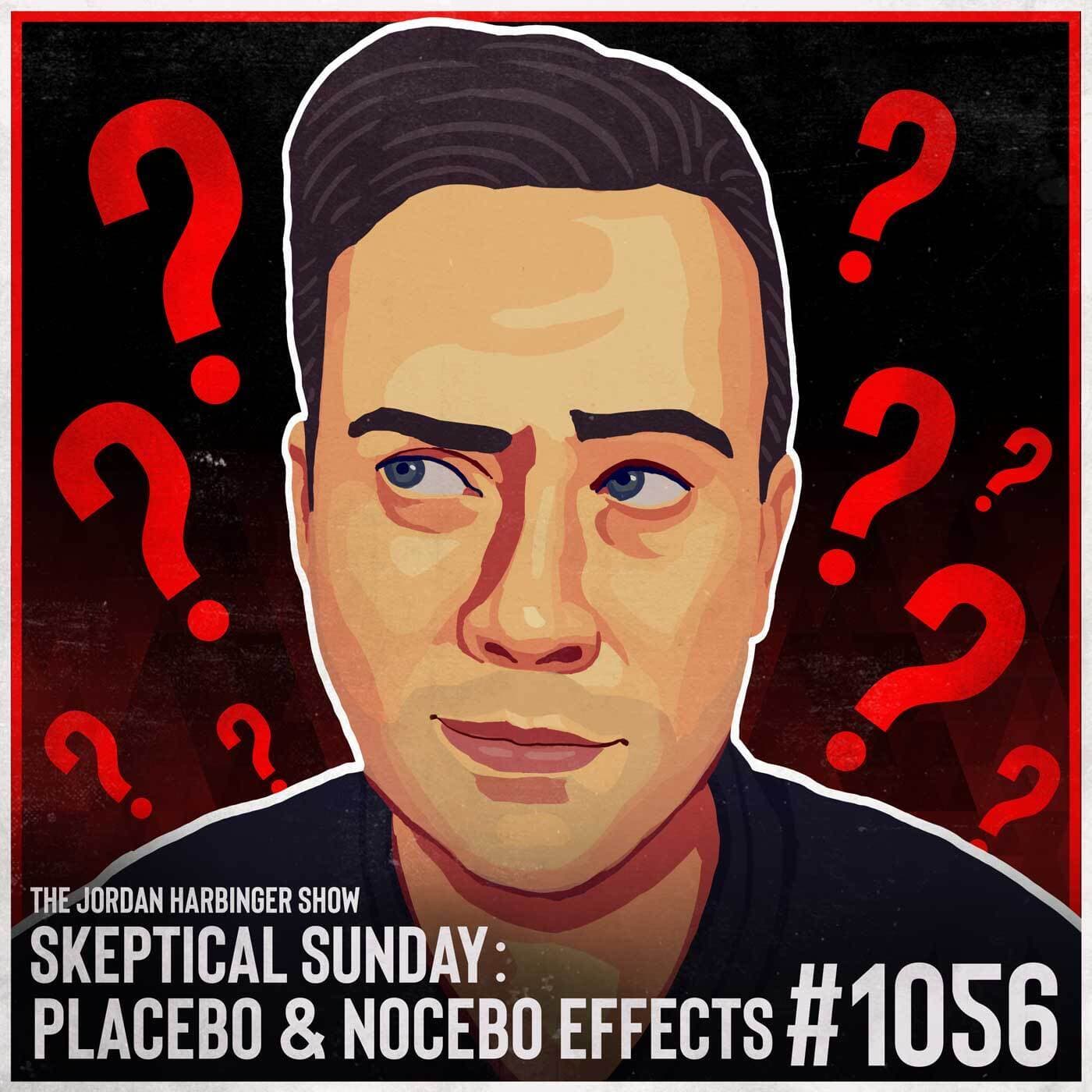
Podcast Episode Summary: The Jordan Harbinger Show - Episode 1056
Episode Details
- Title: 1056: Placebo & Nocebo Effects | Skeptical Sunday
- Guest: Dr. Helena Hartmann, Neuroscientist and Psychologist
- Air Date: [Exactly date not provided in transcript]
Episode Description In this episode of Skeptical Sunday, Jordan Harbinger and Dr. Helena Hartmann explore the fascinating phenomena of placebo and nocebo effects, uncovering how expectations can significantly influence health outcomes, both positively and negatively.
Key Concepts Discussed
Placebo Effect
- Definition: The placebo effect is any positive change in health that occurs after taking a treatment without active medical ingredients (e.g., sugar pills).
- Mechanism: It triggers real physiological changes in the brain and body, such as:
- Release of endorphins for pain relief.
- Alterations in pain signal transmission in the spinal cord.
- Role of Expectations: Positive expectations can enhance treatment outcomes, while previous experiences can shape these beliefs.
Nocebo Effect
- Definition: The nocebo effect is the counterpart to the placebo effect, where negative expectations lead to adverse health outcomes.
- Mechanism: Patients can experience negative symptoms if they are informed about potential side effects or hear about others' negative experiences.
- Real-life Examples:
- If individuals learn about side effects of a medication, they may be more likely to report experiencing those effects themselves.
- Social media and discussions can amplify these negative expectations.
Influencing Factors
- Social and Environmental Influences: Factors such as the cost of medication, treatment invasiveness, and social media comments can strengthen placebo/nocebo effects.
- Overall Impact: Both effects highlight the importance of mindset and environment on health and treatment efficacy.
Practical Applications
- Harnessing Placebo Effects:
- Healthcare providers can enhance treatment efficacy by fostering positive expectations.
- Patients can improve outcomes by maintaining an optimistic outlook and engaging in positive self-talk.
Research Insights
- Placebo in Clinical Practice: The episode emphasizes the potential for integrating placebo effects into medical treatments to reduce medication dosages and side effects.
- Limitations: The placebo effect cannot replace traditional medical treatments for serious conditions like cancer or severe mental health disorders.
Anecdotal Insights
- Dr. Hartmann shared anecdotes illustrating the power of the placebo effect in everyday life, particularly in relation to parenting and common beliefs about treatments.
Conclusion
- The conversation wraps up with a reminder that while the placebo effect can be powerful, it is not a substitute for medical care. Ongoing research aims to understand these effects better and how to utilize them effectively in treatment.
Additional Resources
- Connect with Dr. Helena Hartmann:
- [Website](https://helenahartmann.com/)
- [Twitter](https://x.com/helenahhartmann)
- [Research links provided in transcript]
- Connect with Jordan Harbinger:
- [Twitter](https://twitter.com/JordanHarbinger)
- [Instagram](https://www.instagram.com/jordanharbinger)
- [YouTube](https://www.youtube.com/c/THEJORDANHARBINGERSHOW)
Final Notes This episode provides a comprehensive look at how our mind can influence physical health and a reminder of the importance of managing expectations in both personal health and medical treatments. The insights shared by Dr. Hartmann offer valuable takeaways for both healthcare professionals and patients alike.
Written by AI. May contain mistakes. Listen to the episode to check what was said.
Transcript
Automatic transcript. May contain errors.0:00This episode is sponsored in part by LinkedIn. Most platforms are built to distract you. LinkedIn is built to help you get things done. And when you're a small business owner. the one thing you don't have is time to waste. That's why LinkedIn Jobs is a secret weapon. Post your job and LinkedIn doesn't just blast it out to randoms. It uses all that professional data people actually keep up to date on LinkedIn to match you with qualified candidates. You can post it for free or you can promote it to get three times more job applicants to expedite everything. And here's the cool part. Because LinkedIn is where people actually want to be found professionally, the quality is just higher.
0:30You're connecting with people who are serious about their next move. That's why 2.5 million small businesses use LinkedIn to hire. Add the hashtag hiring frame to your profile pic, let your network know that you're looking, and suddenly you've doubled the reach without spending more than 30 seconds. So when the clock's ticking and you need someone great, LinkedIn isn't just social media, it's your best recruiting partner. Post your job for free at linkedin.com slash harbinger. That's linkedin.com slash harbinger to post your job for free. Terms and conditions apply.
1:01Welcome to Skeptical Sunday. I'm your host, Jordan Harbinger. Today, I'm here with Skeptical Sunday co-host, neuroscientist, psychologist, and science communicator, Helena Hartman. On the Jordan Harbinger Show, we decode the stories, secrets, and skills of the world's most fascinating people and turn their wisdom into practical advice that you can use to impact your own life and those around you. Our mission is to help you become a better informed, more critical thinker. And during the week, we have long-form conversations with a variety of amazing folks, from spies to CEOs, athletes, authors, thinkers, performers.
1:32On Sundays, though, we do Skeptical Sunday. where a rotating guest co-host and I break down a topic you may have never thought about and debunk common misconceptions. Topics such as why the Olympics are kind of a sham, why tipping makes absolutely no sense, sovereign citizens, diet supplements, banned foods, GMOs, toothpaste, crystal healing, diet pills, internet porn, and more. And if you're new to the show or you want to tell your friends about the show, I suggest our episode starter packs. These are collections of our favorite episodes on persuasion, negotiation, psychology, disinformation, cyber warfare, crime and cults, and more.
2:02That'll help new listeners get a taste of everything we do here on the show. Just visit jordanharbinger.com slash start, or search for us in your Spotify app to get started. Today, did you know that you can literally move mountains, figuratively literally, move mountains of pain with your mind just by popping a sugar pill? Expectations are a powerful driver of emotions, but what do expectations have to do with placebo and something called nocebo effects. In other words, sugar pills that make us feel good or bad. Can we systematically use those in actual medicine? And what goes on in our brain and body when we try to trick it into feeling better?
2:40Dr. Helena Hartman takes a deep dive into the neuroscience of expectation effects and the placebo and nocebo effect, of course. Spoiler alert, yes, it works. And no, it's not just in our heads. Hi, Jordan. How is it going on the other side of the pond? Today, I've got quite a headache, so I guess I could be better. It's probably a little bit of a lack of sleep. Kids will do that to you, but it's just, it's not going away. Oh, I'm sorry to hear that, but don't worry. What if I tell you that I have the solution for your pain or basically any issue? I am all ears. What is it? I'm not big on shoveling Tylenol down my throat, so I'm all ears.
3:17Do you have any Tic Tacs or Smarties at home? We have Tic Tacs, yes, but what does that have to do with my headache? So we're going to channel the power of the placebo effect to get rid of your headache. Just take one of those and believe that this is a treatment that will get rid of your pain. To make it more understandable, your positive expectations will then work its own magic to make you feel better. Placebos, yes. We talk about this regularly on the show, and I know we had at least one episode on this a while back. But remind me and our listeners what the placebo effect is once again. The term placebo comes from Latin and means I shall please.
3:53Simply defined, the placebo effect is any positive physical or psychological change that occurs after taking medication without an active ingredient or after a sham treatment such as simulated surgery or infusion of a simple saline salt solution. And it's not only present in fake treatments, placebo effects also play a role in conventionally prescribed intrinsically effective or pharmacologically active treatments as positive expectations can influence the outcome of treatment and the pharmacological efficacy of treatment medication. This effect is dependent on many different things, but two of them stand out, our expectations and our prior experiences.
4:38So that was a mouthful, but it totally makes sense, right? I take something and I believe in that thing that I'm taking and it works alongside the medicine actually doing something else, like numbing my pain in the nervous system or whatever. The nocebo effect, on the other hand, that's kind of new to me. I feel like I've heard of that before, but is that like a weird little sibling situation we got here, the other side of the coin? You're not wrong, kinda. So the nocebo effect is often termed the placebo's evil twin in lay language because it does the complete opposite. Instead of making us feel good, it makes us feel all the bad things.
5:13Pain, nausea, depression, you name it. Basically, any negative effects on health that you could imagine ever. The Latin word for this means I shall harm. So first of all, I thought nocebo was a made-up word in English, like a play off the word placebo. They just did the word no in front of it. I didn't realize that was also Latin. That's kind of funny. Yeah, and that one always takes people by surprise. And the nocebo effect is much less known than the placebo effect. But if a patient discovers, for example, that a certain medication has been tolerated poorly by someone they know, a friend or family member, the medication is more likely to be less effective or cause side effects in that patient.
5:52The best example of nocebo effects in daily life is the development of these side effects. There are studies showing that extensive warning or explanation of side effects leads to a higher probability to develop just these effects. In other words, those who fear symptoms intensely enough often get them. And this is particularly true for symptoms that occur unspecifically with many illnesses. And this can even happen online. Yeah, because we kind of think placebo, okay, it works for pain or it works for anything, which we'll get into, I'm sure. But nocebo, I never think about it. But you mentioned that if people who fear symptoms intensely enough often get them.
6:30And you said it's particularly true for symptoms that occur unspecifically with many illnesses. What's unspecifically mean? I haven't heard that word before either. It basically means very generic symptoms that could occur in any disease such as headaches, stomach pain, or feeling nauseous. And these are symptoms we often experience and have. So we also notice them more often and they are more prone to occur in nocebo effects. This just occurred to me. This is totally the explanation for like voodoo or witch doctors and stuff. And it's like, you go there and you're like, I want to put a curse on my neighbor.
7:03And they do all this stuff. But I noticed often in voodoo and things like that, I don't know, I'm no expert, but it requires you to put like the doll in front of the person's house where they're going to find it or like nail it to their door. So they see it and they go, what the heck is this? This must be some voodoo. And they go to the witch doctor and the witch doctor's like, yeah, have you been having stomach pains or any headaches? And they're like, oh my God, God, for sure I have. Right. And it's all just nocebo stuff. And then you pay them for the placebo of, I don't know, like burning chicken feathers in your face and you get better.
7:34Yeah, that's basically it. And I think if I want people to take one thing away from this episode, it's that the placebo effect is everywhere and the nocebo effect is too. Yeah, everywhere, including online. You said this could happen online. What do you mean by happen online? How can medical symptoms occur on the Internet? Well, for example, if many other patients report a certain side effect of a medication online, the probability increases that someone who reads about it, and this can be online and in newspaper anywhere basically, they will first expect this previously unnoticed side effect and then actually feel it.
8:07The nocebo effect is caused by intensive engagement with health information in the digital world nowadays, and it can hinder the healing process and even promote illness. A very fascinating and very significant example of how nocebo effects spread via social media is the COVID-19 pandemic. It is well known that vaccinations against COVID-19 can have adverse effects. But in one study, it also turned out that side effects were reported more frequently and also described as stronger when people who were exposed to negative reports of post-vaccination reactions on social media, so negative ones, and through personal contacts before the vaccination.
8:47I see. So basically, if you are inundated with like, oh, I got the vaccine and now I have headaches, you're much more likely to have headaches if you then go get the vaccine. Exactly. Interesting. Yeah. It doesn't somehow surprise me that reading WebMD all day can make the situation worse, because whenever I go on there, I'm like, oh, I have a weird headache kind of in the back of my head. Maybe I ate too much risotto. And then it's like, oh, no, maybe actually it looks like I have stage four cancer. So just one more reason to get rid of social media, I guess. So true, so true. And these unpleasant symptoms occur particularly frequently when many people are warned about them, and that can be online or in real life.
9:23For example, in a study, compared to a control group without prior information, people suffered more frequently from so-called altitude headaches if they went up a mountain to hike, even if just one person in the headache group, so in the nocebo group, was made aware that they could occur before they ascended the mountain. The probability was particularly high the more people told each other about it over the course of a week. And these negative expectations had real and measurable effects on the body. Compared to the uninformed control group, the scientists detected increased headaches and more prostaglandins and thromboxanes in the saliva of the mountain climbers who had learned about these high-altitude headaches before climbing the mountain than in the group who hadn't learned about these headaches.
10:11I see. These two products are certain metabolic products that increase pain in the body. That's interesting. So if you're going hiking, maybe tell the group leader not to tell everybody, hey, we're going up really high. A lot of you are going to get sick because I've definitely gone on hikes where that's all anyone talks about. And did you take your altitude medication? Hey, I have extra altitude medication. Anyone need altitude medication? And of course, one person is like, I can't take it. I'm allergic to it. And they're just debilitated and can't do anything, even though they've never had altitude sickness before, because nobody will shut the hell up about how this is definitely going to happen unless you take the medication.
10:46Yeah, exactly. Jeez. It sounds like we're never really safe from nocebo effects. You can go up the highest mountain and the nocebo just gets worse. So it's not just in our mind, right? Our bodies actually triggered to produce, you said like thromboxanes and prostaglandins, these chemicals that actually increase pain are being produced in higher quantities or whatever as a result of basically the annoying guy next to me who won't shut the hell up about his headache. That's damning and disappointing, I suppose. And I have one last striking study for you from the domain of pain where the nocebo effect is best researched and exemplified.
11:21One study investigated the consequences of doctors preparing their patients for the injection of a local anesthetic by announcing it as the worst part of the treatment, similar to a big bee sting. It turned out that these patients felt significantly more pain during the procedure than those who were told that the injection would help them feel comfortable during the following procedure. And today, because of this, medical students are already taught to announce an injection such as this one as a small prick that you hardly feel at most, or to distract patients before a vaccination or blood sample by asking them questions or chatting about the weather.
12:00Basically anything that doesn't make them focus on the needle. Yeah, like I feel like it would be really awful to have somebody be like, hey, this is going to hurt a lot, by the way. It's like, dude, I don't really need to know that. Like, let me find out in a moment. I guess placebo and nocebo effects are pretty intense stuff. And it sounds basically like a self-fulfilling prophecy either way. Yeah, they are exactly that, both of them. When we expect something to happen, we pay more attention to the information that confirms our suspicions, and that means we notice them more frequently. Let's say a patient went home with a new medication and their friend told them on the way home that that medication worked wonders for them.
12:39This will lead to a quite positive expectation, and thus the medication might even work better in comparison to when he hadn't gotten that information. So expectations can be positive, negative, or basically anything in between. Gotcha. So we have two siblings here, They're two sides of the same coin. The good and maybe evil is a strong word, but I'm going to go with evil because I love a good villain story. Yeah, me too. Unfortunately, we still know way too little about nocebo effects, how they develop, and most importantly, why they persist. These little fellows are very hard to get rid of. The nocebo effect probably plays an even greater role in everyday life than the placebo effect, but it is much less well-researched.
13:18And this is partly for ethical reasons, because deliberately triggering negative patient expectations often pushes the boundaries of medical ethics. And this is why we're doing research at my lab with controlled experimental studies to find out more about placebo and nocebo effects and how we can systematically use them in healthcare, but also in daily life. You know, it's funny, if you want to study this stuff, it's like, well, it's kind of unethical to tell your patients that this is going to hurt because then it's going to hurt more and ethics, ethics, that. But if you're just a really crappy doctor, you can tell the patient that it's going to hurt all you want and that it's going to be terrible and uncomfortable.
13:55And it's just like, well, I'm just being honest. So because I feel like I've gotten plenty of treatments with the doctors like this is not going to be good. You're not going to like this. This is going to be uncomfortable. This is going to feel violating. And I'm like, dude, relax. I wasn't even thinking about that. I was going to do some Instagram while you're crawling up my keister. I don't need to know the details. But then that's not unethical. I just find that kind of humorous, right? Like one on one bedside manner being terrible. No problem doing it in a lab for the benefit of science? Well, watch out, young lady.
14:22We're going to revoke your license. Here, I thought researchers doing clinical studies actually did not like the placebo effect because they don't know if it's the drug having an effect or the placebo effect that the participants are experiencing, right? Isn't that why studies are always like, well, this did 1 % better than placebo because that's like the base, right? The baseline. Yeah, exactly. Very true. So the placebo effect is often the bad part in clinical studies just because it can jeopardize the introduction of novel drugs. So researchers generally need to show that the drug that they developed works better than the placebo effect.
14:59And this is why they compare a group who has taken the drug to a group who has received a placebo, so a sugar pill. We're, however, from the experimental side looking at it from a kind of different perspective. We want to use the effect by adding it on top of the pharmacologically effective treatment, like the cherry on top of the drug cake, I guess. Drug cake. So we're studying how expectations affect the brain and body so that we can use them as a booster in therapy. And the goal really is to systematically use the placebo effect to our advantage to boost these drug and other treatment effects.
15:35I mean, it seems like a good idea. If it's going to happen anyway, you might as well use it to row in the same direction that you're trying to go with the other painkillers or whatever. You know what feels better than an opioid painkiller? Mindless consumerism. We'll be right back. Hey, y 'all, check out our newsletter, jordanharbinger.com slash news. Every week, Gabriel and I, we break down an episode or a takeaway that we've been thinking about that week, something you can apply to your life. It's just a little tiny bite. We revamped the format. It used to be kind of a bit long. Now we're doing something different.
16:05Check us out. jordanharbinger.com slash news is where you can find it. And I really appreciate all the feedback we've gotten there so far. JordanHarbinger.com slash news. Now, back to Skeptical Sunday. So you're saying these effects, do they work in all kinds of treatments? Yeah, yeah, that's true. The placebo effect literally is everywhere. They don't work at all in the same way or strength, but still they are there and they work. For example, high price, brand labels. Okay, so give me the fancy, expensive sugar pill with the colorful labels. Got it. Yeah. And on top of that, the use of invasive placebos like an injection or a sham surgery and high placebo dosage.
16:47So not even pills, inject the sugar straight into my veins and, I don't know, make it a double? Yeah, coming right up. And that actually increases the expectations towards the benefits of a placebo treatment, which then in turn boosts the placebo effect. It also makes sense that taking a higher dosage, for example, two pills per week as opposed to a one-time dose, just works better. And lastly, more precise and clearer expectations work better than unclear ones. If you tell someone this pill will reduce your headache in 30 minutes, people can form a clearer expectation than if you tell them that this pill will help you feel good at some point.
17:26Placebo effects are also higher when people have directly experienced pain relief previously through a process called classical conditioning or when they have observed it in somebody else. This is called social observational learning. Conditioning. Do Pavlov's salivating dogs have something to do with this? Yes, exactly. Apparently, you paid attention in biology class. So placebo effects are basically learning phenomena. This means that we learn to expect a certain outcome, for example, pain relief. This learning can happen in many different ways. In science, we like to use three methods quite often, which are also sometimes combined with each other to boost it even more.
18:04So first, we tell people about the benefits and positive effects of a treatment. This is also called verbal suggestions. Second, we let them experience that the treatment works directly. This is the conditioning. So just like Pavlov, who rang a bell every time he brought food for his dog, we are associating the treatment, let's say a sugar pill, with something positive, for example, pain relief. After a while, the dog of Pavlov learned that the bell signaled food and started salivating already when just the bell was rung and no food was brought in. And the same way people learned to associate the treatment with pain relief over time.
18:42Yeah, I always wondered if it's all about expectations, how come my bottle of headache medicine doesn't say within 20 minutes you should experience relief? I guess they can't say that because it's different for everybody. So it'd be like false advertising if they say that. but I feel like that would make the medicine work better based on what we're learning right now. Yeah, I completely agree. But this is really dependent on, for example, body size, height, weight, everything. So I think I guess you're right. That is why they don't do that. Yeah. I mean, you should experience relief within 20 minutes unless you're really fat or really tall or really heavy, in which case it might take a little bit longer.
19:16Let's say 40 minutes. And then it's like, but if you're really small, it might be like 10 minutes. And then you just have a label that's three pages long and nobody reads it. So it stops working. Yeah, I don't know. there's a balance in there somewhere. Sounds like we're still animals after all. And we mention expectations a lot again, and it's quite fascinating how all this stuff works. Yeah, we don't realize this, but our whole life is determined by expectations, which fluctuate between positive hope and negative fear. But exactly how positive or negative these expectations are largely depends on experiences we have had and remember.
19:49This applies to basically all areas of life, including medicine, and it is those expectations and previous experiences that patients take with them when they go, for example, to a doctor or a therapist. And researchers have known for a long time that these expectations can influence physical symptoms, the course of a disease, and the efficacy of treatments. In my lab, we study how positive or negative expectations affect pain processing. For example, how does believing a treatment will reduce or increase your pain actually change your pain processing? Okay, our expectations are obviously very important, but surely they're not so powerful that they can, I don't know, change the effect of real medication, right?
20:34Actually, they are. Expectations are everywhere, and this means that they have a huge influence on our life. Optimistically, we swallow the tablet because it helped the last time. Or we take one for the first time and are upset to read about its potential side effects. In either of these cases, our expectations differ hugely. And maybe as a result, the effects of the same medicine do too. I'll give you an example. In 2011, my current supervisor, Dr. Ulrike Bingel, and some colleagues of hers did a fascinating study showing just how powerful expectations are. Are you ready to hear it? Yeah, I'm all ears.
21:10So listen to this. She and her team gave participants a potent opioid painkiller as an infusion three times, but each time they told participants something else. They varied the expectations. In the first round, they told participants the truth, which is that they got a potent painkiller. In the second round, they told them that they actually get something that will increase their pain. And get this, positive treatment expectations made the medication twice as effective at relieving pain, whereas negative expectations, coupled with a worry that the pain might get worse, ensured that it lost its effect.
21:48In a final round, where participants were not told anything about the infusion, the painkiller had its normal intended effect, that is the drug effect, but that was only half as much pain relief as the positive expectation round. So these study results seem to explain why some people with chronic diseases do not respond well to pain medication. They're often desperate and anxious and have lost faith in medicine. This can reduce or even, as in this study, completely reverse the effect of medication that is actually supposed to be effective. Oh, interesting. This is really, really cool stuff. And it seems like we obviously definitely need to be investing probably just as much into persuasion and positive expectation framing as we should be in investing into these painkilling drugs themselves.
22:36Because I'm thinking of, you know, when people have chronic pain and they go through every medical thing and then suddenly they're like, the thing that worked for me was putting an opal stone on the deck and charging it with the moon and then putting it under my pillow. And you're like, how on earth is fentanyl not working for your back pain? But like putting this stone outside and doing this nonsense ritual and putting it under your pillow is helping. And the reason is because they don't believe in the medicine anymore, right? But they believe in this thing that their psychic told them. So they're like, well, this is working for me because the placebo effect is as strong as the drug, or in this case, the nocebo effect kind of like eliminated the effect of the drug, which is, it's really amazing how powerful our brains are when it comes to pain.
23:22It's really just, I know this is your area of study, but I'm learning about it kind of for the first time and it's really incredible. Yeah, I agree. And honestly, scientists believe in the placebo effect too. And full disclosure, I have a little bag with some puppets under my pillow that take all my worries away. So I sleep better and that works for me. So I think everybody can do what they want and use the placebo effect to their advantage. That's great. And all those other scientists are laughing at you right now, but maybe they should get their own puppets. Maybe. But we do have to be a bit careful here.
23:54So this was a single study that found this really fascinating result. So in order for us to believe it more, Ideally, we would replicate that study. That means we repeat the same study and check whether we find the same effect again. If we do, this makes us more confident than what we observe is actually real. But if we don't... Yeah, it makes us less confident, I guess, because nobody's repeated this with the larger sample size and whatever. Yeah, exactly. The first finding might have been a false positive, so we find something even though it's not true. Like me telling you you're pregnant after you've eaten three pizzas.
Read the full transcript
24:29This is why research is cumulative. Over time, we get more and more puzzle pieces and try to make sense of it all together. We need many studies on the same topic just to start and understand it. To be fair, if you eat three entire pizzas, you will definitely feel and possibly even look pregnant at the time, for sure. Personal experience here, over here, so trust me. Have it on good authority, good personal authority. But what actually physically happens in the brain and body? Expectation effects, such as placebo or nocebo effects, are no coincidence, nor are they just in our mind. On the contrary, they are based on complex psychoneurobiological processes in the brain.
25:12Psychoneurobiological is an awesome word. That is a$10 word right there. Yeah. Simply believing that a certain treatment is effective has been shown to activate mechanisms in the body that improve the treatment outcome. This can also be described as a kind of internal pharmacy of the body that everybody just carries around with them. For example, imaging techniques can be used to show that certain areas of the brain, for example pain relief systems, are activated during this process. In the field of pain therapy or pain research, the placebo effect has been particularly well studied. If a patient expects a remedy or medication to relieve pain, pain-relieving substances, known as endorphins are released in the brain and can even alter transmission of pain in the spinal cord.
25:59This relieves pain, for example, back pain or headaches, even though the patient has not taken a real painkiller. Wow. So are you saying that a sugar pill can make our spinal cord feel less pain? So this is interesting because it sounds like the placebo effect is not just the brain feeling the pain and being like, I'm not going to feel that because I took a tic-tac, but it's all over the body. The whole body is being juiced up with endorphins that are like, nah, we're not going to feel the pain because I got my puppets under my pillow or whatever. Yeah, exactly. In the study I just described, the authors found that placebo analgesia, so an inert treatment that allegedly reduces pain, actually reduced participants' pain, aka the placebo effect.
26:41That was measured by asking the participants to rate the pain they feel on a scale from zero, I feel nothing to 100. I feel everything and all of it. But it also led to reduced pain related activity in the brain and spinal cord. So does the placebo effect only work for pain? Because I worry that people are going to be like, I can cure everything with placebo effect. Let me dump my chemo meds in the toilet and go get a bag of puppets or like go get a stone to charge under the moon. People could take this too far, I think. Yeah, I completely agree. And we have to always be careful because some of these findings are very specific.
27:16So the spinal cord involvement study was quite unique to pain, but there's more if we look beyond pain. There's also research on placebo effects in mental health conditions such as depression or other physical conditions, for example, involving the immune system in the body. Studies indicate that the nocebo effect triggers processes in the central nervous system that can lead to physical changes. In this system, fear of pain can block opioids and inhibit dopamine, leading to increased rather than decreased pain. Really, they have effects on our whole body. Hormones, neurotransmitters, physiological responses, brain activity, etc.
27:57Wow, so you research all of that and you listen to every single episode of this show without fail. That's really amazing. Yeah, I'm a wizard. Honestly, I wish I could do even more, but my time is also very limited and I focus my work specifically on expectation effects in pain. But in the Treatment Expectation Research Center where I work, we collaborate with many different researchers in Germany and beyond to investigate the impact of patients' expectations on the efficacy of medical treatments in many bodily systems, chronic pain, depression, but also the immune system. We do experimental studies in healthy participants and also clinical studies with different patient groups.
28:38But some groups even do research on placebo effects in animals. I think it's really cool that so many people are researching this. And I'm very curious about the immune system stuff. That's a different show, of course, a different episode of this podcast. But if you can make your immune system stronger with placebo, that is incredible. I agree. That's a game changer. And I would love to talk more about that offline and see if there's another episode about that that we could do. That's awesome, fascinating, and hopefully real. Again, it's so cool that so many people are researching this stuff. Do these effects affect everyone in pretty much the same way?
29:13I'm guessing no, because bodies are so different and there's 8 billion of us. But, you know, how uniform is this? Yeah, so placebos work in general and in principle, but not for everyone and not for everyone in the same way. The effects can vary from person to person, symptom to symptom, and even disease to disease. Genetic factors certainly play a role, but personality traits could also be important. Some people are inherently optimistic, positive, and open-minded. They might respond better to placebos than somebody who is more anxious, skeptical, and critical. Oh, crap. Anxious and critical.
29:48I feel attacked, but go on. And also, did we just ruin the placebo effect for everyone with this episode? Like, sorry, your bag of puppets was working great last week, but now you know it's placebo, so you're not going to... no more benefit from you. You got to go out and get rocks now. Well, the good news is that individual expectations can change everything. So just change your expectations and you'll be good. Fine. The cool thing is that there can even be a placebo effect when patients know they are taking a pill without an active ingredient. This gives us an idea of just how powerful these mechanisms can be.
30:18That's actually really good news, right? And that was what you tried in the beginning of the episode, making me eat a Tic Tac and telling me it will still work against my headache, even though I know that Tic Tacs are just little literal sugar pills. Was that what that move was there? Yeah, exactly. That was what researchers call an open-label placebo. In other words, you know that what you're taking doesn't actually have any pharmacological substance in it. It is basically inert. This new concept is currently still being studied a lot. But from ours and other studies, we know that open-label placebos seem to work better when the person is in need of relief and has some kind of symptoms that they want to get rid of.
30:58In healthy young adults with nothing to improve and generally a nice lifestyle, it's actually not surprising that these effects are much smaller or even absent. There's even one step further, Jordan, imaginary placebos. Okay, before we get on to what that is, because that sounds like some Jedi stuff, I'm curious what you think. If I tell my kids that their gummy vitamins that they take at night will make them tired and sleepy, I mean, one, I know I'm just lying to my kids and calling it an open-label placebo, but I don't know, parents are with me. I might be okay with that. Do we think that might work or is it just mostly, again, with pain?
31:33I guess it would only be an open-label placebo if you told your kids that it is the placebo effect and they're not actually going to make them tired but if they believe in it, then it will do something. It would be more of a deceptive placebo if you tell them that it will make them tired but I think it could work so you should try it. I think I'm fine with deceptive placebos also because sometimes I just want them to go the f*** to sleep. All right. So imaginary placebos. Placebos are already inert and work anyway. Now they can also be literally imagined. How does that work? Yeah, that is apparently a thing.
32:06I also had a hard time believing when I read it first. Basically, when you take an imaginary placebo, you don't have anything physical that you ingest or apply to your body. You just imagine taking it. Like a kind of ritual you do every day where you imagine vividly that you are ingesting a pill, for example. And it is these rituals and learning experience that fuel placebo effect. So it's, I'm actually in the end, not super surprised that it works. If we have these ritual and these expectations, they can already fuel the placebo effect quite well. So you literally just pretend you're taking medicine.
32:43I'm drinking my medicine now with an empty hand, nothing in it. And that actually works? It seems so. First studies show, for example, that test anxiety in healthy students was lower in the groups who had taken either an open-label placebo or an imaginary placebo compared to a control group. The two placebo groups did not differ in their effects, meaning that they were equally effective in reducing test anxiety. But again, we need more evidence to make us believe these findings and not trust a single study that we read. Sure. It's so easy to trick ourselves, I guess. Let me ask you this. If I give myself, or someone else for that matter, a shot of vitamin and B12 or saline solution, like you said before at the top of the show.
33:26And I tell them, this is going to make you ace your exam because it helps your brain fire on all cylinders, something, something. And they're like, great. I give them the saline solution, the injection, right? We're already talking about invasive. What if it's something that gives them a little bit of like a niacin flush too? Like there's another effect linked to it that they can feel and see. They're like, wow, I'm really warm. This stuff's really working. Does that increase the placebo effect? because they're actually getting like a pharmacological result, even though it's not the same result that they're going for.
33:56Like them being warm is not going to help them ace the test. Them being warm is a side effect of, I don't know, niacin or something that's in that shot, or B12. Does that increase the placebo effect of them, I don't know, feeling better as well? Does that question make sense? That was all over the place. Yeah, it totally makes sense. And I'm glad that you asked it because it does. And these placebos are so-called active placebos. It means that you get something that is supposed to, for example, have a pain relieving effect, or it's going to make you be more concentrated at an exam, but it also has a side effect.
34:29I remember a study where the side effect was like a little burning in the nose. They got a nose spray that was supposed to make them feel less pain. And actually people felt less pain because the side effect that they felt made them more confident and believing in the fact that they actually took something that is going to help them. That's what I was thinking, because they might go like a shot that makes you better an exam. That's not a real thing. And then it's like, oh, crap, this is burning a little bit. I guess I am taking the limitless pill here or the I guess I did get a magical injection from Jordan.
34:59It just seems like that would work on me, I think, is why I kind of came up with that. Right. And I know that pre-workout stuff, for example, you take these pre-workout things that are just like usually loaded with caffeine. But if they also include other stuff that makes you feel flushed or turns you red, you really do feel like you are on, you're just ready to do your one rep max in the gym or something. And I feel like they add that in there to enhance the psychological effect of this pre-workout stuff. And probably because it's a cheap way to make something look like it's working or feel like it's working.
35:33Yes, that's completely true. And in the case of the protein that you're taking before the workout, I guess that's kind of like an open-label placebo or at least has an open-label placebo effect to it. But if I would give you the nose spray and you'd feel the burning in your nose, that would be called a deceptive placebo. Is that even allowed, like not telling people the whole story? I'm not saying, you know, me selling that in law school, which I didn't do. I kind of regret not doing it. Me selling that in law school, that's obviously not allowed. But what about the ethics of research or medicine?
36:01Because I think it's a good thing because you're telling patients that are going to undergo, I don't know, chemo or something that is going to make them feel better. I'm all for it. But on the other hand, it's kind of like, well, you are giving them a drug that you're lying to them about. I don't know. Where do the chips fall on this one? Yeah, that's a super important point. In clinical practice, of course not. So doctors prescribe drugs to people for their illnesses, and you won't find a doctor prescribing Smarties or Tic Tacs instead and not telling the patient about it. This is very unethical.
36:30These are all people who are in need of help and seek advice from a healthcare professional. In research, we have strict ethical guidelines as well about what we can and cannot do. Most importantly is that the benefits need to outweigh the risks for the participants. Especially when investigating nocebo effects, we have to be very careful because participants might have a strong negative feeling coming up in the experiment, and we of course want to avoid that, especially in pain studies. Yeah, I was going to ask exactly that. How do you even get people to sign up for these studies. If I had some chronic pain or whatever, I'm not sure that I'd sign up to literally get fake medicine.
37:07It would almost be insulting and maybe a waste of time. People, especially patients who are in pain or who have symptoms that they are in need of relief, are actually very keen on helping out researchers and promoting research. Otherwise, it's all about the incentive. So usually we pay participants a certain monetary compensation. And at least in my studies, they have the benefit of getting to see what their brain looks like from the inside. And then it's all about information. You tell them how long they will lie in the brain scanner, how many shocks or heat stimuli they will get. And you make sure that they know they can cancel the study at any point.
37:44Participant comfort really is my highest priority because my studies can be very long and taxing. But it also automatically leads to better data. and oh, I usually bring chocolate as a bribe. I mean, I prefer cash, but I know times are tough. When I was in college, they were offering, I remember this one study, they were offering$100 to sunburn one of your butt cheeks, just one. Sadly, I missed out on that one. But man, I don't know. It was tempting. 100 bucks back then, it's a lot of beer. I am glad your butt cheek is okay though. And since my studies are completely voluntary, that means only people who are interested in science or the money sign up.
38:23This is good on the one hand because the participant is motivated. On the other hand, the findings might not generalize to other people who wouldn't have signed up for such studies or who are generally not interested in participating. That's true. I can also imagine having one of your cheeks so sunburned that you can't even sit down. It's like, I'm not sure how much I love science after that. You know what's better than first degree burns on one of your butt cheeks? The deals on the fine products and services that support this show. We'll be right back. Once again, thank you for listening to and supporting the show.
38:54All the deals, discount codes, and ways to support this show are all in one searchable, clickable place, jordanharbinger.com slash deals. Now, for the rest of Skeptical Sunday. All right, so my curiosity, nearly satisfied for now, but can we systematically use these effects in medicine? Because from what you tell me, these are amazing. I mean, they're almost as powerful as that opioid painkiller in terms of the pain. it seems like we should do everything we can to harness these effects. Yeah, we can and we should, totally. I am 100 % with you on that. For example, 17 % of Germans, that is around 12 million people, suffer from long-lasting chronic pain.
39:33So more attention should be paid to the power of expectations in medicine than has previously been the case, just because it has been shown to help maximize the efficacy of medication and other treatments. In the future, doctors should definitely pay more attention to the previous experiences and expectations of their patients when selecting, for example, new treatments. The aim must really be for patients to start treatments with positive expectations and avoid negative ones. And if necessary, these expectations in the beginning could be raised with psychological support or a nice conversation with the doctor where people feel comfortable and like they have somebody who cares about them and who's going to help them in the end.
40:16It seems like it's all about setting people up in the right way. Yeah. Like you ever go to the doctor and they're just really cold and you feel like they're rushing you through there. It's a totally different experience than someone who's like, hey, so how are you doing? Oh, you know, this, that and the other thing. Oh, we're going to take care of you. Don't worry about that. You know, how the kids and you're just like, oh, wow, this person actually gives a crap. This is amazing. My back pain's already feeling better sitting on this bench in a gown that is open in the back with my butt hanging out.
40:42It's really incredible. And also, I always come back to my kids, you know, like my son was doing things like, oh, I feel sick. And I'd give him like a gummy, one gummy, which is like a vitamin C gummy. And I'd be like, this is the medicine for your belly. And he would take it every day. And he's like, oh, I'm all better now. And it doesn't just work on kids. I thought it worked well on toddlers, but I should start doing it to myself. Yeah, totally. And actually, as part of the research center where I work, we also collect anecdotal examples of placebo and nocebo effects from our patients and participants in the studies.
41:15And one striking kids example I have for you is a girl said that her dad always puts magic paper on her seatbelt when she's sitting in the car and they start driving somewhere. And that helps her to not feel nauseous and get sick. That's really good. I got to use that. My daughter loves to just projectile vomit after like three minutes in the car because she's looking out the window. There's so many use cases for this. As a parent, it's like I need just different colored gummies for every single ailment and I need to keep them in the central and center council of the car. Unbelievable. Yeah. And it's not only for the parents or the health care professionals.
41:49These findings are also of interest to the pharmaceutical industry where developing new approaches to treatment. And it also applies to active ingredients. the pharmaceutical form, dose of certain medications, or even the patient information leaflets that people get together with their medication. For example, positive patient expectations could reduce the required dose of a medication and therefore minimize the risk of side effects. The placebo effect can also accelerate healing after surgery, manual therapy, and psychological interventions. But how exactly it does this and under what conditions is still the focus of research.
42:26And I think we're going to be busy for quite a while just to find out everything we can about placebo and nocebo effects. I didn't think about lowering the effective dose, right? If somebody's taking like fentanyl for a back issue and they're having all kinds of side effects, or maybe it's developing a habit or they're relying on it or they can't function because they're always on this opioid painkiller. If you can get them to also have the placebo effect and you can cut the dose in half or down by, you know, a third, that's huge. I mean, that could literally save someone's life, especially if you're talking about a medication that's quite dangerous.
42:59So really cool. Yeah, that's totally true. There's even studies going on in our research center where people start off with 100 % of the real medication and then gradually this gets replaced by placebo so that it could go to a 50-50 % of drug and placebo in the end. And people might still be able to learn that the benefits stay and they won't need as much of the medication anymore because they can boost their drug effect with the little 50 % that they have with the placebo effect. Yeah, it's frankly, it's amazing. I really didn't know the placebo is this pronounced. Before we come to an end, though, I really, really don't want people to think that the placebo effect can cure their cancer or some other very real disease.
43:46So they don't need chemo anymore because they've got, you know, foot reflexology. I just, I really want to be careful with this because the effects of placebo are amazing, but they can't replace actual medical treatment. Yeah, that's a good point, Jordan. Thanks for bringing that up. I think it's good that we end the show with this with some realism. It's very important to clarify that the placebo effect also has limitations. Even though we try to systematically use it and study it, it cannot really replace gold standard therapies in many medical conditions. For example, cognitive behavioral therapy for people with depression or medication for cancer, like you said.
44:22On top of that, there are actual fake or sham treatments being deceptively sold to people, and those can do serious harm. In the case of homeopathy, this is not too bad. Best case, the placebo effect works really well to improve your health. But in the worst case, nothing happens and you just lost some money. Yeah, we did a whole skeptical Sunday about homeopathy. That was episode 882. 882. And it's like, yeah, hey, if you want to take this for a headache, fine. But if you're taking this for your pancreatic cancer, you're going to die. Yeah, I love that episode, by the way. But there are many expensive and harmful treatments out there.
44:55So I would, as a recommendation, double check each treatment suggestion and its source to make sure it is legit before you start buying or using it. For example, professional doctors will generally not shy away from explaining to you how a treatment works and why it is the best for you as a patient. It is important to close with the fact that the placebo effect is great, but it is not a magician or works 100 % all the time. And we definitely still need more research to find out which placebos work, for who, and in what situations. Spoken like a true scientist, you always got a hedge. Thank you so much for giving us an insight into placebo and nocebo effects today.
45:35So amazing. I stuff just blows my mind. I feel like I miss my calling. If I was a better student, I would have been a scientist. I definitely learned a lot. And I'm sure all the listeners did as well. And when we chatted prior to recording this episode, you actually told me that next to your research job, you do other forms of science communication, which makes sense because this was a really good episode. Tell us a little bit more about that, because I know people are interested in science. They might want to find out more about what you're doing. Yeah, of course. I'd love to. I actually have my own project called Science and Fiction, where I explain scientific research with fictional short stories.
46:09Do you like to read? Well, I have no choice. I read one or two books per week at this point. Me too. My favorite genre is science fiction with very dystopian endings, hence the name of the project. I started it during the pandemic, where I realized I not only enjoy reading, but also creative writing a lot. And I'm really passionate about explaining my research or other people's research to people who might have a bit of a harder time than me to read scientific papers that are endlessly long and really, really complicated. Yeah, I feel you. I read some of these studies sometimes just so, you know, if somebody makes a claim, I can maybe kind of check it.
46:44Yeah, they make me fall asleep a lot of the time. It's like needless complication. I feel like that's your colleagues love to complicate things needlessly and hedge. And it's like, OK, for God's sake. Yeah, I feel exactly the same. Researchers often use very complex language that not even other scientists understand. It's really frustrating. And my project, Science Fiction, hopefully solves that issue. It is meant as a space for people who like to learn about science, but also read science fiction at the same time. And I want it to be kind of like an open door into science and its results. Each contribution in my project includes a fictional short story, a scientific publication related to the story and the heart of it, which is an easy to understand summary of the publication and explanation of its connection to the story.
47:31So if I or somebody listening right now also likes writing, can we also contribute to the project? Definitely. I'm always looking for guest contributors. So just go to the project's website, scienceandfiction.net, and you can have a look. You'll find all the information you need about how you could contribute. Just as a little spoiler alert, there are also some stories about taking pills that will change your life forever and dogs behaving very weirdly. It's quite a cliffhanger. And thank you again. That's it for today. I'm going to go and try out that Tic Tac idea to get rid of the headache. And if my kids have eaten all the Tic Tacs, I guess I can just imagine taking pretend Tic Tacs for risks and side effects.
48:11Yeah. Ask your local scientist. Thank you so much, Helena. Thank you so much for having me on the show. If you're looking for another episode of the Jordan Harbinger show to check out, here's a trailer with Arthur Brooks. Anytime you catch yourself comparing yourself to others, you have to stop and say, that's what I'm doing. Don't do that. Oh God. Easier said than done. Yeah, I know. But although you've, once you know that the knowledge is power, I was just at a bachelor party and some of my friends were like, Oh man, some of our friends, they just became like high school teachers. And I was like, well, let me stop you right there.
48:40You know, happy those people are. They figured out what they wanted to do when they were like 24 They got married to somebody they'd been dating for a while. They had kids well before age 30. They're satisfied with what they're doing in a lot of ways. They have way more free time than you and I. We cannot sit back and judge. We're wired in a way that we're always dissatisfied. They're wired in a way where that is fine. I'm jealous of that on many levels. One in six Americans have actually stopped talking to a family member because of the election. That's pretty scary. It's almost one in five now.
49:09Yeah. Politics has become super, you know, hyper attenuated in our culture where it's taken on this outsized role and importance to assume ad hominem. This is what you're saying. It's like Jordan made this joke on Instagram. So therefore, I know it's residing in the depths of his heart. I bet you he bears animus towards some racial group. So wildly. But that's exactly what we're talking about. Motive attribution asymmetry on the basis of ad hominem. Don't be that guy. 93 % of us wish the country were more united. You're part of the problem when you do that. So I got a win-win-win proposition for our listeners and viewers today.
49:48Number one is I'm gonna make you more persuasive. I'm gonna make you happier. And I'm gonna start a social movement in your heart in a tiny little way to bring our country together. And that's answering hatred with love as much as you possibly can. For a great discussion on how we can bridge the divide in our relationships, our country, and even within our families, check out episode 211 with Arthur Brooks here on the Jordan Harbinger show.
50:37association with Podcast One. My team is Jen Harbinger, Jace Sanderson, Robert Fogerty, Ian Baird, and Gabriel Mizrahi. Our advice and opinions are our own, and I am a lawyer, but I am not your lawyer. Do your own research before implementing things you hear on this show. Also, we may get a few things wrong here and there, especially on Skeptical Sunday. If you think we really dropped the ball on something, please do let us know. We are usually pretty receptive to that. Y 'all know how to reach me, Jordan at jordanharbinger.com. Remember, we rise by lifting others. Share the show with those you love.
51:06And if you found the episode useful, please share it with somebody else who could use a good dose of the skepticism and knowledge we doled out today. I think there's a lot of really useful stuff here in this episode, especially for parents, as long as you're willing to lie to your kids like me. In the meantime, I hope you apply what you hear on the show so you can live what you learn. And we'll see you next time.
From the publisher
Can sugar pills heal or harm? Neuroscientist Dr. Helena Hartmann unravels the mysteries of placebo and nocebo effects on this Skeptical Sunday!
Welcome to Skeptical Sunday, a special edition of The Jordan Harbinger Show where Jordan and a guest break down a topic that you may have never thought about, open things up, and debunk common misconceptions. This time around, we’re joined by neuroscientist, psychologist, and science communicator Dr. Helena Hartmann of University Hospital Essen!
On This Week's Skeptical Sunday, We Discuss:- Placebo and nocebo effects are powerful psychological phenomena that can have a significant impact on health outcomes. Placebos can lead to positive effects, while nocebos can cause negative effects, even without any active medical ingredients.
- Expectations play a crucial role in placebo and nocebo effects. Positive expectations can enhance treatment outcomes, while negative expectations can diminish or even reverse the effects of otherwise effective medications.
- These effects are not just "in our heads" but involve complex psychoneurobiological processes. They can trigger real physiological changes in the brain and body, including the release of pain-relieving substances and alterations in pain transmission in the spinal cord.
- Social and environmental factors, such as the price of medication, invasiveness of treatment, and information from others (including social media), can influence the strength of placebo and nocebo effects.
- We can harness the power of placebo effects to improve medical treatments. By fostering positive expectations, healthcare providers can potentially enhance treatment efficacy, reduce required medication dosages, and minimize side effects. Patients can also benefit by maintaining an optimistic outlook and engaging in positive self-talk about their treatments.
- Connect with Jordan on Twitter, Instagram, and YouTube. If you have something you'd like us to tackle here on Skeptical Sunday, drop Jordan a line at jordan@jordanharbinger.com and let him know!
- Connect with Dr. Helena Hartmann at her website, Twitter, or LinkedIn, check out her research here and here, and have a look at her Science and Fiction site where accessible scientific results and exciting fictional stories intersect!
Full show notes and resources can be found here: jordanharbinger.com/1056
See Privacy Policy at https://art19.com/privacy and California Privacy Notice at https://art19.com/privacy#do-not-sell-my-info.