
In short
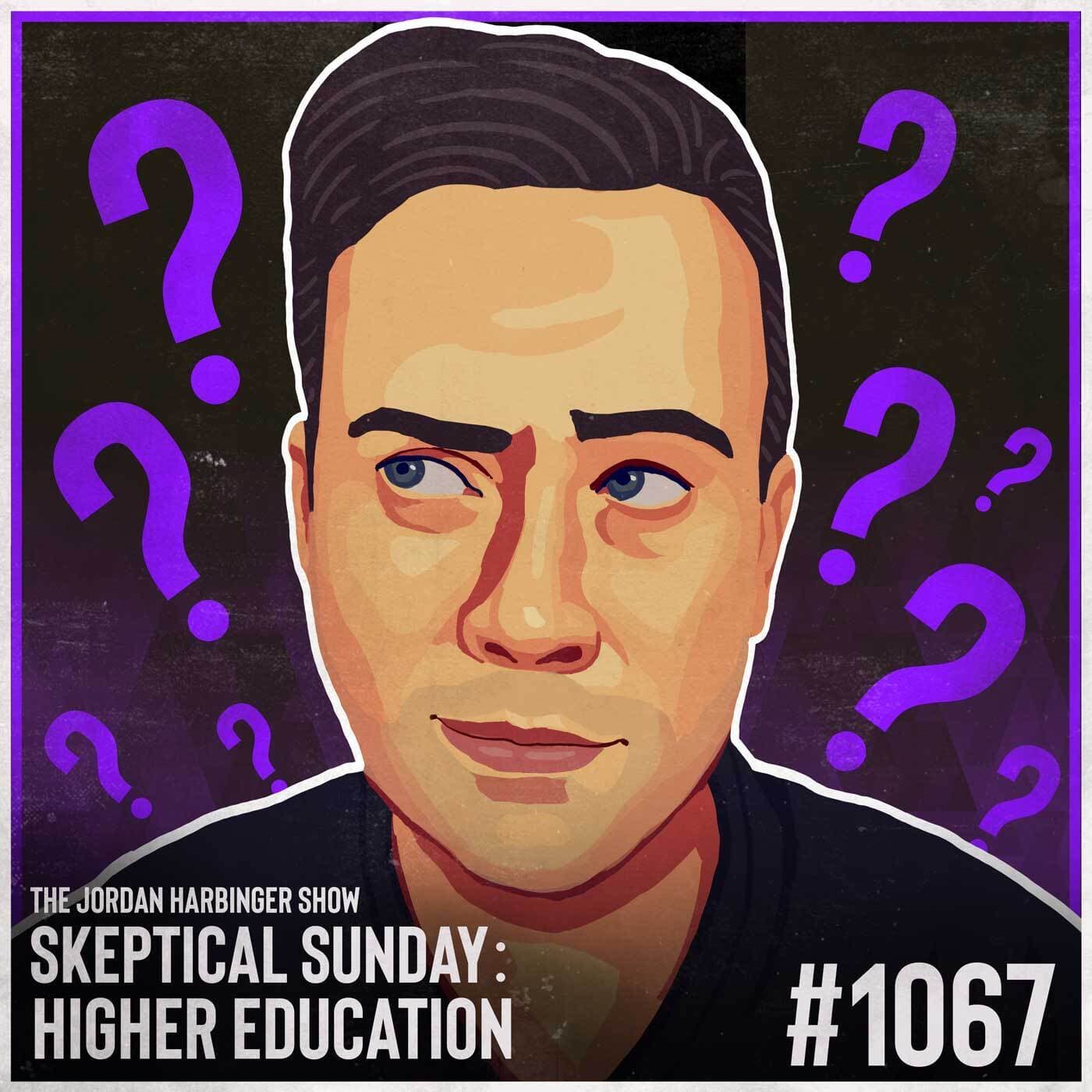
Podcast Episode Notes: The Jordan Harbinger Show - Episode 1067: Higher Education | Skeptical Sunday
Episode Summary In this episode of The Jordan Harbinger Show, host Jordan Harbinger and writer Jessica Wynn discuss the flaws and challenges facing higher education in the United States, including issues of privilege, college rankings, student debt, and systemic inequities. They explore potential solutions and the future of education amidst these challenges.
Key Themes and Discussions
- Historical Context of Higher Education
- Privilege and Exclusivity: Higher education in the U.S. has a long-standing tradition of privilege, dating back to institutions like Harvard that were initially exclusive to a small demographic (white, male, Christian).
- College Rankings Influence: Rankings such as those by *US News & World Report* significantly shape perceptions of educational quality, but they fail to accurately measure the actual academic experience.
- Cost of Education
- Rising Tuition and Debt: The cost of higher education has risen dramatically, outpacing inflation and resulting in substantial student loan debt, raising questions about the return on investment (ROI) for students.
- Impact on Career Choices: Many graduates reflect on whether their degrees were worth the financial burden, with many feeling unprepared for the job market.
- Admissions Processes
- Standardized Testing Bias: Standardized tests like the SAT and ACT are criticized for favoring wealthier students, thus perpetuating inequalities in access to higher education.
- Wealth Disparities: Students from affluent families have a significantly higher chance of gaining admission to elite institutions compared to those from lower-income backgrounds.
- Potential for Change
- Innovative Educational Models: There is potential for positive change through innovative models, technology integration, and alternative credentialing systems that can create a more accessible and effective educational landscape.
- Revisiting the Four-Year Degree: Employers are beginning to remove degree requirements for certain positions, suggesting a shift in how qualifications are perceived.
- The Problem with Rankings
- Fixed Reputations: The prestige of institutions often outweighs the actual quality of education provided, raising ethical concerns about how colleges represent their educational offerings.
- Backlash Against Current Ranking Systems: Some elite schools have begun to opt-out of traditional rankings to challenge the status quo.
- Broader Implications
- Cultural and Economic Impact: The rising education costs and resulting debt have broader implications for societal structures, such as home ownership and family planning.
- Gradual Shift Needed: Changing the higher education system requires a substantial overhaul of funding models and educational approaches.
Key Takeaways
- Higher education is entrenched in a system that perpetuates privilege and inequity, with college rankings playing a critical role in shaping public perception.
- The significant cost of education leads to questioning the ROI, with many graduates feeling their degrees do not match the financial burden.
- Innovations in educational delivery and assessments can potentially disrupt the traditional models, making education more accessible to a diverse range of students.
- There's an urgent need for systemic changes in funding and educational practices to ensure that higher education serves all students equitably.
Resources & Further Connections
- Connect with Jordan Harbinger: [Twitter](https://twitter.com/JordanHarbinger), [Instagram](https://www.instagram.com/jordanharbinger), [YouTube](https://www.youtube.com/c/THEJORDANHARBINGERSHOW).
- Connect with Jessica Wynn: Subscribe to her newsletter: [Between the Lines](https://jessicawynn.substack.com/).
Conclusion This episode emphasizes the complexities surrounding higher education in the U.S. and the pressing need for reform to address issues of privilege, accessibility, and the increasing burden of student debt. It invites listeners to think critically about the current models of education and consider innovative solutions for a more equitable system.
Written by AI. May contain mistakes. Listen to the episode to check what was said.
Transcript
Automatic transcript. May contain errors.0:00This episode is sponsored in part by LinkedIn. Most platforms are built to distract you. LinkedIn is built to help you get things done. And when you're a small business owner. the one thing you don't have is time to waste. That's why LinkedIn Jobs is a secret weapon. Post your job and LinkedIn doesn't just blast it out to randoms. It uses all that professional data people actually keep up to date on LinkedIn to match you with qualified candidates. You can post it for free or you can promote it to get three times more job applicants to expedite everything. And here's the cool part. Because LinkedIn is where people actually want to be found professionally, the quality is just higher.
0:30You're connecting with people who are serious about their next move. That's why 2.5 million small businesses use LinkedIn to hire. Add the hashtag hiring frame to your profile pic, let your network know that you're looking, and suddenly you've doubled the reach without spending more than 30 seconds. So when the clock's ticking and you need someone great, LinkedIn isn't just social media, it's your best recruiting partner. Post your job for free at linkedin.com slash harbinger. That's linkedin.com slash harbinger to post your job for free. Terms and conditions apply. Mint is still$15 a month for premium wireless.
1:00And if you haven't made the switch yet, here are 15 reasons why you should. One, it's$15 a month. Two, seriously, it's$15 a month. Three, no big contracts. Four, I use it. Five, my mom uses it. Are you playing me off? That's what's happening, right? Okay. Give it a try at mintmobile.com slash switch. A front payment of$45 for a three-month plan,$15 per month equivalent required. New customer offer first three months only. Then full price plan options available. Taxes and fees extra. See mintmobile.com.
1:31Welcome to Skeptical Sunday. I'm your host, Jordan Harbinger. Today, I'm here with Skeptical Sunday co-host writer Jessica Nguyen. On the Jordan Harbinger Show, we decode the stories, secrets, and skills of the world's most fascinating people and turn their wisdom into practical advice that you can use to impact your own life and those around you. Our mission is to help you become a better informed, more critical thinker. During the week, we have long-form conversations with a variety of amazing folks from spies to CEOs, athletes, authors, thinkers, performers. On Sundays, though, that's Skeptical Sunday.
2:01We're a rotating guest co-host and I break down a topic you may have never thought about and debunk common misconceptions about that topic. Topics like why tipping makes no sense, e-commerce scams, diet supplements, the lottery, toothpaste, crystal healing, internet porn, and more. And if you're new to the show or you want to tell your friends about the show, our episode starter packs are a place to begin. These are collections of our favorite episodes on persuasion, negotiation, psychology, disinformation, cyber warfare, crime and cults, and more. That'll help new listeners get a taste of everything we do here on the show.
2:32Just visit jordanharbinger.com slash start or search for us in your Spotify app to get started. Today, the pressure of college and university starts at a young age for a lot of kids. The tests, the GPA, the extracurriculars. Students want to look good on paper to get into a good school and be on the trajectory towards the American dream. But what is more important, the education received or the prestige of the school? The SATs, the costs, the brutal business of admissions, applying to college is a part-time job, and everybody wants to get into the best schools because where we graduate from determines where we land after graduation.
3:07It's also nuanced, but does it really matter? Today I'm joined by writer Jessica Wynn to school us all on schooling. Hey, Jordan. Thanks for having me. So do you even remember the stress of applying to college? Yeah, it was a lot of work. And I don't remember it fondly, right? Because you've got to write essays. You've got to get the applications. You've got to ask your mom for a check for each one because, of course, it's not free. And all your friends are telling you what they did. And it sounds like better than what you're doing. And then you get waitlisted while you think you're going to get into that school.
3:41And then you cry about it. And then you either never get in or you get lucky and you do. And that was I wouldn't want to go through that again. Right. Yeah, it seemed to take forever. But when colleges opened up in the 16 and 1700s, it wasn't quite so complicated. An applicant showed their knowledge of Latin and Greek, proved they had good moral character. Also, you had to be a white male and you were in. So it sounds like privilege is a longstanding academic tradition. Yeah, it started that way. The first American university, Harvard College, that opened in 1636. And in 1642, it held its first commencement.
4:24The graduating class was just nine white Christian male students. So unsurprisingly, a reflection of the American ruling class at the time. And also that's six years. Did it take six years to go through college or did they just really take their time? Yeah, I definitely researched why the first class was six years, but I don't, yeah, I'm not sure I couldn't find the answer. It's so funny because you wonder like, were they just screwing around or they were like, no, it's going to take six years for you to learn because you got to learn Latin and Greek fluently before you can read any of these books.
4:55I just, I do wonder why it's six years long. Yeah, just a fun boys club. And then, you know, since then, they reinforced this higher education exclusiveness by not ranking the graduates by their grades or even alphabetically. Instead, these elite men crossed the stage to get their diploma according to the rank their families held in society. That sounds needlessly complicated, first of all. They couldn't have done that for long. How do you even do that? I mean, with five families, okay, fine. But once you got like a hundred, what are we talking about here? I mean, they did it for just over a century.
5:38So until 1801, Harvard classified its graduates by their family status. Also, these first colleges in the U.S., they were all faith-based colleges and just producing ministers. That's what Harvard, Yale, and Princeton were. Okay, so I get that. But today is a lot different, obviously. I don't even know if those, I assume those places still probably have divinity schools, but it's probably one of their smaller programs. And it's there because it's always been there. I don't think it's probably a huge profit center for the university. I guess I don't really know. But today, most people are studying what anthropology and other nonsense that you're never going to use.
6:13Right. Sociology department, of course. But it was for generations. So there was a fight to broaden access to colleges and universities because the privilege continues to shape higher learning since that time. So by the time the Declaration of Independence was signed, there were eight other colleges established in the United States. But today there's over 6 ,000. Wow. I would have guessed a few hundred, not 6 ,000. That is a lot. I really had no idea. Those are all colleges slash universities. That's almost hard to believe. Where do they fit? Where do they all go? There's so many. I mean, you even see billboards for them.
6:556 ,000 campuses producing graduates, many that are displeased with the return on investment or their ROI. ROI in higher education seems to be the biggest issue. Well, that tracks. People wonder why they even went to college. I'm one of those people, so I get it. I look back and I'm thinking like, wow, I really didn't need that for what I'm doing now. And I think a lot of people are probably in the same boat. Yeah, I mean, same. Of course, everybody wonders, would I be better off if I didn't? And back in the 1930s, I mean, 5 % of Americans went to college. And the idea of higher education to everyone else was comical.
7:36It was silly. Movies portrayed professors and students as oblivious to the real world. The movie Horse Feathers, it came out in 1932. It starred Groucho Marx, and he portrayed a ridiculous, foolish professor. Fast forward to the 1970s, an animal house depicting the outrageous Belushi as the typical student. Academia was not thought of as a serious place in pop culture. So were most people going to college by the 70s? That's kind of what I had in my head is that maybe that was the tipping point where more people were going than weren't. Yeah, I should. There was a lot more people going, but America prefers heroes that didn't go to college like Thomas Edison, the Wright brothers, Henry Ford.
8:22Then there's today's dropouts like Bill Gates, Steve Jobs, Rachel Ray, Richard Branson, Mark Zuckerberg. Charles Lindbergh straight up failed out of college. And scientists and professors, they're seen as kind of lame. And we like to make fun of these educated eggheads. Okay, but all of those people are objectively really successful. And that's what we respect about them, not the fact that they didn't finish college. And I know that that's lost on a lot of people who drop out of college. Like they think that's the secret ingredient when the secret ingredient is probably crazy amounts of talent and drive.
8:57Right, right. That's true. But I mean, higher education hasn't always played a larger role in society. So in the 30s and 40s, many people learned about the Civil War by watching Gone with the Wind, not through a thoughtful study. Movies were shaping what people thought about much of history. Movies still teach history. For example, I know that the Great Pyramids in Egypt were discovered in part by Nicolas Cage and excavated by Harrison Ford, so I guess nothing has changed. Well, the misinformation movies gives us, that definitely hasn't changed. But The Second World War, that changed everything, including higher education.
9:36Hitler came to power and destroyed the greatest academic culture in the world, which was in Germany. Hitler never went to college, by the way. He did, however, fire faculty at German universities. And America saw that opening and brought over many intellectuals that were in danger in Hitler's Germany. In fact, Princeton started the Institute of Advanced Study just to give Einstein a home and academic support. Hitler screwed himself. How so? Say more about that. I mean, I think I kind of know where this is going, but... Yeah, I mean, because we got the bomb, Jordan. Like, we got the bomb, not Germany.
10:14If it wasn't for Hitler scaring off the scientists and nerds, we would have never gotten the bomb. So would I have learned that in college, or would I have learned that by watching Oppenheimer? Maybe a combo. And it wasn't just the bomb America gained. When the war ended, there were a lot of GIs facing unemployment. So America created the GI Bill in 1944. Oh, wow. I figured the GI Bill was mostly post-Vietnam, but I guess the program started a lot earlier from the sound of it. Oh, yeah. Roosevelt enacted it in 44. The controversies of how it all worked is for another show you can do, but it was aid for veterans in hopes that about like 200 ,000 of them would go to college.
10:58Wow, that's a lot. I suppose that's nice for those who are allowed to take advantage of it. I kind of read some stuff that maybe certain races were not allowed to do it or whatever. I don't know. We'll have to. That's another skeptical Sunday, like you said. Yeah, that's where the controversy lies. But it wasn't 200 ,000 that took advantage. It was 7 million GIs took advantage and went to college. Yeah. That's great. It changed the entire student body, of course, but it also changed the whole faculty. More professors were needed, more classes were needed. And because of this, those Christian male white campuses, they became a lot more diverse.
11:38More people means more diversity. Sure. Okay. Is that a good thing for the schools? It seems like that's a good thing for the schools, right, at this time? Well, of course. But this is America, so it's another complicated thing. Pre-war, faculty at elite schools, they were all white, overwhelmingly Protestant, and everyone pretty much held the same opinions. Then came the GIs. To them, when they started college, majors were just guys in the military who barked orders at them. But yeah, now they had to pick a field of study and more teachers were needed, like a lot more. So anyone with a pulse got a teaching job.
12:18So that was like peak perfect time to be in academia, right? Because if you, like you said, if you had a pulse and you were, you could read, you were basically employed by whatever university to teach this incoming glut of students. Oh yeah. It was an academic wild, wild west. I mean, people got tenure because they just needed people with tenure. And tenure is coveted, right? Even today, it gives you a permanent position to those deemed worthy. It takes at least five years proving one's expertise. I mean, imagine, Jordan, tenure with no publications. It's unheard of. And it changed colleges. So for people who don't know, tenure is essentially like, and you'll have to step in here probably, Jessica, but that's when a professor, they're like, OK, we want to keep you around basically forever.
13:07So now you have all kinds of protections about what you can do and say. And it's sort of like you can be a free academic here because we can't fire you for nonsense political reasons, which isn't entirely true. But I guess it's sort of job security type thing for somebody in that position. And right. It's close to like being appointed to the Supreme Court. You're you're kind of locked in. Yeah, you're a made man in mafia terms, right? You're in. But usually you got to like write books and publish stuff and get into journals. And back then it was like, oh, you like working here and you're going to stay?
13:42Here's some tenure. Right, exactly. They just were begging you. Colleges in California, actually, they needed teachers so bad they would send people in the Midwest like little orange trees or oranges or something to entice them to come to California. There's plenty more where that came from, if you know what I'm saying. We're like, all right. But yeah, I mean, it just changed everything. And then as the faculty changed, like the country changed, then the model grew. And today, higher education is supposed to be attainable for all Americans. I mean, yeah, it is. You said we have 6 ,000 colleges and universities in the U.S.
14:20that offer a degree. That's a lot of degrees, man. A lot. Yeah, that's a big math problem. and of those 6 ,000 colleges, you can break it down, a thousand of them are Bible colleges, a third of them are for profit, half of them are private and the vast majority are state universities and then there's the monstrosities that revolve around big sports. Okay, otherwise known as party schools. Although to be fair, I went to Michigan and I can't tell if that was a school that revolved around sports or a real academic institution and I think it was a little bit of both. Yeah, same at Iowa. was a little bit of both.
14:56But I mean, those party schools are popular. Many Americans can name their local college athletes and coaches, but very few can name a college president or chancellor. Like name the chancellor of the closest campus to you. Okay. Well, obviously I can't do that. I don't even think I can name the closest campus to me, let alone the person who runs it. The only president, university president I can name right now is Claudine Gay. And that's because she was all over the news before resigning. And it was this big thing. I don't even think that one counts. Or her last name just stuck with you. Yeah, also very memorable.
15:32Yes, exactly. And regardless of the public's lack of knowledge, colleges and universities, they're everywhere. Plus, because there's so many campuses, we are overproducing PhDs in the United States. Since 2000, the number of doctoral degree holders has reached 4.5 million. That's a lot of doctorates. And the number of people with a master's has gone up to 21 million. We have over 200 ,000 professors. And as higher education spreads, forget getting tenure without a publication. Now you need peer review, internal review, outside letters, plus a podcast, a movie deal, a recipe book. I mean, it's like all these trappings of rankings of importance.
16:22And it's difficult to get tenure these days because the jobs aren't in demand like they were after the war. So there's this academic job scarcity, but we're still overproducing the PhDs despite the fact there's not enough jobs in academia. Sure. So everybody knows the joke about earning your PhD and then you end up with a job at Starbucks or something. Is that a joke? Or is that just what's happening? Because it's so competitive. Going to a top college does help in the marketplace. And we're told the top colleges through rankings and lists. Americans love lists, BuzzFeed, top 100 movies, top 10 albums, whatever.
17:08We love rankings and lists. And that's what we've kind of dwindled academia to. The list.
17:19U.S. News almost went out of business until they started publishing college rankings and best of lists. And now parents love saying my kid goes to a school higher on the list than your kid. Of course, parents work hard for those bragging rights, man. And even my parents who are not those kinds of people, I'm pretty sure they were still like, oh, yeah, Jordan got into Michigan. I know they did it with law school. They called their lawyer friends and they're like, yeah, is Michigan a good school? Because Jordan just got in, like all playing dumb. They're like, wow, congratulations. I mean, you can't resist, right?
17:54It's your kid. I get it. Of course, you did that somehow. Somehow. Vicariously, you go there. I was going to say somehow. Somehow we both did it. I don't know. I don't know how that works. Right. Right. I mean, people wanting their kids in the best school is American as apple pie, right? I mean, we put so much value on elite schools because their prestige leads to a prestigious paycheck. But people have no basis on which to judge the quality of education besides these lists. You know, is there any way to determine if the legal education at Yale ranked number one is superior to the legal education at the school ranked 20th or 50th or 6 ,000th?
18:38Yeah, it's tough. I don't know how you can really tell at all. There are different types. For law school, there's different types of learning at different tiers. So a lower tier law school, while it might not be like, oh, I went to Harvard Law, it's actually much more practical. If you go to like a third tier law school, say you go to a third tier law school in Michigan, they're actually teaching you the laws in Michigan. And then when you take the bar, you're like, I know all this stuff already because I learned it in school. Whereas higher tier law schools like Michigan or Harvard, Columbia, whatever, you're reading Supreme Court arguments and stuff.
19:13And it's like, what's the philosophy that we have behind this? And then you get out and you have to study for the bar and you're like, what is this? I've never seen this in my life. So you probably have better teachers that care more at smaller schools and the information is more practical and professors of law at Michigan indifferent doesn't quite sum up what some of those folks were. Sure, some were amazing, but some really resented teaching. And they would tell us like, oh, I've got to teach this semester. I'm so annoyed. And it was a little bit like, cool, I'm glad I'm paying$42 ,000 a year to learn from you and you don't even want to be here.
19:45I don't know for undergrad, though, what it's like. I mean, I don't know how you can say that one school is definitively better than another school other than to look at like employment rates, but that doesn't really say anything other than the reputation of the school is good. It doesn't say the education is, right? So I don't know. Right. I mean, it's hard. That's why it's just so easy to look at the list. It's hard to tell if the undergraduate education provided at Princeton is better than at Puget Sound, but there's just such a heavy reliance on these rankings. So you're saying the quality of education provided at Yale is far less important than the prestige of the Yale degree.
20:25And I think that makes a lot of sense. But isn't the quality somehow or somewhat indicative of the prestige or is that just all sort of fabricated branding? But how do you judge the quality of education in the first place? How can you determine whether it's gotten better or worse? I mean, I'm certain you can have a shitty professor at Princeton and a tremendous professor at a community college. Yeah, but wearing a Princeton hoodie at the coffee shop, it gets you the respect. Maybe you get a date on your way out. Wearing a community college hoodie at the coffee shop gets people asking you if you work at the coffee shop.
21:01Well, I mean, that proves the bias these rankings create. Yeah, you're right. Yeah. And it's kind of easier to cheat the Princeton student, by the way. What do you mean cheat the Princeton student? I want to hear more about this. Well, like for what they think they're getting into. I mean, I'm not sure I would say that an expensive undergraduate education provided largely by graduate students and adjuncts is cheating, but it is giving students at these elite universities something quite different from what is promised. The quality of education provided at Yale might, for all I know, be terrific, but for most, this is both impossible to determine and it's far less important than the prestige of the Yale degree.
21:47So do you find the reputations of these schools problematic? Is that what it is? Is that your big beef with this? Yeah, kinda. I mean, according to one study, just five universities, Berkeley, Harvard, Michigan, Wisconsin, and Stanford, produce about one-eighth of the tenured faculty at PhD-granting universities. 80 % of them earned their doctoral degree at 20 % of the research universities. One way for a struggling college to signal its legitimacy and quality is to announce that its new professor has a PhD from a university with a reputation far stronger than its own. It's difficult for a top graduate of a less prestigious university to get an interview, let alone to get hired anywhere.
22:38But if you can say, I studied under this prestigious degree holding professor, then you might have a better chance. I see. So yes, the U.S. news rankings, which were all the rage back when I was going to school, those favor prestige. But I mean, I don't think we can pretend they are outliers, right? Wealth and prestige sounds like it ruled higher education well before the introduction of these rankings and would probably still rule higher education if the rankings vanish tomorrow, right? The prestige and the reputation and stuff still exists. It might just be less formalized or something like that.
23:14Yeah, I mean, of course, of course it would still be there. But the college rankings are here and they're failing to measure the quality of the academic experience. Which is probably why there's been some backlash to those rankings in the first place, right? Yeah. I mean, there is backlash, but the universities are just as tied to the rankings. In 2022, Yale and Harvard said they would not take part in the rankings by U.S. News and World Report anymore, which it was a start. Berkeley Law followed soon after, then Columbia, Georgetown, and Stanford. As of today, 10 of the publication's top 15 law schools have said they will stop taking part.
23:57But what does that mean? They're still on the list. So how do they still make the list if they're not doing the list thing? I don't get it. Yeah, they just don't, quote unquote, cooperate with the publication. So, yeah, I don't know. It doesn't make a whole ton of sense. Right. So they don't send the data when it's requested. And it's like, we're opting out. And then the U.S. news is like, we're just going to guesstimate it and put you on the list anyway, because we can't not have Yale on there or Harvard or whatever. Yeah. So it sounds like a crisis of conscience is contagious if maybe a lot of schools aren't cooperating, or is it just like a few elite universities opted out and it's totally inconsequential?
24:38Yeah, I mean, it seems that there's just this back and forth about who's opting in and out, but any step to loosen the hold these rankings have on the marketplace should be considered a good thing. These announcements will change nothing because at the same time, they say they're not partaking in the rankings, it's they're still on the list. The funny thing is, is what I've seen is if they are dropped off the list, even though they're not taking part, they complain they're not on the list. So sure. So people want to be told they're great, even if they're like modestly telling you to stop. Oh, we don't want to participate.
Read the full transcript
25:17Wait, where are we? Where aren't we on there? How do what do you mean we're number six instead of number four? Come on. Yeah. So I guess that makes sense, but only 25 schools can be in the top 25, right? Yeah, not really. I mean, they have a lot of ties on the list and people can brag that they're in one of the 70 schools in the top 25. There's an essay called Higher Ed's Prestige Paralysis by Professor Brian Rosenberg. And he makes the argument that with or without these rankings, college reputations are fixed, valuable and based on almost no hard evidence. And I love this. It makes sense to me because these U.S.
25:56news rankings are based on almost no actual evidence of quality and the rankings reinforce the existing structure of institutional wealth and prestige. I mean, any non-academic can name a lot, if not most of the schools in the top 25 because the list, it's been the same for centuries. I mean, does that make sense to you? No school can raise its game and get on the list. So there's no underdog. There's no scrappy, like, bad news bears of academia. Right, right. I mean, plus college rankings, it doesn't seem to include the quality of the academic experience. They rely heavily on retention and graduation rates and how successful their faculty is.
26:40Well, the quality of the college experience, it's so subjective. So it's difficult to do, right? If it's even possible at all. I just don't understand how you rate the quality of something like this. I know I said that earlier. Yeah, but it is possible. Like if I had to measure quality, I'd look at how many students had one-on-one time with a faculty member, how many participated in an honors program or a research program, and how many small classes they were a part of. You can consider internships, mentored research, study abroad programs. That list can go on and on. I mean, look at how many students shared a meal with a faculty member or visited a professor's house or, you know, whatever extracurricular activity.
27:24So here's my objection to that. Won't those indicators discriminate against schools that serve large numbers of part-time and commuter students? I mean, not necessarily. There's a lot of two and four-year schools that make student engagement a defining feature of their undergraduate experience. But U.S. News is not the only one doing rankings. Is anyone doing it better or different? Not in a comprehensive way. In Washington Monthly, they measure the economic mobility of students. And Georgetown Center for Education reports on ROI. But in the world of colleges and universities, reputation, brand, prestige, call it what you will, that is more important than anything else, including the quality of the actual education provided.
28:13I mean, in fact, it would be difficult to find another industry in which reputations are so fixed, so valuable and based on so little hard evidence. Yeah, I guess. Although U.S. News did not create the prestige of Yale and Harvard, the list just kind of tell people what they already know. Yeah. Yeah, I mean, of course, there's no surprises, but U.S. news is not the cause, you're right, but it's an unpleasant symptom of how higher education operates. It measures quality based on average class size, faculty qualifications, and standardized test scores. You know, I know you know, even bar passage rates for law schools can be misleading.
28:59You know, it's a good use of those student loan funds. One of the fine products and services that support this show. We'll be right back. If you're wondering how I managed to book all these great authors, thinkers, and creators every single week, it is because of my network, the circle of people I know, like, and trust. I'm teaching you how to build your network for free over at 6minutenetworking.com. This course is about improving your relationship building skills, inspiring other people to want to develop a relationship with you, and it takes a few minutes a day, not a whole big commitment. It won't make you look like a knucklehead or a cheesy, awkward jerk.
29:28is not going to put you out, make other people feel bad. And many of the guests on the show already subscribe and contribute to the course. So come join us. You'll be in smart company where you belong. The course is free over at six minute networking.com. Now back to Skeptical Sunday. Well, the bar passage rates seem pretty steady over the last 20 years, at least. I don't know how those rates stay the same. I'm not sure about that. But what's completely misleading that I've caught on to from at least from law schools is the employment rates that they show and they report. So law schools will say like, oh, we have 100 percent employment after graduation.
30:03And everyone's like, wow, everyone gets a job from this school. That means I'll get a job if I go to school. So it's like a good investment. Right. You can sort of guarantee ROI. Well, OK, but graduates, there's always a few knuckleheads. Right. And they'll get placed, for example, in a mailroom of the law school career service office or whatever, making 30 grand a year with 150 plus thousand dollars in student loan debt and not working in the legal field at all. But the school keeps their sort of nonsense, 100 percent employment record for graduates, which looks great on the recruiting materials.
30:37And law firms kind of do the same thing. They'll do something called a cold offer where they're like, we gave offers to 100 percent of people who worked here. And it's one of the offers will be like, please don't ever work here. We're offering you a job here, but you really shouldn't take it and you should look for another firm that's a better fit. And if you get that, you're supposed to report that to the career services office because they don't like that. But I'm like, but you are doing the same thing with the employment thing. Like you're pissed off at the firm for doing it, but you're doing the same thing with the employment.
31:06And so, yeah, it's a whole thing. It's a little scam. The manipulation is everywhere. I've read that schools can game the system by restricting admissions into those programs. And those programs can focus just on passing the bar. So you have two things working for you. You have a high passage rate because you're teaching to the test and you're only admitting a small percentage of applicants. So your school looks really hard to get into. And we equate this with prestige and a higher rank and a better spot in the higher education marketplace. I get that, but I don't think the problems start in college.
31:47First, it seems like it starts with prepping for and taking, what was it, the ACT and then the SAT. I don't even know if both of those still exist. I assume the SATs do. I don't know if the ACT does. Still exists. So aren't those problematic as well, or am I getting too far off topic? I vaguely remember those coming under fire, even in the 90s. They're problematic. They are both, by the way, like written and graded in Iowa City. like both the ACT and SAT. And a lot of people who grade the essays work for both companies. It's very scandalous. But anyway, I mean, we are examining these exams because wealth and prestige are an enormous factor in the SAT and ACTs as well.
32:31But at the same time, those tests can also show a high school student's potential. So it's another really complicated issue. Right. And that's because studying for and taking the SATs, for one thing, it's expensive if memory serves. I mean, you might need a tutor. You certainly need a bunch of courses. I don't know how they run those now. But is it a good predictor of success in college or is that also bunk? I mean, again, it's complicated, but a lot of evidence shows that it's not correlated, that your high school GPA, regardless of what high school you went to, it's found to be a better predictor by some, but it seems to me the SAT test itself is not the problem.
33:10It's the inequity of students taking the test. So wealthier families can invest in study aids and money buys SAT prep, which buys a better score. Ah, but there are free test prep courses though, right? Or are there not? Yeah, it's Khan Academy. They offer free study aids. Yeah, that's great. That guy's amazing who founded that. So that's got to level the testing field to some degree, I suppose, now that everybody has access to high quality study aids that are free on the internet, unless you don't have internet, I suppose. Yeah, which sadly, that is actually a thing. But yeah, I think it does level it somewhat more than it used to.
33:48And for a while, the popular opinion was that the SATs are just very biased, even with the free prep available, and the want for the test to be an objective measure of academic achievement. But there are these intensive and expensive prep classes like Barron's and Princeton Review that they kind of, in a way, increase the objective measure when you drop a few grand. I remember those giant books that were so thick, they wouldn't all fit in my backpack. They were kind of like recycled paper, phone booky things. So yeah, it sounds like maybe test prep shouldn't be for sale. Not that it shouldn't be available to people, but I don't know.
34:26You're right. The money advantage kind of sucks. Right. And even if the test prep is equal for everyone, there's more to consider than just that. Standardized tests, they at all levels have been demonized in recent years on the basis that they hurt diversity. and the pandemic, when that came along, it allowed the perfect opportunity for many schools to drop the SAT and ACT requirement. Oh, so those are no longer required? That's interesting. I had no idea. Yeah, at some places. And those against the use of the SAT, they like to point towards a bias towards rich kids in the selection criteria colleges use for their admissions programs.
35:11Statistics show that kids born into the top 1 % of income have a one in four chance of getting into elite or Ivy League schools, but kids born in the bottom 20 % of the income distribution have a one in 300 chance of getting into the same schools. That's 77 times less likely. Okay. But that can't all be due to looking at someone's SAT scores, right? Right. Totally. But some will blame the tests completely for inequity in admissions. There's a lot of research now finding, you know, it wasn't that long ago people were demonizing the SATs, but now there's new research finding that that school of thought's mistaken.
35:55Standardized tests, they do relay real hard data predicting college success. And a growing number of researchers on the topic say the SATs highlight potential in students from lower income and minority groups. Oh, what a plot twist this is. So we used to think that the SATs kept out the disadvantage, but it turns out that they might actually be a magnet for potential or to use a college metaphor, it might be like using a blacklight in a dorm room. I would not recommend doing that ever, Jordan. Some things you cannot unsee. Yeah, maybe a magnet picking up iron filings out of sand is a better sort of metaphor here, or at least a less disgusting one.
36:39So, okay, so it seems like the SATs provide some empirical evidence, which I think would be a good thing for making a decision about a student. Yeah, absolutely. But people want to hold something accountable for the inequity seen admissions. Standardized tests are stuck on this cultural pendulum and the importance of them keeps changing. In 2020, Forbes ran an article like absolutely demonizing the SAT and it had convincing arguments. Then in January, just last month of 2024, Forbes ran an article about what a mistake we have made ditching the SAT requirements. If the SAT is the only factor in admissions, I would imagine it would change the diversity of acceptance rates.
37:25Yeah, of course. But no one is suggesting the SAT be the only factor in admissions. But there are good arguments of why it should be part of the overall criteria. You know, critics like to point out that the original designer of standardized tests was a racist, which, I mean, I'm sure that's true, but one can argue that many parts of the admission process hold racial biases. I'm not saying the tests are completely objective, but like we have to look at the new evidence that shows the SAT is not the cause, but a symptom of the inequitable society. And come on, man, like rich parents are going to spend money on whatever they see as the strategy of getting their kid into Harvard and Yale or wherever.
38:09And I mean, case in point, Aunt Becky from Full House went to prison for bribing some officials at USC for her ungrateful daughter who didn't even want to be there and also didn't have the right to be there. Oh, my gosh. I mean, what an embarrassment. But that happens to parents every year. She was just high profile. I mean, there's three big ways money allows parents to get their kids in through legacy admissions, extracurriculars and fancy sports. Plus, if your parents are educated, they can edit your essays. Connections are everything, of course. But what do you mean by fancy sports? Well, there's like a certain set of sports.
38:51Squash, fencing, sailing, rowing, polo. Very elite schools tend to over-select kids who play these sports. And these sports are also pretty expensive to participate in. The system works if you can afford it. And high-income families are more likely to understand this. So people exploit the system and rich people can afford to exploit it more. Schools must have some understanding of the socioeconomics of their athletes, no? Yeah, I mean, for sure. Harvard is trying to set up a non-bias system, but rich people ain't dumb and they know how to work the non-lottery way kids get accepted. Coaches would say, we just want the best players.
39:32We don't care how rich they are, but the richer you are, the more likely you play one of these fancy sports. So there are some things money can buy. like expensive equipment and living in a community that even has these leagues. My high school definitely did not have a polo team. So if you can afford fancy sports, you can obviously also afford fancy test prep. I get it. They're not exactly hiding the weirdly small and not very bouncy squash ball here with these strategies, I suppose. It's so true. But I mean, some some disadvantaged neighborhoods have taken this cue. I mean, look what the Williams sisters did to the city of Compton by building a tennis facility.
40:17I remember back in episode 121, I interviewed this guy, Freeway Rick Ross, who was a drug dealer who generated something like a billion dollars in today's dollars in the crack trade. And he essentially pioneered the crack trade in Los Angeles, which we all kind of know what happened after that to the rest of the whole country, especially L.A. And he said that his plan initially was to go to college and play tennis, but he had nowhere to play tennis. So after he got past whatever sort of level he was, there was just nowhere else to go. So he instead he just started to sell drugs and he became one of the world's biggest drug dealers instead.
40:53It's so sad to think that this guy would have been like a tennis player if it was up to him. He wanted to be Arthur Ashe. Wow. And instead he was like the biggest crack dealer in the history of drugs. Crazy. Wow. Wow. It's heartbreaking. It just shows higher ed is financially and morally unsustainable. It's totally broken. I mean, elite schools are also buying data from the college board to recruit students they know that they won't admit because it changes the acceptance ratio, giving the appearance they're a tougher school to get into. This helps your ranking. I mean, it's all a game. Less than half of college grads even work in their field of study.
41:32Wait a minute. Wait a minute. So are you telling me that colleges ask people to apply knowing that they will reject those people just to keep their acceptance percentage low? First of all, that explains why Harvard sent me those letters back in high school. But why am I understanding this correctly? Because that sounds that's like a weird, almost conspiracy theory where I'm shocked, but also not shocked that that happens. I mean, from some standpoint, it's that's smart business, you know, supply and demand, I suppose. So why even why even go to college in the first place? Maybe I need to back up and ask that fundamental question.
42:09Yeah, I mean, many, many people aren't 50 years ago, 20 % of people went to college. Now it's about 60%. But that is totally declining. So there's 4 million fewer students in college right now than there were 10 years ago. There's lots of ways to succeed in life without spending the time and money on college. And many young people are skeptical about the ROI. Many companies have removed degree requirements for certain positions like data scientists, software engineers, and graphic designers. So as long as you're building your skill, you don't necessarily need a degree, but it has a lot to do with what employers choose to reward.
42:54So are there still a lot of jobs that require degrees? Oh, absolutely. I mean, of course, but it tempts some people to bypass the college experience and take the fast track and head to a diploma mill. These are not the answer to anything. So I don't know if you know about these, but they're schools that are handing out degrees for cash. So like a mail order college degree. Nice. Why suffer through finals week if you can just cough up some dough and get a degree in the mail? That's amazing. I have heard of these. Yeah. I mean, they are just so dangerous and it's an incredibly insulting thing. I mean, student loan debt is over$1 trillion in this country.
43:37So it's not surprising that some people just plunk down like five grand for a master's. Instead of attending years of classes, it's possible that you never even go into a lecture hall and you just pay for a degree from an unaccredited school and voila, you can put down PhD on your resume without ever doing any coursework. But this can land people high paying jobs. That doesn't happen. Really? You get a job with this? Doesn't anybody like Google it and go, oh yeah, this is a fake school? Sorry, Jordan. It it it does. It does happen, though. These fake degrees, they've been around since the 1800s and they work.
44:18In 2004, it was discovered that the federal government was paying for degrees from unaccredited schools and handing them out to federal employees. Oh, my gosh, that's ridiculous. So technically, the taxpayers will. So you and I are paying for these B.S. degrees. I'm paying for this. Who's giving these things out? What's the website so I can make sure I never ever go there and buy one for myself? Oh, well, there's plenty of websites. You can also buy degrees that say you're anything, a doctor, a teacher, a mayor, whatever. There was a dog named Chester from Vermont. He has a master's in business administration.
44:55So I don't know what's crazy. You're a dog with a fake business degree or a human with a fake mayor degree. That's like you might want to look at what being a mayor is. I don't know why a mayor degree, why does that even exist? But I mean, then again, I guess it doesn't exist. It's just, it's fake. So, but still weird thing to even have fake. Really strange story. But in the case of the dog, the dog's human paid only$500, submitted a resume and a week later had a packet that included an MBA diploma, two sets of college transcripts, a certificate of distinction in finance, and a certificate of membership in the student council, which, I mean, what would an online school have student council?
45:37I don't know. But this is an extreme problem, like an extreme example of the problem. But it is a problem. In 2007, one out of every six education doctorates was fraudulent. Fake doctorates. I mean, employers are not obviously doing thorough enough vetting of their employees, but I'm still hung up on the fake doctors. A sham education doctorate, okay, That's one thing. But a sham medical degree is something else entirely. That's far more terrifying. Absolutely. In the 2000s, two men in North Carolina bought medical credentials and degrees for$100. It's a good deal. They were arrested for manslaughter after taking a woman off insulin and giving her their own tonic.
46:22Ooh, yikes. Okay, so these degrees are not just immoral. They're potentially lethal. That is a special kind of stupid. It's one thing to buy a fake medical degree, but another thing entirely to really believe you're a doctor who's innovating in the health care field somehow with sham credentials that you bought online. That's just delusional. Yeah, it's wild. And this practice, though, it can put people in positions of influence. In 2018, a mayor in Florida was found to be lying about her degrees. Her degree was from LaSalle, not the one in Philadelphia, but a famous diploma mill that sells degrees.
47:00I mean, it's infuriating. Just, I think, last year, a coach at Indiana State, which is like a big sports school, they found out all his degrees were diploma mills, but he still has this high-paying job. Employers don't do a lot of background checking on people's education. This is very different, though, from exaggerating something on your resume, like I assume many people do, right? It's not like, oh, I played varsity football when I was like the video guy. That's what I did. Right. And they were like, well, you're technically on the varsity team. The coach was like, yeah, you should just put that on there.
47:31I mean, I'll validate it. You're still on the team. But I didn't play football. Right. I was injured. And but this is like you didn't even go to the school that had the football team in the first place. It's just way beyond the pill. Right. I mean, yeah, you're not alone. I think it's like 25 percent of people inflate educational achievements. so you're in company with george santos yeah right that sounds low because isn't it like 90 of people think they're above average isn't there a number like that it's like the vast majority of people think they're above average even when it's really obvious they're not i think so but yeah i mean it doesn't change the fact that many companies they just don't fact check every resume plus diploma mills are they're quite sneaky they accredit themselves through their own accreditation agencies.
48:21Only 12 states have laws against using unaccredited diplomas for some reason. And since not many get caught, there's little risk and high reward for the diploma mills and the people buying the diplomas. It stands to reason that something has to be done about this. Yeah. Well, there are ongoing investigations. There's a professor in the Northwest trying to get these dirty businesses shut down. He paid a diploma mill and he took their hundred question test and purposely answered 79 questions wrong. They offered him a 2.7 GPA and an associate of arts degree. I think it's kind of funny. Well, no, it's not, but it is also a little bit.
49:05Also, how do we know he deliberately answered 79 wrong? Is he just like, wow, I got 79 wrong. All right. So my test was I got 70. Like he didn't get 80 wrong. He didn't try to just get them all wrong. It's a strange number. Yeah. Oddly specific, pal. I think he just failed the test. OK, so if he only got 50 wrong, though, would he have gotten a master's? I mean, getting people who get fake degrees, they know they're paying for a fake degree, right? There's no wool over the eyes. It's straight up pay to play. Nobody's like, oh, I'm getting a real degree when I didn't do any work. I would think almost nobody believes it except for those doctors.
49:38Yeah, it's pretty clear they aren't legit. But if you're already delusional, I mean, who knows how it all works. But bottom line is there's a lot of money to be made. Some guy in Romania, he made$50 million in one year selling fake degrees. Wow. Yeah, it's hard to read about. Degreeinfo.com and DegreeDiscussion.com are two pretty famous, reputable sites, and they compile lists of schools that are believed to be diploma mills. You know what's better than shelling out for textbooks? Supporting the fine products and services that support this show. We'll be right back. Thank you for listening to and supporting the show.
50:18Your support of our advertisers does keep us going. All the deals, discount codes, and ways to support the show are all in one searchable, clickable place over at jordanharbinger.com slash deals. Now, for the rest of Skeptical Sunday. Man, we do love lists. First, the school rankings. Now, a list of fake diplomas you can buy if you don't get in to one of the schools ranked in the other list. All right. Yeah, it all works out. I mean, legitimate accredited colleges, they provide an education that meets academic standards. Diploma mills exist to perpetuate a scam. Accredited schools undergo rigorous review from independent accrediting agencies who evaluate schools based on academic missions, student success, and faculty qualifications.
51:03It's not a perfect way, but at least it's a standard. So schools who don't meet these standards are not accredited. Okay, so diploma mills, objectively stupid, but also so is paying$200 ,000 for a legit degree that gets you little more than a cool sweatshirt and the piece of paper that you could have gotten in the mill. Yeah, well, your dad likes to wear that sweatshirt. He does. That's true. You know, there's while debt on cars, credit cards, homes and everything else has pretty much stayed the same. Student loan debt has gone up 700 percent since 1989. There's a lot more debt and default rates than even 10 to 20 years ago.
51:46And college debt has doubled in the last decade. The fundamental problem, like we've been saying, is the ROI. Everyone's outraged about college debt because they're not getting the ROI. And we're told college is an excellent investment. But if the rich get better access to college and the best colleges get you rich, we are creating an insane feedback loop in our society. Just sounds like classism in a college sweatshirt and debt in a uniform with a name tag for the most part. Yeah, totally. And it's financially unsustainable because over the last 50 years, college tuition has increased at four times the rate of inflation.
52:26And to what end? You pay the institution without knowing what you need. And you're also 17, 18 years old. They provide you what they decide you need. And in the end, you have no sure way of knowing that you needed it. And college tuitions are going up so fast because technology is expensive, construction is expensive, and most importantly, it's because they can charge tens of thousands of dollars. And the loans are flowing to the students to cover the increasing tuitions. And then the students hope for loan forgiveness in some instances here. True. And many students would be happy to have loan forgiven, which is understandable.
53:06But forgiveness will not fix the out of control cost of higher education. Student loan programs themselves are robbing people of the American education dream. Yeah, I never I was never a fan of this. Like, look, I get it. People are overburdened with debt. I completely understand. But forgiving loans is going to, first of all, add to inflation. And that's the least of the problems. But the real problem is that if loans are forgiven, there's incentive for schools to then charge as much as they want slash can. And for people to pay those rates because they're like, well, the loan's just going to get forgiven.
53:38Chances are, or at least I have a shot at this just being a kind of lottery ticket for me. So I might as well do it. We need to get to the root cause, which is that it's too dang expensive because the prices are inflated. Yeah, it's not what people want to hear, I know, but the forgiveness program is not the answer. The funding model for higher education needs to be totally reimagined, and that should start with the loan programs. You are spot on about incentive to raise tuition, especially if there's no limit to what a student can borrow. Every year tuition goes up and every year there's more students applying than there is room for.
54:16So colleges charge more and more. Like, why not? In 2016, of the top 25 percent income households with kids, 58 percent got bachelor's. Of the bottom 25 percent, 11 percent got bachelor's. So that's critical when we're thinking about the inequality. It seems like universities are acting more like luxury brands than they are institutes of higher education. I've heard this from, I think, Scott Galloway and other folks like that. With all this debt, I mean, no wonder people aren't buying houses and starting families. How are you going to do that when you owe$200 ,000 and now you're making 50, right, a year?
54:53Yeah, the middle class will rent forever, I suppose now. There are experimental like pay it forward models that some colleges are testing. They essentially make lifelong donors out of graduates instead of charging them. Get graduates to commit to donating to the college to fund new students. Purdue University implemented an income share agreement a few years ago, and they were followed by several other schools. and it looked like a really good program. And then federal law got in the way and shut all the programs down. Private schools have a little bit more success. There's Hope College in Michigan and they're testing a pay it forward model right now.
55:37And like I said, they're having more success because it's private. But, you know, unfortunately, there's just not a lot of conclusive data on how this is working out yet. I'm guessing that's going to take a few decades at least to get the data and figure it out. Another thing that adds to student debt, and it drives me crazy, is once you pay for tuition and you pay for housing, then you've got to drop a freaking grand a semester on textbooks in many cases. Oh, yeah. The big textbook scandal. I mean, this is another part of academia that is so super complicated. A study that just came out in October shows that students learn more effectively from print textbooks than screens, though.
56:18and students are more distracted by e-books and over and over again it's shown that retention and comprehension are better with hard copy print books and print books create a healthier effect on brain plasticity overall well no wonder it's taken me over a decade to learn mandarin using a freaking pdf but the resistance to textbooks it comes from the cost it's insane that tuition is huge but it doesn't include the books. I'm already giving you$42 ,000 a year for room, board, and tuition. You can't throw in$800 worth of books. Come on, man. It's absolutely insane. And depending on your major, you'll spend from hundreds to, like you said, like$1 ,000 a semester on textbooks.
57:05So even if you are from the lower class and you win that lottery into Harvard, how the hell are you going to buy the books? Yeah. When I was in, of course, undergrad, I bought all the books like everybody did. And then when I went to law school, I bought all the books for the first year, like everybody did. And then the second year, I was like, ah, I'm gonna buy some of the books and then some of the books on the library and I'm gonna borrow some of the other books. And the third year, I didn't buy any of the books because I realized I could probably look up almost every case we were reading online if I needed to.
57:33And honestly, I just listened better because I didn't have anything on my screen because this is like the laptop transition period, where it was like one year, nobody had laptops, maybe one or two people. and the next year, one or two people did not have laptops. And I was like, it was like a massive overnight change. So I believe you about the PDF slash print thing. But yeah, I just stopped buying the books. I was like, I refuse because I refuse to spend$400 on a book that isn't changed from the previous year and also is just full of public domain legal cases. I'm paying$400 for a binding at that point.
58:08It's just, it's insulting. And some professors who understand this I mean, they get in so much trouble if they print off, you know, photocopy a textbook and print it off and give it out. Like, that's not allowed to do that. I mean, I get why people are attracted to the PDFs. I'm all for integrating technology into the academic experience. But the science of our complicated brains, it all points to actually reading a physical book, not scrolling a screen. So that has to be a part of it. But in 2021, though, I mean, you're not you weren't alone. Like it was found 65 percent of college students don't buy textbooks.
58:50They can't afford them or they share them or they find them online or they just wing it. And I don't know if you remember, but if you went to the library, hundreds of people taking a class, the library would have one textbook. They'd have one copy. Yeah. It's like insane. But it's shown that if textbooks were included in the cost of tuition, grades and completion rates would be better. Plus, it might make sense for that crazy tuition. The college's defense is that textbooks can't be included in tuition because different majors require different books. But I don't really see that. The problem I see is publishers greed and they're just creating this expense.
59:33I'm having a flashback. There was this place. tell me if you had this when you're going to school, there was this place on like State Street or one of the main roads in Ann Arbor. And you would go there if you had to copy a bunch of news articles or other data into a binder because the professor, like you said, couldn't give it out, couldn't copy it for you. And the bookstore slash whatever the place where you want to make the copies couldn't do it for you because it was copyright infringement. But fair use or whatever sort of guideline, you could copy it yourself. So the professor would leave this big bound book in this copy place.
1:00:09And it would be like for anthro 102 or whatever it is. And you go, hi, I'm here for the anthro 102 materials. And they'd give you this big thing and they would point you to an assigned copy machine. And they'd be like, it's going to be 25 bucks or whatever. And you would just flip the pages, make the copy, hit the button, flip the pages, hit the button, make a copy. And then they would bind it for you. And that was how you got around it. Cause you were quote unquote, doing it yourself. And you just end up with all these copies of. Yeah. And it was so ridiculous because they're just, you know, it was like a copy of an article from the New York Times in 1989 about the Iranian revolution or something, you know, whatever it was and stuff that you could easily get on the Internet now if they just put it on a syllabus and they were like, look this up, you could find it.
1:00:48But you had to do it yourself. And I was like, how is this place not getting sued into oblivion if everybody actually cares so much about this? I mean, And it's just the bureaucracy of it all. I just give the students the information that they need. I don't understand it. Yeah, or buy the stinking books. But you know what? If the schools had to buy the books, those books would be 10 % of the price they are now because they would have leverage to negotiate. And they'd be like, we need 40 ,000 copies of this book or whatever it is, you know, per year. I don't know how many people take some of these big classes, but like some of these universities, the big 10, they could buy all the books in bulk, right?
1:01:25and then just, you could really just do some major volume discount. And we can't have that because that cuts into the profit margin of the publishers. And man, I don't know. Right. And they'll start some weird rebate program or something that, yeah, it'll get more and more confusing. I mean, students like PDFs and screens. I'm sure probably now you use the internet more than you did back when we were going to school 20 plus years ago. If using PDFs, using screens offsets a rise in tuition, I mean, why bother with textbooks? It's got to just be getting harder to defend those as the years go by.
1:01:59Yeah, absolutely. But I mean, I think regardless, tuition rates are going up anyway. I mean, maybe it's the funding structure of colleges that needs to change too. Instead of graduation rates, schools could receive funding based on the salary of the students they graduate, for example. That's true. So emphasize the role of graduates' wealth on the funding for schools. I mean, interesting solution. Yeah, I don't know. That's just one suggestion. floating around. I mean, these are systemic problems that can't be fixed with just a little tweak. Something very different must happen within higher education.
1:02:37We need structural disruption. So what are the alternatives to the four-year college model? The current model has been in place, what, since the 1700s? Would that change now? Can it change now? Yeah. I mean, this is going to sound weird, but I see higher education making the same mistakes the music and entertainment industry made. They are so pleased with themselves and the status quo, and they're in complete denial of how technology is changing the business of education. Can we really compare, I don't know, Syracuse to Spotify? Well, new technology changes existing business models, and it might benefit society and our overall intelligence if we let technology into education in bigger ways.
1:03:22I mean, think of Netflix, right? It works better than network or cable TV because you can watch whenever you want. There's no limit on showtime slots and there's real-time data of what people watch to tell them other shows they'll enjoy. So if we opened up education in this way, a lot of the prestige and rankings would disappear. You could go to class whenever you wanted, or if you didn't have to worry about the seats available in a class and were guided to classes you're interested in and will succeed in, we might change how we learn and who the experts are. I mean, the classroom hasn't changed in hundreds of years.
1:04:00It needs to change. I sort of fear you're setting us up for Amazon University or Netflix College. Those sweatshirts probably exist. I mean, like, look, I know the Netflix model of education is far-fetched, but we must consider new models. Employers need to change their practices and loosen the reliance on four-year degrees making people employable. Nothing's going to change unless there's a push for innovative public policy regarding higher education. Of course, but how would employers get objective data that the people applying are like a talented writer or an excellent manager or qualified lawyer or whatever it is they actually need?
1:04:44Well, if employers can fall for diploma mill degrees on resumes, how objective is the hiring process. I mean, I get it. Business is not going to change radically overnight. HR still wants to look at the resume and see those degrees listed, but maybe the college board could make a college degree GED. You know what I mean? Like if you cannot go to high school and get a GED, why can't you not go to college and pass a college level GED? Yeah, I guess you'd have to do it in a way that creates the diversity of what employers need. A generalized test sort of sounds unreasonable at first glance. A fine arts major knows different stuff than a political science major.
1:05:26Right. Well, maybe employers would offer position-specific assessments. I mean, I don't know, but at least we have to start thinking about change. People from all sorts of backgrounds should have their individual talents developed, not just rich kids given a path to get richer. The higher education system is resistant to change, but people must try. It just doesn't sound like this is going to get fixed anytime soon. But it could be. American higher education has tremendous value, but its foundation was built in an analog nation. I mean, to make it work in the 21st century for our digital world, the higher ed model needs to be less structured, less fixed, and more open to a variety of methods to accommodate the diversity of students.
1:06:15There must be an effort to shake up the current system. Higher education needs higher innovation. Well, everybody listening gets two credits at the Harbinger College. Congratulations. That sounds expensive. Well, it costs no more than pushing play on your favorite podcast player. Thank you, Jessica. Oh, thanks, Jordan. Actually, it's Dr. Jordan, MD now. I just went and got the mail. Are you addicted to drama? check out this preview of the Jordan Harbinger Show with psychologist Dr. Scott Lyons. Do you vent constantly? Do you find yourself changing the stories? Do you find that wherever you go, there's always something that's wrong or happening?
1:06:58Do you find yourself believing the other shoe will always drop? That no matter how good things are, something bad is going to happen? Do you find yourself crisis hopping? If you're in it, you will have no idea that that's what you're doing. And it takes a lot of time for those addicted to drama to recognize, to even be aware of the pattern is happening. Our primal needs as a kid is to be seen and heard, to feel safe. And so you will go to whatever extremes, intensity, shouting is needed to pierce through the chaos of a family household to be seen and heard, even if it's burning down the house.
1:07:36A wave of an emotion, it lasts 30 to 90 seconds. Anything after that is the story we're feeding to maintain it. We're trying to keep that emotion active. We're feeding off the emotion as opposed to processing or metabolizing it. We're not letting it go because there's some belief system if we let it go we'll be victims. If we let it go we won't be safe. Whatever it is why we won't let go of the emotion. Even a small trauma can feel like death because we feel helpless. And if we don't have the resilience capacity to know that someone will help us, there are tools out there to help us. If we don't inherently know that, it feels like we're going to drown.
1:08:18In that moment, it feels like death. Learn to recognize and heal from drama addiction on episode 836 with Dr. Scott Lyons on The Jordan Harbinger Show. Thank you so much for listening. Love that we're able to do Skeptical Sunday regularly now. Topic suggestions for future episodes of Skeptical Sunday. To me, Jordan at jordanharbinger.com. A lot of these topics come from you, so I am happy to keep that train moving. Show notes at jordanharbinger.com. Transcripts are in the show notes right there on the website. Advertisers, deals, discounts, and ways to support the show, all at jordanharbinger.com slash deals.
1:08:52I'm at jordanharbinger on both Twitter and Instagram. You can also connect with me on LinkedIn. You can find Jessica on her sub stack, Between the Lines, and we'll link to that in the show notes as well. This show is created in association with Podcast One. My team is Jen Harbinger, Jace Sanderson, Robert Fogarty, Ian Baird, Millie Ocampo, and Gabriel Mizrahi. Our advice and opinions are our own, and I am a lawyer, but I am not your lawyer. So do your own research before implementing anything you hear on the show. Also, we may get a few things wrong here and there, especially on Skeptical Sunday.
1:09:20If you think we really dropped the ball on something, definitely let us know. We're usually pretty receptive to that. Y 'all know how to reach me, jordan at jordanharbinger.com. Remember, we rise by lifting others. Share the show with those you love. And if you found the episode useful, please share it with somebody else who could use a good dose of the skepticism that we doled out today. In the meantime, I hope you apply what you hear on the show so you can live what you learn. And we'll see you next time.
1:09:48Hey, Ryan Reynolds here from Mint Mobile. Now, I don't know if you've heard, but Mint's premium wireless is$15 a month. But I'd like to offer one other perk. We have no stores. That means no small talk. Crazy weather we're having. No, it's not. It's just weather. It is an introvert's dream. Give it a try at mintmobile.com slash switch. Upfront payment of$45 for three month plan. $15 per month equivalent required. New customer offer first three months only. Then full price plan options available. Taxes and fees extra. See mintmobile.com.
From the publisher
On Skeptical Sunday, Jessica Wynn schools us in higher education's flaws — privilege, rankings, debt, and inequity — and examines ways to fix them.
On This Week's Skeptical Sunday:- Higher education in the United States has a long history of privilege and exclusivity, with prestigious institutions reinforcing social and economic disparities.
- College rankings, such as those by US News & World Report, have a significant influence on the perception of educational quality but often fail to measure the actual academic experience.
- The cost of higher education has increased dramatically, outpacing inflation and creating substantial student loan debt, which raises questions about the return on investment (ROI) for many students.
- Standardized tests like the SAT and ACT, as well as admissions processes, tend to favor wealthier students, perpetuating inequalities in access to higher education.
- There is potential for positive change in higher education through innovative models, technology integration, and alternative credentialing systems. By embracing new approaches to learning and assessment, we can work toward a more accessible, diverse, and effective educational system that better serves students and employers in the 21st century.
- Connect with Jordan on Twitter, Instagram, and YouTube. If you have something you'd like us to tackle here on Skeptical Sunday, drop Jordan a line at jordan@jordanharbinger.com and let him know!
- Connect with Jessica Wynn and subscribe to her newsletter: Between the Lines!
- Like this show? Please leave us a review here — even one sentence helps! Consider leaving your Twitter handle so we can thank you personally!
Full show notes and resources can be found here: jordanharbinger.com/1067
If you love listening to this show as much as we love making it, would you please peruse and reply to our Membership Survey here?
And if you're still game to support us, please leave a review here — even one sentence helps! Consider including your Twitter handle so we can thank you personally!
This Episode Is Brought To You By Our Fine Sponsors: jordanharbinger.com/dealsSign up for
See Privacy Policy at https://art19.com/privacy and California Privacy Notice at https://art19.com/privacy#do-not-sell-my-info.