
In short
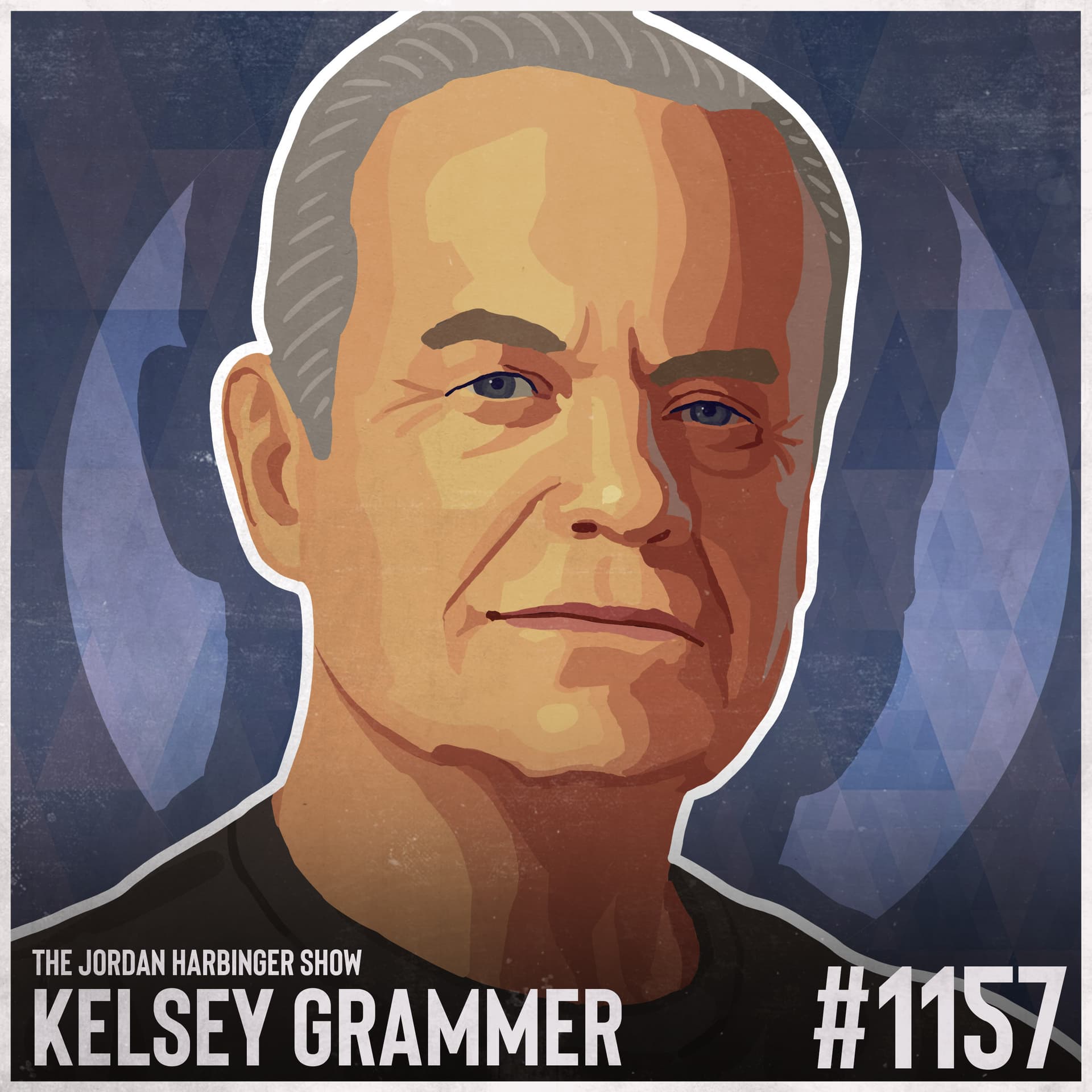
Podcast Episode Notes: The Jordan Harbinger Show - Episode 1157: Kelsey Grammer | Channeling Grief into Artistic Authenticity
Overview In this episode, host Jordan Harbinger engages in a profound conversation with Hollywood actor Kelsey Grammer, exploring the impact of personal tragedy on his life and career. Kelsey reflects on the brutal murder of his sister Karen and how this event shaped his approach to acting, grief, and creativity. Throughout the episode, Kelsey shares insights on addiction, success, and the importance of authenticity in artistic expression.
Key Themes and Discussions
The Impact of Tragedy
- Kelsey Grammer's Sister's Murder:
- In 1975, Kelsey’s sister Karen was abducted, raped, and murdered, an event that has left a lasting imprint on his life.
- Kelsey emphasizes that grief does not fade with time; rather, it becomes an imprint one learns to carry.
- He believes that grief and joy can coexist in memory, stating, "To remember somebody in the grace of the good that they left you is more important than the grief."
Grief and Artistic Authenticity
- Channeling Grief into Art:
- Kelsey's personal experiences with grief have provided him with the emotional depth necessary to portray complex characters authentically.
- He describes his ability to access deep emotions in performances, particularly during poignant scenes.
Addiction and Recovery
- Struggles with Addiction:
- Kelsey candidly discusses his battles with substance abuse, particularly cocaine, noting that unresolved grief often leads to addiction.
- Reflects on how addiction can serve as a form of self-punishment for past traumas.
Perception of Success
- Internalizing Success:
- Kelsey reveals that he only internalized his success as a "legend" a few years ago, after years of self-doubt.
- He acknowledges the difficulty of balancing personal achievements with the burden of past grief and trauma.
The Role of Faith and Spirituality
- Faith as a Guiding Principle:
- Kelsey discusses his Christian upbringing and how it shapes his understanding of good and evil in the world.
- He believes in the potential for growth and healing through interactions with others, even in difficult circumstances.
Navigating Fame and Privacy
- Challenges of Celebrity Life:
- Kelsey reflects on how fame complicates personal experiences, including the public exposure of his family's tragedies.
- Discusses the difficulty of maintaining privacy and the emotional toll of public scrutiny.
Perspectives on the Industry
- Hollywood's Shifting Landscape:
- Kelsey shares insights on how Hollywood's perception of personal flaws has changed over the years.
- He emphasizes the importance of separating an artist's personal life from their professional contributions.
Key Takeaways
- Grief is a lifelong companion: It shapes our experiences but should not overshadow the joy of memories.
- Authenticity in performance: Real-life experiences of tragedy can enhance an actor's ability to portray genuine emotions.
- The importance of recovery: Acknowledging addiction as a response to grief and working towards healing is crucial for personal growth.
- Success is a personal journey: Recognizing one's achievements, despite ongoing struggles with self-doubt, is vital for self-acceptance.
- Faith and spirituality: These elements can provide a framework for understanding life's challenges and the human experience.
Conclusion Kelsey Grammer's reflections on grief, addiction, and success offer listeners a profound understanding of how personal experiences can shape artistic expression. His journey of healing and authenticity serves as a reminder of the importance of addressing unresolved pain while honoring the positive memories of loved ones.
Written by AI. May contain mistakes. Listen to the episode to check what was said.
Transcript
Automatic transcript. May contain errors.0:28This episode is sponsored in part by Vital Proteins. pretty unique going for it. High quality protein, 30 grams of it plus collagen. That's pretty good ROI. Usually you're choosing one or the other, but Vital Proteins gives you both a ready to drink shake you can toss in your bag or fridge, zero added sugar, no artificial sweeteners, and no carrageenan. And I don't know what that is or if that's even how you say it, but you're supposed to avoid that. If you're already taking collagen or you're just curious about how it might support your hair, skin, nails, joints, and you don't want any carrageenan, this is a super easy, tasty way to try it.
1:00Get 20 % off by going to vitalproteins.com and entering promo code Jordan at checkout. Coming up next on the Jordan Harbinger Show. But to remember somebody in the grace of the good that they left you and the good that you had with them, that's more important than the grief. The grief is forever. It's just there imprinted on you. But it's only a crime if you allow the grief to overwhelm the imprint of the good.
1:28Welcome to the show. I'm Jordan Harbinger. On the Jordan Harbinger Show, we decode the stories, secrets, and skills of the world's most fascinating people and turn their wisdom into practical advice that you can use to impact your own life and those around you. Our mission is to help you become a better informed, more critical thinker through long form conversations with a variety of amazing folks from spies to CEOs, athletes, authors, thinkers, performers, even the occasional mafia enforcer, neuroscientist, or war correspondent. If you're new to the show or you want to tell your friends about the show, I suggest our episode starter packs.
1:58These are collections of our favorite episodes on topics like persuasion and negotiation, psychology, geopolitics, disinformation, China, North Korea, crime and cults and more. That'll help new listeners get a taste of everything we do here on this show. Just visit jordanharbinger.com slash start or search for us in your Spotify app to get started. Today on the show, Hollywood legend Kelsey Grammer of Cheers and Frasier Renown. We have a refreshingly real conversation about his career and struggles, including substance abuse on the set and off. We explore how he prepares for roles, handles rejection and career setbacks.
2:30We also dove in pretty deep on the tragic murder of his sister in the aftermath of that formative life experience, grief, acting, career longevity, and a whole lot more. I've really enjoyed this conversation. I think you will as well. Now, here we go with Kelsey Grammer. I'm excited about this. I've read the whole book on the airplane. Thank you. And it's emotionally not a light read, as you know. And my seatmate was like, are you okay, man? Because you're narrating this book. And for those who don't know, it's about a really heavy subject that we'll get into. But I'm laughing about some anecdote.
3:02And then I'm like tearing up. And I'm like, oh, my God, what if this is my life? And you think about your own kids or your own siblings. And then you're laughing again. Is he genuinely concerned about me? Or does he think I'm like having a mental illness event on the airplane? He's uncomfortable. Yeah, he's like, how long is this flight from SFO to New York City again? That's long enough. Seven hours. Tell me about getting kicked out or, sorry, removed from Juilliard. What happened? It didn't seem to be a momentous thing for me. It was like, okay. I didn't really care for my acting teacher the second year.
3:35I was going to the acting school. I was sorry that wasn't going to work out. I took the news as if it were, you know, a graduation in a weird way, like a sign, a talisman, I guess you could call it, that said, you got to go do something else. It didn't mean I was going to do something other than acting. I just thought I wasn't going to be at Juilliard anymore. And so that's the way I always took it. My girlfriend wasn't in really good shape after I was challenging. I would imagine that's such a tenuous time in someone's life, right? Because you're with another person. And I went to law school, right?
4:06So it's like this person that I'm with is going to be a lawyer. And this is what our life is going to look like. And once graduates is going to probably work in Manhattan or LA. And then it's like, oh, he's going to work at Target over the summer. There's nothing wrong with that. But when does he get back into the whole promising career that's going to make me a lot of money thing? I was the kid that rode a motorcycle was working on a fishing boat. She was like, oh, this is not going well. Fishing boat is very funny because the only guy I know who's done that is my second cousin. And he's like, yeah, my roommate in Alaska, we were crab catching.
4:37He slept with a gun under his pillow. And I'm like, on a boat? Who's going to get him on a boat? You never know. You never know. That's a red Moby Dick. Clearly that guy had so many enemies. He was like, you never know. They might see him out here. Bitten in the head with a crab trap. Yeah, exactly. There's an interesting bit where they teach you in Juilliard, I think, how to connect with your emotions. And they had you think of your grandfather who had passed away when you were 12. And you said you used this throughout the rest of your career. Is that as simple as it sounds? You just think of somebody that is no longer there?
5:05No, used it for the rest of my career because the openness is what I used. I see. It opened me up at the time, and I discovered that I had this ability to just be in that moment. The exercise is just called an emotional recall, and I had picked my grandfather because I'd never really explored what it meant to me except for the one time I cried when I was a young man when I was 12, which was when he died. So in doing the emotional recall, Gene actually asked me, he said, who are you dealing with? And I said, it was my grandfather. And that's when he said, tell him you love him. And I'd never told him.
5:37It was an amazing outpouring of emotion, which just became a tool in a weird way. It was like integrated instantly. It was programmed into me. I could then loan that part of me to almost anything in any situation. But I wouldn't have to pick another situation. It would be like that muscle was open now, exercised. I wonder, did you find more of that when you had kids? Because you have seven kids. Yeah, I got seven kids. My kids are fascinating. Anyway, what's funny about being a parent and having been through what happened to my sister and stuff like that, without trying to mark them with it, I'm very cautious about what I project onto my kids.
6:14But I do project sometimes a fear, a fear for their well-being that is semi-irrational, but it is programmed based upon what I've experienced. And I find myself having these paranoid fantasies, I call them, but they aren't particularly constructive. And I do my best. My wife will say, wipe them off. Just wipe that off. And so I try to do that. But yeah, I just care for them so deeply and hope that they are not visited with the same kind of torment and pain. I may have more follow ups on that later, because as a parent, it's one of those things where you go, why did I do this to myself? Like, no, get me wrong.
6:50I love my kids. But there was this part of my heart that was like bulletproof. And now it's just open to the exposed air. It's just terrible. But it's wonderful and terrible at the same time. It's like falling asleep with your mouth open. You wake up and you go, ugh. This is not good. Kelsey, in your memoir, you recount these just harrowing details of your sister Karen's final moments. It's heartbreaking and it's deeply personal. And I wonder why you chose now to revisit this painful chapter in your life. It's interesting. I've integrated a lot with the mediums and mediumship and spiritualists and all sorts of stuff.
7:25It's like psychic kind of stuff. Yeah. I produced a show called Medium Years Ago. I don't know about that. which is very popular, but it was pretty much an outcropping of my desire to find out more stuff from that part of the existence, whatever we might call it. And so I've had a relationship, traffic with different mediums throughout my lifetime. And sometimes they would bring around Karen or they'd mention something. And I was always a bit askance with it because I thought, do they know about it? Do they historically know about it? Are they really channeling their sister? Is this real? And there's ways to start telling when you're in a sitting, if it's really a blind sitting or not, if they've done some research.
8:00And it's hard if they've done research for them to really be honest. But some folks, and I had a great pal who was a psychometrist. She would hold something and get things out of it. And she said once, if I'm sitting there saying, hi, there's a will here, a will, I think, will. And you are sitting there saying, oh yeah, it's William in my head. And you're not telling me? Then you're being a jerk. That's one of those like, throw stuff at the wall and see what sticks, yeah. But if I'm like 70 % there, that's pretty high. And that's what my standard became was if somebody is about 70%, that's extraordinary if they don't know you.
8:34That's amazing. And so I've had a few remarkable things like that. And this one woman, Esther, that I was dealing with in the middle of a reading that was constructed by a friend who said, oh, you should maybe talk with Esther. She's really good with things. I went, okay. So we scheduled a meeting, and it was a phone session. And she says, oh, your sister's here. She wants you to tell her story. I thought, wow. because she didn't know what the story was at the time. And she said, oh. And then she drifted off a bit and said, oh, yeah, she says, tell her story. So that was what generated the idea.
9:06Yeah, wow. After so long. And, of course, I've spoken of Karen before and some of the aftermath of dealing with the tragedy and trying to live on and go on and carry her at the same time. But I never really looked at it through her story, and I thought, that's pretty interesting. How am I going to do that? So I sat down a couple months later, finally, and I started to write some notes. And I wrote about eight or nine pages of stuff, and I thought, oh, I guess I'm writing a book. So that's what it was. Wow. Yeah, it's 50 years later, and I think, you know, if what I'm selling is true, and I think it is, Karen wanted me to unburden this finally, to be lighter.
9:41Can you tell us what happened to her, to Karen? Yeah, she was abducted and then murdered, raped and murdered, on July 1st, 1975. and I think she was with them for about four hours and then was murdered. But I was fairly graphic in the description of what I got from the police report. I wanted to share some of it with people to have them understand what it was to experience because I wanted to make sure that everything was honest, everything was true. And as I started to write the book, the relationship between me and the reader felt like I was taking a friend through this with me. And that sort of defined it all.
10:26At one point in the book, about maybe 60 pages in, I think, I actually wrote a letter to the reader and said, thank you for being here. I've got you now and take this journey with me if you like. You can stop too. I've always wanted people to feel free that they didn't have to continue. But it was a really emotional journey for me. And it was given more value because I started to realize there are other people have experienced the same thing. Those of us who share an experience that maybe I can bring some relief to in the fact that I'm finding relief as well and not to carry so much of it. We did struggle for years with guilt about it and that I wasn't there, that I couldn't stop it.
11:03And I think we all do that. We've lost people tragically. It's almost an absurdity, but there's this muscle in us that says, wait a minute, you should have stopped this. You were her older brother. It was a definitive relationship. Yeah, I'm supposed to take care of you. But as a grown man, even still, I'm sure it is, but it's got to be intellectually, you know, well, of course I couldn't be with her 24-7 and protect her 24-7, but it doesn't really absolve you of the one time that, you know, I would imagine you spend 50 years going, well, I should have gone over there just over and over every million things.
11:34Yeah, a million things. And it doesn't need rational thinking to exist. It is simply how you feel. It's to be dealt with. What happened to the killer? He's still in jail. The guy that plunged a knife into her is still in jail. One of the other fellas that was involved is gone now. And I think the other one is gone as well, although I had been told he left early. He was gone earlier. So it was really three men who were responsible for her abduction and rape and then murder. But the one, I guess, really wanted to kill her. I mean, these guys are just monsters. I know you're a man of faith. What do you make of this evil that is clearly real?
12:14I mean, you like to think like, oh, people have reasons or there's like, it's so rare or this is, you want to make a reason for it because it's so senseless. If you go to the framework of basic Christianity, and I'm a Christian, I was raised as a Christian scientist, which is a bit more metaphysical and a bit more esoteric in some ways. There is good and evil. And you just have to recognize that you can get sucked into one or the other or drawn to one, sucked into another. I've certainly flirted with dangerous times in my life, times that maybe I was in over my head, stuff that I was better off not knowing.
12:46I felt I still needed to go through. Maybe that's when you're open to maybe going a little darker and doing some things that hurt people. I feel pretty blessed that I didn't actually get there where I really destroyed anybody else or did something as vicious or violent as that. But you can lose focus. You can lose your life. You can lose your heart. You can lose your soul. You can actually become just a dark player. and I think they went there. I think that's where they were. And in fact, they even craved it. Now, whether or not that's God or Satan, or I've heard some people talk about, you know, where was God during the Holocaust?
13:20And others have rebutted it saying, well, and that makes you think man's a better idea than God. Certainly man was the creator of that particular energy. Was he in Satan's thrall, if you want to like reduce it to that kind of sort of metaphor? Yeah, maybe that's what's going on. I recently did a men's retreat with some guys. It's a Christian-based recovery for warriors, basically. Operation Recovered Warrior. And they allowed me to come because my common ground is not warfare. When you realize what they're talking about is your common ground is warfare because we're born into warfare here. On this plane, it's God and devil stuff, and that's battle.
13:59It's kind of scary to think about it that way. It is. I know. I've never thought about it that way. They encouraged this idea that Christ is the greatest warrior because his weapon is love. And he is not a pussy. Yeah. Which I love. That's going to be the clip. Christ is not a pussy. I think that just makes me think of this movie called We Were Soldiers, Mel Gibson's film. It's terrific. But Sam, I'm afraid to forget his last name right now, but they have a scene together where Mel Gibson's worried about turning out like Custer. And he doesn't want to end up like that. The one major difference between Hugh and Custer is Custer was a pussy.
14:36It's a wonderful moment. Yeah, Jesus is the power. If you fall into that place, start to understand that maybe there are some things going on here that are not part of you. And I think they were in that place to get back to it. I hate to ask this question, but I think it's probably on a lot of people's minds. Imagine you're haunted by what her final moments were like. But isn't this somehow unfair? Because you have this wonderful person who you love and remember so much. You remember 18-ish years of how wonderful and beautiful and fun they were. And then it's punctuated and possibly overshadowed by this horrible thing that was not done by them, but was done to them.
15:15And it just seems unfair. That's one of the main things you remember about this person. Their victimhood overshadows their life in some way. And it's probably somewhat of a struggle to cherish their life and not linger on the loss. Right. I have been guilty of letting that be the final memory of her, the definitive memory. And I think the book was meant for me to change that. And it did. It brought grief and celebration in line with each other because the grief was so overwhelming and the celebration didn't exist really. I'd lost that. And the book helped me find it again, helped me find Karen again.
15:50And to remember her, which I talk about, but to remember somebody into the grace of the good that they left you and the good that you had with them. That's more important than the grief. The grief is forever. It's just there imprinted on you. But it's only a crime if you allow the grief to overwhelm the imprint of the good. That's what the book's about. And that seems like such a struggle, of course. You built a life on commanding the room, your voice, presence, your name, everything. It seems like it would be tough to handle those moments where none of that works on maybe your own demons. Yeah, that was hard.
16:27Success has been great. I love my job. I love acting. I love it because it's like a discovery. For me, at least, it's a discovery of truth. That's a character, but it's still universal truth. It's a good play, Shakespeare being one of the best. If you have that opportunity to encounter what is a universal truth, you are supernatural. And that is a drug. That's an amazing way to live one's life. and to have it be punctuated by this overwhelming grief that's always lingering. Maybe the book was meant for me to be able to let that go, to diffuse it finally, but it was always there and it was always hard.
17:04And sometimes it would creep into my performances, but only when it was appropriate. I mean, I talk about the performance of rehearsing it when Gertrude tells him about his sister's death. And it just overwhelmed me. It was all Karen. It was all coming in. I didn't choose to do that. It just came. And that's what I mean, I guess, about that being open. And that's when my dog ran up on stage and started to lick my face and kiss me. She was such a wonderful animal. But yeah, this book has helped me come to terms with the fact that the grief was overwhelming, but not so that it would overwhelm the beauty of Karen.
17:41You've described years of addiction and some self-destruction as a kind of punishment. Do you think you were trying to erase the grief or maybe even preserve it in some way? Yeah, good question. A pal of mine once said, he said, the cause of addiction, he says, is unresolved grief. Interesting. Kind of holds up. If you really examine almost any situation where someone's stuck in something, it's grief for whatever was enough for them. I've had some people look at me and say, you know, you haven't been through so much. And I thought to myself, yeah, okay, that may be true. Some people have it worse.
18:08It was enough for me. Yeah. To mess me up. Yeah. That's a weird thing to say to someone. You fall in love with people who just know how to say terrible things. They're pushing those buttons. That's a horrible thing to say to someone. You actually said that. Wow. I know. But I got through that one. It's fine. I think what I was really trying to do was just feel as much as I could feel. And I mean, I did some wonderful, crazy stuff. I loved the things I was doing on a big bender or out one night with a bunch of guys doing a lot of blow, whatever it was you were doing. We were having fun. And then it just stopped being fun.
18:40So there's that weird switch moment, which I guess you only see in hindsight, where you go, oh, this was no longer fun. Oh, shucks. Yeah. But I would never take it away. People would say, how could you do that to yourself? You know what? I was still working. Sometimes people were annoyed that I seemed so messed up, but I always showed up for work. Maybe a little tired, maybe a little bleary-eyed. Since this episode is about the tragic murder of someone's family member, I'm just going to say, I'm just going to cut to the ad break. We'll be right back. If you're wondering how I managed to book all these great authors, thinkers, and creators every single week.
19:12It is because of my network. I'm teaching you how to build the same thing for yourself for free over at 6minutenetworking.com. Now, this course is about improving your relationship-building skills. It is not cheesy. It is not cringy. It is not awkward. Instead, it's just very practical exercises that will make you a better connector, a better colleague, and a better friend. And it takes a few minutes a day. This is something you can easily binge and put into practice right away. And many of the guests on the show subscribe and contribute to the course. So come on and join us. You'll be in smart company where you belong.
19:38You can find the course, again, all free. I don't need your credit card or anything like that over at six minute networking dot com. All right. Now back to Kelsey Grammer. there's a writer from i guess it was cheers dan o'shannon yeah so he said something like and this is from wikipedia so god knows if this is accurate but he would ooze into the studio his life all out of sorts jimmy i guess maybe a director would say action and he would snap into fraser and expound in this very rude dialogue and be pitch perfect and then jimmy would yell cut and he would ooze back into kelsey glaze over eyes half asleep going through whatever he was going through, it was the most amazing transformation I've ever seen, which is a weird way to end that particular paragraph.
20:16But I think that it really shows, yeah, you are on. And that probably made it harder for people to go, hey, man, maybe take it easy. Yeah. There were a couple of moments like that, which were great. I would usually take that to heart and give it my best shot. Sometime in the middle of Frasier, the same kind of thing came up in the show Frasier after Cheers. And I dedicated myself to actually staying clean for quite a while. And I've never gone back to certain things, but I do still enjoy a cocktail now. But my big one was cocaine. I haven't been near that. It's a tough one. My former producer, one of the things he said was, I've smoked and I've done cocaine.
20:49Smoking's harder to quit, but cocaine is right behind it. And he's like, one is decidedly more fun than the other, not to glorify it or anything, but there's a reason people do it. There's a reason you do it. It makes you feel like a god and you are having fun and you're having fun with other people. So it has its own allure and its own fascination and appeal and maybe that's part of the dark thing. I don't know. But always in the back of my mind was that God thing. I grew up as a kid who believed in Jesus and it would always come in. There I'd say, hey, calm down, relax a little bit. You're okay.
21:22We got this. And so it helped. How does fame complicate recovery? It's hard enough when you're just a lawyer working your day job, but when people are like, oh, is that Kelsey Graham over there? Get a picture. I guess back then it wasn't get out your phone and take a picture. So you had that going for you. Yeah, at least that helped. What is it? There's a great poem by Auden's poem. I think it's called Moon Landing. It talks about how although these three are maybe no less brave or braver than Hector, at least Hector was spared the indignity of being covered on television. That's kind of how it is.
21:55That's like I found out my sister was raped in a National Enquirer article. Oh, that's horrible. And that was horrible. And I never would have been there or even to have it been written about if I weren't on television. That's a good point. You sacrifice your privacy once you become famous. Even minimally famous. Getting on Cheers was not making me famous. It's surviving Cheers. Maybe a little famous. I would say so. But staying, getting on, and continuing is what really seals that. But it really hurt. That really hurt that day when I read that. Yeah, that's probably one of the worst ways I can think of to find other people tell you that millions of people have seen this.
22:35The ironic connection to, for instance, the man who murdered my dad, his name was Arthur Niles. And then people would say, Niles is your brother on Frasier? I thought, yeah, that is weird. I never even thought about it. Not exactly a common name either. Even stranger, my son, Frasier's son, is called Freddy, the guy that killed my sister is Freddy. So these are whatever you call them, circumstances, coincidences that seem to point at something. But you know what? To me, it doesn't have the same value. That name doesn't mean that to me. Niles is my brother, this idiot, Arthur Niles. He got off for being insane, and about five years later, he tried to kill a judge.
Read the full transcript
23:13So he went back to jail. So he was crazy, and he belongs in jail. But there was something else going on. Sure. This was so funny. I was talking about when I did the film Jesus Revolution, I was promoting it in England. And I started to talk about faith and why it was still important to me. And it was going really well. And so he said, we've got to go. We've got to cut. We've got to go to, there's some breaking news. And there was no breaking news. The breaking news was the machine that's supposed to record has the tape flapping around like this. I was saying something good about faith. And I think they'd freaked out about it.
23:44Oh, man. Interesting. Yeah. Do you think that Hollywood has become more or less forgiving of personal flaws than when you started your career? Gosh, probably a little less forgiving, honestly. By virtue of surviving as long as I have, I think there's a gentler wash for me now. It's more of a watercolor than a specific digital photograph. But let's face it, you know, somebody gets accused of something that they did 30 years ago and suddenly they've written off. It's insanity what's been going on. I mean, nobody's human. Especially if it's just an accusation, because you find out seemingly quite often later, or, oh, I'm not totally sure, or this didn't happen, or the person countersues this.
24:24I might have misstated that. Yeah. Oh, and destroyed somebody. Okay. Yeah, it's a funny time. And maybe we should take broader views of things we hear from time to time. We should believe women who are telling the truth. We should believe the possibilities of things, but innocent until proven guilty is really important. I will admit that, like most people, my gut instinct is to go, oh, my God, I knew it. The guy, wait, and then I go, no, I didn't know anything, first of all. I know nothing about this person. It's different when it happens to somebody you know and you go, I can't believe he would do that.
24:56And then you go, wait, I can't believe he would do that. But then you're tempted to go, maybe I'm just a bad judge of character. Who am I to know? I don't know everything everyone's done in their life. I must have misjudged him. And then you're in this battle. And then if you find out three months later that it was completely fabricated and he was being extorted for money, you're like, oh gosh, now I feel like a jerk for even giving it any thought. Yeah, we're in a difficult time that way. I hope we move through that. AI is going to make everything worse and better at the same time. Well, great pictures.
25:21You know what's great about my kids? The latest round, 12, 10, and 8. They always go, oh, that's AI. Isn't that amazing? And I go, how do you know? I know, and they dismiss it almost immediately, which is really smart. They understand people are going to try to put out things that aren't true, and they already tuned into that. Doesn't it make you feel old? Like, I'll be online and I'll go, wow, that's impressive. And people on Reddit or whatever will go, that's AI. And I go, okay, I'm 45. How do you know? and they go, the lighting is too perfect. Or like, look at the hands. And I go, they look like hands.
25:52No, they don't. That finger is bent in a weird way. That's like, nobody would hold naturally. And you go, yeah, you know what? You're right. So now I'm looking at hands. But by the time you figure that out, AI is like, got to make the hands better. Got to make the lighting worse. So it's just like this rat race between the human brain, which mine is just done. Mine goes, that's a photo. AI so far. I know we're getting to AGI, which is self-generated, I guess, but AI is programmed by people. And so what they know basically is what the people wanted it to know. And so you have to be really careful about that as well, because there's a certain, there's leanings.
26:24Whenever you program something, that person has ideas that they want engendered in other people. So you got to be careful, but I am careful. And what's funny is it doesn't make me feel old. It makes me just feel, I'm trying to think because I like being a dinosaur. I mean, Because I know that the brain I've got was actually generated by the toil that I've put in. I haven't been just plugged into something and then told, this is what you need to think. I actually arrived at a lot of this stuff by virtue of hard work. That's an interesting perspective. Yeah, that's a good point. So I like being over here.
26:57I like that one. I had to learn stuff manually. Whatever, Dad. I got through the plasticine all on my own. You know that's in the snow uphill both ways. That's that version for your and my generation. I had to go to school to learn how to do things. Okay, whatever. man. Whatever, dad, I learned how to do this because I plugged my brain into the matrix, whatever. I'm curious. You said that Karen's murder sent you into this spiral, but it also gave your career a structure. I wonder when did performing become some kind of therapy or was it a way in some ways to avoid healing? No, I think it's a devotion to healing.
27:32I got to live my healing. I got to focus on things. Having the personal sort of, remember there's a book called Stranger in a Strange Land. I think Elon's done it. He's got the company called G-R-O-K. It's called Grokking. You would grok something. You got something in a profound way. And that was coined in that book, Stranger in a Strange Land by Robert Heinlein. Very popular in the 70s. Really popular. We wrote songs about it. We don't really remember it, but I do. But that communion with tragedy that I had, And that familiarity with my grandfather dying young, my father getting shot, my sister being murdered in the horrible way she was, it gave me an understanding of something that's the human journey, the human experience is what I'm good at.
28:24And because of what I've lived, there's a kind of almost authority to it. So as an actor, I would just uncover that and bring it to it. And I know that was probably helpful. That's what's the irony of it is that the suffering was helpful for making something genuine or authentic. You can't fool people as an actor. I mean, maybe AI can almost get there. But really great acting is always going to be spontaneous and connected to the human experience. And I was given this breadth and depth of experience that would come through. And I think it gave me a sense of authority. That's an interesting way to look at it for sure.
29:01Yeah, that makes sense. to broaden your life experience, for better or for worse, the more connected you can be to different emotions or whatever situations. What's a lie people told you about grief or that you thought you knew about grief that you believed for too long? Time heals all wounds. I literally wrote, I wonder if he's going to say that because that is something I think a lot of people find out is not necessary. Just ain't true. Yeah. It's still, you abide with it, but it's not going away. They don't think, oh, my dad's such a legend. A legendary screw-up. What percentage is it like, oh, my dad's pretty awesome, and what percentage of it is like, he won't stop quoting Shakespeare at dinner, I'm not inviting any friends of him?
29:39I do try to spare them too much stuff unless it's just such a poignant moment, such an ironic alignment that I say, I got to tell you this line. So I don't do it too often, but once in a while, I'll sit them down and read them from Shakespeare. It's funny to think about. All dads think, I'm going to be the cool dad because I have this cool life and career, and then it's never true. I'm so uncool. It's like my older kids, I'm still trying to figure out what they actually think of me. My two older daughters, we have a pretty good relationship, and then we don't have a good relationship, and then we have a great relationship.
30:09It's just whatever it is. I'm not cool. One day you'll be surrounded by family, hopefully at a joyous time, and they'll go, you're not as much of a lame-o as I thought. It'll be like the happiest moment of your life, right? Yeah. It's my eight-year-old, James, actually was talking to me by the pool two years ago in upstate. And we're sitting having a nice conversation about how to do a certain thing or whatever. And he stops there and says, you're all right. I like spending time with you. God bless you. You're not as cool as Captain Underpants or whatever. You're right. SpongeBob. Yeah. Okay. So that was actually, that was a real highlight for me.
30:46Oh, man. I can relate. Yeah. My son is five and he's, you're so cool. And I'm like, oh, soak it up. God bless you because it's not happening forever. You're right. All my friends who have older kids are like, just no, seriously. Take a mental snapshot of this because you will never hear that. Oh, yeah. Three years. You spent decades as an actor from Frasier Crane to intense dramas, Broadway musicals. At what point did you feel like I'm successful genuinely? Oh, yeah. That was about two or three years ago. Really? Yeah. Yeah. Maybe I'm slow. I mean, you know, I probably am. Okay. But I was sitting somewhere and somebody, you could tell that their regard for me was genuine.
31:28And the guy just said, you're a legend. That's a really weird thing to be told. But when I started to think about it, I thought, I'm good at what I do. And okay. All right. It's time. Maybe I just put away this self-effacing crap and just said, yes, I'm good at what I do. And I've earned my place here. And that's a pretty decent feeling. That's okay. I can imagine. But do you think you would have believed or internalized that 10 years ago if somebody said it? Or would you think this guy's buttering me up? but I probably just would have thought I'm not there yet. I don't know. Maybe by virtue of the same thing that's fed that myth is it takes a lot of time.
32:03It takes a long time to finally say, yeah, okay, I did something. Did that feeling match up with what you imagined being successful would feel like? No, no, it still doesn't. What's really fun, I'm going to reprise the role of Beasts in the next job I do. We're going to London in June to shoot the next Avengers film. Wow. Ah, were you allowed to keep that? That's not a secret. It's been announced. Amazing. I wanted to play that part again for a long time. It was a personal sort of like tragedy to me. Like 20 years ago, I played it in X-Men, The Last Stand, I think it was called. And we went to Kent Film Festival.
32:37I charted a boat and everything. I felt, I'm going to celebrate this moment. And it was really cool. And then they said to me, we've got this whole new direction we're going in the franchise. And I'm thinking, this is great. And they said, we're going back in time. You're not in it. ah that is so messed up yeah could have led with that right so when recently they released the marvels the film the marvels i guess if it did okay i mean i don't know you know the response was good but the response to beast when he showed up they called and said come on down let's shoot something do you mind doing one of those like easter egg things that they do at the in the credits oh like a cameo like stanley used to do yeah so there i am and the response was really good.
33:16They called me in a little while later and said, we want you to do the role again. Nice. So maybe that actually made me feel like I finally made it. It's so funny. That is a great character for you as well, because it's like this sort of like super tough guy, but then his hobby is reading books. He's intellectual. He's my guy. He's right up my alley. Exactly. Yeah. That's super cool. I'm excited for that. Kelsey and I are going to take a quick cocaine break. We'll be right back. If you like this episode of the show, I invite you to do what other smart and considerate listeners do, which is take a moment and support our amazing sponsors, those who make the show possible.
33:51All of the deals, discount codes, and ways to support the show are searchable and clickable over at jordanharbinger.com slash deals. If you can't remember the name of a sponsor, you can't find the code, email us, jordan at jordanharbinger.com. I am more than happy to surface codes for you. It is that important that you support those who support the show. Now for the rest of my conversation with Kelsey Grammer. Most actors struggle to hit any breakout role. I mean, that's the name of the game, right? You made a few characters, but namely one, Dr. Fraser Crane, that spans generations. Again, not to put the dinosaur label back on you.
34:23No, it's okay. What did you do differently from others in your field, you think, to make that happen? Or is that kind of a luck function? I think there is kind of a luck function that may be somewhat providential at the same time. This is Auden again. Going back, he always believed in luck, but his definition of luck meant that you were aligned with a spiritual energy that was for you, meaning God. He was a Christian, but most people don't really know that about him. He was one of that little group in Oxford who decided they were going to prove that Jesus didn't exist, and then they all became Christians.
34:53Interesting. Yeah. Wow. Yeah. It's fascinating. C.S. Lewis being one of them, and Tolkien and Auden. And it's fascinating. I read something, but C.S. Lewis just recently says, you don't have a soul. You are a soul. you have a body. That is something. Those are great brand ambassadors for Christianity. Absolutely. For faith, yeah. Man. Really huge. But this idea of divine providential luck, where you peg away at something, and as he says, peg away at it honestly every day, perhaps by the time death pounces his stumping question, I shall just be beginning to understand the difference between daylight and moonlight.
35:29And these guys are like on another level. What's the difference between playing a character people merely like in a character people want to watch for literally decades. The thing that Frasier did, this happened. The first time I read the sides, I went by the Gulf and Western Building, which is now the Trump Tower, or one of them, whatever, and it has a little globe out in front on Columbus Circle. Oh, that's in every movie. That's where Paramount used to have its offices. They were owned by the Gulf and Western Company at the time. So it's called the Gulf and Western Building. So I went upstairs, and they handed me these sides, bits of a scene, and I read them.
36:02and I went and visited my buddy Stanley. And Stan said, what do you think of this thing? I said, the key to this character is that he loves her completely with his whole heart. And that was the key to Frazier. His love for Diane, such a first for him. And an intellectual guy who was completely in the thrall of love, surrender to it, complete surrender to it, where his own identity was lost as a result. And that is what has defined him, that ability to love deeply, wholly, in an instant, and be mistaken, and make a mistake, and watching him unravel. Because watching Frasier unravel is what's been fun.
36:45Watching him not be in a relationship was what makes him fun, having them not work out. But he soldiers on with this optimism, which, as I described this once to my friend Brad, who's in the book, he finally said, Well, Kels, that's you. I guess this character is me in a lot of ways. Sure. All the best characters are just a couple degrees to the left or the right of the actual actor, like Robert Downey Jr. in Iron Man. Everyone's like, oh, he's such a good actor. And if you know him in real life, he's just maybe not a billionaire engineer, but the rest of it nails it. When younger actors come to you for advice, what's the thing that maybe they don't expect you to say but that they need to hear?
37:23I'm not sure. I always try to encourage them. I never say that you're on a bad path because it's the best thing in the world. It's just not necessarily going to lead to riches or anything else like that. But it's a beautiful way to spend one's life and one's career as an avocation and vocation at the same time. But I always tell them, if you want to be an actor, act. Go act somewhere. I've always told them, you know, I can get an agent until you don't need one. That's just the truth. That's just the way it is. Even in the podcasting industry. Of course. Once you're doing good, they're fine. Why would I give you 10 % at this point?
37:53But that's really important. It means you've got to get in the game. You've got to go to New York or go where you're going to go. Any town has a way to find somewhere to act. Volunteer to play. Be a fireman and go do a play at night. Whatever you have to do, get through it. I did demolition works, construction work. I mean, I did a dozen things. That's a funny visual. Just Casey Graham out there with a sledgehammer quoting Shakespeare and C.S. Lewis. And the guys are like, turn the jackhammer up louder. I'm sick of listening to this guy. I'm so tired of this crap, this guy. But, yeah, you must immerse yourself in whatever that is.
38:24hopefully the universe responds. It will try to. Yeah, one way or another, I suppose. You've been very open about your political views, support for Donald Trump. I wonder, how do you navigate public perception in an industry that often leans differently? But it seems like that's a minefield in Hollywood. It's like, oh, you're the guy who's on the other side of the aisle. I think people have always, I know it doesn't fit with the narrative, and I hate to use the word narrative way too used. There's a compulsion almost at this point to just say anybody that thinks Trump's doing a good job is stupid or a fascist.
38:58I don't come across as any of those things. I'm a reasoned, reasonable guy. I think that the movement, the focus, the direction of what Trump is involved in, his ego side and all the stuff that you want to just latch onto and hate is more aligned with what I believe America should be doing. And it should be taking care of itself and looking after people and not taxing so much. And there's a whole bunch of stuff that comes along for the ride. But prosperity is generated by protecting the homeland. So these are things that I actually align with, and I don't do it in a way that's belligerent or hateful to people, I hope.
39:31Are they hateful to some of the things I believe? Maybe they are. I'm also a guy who's very cautious about abortion and stuff like that because I've had life taken from me, destroyed right in front of me, and had some difficult circumstances. Do I believe that you should outlaw abortion? No, but I do think there should be some limits. And then some reasonable approach to the idea that this is a life and it's precious. Because in my experience, the most precious things to me were the things that lived and that life was taken. And so that's where I am. I cherry picked this, so forgive me. But in a 2016 interview with The Guardian, you said, the person I admire most is Vladimir Putin because he's so comfortably who he is.
40:15So that may have aged like milk. And I'm wondering what you think now. I don't know. I remember why I said it. At the time, I was actually considering trying to play him. It's funny you should say that. I was just going to say, Kelsey Grammer's Vladimir Putin. I can see it. Yeah, no, it just seemed to me like that would be a really interesting guy to play. Anyway. He'd be an interesting guy to play. Fascinating guy to play. 2016 is when I started thinking, maybe I would like to play Vladimir Putin. He's a fascinating guy. And what is the quotation that said? It just said, because he's so comfortably who he is.
40:43Yeah, I think he doesn't make apology for who he is. And I think that's an interesting thing to play. I don't think he's a nice guy. I'm not saying, oh, I admire him so much, but I admire someone who is so comfortably in themselves. And he is one of those creatures. Interesting to play a guy like that. I used to love when I'd see him on his horseback with his shirt off. Yeah, that's the famous. What is his thing? Yeah. He doesn't look that good. I'm sorry. And I thought, but he obviously must think he does. So somewhere in that, how do you get to that place? and I admire a brain that goes there.
41:17It wasn't meant to be some shocking, alarming alignment with a lunatic. Is he a lunatic? I don't know. Is he a crafty, political, maybe fascistic mindset? I don't know. I think he loves Russia. I think he wants it to be what it once was. Is he a zealot? Yeah, maybe. Maybe he's a zealot, which is interesting if you think about zealots can usually be defeated because they don't see clearly. I definitely agree with that. That's a really good point. And I think you're onto something. So anyway, I'm still fascinated by him. I'd be interested in playing him. What he's perpetuating in Ukraine and all that.
41:55This whole Ukraine thing is a very dodgy situation. It is a giant mess that if we had three more hours, we could certainly dive in. On its face, it does seem there's a horrible thing going on. But there's also just a history there of being used as a bank account for deception. It's a really bad thing that was going on there. a lot of money laundering, all kinds of people, all kinds of political people, and all kinds of governments. Maybe that's all part of getting cleaned up now. Maybe that's what's really happening. But there's a human price that goes along with it. It's horrible. The devastation is just insane.
42:27When Trump does talk about rubble, he gets rubble. He understands construction. He actually really does. Rebuilding that kind of stuff is really hard and yet important. He gets the value of real estate. You said every interaction, every person who we interact with and meet and talk to is working with us together on a soul level, working toward a higher intention. Each person is a pathway to our highest good. What do you mean by that? And is this podcast perhaps the exception? That was actually my understanding of what this thing, radical forgiveness is, a concept of radical forgiveness to see that even in the most tragic set of circumstances or even hostile circumstances, that person may be guiding you to your higher good, to a better person than you are right now.
43:15And that's been hard for me. My description of it was basically based on how difficult it was to kind of embrace that. But now there is a kind of wisdom in hindsight that says, well, yeah, maybe that guy lifted me in some way, lifted me to another level in understanding and in fulfillment and in fight. I've been a fighter. I've fought pretty hard through a lot of these things. And actually, I like the fight. So it's a weird value. But for instance, the man that came into our house, I speak about him, Bob, when we were still teenagers and my grandmother was spending time with him. He was a real challenge and he was a real jerk, but maybe he made me strong.
43:56I mean, I ended up throwing him out of the house one day. I was 16 years old. I'm lifting a grown man and I ejected him for my own. That must have been a badass feeling at the time. It was surreal, but it was also like, I had to do that. Would I have done it if he was a great guy? No. Maybe not. What do you want most people to remember you for, both as an actor and as a person? I'll tell you what I usually answer to this question. It's borrowed from Gregory Peck. I heard him once accept an award and I loved him. So he said, my ultimate goal, Kelsey, is to say that any time a person spent watching my work was time well spent.
44:37I'd like to live for that. But now, having done Karen, I'd like to think they'd remember my sister and remember Karen and remember the love we had. And I think that would make me really happy. In fact, I had a dream the other night when I thought to myself, wouldn't it be cool if people remember Karen longer than they remember me? What's with the eye drops in the refrigerator, by the way? Oh, it feels amazing. Yeah? It sounds awesome. Try it. Yeah, I'm going to. If you can train yourself to look at the drop as it comes in. It just sounds... When you wrote about that, I was like, this sounds glorious.
45:14Can't even define the word. It's like, thank you. In the morning, especially, you wake up and you're like, You're wiping those little crusty things, and you're just like, ding. It's like you just got to be like the first sip of coffee for your eyeballs. It is fantastic. It is exactly that. Yeah. I love it. I love that idea. Cool. Kelsey Grammer, thank you very much. Thanks, man. Wonderful. Thank you so much. All things Kelsey Grammer will be in the show notes on the website at jordanharbinger.com. Advertisers, deals, discounts, ways to support the show, all at jordanharbinger.com slash deals. Please consider supporting those who support the show.
45:45Also, our newsletter, We Bit Wiser. You guys are loving this. You're loving reading it. I get a lot of feedback on it. I like writing it. The idea is to give you something specific and practical that'll have an immediate impact on your decisions, your psychology, your relationships in under two minutes. And hey, if you haven't signed up yet, I invite you to come check it out. It's a great companion to the show. JordanHarbinger.com slash news is where you can find it. Don't forget about 6 Minute Networking as well over at 6MinuteNetworking.com. I'm at JordanHarbinger on Twitter and Instagram. You can also connect with me on LinkedIn where the sane people, some of the sane people are.
46:17This show is created in association with Podcast One. My team is Jen Harbinger, Jace Sanderson, Robert Fogarty, Tata Sidlowskis, Ian Baird, and Gabriel Mizrahi. Remember, we rise by lifting others. The fee for the show is you share it with friends when you find something useful or interesting. And the greatest compliment you can give us is to share the show with those you care about. So if you know somebody who's a big Kelsey Grammer fan, loves this Hollywood type stuff, or is interested in a conversation that's very candid about grief, share this episode with them. And in the meantime, I hope you apply what you hear on this show so you can live what you learn.
46:46And we'll see you next time.
From the publisher
Hollywood's Kelsey Grammer explains how his sister's brutal murder informed his iconic performances and offers wisdom on carrying life's heaviest losses.
Jordan's must reads (including books from this episode): AcceleratEd
Full show notes and resources can be found here: jordanharbinger.com/1157
What We Discuss with Kelsey Grammer:
- Kelsey Grammer's sister Karen was abducted, raped, and murdered in 1975, a trauma that has shaped his entire life. He debunks the myth that time heals all wounds, revealing instead that grief becomes an imprint you learn to carry.
- The depth of Kelsey's life experiences gave his acting an "authority" that connected with audiences. His familiarity with tragedy provided emotional access that made characters like Frazier Crane authentically human.
- Despite decades as a household name, Kelsey only internalized his success "about two or three years ago" when someone called him a legend and he finally allowed himself to believe it.
- Kelsey candidly discusses his battles with addiction, particularly cocaine, reflecting on a friend's insight that "the cause of addiction is unresolved grief."
- Kelsey's memoir helped him rediscover his sister beyond her tragic end: "To remember somebody in the grace of the good that they left you is more important than the grief." A powerful reminder to honor both the loss and the joy of those we've loved.
- And much more...
And if you're still game to support us, please leave a review here — even one sentence helps!
- Sign up for Six-Minute Networking — our free networking and relationship development mini course — at jordanharbinger.com/course!
- Subscribe to our once-a-week Wee Bit Wiser newsletter today and start filling your Wednesdays with wisdom!
- Do you even Reddit, bro? Join us at r/JordanHarbinger!
This Episode Is Brought To You By Our Fine Sponsors:
- The Cybersecurity Tapes: thecybersecuritytapes.com
- Design.com: Free trial: design.com/jordan
- Homes.com: Find your home: homes.com
- Airbnb: airbnb.com/host
- AG1: Welcome kit: drinkag1.com/jordan
See Privacy Policy at https://art19.com/privacy and California Privacy Notice at https://art19.com/privacy#do-not-sell-my-info.