
In short
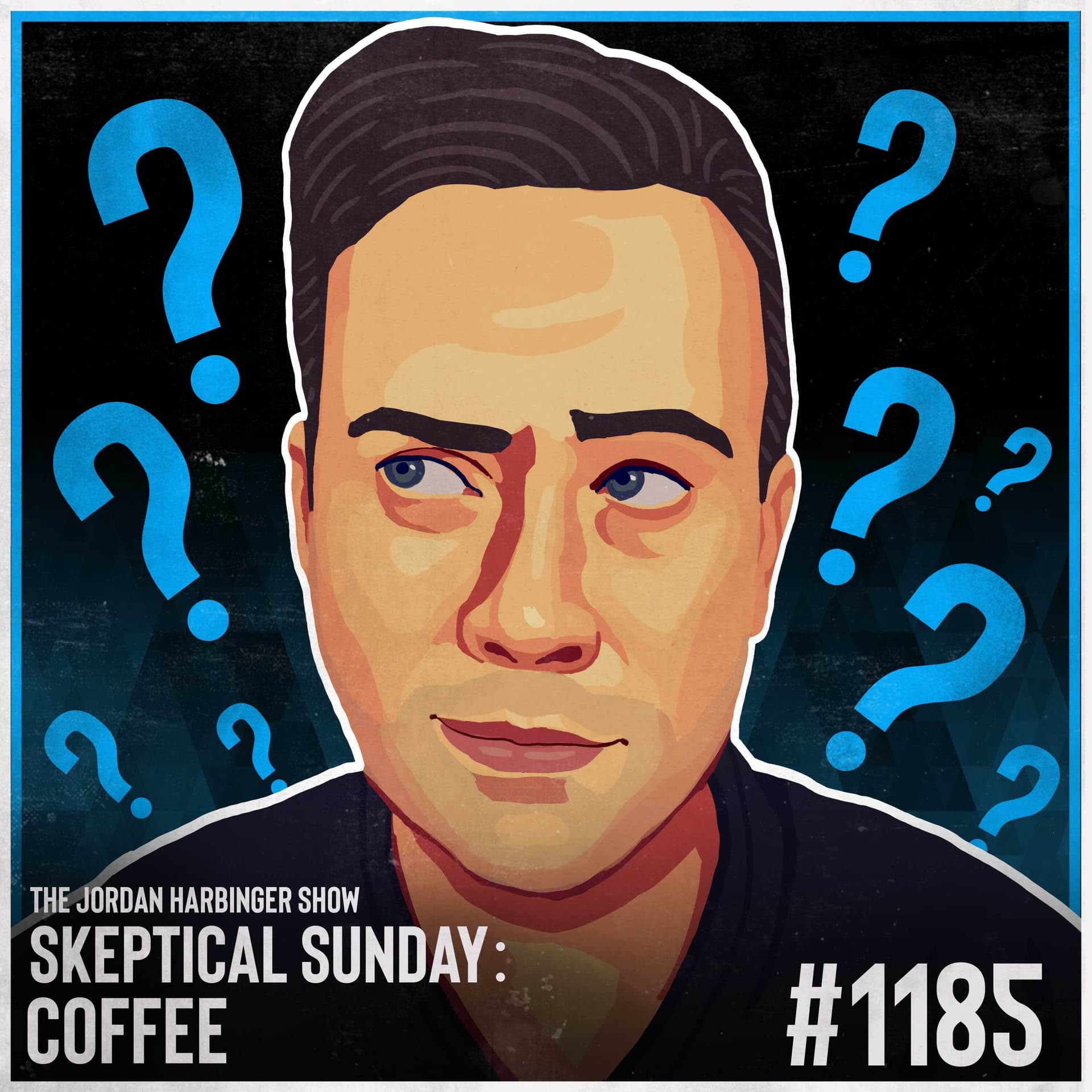
Podcast Notes: The Jordan Harbinger Show - Episode 1185: Coffee | Skeptical Sunday
Episode Overview
- Title: Coffee | Skeptical Sunday
- Guest: Jessica Wynn
- Description: An exploration of coffee addiction viewed through a critical lens, questioning its role as self-care and exposing the negative impacts of coffee consumption.
Key Themes and Discussions
Coffee as a Drug
- Coffee is likened to "PG-13 cocaine," representing a socially acceptable addiction.
- Caffeine does not provide genuine energy; it masks fatigue by blocking adenosine, a neurotransmitter that signals tiredness.
- Dependence on coffee reflects a larger issue of societal over-scheduling and exhaustion.
Environmental Impact
- Producing a single cup of coffee requires approximately 36 gallons of water, contributing to significant environmental degradation, including deforestation.
- The coffee industry is linked to severe ecological consequences such as habitat loss and biodiversity decline.
- Coffee production practices often involve monoculture, increasing the risk of disease and pest outbreaks.
Ethical Concerns in Coffee Production
- The industry is tainted with issues such as child labor and modern slavery.
- Major brands like Starbucks and Nespresso have been implicated in controversies regarding child labor in their supply chains.
- Many coffee workers earn merely 1-10% of the retail price of coffee, enduring harsh conditions.
Health Effects of Coffee
- Coffee consumption can lead to various health issues, including anxiety, sleep disruption, and digestive problems.
- While moderate coffee intake may offer benefits like antioxidants and potential liver protection, the research is often funded by the coffee industry, which complicates interpretations.
Alternatives and Solutions
- Alternatives to coffee include apples, which provide natural sugars and energy without the side effects of caffeine.
- Encouragement to research coffee brands, ask baristas about sourcing, and support certified ethical suppliers.
Key Takeaways
- Self-Care vs. Dependency: The podcast challenges the perception of coffee as a self-care ritual, highlighting its addictive nature.
- Environmental Awareness: It emphasizes the importance of understanding the ecological footprint of coffee production.
- Social Responsibility: Listeners are urged to consider the ethical implications of their coffee purchases and to advocate for fair practices in the coffee industry.
- Health Considerations: The health discussion underscores the mixed benefits of coffee, advising moderation and awareness of individual responses to caffeine.
Conclusion
- The episode provides a critical examination of coffee, urging listeners to reconsider their daily rituals surrounding it. It advocates for informed choices and personal responsibility, both for health and ethical consumption.
Connect with the Podcast
- Website: [The Jordan Harbinger Show](https://jordanharbinger.com/)
- Follow Jordan on Social Media:
- [Twitter](https://twitter.com/JordanHarbinger)
- [Instagram](https://www.instagram.com/jordanharbinger)
- [YouTube](https://www.youtube.com/c/THEJORDANHARBINGERSHOW)
Additional Resources
- Full Show Notes: [View Here](https://jordanharbinger.com/1185)
- Jessica Wynn's Newsletter: [Between the Lines](https://jessicawynn.substack.com/)
Written by AI. May contain mistakes. Listen to the episode to check what was said.
Transcript
Automatic transcript. May contain errors.0:03Welcome to Skeptical Sunday. I'm your host, Jordan Harbinger. Today, I'm here with Skeptical Sunday co-host, writer and researcher Jessica Wynn. On the Jordan Harbinger Show, we decode the stories, secrets and skills of the world's most fascinating people and turn their wisdom into practical advice that you can use to impact your own life and those around you. Our mission is to help you become a better informed, more critical thinker. During the week, we have long form conversations with a variety of amazing folks from spies to CEOs, athletes, authors, thinkers and performers. On Sundays, though, we do Skeptical Sunday, where a rotating guest co-host and I break down a topic you may have never thought about and debunk common misconceptions.
0:38Topics like why the Olympics are kind of a sham, tipping, astrology, acupuncture, crystal healing, diet pills, energy drinks, and more. If you're new to the show or you want to tell your friends about the show, I suggest our episode starter packs. These are collections of our favorite episodes on persuasion, negotiation, psychology, disinformation, crime and cults, and more. It'll help new listeners get a taste of everything we do here on the show. Just visit jordanharbinger.com slash start or search for us in your Spotify app to get started. Today, is your morning cup of joe a comforting ritual, a socially accepted addiction, or just a hot mug of lies?
1:11Or is it simply helping you limp through your over-scheduled, under-rested life? If skipping your daily dose of caffeine sends your whole day into chaos, well, you're not alone. Today, we're diving headfirst into the jittery waters of the world's favorite drug, coffee. Here to explore this steaming cup of magical energy that most of us depend on is writer and researcher and fellow Java junkie Jessica Wynn. Hey, Jess. Hey, Jordan. Have you had your coffee today? Of course I have. Some cold brew, a few espressos. I'm buzzing. By the way, when people say expresso, I just can't. But anyway, I wanted to do this episode because I looked around and realized nearly everyone I know is addicted to coffee.
1:49And I went and met a friend of mine in New York a couple weeks ago, and I asked him if he wanted to go for coffee. And he goes, no, I'm good. I've had 16 shots of espresso. And I laughed. I laughed because it was like 10 a.m. And I said 16. And he's like, no, seriously, I've had 16 shots of espresso. And how are you alive right now? So, well, I'm sure I'm sure we'll get to that. If you're listening to this while you're sipping your third six dollar latte of the day, don't worry. We're not judging you. And you're never going to be quite as caffeinated as my homeboy in New York. Oh, my God. That's like giving me the shakes thinking about it is.
2:22You know, what's interesting about him, though? He's super successful, but he was a drug addict for a while. And I think that now that he's, quote unquote, sober, I think he's just like a coffee and cigarette addict instead. That makes sense. I mean, I guess it's a better drug. I mean, look, I'm not going to smack the cup out of anyone's hand. I mean, I'm drinking coffee right now. You know, we've built our mornings, our meetings, our work breaks, our entire sense of productivity around coffee. So questioning the effects is kind of necessary. And let's be clear, this isn't about scam coffee blends or counterfeit beans.
2:56We did that back in episode 1088. This is about the real stuff, the hard bean, the caffeine, the drug. So what is all this coffee doing to us? Yeah, I mean, well, first, you know, we've been drinking coffee for centuries. There's Turkish coffee ceremonies, Italian espresso bars, gas station sludge that tastes like it's filtered through a carburetor. Yeah. Coffee is culture. Or lack thereof in the case of gas station coffee. I cannot even imagine how much coffee we drink as a species. Do you have any idea? Yeah, it's wild. 400 billion, with a B, billion cups of coffee are consumed each year around the globe.
3:35And over 450 million of those cups are drunk in the U.S. every day. Wow. And it's not like ice cream where you go, oh, I'll have a little coffee treat. More than half of adult Americans drink coffee every single day at an average of about three and a half cups each. That's good news for Dunkin' and Starbucks, for sure. Wow. Sure, sure. And for just the global industry, I mean, there's over 25 million farmers that work in coffee production. It's across 50 countries, mostly developing countries. Coffee is the second most valuable export for developing nations right after oil. Wow. And the global coffee market, it's insanely huge.
4:17In 2023, it was estimated to be worth about 500 billion and it's growing. Man, it's got to be a drug with that kind of street value. That's crazy. Caffeine is absolutely a drug. It's the most widely consumed psychoactive drug on the planet. You know, you might have guessed it would be cocaine, but caffeine blows it out of the water. Sure. It's basically PG-13 cocaine. So it's strong enough to change your brain chemistry, but mild enough to be sold at the mall. To be fair, I bought my cocaine at the mall, too, back in the day. But yeah, no one's no one's doing an intervention over it. No one's organizing coffeeholics anonymous meetings and saying, like, we're all here because we love you.
5:00And you've had six lattes today. Maybe your friend needs that. Yeah, he does. I used to suck dick for coke. I seen him. That's an addiction, man. You ever suck some dick for coffee? No one sucked dick for coffee.
5:18Yeah, I mean, right. You can't have a support group without coffee. It's the world's most polite addiction. But if you need three cups just to feel normal, I mean, that's not wellness. That's dependence. So substitute what people say about coffee with any other drug and you'd be worried. Don't talk to me until I've had my meth. Doesn't look great embroidered on a pillow in the home decor section of Target. Yes. Oh, yeah. But first, heroin. Not trending on Etsy anytime soon. Exactly. But come on, coffee's not heroin. It's not destroying people's lives. It's like a healthy addiction, right? It's a healthy one.
5:59It's fine. I mean, sort of. You know, what caffeine does is it blocks adenosine, which is a neurotransmitter that tells your body when it's tired. Okay. So coffee doesn't give you energy. It just turns off the part of your brain that knows you're tired. Like, that's the whole trick. Okay. So it's basically gaslighting my body. It's kind of like my ex-girlfriend. It's still better than other drugs, though, right? Of course. But let's not pretend it's harmless. You know, high doses, it jacks up your anxiety, spikes your heart rate, messes with your sleep, it triggers heartburn. And that's just the short list.
6:34It's not nothing. So it makes us a little jittery. Seems worth it, as I sit here biting my nails because I've had one cup too much. Yeah. Sure. It's fine. I mean, until your heart's doing the tango and you can't sleep, it might seem worth it. Yeah. People don't realize that their normal stress and exhaustion might actually be caffeine withdrawal or side effects of too much caffeine. It's like the OG emotional support stimulant. Well, maybe not the OG. I don't know. Tobacco might be. But how did we get so hooked on this stuff in the first place? The history of coffee shows how deep the obsession goes.
7:07So it might be older than tobacco. I'm not exactly sure. But ancient Mesopotamians used coffee plants medicinally around 7000 B.C. Ethiopia gets credit as the first society to drink it for pleasure thousands of years ago But coffee as we know it hit the western world in the 1500s And it was so popular so fast throughout europe that the catholic church freaked out and they called it quote The bitter invention of satan. Oh, that's so ridiculous. Yes. Forgive me father for I have frappuccinoed I don't drink coffee, sir. I don't drink hot liquids of any kind. That's the devil's temperature Sure. Classic overreaction by the church, I think, though.
7:49Come on. It's just coffee, man. I mean, the story goes that in the 1590s, Pope Clement VIII was pressured to forbid Catholics from drinking coffee. But he decided to try it first. And just after a few sips, he blessed coffee, declaring, quote, this Satan's drink is so delicious that it would be a pity to let the infidels have exclusive use of it. Wow, that's the most Catholic thing I've heard over there, Count Chocula. But it's sort of ridiculous because, first of all, that was before the caffeine even kicked in, if you like, after a few sips. So, like, just wait, Pope. Just wait, Clement VIII.
8:27Is it evil? As he starts sweating in his robes, yeah. Is it evil? Maybe. Is it tasty? Absolutely. We're keeping it. Amen.
8:40And thus Catholics were allowed to drink coffee. Amazing. I mean, you can literally buy a brand called Catholic coffee today. Yeah, branding never sleeps. It's like those Trappist monks that just make beer and they're like, yeah, yeah, yeah, pray or something. But this ale is making us millions of dollars. Completely. And then in 1645, 50 years after the Pope's blessing of coffee, the first real coffee house opened in Rome. Coffee shops are, I get it, they're a sacred place. The counter is the altar. You line up, you confess your indulgent order to the barista, and you stand there waiting for them to call Gordon so I can get my morning salvation in a cup.
9:21Yeah. I mean, that's the norm for most people. Coffee, it gets you out of bed. But here's the scam. Coffee isn't really fuel. It's a symptom. So what is it a symptom of? Because if it's not, caffeine's not actually giving me the energy. It's masking something. So what is it a symptom of? It's a symptom of just being totally wiped. You know, we're overstimulated. We're under-rested. And we substitute coffee for meals, a lot of us. Oh, guilty. Coffee's the cause of, and then also the solution to all these problems. It just kind of slaps a smiley face sticker over the check engine light when we really just need rest and recovery.
9:58Yeah, there's this thing called intermittent fasting, and it's basically like people swear by it, and sure, there can be some benefits here and there, but mostly it's a fancy way to skip breakfast. But you're allowed to drink black coffee. So people drink like a bunch of black coffee, and it's like, yeah, you're just drinking caffeine instead of breakfast so that you're not tired and you're not hungry, but you're actually still tired and hungry. You just aren't feeling. Yeah, you're probably still not sleeping well. Right, or fine, but like you aren't popping up the day like you would be if you, you know, had some food.
10:27So it's a motivational band-aid. But what's the harm with little pep in our mugs? Well, I mean, in addition to the caffeine blocking the adenosine, that neurotransmitter that tells you when you're tired, it also elevates our cortisol levels. And cortisol is the hormone that gets released by our adrenal glands in response to stress. I see. So when coffee messes with that over time, it messes with our sleep and it actually causes fatigue. So you're not not tired. You're just chemically unaware of how tired you really are. Yeah. OK. Just to make it through your inbox. Caffeine is so rude. Yeah. And like any drug, your tolerance to caffeine, it builds up.
11:08You feel tired. So you reach for more coffee and you get caught in this vicious caffeine loop drinking it all day. I will say I definitely do not understand people who have coffee late at night. You ever go to dinner and they're like, can I offer you anything? Dessert, espresso. I'm like, my brother in Christ, it's 9.30 p.m. Nobody wants espresso. And meanwhile, the old guy next to me orders three. Three. Yeah. And yeah. Are you just going to be up all night? I mean, that's that's some intense tolerance. I literally saw an older guy order an espresso shot, some kind of other coffee drink, which might have been for the person who wasn't at the table.
11:42Fine. But then he had some sort of coffee ice cream that also had a shot over it. And I was like, do you just go to bed at 2 a.m. Or are you so... He's just been drinking it since he was nine. Yeah, or have you been drinking coffee since you were nine years old? And now you can drink this and immediately go pass out on your couch. I don't understand that. I can't do... If I have coffee at 4 p.m., it's over, man. Yeah, I mean, it's just masking the problems that are actually making us tired. You know, sometimes we need sleep, not a double espresso. Plus, it does quite a number on our stomach lining, like literally dissolving it.
12:16Oh, yeah. It's a digestive bully, especially I've experienced a little bit of this. When I drink it on an empty stomach, I didn't know it dissolved the stomach lining. That is, well, that's kind of gross. Yeah, but it does gross things. So let's talk guts. Coffee is naturally acidic, which irritates your stomach lining. So it actually stimulates the production of acid, which lowers your stomach's pH level. And boom, that's what gives you the heartburn, the indigestion and acid reflux some people get. But it's so good for breakfast, though. I know. I know. It's so good. But we pair it with a croissant and we just kind of hope for the best.
12:56Yeah. But again, it's just right. But it's just masking bad with bad. The acidity, caffeine and carb combo, it moves fast through your digestive track, which for a lot of people leads to bloating, gas and. Yeah, yeah, yeah. What's the polite thing to say here? It gets things moving, creates an urgent restroom situation for most of us. Sure, sure. The smell of coffee will do that for me. I don't even need to drink it. It just triggers it. I'll be right back. I mean, some studies show that moderate coffee drinking can promote some good bacteria in our guts. Okay. But the rate most of us drink it, it's just disrupting the balance of our gut microbiome, which is why things move.
13:38It's called gastrocolic reflex, which is the urge to poop after drinking coffee or some other foods do it. So it's just a reflex. It doesn't maybe happen after every cup? I mean, it depends what else is in our stomach, for sure, or what type of coffee we're drinking. So coffee can trigger the release of hormones like gastrin, and that increases muscle contractions in our digestive system, which gets our colon excited to rock and roll, especially in the morning when our colon's already more active. Okay, got it. So coffee wakes us up all over, so to speak. Yeah. And it does vary from person to person and day to day for a lot of us.
14:18Some people are really sensitive to stimulants and some people like that old guy you saw drinking the espresso at 930. Yeah. They don't experience any effects. So everyone just metabolizes it differently. Yeah. It's highly individualized. There's genetics involved, sleep, stress levels. That all matters. So some people metabolize caffeine slowly, and for them, it's basically a legalized anxiety drug. Others, coffee can exasperate anxiety and stress and give us those caffeine shakes. Some folks sip a cup, they feel like Beyonce. Others drink it and enter a full-blown existential crisis before 10 a.m.
14:58So it's like, yeah, it also affects our health, like gastrointestinal conditions like IBS, GERD or IBD worsen with drinking coffee. What are all those letters? So they're pretty self-explanatory, right? It's irritable bowel syndrome, gastroesophageal reflux disease and inflammatory bowel disease. They're all pretty much different levels of diarrhea. Stop. All right. I don't need more details. I mean, I'm going to get more details. But for coffee drinkers, this is all worth it still, probably. I mean, do you think it's like productivity theater convincing us we need caffeine to get stuff done? I don't know.
15:33I'm pretty convinced, though. It's yeah, for sure. I mean, you grab a cup of coffee, you open 12 tabs on the computer, you get another cop, you fire off a Slack message. You know, it can warp your sense of progress. Like it's like a placebo for motivation. Yeah. And then my quote unquote favorite, the crash midday post lunch, need another cup. What causes the crash? What's that all about? If it's not fuel, why am I crashing? Yeah. I mean, that's just the chemistry. When the caffeine from coffee wears off, that adenosine comes flooding back and suddenly you feel how tired you really are. I see.
16:06That's the crash. So some of that is increased for those who take their coffee with sugar because you're having the sugar crash, too. I see. Because I often don't get a crash, but I also sleep really well. So when people are like, oh, I'm having a caffeine crash, I only get that kind of like, well, candidly, it's like, well, I'm in Vegas and I slept three hours and then I had three lattes. And then, yeah, then I have a 2 p.m. crash because I'm actually exhausted. I've just been masking it. But normally, once my coffee wears off, I'm kind of fine. So we're just fooling ourselves with unsustainable focus.
16:37And that makes sense, the double crash from sugar and caffeine in our mocha. OK, some coffee is just more unhealthy than others. Is that accurate? Or did I misunderstand you earlier? No, of course. Coffee has become this fancy drink vehicle delivering milks and sugars and syrups. I mean, I like black coffee. And when I see people ordering those complicated drinks, I always think I don't think you like the bitter taste of coffee. You just like sweets, but you want it in this caffeine boat. Yeah, caffeine boat. Exactly. Exactly. Plus, those caramel macchiatos are basically milkshakes. And I've never had one of those, candidly, because it hurts my teeth.
17:13It hurts your teeth. That's such a funny thing to say, because I get it. I hate the way my teeth feel after I have something like that. Starbucks once sponsored the show and they were like, you can have all of these drinks. We're going to send you boxes of different kinds of drinks. And they sent us like coffee and beans and mugs and stuff. And then they sent us some of these frappuccinos, which were really like, I'll say this. A lot of people love those. I gave them away at a party, but I kind of can't do that because I can only assume there's like 400 calories in something like that. It's probably more.
17:43Oh, really? Oh, my God. Yikes. Yeah, they're just they're desserts in a cardboard cup and have your name misspelled on it. Right. Get with Gordon written on it. Yes, exactly. Right. You know, blended frappuccinos, caramel swirl lattes with extra whip and sprinkles of fudge covered bacon or whatever the hell people are ordering. I mean, they're not doing anything good for your health. And also, I mean, that's not coffee. No. You know, I wonder if it's like people say, oh, I just need to go get coffee. It's like a weird way you're lying to yourself when you're going to get a milkshake. For sure.
18:15If you go to Starbucks and get coffee and you end up with a frappuccino, you can kind of lie to yourself and say that it's healthy or that it's not at least that it's not a milkshake. I don't know. Anyway. Yeah. This whole thing is kind of gross. It's kind of like somebody looks at a cupcake and says, yeah, let's liquefy this bish with a shot of espresso and just call it breakfast. Yeah. It's not not really a wellness elixir for sure. People are drinking these. All they have was coffee today. I don't understand why I'm not losing weight. I mean, right. Those drinks pack in hundreds of calories, mountains of sugar, unhealthy fats.
18:48So any potential benefit of the coffee itself gets buried under this landslide of syrup and branding. Yeah. So drinking our coffee black is healthier. That makes sense. Excuse me. I happen to be passing. I thought you'd might like some coffee. Oh, that's very nice of you. Thank you. Cream? No, thank you. I take it black. Like my man. Classic. I mean, the coffee joke I know is I take my men like I take my coffee, nice and quiet. Ooh, brutal. There's almost, well, I'm not even going to finish that sentence. Continue. I'm sure there's more we can hear about. Yeah, there's more. But I was actually surprised to come across studies that say people who drink their coffee black and without sugar, they show higher levels of self-discipline and perseverance.
19:39So apparently a taste for bitterness correlates with stoic personality traits. Okay, I have to say one thing on the whole, I like my coffee thing. So my buddy, I mean, he's a sweet man. He never says anything like this, which made it even funnier. But he had a girlfriend who cheated on him. And we were like, oh, are you, you know, what's going to happen? You know, you probably shouldn't take her back for reasons because he was sort of debating that. And then a week or two later, I was like, hey, how are you doing? And he's like, you know, I realized I like my coffee like I like my women. And I was thinking what everyone else is thinking, which is like, oh, he's going to start dating African-American women?
20:15And he goes, without someone else's dick in it. Oh, my God. Genius. Yeah, pretty much. Yeah. So no update on that. But anyway, yeah. The best part of waking up are the fine products and services that support this show. We'll be right back. If you're wondering how I managed to book all these great authors, thinkers, creators every week, it's because of my network, the circle of people I know, like, and trust. I know you're not booking for a podcast, but I think it will help you as well in your work life, in your personal life. Even if you're retired, you still need this stuff. The relationship science we talk about on the show shows that people who have a lot of friends, large networks, they live longer, they live happier.
20:53And the course is free. There's no shenanigans. I don't need your credit card number. The course is not cheesy. It's very bingeable. Takes a few minutes a day. And many of the guests on the show subscribe and contribute to this course. So come on and join us. You'll be in smart company where you belong. You can find it all for free at sixminutenetworking.com. All right. Now back to Skeptical Sunday. So, all right, back to stoicism. So people who drink black coffee are gritty badasses and people who drink vanilla lattes are what? Like fragile little hedonists like me? Sure. I guess that's one way to frame it.
21:24I mean, I think the science is less judgy. It just says bitter taste, stronger will. Okay. So let's say I ditch the sugar, I ditch the frothy milk, whatever. What does the research say about the health benefits of drinking coffee? Because I know that there are some. There's antioxidants or something in there, yada, yada. I don't know. It's kind of crazy to sort through all of the beneficial information because there's just a lot of billion-dollar products and coffees. Science gets tangled up in all this corporate sponsorship. It does seem like every week there's new headlines that are often that kind of conflict, like coffee causes dementia.
22:01Coffee prevents cancer. coffee makes you immortal if you're a juggling Virgo with type AB negative blood. What is going on with all of that? That always, to me, seems like industry-sponsored stuff whenever there's just an influx of crazy headlines like, this is so good for you. You should drink it all the time. Oh, yeah. I mean, the science is held hostage by a coffee industrial complex. I mean, the problem with the research I've gone through is that the coffee industry funds a lot of the positive research. So you've got these billion dollar brands. Yeah, they're selling the idea that you're not productive unless you're caffeinated.
22:37But more than half of the studies I read are sponsored by companies with names like Bean Tech or RoastCore. I mean, they're actual names. Yeah. Wow. Oh, that sounds like dystopia version. No, that's the actual names. That's really funny. I just imagine researchers typing up their findings with the shakiest caffeine fueled hands like, no, no, no. It's so good for you guys. Trust me. Trust me. Oh, I know. The The bean lobby is strong, so it's complicated. But it seems that moderate coffee intake, which is like one to three cups a day, can offer some benefits. So coffee, it does have antioxidants and it's shown to provide some liver protection.
23:15Depending how you look at it, that cognitive boost can be listed in the benefits column, too. So coffee is actually good for your liver? That's weird. Why? Yeah, weirdly, yeah. I mean, it appears to be. caffeine is shown to slow liver scarring and reduce inflammation. Okay. Maybe even help prevent liver cancer, according to some research. That's not proven, but there's some things that point to that. How though? I mean, I thought coffee was good for my health because it keeps me from dozing off in traffic. Well, it turns out that adenosine receptor coffee blocks, it contributes to fibrosis, which is the liver scarring and blocking it can slow down the progression of it.
Read the full transcript
23:56So the antioxidants in coffee, they do have the potential to help your liver fight off the fatty buildup by breaking down glucose. And there's other chemicals in coffee like cafestol and kawal that may have cancer fighting properties, but the research is really mixed. The acid is shown to have the potential to fight hepatitis. That's actually incredible because that's a really gnarly disease. And I think it's uncurable. Some versions of it are anyway. Potential is the word we have to lean in on there. Sure, sure. I mean, it sounds like it can be really incredible, but there are more efficient ways to help out our livers without drinking pots and pots of coffee.
24:38So moderation is key. And some individuals may experience adverse effects from coffee, like increased cholesterol. Dave Grohl was famously rushed to the hospital several years ago because he was so addicted to coffee. He suffered these like unwanted effects of too much caffeine. Dave Grohl of the Foo Fighters? Yeah. Fresh pots!
25:09Fresh pots! Yes, yeah. Jesus, was he mainlining the fresh pots? How much coffee do you need to go to the ER? I know, I mean, how many gallons was he drinking? The FDA estimates that 10 to 14 ,000 milligrams can be a lethal dosage. And that's a lot. So as long as you don't slam like 30 cups of coffee in a short amount of time, you'll be good. But I think that's what he was doing. Yeah, maybe. I mean, my buddy who had 16 shots of espresso is at least halfway there. Yeah, he had to be close. I have to say it's the lamest rock star affliction, but it's a pretty good argument to watch how many cups you drink throughout the day.
25:48Then again, I mean, he's not going to die of a heroin overdose drinking coffee. So you got that going for you. Yeah. I mean, he's just addicted to caffeine and coffee is caffeine delivery full stop and high doses, which would be 12 cups or more, will interrupt normal sleep patterns. So when you drink in excess, it's raising your blood pressure and it can lead to heart palpitations. So, I mean, I've definitely felt the sweats from a strong cup. Coffee is the kind of addiction that's disguised as routine. It's like an addiction nobody wants to name. Do people withdraw? I guess they must if you stop drinking coffee, yeah?
26:24Oh, yeah. I mean, have you ever been out of coffee in the morning? Yeah. What happens? That's true. I have, back in my sort of super monster energy drink coffee every morning days, I used to get a headache if I waited too long to start drinking that stuff in the morning. It doesn't happen anymore, though. I'm just way down on all that. Yeah, it just sounds like you really are in moderation of how much you drink. But I mean, it doesn't happen to everyone. And when it does happen, it is withdrawal. So your head pounds, you feel fatigue, you might be depressed. I mean, that's not enjoyment. That's dependency with good branding.
27:01So if it were any other substance, we'd stage an intervention, right? But because it's an acute mug, we call it self-care. It's kind of ugly. Yeah. More studies claim coffee isn't healthy. It's just a common, socially acceptable addiction. And no one really wants to say it because everyone's in on the fix, you know? That's true. Yeah, it's socially acceptable. It's kind of like alcohol is totally fine until you start committing crimes or beating people up or something, right? Coffee doesn't do that. So you think like, oh, what's the arm? It's socially accepted because we all needed to tolerate each other's company.
27:34It's the opiate of the middle class, I suppose. Or it's the speedball of the middle class. Yeah. Okay. So the ritual, the taste, the$7 latte with a flower drawn in the foam are all part of the fact that most people just need it to function. So besides messing with my sleep and digestion, I suppose. So, okay, hypothetical. What if we all just stopped? What if we all quit coffee, cold turkey, collective global detox? I mean, we'd crash and we'd crash hard. I think there'd be weeping in the streets, office mutinies, full-blown adult tantrums. Sounds like L.A. on a Tuesday. Right, right. But then, I mean, maybe we'd rest.
28:13Maybe we'd look around and realize we don't hate mornings. That would take a lot of convincing in some people. What's the good in quitting? Well, improved sleep is the most noticeable. So anxiety and blood pressure will lower when we detox from coffee and caffeine. And because caffeine interferes with the absorption of certain nutrients like calcium and iron, quitting coffee improves those levels. So for a lot of people, it also alleviates heartburn and acid reflux. And an overlooked benefit, your teeth get whiter. Wow. Well, of course, I guess that makes sense. Are there drawbacks then to quitting coffee?
28:50Yeah, and they happen real quick. So when you quit caffeine, you can experience headaches, fatigues, irritability, like we talked about. I mean, a lot of people rely on caffeine to boost their energy. So quitting, it makes you feel really fatigued at first. I mean, I brew a pot of coffee in the morning and I finish it throughout the day. So that's about 12 cups. I might not put as many grounds as some people in. But regardless, I did this research. I'm like, I'm going to see what happens. It was about day four or five. All of a sudden, I was having a lot of green tea. So I'm just getting my caffeine from somewhere else.
29:28And then after a week, I like ran to the grocery store to buy a bag of grounds because I had I was like an addict. I had to have that taste. I had to have that coffee. So you can experience mood swings. You can deny yourself the little pleasure of your morning ritual. You're losing an aspect of your routine. And that's really hard to replace is what I found. So it's kind of similar to quitting any drug, except everybody thinks it seems crazy to quit this one. You know, there's like cultural resistance. And one motivator to help at least cut back is you'd be helping the environment. Yeah. Based on the amount of coffee we drink, are the environmental effects just out of control?
30:09Yeah. Coffee, it's pretty harsh on the environment. Of course it is. So how do the beans make it to my grinder, dare I ask? Yeah. The life of a coffee bean, it starts in tropical soil. It takes about three to four years for a coffee bean to grow into the trees that produce these small cherry-like fruits. Whoa, so coffee is a fruit, like a fruit salad fruit? Yeah, I mean, I don't recommend throwing it in a fruit salad, but it comes from a fruit called the coffee cherry. And within those red cherries are seeds we call beans. And that's what we use to brew coffee. So farmers pick the ripe fruit. They dry the beans inside.
30:47Once they're dried, they get skinned, sorted, shipped around the world as unroasted coffee beans, also known as green coffee because they're literally green. Then they're roasted, ground, and brewed into the$8 drink you sip. So do we drink green coffee? I don't think I've ever seen that. All my beans are roasted and brown. I mean, you can, but the brew tastes like lawn clippings that were soaked in hot water. So it's really bitter and really grassy. It's everything I've read. It sounds pretty unpleasant. Yeah. Yum. Artisanal flavors of mowed grasses. And somehow we've industrialized the hell out of it.
31:25I mean, coffee is pretty affordable for something that passes through a ton of hands and ships across the world so everybody can feel more awake at 7 a.m. I mean, that's pretty incredible that it's only whatever amount you pay. I know we complain about the price, but it's yeah, it's wild what it goes through. And the whole process, though, it's really brutal on the environment. It's basically the Exxon Mobil of beverages. So to meet the global demand, a lot of coffee farmers, they clear cut forests so that the coffee plants grow and plenty of sun. Because the more sun, the faster growth, the more beans.
31:58But that also means fewer trees, less biodiversity, and confused migratory birds. So there's a very clear link between coffee and deforestation? Definitely. In fact, the World Wildlife Fund found that of the 50 countries in the world with the highest deforestation rates, 37 of them are coffee producing. Oh, yikes. Yeah, yeah. Coffee farmers, they also focus more and more on monoculture. We've talked about monoculture before. I think when we discussed in the banana episode. Oh, right, right. That's growing like one thing. Is that what that is? Yeah, exactly. It's the practice of growing only one type of a plant and it cranks out the volume.
32:39But monoculture, it decreases biodiversity. It interferes with animals' migratory patterns. And it increases the chance of disease and infestation. So one plant gets a disease, they all get it. Right, right, right. Because if the, I forget, like these bull weevily looking things are like some sort of rot. If it only attacks one kind of thing, but that's all you're growing for miles and miles and miles, everything can get it. Right, okay. So because we start our days with a cafe au lait, birds can't find their way south in the winter and plants have a higher chance of dying. I don't, the bird thing is interesting.
33:13Yeah, well, when you'd cut down trees, that's a big problem of defyrestation. And they don't have I don't know exactly the biology of it, but yeah, it messes with their patterns. I would imagine if they can't rest in large numbers anymore in that area, they just have to go somewhere else. But what if there's nowhere else to go? Because you have a giant barrier of coffee plantations in the in the area. Man, talk about a butterfly effect. Coffee is making me bitter and I'm not even drinking it right now. I know. Well, then you're definitely not going to like hearing about what it does to water. like one cup in the morning takes 140 liters of water to produce get out of here that's one cup yeah that's over 36 gallons of water for your one mug yeah that is freaking ridiculous i would not have guessed that should i feel worse about a pot of coffee or a long shower i think 36 gallons of water the coffee 36 gallons of water that's like a 20 minute long shower and that's a ridiculous amount of time to spend in the shower that's so it's basically two showers worth of water to drink Like a cup of coffee.
34:13I think that's about right. Wow. And it's just not the amount of water required to grow the plants. It's what happens to the water along the way, too. So a part of the coffee process is called wet milling, which it's pretty much steeping the fruits in water, which often is cut with sulfur. And that softens them, so it makes it easier to get the beans out. That wastewater ends up in rivers and streams, contaminating the water. It kills fish. It kills plants. And once the coffee reaches us, there's even more problems. What more? How much worse can it get? Well, think about it. You know, every year, billions and billions of coffee cups are thrown away just by Americans.
34:55Right. That makes sense. Yeah. Most of those cups you get in Starbucks, you know, they can't be recycled because of that sneaky plastic lining that keeps it insulated so it doesn't burn our hands. Sure. So they end up in landfills, oceans, international waterways. These compostable and reusable coffee cups, they can help. But disposable cups and those single-use coffee pods for the Keurig and things, they are widely used. So it's just a major issue. Yeah, the pods always, they seem wasteful, right? They're made out of aluminum and they're covered with foil and you use it to make one cup of coffee.
35:27I know, they're horrible. And you can buy reusable pods, but they're gross and a mess. And it's just easier to pop one in. I mean, I get it. You're not thinking of, holy shit, if everybody's doing this, what waste it is. Sure. Environmental catastrophe, though, that's just some of the fun. Like, wait till we talk about the labor. Yeah, I was going to ask about this. I know where this probably ends. Slave coffee, right? Oh, you nailed it. Coffee production exploits workers. There's child labor issues. And in some cases, literal slavery. Have you ever heard of coffee enemas? Well, here's something else you can put up your butt.
36:04We'll be right back. Thank you so much for listening to and supporting the show. Your support of our advertisers keeps the lights on around here. All of the deals, discount codes, and ways to support the podcast are searchable and clickable over at jordanharbinger.com slash deals. Now for the rest of Skeptical Sunday. So I was prepared to hear that coffee farm workers have it pretty rough, but so your actual slavery, but not exaggerated, not like, oh, really low wages, but like human trafficking level slavery. Yeah. I mean, people are just trapped on some of these farms and a lot of adults do work for some money, but it's like one to 10 percent of the final retail price.
36:43They work insanely long hours, usually in the hot sun. They're exposed to extreme weather and pesticides. It's awful. Yeah. But even when the economics get bad, farm workers, they still got to meet their quotas. I read something where I can't remember where this was, but these workers were essentially lured slash trafficked in to, I don't even want to say where, because it was like Hawaii or was it Thailand or was it Colombia? I can't remember. But they basically got there and found out that they weren't going to be able to leave because the passports were confiscated. Yeah, for sure. I mean, that definitely happens as well as it doesn't matter about economics.
37:21People need their coffee in the morning. And so to meet those quotas, they often bring their kids along to the coffee farm to work. Oh, yeah. It seems like a lot of this labor intensive farming that takes place in developing countries does include child labor. I've heard that before. I remember that from the chocolate episode, the bananas episodes, episodes I've done about human trafficking. Kids are making like bricks and stuff like that. It's yeah. It's sad, but it's true. You know, these kids, they're not officially employees and they're not getting paid. They just need the extra hands and they work the same brutal long days alongside their family.
37:55You know, heavy manual labor, the toxic chemicals, the industrial machines, the crazy heat kids shouldn't be around. Yeah. And I guess it's not like they're there because they love coffee farming or they chose the job. Definitely not. It's survival for them and their families. They don't have options or bargaining power. I mean, imagine your kid trying to negotiate health insurance or a lunch break, you know, like, hey, sorry, boss, if you don't pay me more, I'm off to the plantation across the street. It has free snacks. Right. Yeah. It doesn't happen. Plantation down the road has a micro kitchen.
38:27Yeah, that's not going to happen. It's wild that this is part of a product that most of us drink every single day. But this only happens with coffee from hopefully with coffee from shady Java salesmen in the Congo or something. Right. Or is this everywhere? Yeah, no, sadly. In fact, earlier this year, Starbucks and Nespresso were both caught up in child labor controversies after an investigation found that children under 13 were working on farms in Guatemala that supplied both of those coffee companies with their beans. Starbucks, the place that sells Sarah McLachlan CDs by the register. Yeah.
39:10And don't even get me started on Nespresso. You know how many hours I've spent in those stores sipping because I drink it at the store, sipping delicious somewhat, but barely banana flavored coffee with hints of cocoa and hazelnut out of those teeny tiny little cups. Come on. Yeah. And it's not just the children who are exploited for that pretentious moment you can have. Yes. So what you were describing earlier with people getting stuck on these farms, it's called bonded labor and it's rampant in the coffee biz. So bonded labor is where someone pledges their services as a security for the repayment of a debt.
39:48And the terms of repayment are often unclear. And the person holding the debt has all this control over the laborer in question, which is probably what you were thinking of. Yes, that's right. Right. OK, so this is like if you agreed to pay off your student loans by working 12 hours a day in a factory owned by Wells Fargo, you can start to begin to imagine what being a bonded laborer feels like. You show up and you go, OK, I got sixty four thousand dollars in student loans. And they're like, well, sixty four thousand dollars plus interest. And you're like, cool, let me see the spreadsheet with that on it.
40:17They're like, nah, we'll tell you when you've paid it off. Go work. Yeah, Sally Mae's like, no, I have these tasks for you to do first. For the next 20 years. Yeah. I mean, tragically, bonded labor is just a huge part of the global coffee industry. Back in 2011, for example, the U.S. Equal Employment Opportunity Commission, they filed a lawsuit against eight different farms in Hawaii and Washington state for forcing hundreds of Thai men to work in their fields between 2003 and 2007. I think this is the thing I was thinking of. Yeah, it was Thai men who were trafficked to Hawaii of all places to America.
40:56Yes. Like what? Yeah, that was shocking for me. And they legally entered the U.S. and they paid recruitment fees. So they were promised decent salaries. But then when they arrived, their employers confiscated the passports. They forced them to live in cramped facilities. They would threaten them with deportation. I mean, the case was awful. They physically assaulted some of them, starved them as they worked off their debt. Oh, my God. It happened in America. That is deeply disturbing. Especially, I've been to a coffee farm now that I think about it in Hawaii. And now I'm like, was it one of the ones with human trafficking?
41:31Same, and I thought it was so beautiful. Now I feel that. Yeah, it was. And you're like, oh, look at this international crew of people just out here in paradise. And they're just like, take, you know, slipping you a note with your latte that says, help me. Oh, God. I mean, this is all, why are you laughing? You're a terrible person, Jessica. This is all deeply disturbing. Here I was drinking a little Joe to get the old engine started in the morning. And apparently I'm contributing to the demise of the planet and the basic human rights of my fellow man. Cool. Yeah, real cool. Real cool. I mean, once coffee companies realized how effed up the coffee production actually is, some of them started paying certification organizations to create standards and oversee compliance within the supply chains.
42:13OK, so those labels tell us more about the workers' quality of life than the quality of the product. We've looked at this in several. I think there was a we might have even done a whole episode about fair trade, but we've looked at this in several episodes. Fair trade does not mean ethical and everybody's happy and peachy. Right. But it does mean that some organizations and businesses are trying, at least. So the most yeah, the most prominent one that people are probably familiar with is Fair Trade USA. There's Fair Trade International. There's Rainforest Alliance. there's us certified starbucks actually has its own certification called cafe cafe which it does the same thing as others but makes starbucks feel even more special i guess right yeah and also it's like well we've certified ourselves and we feel good about that for those who don't know when you buy fair trade coffee or a similar certified brand it's showing you they're doing the work to pay farmers a minimum price and give them basic labor rights without contributing to child labor.
43:12And that's can be. Yeah, hopefully. And that can be sort of flexible, I suppose. But it's better than nothing. And I do go for that stuff because I really don't want my coffee brewed in ecological ruin and human suffering because it's gross to think about. And basically, the label's like shorthand for not being a total dick to the people who grow your coffee. Pretty much. And and sellers that want to grow their coffee even more sustainably, they can partner with a certifier like the Rainforest Alliance. What they do is a little extra. They ensure that the seller is conserving biodiversity, avoiding the deforestation practices, and actually reforesting nonproductive farms.
43:52So Kenco and Costa, they're two brands that signed on to this program, but they're not readily available in the States. I see. I did cry at the end of Avatar. So these brands sound like my cup of tea. That is indeed somewhat comforting. Yeah. I mean, not that comforting, though. I mean, the problem is that fair trade, it doesn't address the environmental impacts of coffee. And so the additional cost to farmers for complying with these standards by avoiding the child labor, providing pesticide safety suits, doing extra paperwork, pretty much, it can really offset the higher selling prices they get.
44:31Gotta love the paradoxes of capitalism, I suppose. The system does not work perfectly. And unlike with organic food, there's no government agency to oversee ethical certification of specifically coffee. So there are brands like Just Us, Peace Coffee, which is actually in a lot of stores. And a couple more that these are more conscientious brands trying to enforce policies that allow workers and farmers to form co-ops. that advocate for their rights and concerns. What about streamlining the supply chain or something? I mean, it's hard, right? I mean, you can buy direct trade coffee, which is coffee roasters directly purchasing from farmers.
45:16And so they earn a higher premium for their product. But it's a lot of work for the consumer. You have to start asking your favorite coffee shop where they source their beans if you want to start buying ethically. It's not like Starbucks is going to slap a label on your frappuccino saying, Enjoy this tasty beverage. A farmer with heat stroke and his hardworking, malnourished 10-year-old son made it all possible. I mean, the human costs of the supply chain are very remote and very well hidden, obviously by design. Yeah, it's heartbreaking. And when you're just in a rush to grab a cup of coffee, you're not really thinking of all of these horrible conditions.
45:50Of course. There is something well hidden that you might like about coffee. So throughout Africa and Asia, there's this small nocturnal cat and it's called the civet cat. And these cats are naturally drawn to the best, ripest fruits on the coffee plant and they eat the fruit whole. They also expel the beans whole. So the logic is if they're eating the best beans, then... No. Oh my gosh. Tell me people are not drinking cat poop coffee. Oh, Jordan. Cat poop coffee beans, they're like$20 an ounce or around$300 a pound. And there's even a brewery that uses the beans to make a really expensive coffee porter.
46:34Wow. Imagine your job is to follow this cat around all night and pick up its poop and then get the beans out. Yeah, talk about working conditions. Wow. I am out. Are there alternatives to coffee? I mean, there's decaf coffee, right? And it seems to have the same potential protective effects on your liver. And decaf coffee is a better option for those sensitive to caffeine. Yeah, but decaf is for quitters. And I think drinking that would make me feel even worse because you're still getting all the exploitative farming and labor and stuff. And then it's just all in vain because you do all that. You don't even get a caffeine buzz.
47:11So it's like, what's the point? aren't there any sort of real alternatives i'm always seeing ads for coffee like drinks that aren't actually coffee we've even advertised some on the show there's various forms of other things that get ground up and made into coffee-ish things yeah sure there's a there's a popular thing it's called poor man's coffee which is just chicory that's just like that woody plant with the blue and white flowers okay that's been used as a coffee substitute in europe since 1766 when Frederick the Great of Prussia, he restricted coffee imports. So Prussians just started brewing up chicory instead.
47:46Is chicory any good? I mean, probably not because nobody's heard of this, or at least I haven't. I don't think it would be your thing. You might find it in some crunchy, like vegan cafes, maybe. But it's caffeine free and it tastes kind of nutty and earthy. It's got maybe a coffee-like flavor if you really close your eyes. It's just not as bitter as regular coffee. I've actually had really yummy mushroom brews. And of course, there's tea. I don't think they're any healthier or more ethical, though. You know, and it's just there's nothing like the real thing. But the healthiest alternative that actually gets you energized in the mornings is an apple.
48:27So just brew an apple. No, no, no. You just eat it. Ah. Studies show an apple in the morning is a better wake me up because apples provide natural sugars and that helps energize you without the jitters or crash associated with the caffeine. They also contain fiber, which slows down the release of sugar into your bloodstream, leading to more sustained energy level throughout the day. But when I did my little experiment for the week, I was trying to have an apple in the morning and I still craved that bitter taste. So, yeah, it just hasn't caught on. I wish naps would catch on, but it's impossible for most of our lifestyles.
49:05I think it would be it would be amazing if the real health trend of 2025 is not some sort of weird mushroom latte or a caffeine tonic, but taking a stinking nap. We need everyone to just remember that we're allowed to rest. Right. I actually have coffee rules for myself. Now's probably a good time to talk about this. I have a caffeine curfew and I also use an app called High Coffee. so I will not drink caffeine after 2 or 4 p.m. It depends on what day it is, what I have to do the next day, usually 2 p.m. I just won't have any caffeine after that at all and I use an app called Hi Coffee. We'll link it in the show notes.
49:38Hi Coffee is in like hello coffee, H-I and you just put in like Diet Coke, espresso, latte from Starbucks and it shows you if you're gonna be able to sleep and at what time and also it shows you are you getting the max benefit from caffeine or did you just have enough caffeine throughout the day to be like sort of untired? I think it's called a caffeine boost or something in the app where if you have enough at once, it's like, okay, now you're kind of ready to work out and then you should just stop drinking coffee after that and then unless you have something else that you have to do. It's very cheap and effective and it shows you exactly how much caffeine you need so you don't drink anymore.
50:13And what I love is that sleep line where it's like, if you want to go to bed at nine, you better not have any coffee right now because here's where the graph is. And you're like, okay, I'm done. Yeah, that's incredible. I mean, there are a few different caffeine tracking apps that definitely takes discipline. So, yeah, I don't think people drinking lattes will be as into it. But I mean, you know, maybe we do just need the crash, though. So if we all did stop drinking the coffee for a week, you know, I did notice that you save a little bit of money when you're not drinking it every day. And but it's just so hard.
50:49And if you're relying on apps to like monitor your caffeine, I mean, that really shows how addicted we all are. I mean, people love their coffee. People love coffee so much. It's in beauty products now. Oh, yeah. Yeah, for sure. I mean, coffee is incorporated into a variety of beauty regimens. There's face and body scrubs. There's masks. There's eye creams, body creams. There's even hair treatments. So the caffeine in coffee is believed by some to offer benefits like exfoliation, reduction of puffiness and dark circles, even, you know, anti-cellulite effects. So people are using coffee externally, really?
51:29Yeah, I definitely wouldn't rush to lathering up with the coffee grinds just yet. But the wellness community has decided it's a good exfoliant and good for the skin. I dug into this a little bit and the science shows that coffee and other caffeinated drinks can actually interfere with collagen formation. and collagen is essential. It's an essential protein that gives your skin a youthful look. So by quitting caffeine, you may actually be able to slow down the development of fine lines and wrinkles and thus delay the visible signs of aging. I thought the antioxidants in coffee help with wrinkles.
52:06What the hell? You're right, sort of. But it's not the coffee that helps with the wrinkles. It's definitely the antioxidants in the caffeine. But there's just many other ways to get dietary antioxidants. Coffee is a good source, but it doesn't provide the same antioxidants as fruits and vegetables. So, you know, I mean, you can decide for yourself, have a ton of coffee or, you know, a salad. Okay. So yeah, caffeine is an antioxidant, but then also you can get it from something else. Okay. That's probably a better idea. So what's your advice? Should we stop drinking coffee or not? I mean, it's unfair, isn't it?
52:41You know, I feel like I've kind of been scammed since I started drinking coffee at 15. There is a big part of me that thinks coffee might be the biggest con on society ever. So, I mean, my advice is read up on the brands you buy, research the production standards of your favorite suppliers, you know, ask your barista at your local coffee shop where they get their beans, encourage your local supermarket to carry more certified brands, asking a few good questions will usually tell you most of what you need to know about the quality of your coffee. And if you have the willpower to quit coffee, then just go burn your loyalty punch card, eat an apple, drink some water, take a nap.
53:26But, you know, stop pretending like your exhaustion's a badge of honor. And if you must drink coffee, admit you're hooked and move on. Right. So we're not saying give it up. We're saying wake up to what's waking you up. Drink what you want, but know what you're drinking. And admit it's not just about energy. Take a nap. This episode, by the way, is brought to you by Dunkin'. No, I'm kidding. They'd have a caffeine stroke. In fact, I'm a little bit like, gotta make sure that we don't put Starbucks ads on this one. Thank you, Jessica, for brewing up the bitter facts. Yeah, my pleasure. Thanks, everybody, so much for listening.
53:58Topic suggestions for future episodes of Skeptical Sunday to me, Jordan at jordanharbinger.com. Show notes on the website, advertisers, deals, discount codes, ways to support the show. all at jordanharbinger.com slash deals. I'm at jordanharbinger on Twitter and Instagram. You can also connect with me on LinkedIn. You can find Jessica on her sub stacks between the lines and where shadows linger. We'll link to those in the show notes as well. This show is created in association with Podcast One. My team is Jen Harbinger, Jace Sanderson, Tata Sidlowskis, Robert Fogerty, Ian Baird, and Gabriel Mizrahi.
54:29Our advice and opinions are our own. I'm a lawyer, but I'm not your lawyer, and I don't know squat about coffee, as you know from this episode. So do your own research before implementing things you hear on the show. Maybe talk to a real doctor somewhere. Remember, we rise by lifting others. Share the show with those you love. And if you found the episode useful, please share it with a caffeine addict who could use a good dose of the skepticism and knowledge that we doled out today. In the meantime, I hope you apply what you hear on the show so you can live what you learn. And we'll see you next time.
54:56What if everything you've been told about building wealth is total BS? Scott Galloway joins me to dismantle the myths and lay out a brutally honest roadmap to financial security in today's economy. The greatest bump in mortality for men is one, when their spouse dies, and two, when they stop working. And when they lose their social fabric and their purpose, they get inactive, sometimes depressed. And when you get inactive and depressed, your brain kind of sends out a hormone or a message saying, oh, it's time to die. This person isn't adding any value. Supposedly, for every additional year you work, your life expectancy actually goes up.
55:30So what they don't teach you is the smart thing to do is the moment you have assets, start diversifying. And here's the thing. You don't need to be a hero. You don't need to find the needle in the haystack. Figure out what you're good at. Find a way to save more than you spend. Realize how fast time is going to go and diversify. This is what you become passionate about is when you get to our age, you become really passionate about taking care of your kids. You become really passionate about taking care of your parents and being able to take your spouse to really wonderful places, you become passionate about the absence of stress from your relationships that not having economic security injects into every relationship.
56:09Success in entrepreneurship is your ability to endure rejection, ability to endure failure. And entrepreneurship is really just a synonym for salespeople. Don't be an idiot. Follow these simple equations and you're going to be fine. Develop economic security for you and your family by finding something you're great at. Make some money, save some money, understand how fast time is going to go and diversify. If you've ever wondered why working hard isn't enough, check out episode 1074 with Scott Galloway.
From the publisher
Is your daily grind actually just grinding you down? Jessica Wynn exposes coffee addiction's brilliant masquerade as self-care on this Skeptical Sunday!
Welcome to Skeptical Sunday, a special edition of The Jordan Harbinger Show where Jordan and a guest break down a topic that you may have never thought about, open things up, and debunk common misconceptions. This time around, we’re joined by Jessica Wynn!
Full show notes and resources can be found here: jordanharbinger.com/1185
On This Week's Skeptical Sunday:
- Coffee is basically "PG-13 cocaine" — the world's most socially acceptable drug addiction. It doesn't give you energy; it just gaslights your brain into ignoring how exhausted you really are.
- Your morning cup requires 36 gallons of water to produce and contributes to massive deforestation. Coffee is "the ExxonMobil of beverages" — environmentally brutal at industrial scale.
- The coffee industry exploits workers through child labor and modern slavery, even at major brands like Starbucks and Nespresso. Your $6 latte has some dark supply chain secrets.
- Health effects are a mixed bag — potential liver benefits vs. stomach lining damage, anxiety spikes, and sleep disruption. Corporate-funded research makes the science murky at best.
- Take control: Research your coffee brands, ask baristas about bean sourcing, support certified ethical suppliers, or try the radical alternative — eat an apple and take a nap instead!
- Connect with Jordan on Twitter, Instagram, and YouTube. If you have something you'd like us to tackle here on Skeptical Sunday, drop Jordan a line at jordan@jordanharbinger.com and let him know!
- Connect with Jessica Wynn at Instagram and Threads, and subscribe to her newsletter: Between the Lines!
And if you're still game to support us, please leave a review here — even one sentence helps!
- Sign up for Six-Minute Networking — our free networking and relationship development mini course — at jordanharbinger.com/course!
- Subscribe to our once-a-week Wee Bit Wiser newsletter today and start filling your Wednesdays with wisdom!
- Do you even Reddit, bro? Join us at r/JordanHarbinger!
This Episode Is Brought To You By Our Fine Sponsors:
- Shopify: 3 months @ $1/month (select plans): shopify.com/jordan
- SimpliSafe: 50% off + 1st month free: simplisafe.com/jordan
- Saily: 15% off: saily.com/jordanharbinger
- Homes.com: Find your home: homes.com
See Privacy Policy at https://art19.com/privacy and California Privacy Notice at https://art19.com/privacy#do-not-sell-my-info.