
In short
The Jordan Harbinger Show
Episode Title
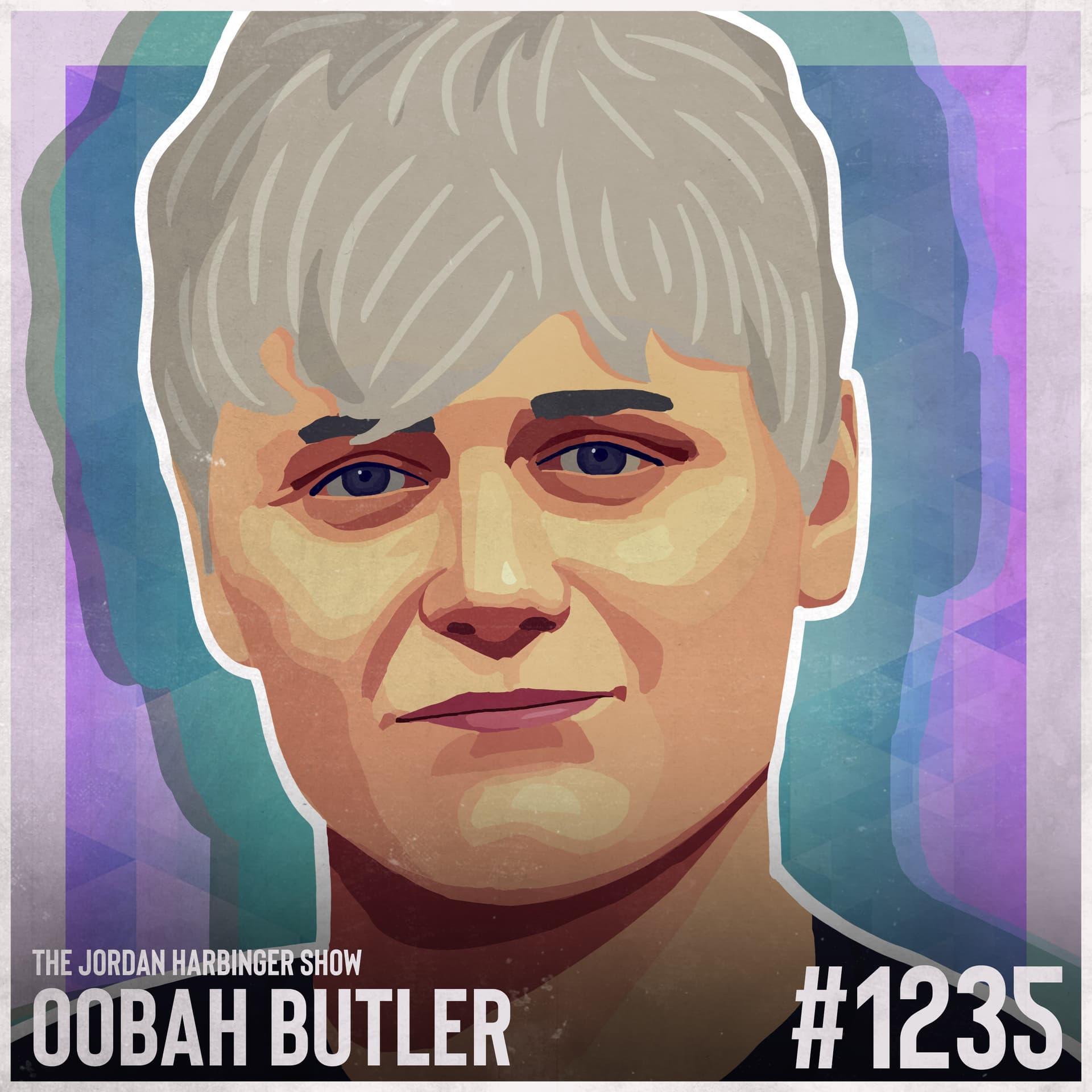
1235: Oobah Butler | A Trickster Turns Deception Into Art and Insight
---
Episode Summary In this episode of The Jordan Harbinger Show, host Jordan Harbinger interviews Oobah Butler, a social engineer and filmmaker known for his provocative art and commentary on the modern digital landscape. The conversation delves into Butler's unconventional projects, including the notorious creation of a fake restaurant and the exploration of corporate greed and manipulation through performance art.
---
Key Discussion Points
- Oobah Butler's Background
- Oobah describes himself as a "social engineer" and not easily categorized as a comedian or journalist.
- He has gained notoriety for his unique blend of performance art and social critique.
- The Shed at Dulwich
- Butler turned a garden shed into London’s top-rated restaurant on TripAdvisor, revealing the ease with which online platforms can be manipulated.
- He used fake reviews and staged photos to create a false culinary experience that became a viral sensation.
- The project showcased how public perception often prioritizes consensus over reality.
- Exposing Corporate Absurdities
- Butler's later project involved selling bottled Amazon driver urine as an "energy drink," highlighting corporate failures to prevent unethical practices.
- His undercover work in Amazon warehouses uncovered inhumane working conditions and unrealistic expectations for workers.
- The Art of Deception
- Oobah emphasizes the importance of curiosity, creativity, and experimentation in revealing uncomfortable truths.
- He argues that humor and insight can be powerful tools in challenging existing systems.
- Cultural Commentary
- The episode discusses the broader implications of Butler's work, suggesting it serves as a critique of societal gullibility in the age of misinformation.
- He illustrates how easily consumers can be led by digital hype and false narratives, drawing parallels with current trends in marketing and social media.
- Future Projects
- Oobah is working on a new project exploring the cultural differences between the UK and the US, with a focus on how money is perceived and pursued.
---
Key Takeaways
- Manipulation of Online Platforms: Butler’s projects demonstrate the fragility of online trust and how easily it can be exploited.
- Critical Thinking: The episode encourages listeners to question the authenticity of what they see online and the motivations behind it.
- Cultural Insight: Conversations with individuals from different backgrounds reveal stark contrasts in perceptions of success and the societal constructs surrounding wealth.
- Humor as a Tool: Oobah's use of humor and absurdity serves to make serious points about ethics and human behavior in a digital age.
---
Conclusion The episode wraps up with Harbinger and Butler reflecting on the lessons learned from Oobah's experiences and the continuing relevance of his insights in a world dominated by digital narratives and corporate interests. Oobah's work challenges listeners to reconsider the authenticity of their experiences and the systems that influence them.
For more insights and details, visit [jordanharbinger.com/1235](https://jordanharbinger.com/1235).
---
Remember to support the show by sharing it with others who might find these discussions intriguing!
Written by AI. May contain mistakes. Listen to the episode to check what was said.
Transcript
Automatic transcript. May contain errors.0:03Welcome to the show. I'm Jordan Harbinger on the Jordan Harbinger show with the stories, secrets and skills of the world's most fascinating people and turn their wisdom into practical advice that you can use to impact your own life and those around you. Our mission is to help you become a better informed, more critical thinker through long form conversations with a variety of amazing folks from spies to CEOs, athletes, authors, thinkers, and performers, even the occasional arms dealer, former jihadi, cold case homicide investigator, or money laundering expert. If you're new to the show or you want to tell your friends about the show, and I always appreciate it when you do that, I suggest our episode starter packs.
0:36These are collections of our favorite episodes on topics like persuasion and negotiation, psychology, geopolitics, disinformation, China, North Korea, crime and cults, and more. That'll help new listeners get a taste of everything we do here on the show. Just visit jordanharbinger.com slash start or search for us in your Spotify app to get started. Today's guest is a human glitch in the matrix, British filmmaker, prankster, certified chaos entrepreneur, Uba Butler. He's the guy who turned a literal garden shed into London's top rated restaurant, built a best selling Amazon product out of, well, piss, really, and launched businesses that make lawyers and PR people cry into their policy manuals.
1:15Generally, he's also tried and sometimes failed spectacularly to turn Internet mayhem into real cash, meme coins, sportswear lines run by kids and a documentary or two that force you to squirm and then laugh for both at the same time. He calls what he does performance art set up as a scam. I call it bold, ethically complicated, and one of the best seats in the house to study how modern bullshit really spreads. I really enjoyed Uba's company. I think he's an awesome guy. I really enjoyed this conversation. And today we're talking strategy, how to game reviews, how people game platforms, where the law stops, how the loopholes begin, and what these stunts tell you about truth in the internet age.
1:51We'll also hear, of course, the human side, why he does it, what he's learned, and whether there's any line that he just won't cross. Stick around. This one is weird and smart and messy in all the best ways I can think of. Here we go with Uba Butler. How would you describe what you do? Because you're a filmmaker, you're a writer, but that sounds way boring compared to what you're social media provocateur. But that makes it sound like you're an influencer, which sucks too. Yeah, I don't know. I quite like social engineer. Yeah, that's fair. We've got a mutual friend, John Levy. He's a behaviorist scientist, but it's weird how often we find common ground when we're talking about.
2:27Oh, yeah. So there's a lot of that going on. But then also, I don't hate it when people say comedian. I'm not a comedian. Do you know what I mean? You don't do like stand-up sets. No, no, no. It's its own thing. You don't like comedy films. Yeah, it's tough then. People will often say journalist and people will often say comedian. And I don't really think I'm either. But I'm simultaneously a little bit of both. Social engineer, writer, filmmaker. Yeah. It's either good for your career slash tough for your career to not be in a specific category, right? Because if you're a comedian, like there's kind of a path.
2:54Yeah, there is. Do a bunch of clubs. Make sure you move to New York. Try and book bigger clubs. Open for somebody famous. Knock it out of the park. Dot, dot, dot. Madison Square Garden. Yeah, right? But for certain creative niches, it's funny because John Levy is the one who told me this. He's like, how you doing? This is years ago. I was like, I don't know. I don't know what's next in my career. And he's like, that's fine because you're in a creative career. There's not like a path that you follow. And I was like, that's a really good point. it's different if you're a comic and you're playing open mic nights and it's 10 years into your career and you're like i'm not moving up but if you're like a podcaster or whatever the hell is your show shrinking if no you're doing pretty well i guess are you starving are your kids begging for food outside if no you're good you're doing fine you're on a bet about 99 right you're in the top one percent if you can pay your rent and the police aren't coming after you for panhandling so you're in kind of that bucket too I guess yeah okay your stuff's on vice you're making your own films I saw the latest one where you quote unquote made a million dollars in 90 days I want to talk about that a little bit but you've done some shenanigans sweatshop run by kids fake restaurant using Amazon's return policy to fill potholes we'll get into all that it's like performance art set up as a little bit of a scam that you use to expose something dark or uncomfortable about society is that fair?
4:12That's a really generous read of it I suppose like as I've started with Vice and it's gone on a little bit of a journey as I've gotten a bit older to have more explicit meaning to it. Do you know what I mean? Like explicit things that I get interested with. Maybe at the start it was just nihilistic and fun. And now I've hoped to like keep the atmosphere around it of that, but have more of a point that I'm trying to explore. Okay. You start off as let me just embarrass other people and put it on Vice and then it becomes deeper meaning. Yeah, let's do like social critique. If Banksy was just like, I just wanted to spray paint my name on a bathroom stall.
4:50Here's a critique on the war in Gaza or something. Let's start with the fake restaurant. So you used to have a job writing fake reviews on TripAdvisor. Yeah. How was that a job, by the way? I moved down to London and I just started taking gigs. There was a website at the time that connected people with Third Pie writing jobs. And one of the ones that came up was restaurants who wanted people to leave positive reviews to influence their ranking on TripAdvisor, which is basically Yelp, which was interesting to me. And as I'd worked in restaurants and in bars, I already knew that people who worked in those environments would reference the ranking.
5:29If someone who came in who had an issue with the place, they was like unhappy, they would often threaten like, well, we're going to leave a bad review. I knew that it had a power to it, the ranking, the reviews. So then later to be someone who was being paid to fabricate positive reviews for restaurants to improve their ranking and therefore probably inform whether people were going to go there and how they felt about it. It wasn't like something I did loads of and that I lived off, put my kids through college writing. No, I did it on the side as part of a load of different. I used to write clickbait news.
6:02That was kind of one that came later, which was also useful. Yeah. Now news organizations write clickbait news. Yeah, exactly. They don't need you anymore. The whole ideation, the coming up of an idea, I think it's helpful to have your eye on that because ultimately, if you want to get people to even be able to discuss your work and communicate about it easily or whatever, if you can make it easy for them, it's more likely to have an impact and spread. So that clickbait thing, it feels hacky to talk about clickbait, but like it's a useful skill. So you're not wrong. There's a whole science behind realizing that journalists are really busy slash sometimes really lazy, depending on which bucket they're in.
6:39So if you do most of their work for them, they'll do more for you. So I remember a long time ago, somebody was like, we're going to do something for a news organization. And I was like, here's our website. Here's some of the stuff we do. And the publicist at Sirius XM radio, I called her and I was like, how does this look for a media kid? She's like, no, no, no. write like the whole article for you basically and then they'll edit it in their voice and i remember writing whole articles about my business and being like here's something that to give you inspiration and then what they would publish would be like that with their byline on it and a few additional sentences and maybe each paragraph but generally not and like another paragraph at the end that sort of wraps it all together in the style of whatever publication it was and i was like this person spent maybe 20 minutes on this probably half that the churn of the people call it the word is content the churn of that i always found interesting and under how much pressure people are in to produce a volume of stuff means that i suppose that stuff makes sense or maybe it's a little naive to even think about it in the content terms maybe it's always been like that i don't know but yeah no you're 100 right and in that my new film i end up paying for a forbes article in that yeah and that's right for was like for Georgia like not the state the country of Georgia right okay yeah but the vertical you know exists on there if you search up my net net it's now been ingested probably by chat GPT and everything yeah and it just says Forbes it doesn't say like Forbes asterisk by the way this isn't the official one like when Forbes Sri Lanka is too expensive yeah Forbes Georgia has your back but it was like me writing the headline me writing business genius super butler and you know that was kind of exploring and in something that i find intriguing about that but yeah it was one of many jobs that i did write in fake reviews about restaurants positive ones and it also as you say the start of this process of beginning to question slightly these platforms which we all considered to be completely trustworthy and people curate their lives based on consensus right like i think you're either one or two types of people you're either pay attention to consensus or your like critic opinions like i'm a sucker for like the wire cutter website where oh yeah i'm a sucker for it like oh there's these group of experts have all tried this thing and they've not been paid they're not corrupt they've all tried these pillows i'm gonna buy the pillow i mean so i'm part of the other group secretly they haven't been paid officially but they all got the pillow for free and one of them is their sister's pillow you're Right.
9:10The Forbes thing cracks me up because I remember early in the day we had our podcast, we had a radio show on satellite and we get these pitches that are like, Uber is in the top 30 under 30. And I'd be like, that's impressive because there's only 30 of them. And then later on, I remember getting a pitch like later that week that was like, hey guys, Forbes 30 under 30. And I was like, oh my God, they're going to pick us. And it was like, pay us five grand, pick the category of 30 under 30 you want to be in. And I was like, category? There were like a hundred. So I was like, oh, so there's 130 under 30 lists.
9:39It's like tech, podcasting, furniture, building, camera, whatever, like hairstyling. It's just any category you can think of. You pay for your client or for yourself, if you're a publicist, you pay for your client to be in there. And it's like top 30 in fashion, but it's not just fashion. It's like little niche fashion things or like Brooklyn socialite. I mean, you can just sort of imagine whatever you want to be, cut Forbes a check, submit your blurb, they'll reformat the thing or whatever. And there you are. And I'm like, oh, this is all bullshit. It's crazy, isn't it? Yeah, I'd had a similar experience and that was what kind of gave me the idea to do it in a show.
10:14I want to do that in a film that I make that makes sense to explore that. And, you know, it's so cynical. And, you know, from then on, you can then use the Forbes logo on your website. You can say it's featured in Forbes, business genius. As I said, like that will be ingested by various sort of larger, large language. Yeah. Back in the day, it was Google and now it's large. Now it's even more obscure, right? Because in Google, you could click it and go, yeah, but the source is Forbes.com slash 30 under 30 slash category slash Brooklyn slash social slash fashion. And you're like, whatever. Yeah.
10:45I asked ChatGPT for the number one podcast and they said Jordan Harbinger. So you must be more popular than Joe Rogan. Yeah. ChatGPT told you that? Yeah. Yeah. Right. I heard your audience is bigger than Joe Rogan. And I'm like, nah, we'd be having this conversation on my yacht. First of all. Yeah. Right. I love Melrose podcast, but I would own this place and it would have a cleaner bathroom. Okay. I don't know. It's New York. It is New York. Yes, that's true. So you say in the film, and then one day sitting in the shed I live in, I had a revelation within the current climate of misinformation and society's willingness to believe absolute bullshit.
11:17Maybe a fake restaurant is possible, not just a fake review. Maybe it's exactly the kind of place that could be a hit with the help of fake reviews, mystique and nonsense. I was going to do it. I turned my shed into London's top rated restaurant on TripAdvisor. So how do you get a location for something like this? You said it's a shed. I saw the film. It's pretty much a shed. It has running water. So you got that going for you. So this is just like the place where you lived? Yeah, I lived in there. So I just moved to London. I came from the Midlands. I'm from a little village called Feckham. You know, moved down to London.
11:48Back then, it was probably maybe$1 ,400 for a cheap studio apartment. It would be$1 ,400 a month. This was 2015, 16. and then I found this place which was 800 and it was a garden shed out the back of someone's house and you had like access via a side entrance you had running water like at the time it was very nice because it was way more affordable now looking back I lived there for three years and by the end there was like sewage coming out the back of the thing that I didn't realize it was your sewage probably it was probably yeah or customers yeah so it was just literally that it was as simple as i lived in a shed in a place called dulwich in london it wasn't hard to come up with the concept because it was one i was living i was aware as i was living there that it was weird that i was living there it was out of necessity because of money but it was better than the studio apartment i've been in before because it had more character and you felt a little bit more like you had that yard yeah i mean there was junk in it but like yeah there was we had foxes like you get in london there's an unbelievable amount of foxes everywhere particularly South London is crazy for it.
12:56Yeah, they're everywhere. And we had a family of them in the garden and that was quite cute. Foxes in a major city? I guess it's better than rats. But what do they eat? Rubbish, like trash. Oh, okay, that makes sense. They eat everything. They're omnivorous, I think, foxes. Are foxes great? Do you get raccoons in New York? In New York? Probably not, just rats. I've never seen them. No, I've never seen one in New York. But you get them in LA, right? No? I would imagine we do. That's a good question. I've never lived in a place that had enough nature in LA to see what kind of wildlife you would have there.
13:26Yeah, so I had an idea and I'd been doing stuff for Vice. I was kind of sat in this reverent space. I'd found a voice. I'd been writing for free for years for a lot of places. I'd progressed into clickbait news and stuff. Then I'd started working with Vice. And it was one of those things where it was like a big idea that I never thought it'd be possible to even get it registered on the website. I thought it would be tricky. I was going to ask you, don't they go, all right, we're sending a person out to make sure you exist. They're like, nah. That was what I suspected. That was what I thought would be step one.
13:54No, I just sent off a few things. Like I needed a mobile number. I needed a website. I needed a concept. And that was basically it, really. So you need to get like a burner phone from the drugstore. Yeah, I did. Yeah, that's exactly what I did. And it was shocking to me how little there was to stop you from doing this. Yeah, you basically needed a drug dealer phone and a computer that could register a domain. Yeah. And then the concept of the restaurant was this thing called the Shed at Dulwich. It was like this gourmet food place that sold. The menu was like, you don't order meals, you order moods.
14:29So you have like comfort. I remember writing that it was soup served in an Egyptian cotton bowl, which made me laugh. And then the cotton bowl, the thread count was high. Yeah. And then the food photos on it, you know, it looked like gourmet Michelin star food. And that was the cropped images. But the uncropped images, which I revealed, you know, a year ago, after I worked on this for about eight months or something. At the end of it, I revealed everything, and the uncropped images were like, you know, what was supposed to be like a ham hock was an egg on my foot. So gross. Luckily, your foot is pasty enough to look like a ham hock.
15:03Yeah. My foot is, yeah, I've got hobbit feet, but without the hair. The hobbit feet, because I'm not that tall, and they're like big feet. So I've got big ass, big head, big feet. I slam eggs on them, and there's something really funny about just getting the gourmet food crowd We're all kind of suckers in a way, I think. And there was just something funny about some people finding something so grotesque, appetizing. You used like toilet bowl, like the urinal cake, I guess you'd call it. Yeah, I did. Yeah, yeah. It's like, ooh, let's pour some honey on this and drizzle that on there. Yeah, trying to make it look like a pan-fried scallop.
15:37It was me and my friend Chris, who's a photographer, and we just sat there. We did it in a day, and it was fun. It was like one of those things at that point I didn't realize how out of control it was going to get. To be fair, my friend's mom growing up, she was a food photographer for restaurants and marketing. And she came in and told us how they do this. This is in the probably early 90s, maybe even the late 80s, a long time ago. So she would say things like, because we were like, how come the burger on my plate doesn't look like the burger in the TV commercial? and she's like oh you couldn't eat the burger in the tv commercial because this is not actually meat this is and the bun is real but we pick one out of i'll look at 100 or 500 buns and then she's like then i glue the sesame seeds on with glue in the exact place that i want them to be in like a different order they're spaced out differently and then all of the food is sprayed down with oil so it looks wet and fresh i'll go to the store and get fresh lettuce we get fresh tomatoes that are freshly chopped put them in the freezer for a while so they get all like plumpy and weird she's like you couldn't eat that even if you tried most of it's not edible or a lot of it's not edible so you putting honey on a urine okay it's not really that much no that is fascinating i mean it kind of just furthers that thing doesn't it of how much we live in a kind of just false reality like it's like mcdonald's isn't going to be like if they showed how they actually make the burger it's gross he wouldn't put that in the commercial like here he's squeezing the fake meat out onto the circular mold slams it shut and it cooks it air quotes immediately yeah and then they spray the black stuff on it to look grilled yeah and then they put it on the bun which has been like sat on by the guy during his break because there was no place to sit there's no break room i mean that's like the real burger king yeah right real whoppers like stepped on i remember that the supersize me there was such an amazing bit at the end of that film it's like a vignette they did.
17:29You remember he bought a burger and he just left it and some fries and he had like a burger he bought off from a street vendor, a burger from some other place, then a McDonald's burger. And they all grew mold and whatever at various rates. And the McDonald's burger just remained perfect. And the fries are completely perfect. And you just think, oh dear. Yeah. At least that's going through my entire body and being absorbed by my organs. All right. So you got a menu that you print, you get the website, you got the fake cuisine. Did you need to learn how to cook things? No. Okay, explain that. No, I mean, it was, the whole idea of the restaurant was that it was an appointment-only restaurant.
18:04So you had to apply for a reservation. So no walk-ins. The address that we put, it was my street, my road, but it just didn't have a number. The idea was exclusive. It was fortunately or unfortunately, like, we're conditioned in such a way that we just want what we can't have. Yeah. And that was basically it. And also, I lived in there. So if anyone showed up, the game was up. Yeah. Hey, why are you sunbathing? naked in the yard, this fancy restaurant. Yeah, exactly. So it was an appointment only restaurant and it all just felt like a kind of like theoretical thing for quite a long time. And then eventually, basically I was soliciting fake reviews off my family and my friends, asking people to write reviews and I gave them a style guide.
18:47This is what the experience kind of looks like, but didn't stop people putting in mad stuff that was funny. Felt consistent, felt believable, you know, further exacerbating just the please mention like how hard it was to get a table. But eventually when you did, it was like unbelievable. You like chef's table. You'll love this place. Yeah. That was one of them. It's like, okay, what reviews sound like for sure. So you're not writing all the reviews yourself from your own home. No. Okay. I basically wrote a sincere kind of, I wrote an email to family and friends and just said, please, could you leave reviews and five-star reviews, obviously.
19:22And at various points so very quickly it like it was 18 000 restaurants in london on trip advisor at the time i saw it's crazy and like quite quickly within six weeks we were up to like number 1 400 or something with about 30 reviews but it didn't feel real until one day when the phone rang and that wasn't like my phone but it was the phone that i'd bought the shed and yeah on the other end of it was like an actual human trying to book a table at my non-existent restaurant wow and what was interesting to me about it was that they were repeating the kind of terms of my mythology that I'd set that I'd asked people to write under that I'd asked my family and my friends to reference an appointment only restaurant all the stuff they were parenting back to me like it was gospel and like it was real and there was no questioning of that and I just told them that we were fully booked for the next six weeks and to call back soon it quickly gathered momentum and when people were emailing in to get tables and it wasn't just like random people went from being locals to them being foodies in the city to being tourists the further he went up the rankings i saw these tv executives be like i'm gonna write for my bbc.com or whatever email addresses so that he knows i'm an important person exactly i'd forgotten about that i think they were actually american but it shocked me how much work people were doing in their own minds to build up the idea and the gravitas of this fake establishment.
20:44And yeah, people were doing anything they could to get a table. And the more the phone calls increased, the more people that called me, the more people that wanted to talk to me, the more that I told them they couldn't come and the more they wanted to come. And yeah, that was fascinating to me. So your rank keeps climbing. It's crazy because 18 ,000 restaurants is such, it's a ton. And you make it to the top 1 ,000 with no real restaurant, no food, no real customers. And you just have 30 or 60, whatever it was, number of reviews. that just shows you that most restaurants just have no reviews at all.
21:16Yeah. I also think that the way that their algorithm was weighted was that negative reviews were way more significant than positive reviews. And the fact that we weren't getting negative reviews was probably why the algorithm found us so lovely to juice. Look at this up and coming spot that's really taken the world by storm. People are applying for jobs. People are sending you free samples. How are they sending you things if there's no number there's no address i started giving them addresses on the road for friendly people that wasn't my house hey man can i use your mail you're probably not going to get anything actually we got a bunch of spices yeah exactly i was back in london a couple months ago and i had someone weighed me down in the street and they were like i used to live next to you when you were doing the shed the fear when you're doing something like that is you don't want anything to get in the way you want it to go to its dumbest or most significant conclusion it can so like when And people are sending stuff and they're like, what is this then?
22:12Why are they sending you this? Why does it say the shed at Dulwich on it? And I'm like, it's okay. Don't worry, man. Thank you so much for the favor. I remember being very stressed about because we were close to getting to number one. And there was a lot of moments where it felt like it was all going to blow up. I wouldn't be talking to you right now. Right. And I assume the neighbors are like, look, as long as it's not illegal and I'm not going to get in trouble with it, like, fine. And you're like, it's not illegal. You're not going to get in trouble. I promise you that. Okay. Were people prowling around the neighborhood being like, where's this place?
22:39I want to see it from the outside or like maybe knock on the door, see if we can get a table and know that we found it. Surely that happened. Yeah, it did actually. Because obviously I had a side entrance. I didn't even go through the main house. And I remember coming out and on the street there was a couple asking, you know, they asked me, have you seen the shed at Dulwich around here? Do you know where it is? And I was like, I'm really sorry that I don't think they do walk-ins. Okay, we're going to call it. And I had the shed phone in my bag. I remember filming myself like a minute after this happened.
23:07And like the end of the street, you can see the two people kind of walking around, looking around. It feels like a made up story because it's like, I really have to pee. Bye. Yeah, yeah. As your phone starts vibrating. Exactly. That's exactly what happened. And then I got up the other end of the road and recorded myself saying, so these people were just trying to speak to me. As I'm talking again, it's going off still. Oh my gosh. I just basically said, I'm sorry, I've got to get moving. I've got to go. But yeah, it was as I was going, it was vibrating and crawling in my bag. I don't know exactly how many people went in search of it, but it must have been significant because we were getting hundreds of people trying to book.
23:36What rank were you at this point when hundreds of people are trying to book the place? That was when we got into the top 50, I think. Wow. We had a period where we were at the top 50 and the top 30, and we kind of got stuck around there for a little bit. And I felt like that was as high as we were probably going to go. How are you going to beat Gharap? What's the Indian place that everybody loves? And you'd wait for 90 minutes. They're going to beat Dishoom. It's not going to happen. No, it's not going to happen. And it was shocking to me how powerful this website was. Still massive. Still, I think, the biggest tourist website in the world.
24:07I'm sure, yeah. Obviously now, like the way everything's integrated into the Google platform, like a lot of people just use Google now. But like, yeah, it was massive how much power and how much it could make or break a business. That was a shock to me. So did TripAdvisor ever notice like, hey, you are really trending. You'd think there's somebody going, wow, this place went from zero to 50 to 30. This is awesome. I work at TripAdvisor. I want to go check this place out. You got 89 ,000 views in search results in one day. That's insane. That is insane. Yeah, that is absolutely insane. So like anybody, basically anybody who's searching for Restaurant London is seeing your place.
24:48Is seeing my restaurant. I've never heard that statistic. I don't think. Maybe I have. Maybe I have. I'm pretty sure it's from like your movie. So was it from the movie? It might have been from the article. Yeah, yeah, yeah. They called you and said information request, right? And it looks like, based on this piece that I read, you were like, oh, it's over. They're like, wait, who are you? We drove by. There's no place. We checked out at your property. And so you're worried about this. And we just want to let you know you're now the number one restaurant. Congratulations. It was absolutely insane.
25:17Okay, yeah, I remember now. So yeah, it felt like they were basically taking more notice because we were so popular. I thought it was, yeah, days were numbered. It was the 1st of November, 2017. So that's eight years ago. Yeah, eight years ago. And yeah, it became the number one rated restaurant in London. In London. So a restaurant that, by the way, still doesn't exist. Highest ranked restaurant in London in one of the world's biggest cities on the internet's, at the time, at least most trusted review site, probably, possibly so. Was the plan just to expose how easy this is? Because you're not going to serve food in your shed, right?
25:51The thing is, is that the plan was unclear. you know I think it'd be incredible to get it as high as possible but I genuinely didn't think that would be possible now we'd done it it felt to me like it was the end of the game I felt like that was the end of the story like I'd made this absurd point the idea that would be doable was just so absurd to me and didn't seem possible but just like the public had other ideas and people were applying for jobs at the non-existent restaurant I remember the local government trying to offer for me to open up different outlets of the shed in different places they were gentrifying.
26:28This area's a little rough around the edges, but we can give you a break on the property tax if you open up the shed in, like, Jamaica or whatever. Yeah, yeah, exactly. I felt like that was the end of the story. The public had other ideas, and they kept on applying for tables. And it hit me that maybe the end of the story was to open it for one night only and serve real customers real food. And yeah, that's what I did. I basically opened my garden shed for one night only to see like whether people would, I don't know, like believe the reviews they'd read online more than their objective experience.
27:00How far could the bollocks go? And I borrowed some chairs and tables from a local cafe. And some chickens. Don't forget about the chickens. In this Wendy house, it was like a little toy house for kids in the garden. We emptied it and filled it with chickens. And the concept behind that was that it was like lobsters at a fancy restaurant. You'd like pick your chicken and we'd slaughter them. But not really because they're somebody's pet chickens. Yeah, exactly. It was this guy called Trevor's Chickens. We didn't even do that. It was also, at the time, we were listed as a vegetarian restaurant, which is quite funny.
27:31But the food we were serving was like microwavable TV dinner type things from supermarket. But they were dressed up to look nice and fancy. So like edible flowers, microherbs on them and designated moods because of the mood menu. So over half of the people there that night were actors who I'd asked to come and act completely natural. because it was a weird experience. Like we met the real customers on the street and blindfolded them and then led them down the side. And they willingly were like, all right, sure. Yeah, they were. I think it's like this like experience junkie thing. You know, I imagine those people, if you ask them now, if they were sat here and they hadn't had that experience, would you let someone you'd never met before blindfold you and lead them down their gut?
Read the full transcript
28:12Probably not. Yeah, in London. Yeah, I wouldn't do that. But like we had eight real customers on the night. We had two newlyweds from sunny California who the night before had been eating on the banks of the Seine. In Paris. In Paris. Like at a real restaurant. Exactly. And now they were at the shed. We had a table of four who were from a massive fashion agency in London. And then we had two locals who'd been trying to get a table for months. We had eight real people, so three tables. And then the rest of the tables, we had one on the roof, which definitely was not safe. No, yeah. My friend Phoebe, who now writes on like Ted Lasso and Four Weddings and a Funeral show.
28:48So they're the social proof that's going to be like, oh, this is so cool. Oh, this is delicious. Exactly. Lolly had a faux pas was there now. It's so fun now. She's so famous. She was in Shrill, the Hulu show. She's in Ghost. She's in loads of stuff. She was in that new Armandio Nucci series. She's a friend of mine. She was one of the customers. But yeah, they were like, the idea was to try and create the same psychological space as TripAdvisor. If enough people say something is great, will you deny the fact that you've got a bad meal in front of you? Will you deny that? where you deny your taste buds and buy into the nonsense?
29:20And the answer is yes, basically. Because you hire the fake chef, fake waitress, so they're dressing up the food really good. But what is the food? It's like instant noodles and cup of soup or whatever you call it. Cup of soup and microwavable mac and cheese, microwavable lasagna. But then, as I said, with these edible flowers and microherbs to offset it. But as the people there described our food as a wartime classic. Yes. If by wartime you mean locked in the basement. because the Nazis are bombing the city. Yeah. Yeah. Back at the shed, Phoebe has arrived. She's an intuitive waitress who can really get across the nuances of our menu.
29:55By serving pudding in mugs, we're aiming to replicate the experience of what it's like to eat pudding out of a mug. I love that, man. That's so funny. Ooh, we've comfort. It's in a cotton bowl. Does that make any sense? No. But whatever. Here you are. It's as dumb as they... So people just don't trust their senses over what they read online. That's like the big lesson. Yeah, at the end of the night, I saw out the last four customers, actually. And one of them said, like, you know, now that we've been once, is it going to be easier for us to book again next time? And when it came out, like completely blew up, you know, completely built a life for me, essentially.
30:31It was such a significant thing that happened. And it's been now referenced so much in media. Every week, I'll get another different pages reposted this story. And it's got 100 ,000 likes, you know what I mean? Or like in academic papers, in media, there was an Italian film that came out. The Italian director went on Netflix and he referenced me in his interview. And it's had such an impact now on culture. And I'm okay to say it goes against my British sensibility to like shit on myself. But it has been a significant thing that's happened culturally that really people use as a yardstick for how far we've come.
31:04And the thing is, look, this was seven years ago the film came out. And we're so much further along now. What do you mean by that? Further along what? I just think now this was kind of almost like a forecast of where we were. Of just believing hype bullshit over reality. We really are living in the golden age of bullshit. It is so easy to convincingly lie to people and to have that inform the way they feel about the world. Me included, by the way. I'm not saying I'm above this. We're all susceptible. Yeah. The customers were mostly sophisticated people. Like the newlyweds, I don't know, they were on vacation.
31:34But people from a fashion agency, they've ostensibly eaten at a nice, fancy, trendy restaurant before. as have these television executives and people like that. And they've already pre-constructed the narrative in their head. So instead of coming in and going, oh, this is a prank, they come in and go, wow, they nailed this. It really does look like some shitty garden shed that Jeff lives in. Exactly. And you're like, yeah, it does, doesn't it? We really pulled out all the stops. Exactly. We had the newlyweds. It was just like, I never liked my stuff to feel like I don't like punching down. That's not what I'm trying to do.
32:08Yeah, one thing I was going to mention is when you interview the people like, hey, did you like it? It wasn't like, hey, idiot, you fell for this. Let me rub it in. It was more like, hey, what did you think? And they're like, you can tell like, yeah, it was all right. I don't want to say anything bad. It was the best meal I've ever had, but fine. It was an interesting experience. It doesn't make them look dumb. It wasn't supposed to. Anyone who's in that film, half of the customers consented to being in it. The rest are blurred. And everyone who's in that film, like the newlyweds, I spoke to them again.
32:34And for them now, it's like this crazy, 100 million people watch that film. And it's like this insane thing now that's like we were part of this cultural moment. But at the time, I was most worried about them because I felt bad about the time of theirs that I'd taken. It's on their honeymoon and you've given them. But you know what? It's got to be funny. Surely they rewatch that and go, this is Roger being really polite. The restaurant. Yeah, it was a great, interesting experience. Try something new. It's funny now, right? They don't remember that it was too salty because it was a microwave. Yeah, exactly.
33:06Yeah, as I said, the point of the film was not about them. It was about all of us. It was about they were conduits for us to talk about the cultural environment that we're living in. And I feel like that was a decent forecast for where we've headed. Yeah, completely changed my life. This concept holds up, though, man. I live in San Jose, California. We're here in New York. But there's a ramen place in the mall. And when you're walking around the mall, you'll go, oh, what's this crowd for? and oh it's the line for I forget the name of the place but it doesn't matter because it's good ramen but there's a lot of good ramen in the area and you go huh and as you're trying to walk around this huge queue of people that they're pushing up against the wall so as not to get in the way you see a sign that says like from here 90 minutes and you're thinking what the hell who has the time to stand in this line it might not even be 90 minutes it might have been like 120 minutes yeah and that was almost like the perfect metaphor for what we were doing with the whole thing I see it now because obviously I live in Manhattan and like you see it all everywhere.
34:00But I think TikTok has had an interesting impact on this. The mark of a in vogue business is the line out the front. It's so easy to manipulate. It is before you had to be Anthony Bourdain to put like a street food cart on the map and make that person a millionaire. Yeah. Now you have to figure out how to go viral on TikTok. And then, oh, the best hand pulled noodles are from this old grandma who's from Vietnam. and then you go there and you're like, are we sure about this? Whatever, just eat the noodles. Yeah, exactly. People are doing all the work about the place before their food has even hit their mouths and that was exactly the same with the shed.
34:35Scarcity. Uber builds fake companies to expose real ones. I build fake segues to get you through the ad break. Hey, at least we're honest about it. We'll be right back. This episode is sponsored in part by Dell and NVIDIA. Picture this. You're at a sold out game in the stadium in the future. No lines, no tickets, no cash. Your face gets you in, it buys your beer, it even finds your seat. That's how I roll. I never carry a wallet anyway. That's how episode 10 of the cybersecurity tapes kicks off. It's called Instant Replay. Everything's running smoothly until one security guard notices something off.
35:06A woman scans in for a drink, but the system says she's a 34-year-old dude named Roderick Vasquez. Okay, that's when it all starts to unravel. People start getting into VIP suites they didn't pay for, the game clock doesn't match the one on TV, the owners freaking out live on camera, and then they realize the stadium has been hacked. Nobody knows who's behind it or how deep it goes. It's creepy because it feels way too real. This isn't some far future sci-fi thing. This could happen today. Episode 10 of the Cybersecurity Tapes Instant Replay is out now, and it'll have you side-eyeing every smart gadget you own.
35:35Once things start going wrong in that stadium, you won't be able to stop listening. Check out the Cybersecurity Tapes wherever you get your podcasts. This episode is also sponsored by Caldera Lab. I've never been a skincare guy. It always seemed too complicated and a little bit, you know, unnecessary. I don't know. For somebody who just splashed water on his face and called it a day, I wasn't about to start researching products. But then my skin started feeling kind of dry. I mean, I'm old now, I'm 45. So I dip into Jen's stash and yeah, didn't really do the trick either and kind of smelled in a way I didn't want to smell.
36:04Then I found Caldera Lab and I was hooked, man. Their high-performance skincare made specially for men, simple, effective, and backed by science. In their study, 100 % of guys said their skin looked smoother and healthier. 97 % noticed better hydration. You know, I just can say it feels good. I don't feel dry anymore. That's kind of good enough for me, really. My favorite is the base layer, their moisturizer. It's got plant stem cells, snow mushroom extract. That sounds very fancy because it is, but I guess it works because it goes on smooth, absorbs fast, leaves a clean matte finish. It's not shiny.
36:35I didn't like that about the girl stuff. You know, it wasn't greasy, healthy skin that feels great. They also have the good serum and the eye serum for tired eyes. I've given up in my eyes, but you don't have to. Everything's non-comedogenic. I'm, again, not sure what that means, but you might care about that. It's cruelty-free. I care about that for sure. And even plastic neutral. And I love that it doesn't have a strong scent. It's subtle, clean, and honestly, it's the best thing I've ever used on my skin. Skin care doesn't have to be complicated, but it should be good. Upgrade your routine with Caldera Lab and see the difference for yourself.
37:05Go to calderalab.com slash Jordan and use Jordan at checkout for 20 % off your first order. If you're wondering how I managed to book all these great authors, thinkers, pranksters, whatever you want to call it every single week, it's because of my network, the circle of people I know, like, and trust. I'm teaching you how to build your network for free over at sixminutenetworking.com. This course is all about improving your relationship building skills. It is non-cringy. I guarantee that. It's down to earth. It's not awkward. It's not going to be schmoozy. It's going to make you a better colleague, a better connector, a better friend.
37:34And six minutes a day is all it takes, even less, really. And by the way, many of the guests on the show subscribe and contribute to said course. Come on and join us. You'll be in smart company where you belong. You can find the course, again, it's all free, shenanigan free, at sixminutenetworking.com. Now, back to Uba Butler. I want to switch gears a little bit. You infiltrated an Amazon warehouse, which I think I read about this in the news before we actually met, because I remember thinking, how is there no video from inside an Amazon warehouse? And then I searched for that, and your stuff came up, like some of your raw stuff, whatever it was years ago, came up.
38:09Tell me about that. First of all, how do you get past security at Amazon? Because it's like a prison. Probably should have chosen different words, but maybe it's accurate. It's a high security facility. There's crazy fences. There's scanners. That's only what I can see from the outside. So this was part of a film that I did, the first film I did for British television, which is Channel 4, which is like BBC Public Service Broadcaster. We did our first documentary with them two years ago. Over here, Vice bought it. So it's on Vice. You can watch it on their YouTube. It was all about, you know, Amazon.
38:37Amazon, I think, since the pandemic, I used to use it all the time. It's become so ubiquitous. And there was just something intriguing when like the fabric of how we live changes a lot very quickly. let's say it was in six or seven years or something, right? And then consumer behavior changed completely around this company, essentially. I was intrigued to make something about them because you hear a lot about Amazon and maybe some stuff they're not doing that might not be great. I kind of just wanted to find out. I wanted to go on a journey to see how they've made up so much ground so quickly and how they did it.
39:08One of the things I wanted to do was to go and work there undercover. And in order to do that on TV is quite hard. you're invading people's privacy. Not just that you're breaking all your employee NDAs, you're taking a risk. Obviously, you know, you guys hear of, is it the first event, free speech, which should protect whistleblowers and things like that. We don't have that in the UK. Oh, you don't have that? No, we don't have a free speech. I guess that's why we have that. Exactly. You have to tee and crumpets with the king and then you get out scot-free. We kind of spent months trying to prove that maybe there was wrongdoing going on in the warehouse in order to get permission from the lawyers in order to be able to go in.
39:45And I had this kind of button camera that I was wearing. I got a job there. I dyed my hair brown. I wore glasses. So I'm vaguely recognizable with my blonde hair. I used to work in warehouses when I was younger, when I was in my late teen, like 1920, 21, working car factories where I grew up. Birmingham's kind of like the Detroit of the UK. I've heard of that. I heard that everybody, you don't have this, but I've heard that's like the most - The hated accent. Yeah. Yeah. Ozzy osborne picky blinders i'm trying to be polite but yeah it's really hard it's like a trashy accent yeah yeah well i think the thing is with regional access the uk is like a very special thing about our country is that we have so many accents in such a small space you do have a lot of really specific accents in the uk i was in las vegas at a conference about podcasting and i went to take a leak at a urinal and i heard a guy talking he goes oh you're jordan harbinger and he's talking And I said, you know, you sound like my friend, Jason, who produces this podcast, my audio engineer.
40:49And he's like, oh, really? And I was like, yeah, his name is Jason Sanderson. And the guy goes, I know a guy named Jason Sanderson. And I said, yeah, he's from Sheffield. And the guy goes, oh, that's kind of where I'm from. It turned out to be the same guy. So this guy taking a piss next to me, he talked so similarly and so specifically like my audio engineer that I picked up that it was actually a guy from the same place. And he was like, oh, it's the same guy. Yeah, that's amazing. I love Sheffield. Sheffield's a Sean Bean is from Lord of the Rings. Okay. There you go. There's your famous Sheffielder.
41:18It's just, it's so crazy that an accent can be that specific in one town where I go, you sound like my engineer. Oh, what's his name? Jason Sanderson. I know. I mean, it's like the same guy. Because if you hear a New York accent, you're not like, oh, do you know Tom? Maybe. That's why I do love it. I love that. I can hear some audience from where I'm from very easily. I'm like, immediately, I'm like, where are you from? They all stem from different languages. The Birmingham accent comes from Mercian, which was a 1 ,500-year-old, completely different language. I never heard about this. Yeah, so we all had different languages that we'd speak.
41:47And there's plenty of reasons why the languages are so entrenched. I just figured it was because nobody moved around very much. Yeah, probably. So it's like you're in this little isolated village that trades fish or something for like 1 ,000 years. Your English sounds weird and it's got Norse mixed in it or whatever. I don't know. It's definitely part of it. And like, you know, I grew up in the same, my mom's family had been in that village for 200 years or something like that. Yeah. The webbed toes explain it. And my dad then is from Birmingham and Irish sort of family, but my dad's got a very thick Brummie accent.
42:19So I've got a little twinges of it, but I lived in London for nine years now. I live here and it's smoothed out a lot. Very understandable compared to people I've met from small villages in the UK. So, so yeah. So I went in with this suspicion of stuff going on. It felt like some sort of dystopian nightmare than a workplace. Every time you go off the warehouse floor, you have to go through scanners and they scan you. And they didn't find your camera gear? I told them that I had a pelvic screw. Ooh, smart. Which is not true, which apparently is legally also not great. I lied about a medical condition to evade security equipment at my employer.
42:52But yeah, I mean, I saw people who were crying because the amount of pain they were in. Just like standing around and moving boxes all day, you mean? Oh, man. repeated strain. And the newsletter came out. We couldn't get people to go on the record for the show, but there was someone who had a heart attack at work. And in their words, their claim is that they received disciplinary for leaving early. Sorry for dying. There was a lot of things going on that I saw there that I was caught on the third day I was there. Someone recognized me through the brown hair and the Cart Kent disguise. Wow. I'm surprised.
43:19Although it must have been, I mean, given your restaurant chops, maybe the dye job wasn't professional. I did it with spray. Yeah. Maybe get a haircut next time. Yeah, I think so. I think I could have done with a Groucho Marx mask or something like that. Yeah, so I kind of got kicked out and I got taken to one side. They kind of tried to figure out what I was doing and they were on the cusp of this union vote and they were flooding the warehouse allegedly. They were doubling the size of the workforce. This was a little confusing to me as an outsider. Workers were trying to unionize and you need what, like a certain critical mass percentage?
43:50Oh, I see. So Amazon was like, cool, it looks like you're going to have over half unless we hire 200 more people this week. Like, yeah, I mean, the reports were that they doubled the size of the warehouse. So it went from 1 ,500 people to 3 ,000. These temporary workers, I was one of them. And they need to get you to agree to unionize. And you're like, yo, I don't even know where the bathroom is. Exactly. And a lot of the people that I was working with, I was on a shift with about, I think it was about 110 new people. And they were all kind of students who are on temporary visas, mainly from India.
44:20And they may be less inclined to piss off their employer, really. especially when they're spending so much time and resources having people come in and say hey it's really bad unionizing don't unionize i didn't see this but like that's as reported yeah on that note honestly my friend also at amazon he has a disability told them about it they were like you can work from home then they were like hey you can't work from home he's like well my doctor said i have to and they were like we don't care and he's like another doctor second opinion also said i have to they're like we don't care he's like okay got a third doctor's opinion they're like look everyone has to come in thinking they're maybe trying to get people to quit maybe so they put him in an office that's not his normal office he can't get into it because he's a wheelchair user there's no accessible bathroom because there's a one that has like a step or something over it and it's all right i'm just gonna just ran my wheelchair over this because i got out of the bathroom someone had to let him out of the bathroom because it was like physically impossible for him to get out.
45:17Thankfully, someone came by, but it took a while because it was not a fully occupied building. Something, I got to be really, really careful, something about the environment, I'll say, triggered one of his issues and he was unconscious, found unconscious, and then they waited like a double digit number of minutes before calling 911. Wow. And now his lawyers are like, we need to figure out what happened here. Give us the tape where it shows him falling unconscious. And they're like, no, we're not going to share that. obviously they're going to be compelled to do that in court or they're going to go, oh, we really blew this.
45:51Here's$2 million or whatever the heck, you know. But it's crazy to me. Like this is a disabled person. You're deliberately mistreating them against the doctor's advice. Then they have an adverse event and you're like, oh, well, don't cooperate. I mean, that's messed up, man. It's really messed up. As I said to you, we had the thing of the woman being penalized for leaving to go to the hospital for having had a heart attack. She apparently had two heart episodes at work. And I worked with another guy who actually lost the footage. This guy who I felt for a lot growing up quite near to where I grew up because it was in the Midlands near where I grew up.
46:24The warehouse. He doesn't drive because of his heart condition. Me and him were doing some of the most strenuous exercise, you know. And I'm poor and sweat. I'm struggling and they've got this guy next to me who I assume was about my age. And he had this heart condition. And I just thought this guy shouldn't be doing this. He can't drive but he can load a hundred pound boxes onto a truck. Yeah. In that heat, it was crazy. You know, your story doesn't surprise me or the amount of horror stories that I've not only experienced, but heard. It's not just the warehouse workers getting mistreated. It's everybody.
46:55And as you found out, the drivers are also mistreated and they mistreat the drivers too. Like you found out in the film. Tell me about that. Tell me how you started down this path. Spending a lot of time outside of their fulfillment centers. And I think it was actually in Glendale in California where I but it was just noticing how there were outside of a lot of their film centers bottles of urine how do you know they were urine i sniffed them i'm a journalist straight to the source i assumed apple juice it was not apple juice and wherever i went around the world i noticed this i went to one in queens i went to them in london i went to them in birmingham back where i was from i implore your listeners to go to their local fulfillment center.
47:38And sniff out random bottles that you find outside. If it says Awkwafina but it's yellow, open it up and take a good whiff. Or you can watch the film and see me do that. But yeah, I just started stopping drivers and it was globally, I spoke to them in Spain, I spoke to them in the UK, I spoke to them in the US, I spoke to them in Italy and yeah, it was a thing, you know, they have these unrealistic targets. Obviously the app that they work through and their DSP because technically they're not Amazon workers, they work for a separate third party. Yeah, I always see like on track or whatever. Yeah.
48:09What is this? I mean, it's just the way the company does a lot of things. A lot of their warehouse workers are technically Amazon employees. This reminds me of how Nike's like, we don't run sweatshops. Yes, maybe some workers jump out the windows and kill themselves, but those are our subcontractors and we don't control them. And it's like, we're going to hold you morally responsible anyway. It's tricky. And I feel like what I heard was that I actually managed to speak to a dispatch in Glendale. So, you know, I was looking at the app on their phone and you can monitor live the location of the drivers.
48:41So they get a score, which is down to the speed of their delivery and all that stuff. It seems like we're encouraging unsafe behavior. Like, hey, did you have to go to the bathroom or did you have to lift something heavy or somebody was chatty with you? Now you have to speed to get to the next place and go above the speed limit in a school zone because otherwise your score gets lower. Absolutely. That is exactly what, and a lot of the female drivers I spoke to talked about getting UTIs from holding it in. Holding it in. Oh, I didn't realize that. Yeah, so you've got the guys who are often, and I don't know if the girls are using Chiwis or whatever, but the guys are often urinating bottles.
49:15And then, which I will say, to be fair, slightly to Amazon, is a way of the road. Delivery drivers do urinate in bottles, but a lot of delivery drivers, like if you're a UPS driver, you're getting a hell lot more money. And you're getting a whole lot more benefits. the thing is with Amazon is that the people that I stopped and spoke to I spoke to a UPS driver he says yeah this does happen but I can't remember exactly how much they get but it's 40 odd dollars an hour or something like that maybe whereas the Amazon drivers it's 17 or 20 you know like just the people I spoke to you look I do understand that driving can be like this but I don't think a lot of them are having to be surveilled in this kind of inhumane way and they've got all these different cameras watching them and if they don't do this they'll get caught they'll get penalized and they might lose their jobs.
49:57And yeah, so often what I try and do in my work is I'll try and find an image or a thing or something that captures a complicated thing. You know, talking about worker exploitation at Amazon, I feel like most people listening will probably have heard stories, but it's trying to find versions of that that cut through. That's kind of what I try and do. And the urine bottle was something that could become a kind of symbol of something else. So why don't they throw the bottles away when they get back to the warehouse? Why do they throw them out the window before they get in? Yeah, so what I found, I spoke to a dispatch who told me that they often chuck them out of the windows when they are coming into the fulfillment centers because for each bottle of urine that's found in their cab, they get a point.
50:42And if they get 10 points, they're in trouble. It could eventually end in. So it's don't pee outside. Make sure you pee in a bottle, but don't leave the bottle in the van. Get rid of the bottle. I don't think they encourage de-urination in bottles, but they don't want to know. You know, it's not like if you leave them in the cab, you're going to get. Right. It's like leaving garbage in the car. Like you left your Whopper wrapper and your drink bottle in here. Exactly. That kind of thing. Okay. So it counts as like just making your vehicle. You think the solution here, not that it's the real solution, would be there's a dumpster on the way into the fulfillment center.
51:16Maybe throw your bottle in there. It says biohazard on it. I tried to do that. I tried to stand outside of one of the ones in the UK and had a big sign that said, you're in collection point outside the front and had a bin. No one used it. Maybe security came out. There was a lot on the floor, though. But yeah, probably. Yeah, there was a lot. People probably tried to hit it from the window. I'm not getting out. I'm getting that. It's also a little act of rebellion. You guys are going to make me piss in this bottle. I'm going to throw it on your lawn. Yeah. You can pick it up. I can relate. Tell me what you did with the piss to expose Amazon here, because this is where it gets interesting.
51:48Yeah. Yeah. So what I did is I collected a load of the bottles of urine and I repackaged it as an energy drink, which looked similar to a very popular influencer led energy drink product. That's not specific enough. All energy drinks both look and taste like recycled Amazon driver urine. The design is quite similar to an energy drink that people might know. Stan, who I work with, is an editor of mine. We co-write together. He won a design award for the bottle, actually. and so anyway we basically packaged this energy drink it was just literally amazon driver's urine and i managed to list it on amazon as a drink and i put in the description what it was you can find on the way back machine you can you know all the whole list together the pictures the description this is collected from amazon driver's urine so it says in the ingredients like urine urea 97 but you know all the the composition of urine but then it says in the description this is made from the collected, discarded bottles of Amazon driver's urine.
52:46It literally says that. Okay. Did people buy it? You might be recognizing the pattern here. I got all the people that I know to juice the algorithm and to buy the energy drink. And what ended up happening is, yes, we did become number one. We became a number one drink on Amazon with a bottle of Amazon driver's urine. Oh, God. But you're not shipping a pallet of piss or whatever. No, we didn't. We had real people trying to buy the energy drink as well. I've got to look at this new one. Yeah, exactly. That's clever, the branding. Yeah, exactly. But we didn't send them. I canceled those. My lawyer was very worried about that.
53:20I'm pretty sure it's illegal to ship used urine in just random bottles to people who think they can drink it. Well, if there's any lawyers listening, write in. Yeah. I'm also a lawyer. And look, I'm not a product safety guy, but I'm just going to go out on a limb and say there's multiple issues with this particular... Yeah. We're not misrepresenting it. We're saying it's urine. It's not false advertising I'm worried about. It's not false advertising. It's more of the shipping a biohazard, non-approved container, and something that could actually hurt or kill people. Oh, for sure. There's a lot.
53:51But there's something here as well, just to touch on it a little bit, is that the platform itself didn't stop us from doing that. The greater point is you recycled Amazon driver urine, the number one drink on Amazon. Yeah, exactly. And you would have thought that the biggest e-commerce platform on the planet might have infrastructure that would protect its consumers from that. Didn't seem that way. You worry about some stuff when you search for, I don't know, rechargeable batteries and it's EBL, Energizer, Panasonic. You're like, okay. And then below that is like HIWIN, all caps. Yeah, right. It's like FULDGLUG.
54:23And you're like, what is this? Not a real word. And it's always all caps for some reason. And you're like, this is an algorithmically generated brand with maybe fake or AI stock photos or something like that. And I'm like, this is just knockoff of a knockoff of a knockoff and possibly something that could explode if it gets too hot. And you see these like very middling reviews of the product, but instead of$12 for four, it's like 12 for$4. And you're like, oh, okay, people who are looking for the cheapest in the sorting book price, they're going to buy this. And there's just no way that this rechargeable battery pack for your iPhone is as good as a good brand.
54:58It's easier if you've got like the privilege of being able to make more ethical, you know, decisions with your consumption, then that is a kind of a privilege. Amazon tends to be the cheapest place. So I don't begrudge the consumers for using Amazon. Oh, it's not the consumer. It's the fact that Amazon goes, oh, you stole the patent and product from this other place and now you're selling their product, even though it's technically illegal and hurting one of our other brands. They've got a kind of like a pipeline of the relationship between sort of manufacturers in China and Amazon is so closed.
55:28And there's countless stories, which Amazon is such a like a wild west. It's such a hard platform to get your head around as someone who sells on it. Like the amount I spoke to different people who lost their whole livelihoods overnight because there's been some sort of pattern or something they had has been completely taken over by a manufacturer and decided to sell it themselves. And then you're done or you're locked out of your account. there's something some problem or i couldn't believe how clunky the whole customer service the as a seller yeah and moira vagal she's a professor i think northeastern we speak to her in the film and she's got so many stories i don't want to get this wrong but it's can't remember someone who was in virginia who tried to raise something with amazon because they were selling a banned substance that was technically poisonous to consumers and by the time they took it down it, Moira estimated that something like 25 ,000 more of that product have been sold to consumers.
56:25For a company of that size, the platform just can't keep up. Yeah, there's too many sellers. There's no way to verify it all. They don't have any pass-through sort of liability. You know how you can post anything on Facebook, even if it's a complete lie? Amazon, I'm going to have to research this a little bit more, but I'm going to go ahead and just assume that they don't have product liability from every seller because that would be impossible to manage. Additionally, I can guarantee they don't because they would be much more careful about, hey, I want to go on there and sell vape cartridges that are made with a poisonous substance.
56:55They would have to verify that's safe for people to consume. And since they don't do that, that means nobody's suing them into oblivion for having not done that. We tried to find products that were sold and I think they have more liability when it's sold and fulfilled by them. Oh, that makes sense because then they're more hands-on. Exactly. Whereas the products that are by third parties, I think they're just listing it. Yeah, they're just like eBay. If you sell something weird on eBay and a person sent it to you and it's covered in dog poop, it's look, man, we just list product. I didn't see it.
57:24I didn't expect it. There's no reps and warranties. I think it's section 230 is the one for speech. I don't know if it's expanded to products, but there's a similar sort of, hey, it's not our fault, not our problem kind of thing. You found other problems with Amazon. Was it your nieces ordering all kinds of things? Yeah, so there's a lot of products that we found on them. And this was all products that were sold and fulfilled by Amazon. They were all sold directly by them just to make it legally much clearer. Yeah, I had my nieces, Eve and Penny, who was I think five and seven or six and seven at the time, order different items that are in the UK at Trading Regulator.
57:59So your version of the FTC, is that the regulator for trade? Yeah, Federal Trade Commission. Yeah, yeah, it depends. But there's also like FDA for food. I think it was FTC. I think that as is called trade and standards, there's different things like certain blades, you know, loose blades, things like aerosols, rat poison. What else did we buy? Yeah, just huge weapons and things like that. Knives, saws, rat poison, things that were like not small pocket knives, but there was one that was like a carpenter knife. And I looked at it and I was like, wow, that's really dangerous. Yeah. And these were things that were sold and filled by Amazon.
58:35One was Amazon branded. The thing is with these is that technically for every single one of these, they should have a minimum fine of£5 ,000 or whatever that is. They don't care about that. $6 ,000 or$7 ,000. Yeah. That's technically what they should be fined if one of these sales goes through and you can prove it. Because we had them all sent to lockers or majority of them sent to lockers. There can be no age verification within that process. There's three opportunities for age verification. The moment it's listed, the moment it's delivered, and whether it's on the packaging, I think. I see. So when you buy it, that's one.
59:07It's where it starts. When they hand it to you, that's the other. And the third one is written on the packaging, huh? It's not even on the mailman because the packages weren't packaged in a way that communicated that there was something inside needed ID to serve. That's kind of the way it works. And yeah, every single one of the items, we ordered 200 different orders and didn't get ID'd once for any of them. They all got sent to lockers. So the side of a massive, you know, whatever, highway or something or highway or supermarket. You can go to there, you pick them up. All you need is the code and Bob's your uncle.
59:37You get yourself a weapon. We went to the trading standards, the regulator, and they said, yeah, this is great. We've got a case here. We don't have the capacity to go after them, you know. They said we can't find them because why? Yeah, because we just don't have the resources. It's kind of a weird sort of catch-22, right? Hey, you're subject to a fine. Okay, we did it thousands of times. Well, I don't have time to give you the ticket. Yeah, exactly. That's all it is. Imagine if a cop pulled you over and said, do you know how fast you were going? Yeah, I was going 150 miles an hour over the speed limit.
1:00:06That's right. I'm all out of paper, though, so you're in luck today. I don't have my book with me. Yeah. That's it. Another thing I saw when I was kind of working in this space for a little bit was just different smaller sellers who would get fined. And it's just a little sad, you know, that these kind of behemoths, from my experience, can act a little bit with impunity. Right. So Amazon probably helped them get fined. These small, hey, look, we got noticed that you delivered something. We're going to fine you. We'll take it out of your account or you can pay them directly and then prove it to us.
1:00:36Oh, we're getting fined? Suddenly we don't have the resources to put any of our people on this one. Sorry, folks. It's difficult to make that to help Amazon be better when there's no jeopardy for them. Right. No, we have a one million pound fine. Huh. We have one hundred and fifty thousand dollar lawyer that's going to argue this until the end of time. So we're going to negotiate that fine down to one hundred thousand pounds and then just not pay it and wait for them to try and collect it and then dodge that. Jeez. Well, we just heard about how Uber broke into Amazon's inner sanctum and sold bottles of liquid commentary.
1:01:10This, on the other hand, coming up, is completely legal, doesn't involve industrial espionage, and might even make your life easier. Go figure. We'll be right back. This episode is sponsored in part by Chime. You know what drives me crazy is bank fees. I get few, honestly, few things get me fired up faster. I'm inches from getting arrested when I walk into the bank and complain about fees. I am inches from being detained, rightfully. I get fired up. Why am I paying you a monthly fee for the privilege of letting you use my money to invest and then making it annoying for me to deal with? Make it make sense.
1:01:44Overdraft fees, maintenance fees, maintain these. How about it? Anyway, it's like they're charging you for trying to be a functioning adult. That's why I like what Chime is doing. Chime actually gets it. Every dollar matters. When you set up direct deposit, you get real perks that make a difference. Getting paid up to two days early. Fee-free overdraft up to 200 bucks on debit card purchases. Access to over 47 ,000 free ATMs. that's more than the top three national banks combined. No monthly fees, no maintenance fees. Getting paid early, one of those small things that really adds up, especially when life decides to hit you with the unexpected.
1:02:15My younger self would have benefited from that. So whether you're saving, spending, or just trying to keep your money where it actually belongs, Chime is the move. Work on your financial goals through Chime today. Open an account in two minutes at chime.com slash JHS. That's chime.com slash JHS. Chime feels like progress. Chime is a financial technology company, not a bank. Banking services and debit card provided by the Bancor Bank NA or Stride Bank NA. Members FDIC. Spot me eligibility requirements and overdraft limits apply. Timing depends on submission of payment file. Fees apply at out-of-network ATMs.
1:02:41Bank ranking and number of ATMs according to U.S. News and World Report 2023. Time checking account required. This episode is also sponsored by CookUnity. I didn't grow up in one of those families that cook together. Think bologna sandwiches and a pot of chili for like the whole week. So yeah, I didn't inherit any culinary skills. So Jen's the one keeping the six of us fed these days. And CookUnity has been a lifesaver for all of us. These are small batch chef-made meals, fresh, not frozen, delivered right to your door. You just heat them up and dinner's ready. We get stuff like Chef Dustin Taylor's roasted salmon and sauteed haricot vert with crisp.
1:03:12Why can't they just, isn't that just green beans? With crisp potatoes and creamy leeks with Miriam Milord's, Milord's apple pie bread pudding. You have to say that with that accent, I think, when her last name is Milord. It's making me salivate just thinking about it. No flavor fatigue because there's over 300 options to choose from. It saves Jen a ton of time. It means we can actually spend that time doing the important stuff, like building Legos with Jaden and playing babies with Juniper. Commitment-free subscriptions start as low as$11 a meal, skip deliveries, pause, cancel any time, get comfort and nutrition delivered in every bite thanks to award-winning chefs at CookUnity.
1:03:45Go to cookunity.com slash JordanFree or enter code JordanFree before checkout to get premium meals for life. That is free premium meals for life by using code JordanFree or going to cookunity.com slash Jordan Free. Maybe I should say Jordan Free a few more times, huh? This episode is also sponsored in part by Nutrafol. You've probably seen a ton of ads for hair products and you thought like, yeah, sure, that probably works, whatever. I was skeptical too until I saw what Nutrafol did for Jen. She's been taking Nutrafol women for over six months now, way before they ever became a sponsor. And honestly, the difference is obvious.
1:04:19Her hair looks thicker, stronger, healthier overall. Every time my mom sees her, she goes, whoa, when did your hair get so long? literally every time, every single day. Anyway, what I like about Nutrafol is that it's not hype. It's physician-formulated, clinically tested, and the number one dermatologist-recommended hair growth supplement brand. It takes a proactive approach, targeting the root causes of hair issues like stress, nutrition, metabolism. Jen takes four capsules a day with a meal. Super easy. And when you subscribe, you save up to 20%. Free shipping, one-on-one consults, and even a Headspace membership is included.
1:04:50And, you know, I don't know why somebody who leaves a pile of hair in the shower needs this, but obviously it works because the pile is twice the size. See thicker, stronger, faster growing hair with less shedding in just three to six months with Nutrafol. For a limited time, Nutrafol is offering our listeners$10 off your first month subscription and free shipping when you go to Nutrafol.com and enter promo code Jordan. Find out why Nutrafol is the best-selling hair growth supplement brand at Nutrafol.com. That's spelled N-U-T-R-A-F-O-L.com, promo code Jordan. That's Nutraful.com promo code Jordan.
1:05:25For a limited time, Nutraful is offering our listeners$10 off your first month subscription. If you like this episode of the show, I invite you to do what other smart and considerate listeners do, which is take a moment, support our amazing sponsors. They make the show possible. All the deals discount codes and ways to support the show are searchable and clickable on the website at jordanharbinger.com slash deals. If you can't remember the name of a sponsor, you can't find the code. We would love to help you with that, just email us, jordan at jordanharbinger.com. Happy to surface codes for you.
1:05:55Yes, it's that important that you support those who support the show. Now, for the rest of my conversation with Uba Butler. Tell me how you tricked Amazon into finally, air quotes, paying taxes. So what I did was I'd read this book called Moneyland by Oliver Bullock, a brilliant book about corporate tax avoidance. Yeah. I did a show with Oliver about Moneyland on the show. Yeah, it was a while ago. Really? Yeah. I love that book. It was great. The memory that stands out is he used to give tours of London and be like, this is the prime minister of Nigeria's house. It's worth 150 million pounds.
1:06:30No one is ever there. Yeah, exactly. It's just a wallet for this guy. The kleptocracy tours, wasn't it? Yes. Kleptocracy tours. And it's like, wait, why does the guy whose salary is$40 ,000 a year own a 150 pound mansion in South Kensington that he doesn't live in? Yeah. It's fascinating. in the rabbit holes of global finance. I loved that book and it really stuck with me. And there was one bit of it, the Chinese kleptocracy getting money out of China by using Japanese surrogates. They would basically pay like a Chinese lady to have their child. And then technically they would have a Chinese Japanese child.
1:07:04And that way they could give them some of the money that they had in China. Oh, I see. Probably get their money off the child before they turned 18 and then it was fine, you know? But it's absurd. So I don't really have parents. I was just a person who made so that they could transfer$800 million out of China. Yes. Yeah, exactly. Here's a hundred grand for your participation. Good luck. Good luck. Yeah, that's dark. It's really dark. And I read that book and I was really struck by the corporate tax avoidance really bothered me. And, you know, in 2020, Amazon had paid zero in corporation tax in the UK.
1:07:36And I just wanted to do something that would be a way of, it's quite a dry subject, right? Like me and you are enthusiastic about it. I imagine a lot of listeners right now aren't. It's quite hard to communicate about in a way that really paying taxes is like a difficult thing to communicate about. But what I focused on was like a part of where your tax money goes, which is actually something that gets people motivated, which was potholes and infrastructure. And, you know, the idea being that, you know, Amazon use our infrastructure that their tax money pays for, but they don't contribute in a proportionate way.
1:08:09So why don't I help them out with that? If they're going to deliver stuff, used trucks on the roads then hey I'm gonna cut out the middleman and what I did was I ordered a load of cement from Amazon that was sold and fulfilled by Amazon I actually did it in California and I did it in the UK and filled in a lot of potholes that were driving people crazy viral potholes and then what I did was I filed for a refund said that I didn't want it after I'd used it and filled the package with sand that I got from the beach and then sent it back to Amazon and they gave me my money back. So they don't open the packages on returns, I assume.
1:08:47Apparently not. I mean, we had other tips around what happens with their returns. I assume they just weigh it. That's easy. Yeah. You just weigh a thousand packages. That's what I heard. Yeah. That's what I heard. Yeah. I mean, there was sand pouring out of it, really. So it couldn't have been a great check of the packages that we sent back. Oh, man. Fraud. Yes, you're right. Before I'd done any of that, I have a lawyer that I'm talking to in the film and the lawyer says, yeah, that's fraud. That's not clever. Don't do that. There's not being clever. You're in trouble. And what I'd done is before I did any of that, I'd create an offshore company in Belize where they have this ultra secrecy and privacy around their offshore companies.
1:09:20And I created a business, made an Amazon business account for that business and then ordered all of the cement via Belize. So technically. This is also how Amazon dodges taxes. They have their headquarters in Ireland or something. That's right. Yeah. Luxembourg. So you made a shell company. So when they go after you for fraud, they find that you live in Belize and that you're nobody. I just did a freelance gig for this company. You can't come after me. I just did a little gig. The company is called Whole Maintenance and Repair Corp, which is an acronym is HMRC, which is the name of the British tax service.
1:09:53Oh, it's like the IRS? Yeah, exactly. Your Majesty's Revenue Collection or something? My Majesty's Revenue and Customs. That was close. Yeah, you were. I guess. And yeah, basically, you know, you try and get anything out of these. You can't. They're very private and secretive. And yeah, so if they wanted to pursue that, the idea was that the film itself is an admission. But it was to make a point where if you come after me, then you are yourself admitting that you're operating here too. Right. So you should be paying tax here. That's interesting. So, man, were people stoked you filled the potholes?
1:10:25Yeah, they loved it. Yeah, they absolutely loved it. It was really popular. When this film came out in the US about a year ago, this went to the front page of Reddit. Massively popular. And when I, you know, in the street now, people always come up to me and ask me about the Amazon pothole. It's usually normally the fake restaurant thing, or I presented Catfish on MTV, the UK version. Oh, you did? Oh, that's such a good show. So if I'm like in the middle of the country, people will know me from Catfish. But here it's, yeah, this kind of esoteric point about corporate tax avoidance. And that kind of, as I said, with the piss bottles or the egg on the foot or whatever.
1:10:56It's trying to create images that stick in people's minds and communicate about something that's, to me, quite complicated but is worthy of people's attention. It was the first thing I'd done for television on my own. I'd done myself. I EP'd it. I wrote it with my two collaborators, and I was really proud of it. The last film that you made, Million and 90 Days, when is that out? Because I watched it, but I don't think that was the final release. That is out on British television. Okay. It's going to be out in the U.S. It'll be out at some point. But there'll be clips and things coming out. there's press there's this there's different things that i'll be putting out because it's shot here a lot of it's shot in new york you basically told channel four or something like that which is a uk production like the bc okay so you said hey i'm gonna make a million dollars in 90 days they're like how you're gonna do that you're like don't worry about it i'll figure that out later and then you attempt to make money through somewhat legitimate means and it's like really hard go figure and one of the things you do is you start a sportswear company run by children so sweatshop essentially and it involves a cigarette brand and crypto scams i guess uh things like that and then and you end up i don't know is it fair to say skimming money from wall street banks not exactly that yeah i mean the film kind of ended up being it sort of was about moving here and the cultural difference between london and new york and how i was fascinated moving here how the difference of ways the kind of money men talk about money and breathe money and believe in it that lines up with the cultural moment of people being insecure with their incomes everyone's struggling and the biggest celebrities and the arbiters of our cultures at the moment are like people who talk about making money and discuss how to make it easily and how do you keep it how do you you know it feels like everyone's got a twist of that well here's my supplement here's my educational class i get it or get it but i always just felt curious because i don't think we're any better off because of it.
1:12:47When I was growing up, I wanted to be a rock star. And now it feels like kids, they want to be billionaires. And that's fine. But I don't think that is going to necessarily end up with more thrifty kids. I think it's just the dream is almost just marketing. It is. One of the things I found strange and disturbing in the film was, you're talking to these guys in the street, what do you want to be? And the guy's like a billionaire. And you're like, how? And he goes, affiliate marketing, which for people who don't know is like, when you get an email that's like, hey, have you tried this new brand of air filter?
1:13:15Click here to buy it. They get a small percentage of that. It's like, you know how many dick pills or whatever you've got to sell as an affiliate to make a billion dollars. It's in the name, billions of dollars. And it's just absolutely ludicrous. You run out of people on earth before you can become a billionaire using affiliate marketing. I mean, it's just the dumbest. You realize when you hear that kid, he's only learned about this from TikTok and Instagram and has absolutely no idea how to even do the math on this because you're not even going the idea that you could even make a million dollars affiliate marketing i know affiliate marketers that make billions this scale of what they do is enormous really and it's information products their industries barely exist anymore these guys were experts at what they did 15 years ago and there's not that much room at the top because you need hundreds of thousands of leads you need to be able to generate them at a cost that's lower than what you're making.
1:14:07I mean, it's a real business. The whole film is me almost asking myself the question, how much of this is bollocks? Yeah. Yeah, I make a hypebeast brand, you know, based on the methods of someone like Banksy. Yeah. I'm going to do publicity stunts. I'm going to build up a brand and I'm going to try and sell it after 90 days and I'm going to hope that I can sell it for a million. I would do one drop. It gets covered. I get profiled in GQ around it completely legitimately. I was like, hell, this is crazy. Usually I have to lie to get this kind of coverage. we get millions of views on the teaser clips for the brand we have influencers talking about it it works making a legal child sweatshop is deliberately provocative that's the point there's a company called mischief that does stuff like this they're great they did this thing where they had these things called the satan shoes which were like copies of night sneakers that had a drop of little nas x's blood in each set oh my god they were 666 pairs of them sold for a thousand dollars each and then wow what that does is it raised 22 million and our cool company but my plan was that I could probably do something like that.
1:15:05I could manufacture controversy like a Banksy and sell this company at the end of this period, which probably could have worked. But look, we did one drop. I made$13 ,000 off it. It wasn't going to work. I built up the size of the thing. I launched my own educational platform, did a trailer for it. Two million people watched the trailer. So it was like, I'm going to teach you how to make money online. Yeah, exactly. Oh, that's hilarious. Yeah, yeah, yeah. Which is funny because that's as credible as most people teaching money how to make money online. Exactly. You just pulled it out of your ass and filmed it.
1:15:33Yeah, no, the trailer I made for it was how to trick an art collector into buying a stick from your garden for, it's 500 pounds, but six, 700 dollars or whatever. Now I do this thing and it's a great clip. Like it was one that I wrote. I'm good at writing viral clips. Two million people watched that. We sold one in the first 24 hours. Oh my God. Conversion is low. Look, to me, like that, me putting it in that film is not good for me. It makes me look bad. But I think for a public service, it's good. I think people should see the Instagram versus reality of 2 million views, coverage in all this, done in all this.
1:16:06That was the one I paid for the Forbes article. In one sale. One sale, 24 hours. So we did all this stuff. And there's a kind of character guy that I met doing this called Ikram, co-founder of Venmo. He's in the film a lot. You know, we kind of at one point were making a company together and then he disappears because my ideas, I think, are a bit too raunchy for him. And while I'm there, he tries to get me in on his mean coin that he makes, which is called Jelly My Jelly. You know, I kind of think, oh, you know, I don't really want to do that. And if I had, according to him, if I'd have done that, I'd probably have invested$400.
1:16:35I couldn't fact check this, but I'd have made a million if I'd have done it that time. If you'd sold at the top of the whatever hype coin, which is basically impossible. It's difficult, but when you've got the person who starts the coin, you know, saying. He could tell you when to sell it, which is illegal, but whatever. But maybe not anymore because it's not a security. Oh, that's, yeah. Yeah. That's true. He made, you know, he had the number one trillion meme coin on the planet on Solana. and I could have been involved with it if I'd have been able to drop my ethics around money maybe. I have another experience with the crypto companies.
1:17:04I end up not receiving some of the money for the work that I did with them. And one of the things I learned from Ikram is he just, anything that happens to him, he sells as a win. And that's an interesting way of living your life. You live in your business and we end up doing this kind of auction for 10 % of me for the rest of my life in a penthouse in the city. And we have a reserve as a million. and we have all these private equity people, these venture capital people in the room. It feels like it could be a humiliation, but I'm confident we make 200 in the room, hit the reserve. And then word of the offer gets to somebody.
1:17:39Yeah, I know her. She's a very smart person. She is. It's very sweet. Yeah. So she decides to make you an offer, yeah? Yeah. But the offer is contingent. This person works in the crypto space. It's contingent on me getting involved too. So, you know, I talked the other day to our mutual friend, John, about it. And he said that would have been such a good deal for her. Yeah. But at the time, I was so desperate that I couldn't see it. We signed the contract. We agreed to it. And then I kind of have a crisis of confidence. I talked to her. We actually lost the scene where I go back and we talk about why I'm not going to do it.
1:18:09Because I don't look at crypto like that. And I kind of wish that we'd left that in a little bit. She's awesome. And I would love to work with her on something else. It was just that specific offer. Big venture capital. So you sold to her and the contract was on the back of a napkin. And then you leveraged that somehow. Yeah. Tell me. So I leveraged that with, I can't say the name of the bank, but a bank on Wall Street who, based upon that offer that I'd made, was a legitimate offer from a hedge fund that we both know, the owner of. Yeah, we made the offer and I was able to get access to 80 % of the value that that offer had established me, a very low interest loan.
1:18:42If the offer was 1 million for 10%, the valuation is 10 million. And we got access to 8 million. From the bank. Yeah. and that would have been which was again like I said about the thing with Moneyland and Oliver Bullock and things like that when I started the film I was interested in the difference of how an average person would think about how to make a million versus how an average person is like I gotta make a lot of tacos yes my food truck has to be really successful or affiliate marketing or whatever you know but what the people with real money are doing is leveraging a scenario they create value and they borrow against it that's a smart way of doing it there's another guy who's in the film as well jim who i think you might have he's awesome yeah a big fan of jim we were texting about it he loved the idea because he's obviously in a bracket of finances that he's a billionaire he's a billionaire and he's in the film and i ask him very polite me for a million and he just laughs in my face yeah that's the appropriate yeah exactly i said it's the equivalent to like twenty dollars for me please go have it and he's no but he said that there's massive benefits to doing it as well because if you're going in, say you want to buy a social media platform and you want to get access to a lot of lines of credit, you want to buy other big ticket things and you can put down, you know, say for me, it would have been the valuation of that company, which had been established by the offer that I'd been attracted.
1:19:59But at the same time, you can earn interest on the stocks that you leverage in order to get that. So it's, there's so many benefits and you know, if I'd have earned that million in the UK, I'd have paid 450 ,000 of it to taxes. If I'd have leveraged it and borrowed it like I wanted to, I'd have paid zero. Yeah, exactly right. So if you have$10 million in stock, I'm using round numbers. Instead of selling all of it and having to pay cap gains, you borrow against it. And you say, look, my stock portfolio is the collateral. I want this$5 million house. Give me a$5 million cash loan. And then you have bought that.
1:20:31And then all you need to do is service the principal on that and the interest ideally. But yeah, you don't need to sell the stock and then pay the taxes on the stock. Exactly that. What you're saying now is it like the Oliver Bullock thing was what I was trying to explore with this film. It's a weird film. You know, I've just started doing interviews about it. I got a profile I did in the London Times that I did yesterday and having to conceptualize and think about it. It's a cinema verite type of film. It follows me doing something. There is 90 days. I've got to make a million. And those are the terms of the film.
1:21:01Very different to I'm going to fuck with Amazon or I'm going to make a number one restaurant. It's actually more similar to that. But there's a lot of weird kind of cul-de-sacs and dead ends that happen in it. And that's what we bargained for. And there was this book that I read by Mount Amos called Money. It's about a character that lives between London and New York and just dealing with the ethics of money and more egalitarian, but grotesque. And the kind of people I met on my journey were fascinating, you know, and I feel like I'm constantly talking to people who are one degree of separation or a from federal prison.
1:21:33Yeah. Oh yeah. Do you know what I mean? Like there's a lot of that. There's a lot of that on this show. possibly present company included depending on how this film shakes out yes but yeah i mean you have to walk a fine line but like the fine line on one side is smart business the other side is a jail so it's very close and sometimes you see people cross the line and you go how did you get away with parole or a fine or oh it was too many resources for the prosecution to get the evidence together because it was international and spain wasn't interested at putting the resources that didn't have a case.
1:22:06And so now that guy just gets to keep$50 million. Yeah, isn't that crazy? It is actually insane. I feel like there's something very New York specifically. There's something quite interesting about the way that like white collar crime, people will go away for something for a couple of years, a year or two, maybe two or three years. They'll get a Rikers or whatever. They're out and they're back to it immediately. And as someone who's just moved here 18 months ago, two years ago, there's something fascinating about that i don't know i'm not saying that britain is any better i'm just saying it was something that this is the first film i've made since moving here and it doesn't strike me as weird or a coincidence that it's about this stuff in closing here what's the next thing you want to expose i am working actually on a i can't actually say details but i'm working on a show here for american media i genuinely don't feel like any industry, any institution is completely clean from this stuff.
1:23:05And a lot of it for me is like the excitement of figuring out how stuff works. And sometimes you get it wrong and it is way better than what you thought. My educational platform, there's a moment where we get 2 million views and the clip kind of goes viral from it. I thought, wow, this might be it. I might make a million legitimately maybe. Except for the fact that you have no idea what you're talking about in the videos. But yeah, other than that. I might sell enough. The whole thing for me comes from a place of curiosity as well. And so there's an incredible amount of stuff here that I really am interested by.
1:23:36And there's a lot, we're way more different culturally, the Brits and the Americans than I, and I, well, I actually can't talk to Americans. I can talk to New Yorkers because I live here. I feel like it's very different when you get out of New York. Is that fair to say? The United States? Yeah, yeah. This is a unique place. So I can talk about New York and I feel like the show that I'm making will be a couple of other places is what I'm intrigued by to go and have a look at. But yeah. I see. Yeah, looking forward to that, man. Thank you very much. Thanks for coming on the show. No, cheers, Jordan.
1:24:04It was great. I appreciate it. All right, that's our show for today. I am really glad Amazon was not sponsoring this episode. Big thanks to Uba Butler for taking us on a tour through the weird, wonderful, and occasionally kind of pretty gross underbelly of internet fame from a shed that somehow became London's hottest restaurant to the nonsense that made corporate policies look like Swiss cheese. If you enjoyed hearing how smoke and mirrors actually becomes a business plan, do me a favor, rate, maybe even write a very real review of this podcast if you haven't done so yet. In the meantime, all things Zuba Butler will be in the show notes on the website.
1:24:37Advertisers, deals, discounts, ways to support this podcast, all at jordanharbinger.com slash deals. Please consider supporting those who support the show. Also, our newsletter, We Bit Wiser, comes out almost every Wednesday. It is highly practical. It is wisdom from these episodes that you can read and apply right away. It's a two-minute read, in fact, and you can apply it that same day pretty much in mostly every case. And if you haven't signed up yet, I invite you to come check it out. It's a really good companion to this show. JordanHarbinger.com slash news is where you can find it. Don't forget about Six Minute Networking on the website at SixMinuteNetworking.com.
1:25:10I am at Jordan Harbinger on Twitter, Instagram, or hey, hit me on LinkedIn. This show is created in association with Podcast One. My team is Jen Harbinger, Jace, Sanderson, Robert Fogarty, Tata Sidlowskis, Ian Baird, and Gabriel Mizrahi. Remember, we rise by lifting others. The fee for the show is you share it with friends when you find something useful or interesting. The greatest compliment you can give us is to share the show with those you care about. If you know someone who's interested in these types of performance art pranks, maybe just learning what Amazon driver urine smells like, I don't know, share this episode with them.
1:25:42If you know a person like that, you should make better friends. In the meantime, I hope you apply what you hear on the show so you can live what you learn. And we'll see you next time.
1:25:55Thank you.
From the publisher
Social engineer Oobah Butler joins us to explain how fake fame, false reviews, and algorithmic nonsense shape the world we trust.
Full show notes and resources can be found here: jordanharbinger.com/1235
What We Discuss with Oobah Butler:
- Oobah Butler gained fame for turning his garden shed into London's top-rated restaurant on TripAdvisor — exposing how easily online platforms can be manipulated.
- His fake reviews and staged photos revealed how public consensus often overrides reality as people trusted digital hype over their own senses.
- Later projects, like selling bottled Amazon driver urine as an "energy drink," highlighted how corporations and algorithms fail to prevent absurd or unethical outcomes.
- His undercover work in Amazon warehouses exposed inhumane conditions, unrealistic expectations, and the human cost of convenience.
- Oobah shows that curiosity, creativity, and bold experimentation can uncover hidden truths — reminding us that challenging systems with humor and insight is a learnable, powerful form of critical thinking.
- And much more...
And if you're still game to support us, please leave a review here — even one sentence helps!
- Sign up for Six-Minute Networking — our free networking and relationship development mini course — at jordanharbinger.com/course!
- Subscribe to our once-a-week Wee Bit Wiser newsletter today and start filling your Wednesdays with wisdom!
- Do you even Reddit, bro? Join us at r/JordanHarbinger!
This Episode Is Brought To You By Our Fine Sponsors:
- The Cybersecurity Tapes: Listen here: thecybersecuritytapes.com
- Caldera + Lab: 20% off: calderalab.com/jordan, code JORDAN
- Chime: Open an account in two minutes: chime.com/jhs
- CookUnity: Premium meals for life: cookunity.com/jordanfree or code JORDANFREE
- Nutrafol: $10 off 1st month: nutrafol.com, code JORDAN
See Privacy Policy at https://art19.com/privacy and California Privacy Notice at https://art19.com/privacy#do-not-sell-my-info.


