Ask ChatGPT

 The Jordan Harbinger Show
10 Nov 2026 · 1h 42m · 33 chapters
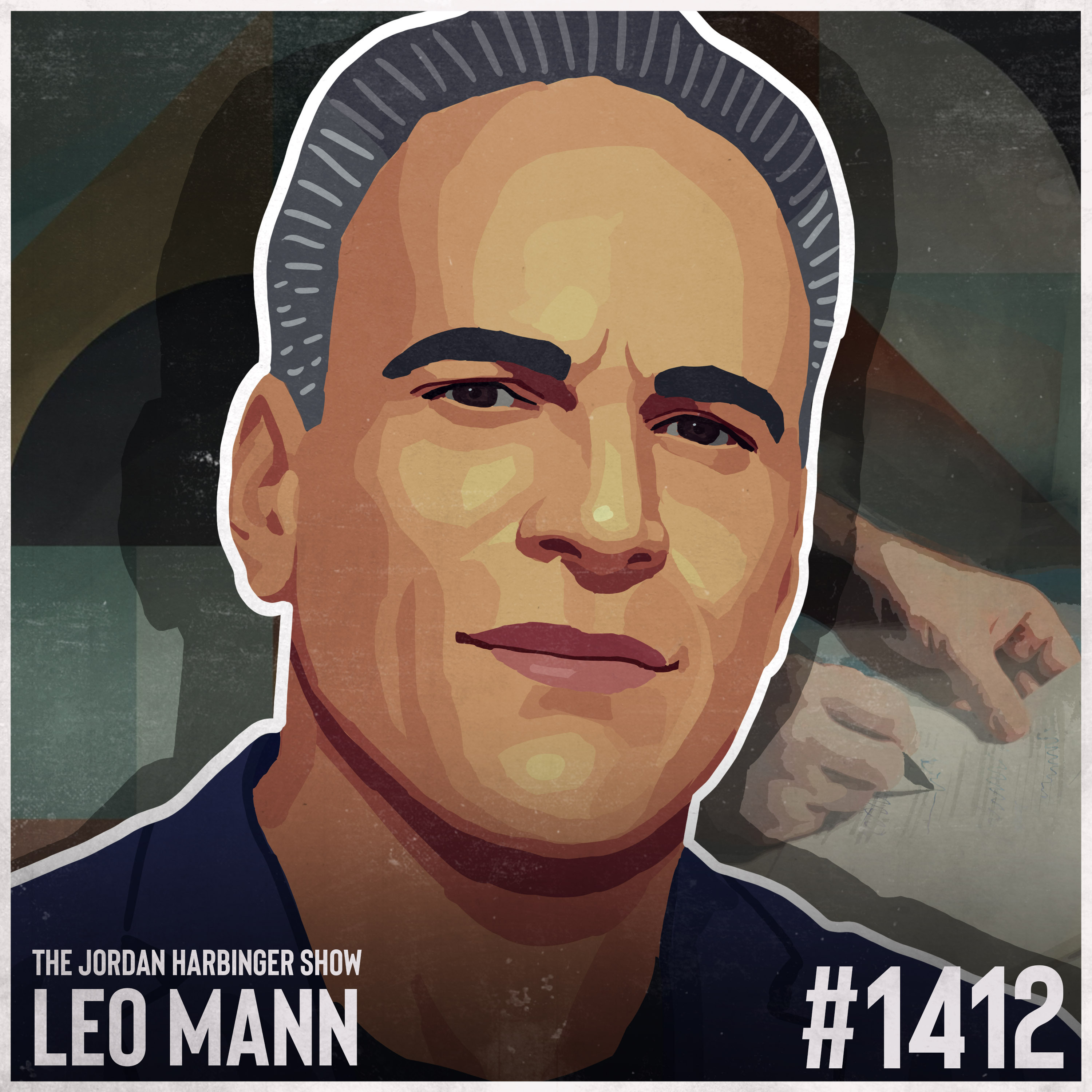
Contract literacy—why smart people skip reading fine print, how “standard” language hides dangerous terms, and practical ways to spot and negotiate harmful clauses before they cost money.
Leo Mann, lawyer and author. He researches the psychology of contract behavior and runs a “contract literacy” approach (including a “big five” system for common high-risk contract terms). He describes himself as trained to read contracts and as someone who helps consumers push back on boilerplate.
Written by AI. May contain mistakes.
Jordan introduces Leo Mann and discusses the common pitfalls of contracts.
“And if you're new to the show or you want to tell your friends about the show, I suggest our episode starter packs.”
Jordan introduces Leo Mann and discusses the common pitfalls of contracts.
“which boring clauses can cost you money or even your side hustle, and how to push back before the paperwork becomes your problem.”
Leo shares a bizarre story about a lease involving bird yoga and a landlord.
“This is funny because I thought, oh, I'm going to do a show about contracts.”
Exploring the implications of contract clauses through storytelling.
“Like, is this some bullshit you made up for the book?”
Discussion on how people often overlook critical details in contracts.
“What's interesting about this is this guy's an investment banker.”
Leo provides strategies for effectively reading and understanding contracts.
“John, I think you're getting right at what I think is like the dirty little secret of the legal world, right?”
Learn how to negotiate seemingly non-negotiable contract terms effectively.
“So the real way to combat all this stuff, because a lot of people come to me and say, Leo, that's interesting, but my landlord's never going to change anything.”
Understand the psychological traps that lead people to sign contracts without reading.
“I think that point you're getting into there gets into really the psychology of the entire contract world, right?”
Explore the dilemma of feeling awkward in negotiations versus potential financial loss.
“Your wife picked the adventure package with the heated steering wheel seats and the Defender she just bought her, right?”
Get insights on identifying and questioning vague terms in contracts.
“I think there's also a phenomenon, and this even happens to me as an attorney, right?”
Explore the motivations of salesmen and landlords in contract scenarios.
“down the road where there are a million other dealerships that might be able to figure out what Deuces Tecum means and cross it out.”
Learn about the evolution and significance of contracts throughout history.
“And I hate to go into a whole thing here, but you touched on something really important to me.”
Discover the implications of 'standard' in contracts and its historical roots.
“It became a wax seal, became your signature.”
Clarify the validity of oral contracts and the nuances involved.
“There's something you've probably heard of, right?”
Examine the difficulties in enforcing contracts and the importance of documentation.
“But the problem you run there is what do you really have?”
Discuss strange clauses in employment contracts and their implications.
“here's my rate and he just didn't collect the money, you're still on the hook for the money.”
Learn about the importance of intellectual property assignments in employment agreements and how to protect your own creations.
“And how many women have you had signed this contract?”
Explore how to properly address side businesses and protect your interests in employment agreements.
“Ideally, it's not exactly in your sphere.”
Learn about the enforceability and nuances of non-compete agreements.
“That deal will be there tomorrow, no matter what you say or do.”
Discover strategies for negotiating terms in employment contracts, including non-competes.
“Like you said, if they're not a Google developer, not an AI meta stacker, right?”
Learn about the misleading aspects of car financing that can lead to long-term debt.
“And of course, they go back and forth to managing.”
Discover the benefits of negotiating car purchase components separately.
“Another thing I thought that was really good advice was negotiate the purchase price, the trade-in, the down payment, and the financing all separately.”
Uncover the tricks dealerships use to profit through financing options.
“shuffle things around in order to make more money off of you.”
Learn why gap insurance is crucial and what additional warranties may not be necessary.
“The only thing I do get, and this is, again, me personally, you may not need it.”
Find out the reality of car return policies and the myth of cooling-off periods.
“They just made$7 ,000 off of that that they're getting back from the trade-in.”
Understand the risks of mechanics liens when hiring general contractors for home repairs.
“And I was like, you could be friendlier about that.”
Learn how to protect yourself from mechanics liens through proper contracts.
“One thing that I thought was quite terrifying that most people probably don't know is something called a mechanics lien.”
Discover why it’s crucial to read contracts, especially in the digital age.
“You have to go after the contractor who already has your money and say, hey, give me that back.”
Learn the importance of reading terms of service and hidden clauses.
“if you'd like to keep your soul, click here.”
Discover strategies to manage subscriptions and cancellation traps.
“So auto renewal and cancellation, you should always check out.”
Find out how to identify costs associated with breaking contracts.
“What do you think they're most likely to discover and what do you hope they do differently tomorrow morning?”
Examine the issues with subscription models and consumer perceptions.
“What's a contract millions of us are casually agreeing to right now that you think, We're going to look back five, 10 years from now, and people are going to go, how the hell did we ever agree to that?”
Learn about the business model behind subscription services and products.
“I used to be able to buy the hardware to do that.”

Get the gist, explore an idea or ask about something said.
 Claude
On The Jordan Harbinger Show, what are the key points of this episode?
Searching your listeningAutomatic transcript. May contain errors.
0:00This episode is sponsored in part by LinkedIn. Hiring for a small business is hard, and you don't often have a team of people weighing in and helping out. That's why LinkedIn built Hiring Pro. It's truly like having a hiring partner throughout the hiring process. Chat with it just like you would a recruiter. Tell it what matters most for the role, compare candidates side by side, and give it feedback like, I want someone with more hands-on experience. Hiring Pro listens, adjusts, and surfaces the people who actually fit what you need. Running my own small business, I've had to make all the hiring decisions on my own, and it's tough when you don't have a team to talk it through with.
0:31You're trying to find the right person while also keeping everything else moving. Having help with hiring is so valuable, a partner you can bounce things off of, who learns what you're looking for and helps you think through the candidates. That would take a lot off your plate. 88 % of small businesses say they trust LinkedIn's candidate recommendations, and you can be confident in your hiring decisions when you use LinkedIn Hiring Pro. Get started by posting your job for free at linkedin.com slash harbinger. Terms and conditions apply. Coming up next on the Jordan Harbinger Show. My entire profession is basically a fire department that quietly sells matches.
1:03I think it's like the dirty little secret of the legal world. We make billions cleaning up contracts after they explode in your face. The most dangerous sentence in American life to me is that the one you've heard a hundred times, a salesperson says, don't worry, it's standard. Standard means common. You know what else is common? The flu. The chaos and confusion is the strategy. Somebody got a huge Christmas bonus for making that paragraph unreadable. What's the problem? They keep coming in my apartment with parrots to do yoga.
1:36Welcome to the show. I'm Jordan Harbinger. On the Jordan Harbinger Show, we decode the stories, secrets, and skills of the world's most fascinating people. Our mission is to help you become a better informed, more critical thinker through long form conversations with a variety of amazing folks from spies to CEOs, athletes, authors, thinkers, performers, even the occasional astronaut, counterfeit art investigator, behavioral economist, or terrorist kidnapping survivor. And if you're new to the show or you want to tell your friends about the show, I suggest our episode starter packs. These are collections of some of our favorite episodes on topics like persuasion and negotiation, psychology and geopolitics, disinformation, China, North Korea, crime and cults, and more.
2:14That'll help new listeners get a taste of everything we do here on the show. Just visit jordanharbinger.com slash start or search for us in your Spotify app to get started. Today on the show, lawyer and author Leo Mann explains how sales pressure gets smart people to skip the fine print, which boring clauses can cost you money or even your side hustle, and how to push back before the paperwork becomes your problem. This conversation is educational, not legal advice. There's some very rubber-meets-the-road contract terms, how you can negotiate. It's a very, very practical episode today on the contracts we see, maybe not every day, but throughout our lives that could have serious consequences.
2:49Here we go with Leo Mann. This is funny because I thought, oh, I'm going to do a show about contracts. And I remember on our initial phone call, I was like, oh, is that going to be interesting enough to keep people's attention? But first of all, we all deal with contracts all the time. They're basically invisible now, unless you're a nerd or lawyer like me slash us, where it's like, oh, I want to read this, right? Contracts are just something that we try to bypass and waste as little time on as possible, even if it's really important and to our detriment. So the show is going to be really important.
3:19And man, have you seen some weird contracts? Tell me about this finance guy who signed a lease that basically required him to let his landlord into his apartment every Wednesday night for bird yoga. Like, this is so crazy. It's a true story. That's what I was about to ask. Like, is this some bullshit you made up for the book? Because it's such a weird and seemingly unenforceable lease term that you got to hear this story. Yeah, you would think, right? Yeah, so the book itself, Jordan, yeah, the stories in there are absolutely true. Of course, the names have been changed, right? To protect the innocent here.
3:48And the guilty. And the guilty. So yeah, that's a hilarious story. So this is a Wall Street banker, friend of mine, client, good client, this younger guy, enters into a lease, everything seems great, never shows it to me, shows me every other contract he has with his hedge fund and all the little things he's doing, shows me everything, gets this lease, signs it, doesn't talk to me, calls me up and says, Leo, I got a problem. What's the problem? And he's like, they keep coming in my apartment with parrots to do yoga. And I was like, come on, you're kidding me. Get out of here. First of all, does parrot yoga exist?
4:21And second of all, your landlord's just coming on in with, hey, you got any beer? I'm here for my Wednesday night thing in your property that you agreed to that I'm not paying for. That's just crazy to me. Now, this woman, I won't see who the landlord was, but her family, very wealthy, department store, whatever, very eccentric, right? Think Leona Helmsley, just wanted to come in to do the yoga. It's something she had been doing for 50 years in this particular apartment. She's renting them out now. She's moved out to the Burbs, wanted to continue to parrot yoga with a couple of her friends in the building.
4:55And she wrote that into the lease that he never read. Absolutely true story. Crazy. You'd think a wealthy person who essentially has unlimited money and owns a bunch of buildings would find somewhere where there's not a tenant hostile to what you're doing. But this is one of those people in New York, and you know what I'm talking about. They've never been told no because they're old money and they don't understand that other people have boundaries and they don't care. That's absolutely right. Absolutely right. And the rent was market rent. It wasn't like he got it for like thousand dollars a month cheaper.
5:25So market rent. That to me is crazy because people sign contracts and they go, there can't be anything so bad in there because otherwise people wouldn't sign these. Oh, and also, if it's really that bad, I won't really have to do it. And it's like, yeah, you might if it's in there and you were supposed to read it. This is crazy. So what does he do? He just lets her in for the duration of the lease or did he move? No, we negotiated it out. I think I put that in the book. We ended up negotiating something with her, getting her a different space, convincing her to do that. It wasn't done legally.
5:56It was just done out of nicety. I called her up and like my grandma used to say, catch more flies with honey, right? So I was just really nice to her and her attorney and just, hey, could we think of something else? And she eventually did. And she stopped coming in his apartment. This is just a woman with such a lack of self-awareness, it didn't even occur to her that a 27-year-old guy doesn't want 75-year-old women in his apartment every Wednesday night doing bird yoga, right? And apparently it wasn't really yoga. The birds were there. It was more chit-chatting and drinking tea and little crumpets.
6:26But yeah, there was definitely some yoga going on, apparently. That's absolutely insane. So this guy actually got lucky because she could have said, this is in your lease, shove it up your keys to her and deal with it. right? That's correct. Absolutely. And he'd be stuck with it for 12 months. 12 months, Mike. And then if he wants to move after, he can pay his moving expenses and find another place to live or try to negotiate that out. And she might just say, no, there's always a sucker who's going to sign a Manhattan lease without reading it. And I'm going to keep doing this. That's crazy to me.
6:55And maybe he forgets about the auto renewal he signed and misses the auto renewal termination date. He ends up on another year of this. We'll get into those because those bite pretty much everyone at one point or another, whether it's an app you bought for your iPhone or an actual contract that costs you a lot of money. Jim subscription. Jim's. Yes, exactly. What's interesting about this is this guy's an investment banker. So theoretically, he's got at least a business degree, maybe even a law degree. And it's not like a high school kid. When I was in high school, I bought a pager and I signed some contract that said I'll pay and I can't cancel without 90 days.
7:29No, you know, some sort of termination crap. And then I just stopped paying for it because I didn't understand how life worked. And they called me and they were trying to send me to collections. And my dad was like, you had a minor sign a contract. I'll pay you half of what you think he owes you. Otherwise, good luck enforcing a contract on a minor. And I think they were like, just give us 50 bucks and we'll go away. Because what are you going to do? Get blood from a stone? I've worked at a movie theater. But my point is, this isn't some idiot like I was signing a contract. This is an educated person who works in the business world signing a lease that's going to be in Manhattan, I don't know, 50 grand, 40 grand a year.
8:04This is real money. John, I think you're getting right at what I think is like the dirty little secret of the legal world, right? My entire profession is basically a fire department that quietly sells matches, right? We make billions cleaning up contracts after they explode in your face, right? Just what you talked about, right? The pager story, you sign the contract, all of a sudden it blows up, your dad helped you out. If you don't have your dad, if it's a more serious thing. You're getting a lawyer, right? And that's where lawyers make all their money. Nobody ever teaches them how to read the contract before they sign it, whether you're an 18-year-old kid or whether you're a 50-year-old hedge fund manager.
8:41Nobody has taught them to read these contracts before they sign them. And that to me is the dirty little secret of the legal world I've wanted to expose. I was on the side of that, right? I was the guy in the conference room and picture this, we're up on the 42nd floor, Manhattan skyscraper, right? And we got the little tricky raps and everything. And here comes the client and the partners. We're all sitting there talking about how can we draft provisions that will get people in trouble. They're not going to read them. They're not going to know what they say. And we're going to be able to make millions.
9:11People got bonuses for those types of clauses we're talking about. That's despicable, but that is how this goes. So here's the thing, though. Did Derek not read it at all or did he read a clause and go, oh, well, that's not going to be anything I need to worry about. I'll just sign this? Well, I'd be spectating. I didn't actually ask that question. He didn't read it. Almost everyone comes to me. They never read the contract. That's what kills me. I'm just imagining this guy sitting there. He's having a beer after a 16 hour workday and Angela, the landlord, comes in with six of her friends and there's parrots saying, breathe through it, squawking.
9:44And he's like, God. And the neighbors are like, I'm going to call the landlord. Shut your birds up. Actually, it's the landlord and those birds are hers. And they're in my living room. You're preaching to the choir. I mean, this is just a totally ridiculous scene. What did the clause actually say in the contract? Because I can't imagine it says, I will come in every Wednesday and do bird yoga. A lawyer drafted it, right? So it's got some euphemistic language maybe or not. Yeah, what it said was, and we'll get to this later on, but there was a clause in there basically said that the landlord could enter the apartment anytime with or without notice for any reason.
10:15Oof. That's what it said. So she couldn't come any time. That sounds a little, maybe in New York, but that sounds unenforceable in many jurisdictions. You would think that, right? Your only way to combat that provision is to put something in there, written notice, 24 hours, unless it's an emergency, only to show the apartment, to make repairs, things of that nature. But when it's open-ended like that, and to answer your first question, did you read it? Doubt it, probably not. But here's what she did, she read it and she wrote it. But when she came to the apartment the first time, he said to her, that's illegal.
10:49You can't come in. Just what you said. That's what you think would be the normal response and answer. Yeah. It's the, what is it? The covenant of quiet enjoyment or something? Enjoyment. So what does she do? She points them right to the clause because she wrote it. Sorry, Derek. This has happened for the last 25 years with every single person who rents this apartment. So I brought a copy that I can shove in your face. My advice was, listen, pay me and I'll go back and negotiate with her. And here's the whole point, the dirty little secret. Pay me after the fact. Or go get yourself a parrot and join in.
11:17Yeah. Yeah, exactly. Actually, what eats parrots? Get that as a pet. She won't be back. A cheetah, maybe? I don't know. Like, there's got to be just another bird that eats parrots. Get a condor. I'm sure a condor would be very happy inside a small Manhattan apartment. Yeah. I don't know. What's the legality of I get a pet that eats your pet? That sounds like I might be in violation of something there. If I I got a pet that I know is going to eat your pet. I don't think Peter would be too happy. Yeah, I'm not worried about them. Oh, man, this must have been crazy because I just imagine that first day, like, knock, knock, what's up?
11:49Oh, we're here for bird yoga. What are you talking about? And then he's got to pay a lawyer. I don't know. It depends on retainers, but five to 15 grand as a retainer. And that maybe would cover something like this. And it's just like, wow, that's a significant chunk of my lease payment entirely to just be able to enjoy. Almost the whole thing. So what's the general lesson on this? Is it that we're looking for outrageous clauses or are we looking for ordinary sounding language that has outrageous consequences? Yeah, we're looking for ordinary language because I'll tell you the one thing about it, Jordan, is that the contract itself, as you probably know, the most boring words, the most boring clauses are the most dangerous.
12:31is. And we could look at some of those in a little bit. But you look at this and you think to yourself, okay, everything's a trap. Now that I've talked to Leo, everything's a trap in here. I'm moving to the woods in a shack that pay for things with firewood. But first of all, settle down. That's not what we're talking about. The shack probably has a rental agreement. So you're unsafe enough out there. Yeah, yeah. You're going to you need to lease it. Right. But here's the good news. You can read any contract. I have something I call the big five system. And again, we can talk about that in a real estate lease, but also applies to a loan, your job offer, crazy terms on your phone, and about 20 minute flat, we'll go through, right?
13:04And what we do is we look for certain words, like you said, and they're boring words, absolutely. And how do we find these? Do we read the lease cover to cover? No, we don't. I might, right? Because it's what I'm trained to do and I'm supposed to do. But the person picking up this book wants to do it themselves, what the whole contract literacy movement is about, is you have this really magical function on word, right? It's called find and replace. So type in find. Here's some words. So we just talked a little bit about auto renewal. We can get into what that means, but just type the word automatically find on your document, right?
13:38Like, for example, my daughter's lease, it comes to you by email, right? They talk to you about it. They send you by email. Find and replace, right? Just put automatically. That's going to find your auto renewal clause. And how do you beat them at that game? And I think something you and I talked about before, auto renewal, you have this magical thing on your iPhone called a calendar, right? Calendar it in. What is 30 days before? You need 60 days notice, 30 days, put it in your calendar. So the real way to combat all this stuff, because a lot of people come to me and say, Leo, that's interesting, but my landlord's never going to change anything.
14:09I say it's non-negotiable. Here's the thing. I want to put a pin in something. You mentioned some of the most boring words. Automatically is a red flag. You could probably find it or you could grab the book, throw it into ChatGPT and then throw your lease into ChatGPT and say, go through this book and see if anything in my lease violates this automatic. It'll find all this. It's not a replacement for a real lawyer, though, but it will help you apply the things from the book, I would imagine. So that's a good practical tip, I think, for people. But as long as you don't mind your book going into Chachaput, you might.
14:37Not at all. There was a document that I was being asked to sign, that's probably about a year ago, and it was for something that I knew it wasn't like a boilerplate service. It was something that was more important than that. And it said something along the lines of, this agreement is subject to the laws of the state of, I don't know, Georgia. I live in California. The company was also in California. And I was like, that's weird. And then it was also like, this will be litigated or arbitrated in Georgia requiring an in-person. And I was like, I'm not flying to Georgia if I have a problem with you.
15:06I drove to your office. We're doing it here or we can do it at mine. I'm not going to Georgia. And I remember the guy goes, oh no, all of our contracts say that. And I was like, yeah, except for this one, because otherwise it's not going to get signed. And he was like, I don't think this ever gets used. And I was like, then you won't mind changing it if it's never going to get used. And he was like, okay, got me on that one. So he goes back to his manager. Manager was like, I can't edit this. And I was like, find the person who can give me a call when you find them. And I basically was halfway out to my car.
15:33And the guy was like, wait, legal just called me back. Cause I did have him call the home office. Legal just called me back and said that it's fine. And I'm thinking, well, that was pretty fast. Wasn't it? Because they put that in one, he'd either didn't call anyone and changed it on his own or legal is a guy who runs a bunch of other things and is not a lawyer and goes, Georgia, we moved our company from Georgia 15 years ago. We're still using this contract. Oh my gosh, we should probably have a lawyer look at it. So they just struck out the whole thing. And I thought, that's great. I'll take that.
16:03And then I wrote in manually in the margin and took a photo with my phone, California, because I'm like, I'm not booking a flight to tell you to shove this up your, you know what, if I have an issue, no chance. Yeah. Even though somebody tells you it's not negotiable. Somebody tells you we can't change that. You would be shocked how many times you say, I'm not going to sign this until you change it, that they actually change it. The room stands still for a minute, but they change it. That's the whole psychology, I think. I think that point you're getting into there gets into really the psychology of the entire contract world, right?
16:37And I've been doing this for 30 years, right? And I see people sign contracts. They come to me after the fact, like I said, the one you did, you were smart enough. You don't even have to be smart. you just knew, right? Because you're a lawyer. Yeah, exactly. I read contracts and I look for things to disagree with because I'm a petty prick. That's mostly it. They'll actually take the time to stop and read it, right? Because what fascinated me, Jordan, about this and why I went down this path, and I've been on this path for 15 years, researching this book, researching the psychology behind it. At the end of the day, this entire thing is a behavioral finance question.
17:10Just think about it. If not reading a contract can cost you your actual house, let's say it's a purchase and sale agreement, whatever, Why does absolutely nobody read them? And like, that's the query I started my book with. I have my notebook here when I first started this project. That was my initial query, right? And then I thought to myself, and I see these people, my friends, your friends, people who read 20 consecutive one-star Yelp reviews, right? Just to pick a taco joint to go to dinner at, will sign a 40-page lease without moving their eyes. Like, why? And for so long, I just thought, hey, this is pure laziness, right?
17:43These people are just lazy. They're intimidated by it. They're intimidated by it. By the language, yeah. And see, this is where I come in. This is where I feel like I could be helpful to people. And why I've started this whole movement of contract literacy is because this is not an accident, right? This was all done on purpose, sitting in a conference room, right? And to me, I look at it, and what I've done is I've broken it down into what I call the four psychological traps. And they're all stacked on top of each other like a Jenga game, right? like a booby track Jenga. Let's walk through them really quickly.
18:17The first one, reading the contract feels rude, right? So that's the first thing you do. Picture the moment. That's what I mean when I'm a petty jerk. I'm not really, but there is something where I feel that social pressure of, when I bought my house, they sent all these documents and there's a notary there. And I go, this is gonna take a while if anybody needs to use the restroom or go get a drink. And they were like, why? All you have to do is sign an initial and thumbprint. And I'm like, no, I'm gonna read this. And I remember everyone in the room was like, you're going to read this? And I remember the notary goes, I got to make a call.
18:49Because I was like, yeah, you're not going to make it to your next thing in 30 minutes across town. We're working through lunch. Call DoorDash because there's 78 pages of things here that I've never seen. And I have a degree and I used to be a real estate lawyer. So no, this is my Super Bowl. I'm reading every word of these documents. And that's what I want people to do. Maybe it's not every word, But that's the whole thing because this is why it's four psychological traps all stacked against the consumer. Like you and I talked about last time, this isn't about lawyers and talking to lawyers. This is talking to consumers in America, right?
19:22There's these four psychological traps that they use on you, whether it's a car dealership, whether it's an employment offer, whether it's a phone contract, right? Let's picture this, Jordan, okay? You're not Jordan. You're the average consumer that doesn't have a law degree. You're sitting at the car dealership. Salesperson's smiling at you. Your spouse is sitting next to you. You know, she's radiating that let's go energy. Don't stop, Jordan. Don't stop. In four minutes, sign this thing, right? Because if you stop and you're that unhinged person that stands up and says, I'm going to read this thing, then you're announcing to the world, I believe every single one of you is trying to rob me.
19:55So I'm going to read this thing. That is my mindset generally, but yeah. Right? And to escape four seconds of awkwardness would cost ourselves$7 ,000 on that car finance agreement that if we read it, we would know. because honestly, think of the people who are slapping these contracts together, whether it's the lady at the title office that's spitting out 30 of these a day by doing 30 closing hope with no one's reads so she makes it through the day. They make mistakes. Even if it's not some legal mumbo jumbo that's going to hurt you, they make mistakes. They put the wrong interest rates. They put the wrong dollar amounts, wrong monthly payment, right?
20:29And then try to go back and change that. You can't. Really, that's the first psychological trap, right? We are wired to keep the peace, right? That is how consumers are wired. We're wired not to speak up, keep the peace, let's set our house on fire to avoid that tense moment. Yeah, your point here is a lease, for example, is not the landlord's commandments. It's the opening draft. It's the opening salvo. And this kind of thing has happened to me on leases before too. When I lived in LA, I negotiated extra parking passes because I had more people living in my apartment and we each had cars and I thought we would have guests and I wanted them to have a parking pass.
21:01And a new management company took over the lease and said, I found out, hey, my parking passes don't work anymore. So I called and they said, oh, you only get one. We noticed you have four. So we canceled the other ones. And I said, no, I negotiated these. And they said, it doesn't matter. We're only giving you one. And I go, OK, what I'm going to do is buy them myself and I'm going to subtract it from the rent. And they were like, you can't do that. And I said, you should probably read my lease then and call me back. And they did. And they were like, where do you want us to mail the parking passes?
21:27Because they were in the document. They thought, oh, yeah, you negotiated it with whoever was standing in front of you. Well, they don't work here anymore. And I was like, you should call your lawyer and have him read the paper that dictates what's actually going to happen here, because you cannot alter that. That part is also in the document. You can't just alter that unilaterally on your own. And they were really unhappy with me because they wanted to win that one. It was like parking is probably 150 bucks a month per pass. So it was like$600 or something that they had to pay me essentially in parking every month and they didn't want to do it.
21:57So, all right, that's the first trap. What's the second trap? Okay, second psychological trap that the companies, everyone puts you under, the choice feels already over, right? You've picked the car. Your wife picked the adventure package with the heated steering wheel seats and the Defender she just bought her, right? She's mentally driving that car with her sunglasses on, hair blowing in the air, right? The contract just feels like the boring paperwork, right? The annoying troll standing between you and the keys. But that's completely backwards. The paperwork is the decision, right? Everything before that was just sales and marketing and consumer shopping mumbo jumbo, right?
22:34The salesman picking out your options, negotiating the price. That's not the contract. The contract is what this guy in the finance room is putting in front of you using our car analogy, right? And so that's where they get you on the second track is by the time they walk you down the hall to that little cubby that you sit in the finance room like this next to your wife trying to sign documents, right? The decision's over. Your wife already has the car. She loves it. She picked out the whole package, right? It's done. John, why are you reading that? This is a formality. It's standard. You got what you wanted.
23:06You got me$100 off the sticker, right? You won. That's not true at all. All the money's made in that finance room. Thousands and thousands of dollars that you don't read. Four seconds of awkwardness or seven grand in regret. Suddenly, being a pain in the ass sounds like a great financial strategy. Speaking of money well spent, let's hear from our sponsors. We'll be right back. This episode is sponsored in part by Article. You know how renovating one room suddenly makes you notice everything else? You finish the kitchen, it looks amazing. Now the old furniture looks a little nervous. My parents-in-law renovated their kitchen and we bought them stools from Article.
23:40They look so nice in the new space. They're sturdy. With stools, you want something that feels solid when you sit down, and these do. They've been a great finishing touch for the kitchen. They're slowly upgrading the rest of their furniture, so now we're looking to surprise them with a new couch from Article. Hopefully they don't listen to this episode before we pull that off. That's what makes Article so useful. stylish, well-made furniture at a price that makes upgrading your home feel doable. Their collection includes mid-century modern, coastal, Scandi-inspired pieces that mix and match easily.
24:04You can bring a room together over time, even if replacing everything at once isn't in the budget. And they offer fast, affordable shipping across the U.S. and Canada, plus professional assembly options. Their customer care team is available seven days a week, and they offer free interior design services if you need help choosing. There's also a 30-day satisfaction guarantee, so you can see how a piece works in your home. Article is offering our listeners$50 off your first purchase of$100 or more. To claim, visit article.com slash Jordan, and the discount will be automatically applied at checkout.
24:33That's article.com slash Jordan for$50 off your first purchase of$100 or more. This episode is also sponsored in part by BetterHelp. Someone replies okay to your text, and now you're analyzing and overanalyzing the reply. Are they annoyed? Now you're scrolling through old messages. Meanwhile, they probably just answered while unloading the dishwasher. If I could delete one thing from my brain, that habit of filling in the blanks with the worst possible explanation would be on the list. And during the holidays, there's a lot of blanks to fill. Family group text, changing plans, somebody who hasn't answered about dinner.
25:03It's exhausting when every little thing feels like something you need to figure out. Therapy can help you examine those assumptions and how they affect you. BetterHelp therapists are licensed, experienced professionals with at least three years and 1 ,000 hours of hands-on experience. And if your therapist doesn't feel like the right fit, you can switch at any time. BetterHelp is now in network with more than 125 health plans with many co-pays as low as$15 for eligible members. And if you don't have eligible insurance or you live outside the U.S., you can still get 20 % off your first month. Sign up and get 20 % off at BetterHelp.com slash Jordan.
25:34That's BetterHelp.com slash Jordan. You know, I love it when you use our codes. It's a win-win. You get a great deal and you help keep the show going strong. Thank you for supporting those who support the show. Now, back to Leo Mann. I think there's also a phenomenon, and this even happens to me as an attorney, right? You read the words and then you quietly rewrite them in your own head into the version that you expect it to mean. And it's really easy to do that and go, yeah, that's probably what that means. For me, I ask what it means and then I either rewrite it or strike it out. If they go, I don't know, that's weird.
26:07I go, oh, let's just get rid of that then. And you see them get nervous and they have to make a call because I'm like, I don't know what it means to have an avian physical activity class once per week with no notice. What does that mean? Oh, I don't know. Oh, okay, then let's just cross it off. It's probably a bunch of typos. And then they go, crap, my boss wanted that in there so she can do her yoga class in this guy's apartment without him noticing that it's in the lease. Yeah, that's exactly right. That's where they get you, right? They hope you're not actually going to read it or say anything.
26:36That goes back to the first psychological trap, right? That you're not going to speak up. So what's your test then for vague language. At what point does a normal person stop and say, this phrase, I can't define it precisely enough to sign it confidently? Anything you don't understand, like when you get to the end of an agreement, there's words in there that probably haven't been spoken since the civil law. You stop and say, what does this word mean? Duse tecum, right? What? What does that mean? You ask, nobody's going to explain it to you. Nobody's going to be able to explain it. And that's when you say exactly what you just said.
27:07Listen, strike it. I don't speak Latin. I don't know what that means. That's what you have to do. You have to speak up and you know what? That sales guy has one goal in mind that's selling you that car. He's going to cross it out. You're right. He might go call someone. I know the finance guy's got to call the bank. Well, this might affect your interest rate. Really? I'm not subjecting myself to a subpoena, Ducey Steckham. Oh, okay. I'm going to get a higher interest rate. Okay. They try every trick they can. They might do that. I'm sure you have retorts to all this, but I remember getting a car.
27:34This was a long time ago and they said the same thing. This might affect your interest rate. And I said, that would affect my ability to purchase this car. So thereby affecting your sale, actually nullifying your sale, because I would just have to leave. Suddenly, the burden was no longer on me to just sign the thing. The burden was on him to figure out how to rescue the... It was like, let me paint this picture for you. You're losing the sale if you don't figure out how to keep the current interest rate and also make this other thing go away. This is now a you problem and you have to figure it out or I'm going down the road where there are a million other dealerships that might be able to figure out what Deuces Tecum means and cross it out.
28:09Yeah. That's the other thing. You got to remember, these are salesmen. This is how they get paid. This is not, oh, figure out how to rationalize and deal with this. This is you have unlimited options and you are in front of them. It's their sale to lose generally. And that includes leases too. Landlords want occupancy. If you're going to leave and go find something else, that's bad for them. They are losing money every day that place it's empty. Oh, absolutely, Jordan. And you are like the poster child for my book, right? If I can get people to do 10 % of what you're doing, if my book convinces people, this show convinces people to do 10 % of what you're saying and how you approach contracts, much like I do, then I think we're going to change the world, right?
28:47We're going to change these companies from being able to take advantage of people. And imagine people who are not, you know, hedge fund managers. And, you know, that's part of my contract literacy movement. I bring it to the streets. This is not a book tour. This is boots on the ground. I'm bringing this to the streets. I'm bringing this to Somerville, Massachusetts housing advocacy group to help people who English is second, third language, trying to read a lease where a landlord is totally taking advantage of them. Right. So just imagine that like the good this could do if people would do just 10 percent of what you're doing.
29:17Yeah, that's why I'm doing a show about it. Before we get to the third psychological trap, I want to highlight something that you mentioned in the book, which was the word standard should make you more suspicious, not less suspicious, because I'm paraphrasing a little bit here, but saying this is standard is basically an attempt to get you to wave off whatever is in there and not really look at it. Correct? That's right. And I hate to go into a whole thing here, but you touched on something really important to me. Before I wrote this book, I spent almost five years researching the history of contracts, something I probably should have known.
29:49We kind I touch on it in law school and contracts class. Yeah, God, who remembers that though? Come on. Who remembers that, right? So nobody asked me to do this, but I researched it. And I think I cracked the code here, right? The most dangerous sentence in American life to me is that the one you've heard a hundred times that you just said, and salesperson says, don't worry, it's standard. So what does standard mean, right? So let's dissect the DNA of that statement for a second. I don't wanna go too deep here on you, but let's go back 4 ,000 years, best of a team. Sure. Right. People are writing contracts in wet clay, wet clay.
30:24People don't read. They're putting their contracts. They find someone who can write. They put it in wet clay. Right. It's a grain loan. It's a land sale. It's a marriage. They already have a trust problem. Right. And they're fixed for the big deals for the scribe seals. They would take that tablet and put it inside a second layer of clay with the same terms written on the outside. Crack that shell of the outer clay. and you know somebody's been editing it. That's a Tampa-evident envelope. 4 ,000 years ago, Jordan, right? We've rebuilt that exact clay vault electronically today and we call it DocuSign.
30:57Now we have this Tampa-resistant shell. That was Mesopotamia, right? But how does that get us there? So listen, when we go to the Roman Empire, right? The Romans, if you study them and you looked into them, they're a bunch of completely unhinged nutjobs about contracts, right? Barely anyone could read, but they could all speak, right? And they could all hear. And the Roman contract was a spoken ritual. And the verbs had to match. I think you and I talked about this before. If I was going to sell you some grain, right, you'd say, do you promise to deliver me the grain, Leo? And I'd say, I'd have to say, I promise you, Jordan.
31:30If I said, I got you. Don't worry about it. I got you. The deal's dead. It's completely dead. We didn't use the same verb, okay? You literally could not be tricked into agreeing to something you never said, right? So that's where it began. And then we can go on to the history of it. We have medieval Europe. You'd have your family crest ring. It became a wax seal, became your signature. And you'd put your family crest ring into that wax. You'd make a seal. And if you ever heard the Stevie Wonder song, Signed, Sealed, Delivered, I'm Yours, that's where it comes from, right? It's not Stevie Wonder.
32:00It was medieval Europe, right? You signed, sealed, delivered that contract, okay? Those were the three actual legal steps. That seal was so sacred, Jordan, right? The story goes, if a mouse chewed the wax off your parchment paper, your contract was void, which means somewhere around 1300, there's a man standing in a field with a primordial slingshot looking for the rodents who just ate all the rights to his property, right, gonna kill him. Oh my gosh. Insane, right? And then 1677, we get to something I'm sure you're gonna remember from property class, contracts class called the Statute of Frauds, right?
32:35Oh yeah. England kills the handshake, kill the handshake. Anything that's important, any serious contract, now has to be in writing. There's no more seals, There's no more verbiage. We got to say the same verb. And anytime someone says to you, Jordan, get that in writing, they're quoting a 348-year-old English statue, right? They had no idea existed, right? So for thousands of years, all of it, the seal, the ritual, the witnesses existed to prove one thing. You actually agreed. When this statute of frauds came along, that is where the Khan is born. That is the genesis of this is standard. And here's my favorite historical fact of all the research I've done.
33:14Standard went by another name back in like the 1960s. It was called boilerplate. Oh, don't they still say that? I feel like that was from a Supreme Court decision from 18 or 17. Hugo Black. Yeah. Yeah, 1967, Justice Hugo Black in a dissenting decision said at the Supreme Court level, Justice Hugo Black, it was a blistering dissent about a buried clause he calls boilerplate. One that forced regular people, and this is funny because this is what you were saying, traveled across the entire country to defend themselves over language they never read that was buried in the contract. 60 years ago, he created a dissenting opinion why boilerplate should not exist.
33:52You know, we get down to its standard, right? That's not it, right? Here's where 4 ,000 years lands us. Get to the punchline here at the end of my historical tour of contracts. Every seal, every ritual, every witness existed to prove you truly agreed to something, right? Boilerplate was the first technology in human history to manufacture agreement without it. Standard never meant fear. This is what everyone has to understand when someone says to you that's standard. Standard never meant fear. Standard means common. You know what else is common? The flu. Standard was never meant like, I'm on your side, Jordan, I'm on your side.
34:28I'm the sales guy. This is standard. I'm on your team here. I want you to have this car. I want you to get that car. You're doing good here. Just sign it. Standard, no. Standard means common. There's something you've probably heard of, right? has a word in the legal profession called a contract of adhesion, right? I don't remember what that is, but I've heard of it. When one side basically controls the whole thing, take it or leave it, that's a contract of adhesion because you're stuck to the terms like glue. Like you were saying about your lease with the parking passes, right? Had it not been in writing, had you not put it in writing, you have a contract of adhesion.
35:00You're stuck to what's in that lease like glue. Nothing you can do about it. You're lucky it was in there. There's one thing I want to clear up. Well, you mentioned the statute of frauds, and you said, oh, you got to get it in writing. Some people might misinterpret that as oral contracts are not really contracts. And I've actually talked to plenty of educated people. And I'll say something like, if you said this, and they said this, then you have a contract. And they'll go, yeah, but we didn't write it down. And I'm like, it doesn't matter. It's an oral contract. There were 15 people in the room.
35:26That's a contract. And they would go, but it wasn't in writing. And I'm like, it doesn't matter. This is still a valid contract. And I remember one of my friends who has a graduate degree was like, I got to look this up. I don't believe you. And he's like, I can't believe it. All these agreements I've made in real life without putting them down are actually contracts? And I said, yes, valid contracts. Exactly. As long as there was consideration and all these other sort of elements, reliance. But these are real. And I don't want people to go, oh, it's statute of fraud. So if it's not in writing, it's not really a contract.
35:54No. So statute of frauds in 1677 wouldn't apply to was anything big. Right. So if you look at the statute of frauds in most states still have statute of frauds. Right. These are big things. Right. You cannot transfer a real property in an oral agreement. You cannot sell securities, whether private or public. Just imagine the nightmare of that in the New York Stock Exchange, right? Hey, Jordan, you told me you're selling me 50 shares of GM. No, I didn't. Yeah, you did. Yeah, at a lower than market price. No, it was yesterday when we were drinking whiskey. Yeah, that has to be in writing, right?
36:25And those are the big ones. I think there's a couple other ones like marriage, a couple other things. But there's very big contracts. But you're right, a little thing like if you want to buy my microphone. You want to buy this pen I have? Yeah, we can have a verbal agreement about that. The danger with that is the old he said, she said problem, right? In court, it's going to become down to a battle of who's a better witness at trial. Am I more believable or are you more believable? Because you're going to say, I offered him 20 bucks for the pen. I'm going to say, you offered me 200. You can give me 200, it's still my pen.
36:54So who's the jury going to believe? That's the problem. Even though you're absolutely right, some contracts, almost all except for major ones can be verbal. But the problem you run there is what do you really have? You have my word against yours. Yeah, I think some people might they'll say something like, oh, it was just in an email or I don't know, it's a bunch of texts. That's a written contract. Now, it's going to be annoying because you have to infer the meaning through a whole dialogue instead of explicit terms. But if someone says, hey, I'm buying a dog from you and it's six thousand dollars and they say yes, but if you come tomorrow, I'll give it to you for five because I'm going on vacation.
37:28and then you get there and they go six grand, you can say, no, we have a contract for five. And then if they go, no, we didn't, you never said yes or something like that. It's like, but I showed up, I performed, I'm here, I brought the money. Not that you'd ever go to court over this, but that's a contract. And I just want people to be clear on this so they don't think that you need a lawyer to come down and have a notary in the room and type everything up in fancy pants legalese in order for it to be legally enforceable because that is not the case. That's absolutely right. My friend had a landscaper that came a bunch of times like 50 times for a year and they didn't pay them.
38:02And he thought his wife was paying and she thought he had paid. And then one day the landscaper goes, can I get paid now? And she's like, how much do we owe you? And he's like, you've never paid me. And she's like, are you kidding me? And the guy was terrified because he's like, I know that you probably don't have to pay me, but I really need the money. And she's like, one, we're not thieves. And I explained to them, I was like, no, no, no. If this guy comes in Mosier-Lon and there's a text thread or emails or whatever that says, here's my rate and he just didn't collect the money, you're still on the hook for the money.
38:29Not that they were thinking about stiffing him, but they were just like, we could have stiffed him, right? And I'm like, no, absolutely not. He would have had a completely valid case and being able to show performance and a frankly poorly written contract via email and broken Spanish texts. That's just as valid as a well-written contract. It's just harder to enforce, right? Sometimes. And also, as you remember, not to get too legally nerdy technical here, But there's the theory of quantum mirroring, right? That if you receive a benefit from something, you sit back and watch, you have to pay for it, right?
39:00You can't just watch the guy mow your lawn. You should have went out there the first day and said, don't mow my lawn. I'm going to do it myself. You can't sit there for a year, this quantum mirroring. That's right. It's the inverse in a way of, what is it, lashes, where something's damaging your property or whatever. And you go, huh, I should say something or do something about that. But if I let it get really bad, the car will be totaled and I can get a new one. and then you just sit there and you watch them destroy your car inadvertently and you go, well, now you owe me this. They might say, didn't you know about this three days ago?
39:26Yeah, but I didn't care. I hate that car. That's lashes, right? You can't just get away with that. So anyway, did we even get to the third psychological trap or did we just go off on tangents before that? Oh, so this is the one I think you were hitting on a little bit when you were giving your lease example, right? And that's the authority gap. So that's your third psychological trap laid on top of the first two, right? So this is the person across the desk from you has done this 10 ,000 times, right? You're doing it once. Let's say you're a 25-year-old kid going and buy your first car, renting your first apartment, whatever it is.
39:58When they smile and say, oh, it's just standard boilerplate lease, right? Here we back to standard boilerplate. Your brain doesn't hear a salesperson, right? And here's an expert giving you the all clear. Your brain powers down. And here's the pilot telling you that you've begun your descent. And here's the doctor tell you, don't question me. I know what I'm talking about. Go get that blood test, Jordan. Except this doctor in that office works on a commission, right? So stuff he's saying to you has to be suspect from day one, right? From the first thing he says to you. So that's the third psychological trap is this authority gap.
40:31And again, this is not by accident. This just doesn't happen because this is the way the world is. This is engineered to be this way, right? This is the whole, get into that later, but the whole social engineering here, right? This is engineered this way. The guy behind that desk probably did 50 of these before you even got into his office that day, right? All of a sudden, you're there. You don't know what you're doing. You're signing a beeper contract, whatever it was. This guy has authority over you. That's the third psychological trap, why people don't read agreements. That makes sense. Also, you're making the mistake that you're thinking that they're advocating for you, and they're advocating for themselves.
41:03Yeah. That's 100 % right. You have some funny examples in the book. There's this gal, Emily, who signs an employment contract, and there's a clause in there that's making her jog with her boss every Saturday at 630 in the morning. I mean, you got to think, some of the people who write these are mentally unwell. That is a weird clause. They didn't take the Title VII training they were supposed to take, right? Exactly. Yeah, sheesh. Yeah, no, that was sick. Yeah, that was a sick pervert. But true story. In that contract, what he wrote, weekly endurance and wellness program. And it was like, OK, but what that means when you get outside of the vague language is it's a mandatory Saturday running program where they track attendance.
41:40And there's work consequences if you don't show up, which is crazy to me. Crazy. So, oh, my God. Now, who reading that would have ever signed it? Right. She never read it. She says, my boss keeps saying I'm going to lose my job. You know, I don't go running with him on stage. Like, what? So we sent him a nice nasty gram. By the way, this is probably illegal and it sure looks inappropriate. Which one is it? And how many women have you had signed this contract? Exactly. Yeah. Are you enforcing this equally with the smelly guys over there in the basement working on there? There were no guys. Yeah.
42:13No, it was an all-female running group with the boss on Saturday mornings at the crack of dawn. Creepy, man. But on a more serious note with employment contracts, a lot of them have intellectual property assignments. And I've had these before, not for my own employment, but back when I had a larger team, I would make people assign intellectual property because this is a negative experience I had. I had guys take a bunch of stuff that we taught them at work, basically write a book and then go, oh, this is mine. I'm selling it. And I'm like, okay, but it includes my trade secret, a bunch of knowledge from my company.
42:44And you worked on it in my office during my time that I'm paying you for it. This isn't yours. It's mine. And we went to court over this. Yeah. In California, it's got some pretty good statutes around that. This was New York, thankfully. The judge basically was like, when did you create this? When, where? And they went like, oh, well, in the office. And she was like, it belongs to him now. Are there any other questions? I mean, it was like the shortest. It was like moving right along. This is not yours and you don't own it. Yeah, it was really satisfying in some ways. This is state to state. But if you read an employment contract, should we be looking for intellectual property assignments?
43:17Because there's a lot of people who have side hustles. It's 2026. This is no longer like the 80s where you just do your job and then you go home and watch TV. right? There's more going on with most people. Yeah. So after the book was published and mentioned it became number one bestseller, my email started getting flooded. And it's interesting you make this point because the majority of the emails that came to me were about this very topic because everyone like these days has a side hustle, right? People doing all types of stuff on media. AI has created an entire industry of people who now can create IP, create books, create everything, right?
43:51Create TV shows, videos, right? And they're doing them at work. So this comes up a ton. So what do you have typically, and this is in the book, what do you typically have when you take a job, right? You get an offer letter and you get something that's called a P-I-I-A, right? A Proprietary Information Invention Assignment Agreement. And when I tell everybody, and I don't give legal advice over emails, but if someone comes to me as a client and they come to me with this document, can I sign this? Because I read it for them. And I go to the P-I-I-A. And the most important part of that is the schedule on the back.
44:20right? That's pre-existing IP. So let's say I'm coming to work for you. I've already started working on my book, Don't Sign That, right? And I'm coming to work for you. You give me this PIIA. At the back of the PIIA is the schedule where I list things I'm working on already. I list my book. I may list some AI project I got going on for a dog heartbeat monitor, that app that I want to create. And it gets listed there. If something comes up, my book becomes a bestseller. You know, come to me and say, whoa, wait a minute, where did you write that? No, Jordan, look at the back of my agreement. I listed it as my IP.
44:56It's not yours. That's about the only way you're going to combat it because try to make the argument because the big things you already mentioned in your lawsuit, you know, the big things the courts look at. Did you use a company computer to create this? Did you use company resources? You're talking about side hustle, non-solicit. Did you start talking to Jordan's customers, vendors, like starting your own podcast? I'm going to go talk to Westwood One and whoever these distributors are, right? I'm going to go talk to them, right? Oh, I know Jordan, right? I'm going to start my own podcast. Did you use any of those?
45:24Did you do it at work? That's huge, right? Because their loyalty is supposed to be to you, the employer, during office hours. Are you working on this office hours? Did you work on weekends in your apartment on your own personal computer? Maybe you have an argument there. New York's pretty good on that too, just because of a massive amount of employers, Goldman Sachs, all these major places. Like I said, my inbox has been flooded with people telling me their stories about what happens to them as an employer with IP and side hustles. And yeah, I'm employers. They want to grab that stuff, right? They don't know, right?
45:54You're making all this money. What? You're like an influencer now. You got this AI stack that does what? That could have been mine. Like that's mine. If that promise isn't in the contract, it probably has the shelf life of gas station sushi. We'll be right back. This episode is sponsored in part by Bowling Branch. You know, you found a good gift when you start thinking, okay, maybe I should also get one for myself. That's the problem with shopping at Bowling Branch. You're looking at a soft throw for your sister, a luxury robe for your partner, and suddenly you're buying double so you can enjoy it too.
46:22All of our sheets are Bowling Branch. They feel incredibly soft when we climb into bed, wash them every week. So I can attest they do keep getting softer after each wash. They're made from 100 % organic cotton woven specifically for airflow. So when you got the heat on and extra blankets piled up, your bed feels cozy without getting stuffy. They're so breathable. And these are gifts people actually use. Sheets they'll enjoy every night, a luxury robe that makes mornings better, a soft throw that becomes everybody's favorite blanket. Good luck keeping that one to yourself. And right now you can get early access to Bull and Branch's best sale of the year.
46:51Be the first to shop 25 % plus free shipping and extended returns at bullandbranch.com slash Jordan with code Jordan. That's Bull and Branch, B-O-L-L-A-N-D branch.com slash Jordan. Code Jordan for an early access to 25 % off. Exclusions apply. This episode is sponsored in part by Cometeer. A while back, we invested in a fancy espresso machine and a grinder. Think of we'd make incredible coffee at home. We even bought the fanciest beans from our local roasters. Somehow it never really came out right. Now that the equipment is collecting dust, what we made just doesn't compare to Cometeer. And Cometeer takes seconds.
47:26And here's why. Cometeer sources coffee from the best roasters in the world, like Onyx and Counterculture, brews it to perfection, like, you know, they actually know what they're doing, and then flash freezes it at negative 321 degrees Fahrenheit with liquid nitrogen to lock in peak flavor and freshness. It comes on dry ice right to your door in recyclable aluminum capsules. Just melt it to make hot coffee, iced coffee, or espresso-style drinks like lattes in seconds. No machine, no plastic brew path required. The former president of Nespresso invested after one sip. Having tasted it, I also get it.
47:58It's an entirely new way to make coffee, and it's become our every morning routine. Professionals handle the brewing. We get to enjoy the coffee. We even gifted it to friends, a busy college student who needs a study pick-me-up, and our cousin who just started a new job as a lawyer. Try it yourself. Get$20 off at cometeer.com slash Jordan or use code Jordan. If you like this episode of the show, I invite you to do what other smart and considerate listeners do. Support the sponsors. They make the show possible. And they're all searchable and clickable on the website at jordanharbinger.com slash deals.
48:27Now, back to Leo Mann. So if I have a side business or a book or an app or newsletter or a patent or some other project and I join a company, I want to carve all that stuff out in writing and not leave it either off the papers or ambiguous or accidentally sign something that says anything I'm working on belongs to the company. you'd want to explicitly say, even though it might be uncomfortable, actually, I do have a side business where I write, I don't know, novels about the legal industry, or I'm working on an app that does something with day trading. Ideally, it's not exactly in your sphere.
49:02You wouldn't want to be a Goldman and also be writing a day trading app. That's going to be dicey. But if you got a fitness app, it wouldn't be above a corporate legal department to say, oh, if you wrote that while you were at work at this university doing computer support, that's still our app because you still wrote it when you were here. You looked at it, you worked on it, you tested it, whatever it is. Yeah, that's absolutely right. And not only that, John, not only something you've actually started, when I tell my clients and tell everybody in the show, all the listeners, even if you're thinking about it, like I had a dream last night that I built an app that did X, Y, and Z, write X, Y, and Z down.
49:36You're working on it all of a sudden, right? Because I'm telling you, it's brutal out there. Employees are coming after people because some employees are making way more on side hustles and then make it into a day job. And employees are not happy about that. There was a case a long time ago, and I'm going to be misremembering this because it was this is like a 20 years ago thing. He did something for a yacht company. It wasn't customer service. And all these yacht owners always had problems with, I think, the engine or something. And he knew stuff about that. So he went on unofficial forums where people were posting like, hey, my engine did this.
50:06And he would go, oh, yeah, I've seen that because I worked there. It's actually probably this. You got to get another something gasket, get it from this place, and it'll fix it. He got fired for doing that from the yacht company because they're like, no, no, no, they have to come through us. And he said, there is no customer support, though. That's why they're on this other thing. So they fired him and he started another service that was just for those yachts. And he was like, I'm an expert on these particular topics on this company. And they tried to sue him and they ended up losing because apparently he built all this after he left and he didn't have, I don't know, whatever sort of non-compete was required.
50:42and they ended up hiring his company to then be their customer service wing. So it worked out well for him because he probably got a massive raise. But rather than giving better service to their customers, they actually tried to stop him from doing that, which is like peak corporate. Yeah, peak corporate. And the only thing they would possibly have to go on would be, and I don't think it's going to work in this case, is trade secrets. What trade secret is there if it's out in the public eye that this gasket to fix that? Probably Google it and find that. So that's not a trade secret. So yeah, that's absolutely right.
51:13Yeah. These companies, they're brutal. And honestly, they're really brutal to employees. Tell us about the fourth psychological trap. And then I've got some non-compete questions, actually. Absolutely. Okay. So this is my favorite one. The fourth one. Fourth psychological trap stacked on your Jenga booby trap here. Okay. This is the one I call manufactured confusion or organized chaos. Goes by a better word, right? The document, you know this, Jordan, is aggressively exhausting, right? It's dense. It's eight-point font, right? It's written in words. And again, like I said before, no human has said these words since the Civil War, right?
51:46When something looks impossible to understand, humans don't fight, right? It's the fight or flight. They don't fight when they don't understand something. They surrender. And trust me, that's not a bug, right? That's not an accident. The chaos and confusion is the strategy. Of all the four, this is the strategy. Somebody got a huge Christmas bonus for making that paragraph unreadable. The one you were talking about, right? I did. I'm going to strike it. 99.9 % of people don't strike it. They surrender. That's the manufactured confusion. That's not an accident. That is not somebody wrote this while they were 2 a.m.
52:20in the morning when they're lacking sleep. So they wrote this paragraph nobody understands. No, that's the manufactured confusion. I see. Okay. This dovetails nicely with something I've been thinking about, which is all these verbal promises that you might get from, again, mostly salesmen or something like that. What people don't necessarily realize is those all vanish. when you sign a contract most of the time, because in the all standard boilerplate, don't worry about it, is usually something, what are they called? Integration clauses? Yeah, merger integration. Merger. This written document is our entire agreement and anything said that modifies anything in here has to also be in writing.
52:57And anything that was done before this is null and void. So if he says, don't worry about it, we never do this. If it's in the written agreement, then anything he said is completely null and void the second you put the pen to paper, correct? That's absolutely right. Yeah, and that's one of the tenets of what I tell people to look for is this thing called, does the paper meet the promises? That's the boring section you just mentioned. I think you mentioned it in your parking pass example. That's called an integration clause or a merger clause, right? It's basically men in black and a neuralyzer, right?
53:27It says that anything the salesperson promised you out loud does not exist, right? If it's not written on the page, it's just lovely fictional story the two of you shared in your sales and marketing journey, right? Get it in writing. That's statute of frauds, right? But not any contract, get it in writing. Yeah, so if there's something that, and this counts for before and after. So if you say, hey man, I didn't see this in there, but we're good on the XYZ, right? Yeah, get that in writing ideally before you sign something because otherwise, one, they have no incentive to actually write that down for you.
53:59But two, if anything ever happens, they're gonna submit that and they're not gonna care about the text messages or the emails or a recorded video of the guy saying something totally different before you signed it. Because that agreement, that integration clause says, don't worry about anything else. It's just this document. Everything else was thrown out the window. That's important for most people because the salesmen, I'm not saying salesmen are generally dishonest, but if you think about the worst case scenario, which is what contracts are for, that used car salesman or car salesman can just say, look, we never enforce this.
54:32Don't worry if you're a couple months behind on payment. We never charge late fees. Don't worry about it. That could all be complete nonsense. And he might even know that when he says it, he's never going to have his feet held to the fire because of the integration clause that's in the written contract. So there's actually plenty of incentive for a dishonest person to just lie through their dang teeth because there will be no consequences and it will never come up later on. And they know that, but you don't. That's why any promise you're made when you're walking, the one with the lanyard says, oh, first month's free, right?
55:00Okay. Show me that in the contract, please. Show me that in the lease before I sign. Write it down. Bring a little, I have a little notepad, bring a little notepad with you, write down everything that salesperson just said to you with the car, with the lease, whatever it is, right? What we're also talking about is that you give your viewers a visual that we all learned in law school, me and you. It's called the four corners doctrine. If it's not within the four corners of that document, you're out of luck. I have to put a disclaimer that this is not legal advice. Not legal advice. Just because I don't, I want it to be like, well, Leo said not legal advice, but Jordan didn't and I did this thing and now I'm having a problem and he gave legal advice on his podcast.
55:34And it is an important thing too, John. The whole point of the book, it's educational, it's education, it's not legal advice, is to get people to read the agreements. And like when you get to that clause with the words from the civil war, right? Hold on, I'm going to bring this to a lawyer. My cousin's a lawyer, my brother's a lawyer. I want him to read this before I sign this. I'm going home. That's what people don't realize. You can take the contract home, right? That's the whole social engineering you talk about, right? The urgency, you have to sign it right here, right? You know what? That deal will be there tomorrow, no matter what you say or do.
56:04And if it isn't, it wasn't meant to be. But the deal will be there tomorrow. The best thing you can ever do if you put yourself in a situation where you just don't understand the clause, you don't have legal training, you don't have a lawyer sitting next to you and say, hey, my brother's a lawyer. My brother was a lawyer. Let me take this home and have him read it. You'll see how fast that clause disappears. I want to talk quickly about non-competes as well, just because I think this is an area where people have heard completely contradictory information. I mean, I've had people say, oh, don't worry about your non-compete.
56:31It's totally unenforceable because they read that on, I don't know, a newspaper. No, it can be enforceable in certain situations, many of which are very common in employment contracts. There was one where somebody had said, and everyone told them, don't worry about it. You can compete. Those are unenforceable. Oh, look at this. Here's an article. Here's an FTC thing. They're banned. They're not enforce. No, this non-compete said, when you leave, we are giving you, I can't remember, it was like, we're going to buy your shares out that you own of the company at market price, and therefore you will not be able to compete for four years.
57:06If we don't buy your shares out for any reason, this is null and void. So there was consideration, right? They were giving you something in exchange for that, not just saying you can have a job if you agree to this terrible term. They were giving you something, and that money theoretically would carry you for the time that you couldn't work, right? That was the idea. And so this guy just thought he was going to march from one startup to another. And it was like, no, you actually can't do that if they give you this$200 ,000 share price. You're totally stuck. And he did not like that. And everyone in the room was arguing with me, the only attorney in the room, that I didn't know what I was talking about because of this particular thing.
57:43And then he got a reality check on this, but it sucked for him because he had another job offer in hand and he had to go, can you hold that for three years while this thing runs. Nobody wants that. So tell us about this, because I think a lot of people think that there's vapor and they don't exist. Okay, so here's a little, I'll give you a little primer, again, educational on non-competes. In 49 states in the United States of America, they're enforceable in one shape, form, or another. You know, it's things you've probably heard about. They have to be geographically limited. They have to be time limited.
58:13They can't be 10 years. Most states want three. The only state in the country, California, that statutorily prohibits non-competes. However, there are exceptions even to the California statute. You just named one, which is the sale of shares of stock, right? either sale of assets for business, sale of shares of stock, non-competes are 100 % enforceable even in California. Because I think on the reverse of that, I've heard non-lawyers tell me, oh, I'm in California, that non-competes unenforceable statute. It's actually criminal, it's not criminal. But they tell me that stuff, I'm like, yes and no.
58:46Tell me these facts. Oh, I sold my company and I wanted to go work for this competitor that they're trying to enforce this non-compete, 100 % enforceable even in California. The only state to statutorily prohibit that. Now, the other thing you mentioned, which is interesting, is the federal ban on non-competes, right? This is so much mass confusion, right? The FTC issued something that starting in March of 2025, non-competes nationwide can be banned. States, we don't care. Constitution trumps you, right? Federal over state. We're going to ban all non-competes. Never passed. You know why? Because the lobby in Washington for major companies like Intel, like Apple, like Google, their lobby is too big.
59:26That's never going to pass. It never, ever passed. It was a dream. It was a bill. It never made it, right? It never got passed in Congress. So there is no federal ban on non-compete, so we'll put that one to bed, right? Now, we talked about California, statutory prohibited against any employee, right? Except, under the exceptions, if you sell a business, right? And so that's one. The other 49 states have varying degrees. Some states, like Tennessee, they're really employer-friendly, really enforceable. Florida, really enforceable. Go to a state like Massachusetts, they have put boxes around it.
59:58They haven't quite statutorily prohibited it like California. But in Massachusetts, you have to give significant and undefined term, significant consideration to the employee signing the non-compete. That's been interpreted to be$50 ,000 to$100 ,000. You look at, depending on the Massachusetts court, right? So non-competes are enforceable. They're there for a reason, right? You negotiate that up front. Here's the thing, right? Again, read the contract. Is it in your employment agreement? in your employment offer that there's a non-compete here. Yes. Are you getting consideration? Now, there has to be consideration.
1:00:30They're giving me five grand. Okay, he's really not working for three years in this industry worth five grand. Ask for a hundred grand. Ask for a hundred grand to tell him to strike it. Is it three years? Tell him to put it in one year. Is it this broad thing? You can't work in the restaurant industry. I had that one. No, you can't work for a competitive restaurant within a three-mile radius of one of their locations. It protects the employer too, because again, you can go to court and challenge it. Are you going to win? I don't know. Depends the judge you get, right? But if you have a narrowly tailored definition, it protects the employer because I cannot work at a restaurant within three miles.
1:01:04And it protects the employee, go work from one, three and a half miles from the nearest Applebee's location or wherever you were working, right? As a manager, whatever. Yeah, so non-competes are a really funny thing, but yeah, never believe anyone who tells you non-competes are not enforceable unless you're a straight employee in California not selling your shares of stock. Exactly. So basically, don't assume because somebody on the Internet told you that they're valid or invalid. Go to a real lawyer. Now, here's a slight challenge because we're talking, oh, look, these terms are negotiable. Maybe that's true when you're an AI engineer at Meta or you're an executive, but plenty of people have almost zero leverage, especially in today's job market.
1:01:43So where does our slash your advice genuinely work? And where are we pretending an employee has negotiating power that they really don't have? I think it depends, right? Like you said, if you're anything in AI, you're dictating the terms of your employment these days, right? High demand AI stackers. People understand AI and can build things from AI. You're in high demand. You're going to write your own ticket. Yeah, if you're just a regular employee and they're trying to put a non-compete in, you may or may not be able to negotiate it, right? But you're not going to know unless you ask. Like I said, the hottest part really of the entire book that I wrote on this topic is you need to ask.
1:02:19Like, first of all, you can't ask about something you didn't read. So first of all, read it. Understand it. You got a non-compete. What does it say? Trying to negotiate. I've never had a client come to me with a non-compete that wasn't in some way, shape, or form negotiable. Like I said, it went from the restaurant industry to restaurant within 3.5 miles. You're protected because you can still work somewhere else. But at the same time, you have to look at it from the employer's perspective. I represented plenty of employers, major brands, sneaker manufacturers, right? They have something to protect, right?
1:02:50They don't want you working at New Balance and you go work for Nike, right? They do have something really valuable to protect, but you have to counterbalance that against a person's ability to earn a livelihood and feed their family. That's probably going to be the overarching thing a legislature looks at. But again, in 30 years, I've never been presented with a non-compete from an employee client that it wasn't able to negotiate something. Sometimes it just goes away. Sometimes you just ask. Like you said, if they're not a Google developer, not an AI meta stacker, right? I've had employees look at it and say, oh, wait a minute.
1:03:22Oh, Len, you're right. Leo, you're right. That doesn't belong there. That was left over from the last guy. Let's take it out. Yeah. Oh, wait, this is when we were hiring for this department. This is a totally different thing. Yeah. So that's an interesting point. What if HR says, look, everyone signs this. We don't make changes. What's worth pushing more on? And when are you just pissing off HR? Push for more consideration, right? So if somebody's playing real hardball with you and client comes to me and says, Leo, they're not moving. Like I went back, said what you said. You got on the phone with their lawyer, they're not moving, what do I do?
1:03:53All right, they're offering you$5 ,000. Do you really believe that's worth you not working for two years, even one year, six months? Is that worth it after you quit? Is it really worth it? And you have to make that decision, right? That's just really calculated decision at that point. Ask for more consideration. Big companies, they'll give you$25 ,000 if they'll only give you five, just to get you to sign. If they terminate you, like without cause, the non-compete typically is not enforced. So if they just have a mass layoff, right? They shouldn't be able, it should be in the agreement that they can't enforce the non-compete.
1:04:24It's only if you quit to go, because what are they protecting? They're protecting you from quitting your job and going to a competitor. So if they let you go, it's a free country. You should be able to go work for who you want. Sure, exactly. There's a lot of great examples and very specific things in the book for people who are interested. So buying a car, I don't want to get too deep in the weeds on this, but you say that a car purchase is really two contracts. The price of the car, you're negotiating that, but the one that ruins you is the payment terms because you think, oh, they're giving me 1%.
1:04:52This is great. And what you don't realize is in the fine print, it's 1 % for 90 days and then it jumps to seven. And guess what? You owe$1 ,700 a month on your car that you thought was going to be, I don't know, 350 bucks. That's exactly right. It's in the finance contract. I have a whole section on it. I've written a lot of articles on this. I have a lot of content, my website about this. It's really, so you go in there and you get your finance contract, right? The front page is what, an 100-point font, right? This is what you're buying. This is how much you're paying per month. You get down to the bottom.
1:05:23That's where all the fine print, all the eight-point font comes in, right? That's the trick. That's where they get you. And there's clauses in there that basically say within 60 days, we can come back to you and change the interest rate. We can change this. sometimes the oldest trick in the book was, they don't really do it anymore, but the oldest trick in the book was to leave all that blank, right? You're going to leave today with this car, Jordan. Your wife's going to leave with the Defender. You're leaving today, right? But there's all stuff blank because we kind of haven't finalized the bank.
1:05:52We're going to cover you. Don't worry about it. It's going to be 6%. I got Bank of America to agree. You got good credit. Come back in 60 days. Your wife's driving the car. She loves it. She's put her air fresheners in. She's bought a cargo rack, right? And they say to you, oh, it's actually 10%, Jordan. We couldn't get you that six. So that$600 payment is now a thousand a month, right? And you're like, well, give us the keys back. We'll take it back, Jordan. Don't worry. You're never going to give that car back. You're wasting love with that. You've been driving it for two months, right? That's a trick.
1:06:19I'll give you a good story. So my daughter, who also did a lease, we also bought her a new car, right? She wanted a Bronco, right? The guy in the finance department tried to run the play on me, right? Not a client, me. The guy who wrote the playbook, right? Okay, so she's buying her first car. It's a Bronco, right? She's safe for it. She's done her research. She's glowing, right? And a salesman takes one look at the two of us, and here's the con. He's not selling that car to her, right? He's selling it to dad. He comes over to me, and this is the con. He leans in, puts his arm around me. Fellow father talk, right?
1:06:51Here we go. Sir, I've got kids myself. This is the safest vehicle on the lot. Side curtain airbags, crash rating, whole thing. You want to protect it out there, right? Dad, arm around me. You don't need to read that. Why are you reading that? That's standard paperwork. Oh, and did I forget to mention the Ford employee discount expires today? I don't know if you know that, but we got to get this deal signed today. That Ford employee discount I'm giving you, the extra$2 ,000 you're getting off, that expires today. I'm like, really? Okay. And you saw what he did, right? He put his arm around me. I saw his safety.
1:07:24Started the clock in the exact same sentence, right? That's the two moves, right? That's one move, right? the warmth, like the father. And the second move is the clock, right? So he makes me, this is the social engineering. He's making me feel like a good father while he physically takes the pen out of my hand. And here's the thing. It works. This works on smart people. It was working on me and I spent 30 years looking for this exact trap for a living, right? So I did the least impressive, most petty thing a lawyer has ever done. I stopped. I took a step back, right? I took out my phone. I went to Ford's own website, not Reddit, not the Rubin Mill, not a forum, Ford.com, right?
1:08:02And what did I find out? The employee discount program had 10 days left on it, Jordan. 10 days, okay? I turned the phone around and I show them, what does this say? It was, oh, the system slowed up, Dave. You've never seen somebody's fake deadline die right in front of their face as quickly as it did with him. He wasn't selling me a Bronco. He was selling me fair and a fake clock. That's what I want people listening here to be aware of, right? You're talking about car dealerships. That doesn't just apply to the Ford discount. And again, it goes to the contract, right? There's the Ford discount.
1:08:33But hold on, wait a minute. In the contract, I put Ford discount for you, but it expires today. Got to sign right here. Got to take the keys right now. Drive the car away. Nope, not doing it. All of these incentives are negotiable. If a dealer really wants to, he can probably knock a bunch of money off of other things. Oh, sorry, that discount expired, but here's what we're going to do. take$1 ,000 off the sticker price, and then I'm going to lower your interest rate by this much, so you actually save$2 ,000 to rescue the sale. Here's how the math works. Because they want to sell you the car. They can always figure out a creative way to do that.
1:09:02Almost always. Yes, they can't sell too far below cost because there's rules against that from companies like Ford, but they can figure it out. Maybe they'll give you a free maintenance plan, whatever it is, they'll figure out how to make it good to you because they don't want to lose the sale. So you've got this four square payment manipulation section in the book. This is really interesting because you could say like, look, I need a car that's under 600 bucks a month and they can make that happen while simultaneously making the deal worse. Yes. A hundred percent because they tell you, okay, again, this is just like the residential lease, right?
1:09:35It's 2 ,200 bucks a month. What a deal. Came in on the budget. 600 a month. I hit your number. I hit it, Leo. I hit it. Right. what does that say? 96 months? The finance charge is how much? How much might be in interest of it? It's so manipulative. That part of the process is so manipulative. Yeah, that's the worst mistake I think I see. You're in a dealership, you're listening to other people at the desk that's two inches from you and negotiate. I'm not buying this car for anything less than 600 a month. Oh, let me go to my manager. And of course, they go back and forth to managing. You see them over with the manager.
1:10:06They're sipping a coffee, laughing, looking at probably YouTube videos. and he comes back and says, I got you the$600 a month. I did a few, Jordan. Oh, you did? And like I said, you got to look at the fine print. You have to read the bottom, not the big, huge font that says$600 a month. Look at the bottom,$96 a month. They have to disclose this by federal law. Look at the total interest charge over$96 a month. You could have bought two of those cars. That's how they make it up. Congratulations. They got your payment down to$600. You'll finish paying for that car around the time it qualifies for Social Security.
1:10:36We'll be right back. By the way, if you can't remember the name of a sponsor or you can't find a code, email me jordan at jordanharbinger.com. I'm happy to email codes for you. It really is that important that you support those who support the show. Now for the rest of my conversation with Leo Mann. Another thing I thought that was really good advice was negotiate the purchase price, the trade-in, the down payment, and the financing all separately. Because, and I'm guilty of this too, I try to negotiate everything as one blob. And I'm like, what if I do trade in this and then down payment that and then the purchase price is this.
1:11:11And they're just shuffling three card Monty with the price. They're just moving things around to make the exact same amount or more money. And I think I'm, oh, he gave on this and this. I'm so good at negotiating. Meanwhile, my down payment is huge, is gigantic or whatever it is, or the financing sucks. So you negotiate all these things separately. And then in order for them to screw you, they would have to renege on that stuff, which you are already getting, hopefully writing down, right? Okay, this is a purchase price. All right, this is what I'm getting from my trade-in. All right, this is the down payment.
1:11:40That works for me. Now I'm negotiating financing. And if they try and screw with any of that other stuff, you go, no, no, no, whoa, whoa, whoa, whoa. We already agreed on trade-in purchase price and down payment. We're only talking about financing now. And you don't let them go back and move, shuffle things around in order to make more money off of you. Am I getting this right? Did I read it correctly? A hundred percent. And that's the biggest lie in a car dealership, right? They tell you, okay, there's the dealership, there's the flaw with the cars, with the sticker price, everything you just said, trade-in, all that.
1:12:07And then there's the finance division. That's completely separate from us. That's not us, right? That's a separate LLC. No, they're all by the same person, right? So, but what they do and the biggest trick and what you're getting at, what I was getting at in the book, is that you negotiate the price, you negotiate the trade-in, you negotiate all that first, right? Then you go into the finance department because with the trick they try to play on you is you can get a way better deal on the floor, right? They go offering you 42 ,000 to trade in. No, I want 48. Oh, let me work the numbers. All right, we got you the 48 truck.
1:12:38Okay, we didn't raise the price, so they gave you the 48. They know damn well you're not going to pay attention in the finance room. They got to make up that plus sum in the finance room. How? By selling you a bunch of crap you don't need. All these warranties, all these special maintenance packages, all these, you know, wax this, interior cloth that. I'll tell you, the only two things I would ever buy is just me personally. One, I'd recommend to everyone is gap insurance, right? Because the day you drive off that lot, your car's worth a lot less than you just financed it for. So you've got to have gap insurance.
1:13:08Gap insurance is your insurer pays X amount of dollars for the value of the car. You owe the finance company X plus Y. Gap insurance pays Y. You're all paid off. Highly recommend the gap insurance. Did not know that existed. Other things you don't need, right? The only thing I do get, and this is, again, me personally, you may not need it. I get tire and wheel coverage because my kids and my wife, they like to widen the curbs, right? They like to widen the garage door to get the car in. They smash it, right? Their wheels are torn off. They popped their tires. Yesterday, my daughter's driving, right?
1:13:39Calls me, Dad, I got flat. What happened? I go, she's at the 7-Eleven crying. What happened? I hit a pothole. So how the hell fast were you driving to pop a tire over a pothole? 72. Yeah, like an airplane, right? What's turbulent? Turbulent is air pockets. The faster you go and the more you feel it, right? But those are the things. That's me personally. That's probably still a ripoff for anyone who doesn't either. But that's where they make up their money, that extended warranty, that scotch guard on the interior, that special ceramic wax, that nitrogen in the tires, 100 bucks a tire, right? You don't need any of that because that's where they're making up.
1:14:13And the warranty, like the extended warranty on the Bronco, like I think it's three years, four years, which was odd to me. I always thought it was four. They give you three years. Oh, you got to get another two. Your daughter's going to have this car forever. Extended warranty, two years. I'm looking at the price of it. And it's like outrageous. I'm like, I don't even know if I'm going to have the car in three years. Why do I need that? because they are making such a mock-up. They're selling that warranty for$8 ,000 a month, which, oh, John, don't worry. It's only$20 more a month. Don't look at that$8 ,000.
1:14:39$20 more a month, right? So now you're at$620 or maybe$680 with the gap insurance. You're still close, right? But we just got you more warranty. They just made$7 ,000 off of that that they're getting back from the trade-in. Those two departments are intertwined. Don't fall for that. So if it's the finance department that's always mostly doing the scrutiny, can we just show up with outside financing and be like, I actually don't need to talk to your finance guy. I have outside financing. Bye. Highly recommend it. That's what I do. I have a bank. I have a bank with Forever, probably their private bank, whatever.
1:15:09They tell me this is how much we'll give you. This is the rate. Great rate. Go in the dealership. Blank check. Here it is. Chase Bank. Chase JP Morgan, whatever. Here it is. Here's my financing. Where's the car? Now I'm going to negotiate with you because dirty little secret about car dealerships. They don't make much money off the floor, right? They make very little off the cars, maybe$100,$200 a car. They make very little. All their money is made in the finance department. They don't really like you when you come in the dealership with your own financing, but they'll sell you a car. They got to get the inventory.
1:15:40They have what's called full-off plan lines of credits from banks that finance their entire inventory. They got to move those cars. I see. This explains a lot because my dad was a lifelong Ford employee, right? So whenever I was going in earlier in life to buy Ford cars or lease them, I used his special pin codes and they would have to like verify that I was related to him because it's against the policy for somebody who's not his descendant or spouse to use it blah blah blah so the guys would get really upset when I busted that out because and I always wondered why are they so annoyed that my dad worked for Ford now it all makes sense because I think that those pin numbers dictate all of the terms of everything and I remember one guy said I can't even get this deal on this car and I own the dealership.
1:16:23And I was laughing because he was serious. He was like, this is in California. So he was like, I've never seen this. Nobody from Detroit comes in here. And I said, oh, I just moved here. And he's like, I got to make sure that your dad really is this guy. They gave me a hard time. And I was like, you could be friendlier about that. It wasn't the owner that was being rude. The finance guy was over it. He basically stormed off. And now it makes sense because he probably had to give me the Detroit dictated terms on everything. And it was probably like, you're not making anything and Detroit's going to reimburse you for the value of the car and you make virtually nothing on this.
1:16:54And you got to suck it up because you're a Ford franchise and this is part of the deal for you. So it was a bad deal for the dealership. And now it makes sense why they always hated me whenever I went into the dealers. Okay, so kill this myth for me. People always go, oh, you can always return a car within 72 hours. There's a cooling off period. Is that real? I don't feel like that would be a real thing. Not in the States. that I practice in. That's not, there's something called the Lemon Law. If you bring a car in for the same repair more than I think it's two times, then they have to replace the vehicle or give you your money back.
1:17:26That's the Lemon Law. But there's no cooling off period that I'm aware of in any of the states that I've bought cars in. I bought them in California, Florida, Massachusetts. Never heard that. This is important because people will literally walk in there and think, oh, I can return this tomorrow or at the end of the weekend if I don't like it. And I'm thinking, what in the TikTok are you talking about? That's not a real law. That is completely fabricated. Unbelievable. Just imagine, though, if that were true, how many nut jobs out there need a car for date night, go buy it, bring it back in 24 hours.
1:17:54Now, what have you done to the dealer? Like, you were just saying, now you turned a new car that they could sell into a certified pre-owned because somebody drove it. Yeah, unbelievable. It was titled somebody else. That's why I was thinking there's no way this exists. Otherwise, people would just buy sports cars on Friday and return them on Monday or whatever. Can't imagine. It's like Best Buy, right? Super Bowl, how many TVs they sell get returned on Super Bowl Sunday, right? That's right. They tried to do something about that, and I don't even know if they were successful because it just became impossible to decide why somebody was returning a TV, something like that.
1:18:23Crazy, man, the book has a lot on contractors. We don't really have a ton of time to get into that, but if you're doing any home repairs, you should definitely check out what you've got written here. One thing that I thought was quite terrifying that most people probably don't know is something called a mechanics lien. Talk about this because I did not know that I could pay my general contractor every dollar that I owe and have some guy come knocking 60 days later and he's coming after my house and he has a valid claim. Yeah, anyone who performs work on your house, this happened to me and it made into the book because it happened exactly to me.
1:18:57The person being talked about that is me. So what happens is when you hire a general contractor, right? And they come in, they're gonna do the remodel for you. Most of these general contractors don't do a damn thing. They do what's called subcontracting, right? They get a subcontract that's gonna do the plumbing, it's gonna do the electrical, it's gonna do the drywall, He's going to do the painting, the molding, all that good stuff, flooring, tile. So they have a bunch of subcontractors. Some of these general contractors do some of the work. They might be electricians, whatever. Most don't. Most are just entrepreneurs that found a bunch of subcontractors that will do work cheap, and they mock it up sometimes 50%, 60%.
1:19:32But good for them. It's the American way. As long as the price comes in reasonable for consumer, nothing wrong. Problem becomes is you only sign the agreement with the general contractor, right? So you pay the general contractor. general contractor cannot put a lien on your house. In every state in the United States, there's something called a mechanics lien, which you just mentioned, which is if someone performs work on your home or your real estate and you don't pay them, they can slap a lien on your house called a mechanics lien, not a mechanic or a contractor, but called a mechanics lien. They can slap that on your house and you have to pay that back, even if you already paid the contractor because your only recourse is against the GC, the general contractor.
1:20:09You have to go after the contractor who already has your money and say, hey, give me that back. I had to pay it to the plumber. And he goes, yeah, yeah, I can't hear you. I got to call you back. And then you're chasing him for three years. That money's gone. Exactly. Wow. That one's not something really you can combat in a contract. I mean, obviously. Can't get like a waiver for liens or I don't know. Yeah. That's in the general contractor that there's a contractual obligation for the general contractor to pay all his subs and to get lien waivers that they produce to you. So one of the things, again, read the contract, make sure it's in there, don't pay the general contracting to get those lien waivers from the SOP.
1:20:44That's one way to combat it, right? The other thing is, do your research, get a reputable contractor, because guys like that don't last long. That's the main one. Oh my gosh. Oh, you know what? This is totally unrelated to your book, but have you ever seen those videos where, there was one recently that I saw where I guess this woman had hired guys to do her driveway concrete, and they did it, and it dried and the video is her saying essentially i'm not gonna pay you good luck you already did my driveway and then it's cut to them with jack hammers and sledgehammers destroying i've seen those the driveway and i'm like is that legal can they do that or are they no right because that way it's so satisfying yeah it is their work but i guess i don't know people are crazy they'll do what they want everyone's on their side though right because you're like, oh, she knew what she was doing the whole time.
1:21:33But yeah, I mean, there's a concept in most states called self-help. You cannot exercise self-help in a lot of things. People think self-help means thinking positive, but here it means, oh, you want to evict your tenant? Go in there with a baseball bat and threaten their lives if they don't leave. That's self-help. See where that gets you. Yeah. But that's what they mean by self-help in the law. What about online contracts? Click wrap. I remember learning about this in law school, which is funny because the internet was essentially new. That's how old I am. But there's 25 ,000 words and you got to click I accept anytime you download an app or when you're in the app store.
1:22:10You should read your car contract. I know even you are not reading the contract for the DoorDash app that you download on your phone. So is there anything worth looking at in terms of service ever? Or are we just using it and you're accepting it? All right, the subscription thing. This is my favorite contract story of all time, except for the Van Halen M &Ms, which maybe we have time for. Yes. This is my favorite contract story in human history, okay? And I'm not hyping this one up for the show, John. This is absolutely true. This is the goat of paperwork and terms of service, okay? Almost nobody who signed this terms of service knew they did, okay?
1:22:45Picture this, John. Put yourself in this position. It's April Fool's Day, 2010, okay? A video game retailer in the UK called GameStation decides to run a little experiment, okay? Overnight, some beautiful unhinged genius in their legal department slips one new paragraph into their terms and conditions on their website, which you're talking about, the 40 pages, right? He just slips this clause in there, right? And this paragraph said, and I'm barely paraphrasing here, okay, that by placing it on today for the new Call of Duty game, you agree to grant the company a non-transferable option to claim, ready for this one?
1:23:20Your immortal soul. Yeah, nice. Okay. Your soul, all right? Not store credit, not your email address, your eternal soul. And in the fine print, this is how far it went on that nobody read this, okay? They were thorough. The contract stated, again, paraphrasing here a little bit, your readers can check out and verify this, but said something to the effect that if we want your soul, we can collect it in six-foot-high letters of fire delivered by one of our minions, okay? Which means there's an HR department in hell, right? And they're fully compliant, okay? Now, here's the best part. They weren't actually trying to play Satan, right?
1:23:55This was a joke. It was a joke, right? They put a little link right next to that said, if you'd like to keep your soul, click here. And for the like 12 people that actually clicked there and read it, they got a$5 gift card towards that new Call of Duty game, okay? Free money. The entire price of not selling your soul to the devil was literally just reading one single paragraph. So the day wraps up and 7 ,500 people buy the game. I forgot what the number was, but very few people clicked and got the$5. Now that's a joke, right? But they were joking, but your car dealer isn't joking. Your landlord isn't joking.
1:24:30Your gym is definitely not joking, right? The buried things in there that you don't even know exist. So your question, do I read it? No. Like most people, like how many kidneys have I given to Apple from some nut job that put that in Apple terms of service I didn't know about that they quickly took out and someone pointed it out. but it's just one of those things. And again, it's not necessary those terms of service be 40 pages. That's the organized chaos. That is making it so long that you're not going to read this thing. You're going to give up. You're going to surrender. Listen, I'm trying to get on the coffee shop Wi-Fi.
1:25:02I'm not going to read this 40-page document the coffee shop's giving me. What do I care? I agree. I need the Wi-Fi. I got to do my email, right? So that's a tough one. I got a couple little thoughts on this I think might help out a little bit. So auto renewal and cancellation, you should always check out. Apple does a good job of centralizing that. So an app can't just randomly do this. It all show up in your subscriptions. Whenever I sign up to a new service, I always click cancel and go through that part of that process. So, right, it's like, how do I cancel this? I just bought this. I know it's a gym membership.
1:25:32It's online. Okay, now how do I cancel it? I go to cancel. It says, click here to cancel. I go, great. I click there and it goes, are you sure you want to cancel? And I say, okay, what's going to happen once I click yes? I might even accidentally cancel. I've done that before and then I have to sign up again. Or I click that. I've had other times where I click it and then it goes, great. Okay, you've clicked here. Here's what you got to do. You got to send a notarized self-addressed stamped envelope letter to this place with signed delivery, whatever. And I'm like, aha, they're trying to make it difficult.
1:26:02They make it look like it's an online cancellation thing. This might even be illegal now. I don't know. They try to make it look really easy, but it's actually really hard. So look for auto renewals. It's called forced continuity where you sign up for one thing and then actually it's a subscription. That's the new scam that I freaking hate. I use privacy.com to make individual credit card numbers off of my cards. And then when they go, oh, you have a subscription, I go, good luck charging the card. It was only good for 30 bucks. So essentially, I'm paying with those things with cards that will no longer function.
1:26:32And then they can go ahead and they can come after it. Bill me. Bill me for the thing I didn't want. See how that goes for you. So that's useful. And we'll put that in the show notes. One thing I would say that like Netflix, Apple, Google, Amazon, we have zero ability to redline or negotiate terms of service. So the upside of this, if there is an upside, big companies, they can get you if they want, but they're also going to get exposed because they have millions of users. So it's actually the smaller companies that I'm worried about. I know this sounds a little crazy to people, but if Netflix goes, we're going to bury a crazy term and everyone's going to hate it, but screw them.
1:27:06That's a problem for them because someone's going to find it. It's going to end up in the New York Times. Smaller companies, there's an email service that screwed me out of, essentially, I didn't know they were billing me for a really long time. And our accounting person thought it was legit. And they were like, we're only going to refund the amount you could charge back. And I said, OK, that's fine. I'm going to dedicate the last five minutes of every speaking gig I do to entrepreneurs for the next 18 months to talking about how your brand is crap and they should never use you. And they refunded$2 ,500 immediately because I said, if you want to lose a quarter million in business and brand damage because I'm telling the truth about you.
1:27:43That's your choice. And so they let me take that money back. But this is a small company, not so small. They couldn't afford to refund me for a service they didn't actually provide, but small enough where they were like, no one comes after us for this. They just blame themselves and we take the money, whatever. This thing wasn't being used by me at all. So in a way, the market handles the bigger companies, but the smaller companies who you think would care more, they're actually the ones that can get away with most of the screwery because what are you going to do about it? You're going to tell everyone.
1:28:11Nobody knows who this company is half the time. It's a small vendor for online e-commerce, right? I'm curious, what do you recommend people do? Obviously, you've got a big problem. You should always hire a lawyer, but can a layman send a demand letter, which is what you usually end up paying a lawyer to do? Can I say, look, you owe me$28 ,000. I've called 17 times. Maybe I send a demand letter. It's not fraudulent. It's not forged, but it looks more official than me whining in your email inbox. Can I do that myself as a layman? A hundred percent. Yeah, a hundred percent. But it probably ends up in the circular file at some attorney's desk, right?
1:28:47Especially the smaller companies. Here's what I would say, John. I think what you would just talk about the terms of service, you're absolutely right. Like Netflix and Apple, they don't want something busting out on Reddit and YouTube and millions of hits on how they're screwing people as a small one. But even for the small ones, here's the 30-second fix, okay? And this is one of the many strategies from my book, because you're absolutely right. Again, we go back to the consumer's helpless, right? You're just going to surrender. You don't have to. There's things you can do to beat this entire, we call this, we have a word for this, I think I use it in the book.
1:29:18It's called the cancellation trap industry. This is how companies make tons of money. Planet Fitness, how do they make money? Because people never cancel because it's so impossible to do, right? Before you sign up for anything that repeats, right? You touched upon this perfectly. Don't read the whole contract. You don't have to. Just find one section. How do I get out? Or even better, I love what you recommended. Just cancel it right now and see what those procedures are. Read that first. The second you sign, now here's the trick. Set a calendar reminder on your phone. And plenty of time to meet the arbitrary deadline.
1:29:50It's a 14-day free trial. It's a 30-day free trial. Whatever it is, set that deadline in your calendar. And what I do, taught my daughter to do, is you put it and make it urgent. right? Save$2 ,700, right? 200 whatever bucks a month for the subscription to Claude or whatever, right? You say save$2 ,700 a month, right? And you put that when you have to cancel before they start charging you, right? That's it. Their entire multi-million dollar cancellation trap industry only works if you're not paying attention. So be that unhinged freak who sets the calendar reminder. The gym is betting you'll forget, right?
1:30:24Don't let them bet on you. That's the way to combat it. Like if you read my book and it's the only one thing you get from the book, do that. You just paid for the book 10 times over. Every time you enter into one of those subscriptions, set that timer to know when to cancel that thing. If it's a free trial, hey, if you like it, do it. Now, all of those auto renew, right? None of those, oh, Jordan, in one year you have to come back on and resubscribe though, right? And set that reminder, 30 days, whatever, certified mail to Delaware, whatever they're asking you to do, put that all in your calendar.
1:30:53And then when it comes up, say, hey, no, I like Hulu. I'm going to take it for another year. I'm going to reset this for next year at the same time. Yeah. Apple's good about this. It'll say like in 30 days, your subscription to Overcast is going to renew at$24. If you don't want this, click this link and manage your other subscriptions because you got other stuff in there. I appreciate that. And again, that's why big companies, the market will sometimes police them because if one app decided to screw people over and Apple didn't do anything about it, everyone's going to blame Apple anyway. Right.
1:31:20So they have an incentive to say, let's make it as straightforward as possible. Your job is to make a great app that people want to keep, not that they accidentally keep and can't get rid of. Right. You can't make it hard. You can't make it tricky. So if every person listening spends 20 minutes tonight auditing one contract that they're already living under, maybe they look at their lease or whatever. What do you think they're most likely to discover and what do you hope they do differently tomorrow morning? What I really hope they discover in reading any contract, and this goes towards my five things, but let's just pick one.
1:31:53If they could read a contract, what should they look at today? I guess what it would be is what I call the eject button cost, right? What does it cost if you break this thing early, right? Because you'd be surprised how many contracts say, if you break this contract tomorrow, you owe us the full value of the contract. So you can break it, John. You don't have to stay with us. And again, this comes up with the small companies. Apple won't do this to you. But like you were saying, those smaller vendors, they need this money. They're counting on this recurring 12-month revenue because you subscribe to some SaaS or some TV show.
1:32:23The thing that I would do right now, if I was your viewers tonight, is pull a couple of contracts, one if you want, something where you're in a subscription, not from the big companies, the Hulus. Try a smaller one. Do you have some small accounting software that someone sold you? Does your business have that? Whatever it is. What is the eject button going to cost you, right? Is there a penalty? Do you owe the remaining balance? is your security deposit now a fond memory. Know the exit route right now, right? Even if you're totally happy with what you're using, the SaaS, whatever, look at the eject button.
1:32:54What is it going to cost you now? Use that find and replace on your Word document feature. Put it into Word. I think Adobe does it now too. You can stretch Adobe PDFs. Put in the Adobe box search. Put in vacate, terminate. Those are the big things, right? That's going to show you your eject button. It's going to say you can terminate and they usually say if or unless. And what comes after that, if or the unless, is what you need to do, right? Is it certified mail? Like your grandmother used to send you a Chris$5 bill on your birthday, right? Sends it to you a certified mail, right? Is it certified mail?
1:33:27Does it go to Delaware? Does it go to Indonesia? Where is this going, right? And the example you gave about it going to Georgia, there's a reason for that. Laws in Georgia are a lot more friendly to employers and people who put these subscriptions in place than is California or New York. There's a reason it's Georgia. It's not somebody forgot or just a leftover. There's a reason for it. They want, first of all, you're gonna have to get a Georgia lawyer to go to court with them. Right there, if you're in California, it's gonna cost you a ton of money to find a Georgia lawyer, right? Can't just go to small claims in California, right?
1:33:56They're gonna just move it over to Georgia. But that's what I would look for, Jordan. That's the biggest one. What is the eject button gonna cost you? And I guess the other big one, if you're talking about these truly consumer contracts, you'll see this written in all the time. So I'll give you a backup one if you don't want to do the eject button, just a backup. And that is, what can they change later, right? So again, find and replace on your Word document. Look for phrases like, we reserve the right to modify, right? Translation. You're signing a contract, but they get a box of crayons to rewrite it.
1:34:27After you've signed it. After you've signed it. And that's enforceable. If it's in the contract, it's enforceable, right? If they can change the rules and you can't, you aren't signing a deal. You're chasing a moving target, right? Right. So that's the big one I would look at, especially in the everyday consumer listener of this show. Right. Look at any contract you have. What can they change later? Anything? Run that search. Look for we reserve the right to. Yes. OK. And after 30 years of reading contracts, what's one clause you personally will not sign anymore, no matter how much you want, whatever it is you're buying or doing?
1:35:02I won't sign that one. If I can find that like terms of service, I won't sign up for it because you don't know what you're buying. right? Because that we reserve the right to change it isn't just like where this can be litigated. It isn't just how many months is in the term. It's the cost of it. Like, why does Netflix raise their prices? You get, you know, poll it out all over social media for raising their monthly rate. But how do they raise it? Right. Like, how do they do that when you had a contract for$39.90? I don't think they charge that much. They had a contract for$19.99 Peloton. Beautiful example of this, right?
1:35:32I started my Peloton bike at$19.99 a month in 2016. I dropped it a couple of months ago when it went up to$59. They didn't get my consent. I had a contract with them. I still had eight months remaining in the 12-month renewal. How did they get the right to do that? Because they reserved the right to do that. I won't sign contracts like that anymore. I'll move on to someone else that doesn't do that. You don't know what you're buying. That's right. What's a contract millions of us are casually agreeing to right now that you think, We're going to look back five, 10 years from now, and people are going to go, how the hell did we ever agree to that?
1:36:05It's the subscription agreements. Yeah, I knew you were going to say that. They're going to be gone. Yeah, they're going to be gone, right? So look what's going on in New York City. I actually wrote an op-ed on this. Mondami passed this right to cancel policy in New York City. Even if you're subscribing with Netflix in California, they have a big button now, right, in the city of New York. It's coming online in November. I helped write some of the things. I wrote some of the op-eds in October. I think it goes to final, the legislature in November comes online. You can literally go on New York City state city website, right?
1:36:33And there's going to be a button. You just put what you want to cancel and it's canceled. And if they don't do that, New York City is going to, again, this is a little premature. The legislation is a final$500 a day penalty to Netflix for not canceling your subscription. Wow. So they're going to get sued by the city. So they're going to implement that. That's going to be a thing. Nobody wants to get sued by the city in New York. Oh, yeah. I love it. I love that too. That's amazing. What the hell are we thinking, Jordan? And 10 years from now, we're talking, what are we thinking? So I think these subscription agreements, look what they've done.
1:37:00Every city, every state's gonna replicate that. That's, in my opinion, brilliance. Look, I understand I'm paying for a subscription to the software I'm using to record right now. That's because I use it every month and it's software, it's online. I understand, I need a membership. I'm consistently using it. What I don't understand is when I buy an app and I buy it once and it's like, oh, if you wanna keep using this, it's$5 a month. Why? It's not costing you anything. It's running on my phone. It's a calculator for crying out loud. It's a weather app. Why am I paying you this much? And look, if you have server costs, great.
1:37:30Charge me 20 bucks. It's more than you'll ever pay in a lifetime of me using this app. Nah, I'd rather make 60 bucks a year off of you for using this thing that you use to check when it's going to rain. That to me is insane. I feel like the market is going to punish a lot of these people or Apple's going to go, look, you can't do that unless you're running server. You just can't do it because it's going to be annoying. It's beyond annoying and it's expensive and it's limiting the functionality of my phone. if I got to pay for a movie app to play files I have. I'm not paying for Netflix. They're my movies, but I got to pay to play them now?
1:38:00What's going on here? I used to be able to buy the hardware to do that. I own the hardware. Oh, no, if you want to use the function, you got to pay for it. Like the BMW and their heated seats. Oh, that's$8 a month. You mean the heater's in there, but I can't turn it on unless I pay you more than I've already paid you for the car? There's a couple things. Here's your car. I'll drive that car back through the front window of that dealership. All right, so here's the thing, John. I'll tell you why they get away with it, how they get away with it, and what's the reason behind it, right? It's the old razor blade model, right?
1:38:28Gillette, you buy the handle, right? They could give it to the damn thing for your free. HP, they could have given you a goddamn printer hardware for free because you're paying for the inkjet cartridges, outrageous amount, 30 bucks, lasts like a week, right? It depends on how much you're printing. But that's the same thing with these apps, right? That's how the VC funds invest in them, right? They're not going to invest in them if Jordan's paying$30 one-time fee. There's no business there. It's interesting. It's a mom-and-pop business. Probably make a profit. you'll squeak a prop for that thing.
1:38:53But there's no like huge three, five X upside of the VC fund's going to invest in. That is the essential business models is what we referred to 30 years ago as the razor blade model, right? Before there were apps, before there was the internet, right? The razor blade model, right? Gillette has you hooked. You bought their handle for$9.99. What a deal. That beautiful wooden handle that vibrates with the thing, but you got to buy the damn razor blades, which now what? $24 for like four of them. I couldn't believe that the other day when I bought them. At least in their case, I'm getting a new blade.
1:39:21With this app, I'm not getting anything new. I'm just licensing something that I've downloaded. Yeah, they don't care. Anyway, I could talk about that for hours. Leo Mann, thank you very much. Fascinating. I think this saves people a lot of money and a lot of hassle. Thank you. Thank you, Jordan. Your body fights microscopic cancers before you know they're there. But what happens when its defenses slip? Here's a preview with Dr. William Lee. I'm a researcher as well as a physician. So being a doctor and a scientist gives me an unusual lens. It turns out the actual new biology of cancer, we're actually forming cancers in our bodies all the time.
1:39:57The fact of the matter is, is our bodies are made of about 40 trillion cells. Those are the building blocks of our body. These cells have to copy themselves over and over and over again over the course of our lives. 40 trillion cells copying and pasting each other. Do they make an error? And the answer is yes. That's how we understand cancers can actually form. So they sit there abnormally until our immune system wings by, finds them, and then knocks them out. And that's actually the key. Most of this stuff gets taken out by our body's health defenses, meaning that when our defenses are working well, these kinds of things are going to get taken out.
1:40:36We're not going to be worried about them. And so our health is a result of our body's defenses firing in all cylinders from the day we're born until our very last breath. Having your shields down is really the problem. The diagnosis of cancer is still a big deal, but we are beginning now to see the end of cancer with treatments that are actually able to take very advanced cancers and literally dry erase them. The developments are happening so fast now. I never thought in my career I would see stage four cancer going to stage zero, and it's happening. To hear which foods can help and which health trends could backfire, check out episode 1357 of The Jordan Harbinger Show with Dr.
1:41:18William Lee. A few awkward minutes before you sign can save you a very expensive problem later down the line. Understand what you're agreeing to while you still have the option to walk away and hold all the cards. This conversation, by the way, educational, not legal advice. Thanks to Leo man for coming on the show. All things Leo will be on the website. Advertisers, deals, discount codes and ways to support the show. Also on the website at Jordan Harbinger dot com slash deals. Please consider supporting those who support the show. Don't forget about six minute networking as well. Always free at six minute networking dot com.
1:41:50I'm at Jordan Harbinger on Twitter and Instagram. You can also hit me on LinkedIn. And this show was created in association with podcast one. My team is Jen Harbinger, Jace Sanderson, Robert Fogarty, Tata Sidlowskis, Ian Baird, and Gabriel Mizrahi. Remember, we rise by lifting others. The fee for the show is you share it with friends when you find something useful or interesting. In fact, the greatest compliment you can give us is to share the show with those you care about. If you know somebody who's about to buy a car, lease an apartment, or sign some other important contract or document, definitely share this episode with them.
1:42:20In the meantime, I hope you apply what you hear on the show so you can live what you learn. And we'll see you next time.
1:42:30Nineteen
Four seconds of awkwardness or $7,000 in regret? Lawyer Leo Mann reveals how to spot (and strike) contract traps before you sign on the dotted line.
Full show notes and resources can be found here: jordanharbinger.com/1412
What We Discuss with Leo Mann:
And if you're still game to support us, please leave a review here — even one sentence helps!
This Episode Is Brought To You By Our Fine Sponsors:
See Privacy Policy at https://art19.com/privacy and California Privacy Notice at https://art19.com/privacy#do-not-sell-my-info.