
In short
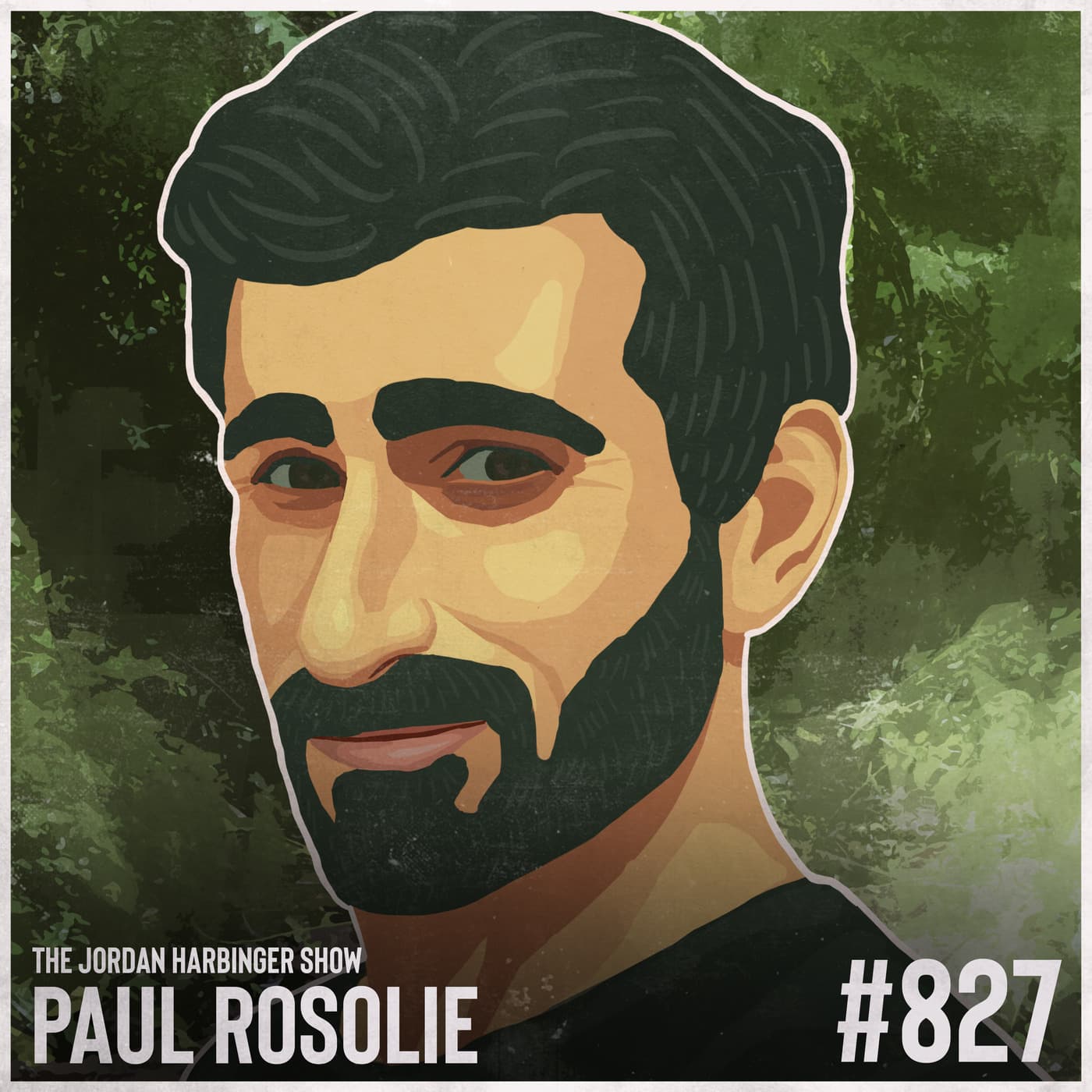
Podcast Summary: The Jordan Harbinger Show - Episode 827: Paul Rosolie | Perusing and Protecting the Pristine Amazon
Episode Overview In Episode 827 of *The Jordan Harbinger Show*, host Jordan Harbinger speaks with Paul Rosolie, a conservationist, filmmaker, and director of JungleKeepers and Tamandua Expeditions. The episode focuses on the critical conservation efforts in the Amazon rainforest, the challenges faced due to illegal logging and mining, and the unique wildlife of the region.
Key Themes and Discussions
- Sustainable Alternatives to Illegal Practices
- Paul and his team at JungleKeepers demonstrate sustainable and profitable alternatives to illegal logging and mining.
- Their goal is to provide locals with options that enable them to prosper without destroying the rainforest.
- Violent Reactions from Uncontacted Tribes
- Uncontacted tribes in the Amazon often react with extreme violence towards outsiders, highlighting their fear of intrusion.
- These tribes have been historically subjected to violence, leading to a deep-seated mistrust of outsiders.
- Environmental Destruction from Gold Mining
- Armed criminals, including organized gold miners, are transforming lush rainforests into mercury-poisoned wastelands.
- The episode reveals the dire consequences of illegal mining activities for both the environment and indigenous populations.
- Medicinal Compounds and Knowledge Preservation
- There is an ongoing effort to harness the unique medicinal compounds found in the Amazon, which are at risk of disappearing.
- Paul discusses the importance of preserving indigenous knowledge of these compounds to prevent loss of potentially life-saving medicines.
- Experiences of Survival in the Jungle
- Paul shares anecdotes of his time in the Amazon, including getting lost and surviving harsh conditions, which led him to lose significant weight.
- The episode describes the physical challenges and dangers of navigating the Amazon, including encounters with dangerous wildlife.
- Interactions with Unique Wildlife
- Paul describes his interactions with various animals, including the giant anteater and piranhas.
- He shares a personal story about raising a baby anteater, illustrating the emotional intelligence and instincts of wildlife.
- The Concept of Biodiversity
- The Amazon rainforest is presented as one of the most biodiverse places on Earth, with many species still undiscovered.
- Paul emphasizes the significance of these ecosystems and the threats posed by human activities.
Key Takeaways
- The importance of conservation in protecting the Amazon and its indigenous cultures cannot be overstated.
- Understanding the repercussions of illegal activities is essential for appreciating the complexity of environmental issues.
- Personal experiences in the Amazon reveal both the beauty and brutality of the jungle, shaping a deeper connection to nature.
Conclusion This episode sheds light on pressing environmental issues and the fascinating world of the Amazon rainforest through Paul Rosolie's experiences and insights. It calls for greater awareness and action toward conservation efforts to protect this vital ecosystem.
Links and Resources
- Full episode notes and additional resources can be found at [jordanharbinger.com/827](https://jordanharbinger.com/827).
- Consider supporting the conservation efforts discussed in the episode through donations or increased awareness.
---
This summary encapsulates the main themes and insights from the podcast episode while ensuring clarity and accessibility for readers seeking to understand the content and implications of the discussion.
Written by AI. May contain mistakes. Listen to the episode to check what was said.
Transcript
Automatic transcript. May contain errors.0:28This episode is sponsored in part by 1-800-CONTACTS. customer service and perks like free returns, free exchanges, even free torn lens replacement. Jen loves their Express exam, which lets you renew your prescription online in under 10 minutes. It's a vision exam, not a full eye exam, but it gives you a doctor issued prescription. If you're seeing clearly with your current lenses, no waiting rooms, no dilation drops, remember those things? And with their best price guarantee, if you find your contacts cheaper somewhere else, they'll beat it. Getting contacts doesn't have to be a hassle. Let 1-800-CONTACTS get you the lenses you need right now.
0:56Order online at 1-800-CONTACTS.com or download the free 1-800-CONTACTS app today. Coming up next on The Jordan Harbinger Show. Pay attention to the things that are crawling around. Pay attention to the things that are sleeping in your boots. People find snakes that, you know, we go, is that venomous? We go, I don't know. No one's ever seen it. It's not in any of the books. You got to open up its mouth and look for fangs.
1:22Welcome to the show. I'm Jordan Harbinger. On the Jordan Harbinger Show, we decode the stories, secrets, and skills of the world's most fascinating people. We have in-depth conversations with scientists, entrepreneurs, spies, psychologists, even the occasional former cult member, drug trafficker, extreme athlete, or astronaut. And each episode turns our guests' wisdom into practical advice that you can use to build a deeper understanding of how the world works and become a better thinker. If you're new to the show or you want to tell your friends about the show, our episode starter packs are a great place to do that.
1:52These are collections of top episodes organized by topic to help new listeners get a taste of everything we do here on the show. Topics like persuasion, influence, crime and cults, abnormal psychology, and more. Just visit jordanharbinger.com slash start. You can also search for these in your Spotify app and they should pop right up. Today on the show, my friend Paul Rosalie. He lives in the Amazon jungle. Pretty crazy. Been meaning to have him for a long time, but he's always in the jungle. It's a free ranging conversation about the Amazon jungle. He actually lives in the part of the Amazon that I traveled to a couple of years ago.
2:27So I'm familiar with a lot of the places that he lives in and travels around. And I just thought it was a really fun conversation about everything from poachers and gold mining to psychedelics to getting lost in the jungle with monkeys and glowing scorpions and macaws everywhere. Just a really incredible experience and a fun conversation. So I hope you enjoy this one. with Paul Rosalie.
2:51We meet people that go to the Amazon and meet people that spend time in weird places, but very rarely is it like, yeah, I split my time between South Beach and the middle of absolutely nowhere where deadly snakes and spiders could kill you at any second. It's an unusual place to spend. Do you do it seasonally or is it just like whenever you have time? No, it's pretty seasonal. I'm originally from New York and winters is not my natural habitat. And so I try to make sure that I'm in the Amazon. Also, the rainy season in the Amazon is wildly intense. Like you have all the destructive creative forces of planet Earth just like raging at all times.
3:26The rivers can go up 20 feet. So it's a very exciting time to be in the jungle. And so I try to be down there for that. And then so usually in the year, my time will be like January through June. I'm MIA. I'm in the jungle. And so like I've missed things. Like I'll come back and then there'll be like cultural things. like people like started using the term Karen or there'd be like the, I still don't know. It was it like, let let's go. The let's go Brandon thing. I'm like, what are you talking about? Or like major events where I'll be like, who's Andrew Tate? No. Oh God. Somebody the other day was like, they like referenced a famous person.
4:00They were like trace Lipa's or something. And I was like, who the hell is that? And he's like, Oh, only the biggest artist in the world. And I was like, ah, no. Yeah. Yeah. I mean, you're talking to the right guy. I also have no idea, but you came back and you're like, wait, Will Smith slapped Chris Rock at the Oscars. That's good. That can't be true. No, they're friends. That can't happen. Will Smith's a nice guy. All of the totally inconsequential crap that we're obsessed with. You're just like, okay, I've missed nothing really. Yeah. Or like sometimes like I'll just check out. Like I remember when the election, the first, like when Trump was getting into office, like I live up in the Hudson Valley, man.
4:33I'm like, I like saw a bald eagle 10 minutes ago. Like I just went to the Amazon and just spent a month there. because I couldn't handle the general climate of everyone. And I was like, peace. Yeah, yeah, I don't blame you. It is funny, though, that you escape New York winter to go to a place where you could get eaten by something. It's like, well, it's cold. I'd rather go to the place where the river might swell 20 feet overnight in the pitch black and we have no way to actually escape. Slash, caimans are grabbing me and dragging me underwater. I don't know. It just seems like, is winter that bad?
5:05I guess it is. I belong in the rainforest. It's my natural habitat. And it's really hard to find good piranha in New York. I saw this guy fishing for piranhas in a video. And he basically just took a chicken carcass, dipped it in the water, and it came up with like 50 piranhas. And he shakes them off in the boat, dips the carcass again. He just does that for like 10 or 15 minutes until the bottom of the boat is filled with piranhas. And that was disturbing. But I think the scariest part of it was he was barefoot in the boat with all these piranhas on the bottom. And I'm like, this man plays with fire.
5:36Yes. No. Oh, so we're always barefoot because all the guys I learned from are native guys. So we're always barefoot. We're always shirtless. We're always covered in bug bites. And yes, I've seen them do that with a monkey, actually. I was with some loggers and they shot a monkey. Oh, it's too bad. I was like, why did you just shoot that monkey? And they were like, don't worry about it. And they took it by the tail and they did it around the thing and they caught 50 piranha. And I was like, you just killed a monkey to catch yourself lunch? Like, come on. And they're like, yeah, man. They're like, we didn't have any fishing hooks, but we had a bullet.
6:05And I was like, okay. But also, can you not just eat the monkey? Is that not better eating than a bunch of disgusting-ass piranhas that seem all bony? They are bony, but they're good, man. And when you fry them, their fins get like chips. It's really nice. Depends on the monkey. They eat the howlers and the spiders in the communities, but they're not eating like dusky titties and tamarins and little stuff like that. It's like eating a squirrel. Okay. Yeah, I ate piranha, and it was so greasy. But, you know, that's just the cook job. That's not necessarily the fault of the meat. It's like saying, oh, pork's too greasy.
6:37Well, it depends on how you prepare it, right? Yes, and some of us love that grease. Yeah, I guess if you're in the jungle and all you've eaten are a bunch of plants and stuff like that, that grease probably is just epic deliciousness. Oh, dude, we fry them up and then I'll take my bowl of rice and I'll just put the fried oil all over the rice. I'm just like calories. Yeah, if you're walking through the jungle and sweating and eating maybe two good meals a day that aren't just straight veggie stuff and you're burning 3 ,000, I mean, maybe you need it. Dude, yeah. It's funny because I go to the jungle and I get in shape where I'm like, I'm in shape right now.
7:08And then I come back here and I'm like, you can run every day and hit the gym and do tons of road work and just be so on top of your shit. And it's so much harder to maintain that where it's like there. It's like, yeah, we just walked 16 hours. Of course, we're in shape. The jungle sculpts you. You're sunburned and you're barefoot. And so your calluses get bigger. You're climbing trees. So whatever working out we do is just touching up. It's not the main event. Why are you climbing trees in the jungle?
8:03never touches the ground so you have birds and snakes and lizards and mammals and mosses lichens cactuses orchids all this stuff living up there that you that we don't have any access to and so when you're it's like walking through new york city where you look up at the buildings and it's like that's a whole other world up there and it's like in the rainforest you those the tops of those trees are so far away and so like scientists have had a very hard time accessing the canopy i actually met somebody at a film festival in france who had devoted i wanted to talk to him, but he only spoke French.
8:32He'd spent a significant portion of his life using hot air balloons to land these giant nets with padding on the sides. He'd land this huge net on the canopy and just the surface tension would hold it there. Then it was so big that humans could walk around in the net, reach through and sample species. He had this ingenious way, because otherwise I can spend four hours climbing to the top, basically trad climbing to the top of a tree. You're at the base of this giant tree that's the size of a living room and it's got vines coming down. It's like, I can climb up 20 feet, put in some gear, climb up another 20 feet, put in some gear.
9:05You do that until you're all the way up. But then at the top, the branches at the crown of that tree, I mean, you're talking about like full grown, mature oak trees, like huge trees. Like we don't even have trees like that. Those are the branches of these trees. It's like Avatar. We can like run around on the branches up there. Wow. And you start seeing animals that like you don't see on the ground. I've literally had a monkey look at me and just be like, what? Like, what are you doing? What is this hairless monkey doing here? They're like, How did you get here? Man, the jungle is just absolutely wild.
9:33I want to back up a little because people are like, wait, this guy lives in the jungle. What's happening right now? So you live there and you do, what do you do all day? If you're not just catching food hunter gathering, right? You're not Georgia the jungle. What's your day-to-day work in the jungle like? I work in the jungle because when I was 18 years old, I went as a research assistant with an indigenous guy who was trying to protect this river. And at the time, I was like, this sounds like a great idea. I did not realize that we would be fighting the global systemic forces of capitalism that are ripping through the region and tearing out the trees.
10:03And so we started Jungle Keepers to try and convince people to stop cutting down the trees, to stop the illegal gold mining. This is the Western Amazon, so it's one of the wildest places on Earth. And so you have undiscovered medicines, tribes that have never seen the outside world, more biodiversity than anywhere else. It's the most biodiverse terrestrial habitat that has ever existed on Earth, not just today, but in the fossil record. Wow. So there's more life here than anywhere else, period. And it's the engine that runs the Amazon. And so we've set up Jungle Keepers, and it's our organization.
10:33And we've basically started employing loggers to stop being loggers and to start being conservation rangers. And so we go up and we do work in the remote communities. We're doing camera trap studies. We're going and interviewing active loggers, monitoring deforestation. So we're moving around the jungle. and everything that we're doing is based on either filming and storytelling to get the message out to the world or studying and proving what an incredible place this is and actively protecting it and working with the communities there. So it's a lot of wildlife and it's a lot of like interfacing with the indigenous people there.
11:06And the loggers are just down to become rangers? Is it like, oh, I just need money. I don't necessarily care about logging. I just need a job. And that's the job to have. Yeah. And this is one of the fascinating things that Instagram has taught me because I'll post a picture of like a guy with a chainsaw cutting down a tree. And people instantly be like, burn that guy alive, like human greed, that that person's awful. And I'm like, dude, like, that's Pedro, like Pedro's the man. Pedro's doing that because he doesn't know how to feed his family. And logging pays him 30 solos a day. And if we pay him 60 solos a day and double his income, he'd be happy to because this is the thing logging is dangerous.
11:41You're out in the jungle for weeks on end, this giant trees falling, you're working with chainsaws, usually barefoot, and half the time it's illegal. So you got law enforcement going after you. And so when you offer them, you're like, Hey, look, there's going to be a bunch of gringos coming. And like, all they want to do is walk around and go, wow, can you help us with that? And they're like, I could help you with that. And then they're like, Hey, by the way, my dad taught me all the like local medicines and I know how to track Jaguars and I know how to do all this stuff. Cause I've been in the jungle my whole life.
12:08And then they have this skillset that they're stoked to share. And so that transition is actually very easy. If you just offer, I mean, pretty much for anybody, If you came up to any, I would imagine if you came up to anybody, if it's not their passion project and you said, look, I'm going to double your salary, but you've got to do this other job that's easier than the job you're doing now. That's a pretty good deal. And so that's really what we've started doing with Jungle Keepers is just going up to these people. This one guy that works with us, his name is Victor. He was a major logger, man.
12:34He knows, I mean, he knows everything. He's been everywhere. He's been shot at by the uncontacted tribes. I mean, he's as hard as they come. And one day we were like, we need a boat driver. And he was like, yeah. He's like, I know the rivers. and we were like all right let's go so he drove and then we were like having so much fun with this guy and he was you know we'd be fishing and he'd be like the reason they keep taking your hook is because you're not doing it with this knot and we'd be like huh he'd know he'd be like that don't drink that water drink this water like cut this bamboo it has better tasting water than that bamboo and we were like man this guy's awesome like how long did you spend out there and he was god my whole life i've been logging i've been up on this river and that river and this river and he gives you all those old logging stories and then we gave him the talk we're like look next week we got a crew of people coming out you know you pull out your phone you show them some pictures and they're like huh and we're like could you just drive the boat for us you know just take us around we're going to take them to the waterfall we're going to take them to the here we're going to show them our rangers and he was just like yeah okay i could do that yeah like wait so take a bunch of cute white chicks from miami exactly into the jungle and like roast stuff and tell stories and show off or cut down trees and get attacked by stuff and get bit up and and maybe get severely injured and then drag this big ass log back to wherever.
13:44No, thanks. Yeah. This is a great, like, where do I sign? Yes. That's interesting that you do that. I didn't realize it was like a sales job for you to recruit the locals. Dude, in order to convince people to not cut down the rainforest, you're basically standing in the way of a lot of people making money. And in order for me to be able to survive doing that, you have to be such a good salesman. You have to, I could sell water to a drowning guy. You have to be able to be like, look, I know that they're going to cut the rainforest down. But if you just help us, if you just give us a little bit of money, and if you just give us a little bit of resources, we could protect.
14:18It's such a hard sell on people because you're up against such a huge threat. You're basically fighting the way things are going. We're losing habitats. We're losing ecosystems. And it's like, this is going to be the last decade where we can turn that around. to get people to invest in that kind of that risky of a thing is uh you have to be a good salesperson and for the loggers and that's where i think the thing that has set this this whole project apart is that a lot of the people that go down there are like you know these phd students they all go to the same six places you know they like they go to a couple different like biological stations and they walk around on the trails and it's safe and they have a cook and there's regulations and it's like we always would drive by those guys and it'd be like we'd be in a canoe and i'd be with the local guys and we'd they'd have like you know a deer that they just shot in the canoe and we'd drive by with like you know like guns and bare feet and shit and just like we'd like wave to them and then you just see them be like huh but it's like well they're doing that and they're writing papers i mean these people come down and they they write papers for 20 years on like an obscure species of bat that only lives in one species of palm and it's like great but are you actually protecting the rainforest from being destroyed now sometimes those biological surveys go into a petition that's going to the government that's proving how much biodiversity is in an area.
15:30But we've had far better strategic success with really just showing people how incredible it is. It's like you have the surrounding, in our region, you have the surrounding national parks. You have Alto Pudus National Park, you have Manu National Park, you have the Tambo Pata Reserve, you have some indigenous reserves. So we know this place is called the crown of biodiversity. It's called Peru's capital of biodiversity. So we know that. We already have all the biological surveys. And our spot is right in the middle of all that. So the ecosystem connectivity, we're drawing from all of those places, which makes our region even more biodiverse.
15:59And the thing that kept people away from it was the fact that it's dangerous, that there is illegal loggers, uncontacted tribes, gold miners. And so all those scientists who were safe weren't going up the Las Biedras River. And so because I was in with the local guys, we were just going on. They didn't care. That's so interesting. Yeah. Where I was was the Tamba Pata that you just mentioned. Yeah. Yeah. It's beautiful. It was really cool. And there was not a lot of people there. I'll tell you that. I mean, when we were on the boat, we were going for hours and you'd pass an occasional, there'd be like a little boat and a little something.
16:30And they're like, oh, that's another lodge. And it would be really small or it'd be far. But then we kept going and we're like, wow, there's not any more of those that we saw. It's like, no, no, no. We're three hours away from a lot of these other guys. Even from where we were, we'd go up three hours from the river and they'd say like, hey, you can't actually even get off the boat here because it's protected. And it's also really, there's nothing to get up. Where would you go? There's no trails here. There's nothing. Yeah, there's no trails. If there's not a trail, you're not going anywhere. That's what people, you can't do anything.
17:00Were you at TRC by any chance? That's a really good question. I'm actually not even sure. Yeah, it was where we stayed, the actual quote unquote hotel, and I put that in air quotes, where we stayed was really awesome. It had all open rooms where there was, like you'd have a door to the hallway, which was open, but your other wall was not there. Yeah. It was just a railing. And the only room that was sort of enclosed was the shower, but it didn't matter because there were still holes in the floor. So you'd go in the shower. This is still giving me the gibbies. You'd go in the shower and there'd be a big spider in there.
17:34Oh yeah. Getting a little water. Oh yeah. And I'm like, I felt bad because I, I would be like, I'd have to call the guys and I'd be like, can you get the spider out of my shower? And he'd laugh at me and then he'd go in the shower and go, wow. Okay. That's a real spider. Because it's like as big as my palm. Yeah. You know, big ass tarantula. We had toilet tarantula for a while. So we actually, in one of the research stations, we actually had like running toilets. And there was this tarantula and she would sit under the seat. Oh my God. And so what happened is like, everybody would go in there.
17:59Guys would go in there and flip the seat up. And she would get scared and just like jump over the toilet. She'd be like covering the hole. And like, you just heard people. You just, you just know. You just hear the shout. You'd be like, oh, that's her. Yeah. And then we've had, we've had toilet frog. She was a pain in the ass. She kept getting flushed and she kept coming back. Yeah. Toilet frogs. We had toilet frogs. We had an agouti in my wall, which is like a giant rat kind of thing. And the way we found that was I was trying to take a nap and I go, hey, Clint, can you what are you looking for?
18:26And he'd go, what do you mean? Is that that's not you? And I'm like, no, are you looking through a bag? And he's like, no, I thought you were looking through a bag. And it was in the wall between our rooms. And then we both immediately could not sleep because we're like, what the hell is between our rooms in the bamboo walls? and we had to call the guys because we're like, that's a real animal in there. Yeah. No, they're big. They're big and they got some teeth on them and they love to just use them all the time. Bamboo rats, agoutis, capybaras. I mean, the rodents are well represented down there.
18:55We saw some rats that were as big as dogs just walking around eating stuff and not at the hotel, but just in the jungle. Yeah. Just walking around and you go, that's a rat. Like it's a bigger, way bigger than any New York City rat. New York City rats are pretty big. I mean, everything in the Amazon, anacondas, giant anteaters, Black came in and everything is outsized big. I mean, I've seen, yeah, there's some serious giganticism going on out in the jungle. I want to talk about all that stuff. One thing that really freaked me out though was in the first night we were there, we had no warning about this.
19:27I mean, they're like, oh yeah, there's monkeys. Okay, it was probably 4 a.m. As you know, there's no lights. Nope. So, and even the hotel was like, well, we're shutting, it's solar powered. There's batteries, but it's like for the emergency nightlight that you have when you can't find the light that you strap on your head and you have to pee. There's only just that. And you can't charge your phone or anything from this electricity. These are just little battery-operated lights. So there's no lights. There's no light pollution. There's no noise from people. And you wake up, and it's like 3 or 4 a.m., and you hear...
20:01And it sounds like it's in your room. And it's a... I forget what it is, a howler monkey? And they're just marking their territory, and you just think, that must be the size of a gorilla. And it's actually funny because it's not even cool. It's not. No, it's a lot of fun when kids are in the jungle. Because a lot of people, especially people that actually go to the rainforest, seem to know what a howler monkey is. But especially with kids, when you go, what do you think that sound is? And they'll just be like, Tyrannosaurus Rex. Something horrendous. Is that a dragon breathing fire? It sounds so, and it fills the space.
20:34And it's like they're just calling to each other. It's such a beautiful sound. We love that. Yeah, it's a little unnerving on day one. Yes. By day seven, you're like, ah, feels good. Like, ah, those are just the neighbors. Yeah, well, the thing is, spider monkeys will make sounds that are, it sounds a lot like people being murdered. Like when two spider monkey tribes are fighting, they'll get together in the trees and they'll start screaming at each other. But the sound that they make is very human. And when you're out there, you know, there's the uncontacted tribes and we've all heard stories of them murdering people.
21:03And that happens pretty regularly. And there was one day where there was, I had never heard the spider monkeys go at it. And this was, this was early on. And there was one day the spider monkeys were screaming and like everyone at camp pretty much picked up a bag and was like running for the boat. They're like, it's happening. Like, this is happening. We're going to die today. And of course that guy, Victor, the logger, he told, he's told us some horrendous stories of ambushes that, you know, where everybody ended up dead. And so we all have these things playing in our heads all the time. And so we heard that sound and everybody was just like, run to the river, save the children.
21:33Like, wow. Full on. Yeah. We were, and then like JJ walked out and was like, guys, spider monkeys. It's okay. You've mentioned uncontacted tribes quite a few times and how they murder people. What's going on there? Uncontacted tribe is, I assume, exactly what it sounds like. Now we have to call them voluntarily nomadic indigenous peoples or something like that. But everybody just calls them uncontacted tribes. So during the rubber boom or turn of the century, 1900s, all of a sudden we needed rubber for hoses, gaskets, tires to fuel the Industrial Revolution. And the rubber trees were only in the Amazon at that point.
22:06So they had to send people down to go extract rubber from the trees. And so what happened was you had these, I guess, American rubber barons going down there. And they tried to farm rubber. That didn't work. If you make a rubber plantation, if you monoculture rubber trees, it ends up just... There's a leaf blight that gets in and it's like farming problems. It just destroys the whole plantation. So it doesn't work. Henry Ford went down there and started Fordlandia where he tried to do this on a large scale. Didn't work. Absolute failure. But what they did do was launch one of the worst genocides in human history, where all these rubber barons went down there and they started whipping, burning, raping, pillaging the local people, just shocking them into submission.
Read the full transcript
22:47And then being like, you are going to go out and you are going to get the rubber for us. And they'd send these tribes people out into the jungle and make them tap the rubber trees. And so some of the tribes were conquered by sheer brutal force. And then some of the more remote tribes were basically like, that is not going to happen to us. these are already tribes that are living in severe isolation people that from year to year would see nobody from the outside world still living naked in the jungle still had bows and arrows and what they did was just sort of back up and they were like we are not going to be conquered we are not going to be destroyed and they moved further back into the jungle into like the valleys that nobody can reach by river and the headwaters of the les piedras is one of the places where that happened and so these uncontacted and they're spread out all over the amazon we have this um there's just an article in the New York Times about remote tribes being destroyed by gold mining.
23:35Yeah, I saw that. I wanted to talk about that. It's funny. It came out like a few days ago. Yeah. Here's the interesting thing. Because they were treated in a time of extreme violence, basically war, and so the adults would have told the children, watch out for the outside world. They are trying to kill you. Here are some horror stories that happened. This person was set on fire. This entire village was burned. All of this crazy stuff. So those kids would grow up and understand that the outside world is extremely dangerous. They are not us. They are not the same as us. They want to destroy us.
24:03And so if the outside world comes to us, like if loggers come in, we shoot them. And the thing is, these people don't have laws. They're out in the wild living naked. And so there's no consequences. I mean, they've shot people just to see their stomach contents. But last August, and this one did not make it out of the jungle. This was on the little WhatsApp network, just like locally. I think it was three loggers went up a small tributary that no one should be going up because we all know where the tribes are and these guys went up this tributary and the tribes got to them and the loggers had the chainsaws out and they did not hear anything coming and the tribes will speak using animal calls they will speak like capuchin monkeys and they have a they have an extra dialect like they have their speaking voice and then they can actually use animal calls for basic call signs and they will coordinate and position themselves around you using capuchin, tinnamu, various animal calls.
24:55And they surrounded these loggers, shot them full of arrows. And then somebody flying over actually saw the boat and, of course, the people's family. Eventually, like days later, somebody went out looking for these guys. And what circulated on the WhatsApp network was the photos of the bodies laying on the beach. And they were all bloated. And they've been ripped apart by maggots. And like the skulls are coming out. It was brutal. It was absolutely brutal. And there's arrows laying on the beach. It's like watching a bullfight. Right. Everybody's hoping that the Matador gets destroyed. Like we're all like, you know what?
25:24The tribes, they're as far back into the jungle as you can go. And they're only asking to be left alone. So pretty much when this happens, we're all like, yeah, good for them. Yeah, I guess. I mean, it sucks for the loggers, but they also are doing this and it's illegal. It's illegal. They know what they're doing. They know they're invading on the tribal land. And that's exactly why there's still big, good trees up there. So all parties know what they're getting into in that situation. And these poor, you know, for these tribes, I mean, if somebody says, look, just leave me alone. and moving up to the side of a mountain, and you go up there and start harassing them.
25:53I mean, that's on you. What if you get lost and they find you? Are they just going to be like, oh, let's slice this guy into little pieces? Pretty much. There was a guy a couple of years ago that had actually made contact with them. And what he would do is he would hike into the jungle, and he knew that at a certain time of year, they'd be, because they're nomadic, so they're not always in the same spot. But at a certain time of year, they'd be moving through this one area. and so he would go there and he'd leave like two machetes a shirt and some bananas and like it's very hard to get fruit in the jungle even though there is lots of fruit the monkeys the birds all the animals they get to it first but this guy would go leave them some gifts and so he's leaving gifts they knew where to come for the gifts and then when he when he like kind of habituated them that to know that there was going to be gifts here he would be sitting there while they took the gifts and they would see him and then it got to the point where like people spoke of it in the region that he was able to interact with them and they don't speak a language that anybody really knows and so he would he would sort of just be like using hand signals and just be very gentle and they have seven foot bow and arrows like they have huge and they have they use bamboo tips as for mammals they have a serrated palm arrowhead for fish because then it'll go into the fish and not come back out they're very complex like people call them like paleolithic stone age tribes and it's like no these are modern tribes by the fact that they're alive right now they're actually brilliantly smart they can live naked in the jungle without having their bodies ripped apart by botflies.
27:14They have medicinal technologies that we don't even know about. But this guy developed a relationship with them, was leaving them gifts, only being positive to them. He would actually go out and speak about it. He would speak to the Ministry of Culture. He was very respected. And then they found him one day with several arrows sticking out of his body and he was murdered. Wow. There's no ingratiating yourself with these tribes or anything. No. And then one of the, this is like, this one, like Tarantino would love this. a bunch of, I forget when this happened, and I believe it was in Ecuador, but a bunch of missionaries found an uncontacted tribe, and they landed a plane, and they, like, put t-shirts on them, they took the chief up in the plane, and, like, the tribe was like, this is weird, like, what is going on with these outside people?
27:54And they were like, have you heard about Jesus? And, like, the tribe was like, ah, sure. And then these missionaries had to leave, so they took the plane, and they left, and they have a journal entry from this one guy, and he's like, I hate to spend another Christmas when these people haven't been brought up, you know, into the warm embrace of our Lord. And we have to get back there and we have to teach them the way and all this stuff. And so they go back with the plane and they land the plane and they're, I think they were like giving them popcorn and shit. Like they were just like showing them everything from the outside world.
28:21And they handed the tribe a photograph and they're like, this is what it's like where we live. And the chief looked at the photograph and was like, I see people, but there's nothing behind this. This is witchcraft. And he just wanted to kill everybody. Because he couldn't see. He's like a two dimensional person. No, no, this is a window into another dimension. It's going to suck us in there. Murder all these people right now. Kill them all. Oh, my God. And so they murdered like six missionaries, I think. And of course, you know, days later, somebody came and saw the plane and saw the bodies lay sprawled out.
28:51And then like a decade later, these people, you know, roads going to the Amazon, these people were actually contacted, taught Spanish. And somebody interviewed them about this a decade later. And they're like, yo, why'd you murder those missionaries? And they're like, yo, that was scary as hell. They're like, we didn't know what was going on. They had this giant flying metal bird. They had photos of two-dimensional freak pictures. They were like, we just decided it would be safer to kill them. They're like, we were just looking out for ourselves. That's crazy. I wondered how you knew why they got killed, but there it is, right?
29:19They confirmed it. They confirmed it themselves. They were like, yeah, it seems like a good idea at the time. It sounds brutal, and I guess that it is. But at the same time, when you live in the Amazon and things can eat you and things eat each other and things are fighting all the time and there's 10 inch thorns on plants and things are poisonous or put you on a psychedelic trip that you touched or ate by mistake or on purpose. It probably gives you like a little, just you have that sort of primal edge. It's not going to go anywhere. Yeah. I mean, it's funny because it does remind me working in the Amazon and then coming back.
29:54It's like when you talk to veterans who've been in wartime situations and it's like the things they talk about, you know, you'll hear, like, I'll hear some of my guys, like, I work with this organization called VetPaw. And it's like, those guys all have combat stories. And like, you sit there going, is how is this your reality? Like, this sounds brutal. And they're like, this was every day, you know, they just get used to a set of realities that you just aren't exposed to in suburbia. You know, in the Amazon, it's like, yes, like, you know, I just told somebody, I was just telling somebody about how Logger has murdered a friend of mine.
30:24And I said it kind of off the cuff and they just they stopped me and they were like wait like actually your friend and i was like yes and they were like murdered and i was like yes and like this shit happens like our lawyer's father stood up to the illegal illegal gold miners and they murdered him and it's like there was a nun not too far this was going back a little bit but there was a nun sister dorothy stang i think and she was like working with the indigenous people trying to convince the loggers not to you know destroy everything and um she spoke out about it and She was really trying to like hit the local politicians.
30:55And so they just sent like a death squad and they just like put two in the stomach, one in the head and then took care of her. Like they didn't care that she was an old lady.
31:05You're listening to The Jordan Harbinger Show with our guest, Paul Rosalie. We'll be right back. This episode is sponsored in part by Dell. Introducing your new Dell PC with the Intel Core Ultra Processor. It helps you handle a lot, even when your holiday to-do list gets to be a lot. like organizing your holiday shopping, searching for great holiday deals, customer questions, customers requesting custom things. Luckily, you can get a PC with all-day battery life to help you get it all done. That's the power of a Dell PC with Intel inside, backed by Dell's price match guarantee. Get yours before the holidays at dell.com slash deals.
31:38Terms and conditions apply. See dell.com for details.
31:44This episode is sponsored in part by LinkedIn. If you've ever hired for your small business, you know how important it is to find the right person. That's why LinkedIn Jobs is stepping things up with their new AI assistant so you can feel comfortable you're finding top talent you can't find anywhere else. The best part is that those great candidates are already on LinkedIn. In fact, employees hired through LinkedIn, they're 30 % more likely to stick around for at least a year compared to those hired through the leading competitor. That's a big deal when every hire counts. Think about the last time you worked with somebody who just got it.
32:11You didn't have to redo their work after hours. You could actually trust them. Now, compare that to the cost of a bad hire. Training time, salary, lost opportunities, stress on your existing team, and then the emotional fun of letting them go and starting all over again. When you add that up, spending a bit of energy up front to find the right person is a no-brainer. That's exactly where LinkedIn Jobs shines, helping you get it right the first time so you're growing your business instead of constantly cleaning up hiring mistakes. Hire right the first time. Post your job for free at linkedin.com slash harbinger.
32:39Then promote it to use LinkedIn Jobs' new AI assistant, making it easier and faster to find top candidates. That's linkedin.com slash harbinger to post your job for free. Terms and conditions apply. This episode is sponsored in part by the GIST podcast. If you're looking for a news podcast that is smart, unfiltered, and doesn't just echo whatever side you already agree with, check out the GIST with my friend Mike Peska. Mike's been doing this longer than just about anyone. It's actually the longest-running daily news podcast. It's earned that spot on Apple's top charts for a reason. Each episode's around 30 minutes, so it's perfect for your commute or while you're making breakfast.
33:11It's always packed with sharp, thought-provoking takes. What I love about the gist is that it's not stuck in a partisan box. Mike, he's a really smart dude. He digs into real questions, the kind that most shows avoid because they don't fit neatly into a political lane. He'll challenge the right. He keeps the left honest. He dives into stuff like the New York City mayoral race, that whole cluster, and the chaos of sports betting, or even whether talking to your plants actually does anything. He's an award-winning journalist. He's not some schmo like me who's totally unqualified. You've probably seen his work in the Atlantic, the Free Press, the Washington Post.
33:40He's got that rare mix of wit, skepticism, and depth that makes even heavy topics fun to listen to. And he's a great dinner guest, just saying. So if you want your daily news with more brains and less noise, check out The Gist with Mike Peska every weekday on YouTube or wherever you get your podcasts. If you're wondering how I managed to book all these authors, thinkers, creators, these amazing folks every single week, it's because of my network. The free course, I've beaten you guys to death with this thing. JordanHarbinger.com slash course is where you can find it. I don't want to harp on this one too much.
34:08It's a fun conversation. Let's get back to it. I actually heard about this from our guides at the lodge that we were at, because they all lived in the jungle. These are guys that live in villages nearby. They're not dudes from Lima who come down there to do tours. Because we saw gold miners, and we're like, do you ever interact with those people? And they're like, no. It's a coin flip if they're dangerous, I guess, with the gold miners. If they know the guy, because he's from their same village or a village nearby, and he just happens to work there, they might be like, oh, hey, man, guy that I knew from growing up.
34:41But if it's just a guy they've never met, they're like, yeah, we don't know who those guys are. No, they live in a camp nearby. We don't go anywhere near them. They bring their family there. They stay here and they screw up everything. And I don't know, they're armed. We're not going to go like chat it up with these guys. No, you got to be very, very careful with the gold miners. You just do not approach them because that's turned into a whole wartime situation. I mean, And if you go up the Trans-Amazon Highway from Puerto Maldonado, there's actually, we went up there with Matt Gutman from NBC.
35:09And we got allowed into, there were some Russian miners somehow. I didn't even know there was Russian miners down there. Russian miners. Yeah, a long way from home. Yeah, they were a long way from home. But they got us in past the security gates of the gold mining place called the Pampas. And it's literally a multi-hundred kilometer desert that they've created in the Amazon rainforest. They've cut down the trees. Wow. They've burned the trees. They've sucked up the soil. They've extracted the gold. There's like mercury pollution all over the place. And there are men with machine guns guarding the gates to the roads that lead to these places.
35:43And so we actually got in there. We're flying a drone around. And one of the Russian guys comes up to me and he goes, you are Paul Rosalie, right? And I was like, yeah. And he goes, you should not use Instagram the way you do. And I was like, what? And I was like, what? And he goes, those gold miners, they follow you on Instagram. He goes, I just heard them say your name. And he's like, they're looking at you and they know what you're here for. And I was like, great. Oh, man. And to his credit, he was like, look, why don't you land the drone and we'll, we're going to get out of here. And I was like, okay.
36:11Yeah. But it was like, they knew who I was. And I was like, this is, this is creepy. Yeah. The wrong kind of fame. Yeah. That's really scary. We, the gold miners for people who've never heard of this, cause it seems like, oh, you've got this huge hole in the ground or whatever. A lot of these guys, they were just on literally what looked like six canoes lashed together. It's a tiny barge. There's a conveyor belt type pump thing on it. And they just pump crap loads of soil and dirt through it. And most of it goes back into the water. And I guess they're just looking for gold powder or little nuggets.
36:48I don't even know how it works. It looks really inefficient and bad. It is extremely inefficient. And I believe that the quality of the gold that they're extracting is actually pretty crap. The soil of the Amazon is clay and sand. And so the gold does not come in nuggets. It comes in sediment. You know, friends of mine will get some sand in their hand and just like, they'll like look for it and they'll be like, oh, there's gold in there. And it's like, you can barely see it. So what these guys are doing is the more land that you suck through that hose and throw onto that conveyor belt, the more potential gold you're harvesting.
37:16But it's a numbers game. You have to cover acres and acres and acres to get just a little bit of gold. And then with the gold falling with the heaviest sediment to the bottom, they use mercury to mix it all up. And the gold binds to the mercury. And then you get this chunk of gold mixed with mercury. And then what these guys do is they use like a blowtorch and they burn off the mercury, which lets it into the air. And then once it's in the air, it gets, of course, the Amazon every day. You're just seeing the giant pump. You just, you can literally watch like the sweat from your skin come off you.
37:44You can watch the mist coming off the jungle and it goes up into the thunderclouds. And by afternoon, it's raining back down into the river. and then we're drinking the river and it's coming right back out our skin and doing the thing you're a part of the ecosystem down there and so when you're allowing mass quantities of mercury to join that system all of a sudden you have people that have like three times the mercury level that the epa says is even humanly possible like you have people coming out with birth defects it's gone through the ecosystem so this is a major environmental tragedy and the police in in peru are not able to get into those desert areas because you have machine gun wielding teams of gold miners that have like unionized and organized and the cops know that they'll be murdered if they go anywhere near there so it's a major problem and then on top of that because there's vast teams of men marauding across the amazon rainforest what do they do there are scouts that go into the indigenous villages and they'll like offer young girls a job in the city and so there's ends up being a huge human trafficking problem where they're grabbing these girls and starting these brothels in the gold mining areas and so it's complete environmental devastation it's human trafficking it's species loss it's environmental pollution it's like it's all concentrated in this area and it's like as soon as you go there you can feel it like in your gut you just go there and it's like the sky looks darker we went down the wrong road one time and there was a floating barge and they had some like empty gas cans that were floating some sticks and they have like a shack on there and there's just these horrendous looking like amazonian prostitutes with like leishmaniasis on their necks and they're all just like calling out to the men floating in this mercury infested water is dark.
39:16It's pretty dark. It's like something Vice would do a feature on back when Vice was like, still cool. Yeah. Speaking of leishmaniasis, tell us about what that is because actually, one, it's a super rare flesh eating disease. Is that accurate? That is accurate. But not rare enough because a guy got it on my trip. Yeah. It's weird in the jungle, especially running an ecotourism thing. People are like, am I going to get eaten by a snake? I'm like, no, a hundred percent. They're like, am I going to get shot by an arrow i'm like no and i'm like but you might get a flesh-eating bacteria that stays in your skin and you got to get almost chemotherapy to get it out it's pretty rough and some people get it and some people don't like some of my friends who've lived there their whole lives they just don't get it and then you have like i'll have like a tourist come and then they'll they'll have like you know a little cigar burn looking thing on on their skin and and it'll just keep growing and you gotta go deal with the horrendous treatment yeah this guy got it on his face which is the one of the worst places to get it and it's a yeah it's a flesh-eating bacteria and he lived in Panama he wasn't Panamanian he's a Chinese dude but he went to the hospital and they're like wow where did you get this yeah yeah Amazon dude no no that's a that's a whole other like echelon of of street cred in the Amazon because then you come home yeah and you go to the infectious disease doctor this is the shit that people in my profession talk about you go to the infectious disease doctor and you're like when they bring in like the what do they call the fellows or the interns when they bring in the doctors yeah the residents or whatever take a look at this yep the doctor will be like look i had i once had tularemia and the doctor was like do you mind if i show this to some people and i went no and he brought in like a team of all these students and they were all like looking over their clipboards like whoa and he was like this is the only time you're ever going to see this he's like i've never seen it he's like it's a rare tick-borne illness that goes through rabbits lives in india and then it manifests with like a horrendous infection on the elbow on the right elbow and they were all like scribbling the shit down and i was like doc what do we do and they put me on the strongest antibiotics that they had this is new york city like the best infectious disease doctors like in the world they worked on me for like two months and i couldn't get out of bed i had no energy i had this horrendous soupy pit like if you took the top off a bottle of coca-cola it was about that deep in my arm of just green pus and my whole system was fighting this and i had this horrendous thing and i went back to the jungle and i remember at the time my parents were like do not go in the jungle with the horrendous infection like you're gonna absolutely die and um jj who's my indigenous teacher of all things took one look at me and was like you're sick and i was like yeah and i was like look at my arm and he looked at my arm he was like so bad he was like okay he's like we have to go for a walk and i was like i was like i can't walk i was like i'm sick and he's like no you have to walk and we went to this tree and he cut it with the machete he collected the sap he slapped the sap on it and like you rub it and it almost makes like a latex seal over the wound so with the friction it heats up and it changes the chemical composition of the of the wound so he created a medicinal seal over the wound then he went to the next tree and extracted that that one had to drink three drops of three drops for medicine five drops to kill you so three drops and then he went and boiled another plant and they were pouring that over me in buckets.
42:25And I kid you not, 24 hours later, I was cured. Wow. Yeah. And that the point of that story is that, you know, it's not like let's hold hands and say kumbaya and maybe, you know, we're going to cure you with energy or some shit like that. There is heavy medicinal compounds running through the cambiums of these trees, and we haven't discovered them all yet. And the people that are living there for the past few thousand years have a deeper insight into these medicines than any outside Western medicine does. And so preserving the cultural heritage that these indigenous healers have has become something that we're very, very concerned with doing because they know things like that.
42:59Like I've experienced it. I've seen I've seen them medically cure something that doctors were unable to do. Just like guys on the side of the river. I guess it makes sense, right? Because if you're dealing with that for generations, you figure out way more than what it is. And these infectious disease guys are like, oh, wow, I've only read about this in a book from a guy who was from Britain who went here and died from that. Exactly. So they don't really know. No, they don't. And even something like a botfly, which for anybody that doesn't know, a botfly is just, you know, it's basically a worm that goes and lives in your skin.
43:28And the fly catches a mosquito, deposits its eggs, the mosquito goes and finds the host, which is a mammal, nice, warm, soft skin. And then the mosquito deposits the eggs, the eggs are pretty much microscopic, it burrows down into your skin. And then all of a sudden, you'll be sleeping one night, and you'll just feel like that twitch. twitch and a lot of time it'll be like because the mosquitoes go for like your tricep your back you know behind the leg where you're not going to slap them so it's like these off areas and like i get them i always get them like on my shoulder and uh you'll just feel this twitch and you'll be like shit and then the things start growing quickly and when they're feeding you can feel it because they're actually eating you they're like mining your your tissue yeah so they'll grow and i've let them get as thick as like a pencil as long as a pencil or as thick as a pencil no no no as thick as a pencil okay as a pencil long as a pencil shit though it's through your body.
44:13Yeah. No, no, no. But they'll go about an inch deep and they get fat. Like when they're a pencil thick, like they're fat. So you have like a maggot in your skin, a grub. Yeah. If you've ever seen the movie Tremors, it's like having a graboid like in your skin. Oh my God. And they stick up this little proboscis for air and they go back in. So in the Amazon, what we do is like you get somebody who can take a deep drag of a cigarette and then blow it out and you actually get tar, like nicotine laced tar on your hand. you scrape that off you put it over the hole and the bug hates it and so the bug will start freaking out it hurts and then you slap some either vaseline or we'll use like a rubber tree you slap that on top of it to seal it off so he can't get oxygen and then he'll start coming further and further and further out trying to get oxygen and then that's when you rip off the seal grab him with the tweezers and then you need a third guy to pinch your skin you got to get under the under the bug and like pinch it out and it's very painful but this is like what we do at night Like instead of watching American Idol, we'll like lay somebody flat on the table and try to extract all their bot flies.
45:14It's fun because it hurts. There's a lot of blood and then you have like a hole in you and then we see who has the biggest bot fly. That's vile. That's disgusting. I wish I had warned people about that story before you told it because I think there's going to be people who are like, dude, I listened to that on my lunch hour, you pricks. I just threw up in my tuna sandwich. Yeah, there's people who are no longer eating lunch after that story. That's disgusting. We're so sorry. Come to the Amazon with us. Help us protect the rainforest and I'll make you fried piranha. Yeah, and you can get your own bot fly and leishmaniasis infection in your face.
45:48That's right. You can get your own. You don't need to hear the story. You are part of the next story. Come experience it for yourself. Some of the plants, man, must really be... We'll get to the insects too. I mean, we just sort of touched on that. But some of these plants are absolutely wild. You said three drops is medicine, five drops will kill you. I mean, I'm sure it's a little bit less, well, less exact than that. Not as harsh as that. I mean, that must be something that kills just about everything if you can overdo it with a few drops and you're dead. Yeah. And the good thing about that is if you get a normal infection, which is a jungle, it's hot, it's humid.
46:19You always have cuts and scrapes and mosquito bites that you scratch. So you always have a lot of skin abrasions. And so we do get infections pretty regularly. And like neosporin doesn't cut it. And you can't be living on cycles of antibiotics. And so what we do is we just know it's trees. we have we've literally planted the medicinal trees now at the research station and so they have all these machete scars in them because we always go there and be like oh i have a mosquito bite that looks funny there's a little bit of pus coming out of it and it's like just go hit it with the machete collect it in a spoon you rub it over the thing and the next day it's gone they have cures for ear infections they apparently have jungle viagra i don't know anybody that's tried it but they the people talk about it like whoa you better be careful they're like it could be too intense.
47:03And it's like, they're very, very sure that this works. And so that's down there. Yeah, there's some crazy shit that they can do. The poisons from some of the insects and animals is crazy. I've read in your book, there's a sap you can pour into a diesel engine and it works as fuel. That sounds almost impossible. How does that work? It does sound almost impossible, but this particular tree has sap that's almost pure hydrocarbons and it'll actually burn in a diesel engine. Then they have other things like JJ broke his arm one time. And this is, I've learned this okay so when i went down i'm from new york so you know when somebody says hey man do you want to hear my mix tape you're like get the fuck away like you don't want to we just grow up not listening to shit but jj broke his arm and he wrapped it with these leaves and then he wrapped it with gauze to hold the leaves on and then at some point he was like hey could you change the bandage it's really hard to do with one hand and i was like yeah sure so i'm unwrapping it and this disgusting thing falls onto the floor i was like jj what just came out of your wound he was stepping on cane toads and flattening them with his boot and so he'd step on them from the back so they would vomit up their own guts and then he would take the sack that used to be a toad and they have a certain type of poison in their glands and that poison apparently when it's rubbed on your arm and allowed to infiltrate promotes bone growth now i know that that sounds crazy but yeah there's also plants that elephants use to induce labor there's also in a type of african frog that if a pregnant woman pees on it, it changes color.
48:28So there's some weird stuff out in nature that we forget how crazy it is. So the frog thing, I was like, okay, that sounds crazy. Like as a New Yorker, I'm calling bullshit. But then at the same time, who am I to talk? Because I've seen them outfox us with medicines, you know, how many times? So it does seem like some of it's probably not doing anything, but they don't know because it's like, oh, your body heals up over time if it's healthy. So yeah, but the cane toad thing, some of it's superstitioned, but some of If it isn't, it's like you don't know what's what. You don't know. You don't know.
48:59And that's sort of the thing like with ayahuasca where they say like, okay, so the first, you have to mix this vine with this root and that, you know, the two things together allow that. I don't get into it. I know a lot of people that are really into ayahuasca and they know the whole chemical process. But what I do find interesting and like ethnobotanists have talked about this, like Wade Davis wrote about it in One River and Mark Plotkin's really into it. And it's like the fact that even if you took the, you know, 1600 species of trees and then the billion species of, you know, other plants and orchids and lichens and all this other stuff that's out there and started mixing and matching chemical compounds in plants in the Amazon, even if you had God's Excel sheet, it would take you thousands and thousands of years to come up with this.
49:40So how did the tribes uncover the secret to ayahuasca? And that's where like it gets into the pretty much everyone that you like sort of lift off the ground into the like, well, it's the jungle trying to give us, you know, an insight into the spirit realm. Like the gods spoke to us through the plants. And it's like, however you want to think about it, it's incredible that trial and error would take thousands of years and hundreds and hundreds of dead people to eventually get to this point where you have the right combination to set your mind into, you know, other dimensions. yeah there was ayahuasca planted around the area where we were we know it was that because the guides told us what it was and there was a little sign that said ayahuasca next to it like hey maybe don't put this in your salad kind of sign and and there was a lot of really crazy stuff i mean i've when i was walking i got a photo of this is really dope it's a shaman headdress that was just laying on the ground yeah and i was like wow look at that i don't you know i'm not superstitious but And I was like, I probably should leave that there.
50:38It's a pretty cool find. Someone else could find it. And the guide was like, you don't want to touch something like that. Because he was more spiritual. And he's like, you don't want to touch that. The shaman didn't just forget that. That's there for a reason. And I thought, that's probably a good point. It's not easy to make something like that. It's laying on the ground. It's there for a damn good reason. He's like, you could take it, but you shouldn't take it. And I was like, I don't need a souvenir. I'd rather leave it for somebody else to discover because it's really incredible. You could take it.
51:03And then a piano is going to fall out of the sky onto your head. and you're going to grow like eight more arms, you know. Yeah, it's going to be some Final Destination shit, right? Like, oh, look at this awesome souvenir. Yeah, see, that's the thing. I've seen way too many horror movies to try to do that. Yeah, there's always that guy, you know, you get to the edge of King Tut's tomb and there's like a cursed thing over the entrance. They're like, I'm sure it's fine. You go first. Yeah. You know, you try it. We want to see what happens. Yeah. So the loggers need jobs. The gold miners are there from all over the place, apparently even also from Russia, to steal the gold out of the Amazon.
51:34We heard there were narcos in the jungle. Obviously, we didn't see any. What are they doing? Just taking the road less traveled so that they don't get caught? What are they doing there? Yeah, exactly. The border with Bolivia is right there. And we're sort of like at a tri-border, like there's three frontiers. And we have like Brazil, Peru, and Bolivia right there. And so like it's such a lawless region that after that earthquake in Haiti, like hundreds and hundreds of Haitian people showed up in Puerto Maldonado, Peru. It was weird. It's like being in like Alaska and having like a bunch of people from Nigeria show up.
52:03It just we were like, what? Yeah. But there was like hundreds of them all of a sudden. And they were crowding the Western Union, just trying to get all of their money from their relatives. And then they were trying to hop the border into Brazil and go. Because down there, there's no one to check. You can just go by river. And so the Narcos, they have a couple of planes. I know a couple of guys that like used to do that work. And they have some planes. And you'll hear them at like 4 in the morning. And these like busted little old Cessnas, they'll be flying like 100 feet over the jungle. And they'll come by.
52:32But what they do that's brilliant. and the reason that it's hard to catch them is that they will wait for a bend in the river. So picture this, you have a long stretch of river that's straight and then a sharp bend. And what they'll do is they will deforest the jungle, but keep enough canopy up top that from satellite imagery, it still looks like there's unbroken jungle. So you can't see their runway. And so they will drop down almost to water level and they will land under the trees. And you have like 150 foot ceiling in the jungle. So it actually works. And so they have secret runways out in the jungle and then that's how they do it and then they'll come down river by boat and uh i ran into them once and i knew it was them because like the loggers don't travel with machine guns even the gold miners don't travel machine guns and i was i came down river in a raft and uh i'd been out for like you know a week and i was pretty starving and banged up and my food had all gone bad and these guys you know they were all like armed to the teeth and they saw me and they were like looking and they were like you know gringo what are you doing here and i was just like, do you guys have any food?
53:33I was like, or like a cigarette. I used to smoke in those. I was like, you guys got any cigarettes? And they were all just like, yeah, we do. And I was like, I can't pay you. And they were like, don't worry about it. They thought it was funny. They were like, what are you doing? And I held up my camera. I was like, National Geographic, National Geographic. And they were like, okay. And they're like, you want some drugs? And I was like, no, I'm good on the drugs. I was like, give me the cigarettes and the rice. I'm out. They were perfectly nice narco traffickers. Wow. I feel like maybe you got lucky because if you said National Geographic, that might be like, hey, the CIA guy's here.
54:00He's pretending he's out of food and wants a cigarette. Yeah, there's a certain level of busted that you get after being out for a week in the jungle, though they looked at me and they were like, yeah, he's not a threat. He's not wearing a Hawaiian shirt. He's probably cool. I'm picturing, was it the Newman in Jurassic Park with the Hawaiian shirt? He's like being all covert. Like a Gary Busey guy, like, hey, guys, I'm watching the jungle. What are you doing, carrying some cocaine? That's interesting. Let me get a photograph. Yeah, definitely not CIA. So it sounds like you've been lost in the Amazon, which is probably a really bad place to get lost.
54:38Yeah. You know, Daniel Boone said something like, I've never lost, I've never been lost, but I've wandered for weeks on end or something like that. I voluntarily did some solo expeditions and my structure was, it was only possible because of these inflatable rafts that you can carry in your backpack. They're called pack rafts. And there's a company out of Colorado called Alpaca rafts. And they make these stunning, like you can run whitewater rapids in these rafts that I have. And they're, they're amazing, but you can stick them in your pack along with your tent and your food and your supplies.
55:08And the only way like five pounds, and then you strap your paddles to the outside and you get the paddles that break down into four pieces instead of just two. And you have a boat. And so you, I can go for a week into the jungle, go see places that no one can see. And I don't have to go with a motor and gasoline and other people and all the things that make an expedition into the most pristine parts, almost like sacrilegious, like you don't want to be changing oil on a motor in some of these pristine areas where no one's been for 300 years, or maybe has never been. And so for those areas, I feel like it's more respectful to go alone.
55:37And also, when you have skin in the game, when you're out there, and there's no help coming, there's no ambulance, there's no sat phone, there's no nothing, whatever happens out there happens, you're on a real expedition, it's, you're all in. And so when you're out there doing that, your focus your mental clarity um you learn a lot about yourself and so and then also it's like you start smelling like the jungle and then the animals moving around you and you can get to places where like just like the galapagos the animals don't know what a human is so they don't care like a jaguar will just walk right by you and just look you in the face and be like what's up oh wow keep walking they're not scared of us and so i've been to these places and then what happens is when you run out of food or you get too scared or you run into the uncontacted tribes you go to the river and you can inflate this raft pretty quickly and then put your backpack on your lap.
56:23And those rafts, I mean, we've covered one time we covered over 400 miles in, I think, five days. And that sounds like a lot in a non-motorized capacity to cover that in an expedition. But maybe you're going like 10 kilometers an hour. And it's like, so if you spend 10 hours on the river, you're doing some distance. And so it's just like repetitive days on the river. You can get from very remote back to civilization in like a week, which is pretty cool out in the jungle. because there's places out there that even with a motor, even with like an outboard motor, it'll take you three weeks to get there.
56:53People don't realize how big the Amazon is. They don't realize it's as big as the continental US. Yes, there's deforestation. Yes, there's roads, but there are still pockets out there that are so wild that literally from century to century, they have not seen a human. And then there's areas, if you want to go even farther, you know you can go up this river sure but between the two rivers are 300 miles of completely unbroken rainforest with ancient trees no one's ever been there the tribes can't get there because it's too far from the familiar reference points that they have no scientist has ever been there you'd have to get helicopter dropped rappel down into the middle of nowhere and maybe do a biological survey for two days and then come back up but maybe that's been done a few times in the amazon I actually know a guy who does that, but the vast majority of those regions of the Amazon are still unexplored.
57:44And that's something that people have a hard time with. People go, oh yeah, everything's been explored today. It's like, no, everything's been mapped. We've mapped the earth because we can see the earth, sure. But it's like, once you get under the canopy, we don't know what's there. We don't know what communities of wildlife populations that we have never seen are still existing beneath those canopies. And until you see it for yourself, it doesn't... Because I've heard people, like as a matter of concept, sitting around a table at the explorers club going oh they've they've already explored this they've already explored that it's like no they've gotten as far as like oh yeah there's this set of valleys in a 300 acre area that exists inside this national park that's fine but has any scientist ever actually gone there and looked at what's going on there do we know if there are species there that we've never seen before i mean we see species that we've never seen before at the research station every day i have entomologist friends that i will i'll find like a crazy looking bug you know there's something that you can't even get it down to no idea what genus the thing is in and i'll send it to people and they'll write back and they'll be like yeah we don't have a name for that wow or guys that have been out there for 35 years and they'll go where did you find this i've never seen that it's like well yeah you know on top of a tree you know the deep you know six hours deep into this one river and they're like yeah no one's been up there even where we were somebody found a bunch of new species of moths yeah they're like oh catch moths because we catalog them and they're like you might find a new species.
59:03And I'm like, yeah, right. Sure. And somebody on our trip found a new species. And then we said, wow, how rare. And they're like, well, actually, every few weeks, we find a new species of moth that nobody's ever seen. Yeah. Yeah. Back to that. There's this book called One River, and it's about this ethnobotanist, Richard Evans Schultes, who was in the Amazon by Wade Davis. It's an amazing book. Wade was supposed to go with us on our trip, but something happened to really make it. Yeah. Would have been something. That would have been really something to go with Wade Davis on a trip. He writes about the fact that, you know, Schulte's described, you know, I don't know, a few dozen new species being in the Amazon for all the years that he was.
59:38And they're saying if that was any North American botanist, it would have made his career to discover a new species, period. But when you work in the Amazon, it's like, yeah, of course there's new species. I mean, the first year I went, I was flicking ants off of a tree and I was noticing that they were, I was looking down and noticing that these ants were gliding back to the tree. And they have like a fin on the outside of their exoskeleton that allows them to glide and they can actually get blown off the tree and then glide back gliding ants got described that year so i was like i kind of made the discovery on my own and then somebody else who was probably older and more equipped and scientifically trained actually described him but i was like whoa that kind of made it set in for me where it's like no pay attention to the things that are crawling around pay attention to the things that are sleeping in your boots because they might be things like you have people find snakes that you know we go is that venomous i don't know no one's ever seen it's not any of the books you got to open up its mouth and look for fangs This is the Jordan Harbinger Show with our guest, Paul Rosalie.
1:00:34We'll be right back. If you like this episode of the show, I invite you to do what other smart and considerate listeners do, which is take a moment and support one of our sponsors. Everything's over at jordanharbinger.com slash deals. You can also ask our AI chatbot for promo codes, any sort of sponsor we've ever had on the show. That's all at jordanharbinger.com. So please and thank you for supporting those who support us. Now back to Paul Rosalie. there were so many things even just in our rooms that were bizarre there was i went in i saw this huge grasshopper looking thing and i went and got the guys and i was like hey that's been there for like seven or eight hours is it dead and they're like no but that's a pretty cool insect this is a big one i you don't you normally see ones that are that big it'll go away by tomorrow and they were right but not for the reasons that they thought so overnight i heard squeaking and crunching and noise.
1:01:26And I was like, that's definitely in my room. It's probably in the wall again. Well, I got up in the morning and that big ass grasshopper thing was dead on the floor of my room in a pool of gross gooey blood. And there was an injured bat that was stuck to my bed. And so overnight a bat had come in and been like, oh, I'm going to eat that thing. But it met its match because it was bigger than the bat. And the bat had bit off more than it could chew quite literally, and they both died. So the guys are like, oh, we'll get that when we clean the room. And I thought, okay, whatever. It doesn't matter if it's on the floor.
1:02:00I'm walking around in sandals because it's the Amazon. I'm not walking around barefoot too often. They're going to clean it up. They did a pretty good job cleaning tarantulas and other stuff out of her. Because you'd wake up, there'd be like a tarantula on the top of your bed that had died at night and just died on your bed, and they'd clean it up, or a cockroach the size of your fist. And so I come in and I thought, oh, they cleaned it up. But then I realized the pool of blood was still there, but the grasshopper thing was gone. So something else came in and ate the carcass. And what was really gross that I will never forget was in that pool was this wormy white thing and it was moving.
1:02:32You really have been to the jungle. Yeah, so I go and I get the guy and I'm like, what is that? And he goes, oh, it's a parasite that lives in the grasshopper looking thing that was in your room. So when it died and something else ate the carcass, that thing probably slithered out because it was like, oh, the host is dead. So it was looking for something else. And I was like, get that thing out of my room, man. It's so gross. It's like a worm that lives in a thing that died on the floor that was murdered by another bat that they also had to remove from my room because it was injured and dead, you know, had died overnight.
1:03:03Yeah, those are the nematodes. And so when I went to the Amazon, I, you know, I was doing all this survival stuff and learning from the guys and I would take those huge grasshoppers, you know, like this big and just to freak people out or just take it. Bite it. Just bite it and eat it, you know, whatever. You could just do it. Barrett Grills made a whole career out of it. yeah it just shocks people it's funny because my uncle's a surgeon and he he saw a video that he's like very funny he's like now he's like just don't do that though and i was like that's fine i was like everything's clean in the jungle he was like no no he's like they are filled with parasites and i was like what are you talking about and then i saw one the way i learned what you're exactly what you're saying was i saw this huge you know gargantuan katydid thing landed on a candle got stuck in the wax and as it was burning all the nematodes came out of its ass oh my god and so So all these worms started like exploding out of this thing and we all watched them drop onto the floor.
1:03:55And so then that's now that's a new pastime. Again, when we get done taking bot flies out of each other, we'll like take like a giant cockroach that's half dead from being eaten by something else. And you just dunk it in a glass of water. And then once it gets saturated, the nematodes will crawl out of its body. And so you see like who can get the longest nematode. But they're pretty gross. They're very gross, but they usually don't bother us. Sometimes we get them in our skin. They'll get stuck in your skin and then you got to deal with that. But yeah, you're part of the life cycle in the jungle for sure.
1:04:24Totally. It's like an alien. It's alien stuff. Puerto Maldonado was the airport we flew into, which was pretty funny because it's like it kind of looks inside like, oh, it's a decent sort of modernized Bush airport. And then you walk outside and you realize you're just in this crappy metal box where planes land next to it. You're literally and it has two rooms leaving and coming. That's it. What's so funny about this airport, you know what priority passes? It's like a credit card benefit where you like you can go to like the Admirals Club when you're at LAX or whatever. So I walk in and my friend goes, I wonder if they take priority pass.
1:04:54And as he makes this joke, there's this little sign that says priority pass. And I walk up to the woman and I go, what is this? And she goes, oh, we have a lounge. And I go, no way. So I go in there. Puerto Maldonado Airport. Yeah, it has priority pass. You go in there and they have an air conditioner. They have a coffee machine and they have a little refrigerator that has drinks. And I went in there and everyone's like, bro, there's an air conditioner in here. because bear in mind, we've been in the jungle for like three weeks at this point, sweating our balls off and not eating any, you know, that first cappuccino that you have is just absolutely drugs.
1:05:28So I was like, yeah, I have priority pass and I can take in two guests. I've spent weeks of my life in this airport. I got to go check this out. I had no idea that that was hidden in there. 100 % worth it. My drugs is after being out in the jungle for like three weeks, cold. I want cold water, cold beer cold anything yeah that air conditioner we sat right next to it they're like are you aren't you cold and we're like that's the point that's the point that's the only thing people say what do you miss you know i'll be out for three weeks in the jungle and it's like i don't care i'll eat rice i don't i really don't mind like i come from an italian american family we're very good food but i don't miss food if anything i'm like when i get back i'm gonna really enjoy it like it's fine the thing that i miss is cold i just want to have like cold refreshing like when you just like i have to say when you're in the jungle for a while though the streams the little tiny clear water streams in the forest.
1:06:14It's refreshing, but it's still not that like ice cold. I like ice cold water. No, it's not. I miss dry clothes when I was there. I was like, I will do anything. If just one pair of underwear could stop being moist, I would love it. And so we lit fires and I was, I was, it was weird. Cause I got a stick and I was basically like roasting my underwear open over an open flame. And they're like, that's going to smell. And I'm like, you don't want to smell what it's like when it's moist. And it's been on my body for three days and I'm just rotating. Oh, yeah. It smells worse. Trust me. Campfire smell is way better.
1:06:44Yeah. Way better. Oh, man. I heard you got stung by a bullet ant. That's the most painful. Is that what is the most painful sting of any insect in the world? Is that is that accurate? The reputation is that it's the most painful insect sting of anything in the world. They're bad. The first time I did it was when I was 18 years old and I got to the Amazon and I was sort of being like welcomed into the tribe and these guys they caught a bullet ant with some tweezers and they were like all right we're gonna you want to play the game and i was like what's the game and they're like just put out your arm you put out my arm you know the guy puts out his arm and they drop the ant onto your arm and you put four arms together and you rub and you see who it bites so it's basically bullet ant roulette and uh of course i got stung and the thing is it's holding on with its feet and it's pushing its stinger into you while it's biting you with its mandibles and it's just basically just trying to inflict as much damage on you as it can it's like hugo stiglitz of of insects it's literally just die die die die and so he was bashing my arm against the table to try and get it off because i don't want to touch it i was scared i was gonna get stung on the other hand and they're strong they're like big inch long black you can't kill them you just piss them off more and so i spent i think about 24 hours of like a high fever all your like glands swell up and there's something in their venom that is very much engineered to make you feel this alarming feeling of like that you might be able to go into anaphylactic shock or like that there's something wrong you'll feel like no the blood isn't pumping to the left side of my brain anymore like you you it's not just like a bee sting where you're like oh my hand hurts my hand hurts it's okay there's waves of pain i heard there's like a waves washing over you it's waves of pain washing through your body so over the years i've i think i've probably eight or nine times been stung by a bullet with varying degrees of of intensity but uh you know some of them weren't as bad, but if they really hit you, it's bad.
1:08:31I was in a swamp and my friend, Moses, he looked at me and he just went, dude, I went, what? And he goes, I just got hit. And I was like, no. And he's like, no, yeah. And he pulled down his pants and showed me his thigh. And it was like, big red welt. And I was just like, oh, dude, no. And it was like, because we're going to be doing all fun stuff the next few days. And it was like, he was like, ugh. And he just turned around and walked back to camp. He was like, I'm done. It rips the motivation right out of you. So a couple guys on our trip. One guy leashed maniasis. That actually showed up later.
1:09:01The other guy, he got stung under his watch and it just kept getting bigger and bigger and bigger until it looked like he had two knuckles under his watch. It was bad enough where it was towards the end of the trip. He goes, if this weren't the end of the trip, I'd take a medical evacuation. And even the guides were like, oh, that looks really bad. That's really, really, really swollen and really bad. So we were headed back, I said, and this is why you never do this in the jungle. I said, I'm so glad that nothing really bad happened to anybody on the trip. And I went to pay my bar tab because there's a bar at this particular lodge, which the bartender was from Venezuela.
1:09:37He was trained as a bartender, I want to say in Venezuela and wherever else, but he was really into mixology. And so he would take jungle plants that you can't find anywhere else in the world. And he would infuse vodka and different liqueurs out of it or even ferment them. So we had amazing drinks that you would pay like $30 for in a Manhattan bar, but you couldn't even get this particular thing because it was all jungle plants. So it was absolutely incredible. Normally, I don't say that drinking is really good on any trip that I go to, but it's somehow in the Amazon, the best drinks in the world at this one particular place.
1:10:11And I'm not exaggerating, like best drinks in the world. So I go to pay my bar tab and I reach into, I have a little pack, backpack. I reached in there and I pulled out my wallet and two seconds later, a bullet ant crawled out of that exact same pouch, crawled over the table and the guide goes, oh, bullet ant. And he flung it. And our other guide was like, maybe don't fling it elsewhere in the lodge, like get it out of here. So he goes and he picks it up on a paper and like flings it actually out of doors. And I thought to myself, I just came really close to having the worst 48 hours of my life because I had to travel and leave that day on boat, five hours by boat or whatever, and then another probably four hours or five hours by bus having gotten stung by a bullet ant and then a flight home to the United States would have been the worst 48 hours of my life.
1:11:02Would have been absolutely awful, yeah. Yeah. That would have been terrible. The joke was like, oh, the jungle really keeps you on your toes, man. The second you let your guard down, it's like, actually, let me show you the fear of God right now. Yeah, no, it does. the last time i got hit was uh somebody was like hey that's a cool flower it was like growing on some moss and i literally like reached over and like tried to get the whole plant because we have like a little plant nursery i tried to like pull it up by the roots and stuff and as i'm putting my finger down i just and i just instantly it's like somebody shocks you it's like it goes through your whole body and i'm like come on and then you have to check to make sure it's not anything worse than a bullet ant and i like looked and i saw it and he was just like flexing over there just like what i was like all right great i was like guys i'm going back i was like i'm i'm not yeah and then on the walk back you start getting lightheaded and stuff and i like took a bunch of benadryl and slept for like four hours and woke up feeling like shit oh it's so brutal and they're they're loners and they're we would be walking there'd be these little bridges that they built over like muddy swampy whatever's on a trail yeah and there'd be a sign or the guide would just say do not touch the handrail and you're like why and you look at the handrail and it's been eaten through of termites but not only that there'll be a bullet ant just walking they run solo so you don't get any warning yeah like oh it's with other ants it's just hanging out on a thing by itself that you might touch and that's the end of it and it's aggressive they don't chase you but it's not gonna like give you a warning it's just you get stung and that's it they're not gonna give you a warning and when you're doing work like sometimes like we'll be like clearing trails or something and you'll be like hacking and shit and it's like there's so many things that can go wrong i was out with the rangers and we were like blazing a new trail we had to make it from like this one river to the stream and then back and it took us four hours to cut through the jungle but as you're trying to cut a straight line through the jungle the jungle doesn't work in straight lines and we hit this swamp system and at the edges of the swamp system is this mega dense growth with like thick bamboo and thorns everywhere and as we're chopping i'm watching bullet ants rain down on us and i'm like we're all just like brushing them off really quick and we're like the tension level is going higher and higher and you know someone snaps once one thing and the bamboo breaks and goes flying up and bamboo is like a knife when you cut it it is sharp i've seen it open a person's face like you can see their teeth through their cheek we're all in this dense dense dense vegetation we're all chopping and i'm like something bad's about to happen like i knew you could just tell you could like hear like that sound in the dark night like you just knew something's gonna happen one machete stroke did it and there was a hive of horrendous wasps and we just instantaneously got surrounded and everyone was getting destroyed and we all had to go running backwards, drop the machetes, don't run with the machetes, try not to get impaled on the 10 inch long thorns, run past the bullet ants.
1:13:44And then we all like dove into the river and we're all just like trying to be okay as we have, you know, stings all over our faces and our backs. And they burrow into your hair and they start repeated singing you on your scalp. They're savage. They're savage. We knew it was going to happen. We knew something was going to happen. The amount of things that can damage or hurt you in the Amazon is second only to how amazing and beautiful the Amazon really is, right? So it's not just like this savage place that is awful every second that you're in it. No. It can just kind of turn on a dime and remind you that you're not at the botanical gardens.
1:14:16Yeah, and that's the thing. So like you said, we've spent so many tranquil evenings sitting on the river or on the lake fishing for piranha and watching a family of giant river otters and there's beautiful herons and you're in literally paradise. It looks like this primeval world with this giant jungle. You feel like you're in a dream. You feel like you're in something that's like, I shouldn't be allowed to see things that are this beautiful. Yeah, you're in Avatar, basically. Yeah, you're basically in Avatar. And then one of the piranhas that you threw in the boat will take a chunk out of your foot.
1:14:45And you're like, I forgot. Right, I forgot. I'm not watching a movie. I'm part of the food chain. I'm part of the food chain right now. Yeah, you definitely have to. But the good thing with the jungle, with the Amazon, is that none of the animals there actually want to eat you. Like, a jaguar will not bother a person. Like, they just won't. I know there are regions of the Amazon where the jags have different behavior. But in our region, there's literally, I think, one story in the last 30 years of a woman that did get a... No, a man got attacked by a very old jaguar that had no more teeth. And the jag was like, I can't catch deer anymore, so I'm going to try a human.
1:15:20And he jumped on this old farmer. His wife actually beat it off with a shovel. And then they ended up killing it. But the jags don't bother you. A taper is not going to bother you. Black caiman aren't going to bother you unless you go swimming in a lake at night. And that's, again, that's on you. That's your fault. So, yeah, it's nothing that's like, you know, some of these other jungles, like you go to India, it's like there are tigers. There's elephants that are very pissed off at people. You know, Africa, of course, you've got things that will actually eat you. But in that sense, the large things are not what's going to hurt you in the Amazon, like a falling tree, maybe.
1:15:49But other than like a mosquito and a bullet ant, there's not much that's like looking for trouble out there. The falling trees are quite scary. I guess they fall in storms and you see these broken trees that are huge. I mean, they're like 100 feet tall and all the vines that have grown around them for the last several decades, they rip down too. So if you're under that, it's like hundreds of feet square or circle or whatever will just fall at one time. And if you're under that, you're done. Yeah, you could lose a few acres. You could lose a few acres like that. I had some people come down and this couple wanted to go camping.
1:16:23And I was like, oh, I'll put you at the base of this beautiful tree. We call it the Avatar tree. And I was like, I'm going to put you guys there. And it's going to be perfect. I'm going to put the tent. I'll take you out there. We'll put the tent. We'll leave you there, whatever else. And everybody started drinking and we're at the research station and we're all like starting to party. And they were like, all right, we're going to go. And I was like, yeah, I'll take you out there. And I was like, you know what? I was like, I don't know why I did this. I was like, you know what? Go tomorrow night.
1:16:44I was like, let's hang out tonight. they're like no we're partying tonight it'd be so cool and then segue into being in the jungle be like the perfect date and i was like yeah i was like i don't feel like going out tonight let's go out tomorrow night and they're like all right and so i had the place mapped out where i was going to put their tent i cleared it with my machete like i had it made into a little rectangle and not the tree that they would be camping under but the next tree over fell and all of those branches and you're talking like you know minivan sized branches smashed destroyed if they were camping there those people would have been juice.
1:17:16Like there would have been nothing left of them. They would have been driven into the soil. It was pure coincidence. And just like the fact that in that moment, I don't know if I felt something and said, it's a bad idea. If I just got lazy, I don't know what it is. But for some reason I was like, not tonight, we'll do tomorrow night. And they would have been very dead. Oh, the river itself is a little bit scary. We ended up building rafts to just, I don't know why it was like a competition to build rafts, which is way harder than you think it's going to be, by the way. It's extremely hard. And then they float like crap and you're not going anywhere and you're going upstream, not downstream, whatever, or you're getting spun around.
1:17:50But first, you know, first you don't want to get near the water. You think something's going to eat you. Then you get over that. And then you realize that the current is actually wildly unpredictable because of the rain. So you get in one spot, you're just floating and you're like, oh, this is great. And maybe you see a little snake or something. It's not going to bug you, but it still unnerves you. And then another spot, you're drifting lazily along. And then that current goes over a shallow spot and picks you up so fast. You realize there's no way you can swim fast enough to get to shore and break out of this.
1:18:17And so we would jumped in, we had life jackets on obviously, but we would be floating. We're like, this is great. And then we just get shot out like a rocket into a larger part of the river. And the boat had to come get us because a bunch of us just got shot straight out there. And we was like, all right, stop trying to swim because you're going to exhaust yourself and die. And the boat just came and got us. And, But I will say the sandflies, holy shit, those were terrible. You'd go like step on the beach for a second until you got to drier area and you'd have 30 sandfly bites and they would all swell up.
1:18:50Oh, it was disgusting. That's where we think that dude got leishmaniasis. Yeah, sandflies suck. I would say if people were going to say, when is the Amazon own up to its reputation of being like bug infested and horrendous? The sandflies. if you have to be by the beach at like sundown like 6 6 p.m you get destroyed and then sometimes we'll be like measuring an anaconda or something like we'll have like you know like a tape measure and a clipboard we're like doing work and if you don't have a field shirt on like if you're just out like i'm always i usually have my shirt off in the jungle i'm like you just get destroyed and you got to deal with that for weeks because those bug bites aren't going to go away yeah i've seen some people get really messed up i'm curious about this giant ant eater ant eaters are not high on my list of animals that actually sound dangerous, but apparently these are pretty beastly.
1:19:38Yeah. A giant anteater is the largest member of its family, and they have these giant hooked claws. I think it's actually the largest claw of any mammal, even a grizzly bear. A giant anteater's claw gets larger than that. They're these huge black claws. They're beautiful. And they're peaceful animals. The reason they have those claws is twofold. They use it to defend themselves against jaguars, which is a serious job. so the anteater will actually stand up on its hind legs like a human using its tail for balance and it'll have these claws out and they'll just open their arms and it looks like they're like come on let's go and they'll let the jaguar come in and they'll sink the claws into it and they can literally like rip its ribs out of its body i talked to a guy who was hunting and he didn't know what he was following but his dogs picked up the scent and they're running along the stream bed and as they get around the corner his dog shoots out of sight and then he just hears it yelp and And when he got around, this guy's really like a little four foot tall, man.
1:20:31He's a little tiny Amazonian guy. And he gets around the corner and this anteater is standing up. One dog is already dead and its guts are out on the ground. The other dog, the anteater has grabbed it and snapped its spinal cord at the neck. And it's holding the dog. And it looked at the guy and he said, it looked at me right in the eyes. He goes, and I put up my gun. And he goes, and then it took a step towards me and I ran. And so he just ran. Both of his dogs had been killed. And of course, the anteater was just like, as long as you leave me alone, I'm not going to mess with you. But they're tough.
1:20:59And so, yeah, this mother anteater had been killed for some reason. Somebody had shot her. Nobody eats that meat. They're not apparently very good to eat. But somebody had killed a mother anteater. And the babies ride on the mother's backs for the first six months of their life. And I would never have thought of anteaters as an emotionally intelligent animal. But this baby anteater, as soon as I met her, she came right up to me. she was like living in a village like under the floorboards like next to the dogs and the chickens and stuff she had no mother and so she i was there and for some reason i looked at her she looked at me she walked right over and she like climbed up my leg and like went against my chest and like went to sleep and i was like you know this like beautiful little pokemon just like decided she loves me like and so i was like no don't worry it was like you're safe with me i was like what's her name and they're like lulu and i was like all right well lulu's mine now how do you want to negotiate this and they're like we don't care and i was like all right cool took her up to the research station i was 19 at this point and so like i was learning the jungle and you put her down and she'd freak out like absolutely freak out she needed to have that touch that connection to another body at all times that's what she needed and so you put her down she'd freak out put her on your shoulder and she'd be happy she'd go to sleep now anteaters have about you know like a 12 inch tongue that they fire into the holes of an termite nests and sticky and that's how they pull out rapid fire that's how they get their food and they go from nest to nest to nest to nest so i just had to always have this anteater on my chest or on my back even when i slept i would have her on me but then she would wake up and decide that she wanted to play and so she'd take her tongue like a 10 inch tongue and like fired up my nose and it would come out my mouth or like fire into my ear and it would just it would just absolute like brain cleaning just like all the way inside and one two three before you could even react you'd be like boom boom boom and just like you know and like and like it can search so like you could feel it like searching through your nasal cavities oh she thought you could tell she thought this was hysterical because she would do this.
1:22:51And then she'd like, she'd be like, ha ha ha ha ha ha, wake up. And I would wake up and I would throw her on my back and I'd have to like wear like a sweater or something. Cause she'd try and hold on with the claws. Sure. But then I started going around the jungle on my hands and knees with this baby giant anteater and like interacting with animals as an animal. And so for a while I was, uh, I turned into a mother anteater. Were you showing her how to eat ants? Was that the idea? Like, Hey, learn how to find food yourself. That was the idea. I mean, part of was like this is stupid and then part of me was like yeah but then like when they're rehabbing birds you know they put on the a fake mama bird to teach them right and then they learn to teach it to them so it's like if she's going to have any chance of being a mother at some point like i should probably carry her and so i would do a few hours every day of walking around on the forest floor on my hands and knees um which which teaches you a lot you know as humans we're always like again it's like the classic thing it's like we don't realize like i have this problem with like people that study elephant intelligence it's like well there's 10 researchers and we have an elephant at the bronx zoo and we gave it a key and we were seeing if it knows to fit the key in the lock and i'm like you're giving it very human problems with a ton of humans around watching try walking with an elephant through the jungle by yourself and seeing the problems that they solve on their own which is different and of course there's a logical limit to that type of research because most people doing this research don't have the access to walk through the jungle alone with an elephant sure and so and the only reason i'm saying this is because when i started doing this i started going oh they are way smarter than we think they are they should have their own like government representation they should be considered like a a class of non-human beings like we need to think about elephants a whole different way but when i was walking with the anteater i started realizing that being in the jungle and acting like an animal like really settling in with them opens a whole new dimension of the jungle and it opened a whole new dimension of the jungle for me and i've heard of people doing this i know one guy was trying to rewild um a pack of wolves there's also a beautiful story of somebody who did this with turkeys and he said turkeys but it's like he wrote poetry about you know the time he spent living out in the wild with this turkey that he was trying to rewild with these other turkeys and so it's like when you have the animals as your guide and you completely stop being a human and you act like them you can access levels that uh you might not even realize are there before you do something like that.
1:25:09So Lulu was the first thing. So the anteater really, really like unlocked a level of intensity and intimacy with the Amazon that I didn't know was possible. So that was really like, you know, first being learning from the indigenous guys and going out on hunting trips and drinking ayahuasca with them and learning how to fish for piranha from them, learning how to do everything from them. And then being a anteater for a while, like these things like start to reshape your brain and you start to go, okay, like your senses change. your body changes. And then I've only reinforced that, like I said, like later on in my career, I got to spend time like serious, serious time with, with elephants that, you know, and usually with elephants, there's either wild elephants, or there's captive elephants.
1:25:50And so I had the incredibly rare privilege of spending time with an elephant that was habituated to people, but was allowed to live wild. And so I got to walk through the jungle with an elephant that wouldn't kill me. Because, you know, if you go up to a herd of elephants, they're going to run away. Usually it's a female group and they're very suspicious of humans. We cut down their forests. We throw things at them. You know, like in India, the farmers are pretty brutal on the elephants. And so you're never going to be in a situation where a wild elephant is going to accept you unless you're spending, you know, weeks out in the wild with them, which is really not something that is possible.
1:26:23But I ended up in this situation where I was caring for this elephant and walking through the jungle with him. And he was just doing things like the amount of intelligence that they have, the depth of intellect that they have. have, you know, people be like, oh, my dog knows and I'm sad. And it's like, yeah, the elephants know everything. I mean, I've watched an elephant walk up to a girl that we didn't know she knew she was pregnant, but we didn't know she was pregnant. And the elephants walked up to her and the matriarch put its trunk against her stomach. And then like, all of a sudden, all the other elephants came over.
1:26:50And all of a sudden you had five or six elephants all touching this girl's stomach and like conversing with each other about it. Wow. That's straight out of a movie. That's incredible. No, that was and then I was watching this going, oh, you know, and they were extra gentle i actually my friend uh niti who's an incredible conservationist in india i have beautiful pictures of this but she had a little tribal boy he must have been like two years old but the elephants came through and again these these elephants you have to be careful like we were like pick them up you know make sure but we don't have to the elephants are smart they all walked in and they were a lot calmer because there was a baby like when it's just us they walk in they'll shoulder past us they'll one of them will pick up the jeep so it's only on two wheels and like look over at you and be like yo hey what do you think about this they'll mess with you like they have a sense of humor which is also crazy you know because dogs they're authentic they're smart they're like oh what you know frisbee frisbee frisbee but they're not doing jokes elephants elephants they'll like knock something over they're like i know you loved that and then they'll flap their ears like they know but around a baby it was so interesting because the mothers corralled their young because the younger elephants are the more dangerous ones because they're they're the size of a minivan but they're they don't have the respect yet so a young male elephant he's got the tusks he's crazy he's strong but he hasn't been taught how to act yet so you have to be a little careful around them but the moms were like oh the humans have a baby like be careful and they like they like push their young off to the side and then they were curious and so there was this moment where neethe was holding this little tribal boy and like the kid is leaning over and touching this elephant and the elephant well she wasn't even flapping her ears she was just very much like, you can do it.
1:28:27She knew what was going on. She was fully aware. It was just like watching two people show a baby something. It was like if you watch a big burly guy with a beard and a little baby who's a little scared of the guy and his mom going, just touch it. It's okay. It's just a beard. It's like the elephant and Neethe were collaborating on allowing this child to touch the elephant. It was like just watching two people be like, oh yeah, it's okay. And the baby just reached over and I was just sitting there clicking just like, this is mind blowing. You're a man of all jungles, apparently. For those who haven't figured it out, we're not talking about the Amazon anymore.
1:28:58There are no elephants in the Amazon. I got to let you go for now, but I'm looking forward to the viral video where you run into a giant anteater while you're making a documentary or whatever, and it attacks you and licks your face because it ends up being Lulu, your long lost pet anteater. Oh my God. That I want. I want that one. The born free of anteaters. Yes, that'd be great. Have you seen that viral video from the 80s where the guy goes and meets the lions, but he had raised them as cubs, hasn't seen them in years, and they jump on him and they're licking his face. It's incredible. It's incredible.
1:29:28It's so cool. It wasn't that dramatic, but we did have on one of the... So again, animals can smell a million times better than we can. We put camera traps, these automatic cameras that are out in the jungle and have motion sensors on them. We're constantly using camera traps to monitor wildlife populations and get footage of what species are in our area. and so I put out a series of camera traps not too long maybe a couple years after I'd released Lulu and this one anteater did come by the camera trap and you can see her she smells it and it must have smelled like me and then she like turns to the side and she's got a baby on her back and then she walks by and I was like I have no way of knowing if that was Lulu I have no way of knowing but it's the only time I've ever seen an anteater interact with a camera trap and we've gotten them on camera traps all the time, but in my head, it was, and she was right in the right area.
1:30:16Everything was perfect. All the factors support the hypothesis that this could have been Lulu, that she did smell a familiar scent, stopped by the camera trap. And then as she turned, she actually had a baby on her back. So I'm like, that's the way that went. Yeah. Amazing. Well, it's a comforting thought in either case, man. Thank you very much for taking the time. I know you're usually again in the jungle and we caught you during one of your springtime New York sessions here. So I'm grateful and stay safe down there. I know in your book, you talk about poachers and loggers and gold miners and trying to catch 25 foot long mega anacondas that pull you underwater, which like, no, thank you.
1:30:51I'm good on that. Oh, it's so much fun. You got to come try it, man. Anaconda riding is the best time you could have. It sounds horribly dangerous and just getting there. You know, I'm good just watching that on Nat Geo. I think I'll stick with that. No, I could tell you love the jungle by the way you talk about it. And I could tell you've been there, which is cool. Yeah, yeah. Yeah. Good talking with you, man. That's awesome. I don't know if I could go back. Yeah, thank you. Thank you, man. Thank you. As usual, I've got some thoughts on this episode, but before we get into that, I wanted to give you a preview of one of my favorite stories from an earlier episode of the show.
1:31:23My friend Steve Elkins found a lost city in the jungle that most people never even knew existed. I'm not even kidding. It sounds insane. This has to be one of the most incredible stories I've ever recorded on the show. I know you're going to love this one. The legend of Ciudad Blanca, or White City in English, goes back probably 500 years to the best of my knowledge. People have believed that there is this civilization out there, and the local indigenous people have their own legends. It has about five different names of which I can't pronounce, about this culture, this civilization that lived out in the jungle at one time.
1:31:59One of the other monikers for the city in current times is Lost City, the monkey god. Maybe there's some truth to this legend. I kind of felt there was something to it. The Mesquitea jungle where it's located in the eastern third of Honduras is one of the toughest jungles in the world and by accidents of geography and history it's remained pretty much unexplored until recently. I have a map made by the British in the 1850s and on that map it says Portal del Inferno over that part of the jungle and it was called the Gates of Hell because the terrain was so tough. A lot of people have gone looking for it.
1:32:36Some went in and some never came back. A director friend of mine introduced me to a guy named Captain Steve Morgan, and he was a lifelong adventurer, explorer, treasure hunter, raconteur. Nice guy, really pretty smart. And I said, let's go. And in 1994, we headed out to Honduras for an unknown adventure looking for the lost city. For more with Steve Elkins, including the details on how they discovered the city and made one of the most important archaeological discoveries of the century, check out episode 299 of The Jordan Harbinger Show. Paul's got incredible stories. We didn't even get a chance to talk about him waking up with a jaguar next to him when he was asleep with his face just inches from Paul's ear.
1:33:23I mean, that's why are you alive? That's the question I would have had if we had time to touch on that one. And it's amazing how psycho some of these poachers are out in the jungle. I mean, there's loggers that kill officials. They kill locals by just in brutal ways. They'll light people on fire and make everyone watch. I mean, these are you think drug cartels are bad. These guys are equally bad. And it's just because they want mahogany. It's incredibly sad. There are so many species in the Amazon. I actually went and researched this because I thought, why are there so many different areas with different species that only live in these very tiny areas?
1:33:57Well, it turns out, and I'm going to explain this poorly, but here we go. Of course, history is full of ice ages. And what happens in areas like the Amazon jungle is these glaciers move and they cut and these areas of jungle become islands for hundreds or even thousands of years. And then they join again as the ice melts and this shift happens over and over and over again. And so you end up with all these different diverse species growing essentially in isolation in these, what were at the time islands. and then as those islands grow into each other and we end up with the jungle, we just end up with millions of different types of, I guess you would almost call them microspecies at that point.
1:34:36It's really incredible. Again, that's a question for an actual scientist to explain, but I thought it was really fascinating why the jungle has so much biodiversity. Speaking of biodiversity, I mentioned my friend who had leishmaniasis growing on his face after our trip to the jungle, which by the way, kind of scary when somebody on your trip gets a flesh-eating parasite on their face. But Paul also ended up with a crazy face infection. He was actually taken to be helped by poachers. It turned out to be MRSA. So that turned out to be kind of a big deal. There's a lot of stuff in the jungle, man.
1:35:05Biodiversity kind of cuts both ways. Poaching is terrible just because of the animal loss. But poaching also hurts tourism because there's less animals. And then that hurts jobs, which drives locals to extraction industries like poaching, like gold mining, which, of course, then hurts tourism even more. So you end up with a vicious cycle and kind of a race to the bottom, and it's really, really sad. Peru actually granted a major concession to Exxon in the area, which thankfully later backed down. It's a protected area now. It's the largest uninhabited and unhunted area on Earth. So look, I'm all about economics and free market, but man, can we just maybe not drill for oil in one frigging place, the Amazon jungle?
1:35:46Can we find somewhere else to do it, for Christ's sake? We're already looking at the scope of the destruction in the Amazon, extraction of timber, other resources. The locals have a saying, it's I think indigenous or First Nations saying, we do not inherit the earth from our ancestors, we borrow it from our children, which if you think about that and you let that set in, kind of heavy duty. Man, we were driving back from our trip when I was down there, and we're driving on these dirt roads that go through areas of the jungle. And then you'll just see a clearing. And then you'll see another clearing.
1:36:18And then there's another clearing that's on fire and you realize that every day they're burning one sort of suburban household lot worth of jungle, hundreds of different areas probably in the Amazon to make way for farmland and have their cows graze. And then they just do it again the next day and the next day and the next day. And they clear tons and tons and tons of land. You can come out of a thick jungle that you can barely walk in. And then you can see hundreds of meters of just flat ash or grass or nothing for that matter, because they've used the land and they moved on. It's really, really sad, especially when you think that there's uncontacted tribes in there.
1:36:53And some of these tribes, think about this, they've never heard of the United States. They've never heard of World War II. They don't even know that they live in Peru. They've never heard of that country, even though they live there. That's how isolated these tribes are. They just have no idea. It's really incredible that that still exists on this planet. It's almost a quaint notion. Paul also likes chasing cryptids, so giant kind of maybe extinct, maybe doesn't exist wildlife. Snakes that are so big, they could probably swallow a person. It's really something. Humans are the most dangerous creatures in the Amazon.
1:37:26Maybe also mosquitoes or flesh eating parasites. But man, the gators or crocs, caymen and giant anacondas, nothing to sneeze at. He actually saw one that was something like 15 feet and almost got crushed by it and pulled him underwater. I mean, that's a story that I just sort of firmly keep in the nightmare fuel bank, period. And now you can too. Just imagine being pulled underwater by a 15 plus foot snake. No thanks, and you're welcome. Big thank you to Paul Rosalie. All things Paul will be in the show notes at jordanharbinger.com. Remember to check out our chat GPT bot, which is forever improving over at jordanharbinger.com slash AI.
1:38:04You can find any interview, any promo code from any sponsor, any feedback, Friday question and answer should be covered by that bot. Let us know if you find anything weird there. Transcripts in the show notes, videos on YouTube, advertisers, deals, discount codes, and ways to support the show, all at jordanharbinger.com slash deals. I've said it once, but I will say it again. Please consider supporting those who support the show. I'm at Jordan Harbinger on both Twitter and Instagram, or connect with me on LinkedIn. Our six-minute networking course, teaching you how to dig the well before you get thirsty, build relationships, use them for your business, use them for your personal life.
1:38:38Use them to get out of prison in a third world country, wherever you might need them. JordanHarbinger.com slash course. It's a free course. It's not cringy. It's not gross. It's not schmoozy. And many of the guests on the show subscribe and contribute to the course. So hey, come join us. You'll be in smart company where you belong. This show is created in association with Podcast One. My team is Jen Harbinger, Jace Sanderson, Robert Fogarty, Millie Ocampo, Ian Baird, and Gabriel Mizrahi. Remember, we rise by lifting others. The fee for this show is you share it with friends when you find something useful or interesting.
1:39:09If you know somebody who's into the Amazon wildlife, giant anacondas that can eat you, share this episode with them. The greatest compliment you can give us is to share the show with those you care about. In the meantime, do your best to apply what you hear on the show so you can live what you listen. And we'll see you next time.
1:39:31This episode is sponsored in part by Everything Everywhere Daily. You've heard the phrase, learn something new every day. Sounds nice, but do you actively do it? That's where Everything Everywhere Daily comes in. This podcast makes it effortless. Just 10 minutes a day, you'll walk away with a fascinating fact, a slice of history, a science gem. It's no wonder the show has climbed up to the top as the number one history podcast. It covers history, science, technology, geography, and stories of remarkable people, always in a way that keeps you hooked. Not sure where to jump in? Start with these favorites.
1:39:58The eruption of Krakatoa, nature's fear. in one of the deadliest volcanic events ever recorded, or the spice trade, how a handful of spices changed the course of global history. If you want to make learning effortless and fun, check out Everything Everywhere Daily. It's quick, fascinating, and a perfect way to stay curious. Listen now wherever you get your podcasts. This episode is sponsored in part by Conspirituality Podcast. You know how I'm always talking about critical thinking and spotting manipulation? Well, there's a podcast that's all about dismantling New Age cults, wellness grifters, and conspiracy-mad yogis, basically the wild overlap of spirituality and misinformation.
1:40:32It's called the Conspirituality Podcast. The hosts, a journalist, cult researcher, and a philosophical skeptic, dive deep into how this stuff spreads, from Project 2025 and the Heritage Foundation's dystopian vision of the future to how former leftists get pulled into far-right conspiracies. An interesting episode to check out is called Speaking Truth to Goop, where Jen Gunter breaks down the pseudoscience behind the wellness industry in a way that is super entertaining and eye-opening. It's sharp, funny, and makes you a lot harder to fool, which, if you listen to this show, you know I'm all about that.
1:41:01From exploring cults to analyzing our cultural and political landscape, the Conspirituality Podcast will help you stay informed against misinformation and resist fear tactics. Find Conspirituality on Apple Podcasts, Spotify, and wherever you get your podcasts.
From the publisher
Paul Rosolie (@PaulRosolie) is a conservationist, a filmmaker, the director of JungleKeepers and Tamandua Expeditions, and the author of Mother of God: An Extraordinary Journey into the Uncharted Tributaries of the Western Amazon.
What We Discuss with Paul Rosolie:- How Paul Rosolie and his JungleKeepers team showcase sustainable and profitable alternatives to illegal logging and mining for locals — and their descendants — to prosper.
- Why many uncontacted tribes in the Amazon react to intrusion by outsiders with extreme violence — even when the outsiders demonstrate the best of intentions.
- How invasive and inefficient gold mining by armed, organized criminals from places as far away as Russia is turning once lush rainforests into mercury-poisoned wastelands.
- Efforts being made to harness medicinal compounds unique to the Amazon — and the knowledge to use them — and prevent them from disappearing for good.
- Even if you need to slim down for beach season, Paul doesn't recommend getting lost in the unforgiving Amazon — where he shed a pound a day simply trying to survive before finding his way back to civilization.
- And much more...
Full show notes and resources can be found here: jordanharbinger.com/827
This Episode Is Brought To You By Our Fine Sponsors: jordanharbinger.com/dealsSign up for Six-Minute Networking — our free networking and relationship development mini course — at jordanharbinger.com/course!
Like this show? Please leave us a review here — even one sentence helps! Consider including your Twitter handle so we can thank you personally!
See Privacy Policy at https://art19.com/privacy and California Privacy Notice at https://art19.com/privacy#do-not-sell-my-info.


