
In short
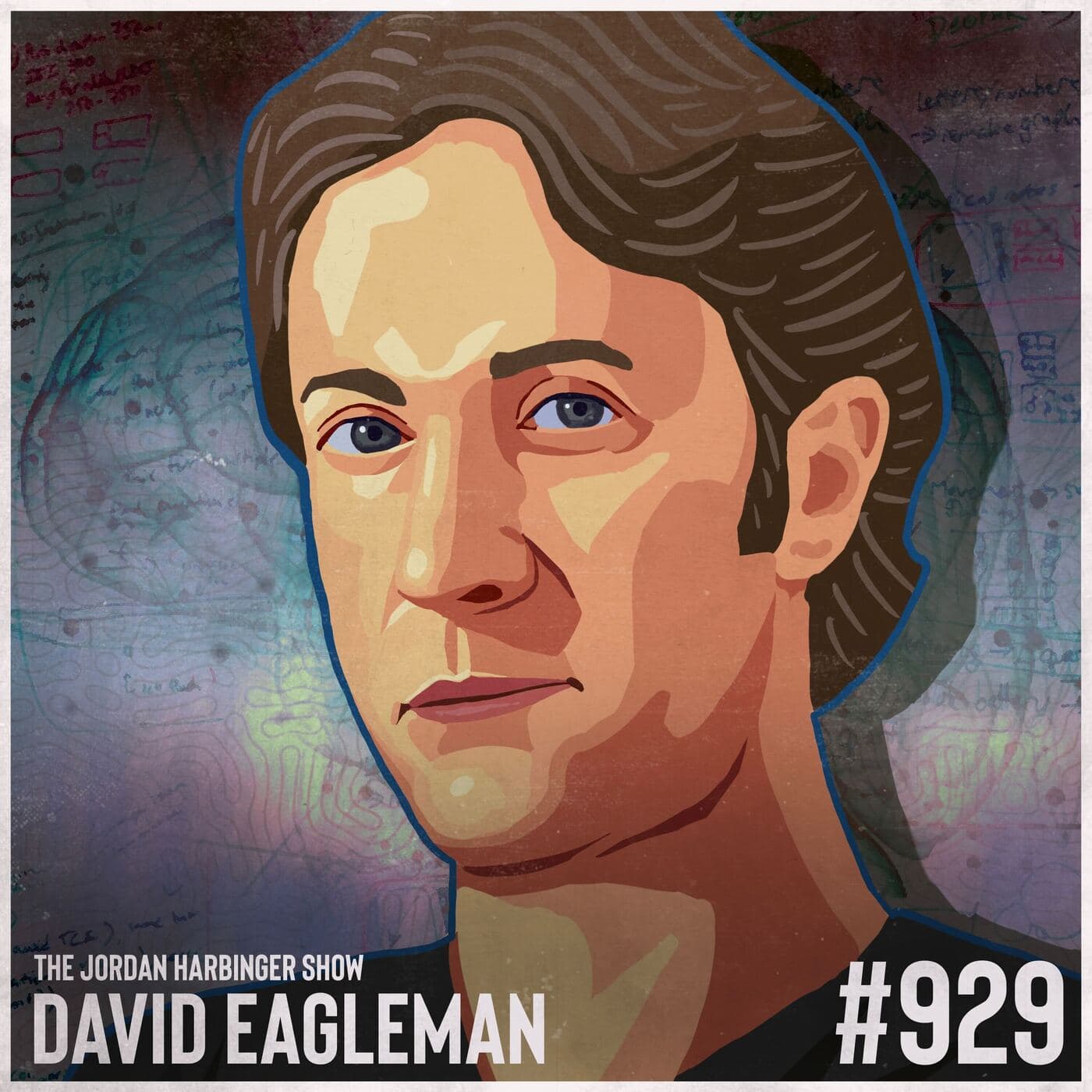
Podcast Notes: The Jordan Harbinger Show - Episode 929: David Eagleman | Exploring the Brain's Inner Cosmos
Episode Overview In this episode, Dr. David Eagleman, a neuroscientist and writer, explores the intricate workings of the human brain and the phenomena associated with it. The discussion covers a diverse range of topics, including time perception, synesthesia, the potential for adding new senses, and the impact of neuroscience technology on individuals with spinal cord injuries.
Key Topics Discussed
- Time Perception
- Slow Motion Perception:
- Dr. Eagleman shares his personal experience of a fall as a child, where time seemed to slow down.
- Adrenaline and significant events (both joyful and fearful) can lead to a heightened sense of time perception.
- This phenomenon is attributed to memory density rather than an actual change in the brain's processing speed.
- Synesthesia
- Definition and Prevalence:
- Synesthesia is a condition where stimulation of one sensory modality leads to involuntary experiences in another modality (e.g., seeing colors when hearing music).
- Approximately 3% of the population experiences various forms of synesthesia.
- Personal Experience:
- Many synesthetes might not realize they have it until they discuss it with others or read about it.
- Neuroscience and New Senses
- Adding New Senses:
- Discussion around the future possibility of adding new senses or limbs via brain-computer interfaces.
- Current advancements show promise for paralyzed individuals to control robotic limbs using brain signals.
- Neuroscience and Rehabilitation
- Impact on Spinal Cord Injuries:
- Eagleman provides insights into how neuroscience technology may offer new hope for those with spinal cord injuries.
- Future advancements could allow individuals to regain mobility through digital bridges that bypass damaged areas in the spinal cord.
- The Ethics of Neuroscience
- Culpability and Crime:
- Exploration of the legal and ethical implications when neurological issues contribute to criminal behavior.
- Discussion about how the justice system might evolve to consider biological factors influencing behavior.
- Dreaming and the Brain
- Purpose of Dreaming:
- Eagleman presents a new hypothesis suggesting that dreaming serves to protect the visual cortex by generating random activity during sleep to maintain neural connections.
- Dreams are primarily visual, but can involve other sensory experiences as the brain tries to impose narratives on random images.
- The Future of Neuroscience
- Technological Advances:
- Speculation on how technology might allow humans to enhance their cognitive abilities or add entirely new senses, reflecting on the parallels between human evolution and potential future developments.
Key Takeaways
- Seeking Novelty:
- Eagleman emphasizes the importance of seeking new experiences to enhance brain health and maintain cognitive function.
- Understanding Consciousness:
- The episode sheds light on how consciousness and sensory experiences are deeply intertwined and can vary greatly among individuals.
- Neuroscience's Role in Society:
- The conversation suggests that as our understanding of the brain grows, so too must our approach to legal, ethical, and social norms regarding behavior and responsibility.
Conclusion Dr. David Eagleman provides a thought-provoking discussion about the complexities of the brain, the nature of perception and consciousness, and the implications of emerging neuroscience technologies. His insights challenge listeners to think critically about their own perceptions and the future of human experience.
Additional Resources
- Inner Cosmos Podcast: [Listen Here](https://www.iheart.com/podcast/1119-inner-cosmos-with-david-e-110885566/)
- Episode Notes: [Full show notes and resources](https://jordanharbinger.com/929)
- Networking Course: [Six-Minute Networking](https://jordanharbinger.com/course)
---
*Note to Reader* For those keen on diving deeper into neuroscience and its implications, consider exploring Dr. Eagleman’s works, including his podcasts and books, for a richer understanding of the brain's fascinating capabilities and future potential.
Written by AI. May contain mistakes. Listen to the episode to check what was said.
Transcript
Automatic transcript. May contain errors.0:28This episode is sponsored in part by Vital Proteins. pretty unique going for it. High quality protein, 30 grams of it plus collagen. That's pretty good ROI. Usually you're choosing one or the other, but Vital Proteins gives you both a ready to drink shake you can toss in your bag or fridge, zero added sugar, no artificial sweeteners, and no carrageenan. And I don't know what that is or if that's even how you say it, but you're supposed to avoid that. If you're already taking collagen or you're just curious about how it might support your hair, skin, nails, joints, and you don't want any carrageenan, this is a super easy, tasty way to try it.
1:00Get 20 % off by going to vitalproteins.com and entering promo code Jordan at checkout. What can 160 years of experience teach you about the future? When it comes to protecting what matters, Pacific Life provides life insurance, retirement income, and employee benefits for people and businesses building a more confident tomorrow. Strategies rooted in strength and backed by experience. Ask a financial professional how Pacific Life can help you today. Pacific Life Insurance Company, Omaha, Nebraska, and in New York. Pacific Life and Annuity, Phoenix, Arizona. Coming up next on the Jordan Harbinger Show.
1:37Seeking novelty is the most important thing we can do with our lives because otherwise our brains get on to, you know, attract the path of least resistance and that's where they stay. And so the important part is to figure out how can I challenge myself? How can I constantly be doing things in between the levels of frustrating and achievable.
1:56Welcome to the show. I'm Jordan Harbinger. On the Jordan Harbinger Show, we decode the stories, secrets, and skills of the world's most fascinating people and turn their wisdom into practical advice that you can use to impact your own life and those around you. Our mission is to help you become a better informed, more critical thinker through long-form conversations with a variety of amazing folks from spies to CEOs, athletes, authors, thinkers, performers, even the occasional gold smuggler, national security advisor, war correspondent, or legendary Hollywood actor. If you're new to the show or you want to tell your friends about the show, I suggest our episode starter packs.
2:30These are collections of our favorite episodes on persuasion and negotiation, psychology and geopolitics, disinformation and cyber warfare, crime and cults, and more. It'll help new listeners get a taste of everything we do here on the show. Just visit jordanharbinger.com slash start or search for us in your Spotify app to get started. Today, back on the show, my friend David Eagleman. He's a neuroscientist and writer and an amazing, amazing thinker, great researcher, and probably a hell of a teacher as well, as you'll soon hear on the show. Dr. Eagleman is also the host of the original iHeart podcast, Inner Cosmos.
3:01Today, we'll explore why things seem like they're moving in slow motion when we're in intense situations. What's going on with our brain there? We'll also learn why some people hear colors and taste sounds literally. This is something that sounds like it might scare the crap out of you if it happened for the first time, but apparently a lot of us are like this. We'll also learn how close we are to being able to add new senses and even limbs to our brains and bodies that we can control with our brains. So a whole lot on the brain today, including why blind people have better musical skills. And I know I'm going to offend some people with that because they're going to be like, wait, I'm blind and I can't sing.
3:37And that is just tough luck, folks. All this and more here right now with David Eagleman.
3:47This is a weird way to start a show, but tell me about the time you fell as a kid. That's an interesting way to kick off your podcast as well. I was eight years old and I was climbing on a house that was under construction and I fell off accidentally. As I fell towards the floor, the whole thing seemed to take a very long time. I was very calm. I was thinking about Alice in Wonderland and how this must have been what it was like for her to fall down the rabbit hole. You know, I busted my face up pretty badly. But the thing that stuck with me is how long the whole thing seemed to take. And when I later got to high school physics and calculated D equals one half AT squared, I realized the whole fall took like half a second.
4:26And so I was really surprised at how it could have seemed to have taken so long. So that's, I think, the thing that inspired my interest in time. So as a neuroscientist, I've devoted probably 40 % of my career to understanding how we perceive time and what's going on with that. When I heard that, I was like, wow, that must have been a terrifying experience. And then I thought, well, that's why it slows down right when we're afraid. But is it only when it's a gunfight or a car accident? Does adrenaline have anything to do with it? It does have something to do with it. But really, it's about salience.
4:57Really, it's about your brain saying something massively important is going on. So that can be a moment of pure joy as well. It's just those are more rare. And what we see, unfortunately, in life more is the car accident, the gunfight, the motorcycle accident, things like that. But it's essentially anything where your brain says, oh, my gosh, something really important is happening. All systems pay attention to this. And what happens is you write down more memory. And then when you say, what just happened? What just happened? The whole thing seems to have taken a very long time. I'm trying to think of a moment of pure joy that slowed down for me.
5:30And I wonder, I don't know if I can identify one. I mean, I saw the birth of my child, but I'm wondering, did that go slowly? I can't really even remember the time perception at all of that particular moment. I remember the moment well, but I don't remember the time being a thing. It's any moment that you look back and you say, oh my God, what just happened? What just happened? That's where you would get it. I don't know, maybe if you won the lottery or something. I'm trying to think of a good example of that. I don't know. I mean, obviously, most of the things I could study in neuroscience are the terrible moments.
6:00What happened is after I wrote my paper, I did a big study on this and I wrote this up and I got literally probably a thousand emails from people over the years writing and saying, hey, here was my experience. So that was a very good way for me to keep collecting up these anecdotes. But, you know, there are lots of things where some guy worked at a museum and he was talking to his team and ended up knocking this Ming vase off with his elbow, but he ended up catching it. So that was a moment that maybe is in between joy and scariness. but the whole vase tipping off happens slow motion in his whenever people knock expensive things over I always think who put that there where that could happen if you're a museum director I think it happens more often than not that's a good point a museum director that makes more sense but it sounds like frame rate in movies or on YouTube you see those guys that go we're going to shoot a bullet through 17 balloons or 117 balloons and we're going to see where it stops and they shoot it at a high frame rate from the side and you can see each balloon pop and then you replay it slower, right?
7:00It looks fast, even if it wasn't fast during the initial experience. I'm doing a terrible job of explaining this, but when the frame rate is higher, you can replay it slower and it looks normal. Yeah, so this is what people assumed. First of all, there was nothing in the literature on this. I was surprised when I got into neuroscience that no one had ever done this study, but the assumption generally was that it must be that you sort of kick into a higher frame rate when you're in an emergency situation. And in fact, I had a little grant from the military to do this study because the idea was if this works and I could show that people see in slow motion, then maybe you could design a cockpit differently to flash information at you in a different way when things are really happening.
7:37But it turns out the result that I found was that we don't actually see in slow motion with a higher frame rate. Instead, it's all a trick of memory. It's that you're writing down dense memories. Typically, your brain doesn't write down much of anything. I mean, my whole drive over here to meet you, I passed people in cars and I don't remember any of the drive. But if something really salient happened, that all gets written down. And then when I say what happened, my brain goes and consults the footage that it has. And that's why we think something took a long time when you've written down a lot.
8:07I guess the military probably wanted to know, can we slow everybody down? Because if you're a man-child like me and you play a video game, right? And you're like, oh, I can do slow motion if I push these buttons together. Then when you drive the car, it's going like this. You're driving at full speed, but everybody else is going really slowly. That's a superpower. So if you could figure that out for pilots or anybody, but alas, not a thing. Exactly, alas, it doesn't happen. We're not seeing it at a higher frame rate. I was hoping the same thing. Is there a million advantages if you could actually do that?
8:34Yeah. It turns out though, that we do so many of our actions pre-consciously, meaning the conscious mind takes a long time to catch up to what's going on, but your body can react and do quite amazing things even before you're aware that you've done it. So this guy who knocked the Ming vase off caught it before he was even consciously aware of what was going on. This kind of thing happens all the time. I used to play baseball and when I'd hit the ball, my experience was always thinking, oh, the ball is flying away from me. Throw the bat and run because the whole thing happens faster than you can consciously keep up with.
9:09That makes sense. I would imagine the museum director imagined himself flipping burgers at McDonald's and was nude and slowly caught the vase. Not that there's anything wrong with working at McDonald's, but when you're a museum director, it might be a little bit of a step down in your opinion. That's really interesting. You talk about flicker fuse frequency. Is that the frame rate thing we're talking about here? Exactly. It's called the flicker fusion frequency. Exactly. It said, if I flash a light at you and it's flashing on and off at some point, about 35 times per second, you will see it as though it's a solid light, even though it's actually flickering on and off.
9:42And so that's one way we can measure, hey, if you're seen slow motion, would your flicker fusion frequency change? And it turns out it does not. I think flicker fuse frequency is a good old autocorrect helping me write the wrong thing in my notes. I love when that happens. We can leave that in the show. No, I'm not going to bother correcting it. But yeah, that makes way more sense. Flicker fusion frequency. So that's the phenomenon that our brain blends together the input from the eye if it's fast enough. Exactly right. Yeah. Okay. So we don't see in slow motion, which is a bummer. I was secretly hoping that we would.
10:14You said higher density. Is it a different kind of memory or is it just I'm furiously scribbling to the notebook that I usually scribble in because of this event? Yeah, it's a little bit of both. You're furiously scribbling everything out because for once, it actually matters to keep track of it. But in that case, you're actually recruiting a secondary memory system that's underpinned by a part of the brain called the amygdala, which is for emergency situations. So you're actually writing things down on two different memory tracks at once, your normal hippocampal memory, and now you've got your amygdala emergency memory.
10:44And so you've really got dense stuff going on there. If we have an emergency memory track, does that stuff get erased slowly or does it stay there forever? Because I think with traumatic experiences, if you remember a crazy event, part of the problem is you can't forget it, right? That's exactly right. Amygdala memories are unerasable. But the fact, by the way, that hippocampal memories are erasable is also super bizarre and weird. And that's something That's a pretty recent discovery. But, you know, for example, you train a rat to run a maze and he learns how to do it. And then you can get the rat to remember that and give him a protein synthesis inhibitor.
11:20And then he will have forgotten it. In other words, you can erase the memory by taking it from cold storage to hot where the rat's actually doing it and needs the memory. And then you can erase it. For example, if I ask you the name of your fifth grade teacher. Oh, man, Miss Martin. Exactly. Exactly. When that comes to mind, now it's gone from really deep storage into your now thinking about it. If you get hit on the head now or you take a protein synthesis inhibitor, that'll just be gone. Because when a memory becomes active, it needs to be reconsolidated. It needs to be repackaged into cold storage.
11:54And so that's the really weird part is that memories are erasable. So the memory doesn't exist both in my memory and in my conscious application, it moves and so it can be knocked out of there. Exactly right. Super bizarre. That's weird. So that's weird. But the fact that amygdala memories are unerasable is really unfortunate for people with post traumatic stress disorder because those are the ones that you would want to erase. Right. You can't. Yeah. Like Miss Martin was somewhat traumatizing, but it wasn't nearly as bad as, I don't know, like driving my car off a cliff and being gravely injured or something or worse.
12:27Yeah. Yeah. That's too bad. So I would imagine there's, I mean, we know, do we know they're unerasable or it's like we just haven't figured that part out yet? We have not figured that part out yet. Okay. But it's not erasable in the same way, in the same way that other memories are. Exactly. As far as we can tell that. So who knows? Maybe there's definitely therapeutic value in figuring out how to erase those quote unquote unerasable. Quite right. But there was that movie. What was that? Eternal Sunshine of the Spotless Mind, right? Did you ever see this movie? I did, but I can't remember what a, what was that?
12:52A Jim Carrey movie? Exactly. So there was this movie called Eternal Sunshine of the Spotless Mind about erasing memories. He has some traumatic relationship or something. He decides just to erase it, which is interesting. So if we ever got there with, let's say, amygdala traumatic memories, question is, would you want to? You'd have to take it really seriously, this question of whether you want to do it. You know, it reminds me, there's an Adam Sandler movie. Can't remember what it's called, speaking of movies, but he goes into Bed, Bath & Beyond. He gets that remote where he can fast forward through life events he's not interested in.
13:22It's in the beyond section, obviously. And he starts fast forwarding through like his kids performances that are over games he wants to see or arguments with his wife or whatever. He's like, let's just get this over with. And then, of course, the moral is he starts regretting this. The idea being that you don't really want to do that. If you were assaulted brutally and it's affected your whole life, you want to get rid of that. But you don't really want to get rid of like the teacher that sort of bullied you, but maybe made you a little bit of a better person at the end of the day. But also during that year, you did all this other stuff.
13:53That's right. That was good for you. Maybe you don't want to erase bootcamp from military training. Exactly. Even though it was awful, it was like foundational in the same way. And it's an interesting question about where to draw the line, because let's say something really traumatic happened. You got assaulted or something. The question is, do you want to erase? I mean, let's say you had the choice to erase that completely, but then you forget all the details about, hey, I shouldn't go to this part of the neighborhood or whatever. Yeah. You might just end up learning that same lesson again. Right.
14:19That'd be terrible. So is this amygdala memory? Is this why people who go through crazy life events, they remember really specific details about their assailant? You know, you hear like he smelled like cigarettes and booze and he had a tattoo on his arm and it had a cat with a lot of whiskers. And I remember the cat had so many whiskers. And I'm like, because I see people three times a week could not describe them in that level of detail. Yeah, I tell you, no, unfortunately. So I just recorded an episode about eyewitness testimony. It turns out that no eyewitness testimony is terrible. And by the way, people don't actually have good memories of this and the whiskers and the thing.
14:53And so our memories are not like a recorder. We're not like your cell phone taking in zeros and ones and pinning them down. And so eyewitness testimony is the worst technology that we allow in courts. Now, we have to allow it because for most cases, that's the only thing you can bring to bear. But, you know, happily, all the way up to the Supreme Court, people have recognized for a very long time exactly how terrible this is. But the point is, yeah, people can feel very confident that they remember, oh, this was the smell, the look, the cat, whatever, and it might be completely wrong. And we all know this from our own lives anyway.
15:28I remember studying that in law school. And on the other hand, I saw somebody get arrested at a barbershop once while reading a newspaper about an assault. The cops came in, arrested that guy, and he threw a huge fit. He said, why am I being arrested? And they're like, we don't talk about that. And he said, I want to know right now. I don't think you want to know right now. And he's like, I want to know right now. So the female officer was like, well, you're under arrest for the sexual assault of a woman in a park. And it was the article he was reading with the other guy on the newspaper. He was interested in the article because he was the guy who committed the crime.
16:00Oh, he was the guy. Allegedly. Okay. Oh, gosh. Yeah. But she identified him because he had a Barber Shear tattoo on his forearm. Okay. That's what they told him. She's like, that wasn't me. He's like, that wasn't me. I was just reading about that. And she's like, Barber Shear tattoo on the forearm. That's how we found you. Right. Something like that can be very memorable. Okay. So, for example, I teach the brain and the law at Stanford. And one of the things, so I was teaching about two months ago, about 70 kids in the class. and the back door opens and this woman comes in and right in the middle of me talking she interrupts me and says are you dr eagleman and i said excuse me i'm teaching a class and she said yeah no kidding i've been emailing you and you haven't responded and i said i said excuse me i said look i'm sorry my inbox is totally overwhelmed but can we talk about this afterwards please and she said i'm not leaving until i get a response and blah blah and she for about a minute she stood there yelling at me and she was sort of taking a step closer and closer down the aisle towards the podium.
16:52And so I said, we're going to have to talk about this after class. And finally, she said, okay, fine. I'm going to leave, but I'm going to wait for you out there. I kept lecturing for about 30 minutes. And then I said to my students, Hey, this is normally our break time, but I need to call security. Can you guys all take out a piece of paper and help me? Because I was on the podium. I couldn't see, you know, I don't know what her height and weight was and so on. Can you guys all draw her? Don't talk to each other, draw your best picture, give a description and so on. And then, And then I collected all those pieces of paper.
17:19I said, this way I can get a better view for security. And so the pieces of paper I collected, it was everything between like five foot three and five foot nine. Her weight ranged over about 40 pounds, curly hair, straight hair, dark hair, gray hair, the whole gamut. And so I didn't call security, of course. You set this up. I said, fuck, she's a professional actor. It's too weird, man. Exactly. It was a professional actor that I hired. And the thing that I was demonstrating in the class was about eyewitness testimony. And it's so terrible people's memories. and this was a very similar thing. There was nothing else for them to watch except for what was going on right there.
17:51And it's so incredibly awkward. Like surely every single head in the room was like, what? And turned around and watched. Oh yeah, everyone was staring at her. The whole time. Yeah, exactly. People were thinking about, should I do something here? And yeah, and so then what I do is I transition into my two hour lecture on eyewitness testimony about that. But anyway, the point being that we don't, our memories are awful and there are all these things that happen. You know this from law school, you know, there's Q overload. If there are too many things happening, You remember, it does a terrible job if there's weapon focus.
18:19So if somebody is holding a gun or a knife on you, you're looking at that thing. You're not looking at the person's face. That's an interesting point. I never thought about that, but you're right. It's like, what did he look like? Well, the gun was black and it was metal. What was his face look like? He didn't have a mask on. I have no idea. Yeah, exactly. Interesting. What happens if one of your students busts out their cell phone and calls 911 because there's a crazy person in the lecture hall? It's so interesting because people don't do that. Afterwards, several of the students said, oh, I thought about getting out my cell phone and, you know, filming her and things like that.
18:47But strangely, no, it did because everyone's so caught by surprise. Actually, really, it's shocked slash somewhat heartening that the first instinct wasn't to film it, even though in this case it would have been appropriate because you see these disasters where it's like, somebody go help that person. And people are like, don't worry, I've got the whole thing on my iPhone 14 Max. Well, you know, this girl won the Pulitzer Prize for filming the George Floyd thing on her cell phone, which was a little goofy to give the Pulitzer Prize for that. But I think if someone's at an appropriate distance where they're not directly involved in the thing, then they pull out their camera and they film.
19:18Why do our brains record that amygdala memory? Is it because the lesson is determined by the brain to be so important that it needs to go there? Oh, exactly. No, that's exactly it. It's that most of your life is not particularly salient, but what you need is, hey, here is something that matters. The whole reason that we have memory is to navigate the future, is to be able to make better predictions about the future. So when something important happens, then you write that down. Yeah, that's the entire reason. Does this happen less as we get older? Or maybe I should ask, does it happen more when you're a kid and everything is new and exciting?
19:51That's exactly right. So when you're a kid, everything is novel. You've never seen a person like that or you've gone to a camp like that or caught a fish or whatever the thing is. So everything is getting written down. This is why, you know, the end of a childhood summer, it seems to have lasted so long. But the end of adult summer, we look back and think, what just happened? Where did that go? Man, I remember the first African-American man that I met at my grandfather's funeral is a guy that worked with my dad. His name was Ernie. And I remember him tall. I remember his face. I remember shaking his hand.
20:17And I remember looking at my hand after shaking it. And my mom goes, I wanted to crawl in the coffin with your grandfather because Ernie goes, yeah, it doesn't come off. And everyone was laughing because I was like two or three. And I remember shaking his hand and looking at my hand to see if maybe exactly what you're thinking right now. But I don't remember the million other African-American people or different looking people that I've met in the years since. Yeah, because you've got an internal model of the world and your internal model is built up from the experiences that you've had. And essentially what we're always trying to do is find things that are surprising to us.
20:56This happens a hundred times a day where a little, you know, oh, I didn't know this button was on the coffee machine. No, I didn't know this building was here, whatever. And you're constantly refining your model by building new things up there. That has to do with the predictive nature of the brain. Exactly. The brain's trying to predict. But the thing, this is what my next book is about. It's called Empire of the Invisible. The thing that is so striking is how limited our internal models are. But the thing that absolutely amazes me is that we don't ever recognize that we have the illusion at all times that our model is complete.
21:25Sort of, you know, okay, yeah, I get the world. I know everything that's going on. Oh, there's a little surprise there. Okay, fine. Now it's complete. Now my model is complete. We have this total illusion that we understand everything, even though almost everything in the world you don't understand. I mean, if we went to the library, I could point out whole shelves of books that you've never even heard of the field or whatever. And you could do the same for me. That's because our brain, what, conserves energy by saying, oh, I've already seen this. I don't need to pay close attention to it. Is that why?
Read the full transcript
21:51It's not that it says I've already seen this. It's that you feel like, OK, I pretty much know everything there is to know. And then I say, hey, Jordan, here's a textbook on lattice gases. And you say, wow, I've never even heard of that. Right. And you start looking and then you read it and you say, OK, I've got a sense of that. Great. I pretty much got it all covered now. I feel like my son does this with new stuff. For example, this stuff here on the wall, if you're watching this on YouTube, there's this stuff on the wall. And I want people to ask themselves if they think that this is hard, soft, what the texture feels like, what's behind it.
22:22Even I was like, oh, oh, it's harder than I thought. And oh, there's nothing behind it. It's hollow. And that really surprised me. And my son would never have made any assumptions. I think he would have walked right up to this thing, touched it, tried to peel it back. looked at it. He really does that with kind of everything, but he's four, not even. That's how you build a model of the world is by really exploring. Yeah. The unfortunate part, I think this is probably why magic tricks can work so well on us because we are full of assumptions. And so, you know, you see someone's hand move or whatever we think, Hey, we're clever adults.
22:57And so, you know, we, we buy it. We say, okay, he must've just put that in the jar and so on. It's behind your ear. It was there the whole time. So what is the lesson here? Do we seek novelty to write more memories more slowly or what? Yes. Every time we discover something novel, we write that down. So you are writing this stuff down every time you find something different. But yeah, that's a general piece of advice that I always give people is seeking novelty is the most important thing we can do with our lives because otherwise our brains get on to, you know, attract the path of least resistance and that's where they stay.
23:30And so what happens is people, people as they get to our age and certainly as they get to retirement age, they sort of feel like, all right, I know how I want to run my life and then not doing anything different. So the important part is to figure out how can I challenge myself? How can I constantly be doing things in between the levels of frustrating and achievable? How do you do that every day? I remember one of the tips was, and I did this this morning and yesterday, switch the hand that I brush my teeth with. It was a lot easier than I thought, actually. Exactly right. You know, I always tell people to switch their watches, driving home a different way each time.
24:04You know, we recently moved. And so every day I drive totally different routes to find my way home and pass different things. This stuff's easy. The other thing that's really surprisingly easy is how easy it is to change up your office or where you are. You know, you just push your desk over to the other wall. You take two paintings on the wall and you swap them. Stuff like that's easy. But at least you're getting your brain out of the path of least resistance. And that causes our brain to create a new model? Exactly. It causes your brain to do a little bit of extra work to say, oh, this is interesting, and blah, blah, blah.
24:34And you're not just completely on your hamster wheel. Is that better for long-term brain health? Yes, it is. No, that is essentially, I hate to say, but this is essentially the best thing that we know of for brain health is just keeping your brain really active and constantly building new roadways and bridges. Because as you get older, you've got a fixed number of neurons, brain cells. and you've got connections between these. And as you get older, this stuff degrades. And when you hit your head on the cabinet or something, you kill some brain cells. So it's only going one way. But if you can keep brain plasticity going by building new connections all the time, that's the best thing you can do for your health.
25:12You always meet those older folks that are like, oh, I'm learning how to use Google Docs. And you're like, man, this guy's 80s learning how to use Google Docs from Skillshare, YouTube or a class at the community center. Those people always seem sharp into their old age. and then he meets somebody who just watches TV all day, just watches The Price is Right and Wheel of Fortune, and they're the ones who seem like they're slowing down. But I never really knew, and I guess we still don't really know, is that the cause or the effect, right? Because things are harder if you're slow, so you sit down and watch TV all day.
25:40Right, and these things are always hard. So for example, take someone like Robin Williams, who we learned retrospectively had Lewy body dementia. So he had this degradation of his neural function. I didn't know that actually. Yeah, what's interesting is when he committed suicide and everybody assumed, oh, he must have been depressed. And then everyone sort of loved this story about the comedian who suffers from depression, but that wasn't at all. He had this degenerative disorder called Lewy body dementia. And the thing is, Robin is a guy who kept his brain super active because he was constantly memorizing new scripts and doing this stuff.
26:14The thing is, he presumably would have done much worse, much faster had he not been pushing his brain to do all these things. So the point is, it can't be the solution. It can't be the thing that saves you from a degenerative disorder. But for sure, he was able to keep his cognition much longer than someone else would have. You're listening to The Jordan Harbinger Show with our guest, David Eagleman. We'll be right back. This episode is sponsored in part by 1-800-CONTACTS. You know that last pair of contacts panic? My wife, Jen, knows it way too well. She's had these mornings where she's out of contacts and stuck wearing these old glasses.
26:50she's got to keep wiping clean with her sleeve. But now, she makes sure to load up ahead of time because her next set is always on the way from 1-800-CONTACTS. They're the only major retailer that lets you renew your prescription online, so Jen gets her same doctor-prescribed contacts fast with free shipping without leaving the house. 1-800-CONTACTS has been doing this for over 30 years. They've got millions of lenses in stock, award-winning customer service, and perks like free returns, free exchanges, even free torn lens replacement. Jen loves their Express exam, which lets you renew your prescription online in under 10 minutes.
27:20It's a vision exam, not a full eye exam, but it gives you a doctor-issued prescription if you're seeing clearly with your current lenses. No waiting rooms, no dilation drops, remember those things? And with their best price guarantee, if you find your contacts cheaper somewhere else, they'll beat it. Getting contacts doesn't have to be a hassle. Let 1-800-CONTACTS get you the lenses you need right now. Order online at 1-800-CONTACTS.com or download the free 1-800-CONTACTS app today. This episode is sponsored in part by Dell. It's time for Cyber Monday, Dell Technology's biggest sale of the year.
27:49Enjoy the lowest prices of the year on select PCs like the Dell 16 Plus featuring Intel Core Ultra processors, and with built-in advanced features, it's the PC that helps you do more faster. Plus, earn Dell rewards and enjoy many other benefits like free shipping, price match guarantee, and expert support. They also have huge deals on accessories that pair perfectly with your Dell PC and make perfect gifts for everyone on your list. Shop now at dell.com slash deals.
28:15This episode is sponsored in part by LinkedIn. If you've ever hired for your small business, you know how important it is to find the right person. That's why LinkedIn Jobs is stepping things up with their new AI assistant. So you can feel confident you're finding top talent that you can't find anywhere else. The best part is that these great candidates are already on LinkedIn. In fact, employees hired through LinkedIn are 30 % more likely to stick around for at least a year compared to those hired through the leading competitor. That's a big deal when every hire counts. Early on, I learned that hiring isn't headcount.
28:42It's do I see my family this week? Do we actually release episodes on time? Can I take a few days off without everything falling apart? When I've hired the right person, my life got easier. They took real work off my plate, caught problems early, and treated the business like it was theirs. That's when we actually grow. With the wrong hire, I've spent months training, fixing mistakes, having the same conversations, and still ended up letting them go and starting over. You don't just lose money, you lose momentum, you lose morale, and you lose time. That's why I'm big on hiring right the first time, even if it takes a little longer.
29:11Hire right the first time. Post your job for free at linkedin.com slash harbinger. Then promote it to use LinkedIn Jobs' new AI assistant, making it easier and faster to find top candidates. That's linkedin.com slash harbinger to post your job for free. Terms and conditions apply. This episode is sponsored in part by the GIST podcast. If you're looking for a news podcast that is smart, unfiltered, and doesn't just echo whatever side you already agree with, check out the GIST with my friend Mike Peska. Mike's been doing this longer than just about anyone. It's actually the longest-running daily news podcast.
29:43It's earning that spot on Apple's top charts for a reason. And each episode's around 30 minutes, so it's perfect for your commute or while you're making breakfast. It's always packed with sharp, thought-provoking takes. What I love about the gist is that it's not stuck in a partisan box. Mike, he's a really smart dude. He digs into real questions, the kind that most shows avoid because they don't fit neatly into a political lane. He'll challenge the right. He keeps the left honest. He dives into stuff like the New York City mayoral race, that whole cluster, and the chaos of sports betting, or even whether talking to your plants actually does anything.
30:10He's an award-winning journalist. He's not some schmo like me who's totally unqualified. You've probably seen his work in the Atlantic, the Free Press, the Washington Post. He's got that rare mix of wit, skepticism, and depth that makes even heavy topics fun to listen to. And he's a great dinner guest, just saying. So if you want your daily news with more brains and less noise, check out The Gist with Mike Peska every weekday on YouTube or wherever you get your podcasts. If you're wondering how I manage to book all these great authors, thinkers, and creators every single week, it is because of my network.
30:37And I'm teaching you how to build your network for free over at jordanharbinger.com slash course. I know, networking's a gross word. It sounds schmoozy, but this is not what that is. This course is easy, non-cringy, very down-to-earth, very not awkward, and it's certainly not cheesy. It's just practical stuff that'll make you a better connector, a better colleague, a better peer. In a few minutes a day is all it takes. Many of the guests on the show subscribe and contribute to this course. So come join us. You'll be in smart company where you belong. You can find the course at jordanharbinger.com slash course.
31:09Now, back to David Eagleman. You mentioned brain injury, plasticity, and things like that. Our neurons rearrange themselves to use the available machinery in the body. I took that from one of your episodes. Does that mean that if I lose a limb, does that mean that the neurons that control, let's say, my right arm are going to be used for something else? Yeah, that's exactly what happens. So if you, God forbid, let's say have a motorcycle accident, you lose your arm, you have a map of the body in your brain and the map just rearranges itself so it doesn't have that arm anymore. And you see this across all parts of the body.
31:45For example, if you go blind, the part of your brain, the visual cortex gets taken over by neighboring senses. Now, this is more true in young brains and less true as you get older and older. But the idea is the same, which is that any rearrangement you have of data coming in or things you can control going out, the map rearranges. This is the incredible part about the fluidity of the brain. When you look at the cortex, which is the wrinkly outer bit, it looks the same everywhere, even though we know from looking at the function that this part is for hearing and touch and smell and motor function and so on.
32:18But the reason it looks the same everywhere is because it is the same everywhere. It's the same stuff. And it just assigns itself to whatever is important to run. That's, first of all, amazing. Because it seems like that stuff could just sort of die or get disused and then you're done with it. But your brain is smart enough to go, well, these can be reallocated. It's almost like... Exactly. It's really incredible. So this is my last book called Livewired. And I'm using this term Livewired to indicate that you can't think of it like hardware or software. It's liveware. And we are just scratching the surface of figuring out the brain secrets on this kind of stuff.
32:52You know, there's so much more to learn. But anyone who thinks about the brain as being like a piece of hardware or software, it's just wrong. It's just missing, you know, half of the amazing stuff that the brain does. When I think about new technology and things like that or AI, and then you read a book about the brain or listen to your podcast about the brain, you see the gap is so enormous. And you just think we're a thousand or more years away from being able to make. They're like, this is like a brain that is a computer. And you're like, no way. Like, yeah, cool. It does things. It looks like it's thinking.
33:23But it just doesn't do anything like what we're talking about with the brain. Not even close. We're in this amazing time right now where we don't always know the answer to that. Only because AI is moving so fast. And sometimes people discover things in AI where we think, hey, is that maybe part of what the brain is doing? Now, of course, you're totally right. I mean, you have a four-year-old child, right? Yeah. Your four-year-old can do things that AI can't do, like, you know, navigate a complex room and manipulate adults and figure out how to get food to his mouth. So funny. You said the manipulation.
33:55I was just thinking AI can't bounce mom off dad because he knows. I mean, it's just not. And that's a relatively simple manipulation. Exactly. And people think AI can. I'm sure their listeners are thinking, wait, I can do that kind of manipulation, but not exactly. You know, this super impressive stuff with transformer models and chat GPT, for example, you know, it's just taking a slurry of everything humans have written before. And it's really good at predicting the next word and saying, OK, I'm going to do this next thing. But having a goal like I really want the cookie, therefore I'm going to bounce mom off dead.
34:26We like to think I can do this, but it doesn't do that yet. All it's doing right now is picking the next word based on the prompts that you're giving it. So the thing that's going on with AI is we're essentially discovering new ways of building some sort of intelligence that is forking off from where human brains are. So we've got brains that do these awesome, incredible things. We've got AI that's doing these awesome, incredible things. They're becoming like different species. So it's not, at least at the moment, it's not sort of solving. We're not looking at the brain saying, oh, I get it. It's just a transformer model because it's not.
34:58But we're inventing a new species that's going to live on this earth with us. It's so incredible. I wonder, you studying the field, being at the cutting edge of this field, let's just say the brain, even though that's extremely broad, it's kind of like being an astronaut that goes to the moon and goes, but everything else out there I'm never going to see. Do you ever think about that? Like, your whole lifetime, we're going to get to what, like some single digit percentage of understanding the brain or maybe low double digits? Absolutely. And this happens in every generation. So we can agree on this extrapolation that every generation feels like, okay, I've kind of got all the pieces and parts here, but they die not knowing any.
35:36I mean, just, you know, imagine trying to understand how muscles work before you understand the concept of electricity or understanding the Northern lights before you understand about the magnetosphere and photons from the sun and whatever, like, or understanding how the heart works before the invention of the pump. I mean, people for thousands of years had hypotheses about what the heart is doing, but they were all, they were doomed to be incorrect because they just didn't know the concept of the pump. So we know for sure that we are going to end up in that position and come to our deaths, not understanding any, the thing that I think about all the time, if I were granted one wish is I would love to see the neuroscience textbooks from 500 years from now.
36:14Oh man, it would be so amazing to see all the stuff we're going to discover. You know, we have this book called Principles of Neuroscience, which is about 800 pages. That's sort of the textbook in the field. Oh, wow. But I always make the joke that it's not principles because if it were principles, it wouldn't be 800 pages. It would be like a pamphlet because we haven't figured out the principles yet. What we do is just do this core dump of all the data that we're finding. We haven't figured out even the neural code yet, like what the little chattering of the neurons is saying. So anyway, yes, we have a super long way to go.
36:43I'm going to die on the moon, not having seen the rest of the solar system, much less the galaxy. That said, things are moving fast. And what we're all hoping is that we can leverage AI to take these giant data sets of stuff that we've had kicking around for years and say, oh, yeah, bang, here we we might be able to speed things up a lot. Yeah, I wondered if you could take all the data from something where normally you're sitting there with 18 grad students and you're just pouring over this for years at a time. you could feed that into an AI that goes, I remember everything like I read it five minutes ago.
37:14And here's the thing on this note that corresponds to this footnote and this other thing from 20 years ago that nobody's really touched. These look like they might be related, even if the AI doesn't do the work for you. It might say you should look at the connection between this kind of dementia and the people who have this kind of heart condition, because it seems correlated and we just don't even know. Oh, exactly right. And so on one of my recent podcasts, I defined that what I am taking as a new, what I'm proposing is a new way of testing AI intelligence. Because, you know, what we had was the Turing test, which is can a computer fool a human?
37:48That's easy to do now. You can talk, you know, on chat, if you think you might be talking to another human. And then there was the Loveless test, which is about can computers do something creative, piece of cake, you know, Dolly, Mid Journey, all this stuff. That's the AI art that you're seeing online. Those are the things where you think you're looking at a picture of the Revolutionary War, but then one of the soldiers is Donald Trump or something. I've seen that one. Exactly. And so what I'm interested in is not moving the goalposts, but what I'm pointing out is those tests aren't really that useful for us because we look at chat GPT and we're still stuck with the question of, okay, but is it intelligent or is it just mixing?
38:23Is it just doing a remix and predicting the next word and it's just a big algorithm? So the test that I've proposed in the literature and on my podcast is, can AI do scientific discovery. And I'm distinguishing two levels here. So level one scientific discovery is what you just said, which is piecing things together because it's read the 35 ,000 neuroscience papers that come out every month and it's put things together because it remembers every paper perfectly and it puts things together. And so I think it's going to be massively useful. And instead of having 18 grad students who are slogging through stuff and in five years they come up with one thing, instead a grad student might be able to do 10x the amount that they're doing.
39:01Level two scientific discovery is where you're actually making a new world model. And you say, okay, what would it be like if I were riding the photon the way that Einstein thought about this? And then he comes up with a special theory of relativity. That kind of scientific discovery, AI cannot do right now. But that's the goal, to my mind, of when we would have a human level AI that's not just regurgitating what is found on the web, but it's actually inventing new things. Years ago on this podcast, we talked about adding new senses. This is when we were kind of looking at the, you had the vest that was in Westworld.
39:34Can we, we can talk about that now? Yeah. Like two seasons ago. Um, but we didn't really talk about adding body parts or limbs. We were talking about feeling sounds. Basically how close are we to this? Can I add a prehensile tail? Right. So I wrote about this at length in live wired about, could we add new body parts and your brain would come to take those on? In a sense, we do this all the time. So when you get on a skateboard or surfboard or hang glider or pogo stick, like that's what you're doing. That becomes part of your body plan and your brain says, okay, let's see, locomote now, I have to bounce up and down, and that's how I move on this thing.
40:07So your motor system is extraordinarily flexible, even as an adult, and you're always learning how to do new things. Okay. But the thing I'm really interested in is, you know, mother nature is used to things that are attached to you. But can we, with brain-computer interfaces that plug directly into the brain, start controlling things at a distance? So already this is in place. For example, there are people who are paralyzed and they have electrodes plugged into their motor cortex and they can control a robotic arm that just happens to be on the other side of the room. And they can control this arm as though it's part of their own body.
40:39Yeah, that's awesome. And so I think this becomes part of the self. In other words, the way that your brain determines what is me has to do with what I can control. This is the hypothesis that I proposed. So this is why, for example, when you look in a mirror image and you move around, you're like, oh yeah, that's me. Why? Because I send out a motor command and I see that that thing moves great. That's me. And so what's going to be really interesting is when we start controlling robots that are apart from us and you've got this thing that's cleaning your floor and the thing that's picking up the heavy box over there and whatever, it's like an extension of you.
41:10And eventually we'll have robots of ourselves on the moon and other places and that'll be us. It's really incredible to think about the application of this, right? Because you're driving a forklift. It does a lot of things, but it doesn't do a lot of things. You could eventually just have the ability to control that with your mind or more probably practically a wheelchair user who is now has to like get up, get into that thing and roll up and down ramps and things like that. And there's not always ramps. They can't travel to certain places that don't have that kind of accessibility. I can only imagine how inconvenient it is.
41:43the airport alone, I'm triggering wheelchair users who are like, don't get me started about the airport. They would just be able to control this stuff with their mind. They don't have to use the joystick or blow into the microphone or whatever sort of mechanism of control. It would just be subconscious like me walking into this room. Oh, exactly. I mean, there's almost a sense in which we're already doing this, right? So I can, you know, for example, if I want to write something to you, I want to write a text, I have to use my fingers. Or I can just use my mouth and my throat, my larynx and breath and whatever, and just say something to you because I'm using my mind to control all this machinery and it just comes right out.
42:20That's what it would be like if you could control a robot. It's just sort of an extension of speaking or doing something. It seems like it would be even easier though, because my voice is still just a sound tool. What if my brain just tells your brain what I'm trying to tell you? I don't have to tell it at all anymore. Oh, you mean brain to brain communication? Yeah. I actually don't think we'd want that. And I'll tell you why. No, I mean, it sounds horrible for many reasons. The reason we don't want it is because, so your brain is full of thoughts and ideas and blah, blah, blah, blah, blah. And you've got this very sophisticated machinery that windows it down to one thing that's going to come out of your mouth.
42:52And that's what you communicate into the microphone. But you definitely don't want to share all your thoughts with people that have that going bi-directionally. So I think having the opportunity to get things down to the mouth or to the page is actually really beneficial. But I will say, by the way, I think that paralysis, because you just mentioned about people in wheelchairs, I think we're almost done with that. Yeah, I think it's going to be gone in a handful of years. As in, let's say someone damages their spinal cord, like Christopher Revy, who gets in a horse accident, damages the spinal cord.
43:22You can't get messages from the brain down to the body to control the lymph. We're just going to have a digital bridge that measures, okay, what's going on in the motor system. Okay, I'm just going to take that and I'm going to translate that down to the part of the spinal cord that's just jumping the damaged part. And then you're fine. I think what's going to happen, I don't know, 10 years? Really that close? I mean, that's not that far off. It's even closer except it's got to go through FDA and all that stuff. But yeah, I think there are going to be lots of companies doing this kind of thing where you're just jumping the gap.
43:54And then somebody gets paralyzed and goes into the hospital and they come out the next day. And they say, wow, that would suck. Yeah. That's like for 20 hours, I couldn't move my limbs. Okay, fine. Now I can move my limbs again. That would be absolutely incredible. Yeah. It strikes us that way, but to our children, that'll just be obvious. Like, oh God, that person had a really bad accident. Okay, I guess you're fine now. I think about that all the time where when I was younger, I'd go, so wait, what did you do when you didn't have this? And my parents would go, we just couldn't reach our friends on the phone or whatever it was.
44:23And I'm like, what? And my, yeah, I look forward to the day that my son's like, so wait, so people just died of that when they got it or lived for 50 more years in a wheelchair. Or if they're yeah, if it's paralysis or like a disease, like, yeah, we didn't have a vaccination for that. You just had to even chicken pox. Remember, you had to go get it and your mom would go. All right. He's 12. He hasn't had it yet. I don't want it to be bad. His cousin's got chicken pox. Let's get a play date and just get it out of the way. And you're like, wait, you did that to me on purpose. And now I remember my ex-girlfriend's little brother got the chicken pox vaccine.
44:55And I was like, wait a minute. There's a chicken pox vaccine. The hell? I had to get chicken pox. I got scars from chicken pox. Here's a quick question. Do you know what the thing is that has led to the most lives saved, really, about from 100 years ago, a little over 100 years ago? Like, what's the thing that we've changed that's led to the most lives saved? Gosh, it's hard to say. I mean, mosquitoes kill tons of people, but we didn't get rid of mosquitoes. It's control of fever and diarrhea. Really? That's it. I guess that makes perfect sense. Just controlling that stuff means when you get bit by a mosquito or you get this or you get that or whatever like all these things people would die of that oh man i mean they still do in other places that's right well yes but that's right but less and less so i mean happily the whole world is elevated by very cheap ways to control those things i mean diarrhea like you can get over the counter stuff to control that and by the way if you don't have it in your travel kit go get it today because you never know um but fever i hadn't thought about you're right though i mean if you get a super high fever and you don't have a way to reduce that yeah you're you're looking at brain damage if and that's the best case scenario you can't do it yeah wow so this is like learning how to ride a bike except for the bike is attached to you and i wondered about the level of efficiency loss right because if i'm typing there's a major loss of efficiency compared to when i'm dictating but then there's a major loss of efficiency if i could just look at my computer screen and think of all of the words or even the thoughts and then something goes you probably mean to say this and it gets typed in a professional manner by you know rewritten by AI.
46:27Yeah. So I've been wondering about this. So I was just at the TED conference in April and I ran into one of my friends and he said, look, I've got this cool company that uses ChatGPT to take some bullet points that I have. So let's say I need to send you an email, Jordan. And so I just have really two bullet points I'm trying to say. It expands that and sends it off to you as, hey, Jordan, I hope you're well. I hope your family's doing great. Here's the things I want to talk to you about, blah, blah, blah. Warm regards, David. Okay. So I've just typed two bullet points and you receive the same.
46:56My email program does this. Oh, great. Okay. But then I ran into this other guy who told me, hey, I've got this great company where when I receive an email, it reduces the email down to two bullet points. It does that too. Yeah. And I thought, God, we're caught in this AI sandwich where why don't I just send you the two bullet points instead of doing this whole game of expanding and reducing. Yeah. That's going to be interesting. What does the future culture want? Does it want bullet bullet or does it want, Hi, David. Been a long time. Hope you're well. How's the company going? Hey, you still enjoying that swimming pool over there?
47:29And we're, you know, it's going to depend on how well you know the person. Exactly. I think there are analogies to this, like writing a postal letter with curvy calligraphy. Yeah. I had to think of the word. Yeah. We don't use it anymore. Exactly. But you know, that was the nice way to send you a note. And so maybe, yeah, maybe we will get down to the sort of two bullet point emails with each other. Hopefully we figure out something that's better than email, but I don't know, man, that, that, that has stuck around since the dawn of the internet and we, it's been improved marginally. Yeah, that's it.
48:03Yeah, that's right. But the dawn of the internet is not that long ago. Again, if we can look 500 years in the future at how people are communicating, by the way, this issue of typing and how typing is slow and would you want a brain machine interface? I, again, I don't know because the question is, could you actually if my mind is being read about this email, you know, you know, I really want to rewrite that sentence, blah, blah, blah. It might be just as much work as doing it with your fingers. So part of the lore of a company like Neuralink, which is doing great work, they've got an awesome thing going, be a part of the lore is, hey, you wouldn't have to use your fat fingers on the phone.
48:38You could just think the text message. But I don't know at the moment how many people are going to go in for an open head surgery so that they can communicate with their phone 50 % faster. It's for sure going to be people who are like, I'm locked in this box because I have ALS or something like that. Exactly. So Neuralink is going to do all kinds of beautiful, amazing things for that population, for the paralyzed population, stuff like that. But the lore of where it is going, I'm not sure of it yet. Yeah. I don't need to play Candy Crush using only my brain or whatever. The risk is not worth the reward.
49:09The juice is not worth the squeeze. Let's talk about brain machine interface a little bit. I am curious. You mentioned homuncular flexibility, which is a great term. It sounds completely made up somehow, although I guess every term is made up. Most terms, yeah. So the homunculus is this part of your brain that it just means little man in Latin, but it's the map of your body. It says, oh, okay, I see you got two legs, you got two arms, this is what I can control. So the brain is this three-pound mission control center that lives in darkness. It doesn't know what your body looks like, but from the activity and from its interaction with the world, it figures out what your brain looks like.
49:45So this is a term coined by my good friend, Jaron Lanier, who was looking at VR back in the 80s. He's been on this show, actually. Really interesting guy. So brilliant. So awesome. What Jaron figured out is in VR, you can give people very different kinds of bodies. So he did this experiment where he turned people into an eight leg lobster and you control the lobster by doing different things like turning your wrists and using your arms, whatever. And people were able to figure it out, figure out how to operate a very different body. So he coined the term homuncular flexibility. And then my good friend, Jeremy Balanson, who runs the VR lab at Stanford, took up that mantle some years later and showed, for example, you can get in VR and you have three arms and two of the arms you control with your normal arms and the third arm you control by turning your wrists in a particular way.
50:33And people can get quite good at grabbing boxes and doing things with three arms. It just is another demonstration of this thing we've been talking about with pogo sticks and hang gliders and whatever, that the map of the body is very flexible. That's the flexibility part. This is the Jordan Harbinger Show with our guest, David Eagleman. We'll be right back. If you like this episode of the show, I invite you to do what other smart and considerate listeners do, which is take a moment and support our amazing sponsors. All of the deals, discounts, and ways to support the show are over at jordanharbinger.com slash deals.
51:07You can also search for any sponsor using the AI chatbot on the website. You can also email me. I will dig that code up for you. That's how important it is to support those who support the show. Now for the rest of my conversation with David Eagleman. This is like Avatar stuff, right? Where the guy learns how to control the alien body. Exactly. Man, it seems like we could inhabit a totally different species. I mean, we'd be in VR, I suppose, but it would feel, does it feel like your real body when you're a lobster? Oh, yeah. You get feedback from it and everything? This is the crazy part. I mean, look, I've been interested in what happens when you are in your car and like your right front wheel hits the curb or something, how it feels kind of like you.
51:49When you climb in your car, it's sort of like you've just extended your body. You've got this big body. If you crash into something, it's sort of like you have just done that because the car is part of the self while you're in there. It also is why we judge other bad drivers. And we're like, how did you do that? Do you trip over things? Do you run into closed doors? How did you hit that thing? Oh, I wonder if there is a correlation there about people who are klutzy. Yeah. It's a bold statement to say that there is because, but your sort of idea supports that, right? How did you hit that? How did you walk into that?
52:19Do you walk through closed doors? Can you hit a parking block? Okay, fine. You didn't see it. It's like tripping over something. Yeah. But when you run into the front of a store, do you run into walls in your kitchen? That's a weird thing to do. And usually you don't do it. My assumption is that their foot slipped off the brake or something like that. Fine. Yeah. Okay. But like sometimes, you know, it's usually impairment of some kind, right? And it could be the same thing. I want to talk about synesthesia. Right. Synesthesia. Because it seems very, by definition, very weird. And I think for people who haven't experienced it, it sounds, it almost sounds fake.
52:53Like, oh, purple makes me taste something. Or when I see this, I hear a sound like the Northern Lights. Can you take me through that? Yeah. So synesthesia is a blending of the senses and at least 3 % of the population has various forms of this. The most common ones being things like when you look at letters or colors of the alphabet, it triggers a color experience. So for a synesthete, you know, A might be red and B is yellow and C is purple and so on. And it's just self-evidently true that, you know, when they see that letter, it equates to purple. It's not a hallucination. It's not that they're seeing purple out in the world, but that just is.
53:28Or you hear a sound and it puts a taste in your mouth or you taste something and puts a feeling on your fingertips. any kind of cross-blending of the senses, we lump that all under the umbrella of synesthesia. You know, it's not uncommon. I started studying this really at the turn of the millennium and built this online test, synesthete.org, where people can come and we have this rigorous way of testing who's really a synesthete and who's not. And as a result, we have like 68 ,000 rigorously verified synesthetes now that we can do all kinds of other testing on. So it's been a cool field. The reason I've always liked it is because when we try to understand our own consciousness, we just take for granted that I experience consciousness the same way that you do.
54:07But in fact, there are measurable ways that we can look at, oh, you're actually doing it differently and you're doing it differently and so on. And so that's the interesting thing and important thing about consciousness is saying, oh, if there are different flavors of it, then can we study what is different in my brain and your brain and so on to really get at this? 3 % is a huge number. I mean, isn't it left-handed people are 4 % or something? So, I mean, there's almost as many people who taste purple or whatever as there are people who write with their left hand. Yeah, exactly. That's crazy.
54:34Exactly. And it might actually be higher than that because one other form of synesthesia we tend to lump in there, which is probably 10 % of the population, is what my lab has termed spatial sequence synesthesia. So that's people who, when they think about, let's say, the number line or they think about years, there's a spatial component to it. So they say, okay, yeah, April would be over here, and then May's next to it, but a little bit lower, and June is up over here, and whatever. It often makes a circle around their body. Or they think about the years, and they think, yeah, 1971, that's behind me over there in 72, and then it kind of makes a sharp turn at 75, and blah, blah, blah.
55:07And the future is ahead of me. Although, by the way, half of synesthetes who have this, I've come to learn, have it the other way, where the past is in front of them, because they can see the past, but the future is behind them, because they don't know where they're going with that. Oh, that's interesting, man. So as you know, I did a recent episode of Inner Cosmos on this. And particularly, I propose this new hypothesis I have about this centuries-old debate about whether the Northern Lights make noise. Because the Northern Lights do not make noise. But you've had, through the centuries, people making this claim.
55:40Like, I know for absolutely certain that they make noise. And there's a paper from the 1920s in the Journal of Science and the 1930s in the Journal of Nature, where people are saying, I know that I heard the noise there. But most people don't. so you can see where I'm going with this, which is, I think it's just a matter of synesthesia, which is to say a not uncommon form of synesthesia is where if you have big motion and movement and lights, you hear sounds from that. And so that is my proposal is that that's the explanation. Some people hear the noise when they're looking at the door of the lights, but if you actually measure things with audio equipment, there is no noise.
56:11Oh, okay. I was going to say, maybe there's a weather condition at the time, but that doesn't - No, people have been out there with audio recording devices forever and irrespective of the weather condition, there's no noise. So you and I could both be looking at the Northern Lights and I could go, wow, that sounds incredible. And you could go, man, you need to stop taking whatever you're taking. Right. You're going that. That's what I would have said 20 years ago. But now I would say, oh, Jordan, you might have synesthesia. If you have synesthesia and it's not the spatial one that you said most people maybe don't notice, do people normally know they have this?
56:43So this is the really interesting part is that people have never heard of this and don't know that anyone sees the world differently than they do until they hear, let's say, a podcast about synesthesia, read something. I've written about this in many of my books about synesthesia. And then they say, whoa, wait, you don't have it? For example, you remember the dress? Blue, green, yeah, whatever it was. Yeah, exactly. So it just so happened that when my wife looked at it, she said, this is dumb. What do you see here? And I happened to see the opposite color she didn't. So then both of us had our heads blown.
57:14But if it had happened that I saw the same colors as she did, we would have ignored it for a while until other people. So we all operate under the assumption that everyone's having the same experience we do. And so if you have synesthesia, you presumably never thought that it could be otherwise. Wouldn't you, as you get older, realize, oh, triangles aren't feminine or the number 14 isn't a female? It just seems self-evidently true to you. But here's the other thing. It probably doesn't come up in conversation for you. That's a good point. Yeah. I don't say A's are all red And then someone goes, what are you talking about?
57:47A's are green. Actually, here's the interesting side note. It was thought for a while that synesthesia is more common in females than males. But it appears to be that females just like talking with their friends more about things, about their inner experience. Totally makes sense. Yeah. And so it comes up for them more. Right. So it's not more common in women. They just notice it more because they're talking about something. Because they're talking with their friends. Hey, did that seem red to you? Wait, what are you talking about red? There's no color. That kind of thing. Yeah. Gosh, Pythagoras on numbers with gender and personality.
58:17That's a little weird. Personality. Oh, yeah. This is a not uncommon form of synesthesia where people look at numbers. They not only have colors, but for many people, they have shapes, sizes, genders, and personalities. So they say, oh, yeah, three is like a mean old woman and four is like a naive little boy and five is a happy young girl. But it's different for everybody. It's different for everybody. Every synesthete has their own unique thing going on. It appears to come from cross-wiring in the brain. That's what I was going to ask. What causes this? It's so odd. Exactly. So my lab has been looking for the genetics for this for a long time.
58:52So we've collected up these massive family trees where synesthesia runs through the tree. And we're still working on this. And it's probably like most things is going to try to be polygenetic, which means there are lots of genes involved. And nothing's going to be very obvious. But when we do find it, it's going to be some weird thing like, oh, this receptor for this neurotransmitter is just one amino acid different. And you would say, why the heck does that lead to colored numbers? But it's because it leads to this very tiny change in the way these things wire. So you have a little bit more crosswiring, little porous borders between these areas.
59:23And so these parts are communicating. Would there be a reason we evolved that? Or is it just like, here's another flavor of human development? Yeah, exactly. I think it's exactly it. Mother nature tries everything she can. And if it's not harmful, then it doesn't get selected out. And so it's just another way of trying out reality. So it's just like, hey, this person's big toe is a little bit shorter than that person's and it doesn't actually do anything other than that. Exactly. Exactly. But again, from other nature, the idea is try all these things out because you never know what's coming in a thousand years.
59:54Maybe there'll be something where synesthetes survive and the rest of us don't. Right. The brain machine interfaces work better on people with that kind of cross wiring. We can't figure it out. It's so interesting. On a previous show, we talk about why we dream. And I think it might have even been with you. It was about the brain defending the visual system. Can you take us through that? I love this and I have questions about it. Yeah, yeah. Because it's weird as hell also. So this is, I'll just say as a general thing, this is quite satisfying for me because as a neuroscientist, it felt like, okay, well, we know why we dream.
1:00:27There are all these hypotheses about why we dream. Things like, oh, you're consolidating memories or you're practicing programs that you wouldn't have a chance to do otherwise. There were all these hypotheses, and it just seemed like that was an answer to the question. But my student, Don Vaughn, and I realized some years ago when I was working on this plasticity stuff that there was a completely different answer. And I think it's actually correct. So what we've proposed, we published this a few years ago, is a completely new reason why we have dreams. And it has to do with this thing I mentioned before, which is if you go blind, your visual cortex gets taken over by the neighboring kingdoms of hearing and touch and so on.
1:01:03And so what we realized is because of the rotation of the planet, we end up in the darkness for half the cycle. And obviously I'm talking about evolutionary time where it was really dark, not electricity blessed times. And so your visual system is at a disadvantage when the planet rotates. You can still hear and taste and touch and smell, but you can't see anymore. And so what we realized is the brain needs some way to defend the territory of the visual cortex when it is dark. And that we realized is what dreaming is about, you've got these very ancient circuits that just blast random activity into the visual cortex, only into the visual cortex.
1:01:37If you look at the circuitry of dreaming, it just goes into primary visual cortex and that's it. And it's just defending it in the darkness every 90 minutes. It just blasts random activity for a few minutes. So you could lose some visual cells overnight. And so your brain decides to try to prevent them. Exactly. And by the way, it's not that you're the cells or the neurons rewire. It's the function. Exactly. They rewire so that they're now taking care of hearing or touch instead of vision. So essentially dreaming is a screensaver. So if I'm getting less REM sleep, which I have been recently for some reason, according to my ordering, does that mean that I'm losing my vision?
1:02:10So the good news is that you are at an age where it doesn't matter too much. It's really important for - What are you trying to say, dude? So babies spend half of their sleep time in REM. And as you get older and older, you spend less and less of your time in REM because it just doesn't matter as much. That actually makes a lot more sense because my son has crazy dreams all night long. And we were a little worried because he's like screaming and he's getting up and he's talking. And I'm like, but it's not REM sleep time. It's early in the night. He should be in deep sleep. But that's only adults that should be.
1:02:41Yeah, exactly. Yeah. Kids spend a ton of time in REM. That's kind of a relief. All right. So how come then here's another curveball for you? How come sometimes in dreams I smell, I hear, I feel things. I'm not just seeing things. Why aren't dreams like weird silent films? Yeah, it's because your brain is a natural storyteller. So when you blast activity into the primary visual cortex, it, of course, reaches out and goes other places, too. And so you can end up believing that you've heard or smelled something or whatever. But generally, dreams are only visual. The weird part about our understanding of stories in dreams is that it's just a random collection of images.
1:03:18Essentially, it is like a silent film. But when you wake up and you have to, you know, you roll over and tell your wife, I just had the weirdest dream. That's a second level where you're imposing a narrative on top of it. You say, well, this happened and that happened. And you're sort of piecing things together and gluing them. But it's like eyewitness testimony. Yeah. It's a bunch of bullshit. Got it. That's the weird part. So your brain is already imposing, you know, sort of as you get this random activity. Dreams, of course, you don't just see spots of light. Yeah. Because all you need to do is tickle some neuron, especially something that's been hot during the day, some synaptic connection.
1:03:51and that triggers, oh yeah, something about my four-year-old son having a dream. But from there, the plot can go off in different directions and that's why dreams are characterized by bizarreness. Okay, that makes a lot more sense. So if I'm blind and my visual cortex is still there, but my eyes don't work, what happens when I dream? So blind people have dreams, but their dreams are about touch and feel and so on because the activity is getting blasted into the occipital lobe, but now that part of the brain deals with hearing and touch. I see. And so it's no longer visual for them. Right. So the visual cortex is just, it's just a cortex that does other things.
1:04:26Exactly right. And so a blind person's dream is, hey, I was walking around this studio, but everything was rearranged and I was touching this weird stuff on the wall. And then there was a dog barking at me and I ran away. And that's their bizarre dream, but there's no vision. It's just feel. And that's true for people who are both born blind and people who've went blind over time. Good question. So when you're born blind, that is what, that's the case. But if you go blind later, depending on the age you go blind, there's less and less takeover of your visual cortex. So a person who goes blind later will still have dreams that include vision in them, but they have more and more hearing and touch over time.
1:05:02That's fascinating. Man, that would be super disappointing to wake up. Because, you know, when you dream something really good and you wake up and you're disappointed, it would be really awful to be like, I can see. Oh, crap, this is a dream. That would be freaking annoying as hell. Although if you are a lucid dreamer, it could be really interesting. Yeah, that's right. I'm curious, my blind listeners, what they think of this. And I'm curious, my blind listeners, if you see things or if you were not born blind, if you see things in your dreams, email me. I'm freaking dying to know because this stuff, I don't really know why I'm so fascinated by this, but it just seems like this is my space exploration, right?
1:05:35There's so much going on in the brain that it's, yes, I'm interested in other galaxies or whatever, but in the brain, there's all these almost superhuman capabilities that are not superhuman, that are just human. And, you know, so this is why I called my podcast Inner Cosmos because the idea, this is a term I've been using for a long time. The idea is actually I was majoring in space physics in college and then I ended up, I loved it, but obviously everything is very far away. And as you mentioned earlier, I'll only get to the moon. I'll never see all the stuff that I'm studying. I realized with the brain, it's like we've got a corner and it's three pounds.
1:06:06Now it is the most complex thing we've ever found in the universe, but we've got it right there. And there's so many ways we can study it. So sailing into the inner cosmos is what I've devoted my life to. The podcast is super interesting. I've devoured every episode so far. I have so many more notes that we're not going to get to, so I'll have to have you back after we've released a few more episodes. But I do want to wrap with, and I haven't caught this episode yet, who goes to prison if somebody has a brain tumor and commits a crime? How do we handle that? What are you thinking about that? Yeah.
1:06:36So for about 17 years now, I've been running this national law and profit called the Center for Science and Law, because a big interest of mine is this intersection of what we know about the brain and what we know about the legal system, what happens when they collide. And so this happens all the time. You and I were just talking before the show started about Charles Whitman, who, you know, in 1966, climbed the tower at UT Austin and started murdering people at random, started shooting people below. And it turned out, long story short, you know, he had a tumor in his brain pressing against the amygdala, which has evolved in fear and aggression.
1:07:08He was killed at the scene. But the question is, what would happen if there was a mass murder? And then we found out the guy had a brain tumor. And let's say you did a neurosurgery and resected that brain tumor. And then the guy said, oh, my God, I'm horrified. I would never do this. And we did every test in the world and realized he's telling the truth. He's not the kind of guy who would do this. It was because of something that happened to him. And so I've been very interested in this thing. And essentially, it's got a long story short, there's this spectrum of culpability. So we look at people like, you know, with brain tumors or really obvious problems in their brain.
1:07:40And we say, oh, gosh, you know, your behavior change. We get it. It's a biological thing. It's not really your fault. Then we've got people in the middle of the spectrum where we say, gosh, well, we think this had something to do with your biology. And maybe it had to do with drugs or maybe a drug that was given to you like a medication or whatever. And we sort of see it's not your fault, but we sort of still blame you. And all the way at the other end of the spectrum, we've got the common criminal where I say, look, it's your fault, buddy. you did this thing. The problem with this spectrum is that our technology defines where the line is.
1:08:11On one side, we say, oh gosh, we can measure this thing. It's not really your fault. It's your biology. And on the other side of the line, we say, it's your fault. We're going to punish you. You're going down, buddy. And the problem is that this line changes every year as our technology gets better. And so this puts us in a very weird situation where in 10 years, somebody that we've put in jail and really blamed, we're going to understand some new thing. We're going to say, oh, you've got this disorder that we didn't even know about. We didn't have a name for it. Now we know about it and we get it's not really your fault.
1:08:39So what this tells me is that culpability, whether it is your fault, is not really the right question for the legal system to be asking. Obviously, you need to ask, are you guilty or not guilty of the crime? But are you blameworthy? Right. Is there malice? Yeah. Are you blameworthy because of the choices that you made? This is the thing that neuroscience is changing a lot because it's not clear that we have free will. What is clear is that who you are comes about as a confluence of your genetics and your environment, neither of which you have a choice over. And so the question is, when something happens, are you to blame or not?
1:09:12And I think the legal system can drop that question entirely and become just a forward-looking system that says, okay, you've committed the crime, we are taking you off the streets, but what is the best way to route you forward through the system? That makes a lot of sense, right? Because society wants to punish bad people who do bad things, but theoretically, we want to rehabilitate people who do things that they can't help but do. And it's hard to wrap your mind around this. And I remember in law school, this was like hours of debate and discussion. But if you go back in time, because technology, future technology is going to be hard to wrap your mind around.
1:09:43But if you go backwards in time and you realize there was a time where people didn't know that consuming certain things did anything. So imagine that you eat something that causes you to go on a crazy psychedelic trip that's violent. Let's assume that exists. Is that person bad for doing the things they did during that time? They didn't know what they were consuming was going to change their mental state. Nobody knew that's how that thing operated. But then you move forward 100 years or 20 years, if you were talking about that person's lifetime, and you go, wow, if you do this, you can't control your actions.
1:10:16That's the same thing as a tumor pressing on your brain. So, okay, but in answer to your particular question is, you know, it depends whether it's your first time or second time. So if I crash my car because I'm having an epileptic seizure, the law considers that not my fault. But the second time, if I know that I have epilepsy and I'm not taking the medications, then it is my fault. So anyway, that would apply to the psychedelic violent medicine. If you could pinpoint the problem, if you just ate something one day and you went crazy, but you've eaten that thing a hundred times with different mushrooms in it, you don't know.
1:10:45I mean, you might not even have made the food, right? That's right. So the big picture is what we do in this country and most countries in the world is we imagine incarceration is the one size fits all solution. Sure. And as you well know, you know, we've got America has the highest percentage of the population in jail of any country in the world. So, you know, we just stick to lots of people there. And I want to take people who do violence off the street. You have to do that. But the question is, are there things we can do besides mass incarceration? The answer is yes. There are all kinds of rehabilitative strategies that we know about.
1:11:15So the cheapest and easiest way that I've been campaigning for for 16 years and been really making progress on this is getting counties to implement specialized court systems. So you have a specialized mental health court, for example. So instead of taking someone with schizophrenia, you stick them in jail. Instead, you say, look, we're going to have a judge and jury that understands everything about schizophrenia. And they know all the rehabilitative strategies that are available. They know where to go. Great. You've got specialized drug courts where they say, OK, instead of just sticking you in jail.
1:11:43We know about all kinds of programs that you can do and so on. There are specialized prostitution courts because prostitution is actually a different kind of crime than other kinds of crimes. There are all kinds of the specialized veterans courts, which know a lot about traumatic brain injury and what can be done and what you might do there. Anyway, having specialized court systems is so cheap and easy. Counties who have done it have all had massive success. So this is a very easy step in that direction. Speaking of things we're going to tell our kids about in 50 years. Wait, you had one court for everybody?
1:12:14Yeah. So if you had some sort of problem, a judge who knew nothing about it would sentence you to 20 years in prison and it was completely unfair and we never saw that. Exactly. And what happens currently, a lot of counties have mandated sentencing. So if you're a judge, you've got six people that you see today, all of whom have committed the same crime for totally different reasons. This guy is schizophrenia. This guy over here is a psychopath. This guy's tweaked out on drugs. This guy's impoverished. So on and so on. You got completely different reasons for committing that I cry. You have mandated sense.
1:12:40You say, okay, look, seven years for everybody. There it is. Yeah. Just doesn't make sense. Well, the future is indeed bright. And I would love to have you back on the show to discuss the other 12 pages of notes here that we didn't even touch. David Eagleman, thank you so much. Thank you, Jordan. You're about to hear a preview of the Jordan Harbinger Show about how technology can augment our brains and allow the blind to see and the deaf to hear. The conscious mind just gets access to the very top little bit, the newspaper headlines. And the reason is, you know, you've got almost 100 billion neurons.
1:13:11Neurons are the specialized cell type in the brain. These are doing incredibly complicated things. And by incredibly complicated, I mean things we haven't even scratched the surface of yet in terms of the algorithms that they're running that make us up. I don't think we could even function at our scale of space and time if we had access to that level of detail. I mean, you can't keep 100 billion things in mind. And, you know, each one of these neurons is talking about 10 ,000 of its neighbors. I mean just look at riding a bicycle if you really pay attention okay how exactly I'm moving you'll probably crash if you play a musical instrument you know that if you start paying attention what your fingers are doing you're dead you can't do it anymore because what's happening is so fast and sophisticated that you can't possibly address that with the slow low bandwidth consciousness this has to be something that the rest of your brain takes care of and just does for you these are all zombie routines are just completely automatized most of them we never even have access to.
1:14:06The vest is probably our best bet for the next 50 years or something until we figure out better ways to get deeper in there and plug things directly into the brain, but that is not as easy as people think. We're just now at this moment in history, for the first time in billions of years, where we can suddenly feed in completely new senses to the brain. In a year from now, the human species starts proliferating into all these different kinds of experiences that can be had. To learn how it's possible to create completely new superhuman senses, check out episode 655 with David Eagleman on the Jordan Harbinger Show.
1:14:45Always love talking about this stuff. David is a hell of a guest. He's just an awesome, awesome guy. Super exciting about the new senses and using our homuncular flexibility to get new special abilities. Maybe I'll get superhuman eyesight or even a prehensile tail. What about you guys? I'm curious, what would you get if you could add something outside your body? Would you be Dr. Octopus with whatever eight arms? Would you just make your eyes better? Superhuman hearing would be terrible, right? Because then you couldn't sleep. You'd be hearing all kinds of stuff that you don't wanna hear. I don't know if that's the thing, but there's gotta be so much that I'm just not thinking about.
1:15:18I'm not being imaginative enough with what this technology could really bring. All things Dr. David Eagleman, including his podcast, Inner Cosmos, that's gonna be linked in the show notes at jordanharbinger.com. transcripts also in the show notes. We've also got our newsletter and every week the team and I dig into an older episode of the show and dissect the lessons from it. So if you're a fan of the show, you want a recap of important highlights and takeaways, you just want to know what to listen to next. The newsletter is a great place to do just that. Jordan Harbinger.com slash news is where you can find it.
1:15:48Don't forget about six minute networking as well. It's over at Jordan Harbinger.com slash course. I'm at Jordan Harbinger on Twitter and Instagram. You can also connect with me on LinkedIn. Leave me a note if you do. This show is created in association with Podcast One. My team is Jen Harbinger, Jace Sanderson, Robert Fogarty, Millie Ocampo, Ian Baird, and Gabriel Mizrahi. Remember, we rise by lifting others. The fee for this show is you share it with friends and you find something useful or interesting. The greatest compliment you can give us is to share the show with those you care about. If you know somebody who's really interested in the brain, maybe a little bit sci-fi and wants to know about the latest and greatest, definitely share this episode with them because, man, we are getting to the future fast.
1:16:25In the meantime, I hope you apply what you hear on the show so you can live what you learn. And we'll see you next time. This episode is sponsored in part by Conspirituality Podcast. You know how I'm always talking about critical thinking and spotting manipulation? Well, there's a podcast that's all about dismantling New Age cults, wellness grifters, and conspiracy mad yogis. Basically, the wild overlap of spirituality and misinformation. It's called the Conspirituality Podcast. The hosts, a journalist, cult researcher, and a philosophical skeptic, dive deep into how this stuff spreads from Project 2025 and the Heritage Foundation's dystopian vision of the future to how former leftists get pulled into far-right conspiracies.
1:17:03An interesting episode to check out is called Speaking Truth to Goop, where Jen Gunter breaks down the pseudoscience behind the wellness industry in a way that is super entertaining and eye-opening. It's sharp, funny, and makes you a lot harder to fool, which if you listen to this show, you know I'm all about that. From exploring cults to analyzing our cultural and political landscape, the Conspirituality Podcast will help you stay informed against misinformation and resist fear tactics. Find Conspirituality on Apple Podcasts, Spotify, and wherever you get your podcasts.
From the publisher
What unknown frontiers reside inside the human brain? Dr. David Eagleman, host of the original iHeart podcast Inner Cosmos, helps us chart a course here!
What We Discuss with David Eagleman:- The reason we might view particularly intense situations in slow motion.
- The phenomenon of synesthesia: why some people hear colors and taste sounds.
- How close we are to being able to add new senses to our brains and bodies.
- The new hope neuroscience technology gives to people affected by spinal cord injuries.
- Why blind people often excel as musicians.
- And much more...
Full show notes and resources can be found here: jordanharbinger.com/929
This Episode Is Brought To You By Our Fine Sponsors: jordanharbinger.com/dealsSign up for Six-Minute Networking — our free networking and relationship development mini course — at jordanharbinger.com/course!
Like this show? Please leave us a review here — even one sentence helps! Consider including your Twitter handle so we can thank you personally!
See Privacy Policy at https://art19.com/privacy and California Privacy Notice at https://art19.com/privacy#do-not-sell-my-info.