
In short
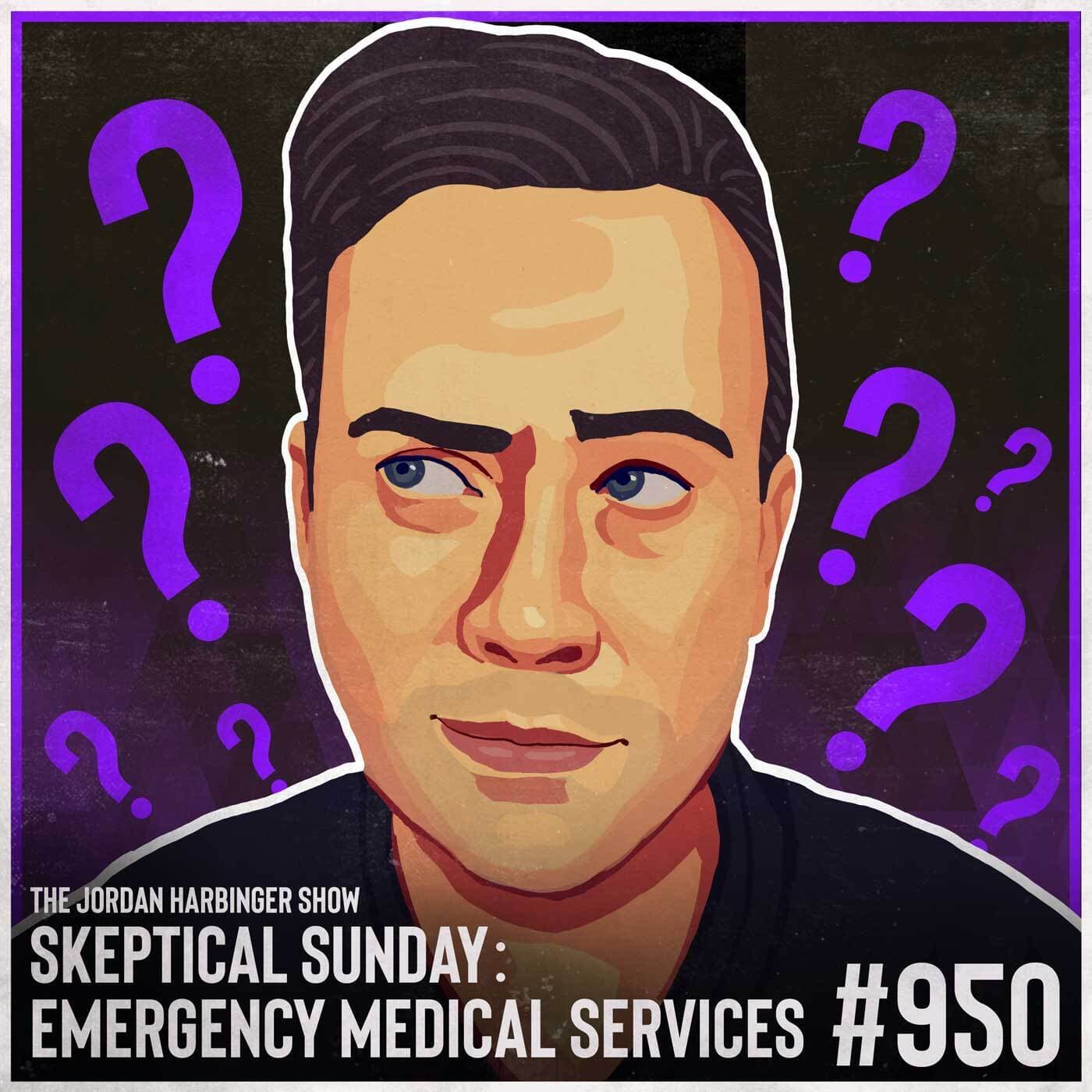
Podcast Episode Notes: The Jordan Harbinger Show - Episode 950: Emergency Medical Services | Skeptical Sunday
Episode Overview In this episode of *The Jordan Harbinger Show*, host Jordan Harbinger and comedian Michael Regilio delve into the problematic state of Emergency Medical Services (EMS) in the United States. They explore the implications of a broken EMS system, the financial burdens placed on individuals needing emergency care, and the broader societal implications of underfunded and underappreciated EMS providers.
Key Topics Discussed
- The Status of EMS
- Essential Service Definition: Unlike police and fire departments, EMS is not considered an essential service by most states, leading to chronic underfunding.
- Financial Burden: Ambulance rides are often not covered by insurance, making them financially prohibitive for many individuals in emergencies.
- Economic Challenges for EMS Providers
- Low Wages for EMTs: EMTs earn a median salary of $36,000, which is not enough for many to afford the services they provide.
- Funding Issues: EMS programs often rely on private funding and community donations, leading to a patchwork system of care that lacks consistency and reliability.
- Impact of Infrastructure
- Diverse EMS Systems: The U.S. has over 19,000 different EMS systems, varying widely in quality and accessibility.
- Ambulance Deserts: Many rural areas lack adequate access to ambulance services, leaving them vulnerable in medical emergencies.
- Historical Context
- Evolution of EMS: The first 911 call was made in 1968, but before that, emergency transport was often handled by untrained personnel (funeral home workers).
- Freedom House: The first EMS system staffed by trained paramedics was established in Pittsburgh, leading the way for modern EMS practices.
- Current Issues
- Increased Reliance on Uber for Emergencies: Due to high ambulance costs, people are opting to use rideshare services instead.
- Crowding in Emergency Rooms: Increased visits to emergency rooms lead to overcrowding and longer wait times for patients, exacerbating the issue of care.
- Potential Solutions
- Future Models of Care: The discussion includes the potential for urgent care centers and home care models to alleviate overcrowding in hospitals.
- Tent and Mobile Hospitals: Proposed as a temporary solution to manage emergency care demands.
Key Takeaways
- EMS is crucial for public safety but suffers from systemic issues including underfunding, lack of professionalism, and inadequate public recognition.
- Many Americans face a severe financial strain when requiring ambulance services, highlighting a critical flaw in the healthcare infrastructure.
- Awareness and advocacy are necessary to push for reforms that recognize EMS as an essential service, ensuring better funding and support for providers.
- The conversation around healthcare in the U.S. is complex, deeply tied to broader ideological views regarding public welfare and funding.
Closing Thoughts Jordan and Michael urge listeners to recognize the importance of EMS and the need for systemic reforms. They emphasize that everyone should be informed about the potential costs of emergency services and advocate for changes that ensure equitable access to care.
---
Additional Resources
- For further insights and links to episodes, visit [Jordan Harbinger's website](https://jordanharbinger.com/950).
- Connect with Jordan Harbinger on [Twitter](https://twitter.com/JordanHarbinger) and [Instagram](https://www.instagram.com/jordanharbinger).
- Follow Michael Regilio on [Twitter](https://twitter.com/Michaelregilio1) and [Instagram](https://www.instagram.com/michaelregilio/).
Related Topics for Further Exploration
- The history and evolution of EMS in the U.S.
- Financial implications of healthcare access.
- The impact of social determinants on health outcomes, especially in rural communities.
Written by AI. May contain mistakes. Listen to the episode to check what was said.
Transcript
Automatic transcript. May contain errors.0:28This episode is sponsored in part by Vital Proteins. pretty unique going for it. High quality protein, 30 grams of it plus collagen. That's pretty good ROI. Usually you're choosing one or the other, but Vital Proteins gives you both a ready to drink shake you can toss in your bag or fridge, zero added sugar, no artificial sweeteners, and no carrageenan. And I don't know what that is or if that's even how you say it, but you're supposed to avoid that. If you're already taking collagen or you're just curious about how it might support your hair, skin, nails, joints, and you don't want any carrageenan, this is a super easy, tasty way to try it.
1:00Get 20 % off by going to vitalproteins.com and entering promo code Jordan at checkout. This fall, fall in love with cozy. Nothing says autumn like wrapping up in the rich, warm colors of minky couture. From golden ambers to deep burgundy and rustic browns, minky blankets bring the beauty of the season right into your home. Perfect for crisp evenings, family time, or gifting someone special. Fall in love with Minky and shop your favorite fall colors today at minkycouture.com.
1:39Welcome to Skeptical Sunday. I'm your host, Jordan Harbinger. Today I'm here with Skeptical Sunday co-host Michael Regiglio. On the Jordan Harbinger Show, we decode the stories, secrets, and skills of the world's most fascinating people and turn their wisdom into practical advice that you can use to impact your own life and those around you. And our mission is to help you become a better informed, more critical thinker. During the week, we have long form interviews and conversations with a variety of incredible people from spies to CEOs, athletes, authors, thinkers and performers. On Sundays, we do Skeptical Sunday, where a rotating guest co-host and I break down a topic that you may have never thought about and debunk common misconceptions about that topic.
2:17Topics like Reiki healing, the lottery, diet supplements, GMOs, toothpaste, chemtrails, hypnosis, internet porn, and more. And if you're new to the show or you want to tell your friends about the show, I suggest our episode starter packs. These are collections of our favorite episodes organized by Topic, and they help new listeners get a taste of everything we do here on the show. Topics like persuasion and influence, abnormal psychology, technology and futurism, crime and cults, and more. Just visit jordanharbinger.com slash start or search for us in your Spotify app to get started. Today, emergencies are inevitable.
2:51That's kind of what that means. Homeowners plan for what to do if there's a fire, there's an earthquake, there's a flood, or in your crazy Uncle Frank's case, an alien invasion. Many people stock emergency supplies in case a hurricane hits or the power goes out or some households keep a backup generator. We got like water here and some food, solar panels, whatever. We try to prepare for medical emergencies. But when things become more than just a first aid kit or an EpiPen can handle, we dial those three magical digits, 911, and we trust that wherever we are, at least in the United States, maybe Canada, help will hurry to the rescue.
3:27But is that reliable? And when you see the cost when the bill comes, are you going to have another medical emergency? What is the truth about America's emergency medical services? Today, comedian Michael Regilio is here to sound the alarm about a medical system on life support. Hey, Jordan. How are you feeling? I feel like a million bucks, which is about half the cost of an ambulance ride in the United States. Outstanding. Now, stay that way. I do plan to stay that way. Well, that's the problem. All the diet and exercise in the world can't keep you from an accident or medical emergency. And when a personal tragedy strikes in the United States, someone yelling, don't call an ambulance, is as common to hear as someone yelling, call an ambulance.
4:08I've heard several stories of someone needing medical attention, but worries in the moment that the ambulance ride will bankrupt them, which is really sad if you're sitting there clutching your chest and you're like, my debit card account is empty as you collapse to the floor. Of course. And despite popular belief, an ambulance ride is not expensive because of its advanced features or medical staff. But one of the main reasons for the high price tag is our health insurance does not cover ambulance rides. As I've mentioned in a previous episode, on our third date, my wife nursed me back to health when I snapped a rib after falling off her pull-up bar.
4:47I think it's a little ambitious that you were showing off with pull-ups on the third date. No offense, Regilio. I just think you were trying a little too hard. Actually, I was trying to do a backstretch before a hike because I was afraid I might throw out my back. Okay, I take it back. That's actually kind of sad. You actually weren't trying hard enough, it seems. Well, if you think that's sad, I spent an hour on her apartment floor, unable to move, trying to figure out how to get to the hospital without an ambulance, because like so many other Americans, I just couldn't afford it. And here's the baffling part.
5:23While researching this episode, I learned that neither can many of the EMTs who drive and work in the ambulance. That is surprising. I mean, there should be an employee discount, but that's not really the grossest part. They're actually trained medical professionals working in a high-risk environment. I see the things speeding around. They're getting bled on, vomited on, probably bitten and cut with whatever, or just punched for no reason. Absolutely. Yeah. And EMTs have a much higher risk of dying in a traffic collision than police and firefighters. Yet they make a medium wage of only$36 ,000 a year.
5:56This is despite EMTs having an injury rate three times the national average. EMTs are 10 times more likely to have suicidal thoughts or behaviors. In a nutshell, it's one tough, unappreciated job. Yeah, 36 grand. Isn't that kind of like a grocery store clerk level salary? Yeah, it is. But here's the thing. Most grocery stores offer their full-time clerks medical insurance. Many EMTs don't have health insurance. Why do some EMTs, you said most, but why do some EMTs have health insurance and others don't? I thought this would be like a standardized industry across the board. No. In some sense, there is no industry.
6:36There is no single federal agency that oversees America's EMTs. America doesn't have a one-size-fits-all regulated emergency response industry. We have 19 ,000 different individualized industries. Some are municipal departments. Some are managed by the fire department but staffed by private companies. And some are just volunteers. years. Okay, that explains why you see so many ambulances with different things written on the side. I've expected it to say like Detroit or San Jose EMS. And sometimes you see that, but then other times you see like King Ambulance Co. And you're like, what the what is going on?
7:11I appreciate volunteers, but I'm not sure about having a volunteer perform an emergency tracheotomy on me as I'm laying on a restaurant floor. Yeah, look, don't let the name volunteer fool you. This isn't your retired neighbor. They are still qualified. It's just that many communities can't afford full-time EMTs, so volunteers have to jump in. So it would be an honor to have one of these kind and generous souls opening up my trachea, I suppose. Uh, yeah, sure, jerk. I would imagine the job has a lot of burnout, though. I mean, it's got to be super stressful, and if you're essentially a volunteer, yikes.
7:47Yeah, absolutely. Paramedics see things every day that would haunt most people for life. They witnessed the most gruesome car accidents, mass shootings, and just bizarre and awful accidents. It takes an incredible mental toll on a person. Plus, the physical demands of the job have to be taxing. You see that a lot of people, you have to huff and puff all over the place with a lot of this stuff. Absolutely, and there's a reason you don't see a lot of older EMTs. The job is beyond taxing, and EMT is lifting and carrying people all the time. And although there are physical requirements for the EMT, there are no such requirements for the patients.
8:22EMTs have to carry people of all different sizes downstairs, no matter what. It's a tough job. Yeah, my imagination is running wild with the type of people that you and maybe one other person would have to get down several flights of stairs. I've seen, I watch a little TLC here and there. What if you had to get one of those people from one of those shows, you know what I'm talking about, onto a gurney and downstairs, you'd need like seven or eight guys to do that, fit guys to do that. I don't even know. Even then it would be hard. Yeah, right. It's not a job anyone can do well. I feel like we really are.
8:55We're asking too much of these folks. And we don't respect all they do. Look, this patchwork of systems is due because the vast majority of states do not consider emergency medical services or EMS to be an essential service. How is that? What? The vast majority of states do not consider EMS to be an essential service. I feel like I should say I heard you. I just find that fact completely insane. It seems like the very definition of an essential service is the person that comes to make sure that you can get to the hospital when you're having a medical emergency after you've stuck a fork in an electrical socket or you're choking.
9:32I mean, that's it. Fire, police and EMS. There's a reason that they were pre-made buttons on my phone in the 90s. That's crazy. Yeah. Well, with emergency medical services responding to around 30 million calls annually it is insane that we do not designate ems an essential service the story of modern ems is actually quite convoluted how so i just figured it was an offshoot of the fire department or something no it wasn't until 1968 that the first 911 call was even placed before this when there was a medical emergency people would call the police or fire department or poison control whatever seven digit phone number corresponded with their emergency.
10:12The police might show up with a paddy wagon to transport a person in need, but local funeral homes ran ambulance services. The hearse was used to transport people to the hospital. Funeral home workers were not trained in any first aid, so they administered no medical care until a person could see a nurse or doctor. This was colloquially known as scoop and scoot. Yeah, that's creepy that they would send a hearse. And I would imagine funeral home workers are not trained in first aid, they can embalm you, which is not usually what I'm going for when I call an ambulance to get to the hospital when I'm bleeding out.
10:46So why the hearse? It seems, were they cutting out the middleman? Not trying to be dark, but that's why. Well, that is pretty dark, but no, it was just funeral home side hustle. So I suppose a hearse is quite ideal for transporting people who are laying down. It's like the, one of the only cars aside from an ambulance I can think of that actually does that. Right, exactly. I mean, think of the Ghostbusters car. That was a 1959 Cadillac-Hearse ambulance combination converted into the Ectomobile. Those types of hybrids really existed for emergency services, and it was a poor system. Imagine hoping for the comfy hearse instead of the dirty paddy wagon when you need help.
11:24Oh, yeah. Right. The paddy wagon for criminals who are possibly smoking, spitting on the floor, puking, whatever, urinating in there. And they're like, hey, man, this is what we got. So take your lacerated ass in there and lay on the cold metal dirty floor while we race to the hospital, because this is your only option. The very least, it sounds like we're stretching the duties of police to the extreme. True. I mean, they could be responsible for finding the guy who stabbed someone while helping the stabbing victim. Without medically trained responders, many people died on the way to the hospital who could have been saved with immediate treatment.
11:58This just wasn't an effective system for people suffering medical emergencies. Things had to change. And in 1968, they began to. Okay, I remember when I was a kid, we had the different stickers for like poison control, fire, police, and it was never a number that you could remember easily. It was always just a regular seven-digit number. So in 1968, they're using 911. Is that the big change? No. An organization called Freedom House was established. Freedom House started in Pittsburgh's Hill District, a predominantly black neighborhood. It was the first EMS staffed by trained paramedics. And notable for the time, Freedom House's staff was majority African-American.
12:36This is so difficult to believe. So we've only had trained paramedics arriving in an ambulance, responding to emergencies for like 50 some odd years. That's it. Yeah, I know. Freedom House revolutionized medical care for people at the scene of an accident and for those on the way to the hospital. They set a new standard for emergency care. Freedom House offered more than just emergency medical care. It provided the first nationally recognized paramedics training program in the country and offered career opportunities for people with no formal medical training. It even turned high school dropouts and ex-cons into skilled paramedics and dispatchers.
13:14So that's a cutting-edge program, which is interesting because it was in a low-income area from the sound of it. Yeah, it was a really cutting-edge, really interesting program. It was, and by 1972, Freedom House had 35 crew members and received over 7 ,000 calls a year. It was the leaders of Freedom House that established the National Registry of Emergency Medical Technicians. They pioneered several medical techniques, including using air casts to stabilize injured bones, allowing medics to transmit EKGs, administering Narcan to overdose patients, and performing CPR. It's so wild to think this is all so new.
13:49I know for younger listeners, They're like, 50 years, it's a super long time. But as a 43-year-old, I'm like, well, it's not really that long. I mean, we've had fire departments for, I would assume, centuries. Police also. Nobody thought we needed this before. It's just, it's insane. What an amazing success story, though. So is Freedom House still rocking and rolling? No, because when word got out that the black residents of Pittsburgh were getting better care than the rich white residents, it became a political problem. Pittsburgh's mayor dismantled the program. Wait a second. Sorry, I don't even mean to laugh because this is so tragic, but it's ridiculous.
14:26So instead of building an EMS program for everyone else based on the success of Freedom House, they just decided, hey, let's get rid of the program that's helping the poors. That's so on brand somehow. God, that's embarrassing. So staying alive was a privilege of white people, but also, hey, let's not make it too convenient. Let's just get rid. what a weird and stupid step backwards. Right. Just for the record, Staying Alive is a surprisingly dark and creepy film with a killer soundtrack. Okay, fair. The soundtrack was for privileged whites. We can get that. We can agree on that. I think we can.
15:02Look, Freedom House crew knew they were in trouble when the word came down that their ambulance's siren was disturbing people and were instructed to switch over to a bell, like on an ice cream truck. The dismantling continued, and on October 17th, 1975, the Freedom House ambulance responded to its final call. Can you imagine? Hey, by the way, we're not going to be able to come back again. This is the last day as you're loaded into the ambulance. Lucky you. While half your blood is on the pavement. What a loss. So did Freedom House ever spread out of Pittsburgh? I mean, we have EMS now, so what happened?
15:35Well, technically, no, but Freedom House set the standard by which we run all EMS services today. We owe them a great debt. Trained paramedics riding in ambulances was certainly an improvement over, well, everything we just talked about. Of course, yes. And in 1970, California Governor Ronald Reagan signed the first paramedic act into law, the Wedworth-Townsend Paramedic Act. It allowed trained paramedics to begin life-saving care on scene and federal dollars to be used for our nation's EMTs. So score one for the Gipper. I've heard of Reagan. He was not the president when I was born. I just figured that out, by the way.
16:10I had to go all the way back. Turns out I was a Carter baby this whole time. I never knew. Yeah, well, and then take that point you scored for the Gipper and remove a point because by the time he was president Gipper, Reagan decided cutting budgets and deregulating services was the way to go. So he cut federal funding and oversight of EMS, which pushed responsibilities back onto the states. OK, so the 80s weren't just bad for fashion. Got it. Are you saying that that picture of me in a Miami Vice inspired Dayglo green shirt with white parachute pants isn't awesome? No, it's awesome. I'm just saying the fact that you're wearing that outfit right now is a bit odd, but let's continue.
16:47Yeah, you got me. Okay, look, with the onus of funding on the states, as well as the decision to designate EMS an essential service, we find ourselves in the situation we are in today. Many of the EMS programs in the United States are suffering and unable to provide the services they intend. So that sounds incredibly dangerous, literally life-threatening to anybody who would need emergency medical care. You know what's more affordable than an ambulance ride, Michael? Literally everything, but also the fine products and services that support this show. We'll be right back. This episode is sponsored in part by 1-800-CONTACTS.
17:25You know that last pair of contacts panic? My wife Jen knows it way too well. She's had these mornings where she's out of contacts and stuck wearing these old glasses she's got to keep wiping clean with her sleeve. but now she makes sure to load up ahead of time because her next set is always on the way from 1-800-CONTACTS. They're the only major retailer that lets you renew your prescription online, so Jen gets her same doctor-prescribed contacts fast with free shipping without leaving the house. 1-800-CONTACTS has been doing this for over 30 years. They've got millions of lenses in stock, award-winning customer service, and perks like free returns, free exchanges, even free torn lens replacement.
17:56Jen loves their Express exam, which lets you renew your prescription online in under 10 minutes. It's a vision exam, not a full eye exam, but it gives you a doctor-issued prescription if you're seeing clearly with your current lenses. No waiting rooms, no dilation drops, remember those things? And with their best price guarantee, if you find your contacts cheaper somewhere else, they'll beat it. Getting contacts doesn't have to be a hassle. Let 1-800-CONTACTS get you the lenses you need right now. Order online at 1-800-CONTACTS.com or download the free 1-800-CONTACTS app today. This episode is sponsored in part by Dell.
18:26It's time for Cyber Monday, Dell Technologies' biggest sale of the year. Enjoy the lowest prices of the year on select PCs like the Dell 16 Plus featuring Intel Core Ultra processors, and with built-in advanced features, it's the PC that helps you do more faster. Plus, earn Dell rewards and enjoy many other benefits like free shipping, price match guarantee, and expert support. They also have huge deals on accessories that pair perfectly with your Dell PC and make perfect gifts for everyone on your list. Shop now at dell.com slash deals.
18:55This episode is sponsored in part by LinkedIn. If you've ever hired for your small business, you know how important it is to find the right person. That's why LinkedIn Jobs is stepping things up with their new AI assistant, so you can feel confident you're finding top talent that you can't find anywhere else. The best part is that these great candidates are already on LinkedIn. In fact, employees hired through LinkedIn are 30 % more likely to stick around for at least a year compared to those hired through the leading competitor. That's a big deal when every hire counts. Early on, I learned that hiring isn't headcount.
19:23It's do I see my family this week? Do we actually release episodes on time? Can I take a few days off without everything falling apart? When I've hired the right person, my life got easier. They took real work off my plate, caught problems early, and treated the business like it was theirs. That's when we actually grow. With the wrong hire, I've spent months training, fixing mistakes, having the same conversations, and still ended up letting them go and starting over. You don't just lose money, you lose momentum, you lose morale, and you lose time. That's why I'm big on hiring right the first time, even if it takes a little longer.
19:51Hire right the first time. Post your job for free at linkedin.com slash harbinger. Then promote it to use LinkedIn Jobs' new AI assistant, making it easier and faster to find top candidates. That's linkedin.com slash harbinger to post your job for free. Terms and conditions apply. Thank you for listening and supporting the show. Your support of our sponsors does keep us going. All deals, discount codes, and ways to support the show are on our deals page at jordanharbinger.com slash deals. You can also search for any sponsor using the AI chatbot on the website as well. Please consider supporting those who support the show.
20:26Now for the rest of Skeptical Sunday. So what is being done to keep these services going? Because obviously we're not going to get rid of ambulances, right? Right. Well, we'll see. As I research this, there's a lot of problems with what's going on right now. EMS particularly in rural areas have to fundraise. So your friend that has a GoFundMe to pay for his recovery after a car accident is competing for the same dollars as the paramedics that rushed him to the hospital. Ugh, so it sounds like nobody cares about care. Look, it's a vicious cycle. Because EMTs are so underfunded, the cost of those in need is outrageous.
21:05They must recoup their costs somehow, and very often EMTs only get paid when they bring a patient to the hospital if If they show up and the patient won't go, the MS eats the cost. Oh, wow. I didn't realize people could turn down paramedics who arrive on the scene. I mean, I guess they can't kidnap you, but do people just go like, no, I'm not getting in that ambulance? Yeah. In fact, my wife slipped in the shower and was knocked unconscious. I called 911, and amazingly, they walked her out of the bathroom, took her blood pressure, and said, you need stitches and an MRI immediately. Let's go. Even right after being knocked out, she had the sense to say, no thanks, I'll get a ride.
21:43She signed a waiver, they left, and I drove her to the ER. It significantly cut our costs. Wait, so your wife fell in the shower and knocked herself unconscious. What number date was that, by the way? It was actually supposed to be the day I proposed. It's a sore subject, if you know what I mean. When you guys say you fell for each other, you ain't kidding. But really, though, it almost seems like each of you is competing to be the biggest klutz in your relationship, Mr. Snap-a-Rib while stretching. How do you... Look, this is true, but situations like this incentivize paramedics to bring people to the hospital when unnecessary, which brings us to another industry colloquialism called You Call, We Hall.
22:25So that's catchy. In fact, I once knew a law firm whose slogan was We're not happy until you're not happy, which is so hilariously accurate. But You Call, We Hall sounds a little bit like... I don't know, chattelesque? Yeah, it does, yeah. So the revenue stream for many EMS is patients. By law, they must accept Medicaid and Medicare, despite those prices being set very low. To understand today's EMS, we need to understand that private insurance companies play a little game with caregivers, where they offer a smaller amount than they're being billed and say, take it or leave it. EMS isn't required to accept private insurance at all, so many just don't accept it.
23:05But in some cities, all EMS ambulance services are out of network for all insurers. So everyone gets a bill. You get a bill. And you get a bill. And you get a bill. That's like EMS Oprah. You get caught! You get caught! Everybody gets caught! Right. And that's how you get a surprise$3 ,000 bill. Which explains why people are yelling, don't call an ambulance. Which is why there's a recent phenomenon called Uber ER. People are calling an Uber instead of an ambulance. So this isn't actually an Uber feature. It's just instead of calling an ambulance, you call an Uber and you, what, hold napkins over your bleeding leg?
23:47And you're like, hey, man, ER, Kaiser Permanente. And you just pray that Pradeep is cool with that. I hope they're not using the Uber pool. Imagine sharing a car with somebody who's just like bleeding from their eyeballs or something. I mean, even if they use an UberX, I doubt the driver is excited to pick up a person with explosive diarrhea. Man, too far, Vigilio. Gross. Look, it's just a bad idea to be sick or hurt in the back of an Uber trying to Google which hospital has a trauma unit. And the lack of funding has led to the rise of private for-profit EMS companies. That's what you mentioned.
Read the full transcript
24:25Today, close to 25 % of all EMS are privately owned. And I don't think I need to tell you that when the goal is money and not care, the thing that suffers are the patients. Yeah, I mean, there's such a good pun in here, but I'm whatever. I'm losing my patients with the entire system and I've never had to ride in an ambulance either. Right. Which is still better than the old days when they were losing their patients on the way to the hospital. But I digress. And it's the entire system that's messed up, particularly in rural areas. The situation has gotten so bad that many rural areas are dubbed ambulance deserts.
25:02Is that like a food desert where there's a mostly a lack of nutritional food? And so instead of here, though, instead of no nutritional food, there's just no ambulances. That's first of all, it's heartbreaking. But I'm surprised that that's even legal. So what do you you're just screwed if you live in that area, period. That's it. Well, I mean, an ambulance desert is defined as being 25 minutes or more from an ambulance station. Okay. Four out of five counties across the nation have at least one ambulance desert. That affects about five million Americans. That is not something you think to ask your real estate agent when you buy a piece of property.
25:34That's for sure. Yeah. And many of these communities are underserved American Indian reservations. Tribal EMS programs do exist, but available resources are scarce due to the isolation of the reservation population and climate extremes that affect many reservations. The chance of surviving a car accident injury is significantly less in these communities than in the rest of the country. So basically, they need a version of Freedom House that the government can then come in and stop because it makes everyone look bad. Got it. I mean, they kind of have one. I read a story about how a physician and his wife used the retirement money to fund two ambulance stations in a North Dakota ambulance desert at the Fort Berthold Indian Reservation.
26:16So good people doing good things, I suppose. Well, but when it's for the public good, it shouldn't be private individuals using the retirement fund. It should be funded by, you know, the public. Yeah, you got me on that one. So don't some communities have a monthly buy-in or something like that? Can you sort of set up almost like a private, well, I guess tax to fund an EMS program? Yeah, they do have that, but it's not the norm. And even if you live in a community with that type of buy-in, you'd better only have your emergencies in that community. Right. I didn't think about that. You're across the street.
26:52They can't come get you now. Now, EMS must be in network like our health coverage or your cell phone plan. Right. Not to mention the nightmare of what happens next. Even if you escape the cost of an ambulance ride by taking Uber or getting a ride from a loved one, things don't get better in the emergency room. Well, the EMS just drops you off, I guess. It's not like an expensive ambulance ride gets you priority at the hospital. You're not arriving at the club in a limo. Exactly. And two new studies out of the University of Michigan's National Clinician Scholar program depict the depressing reality of emergency rooms in the United States.
27:29Often, ERs don't have enough beds for everyone in need, and even if they did, there's not enough staff to provide medical care for the people in the beds. After hours of sitting in an ER waiting room, many people continue to suffer lying in a bed that they put you in in the hospital hallway. That is surprisingly gross. I thought the hallway thing, you expect to see that in a developing country, third world country, when there's a natural disaster, not because the hospital in your city is full. That's crazy. There's even a term for putting patients in hallways called boarding. In the studies, researchers examined how long patients boarded and how often they just left before receiving care.
28:10So just bounce out like, OK, the bleeding seems to have subsided. I got some duct tape in the car. I'm just going to leave now without seeing a doctor. I mean, can you imagine going to the emergency room and eventually saying, screw it, I'm going home? I mean, I've waited so long for a table at a restaurant that I've left, but I was just hangry. I can't imagine being really sick and thinking I'd be better off at home. Yeah, boarding, that word sounds like a euphemism for, eh, this guy will be fine. It's not that serious. Yeah, when hospital occupancy topped an 85 % during, you know, that pandemic thing we had, boarding times exceeded 6.5 hours.
28:48I went to the hospital once when I was young for a separated shoulder high school. I was there for like 13 hours or something crazy because it was a non-urgent thing. And it was a Friday night. Apparently, everybody acts the fool on Friday night. So waiting in the hallway of a hospital to be seen by a doctor for six and a half plus hours, just clearly the system is broken both inside and outside of the hospital. Right. Which is why it's not surprising that the National Institutes of Health found several hospitals where over 10 % of emergency room patients leave before being seen. One in 10. Man, I can't get my head around that.
29:23Even I stayed, although I was kind of a kid and couldn't get a ride anywhere. But still, that's so pathetic, really. Dr. Ted Melnick, an associate professor of emergency medicine at Yale School of Medicine said, quote, a critical number of American emergency departments are functioning in disaster mode daily with dangerous and uncomfortable wait times. I mean, uncomfortable sounds like an understatement when we're talking about a whole workday with a time. What about urgent care centers? We have a ton of those around here. There's one like down the block. Do they alleviate the problem where they exist?
29:57Urgent care centers aren't a good solution because they are only options for people with insurance or disposable incomes. Yeah, I suppose I hadn't thought of that. So after people stress about getting to the hospital in an emergency, then they have to stress about long waiting times. And that alone makes me sick. And that's not even counting the bill they get after they get out of there. Right. Some emergency rooms advertise their wait times. So if you're not too sick, check online first. It's like the same system at the DMV or Universal Studios rides. Right. You got an app for that. Like, oh, the wait time is only 68 minutes.
30:30Maybe if I get there now, I'll be seen before tomorrow. So that's not much of a solution. I'd like to think my health is more valuable than a seat on that Harry Potter ride. And the problem is just going to get worse. Experts predict emergency room visits will continue to increase as the growth of the U.S. population increases, especially the growth of people over 75. So as Americans live longer, the care quality actually goes down? Older patients are sicker and require more attention and longer stays, which reduces capacity. One Massachusetts hospital recently reported that the length of the stay at the hospital has increased by almost one full day.
31:12And research suggests that overcrowding in hospitals will require a 90 % expansion of emergency room capacity by 2050 and 72 % more space for inpatient beds. That also sounds like a lot more ambulance rides will be necessary. Jeez, and that's no small project. Are there any other solutions besides building a hospital on top of our hospitals? The explosion of urgent care centers removes some of the burden on the hospitals. Another popular model being looked at is care at home under a hospital's direction. These have some similar pros like alleviating hospital overcrowding, but it ain't so great in other ways.
31:53Cons are things like nurses can't provide the same care as they do in the actual hospital. Sure. No, that makes sense. So we're going from home offices to home hospitals. I'd hate to see a come-to-home surgery room, right? You might as well learn to perform the procedure on yourself with a doctor over Zoom or something like that. Really gnarly trend. Yeah, man. I do not have the lighting fixtures for that. And another idea being considered is tent hospitals. Like MASH, right? Those Vietnam tents sitting out there? Well, no, it's different. Technology has come a long way since the days of Hawkeye and Klinger.
32:28The modern military tent hospital is like something off the set of The Martian. And once built, they can morph these tents into permanent buildings that are cheaper and quicker to build than regular hospitals. During the pandemic, hospitals put up tents and triage and holding areas to deal with how overwhelmed they were. So excuse the pun, but this putting up tents in the parking lot really does sound like a Band-Aid solution. Right. Well, most actual solutions to these problems face an ideological wall here in the U.S. because of the dirty S-word, socialism. Plus, politicians argue about how to pay the bill instead of why the cost is so high.
33:05So are you kind of getting at the concept of universal health care? Look, any concept of public funds for medicine is met with resistance in the United States. The problem has plagued emergency care since those early days of the Freedom House in Pittsburgh. At one point, Pittsburgh's mayor tried to get Freedom House defunded, discredited, and shut down. Many people considered Freedom House to be un-American. Well, they were right because they were getting healthcare. So that is un-American. Of course. The un-American thing was the notion of public money being used for what was supposed to be a business.
33:39So much so that there were private companies calling Freedom House unconstitutional. They saw it as a slippery slope. Once you declare emergency services an essential service, how long until the same goes for the rest of medicine? Yeah. What is it? There's like kind of self-aware. It's like you're almost getting it. I think we're gonna need another entire podcast if we're gonna dive into the socialized medicine debate for sure I think everybody knows I'm not a socialist, but I have strong opinions on socialized medicine Right me too. Look, I think we need an entire podcast series dedicated to the subject and even then it would just be a general overview This is a big and complex issue, but it really is at the heart of the medical fields giant problems It reminds me of what Barack Obama said It was something like, if problems were easy to solve, they would be solved.
34:30The problems that we see in our society are, by definition, the hard ones. I think we've uncovered why EMS is not federally labeled as an essential service. It opens the door to being labeled socialism, and I can see the listeners' emails already. I'm going to forward all those to you, by the way. Great. The fact of the matter is, these are complex issues, but we have to be at least able to talk about them. And I agree, of course. Right. Here's a simple solution to something I've observed. How about, and I know this sounds crazy, but get the hell out of the way of ambulances when they come down the road with their lights and sirens on.
35:06People do that, at least where I live. They get out of the way, they pull over. No, no. This has somehow become a regional thing. In LA, people are slipping. I see people not only failing to pull over, but then using the ambulance as a way for them to get around traffic. I mean, people are going broke for that ambulance ride. We should at least get out of their way. Wow, yeah, do a person a solid, maybe pull over for a second. Yeah. That's crazy. So when you say get around traffic, are you saying the ambulance goes through and people are like, yeah, I'm just going to follow that ambulance all the way?
35:34Yeah, like the ambulance is like their blocker and they're a runner on a football field or something. And in New York, forget about it. People see the ambulance as just another jerk trying to cut them off. Oh, my God. And that's true. I was just there, man. It's crazy. No one gets out of the way of ambulances. They're like, yeah, I got a horn too, buddy. But in fairness, the Emergency Services Medical Outcomes Project studies show that the only time it actually makes sense for an ambulance to speed with its sirens blaring and running red lights is in the case of cardiac arrest. Is that true? Absolutely.
36:07When someone suffers cardiac arrest, time is truly of the essence. Any other emergency, even with gunshot wounds and strokes, it makes more sense for ambulances to follow traffic laws. an ambulance driver is twice as likely as you or me to have a fatal traffic accident. The National Highway Safety Administration estimates about 10 ,000 ambulance crashes every year. These result in an average of one fatality a week because of ambulances speeding with their sirens on. And 75 % of those fatalities are pedestrians. I would imagine that's a lot of folks with earbuds in that were looking at their phone and just got smoked by an ambulance.
36:46That's awful. I mean, it could be. I am sure that accounts for some of the reported 10 EMS injuries that happen every day. Research shows that over 50 % of all ambulance insurance company payouts are because of ambulance collisions. Great. So now we need EMS for EMS. EMS, EMS. But more importantly, everyone needs to be mindful that our emergency funds need to include the cost of EMS. whether we are driving or riding in the ambulance, and God forbid you need a helicopter lift. I didn't even think about that. So great. Now, along with my kids' college fund, I got to start an EMS fund. I've heard those helicopter rides can be like 30 to 100 grand.
37:28Oh, I didn't even cover those because it's just ridiculous. If they call a helicopter on you, I don't care what's wrong with you. Don't get on it. Yeah, man. And until things change and EMS becomes a human right, I will do my part as a real American and I'll just die of a treatable emergency in the back of an Uber. Or you'll get hit by an ambulance limping to the ER. Hey, at least they'd have to pay for my funeral costs. Man, so dark, Rogelio. How about you? Just try not to fall before the next podcast. How's that? Will do. Thanks all for listening. Topic suggestions for future episodes of Skeptical Sunday can go right to me, Jordan, at jordanharbinger.com.
38:07Show notes at jordanharbinger.com. Transcripts are always in the show notes. Advertisers, deals, discounts, and ways to support the show are all at jordanharbinger.com slash deals. I'm at jordanharbinger on Twitter or Instagram. You can also connect with me on LinkedIn. And you can find Michael at michaelregilio on Instagram or michaelregiliocomedy.com. Tour date's up now as well. We'll link to that in the show notes because, as always, no one can spell Regilio. This show is created in association with Podcast One. My team is Jen Harbinger, Jace Sanderson, Robert Fogarty, Ian Baird, Millie Ocampo, and Gabriel Mizrahi.
38:42Our advice and opinions are our own, and I'm a lawyer, but I'm not your lawyer, so do your own research before implementing anything you hear on the show. Maybe Google EMS costs in your area before turning down an ambulance and or helicopter. Remember, we rise by lifting others. Share the show with those you love, and if you found the episode useful, please share it with somebody else who could use a good dose of the skepticism we doled out today. In the meantime, I hope you apply what you hear on the show so you can live what you learn, and we'll see you next time. This episode is sponsored in part by the Something You Should Know podcast.
39:13Finding a great new podcast can feel like searching for a needle in a haystack. Let me save you some hassle. Check out Something You Should Know with my friend Mike Carruthers. Every episode is packed with fascinating insights that you can actually use. Mike interviews top experts on topics that shape your life, like how to optimize your brain chemistry, the best and worst ways to apologize, probably could have used that recently, why couples hate to talk about money. no matter the topic, Mike asks the questions you'd want to ask, getting straight to the good stuff. And the conversations are always engaging, always insightful, guaranteed to leave you a little smarter than before.
39:41They've got thousands of five-star reviews. But do you even need that? I'm recommending it. You don't need other people's opinion, right? At this point, I would hope. Anyway, give it a listen. Just search for Something You Should Know wherever you get your podcasts. Look for the bright yellow light bulb and start listening to Something You Should Know.
From the publisher
Why is relying on Emergency Medical Services (EMS) liable to send your bank balance to the morgue? Michael Regilio joins us on Skeptical Sunday to find out!
On This Week's Skeptical Sunday, We Discuss:- Unlike police and fire departments, emergency medical services (EMS) are not deemed essential across most of the US — which means they're often underfunded and struggling to provide adequate care.
- Insurance policies commonly omit coverage for EMS-provided ambulance rides, making them cost-prohibitive for the people who often need them the most.
- Even the EMTs who staff EMS outfits are underpaid and can't usually afford to make use of them without going into the red.
- Who profits from the status quo of the broken EMS system, and why is it so hard to enact the reforms necessary to have providers declared essential?
- What can we do to educate and advocate for the overhauls necessary to make EMS viable for everyone?
- Connect with Jordan on Twitter, Instagram, and YouTube. If you have something you'd like us to tackle here on Skeptical Sunday, drop Jordan a line at jordan@jordanharbinger.com and let him know!
- Connect with Michael Regilio at his website, Twitter, Instagram, and YouTube, and make sure to check out the Michael Regilio Plagues Well With Others podcast here or wherever you enjoy listening to fine podcasts!
Full show notes and resources can be found here: jordanharbinger.com/950
This Episode Is Brought To You By Our Fine Sponsors: jordanharbinger.com/dealsSign up for Six-Minute Networking — our free networking and relationship development mini course — at jordanharbinger.com/course!
Like this show? Please leave us a review here — even one sentence helps! Consider including your Twitter handle so we can thank you personally!
See Privacy Policy at https://art19.com/privacy and California Privacy Notice at https://art19.com/privacy#do-not-sell-my-info.