 The Kara Goldin Show
23 Oct 2026 · 30m

 Add vo to ChatGPT or Claude to ask about everything you hear
vo listened to this episode to put together the overview and transcript, so there may be the odd mistake.
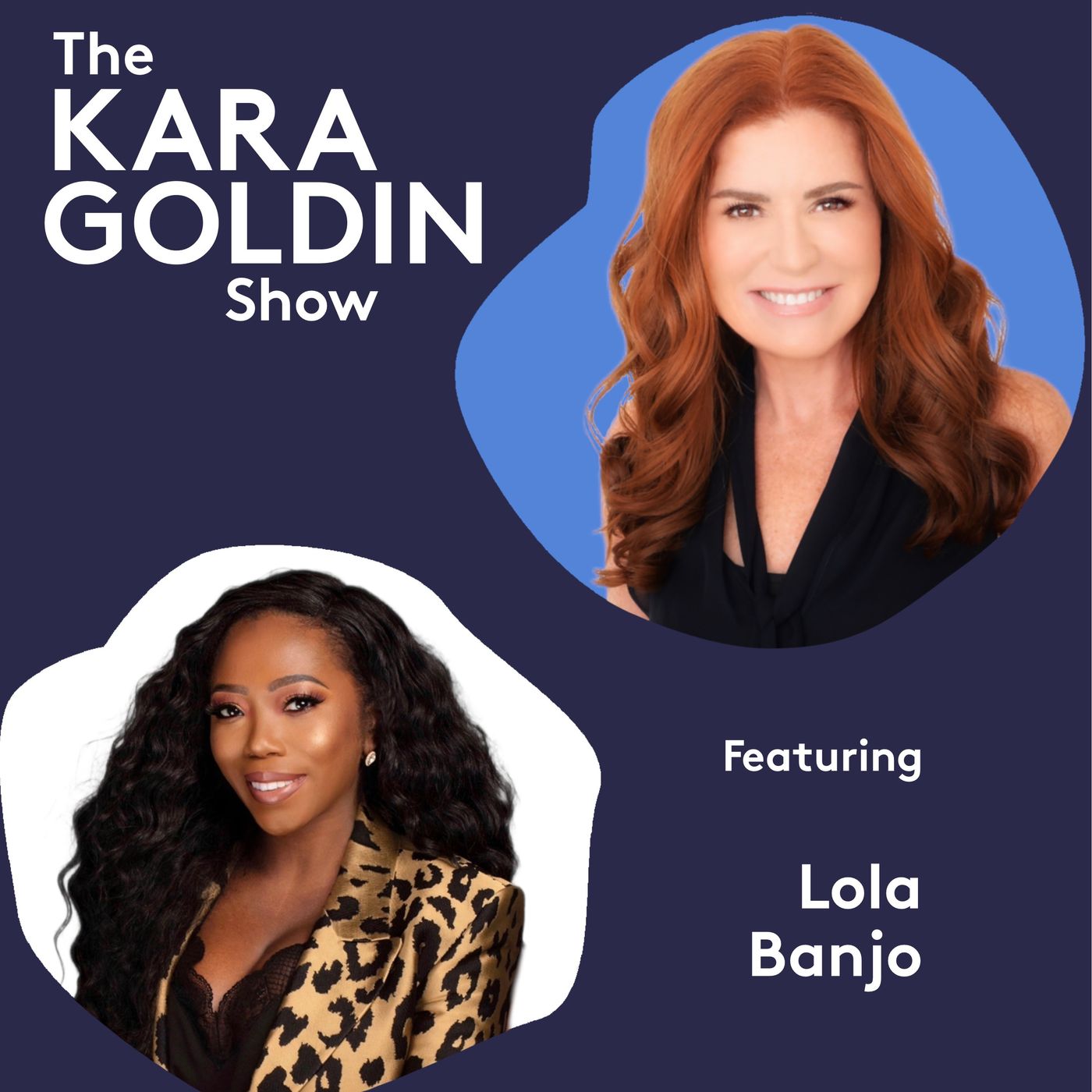
Lola Banjo, founder & CEO of Silver & Riley, discusses building a luxury travel/leather accessories brand from a single duffel bag into a multi-million-dollar company, focusing on customer intimacy, a “hero product” (the New Yorker bag), purpose-driven values, and the costs of being undercapitalized.
Lola Banjo was raised internationally (born in Brooklyn; lived in Lagos at age 8). She worked in corporate strategy at Deloitte/Accenture and later as a VP of Strategy at Salesforce, advising major CPG/consumer brands. She self-funded Silver & Riley for years while balancing her job.
Luxury and functionality can coexist; customers—not founders—identify the hero product; retention and repeat purchases drive scale; undercapitalization can cause sellouts and slow replenishment; “good” and capitalism can align via grants (5% of revenue to women entrepreneurs).
duffel bag origin; first launch with 5 SKUs; New Yorker bag sold out in 3 days, expanded to 14 colors; repeat customers are over 50%; customers in 27 countries; production replenishment every 4–6 months due to limited capital.
0:00Kara Goldin: I am unwilling to give up, but I will start over from scratch as many times as it takes to get where I want to be. You just want to make sure you will get knocked down, but just make sure you don't get knocked out. So your only choice should be, go focus on what you can control. Hi everyone and welcome to the Kara Goldin Show. Join me each week for inspiring conversations with some of the world's greatest leaders. We'll talk with founders, entrepreneurs, CEOs, and really some of the most interesting people of our time. Can't wait to get started. Let's go. Support for today's episode comes from Seed, the company taking a scientific approach to gut health.
0:48Kara Goldin: I'm selective about the supplements that earn a place in my daily routine. If I'm going to take something every day, I want to understand what's in it, how it works, and whether there is real evidence behind it. That's what stood out to me about Seeds DSO-1. DSO-1 is a two-in-one probiotic and prebiotic formulated with 24 probiotic strains to support digestive and whole body health. It also uses Seeds via Cap Technology, a capsule-in-capsule delivery system engineered to protect the probiotics through digestion and deliver them where they need to go. And this isn't based on marketing promises.
1:34Kara Goldin: In a clinical trial, DS01 was shown to improve regularity, reduce bloating, and alleviate gas. Plus, it requires no refrigeration, making it easy to maintain your routine at home or while traveling. Make your daily probiotic one of the more informed decisions you make today. Go to seed.com forward slash Cara Golden and use code Cara to get 25 % off. These statements have not been evaluated by the FDA. These products are not intended to diagnose, treat, cure, or prevent any disease. Hi, everyone, and welcome back to the Cara Golden Show. So what does it really take to build a luxury brand from scratch and then take it from millions to, oh, hundreds of millions?
2:26Kara Goldin: So today's guest is Lola Banjo, founder and chief executive of an incredible brand called Silver & Riley. And it is the luxury fashion and travel accessories brand launched in 2019. Lola built Silver and Riley while balancing a demanding corporate career. We will talk a lot about that and investing her own capital and learning firsthand that building a company is very different from maybe adding value to a company, providing a tool to a company or advising one. So today, Silver and Riley is a multi-million dollar business with an incredibly loyal customer base and incredible, incredible, primarily leather handbags, but so much more that Lola will share with us.
3:21Kara Goldin: And I cannot wait to dig into talking about building a hero product, finding your next consumer and the realities of capital, ambition, scale, all of that. So Lola Banjo, welcome to the Kara Golden Show. So excited to meet you. Hi, Kara. And hi, everyone. It's such an honor to be here with you. Kara, you're an absolute legend. So having this founder to founder conversation is so important to me. So I'm excited to get into it. So excited. So OK, so for listeners just discovering Silver and Riley, how do you describe the brand today? Yeah, I describe the brand as if you are looking for exquisite goods, exquisite accessories for primarily working professional people.
4:08But of course, we're open to everyone. But if you're looking for exquisite accessories such as leather goods and silk scarves or travel accessories or wallets or passports and so on and so forth, you come to Silver and Riley, we got what you need. That is us in a nutshell. But of course, there's a lot more to the company than that. But primarily, we're focused on leather goods right now.
4:31Kara Goldin: You started out in a little bit different direction. Can you talk about that? Because it didn't just start out with the idea or sort of the selection that you have today. Can you talk a bit about where it started and how that's expanded? Yeah, the brand actually started with one single duffel bag. And so actually the idea came to me when I was traveling weekly as a strategy consultant intern during my MBA program. and I had this idea to create a travel goods company. It came out of a frustration that I actually experienced. I was traveling for my internship and it was on a freezing flight and I had asked for a blanket and the attendant at the time had said, no, it's reserved for first-class passengers only.
5:18Of course, I was a student so I was now flying first class at the time. And so that sparked a frustration in me and said, I want to create a travel goods company that creates durable goods that are, for business professionals to travel, people that travel that they can enjoy and actually make travel more enjoyable and convenient. And so that sparked that initial idea behind the travel goods company. But as I started going down the rabbit hole and as a researcher and strategy consultant, I started looking into the market and large and also just observing what people were struggling with on their travels.
5:51I started asking the question, you know, I really loved a lot of the luxury pieces I was seeing and also I I owned at the time, but I felt they were lacking. A lot of them were lacking in functionality. And I felt like those two things did not have to be mutually exclusive. And so I started investigating the market and asking questions around why don't companies do both at the same time? So when you have the big legacy houses, why are they not creating functional, but also really beautiful, well-crafted goods for working professionals? And that inspired, you know, the evolution of of Silver and Riley eventually.
6:26But even as I take a step back, I mean, I like to actually start the story of this brand from purpose. Right. And I think you've talked to a lot of founders and everyone is, you know, motivated by a frustration in their life. You know, I was frustrated by this or I, you know, I had this. And of course, your story as well is so inspiring. You know, you were looking for water, you were buying fruit and flavoring, you know, the water. And you're like, oh, that sparked the business idea in you. And I think every founder and entrepreneur is sparked by something that, you know, was either a frustrating experience or something that they enjoyed in their life.
7:02But, you know, I think as we all take a step back and, you know, I think everyone's story starts from even, you know, earlier than that. And where my story began was my search for purpose. Right. So I was born in Brooklyn, New York, but I was raised all over the world. And, you know, I had parents that really, you know, traveled all over the world. And at the time that, you know, I really started to question what my life's purpose was. I was a really young girl at the time and I was eight years old living in Lagos, Nigeria. And I remember I had to walk a kilometer to school every day. And on my walk, we lived in an area that was like, you know, just a middle class, very modest area.
7:40But it was an area that also had a lot of poverty and a lot of people that were living in struggle. And so I used to walk about a kilometer to school every day. and my parents would give us lunch money, my brother and I. And every single day I would give out my lunch money to people on the streets that were begging for food, begging for something to eat. And I remember I used to drive my mom crazy and ask her questions like, why do so many people have to suffer so much? I mean, people were begging for food. They were blind, they had polio, diseases that were honestly very preventable. They just had no hope for life.
8:15They were just really just begging for a chance to survive. And I used to ask my mother the question, And why do some people have opportunity and why don't others? And I think at that very young age, I kind of started searching for purpose. Of course, I didn't know what to name at that time. But I knew that that was kind of like my first direction into what is my ultimate purpose in life? And, you know, why did I have the opportunities that I had to get an education, to have a two-parent household, to, you know, those things that we sometimes get take for granted? Because, you know, at eight, nine years old, as I was giving away my lunch money, I was getting home.
8:49I knew that I was going to eventually have food on the table. And I recognized that that was something that a lot of people did not have. And I think I vowed from that moment on to always explore the opportunities that was handled in life and make sure I was maximizing it. Of course, I couldn't name it at the time, but eventually it will lead me to entrepreneurship. So there's a lot more to that story, but that's the brief of it. I love it.
9:11Kara Goldin: This episode of The Kara Golden Show is brought to you by Chime. I've always believed managing your money shouldn't be complicated, but between unexpected fees, confusing rules, and all the fine print, traditional banking can make something that should be simple feel like a lot more work than it needs to be. That's what I like about Chime. They've built a more modern banking experience around making everyday money management simpler, helping people keep more of their money and giving them tools that make it easier to stay on top of their finances. Chime offers the most rewarding, fee-free banking with no overdraft fees, no monthly fees, and no minimum balance fees.
9:54Kara Goldin: What I really like is that you get 5 % cash back on your Chime card in a category of your choice, like gas or groceries, while building credit through regular everyday spending with no credit check. And if you're ever in a pinch, SpotMe lets you overdraft up to$200 fee-free. Join the millions who are already banking fee-free with America's number one choice for banking. Head to Chime.com slash Kara Golden. That is Chime.com slash Kara Golden. Sign up now. It only takes a few minutes. Chime is a fintech, not a bank. Banking services and Chime card provided by Chime's bank partners. Qualifying direct deposits required.
10:37Terms and limits apply. Go to chime.com slash disclosures for details.
10:41Kara Goldin: This episode of the Kara Golden Show is brought to you by Superhuman Go. As a founder, I know how quickly the day can get away from you between emails, meetings, documents, and a never-ending to-do list. It's easy to feel busy all day and still wonder what you've missed. And while AI tools can help, constantly switching tabs and explaining what you're working on can feel like another task. That's where Superhuman Go from the makers of Grammarly comes in. It's an AI assistant that works right where you already work in your emails, documents, and everyday tools. No switching apps or losing your place.
11:21Kara Goldin: Need to summarize a long email thread, prepare for a meeting, or catch something important before hitting send, Go is right there when you need it, already up to speed. It helps handle the repetitive work so you can focus on what actually matters and you're always in control. Try Superhuman Go from the makers of Grammarly. Find out more at superhuman.com. This episode of the Kara Golden Show is brought to you by Chime. I've always believed managing your money shouldn't be complicated, but between unexpected fees, confusing rules, and all the fine print, traditional banking can make something that should be simple feel like a lot more work than it needs to be.
12:05Kara Goldin: That's what I like about Chime. They've built a more modern banking experience around making everyday money management simpler, helping people keep more of their money and giving them tools that make it easier to stay on top of their finances. Chime offers the most rewarding, fee-free banking with no overdraft fees, no monthly fees, and no minimum balance fees. What I really like is that you get 5 % cash back on your Chime card in a category of your choice, like gas or groceries, while building credit through regular everyday spending with no credit check. And if you're ever in a pinch, SpotMe lets you overdraft up to$200 fee-free.
12:49Kara Goldin: Join the millions who are already banking fee-free with America's number one choice for banking. Head to Chime.com slash Kara Golden. That is Chime.com slash Kara Golden. Sign up now. It only takes a few minutes. Chime is a fintech, not a bank. Banking services and Chime card provided by Chime's bank partners. Qualifying direct deposits required. Terms and limits apply. Go to chime.com slash disclosures for details. Now, how did you come up with the name Silver and Riley? So my mom was also an entrepreneur. And one of the businesses that she owned was actually a jewelry business. So she would travel to the Middle East to buy gold jewelry.
13:30And she will always outfit my siblings and I in gold jewelry and my cousins. And we always had like really, really pretty gold jewelry. But I wanted to stand out early. and I was like, mom, can you please buy silver jewelry for me? For some reason, I wanted silver. And so she will have to go out of her way because a lot of the markets that she'll visit in the Middle East specialized in gold. And so she went out of her way to buy me silver. And so she started calling me her silver baby. And so that name stuck. And that was like my nickname. And then as I was thinking about, so my mom passed away when I was a teenager, but as I was thinking about creating this business.
14:07And, you know, all the lessons that she taught me about entrepreneurship and customer intimacy and, you know, just how to treat people, how to be a good person, all these things. I wanted to honor her legacy with the business, but I didn't, of course, want to name it after her. So I thought about how to incorporate her legacy, but also the legacy that I knew I was going to be creating as well. So Riley is a name that I've always loved. And I said, I'm going to name my kid Riley. So whether it's a boy or girl, Riley. And so Silver and Riley came together as my mom's legacy as well as the one that was created.
14:40And I felt like it was a universal name that everyone could, you know, feel like they're related to. So that's the story. That's so great.
14:49Kara Goldin: So you built Silver & Riley alongside your corporate career for years and all of the great experience that you had. You were an executive in strategy. What did you learn from being in that role and taking it into entrepreneurship? Yeah, I enjoyed a wonderful corporate career, I will say. I got to really experience a lot of things in terms of traveling the world and working with clients across a lot of different industries as a strategy consultant, especially. I was a generalist when I was at Deloitte and Accenture. So I got to work for a lot of amazing CPG brands that you recognize, names like Coca-Cola and CVS and Samsung and so on and so forth.
15:38And I learned systems thinking. I learned how to work with people. I learned how to communicate in a business language. And, you know, of course, at Salesforce, the same thing, advising clients that were, you know, of course, billion dollar companies and working with their C-suite to help them define a business problem and achieve it. And so that gave me a lot of the foundational training of what, you know, what essentially having a consumer business is. But I would quickly, quickly realize that it is very different when you're working with a billion dollar company that has millions of dollars to allocate to initiatives versus going in your own pockets and like, should I allocate like this$20 ,000 to this initiative?
16:19completely different, but it did give me the foundational basics around what consumer companies need to do to grow, to scale, to be profitable, to enter new markets, to define new strategies and launch new products and so on and so forth.
16:35Kara Goldin: You started Silver and Riley with how many SKUs initially? Yeah, we started with that one duffel bag initially, but then I knew I wasn't going to like launch into the world with just one SKU. So I added four more SKUs to it and the convertible executive bag, which would later become the hero of the brand, it was launched as well, like just about a month after we launched the company. And so in totality, launched with just five products. Wow. And was it just direct to consumer from the start? Yeah, I had a launch party that I invited my friends and family and, you know, one of my friends also helped me with a stylist list and maybe like a local celebrity list and so on and so forth.
17:19So we launched initially to that crowd. And so our very first customers were friendlies, right? And then I just launched on our DTC website. And of course, like many founders, when you first start, especially in that era, it was like 2019. So a lot of the optimizations that exist today did not exist back then. It was really just word of mouth, like really trying to, okay, I have this brand and doing a lot of like Instagram marketing, promotions and things like that. I would never forget when I got our first customer that I did not know, you know, that was not a friendly. And I was just like freaking out, called my brother.
17:54I'm like, how did this person find us? And he's like, you've been posting like crazy on Instagram. So of course they found you. And then our sales started to roll from there. But we also launched into the craziest period as well for leather goods and travel work bags, which is the start of COVID, which is another story altogether. But we launched just three months before the pandemic.
18:18Kara Goldin: This episode of The Kara Golden Show is brought to you by Chime. I've always believed managing your money shouldn't be complicated, but between unexpected fees, confusing rules, and all the fine print, traditional banking can make something that should be simple feel like a lot more work than it needs to be. That's what I like about Chime. They've built a more modern banking experience around making everyday money management simpler, helping people keep more of their money and giving them tools that make it easier to stay on top of their finances. Chime offers the most rewarding fee-free banking with no overdraft fees, no monthly fees, and no minimum balance fees.
19:00Kara Goldin: What I really like is that you get 5 % cash back on your Chime card in a category of your choice, like gas or groceries, while building credit through regular everyday spending with no credit check. And if you're ever in a pinch, SpotMe lets you overdraft up to$200 fee-free. Join the millions who are already banking fee-free with America's number one choice for banking. Head to chime.com slash Kara Golden. That is chime.com slash Kara Golden. Sign up now. It only takes a few minutes. Chime is a fintech, not a bank. Banking services and Chime card provided by Chime's bank partners. Qualifying direct deposits required.
19:43Terms and limits apply.
19:45Kara Goldin: Go to chime.com slash disclosures for details. Wow. And when did you know, I guess we'll talk about that really, it sounds scary, like it was a really scary time. But when did you know you had something? Was there a moment when, because I think there's always this inflection point where either you're like, this just is not going to work or, yeah, I mean, I should launch another SKU. I should do another color. I should quit my job. I mean, there's something that every founder remembers was like, that's it. What was that moment when you said, OK, I get it. I've got the formula. I just need to go and do more of this.
20:35It's an interesting question. And I think when I look at my myself and my personality, I've always been audacious in terms of I will have a big ambition. Right. And it would sound crazy even to myself. But I'm like, no, Lola, you will accomplish it. Like you will keep banging on doors and knocking on doors until you get there. So I knew that the company was going to be successful. I didn't know how. And there were so many moments of struggle. Even today, there are moments of struggle. I did not know what exactly the path was going to be to that success, but I knew I was not going to give up on trying to find out what that path was going to be.
21:13And so I wanted to build a company that was very close to the clients or our customers and really understanding what would make them want to come back and buy a product from us. but also buy again. And so I, you know, really lean into customer intimacy very, very early on. And so once we started to see the data of people that will buy from us once and then come back again, I started to ask them questions like, what made you come back? What is it about the brand that inspired you or made you want to come back? And of course, you know, it was the product that was very, very hyper-focused on creating an excellent product.
21:49I'm a bit of a perfectionist in that sense. I'm like, you know, if I don't have the name recognizability, I'm going to create a product that was excellent. That was, there was no other compromise for me in that sense. But I knew that there were excellent products everywhere. So what is it about the brand that will make somebody come back? So I think once we started to hear that voice of the customer and look at the data and what the data was telling us, I started recognizing that it was those intangibles, or at least what I felt like were intangibles. Like, you know, the, the, my story as a founder, the purpose that we lean into the customer intimacy, you know, even the, the very act of going back to ask our clients, what is important to you?
22:30What do you want to hear from us next? What makes a, what makes us stand out to you? And also just, you know, the community building that we're doing on Instagram and so on and so forth. Those are the things that were getting people to come back. And I was like, these are actually things that come very natural to me. These are things that are part of like who I am. So I was like, I'm going to lean into that a lot more. And I think we have something here. And I'm not going to be shy of the fact that I initially set out to build a really big company. And I think a lot of founders sometimes shy away from like saying, oh, they wanted to make a lot of money.
23:02And my mind was really linked to that purpose that I talked about. From the very start, we started allocating 5 % of our revenue to grants for women entrepreneurs. And I always had this philosophy that if you do well as a company, you can impact others. And so my whole philosophy around the brand was, you know, you can build a brand, you can build a very commercially successful company that also helps other people. So good does not have to be divorced from capitalism, right? So you can do both. that can be business as a force for good. And so from the very start, we actually started allocating 5 % of revenue to grants for other women entrepreneurs because I recognized that business was a ladder for getting out of certain economic circumstances.
23:53For me, for my mother, for a lot of people, right? So, and I wanted that to scale. So I didn't wanna just build a successful business in a silo, in isolation. I wanted to also create economic opportunity for others as well. But also, you know, you know, going from that story of that little girl, they was given like her last dollar away. I wanted to, you know, be able to invest my dollars into building something bigger so we can do a lot more for other people. So I think once I actually recognized that, you know, I was like, okay, I want to really optimize on this opportunity to create something bigger here.
24:29And so, you know, That became the genesis of a lot of what we embedded into our company values and what ultimately became the story around Silver & Riley and what people really recognized and resonated with the company. So that has been a part of us from the very beginning, and that's something I'm extremely proud of with the company.
24:50Kara Goldin: This episode of The Kara Golden Show is brought to you by Chime. I've always believed managing your money shouldn't be complicated, but between unexpected fees, confusing rules, and all the fine print, traditional banking can make something that should be simple feel like a lot more work than it needs to be. That's what I like about Chime. They've built a more modern banking experience around making everyday money management simpler, helping people keep more of their money and giving them tools that make it easier to stay on top of their finances. Chime offers the most rewarding, fee-free banking with no overdraft fees, no monthly fees, and no minimum balance fees.
25:33Kara Goldin: What I really like is that you get 5 % cash back on your Chime card in a category of your choice, like gas or groceries, while building credit through regular everyday spending with no credit check. And if you're ever in a pinch, SpotMe lets you overdraft up to$200. fee-free. Join the millions who are already banking fee-free with America's number one choice for banking. Head to Chime.com slash Kara Golden. That is Chime.com slash Kara Golden. Sign up now. It only takes a few minutes. Chime is a fintech, not a bank. Banking services and Chime card provided by Chime's bank partners. Qualifying direct deposits required.
26:16Terms and limits apply. Go to chime.com slash disclosures for details.
26:21Kara Goldin: So your New Yorker bag is awesome, first of all. I mean, so incredible. But it has become the hero product. Some customers have bought that bag in multiple colors. More than half your consumers are purchasing again and again. And And I mean, that's incredible, right? Like that's just super great. So what do those numbers tell you about product market fit that maybe you wouldn't have seen sitting in your previous roles just looking at the data? I mean, you're in it. You're right on the front line as a founder making sure that you really understand who this consumer is. And I think it's important to be able to balance both the data side of it and then also the gut.
27:12Kara Goldin: What have you learned in your role with Silver and Riley today? I love that question because your customer is always going to tell you what your hero product is. Not you, not your instinct, not your feeling, not what you love or the colors are your favorite. Your customer is always going to tell you. So when I conceptualized the New Yorker bag, I did not know it was going to be such a big bag for us. I felt like the convertible executive bag and the duffel bags were always going to be like at the leader, at the lead for our products. But then we launched the New Yorker bag and initially two colors, right, just black and red.
27:53And those colors were kind of intentional, but also that's what I had capital for because, you know, I self-funded the whole enterprise for many, many, many years. And so we launched those two colors. And within three days, that first launch sold out. Now, I know people are always talking about selling out within 30 minutes and so on and so forth. But three days for a young consumer brand at that time that no one knew about. I was not a content creator. I did not have a big baked in audience. So being able to sell out of a run initially within three days was just amazing for me. And I was just like, wow, people really love this product.
28:29Like, it looks great. It's well-designed. I mean, it took about maybe a year and a half of iteration, you know, with my factory to be able to get to the, you know, the final product. Like I mentioned, I'm a little bit of a perfectionist, right? But once we launched, it was very well-received. And then I released two more colors, and those colors also sold out. And I was like, I have something here. And so, you know, I definitely started to optimize on the New Yorker bag in terms of promotion and marketing, talking about the story and investing a little bit more into it. Today, we have that bag in 14 colors.
29:03And Kara, can you believe that we have customers that have all 14 colors? Like, I don't even have like seven of the colors. Like, our customers have me beat in terms of like their collection. So we have really, really amazing, loyal clients with the brand. And to have built that kind of loyalty with a brand is something I don't take for granted because everyone has a choice, you know, of where to spend their dollars and where to spend their attention. So when you're creating something that people are looking and buying en masse and also just coming back for over and over and over again, I don't take that for granted.
29:41And it really humbles me that we've been able to create a bag with that kind of, you know, adaptation. Right. So now my my next challenge is how do you scale that? Because when a customer finds us and they find the product, they tend to love it and come back for it. We have an incredible repeat customer rate, which I'm very grateful for. You know, it's now like over 50 percent. Right. We have clients that found us across 27 different countries. We have 14 percent of our clients that have five or more products. Right. So this is a company that we built a really amazing retention mechanism in terms of how we communicate with our customer, the products that we release.
30:21Also, it's very intentional to release a hero product in multiple color ways. Because one thing about bags, as you know, is that we can have multiple ones. There's no restriction. So if you love something, you can collect it in 14 colors. So that happens a lot. So, you know, instead of constantly chasing what the next SKU is, what the next SKU, what the next, you know, big launch is, I decided to optimize on what was already working with the New Yorker bag. And it's done really well for us. And now it's like, OK, how do you actually scale that attention and make it bigger? Because like I said, I'm not shy about the fact that I do want to build a company of significant scale because that's how I know I can actually be able to maximize my impact as well in terms of what I'm trying to do personally.
31:06Kara Goldin: I love it. So you've talked about undercapitalization as something different from simply being unable to raise money. What does being undercapitalized actually cost a good consumer company, I guess, as you look at, you know, the whole fundraising process as well, if you want to talk about that, too. But so interesting. It is. And I think the fundraising landscape has definitely evolved over the years. And I think when I talk about and I'm going to be very humble here and just very honest, I think when I think about some of the mistakes I've made on this journey or some of the lessons learned, rather, I will say one of them is not seeking to be well capitalized early on.
31:49I self-funded the company for many, many years, right? And that created a company or, you know, basically like a situation where you have incredible demand, but you're always sold out, right? So our factories can only allocate a certain amount of space for us because we were not, you know, optimizing in terms of like, we're not producing thousands and thousands and thousands of units. So, you know, these are the best factories in Italy. So they were optimizing and for their other companies or the other brands that were, you know, doing thousands and thousands of units run. So what that meant was I was only able to create a new production run every, you know, four months or six months sometimes.
32:30So we will sell out of this product. And because I was undercapitalized, we were not able to replenish as quickly enough. So it's like, you know, you have this amazing opportunity, you built this company and now people want it, but you don't have the product, which is like a crazy problem to have. And I was like, okay, I need to solve this, right? So, you know, I mentioned I invested a significant amount of capital over the last seven years, about$1.8 million of my money. And that was literally money that I was making while I was working at Salesforce and all my savings, just really dumping it into it.
33:04But it was not enough to capitalize the company. And I think that's something, if I was to start over again, that's something I would have pursued earlier in terms of once we knew that we had that hero product in 2023, I would have started raising funds from there right away, right? So I think what undercapitalization does to a company is like, you know, it can slow momentum at the most critical times, right? But also once we actually started raising capital last year, so I started raising capital last year, you know, I was met with a capital raising environment that was very, very, very focused on AI and so on and so forth, right?
33:43So consumer was a little bit, I mean, there's still consumer brands. They're, of course, raising a significant amount of capital, but, you know, it was a completely different environment than if I had started maybe in 2021, 2022, where there was still a lot of focus on consumer at the time. But, you know, also, you know, just playing, going back into like my capital strategy, I'm very proud of the lessons that I learned, And even though there was, you know, it slowed down the company a little bit in terms of being able to really capitalize on, no pun intended, capitalize on the momentum of the New Yorker bag.
34:15I'm still very proud of the fact that, you know, I was able to run a very capital efficient enterprise, right? When it's your money on the line, you're basically thinking about every single thing, right? And, you know, I was running a very capital efficient company and I was building very thoughtfully. I knew every single thing that was happening in the company. This made me, you know, just a more involved founder, but also someone that really understood the business very intimately, understood the customer very intimately. I like to think like if I had a lot of money to just throw at problems, maybe I wouldn't have, you know, buckled down as much in terms of like really thinking about how to solve business problems more critically.
34:54So it's kind of like a blessing in disguise in that sense, because I learned a lot that I don't think I'll ever want to give up in terms of just lessons learned and just being able to grow significantly as a founder over the last seven years. So, you know, undercapitalization can definitely be something that you need to be watchful of, especially when you have a good product and something that people want. You have to think about what is your capital strategy and how are you making sure that you have it on deck and you have the working capital. And, you know, of course, you know, as a founder, you don't want to always be under, you know, cash pressure and cash conversion cycle that's always like dependent on inventory and so on and so forth.
35:35Those are lessons that I learned very early. But also, I think it was a really good time to be able to learn those lessons because I was still at Salesforce, right? So in essence, even though I started the company in 2019, you know, I was working full time in a very demanding role. I was VP of strategy at Salesforce when I left. And, you know, being able to do both at the same time, in essence, I really became a full time founder less than three years ago. So even though the business is seven years old, there's a lot of lessons and a lot of things that I actually was not able to maximize on until I became a full-time founder, fully focused on the brand.
36:14Kara Goldin: That's so incredible. Well, Silver and Riley, you've got a new fan. So I absolutely, absolutely love what you're doing and cannot emphasize enough. So Silver and Riley is just killing it. so good for anyone listening that is not familiar with the brand. You need to go to the website and check it out. Definitely all the bags, but especially the New Yorker has just become my new favorite. So Lola Banjo, founder and CEO of Silver & Riley, thank you so much for joining us today and sharing all your wisdom. Really appreciate it. So and thanks everyone for listening. Thank you, Cara. Thank you, everyone, for listening.
37:00Kara Goldin: Thanks again for listening to the Cara Golden Show. If you would, please give us a review and feel free to share this podcast with others who would benefit. And of course, feel free to subscribe so you don't miss a single episode of our podcast. Just a reminder that I can be found on all platforms at Cara Golden. I would love to hear from you too, so feel free to DM me. And if you want to hear more about my journey, I hope you will have a listen or pick up a copy of my Wall Street Journal bestselling book, Undaunted, where I share more about my journey, including founding and building. Hint. We are here every Monday, Wednesday, and Friday.
37:43Kara Goldin: Thanks for listening and goodbye for now.
Luxury is hard to break into. Building a new luxury brand from scratch—and aiming for $100 million—is an entirely different challenge. ✨
On The Kara Goldin Show, I sit down with Lola Banjo, Founder and Chief Executive of Silver & Riley, the luxury fashion and travel accessories brand she launched in 2019.
Lola built Silver & Riley while balancing a demanding corporate career, investing her own capital and learning firsthand that understanding business and actually building one are two very different things.
Today, Silver & Riley is a multimillion-dollar business with an incredibly loyal customer base and a hero product—the New Yorker Bag—that has repeatedly sold out. But Lola isn’t thinking small. Her goal is to reach $100 million in annual sales by year ten and ultimately build a billion-dollar global luxury house.
We talk about what happens after you’ve proven product-market fit, why finding your next customer can be harder than keeping the ones you already have, and what really changes as you try to go from millions to $100 million.
Lola also gets candid about putting her own money into the business, the hidden cost of being undercapitalized, scaling manufacturing without sacrificing quality, and why some founders seem to get funded on potential while others are expected to show up with proof.
If you’re interested in luxury, consumer brands, capital, entrepreneurship, or what it really takes to turn a successful company into a much bigger one—this is a conversation you’ll want to hear.
You can find it here or anywhere you listen to podcasts. 🎧
Are you interested in sponsoring and advertising on The Kara Goldin Show, which is now in the Top 1% of Entrepreneur podcasts in the world? Let me know by contacting me at karagoldin@gmail.com. You can also find me @KaraGoldin on all networks.
To learn more about Lola Banjo and Silver & Riley:
https://www.silverandriley.com/
https://www.instagram.com/silverandriley/
https://www.linkedin.com/company/silver-riley/
https://www.linkedin.com/in/lolabanjo/
Sponsored By:
Superhuman Go - Try Superhuman Go, from the makers of Grammarly at Superhuman.com.
Chime - Join the millions who are already banking fee-free today. Head to Chime.com/KARAGOLDIN.
Check out our website to view this episode’s show notes: https://karagoldin.com/podcast/908
Scan the code with your iPhone camera
Listen in the app.