 The Kara Goldin Show
30 Oct 2026 · 26m

 Add vo to ChatGPT or Claude to ask about everything you hear
vo listened to this episode to put together the overview and transcript, so there may be the odd mistake.
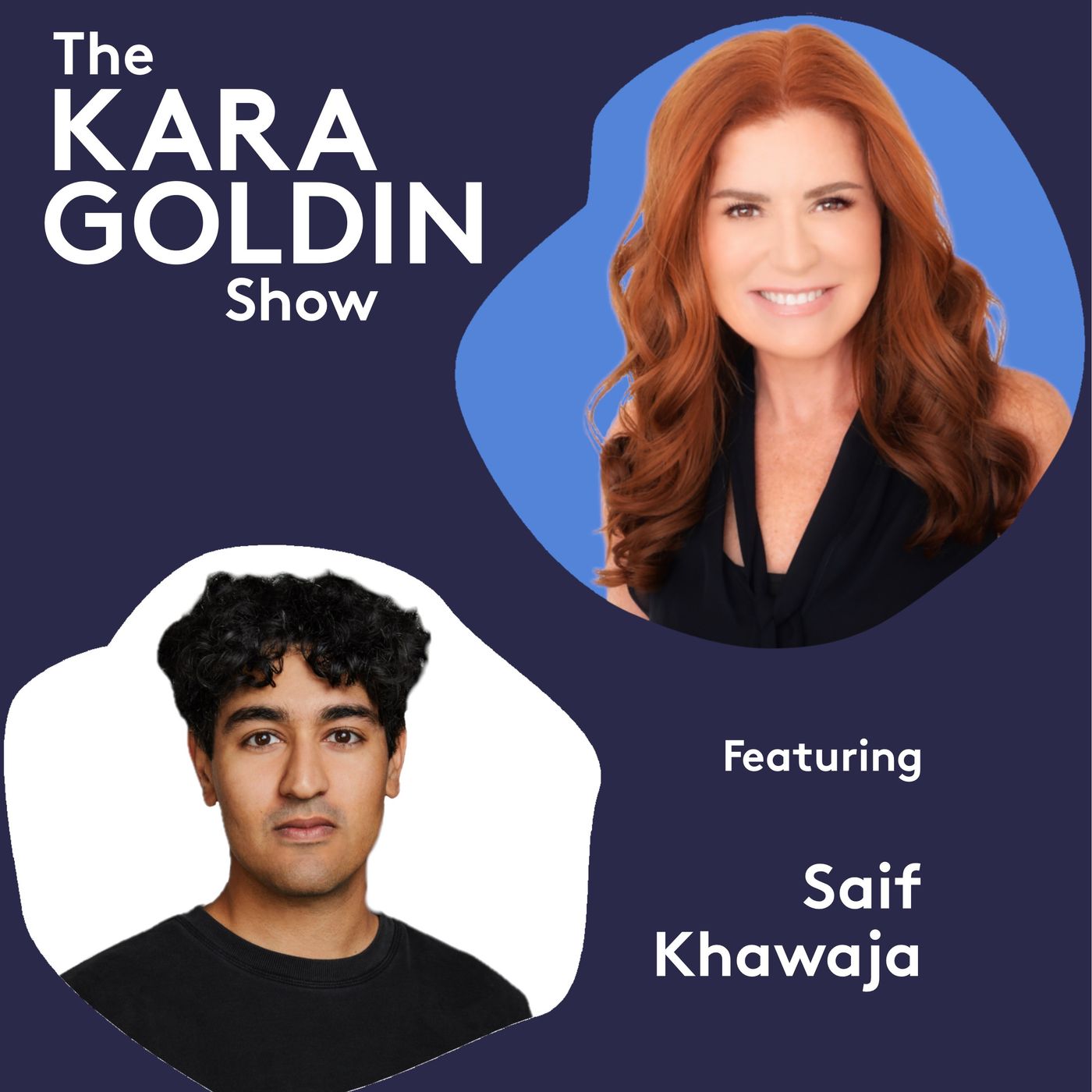
Saif Khawaja discusses building Ceremony, a premium “ceremony grade” seafood brand, powered by Shinkai Systems technology that automates Japanese-style fish handling (inspiration: ikejime) to reduce stress and blood-driven bacterial growth, extending freshness and improving taste/texture. He also covers scaling: deploying robots on US fishing vessels, partnering with processing plants, and selling to Michelin-star restaurants and retailers.
Saif Khawaja is co-founder and CEO of Ceremony and Shinkai Systems. He grew up fishing with his dad, worked as a commercial fishing deckhand briefly, studied business and physics, and attended Carnegie Mellon with robotics/PhD intentions. He started the companies young (Ceremony at 22) after researching humane fish handling and robotics.
Ceremony fish can last 12–14 days vs 5–7 days traditionally; stress hormones and blood accelerate decay; the process “dry-ages” fish. Shinkai provides machines free, maintenance, and above-market buyer guarantees to fishermen.
Black cod sold to high-end markets (e.g., Whole Foods/Erewhon/Fresh Direct) and served at Michelin-star restaurants including Blue Hill at Stone Barns, Daniel, and Eleven Madison Park.
0:00Kara Goldin: I am unwilling to give up, but I will start over from scratch as many times as it takes to get where I want to be. You just want to make sure you will get knocked down, but just make sure you don't get knocked out. So your only choice should be, go focus on what you can control. Hi everyone and welcome to the Kara Goldin Show. Join me each week for inspiring conversations with some of the world's greatest leaders. We'll talk with founders, entrepreneurs, CEOs, and really some of the most interesting people of our time. Can't wait to get started. Let's go. Support for today's episode comes from Seed, the company taking a scientific approach to gut health.
0:48Kara Goldin: I'm selective about the supplements that earn a place in my daily routine. If I'm going to take something every day, I want to understand what's in it, how it works, and whether there is real evidence behind it. That's what stood out to me about Seeds DSO-1. DSO-1 is a two-in-one probiotic and prebiotic formulated with 24 probiotic strains to support digestive and whole body health. It also uses Seeds via Cap Technology, a capsule-in-capsule delivery system engineered to protect the probiotics through digestion and deliver them where they need to go. And this isn't based on marketing promises.
1:34Kara Goldin: In a clinical trial, DS01 was shown to improve regularity, reduce bloating, and alleviate gas. Plus, it requires no refrigeration, making it easy to maintain your routine at home or while traveling. Make your daily probiotic one of the more informed decisions you make today. Go to seed.com forward slash Cara Golden and use code Cara to get 25 % off. These statements have not been evaluated by the FDA. These products are not intended to diagnose, treat, cure, or prevent any disease. Hi, everyone, and welcome back to the Cara Golden Show. So what if better technology could make seafood fresher, more sustainable, and better for fishermen as well?
2:25Kara Goldin: So today's guest is Saif Khawaja, co-founder and CEO of an incredible brand called Ceremony. And it is a premium seafood brand powered by another company that he started called Shinkai Technology or Shinkai Systems. and Safe started the company at the young age of 22 after seeing firsthand how much value and quality can be lost between the ocean and our plates. I cannot wait to get into the backstory on all of that. And I look forward to getting into also all of the robots, how he scaled a company and in some of the finest Michelin-starred restaurants disrupting a legacy industry and what it takes to build a company today in the real world in this space.
3:25Kara Goldin: So, Safe, so nice to meet you and welcome. I'm so excited to hear a lot more about this company. And you had sent over some of the incredible, incredible fish from Ceremony. And I, as I mentioned, the sockeye is probably my favorite, but there's so many in the selection. So that is so, so good. Yeah, I'm so glad to hear. Yeah, absolutely. So for someone who is just hearing about Ceremony, can you describe what is the brand and what problem were you trying to solve? Yeah, first of all, again, thank you, Cara, for having me. I'm really excited to share our story today. Ceremony is a new standard and philosophy for the very best fish.
4:15And so the idea behind the company is that we use technology across the supply chain from how the fish are pulled out the water all the way down to how they're broken down, mimicking the Japanese artisanal handling processes to produce fish that last longer and taste better. So all in all, technology that is stealing Japanese artisanal handling. So we call all our fish ceremony grade. And it's the idea that, you know, every single fish has gone through a process meticulously planned from, you know, like I mentioned, how the fish are pulled out, how they're humanely handled on the deck of the boat, how they're kept cold, how they're bled, all the way down to how they're packaged and processed.
4:56By doing that, you can produce fish that last longer, taste better, obviously have a more humanely happy to get into, you know, I'm sure we'll jump into any of those parts as we dive deeper.
5:05Kara Goldin: This episode of the Kara Golden Show is brought to you by Chime. I've always believed managing your money shouldn't be complicated, but between unexpected fees, confusing rules, and all the fine print, traditional banking can make something that should be simple feel like a lot more work than it needs to be. That's what I like about Chime. They've built a more modern banking experience around making everyday money management simpler, helping people keep more of their money and giving them tools that make it easier to stay on top of their finances. Chime offers the most rewarding, fee-free banking with no overdraft fees, no monthly fees, and no minimum balance fees.
5:49Kara Goldin: What I really like is that you get 5 % cash back on your Chime card in a category of your choice, like gas or groceries, while building credit through regular everyday spending with no credit check. And if you're ever in a pinch, SpotMe lets you overdraft up to$200 fee-free. Join the millions who are already banking fee-free with America's number one choice for banking. Head to Chime.com slash Kara Golden. That is Chime.com slash Kara Golden. Sign up now. It only takes a few minutes. Chime is a fintech, not a bank. Banking services and Chime card provided by Chime's bank partners. Qualifying direct deposits required.
6:32Terms and limits apply.
6:33Kara Goldin: Go to chime.com slash disclosures for details. I read that you worked as a commercial fishing deckhand. And what did that role, being on the boat, teach you that you could never have learned sitting behind a desk or doing research? Yeah, the funny one is you should never bring a banana on a boat, which is old sailor wisdom. And, you know, I just, but the idea back when was that, you know, bananas would carry fruit flies and, you know, a much higher rate. And that would basically rot all your food if you put bananas there because the flies would spread. But, you know, and more practically, seafood and fishing is a very, very difficult industry, right?
7:18and it's been one of the oldest ones you know we've been spearing fish you know millennia ago there are reasons why it is lagging behind most animal agriculture which in turn is you know behind you know software and you know kind of more industrial robotics so these are very dangerous drops you know vessels are going out there they have no idea if they're going to catch some fish if they do catch fish you know you know if they hit very extreme weather sometimes they get worried about even making it back. And, you know, the way that fishermen now catch their fish, because inflating gas prices, deflating fish prices, makes it a very difficult industry to even make ends meet.
7:57So all that means that they have less labor on the boat, they have less capacity, you know, they have to cut corners. And so when I, with my short time as a deckhand, I left with this impression of, you know, yes, there are a lot of opportunities and it's a mass industry, but also, you know, fishermen don't have the time and space to do a lot of, you know, nice to have things that, you know, most people external to the industry would ask them to. So any innovation that, you know, I wanted to work on would have to be both pragmatic and economical.
8:26Kara Goldin: So interesting. So what made you actually take on this role? Did you know you were going to go into the seafood industry? I mean, what was there any background? Did you know people in the industry? I mean, how did you land there? So I grew up fishing with my dad, you know, as a hobbyist fisherman. I have matching sailor tattoos with my granddad, you know, this all kind of more fun for a full background, you know. But the truth is, you know, when I moved to the U.S. when I was 18, I came attempting to, you know, make it in more traditional consulting, banking, or, you know, get my PhD in robotics and, you know, something a little more straightforward.
9:05And so, you know, went to undergrad, studied business, got a second degree in physics, and then went to Carnegie Mellon, you know, with the intention of, you know, staying there for a PhD track program. And, you know, one of my early mornings there, there was this essay in the newspaper called, If Fish Could Scream. And it's all about how, because fish don't have vocal cords, we give them less empathy than we do to trust our animals. Because the unfortunate truth is today that most fish that are brought onto the deck of the boat, they're left to suffocate, you know, they're effectively drowning in the air.
9:34And it can take them sometimes a couple minutes to over an hour to lose consciousness. And in that time, they are releasing stress hormones, lactic acid, you know, making the meat more acidic, you know, blood-defusing, all these things basically being decomposition. And so there is both a like, you know, through the essay, I discovered there was both a humane, you know, gap relative to a lot of the work that Temple grand ended in cattle. And there was a economic gap in that this one mishandling step actually ends up making the fish less unit economic efficient to trade because that stressful process speeds the decomposition and damages the quality.
10:11And so I was just sitting in my dorm room at the time and I went on a Reddit and YouTube rabbit hole and I found the techniques that we are mimicking with our first product as part of Shinkie, our parent technology company. And so in Japan, And, you know, if you've ever had omakase and they fly in the fish, you don't know the flavor. Most fish are handled very differently. They have a traditional technique that is closer to a kosher slaughter or halal slaughter for cows, but for fish. So centuries old, it's called the Ikejime, and it's where we take inspiration from. And the idea is that rather than letting the fish flop around, you pierce the fish in the brain to stop the experience of stress, stop those stress hormone production, you know, cocktails, I guess.
10:53And then you cut the gills, which like kosher, basically the heart will push the blood out. And that both these two steps, the reduction of the stressful process and reduction of stress hormones and the draining of the blood basically make it harder for bacteria to grow from an environment and nutrition access standpoint. So most of the fish that are handled in Japan are done this way and they're handled by hand. And so the idea behind Shinke and what led into the whole full ceremony grade process was, could you use software and robotics to automate something close to that process to be able to generate similar benefits without having to hire many thousands of people to handle the volume and scale of the U.S.
11:36fishery today? And here we are a couple of years later.
11:40Kara Goldin: This episode of the Kara Golden Show is brought to you by Zenni Optical. Hi, Kara here. You know those things that sit on your to-do list forever? For me, new glasses were one of them. I wanted something stylish, comfortable, and affordable without spending hours shopping. That's why I love Zenni. I ordered these classic navy blue square frames, and I love them. They're polished, versatile, and exactly my style. And with frames starting under$30, Zenni makes it easy to find something you love. They offer stylish prescription glasses, customizable lens options, and virtual try-ons so you can see how frames look before ordering.
12:23Kara Goldin: It's eyewear for everyone and a great way to express yourself. Check new glasses off your list today with Zenni. Go to zenni.com slash podcast and use code podcast15 for 15 % off plus free shipping over$65. styles sell out so don't wait that's z-e-n-n-i dot com slash podcast promo code podcast 15 zenni.com slash podcast and use code podcast 15 this episode of the carol golden show is brought to you by chime managing your money shouldn't be the easy part right yet somehow traditional banking has a way of making it complicated. Hidden fees, unnecessary rules, and surprises you never signed up for.
13:10Kara Goldin: Who has time for that? That's what I like about Chime. They've built a more modern banking experience around making everyday money management simpler, helping people keep more of their money and giving them tools that make it easier to stay on top of their finances. Chime offers the most rewarding, fee-free banking with no overdraft fees, no monthly fees, and no minimum balance fees. What I really like is that you get 5 % cash back on your Chime card in a category of your choice, like gas or groceries, while building credit through regular everyday spending with no credit check. And if you're ever in a pinch, SpotMe lets you overdraft up to$200 fee-free.
13:55Kara Goldin: Join the millions who are already banking fee-free with America's number one choice for banking. Head to chime.com slash Kara Golden. That is chime.com slash Kara Golden. Sign up now. It only takes a few minutes. Chime is a fintech, not a bank. Banking services and Chime card provided by Chime's bank partners. Qualifying direct deposits required. Terms and limits apply. Go to chime.com slash disclosures for details. So interesting. So when you started, were you actually thinking that Shinkai was going to be the company that you were going to start versus actually having to start? I mean, you've started two companies.
14:40Kara Goldin: So Ceremony is a fledging fish company that you're selling to Michelin star restaurants. But it sounds like you actually had this idea for Shinkai first. A couple of things or threads to pull on here. So the first one is I didn't intend to start the company. I actually applied and wrote a full research paper. I did submit it to a journal. I got rejected twice. And I was like, okay, cool. No one really wants to talk about this, but I had this vision for what the world should look like. And I realized that if I did not build this, then the world would not change. And in turn, we would be stuck in status quo.
15:15And so, you know, that was kind of impetus for making a, you know, a company rather than, you know, a research project. Then the idea was, okay, cool. If we're going to try and solve this problem like how does the value creation that we would do manifest in the world and so the value what we do is we extend the fish shelf life we improve the flavor the texture and obviously you know make the fish handled more humanely so those values accrue to the consumer or as close as you can get to the consumer so a grocery store will care more about shelf life or a chef will care more about flavor or texture than any fisherman would, right, for the most part.
15:52And so what we decided to do with the model was Shinke basically builds or designs, builds, manufactures these machines, and then we give it to the fisherman for free. And then we basically buy and sell bad fish, and then we control the story, we control the education, and in turn, sell to where the value is accruing, which is the retailer or the chef, not the fisherman, right? So fishermen are generally paid a premium that's above market, which also helps soften some of the blow for a little bit of extra work. And then we get to be able to have a much larger supply than if we were running our own boats by partnering with the incumbents.
16:31Kara Goldin: You mentioned Japan before. Is that primarily where you are sourcing from and where your partnerships are? So one of our bigger missions is that the parent technology company is to use software and autonomy to reshore American seafood. And so we're really focused on strengthening the domestic industry, improving, you know, there's, I'm sure you've read the stories that you can even Google this, like many fish we send internationally and bring back and freeze and thaw multiple times just to be able to break them down. So they're caught locally, they're processed internationally, and then consumed locally again.
17:07So these are some of the core infrastructure problems that we see. And so we have, you know, about 25 vessels here in the U.S. today, expecting to, you know, 5x that next year, outfitted with our technologies. And then we have processing plants that we'd either built or partner with to be able to produce the fish by breaking them down. and we are over time going to eventually expand to other types of fisheries and that may be internationally may not be but we do export a lot of our fish domestically caught to japan so for example our bread and butter is black cod that's where we do the most volume of toyusu market has not had a black cod in their you know non-target fish auction for about you know the number changes from 13 to 17 years depending on who you ask and so our fish was the first in that long of a time to be able to hit that quality standard.
17:55So you're getting fish that can be auctioned off in Japan that you can now walk into Whole Foods or Erewhon or any of these great restaurants we partner with, Fresh Direct if you're in Tri-State area and you want to order on your phone, and basically get the Michelin quality fish that you could take home from the grocery.
18:10Kara Goldin: This episode of the Kara Golden Show is brought to you by Zenni Optical. Hi, Kara here. You know those things that sit on your to-do list forever? For me, new glasses were one of them. I wanted something stylish, comfortable, and affordable without spending hours shopping. That's why I love Zenni. I ordered these classic navy blue square frames, and I love them. They're polished, versatile, and exactly my style. And with frames starting under $30, Zenni makes it easy to find something you love. They offer stylish prescription glasses, customizable lens options, and virtual try-ons, so you can see how frames look before ordering.
18:53Kara Goldin: It's eyewear for everyone and a great way to express yourself. Check new glasses off your list today with Zenni. Go to zenni.com slash podcast and use code podcast15 for 15 % off, plus free shipping over$65. Styles sell out, so don't wait. That's Z-E-N-N-I dot com slash podcast. Promo code podcast15. Zenni.com slash podcast and use code podcast15. This episode of the Kara Golden Show is brought to you by Chime. Managing your money shouldn't be the easy part, right? Yet somehow traditional banking has a way of making it complicated. Hidden fees, unnecessary rules, and surprises you never signed up for.
19:41Kara Goldin: Who has time for that? That's what I like about Chime. They've built a more modern banking experience around making everyday money management simpler, helping people keep more of their money and giving them tools that make it easier to stay on top of their finances. Chime offers the most rewarding, fee-free banking with no overdraft fees, no monthly fees, and no minimum balance fees. What I really like is that you get 5 % cash back on your Chime card in a category of your choice, like gas or groceries, while building credit through regular everyday spending with no credit check. And if you're ever in a pinch, SpotMe lets you overdraft up to$200 fee-free.
20:26Kara Goldin: Join the millions who are already banking fee-free with America's number one choice for banking. Head to Chime.com slash Kara Golden. That is Chime.com slash Kara Golden. Sign up now. It only takes a few minutes. Chime is a fintech, not a bank. Banking services and Chime card provided by Chime's bank partners. Qualifying direct deposits required. Terms and limits apply. Go to Chime.com slash disclosures for details. So interesting. So you said that ceremony grade fish can remain fresh up to three times longer than traditionally handled seafood. So why does that process have such an impact for people who may not realize kind of how long is a typical fish when you're seeing it at a market like a Whole Foods or Air One versus a product that is ceremony grade?
21:23The idea here is most fish that suffocate, like I mentioned earlier, they produce those stress hormones the stress hormones make the meat more acidic which is a more prime environment for bacteria to grow and so there is naturally occurring bacteria in the meat now then when you consider what blood is and any animal um it is a stagnant water when the animal is you know it's passed away and with nutrition diffused across it and so if you think of it as a vector for growth. It's a very, very rapid support system for the bacteria to grow across the animal very quickly. And so the combination of a more acidic environment and the blood offering both nutrition and a vector to grow across the animal quickly means that both these things compound to speed of the decay of meat.
22:11And so standard black cod, just use some numbers, you know, most people have about five to seven days with it. In our process that we can have 12 days, 14 days, we've cooked fish 20 days after being pulled out of the water, and it still looked just as good as new. And what happens is when you don't have the animal stressing that acidic chemical cocktail is never produced. And then when the blood is drained, any nutrition that the bacteria would have access to is significantly reduced. So both those things mean that the fish, instead of rotting, has an almost dry aging effect where it's getting better with time, not worse.
22:46Kara Goldin: So fishermen have been doing things a certain way for generations. And here you come along and you are a young founder with some interesting technology. How did you convince them to put it on their boats? Yeah. So like I mentioned, these are very dangerous jobs. It has one of the highest mortality rates in any job in the U.S. You know, I think it's in the top three or top five. So most fishermen will not give you the time of day because of that risk, unless there's some economic incentives. And so that brings me back to the point that when we designed the model, it was very much in the mindset of how can we actually make fishermen lives easier rather than harder by asking them to do something that they don't really have the capacity to explain.
23:37When a boat is, at least the time before Starlink, when a boat was 100 miles offshore, you know they're not gonna be sitting there making how-to recipe videos you know on instagram so you have to understand the pragmatics you know of the situation and so the idea was then come to this model where we created something that was risk-free for them they get the machines are free you know we cover the maintenance all those things and then we basically guarantee them a buyer for the fish that's above market price so there's a very direct function that if you work with shinkae, you build a ceremony-grade program, you as a fisherman will, one, make more money, and two, have more stable cash flow versus being stochastic.
24:20And they don't know when they're going to catch fish. They don't know who they're going to sell to unless there's some commodity dockside buyer. And so we come in as a source of stability that makes everything better. And then we, in return, have access to this prized resource that fishermen work so hard to.
24:36Kara Goldin: This episode of the Kara Golden Show is brought to you by Zenni Optical. Hi, Kara here. You know those things that sit on your to-do list forever? For me, new glasses were one of them. I wanted something stylish, comfortable, and affordable without spending hours shopping. That's why I love Zenni. I ordered these classic navy blue square frames, and I love them. They're polished, versatile, and exactly my style. And with frames starting under$30, Zenni makes it easy to find something you love. They offer stylish prescription glasses, customizable lens options, and virtual try-ons. So you can see how frames look before ordering.
25:19Kara Goldin: It's eyewear for everyone and a great way to express yourself. Check new glasses off your list today with Zenni. Go to zenni.com slash podcast and use code podcast15 for 15 % off. plus free shipping over$65. Styles sell out, so don't wait. That's Z-E-N-N-I.com slash podcast. Promo code podcast15. Zenni.com slash podcast and use code podcast15. This episode of the Kara Golden Show is brought to you by Chime. Managing your money shouldn't be the easy part, right? Yet somehow traditional banking has a way of making it complicated. Hidden fees, unnecessary rules, and surprises you never signed up for.
26:07Kara Goldin: Who has time for that? That's what I like about Chime. They've built a more modern banking experience around making everyday money management simpler, helping people keep more of their money and giving them tools that make it easier to stay on top of their finances. Chime offers the most rewarding, fee-free banking with no overdraft fees, no monthly fees, and no minimum balance fees. What I really like is that you get 5 % cash back on your Chime card in a category of your choice, like gas or groceries, while building credit through regular everyday spending with no credit check. And if you're ever in a pinch, SpotMe lets you overdraft up to$200, fee-free.
26:52Kara Goldin: Join the millions who are already banking fee-free with America's number one choice for banking. Head to chime.com slash Kara Golden. That is chime.com slash Kara Golden. Sign up now. It only takes a few minutes. Chime is a fintech, not a bank. Banking services and Chime card provided by Chime's bank partners. Qualifying direct deposits required. Terms and limits apply. Go to chime.com slash disclosures for details. So the consumer brand ceremony is now served at restaurants, including many of the Blue Hill at Stone Barns, Danielle, Eleven Madison Park, you name it, Michelin star restaurants. How did you get some of the country's most demanding chefs to try fish.
27:43Kara Goldin: I mean, you aren't a chef. You didn't come from this industry. You know, maybe many of them don't actually understand the technology, have never been on a fishing boat. How did that happen? Great question. You get asked this, actually, you know, less than you'd expect. First of all, I think no matter who you are, you will always fall in love with someone who's passionate about what they're building. And so I think me coming in, telling a big story, obviously, at least is the hook. Ultimately, the fish is the best business card. And so the fish is really where when they cut into it, you can just, even with a naked eye as an untrained professional, you can look side by side.
28:25You know, Kara, I know you, you know, I'm sure you don't have your license as a fish sommelier and you could tell that there was a difference, right? And so fishermen, like all that hard work does pay off to something that ends up being better quality. and then you know i took the inspiration from the oishi founder you know that vertically integrated strawberry brand where you know he would just say he had appointments with chefs um and you know when he would walk into a restaurant and then somehow get an audience of the chef and then tell him and the chef would be initially annoyed but then once they see that the products are legit they calm down so i wasn't quite i didn't have the athlete to kind of deal with an angry chef but what i would do is i would basically put a delivery hat on i'd bring a box of fish i'd put our little marketing materials inside the box.
29:07And then I would just go and drop off and say, sample for chef. And I literally just went around, we had rented a U-Haul and went around a bunch of restaurants in New York and just started dropping stuff off. I sent a cold email to a designer who ended up working with us on the ceremony branding. And then they actually were great friends with Dan Barber, who is a big champion of what we're doing and a great partner. And I think once we had a couple of partners, it reached our to snowball. There were other ways in which we got in front of chefs too. So our model is that we don't sell to chefs directly.
29:37We sell to a distributor that has access to 50 to 100 restaurants or whatever have you. So for example, Nobu at Yama Seafood, which is based in New York, high-end seafood wholesaler. They have their whole logistics trucks and they basically buy from suppliers, amalgamate everything. And then the chefs trust them with their taste. I, right after graduating, I called Nobu's office every single day for seven days in a row. And eventually he had to talk to me and he did. And, you know, I caught him on the hook with the idea for what we had. And, you know, he was one of our first advisors for the company.
30:13And over time, it's built into him introducing us to chefs like Eric Repair or, you know, Levin Madison Park team or so on.
30:20Kara Goldin: This episode of The Kara Golden Show is brought to you by Chime. Managing your money shouldn't be the easy part, right? Yet somehow traditional banking has a way of making it complicated. Hidden fees, unnecessary rules, and surprises you never signed up for. Who has time for that? That's what I like about Chime. They've built a more modern banking experience around making everyday money management simpler, helping people keep more of their money and giving them tools that make it easier to stay on top of their finances. Chime offers the most rewarding, fee-free banking with no overdraft fees, no monthly fees, and no minimum balance fees.
31:01Kara Goldin: What I really like is that you get 5 % cash back on your Chime card in a category of your choice, like gas or groceries, while building credit through regular everyday spending with no credit check. And if you're ever in a pinch, SpotMe lets you overdraft up to$200, fee free. Join the millions who are already banking fee free with America's number one choice for banking. Head to Chime.com slash Kara Golden. That is Chime.com slash Kara Golden. Sign up now. It only takes a few minutes. Chime is a fintech, not a bank. Banking services and Chime card provided by Chime's bank partners. Qualifying direct deposits required.
31:44Terms and limits apply. Go to Chime.com slash disclosures for details.
31:49Kara Goldin: This episode of the Kara Golden Show is brought to you by Zenni Optical. Hi, Kara here. You know those things that sit on your to-do list forever? For me, new glasses were one of them. I wanted something stylish, comfortable, and affordable without spending hours shopping. That's why I love Zenni. I ordered these classic navy blue square frames, and I love them. They're polished, versatile, and exactly my style. And with frames starting under$30, Zenni makes it easy to find something you love. They offer stylish prescription glasses, customizable lens options, and virtual try-ons, so you can see how frames look before ordering.
32:32Kara Goldin: It's eyewear for everyone and a great way to express yourself. Check new glasses off your list today with Zenni. Go to zenni.com slash podcast and use code podcast15 for 15 % off, plus free shipping over$65. Styles sell out, so don't wait. That's Z-E-N-N-I.com slash podcast. Promo code podcast15. Zenni.com slash podcast and use code podcast15. So networking through all of these different connections and building those relationships. Yeah, you have to be creative. I love it. This is a four-year journey thus far, and you are building two companies, and really the consumer facing the fish company, Ceremony, and Shinkai.
33:27Kara Goldin: Which is harder to build when you sit back and look at, because this is kind of a B2B versus a B2C, and it's wholesale, but it's really showing what can be done. I get it. But you're still on the hook for making both of those companies work. So which one is harder, would you say, knowing what you know today? We don't think of them as separate companies. It's all under the same umbrella. I think just because eventually we may be building other technologies that we may not want to just service for ourselves. That's why we have the distinction between the two names. All the problems are hard, you know.
34:07It's like it just depends on the day and, you know, what comes up. Convincing fishermen, you know, in a new port or with a new species, you know, because there's no track record there, that's hard. Right? Deploying robots that have to hit surgical accuracy at industrial speeds in a maritime environment, that's very hard. you know being able to process fish when you know most of them are you know to be cost competitive are shipped internationally and back you know domestically you know building a plant from scratch is very difficult building the supply chain you know the the distribution network you know selling to chefs proving that the fish is actually there educating people you know and ultimately building a household named brand and more than a brand an actual quality standard all those things you know they're difficult and so we built an amazing team that you know we believe has the best person in the world for each individual seat to actually solve those problems.
34:57And, you know, my job as one of the leaders of the company is to really figure out what are the actual problems within that are existential to the company working for each one of those sets of problems and who is the right person that can actually solve those fires faster and better than I can. And so as a CEO, when I think about my job, ultimately it's really like executive recruiting. Everything else is derivative of that, right? So, you know, the vision is there to excite people about the mission that we're on, you know, the financing capacities to buy people time to be able to get to the point where we don't have to rely on, you know, external investor capital.
35:33And, you know, finally, you know, just like recruiting is being able to convince people that there's a certain version of the world that should exist that doesn't and that they are the best person to come and help solve that alongside the basic team.
35:46Kara Goldin: So you've raised money from some pretty high profile investors, founders fund, HVC. Congratulations. I mean, so incredible. What did those investors initially have the hardest time believing about your idea that I guess you've proven them wrong? Yeah. You know, I think no matter the stage, until you're starting to raise from like very, you know, traditional private equity or, you know, spreadsheet minded investors, people just back the team. And, you know, that is derivative of like backing, you know, the founding team. And so I think we had a very difficult time fundraising for the first two years.
36:30You know, I was running on weeks of runway for months and months, like probably about 18 months straight. And so that was very painful. And that, you know, made me a better entrepreneur from a stress capacity side. but when we were able to get you know our kind of core team in place which was my co-founder you know leading teams of spacex we had a couple people you know at spacex early on to roll commercial fishermen with a robotics phd you know like that gave us the credibility to actually earn the right to solve the problem and then from there on every single round was about what risk were we trying to prove was de-risked and what capital did we need to solve that from like a broader vision of, okay, cool, if we want to be able to democratize artisanal seafood, these are the things that need to happen and what's actually step-by-step.
37:12And so investors that have passed generally just, I think, believe either one, we can't do it, yet here we are, or two, that it's just like not as exciting a market. Agriculture is a massive market. You know, when you think about cattle, poultry, seafood, you know, like all vegetables, things like that. The problem with why there's not a ton of like household names in these industries that are new or cutting edge is because the economics are very difficult to work out and they're hard. And there's so much economies of scale in the companies that to be a new challenger in the industry, whether you're working with or against the incumbents, it's very, very difficult.
37:52And you're on a very heavy slope and you have to raise a lot of money and so on and so on. So we believe we've identified a wedge that helps us then scale a business that's vertically integrated. You know, eventually we'll also partner with some of the incumbents too. But at the same time, like at the end of the day, you're pitching a thesis. And as long as you have one investor every round that says yes, it doesn't really matter what everybody else thinks.
38:14Kara Goldin: No, it's so, so interesting. Well, what you're doing with both companies, I mean, I can taste the difference with ceremony, but also it's just Shinkai is, my head is spinning with all kinds of ideas around where this could go. and I agree on agriculture and lots of other industries that I think you could really help change as well. So, so, so cool. So, Saif, thank you so much. Saif Khawaja, co-founder and CEO of Ceremony and also Shinkai Systems, really appreciate you coming on and sharing all of your wisdom. Good luck with everything. Really, really cool. And everyone, definitely be on the lookout for Ceremony in great stores like Whole Foods, as well as AR One and restaurants and all the fancy Michelin star restaurants that you get to go to or dream of going to, definitely check it out.
39:13Kara Goldin: So thank you again, Safe, and thanks everyone for listening. Cara, thank you again. Appreciate it. Thanks again for listening to The Cara Golden Show. If you would, please give us a review and feel free to share this podcast with others who would benefit. And of course, feel free to subscribe so you don't miss a single episode of our podcast. Just a reminder that I can be found on all platforms at Kara Golden. I would love to hear from you too, so feel free to DM me. And if you want to hear more about my journey, I hope you will have a listen or pick up a copy of my Wall Street Journal bestselling book, Undaunted, where I share more about my journey, including founding and building Hint.
39:58Kara Goldin: We are here every Monday, Wednesday, and Friday. Thanks for listening and goodbye for now.
What if the secret to better seafood starts the moment the fish leaves the water? 🐟
On The Kara Goldin Show, I sit down with Saif Khawaja, Co-Founder and CEO of Shinkei Systems and the entrepreneur behind Seremoni, the premium seafood brand powered by Shinkei’s technology.
Saif started the company at just 22 after seeing firsthand how much quality and value can be lost between the ocean and our plates. His solution combines robotics, AI, supply-chain technology, and principles inspired by the traditional Japanese ike jime method to rethink how wild-caught fish is harvested and handled.
We talk about what most consumers get wrong about “fresh” fish, how better handling can improve flavor and shelf life, and why Saif believes technology can create better outcomes for fishermen, consumers, and the ocean.
Saif also shares what it takes to put sophisticated robotics onto working fishing boats, convince a traditional industry to try something completely new, and get Seremoni Grade fish into some of the country’s most celebrated restaurants.
We also get into raising capital, building both a technology company and consumer brand, the inevitable hardware failures, and what Saif has learned about leadership since becoming a founder at 22.
If you’re interested in food, technology, sustainability, robotics, entrepreneurship, or what it really takes to disrupt a legacy industry, this is a fascinating conversation.
Listen here or anywhere you get your podcasts. 🎧
Are you interested in sponsoring and advertising on The Kara Goldin Show, which is now in the Top 1% of Entrepreneur podcasts in the world? Let me know by contacting me at karagoldin@gmail.com. You can also find me @KaraGoldin on all networks.
To learn more about Saif Khawaja, Shinkei Systems and Seremoni:
https://www.shinkei.systems/
https://www.seremoni.com/
Sponsored By:
Chime - Join the millions who are already banking fee-free today. Head to Chime.com/KARAGOLDIN.
Zenni Optical - Go to ZENNI.COM/PODCAST and use code PODCAST15 for fifteen percent off, plus free shipping over sixty-five dollars.
Check out our website to view this episode’s show notes: https://karagoldin.com/podcast/911
Scan the code with your iPhone camera
Listen in the app.