 The Kara Goldin Show
9 Nov 2026 · 35m

 Add vo to ChatGPT or Claude to ask about everything you hear
vo listened to this episode to put together the overview and transcript, so there may be the odd mistake.
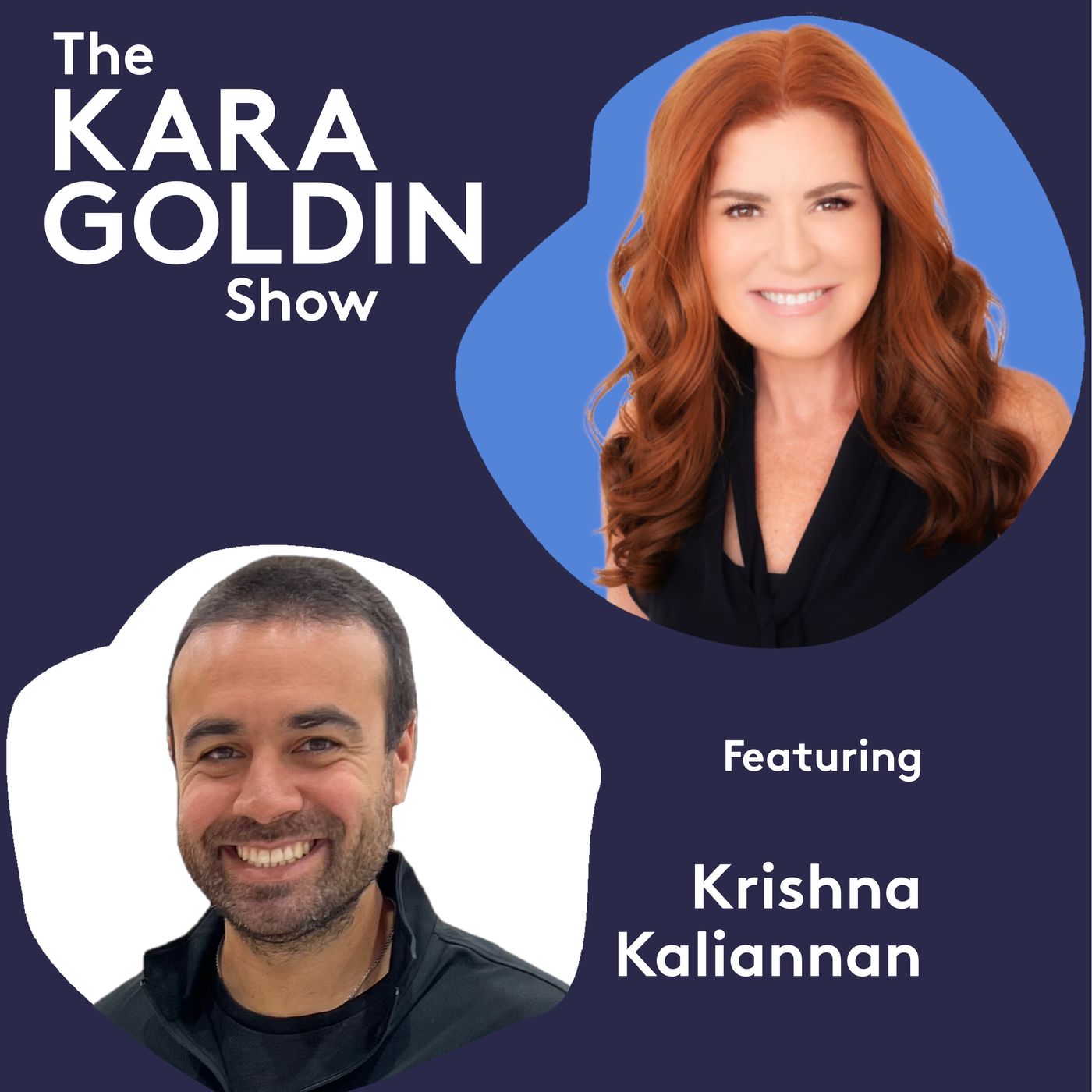
Krishna Kaliannan, founder of Catalina Crunch, explains how a type 1 diabetes diagnosis led him to create high-protein, high-fiber, low-sugar cereal/snacks; the shift from home baking to scaled production; and the retail execution challenges of keeping products selling on shelves.
Krishna worked in finance (commodity trading/risk parity/portfolio management) and was diagnosed with type 1 diabetes in high school. His father owned a veterinary practice. He started by experimenting in his kitchen, then moved to commercial baking in Indianapolis.
“Crunch without compromise” is possible by removing sugar while preserving taste/crunch. The hardest early step was building supply chain and packaging (including stand-up pouches). Retail success depends on execution: stock levels, shelf placement, correct pricing, and retailer reorders.
started online with one SKU (dark chocolate cereal); Whole Foods buyer helped launch; clear-label packaging change after a bottle bill led to 10x sales; during COVID, retailer price increases (e.g., $8.99 to $10.19) affected unit/dollar velocity.
0:00Kara Goldin: I am unwilling to give up, but I will start over from scratch as many times as it takes to get where I want to be. You just want to make sure you will get knocked down, but just make sure you don't get knocked out. So your only choice should be, go focus on what you can control. Hi everyone and welcome to the Kara Goldin Show. Join me each week for inspiring conversations with some of the world's greatest leaders. We'll talk with founders, entrepreneurs, CEOs, and really some of the most interesting people of our time. Can't wait to get started. Let's go. Hi, everyone, and welcome back to The Kara Golden Show.
0:45Kara Goldin: Some of the best businesses start when a founder decides to solve a problem they're living with themselves. Today's guest is Krishna Kalianan, founder of an incredible brand, Catalina Crunch, the better-for-you cereal and snack company that has become one of the fastest-growing brands in the functional food space. So Krishna's path here is anything but typical. He started his career in finance, working for some of the best firms, but living with type 1 diabetes, he was constantly frustrated by how difficult it was to find foods that worked for the way he needed to eat. So without giving up the taste and crunch he actually wanted, Catalina Crunch was born.
1:30Kara Goldin: So he started experimenting in his kitchen. Sound familiar, right? What began with homemade low-carb cereal eventually became Catalina Crunch. So, Krishna was doing everything himself out of a small bakery in Indianapolis, I read, managing production during the day, selling at night, and even sleeping on a cot in the front office. I cannot wait to dig into how Catalina Crunch has endured the journey into a couple hundred million, I think, in annual retail sales and can be found in more than 28 ,000 retail doors as well as online, of course. So Krishna, welcome to the Kara Golden Show. So nice to meet you and congrats on everything.
2:19Kara Goldin: Thanks for having me. Thank you. Thank you. Glad to be here. This episode of the Kara Golden Show is brought to you by Chime. I've always believed that managing your money should work for you, not the other way around. But traditional banking, between the fees, restrictions, and fine print, it can feel like you're spending more time figuring out the rules than actually managing your money. That's what I like about Chime. They've built a more modern banking experience around making everyday money management simpler, helping people keep more of their money and giving them tools that make it easier to stay on top of their finances.
2:55Kara Goldin: Chime offers the most rewarding fee-free banking with no overdraft fees, no monthly fees, and no minimum balance fees. What I really like is that you get 5 % cash back on your Chime card in a category of your choice, like gas or groceries, while building credit through regular everyday spending with no credit check. And if you're ever in a pinch, SpotMe lets you overdraft up to$200 fee-free. Join the millions who are already banking fee-free with America's number one choice for banking. Head to chime.com slash Kara Golden. That is chime.com slash Kara Golden. Sign up now. It only takes a few minutes.
3:40Chime is a fintech, not a bank. Banking services and Chime card provided by Chime's bank partners. Qualifying direct deposits required. Terms and limits apply. Go to chime.com slash disclosures for details.
3:52Kara Goldin: Support for today's episode comes from Seed, the company taking a scientific approach to gut health. I'm selective about the supplements that earn a place in my daily routine. If I'm going to take something every day, I want to understand what's in it, how it works, and whether there is real evidence behind it. That's what stood out to me about SEEDS DSO-1. DSO-1 is a two-in-one probiotic and prebiotic formulated with 24 probiotic strains to support digestive and whole body health. It also uses seeds via CAP technology, a capsule-in-capsule delivery system engineered to protect the probiotics through digestion and deliver them where they need to go.
4:42Kara Goldin: And this isn't based on marketing promises. in a clinical trial, DS01 was shown to improve regularity, reduce bloating, and alleviate gas. Plus, it requires no refrigeration, making it easy to maintain your routine at home or while traveling. Make your daily probiotic one of the more informed decisions you make today. Go to seed.com forward slash Cara Golden and use code Cara to get 25 % off. These statements have not been evaluated by the FDA. These products are not intended to diagnose, treat, cure, or prevent any disease. Very excited. So for someone who's just discovering the brand Catalina Crunch, how do you describe the brand today?
5:33Kara Goldin: and maybe that's a little different than how it first started. Yeah, yeah. Well, we make cereals and snacks which are high in protein and fiber and low in sugar, really trying to help folks eat healthier but enjoy doing so at the same time, right? So our most popular product is our cinnamon toast cereal sold in all major retailers across the country, zero sugar, 11 grams of protein, really, I think, great as a cereal and a snack. That's terrific. This episode of the Kara Golden Show is brought to you by Gusto. One thing I've learned from building businesses is that running a company involves so much more than the work you're passionate about.
6:14Kara Goldin: There's payroll, benefits, onboarding, taxes, and a never-ending list of administrative tasks that take time away from actually growing the business. And as a founder, the last thing you want is to spend your time buried in paperwork instead of growing your business. That's where Gusto comes in. Gusto is online payroll and benefits software built for small businesses. It's all in one, remote friendly, and incredibly easy to use. So you can pay, hire, onboard, and support your team from anywhere. Gusto simplifies payroll with automatic tax filing and direct deposits, plus health benefits and 401k options.
6:55Kara Goldin: You also get unlimited payroll runs for one monthly price with no hidden fees or surprises. And automated onboarding tools help you spend less time on paperwork and more time building your business. Try Gusto today at gusto.com slash Kara and get three months free when you run your first payroll. That's three months of free payroll at gusto.com slash Cara. One more time, gusto.com slash Cara. This episode of the Cara Golden Show is brought to you by Glean. Here's something I've learned building businesses. Having great people and great technology isn't enough if nobody can find the information they need.
7:41Kara Goldin: And with AI, that problem becomes even more important. That's where Glean comes in. Glean connects your company's knowledge, people, and workflows so employees and AI tools have the context they need to get things done. It works across your existing systems, respects your security permissions, and gives businesses access to more than 40 AI models without locking them into one provider. Having built and scaled businesses, I know firsthand how frustrating it can be when valuable information is scattered across teams and systems. That's why I think what Glean is doing is so interesting. It's addressing a problem I've seen over and over again.
8:26Kara Goldin: Less time searching, better decisions, more time moving your business forward. Glean, the context platform for enterprise AI. Visit glean.com slash Kara Golden to unlock an exclusive offer just for listeners of The Kara Golden Show. That's g-l-e-a-n.com slash Kara Golden. Terms and conditions apply. Support for today's episode comes from Seed, the company taking a scientific approach to gut health. I'm selective about the supplements that earn a place in my daily routine. If I'm going to take something every day, I want to understand what's in it, how it works, and whether there is real evidence behind it.
9:12Kara Goldin: That's what stood out to me about Seeds DSO-1. DSO-1 is a two-in-one probiotic and prebiotic formulated with 24 probiotic strains to support digestive and whole body health. It also uses Seeds via Cap Technology, a capsule-in-capsule delivery system engineered to protect the probiotics through digestion and deliver them where they need to go. And this isn't based on marketing promises. In a clinical trial, DS01 was shown to improve regularity, reduce bloating, and alleviate gas. Plus, it requires no refrigeration, making it easy to maintain your routine at home or while traveling. Make your daily probiotic one of the more informed decisions you make today.
10:05Kara Goldin: Go to seed.com forward slash Cara Golden and use code Cara to get 25 % off. These statements have not been evaluated by the FDA. These products are not intended to diagnose, treat, cure, or prevent any disease. when you decided that you were going to launch Catalina Crunch, you didn't come from the snacks or the cereal industry overall. What got you interested in actually deciding to not only become an entrepreneur, but also to actually go into this category? So it was nutrition, really. So I'm a type 1 diabetic. I was diagnosed when I was a senior in high school, going into my freshman year of college.
10:53And it totally changed the way that I ate. And that's really what got me interested in nutrition, right? I grew up eating the classic American favorites, the Cocoa Puffs, Cinnamon Toast Crunch, Chex Mix, drinking Coke and Pepsi, those sorts of things, right? And, you know, when you're young and you're playing sports, it doesn't really matter too much. And then you get diagnosed with type 1 diabetes, you go off to college, things totally change, right? And so I basically started, quickly realized after being diagnosed with diabetes that if you eat a lot of protein and a lot of fiber and minimize the amount of sugar and kind of quick acting carbohydrates that you're eating, it's much easier to keep your weight where you want, much easier to keep your mind clear throughout the day, and much easier to keep your blood sugar where you want as well.
11:43And you take a lot less insulin. So I started eating basically nothing but eggs for breakfast, snacking exclusively on nuts. And that really helped me with my health and with my type one diabetes. But it was very unfulfilling and not very fun. And after I graduated from college, I went off to New York. You know, New York, you got acai bowls and breakfast bagel sandwiches and brunch on the weekends with friends and all that good stuff. Right. And I missed out on a lot of that just sitting there eating my eggs. And that's when I kind of got interested in like, hey, can I remake these cereals that I used to love, but in a kind of higher protein, higher fiber, lower sugar way, right?
12:28That nutritional trifecta. So that's what got me interested in it.
12:32Kara Goldin: Were your parents entrepreneurs? Did you where did you get the entrepreneur bug? Sort of, sort of. My dad was a veterinarian. He first worked at a different veterinary practice and then quickly started his own veterinary practice and ran that for decades and decades very successfully. And so I had a little bit of a sense of what it's like to be a business owner, I think, from him. But I really, you know, I had a job out of college working at a hedge fund, great firm, but I just realized I kind of like wasn't cut out for it. It wasn't for me. And I really fell in love with and kind of became addicted to starting my own business.
13:12And that's kind of how that happened.
13:13Kara Goldin: Support for today's episode comes from Seed, the company taking a scientific approach to gut health. I'm selective about the supplements that earn a place in my daily routine. If I'm going to take something every day, I want to understand what's in it, how it works, and whether there is real evidence behind it. That's what stood out to me about Seeds DSO-1. DSO-1 is a two-in-one probiotic and prebiotic formulated with 24 probiotic strains to support digestive and whole body health. It also uses Seeds via Cap Technology, a capsule-in-capsule delivery system engineered to protect the probiotics through digestion and deliver them where they need to go.
14:03Kara Goldin: And this isn't based on marketing promises. In a clinical trial, DS01 was shown to improve regularity, reduce bloating, and alleviate gas. Plus, it requires no refrigeration, making it easy to maintain your routine at home or while traveling. Make your daily probiotic one of the more informed decisions you make today. Go to seed.com forward slash Cara Golden and use code Cara to get 25 % off. These statements have not been evaluated by the FDA. These products are not intended to diagnose, treat, cure, or prevent any disease. So you were working in finance prior to starting Catalina Crunch. So you mentioned, I guess, the hedge fund side of it.
14:57Kara Goldin: Is that what you were doing mostly? I've talked to some entrepreneurs who have worked in venture private equity, doing investing in startup companies. It sounds like that wasn't your side of the finance world either. That's correct. Yeah, I was not involved in any sort of individual company or single stock selection. I was on a team that was focused on commodity trading and then risk parity trading strategies and kind of portfolio management. So there were no companies involved in that. Support for today's episode comes from Calci. We make predictions every single day about politics, pop culture, the economy, and the biggest stories making headlines.
15:44Kara Goldin: Calci, America's number one predictions market platform, lets you trade those predictions in a live market. And with football season in full swing, here's one I find especially interesting. Who will headline the next Super Bowl halftime show? Could it be Jay-Z or will the NFL surprise everyone with another big name? Right now, Jay-Z is trading at approximately 92 % on Calci, meaning$100 trade would pay out approximately$109 if he's selected as the headliner. What I love about this is being able to see what the market thinks will happen and how those predictions change as we get closer to the big night.
16:25Kara Goldin: It's a whole different way to follow the conversation. On CalShe, you're trading against peers in a live market, meaning there's no house. And as the probability changes, you can buy in and out of your position. Download CalSHI. Use code CARA GOLDEN to get$25 when you trade$25. K-A-L-S-H-I. CalSHI. Trade what's next. 18 plus only restrictions and eligibility requirements apply. Event contract trading involves risk and may not be suitable for all investors. CalShe products are not available in all jurisdictions. Prices, values, and available markets may differ from those mentioned. For more information, see calshe.com slash regulatory.
17:17Kara Goldin: Support for today's episode comes from Seed, the company taking a scientific approach to gut health. I'm selective about the supplements that earn a place in my daily routine. If I'm going to take something every day, I want to understand what's in it, how it works, and whether there is real evidence behind it. That's what stood out to me about Seeds DSO-1. DSO-1 is a two-in-one probiotic and prebiotic formulated with 24 probiotic strains to support digestive and whole body health. It also uses seeds via cap technology, a capsule-in-capsule delivery system engineered to protect the probiotics through digestion and deliver them where they need to go.
18:07Kara Goldin: And this isn't based on marketing promises. In a clinical trial, DS01 was shown to improve regularity, reduce bloating, and alleviate gas. Plus, it requires no refrigeration, making it easy to maintain your routine at home or while traveling. Make your daily probiotic one of the more informed decisions you make today. Go to seed.com forward slash Cara Golden and use code Cara to get 25 % off. These statements have not been evaluated by the FDA. These products are not intended to diagnose, treat, cure, or prevent any disease. Did you decide, I'm going to go find a bakery to go and create this idea that I have?
18:56Kara Goldin: Or did you just decide, I'm going to do this for fun and then see what happens and maybe the business idea to actually launch it comes later? Yeah, the business idea came later. You're absolutely right. I was really just making food for myself to start. And it started out as a little bit of an experiment. I had for years been on Sundays, grilling up chicken breasts to eat during the week for lunch, so that I didn't go out to lunch and that sort of thing. And then I got interested in baking as a way to sort of extend what I was already doing on Sunday, right? So I kind of conquered lunch with chicken breasts, and then it was, okay, let me replace my daily intake of almonds and cashews and peanuts with something a little bit more exciting.
19:43And I started making actually crackers, which again, followed this theme of being high in protein and high in fiber. And I was buying ingredients off Amazon, like almond flour, protein powders, coconut flour, those sorts of things. And really just experimenting with making crackers and then eating them myself, normally with hummus. And one day I kind of thought to myself, oh, these crackers are great. But if I made them a little bit smaller and I made add some cocoa powder. Maybe they taste like chocolate and I could eat them in a bowl with almond milk as cereal. And that's when it kind of went from crackers to cereal.
20:19And I really just became a baking nerd, I guess you could say, had no even idea about starting a food CPG company. One day I was out in Central Park with a friend. He was interested in eating more protein and more fiber for breakfast. He was sick of eating eggs and he's not diabetic. He was just trying to eat healthier, right? And I was like, huh, that sounds really familiar. Why don't you try some of the cereal I've been making? So I gave him some in a plastic baggie. He Venmo'd me for it and I hadn't asked him to pay me anything for it, but the fact that he Venmo'd me for it then kind of like triggered something in my mind.
20:56Oh, you could actually sell stuff, sell food for money, right? And he also Venmo'd me like$7.99 or something, like a very like retail price point as opposed to just like vent mowing me five bucks or something like that, right? And so that's when I kind of first got the idea. And then that's after I gave it some more thought about like the pros and cons of jumping in, I really decided to go all in on this. And that's when I then went to find a bakery to make it in.
21:22Kara Goldin: That's awesome. So food formulation is incredibly difficult. It's one thing to be, you know, sourcing different ingredients and create it in your kitchen versus actually being able to create it at scale and get it into packaging and doing all of these things. What was the hardest part of getting the actual product ready for market? Ooh, good question. A lot of hard, right? Yeah, yeah, yeah. Yep. I think the hardest part was probably setting up the supply chain itself. So when I first started, well, I went through two phases. So in phase one, I was just selling online and I was actually baking the cereal myself in a commercial kitchen in Brooklyn, packaging up myself in these pouches that I would buy off Amazon and shipping it out to people in the mail.
22:20And so in that setup, the hard part was in making enough of it. Right. And like all the time you spend making it yourself. Then you go, you know, then I went and took a course actually at Texas A &M. It's like a week long exec ed type thing and learned how the big guys make cereal. Right. Like the General Mills and the Kelloggs of the world. How do they make millions and millions of boxes every day? And, you know, that requires huge amounts of equipment. So you go and you start out, typically you can work with what's called a co-manufacturer, as I'm sure you're well aware, right, that will make your product for you.
22:54And one of the challenges I quickly ran into was I was insistent on putting the cereal into a standup pouch rather than into a bag in a box. and the reason is I was really sick and tired of these boxes of cereal where you open up the box, you take out the bag, and then you can't get the bag in the box, back into the box. And then it goes stale, it doesn't fit right in the cupboard, all those things. I knew about stand-up pouches. I was like, hey, this is a brilliant idea. It's like basically a Ziploc bag. The cereal sits inside it. You open it up whenever you want some, you zip it back up when you're done and you keep going back and forth, right?
23:32All of the companies making cereal at the time had these bag-in-box end-of-line equipment. They didn't have the ability to put it into a pouch. So that then necessitated finding two manufacturers, one company which would receive the raw, you know, the ingredients and make the cereal, a second company that would then put the cereal into pouches. And that became challenging to manage having two different co-mans in one production process, right? So getting that right was challenging. And that's ultimately what led me to move out to Indianapolis and start my own bakery was to avoid that situation.
24:10But that I think was the hardest part.
24:13Kara Goldin: So why Indianapolis? A lot of the ingredients in the food industry come from that area, right? It's kind of known as the Corn Belt, that like Ohio, Indiana, Illinois area. So I think there's a lot of food ingredients there. There's a lot of food production there as a result as well. And then also, if you're kind of like in the center of the country, you can ship relatively efficiently to both the West Coast and the East Coast. Whereas if you're like, you know, I was living in New York. If you start in New York, you're spending two weeks to ship a pallet over to California, right? But if you're in Indiana, you get that done in one week.
24:47So there's a lot of food manufacturing there, a lot of people there, a lot of talent there, and it's geographically well-looking.
24:54Kara Goldin: Support for today's episode comes from Seed, the company taking a scientific approach to gut health. I'm selective about the supplements that earn a place in my daily routine. If I'm going to take something every day, I want to understand what's in it, how it works, and whether there is real evidence behind it. That's what stood out to me about SEEDS DSO-1. DSO-1 is a two-in-one probiotic and prebiotic formulated with 24 probiotic strains to support digestive and whole body health. It also uses seeds via CAP technology, a capsule-in-capsule delivery system engineered to protect the probiotics through digestion and deliver them where they need to go.
25:43Kara Goldin: And this isn't based on marketing promises. in a clinical trial, DSO-1 was shown to improve regularity, reduce bloating, and alleviate gas. Plus, it requires no refrigeration, making it easy to maintain your routine at home or while traveling. Make your daily probiotic one of the more informed decisions you make today. Go to seed.com forward slash Kara Golden and use code Kara to get 25 % off. These statements have not been evaluated by the FDA. These products are not intended to diagnose, treat, cure, or prevent any disease. So I can tell that you're a very curious person and resourceful too.
26:33Kara Goldin: So what were those early days like, right? You're trying to figure out, how do I launch this? How did you get to figure out the sourcing for whether it's packaging or ingredients or anything like that? I mean, it's not for everyone to do this. I mean, for me, I came from tech and I had this idea and, you know, very similar to your story where I just wanted to have a flavored water with no sweeteners in it. And I couldn't believe that it wasn't out there. In fact, I kept saying it's got to be out there. It must be me, not the industry that, you know, and of course, I don't want to launch something that's already out there.
27:21Kara Goldin: So for me, it was like this curiosity really drove me to be able to, you know, ultimately spend every single day just pick and shovel trying to figure this stuff out. Did you feel similar, you know, as you were doing it? Because you came from a totally different industry. You didn't come with, you know, parents who were in the food industry either. but it seems like it really excited you. Otherwise, you wouldn't have done it. You wouldn't have continued because it's pretty mundane work. And often, I think for most successful entrepreneurs, they don't outsource, especially in those early days, right?
28:05Kara Goldin: You are in it trying to figure it all out. Yeah, yeah, yeah, yeah. You know, I think you touched on a couple of important things. One is the concept of motivation, right? So whenever you start a business, there are going to be good times, they're going to be bad times. A lot of the work is not glamorous. How do you motivate yourself to wake up every morning, work 16 hours and go to bed again, and then do that whole thing the next day? Right. So when I started, I knew that I wanted to start in an area that I felt deeply passionate about and that I felt was really important. And so for me, you know, it started with the type one diabetes, but it led to a realization that the obesity rate in the country has been climbing for decades and decades.
28:47A lot of people are not living as long as they could be living. You know, they're not living the active lives that they'd want to be living. Right. And so I felt strongly that through our products, through our foods, through our snacks, we could become part of the solution for this kind of epidemic in the country and really help tens of millions of people. So I got really motivated by that. And I think that motivation is what helps me, to your point, drive through the mundane times. And then in terms of how do you learn the industry? You're right. I had no connections to the food industry, no parents in the industry, never worked in the industry, kind of a mix of luck and resourcefulness.
29:30I got an advisor from a friend of my fiance's, and he had been in the food industry for a long time, really successful guy, multiple companies in the industry. And I learned a ton from him. You know, I owe to him a lot of our success. And a lot of it was just like the good old fashioned, you know, like Google trade shows and asking for referrals. Right. So you meet one packaging supplier. They work with other companies. You're looking for a company that supplies, you know, X, Y, Z raw material. You ask your packaging supplier, maybe they know someone. Right. And you just kind of keep going from there.
30:06So I think I think that was the way that I that I kind of learned the business over time.
30:11Kara Goldin: So you finally launched in 2018. How long was the period where you were creating right before launch? Like how long did that take before you actually got a product out there to sell? I think all in all, it was probably between six and nine months, something like that. Interesting. And that's pretty quick. Yeah, all things considered, it was. I was pushing quickly. You know, I had been selling online, as I told you before, right? And I'd been making it in my kitchen. So I already had a sense of how to make it and the ingredients and the things like that from the time sort of as a hobby. But then to really professionalizing and commercializing it at scale, it was another six to nine months.
30:55Kara Goldin: So how many SKUs did you launch with when you originally launched then? This was a big learning. I launched with one SKU. It was dark chocolate cereal. that's our second most popular right now i had done that because i had loved eating cocoa puffs as a kid and i thought all right we'll just make dark chocolate cereal it'll be great and one of the first things i realized after just a couple months of selling it online was people wanted more flavors they were like oh this is great can you but can you make a cinnamon toast version this is great but can you make a honey version can you make a blueberry version right and so So I started with one and then we kind of grew gradually from there.
31:40Kara Goldin: You speak about some of the more popular, you know, the cinnamon crunch, right? Or the cinnamon toast crunch, I think it's called. And then the Cocoa Puffs. And so launching a business, especially when there's the big guys, right? I had my big guys, the Cokes and the Pepsis of the world. How hard is it for you to get shelf space? You're launching online. I mean, that's hard as well. But actually getting it on the shelf, how hard did you find that to be? Not as hard as you might expect. I think I, again, had a fair deal of luck involved in this endeavor. There was a buyer at Whole Foods and Whole Foods, especially at the time, like, you know, very forward thinking retailer, always looking for new, better, innovative, interesting foods for people.
32:34Right. And she had seen what was happening with the number of people that were interested in keto and the rise in popularity of keto. She saw her cereal and she was like, hey, this thing is perfect. It's packed with protein, packed with fiber, no sugar, low in carbs. I think this would crush it at Whole Foods. And so spoke with her. Whole Foods had actually recently transitioned from local buying where they buy region by region inside of America to one buying office, which buys for all the Whole Foods across the country, right? And so, you know, had a couple conversations with her, sent her samples.
33:08She was really excited about it and then brought it into stores from there. And it was selling well. I think this is a rarity in the food industry, but we had built up a fairly large following from selling online for a few years before that. So when it hit retail shelves and people all of a sudden could get it alongside what they were buying on their regular grocery trips, it just kind of took off. And so I think within six to nine months, we were the number one selling adult cereal at Whole Foods Market. And then from there, you know, we were able to bring that story to other retailers.
33:43Kara Goldin: So, so often new founders, especially in the CPG industry, find, you know, it's one thing to get your product on the shelf, but actually stay there. So this may be stating the obvious, but But what are the things that you realized after launching Catalina Crunch that maybe you hadn't realized when you were in a totally different industry or just a consumer of products? Like, how does that all work? Yeah, to your point, like, staying there is very important. There's a lot of new products on shelf every year. Most of them are gone after a year, right? So continuing to turn quickly is important. I think, you know, I hadn't realized the importance of execution in the retail environment, especially in the early days.
34:31What I mean by that is when you sell online, right, you're selling yourself, you're selling directly to consumers, you control completely how the product's merchandised on your website, what it says, how to find it, the buying experience, and then the shipping experience to the consumer. when you sell to retailers they obviously control all of that right so little things like oh the product is out of stock and the stores forgot to reorder more all of a sudden you're not selling any cereal right or the store's inventory says that there is cereal but that's because some consumer picked up a couple bags decided they didn't want it and left it over with the bananas Right.
35:13And so, again, the store is not ordering more or like you're on the top shelf or you're on the bottom shelf. Hard for consumers to find you. Right. You thought they were going to price it at a certain price, but the store decided to price it a dollar higher. And so now it's like overpriced relative to, you know, where what it costs elsewhere. Right. So those sorts of like just kind of sales and retail execution. You know, I think it was it's really important to work with the retailer to help the retailer to stay on top of the store, the store level information and make sure you really understand what's going on with the product.
35:50So I definitely didn't appreciate the complexity and just the, you know, to your point, it's not glamorous work per se, but it's really important work to get the product selling well.
36:01Kara Goldin: So every great founder has early day stories where maybe things and maybe it's not so early. It could even happen later on where you run into a challenge. It creates maybe it's just a challenge. Maybe it's a failure along along the way. I'll tell you one of ours. And we had so many with him. But one of them that was kind of a duh moment was we wanted a clear bottle because we didn't have any color in our product. So we had clear labels on the bottle. And, you know, it was selling pretty well at Whole Foods and some of the other markets that we had gotten into. This is before. This is early 2005, 2006.
36:47Kara Goldin: but we had to change our packaging, our labels, because of a New York City bottle biller. They were going to pull us totally off the shelf and we were going to lose the space that we had worked so hard to get. So we couldn't get the clear labels in time. So we put white labels on and our sales 10x overnight. And we were like, what? Did we get more space? No. In fact, we had lost some space. But what changed was the consumer could actually see our product when it was sitting next to a bright pink vitamin water or Gatorade. Like you couldn't see it. It just got lost on the shelf. But none of us saw it.
37:33Kara Goldin: None of the agencies saw it. I mean, it was just it was like, oh my gosh, we have to change it across, you know, in all our distribution across the country. And it It was mostly just San Francisco and New York at that point. But did you have any stories like that where you had to, you know, you saw something so clearly that you just, it was time that for you to adjust? Hmm. That's a, I mean, that's a great realization on your part, right? I think that that's like kind of like one of those lucky moments to your point, but then you're really smart to take advantage of the situation and really understand what's going on, right?
38:13I think I don't have as exciting of a story, unfortunately. One I will say is just about the importance of staying close to the retail environment. During COVID, it was hard to get all sorts of ingredients. It was hard to ship things from one place to another. Retailers were having trouble picking up our products from our bakery. We're having trouble getting the ingredients to make things, all that, right? And so during COVID, a number of companies took the pricing up on products to help cover these additional costs. And I think one of my takeaways was, you know, retailers started to float up our price as a way for them to make more margin and to, you know, recover some of the money that they had been spending on shipping and whatever else.
38:57many of the brands that were more on top of the retailers, the price point, that sort of thing, were more quick to really make sure the retailers were hitting the right price points. And so we saw in some cases, we had a cereal that was selling for$8.99 every day. All of a sudden, it's selling for$10.19, for example. And it can have dramatic differences on the sales based on the price point itself, right? And based on the relative price point compared to the competition. And so we saw that like actually sometimes retailers would increase price and we just see the same unit velocities and therefore our dollar velocities would go up.
39:34But after they would go, especially over$10 into these weird like 1019, 1029 price points, it really was doing more, I think, harm than good for the company and for the consumers. And I think that was a kind of a small realization. But when you add it up over a large number of retail accounts, it made a big difference for us.
39:52Kara Goldin: You've done a phenomenal job and the brand is terrific. I love everything that you're doing. You now have snack mixes and lots of other SKUs outside of just kind of the cereal side of the business. What are you most looking forward to as you continue to grow the brand? I mean, I always say to people that, you know, along the way you've, you know, you have to just keep setting those goals, right? All great founders, right? You're never done. Yeah. So what is your kind of dream and wish for this brand as you continue to go through this year, next year and beyond? Yeah, yeah. I think more than anything, there can be this sense like, oh, we're at$200 million in sales.
40:45Things are fantastic. You've made it. Why don't you go live on an island somewhere? That sort of thing, right? But it's really a drop in the bucket compared to the number of households there are in America and the amount of cereals and snacks that's being bought, right? Right. And so for me, you know, we have it seems actually blows my mind sometimes about five percent household penetration. Right. It's about one in 20 American households are eating a Catalina Crunch product at least once a year, which sounds like a lot. But it's really, I think, a very small amount compared to some of the larger brands.
41:19Right. And so we have kind of what we consider a mission metric, which is the amount of sugar that we're removing from the American consumers diet every year. We removed just over 5 million pounds last year, which sounds like a lot again, or may sound like a lot, but it's a drop in the bucket compared to the billions of pounds that are being consumed. Right. And so for me, it's like, I just really think that we're in the early innings of creating these great tasting, enjoyable, familiar foods that also are packed with nutrition. Right. And I think people are, you know, so many people still just feel being forced into making a tradeoff between something which is like healthy or better for them, but doesn't really taste good or getting that like Oreo or whatever it is that they really want to eat.
42:08Right. And I think we I think there's basically a ton of runway to make folks aware and then and then more and better products that kind of avoid that trade off and enable people to we call it crunch without compromise. Right. Which is to enjoy what they eat and then also be proud of what they're eating, be confident in their bodies, that sort of thing. So I'm just really excited for that.
42:31Kara Goldin: I love it. Well, Krishna, thank you so much for sharing the story and coming on and talking about Catalina Crunch. Everyone needs to check it out, buy lots of SKUs, products that you have, all of that. You have just really, I mean, it's really inspiring. I totally agree with everything you're saying. I think that there's a whole group of founders that are really trying to do the right thing for not just their own health, but also other consumers' health. And I think you're right on. So thank you so much for explaining that and doing everything that you're doing. And thank you, everyone, for listening.
43:14Kara Goldin: So until next time on The Kara Golden Show, thanks again, Krishna Kalanand, founder of Catalina Grinch. Thank you. Great to be here. Thanks again for listening to The Kara Golden Show. If you would, please give us a review and feel free to share this podcast with others who would benefit. And of course, feel free to subscribe so you don't miss a single episode of our podcast. Just a reminder that I can be found on all platforms at Kara Golden. I would love to hear from you too, so feel free to DM me. And if you want to hear more about my journey, I hope you will have a listen or pick up a copy of my Wall Street Journal bestselling book, Undaunted, where I share more about my journey, including founding and building Hint.
44:03Kara Goldin: We are here every Monday, Wednesday, and Friday. Thanks for listening and goodbye for now. Support for today's episode comes from Seed, the company taking a scientific approach to gut health. I'm selective about the supplements that earn a place in my daily routine. If I'm going to take something every day, I want to understand what's in it, how it works, and whether there is real evidence behind it. That's what stood out to me about Seed's DSO-1. DSO-1 is a two-in-one probiotic and prebiotic formulated with 24 probiotic strains to support digestive and whole body health. It also uses seeds via CAP technology, a capsule-in-capsule delivery system engineered to protect the probiotics through digestion and deliver them where they need to go.
45:00Kara Goldin: And this isn't based on marketing promises. In a clinical trial, DS01 was shown to improve regularity, reduce bloating, and alleviate gas. Plus, it requires no refrigeration, making it easy to maintain your routine at home or while traveling. Make your daily probiotic one of the more informed decisions you make today. Go to seed.com forward slash Kara Golden and use code Kara to get 25 % off. These statements have not been evaluated by the FDA. These products are not intended to diagnose, treat, cure, or prevent any disease.
Some of the best businesses start when a founder decides to solve a problem they’re living with themselves.
On The Kara Goldin Show, I sit down with Krishna Kaliannan, Founder of Catalina Crunch, the better-for-you cereal and snack company he created after his own experience living with Type 1 diabetes made him realize just how few great-tasting, lower-sugar options existed.
We talk about how Krishna went from a career in finance to experimenting with low-carb cereal in his own kitchen, eventually running production out of a small bakery in Indianapolis — working during the day, selling at night, and even sleeping on a cot in the front office. That early experiment has grown into a brand with more than $200 million in annual retail sales and a presence in more than 28,000 retail doors nationwide.
Krishna also shares what it took to make the leap from direct-to-consumer into major retailers, how Catalina Crunch competes against some of the biggest legacy food companies, and why high protein, high fiber and less sugar have been central to the brand from the beginning. We also talk about the realities of scaling a CPG company, what nearly broke along the way, balancing growth with building a healthy business, and what Krishna would do differently if he were starting all over again.
This is a great conversation about entrepreneurship, solving your own problem, challenging an established category, and what it really takes to turn a kitchen experiment into a nationally recognized consumer brand. Listen here or anywhere you get your podcasts. 🎧
Are you interested in sponsoring and advertising on The Kara Goldin Show, which is now in the Top 1% of Entrepreneur podcasts in the world? Let me know by contacting me at karagoldin@gmail.com. You can also find me @KaraGoldin on all networks.
To learn more about Krishna Kaliannan and Catalina Crunch:
https://us.catalinacrunch.com/
https://www.instagram.com/catalinacrunch/
https://www.linkedin.com/company/catalina-crunch/
https://www.instagram.com/kaliannankaliannan/
https://www.linkedin.com/in/krishna-kaliannan-089b4a22/
Sponsored By:
Gusto - Try Gusto today at gusto.com/KARA, and get three months free when you run your first payroll.
LinkedIn Hiring Pro - Get started by posting your job for free at LinkedIn.com/karagoldin
Glean - Visit Glean.com/karagoldin to unlock an exclusive offer just for listeners of The Kara Goldin Show.
Chime - Join the millions who are already banking fee-free today. Head to Chime.com/KARAGOLDIN.
Kalshi - Download the Kalshi app and use code KARAGOLDIN to get $25 when you trade $25.
Check out our website to view this episode’s show notes: https://karagoldin.com/podcast/915
Scan the code with your iPhone camera
Listen in the app.