
In short
The Marie Forleo Podcast - Episode 359 Summary
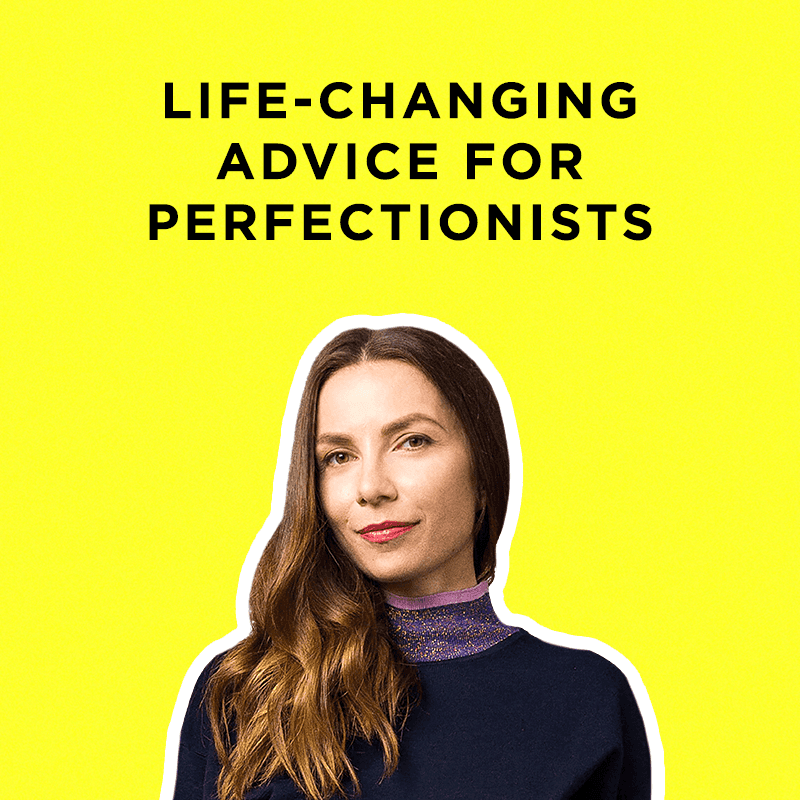
Episode Title: Don't Overcome Your Perfectionism! Why Your High Standards Make You A Star Episode Description: A transformative discussion on perfectionism, exploring how high standards can be a source of strength rather than a flaw.
Key Themes
Introduction to Perfectionism
- Marie introduces the concept of perfectionism and shares her personal journey with it, casting it in a positive light as a potential superpower.
- Guest Catherine Morgan Schaffler, a psychotherapist and author of "The Perfectionist's Guide to Losing Control," shares insights on perfectionism.
A New Perspective on Perfectionism
- The conversation challenges common misconceptions that perfectionism is inherently negative.
- Catherine emphasizes that perfectionism can be a powerful energy that leads to ambition and success.
Empowerment through Acceptance
- A central argument presented is that individuals should embrace their perfectionism rather than try to overcome it.
- "Do not allow your ambition to be pathologized" is highlighted as a strong mantra for ambitious individuals, especially women.
Discussion Points
The Impact of Gender on Perfectionism
- The discussion touches on how societal norms dictate different standards for men and women regarding ambition and perfectionism.
- Women are often encouraged to lower their standards or tone down their ambition, while men are celebrated for similar traits.
Types of Perfectionists
Catherine outlines five types of perfectionists
- Classic Perfectionists: Reliable and disciplined but may struggle with collaboration.
- Procrastinator Perfectionists: Need ideal conditions to start but can become paralyzed by preparation.
- Messy Perfectionists: Enthusiastic and adventurous but can overcommit and feel unproductive.
- Intense Perfectionists: Outcome-focused and efficient, but may overlook their well-being or the well-being of others.
- Parisian Perfectionists: Value ideal connections and relationships, risking people-pleasing behaviors.
The Spectrum of Perfectionism
- Catherine emphasizes that perfectionism is highly individualized and can be adaptive or maladaptive depending on the context and mindset.
- The conversation explores the fluidity of mental health and how one's perception of perfectionism can shift over time.
Key Takeaways
- Embrace Your Perfectionism: Rather than viewing perfectionism as a flaw, see it as a source of strength and identity.
- Seek Different Types of Help: Recognize that asking for help can come in many forms, including informational, financial, or emotional support.
- Energy Management Over Time Management: It’s essential to focus on managing energy levels, as a well-rested you is ultimately more productive than a burnt-out version.
Surrendering as a Form of Power
- Surrendering is framed as an act of strength rather than defeat, inviting openness to new possibilities and connections.
Conclusion
- The episode concludes with an invitation for listeners to reflect on their own perfectionism and how they can harness it positively in their lives.
- Listeners are encouraged to take actionable steps toward acceptance and understanding of their perfectionist tendencies.
Call to Action
- Marie invites her audience to comment on their biggest takeaway from the conversation and how they plan to implement the insights shared in the episode.
---
This episode is a refreshing take on perfectionism, encouraging listeners to embrace their high standards as a unique strength that contributes to their personal and professional success.
Written by AI. May contain mistakes. Listen to the episode to check what was said.
Transcript
Automatic transcript. May contain errors.0:00In this episode, you'll hear some adult language. So if you've got little ones around, grab your headphones now. The goal is to be able to make room for all of your human experiences and not be reactive. Yes. And choose to kind of respond from a place of as much love and patience as you can muster. Yeah. In the moment. it.
0:29Hey, it's Marie Forleo and welcome to another episode of the Marie Forleo podcast, the place to be to create a frigging business and life you love. And I'm so excited about today's show. So I don't know if you have ever identified as being a perfectionist, right? I certainly have. And if you've ever been shamed for it or told you need to lower your standards or you're too much or blah, blah, blah, blah, blah. The conversation we're having today is from probably one of the first people who's ever made me feel hopeful and excited and grateful about my natural traits, and I cannot wait for you to hear this conversation.
1:00Catherine Morgan Schaffler is a psychotherapist, writer, speaker, and former on-site therapist at Google. She trained at the University of California, Berkeley, Columbia University, and the Association for Spirituality and Psychotherapy in New York City. Her book, The Perfectionist's Guide to Losing Control, is available wherever books are sold. Catherine, I love your book. So I have to tell you the story of how I got to it. So I get a lot of books, right, sent to my house. And most of them are sent from publishers or whomever, and they're not necessarily requested. And I remember one weekend I was home by myself.
1:39Josh wasn't there. And so I'm going through like this huge stack of mail and your book was included. and there was something in it because I wasn't aware of the book. You know what I mean? I wasn't necessarily expecting it. And so I sat down at my desk and I was like, I feel like I really need to read this. Like this, what a cool title. And so I started reading it. I was like, oh, wow. I was like, I have never heard anyone talk about perfectionism in this way. And so I'm into it. I'm into it. And then all of a sudden you mentioned me in the book. I was like, wait, what? And it was such a cool moment.
2:11And it made me like laugh out loud. And it really gave me so much relief. And like, it made me want to get up and cheer because I feel like so much of my life and so much of the messaging that we've received culturally, especially as a woman, is you're so much, you have such high standards, calm it down, lower it down, and been made to feel like I'm wrong for being like, you know, the wonderful creative maniac that I am. and you are the first person really that made me feel like, oh my God, like who I am and what I am naturally is like a superpower and not this defect. So thank you. That's such an incredible story.
2:52I don't know if that means you didn't get the email that I wrote to you, which I'll send you. I may not have. Yes. You'll get a kick out of it. Yes, yes, yes. Because yes, you are such a dynamic person and I put you in the book because you're such a great example of someone who takes their ambition and really broadcasts it in a way that gives other people license to do the same. It certainly has had that effect on me. And so it's such a full circle moment to be here with you. Yeah. And I chose this. I see that. This is very purposeful. And I remember when Erin was showing me all the potential looks of, I was like, I want that sweatshirt right now.
3:29So you write, part of the urging to stamp out perfectionism in women arises because perfectionism is powerful energy. And then I'm smashing together sentences from another section and I have this bolded. Do not allow your ambition to be pathologized. Refuse to apologize for or disguise your insatiable desire to excel. Reject the notion that you need to be fixed. Reclaim your perfection now. Yes. Yes. Like hell to the frigging yes. Whatever you want to say, comment on that. all you. Well, I mean, you can't be a perfectionist without being ambitious. And you can't be an ambitious woman without being expected to make your ambition palatable in some way or straight up hide it or lie about it.
4:19Women who seek power and influence are seen as power hungry. And men who do the same are seen as alpha males. And there's just all of these double standards that, to be honest with you, felt so outdated. When I was writing the book, I had these moments of like, do I still need to include this? Is this still relevant? Because I feel like we've been talking about this enough to where maybe we've poked enough holes in it that it doesn't need to be brought up again. And then something would happen in the news or in some other way that would make me be like, nope, we still have to address all of these ways that gender performance is communicated to us as women and men and non-binary people, this is how you should behave.
5:05And this is how you should not behave. And to your point, women are constantly told in a thousand ways, you're doing too much. Pull back. Unless you're operating in a realm that is not in competition with men, which is why someone like a Martha Stewart or a Marie Kondo, we can say, They're such a perfectionist, and it's wonderful, and let's celebrate them and syndicate them. Because if you look at Martha Stewart's company, it's based on archetypal homemaker interests, right? So it's like wedding palettes, brunch in a pinch, all of this stuff which is publicly acceptable for women to be ambitious about.
5:45And in those instances, it's like more power to her. But then when you have someone like a Serena Williams, for example, who is assertively staking claim to what she wants and doesn't hide any of it and in fact attracts attention in what she wears and some of the things that she says, she's penalized for it in so many ways, not just emotionally but also actually literal penalties in her games for doing things that men before her and probably after her. will do to a degree that is so much more intense in a negative way and not be penalized at all. Yeah. I mean, your book is so good. I also just want to say, I said this when you came in to the studio, you're a phenomenal writer.
6:33So like this is your first book? Thank you. Yes. Was it difficult? Yes. It was the hardest thing I've ever done. And I've done some very hard things. And I think what made it hard was that the other hard things I've done, I mean, I talk about being sick in the book. Yeah, I want to go there next. Yeah. A lot. Those hard things you just had to do. And that's been the experience with a lot of difficulty and challenge in my life of like, well, I got to do it. And so you just do it. This is like, I don't have to write a book. And I think that's what's so good and hard about writing a book is because it's really, you have to rise to the occasion of yourself.
7:14A self that you know about in your mind and an idea that you know about in your mind, but that other people don't necessarily know that version. So it's like nothing bad's going to happen if you don't do it in the same way that if you don't attend to your health or whatever, there is this little consequence. But some things you just have to do. Yeah. The reason I always bring this up is because I read this stat and I believe it's true. Up to 80 % of the population feels like they have a book in them. And most people don't ever actually write the book and get it out. So as a writer myself, I remember everything is figureoutable, my last book, like not that it almost killed me.
7:53That's very dramatic to say, but I struggled. You know what I mean? I was on the struggle bus and I always love talking to writers because I'm curious. I'm always curious about everyone's process. So hard. Yeah. It's really, really hard, but you are a beautiful writer and I really hope that you continue to write because it's a very unique voice that you have. And I read a lot.
8:13Let's go to how your own journey helped you start to realize how attached you were to this sense of control. And that with the diagnosis, you were like, oh, you really saw yourself. And I'll just say at the same time, I feel like as a young person growing up and even in my early 20s and stuff, trying to control things, oh my God, that was like the label I wore all the time. That's what the other thing that attracted me about your subtitle was, oh, losing control. Yeah. Yes, please. Yeah. It's so cliche and the cliche of this of it still bothers me that I didn't realize how much control I had or was trying to hold onto until I lost it.
8:56Um, because I didn't experience it as being controlling in the moment. I experienced it as being responsible, as being driven, as being disciplined. Like a leader. You're taking care of everyone. Right. Got your shit together. Right. But it was really, I lost so much control so fast that I didn't have time to translate it into anything other than what it was, which was, oh, I was doing all of those things because I was afraid of something. It was all coming from a place of fear. I better get my career together or I don't know what was going to happen. You sometimes don't even know what the fear is.
9:39Totally. When you're operating from a place of fear. And I know this also sounds cliche, but I'm grateful for that moment of time because in the sliding doors version of life where I didn't get sick and just stayed on that track, I mean, that's the gift of a crisis. It's like a call to action. And when everything in your life gets dismantled, you really have to reconstruct it. And it's rare that you reconstruct it in exactly the same way it was before because you are no longer the same person that you were before. And what was your diagnosis? How old were you and what went down? At 33, I got diagnosed with this rare condition called gestational trophoblastic disease, which is like highly treatable, 95 % treatment rate, whatever.
10:27And then, you know when you hear something health-related, it's like in 1 % to 2 % of people. Yes. And I kept being that 1 % to 2%. And so all of my doctors were like, we're just going to do this, and then it's going to manage it. We're going to do chemotherapy. And it wasn't radiation therapy, but I lost a lot of my hair. and, you know, I was at Memorial Sloan Kettering for a good chunk of the day for many, many months. And then it ended up just echoing into my life more and more. I had to have a hysterectomy, like all of this stuff, which I know you've gone through, that I just, every time that I thought it was under control, it wasn't.
11:06Yes. And so it was just a constant recalibration. And at some point, you really have to just calibrate fully internally. Yep. And I've had to do that before in lots of other ways in my life, but not in this way. And so it was just, it was just a wild moment, you know? And did it drive you deeper into your work as a psychotherapist and specifically around investigating and really understanding perfectionism? Yeah. Because I was like noticing a difference between the clients that I've worked with at the time my practice was on Wall Street. So I was working with really ambitious women, and big law and finance.
11:47And they had such an energy that they brought to the room that was so electric and all at once like constructive and destructive and just so brimming with potential. And I started to notice a difference in myself. Being with them? Yes. Like I started to feel more muted because I was trying to do what everyone around me was telling me to do, which is you need to work less. You need to like calm down, take a bath, sit in the bath, do nothing, meditate, don't think about anything. And that's not how I process things. I'm a walker. That's how I process things and move through things. And I don't like doing nothing.
12:30Yeah. We're going to talk about that, by the way. I have to interrupt you for a second. One of my like dearest friends in the world, I've known her forever. And I remember I was struggling once. She said, Marie, you're just like, you need to take a bath. And I was like, fuck off. Like I hate fucking baths. Like I just remember the experience of having like so much rage and my friend trying to help me. And I was like, nope, that doesn't work on this thing. Yeah. And I, you know, I actually love a good bath, but I don't like forced. Correct. You know, it's like a thing about a good bath is you haven't had a good bath in like weeks and then you do, and then it's nice.
13:04But like every day and what it feels like so contrived. And then it stresses me out more. And so I was exhausting myself trying to be this version of healthy that people were telling me was healthy. Yes. And that's why I started feeling like I was fading out and my clients were just so magnetic in so many ways. And I was like, what is happening here? And that's where I got to all the things that I put in the book. Yeah. And let's talk about that too, because I thought it was really fun when I started peeling into the book, you have created five different kinds of perfectionists. So let's talk about those five types and the value of knowing your type.
13:45And I love to, for everyone listening, like at the back of the book, you say it very, very clearly. It's like, Hey, these are constructs, right? These are not like, this is something that you've created based on all of your experience, all of your training, all of your clients, but it's not made to quote quote unquote, stick us in these perfectionist boxes. It's just to kind of explore these notions of tendencies and to give us footholds and toeholds into seeing like, oh great, here's ways if I tend to lean in this flavor, these are some things I want to explore. And so I love it. So walk us through the five types.
14:17Yes. Okay. So we'll start with classics because I think the classic perfectionist is what most people think about when they think about perfectionism and like perfectionism itself, which can be really, really wonderful and you can use to your advantage, and can be really, really destructive and just pull you down. Each of these types have their advantages and liabilities. So the advantages to the classic perfectionist, these are people who are very put together, right? They're highly reliable, very disciplined. They do what they say they're going to do when they say they're going to do it in the way that they said they would do it.
14:51And that's great. On the con side of this type, they can sometimes operate in a way that doesn't necessarily engender a lot of collaboration. Because a classic perfectionist is like, well, I really want to get it done well, so I'm going to do it myself. Yes. And that doesn't lend itself to feeling connected to people. So classic perfectionists can feel really taken for granted because it's like, oh, she'll do it. She likes doing that, you know? And even if you like doing something, that doesn't mean it's not hard. It doesn't mean you don't want appreciation. And people can often feel like they're kind of haughty or living in their own world, right?
15:27So then we have the procrastinator perfectionist. And the best way to explain this is they want the conditions to be perfect before they start. Ooh, you're going to get a lot of people with that one. So these are people who are really thoughtful, take great preparative measures, can see something from a 360-degree angle, and can think about all the contingencies that might unfold. The problem comes in when their preparative measures spill past the point of diminishing returns, and they are preparing too much, and they're not actually doing the thing that they want to do. So it creates a kind of paralysis.
16:04And the counterpart to the procrastinator perfectionist is the messy perfectionist. That's me most of the time. I have a big chunk of messy perfectionist in me, too. And messy perfectionists want the middle of the process to be perfect. So they love starting anything. And it's such an advantage to be able to push through the anxiety of a new beginning. Messy perfectionists don't even feel anxiety around that. It's exciting and adventurous. And they, like, romanticize it. And so they can put their hands in a million pots at once, and it gives them energy. The problem is these very naturally enthusiastic people can say yes to a million things in a way that doesn't allow them to commit to even one thing.
16:53Totally. And so they end up wearing themselves too thin and not only not doing the million things that they wanted to do, but not even getting one thing done. Yeah. And that can lead to this really destructive narrative of, I guess I don't care enough. I guess I'm not disciplined enough. I guess I'm not smart enough for anyone to take me seriously. And none of that is true. None of that is true. It's just that you need help in the middle. And procrastinated perfectionists need help in the beginning. Intense perfectionists want the end of the process to be perfect. So these are people who are focused on the outcome.
17:30They have razor-sharp focus. They're extremely efficient. They don't care about being liked. So they're very direct effortlessly, which is another great quality. But on the con side, sometimes they can get to the end goal in a way that kind of dismisses their well-being and the well-being of people around them. Totally. And so it's like, great, you achieved all of your Q2 goals, but half of your team is now quitting. Yeah, totally. And so then lastly, there's the Parisian perfectionist. And this is a really interesting iteration of perfectionism because it plays out interpersonally. And we think of perfectionism as only operating in these like achievement roles or, you know, sports roles or something like that.
18:19But this is about ideal connection. And so Parisian perfectionists want to be perfectly liked. They want to perfectly like other people. They want ideal connections. And on the pro side, these are people who you do not have to explain how important relationships are in life. They just get it. They're naturally warm and inclusive. They'll go out of their way to talk to the person standing alone at a party, for example. But on the con side, they can sometimes take shortcuts to connection through people-pleasing, which we all know doesn't work. And so not only have they now not connected to anyone, they've also disconnected from themselves.
19:01And that can just metastasize into bad cycles of people-pleasing. So good. And I know at perfectionistguide.com, you have a great quiz. So for everyone watching right now, you can go take the quiz. We'll put it in the show notes. Thank you, by the way. That was like such a beautiful outline of each of the five types. Ray, look, nothing in life is that complicated. You can do whatever you set your mind to. If you roll up your sleeves, you get in there and you do it. Everything is figureoutable. I was still a little girl when my mom said those three words to me. I had no idea how much they changed my life.
19:40Eventually, that simple phrase helped me end a physically abusive relationship, get out of piles of debt and land every job I've ever had, from bartending to trading on the floor of the New York Stock Exchange, to publishing at Condé Nast, to becoming one of the world's first Nike elite dance athletes, to starting a business at 23 and building it into a multi-million dollar socially conscious education and media company from the ground up. Now look, I don't know what your dreams are, but I do know this. They are 100 % figureoutable. If you want help on your journey, get yourself a copy of my number one New York Times bestselling book, Everything is Figureoutable.
20:24Now, one big thing, do not just read the book. I need you to do the book because if you do, it will change your life. Learn more at everythingisfigureoutable.com or head to your favorite place to buy books or audio books now. So I want to dispel another myth. So we've already kind of really, and I'm going to use this word because I've had a good amount of coffee today and I love coffee. We've smashed through the myth that perfectionism has to always be bad. So here's another myth. Average is not a bad thing. Perfectionists are totally fine operating at an average and below average level in a lot of areas, just not the areas they long to excel in.
21:06Bam. Those are your words. I love that you wrote that because, again, when people kind of try and squash us down a little bit, it's like, oh, everything has to be – it's like, no, not everything, just the shit that really matters. Yeah. Yeah. Absolutely. And that's – I think that's a great thing. And one of the things that people don't understand about perfectionism is that it's highly individualized. And so it's not just – and that's what frustrated me to the point where I was like, I got to write a book about this because so many of the things we think about perfectionism are so limited. It's so black and white.
21:45It's like perfectionism is bad and unhealthy. So if you're a perfectionist, that means you are bad and unhealthy in some way. And not only is that approach not useful, it's actively harmful. Say more. Well, it's actively harmful because thinking of yourself as a perfectionist is like thinking of yourself as a romantic or an activist or an artist. It's an enduring identity, marker, meaning people who think of themselves as perfectionists or romantics or whatever, hold onto that identity through their whole lifetime. And that's why we don't experience perfectionism episodically, right? So you might say, I went through a depression after college, but you don't say I went through a perfectionism after college.
22:24You say, I am a perfectionist. And so if you're talking about perfectionism in this black and white, like it's bad way, what you're really saying is to perfectionists, you need to be less of who you are. And you know what? If you can get rid of it completely and be a whole new person, even better. I'm like, that is taking an eradication approach to healing, trying to get rid of something that's in you and part of you, as opposed to an integration approach, which is like, let's get some boundaries around this. Let's understand it more completely. Let's get support where we need support. I would never say to a romantic, let me tell you the solution to all your problems.
23:03Just believe and love 75 % of the time. That's like how people talk to perfectionists. They're like, just lower your standards a little bit. Just do this. Just do that. And it doesn't work. Yeah. No, it doesn't work. And I want to talk a little bit about the difference between adaptive and maladaptive perfectionism. And I thought your observation here was so accurate. You talk about this a lot in your book. We're all up and down at different times in different ways for different reasons. You write, these are your words. If you're wondering if you're an adaptive or maladaptive perfectionist, spare yourself the trouble.
23:35You're both. I love that you say you're referring to the mindset the person is in, not the person themselves. And that is such an important distinction. This is why I love reading your work because it feels so precise from a truth level. And the distinctions that you have throughout the book are really, really important. Because I've noticed, I've seen myself in your book in so many different ways. It's like, oh yeah, when I'm off, when I'm scared, when I'm fearful, when, you know, you said something before that I so identified with. For me, so much of the things I've done in my life, at the time I was doing them, whatever they were, I'm like a fish in water.
24:17I didn't know that fear was driving me until, you know, the shit hits the fan and you're like off on the sidelines for a minute and you have a, for me, a moment of like, oh, perspective shift and you're able to kind of reflect and see things from a different point of view. But I love this notion that you're not maladaptive or adaptive. It's like, who are you? What mindset are you in this particular moment? Right. Mental health, we are just beginning to talk about it in the right way. Mental health is really fluid, really context-dependent, meaning if you're at home for the holidays, you're probably going to be stressed.
24:57Yeah. You know, and it might be tough. And that moment isn't reflective of who you are and what you're capable of and all of these things. And it's like the fluidity of mental health is something that I think people don't like to discuss because it makes us feel out of control and control. There's something soothing about it, the illusion of it anyway. Right. But really, whether it's sunny outside or not, or whether someone attractive just hit on you, or whether you're on time or late impacts your mood in these ways that really make you go up and down. Forget about the medications you're on or serious crises you're going through.
25:37And I think it's helpful for people to understand because so many times we think, oh, I'm doing so great that we feel invincible. And we take away the things that are helping us to feel so great because we don't need them anymore. And we are, if anyone is like me, humbled quickly in realizing that. And at the same time, it's really powerful to understand that if you're suffering through a depression or you're depressed-ish, that's not a sentence for the rest of the season or the year. You can move the needle in both directions based on a lot of stuff that you surround yourself with. Yeah. And life in and of itself.
Read the full transcript
26:18Josh and I talk about this all the time. I remember, and I want to talk about this next because you have a story about Lena in your perfectionism up close chapter. You wrote, a part of her wanted to stop pushing herself, stop feeling compelled to rise to the occasion of being her best self. She wanted to figure out how to be her average self without feeling like a loser. And I was like, how freaking cool is that? And then I'm going to read one more thing and we'll discuss. Then you talk about the tension of perfectionism emerges from the constant clashing between two of the most fundamental aspects of your identity.
26:50You're a full of flaws human with significant limitations and you're a perfect being with unlimited potential. I cannot tell you how many times I have experienced that tug of war inside myself. And also Josh and I talk about it. So be like, what's, you know, he's probably, we've been together 20 years and he's probably one of the most intuitive people I've ever met. And so we could be sitting in bed and I'm like, you know, going through a whole thing and I'm like, what? You're so loud right now. I'm not saying anything. Do you know what I mean? He's like, you have to say it out. And we've had these conversations.
27:26I'm like, there literally feels like sometimes two very, very competing parts of me. The one who's like, you need to lay down for like six months. And the other one who's like, absolutely not. And is genuinely excited about 17 different things. Yeah. And I think that that's everyone's experience. And I like to think of the ratio. I think of some of the people I know and I'm like, oh, they're, this is going to sound so weird. Okay. But it's like, oh, they're, they're like, 70 % in their humanness and 30 % in their being. And then some people who engage in life in such a way where you're like, oh, they're way more in the being realm.
28:10And their humanness feels weird to them in some way. And so, I mean, these are our two core pieces of identity. and it's really interesting how we reconcile them. And there are lots of creative ways to reconcile them in healthy ways, but nothing that works works all the time. And like it catches up with you in moments, which I think is totally natural. And part of it where you just can't win. It's like driving a car with kids in the back of the car. They're going to fight at some point. Like you can do things to make them not fight as much, but expecting that long car ride to always be pleasant and peaceful and loving.
28:56It's like not going to happen. Like just giggles. Like there's going to be, you know, there might be throw up, Legos thrown, Cheerios on the floor, lots of screams and people hitting each other. Yeah.
29:11I love that you also, I feel like in your bio when I was reading your intro earlier, let me see, where is it? I'm going back up there. Like the Association for Spirituality and Psychotherapy in New York City. There's such a beautiful, in my perspective, spiritual undertone to all of your work. And I really, really appreciate that. And then this conversation of like the two parts of us, I've been thinking a lot about it lately. It's like the divine aspect of who we are, the being, versus for me, the personality, the ego, the mind. It's just like the clash of those two things. It's fascinating to witness.
29:46Yes. It's funny that you're bringing this up because when I approached agents with this book, the original proposal title was called Truce, Making Peace with the Human in Your Being. And it was about that core component that you just pulled out, which is the only part of the book that I literally kept in because I wanted to write it. When I sat down to actually write the book, it wasn't coming. It was like, I want this to be fun and not this intense, spiritual, heady kind of thing. You accomplished. I would say goal accomplished because I laughed a lot in your book. I'm going to read you something else you wrote, which is brilliant.
30:28A misconception about being present is that presence equals happiness. You can be present and feel tired. You can be present and feel heartbroken. You can be present and not feel ready. Presence guarantees freedom, not happiness. I was like, damn. Freedom is my number one value in life. And when I am fully present, like part of reading this made me, I was like, oh, that's what it is. When I'm fully in the moment, I feel 100 % free. And there are certain activities I do, like dance, for instance, where I'm lost in it. I'm like, oh my God, I start crying. Like half the time I cry in my hip hop class and I'm so grateful that it's so dark and everyone is so sweaty and we don't know what the hell's going on that they can't see me because it's so much freedom.
31:17Yeah. So many people cry in yoga and not just at the part where you lay down, but in random parts and they will literally come to therapy and say, something's wrong. I was crying. I'm like, no, nothing's wrong. You are just free. You're just having a moment with yourself. And there's something beautiful about that. And you're kind of expressing that in some way, or your body is. But yeah, I don't like the myths around what it looks like to be present or healthy. It strips down what it means to be a human being and turns us into these like templates that are, it prizes neutrality over feeling alive.
32:02Yes. And I don't value neutrality. It's not important to me that if someone says something that is potentially really triggering to me, that I understand how to hear it in total neutrality. Because that's not the goal. The goal is to be able to make room for all of your human experiences and not be reactive. Yes. And and choose to kind of respond from a place of as much love and patience as you can muster in the moment. But neutrality is not it. And neutrality and mindfulness are like smashed together in this way in commercial wellness sometimes where I'm like, that's not what it is. No, thank you.
32:44Yeah. No, it's devoid of nuance. It's very plastic. It feels extremely superficial and not realistic at all. I love this. This was fun. I love this subtitle that you had, I want to talk about the greatest form of power, surrendering. So you write, surrendering is the ultimate loss of control and the greatest form of power. Surrendering is not conceding defeat. Surrendering is conceding to potentialities beyond your imagining. To surrender is to affirm that you're not alone. Surrender is a prayer that says I'm open. Yeah. I feel like this is something probably I'd say in the past 10 years or so that I've had so much more fun with than forever in my life.
33:26Early on, I absolutely had an association of either surrender or rest, which we're going to get to next, with weakness. You know, like a feeling like, oh God, no, I'm not going to surrender. Like if I surrender, not only am I going to lose control, but everything, like y 'all don't have it. Like what an arrogant standpoint, but that's the truth of how I felt. It was like, I can't trust y 'all. Like I need to get this done because I haven't seen you perform to the level that I think is good. That's just me being real. Yeah. Well, it's also about feeling like a caregiver. Yes. And a lot of people who are in a role where if you mess up, the company is no longer going to be able to make payroll.
34:13And then all of these people's lives are going to be disrupted. And then, you know, so it's very easy to conflate the sense of surrendering with giving up. Correct. Or being reckless, not just with your responsibilities, but with other people. Correct. And it's a totally different thing to the point where it might be opposite. It might be the opposite. But that surrender notion for me too has also been really great about the prayer of saying I'm open and being willing to stay connected to something beyond myself. It's been really important. Okay. So before we wrap, I want to talk about the power of taking a break.
34:48So perfectionists do not like doing nothing. We know that. But eventually everybody hits a wall of exhaustion. And I just had this conversation yesterday. So we were doing MarieTVs yesterday and we were doing a bunch of Q &A Tuesdays. And so I was connecting with someone in our community and I could, you know, when you feel and you know some, you're like, oh yeah, I get that. And she was at a point, she will, I think, like this conversation, but we were talking about, I was saying, hey, I'm just going to invite you to maybe allow yourself to rest a little bit because based on everything she was sharing, she is not only an extraordinary caregiver, cares so much, responsible for so much, but she was starting to notice and feel like, oh, it's a season of change, but not necessarily feeling like she had permission for herself to slow down.
35:31And I could tell it was really confronting. So let's talk about the different iterations of rest in addition to physical rest. I loved this and that it's not a four-letter word. So you have decompression, playing and restoration? Let's break those down. Yeah. So I think if you think of, well, maybe we could start with productivity, right? Which is becoming the dirtiest word in wellness, which I can't stand that approach to it. And I think if we put some elasticity around that word and think being productive happens when you're able to operate from premium energy. And so anything you do that brings you to a place of operating from premium energy is productive, right?
36:16And so that means that if you take a nap and that nap restores you and you wake up from that nap and, you know, go out with your friends because your value is high quality relationships or you, you know, write because you're trying to write a book. That one hour of rested you is going to be more productive than the 10-hour version of you that is burnt out, resentful, hungry, you know, tired, all of those things. And so it's really about getting 30 ,000 feet in the air and saying, you know, what do you want? What are your values? And then approaching those values from a place of premium energy.
37:06and I use this framework of instead of time management, focusing on energy management, which comes from this life-changing article I read in Harvard Business Review by Tony Schwartz and Catherine. Oh God, I'm forgetting her last name. It starts with an M. It'll come back to me. But anyway, they were talking about how it's not that we run out of time. That's not why we don't do things. It's that we run out of energy. So it's not that you didn't have 15 minutes yesterday to respond to your emails. It's that when you arrived at those 15 minutes, you were so burnt out that you were like, oh, I can't.
37:45I just can't. And so you just scrolled on Instagram or you turned on the TV or whatever you did. And so if you think about going through your day and taking rests in such a way that this is going to give me energy, then you're going to be able to turn the volume all the way up on premium energy and get done so much more. And that looks like decompressing, right? Emptying out. You've got to empty out because the things that fill you up and restore you, if you haven't emptied out first, they have nowhere to go. Totally. No room. They have nowhere to go. So you decompress, emptying out. That looks like, for me, watching TV, I like watching action movies to decompress.
38:29Yes. I like zombie movies to decompress. Oh, I never knew that. Yeah, like really good zombie movies. Walking, you know, things like that. And then restoring is something maybe a little more active and that engages you on a multi-sensory level. You know, it looks different for everybody, but there's a formula to it. And it's really, any way you shake it, you need to rest. And I loved, so for me, when I was looking through this framework, like the passive and the emptying out, it's like, you don't have to feel guilty about that at all. And the playing, the active relaxation, Like I identified so many things when I was reading this chapter, like filling myself up through dance and through fitness, also through cooking a really good meal.
39:07Like there's certain house projects that I get so much energy from. And I'm like, this is technically work, but it's not. Like I just come back to my actual quote unquote career work feeling like, woo, when I just did it. And that equals restoration.
39:27okay so before we wrap is there is there anything that we didn't hit on because i guarantee you we have such a huge population of amazingly powerful ambitious perfectionists in our audience is there is there anything that you want to say before i have you read um from the end of your book? Well, one thing that I put in the book was about different kinds of help. And I think sometimes when we're in a place where we need help, we think of it as such a grand task, right? We think of it as an emotionally vulnerable thing to say, I need help. But sometimes the help we need is actually not emotional help, right?
40:10It's not validation in certain ways or for someone to understand or see us and all the deep stuff. Sometimes it's like informational help. Like, how do you submit this license? You know, how do you do X, Y, and Z? Sometimes it's financial help. I need financial support to do this. Sometimes it's tangible help. Like, I need help moving. You know, and being able to, I offer six different types of help in the book, just being able to create buckets of when you're stressed and overwhelmed, which type of help do I need so that it doesn't all feel mushed together and amorphous. And I think that's what stops people from asking for help so much because they don't know where to start.
40:57And so just kind of organizing it in those ways, I think can be the bridge that gets someone from knowing that they need help to knowing how to ask for help and who to ask for help from. I love that. That's beautiful. Thank you for bringing that up. Yes, my pleasure. Okay. Can you read the beautiful bit? I would love to. There's so much in the book. And for those of you guys watching right now while Catherine's getting ready, really, if you can identify with anything we talked about, you need to get your hands on this damn book. It is so good. Thank you. Okay, here we go. Everything you need to be powerful, you already have.
41:32Everything you need to enjoy your life, you already have. The work of self-acceptance requires you to accept your flaws and limitations. Yes, it also requires you to accept your wholeness. There's perfection inside you. There's completeness. And there's freedom. There's a place where your mistakes can't touch who you are and where the past simply does not fucking matter. That indestructible part of you in a den deep inside, what some people might call God, there's nothing you can do to break that part. If you can connect to that place inside yourself, you will connect to your power. So good. Ladies, so good.
42:11Thank you so much. Thank you. This was a total pleasure. I talk about the importance of pleasure in this book, and this was a top-to-bottom pleasure. Thank you. Your work has impacted me, helped me for the last 10 years. This is such a full-circle moment, like I said, and I just am so thrilled to be here. Oh, thank you. I can't wait for your next book or your next project or whatever it is. And I'll continue to sing your praises. You're wonderful. Thank you.
42:46So I'm curious, what's your biggest takeaway from this conversation today? And most importantly, how can you put that insight into action starting now? I want you to leave a comment below and let us know. And of course, if you enjoyed this episode, hit the like button and subscribe. It makes sure that we can reach even more people in our awesome community. And it makes sure that you never miss a thing. Until next time, stay on your game and keep going for your big dreams. Because the world really does need that very special gift that only you have. Thanks again. And I can't wait to see you soon.
43:25Hey there. If you are loving this conversation with Catherine, then you are really going to love my free coaching audio that I want to give to you called How to Get Anything You Want. It's literally like a coaching session between you and I. You can download it right now for free at marieforleo.com slash subscribe. Go do it now.
From the publisher
What if you didn't have to overcome your perfectionism? What if your high standards and relentless drive make you a star? Listen in for a mind-blowing take on perfectionism that will change your life.