
In short
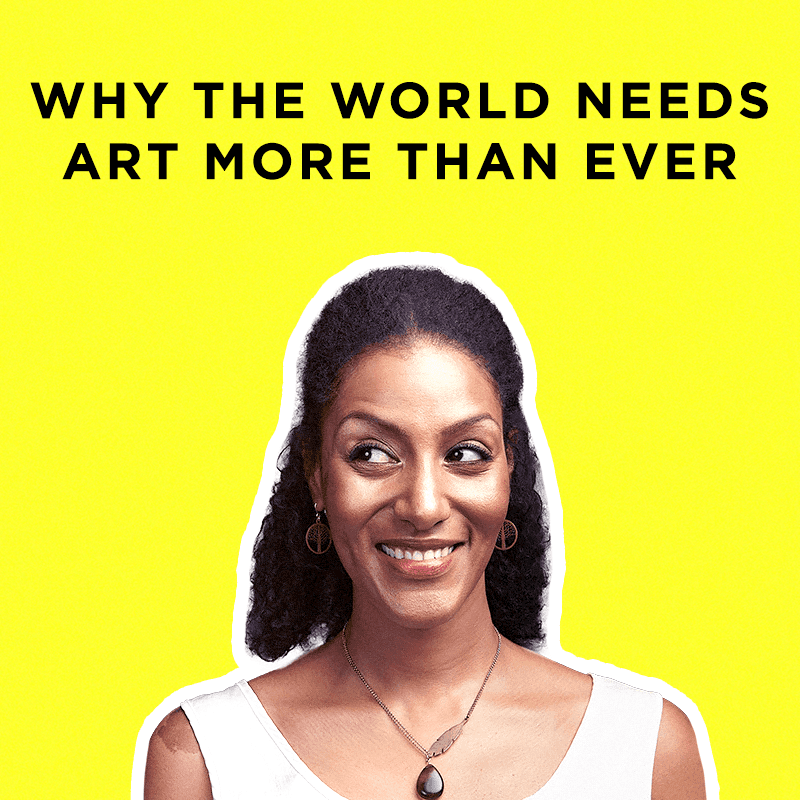
The Marie Forleo Podcast - Episode 395 Summary Episode Title: How to Trust Your Creative Intuition with Sarah Jones Release Date: [Insert Date Here]
---
Episode Overview In this episode of *The Marie Forleo Podcast*, Marie Forleo chats with Sarah Jones, a Tony and Obie award-winning playwright and performer known for her multi-character one-woman shows. The conversation revolves around the importance of trusting one’s creative intuition, overcoming self-doubt, and utilizing humor to address societal issues.
Key Themes and Discussions
- Trusting Creative Intuition
- Fastest Way to Free Yourself from Self-Doubt:
- Emphasized the need to trust one’s unique gifts and intuition, which is crucial for creative expression.
- Self-Image Sabotage:
- Discussed how negative self-perceptions can impede creativity and the importance of overcoming this sabotage.
- The Importance of Art
- Art as a Necessity for Survival:
- Jones argues that in current times, art plays a critical role in human survival and societal connection.
- Humor as a Connector:
- Laughter opens minds and hearts, making it easier to approach difficult topics such as race and social justice.
- Unlocking Hidden Creative Power
- Creative Process:
- Jones shares insights on how she captures ideas, emphasizing the spontaneous nature of creativity and the importance of following intuition and inspiration.
- Diverse Influences:
- Drawing from her multicultural background, Jones uses her characters to explore and reflect the diversity of human experiences.
- Navigating a Divided Culture
- Finding Kindness and Compassion:
- The conversation explores how to cultivate kindness and connection in a culture rife with separation and fear.
- Social Justice Through Creativity
- Using Art for Advocacy:
- Jones stresses the potential of creative work to foster social change, encouraging listeners to embrace their voices for activism.
Key Takeaways
- Follow Your Intuition: Creativity flourishes when you trust yourself and your unique perspective.
- Art Matters: In challenging times, art can heal and unite, making significant contributions to societal well-being.
- Humor as a Tool: Laughter can bridge divides and facilitate conversations about complex and sensitive issues.
- Engagement: Engaging with diverse voices and perspectives enhances one's creative process and understanding of the world.
About Sarah Jones
- Background: Raised in a multicultural family, Jones’s experiences inform her creative work, allowing her to translate complex social narratives into compelling performances.
- Creative Work: Known for her unique approach to character development and storytelling, Jones has captivated audiences with her engaging performances.
Conclusion Marie Forleo and Sarah Jones provide a vibrant discussion highlighting the significance of creative intuition, the role of art in society, and the power of humor in addressing serious issues. Listeners are encouraged to trust their creativity and engage with their unique gifts to contribute positively to the world.
---
Connect with Marie Forleo
- Website: [marieforleo.com](http://www.marieforleo.com)
- YouTube: [Marie Forleo on YouTube](http://www.youtube.com/marieforleo)
- Social Media:
- [Instagram](http://www.instagram.com/marieforleo)
- [TikTok](https://www.tiktok.com/@marieforleo)
- [Facebook](http://www.Facebook.com/marieforleo)
- [Twitter](http://www.twitter.com/marieforleo)
Additional Resources
- Free Writing Class: [Join now](https://marielovesyou.com/freewritingclass) to enhance your writing skills.
---
Final Thoughts This episode serves as a powerful reminder of the innate creativity within everyone and the importance of embracing it, especially in today’s challenging socio-political climate. By trusting our creative intuition and using our unique voices, we can contribute to a more compassionate and connected world.
Written by AI. May contain mistakes. Listen to the episode to check what was said.
Transcript
Automatic transcript. May contain errors.0:03Hey there, I'm Marie Forleo and for the last 20 years I've helped millions of people transform their businesses and lives. If you're ready to make the difference you were born to make, get ready because this is the Marie Forleo Podcast. Today you are in for such a treat because my guest is truly a creative genius. Sarah Jones is a Tony and Obie award-winning playwright and performer best known for her multi-character one-woman shows. Called a master of the genre by the New York Times, Sarah's work is celebrated for its humanitarian approach to character and story through the lens of multiculturalism.
0:41The daughter of two physicians and the product of a multiracial, multi-ethnic family and community, she was interested from an early age in both the welfare and cultural backgrounds of her diverse relatives, neighbors, and friends. She's a regular guest on public radio and has appeared on Charlie Rose, The Today Show, CBS Sunday Morning, and Sesame Street, as well as in her own special, The Sarah Jones Show, on Bravo. Her three multi-character TED Talks have received millions of views and she's currently developing new multimedia projects based on her characters. Sarah, I'm so excited to have you here.
1:15Yay. I can't take it. I know we were just talking off camera. This is like the most exciting thing. I've admired you for so long. I told everyone, like, you are about to witness a creative genius and I am just thrilled that you took the time to be here with us today. I'm so happy to be here and the feeling is mutual. The admiration is mutually warm. It's good. I'm so happy to be here. So let's take it back to the cornerstone of your work, which is really a piece of it is about being culturally inquisitive. And through your wide array of characters, you morph across gender and age and ethnic barriers.
1:50Can you share how this all began? Well, it's funny. I sort of had no choice in the matter. I was born to a multicultural family. And, you know, on my father's side, they're African American, a mix of people from the south. There's some Caribbean roots back there. And then on my mom's side, my grandmother's Irish American and German American. And we have both Christians and Jews on that side of the family. As we like to say, it's a long story filled with intrigue and interfaith guilt. And then we had more relatives from the Caribbean, from my grandfather. So it was just this sort of my Thanksgiving table growing up looked like, you know, the delegates dining room at the United Nations.
2:30It was just, in fact, I brought one of the inspiration for my characters is, you know, they're loosely based on people I really know. But I do change the names to protect the innocent and especially the guilty. But so, you know, picture little me. And here I would be. Hi, sweetheart. Marie, wonderful to meet you and your friends. Hi there. And Sarah puts me in her shows, what she calls her one-woman shows. And you know what that means? That means she takes the credit and makes us come out and do all the work. I know you wouldn't approve of that. Anyway, so, you know, these relatives of mine, I was sort of marinating in this stew pot of different cultures.
3:11And for me, it was very normal to identify with somebody who didn't look anything like me. You know, it could be my aunts, my uncles, my cousins. And West Indian relatives who talk like this, and they're all literally sitting around the same table. So one is saying, can you pass the gefilte? You know, what's wrong with Thanksgiving gefilte fish? People are looking at me. And, you know, the other was that I don't have a problem with white people in principle, but your food, it is so bland. You're killing me right now. You're actually attacking my mouth with this food. So, you know, it was like this.
3:43I don't know. I just was born into like a dialect, you know, palooza. And, again, because for me the family members getting along sort of ran counter to the story I was seeing outside my home. On the news it was race riots and, you know, these people don't get along with these people and they're others and we're different. And my experience was the opposite. I mean, we were literally all, you know, had the same blood. So I think I wanted to bridge that gap for myself. Did you always know that you, like, did you perform as a kid? You know, I really didn't in a formal way. And I was actually a shy kid.
4:22I had a pretty, I'll call my childhood colorful. That's a little double meaning there, bad joke. You know, we had the multi-culti colorful thing on the one side, but it was also, both my parents were doctors. They were very young when they met. And so it was sort of like being raised by two kids, like kids in lab coats. And we had babysitters, but I had this experience of feeling like I had to be an adult too. Like they weren't home a lot. And so I think the characters became sort of like my babysitters. They were a way for me to entertain my sisters at the time. And I was actually just talking about this with Lily Tomlin, who we both love.
5:01She's a hero of mine. And she's on my new podcast, which we'll get to talk about later. But we both came by our character performance very similarly as little kids, watching the people around us and wanting to have a place to entertain ourselves. And the characters kind of made me feel safe. Yeah. Did you always have such an ability and a skill around the voices? I mean, when I watch you, it is miraculous what you're able to do. Thank you for that question. I feel like with anyone, you know, you've practiced your craft, the ways that you're able to think about, you know, kind of life and business and, you know, connect dots.
5:42For me, I guess my brain was firing on the sound of my relatives all my life. So my ear was being trained. I've heard that it's akin to music. So it's sort of like if you grew up in a musical family and you're always hearing a tune and you know how to carry one and perfect pitch. For me, it was always being able to hear the melodies of these different voices, always having the awareness that no matter what the outside world said, we did belong together. Because I got a lot of, you know, this was before Obama. This was the time of, you know, people seeing me and my mom and they would assume, who's this weird white lady with this little black kid?
6:16Is she adopted? What's going on? So my mom jokes that we should write a book called We're Together. Like, because people would always say, are you together? Are you together? Are you together? Like, they couldn't put us together. And so I think growing up with that desire to connect, that's what really fueled the training, the unwitting training. It was like I was unwittingly sitting in, you know, hours and hours of repetition of hearing other people's accents, hearing their stories and the cultural specificity. And for me, I was just soaking in it and, you know, kind of on record all the time without realizing it.
6:52Yeah. And so what was the first time for you that you did like a public performance with? And how many characters happened to... There were just a few. We may not have space on the couches between you and me. I know. We're going to be like a 50 person panel with two chairs. I love it. It's going to be fun. But I would say the very first one I did in public, like I was doing the thing where I would tell my sister's stories at night and I would be English. I'd play the witch and what do you think my pretty I'll tell you? And they were like, wow, this is really intense. We're just trying to go to bed.
7:27But then later on in terms of actual public performance, the first time I kind of branched out, I was doing something that felt safe. I was doing like the spoken word hip hop. You know, you talk like this at the mic so that your words have a certain rhythm. You know, like that type of thing. And that was popular in the 90s. And then I realized I had these other voices that really wanted to come forth and I was afraid. I thought I would look crazy. Again, you know, race stuff is tricky and people will be like, why are you talking like a white girl? Or what's wrong with you? You're not Latina. Are you Latina?
8:00And I was like, well, I'm everything. And so I decided to let it be okay to take the risk and experiment with these characters. And the first one I did was a woman who was homeless, actually. I had seen her. I was going back and forth on the subway. I saw this woman and I thought, what would I hear if she could actually share something about herself instead of being this ignored, this thing on the side that nobody was paying attention to? And so I remember kind of watching her and studying her and I was doing a performance one night, and this, I said, I'm going to do this. I'm just going to see what happens.
8:34She don't have no teeth on the top, and her face all messed up, and the vain part of me said, what if you want to date somebody who's in this audience? You're never going to get a date again looking like this. But that's when I realized if I want to embody these people, I have to forget myself and try to give them some space. And that means I might not look pretty for a minute, but I wanted to just imagine what would it look like if she had some time to share who she is. So that's what I did. And I imagined she would probably yell at people and say, you know, you ignore me and I belong here too.
9:10And that's what I started building this character who gets the ear of a well-heeled theater audience who would normally walk past her, you know, as though she's just a piece of debris on the sidewalk. What would she say to them if she could? And so that character, and then did you start to just like, was it this creative process of almost seeing someone either out in real life or almost hearing them from within or a combination of both? You know, Marie, I think when I talk to people about the process, I love being able to feel that they get it. Yes. Even if you don't do this yourself, like we're all creative, right?
9:46Yes. Everybody watching, you, me, we're all born with this innate creativity. and in my case it does happen to come out in the form of feeling into people's energy. I remember my sister was dating, we're from Queens, so, you know, and when I do, sometimes I'm English, you know, like there's a character in my, I have a show called Sell By Date and this character is the lead, I'm the star, even though as an English person you're not really meant to admit that you're the center of attention, you're supposed to shrink, but I am the star. But the thought about that is that, you know, English people, wherever we're from, whatever our background, I joke that, you know, I do speak the Queen's English because I'm from Queens, New York, but we had, I had relatives who would talk like this, you know, and like you had to have your nails done, you had your hair, big hair meant something, not this, but like something else.
10:32And anyway, so, and you know, they would, Sa, they would call me Sa, like, what's that? What are you doing? What are you doing? What's happening? And my sister was dating this guy who was an electrician, who's, you know, kind of Queens guy. I spread my legs out like this. and eventually I would just cobble together like these different guys, these different people. Sounds like somebody I dated actually. Hey, you know what? I wasn't there. No, I'm kidding. I'm kidding. So, but these guys, you know, it's easy to stereotype them or to think you know who they are, but I thought these are really multi-dimensional people and they're not always the ones who are the stars of our films or who we focus on in the culture.
11:08And so I like the idea of bringing the marginalized voices more to the center and not just as caricatures. We all know, hey, hey, that guy is, my cousin Vinny. Nothing wrong with that movie. But the point is, you know, this guy my sister was dating, he was a fully fleshed out human being with thoughts and dreams. And I just thought, especially for me as an obviously, you know, black from a distance appearing woman, what could be more of an interesting exploration than to take his life and see if I could step into his shoes and, you know, maybe paint a more complex portrait of him. So did you ever in your own like experience thinking like, what am I going to be when I grow up?
11:48Let's say, you know, in that period in our early 20s when we're all trying to figure out who we are and like how we're gonna take care of ourselves and where we're gonna live. Did you ever struggle inside going like, oh my goodness, I have these incredible gifts. They're amazing. I don't really fully understand. Like how the hell am I gonna make a living doing this? Well, I think more than that, I didn't trust them yet. So I sort of skipped around, but you know, my parents sent me to the UN school. So on top of that multicultural family environment, I had, you know, teachers from everywhere. And I was joking recently that, you know, when you have a math teacher who is from Delhi, you might be a geometry genius, but you might never figure it out because you can't understand the accent of the teacher.
12:32But, you know, the reality was I had been, like I said, sort of soaking up all of this energy and all these different cultures. I felt an affinity for everybody from everywhere. But I didn't know what to do with that. What do you do with that? And so I thought I was going to be a lawyer. I thought like international policy. I was always interested in social justice and, you know, women's rights. I was a feminist early, all of that. But I definitely didn't think, I thought it was my silly voices. You know what I mean? And my friends were like, hey, leave an outgoing thing on my answering machine.
13:03Hey, be the Chinese lady. And I would, Marie is not available. If you want to call her back, you can do that another time. But if not, you can leave your message and tell her Pauline Ling sent you. Whatever. And so it was like taking my friends' parents and saying, can I sit with you and talk with you? And absorbing their accent and practicing. But I didn't see this as a career path until I really started to follow that. You hear, I think it's Joseph Campbell, follow your bliss or whatever those expressions are for hearing that still small voice that says, I know you're thinking about the LSAT, but that makes you feel like, you know, like you just want to get in bed and put the covers over your head.
13:48It's not really your passion. You don't really want to do it. And what actually, you know, sparks that sense of excitement in you when you think about doing it? And whenever I went and saw other people perform, I would think that's awesome. And I would also think, I think I can do that. So I was afraid, but eventually I started performing at these open mics that I was talking about and hip hop was really popular and there was this sort of hybrid poetry hip hop thing that I was doing. And in fact, I ended up getting some national attention and the career kind of found me. I don't know if I so much made the choice as I just kept following that guidance.
14:26That's incredible. Yeah. I love it. Thanks. So let's talk a little bit more about the creative process itself. Like if you're sitting there, and especially now if we kind of fast forward a bit, do your next projects, like do you literally sit and look at a blank page screen or is it something else? Like I know for me, you know, in the beginning, very much like you, is following that still small voice. But as I've gotten older and as we've built a team and things have come to life, then there's like all these different parts of your brain and you have to deal with like, Well, the logic and what is the wise thing to do next?
15:04So coming to your creative process in perhaps more recent years, do you still follow those intuitive hits where there's like you've heard a story or you've met someone or is it like, I know I wanna talk about this subject because it's fired you up, it's pissed you off, it's got you inspired? That's definitely happened with... The first play I wrote was called Bridge and Tunnel and it was about, like I've been saying here are people from, you know, all walks of life, immigrants. And in a way, you know, the point of the play is we're all immigrants. I mean, unless you're Native American, somebody came over here on some kind of vessel, you know, from some other country.
15:43And I really wanted that message to hit home. So, and also my goal is not to start from the place of a message and come hit you over the head for an hour and a half. Like my goal is for you to have fun and recognize people you know and feel connected and then realize at the And, huh, you know, my last name is Scharfenberger. I never thought about it. I'm American, but I'm also an immigrant, maybe 10th generation, but I'm still an immigrant. So that's my goal is to create work that is fun and, you know, interesting. But I do find that there are things that piss me off. And my newest show, Sell By Date, is about women.
16:18It's about women's empowerment. It's about sex and sexuality and how we commodify sex. And, you know, is it sex work and, you know, a culture that's kind of... We sort of want more empowerment. Like, as women, I think we're reaching for more empowerment than ever. And a lot of times it's confusing because that empowerment can look like Miley Cyrus twerking on a pole, you know, and we're kind of like, wait a minute, which one's the empowering thing? Are both empowering? So I really wanted to explore all of those questions and that motivated me. I love that. And I love that conversation particularly because I've had that conversation in my own mind.
16:55We've had it on this set. I've had it with friends and, you know, all over. I had it this morning getting dressed. Did you? You know? Yes. How tight are my jeans and why? For whom? Like what's going on? You know, I really wanna kind of as women we get to explore all of this now. Yeah. Yeah, that's really, that's incredible. Do you have like a way to capture your ideas? Like, cause I would imagine that at times they can come fast and furious and you're like, okay, little baby, we need to put you over here right now. Oh my God. I definitely need a naughty step like for some part of it. But I will say, so I brought along a couple of friends.
17:29So like, my name is Bella and I just like wanted to say hi to you, Marie, cause I'm like super stoked to be here right now. Hi Bella. Hi. So like what you do is like so amazing because like you speak to like a range of women, like women my age and women who are older, just helping them, I don't know, feel more empowered and men too and trans people. We have to be woke and super intersectional about everything. But Sarah Jones, I think her whole goal is let the character speak. I'll have my phone, which I must really love you because I don't have my phone in my hand at this moment. That's obviously a sign.
18:12It's huge. Huge. Believe me. But like I will just like talk into her like voice memos on her iPhone and so that's how she'll write like a whole like if we have to go perform somewhere. Like I got to go do this thing like at the UN which is like amazing. Amazing. Yeah. And like Sarah Jones became a goodwill ambassador but like I got to go talk. And I was like oh, like I just, you know, you imagine like at the UN like what would you say? Like, hi, delegate. I can't pronounce that, but I respect you. Like, no, I didn't actually do that. But yeah, that's what we do. We like work out scenarios. Like I show up and then Sarah Jones just lets me like record myself.
18:51So that, I let them write. Which is probably, I should probably, they should probably be on my taxes or something. I don't know. I should talk to you about that. No, we should. I was just thinking like, oh, wait, maybe we can get a lot of social security. Like there's like, you know what I mean? We can build up a whole 401k. Totally. We have a whole corporation. I love this. We're gonna plan it. We gotta plan it. Okay. No, that's awesome. I know a lot of... People ask that question a lot. They're like, oh my God, when they're creative, they're like, I have so many ideas and how do I not pursue them all at the same time?
19:18Yes. But I love that you just use whatever's around you. Yes. The characters come speak and they... They prioritize themselves. I think there's a lot of life that for me is self-organizing. And I resisted that for years because I was like, I have to do this. I would give myself my own to-do list, my own priority list. But really my instinct, whatever you want to call that, your higher self, you know, I think we all have that voice, that still small voice or just the voice that's kind of your GPS, you know, like your greater positioning system that's helping you find, okay, somebody's pulling me in this direction, but actually I can really feel what I want to do is over here.
19:55And even if it's not like the sexy choice all the time or like the one that's going to make me look good, I find that the more I am worried about my self image and not focusing on my true self, I get lost. And a lot of the decisions that I've made in my career were like, ooh, you know, I'm gonna stay at the Chateau Marmont. That's not a good enough reason to like, you know, sell a TV pilot that you don't really believe in. So I've had to learn those lessons the hard way. But I would say in some ways it's all worth it. Yeah. A hundred percent. And people, I get this question a lot. They're like, why are you not pitching a show on network?
20:30Or why are you not doing this? And similarly, my intuition has guided my entire life. It still does to this day. And if you... It's so magical. And it often leads you in places that you wouldn't expect. So true. Everyone else is just like, are you crazy? Like why are you doing? And I'm like, I have to do it. Yes. Have to follow it. Yes. Holy cannoli, mamma mia. I just love this interview so much. That's right. And we're going to be back after a word from our sponsor. I'm Marie Forleo, and I quit writing boring copy after I discovered nobody wants to read that shit. If you have problems writing in a way that's true to your voice and helps convert browsers into buyers, the copy cure may be right for you.
21:19Check with your health professional. And after she says she doesn't care about your writing skills, sign up for our free seven-day writing class at thecopycure.com. That's thecopycure.com.
21:37So you've said this, and it's so beautiful. I need to read it word for word. Laughter is a deceptively powerful tool. If you can make people laugh, really laugh, then you have done something because when When that mouth is open and laughing, an open mind can't be far behind." Thank you for lifting that out to me. It's gorgeous. And I would only imagine that the letters and the response that you receive to your work, because it's true when we're laughing and we're looking at some of these tricky subjects. When we're looking at race, when we're looking at sexism, when we're looking at the injustices that surround us, to be able to have people laugh about it.
22:21Anything you wanna share on that? Yeah, I think our humanity is dependent on having... The survival of our species is going to depend on how much of a sense of humor and connectivity we have around that humor. When I laugh... I love comedians. I'm actually sort of announcing this on your show, but I'm starting to veer toward just experimenting some more with stand-up comedy. Because what I love to do with my characters is very improv-based. I love connecting with an audience. And I think, you know, you don't have to be the same background as that comedian to really, you know, find the humor in what they're saying, to see what's absurd, to identify.
23:03And when we do that, it's a lot easier to hate people, to think that they're other and that you should fear them. and that they're a threat to you when you remember, wait a minute, we're laughing about the same things. You know, it's a real truth serum, I think, you know, kind of comedy brings people to a truer, deeper place in themselves. Again, in a surprising way. You would think it's just, this is a two drink minimum, what's the big deal? But if you're sitting there and somebody gets you to feel into like, oh, wow, you know, I am that insecure. I do pretend, you know, that there's nothing wrong with me, but really I'm like in the mirror like, oh my God, are we okay?
23:39I am enough. I have enough. I do enough. You know, like you need to like get at those truths that we all kind of hide. Everybody's on Instagram. Everybody's photo tuning and curating their life. So it looks perfect. But I think comedy and laughing at ourselves is the quickest route to avoiding the kind of insecurity that frankly, I think is running Washington right now. Right? Yes. Yes, yes, yes, yes, yes. Ain't nobody got a sense of humor up in there. No, not a lot of them. Oh, it's not funny. And I just wanna say, I'm telling you right now, consider my full support for you, like stand up comedy, whatever.
24:14You gonna be on my first show? Are you kidding me? I'll be like rolling on the ground, cheering, laughing. Yes, please. I can't wait. That is a yes, please. You've also said this, another genius statement. Hurt people hurt people, but guess what? Free people free people. Let's talk about how we can take care of ourselves in this current socio-political climate, because there's a lot going around. There's a lot going on. And I want to be clear, because I like to give credit where it's due. So I actually heard, hurt people, hurt people elsewhere, and then heard free people, free people, and I was like, yes!
Read the full transcript
24:47And so the moment we're in, Marie, I mean, none of us, you know, we all have wonderful friends who've been activists and in the public eye for years. Gloria Steinem is a friend. And when this election first happened, I remember going to her and asking for guidance, help, hope. And she said, well, I've never seen anything like this in my lifetime. And so we don't get to pretend that we're just going to have a perfect solution to what's going on now, but I think we get to get very present. We get to connect in a deeper way than we ever have. It's amazing to me how different marginalized groups have galvanized into a larger movement.
25:28The Women's March was amazing. More women of color and white women and trans women, men. People are coming together across issues like we never would have if we didn't have the... I think the sort of... I want to be careful about calling it doomsday scenario because that's not what it is. But this is a real threat. If you are, you know, I'm thinking about, I actually have a character, I'll let her join us briefly. I don't know why it has to be brief. My name is Habiba. She wants to get rid of me too fast. But the joke, you know, that I am coming from the Middle East and nowadays I do want to be quick because I don't want to get deported.
26:10I have to keep moving around. But you know, it's like, I want to remind myself that this is a difficult political moment, rather, for a lot of us. it's actually a life-threatening moment for a lot of people. It is destroying families. There are immigrants who, you know, they don't know whether they're going to come home and find their entire family intact. So at a time like this, I want to take it very seriously. And being depressed does not help the movement. So we don't pathologize ourselves for the fact that we're upset, that we're scared, that we're anxious, that we're stressed, but we do get to reach for support for solutions.
26:45I know that I can't do this alone. I lean on my friends like never before. Most people don't use the phone anymore. I am on that phone. I'm so depressed. Did you see this? Oh my God. And just hearing that other person's voice and reminding ourselves, okay, what can we do? What's a practical thing we can do? Our friends who have a lot of money, please donate to the right candidates so we can do what we need to do in 2018 when it's time to vote. How can we hold our officials accountable? How can we run? I'd love to see you run for office. Oh my goodness. I'm just saying. I mean, if you agree, please, you know, do whatever's the equivalent of retweet.
27:18Write her, tell her. But my point is, these are real shifts that change in a culture. You know, we can create substantive change in our culture that, frankly, we've needed a long time. Yes. And I love Hillary. There is a part of me that wonders, if she had come in, would we see just how deep and awful some of the, you know, kind of systemic injustice in our society really is? And so while I'm devastated by what happened that I don't think was a real show of our democracy, I am seeing where we can focus on the positives and expand upon them together. And by, you know, following each other, nobody's – there's no guru here.
27:57I think we all get to keep learning from each other like as much as we can and stay connected. And stay connected. I love that word and I feel like that is such a – just a huge piece of everything you do is this connectivity. The characters are all connected. I mean, you're that thread, but when I watch all of the amazing characters come through, my heart goes out and I'm like, yes, I love you. Yes, I love you. Yes, I love you. And they're just... And I think the humor piece is also... It's huge. Because if we can laugh amidst things that are really disturbing and absolutely wrong, our creativity opens up.
28:30That's it. We maintain contact with our humanity. Yes. It's key. It's really important. And for ideas in terms of solutions. Yes. You know, that creative channel stays open where we might be able to see a new possibility that we haven't ever seen before or have been open to. 100%. Okay, let's talk about some of your latest projects. So we've mentioned Sell By Date coming up 2018 in LA. We've talked about the premise. Anything else you want to say about that? You know, I'm excited to share Sell By Date with people not only in LA, but I'm also planning on creating a film version of it. Ooh! So that's coming up.
29:08We're talking to folks about, you know, where that would make sense, how it would make sense to do that. And it's because, you know, there's so many women and young girls out there who I'm certainly no, you know, expert or, you know, authority on anything, but I know I, as a young woman, I was confused. You know, like what, you know, am I a hoe because I'm wearing, you know, the shorts, but they told me to buy the shorts. I mean, you know, it's mixed messages. I know. I had my little thong. I mean, at a certain time in the 2000s, the little thongs were hanging out. Oh, yeah. There was a lot hanging out.
29:36It was cute. It was cute. It was real cute. It was cute. I mean, if they're selling the shirt, it says porn star, and I buy it. You know what I mean? What does that mean? I love this. So I think having that conversation and making sure that we do feel empowered. So I can't wait to share that with people. And they can follow me on my website. They can find me at Sarah Jones Online. We're going to put it all just so y 'all know. You'll see it right on the bottom. And sorry, Sound. I know I'm like slapping my thighs. I'm clicking. We're like a two-woman band. And can we just talk about – we need to talk about jewelry for a moment.
30:06Oh, my God. Can we talk about jewelry? Yes, please talk about who is this designer. This is Rebecca Nadler, who I love. And what I love so much about her work, she's an independent artist. I love supporting a female entrepreneur. And her work is as diverse... I feel like her work is as diverse as my character's. Like you look at one ring, you're like, that's one designer, that's one idea. This is a completely different feeling, and yet it all goes together, sort of grounds me. So definitely look for her stuff. She's fantastic. Perfect. Okay, now I want to hear more about the foundation. Yes. So I had this amazing experience early in my career of getting support outside Hollywood.
30:41There were roles that just felt so stereotypical. And I was like, I really have to move my head. You know, it was like I needed a chiropractor to like fix what I was supposed to do as this character on this show. So I realized like, okay, maybe I have to create my own roles if I don't only want to play like one. And I found that whether it was the Ford Foundation and a great women's rights group called Equality Now, Which, by the way, they introduced me to Meryl Streep. It's like, you know, I avoided the Hollywood stereotypes because it didn't feel good in my soul even though everybody was like, what are you doing?
31:12You're gonna ruin your career. You'll never work in this town again. And I like walked away from a TV show. I walked straight into like Meryl Streep's arms because I was following what I cared about, right? Yes. That's a big lesson, people. That's a big one. It's huge. I need to hear it because even now it's like, you know, the check and the... Just do this. This is your kind of higher financial advisor right in here. But foundations like the Ford Foundation and the Novo Foundation, which supported Sell By Date, they do incredible work on women and girls. And actually Warren Buffett through his son Peter Buffett and Don Arlan.
31:44I love them. Aren't they amazing? They're amazing. Jennifer Buffett. They're incredible people. And Pamela Schiffman actually is the executive director there. She saw in me this potential to create a piece that was about a difficult topic, but where I was committed to entertaining people and having them feel hopeful rather than deflated about it. So that was great with Sell By Date. And most recently, the Hewlett Foundation. So these foundations, philanthropy supporting the arts. By the way, people, just so you know, we have an NEA, National Endowment for the Arts, that if we're not careful, we're going to lose it.
32:18So I want to really talk up how much foundations have been a huge supporter of my work. And And the Hewlett Foundation is commissioning works of art. They're based out in the Bay Area. And, you know, they really understand that in times like these, we need art. This is not a time to say, oh, well, you know, we have to strip down to bare bones. And so, you know, make sure everybody has a sandwich. That's it. You know, that's actually the opposite of how it works. When you take away what nourishes our souls, it doesn't matter if you feed our bodies. You cannot starve our souls and expect us to thrive, whether we're coal miners.
32:54I know that's a big argument. People are laborers and they don't care about art. That is not true. If you want to know how much coal miners and laborers care about art, listen to the beautiful folk music, the banjo picking from people who would come out of the mines and then feed their souls at the end of the day. So for me, there's no separating the human being from the art and the creativity. and the Hewlett Foundation commissioned a piece that I wrote called The Foundation, which I'm now taking around, especially to companies, especially to businesses who want to do good. And I perform it. Usually it might be a private audience, it might be a public audience, where I get to talk about how philanthropy is helping people hold on to our democratic values at a time when they're under threat.
33:39We get to talk about the environment. Basically, it's lots of different characters. You actually get to meet me. I am Somali. I am very excited to be on your TV show and I am from Minneapolis. I know you can tell from my accent it sounds very Minneapolis, but actually it's through Somalia. But I'm very excited because we, different people from all around the world, come to the United States because this is a place that represents the freedom. And if you take away that freedom with the government, what will we do? So we have to protect that. So I have all these different voices talking about how we can take care of ourselves as a country until we have a government that knows how to help us.
34:21Yes. Yes, yes, yes. Oh my God. This is bringing me to tears. Finally, love that you launched a podcast Playdate with Sarah Jones. So I listened to the first one with India Ari. Loved it. What inspired you to start a podcast? You know, I've always done these characters, as you now know. We've met a million of them. And I always had fun playing around with identity because if you can't see me, well then, you know, if I turn into this person right now, you have no idea that I am actually still the same person who I'm about to be right now. Marie, I just want to say my name is Hank. I'm so glad that you remember me and I'm glad that I'm getting a chance here on your program to say hello.
35:04I just want to say Sarah Jones, she may not understand a man like me, a man my age. I am a Trump supporter. She doesn't appreciate that. But I did sit down with India Ari, and she's a very nice young woman. We don't agree about everything. But on the podcast, we all get to have our say and come together. And I always like to mention to Sarah Jones, one final philosophical point to the guests, which is that we won.
35:35No, he's terrible. But I do appreciate Hank. I appreciate him too. Hank's new. He's new. Well, he's actually old. Oh. So Hank has come back to us, but that's a sign of, you know, kind of people can learn more about that if they check out the podcast. Sarah Jones, you are just a miracle. Thank you so much for taking the time to be here today. And I know everyone is going to be really excited to tune into your podcast. And of course, we'll share your website and all the places they can see your magic in the interwebs and in real life too. Thank you so much. We have been thrilled to be here with you.
36:08Now, Sarah and I would love to hear from you. From everything we discussed today, what's the one idea or concept that you want to take and put to practice in your life or your work starting today? Take a screenshot of this episode and let me know on social at Marie Forleo. I got to tell you, I really love when people share their aha moments with me. So if you enjoyed this episode, make sure you're subscribed wherever you listen to podcasts and better yet, leave us a positive review because nobody likes crappy reviews. Am I right? Stay on your game and keep going for your dreams because the world needs that very special gift that only you have.
36:47Thank you so much for listening and I'll see you next time on the Marie Forleo Podcast.
37:17as you do the thing you're meant to do? Imagine. Uh, Marie, that world does exist. Oh, it does? Uh, yeah, your Instagram. Right. You're totally right. So if you're looking for daily inspiration, motivation, and tools to build your dreams, come connect with me on Instagram. I'm at Marie Forleo. It's a daily party over there and I don't want you missing out. That's at Marie Forleo on Instagram. I'll see you there.
From the publisher
The world NEEDS your unique gifts — now more than ever! Join Sarah Jones as she shows you how to trust your artistic intuition, find your unique voice, and make the world a better place with that special gift that only you have.
WHAT'S COVERED IN THIS EPISODE:
-
The fastest way to free yourself from self-doubt and trust your creative intuition
-
How "self image sabotage" holds you back
-
Why art matters for human survival — now more than ever
-
How to use laughter to open minds and hearts
-
The secret to uncovering your hidden creative power
-
How to find kindness and compassion in a culture of separation and fear
Thanks for listening! New episodes drop every Tuesday. Make sure you hit the follow button to get notified. <3
If you prefer video or want closed captions, you can watch all our episodes on YouTube →
http://www.youtube.com/marieforleo
COME SAY 'HI!'
Instagram: http://www.instagram.com/marieforleo
Tiktok: https://www.tiktok.com/@marieforleo
Facebook: http://www.Facebook.com/marieforleo
Twitter: http://www.twitter.com/marieforleo
MORE RESOURCES FOR YOU:
FREE WRITING CLASS: Want to write words that sell (and sound like you)? Join this free writing class and become a better writer in just 7 days – https://marielovesyou.com/freewritingclass
If you enjoyed this episode, please leave us a review! <3 It really helps us get encouraging and actionable advice to entrepreneurs and creatives who need to hear it most!