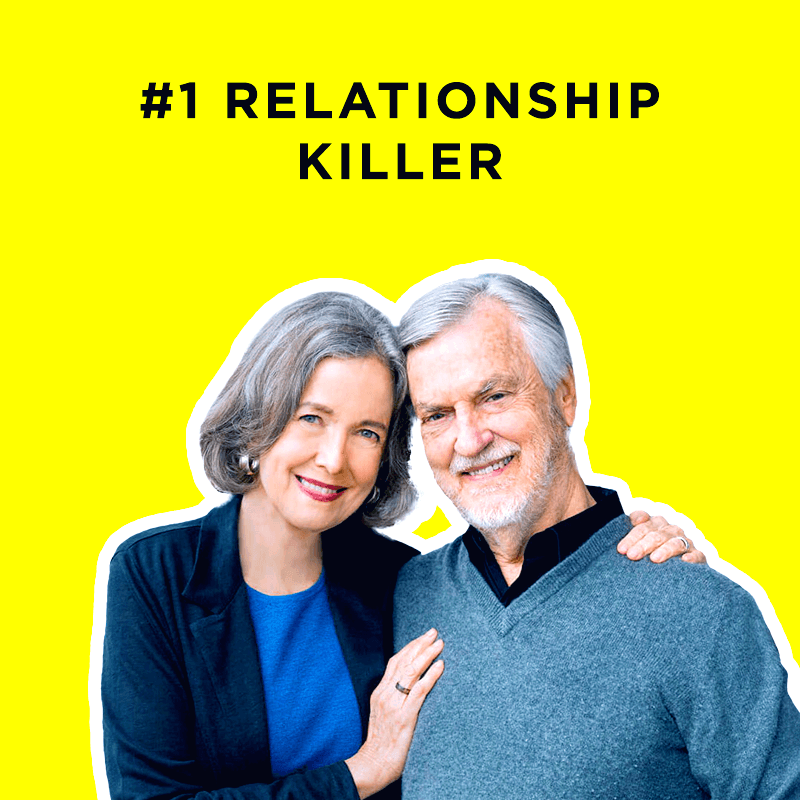

In short
The Marie Forleo Podcast - Episode 407 Notes
Episode Information
- Title: This Conversation Could Save Your Relationship | Harville & Helen
- Description: Doctors Harville Hendrix and Helen LaKelly Hunt discuss conversation techniques that rescued their marriage and helped millions of couples save their relationships.
Key Themes and Concepts
- Understanding Differences in Relationships
- The strongest foundational mistake in relationships: Assuming partners see the world the same way.
- Importance of listening: It is essential to understand your partner's unique perspective, referred to as the "otherness" of your partner.
- Dialogue vs. Monologue
- Dialogue is essential for healthy relationships; it promotes understanding and connection.
- Monologue focuses on being right, while dialogue fosters collaboration and mutual respect.
- Key Insight: The value of differences and how they can enrich relationships rather than divide them.
- Tools for Successful Conversations
- "Appointment Method": Setting a time for important discussions to avoid interrupting.
- Word-for-Word Scripts: Specific phrases to help resolve conflicts or express needs effectively.
- Curiosity and Empathy: Asking open-ended questions to encourage sharing and understanding.
- Rebuilding Trust After Disagreements
- Acknowledgment of the other’s feelings is crucial.
- It is important to recognize that someone’s reaction may stem from past experiences rather than the current situation.
- Curiosity Principle: Approach the conversation with a desire to understand your partner’s feelings without defensiveness.
- Zero Negativity
- The practice of eliminating negative expressions in communication to create a safe environment for dialogue.
- Frustration should be transformed into constructive requests rather than complaints.
- Affirmations and Appreciation
- Differentiating between appreciation (recognizing specific actions) and affirmation (valuing the person’s intrinsic worth).
- Regularly affirming each other's worth can strengthen bonds and enhance relationships.
- Creating Positive Memories
- The concept of "the space between": focusing on the interactions and feelings shared between partners rather than individual experiences.
- Creating positive memories leads to healthier expectations and interactions in the future.
Practical Strategies Discussed
- Listening Techniques:
- "Did I get that right?" to ensure correct understanding.
- "Is there more about that?" to encourage deeper discussion.
- Setting Boundaries:
- Always ask if it’s a good time to talk before discussing important issues.
- Daily Practices:
- Keep track of negative interactions versus neutral/positive ones to foster improvement in communication dynamics.
Conclusion
- The episode emphasizes the transformative power of effective communication in relationships. By understanding and practicing dialogue, couples can enhance their connections, resolve conflicts, and build lasting love through mutual appreciation and respect.
Call to Action
- Listeners are encouraged to explore the book "How to Talk with Anyone About Anything" by Harville Hendrix and Helen LaKelly Hunt for further insights into effective communication techniques.
Additional Resources
- For more tools on navigating tough talks and setting boundaries, visit [Marie Forleo's blog](https://www.marieforleo.com/blog/how-to-say-no-ultimate-guide).
- Join the Dream Club for support in balancing business and personal life.
Follow Marie Forleo
- Instagram: [@marieforleo](http://www.instagram.com/marieforleo)
- YouTube: [MarieTV](http://www.youtube.com/marieforleo)
- Facebook: [Marie Forleo](http://www.Facebook.com/marieforleo)
- Twitter: [@marieforleo](http://www.twitter.com/marieforleo)
- TikTok: [@marieforleo](https://www.tiktok.com/@marieforleo)
---
Thanks for listening! New episodes drop every Tuesday. Don’t forget to hit the follow button for notifications. 💕
Written by AI. May contain mistakes. Listen to the episode to check what was said.
Transcript
Automatic transcript. May contain errors.0:00I came here with my biggest enemy. me, I'm leaving with my best friend. Took his wife and went. And of course, everyone just cheered. What are some of the most common communication mistakes that all of us can make in relationships, whether it's our intimate partners, our friends, our co-workers, our teammates? And what's the first step in starting to transform that? The basic mistake that most people make in a relationship is to assume that their partner sees the world the way they do, and then to behave as if that's true, and then to be shocked and judgmental when it turns out not to be true.
0:42But that's reality, that nobody sees the world the way you do. Everybody sees the world differently, and that's what's normal. What's abnormal is to assume that that's not normal. So what that means is that in order to not have a relational problem or to resolve a relational problem, you have to learn something that we think is relatively new in the human scene, which is listening. that in order to listen, when you listen, you get to know that you are living with somebody different from your fantasy about who they are. So to listen is to discover the otherness of your partner. And then in order to make that work, you have to not only discover it.
1:35I've had, I sort of giggle because many times in the process, it's like, well, I got it clear who you are but that but you suck you're worse than what i thought you were before i got to know you but you so you have to discover and then i accept that this is the person you're with and they live in that world and your job is to share your worlds without judgment and then and stay in that so that that becomes very exciting and creative if judgment is removed. But if you judge each other's world, then that's a pathology because there's nothing you can do about your world except share it and maybe grow, bring the two worlds together to grow into something new.
2:25But I would think that's the biggest problem. We call it the objection to difference. In fact, one day I remember it sort of consolidating in my mind. what is the couple's problem? And because, you know, there are lots of symptoms, but then there's one thing that produces all those symptoms, and which is the rejection of the difference that your partner is. I think that's the major human problem, and especially a couple's problem. Marie, your question is so good. Harville makes a point that I think is the answer to your question also. So we grow up and the value system of the culture is to be the best.
3:11What people don't know is that learning to be the best is called monologue. And that's how people talk. And there is a place for being accurate and precise. If you want to have good relationships, there's another way to talk. And it's called dialogue. Hmm. We've talked about this before when I had you guys on the show, because dialogue has changed my life. It's changed my relationship. And I just want to say for everyone, um, they've got a new book out and I don't know if we've entered this, but how to talk with anyone about anything. I've read it cover to cover. It is excellent. So we're going to be diving in, in this conversation between intimate relationship, but also friendships and team, um, family members, you know, anyone that you have conversations and you want to be in relationship with.
4:00So what I loved, what I heard both of you say, and I wrote this down in the book, it's that difference is a key feature of nature. And that notion that, oh my gosh, I remember when I was in the first workshop with you guys and it was like, they are different. And we're going to get there a little bit later. I want to talk about the accepting and the appreciating and the advocating. We'll go there. But difference is a key feature of nature. And like, it was a light bulb moment for me. Right. And I said that in the workshops. I say, hey, everybody, human beings are part of nature. And guess what?
4:35Nature is dyadic, dark, light, hot, cold, wet, dry, sweet, sour. So your partner's different than you. And the goal of marriage is to learn to accept difference. Yes. So I got curious about that. And I kind of do strange research on Google that they have never found a particle, even the smallest particle after you break down all the other particles in which one particle was identical to another particle. Even at the subatomic level, sub, sub, sub, sub, subatomic level difference is the difference between the particles that determine what the particle becomes and what it does. So I thought, well, what about universes and galaxies?
5:22So far, nobody's been able to say there's a single identical galaxy, all galaxies. So from the galactic level down to the quantum level, difference defines nature. And so then anything, any objection to a rejection of difference, I'd hate to use this word, but it's kind of pathological. Well, it's silly. It's like you're fighting against reality. Fighting against reality. But you don't have to agree with difference. Yes. It's about learning to harmonize and people, you know, what political party you voting for? Well, that's not what I'm voting for. And I also, I made the note too, in the book, it's like we struggle in our relationship because of how we talk and not what we talk about.
6:12And I think that's so insightful because the tools that you give in this book about how to talk with anyone about anything speak to just that. So this is a piece of, this is a question that I have that actually arose from our last conversation when we had you on the show. And I want to talk about the advice that you have for those of us who struggle with how to balance our own individual needs with the needs of people that we're in relationship with. So it could be our significant other, but it could be our friends. It could be our coworkers. So let me read you what somebody wrote to me about this conversation.
6:48what happens when you don't agree with what your partner wants from you in your example you think you're spending enough time together but they may want to have a lot more time with you how do you manage when you have a different viewpoint and your partner expects you to change or do something different to make him or her feel better but you don't want to what would be your advice well you just keep trying to come up with a plan for both of you are happy. And Parville suggested I tell the story. There was an opportunity for us to have a vacation. And I was multitasking, working in two different worlds, one with women and one with women and men.
7:34and I was tired and he had two kids when, before we married, I had two and we had two together who we love, but I was tired. Yeah. On vacation. I just want to, uh, and Harville said, no, no. For a vacation, I want to travel to another part of the world. I love nature. I want to be someplace different. And I said, Harville, can't we just sit on the sofa and relax and have movies and watch? Yeah, just rest and take care of our bodies, exercise. And he said, no, I don't think that's right. And then he woke up. He said, Helen, let's get a motor home. And so we got a motor home and we had more fun in this motor home where Harville, he planned, we went to, in Mexico.
8:31Well, once we got on the road, I just went and watched TV shows on our vacation. So what we discovered is the thing we just talked about is difference. Yeah. I'm a wanderer. Helen is a nester. she wants to stay home you know like a hen take care of the eggs and i want to go out and look around so we came to this conclusion that if we had a motorhome i can wander and drive and she can go in the back and look at travel logs and then at night we can talk about what i saw in front of me and what she saw on the video so that we would then share and we found that so successful Well, I think we did that about 22 times.
9:17That's amazing. And what I'm hearing there is there was an interest to keep exploring the differences and to also keep being creative about possibility where you felt like you could get your desires for what an ideal vacation for you look like as you, you know, Josh and I, we vacation is interesting because I know this question. A lot of people have this, you know, my partner wants X, Y, or Z. Z, but I really want something different, A, B or C. Josh and I noticed that on our vacations too, where he loves to not have plans and discover things. And, you know, I can be a little bit of a control freak in a good way.
9:57And I have my, I know the number one croissant place in Paris and we must find, you know, and so we've had battles and the way that we've settled it is some days are absolutely free flowing. There is no agenda. I'm like, I am at your service wherever we want to wander and discover. And then other days I get to then check things off my list of the best of X city. We're going to go visit that. So thank you for sharing that story. And the beauty of that is that you can have two outcomes. And one is if you hold the difference intention, it produces a third option that could not come out of one or the other person.
10:37Yes. Or you can take turns and say, okay, I want to go have a structured day. I want to have a free day. But if you collaborate and using dialogue to really listen to each other each way, then you get all kinds of options. And you don't have to polarize. You then have to just invent. And when couples discover that, they're at another level of consciousness because most of us live, it's me, it's me, not you. Or it's me or you, but it could be us. And that's the kind of consciousness that ultimately produces the best relationship possible when it's us, when it's us, me or you, you know, I want to underscore also what you said, which was so key for me when I read it in this book was we are so trained, especially in our culture, you know, it can only speak to here in the United States, because this is where I was brought up.
11:33We are so trained to win. We are so trained to, you know, and, and especially I'll speak for myself as a woman. There's also some interesting kind of subterranean messaging around surrendering. And that makes me weak. So if I submit and I'm using bunny here's there for my listeners, you know, I'm, I'm being a little fishy facetious, you know, to Josh's point of view that I'm somehow not a powerful or strong woman. So there's a lot of layers to this, but I love bringing it back to dialogue and this interest in us. We are born in relationship. We're wounded in relationship and we can only heal in relationship.
12:14So when there is difference, continue both of you to look for a compromise or one day you do this, next day you do this, or to arguing about where to go for a vacation when you're one selects the next year. Just make sure both of you are happy and connected.
12:39Stress got you spinning? Look, I get it. With everything going on in the world, plus all the daily demands of living, it can feel overwhelming, which is why I want to share with you a free five minute tool that'll help you slow down and focus on what really matters. You can download it for free now at marielovesyou.com slash stress log. This is a powerful little ritual that'll melt away your toxic stress fast. So go to marielovesyou.com slash stress log and get it now. Let's look at another situation, which happens for, I think, most of us. Let's say you've had a major blow up with someone in your life.
13:17Again, it could be your intimate partner or it could be a friend or it could be a boss or a coworker. And there was either a big disagreement or there was some type of breach of trust. What are some strategies that we can use to start to rebuild that connection after something big and hurtful goes down and we just don't feel equipped to reenter that? Let's assume that the blow up was somebody was really mad at you because you did whatever they said you did. And I think it's important just as a little sidebar that one thing we've learned over the years, we used to think there was a cause and effect relationship between, you know, you're upset and I did something.
14:01And what we now know is that I can never be the cause of your upsetness, but I can be the occasion. And I'm the occasion because you have a background, a childhood. I did something that triggered a memory in you. And you, not knowing it, and we don't do it intentionally, not knowing it, that memory, sort of move from the past into the present. And you thought it was me doing that. You don't know you had a choice or you don't know that you had a reaction to what I did. So hardly anybody knows that. So this is why the person who feels, who was the one who did the wrong and is therefore or accused or in some sense judged by that, has to do something really courageous, which is, I'm aware, could we have a talk?
14:58Would you be willing for us to have a talk? Because I'm aware that I've really upset you. And you have to go ahead and say, I'm aware that I've really upset you. And not say, I'm aware that you decided to interpret my behavior. as directed at you because that's anybody upset cannot take reality you have to say i'm aware that i that i upset you and i really um i i'm sorry about that i i apologize for it but mainly i want to know what what's happening for you in other words you go to curiosity it's a principle it's not so much a tactic it's a principle you go to curiosity i'd like to know really like to know what your thoughts and feelings were when you experienced me doing x would you be willing to tell me you don't do the exercise let me see if i've got that did i get it because then they know you're practicing a skill and just say really it's really important to me that i hear you accurately so would you let me check with you if if i'm getting it because i might miss something and then you go to more curiosity so is there more about that and then they'll always generalize because this pain does not really come from you it was triggered in the moment then they say well you're just like everybody else or you're just like peter or my other boss or or whatever and then god and he was like my father and so you just mirror that what you have to do is hold that reality without judging it in any way shape or form or defending yourself that i didn't do that everybody decides how they're going to respond to an experience because that would be adding insult to injury is that I'm making this up and that's what somebody will say to you you're telling me I made all this up no you have to ask them for it because they are telling you their truth that's where we get to difference they're telling you their truth no your truth and here's the magic of that is that they've been operating and telling you about it out of what we would call the emotional brain, the lower brain.
17:36And when you mirror them back and say, let me check now, am I getting this? They have to go to their prefrontal cortex to check so that they then come out of the affect into cognition. And after a while, they'll say, well, you know, there's something like, you know I've had this feeling before and and I just hope that we I just thank you for listening to me and I and it's okay you know I don't have the training to go in and say well tell me what happened for you so that the person who is accused has to take ownership of the process not necessarily of the behavior because it has a history but of the process of allowing a person who has been injured by their own memories to feel held because when they were little nobody held them when they were hurt so when you do that you're actually and you don't want to call it therapy but it is it is therapeutic because nobody listened or somebody did do that And then nobody listened to their reaction and told them to quit complaining, you know, and shut up and find, you know, what parents do to children, what bosses do sometimes to employees.
19:02And I think that's the important thing. If you're going to listen, you have to give up judgment no matter what you hear. It's their world. And if you judge them, then you've annihilated their world. And now they're doubly hurt because they got hurt. They told you about it and you told them it's your fault. Yeah. So, so nuanced. If that makes sense. It does make sense. And I'm so excited for people, you know, for those listening right now and you're like, wow, this is deep. It is deep and it's nuanced. And so much of, I know what I have struggled with in my own life in relationship comes down to these basic elements.
19:40And that's why I always get so excited. And I'm such an advocate for your work and your mission and specifically for dialogue, because I've watched in myself, you know, whether it's Josh and I having friction, and we both, the temperature gets taken down or when now I mirror in very, I call it stealth ways with my parents or, you know, my friends or, uh, coworkers or anyone. And it's amazing how it can take what can feel like is a contentious, touchy, delicate, you're walking on eggshells kind of situation and really support someone in getting out of that kind of crocodile brain, right? And moving into the wise Al brain, your, your terms.
20:27Um, thank you for that. So let's talk a little bit more about dialogue. I've mentioned it. We've, you know, for those who didn't see our first episode, what are the elements of safe conversation dialogue and, and how we've talked about how it can transform any relationship, but let's really break down. What are those key parts of dialogue? Well, it's a structured, so we'll just be bald about it, it's a structured process. Meaning, another way to say it, it's a skill. And a skill requires practice. So you have to know, just like tennis, you have to know how to hold your arm so that it's counterintuitive.
21:06If you hit a ball naturally, it's not going over the net. You have to hit it when your arm doesn't feel right. and do that all the way, follow all the way through. So it's like every skill. It calls on your brain to do something it has never done before. So as we began to develop this process, discovering it first between ourselves. We had our first two dates, horrible fights. We ended up yelling at each other, both dates. The first date, he took me to a very expensive restaurant. I don't need an expensive restaurant. So at the end, you know, I like Kentucky Fried. He took me really expensive.
21:53So I just said, just to let you know, next time I don't want to go to a restaurant like this. Well, he started yelling at me, and then I took him to a, I got two tickets to a play that had just opened, and no one had, and they were doing a play. and surprise, I want you to, let's go to this play together. The play was Equus, and a guy was punching out the eyes of horses. A child was punching out the eyes of horses. Well, Harville just yelled and yelled at me in the car going home. And he credits me that when we got to my house, and he was still yelling at me going inside, and I go, I didn't know what it was about.
22:37And so then I said, hey, stop. one of us talk and the other listen. And they come to self. So that was the beginning of dialogue. It's taking turns speaking and then the other person listening and mirroring back and saying, did I get it right? Yeah. And that, in fact, was the beginning of our discovery because I'm a couples therapist and I was doing a couples therapy that was based on problem-solving, conflict resolution, mainly using your brain to figure out things. And it wasn't a very successful form of marital therapy, but that was the field. That's all they had. And when Helen sort of yelled at me and said, one of us, actually you said, one of us talk, and then the other one talked.
23:28In other words, let's do parallel monologues, but not at the same time. But take turns. But take turns talking. I realized that did calm me down and I have a clinical sensitivity. I could have killed her two minutes before and I'm now calm. So what's happened here is that she called us into the prefrontal cortex and calmed down. So I went to my practice of couples the next day. and for the first time, instead of them looking at me and doing what I now call parallel psychotherapy, which was called couples therapy, two people in a room makes it couples, but it was really parallel psychotherapy as if only one person was in the room because you work with one at a time and then work with the other.
24:20I turned them for the first time to face each other and said now, and I started off sort of like what Helen did. One of you will talk. and then the other one will talk. But then they got into that and they said, but couldn't he tell me back what he's hearing? And so I learned from couples what they needed to have a conversation. So I said, oh, do you want him to reflect back what you're saying? She said, yeah. I had come up with mirroring at that time. I was, okay, George, would you do that? And so he said, well, yeah, I can say back what you said. And so he did that. Um, and then I kept asking her, okay, so is there, so that's the mirror.
25:05Let me see if I got that. We weren't using sentence stems then as Helen talked about sentence stems in a minute, but it was just reflect back. And then, um, she amazingly said, well, uh, I said, what else would you want? And, uh, she said, well, I'd, I'd like him if he would ask me if I have anything else to say. So that was the beginning of what we now call, is there more, which is the curiosity piece. Well, so he said, yeah. And she said, yeah, I do. He said, okay, I can ask. Have you got anything else? They were in Texas, so they spoke with Texans like, got anything else? And she said, yeah.
25:45So she gave some more things. And so I said, do you want him to do something else different? Well, yeah, he could tell me, is he getting it all? So she asked for a summary. Now, I'm learning this for the first time. Okay, now you got your summary. Is there anything else you want? Well, I like to know if he thinks I'm making sense or am I crazy? Well, he had said to her so many times that you don't make sense or that's crazy. And they just kind of did this, like, you know, people, kids tussling and hurting each other. And he said, well, it doesn't make sense. and she said i want you to know that i don't ask i'm not asking you to agree with me i'm asking you to see how i'm thinking so she asked for validation and he said well if i don't have to agree with you i can see how you could come up with that conclusion you know and then i said is there anything else she said well i wonder if you know how i'm feeling when i had that experience so she was asking for empathy so essentially that's what a dialogue is the one thing that we added it took about five or six years to actually crystallize that with enough practice for it to be enough for me to see that that was our going to become and became the therapeutic process that's the engine of imago couples therapy couples learn to dialogue.
27:15They don't need anything else because dialogue helps them hear each other, discover each other, become safe for each other. All the things they were complaining about not having, they get it in this new way to talk. So the one thing that we added, which was, actually it was a gross oversight, but it's one of the most important things is always when you want to talk to your partner ask permission make an appointment and when most of us just start walk up and start talking and so helen she's running a movie her movie and i'm running about something else oh i'm just putting my movie on her screen and say i don't ask her if she'll let me put my movie on i just start projecting it yes now so helen is a wonderful person and she probably said well, okay.
28:11But if she had a bit different personality, she would say, would you get your damn movie off of my screen? I am watching this thing. I am having my own set of thoughts right here. So what we finally discovered was that those are boundary violations. And there's nothing more disruptive than a boundary violation. And that leads all the way from talking while without asking permission to war. That's what's going on on the planet now is people cross boundaries. And when you cross a boundary, you have a war. And so we have built in the first thing you do. And after you come to one of our workshops, we'll say always from now on, We're going to task you with whenever you want to talk with your partner about anything, say, is now a good time.
29:10And if they say no, not now, when? Say when it is. If not now, say when. And you all make an appointment to talk. And we found that that regulates about 50 % of the problem. It actually does. I mean, I see this all the time because Josh and I both work from home. and we really have to watch ourselves because it's so easy because you love this person and they're right there and you're so comfortable to just launch into whatever it could be exciting. It could be something fun. It could be an invitation, but, um, I know for me, like I can get so myopically focused. I get most humans can, and I'm like, whoa.
29:50And the, my instant reaction is frustration, you know? And so then the whole, then we're off to the races. So this, Now we have another problem. Now we have another problem. So is this a good time? And I think it's also so useful in work relationships. Oh, yes. We have technology right now. I think, you know, in our company, we use something called Slack. And I encourage the team to actually turn it off when they're in focus time. Because you get these pings and dings when you are in the middle of doing something that's just basically interrupting and not asking permission. And it just sends our brains, I think, in a haywire kind of fight or flight state, which, you know, you do that enough times, 20, 30 times a day, you're exhausted at the end.
30:35And then, you know, you're with your partner. Forget about it. It's, you know, fight city. So thank you. It's just like, is this a good time to talk? Is this a good time? And if not, say when. Yes. If not, say when. Um, so some of those key sentence stems, because I think for most of us, because if we haven't done your training, which I'm actually excited to go back to another workshop, you guys can just Google, they do workshops. They're amazingly effective. Please go. Um, some sentence stems. So is this a good time? And if they say no, when would be a good time? That's a sentence stem. That's a sentence stem.
31:15Let me see if I got that for mirroring. right? Did I get all of that? Let me see if I heard that right. Would you? We like it. Let me see if I got that. If I heard that right, sort of puts you into a legalistic thing. I love that. Did I get that? Did I get that? Anything, any other sentence stems that we love for the dialogue process? Well, the big one, is there more about that? Is there more about that? That's like the magic sentence stem. The other person just relaxes when you say that. And that's probably one of the most, and we didn't start with that. I didn't quite pick that up for a while, how important is there more is.
31:56One day, someone who knows people at the Mayo Clinic said, Helen and Harville, I'd like the dialogue work to go to Mayo Clinic and have people analyze it about what might dialogue do where people say it feels so good to use it. And suddenly, relaxing neurochemicals are released. Left brain hemisphere, right brain hemisphere, and especially between the two is the dorsolateral prefrontal cortex. And it releases relaxing neurochemicals, dopamine, acetylcholine, norepinephrine, and serotonin. And people who live in this part of the brain that they live, life is a wonder. The Mayo Clinic says a person who lives life from the upper brain sleeps better and wakes up feeling better and lives longer and has a healthier life.
33:02So both for your relationships being healthy, your whole body, you are a healthier person. If you use dialogue. Yeah, the research on it is your brain changes. It's not just a new habit that you can get out of doing. But the structure of your brain changes so it becomes integrated. Yeah, they discovered a couple decades ago neuroplasticity. The more you use a certain part of the brain, the better. It does get easier too, because I feel like it's been years now since I've had my first experience with dialogue training and with safe conversations. And the more you practice it, like any skill, the more integrated it does become.
Read the full transcript
33:47And it just feels like a lifesaver to me for human beings. So I want to go on to another concept. You're welcome. called, and this one was a game changer for me as well, zero negativity. What does that mean? And how can we start to practice that in our daily lives, especially when they can be high stress environments? Okay. Because I, and I say Harville in our workshops, let me say this, because when you say, okay, you're going to learn to live life with zero negativity, I'm afraid people will leave the room. And the big thing is learning to convert a frustration into a request. It's deciding that you will do what Helen said.
34:30When you're frustrated, you will ask for what you want and just stop complaining about what you don't have. It's a very simple thing, but it changes the energy. Because when you complain, you trigger the brain into its defensive mechanisms. So now you've got two defenses going. But when you ask for something, then the brain goes into its creative mode. Well, what is that? Is it possible? Maybe I could do that. So zero negativity is, we say, and I think we finally got to the point where we're dogmatic, is that if you want a good relationship, you have to give up negativity. But it doesn't mean you have to give up your frustrations.
35:12It means you have to say them this way. Embedded in the frustration is a wish. Figure out what the wish is and the behavior that would give you the satisfaction of what you want and ask for that behavior. And don't go through, you did this to me, you did that to me, and you do all the frustrating things because that negative energy triggers the brain's defenses. So now I'm not sure I want to do anything for you. But if you come and say, hey, you know what I would love next time we're talking is would you look me straight in the eye and tell me that I am a beautiful woman. And now we can do anything.
35:54But when we're not safe, we can do only one thing, protect ourselves. So I remember one of the other things you've taught me about zero negativity is like, okay, well, how do I identify something that's negative? It's something that your partner or whoever you're in a relationship with considers a put down. something that makes them feel unsafe you know and i feel like we it's so normalized in most relationships about these little snide remarks or an eye roll or a huff or you know it might not even be a word but it might be a posturing or some type of physical reaction that can make the other person feel um devalued yes and so i love that you also taught about the fact you were like okay, we're going to do zero negativity.
36:39And you got out a calendar and just started to mark it in a very simple way where you either got an X if you couldn't go the full day, right? Without having felt any negativity going to bed. Yep. And then you got a nice check mark, right? If you went through the day. And if I remember the story correctly, it was when you started to stack those zero negativity days, you noticed a real shift in the quality of your connection with each other. Yeah. And decided to finish that story, not to get a divorce because we were on our way to the divorce court when we created that exercise. Yeah. And so we would say zero negativity saved our marriage.
37:23Yeah. Twice. And what happens when I would put it, I would say Harlow had x mark guess what i got the next day from harville in the afternoon flowers he wanted to do something you know make sure i didn't feel that way the next day so it turns out to be very simple you generate what you put into the world back to yourself yeah and we the i've gotten i'm sort of a novice in quantum field theory and the quantum field theory people who are very serious about reality say that what you put into we are in a field and meaning we're all energy and this energy is in a field and what you put into that field comes back to you in the field because you're in the field so it's like if you pollute the water that your your swimming pool you're in you swim in your pollution So you want a clean swimming pool?
38:24Don't pollute it because you get what you give. And that's, there's many things that are so simple, easy to state. Whatever you do to others will be done to you is a fact. Yes. So I think that zero negativity for me, what I'm really excited about is extending that beyond romantic relationships. And I think it's so critical and can be such a game changer in teams and in companies. You know, I've run my small business for 23 years and just we're human beings, right? And complaint or this is wrong or this isn't working or so-and-so did this or eye rolling at that. It's just what we humans do if we don't know any better.
39:04And I think the notion of having like a zero negativity workplace where that's what you're championing and that's what we're co-creating just feels so exciting. from a creative standpoint, from a productivity standpoint, from a human relations, you know, as a boss and as a CEO, um, I employ lots of people and we're really excited and we love our work. And one of the most challenging aspects, I think for most CEOs, um, and most leaders can be people challenges, you know, people who you adore and respect, and they're so talented. And when there are interpersonal dynamics or politics within a company, and it can just take everyone down, drain their energy, take you off track from a productive standpoint or from a mission.
39:50So I just think zero negativity. It's like, I'm actually excited to talk to my team about this. We're actually pretty good with this. We're pretty healthy crew, but there's always room for growth. There's always room for further connection and further respect. Absolutely. Our organization is now, we have a new CEO, Quantum Connections, and the CEO and the other, some of the other people have developed a connecting at work program for businesses or corporations. Because what we were told is CEOs come to their office and another staff person has resigned and they just don't like working. The CEO liked that person, but the environment didn't make the co-worker relaxed and feel good.
40:42And so everything we've said talking to you the last 40 minutes is in the Connecting at Work program. There's PowerPoint slides, and it just teaches what everyone wants is to be seen, heard, and valued. Those three things. And we call it the net connecting score that people at the end of the day, how well did you feel in your business that day at work? And the thing that what you're talking about, about this environment, when it's zero negative, that means it's safe. And you can thrive and evolve only in a safe environment. In an unsafe environment, you can grow, but you grow in your defenses.
41:33How do you protect yourself? How do you survive here? So very different use of energy from what can I find and discover and build here. And the research on companies that build safe environments is they have an 86 % employee retention rate. And the biggest cost to a company is employee turnover. And companies that don't have a safe environment have an 86 % replacement rate. So they are constantly spending money to retrain people. Which is so costly. And all they have to do is change the quality of their culture from danger to safety. And then people want to be there and they'll do their best. Yeah.
42:19But if it's not safe there, they may need to be there, even want to be there, but they can't do their best because they have to keep watching. Yeah. Another concept and another skill that you teach in this book and in your work, and it really shifted a paradigm for me, was affirmations. This was a huge moment in the workshop. Let's talk about what role affirmations play in improving our relationships and how we can practice affirming each other, our friends, our coworkers. What does that look like? Yeah, there's one exercise that we many years ago taught people to do was called appreciation. But that was based, and it's great, you want to do appreciation, so thank you for bringing me a cup of coffee or whatever.
43:05So appreciation is, I got something and I appreciate it. And affirmation is a totally different concept. I sort of wish the words were less similar so that it could be clearer. But in an affirmation, you affirm the innate value of another person, partner or employee or whoever, independent of anything they have done for you. What you do, we rise above transactions and utilities into unconditionality. because you are here because the universe puts you here. You're not here for me. If you decide to give me a cup of coffee, that's something I can be grateful for and say, I appreciate that. But your being is yours.
43:58And my responsibility is to be sure that I honor your being as intrinsically valuable and not functionally valuable. And when couples move into that, that you don't belong to me and you don't have to do stuff, and I'm going to appreciate you then, into, you know, I'm just going to have to live with the fact that the universe created you, and I need to be respectful of that and affirm you. and from your being. You're beautiful. I didn't do anything for that. God, you are intelligent. And we have couples at workshops walk around each other and sort of yell at each other. You are so smart. You are so gracious.
44:51Your hair is so beautiful. And your smile is so great. And I love your white teeth. And, you know, it has nothing to do with their benefit. It's the fact that that's who that person is. and we have seen couples move from not quite making it in a workshop to and this is at the end of the workshop to actually crossing over when they affirmed each other an unconditional acceptance of the other as valuable independent of anything you do for harville labels this and you did it then, the positive flooding exercise. Yes, the positive flooding exercise. At the end, just one spouse member sits down and the other is going to do something they've never done before, which is walk around the spouse member just listening and just, I appreciate this.
45:45You do this. You flood them with appreciations. We're all a miracle. And then they take turns. Yes. They switch. It's really moving. And it's, uh, that was, I think one of the things that I love so much about your workshop, Josh and I were commenting, cause we're going to come back. Cause I always love refreshers and it's nice to just step away from the day to day, from the laundry, from the mail, from the social this, that, and the other thing, which are all lovely and just focus on our relationship and just focus on reconnection and a regrounding in the skills. But I remember I did not expect to cry at the word.
46:21Like I was like, I know we're going to learn some skills and relationships are emotional, but him and I boohooed like in the best way. It was the most, oh, it was gorgeous because there was such deep levels of seeing and listening and affirming and all of these things that were under the surface of we so love each other. But yes, we usually at those workshops have 50 to 125 couples in the room. And as you know, Harville has the couples in a U-shape, and we're on a little stage with the PowerPoint slides. And long story short, a couple came in at the very beginning and sat very near, and they did not speak in the whole workshop.
47:10And I kept wondering, because we have Q &A after the different exercises. I thought, well, they're just happy. And I'm glad they're here. Like you said, you want to come back and just relax. They don't have any problems. Well, at the end, we have couples, anything you want to say before you leave. And different people say how they felt about this man raised his hand first time, took his wife. We said yes. He went to the middle of the room. He said, I want this auditorium of couples to know this was our last chance. Here are our divorce papers. And he said, I came here with my biggest enemy. I'm leaving with my best friend.
47:59took his wife and went and of course everyone just cheered came here with my biggest enemy living with my best friend that is what the dialogue process could do we didn't do anything we just taught them dialogue yeah yeah it's it's so beautiful and this was another concept that i had never heard of before and was introduced uh through the workshop was this idea and you talk about it here the space between so we now see the space between is the way into the self rather than starting with the self and then coming out here, which you couldn't get anything done much as you start changing this. So now I have this great memory of Helen or I have a great memory of you.
48:43And so then the brain is predictive. Once I get a new wonderful memory, I'm going to anticipate that memory being repeated the next time I see you. But if I get a bad memory, I'm going to anticipate the bad memory is going to be repeated. So you do two things in order to make your life really wonderful. Create absolutely wonderful memories, and then your brain will predict. So if I give Helen a great memory, when I see her next time, she's probably going to hug me or smile at me, or at least she's not going to frown. She might be preoccupied, but it won't be negative. If I give her a bad memory, I walk in, there's going to be a shell around her.
49:24So you decide what kind of world do you want to live in? You create it by your own intentional behaviors. So I decide what kind of memories I want Helen to have of me. And then I give her those memories with my behavior. I love that. And I love this notion. I have an image in my mind about the space between, you know, I like to clean and I like to keep things tidy. And so I love imagining into that space and keeping it really, keeping it clean and keeping it open. And noticing if it's like, oh, I may have gotten a little messy. What can I do to repair or to freshen that energy up again and get some clear lines of connection there?
50:09I love that. You know, you guys have been doing your work for decades and have helped and supported and transformed millions of lives. Now I feel like the vision, and this doesn't just happen, but this book feels like a real flag in the sand for the expansion of the vision and the goals for your work. We figure in 2050, if we have 2.5 billion people practicing dialogue, we will have, and we've labeled that, we will have then the next stage in human civilization. Dialogue didn't exist on the planet until 100 years ago. Up until then, monologue, that is, I talk, you talk, I talk, you talk, was the only way human beings talked.
50:57Listening dialogue brought in was Martin Buber came up with the concept, but he didn't have an operational. He didn't say, here's how to do it. He said, here's the concept. And what Helen and I did actually without referring to him, I didn't really realize when we started to work that we were somehow pulled into that same energy as Martin Buber, but we operationalized it. This is what dialogue looks like. It's a fundamental, structural new way to talk that makes systemic changes rather than symptomatic changes. and that's what excites us and keeps us going in our ripe old age when we'd really rather be sitting on the beach somewhere drinking we're elderly we're getting there we've been married 40 years but we're young at heart and we have you know we have too much to do to do anything other than what we're doing and uh and you're you now you are a part of that yes uh you're getting conduit of the word.
52:01Happily. Yeah. Very gratefully. Thank you so much for this beautiful new book for everyone listening, how to talk with anyone about anything, grab it. You will refer to it again and again and again. And if you're anything like me, you will underline and highlight so much of it. I adore you both. You are both wonderful. Thank you so much for taking the time to come on the show and for everyone listening and watching, uh, until next time, stay on your game and keep going for your big dreams because the world really does need that very special gift that only you have. Thanks so much.
52:37Hey there. Are you looking for the next Marie Forleo podcast? Well, you'll just have to wait a wee bit longer because I'm about to send out some exclusive content to my MF insiders. Those are my email subscribers who get some behind the scenes access to what I'm thinking about, what I'm obsessing over, what I'm focusing on or learning in real time. And I gotta be honest, I like to throw in some freebies and giveaways too because those are fun. Now our emails are infrequent, usually just once a week and I do my best to keep them short and inspiring. And I'm proud that we have stacks of unsolicited feedback from insiders like Caitlin who said, I don't think I've ever subscribed to something and secretly wished there were more emails.
53:19Now when you subscribe, you'll also get an audio training called How to Get Anything You Want, which teaches you three simple and really useful principles to help you solve virtually any problem and create powerful forward momentum. So if you're not already an MF Insider, go to marieforleo.com forward slash insider and become one today. Thank you so much and I'll catch you on the next podcast.
53:50you
From the publisher
What if all your relationship problems could be solved with a single conversation? In today's #MarieTV, Doctors Harville Hendrix and Helen LaKelly Hunt dive into the simple conversation tips that brought their marriage back from the brink of divorce. These techniques have helped millions of couples save their relationship - including mine!
WHAT'S COVERED IN THIS EPISODE:
- 00:00 - The #1 misatke that kills relationships
- 03:34 - How to guarantee a successful, happy marriage
- 06:35 - The secret to finding a win-win (even when YOUR needs conflict with your partner's)
- 09:35 - Why women should never be "submissive" to their partner
- 12:50 - How to rebuild trust after a big blowout
- 20:00 - The magic words that reveal anyone's true feelings
- 21:05 - Why Harville and Helen almost came to blows on their first date
- 27:05 - The "appointment" method for getting what you truly want from your partner
- 29:00 - Word-for-word scripts to fix most relationship problems
- 31:30 - The shocking relationship mistake that can actually kill you 😱
- 33:28 - Do THIS to instantly snap someone out of "defensive mode"
- 40:29 - The 3 things you MUST do to create loving relationships that last
Thanks for listening! New episodes drop every Tuesday. Make sure you hit the follow button to get notified. <3
If you prepfer vide or want closed captions, you can watch all our episodes on YouTube → http://www.youtube.com/marieforleo
COME SAY 'HI!'
Instagram: http://www.instagram.com/marieforleo
Tiktok: https://www.tiktok.com/@marieforleo
Facebook: http://www.Facebook.com/marieforleo
Twitter: http://www.twitter.com/marieforleo
MORE RESOURCES FOR YOU:
FREE TOOL FOR TOUGH TALKS: Setting and protecting your boundaries is key to any successful relationship. If you'd like more help navigating those tough conversations - get my word-for-word scripts for saying "no" with kindness and class. → https://www.marieforleo.com/blog/how-to-say-no-ultimate-guide
DREAM CLUB: Want to surround yourself with talented entrepreneurs - all finding the perfect balance of business, personal life, and building positive relationships that last? Dream Club is my exclusive community for ambitious, wildly magical creators committed to doing business and life differently. Learn more and join us here → MarieForleo.com/dreamclub
If you enjoyed this episode, please leave us a review! <3 It really helps us get encouraging and actionable advice to entrepreneurs and creatives who need to hear it most!