In short
The Master Investor Podcast - Episode Summary
Episode Title
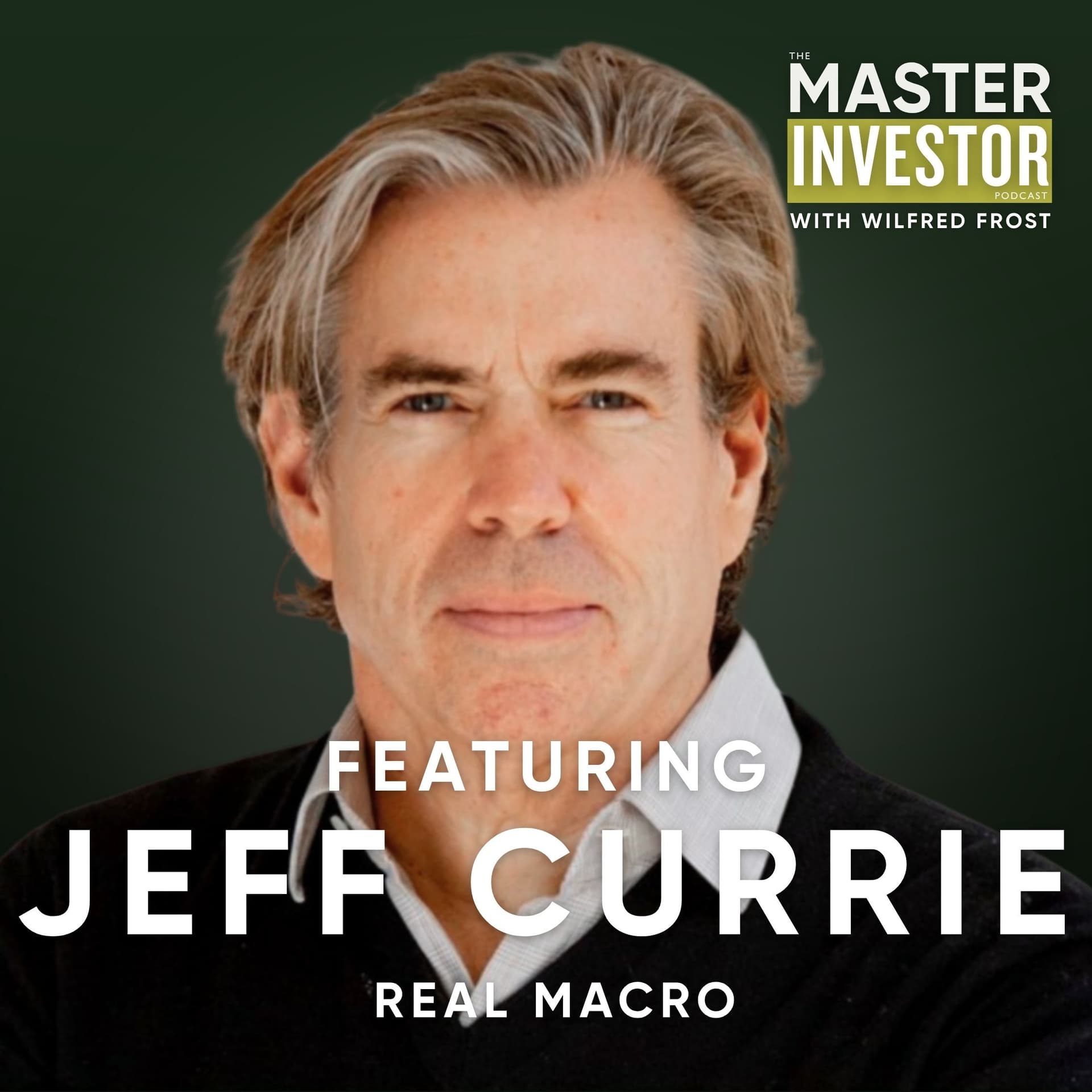
Greg Fleming: How Great Wealth Managers Win in Any Cycle Host: Wilfred Frost Guest: Gregory J. Fleming, President and CEO of Rockefeller Capital Management Air Date: [Insert Date]
---
Overview In this episode, Wilfred Frost interviews Greg Fleming, who shares insights on building a successful wealth management business, navigating crises, and the current market landscape. Fleming reflects on his extensive experience in the finance sector, emphasizing the importance of strong client relationships and the transformative potential of artificial intelligence (AI) in the economy.
---
Key Concepts and Discussions
Wealth Management Business
- Characteristics of a Successful Wealth Management Firm:
- Direct client ties, providing comprehensive advice.
- Recurring, capital-light revenue models aligned with client interests.
- Low capital intensity, leveraging technology to minimize expenses.
- Importance of Client Relationships:
- Wealth management is about long-term advice and client trust, not just portfolio performance.
- Firms like Rockefeller focus on generational client relationships and comprehensive financial services.
- Brand Value:
- Established brands (e.g., Merrill Lynch, Morgan Stanley) play a crucial role in client perception and trust.
- Fleming argues that brand equity, while less visible in today's digital age, remains significant in wealth management.
---
Navigating Financial Crises
- Fleming reflects on his experiences during the financial crisis, particularly his roles at Merrill Lynch and Morgan Stanley.
- He asserts that significant acquisitions (like Merrill Lynch by Bank of America) were transformative and essential for institutional survival and growth.
---
Current Market Landscape
- AI and Economic Growth:
- Fleming is optimistic about AI as a game-changer for productivity and economic growth.
- He highlights AI's potential to reshape industries and bolster U.S. economic performance despite rising national debt.
- Inflation and Federal Reserve Policy:
- Fleming anticipates a shift towards a more dovish Federal Reserve, potentially accepting higher inflation rates as a response to the U.S. debt situation.
- He notes a historical context for the Fed's challenges in balancing inflation with employment.
---
Investment Strategies
- Fleming emphasizes the growing importance of alternatives in client portfolios to achieve yield, given the current economic landscape.
- He advocates for long-term investment strategies and maintaining a calm, consistent approach through market fluctuations.
---
Key Takeaways
- Optimism in Leadership: Fleming quotes Ernest Shackleton on the necessity of optimism for effective leadership.
- Value of Expert Advice: He advises investors to stick with professional guidance through market cycles, as timing the market is often ineffective.
- Long-term Perspective: The focus should be on long-term growth and development rather than short-term market movements.
---
Final Thoughts Greg Fleming reinforces the idea that despite market challenges and economic fluctuations, wealth management remains a resilient sector with opportunities for growth. His insights on the integration of technology, the importance of client relationships, and the strategic vision for Rockefeller Capital Management provide a roadmap for navigating the complexities of modern investing.
---
Follow Along
- Watch the full episode: [The Master Investor Podcast YouTube Channel](https://www.youtube.com/@TheMasterInvestorPodcast)
- Follow Wilfred Frost: [Twitter](https://x.com/wilfredfrost?lang=en), [LinkedIn](https://www.linkedin.com/in/wilfred-frost-279667374/)
- Sponsored by: Interactive Brokers - [ibkr.com/masterinvestor](http://ibkr.com/masterinvestor)
---
Disclaimer This podcast is for informational purposes only and does not constitute an invitation to engage in any investment activity. Always consult with a qualified adviser before making any investment decisions.
Written by AI. May contain mistakes. Listen to the episode to check what was said.
Transcript
Automatic transcript. May contain errors.0:00As I said, I've seen the power of the wealth management business literally since early in my career. And it's a business that grows with markets, that grows with the success of your clients. The world GDP is continuing to grow and wealth management is aligned with that. So I think, yes, it's been a good run in the marketplace. And yes, there's a lot of interest in these businesses and they're highly valued. But if they grow, I think the valuations are justified. We continue to add debt in the United States at an alarming rate, candidly. it's the issue that I worry most about. One of the ways to deal with that is to have nominal GDP growth higher, you know, more in the 6 % range with 3 % inflation and 3 % real growth if we can get there.
0:49And hopefully with AI, we can. So I think there's built into the system, you know, more willingness for slightly higher inflation. You're not going to hear this from the Fed governors. They won't say this. But I think that's kind of built into the system now. It's very hard for any human being, in fact, I'm not sure over a lifetime that anybody does it well, to try to time where the AI correction is, where markets are going moment to moment or year to year. So the advice is so important. You want to put in place a long-term plan and stick with it and listen to the people who have the professional expertise to stay calm and constant through everything.
1:32Welcome to the Master Investor Podcast with me, Wilfred Frost, where we celebrate and learn from the success of the greatest investors and business leaders in the world, giving you, our listeners, the edge. The Master Investor Podcast is sponsored by Interactive Brokers. Please do remember the views expressed in this podcast are for general informational purposes only. Nothing in the podcast constitutes a financial promotion, investment advice, or a personal recommendation. More on that in the show notes. My guest today has led and built some of America's finest wealth management and brokerage businesses with roles that have covered Merrill Lynch, Smith Barney, Morgan Stanley, many more, and now Rockefeller Capital Management, which he leads.
2:20I am, of course, talking about Greg Fleming, who I am delighted to welcome to the Master Investor Podcast. Greg, it's a joy to see you. Wilfred, thank you very much for having me. It's great to be here. We talked there about some of those wealth management roles you've led and also some extraordinary times as well, some real defining times for those companies in and around the financial crisis and elsewhere. And I want to get into some of that history in a moment. But just to start with a sort of broad question, given what you do and what you're building now at Rockefeller, what ultimately makes for a great wealth management business?
2:56You know, for years, Wilfred, and this has been true for really the full duration of my career, 37 years now, wealth management is one of the better forms of financial intermediation. That's how I put it. And what I mean by that is it's a business that first and foremost is directly tied to the client. So in the best and its best form, wealth management, you're providing advice and counsel to clients in our business at Rockefeller, families across generations, which is a really important relationship for you to have with a client. So it's directly tied to the client. It's recurring revenue and fee base.
3:36So that's aligned with the client. And from a market and investor standpoint, they like recurring revenues. They like predictability. And it also avoids a lot of the risks that, and we'll talk about this as we get into Merrill and some of the credit crisis issues that larger full-service firms take on, credit risk, counterparty risk, liquidity risk, a lot of those risks are not embedded in wealth management. It's low capital intensive. In 2025, you need to have a great technology platform, but with a lot of the innovation that exists in the technology world now, you can do that, build it in the cloud, and that's still not tremendous capital expenditure.
4:16So there are many aspects of it that make it attractive for investors as well as a business that's very, very important for the client. And you have that direct interface with the client. You're providing the advice directly to the client. It's so interesting to hear you focus so much on that client relationship because I was going to assume the most important thing ultimately would still come back to the performance of the underlying portfolios. Is that the most important factor or not? Is it the relationship? That's a great question. It's important because in the final analysis, you're trying to take care of their money and grow it for them.
4:49But for us at Rockefeller, we're providing comprehensive advice across all the different needs of the client. So the performance is very important, and we spend a lot of time focusing on that. And we have an investment and client solutions group that looks at and evaluates outside managers to pick the best in each category because we're open architecture. Most of what we do for our clients is put them in the best strategies that other managers take care of. But we also provide generational advice. We provide tax insight. We're trying to maximize after-tax returns for clients. We'll provide family office services.
5:26We'll take care of paying bills and things like that. We provide financial education for second, third generations that may not be as financially fluent as the founding generation. We have a boutique investment bank to provide families that built the wealth through growing a business, advice on the business. So we're trying to provide the full cross-section of services and advice, really everything for the client from a financial standpoint. And yes, investment performance is a key part of that, but we do a lot more than that for the client. And the client appreciates that. They want that comprehensive advice.
6:01One word which I think is so fascinating that I haven't heard you say yet is brand. In any other sector, all the successful businesses, obviously, hopefully, they have a great product as well for the consumer. That's sort of a requirement, but they have a phenomenal branding. Rockefeller, which we'll come to in more detail in a moment, is obviously quite a high-end product, so I guess it doesn't matter as much. But when you think of Merrill or Smith Barney or Morgan Stanley or BlackRock, all companies you've been heavily involved with, are there brands there important like a consumer products company?
6:35Or is it not quite as relevant in wealth management? I would argue it's very relevant. I won't draw the correlation maybe to a consumer brand that's purchased every day and evaluated every single day. But I think that the names that you just mentioned, they've developed fantastic brands. I mean, BlackRock, I've had a long history with BlackRock. Took the company public in 1999. I always point out at$14 a share, given where it is today, incredible success by Larry and team. But that's a - And you're on the board of BlackRock now. Yeah, recently rejoined the board. That's a great brand. You know, and some of the other names you mentioned, Morgan Stanley is a great brand built over many, many decades.
7:16And Merrill Lynch was a brand when we sold it in 2008, it was a 94-year-old brand. And they come to signal and represent things to the people that are looking to potentially buy the services. So I think brand is still very, very important in the financial industry and the wealth management industry, asset management. And I think clients look to those firms for certain things and they have a predisposition to be positive to those firms because the brand stands for something. I'm really interested in the branding of, I guess, Merrill Lynch, which you were at from 1992 till 2009. You rose to be COO, president and COO in 2007 and 2009 and oversaw its sale to Bank of America during the financial crisis.
8:07And Smith Barney, which you then oversaw Morgan Stanley's purchase and integration of after the financial crisis. The reason I bring out the brand of those two as well, because they had such a sort of reach across America, particularly coming from the British point of view, where engagement in the financial markets is not as important. When I moved to America in 2015, you drive around small towns and you wouldn't just see a bank like you'd see in the UK. You'd see wealth management, brokerage, physical offices. So they did reach out across the country in a way that is very un-European at least and I guess gives a legacy branding, which might not be as relevant today in the digital age.
8:53It's probably kind of a one-off now that BlackRock's got a brand, other trading firms have a brand in people's pockets. But what was so special about Merrill or Smith Barney, do you think? And before I get there, just on the Smith Barney side, the acquisition was done when I joined. I took it over and helped build it into the business it is today. But the acquisition took place during the credit crisis, and James Gorman oversaw that. Look, I think you're right, Wilfred. I think these were firms and brands that were embedded in American culture. And Merrill Lynch was known for that bring Wall Street to Main Street.
9:29That was one of the phrases around Merrill Lynch or one of the taglines. Smith Barney had some famous advertisements over the years that people knew. So they were advertising to consumers on television, and this is in the pre-everything days, even pre-cable. So they became brands not unlike bank brands, and they stood for something over many decades, which was part of the success of those firms. And I do think, Wilfred, to your point, I think it was a point in time. I think given the digital age and the fact that physical branches are less pervasive everywhere, even for banks, I think that time was a unique time and has probably passed in that sense.
10:16I just want to dwell a little bit on the financial crisis. And I guess most of the coverage now implies any of the acquisitions that the big banks did were terrible because they led to write downs, they led to having to raise capital at depressed prices. And you can, well, Bank of America is an interesting one. Countrywide, I think you'd put in that bracket. Merrill Lynch, which they bought, did involve some write downs to come. But had they not done that acquisition, Would they be the full service bank that they are today? Were these acquisitions game-changing for some of these institutions? Well, I would state unequivocally that Merrill Lynch was game-changing for Bank America.
11:01And the business that we sold, and I did oversee the sale of Merrill Lynch, which was a difficult thing to do. It was 94 years old and I was the president and I was proud of the 17 years I'd been there and proud of the firm. So it was hard to sell it. It was a great set of businesses. And just to remind you, Wilfred, Merrill Lynch at the time owned half of BlackRock, 49 % of BlackRock, which was a deal that I'd helped put together in 2006 where we sold our investment management business, Merrill Lynch Investment Management with the Merrill Lynch brand to BlackRock and took back a 49 % ownership stake.
11:37and I went on the board at that time with my boss, San O 'Neill at the time. That stake today would be worth$80 billion. Bank of America doesn't still have it, but that was a tremendous asset to Merrill Lynch. We had at the time, Merrill Lynch had a great wealth management business, arguably the best, maybe Smith Barney was right up there, which would be worth a tremendous amount, is worth a tremendous amount to Bank of America today. A top three or top five, if you want to be conservative investment bank. I think that was a fantastic deal for Bank America and it's played out that way. And then on the Morgan Stanley side, acquiring Smith Barney during that time, which they did from Citibank and that, as I said, James Gorman led that.
12:19That turned out to be a business that we merged and I was part of running the combined entity and kind of building it up into Morgan Stanley Wealth Management, which is a crown jewel for Morgan Stanley today. So I think some of these transactions were absolutely transformational for some of the firms. I guess the other one that really jumps out always to me, which you're maybe involved with from afar, but is BlackRock's acquisition of Barclays Global Investors. What I kind of, to round that section off, come back to is all of this kind of comes back, you said at the top, the sort of stickiness, the fee generating aspect of wealth management.
12:58The successful deals had that. in a way that buying outright banks or just pure investment banks perhaps didn't. We could look at the share prices you said of BlackRock perhaps as a proxy since then. Do you get worried that we've just had 15 extraordinary years where people have woken up to what a great business wealth management is, that they already pay up for that sort of business? It's why Morgan Stanley trades at a premium to Goldman Sachs and therefore not start to worry that we might have a downturn to come? And just on the last deal you mentioned, BlackRock and the ETF business they bought, that was a fantastic deal for them, which was another gutsy deal that Larry Fink did at the time.
13:40That was just after the crisis, and that's been transformational for them. You know, Wilfred, I really don't worry about the fact that it's been a great – a strong 15 years in the marketplace and that wealth management is such an attractive business that so many are interested in it. As I said, I've seen the power of the wealth management business literally since early in my career. I joined Merrill Lynch in 1992 and Merrill Lynch Wealth Management was the crown jewel there then. It's a business that grows with markets, that grows with the success of your clients. So you're aligned with your clients.
14:20the world GDP is continuing to grow and there's, you know, we'll get to AI, but there's a lot happening that's extremely positive in the macro economy and wealth management is aligned with that. So I think, yes, it's been a good run in the marketplace. And yes, there's a lot of interest in these businesses and they're highly valued, but if they grow, and that might be the one caveat I give, organic growth is key to high valuations in anything. And the most highly valued companies in the financial space, but anywhere in any industry, this technology as well, tied to organic growth. If your business is growing organically, meaning you're doing more for your existing clients or you're bringing in new clients, I think the valuations are justified.
15:07And the cycle has proven that over three or four decades, not just 15 years.
15:16This podcast is sponsored by Interactive Brokers. Building wealth starts with the right broker. Interactive Brokers helps you reach your goals with powerful tools, global market access, low costs, and unmatched financial strength. That's why the best informed investors choose IBKR. Learn more at ibkr.com forward slash master investor. So let's talk about Rockefeller. You obviously left Morgan Stanley in 2016, quite a high profile departure. Were you confident what you're going to do next at that point? And were you nervous about going from leading a huge department at a huge company where you might rise to the very top to something a lot smaller?
16:05You know, I was ready for the years at Morgan Stanley were terrific. And when I left, the wealth management business was in very good shape. We had taken it from mid-single digits margins to 22 or 23, and there was momentum there. So it was a good time to go. And I really wanted to do at least one more thing. And I really was looking to do something different this time. I'd been with two great firms, and they'd been great runs in the, you know, I'd enjoyed success and worked with a lot of great people. So I wanted to try something that was more entrepreneurial. So I was looking around at the time for what that might be and getting a lot of advice from a lot of different people.
16:47And I found out that we could potentially acquire Rock & Co., which was originally the family office of John D. Rockefeller Sr. in 1882. So it's arguably the oldest family office in the U.S. And when I found out that we might be able to purchase that and build a business around the iconic and incredible Rockefeller name, I went at that hard. And we ultimately were successful in acquiring it. I did it in partnership with a capital partner, Viking Global Investors, who's still with us today and been a tremendous partner in the building of Rockefeller Capital Management. We changed the name from Rock & Co.
17:27to Rockefeller Capital Management to make it clear that while the Rockefellers are a very important part of this, and they are. We take care of there are 300, over 300 of them alive today. Many of them are our clients. Two of them sit on our board, David Rockefeller Jr. and Peter O 'Neill. They own a piece of our business. So they're very important family to us. But we wanted to build the business for many other families, particularly in the United States. We wanted to take this incredible name and build it out across the U.S. in major wealth centers and build a business taking care of many successful American families.
18:00So when I realized I could get this Rockefeller partnership, I went after that hard. And I think, I'm running saying, you've just finished a recapitalization. So the value's the company at 6.6 billion. But I think I'm more interested in and more impressed by the AUM. You now have$190 billion of assets under management. In that neighborhood, we're coming up on that 200 billion. Okay, so already better than when I last checked in with your team. And where was it when you took it over? I mean, in terms of, I don't know, you're talking about percentage growth or relative growth over the last five, six years, it's got to put you right up there with all of the best wealth managers, right?
18:42Yes. And we're quite proud of the growth. We started with 18 billion in assets. And we talk about growth. It's a significant increase. Now, some of that is what we call inorganic. We hired teams. We call them elite advisors. We look for the best teams in the industry that have experience in working with high net worth and ultra high net worth clients, which is our focus. So we bring them on board and they typically bring their clients with them. But then we grow organically. And the organic growth that we've been able to achieve at Rockefeller Capital Management is the thing I'm probably most proud of because it's the ultimate compliment from clients and new clients.
19:16If you're working with a client and they trust you with maybe the rest of their wealth, so they're working only with Rockefeller, or you get a new client, that says a lot about the services that you're offering and how they view you. So we've had tremendous growth. We've had to invest in the business, Wilford, to make that happen. When we started, most of the capabilities we have today weren't there. So in the early years and right through today, we've invested a lot in building a world-class technology platform all in the cloud and building out our investment platform that I talked about, family office services, financial education.
19:53We have philanthropic advisory. We'll help you set up a foundation, and so many of our clients are philanthropic. We have our investment bank. We have an asset management business with some very focused, high-quality strategies that are offered to our clients on an open architecture basis. I emphasize open architecture because our whole focus is on what's best for our clients. We want to make sure that we do the best job for them. It's not on whether it's a Rockefeller product or a product from a different asset management company. Before we get into the sort of talk about current markets and your views there, I just wanted to dwell on John D.
20:31Rockefeller. Because as you said, he obviously trading off that name. And it's always great to reflect with someone who knows so much about him and what he achieved. I mean, we talked today about some people who are supremely wealthy from Bezos to Musk. And you're talking about more money than God type aspects. John D. Rockefeller was even more wealthy relative to other people in his day than they are? 100%. The wealth of the Rockefellers at the peak was the equivalent of 4 % of GDP. So it would be north of a trillion dollars today. So they still have that number one slot in terms of wealth. And is he someone who was universally liked?
21:21I mean, obviously, it's a word that you can trade off in the word of wealth, for sure. But were there negatives that you could point to as much as the positives? What are the kind of lessons have you drawn from studying him? You know, I take the positives away. And I obviously didn't know the man personally. There's the incredible biography, the Chernow biography, Titan. And I talk a lot to David Rockefeller Jr. and Peter O 'Neill, who sit on our board. I know so many of the family and they have memories and stories. But the positive was enormous. He was incredibly driven. He was really never satisfied and always focused on continuing to move forward.
22:03You know, he once said, quote, I never expected to lose. He also had so many positive other aspects to him. He once said, I think this is the quote, your destiny is a product of your actions, not your origin, which I love. And as an American, I'm particularly proud of so many in our country who fit into that category. But yeah, he set a very high bar and he drove people hard. But you're not going to create 4 % of GDP as wealth in a family without setting a very high bar. And we talk about that at Rockefeller Capital Management today. And I use his quotations all over the place all the time. And there are so many of them.
22:49There are letters that he wrote to John Rockefeller Jr., his son, where he says so much of his worldview and it's fascinating. I'll send them to you. But at Rockefeller, we talk about excellence in everything. And one of my favorite quotes is Vince Lombardi, a football coach from the 60s, Green Bay Packers, who was paraphrasing Aristotle. And almost everybody at Rockefeller can give you this quote now. I've used it so many times. But Lombardi said, quote, perfection is not attainable, but if we chase it, we might just catch excellence. And I love that. And John D. Rockefeller Sr. would have loved that.
23:25And that really embodied his life. And, you know, so I find so much of reading about him and the bar that he set to be very admirable. At Rockefeller, we'd like to, last point on this, balance the excellence with the focus on a collaborative collegial culture. We want to go after it in a way where people feel upbeat every day and they treat their colleagues with respect. And one of my other favorite quotes that I like to disavow is Leo DeRocher, the baseball manager, this is 1950s now, said, nice guys finish last. And I have said for years that nice men and women can finish first, but they better shoot for excellence if they want to do that.
24:06I love all of that. I've heard of Lombardy. I haven't heard of the baseball guy. Have you heard of the quote, though? You've probably heard of the quote, nice guys finished last. I have heard of the quote, actually. I think that's really great stuff all around. Let's talk about the current markets. Firstly, on the US economy, is it starting to slow? Are you concerned there or not? I think it has slowed. I think the last 12 or 18 months were slower and the data is coming in on that. So I think it's in a bit of a more sluggish phase away from AI. So it is a complicated picture today. And that's part of the reason why I think markets are more volatile.
24:44They're trying to figure out exactly how is this going to land. But I think the rate sensitive parts of the economy have been slower. I think manufacturing is absorbing the whole push to onshore and tariffs. And the labor market reflects this, that there is a slowing away from AI. And we can get to the Fed in a second. I think that will still influence the Fed in the near term. But this AI phenomenon, which we can move to if you want, is a huge part of where we are today. Well, let's touch on AI first and before the Fed. But is your implication there that it will keep supporting economic activity and markets?
25:21You know, Wilfred, I believe that from everything I can see that AI is going to be the most transformational technological breakthrough probably in the history of mankind. And the impact is going to be transformative across everything, including across thousands of public and private companies. And there's an immediacy to it. It's already got billions of users. Every company, mine, every public company, you know, Walmart made an announcement a month ago saying they expected to grow over the next three years, but they wouldn't need to hire more people because of AI. Every company in the United States and probably around the world is trying to figure out how to take it and become more productive, maybe enhance margins, maybe, you know, drive growth that way.
26:10So I think it's going to have an enormous impact and we're not waiting for it. I mean, it's already here. It gets better and faster every week, every month. So I think that's going to have an enormous impact on all economies and on the U.S. economy, you know, over the next several years and certainly over the next five or ten. And that's, I think, going to drag productivity up and drag economic growth up. And that comes quick enough to prevent a recession? Potentially. And the reality is, and, you know, this isn't my specific expertise, but there's plenty of economists out there talking about it.
Read the full transcript
26:47Parts of the U.S. economy have probably been in more like a recessionary phase. And, again, the labor market reflects that. So I think that you have the AI investment, and there's a lot of it. And I get asked that a lot as well. You know, is it a bubble? I think parts of AI are clearly, you know, overheated. But that always happens when you have a technology that's transformational, where there's a tremendous amount of investment. And ex-post, when you look back, some of it will not have hit the returns or be companies in the AI space with no revenue today that actually don't make it. But I think the impact of it on the productivity and what I talked about earlier, every company in the world is going to be significant.
27:27But just on the valuations, I guess in your business, in wealth management, particularly for high net worth, you have the luxury of longer time horizons. And perhaps with the power of your relationships, you're not as marked to a benchmark in the short term. Does that mean you keep your clients exposed to the AI theme, even though some of these multiples, some of these valuations are quite worrying? Or is this a moment where you've got your client portfolios less exposed? You know, our client portfolios and the work we do with clients, we really focus on medium term. And we make pivots, obviously, based upon if something really runs, if there's a part of the market that really runs, then you can scale that back.
28:11and reallocate. But one of the great parts of really good advice in wealth management is ensuring the clients don't get too nervous up or down and they stay with the longer-term plan. So sure, we'll make adjustments when we think something gets overheated. But we work closely with our clients, mostly families, to make sure they stay focused on the longer-term plan. And a lot, we have clients, a lot of their assets are in alternatives, which tend not to be marked, you know, to market in the same way with a longer investment horizon. In terms of the Federal Reserve and the outlook there, I mean, are you worried by more political pressure or is that worry kind of dissipated?
28:57And what you're seeing now is kind of what I guess we've seen over many decades of governments wishing for lower rates and they may or may not materialize. You know, it is true that it's over many decades. In fact, President Nixon was quite aggressive with the Fed, as your father would have known. And so it's, that's been, the tension's been around a long time. I think the Fed has had a difficult task in the last 12 months with balancing inflation and employment and trying to avoid the word stagflation, which we haven't had around for a very long time in the United States or really anywhere around the world.
29:41And they've been trying to toggle that. So they're trying to get inflation down where they feel like they've got a lid on it while not having the employment picture start to get weaker than they want. And that's been a difficult toggle. And I think they've done a pretty good job on that. You know, I think at this point, I would expect them to cut next week. And I think they're aware that the labor picture has been weaker and that, frankly, in the near term, AI may exacerbate that before AI creates productivity and new jobs and new growth. So I think it's been a difficult balancing. But I don't think that we're in a unique time in terms of pressure between the executive branch and the Fed.
30:24I think it's been around many times before. Is one of the conclusions, though, that inflation is likely to be higher than it has been for the next decade? If we have a slightly more dovish leadership of the Fed going forward, they'll cut kind of a little more readily than over the last decade? Look, I think there's going to be a bias for that, Wilford, not maybe in part because of some of the pressure, but also because of the reality of the debt situation. when the Trump administration took office, Scott Besson, the treasury secretary, said they were trying to get to three, three, and three. Three percent real growth, three percent inflation, and three percent budget deficit.
31:06Well, the one that's definitely not on track is the three percent budget deficit. We continue to add debt in the United States at a, you know, at an alarming rate, candidly. It's the issue that I worry most about. One of the ways to deal with that is to have nominal GDP growth higher, more in the 6 % range with 3 % inflation and 3 % real growth if we can get there. And hopefully with AI, we can. So I think there's built into the system more willingness for slightly higher inflation. You're not going to hear this from the Fed governors. They won't say this. But I think that's kind of built into the system now.
31:43And the other thing about the slightly more dovish perspective in lower rates is the funding costs for the federal government for this massive amount of debt will be lower as well. So I think both of those factors will lead to a tolerance for a slightly higher inflation than you would have seen five or ten years ago. But again, that's not going to come out in any official commentary. That's just my view of how they're reading the world. Given where the debt is, is that the right strategy, as painful as it might be, having inflation higher, particularly for those at the lower end of the economic spectrum?
32:18Well, let me just answer the – I'll answer the question, but let me start with it would be nice if we went at it a different way as a country and cut the debt and ran a budget deficit that was less than where it is today. you know one of my colleagues rashir sharma who's our chairman of international writes about this all the time you know how in fairly robust times you're still running a six percent of gdp deficit that this is the first time in history that that's happened and this isn't a statement about political parties both parties have now done this um so it'd be nice if if we went after it that way ironically the tariff revenue does act as a inflow into the federal treasury offsetting that to some extent.
32:58But if that's not going to happen and there doesn't seem to be the political will anywhere for that to happen, I think it's a prudent way to be dealing with 30 or 35 trillion in debt if nominal GDP can be more like 6 % or 7 % with hopefully more than half of that coming from real growth as opposed to inflation. But that kind of number is one response to the levels of debt that we have. So what is, with that all in mind, and by the way, I think that realization is coming around to countries here, I think Japan and the US are more actively pursuing that strategy, and I think it's coming around to be a realization that's necessary here as well.
33:41If that's the case, what's the number one tip for people's portfolios? If you are facing now a decade or so where governments are trying to monetize that debt, maybe that's an exaggeration of what you're saying, but sort of at the heart of what you're saying. Yeah, I think it's in what I'm saying, no question. I think that for part of your portfolio, you're looking for yield. And where do you get that? And that's where one of the things I mentioned was the growth of alternatives. I was looking at this recently, and I thought I would throw this out this morning. The alternative universe was about a trillion dollars of assets 25 years ago, mostly private equity.
34:22that the alternatives today are north of 15 trillion dollars it's an incredible part of the investment world and an incredible part of the funding of companies all over the place public and private so there are many options available for investors to reach for yield in the alternative universe and you're going to see that continue so that has to be an important part of a portfolio for all investors, in particular high net worth and ultra high net worth. So you're going to see people making sure there's enough yield embedded in their portfolios.
35:04As we sort of start to wrap up on the macro stuff, I'm just really, you know, you lived through the crisis. When the pressure was on, you found a deal for Merrill Lynch, sold it to Bank of America, obviously, as we've already discussed, came out the other side with a role at Morgan Stanley. It's funny how you say this is the most transformational technology, you know, perhaps in our lifetimes. Do you also get moments of deja vu, memories take you back to peak moments in either the dot-com bubble or the 2007-2008 financial crisis? You've mentioned the huge amount of debt. You seem quite relaxed about the outlook for growth, but do you kind of revisit those moments in your career and wonder if there's another crisis around the corner or not?
35:53I do. And you always want to stay cautious and make sure the lessons don't get lost. And that's one of the nice things about people that bring experience and have lived through things. But one One of the things, Wilfred, I've taken away from the 37 years now and so many different crises is that humanity, and this is particularly true of the United States, it's one of our strengths, tends to continue to move forward irrespective of what happens. And the credit crisis was such an incredible time in financial markets and in the United States. And people forget that in January of 2009, the country lost over 700 ,000 jobs in one month.
36:36So the credit crisis wasn't just financial. It was a massive event for the United States and for the global economy. And yet, you know, later in 2009, animal spirits started coming back. It took years to repair balance sheets. But there's, you know, there are major events that occur. But there's the, you know, the aftermath and the fixing and then you march forward. And technology makes that easier. So I'm fundamentally optimistic. but at the same time, I never forget the lessons. And I'm always careful about somebody telling me, well, this is how everybody else does it. I always look at that and say, well, wait a minute, why don't we just look at it for the first time anyway?
37:18And as we sort of wrap up, Greg, I'm keen to ask you a question we ask everyone, which often can be to an investor or to a business leader, and you're qualified to answer in either way or both ways. But what is the overriding piece of advice you have, either in investing or in business leadership for our listeners? Well, maybe I'll do one of each. In business leadership, I think Ernest Shackleton said it best when he said true moral courage is optimism. And if you're going to lead a firm or a large group of people, you need to be fundamentally optimistic. That doesn't mean you don't need a good plan.
38:01And Shackleton did get them out and saved everybody in that fateful boat ride he took. But optimism is core. And if you're going to be a leader, you need to be fundamentally optimistic. And then on the client side, this is not the expertise of everybody, the financial world. You want to have a great advisor. You want to get great counsel. And you want to stick with that advice through cycles. because it's very hard for any human being. In fact, I'm not sure over a lifetime that anybody does it well to try to time, you know, where the AI correction is, you know, where markets are going moment to moment or year to year.
38:43So the advice is so important. You want to put in place a long-term plan and stick with it and listen to the people who have the professional expertise to stay calm and constant through everything. Greg, that's a great bit of final advice, which doesn't surprise me. It's been a pleasure having you on the Master Investor Podcast. Thanks so much for joining us. Thank you, Wilfred. It was great. Great to see you. That was Greg Fleming, of course, the Chairman and CEO of Rockefeller Capital Management. Next week on the Master Investor Podcast, we'll be joined by the Chairman and CEO of Bank of America, Brian Moynihan, a man that Greg knows very well.
39:18Yes, a long time, 30 years. And Brian will be up next on the Master Investor Podcast. For now, though, are great thanks to Greg Fleming. Greg, thanks so much. Thank you, Wilford. Great to be here.
39:54Master Investor Limited in association with Birdline Media. If you've enjoyed the show, please do subscribe on YouTube or click follow on your podcast platform, and you'll be automatically notified each time a new episode drops.
From the publisher
Gregory J. Fleming, President and CEO of Rockefeller Capital Management, tells Wilf what it takes to build a great wealth management business, how to navigate a crisis under pressure, current market outlook, and the importance of optimism in leadership.
Fleming reflects on three decades at the top of Wall Street, from leading Merrill Lynch through its sale to Bank of America during the financial crisis, to helping create Morgan Stanley’s powerhouse wealth management franchise, and now 10x‑ing assets under management at Rockefeller from roughly 18 billion dollars to close to 200 billion AUM. He explains why wealth management’s recurring, capital‑light, client‑aligned model has become the “crown jewel” of modern finance, the enduring power of brands like Merrill, Smith Barney, Morgan Stanley and BlackRock, and how the Rockefeller name and family office heritage from 1882 underpin his strategy serving high and ultra‑high‑net‑worth families across the US.
The discussion then turns to the macro backdrop and AI. Fleming lays out why he sees artificial intelligence as perhaps the most transformational technology in history, already reshaping productivity and margins across thousands of companies, and potentially helping lift US growth enough to manage today’s enormous debt burden. He discusses the political and fiscal realities that may entrench higher inflation, and what that means for asset allocation over the next decade, including the expanding role of alternatives in client portfolios.
Along the way, Wilfred and Greg revisit the lessons of the financial crisis, the animal spirits that return after even the worst shocks, and how and why he remains fundamentally optimistic even when facing major challenges.
Fleming also reflects on the legacy of John D. Rockefeller, whose wealth surpassed that of Bezos and Musk today – at one point equalling around 4 percent of US GDP – and how his relentless search for progress and excellence is worth pursuing at Rockefeller Capital today.
You can watch the full video on The Master Investor Podcast YouTube channel
And follow @WilfredFrost on X and Linked In
Sponsored by Interactive Brokers - ibkr.com/masterinvestor
The Master Investor Podcast is podcast is produced by Paradine Productions, Master Investor Ltd in association with Bird Lime Media.
This podcast is for information purposes only. It does not constitute an invitation or inducement to engage in any investment activity. It is not a financial promotion as defined under section 21 of the Financial Services and Markets Act 2000 (FSMA). The views expressed by the presenter of this podcast are those of the presenter and are provided in the course of journalism. This podcast benefits from the exemption under Article 20 of the Financial Services and Markets Act 2000 (Financial Promotion) Order 2005 (FPO), It does not require approval by a person authorised under the FSMA. Generic information, not identifying any specific investment, fund, provider or service, about a class of investments such as shares, bonds, derivatives and cryptoassets, might be provided and/or discussed during this podcast. Such discussion falls within the generic promotions exemption (Article 17 of the FPO). Such discussion is not a financial promotion requiring approval by an authorised person under section 21 of the FSMA. Investing involves risk. You should consult a suitably qualified adviser who can assess your individual circumstances before making any investment decision