In short
Podcast Notes: The Master Investor Podcast with Wilfred Frost
Episode Title
Under-Owned, Undervalued, Unapologetic: Nick Train’s Case for UK Equities
Episode Overview
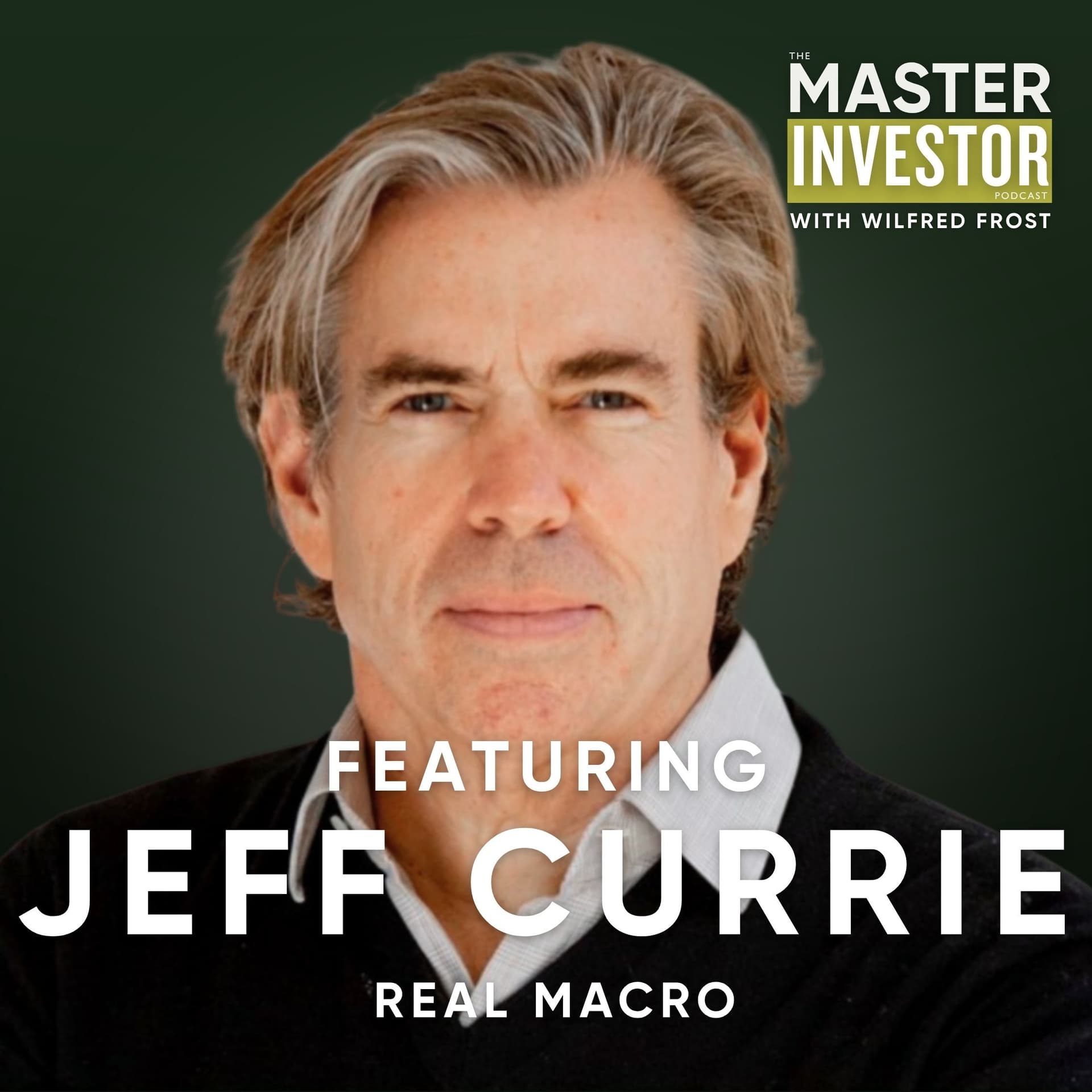
In this episode, legendary UK fund manager Nick Train joins host Wilfred Frost to discuss his optimistic outlook on UK equities, despite their recent underperformance. Train shares insights into his investment philosophy and highlights specific companies he believes are poised for growth amid global trends like artificial intelligence.
Key Themes and Discussions
- Investment Philosophy
- Patient, Conviction-led Investing:
- Train emphasizes a long-term approach, with an average annual portfolio turnover of less than 5%.
- Many top holdings have been retained for over a decade.
- He believes that selling a stock is akin to admitting a mistake.
- Influence of Buffett and Munger:
- The philosophy aligns with the idea that owning a small number of world-class businesses can lead to significant wealth creation.
- Optimism in UK Equities
- Acknowledges the UK market's historic underperformance relative to the US.
- Believes many London-listed companies are under-owned and undervalued.
- Highlights opportunities in companies linked to global trends like artificial intelligence.
- Case Studies of Key Holdings
- London Stock Exchange Group (LSEG):
- Positioned to benefit from AI through proprietary data and analytics.
- Recently engaged with tech firms like Anthropic and OpenAI, reinforcing its market relevance.
- RELX:
- Transitioned from traditional data provider to a digital powerhouse in industries like legal and insurance.
- The risk division is now a significant part of the company’s value.
- Diageo:
- Despite recent challenges, Train argues its premium brands like Guinness and Don Julio will thrive as global wealth increases.
- Stays committed to Diageo based on the enduring desirability of its brands.
- Confronting Underperformance
- Train acknowledges the fund's recent underperformance relative to benchmarks, attributing it to a market shift favoring value over growth.
- He views market downturns as opportunities for strategic buying, reinforcing his commitment to long-term holdings.
- Advice for Investors
- Train’s distilled mantra: Be bold, be disciplined, be optimistic.
- Emphasizes the importance of long-term vision over short-term market fluctuations.
Key Takeaways
- Long-Term Focus: Train's investment strategy is characterized by a commitment to long-term holdings and a focus on high-quality companies.
- Emerging Opportunities: He sees significant potential in UK equities, particularly those connected to technological advancements.
- Candid Reflections: Train openly discusses the discomfort of recent underperformance and his approach to navigating market challenges.
- Patience is Key: His approach requires a belief in the enduring value of selected investments, despite short-term market trends.
Closing Thoughts
Nick Train’s insights provide a compelling case for investors to consider the UK market more closely, particularly in the context of companies aligned with future growth trends. His philosophy advocates for patience and conviction in investment decisions, underlining the long-term nature of true wealth creation.
Additional Resources
- Watch the full episode: [The Master Investor Podcast YouTube Channel](https://www.youtube.com/@TheMasterInvestorPodcast)
- Follow Wilfred Frost on [X](https://x.com/wilfredfrost?lang=en) and [LinkedIn](https://www.linkedin.com/in/wilfred-frost-279667374/).
Disclaimer
This podcast is for informational purposes only and does not constitute a financial promotion or investment advice. Always consult a qualified financial adviser before making investment decisions.
Written by AI. May contain mistakes. Listen to the episode to check what was said.
Transcript
Automatic transcript. May contain errors.0:00You're absolutely right. The UK has been a disappointing market. On the other hand, the long period of kind of disapprobation about the UK by global asset allocators, it's resulted in those London listed companies that are evidently world class enterprises. It's led to them being under owned and undervalued. And I think what really interests me about the UK is we can find companies listed along the London stock market that appear to offer an access to the wealth that's likely to be created by artificial intelligence. And perhaps that's not a perspective on those businesses that's widely recognised.
0:54We believe that you can identify companies with structural franchises or brands that will endure and prosper. And the best thing you can do is to hunker down and own them through inevitable periods of more difficult trading performance or investors' attention being directed elsewhere. So, yeah, maybe to a fault almost, but we've chosen to be very, very patient and very, very supportive of companies where we can see value creation.
1:42Welcome to the Master Investor Podcast with me, Wilfred Frost, where we celebrate and learn from the success of the greatest investors, business leaders, and politicians in the world, giving you, our listeners, the edge. The Master Investor Podcast is sponsored by Interactive Brokers. Please do remember the views expressed in this podcast are for general informational purposes only. Nothing in the podcast constitutes a financial promotion, investment advice, or a personal recommendation. More on that in the show notes. My guest today is one of the UK's best known fund managers as the founder of Linsel Train and the manager of their global strategies, as well as the Finsbury Growth and Income Trust, one of the oldest UK investment trusts founded in 1926, believe it or not, which he has managed since 2000.
2:35He's known for his patient conviction-led approach, which has led to extraordinary long-term performance, albeit some more challenges in recent years. I am, of course, talking about Nick Train. Nick, a very warm welcome to the Master Investor Podcast. Thanks so much for joining me. Well, thank you for that glowing introduction. And I'm pleased to be here and hope that we can unearth something of interest to your viewers. I have no doubt that we will. And I have to say, in terms of unearthing something, I probably should have known this, but I didn't realise until doing the prep, the Finsbury Growth and Income Trust is 100 years old this January.
3:13Absolutely it is. And it's one of the signal achievements of my life, as I see it, that I've been responsible for the investment affairs for a quarter of that. In fact, this month, December, I've lapped 25 years of responsibility. And I can't tell you how many, but there aren't that many managers of investment trusts with a 25-year and counting track record. And the performance since 2000 has been really impressive. The fund's up 733%. The benchmark is up 317%. Which is the UK stock market. Which is the UK stock market is the benchmark. Fabulous, very long term. We'll get to some of the pressures in more recent years a little later.
4:02And you've got a vote coming up on this, and it's in terms of continuation. It's for the continuation of the company. Our commercial relationship with the investment trust is completely separate to this existential question of whether the company continues for, let's hope, another 100 years. And if there's anybody watching or listening who is a shareholder in Finsbury, please vote for the continuation. I think that the asset class, investment trusts in general, and this investment trust, I would say so in particular, deserve to continue. Well, this is great to hear you say that. And our listeners can judge after the whole episode as well.
4:49Let's talk a little bit about your investment philosophy overall. I mentioned in the top patient, conviction led, and I think very long term is fair to say. Well, patient kind of connotes long term. Yeah, I mean, you know, you can measure this. Our annual portfolio turnover, voluntary turnover over the last quarter of a century has averaged something less than 5 % per annum. which even in the context of other patient investors really is quite strategic. When I look at the top four or five holdings, most of those we've owned for at least a decade and some of them pretty much 25 years. So, yeah, that's an approach.
5:50And obviously at Linsall Train, you have global funds, Japanese funds, North American funds, and UK funds. And you lead the Finsbury Growth and Income Trust, which we've mentioned already, which focuses on the UK. The UK really is my major focus. I was going to say, as well as being one of three fund managers of the global fund. So kind of having a full appreciation of that area. And I just wanted to mention that before we dive into the UK and the Finsbury Growth and Income Trust. because I think it's worth just snapshotting you and the firm's view of not just global markets, but US markets as well, which I think influence a lot today.
6:27Do you look at that very strong performance, very strong level of innovation in the US that we've seen over the last five or 10 years and think things are a bit stretched, a bit overdone or not? Um, I, I, we are, um, we're always bullish. Um, I think that is, uh, a very useful discipline as a long-term equity investor to be constructive about equity as an asset class. And I have to include US equity within that context. I wouldn't want to opine on where NASDAQ's going to be over the next 18 months. But I think that the structural drivers of a global equity bull market, which are a combination of technology innovation and pressures on declining inflation make for a constructive backdrop.
7:35I think, I hope that the UK stock market might offer particular value in that context. Let's touch on then UK versus the rest of the world. I mean, before we get on to your fund and the selling points of that, I guess it's fair to say for the last decade, two decades, picking a fund that is benchmarked to the FTSE all share as opposed to the S &P 500 was the wrong choice. Explan on that for us a bit. And do you think that's about to flip? You're absolutely right. The UK has been a disappointing market, and it's been disappointing for, in hindsight, understandable reasons, which is that the exposure offered by the benchmark to structural growth industries has been lower than other markets.
8:36And I can't honestly say, to use your terminology, that that is about to flip. On the other hand, the long period of kind of disapprobation about the UK by global asset allocators, I think evidently it's resulted in those London listed companies that are evidently world class enterprises. It's led to them being under owned and undervalued. And I think what really interests me about the UK is looking at the stock market from the perspective of what does artificial intelligence mean for industries, companies over the next decade. we can find companies listed on the London stock market that appear to offer an access to the wealth that's likely to be created by artificial intelligence.
9:45And perhaps that's not a perspective on those businesses that's widely recognised. So maybe that's the thing that most thrills me about the opportunity that I think we're capturing in our portfolio. I'm really interested to explore that a bit. Is that a recent thrill for you? Because, I mean, I guess AI is a recent development. So is that case for, and we'll get to the fund itself in a moment, that case for a fund index, the FTSE All Share, quite a new case? Because AI is applicable and can deliver profit margin improvements for your companies in a way that perhaps five years ago you couldn't have made the case for UK-based companies.
10:33Yeah, I think it's fair to say that the advent of chat focused everybody's minds on what the implications might be of this emergent tool. I mean, can I talk about this just a bit? Wolf, we both know that we might at some stage talk about London Stock Exchange Group as a business that could be a beneficiary of AI. I think the chief executive of LSEG, David Schwimmer, has shared a useful framework for thinking about the AI phenomenon. He analyses it as being constituted of three interlocking factors, the AI phenomenon. There is, first of all, the requirement for unprecedented amounts of computing power.
11:43Second, the emergent agents that are competing with each other all the time. They're evolving all the time to become cleverer, with maybe at some point in determinate point, one of them emerging as the cleverest, but we don't know which one that's going to be yet, if ever. And then the third, but still absolutely critical factor, the third leg of the stool, as he puts it, is data. And David Schwimmer's view is that the compute will become commoditised. Ultimately, it will be determined by who's got the most hundreds of billions of dollars to invest in the computing power and the chips. The agents will be in a kind of perpetual battle between each other to generate new insights to justify their commercial viability.
12:45and from his perspective, owners of proprietary data, obviously it has to be proprietary, but owners of proprietary data are in a strategically advantaged position to kind of sell their data to the highest bidder. And just on LSAC, just for a moment, and just to conclude this bit of conversation, so fascinating to see that LSEC has cut deals with both Anthropic and OpenAI to sell its proprietary data to those agents. London Stock Exchange Group, I should mention, is soon to be a sponsor of this podcast, though that's totally unrelated, of course, to the fact that you own it in your fund. Showing wonderful commercial acumen, if I may say.
13:37Well, I mean, I won't comment on that, but full disclosures are out there. Why don't we dwell then on this as a particular stock pick for a moment? Because what then is the valuation multiple that you have to pay for that exposure to this growth AI theme compared to, I guess, some of the plays that you... Does it really matter? I mean, I can tell you. Well, you tell me. I can tell you. But I think if we've learned anything from NASDAQ over the last decade, it's the starting multiple for a digital business with low capital intensity and a significant growth opportunity. the starting multiple doesn't matter that much.
14:25I mean, it is absolutely critical that the franchise or the franchises, because there are several within LSEG, are world class and the growth does eventuate. But, I mean, the way I'd look at LSEG is that it's an example of a London-listed business that is a globally significant set of assets with a clear growth opportunity. And just ostensibly, you're not asked to pay the same valuation that you might be for a comparable NASDAQ-listed asset. Now, I've conveyed a lot in those comments. And I think you could deduce, and it pains me to say it, but I don't think I would recommend anybody contemplating the UK stock market as a possible home for capital.
15:23I'm not sure I would recommend buying an ETF on the UK. I would think that you would need to do as we do and look through the UK stock market for those relatively rare businesses that have, as I've tried to convey with LSEG, truly globally significant assets. It's an interesting point. I would also guess that the amount of people that are doing that is much lower in this country versus the US where S &P 500 ETFs, NASDAQ ETFs have taken more of the overall market share in the last decade or two. We flip the order there a little bit, which I think is actually quite helpful because it brings me to another point.
16:07Your fund, I think, has a maximum of 30 holdings, but in fact, is even more concentrated than that suggests. you have typically around 20 with, I think you have five holdings that are 10 % or so, LSEC being one of them. We'll talk about some of the others. The top 10 make up 80%. I think it's more than 80%. Right now, 80%, 85%. So to your last point about not recommending an overall ETF, you are very, very concentrated. Exactly. And to revert to your opening gambit about an investment trust as a vehicle, as the constitution of an investment trust permits a degree of portfolio concentration that wouldn't be available to most other, certainly conventional fund structures.
17:02So the palette of investment approaches available to an investment trust of wider. And yeah, I think we've taken advantage of that. I hear, because you talked about patience earlier, I hear Buffett and Munger behind your questions. And, you know, I think it is worth me putting it out that the achievement of Berkshire Hathaway has been a huge influence on us and Munger's observation that all you need are eight world-class businesses to make up a portfolio. and then you just sit and wait and good things will tend to happen to you. You know, that's been a pretty good account of what we've attempted to do.
18:04And yeah, as you were kind enough to notice, at least at one phase of this, very, very good things were happening to us.
18:20Building wealth starts with the right broker. Interactive Brokers helps you reach your goals with powerful tools, global market access, low costs, and unmatched financial strength. That's why the best informed investors choose IBKR. Learn more at ibkr.com forward slash master investor. Why don't we continue to talk about some of those big positions? So another one, which I guess feeds into the similar theme you're saying about LSEG with the data position and how it can tap into AI, and it's another one of your sort of circa 10 % positions, is Relix. Indeed. And that previously was Reed Elsevier.
19:06Talk us through the buy case for that now. When you look at the franchises within Relics, how it's been able to create value, essentially the journey from being an analog data provider to important industry verticals like legal, like research, like insurance, to being a digital provider of data. and now data analytics and software services to those industries, that's been a long value-creating journey. The last time we met the chief executive of RELX, the CEO reminded us that 20 years ago when he was appointed, RELX's risk division, which is an AI-powered machine-to-machine service to corporations all around the world.
20:0420 years ago, that division represented 2 % of Rolex's market value in his estimation. Today, he reckons that Rolex's risk division is worth over half of the value of the company, and the company's value is materially higher than it was 20 years ago. But as he says, the prospects for that risk division are better than ever and the size of the market opportunity is greater than ever. And again, going back to that earlier proposition, what have we learned from NASDAQ? It's that capital light digital businesses with a clear and substantive TAM ahead of them, total addressable market ahead of them, they can stay rewarding for much, much longer than maybe British investors have understood.
21:02I think it's very notable. I mean, the two businesses that we've spoken about both have very significant US shareholders, shareholdings. There are US growth institutions right at the top of the register for both LSEG and RELX. Now, maybe that's partly to do with the changing shape of UK institutional investors withdrawing from equity. but I also think it is an endorsement of the value creation in those companies that US investors identify. Let's dwell just before we go kind of come back to performance more broadly and other factors to another one of your big holdings which clearly isn't a tech play.
21:47It's a different play in Diageo. And again, it's I think over 10 % position or about 10 % position. I think everyone knows Diageo, clearly an owner of some of the most famous drinks brands in the world. Why do you still hold that and why has it underperformed so much in the last year or so? Just as a start point, I might argue that Diageo's assets are more correlated with tech than you might think. Diageo as a purveyor of premium spirits products actually for most of the 21st century has been obviously not a direct correlate and it hasn't offered you the same reward as investing in NVIDIA. But nonetheless, I think there has been a clear correlation between that wealth creation and, you know, what does everybody say about alcohol consumption?
22:52Which, you know, it's indisputable. Consumers are drinking less alcohol, but when they choose to drink alcohol, they're drinking better quality gear. and that so far this century, not over the last two or three years, you're absolutely right, that has played to Diageo as being not just the world's biggest spirits company but arguably having the best set of brands. And I think a reason to own it is I would continue to expect the wealth created, let's say this time by AI, some of that wealth to find its way into the consumption of high-end Don Julio tequila or more Johnny Walker blue label being drunk than Johnny Walker red label.
23:48Does that make sense? I think maybe there's a more fundamental reason, though, that we've retained the investment. And it has been painful. But a reason that we've retained the investment. I'm not saying I necessarily agree with the whole of this observation, but let me put it here. Bernard Arnault, LVMH, was quoted recently as saying, on a 50-year view, he had no idea whether the iPhone was going to remain as relevant a product as it is today. On the other hand, Arnaud said, I've no doubt that Dom Perignon will still be being consumed and aspired to being consumed in 50 years' time. Now, I don't know about the iPhone, But I agree with him about the likely desirability of Dom Perignon on a multi-multi-decayed perspective.
24:55And I think his point is well made and it behoves investors to recognise how vanishingly scarce brands like Dom Perignon are and how they can protect wealth over long, long periods of time. And that is extraordinarily valuable. I mean, cherry picking, I might like to, because it's more pertinent to me. I might say in 1999, if you'd offered an investor in 1999, the choice between, let's say, investing, let's say you had to hold it for 25 years and you had two choices. One of them was Nokia and the other was Diageo. A surprising proportion of the people that you'd offered that choice to in 1999 would have chosen Nokia.
25:53And, okay, hindsight, I understand. But you can equally understand why people might have been attracted to the growth of mobile telephony and that franchise. And it would have been wrong. Technology obsolescence is a thing and it's brutal. when it happens. We were buying Diageo in 2000, shortly after we were appointed to run Finsbury Growth and Income Trust, paying£5 a share. By 2022, it was£40 a share. And it's still more than trebled over that quarter of a century. And again, sorry, I'm just going to say this. Johnny Walker, Guinness, Don Julio, Moe NSC, those brands will be being consumed in 25 years' time, probably in greater volumes because the world will get richer over that time.
27:00And that is a rare and at least theoretically hugely attractive investment proposition. Really interesting. And obviously you have the yin and the yang, actually. It's not Nokia or Diageo with some of the tech exposure. I also thought the Arno comparison made me think of gold versus Bitcoin as well. Yes, I've heard that predicate. It just made me think of that.
27:27Let's touch on the performance a bit if we can, Nick, because as I said at the top, performance since you were appointed in December 2000, 733 % compared to the benchmark. like FTSE Allshare, up 317%. Over 10, 5, and 1 year, it's less attractive. And this year... Yes, yes, yes. Well, we need to mention it. Do we? Year to date, down 3%, and the benchmark's up 20%. What's the snapshot for what you've missed in the shorter term? Well, we've missed and we've missed it for structural reasons. We've missed a value rally in a value market. And Finnsbury's portfolio is deliberately heavily biased towards growth businesses and growth franchises.
28:26and particularly during 2025, that hasn't been what investors have been chasing. And I have to acknowledge in two of the companies in particular that I've already highlighted, London Stock Exchange Group, which is down year to date, and A40, Diageo, which is down year to date, at least temporarily, or I've got to believe, we've got to believe temporarily. the growth credentials of those businesses have come into question.
29:05What does one do in the circumstances? I buy more shares in Finsbury Growth and Income Trust and increase my personal exposure at what I've got to believe is an advantageous juncture. And I know that you're heavily invested in your own fund, which I think is highly, highly commendable. I want to read you a quote because I've read through a lot of your investment memos of late. And I know you've quoted Munger and Buffett, who clearly influence your thinking. In one of them, you quoted Thomas Phelps, another famous US investor from 100 years ago or so. And you quote this from him. You wrote, it would be hard to find a worse slogan than you'll never go bust taking a profit.
29:45Every sale is a confession of error. Essentially, with what you just said about Elsang and Diageo, that's the message you're putting across, is it? That you still believe the buy case very clearly for those companies? Absolutely, yeah. And so how do you know when you've bought a company and you've made a mistake?
30:18I mean, it gets right to the heart of the strengths and weaknesses of this investment approach. We believe that you can identify companies with structural franchises or brands that will endure and prosper. And the best thing you can do is to hunker down and own them through inevitable periods of more difficult trading performance or investors' attention being directed elsewhere. That is most uncomfortable while you're experiencing it. But for me and my colleagues, all I can say is that at earlier stages of our career, we sought to run money in a more conventional way, arguably, of shifting in and out of sectors or industries relative to our expectations of what might be fashionable over the next six months.
31:27And that ended up chasing our tails. So, yeah, maybe to a fault almost, but we've chosen to be very, very patient and very, very supportive of companies where we can see value creation. You know, I don't want to disregard some of the shorter term headwinds, macro headwinds that are confronting Diageo. But within the context, even of a company that's having a tough time, when you look at the growth of Guinness as a brand, okay, it's 15 % of a Diageo. It's not 60 % of a Diageo, but it's not nothing. You know, it's clear that consumers' interest in appreciating a unique brand like that remains as lively as ever.
32:30And that's a reason to stay patient. The thing that I find really interesting having, you know, you mentioned the inspiration from Buffett and Munger. you obviously do have a benchmark. When you have a similar approach to them and you stick to your convictions but also have a benchmark, I guess the other thing you have to have as well is the flexibility from your investors to underperform for a period of time. And I think that in that regard, Buffett is kind of perhaps unique globally on having that unbelievably long time horizon given to him by his investors. You do have that track record, as I've mentioned a few times from inception.
33:22It stands out. I guess my question on it is, do you think that investors, given the structure of your proposition with a benchmark as opposed to just a target to beat inflation. Do you think investors' time horizon is shrinking over the course of your career? And does that add pressure on you to, I guess, change your approach or leave the convictions aside and chase performance? Do you see what I mean? Well, I do. I think it's worth remembering that Buffett has always measured himself against the S &P 500. And he's always said that although Berkshire Hathaway in no way is attempting to mimic that benchmark in terms of the chosen assets, nonetheless, as a weighing machine for the success of capital within an important economy like the United States, it's justifiable that he should be measured in the long term against his ability to allocate capital better than the market average.
34:35And that's what I feel about what we're doing as well. I probably couldn't even tell you what the shape is of the All Share Index, except in the most general terms. I'm much, much, much more focused on individual businesses. But absolutely, I look every three months at how we are doing relative to that benchmark.
Read the full transcript
35:09Again, investing in an ETF, investing in a passive tracker is a perfectly viable way for an individual to probably meet their financial aspirations. We are and have always been an ambitious boutique investment management business and it's absolutely requisite for us, necessary for us to take some kind of risk. The risk that we've chosen to take, inspired, as you say, by Buffett and Munger, is portfolio concentration, but we've sought to concentrate the portfolio on substantive, enduring assets that we've believed and actually over the piece have been able to demonstrate that the intrinsic risk is actually lower than you might think because of the calibre of the company.
36:09the business franchises. Nick, as we start to wrap up, I have two final questions and they kind of bring it back to you personally. And the first is the sort of pressure you feel and the disappointment, whatever word you might use, in those moments in time when you underperform. How do you deal with it and how do you confront it and decide to sort of fight on?
36:40Well, I took a conscious decision probably 30 years ago, before we even set up the business. I took a conscious decision to be constantly optimistic, optimistic about the outlook for economies, capital markets, optimistic about the outlook for the businesses that we were invested in. And I think that that wasn't necessarily native to me, that optimism, but I noted that in my experience, pessimism as a trait was associated with failure in the investment industry. People get too cautious, particularly maybe as people get older, they get too cautious and too pessimistic. And all I can say is that I have trained myself to be an optimist and to regard a setback like this year has been a setback as a buying opportunity.
37:47And that's all I can say. And the long-term performance has rewarded the optimists, no doubt about it. Final question, Nick, and we asked this to all of the great investors that have come on, but what is your overriding piece of investment advice for our listeners? My mantra for myself and for my colleagues is be bold, be disciplined, whatever your particular discipline is, and to be optimistic. so that's, I guess, what I would say. Be bold, be disciplined, be optimistic. And Finsbury's portfolio today, the structure, the principles underpinning that portfolio are the same as they were 10 years ago or 20 years ago.
38:43Well, Nick, it's been a real pleasure to have you on the podcast. I'd love to do it again in due course, and good luck with the vote coming in January. Thank you so much for joining us on the Master Investor Podcast. Wilf, thank you very much. As I say, let's hope there was something of value there for people who got the patience to watch it. I have no doubt there was. That was Nick Train, the founder of Lintzel Train, the manager of the Finsbury Growth and Income Trust. And that does it for this year for us here on the Master Investor Podcast. We thank you so much for tuning in. Have a very Merry Christmas and we look forward to joining us early in the new year.
39:21Our first episode will be with the legendary investor and podcast co-founder Jim Mellon. Tune in for that. And a great slew of guests to come in 2020. Paul McCollick is mine. Was he really? There we go. Well, there we go. Nick, I hope we'll be one of those listeners. Then, Nick, thank you again so much for joining us. And Merry Christmas. Indeed. Thank you. Season's greetings. The Master Investor Podcast is sponsored by Interactive Brokers. Please do remember the views expressed in this podcast are for general informational purposes only. Nothing in the podcast constitutes a financial promotion, investment advice or a personal recommendation.
40:00More on that in the show notes. This podcast is produced by Paradine Productions and Master Investor Limited in association with Birdline Media. If you've enjoyed the show, please do subscribe on YouTube or click follow on your podcast platform and you'll be automatically notified each time a new episode drops.
From the publisher
Legendary UK fund manager Nick Train joins Wilfred Frost on The Master Investor Podcast to discuss why, despite recent underperformance, he remains relentlessly optimistic on equities, on the opportunities the UK market presents, and on his own highly concentrated portfolio.
Nick lays out his philosophy of patient, conviction-led investing, highlighting that his portfolios typically turn over less than 5% a year and many of his top holdings have been owned for a decade or more, with his top 10 holdings accounting for more than 80% of his fund. Influenced by Warren Buffett and Charlie Munger, he argues that owning a small number of world-class businesses for very long periods is the most powerful route to wealth creation, and explains why every sale is, in his mind, “a confession of error.”
Despite acknowledging decades of relative underperformance for the UK versus the US, Train makes a full-throated case that select London-listed companies are under-owned, undervalued and well placed to benefit from global themes like artificial intelligence. He uses London Stock Exchange Group and RELX as case studies in how proprietary data, capital-light digital models and AI-driven analytics can support compounding growth, even if headline UK indices remain out of favour. He also defends Diageo despite a difficult couple of years, arguing that ultra-premium spirits brands like Guinness and Don Julio should benefit over decades from rising global wealth, much as luxury brands have for LVMH. All 3 stocks represent over 10% positions in his portfolio.
Train is candid about recent underperformance, and talks openly about why his fund has underperformed in recent years and the discomfort he has experienced because of it. He also reflects on how he has confronted it - by buying more of his own trust and being relentlessly optimistic, and leaves tips for listeners with his distilled mantra: be bold, be disciplined, be optimistic.
You can watch the full video on The Master Investor Podcast YouTube channel
And follow @WilfredFrost on X and Linked In
Sponsored by Interactive Brokers - ibkr.com/masterinvestor and London Stock Exchange Group (LSEG).
The Master Investor Podcast is podcast is produced by Paradine Productions, Master Investor Ltd in association with Bird Lime Media.
This podcast is for information purposes only. It does not constitute an invitation or inducement to engage in any investment activity. It is not a financial promotion as defined under section 21 of the Financial Services and Markets Act 2000 (FSMA). The views expressed by the presenter of this podcast are those of the presenter and are provided in the course of journalism. This podcast benefits from the exemption under Article 20 of the Financial Services and Markets Act 2000 (Financial Promotion) Order 2005 (FPO), It does not require approval by a person authorised under the FSMA. Generic information, not identifying any specific investment, fund, provider or service, about a class of investments such as shares, bonds, derivatives and cryptoassets, might be provided and/or discussed during this podcast. Such discussion falls within the generic promotions exemption (Article 17 of the FPO). Such discussion is not a financial promotion requiring approval by an authorised person under section 21 of the FSMA. Investing involves risk. You should consult a suitably qualified adviser who can assess your individual circumstances before making any investment decision.
Please note Wilf is a holder of The Finsbury Growth and Income Trust