In short
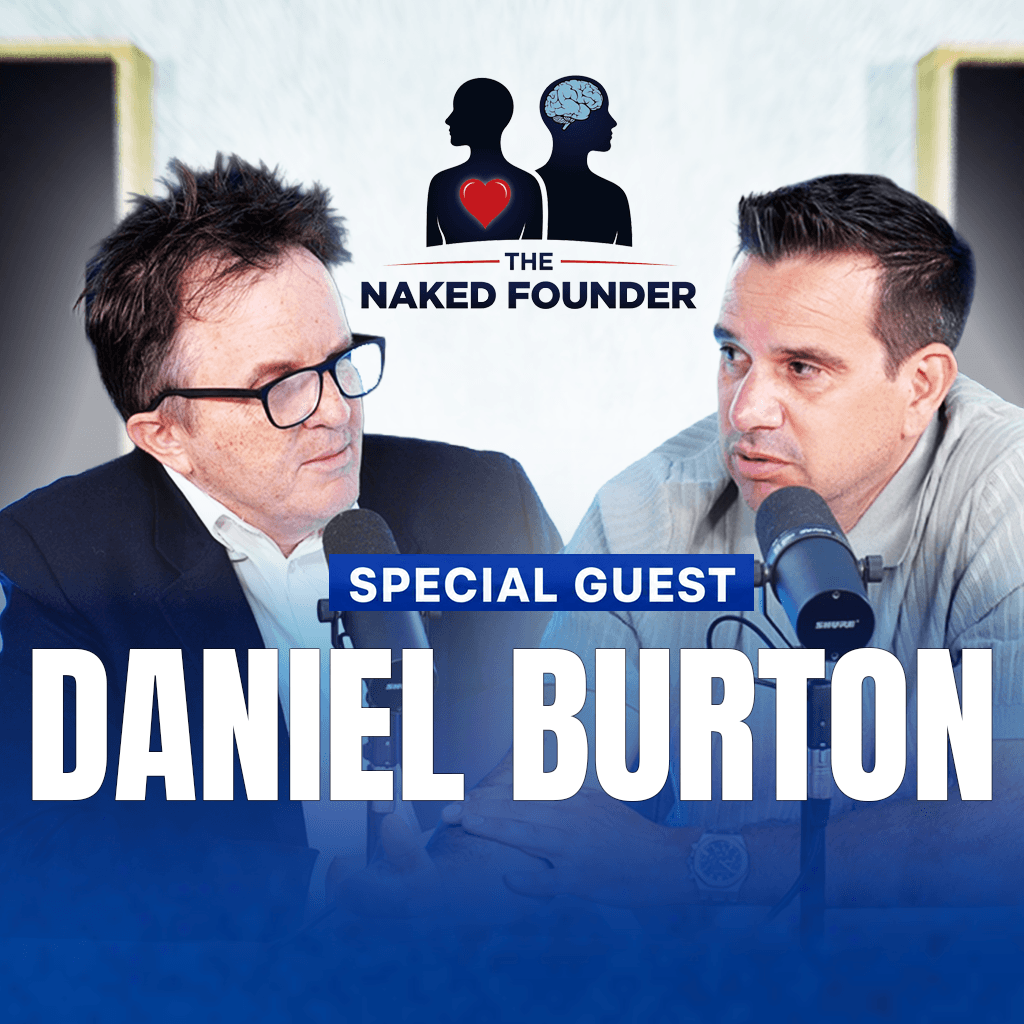
Episode topic: Daniel Burton, CEO of Wonderwall Group, discusses building an “intelligent home” platform and how his daughter Ella (age 9) launched a tech business after he challenged her to build a £300 hairdryer herself. He also explains Wonderwall’s pivot from housebuilder-focused smart-home automation to direct-to-consumer “energy-as-a-service” using home battery storage, off-peak energy control, and net-zero heating tech.
Guest backgrounds
Daniel left school at 16 repairing welding equipment near Preston, then learned business fundamentals in software. He previously built electronics-in-wallpaper tech (Wi‑Fi antennas, switches, sensors).
Key claims
Wonderwall controls heating, lighting, security, voice, and music; uses ~20,000 data points; saves ~£1,500/year; installs a 12.8kW battery “for free” with ~£35/month subscription; reduces ~2 tons CO2/property/year.
Notable examples
Ella’s Myoni.com hairdryer research at Currys, spec + pre-production units; Wonderwall’s net-zero homes launched ~2023; battery charging at ~7p/kWh vs ~28p/kWh.
Guests
Daniel Burton only.
Written by AI. May contain mistakes. Listen to the episode to check what was said.
Chapters
Tap a time to open that second in VOThe Challenges of Sole Entrepreneurship
0:45 to 2:36
Daniel discusses the loneliness of being a sole founder and the importance of having a co-founder.
“What didn't they tell you about founding a business that you'd wish you'd known?”
Ella's Entrepreneurial Journey
2:36 to 4:10
Daniel shares how his daughter Ella launched her own tech business at age nine.
“So we started off like any company ever does, is that you start by doing research.”
Building Myoni: The Process
4:10 to 6:05
A detailed look at how Ella developed her hairdryer business from idea to prototype.
“You left school at 16 to work near Preston, near to where I live, actually, repairing welding equipment.”
The Philosophy of Tough Love in Parenting
6:05 to 7:58
Daniel discusses his approach to parenting and teaching children to be self-sufficient.
“And I just thought to myself, there has to be a better way to do this.”
Daniel's Early Career and Vision
7:58 to 9:56
Daniel reflects on his early jobs and how they shaped his business acumen.
“I was printing light switches into the back of wallpaper and I was printing sensors into wallpaper to work out if my nan fell over and she couldn't get out the wallpaper would alert me.”
The Birth of Wonderwall
9:56 to 11:46
Daniel describes the inception of Wonderwall and the concept behind smart home technology.
Creating the Intelligent Home
11:46 to 13:46
Discussion of the vision for Wonderwall as an intelligent home automation platform.
Market Challenges and Future Directions
13:46 to 14:00
Daniel explains the challenges faced in the market and the vision for the future of energy-efficient homes.
Challenges in the Energy Sector
14:00 to 15:17
Learn about the challenges Daniel faced with gas boilers and market demands.
“What they don't want is they don't want to pay for items within that home that in essence give the customer a benefit because fundamentally they're losing margin and it's the customer that's actually gaining the margin.”
Pivoting to Energy-as-a-Service
15:17 to 16:42
Discover how Daniel pivoted his business to provide energy solutions directly to consumers.
Show all 14 chapters
Financial Strategy and Growth
16:42 to 18:06
Explore the financial strategies Daniel implemented to grow his business.
“I think AI is putting a stop to certainly trimming valuations in the SaaS space.”
The Founder’s Journey
18:06 to 19:33
Understand the emotional ups and downs of being a founder and the importance of resilience.
“And then if you need to tap into it, there's another£90 million there as well.”
Lessons from Family Entrepreneurship
19:33 to 22:28
Hear a personal story about Daniel's daughter's entrepreneurial spirit and lessons learned.
“No matter how bad things get, I just keep picking myself up and keep moving forward.”
Advice for New Founders
22:28 to 23:09
Gain insights into essential advice for new founders regarding resilience and belief.
Transcript
Automatic transcript. May contain errors.0:00Daniel Burton:Welcome everyone to the latest episode of The Naked Founder, the podcast where nothing is hidden. Thank you to our sponsors Financial, the home of money for women and our producer Dan Brown of Renowned. Our guest today is Daniel Burton, CEO of energy home tech firm Wonderwall Group. He got his first job at 16 repairing welding machines before getting into software. Eventually, he launched an advanced home automation system called Wonderwall, which changes the way that we interact with our homes. A proud father of two, when his daughter Ella asked for a£300 hairdryer, he told her to make her own, so she launched her own company at the tender age of nine.
0:36Daniel Burton:Let's meet Daniel Burton. Hello. Morning, Chris. Okay, listen, we're going to do a deep dive, but before we do, we start every episode of the Naked Founder podcast with the same question. What didn't they tell you about founding a business that you'd wish you'd known?
0:51Ella Burton:Jesus, that's probably a lot. I suppose probably the difficult part about being a sole founder is probably doing it all yourself. You are pretty lonely. You've got a lot to deal with yourself and you don't have anybody to share it with. So probably if I did it again, I'd probably have a co-founder.
1:10Daniel Burton:Yeah, a lot of people talk about the benefits of going on their own or doing it as a co-founder. I mean, I've got a business partner as well, which means that you share the best bits with them. And also when things aren't so good, you can speak to them as well. And everyone expects you to have the answer, don't they? They hope you have the answer, but sometimes you don't. So sometimes you have to just roll with it. Absolutely. I'm going to take you into your home life. We were talking before the episode and you mentioned your daughter. And I thought I must ask this at the start. So you've got two children and you've got a nine year old daughter called Ella.
1:41Daniel Burton:She's just launched her own tech business called Myoni.com. She asked you for a 300 pound hairdryer. You probably guessed the brand. And like any good parent, you said, make your own. What happened next?
1:58Ella Burton:Well, to be honest, Chris, I know I've been building technologies for many, many years. And I know what a product costs and what a product doesn't cost. And there's no way on this earth that a hairdryer should cost£300. So that was my response to my daughter's when she wanted a£300 hairdryer. It says, go and build one yourself. And that's how the journey started for her.
2:20Daniel Burton:Yeah, just explain that to me because, I mean, I looked at the website, myoni.com, and it's really impressive. I mean, I think you source the manufacturing in China, but she is the driving force behind it. And I think your hair dryers cost a lot less than£300.
2:36Ella Burton:Yeah, well, this was part of it. So we started off like any company ever does, is that you start by doing research. So I took her down to Curry's. She played with all the different hair dryers. She looked at what she liked, what she didn't like, and she put pros and cons against a piece of paper that she was writing against. And she she actually got to the point where she said, right, OK, this is what I want a hairdryer to do. So so after that, she has she built a specification of what she wanted to do. And then she got a designer in to start designing it. So that was the first start of it. And then obviously, once she's designed it, then it's a case of, OK, let's go and build some pre-production units.
3:18Ella Burton:and get it out to her friends and family and see how it performs.
3:22Daniel Burton:A lot of people might say that's tough parenting. I think it's really good parenting because what you've given her is your time and your expertise. AO founder John Roberts famously quoted as saying that he wouldn't leave any of his fortune to his five children as well. Do you subscribe to the theory that kids need to learn the hard way rather than being given handouts?
3:39Ella Burton:I completely agree. At the end of the day, I would always want my children to stand on their own two feet. I don't believe that you should provide everything for them. And that realistically where the conversation come around a hairdryer because kids' school fees are getting more expensive. So I said, well, let's go and find a way for you to actually pay for your own school fees. So that was how the journey started.
4:00Daniel Burton:Yeah, I mean, obviously, if you're listening to this, Ella, in a few years time, I'll probably want you on the Naked Founder podcast and you can spill the beans on your dad. I'm going to take you back a bit, talk about your story. You left school at 16 to work near Preston, near to where I live, actually, repairing welding equipment. Would it be fair to say, Daniel, that as a young as a youngster, you're more of a visionary than an academic?
4:21Ella Burton:Completely. Yeah, I never was very good at school, if I'm being brutally honest. My sort of my mind went away from from doing work and focus on other things. And yeah, but I learned a lot. I learned a lot when I left school at 16. But part of the job that I had and the company I went to work for, the guy actually taught me actually how to run a business. And that was sort of the real start of my journey around building companies was actually really understanding what it meant to buy a product, sell a product, margin, all the kind of things that you actually have to understand to actually build a business.
4:58Ella Burton:I got taught that at quite a young age.
5:00Daniel Burton:Were you entrepreneurial as a school kid?
5:04Ella Burton:Probably not. I never, you hear these stories about people starting up tuck shops and selling suites and selling things at school. That wasn't really me. I just knew I was wired differently.
5:19Daniel Burton:Do you think schools cater for people who are wired differently?
5:22Ella Burton:No, not at all. No, because schools have a structure about what they have to follow. And I see it from my perspective. You see kids that actually have this entrepreneurial, visionary type mindset. set and and they do stand out and they don't conform to the normal structure that a school gives them so they they sort of what actually normally happens is that they have a drop out of school and they they end up being very very successful but uh some some people just don't
5:56Daniel Burton:follow that structure i find it fascinating how many entrepreneurs and founders i've spoken to who weren't particularly academically gifted but had something in them that was different and in the end because of that they went out and uh you know they spread their wings and the rest is history okay let's take it back to wonderwall obviously you worked your way up you worked in software for quite a few years what was the idea for wonderwall where did it come from and when
6:19Ella Burton:did you launch the business uh well wonderwall the idea was probably end of probably 2014 uh beginning of 2015 so i was researching electronics i just sold a company and i was researching electronics and part of that I looked at I loved smart home technology the likes of Nest and Google that Google bought back in the day and I looked at all this technology and I wanted to have this technology in my home but the real issue is that it was so disjointed you had everybody doing certain parts of the solution and it was frustrating because all they were doing was making Can your mobile phone be a device to turn on different devices within the home?
7:04Ella Burton:And I just thought to myself, there has to be a better way to do this. So that's where I started out on that journey. And that's how the whole vision around Wonderwall started, because we didn't want to be another go to your mobile to turn a device on and off. We wanted to create a home that actually controlled itself, which in essence was the intelligent home.
7:24Daniel Burton:Every business has to come up with a point where they devise a name. I think Wonderwall, it's a brilliant name. And obviously it plays into the whole Oasis backstory as well. Where did the name Wonderwall come from?
7:39Ella Burton:Well, everybody says you're a Manchester-based company. You must love Oasis. But unfortunately, that wasn't the case. My previous company before Wonderwall, I built some technology where I put electronics into wallpaper. So I was printing Wi-Fi antennas into the back of wallpaper. I was printing light switches into the back of wallpaper and I was printing sensors into wallpaper to work out if my nan fell over and she couldn't get out the wallpaper would alert me. And that's where the name Wonderwall come from. We were actually giving the walls a job to do and making them wonderful.
8:13Daniel Burton:Yeah, it's just a great story. It's one that everyone remembers as well. So you launched Wonderwall. One of the things I remember about you, because we've known each other for quite a long time, was that I hosted a roundtable more than 10 years ago and you were on that roundtable. and there was a panel of businesses around the room, mainly from the property sector as well. And you explained your vision for Wonderwall. And like I say, it was like it's a brain on the wall that basically ran the entire house. And I still remember everybody in the room being like, you know, open mouth at the ambition as well.
8:45Daniel Burton:What was the ambition back then with Wonderwall? What are you trying to achieve?
8:50Ella Burton:The vision right from the beginning was to create the intelligent home. So realistically, a home automation platform that controlled like heating, lighting, security, safety, voice control and music. So realistically, that was our first vision around what Wanderl was. We achieved that by probably 2019. We obviously designed hardware. We manufactured hardware. We got a product out into the field in probably late 2019 was when we actually hit our first goal.
9:22Daniel Burton:I mean one of the things I remember as well is the way you described it you said look she said um what happens in in um in UK homes and homes all around the world is that you come and you turn the heating on and the heating and the radiators come on in every room and um you'll turn the light on upstairs in the bedroom but then you'll leave the bedroom and come downstairs and you'll watch television but you've forgotten you've turned the light on so what you need is an intelligent system that basically heats the room that you're in as opposed to wasting energy on all the rooms and make sure that when you're not in the room the uh the light goes off i mean basics really and that's how you sort of described it and i still remember it now is that an accurate
10:00Ella Burton:summary of what you were trying to achieve back then it was yeah yeah what we realized is that once we built the home automation platform uh we had no option but to start building heating technology because if we wanted to have full control over them and being able to control heating in each individual room then we had to build the technology build the technology itself so that's when we started building heating technology we started building infrared heating direct electric heating and now we have a an air source heat pump as well there's a big drive
10:32Daniel Burton:towards creating like net zero going net zero effectively you're trying to create net zero
10:37Ella Burton:homes aren't you oh yeah we built net zero homes we launched our first net zero homes probably in
10:43Daniel Burton:about 2023 yeah and you rely on 20 000 data points is that right yeah so we're learning about how
10:51Ella Burton:the home performs how you use your home and then just intelligently controlling it based on occupancy when you're home when you're not home what rooms you spend in spend time in when you don't spend time in but also most importantly how the price of energy fluctuates during the day so we only want to use energy on off peak so when energy drops to its lowest point we're going to store energy within the assets to actually power that home on low cost energy rather than using
11:20Daniel Burton:high cost energy you turn the dishwasher on when the energy is at its lowest cost
11:24Ella Burton:in a way but we control the most important parts which is how we charge your car how you heat the
11:31Daniel Burton:home how you heat hot water things like that okay um there used to be a tv program lloyd grossman through the keyhole so if i went through your keyhole daniel and i stepped into your house
11:40Ella Burton:what intelligent home tech would i see in your house ah well uh i i've got probably a 75 kilowatt of battery storage i've got heat pump i've got battery storage is that like a like a generator how does that work no battery storage we developed battery storage uh probably about four years ago with a with a company called catl one of the largest battery manufacturers in the world so we created a uh in essence a uh an all-in-one battery so a stackable battery that you put within the home which connects to the electricity grid but it's a very similar battery to what you have in an ev charger and in an ev car so an ev car will have a battery and all we're doing is rather than you charging your ev car up to power that car to run a certain amount of miles what we're doing is we're charging a battery up within the home to power that home on low cost energy so during the evening we charge it at seven pence a kilowatt we store energy within the battery and then any energy that's used during that house during that day is powered from low cost energy
12:43Daniel Burton:so you turn the light switch on you're not plugged into national grid you're plugged into your
12:47Ella Burton:um your battery we are still plugged into the national grid but we are we are powering off
12:53Daniel Burton:the battery rather than the grid and what else have you got in your home in terms of because you live breathe and eat your own company wonderwall yeah so um i'm not angling for an invite to your
13:05Ella Burton:house but i would love to see this i've got a 32 solar panels yeah i've got 75 kilowatt battery storage two ev chargers uh um air source heat pump uh hot water cylinder all electric um and our full home automation platform built into that yeah and then in terms of the technology clearly
Read the full transcript
13:24Daniel Burton:you benefit from that but obviously your customers benefit from that as well how much can you you know how much do people save in terms of their energy bills with your technology on our uh we've
13:34Ella Burton:got thousands of homes already in the field at the moment and off the data that we have and we have a comprehensive data set we're saving on average around 1500 pounds uh from a from a consumer's perspective and that's a year that's a year okay um when you first came up with the
13:51Daniel Burton:concept of Wonderwall and when you took part in that round table back in the day the vision was pretty simple really that house builders would love this every time they build a new home they would install a Wonderwall a brain into the business into the into the house to save the homeowner a lot of money as well and the talk at the time was that there was a big push towards phasing out gas boilers in new build properties so it looked like a win-win never really happened did it just explain the problem that you encountered and then we'll talk about the pivot
14:21Ella Burton:yeah i think it's probably uh understanding your client base understanding what their drivers are because there is two sides to this is that uh gas boilers were due to be banned in new builds going back two or three years ago the legislation only has just been announced last month so gas boilers will start to get banned from 2027 going forwards so in essence the market wasn't there because realistically when you understand the house builders is that fundamentally they want to build a house as low cost as possible and make as much margin as possible. What they don't want is they don't want to pay for items within that home that in essence give the customer a benefit because fundamentally they're losing margin and it's the customer that's actually gaining the margin.
15:10Daniel Burton:So the home buyers never signed up like you thought they would so you had to pivot the business didn't you as well just tell us what you did yeah we've we've obviously we're obviously
15:17Ella Burton:still uh working a lot with a lot of the major house builders we supply different components into house builders like ev chargers batteries heat pumps things like that but um we we did actually pivot uh because we one of the things that we have chris is we've got some really good technology we've built technology for the last 10 years and we've got some really advanced technology so we thought how can we actually use this technology to benefit direct consumers so what we did is we took our battery our battery solution and we built a a solution out to provide a all-in-one 12.8 kilowatt battery into a consumer's home for free so we would come install it into chris mcguire's home for free and what we do then is that that battery will use an ev or off-peak type tariff and it would charge up that battery on off-peak energy so in essence it would charge up at seven pence a kilowatt and then rather than you paying 28 pence a kilowatt you're paying seven pence a kilowatt so in essence you pay us 35 pound a month for that service but in essence the battery will save you around 81 pounds a month in your energy bill and that's
16:23Daniel Burton:from the from from day one you're all over your numbers aren't you i try to be yeah absolutely i think that's one of the things that founders have to be as well um the way you're talking there i I mean, companies in the tech space, the really ones that got the most multiples and made the most money were quite often SaaS-based businesses, software-as-a-service businesses. I think AI is putting a stop to certainly trimming valuations in the SaaS space. Your business sounds like an energy-as-a-service business, does it? Is that fair?
16:51Ella Burton:Yeah, that's great. Energy-as-a-service. So all we're doing is we're controlling different devices and using low-cost energy to power the home. So that's exactly what we're doing.
17:01Daniel Burton:Yeah, so just describe the way that works. so Chris McGuire's sitting in his little house somewhere in the northwest and I want an EV charging point I want solar panels I want heat pumps I want things to my home do I look on your website and a bit like the HSS like the high service shops as well do I just scroll down there and say I want that, I can't afford to buy it you install it and then you charge me a monthly subscription fee yeah that's correct
17:28Ella Burton:exactly right so you'll go on And what we always realize is that there's a lot of people that need to save money on their energy bills because it's a large bill, but they can't always afford the capital outlay of paying for this hardware. So what we try and build is a solution where, in essence, we can fund that capital outlay for them. And the asset is being paid off by the energy savings. That's the goal, because fundamentally, if you can save£81 and your subscription is£35, well, you're going to be£600,£500 better off every year. So we just want to put money into people's pockets that really need it.
18:05Daniel Burton:I think you secured a£100 million lending facility, I think in two tranches of, say,£10 million. And then if you need to tap into it, there's another£90 million there as well. Like I say, you've raised£40 million, you've hit 4.6 turnover. How many people do you employ in a business and what's the long-term vision?
18:22Ella Burton:We have about 22 people in the business at the moment. We're investing heavily in AI to reduce the amount of people that we actually need to recruit over the coming years. But we also have a technical team, which is outsourced. We have about 10 people offshore.
18:40Daniel Burton:What's the hardest part for you, Daniel, about being a founder?
18:45Ella Burton:Well, the ups and downs. Being a founder is a bit like a roller coaster. You go through some good times, you go through some bad times. But I think the nice part of what I do is fundamentally I always had this goal is that if I left this planet not having a positive impact on it, then I felt that I failed. But Wonderwall gives me that. Wonderwall gives me the ability to actually put money into people's pockets, save the planet by reducing carbon. We save about two tons of carbon per property per year. So we're actually doing something good. And that's what keeps me driven, keeps me pushing forward.
19:21Ella Burton:Even through difficult times, it keeps me moving forward because it's not easy. And building technology, building hardware is never easy. Building a business is never easy. But one of the things that you'll find for me, Chris, is that I've got a never-say-die attitude. No matter how bad things get, I just keep picking myself up and keep moving forward.
19:42Daniel Burton:Have there been times over the last decade or so that you've thought about jacking it all in?
19:46Ella Burton:uh no uh i've never i've been through some difficult times and at them times do you doubt yourself sometimes but but for me is that there's always going to be a solution there'll always be a way out and i will always look for the positive rather than looking at the negative so and that's
20:05Daniel Burton:what keeps me moving forward i always subscribe to the theory that if you don't help at least one person every day you've failed in your life and also what my parents taught me you know you want to leave the world a better place than you found it and i think if everybody adopted that principle the world would be a better place um we always um we always end with the same question as well and i was just thinking if if things didn't end well with wonderful and i'm absolutely sure they will you've got the safety net of being able to work for your daughter ella's business as well um what role would you take on in ella's business well i don't know what she'll let me take over she
20:40Ella Burton:I might have to be like a CTO technical director or something like that because she is the CEO. She's I think she's actually been going on a on a founder's podcast at the age of nine. Quite quite soon, actually, she's been invited onto a founder's podcast. So let's let's hope she can drive the business quicker than I've driven mine.
20:59Daniel Burton:My youngest daughter, she's like 23 now. But when she was about 11, she started making corner bookmarks. She identified an opportunity in the school where kids were putting anything into their book as a bookmark. so what she did is she basically created characters from like Disney movies if you're listening Disney I'm not sure she had the necessary licensing but the business longer exists and she was charging people 5p and 10p and it had little goggle eyes as well so they'd move around when the book moved about and then she said to me she said dad she said you host business events don't you and I said yeah I do she said right I want you to sell my corner bookmarks and I said what shall I what shall I charge people and he said see what they want to pay and I said all right then and there was a guy I remember the first one that I sold was for Paul Gouge he was a lovely guy and he run at the time a business called Playdemic he's got a new business now called Four Star and it sold I think to Warner Brothers to like I think I think billions in the end and he I think he just done a deal and he said I love what image of my daughter is doing here's 20 quid and I went back to my daughter and I gave her about 60 odd quid from the night and she said right i've decided i'm going to sack off my school market and you can become my official salesperson unpaid i hasten to add as well but it's just a really really good lesson that she learned at a really early age of you know directing her efforts where the most money was as well um like the naked founder podcast always ends with the same question and there's a tradition in the u.s where outgoing presidents write a letter to their successor if you were writing a letter of advice to yourself or a founder on day one what would you say Daniel
22:37Ella Burton:where do you start it's uh I think you have to really understand that it's never even it's never easy it's never going to be straightforward uh there is going to be some real difficult times and you'll have some good times uh there's no doubt about that but you've got to take the rough with the smooth and don't expect it to run smoothly because it doesn't yeah so the key words is it is it resilience or perseverance both uh you have to have both in this world uh and you have to you always have to believe you always have to believe you always have to believe because as soon as you lose belief in yourself then it all falls apart yeah i couldn't agree more couldn't
23:14Daniel Burton:agree more massive thank you to you daniel burn that's all for this episode of the naked founder podcast if you like the naked founder podcast do tell your friends and family to subscribe and give it a five star rating it really does help with the algorithms thank you very much to financial for sponsoring it and to dan brown our producer if you like the naked founder podcast spread the word my name as always is chris mcguire
From the publisher
When Daniel Burton’s nine-year-old daughter Ella asked for a £300 hairdryer, his response was simple: ‘Build your own.’
Burton is the guest on the season one finale of The Naked Founder podcast, where he explains why it’s vital that children understand the value of money.
That conversation with his daughter ultimately led to the launch of IONI, an independent British technology business created to design and manufacture high-end consumer electronics that are affordable and accessible to all.
In this episode of The Naked Founder, Burton also talks about:
- His mission to change the world of smart home technology;
- Living in his own sustainable smart home;
- Why he’ll never quit; and
- The loneliness of being a sole founder.
The Naked Founder is sponsored by Financielle – The Home of Money for Women – and produced by Dan Brown at Renowned.
Chapters
00:00 – Intro & Meet Daniel Burton 00:50 – The Question We Always Ask 01:29 – Ella's Story: Build Your Own Hairdryer 03:22 – Tough Love & Kids Standing on Their Own 04:00 – Leaving School at 16 05:04 – Are Schools Built for Entrepreneurs? 06:20 – The Idea Behind Wondrwall 07:24 – Where the Name Wondrwall came From 08:13 – The Original Vision: An Intelligent Home 09:22 – Heating Only the Room You're In 10:32 – Building Net Zero Homes 11:33 – Inside Daniel's Own Smart Home 13:22 – How Much Customers Save 13:48 – The Gas Boiler Ban That Never Came 15:10 – The Pivot: Energy as a Service 16:51 – How the Subscription Model Works 18:05 – Funding, Revenue & Headcount 18:45 – The Hardest Part of Being a Founder 19:47 – Doubt, Difficult Times & Staying the Course 20:06 – A Backup Job 22:36 – Final Advice to Founders