In short
Dez Derry’s journey from childhood foster care and adoption to building and exiting Bloom, then finding purpose as a charity ambassador for adoption and fostering.
Guest backgrounds
Dez Derry (born 1982 in the Midlands to an Indian Sikh family; eldest of three brothers). After years of physical/mental abuse, social services placed him in foster care at age four; at eight, he and his brothers were adopted by Chris and Al, a working-class white British couple who fostered/adopted multiple children. He later founded MMA Digital (2012) and Bloom (2016), then became an investor and philanthropist.
Key claims
Dreaming and daily visualization built resilience; financial modeling and surrounding yourself with financial skills matter. Trauma and work ethic shaped his grit. After exiting at 40, identity/purpose shifted to charity work.
Notable examples
Adoption Matters’ impact after his BBC appearance (reported ~150% increase in inquiries). Helping Afghan refugee Adnan Mikhail via a car donation that enabled his cricket dream on “Field of Dreams,” plus scholarship/play for Lancashire. Investments mentioned: Travel Scene, LeBlanc, Fight Division; new “Escapism” electronic-music daytime events for older crowds.
Written by AI. May contain mistakes. Listen to the episode to check what was said.
Chapters
Tap a time to open that second in VODez Derry's Early Life
0:10 to 0:46
Exploration of Dez's challenging childhood and adoption journey.
“We're looking forward to speaking to our guest today.”
Dreaming Big in Business
0:46 to 2:18
Dez shares his thoughts on dreaming and financial planning in business.
“Absolutely I've done that big build-up and you've spoken as that's a soft voice as well.”
Facing Trauma and Building Resilience
2:18 to 3:24
Discussion on how Dez's difficult upbringing shaped his resilience.
“I've always been someone that's visualised and dreamed about goals.”
Adoption and Family Dynamics
3:24 to 5:00
Dez discusses his adoption by a white British family and its impact.
“Yeah, so out of the darkness came some light in a big, big way as well.”
From Nail Varnish to Sales Success
5:00 to 7:16
Dez recounts his early career selling nail varnish and key lessons learned.
“I took a day off work, brought a suit, had my day in a suit.”
Launching MMA Digital and Bloom
7:16 to 9:49
The journey of launching his digital marketing business and its growth.
“One of the things about you Des is that you're always very grateful aren't you?”
The Emotional Side of Exiting Bloom
9:49 to 12:12
Dez talks about the emotional journey of selling his business.
“You were obviously beg, borrowing and stealing to grow that business as well, which couldn't have been easy.”
Finding Purpose as a Charity Ambassador
12:12 to 14:00
Dez shares his transition to becoming a charity ambassador.
“And then, you know, I did ticked a load of things off the bucket list, spent time with family and friends.”
Reflecting on the Past
14:00 to 15:12
Des shares his emotional experiences speaking publicly about his foster care history.
“Yeah, and because had that something, had you considered that?”
Advocacy for Adoption
15:12 to 17:08
Des discusses his role as a charity ambassador for adoption and the importance of awareness.
Show all 15 chapters
Life-Changing Acts of Kindness
17:08 to 19:42
Des recounts his experience helping a young cricket talent by providing a car.
“They brought him into their home and they gave him a chance, much like Chris and Al gave you a chance as well.”
Investing with Purpose
19:42 to 21:50
Des talks about his recent business ventures and investments aligned with personal values.
“So in addition to the work you've done in terms of, you know, supporting care and foster charities as well, earlier this year you exited Fletcher's Group after a three-year partnership.”
Launching a New Venture
21:50 to 23:11
Des introduces his new company focused on daytime electronic music events for older crowds.
“Exactly that in a safe environment so hope you're there.”
Family and Loss
23:11 to 24:46
Des reflects on the impact of family loss and the enduring bond with his adoptive parents.
“We started by talking about your amazing parents.”
Advice to Aspiring Founders
24:46 to 27:33
Des shares motivational advice on dreaming big and visualizing success.
“Because what happens when you're ripped out of your home and taken into care, you leave with nothing and wherever you end up, you turn up with nothing.”
Transcript
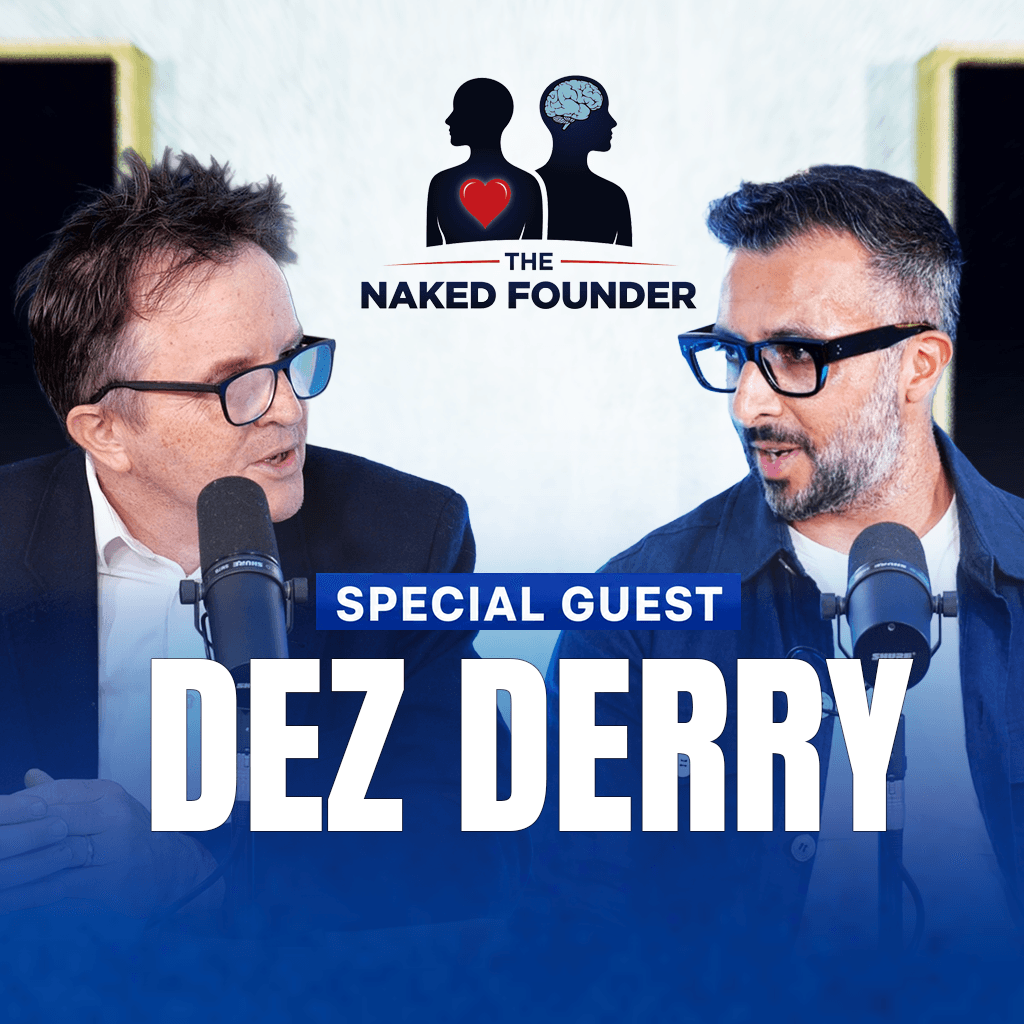
Automatic transcript. May contain errors.0:00Welcome everyone to the latest episode of the Naked Founder podcast, a business podcast where nothing is hidden. Thanks to our sponsors, Financial, the home of money for women, and our producer Dan Brown of Renowned. We're looking forward to speaking to our guest today. It's Dez Derry, exited founder of Bloom. Dez's story began when he was born into a traditional Indian family in the Midlands in 1982. He was the eldest of three brothers. Social services stepped in after he suffered years of physical abuse and he went into foster care at the age of four. However, he said his prayers were answered when he and his two brothers were adopted by a loving white family when he was eight.
0:33That changed the direction of his life. He thought he had it all when he sold bloom and retired at the age of 40 But he realized something was missing and that's when he found it was to become a charity ambassador for adoption matters and foster care matters Because of his own experiences in the care system He said it was a game-changer when Afghan refugee Adnan Mikkel shot to fame on the Freddie Flintoff fielded dreams TV show he needed a car to fulfill his dream to play cricket but didn't have one until Des stepped in to provide the car a big Naked Founder welcome to Des Derry. Morning Chris thank you.
1:08Dez Derry:Absolutely I've done that big build-up and you've spoken as that's a soft voice as well. Des we always start every episode of the Naked Founder podcast with the same question what didn't they tell you about founding a business that you wish you'd known at the start? Well thanks for having me a really cool setup. Yeah, I was thinking about this and actually I think the thing that I did do, which people said you shouldn't do, was to dream. And dream, I would say, I'd encourage it. The second thing I would say is the numbers. And I didn't know till further down the line that getting to know the numbers, financial modelling and having a financial plan is really key.
1:52Dez Derry:But visualise those dreams on a daily basis. The second one is get get someone around you with good financial skills. You're all about vision though aren't you and vision boards you believe in being able to see your path. Yeah it's been for me on paper I shouldn't be sat here today and for me having dreams visualising dreams have been the things that have got me through the dark times have been the things that have given me the resilience and the chase. And, yeah, I've never been academic. I've always been someone that's visualised and dreamed about goals. You mentioned the dark times, Des. Just tell us about your very difficult childhood.
2:32Dez Derry:Yes, I had a tough start. I was born into an Indian Sikh family. My parents were split up. I was born in Warsaw Manor Hospital. and quite early on I suffered a lot suffered a lot of physical and mental abuse which ended up with social services being called and stepping in and I bounced around in the care system a few foster homes yeah you've sort of as you tend to do you've sort of underplayed it it was it was pretty rough when you had two brothers as well um and it was it was rough for all three of you wasn't it? Yeah, so I'm the oldest and yeah, I mean, it got really, really dark. I mean, when all three of us eventually got taken into my mum and dad's house, who we'll talk about in a second, that adopted us, it was a police intervention and it was bad.
3:23Dez Derry:Yeah, it was really bad. Yeah, so out of the darkness came some light in a big, big way as well. So you were an Indian heritage family. You were adopted by a white British family in the Midlands, which was completely almost exclusively unheard of back then in the UK in the 90s, in the 1990s. You managed to keep your family together in terms of your siblings as well. You consider it to be one of the luckiest things that ever happened to you. Yeah, I mean, it was never the plan either. So Chris and our mom and dad fostered kids. They've got two of their own biological kids. When we moved in, there was already another foster child there, and it was meant to be a temporary measure.
4:01Dez Derry:and over a period of time social services were struggling to find an indian seek family that would take on three boys um obviously that's quite a big undertaking and they went to uh chris and al and said look we're gonna have to split them up because we just can't find a family same color same religion that will take on three boys and i think you know chris and al had obviously got quite attached to us and they were scared that we would never see each other again so they asked social services are there any other options and bearing in mind chris and al are a working class couple an ex-council house on one of the biggest council estates in the midlands and um you know terrace house really small and social service said look the only thing you can try and do it's not been done before there's a number of hurdles uh it's going to be tough because your age and you know financial situation but you could try and adopt the boys and that's exactly what chris and did um and we're going to talk about that but um money was always tight there's plenty love in that house you experienced your fair share of racism as well and um do you think that that difficulties and those difficulties that you faced and the racism everything do you think it shaped you and built that resilience that actually served you in good stead when you became an entrepreneur i think when i meet other entrepreneurs and i think there seems to be something quite common which is if you've experienced trauma at certain parts of your life or early on in your life it gives you resilience and it certainly for me i think it's given me resilience coupled with dad works in a concrete factory on 15 grand a year bringing up five kids and the work ethic i never remember him having a day off work and the job broke him so i think coupled with that and the work ethic that was instilled none of us are academic none of us have been to university we just worked really really hard and they were manual blue collar workers and yeah that gave me the drive I think.
5:56I'm going to talk about your amazing family again later in this episode of the Naked Fan podcast but your big break in your career came when you started selling nail varnish of all things and you turned out to be quite good. What did that teach you?
6:11Dez Derry:Yeah so I remember it well so I was in the warehouse picking and packing parcels which was beauty products predominantly now varnish and I plucked up the courage to catch Sarah North who was the sales manager who was thankfully um you know upset like a smoker uh compulsive not compulsive um smoker frequent smoker in and out and encouraged her to give me an interview for a sales role got the job and I think because that was seen as a step up for you wasn't it it never happened in that business before and I had no previous experience selling beauty products you just saw something in me. I took a day off work, brought a suit, had my day in a suit.
6:48Dez Derry:First time in a suit? First time in a suit. First time in a suit. And I think when I got the job, I was extremely grateful, felt extremely lucky, and I didn't want to lose it. And I was the fear of, wow, this is a massive break in my life. And I could go back to mom and dad and say, look, I'm in a suit. They gave me a company car and I'm on the M6 with my A to Zs in the booth running up down the country selling nail varnish but you know it was it was a really really happy moment for me. One of the things about you Des is that you're always very grateful aren't you? So when things happen to you even bad things sometimes you don't dwell on the bad things but you're grateful for all the good things as well so you became a nail varnish salesman and you turned out to be bloody good didn't you?
7:31Dez Derry:Yeah I mean quite quickly I was the top performer within the business and even the like the owners of the company were like wow we've never seen anything like this before that's the only thing on the spot now right okay just imagine i'm a potential customer and you're trying to sell nail varnish to me how would you sell it to me what was your secret sauce uh so i was b2b sort of selling into wholesalers and it was always around demoing the product getting training classes set up um showing them where the positioning would be counting the stock to say look you need to add more stock we've got this new range in and relationships you know i I think the big thing for me, I was always good at building relationships and rapport and trust.
8:10Yeah, because I never feel like you're selling. It was like you're just building relationships and the selling comes on the back of it, which is ultimately what successful selling is. So you put up trees selling nail varnish as well. I'm going to sort of fast forward because I think it was 2012 you launched the Digital Marketing Consultancy that became MMA Digital and then Bloom.
8:30Dez Derry:Yeah. Finally, which specializes in finding customer acquisition leads for the legal sector. where did the idea come from yeah so um after i was selling nail varnish i worked for yale group yellow pages had a seven-year stint there did really really well and there was a decline in print advertising people turning to yellow pages looking for businesses so i always had a dream of setting up my own business by a certain age meeting a lot of entrepreneurs and i left yale left all the comforts of a corporate job and all the perks that came with that and then i was in Manchester at that point and I became a digital marketing consultant and me and my partner it was a fag packet name my marketing aid and I was going out to a bunch of SMEs trying to transition them from print onto digital but quite quickly I realized the market was saturated and the people I thought needed my help the most were the law firms in the in the area and the digital agencies in the area were the didn't want to deal with the law firms because of the decision making process how long it took and they felt it was quite a stuffy industry so I thought you know what if I'm going to be big.
9:34Dez Derry:I'm only ever going to be big in a niche. And that was the niche I chose. So you launched that business. Did you have much money when you launched the business? I had no money. I had no money. So, I mean, you know, I had some savings from the previous job. And, you know, it was sort of hand to mouth. But, yeah, it was all self-funded. You were obviously beg, borrowing and stealing to grow that business as well, which couldn't have been easy. How big did Bloom, as we know it now, how big did that become? So MMA Digital, the digital agency, I mean, you know, I was busting a gut and it got to about, you know, million turnover then i pivoted to bloom as you know it now it's north of 30 million turnover 30 million okay so you're very successful how old were you when you started the business that we know as bloom 2016 so i'm 44 now so 10 years ago yeah okay so about 34 years of age so you'd have quite a long if you like apprenticeship to this point so okay you launched bloom and then you eventually decide to sell bloom you were you in your 30s at the time and you actually sold it in three trances as well um what's the reason or was one of the reasons that you sold the fear that you might lose it all because of your upbringing definitely there was two things really so there was the emotional side of the fear and the you know and i think that comes back from childhood trauma there was the wanting to say thank you to my mom and dad and look after them financially in any way that I could and then the second thing goes I really wanted to grow and I was self-funding the company and I wanted to make acquisitions so I spent quite a lot of time doing research to see what private equity wanted from a business to then get growth funding to grow the company and go out and make acquisitions and hire more people.
11:19Yeah so you like I say you had this protracted exit and then at the age of 40 right you're financially independent you've exited Bloom you paid your mortgage offer as well. Life is good. Okay. But you felt as though you'd lost your identity, which I hear from a lot of exited founders as well. Just tell us about your own experiences. Yeah.
11:42Dez Derry:I mean, people said to me before I exited that you're going to lose purpose and identity. And quite frankly, I thought that's bullshit. That's not the case at all. And it was, and it took a bit of time. I pivoted from founder to investor. I made a bunch of investments in high growth companies, SMEs. All successful? Time will tell. Time will tell. One of these doing particularly well, which is, you know, you announced recently Travel Scene, which is now a 55 million turnover group of travel brands run by a very successful founder called Jen Atkinson. And then, you know, I did ticked a load of things off the bucket list, spent time with family and friends.
12:21Dez Derry:And, you know, over the last 12, 18 months, yeah, I have been restless. are then found purpose by becoming a charity ambassador for adoption matters. I've got to talk to you about that because I remember vividly, and I don't know if you remember it, 2024, you spoke at the Fuel event, Business Cloud's Fuel event, and you gave this speech and you spoke about your childhood, your abusive childhood at the time, and your lucky break by being adopted by Chris and Al as well. And no word of a lie, people were crying, people were crying in the audience as well. and I said to you because you weren't sure whether you wanted to do it or not whether you felt anybody be interested in your story and I said to you I said Des I said the one thing I can guarantee is that somebody in the room will come up to you because it will really resonate with them and they've never spoken about it before and a well-known individual in the northwest Manchester scene came up at the end and said that's the first time I've ever heard anybody talk like me about his own story as well and he had tears in his eyes as well and and we went across the road and had a coffee afterwards.
13:25I think I might have paid for it, actually, Des, despite the fact you'd sold Bloom. But I'm beyond that now. But no, and you said to me, you said, I'm paraphrasing, you said that you're at a crossroads in your life and you don't know what to do. And you thought everything would be as you wanted it to be when you had that financial independence. But there was something missing. And I sort of said to you, listen, I said, what's the passion in life? What's the thing that burns brightest? What's the thing that gets your beans jumping? where can you make the best, the biggest change? And you said, I'm passionate about care and the adoption system because of my own experiences.
14:01Do you remember that?
14:02Dez Derry:I do remember that, yeah. Yeah, and because had that something, had you considered that? And then just tell us what happened after that. Well, I remember it well because I think you phoned me the day before the event and said, forget talking about Bloom or what you did there. Let's talk about this that you dug out from somewhere. Yeah. And that's what I tend to do. And it was the first time in a public event like that I'd spoken about the past. And you're right. Somebody did come up to me and that person was in tears. I was nearly in tears. And then lots more other people came to me and I thought, you know what?
14:36Dez Derry:People have been fostered or adopted don't often talk about it because there is a stigma attached to it. And families of adopted kids quite often don't talk about it because in case they're real parents, start looking for them. so between that period and uh christmas actually um i was doing research looking for charities i wanted to get involved with and adoption matters had shared some of the content on on the fuel events and that was it and over christmas that year i decided to um you know raise some money give some money for adoption matters and then one thing led to me another which was me becoming a charity ambassador for adoption and you spoke about it on the bbc yeah you spoke about it on lots of different channels as well yeah what is your message what message do you try and get across is it listen don't let your past define you is it because we will need to encourage more people to become foster parents uh foster parents you know it is it that you know you can change people's lives etc etc is it about being grateful what message do you convey from your own experiences i think probably the one that i'd want people to really think about there'll be people hopefully listening to this and people that were certainly watching me on the BBC that will be sat at home making the tea thinking I'm single I'm from an ethnic background I'm white I can't afford it I want a kid I don't think the system will allow me to have a kid and mum and dad had so many things they had to deal with to adopt the three boys and my message would be it is possible it's hard but if you really want a child regardless of your personal situation there's over 3 000 kids that need adopting today and just think what my mom and dad went through back then to adopt us it is possible and how not financially of course but how rewarding emotionally have you found your work with these charities i mean it it's sort of it's in a different league from the financial success because when you get some of the messages and obviously you know we touched on adnan earlier and meeting baz and elaine and some of the personal messages that i've had um and the response from you know my mom as well you know she's really really proud and yeah it is and i think the biggest one after the bbc interview the data that adoption matters captured with the i think it was 150 increase in people who then contacted them to inquire about fostering and adopted a child and they were like really taken back so was I because it meant you know it was worthwhile it is all worthwhile you mentioned Baz and Elaine and Adnan I mean just for the benefit of our audience um as everyone knows about me I love cricket and I live in Chorley and there was a tv program called Field of Dreams which was hosted by Freddie Flintoff originally from Preston and they the idea behind it was that cricket was seen as quite an elitist sport so Fred wanted to try and open it up to kids from the states who wouldn't normally get exposure to cricket and he two or three series it's done fantastically well it's and they featured a young lad uh called adnan mikhail who was originally from afghanistan as a refugee and he uh he was the star of the show in terms of from a cricket ability point of view i think he's about 19 now and a couple called elaine and Baz, who, wouldn't mind me saying this, are in their later stages of life.
18:05They brought him into their home and they gave him a chance, much like Chris and Al gave you a chance as well. And they transformed his life and he got a scholarship at a Russell school, I think it was, and he's done amazingly well. He's played for Lancashire cricket, second team as well. And then he had a problem where he was travelling more and more and more because of his cricket and Baz was getting older and older and older and he couldn't drive him everywhere. And his cricketing dream was literally hanging by a thread. And I contacted you and I said, look, I know you said you were thinking about helping people.
18:41What's your thoughts? And you said, look, my partner's car, she's going to be changing it fairly soon. Nice little car as well, wasn't it? Now, I think.
18:50Dez Derry:Volkswagen. Volkswagen. I just knew it was quite expensive with the insurance. Lovely car. And you just gave it to him. And it was, I don't know how much it's worth. at least 10 grand. And that got picked up by the media. The BBC featured it as well. But that was a tangible example of actually changing somebody's life. How did that feel for you? Well, I think walking into Baz and Elaine's home, who, you know, for the benefit of the audience, they foster a lot of kids and there were other foster kids there. I mean, they couldn't have been so similar to Chris and Al. And I was just like, wow. So it felt great because not only was it helping Adnan, And it was also saying thank you to Baz and Elaine because without people like that, there'd be people like me that are a bit screwed.
19:35Dez Derry:So, you know, it was great. And they're just amazing sort of the earth people. And actually, that was a beautiful moment. Yeah. So in addition to the work you've done in terms of, you know, supporting care and foster charities as well, earlier this year you exited Fletcher's Group after a three-year partnership. I think you've done a bit of angel investing as well. just tell us about some of the other things you've done say business orientated since you left bloom um in terms of the investments yeah whatever you want to talk about just in terms of because there'll be a lot of founders listening to this who may be thinking about exits and it's what's interesting is how you had to find your how you had to find your calling but also in terms of you can't just leave business behind because entrepreneurs it's in their blood isn't it it's not like a tap that you can turn on and off so just tell us about some of the investing that you've done yeah so the businesses i've invested in are travel scene which we touched on which is luxury travel leblanc which is a cycling experiences company and fight division which is a combat sports platform for up-and-coming athletes from underprivileged backgrounds so i think what i've tried to do and there's it's been you know no strategy behind it but things that i'm passionate about or i've got a personal connection or there's an element of purpose.
20:49Dez Derry:So, you know, travel that I love and I really like Jen. LeBlanc cycling experience is my partner. I absolutely love cycling. And then fight division was, yeah, just helping people who have come from backgrounds like me, who were trying to change their lives and combat sports is potentially an opportunity for them to, you know, move off the estate and have an impact on their lives. What do you look for when you're founded before you invest? for me actually and I'll touch on the new company that I've just just about to launch as well I'm I try and find people that are resilient where they've experienced some tough times and you know and Jen in particular I mean she's been through a lot in her personal life so you know that they've got what it takes to get through the dark moments in business and there's plenty and someone that's got grit in their teeth and obviously the usual stuff you want passion you want industry experience but for me personally what have they been through in their lives because i know that can be the difference between getting to the other side and you touched on it a second ago about your new business music tell us about that another big love of yours yeah so over the last 20 25 years um and maybe it is escaping sometimes trauma from the past but i've always found electronic music uh a way of just clearing my head and being in environments where i don't think about you know business or you know what's happened in my life and i've had some great times and as i've got older and my friends have got older it becomes more and more difficult to get a group together to go out so i formed a company called escapism and it's a daytime experience electronic music event in unique venues we're starting in manchester aiming at an older crowd really creative decor some high profile DJs playing gourmet food and the first event is at Victoria Baths in Manchester and the second event will be in London and the plan is to roll it out to try and create something that's not currently out there.
22:50It sounds like a rave for older people.
22:52Dez Derry:Exactly that in a safe environment so hope you're there. Nice food. No phones on the dance floor either I want people to disconnect from being glued to their phones. Be at home for tea. Be at home for midnight. Yeah absolutely. Half three to half eleven, yeah. Listen, I think somebody never went to a rave in my life. I think I might sign up to that. Please come. That sounds right at my street. Oh, you're on the guest list now. Good news, good news, good news. We started by talking about your amazing parents. And, you know, your biological parents. Have you had any contact with them at all? So my dad died when I was, I think, nine.
23:27Dez Derry:So my biological dad died. My biological mom. So one thing Chris and I were really good at, which they didn't have to do, they never stopped her seeing us and over time i mean she's really poorly she's actually in a like a mental home and she has lots of episodes um so over the years she would just turn up and over the years she now calls my mom sister because it was quite difficult for her in the seat temple environment to have three boys taken away isn't great and the community turned their back on her as well um so yeah you know now it's more you know i pop in every now and again into the care of him i find it quite difficult in all honesty she's not in a great place no um so in terms of your your parents your mom and dad chris and al unfortunately your dad died on boxing day last year and um you know i've spoken about my own dad died two and a half years ago and i was incredibly lucky to have him for as long as i was just tell us about your parents because i know his death had a big impact on you and continues to and your mom as well because you know they're always there aren't they yeah i mean we had a tough christmas so there's the you know there's five three me and my two my biological brothers and then uh debbie and poor mom and dad's um biological kids and you know there's five of us i mean the nice thing was we were in hospital over christmas manor hospital ironically where i was born uh and uh you know when it was coming to it the room that said only two people allowed and there was like 25 people that rocked up because they've got kids and they've got kids and the nurses were fantastic because obviously because they could see like you know with different colored skin and they were like wow there's so much love in this family and we were all you know there for each other um but yeah it was it was a difficult time um i think the kind of people that mom and dad are so mom currently now will be sat at home knitting hundreds of teddies for a charity called buddy bag she then now goes to a factory unit with a bunch of volunteers and packs bags with teddies, pajamas and toothbrushes and anything that a kid needs.
25:34Dez Derry:Because what happens when you're ripped out of your home and taken into care, you leave with nothing and wherever you end up, you turn up with nothing. So these bags are given to those children when they end up in their first foster home situation. That's the kind of people mom and dad are. Yeah, and I don't want to get too deep, but in a sense that Chris and Al never saw the colour of your skin, did they? You know, we live in a world which increasingly feels like getting very judgmental as well. You know, your parents were almost, you know, they were role models. Yeah, and I mean, and they had, you know, as they would, plenty of like dirty looks over time, and they didn't care.
26:18Dez Derry:it didn't bother them and actually you know it's an opportunity for me to say thank you to Debbie and Paul because they never rejected us either mom and dad took on three kids Debbie and Paul treated us like their brothers from day one and you know we've got a great great family okay now that's great um this is the Naked Founder podcast we always end with the same question and there's a tradition in the US where the outgoing president writes a letter to their successor if you're writing a letter of advice to yourself Des or to a founder on day one what would you write the advice would be um what i said at the beginning i think don't be afraid to dream regardless of your background and what people might think about your ambitions and aspirations and then turn those dreams into a vision board and whether that vision board is up in your office in your bedroom bits on your phone have it to remind yourself and visualize what you want your life to look like and what you want to do there's there's been a pleasure having you on the naked founder the podcast that's all for this episode if you've enjoyed it please tell your friends and family to subscribe and give them a five star rating as well that really helps with the algorithms as well thank you to financial for the sponsoring today's episode and also to dan brown our super talented producer that's all for me as always my name is chris mcguire
From the publisher
Dez Derry’s story is one of resilience, ambition and the power of dreaming big.
Born into a traditional Indian family in Walsall in 1982, Derry suffered years of physical abuse before he and his two younger brothers were adopted together by a loving white family.
Derry went on to become a successful entrepreneur, launching the digital marketing consultancy that evolved into customer acquisition specialist Blume and grew to £30m turnover.
But selling the business and being retired at 40 brought an unexpected challenge.
Despite dismissing warnings that he would lose his sense of purpose and identity after exiting, Derry admits that was exactly what happened.
What changed was drawing on his own experiences in the care system and becoming an ambassador for Adoption Matters and Foster Care Matters.
In this episode of The Naked Founder podcast, he also talks about:
· Why, regardless of where you come from, you should never be afraid to dream;
· Giving a car to Afghan refugee, Adnan Miakhel, to help him pursue his cricketing ambitions;
· How his white adoptive parents showed him what true love was;
· How selling nail varnish changed the direction of his career;
· Retiring at 40 and losing his identify; and
· Why he’s determined to use his experiences of the care system to help others.
The Naked Founder is sponsored by Financielle – The Home of Money for Women – and produced by Dan Brown of Renowned.
Dez Derry’s story is one of resilience, ambition and the power of dreaming big.
Born into a traditional Indian family in Walsall in 1982, Derry suffered years of physical abuse before he and his two younger brothers were adopted together by a loving white family.
Derry went on to become a successful entrepreneur, launching the digital marketing consultancy that evolved into customer acquisition specialist Blume and grew to £30m turnover.
But selling the business and being retired at 40 brought an unexpected challenge.
Despite dismissing warnings that he would lose his sense of purpose and identity after exiting, Derry admits that was exactly what happened.
What changed was drawing on his own experiences in the care system and becoming an ambassador for Adoption Matters and Foster Care Matters.
In this episode of The Naked Founder podcast, he also talks about:
· Why, regardless of where you come from, you should never be afraid to dream;
· Giving a car to Afghan refugee, Adnan Miakhel, to help him pursue his cricketing ambitions;
· How his white adoptive parents showed him what true love was;
· How selling nail varnish changed the direction of his career;
· Retiring at 40 and losing his identify; and
· Why he’s determined to use his experiences of the care system to help others.
The Naked Founder is sponsored by Financielle – The Home of Money for Women – and produced by Dan Brown of Renowned.