In short
How 21st-century tools (satellite imaging, sediment mapping, CT scanning, LiDAR, infrared/X-ray field analysis, AI on imaging data) are changing dinosaur fossil hunting—while excavation still relies on traditional field methods like chisels, plaster jacketing, and canoe-based transport in remote sites. It also covers the origin of the word “dinosaur” (Richard Owen, 1830s–1842) and how geology/tephonomy guide where fossils are likely preserved.
Guests and backgrounds
David Norman (paleontologist, Christ College, Cambridge) explains the term’s history and early fossil-hunting context. Phil Manning (University of Manchester) leads high-tech dig-site mapping using ground-based LiDAR and photogrammetry. Christy Curry-Rogers (Macalester College, Minnesota) describes fieldwork in Montana’s Upper Missouri River Breaks National Monument, including plaster jacketing and microfossil recovery. Annabelle Hunt (Cambridge PhD, studies dinosaur skulls) uses CT scanning to analyze theropod brain cases.
Key claims
Technology improves site targeting and non-destructive internal imaging; discovery still requires luck and hard field walking. CT scans enable global sharing of digital skull models. Brain-case shape varies even within similar dinosaur groups, likely for functional reasons (e.g., diet).
Notable examples
Richard Owen’s “fearfully great reptile”/Dinosauria; LiDAR “3D jigsaw puzzle” dig-site reconstruction; Montana microfossils (teeth, toe bones, fish scales) recovered by vacuuming surface then sieving bucketed sediment via canoe; CT-scanned theropod skulls (Velociraptor/T. rex) and sauropod/ornithischian comparisons (Diplodocus, Triceratops).
Written by AI. May contain mistakes. Listen to the episode to check what was said.
Chapters
Tap a time to open that second in VOThe Evolution of Fossil Hunting
0:54 to 1:19
Evolution of fossil hunting from traditional methods to tech-driven approaches.
“But these days, paleontology is increasingly being driven by technology.”
Origin of the Term 'Dinosaur'
1:19 to 2:25
Learn about the historical origins of the term 'dinosaur' and its significance.
“In this episode, we follow the scientists using cutting-edge tools to uncover creatures lost to time, not just bones in the ground, but new ways of reading the deep history of life on Earth.”
Understanding Earth's Geological History
2:25 to 4:48
Discover how historical figures shaped our understanding of Earth's geological timeline.
“that allowed him to, despite the fragmentary nature of this material, suggests that these are so different from any reptiles living today that I'm going to have to create a new category.”
The Impact of the Victorian Era on Paleontology
4:48 to 6:41
Explore how the Victorian era spurred interest and discoveries in paleontology.
“So this sparked something of a fervour, is it fair to say, of dinosaur fossil hunting past those points.”
The Fossilization Process Explained
6:41 to 7:58
An insight into the complex process that leads to the formation of fossils.
“The process involved in forming a fossil is very particular and really rather delicate.”
Advancements in Fossil Discovery Techniques
7:58 to 8:41
Uncover modern techniques that improve the discovery of dinosaur fossils.
“David Norman at Christ's College, Cambridge.”
Utilizing 3D Imaging in Fossil Excavation
8:41 to 12:09
Learn how 3D imaging technologies enhance fossil excavation and analysis.
“But with the advent of new imaging techniques, vast landscapes and geological strata can be surveyed at the press of a button, meaning we now have access to almost perfect digital reconstructions of a dig site.”
The Role of Luck in Dinosaur Hunting
12:09 to 14:02
Discuss the elements of luck and hard work in modern dinosaur hunting techniques.
“And is there also the possibility that if you are lucky enough to come across like an exposed bit of strata you can use that to almost map the amount of time from the top to the bottom in geological terms?”
The Role of Technology in Fossil Discovery
14:02 to 16:35
Learn how technology and traditional techniques combine to locate dinosaur fossils.
“But if it's a locality where they don't want to give up their riches too easily, it still involves a huge amount of field walking and a little bit of luck.”
Excavating Dinosaur Fossils: A Field Report
16:50 to 19:31
Explore the challenges and techniques used in excavating dinosaur fossils from remote locations.
“by using modern techniques and a bit of old-fashioned luck?”
Show all 17 chapters
The Fossil Extraction Process
19:31 to 21:29
Understand the methods used to extract and package dinosaur fossils for transport.
“Now, Phil Manning earlier in the program outlined that the best way to find your fossils is walk around and get lucky.”
Discovering Microfossils
21:29 to 24:53
Learn how scientists collect and analyze smaller fossils to understand ancient ecosystems.
“So it's sitting, you know, on a little column, almost like a mushroom.”
Advancements in Fossil Analysis: CT Scanning
24:53 to 28:00
Discover how CT scanning allows for detailed examination of dinosaur fossils without damage.
“And from there, we look under a microscope and we find all these tiny, little tiny fossils that tell us a lot about the ecosystems that dinosaurs inhabited.”
Exploring Dinosaur Brain Structure
28:00 to 29:06
Learn about the variation in dinosaur brain cases and its possible implications.
“So it's much better in terms of data availability and it means you can get access to specimens from all around the world.”
Advancements in Fossil Imaging
29:06 to 30:36
Discover how new imaging technologies like synchrotron CT scanning are revolutionizing fossil studies.
“And the funniest thing was when I opened up a scan and it kind of said patient name as part of the files.”
Reconstructing Dinosaur Brains
30:36 to 32:06
Explore how scientists are reconstructing dinosaur brains from fossil evidence.
“So people have been writing about what certain dinosaur brains would have looked like, which I think is incredibly cool.”
The Future of Dinosaur Fossil Hunting
32:06 to 32:25
Understand the synergy between modern technology and traditional excavation methods.
“So the current state of dinosaur fossil hunting is in a wonderful dichotomy of 21st century tech and good old-fashioned boots-on-the-ground excavation.”
Transcript
Automatic transcript. May contain errors.0:17Hello and welcome to The Naked Scientist, the show where we bring you the biggest breakthroughs and talk to the major movers and shakers in the worlds of science, technology and medicine. I'm Will Tingle. This week, we are on the hunt for dinosaurs, as we explore how cutting-edge tech, chisels and canoes go hand in hand when changing the way we view our prehistoric past. From Cambridge University's Institute of Continuing Education, this is The Naked Scientists.
0:53Since the 1800s, fossil hunting has largely meant long days in a field, a packed lunch, sharp eyes and a fair amount of luck. But these days, paleontology is increasingly being driven by technology. From satellite imaging that traces ancient riverbeds to mapping hidden layers of sediment and CT scanners that can peer inside rock and bone without so much as a scratch. The hunt for dinosaurs has gone digital. Or has it? In this episode, we follow the scientists using cutting-edge tools to uncover creatures lost to time, not just bones in the ground, but new ways of reading the deep history of life on Earth.
1:29But first, where does the term dinosaur actually come from? I went to meet paleontologist David Norman at Christ College, Cambridge. The name dinosaur was first used in an article written by a chap called Richard Owen. Richard Owen became or was one of the most eminent anatomists in the Victorian era. Back in the 1830s he took on a project which was to look at all fossil reptiles in the United Kingdom which is ridiculous but at the time there weren't that many so it was a plausible project and he noted when he looked at the various collections of fossils in private individuals as well as in small museums, that there were one or two unusual ancient reptiles whose remains suggested that they were unlike reptiles living today.
2:24And he had enough little bits of anatomy, in particular leg bones and parts of the hip and pelvis, that allowed him to, despite the fragmentary nature of this material, suggests that these are so different from any reptiles living today that I'm going to have to create a new category. And he created the term dinosaur, terribly great or fearfully great reptile, to recognise the anatomical differences that he'd spotted. It was a brilliant insight. he was proved to be correct but I wonder myself whether I would have recognised the significance of those anatomical differences back in the 1830s. But in 1842 he wrote a report and in that report he created the term dinosauria as a category of ancient fossil reptiles.
3:26As you said, they knew these were different, big and different creatures to what was alive at that point today. They had no notion that the Earth was 4.6 billion years old. They had no notion that these dinosaurs existed from 370 to 65 million years ago. What did they know? They did know that the Earth had a history. Some progressive work that had been done in France by a chap called Georges Cuvier and Alexandre Braugnaut, who's a colleague, they documented fossils that have been discovered in Paris and in the local areas of France and were able to demonstrate that actually the age of the earth seemed to have a very deep part, which they called the primary period of time.
4:15These are very ancient rocks and you find very few fossils and things. And then there's the secondary era and the secondary era that coincided with the time when dinosaurs lived. And you found much more abundant fossils of various types, including dinosaurs, but lots of other seashells and various things. And then beyond that, there was the tertiary, which was much more recent, where you start to see animals that are closer to the ones living today. So the depth of time was beginning to emerge, even if time, chronological time, could not be imposed upon it. that came much later. So this sparked something of a fervour, is it fair to say, of dinosaur fossil hunting past those points.
5:01Oh absolutely. If you go to Lime Regis, if you have a poke around on the beach floor, you may well find an ammonite, a bellumnite, something like that, something really interesting to find. Was it the case the first rudimentary means of fossil hunting was going to where it was known they were found and digging further? Yes. The fame created by the work of somebody like Mary Anning, it created a huge interest. And it sort of, like a tidal wave, spread out from Lyme Regis across the country. People would start looking in quarries quite naturally because quarries might show you rocks of ancient times and just might reveal a fossil.
5:40But also the Victorian era was a time of huge expansion. And one of the big expansions in Britain was the development of the railways. and in North America was the development of the railroads. And the progression of the railroads across western states of North America began to reveal inadvertently rocks of an ancient time and that created, in a sense, an interest in scientists who would accompany the railroaders and visit rocks that were exposed during the development of the railways. and two rather famous people called Othniel Charles Marsh and Edward Drinker Cope, fantastic names, were two rivals who really wanted to know about these fossils that were found in the American Midwest and they created almost a stampede of interest because they started to find lots and lots of dinosaurs.
6:41Ever since then really the interest in dinosaurs just erupted. The process involved in forming a fossil is very particular and really rather delicate. I think it was Bill Bryce in the road that less than one-tenth of one percent of all species will ever end up as a fossil. Did the original excavators know what rocks to look out for? Not to start with, no, it was serendipitous to start with. You know, there's been feedback between understanding geology and the nature of the decomposition process. It's called tephonomy. It's trying to understand the burial process that leads to the formation of fossils.
7:19And that feedback means that we're now much more better informed about the type of rock you would go and look for, a particular type of sedimentary rock, one that's associated with a lake environment perhaps, or a near shore environment, because you know there's a higher probability of finding fossils in those areas. You don't look in volcanic rocks. There are certain rocks that you just naturally avoid. But we now have mapped so much of the world that we've got a pretty good idea where to look in terms of the chances of being successful when you arrange an expedition to collect fossils. David Norman at Christ's College, Cambridge.
8:00Since the term dinosaur was first coined, around 1 ,000 non-avian species have been described and classified. The exact number is contentious, new findings are constantly emerging but even so that's still surely a drop in the ocean compared to how many must have roamed the earth during dinosaurs 165 million year reign so for the rest of this program we're exploring the many ways that cutting-edge technology is bringing new dinosaurs to light and to find a fossil first you need to know where to look gone are the days of simply stumbling across a bone sticking out of a hillside we now understand the exact types of limestone rock and muddy sediment that are most likely to yield fossils.
8:41But with the advent of new imaging techniques, vast landscapes and geological strata can be surveyed at the press of a button, meaning we now have access to almost perfect digital reconstructions of a dig site. That is excellent news if you don't want to miss a single sample. One expert in this high-tech kind of expedition is the University of Manchester's Phil Manning, and I began by asking him what kind of kit ends up in his bag on a 21st century fossil hunt. It might sound a little bit strange but some of the first things I'll put into my bag on a dinosaur fossil hunt will be some very traditional tools.
9:18You sort of hand me your chisel. We've got some drills nowadays. Electricity has been a great boon for digging up dinosaurs and we tend not to use horse and carts anymore. We've got diggers. But in terms of the much higher tech tech it is getting a little bit more interesting in how we dig dinosaurs up. In the past 20 years, I've seen a huge use of light detection and range surveying, LIDAR. It's a pulsed laser that you can blast out of the landscape and it records points in space. And basically you can do a 3D photocopy of your dig site, which might be fun just to revisit your site back in the lab, but it is amazingly useful because as you excavate bones, you can map their relative position as you dig into the ground.
10:07So you can create this wonderful 3D jigsaw puzzle post-excavation, and that helps you better understand how those bones were emplaced into that particular shape of sediment. So you think of the rock holding it, it's got of package geometry as it were so the shape to that rock and how the bones fit into that shape tell you huge amounts about how they ended up there and what it might mean in terms of the environments the preservation of the animal and even where there might be more bones in the future how do you get the lidar to work though because i'm envisaging needing to be quite high up in the air to get a decent idea or a decent amount of scale involved?
10:50In the past, LiDAR used to be quite bulky. There is airborne LiDAR, but that's relatively low resolution. You're dealing with meters resolution in some cases, which isn't very helpful when you're trying to map dinosaur bones. But ground-based LiDAR, which you stick on a tripod, is quite wonderful. You just move the tripod around the site and you stitch together all the different scans you have to do the lidar dance around the said unit as it rotates recording the landscape because you don't want to record yourself because more 3d film mannings is enough for anyone but these this ground-based lidar has gone from a centimeter or so resolution to sub millimeter now so not only are we recording where the bones are you're actually recording in some cases the textures and even color of the sediment because you can now overlay photogrammetry so in the same plane as the laser is firing out there's a camera and once it's scanned with the laser the unit does another 360 and it records all of the pictures and it overlays the four color images on top of your point cloud so you end up with a three-dimensional four-colour landscape so it really is like visiting your dig site again.
12:09And is there also the possibility that if you are lucky enough to come across like an exposed bit of strata you can use that to almost map the amount of time from the top to the bottom in geological terms? It helps you understand the relative position of fossils within a unit yes. Timing of events is slightly harder to do because a single horizon being a millimetre thick could have taken 100 years to lay down, but then a much deeper deposit, say three or four meters, could be a rapidly emplaced crevasse splay where a river burst its banks. So again, you've got to mix your understanding of the geology, the sedimentology, with the information you're recording with the fossils, which you're finding within those units.
12:53So you've got to be sort of a mix, mix the disciplines up to really get a better picture. But there's more you can do now Because the technology that used to happen in the laboratory where you're doing the analysis of chemistry, you can now take units into the field that can help you use infrared and also x-rays to better understand the chemistry of the rocks and also the fossils which you're studying. And this can be a really helpful tool for doing quite quick and detailed interpretation of these horizons when you're in the field in the middle of nowhere. To paraphrase David Norman earlier in the show, back in the day, if you wanted to go on a dinosaur hunt, your means of finding a site was very much serendipitous.
13:40So with all these fancy new imaging techniques that you've got, has that given you any kind of leg up on actually being able to find these sites in the first place? I'd like to say no. There is still a huge amount of luck involved in discovering dinosaurs in the field. And a lot of hard work, actually. It's different depending where you are in the world. But if it's a locality where they don't want to give up their riches too easily, it still involves a huge amount of field walking and a little bit of luck. Actually, quite a lot of luck. it's heartwarming in a way that there's still an element that technology can't improve upon us but i guess if if there is that the aspect that you would like technology to go after next i think there are going to be innovative solutions and certainly with the advent of ai being applied to large data sets which were acquired using different imaging technologies and they could search for specific signatures that might aid in the bet, the identification and later excavation of dinosaurs.
14:51So I think the future will deploy these techniques. You know, there's so many things, other areas of science which are currently being deployed. Archaeologists often get a good kickstart on the paleo. And when I've seen, we've all watched Time Team in the past, and it's still running, I believe, online these days. They use ground resistivity tomography, which is this thing called a Schlumberger array. And that's sort of basically you're measuring the resistivity of how much moisture is in the soil. And it correlates to structures beneath the soil. Archaeologists go looking for walls and ditches.
15:26But some dinosaur bones are big enough that you could probably use techniques like this. But the resolution isn't so hot. And there's other techniques available as well for looking for bones beneath the ground. but again it's still being developed fortunately no one has been mad enough to create a giant x-ray machine that will probably dose everyone in x-rays far too much to discover bones beneath the ground so i i think it'll be interesting to see where this technology goes in the future but i feel quite happy that when i'm at a dinosaur dig site that i'm still going to get a sack of plaster some burlap some water to encase these beasties so we can drag them out of the field we're still using techniques that were used 150 years ago.
16:10So that gives me some satisfaction, I have to admit. Thanks very much to the University of Manchester's Phil Manning. The Naked Scientist podcast is produced in association with Spitfire, cost-effective voice, internet and IP engineering services for UK businesses. Find out how Spitfire can empower your company at spitfire.co.uk.
16:35Music in the programme is sponsored by Epidemic Sound. Perfect music for audio and video productions. This is the Naked Scientist podcast with me, Will Tingle. Today, how cutting-edge technology and a bit of luck is helping us pinpoint dinosaur fossils. So what happens if you strike gold, fossil gold that is, by using modern techniques and a bit of old-fashioned luck? Imagine stumbling upon an absolutely pristine dinosaur specimen with one major complication. It's in a truly inhospitable place. Hundreds of millions of years have passed since these fossils were formed and earth is anything but static.
17:12Tectonic plates shift, climates change and what was once a lush muddy riverbed could now be a frozen desert or even lie beneath the ocean. In fact several dinosaur species have been discovered in Antarctica. So how do you excavate a fossil from a place that's as remote as it is extreme? Well, Christy Curry-Rogers might have an answer. She's a paleontologist from McAllister College in Minnesota, and she has just come back from doing exactly that. Well, I just got back from a field trip in the middle of literal nowhere in Montana. I have had a long-term project with my collaborator, Ray Rogers, and our students working in a place called the Upper Missouri River Breaks National Monument.
17:55And it is pretty much a roadless area. The Missouri River passes through about 88 ,000 acres of badlands full of cretaceous aged rocks that are perfect for finding dinosaur fossils and also fossils of other animals that lived alongside dinosaurs. So we've just returned from a little field trip with our students out in what we call the breaks. And it is one of those places where you find beautiful fossils in very remote places. And am I right in thinking the geological, meteorological conditions there today do not match up at all with the conditions when these fossil specimens died? Exactly. So, you know, about 76 million years ago, the place where we're working now was right on the coastline of an inland sea, so kind of a shallow sea that divided North America into eastern and Western halves, sort of subcontinents.
18:48And we're working in rocks that record the animal life that lived and died in this kind of coastal swampy area 76 million years ago. And so now, when you go to the same place, it's really almost like a desert, deep ravines and badlands, not a lot of vegetation, trees only along the riverway. And, you know, these badlands can be a thousand plus feet tall. Sorry, I know you guys are British and you're working with meters, but you can do that translation. So, you know, really big badlands full of fossils. And a lot of times you find the fossils at the bottom of these cliffs of badlands. Now, Phil Manning earlier in the program outlined that the best way to find your fossils is walk around and get lucky.
19:38Given that sort of, dare I say, old school method of finding fossils, if we then turn to the extraction side of things you find a brilliant specimen that you'd love to take out is it chisels is is that it is that as good as we've got yeah it really depends on the kinds of rocks that you are finding these fossils in so fortunately for us in montana we're working a lot in in sort of soft mudstones and sandstones that we can use chisels and paintbrushes and awls and ice picks to help us extract our fossils big sledgehammers might be the toughest kind of tool that we would use. But my colleagues just, you know, not 500 miles away are using rock saws to cut out hard sedimentary rocks or jackhammers to excavate all of the dirt and rock that lie on top of the fossil bearing horizon that they're interested in, in excavating.
20:31And so sometimes heavy equipment, even skid steers and backhoes can come into play if you're in a place where you can get those heavy pieces of equipment to your field sites. We can't do that where we are. We rely on canoes, shovels, picks, awls, ice picks, really kind of rudimentary tools. Once you've made this process of you've found the fossil that you want to extract and you've cut it out with something big and you've gone smaller and smaller and smaller in terms of instruments and you've down to the paintbrush and you've finally got this thing out. What's the the packaging up process in order to get them to a laboratory, as you say?
21:08The main thing that the paleontologists do is what we call plaster jacketing. And so it's basically just the same thing that you would do if you broke your arm and went to the doctor and the doctor put a cast made of plaster on your arm. It's the same process. So what we do, if you can imagine, let's say a dinosaur femur, you know, six feet long, a giant bone, heavy, you know, hundreds of pounds of mass, what you would do is kind of find the edges of that bone, carefully leave some sediment around that bone, and then cut down into the underlying rock so that you leave the bone sitting on what we would call a pedestal.
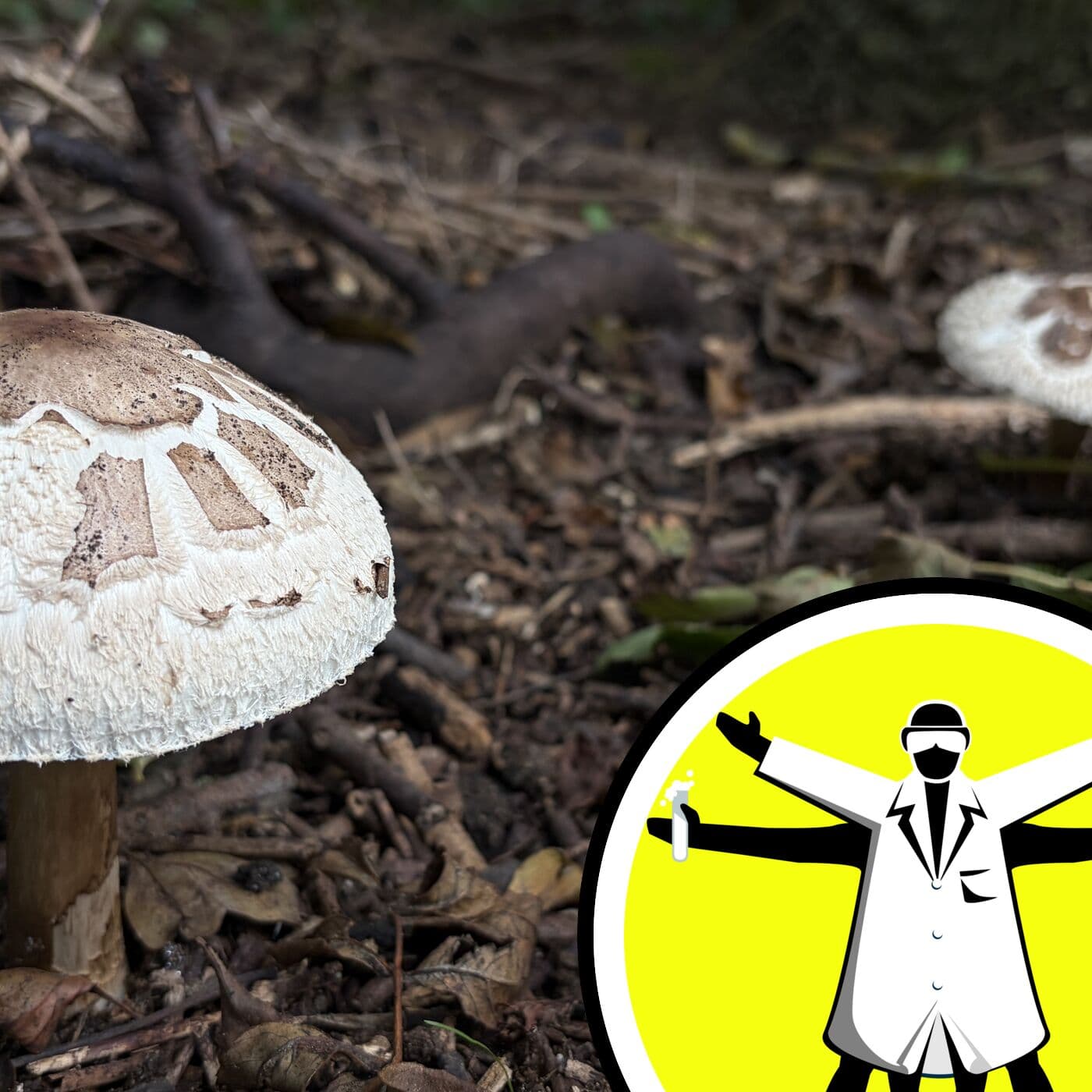
21:47So it's sitting, you know, on a little column, almost like a mushroom. So the bone is the top of the mushroom and there is sediment underneath it, kind of undercut. And then we apply plaster of Paris and burlap. So we take burlap strips, roll them into wet plaster of Paris. We make a separating layer, usually of paper towels or even toilet paper. Sometimes people use aluminum foil between the bone and this plaster enrobed burlap. And then you basically wrap up the bone so that it is completely contained in this plaster jacket. And then once you get it completely covered and sort of tucked under in that mushroomy cap, once it's dry, you flip it over, remove all of the extra sediment that's on the backside of that jacket, because you can imagine that this is getting pretty heavy.
22:40These things can weigh hundreds or even thousands of pounds, depending on the size of the plaster jacket that you've created. You remove the extra dirt from the back, you cap the back with additional plaster and burlap and toilet paper. And then you have a complete plaster jacket that you will carry out or drag out or helicopter out, depending on the size of that specimen, and get it back to the museum. That sounds like it works very well on big fossils. Not every fossil is a T-Rex skull, is it? So how do you deal with the smaller ones? Well, what we've been working on in the National Monument, where we just returned from, We actually are working on what we call microfossils.
23:22So these are fossils that are pretty small, you know, five centimeters in scale or maybe a little smaller than that. And we collect fossils like this from the surface. So these fossil sites include teeth and toe bones and vertebrae and fish scales and little tiny jaws of amphibians and mammal teeth and dinosaur teeth and all kinds of other animals, turtle shells, all kinds of animals living with dinosaurs, including dinosaurs. And the way we excavate them is we actually first do what we call vacuuming the surface of these localities. So we pick up everything we can see with our naked eye and we bag them in sample bags that are carefully labeled.
24:00But then the hard part comes in when we find the bone bearing horizon and we dig into it with picks and shovels and we load sediments full of fossils into five gallon buckets. And then we put lids on those buckets. We carry those buckets out, sometimes just in our arms, sometimes strapped to backpacks. And because the area where we work is a roadless area, the only way to kind of efficiently get around it is via canoe. So when you think about old school paleontology, this is really old school. We are carrying buckets of dirt full of fossils down to canoes on the river, loading our canoes full of these heavy buckets and then canoeing downstream to a get out point and bringing those big buckets of sediment back to our lab where we sieve them gently in this kind of water bath.
24:53And from there, we look under a microscope and we find all these tiny, little tiny fossils that tell us a lot about the ecosystems that dinosaurs inhabited. So next dinosaur hunt you're on, remember your plaster of Paris and your canoe. That was Christy Curry-Rogers at Macalester College in Minnesota. Finally, if our hunt and excavation have been successful, we should now have a prime dinosaur specimen to examine. But given the age of some of these fossils, surely there's only so much we can learn. Or perhaps not. Thanks to advances in imaging techniques, we can now look inside fossils without so much as causing a scratch.
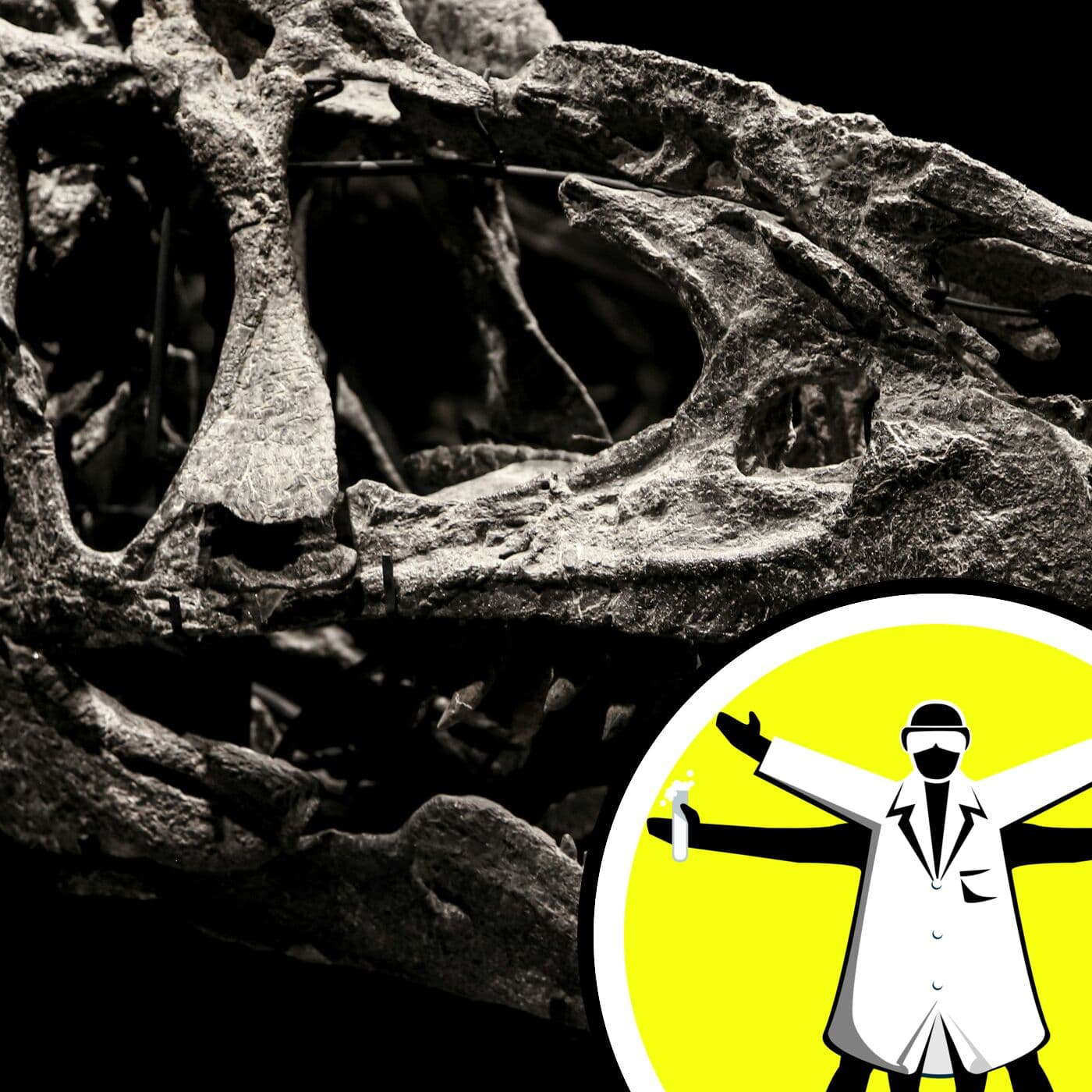
25:31These scans reveal the internal structures of creatures that lived hundreds of millions of years ago, offering insights we never thought possible. I went back to Christ College, Cambridge to meet up with Annabelle Hunt. So as part of my PhD research here at Cambridge, I've been examining a wide selection of different dinosaur fossils. So I've mostly been focusing on theropod dinosaurs, such as Velociraptor and the formidable T-Rex, which I'm sure many listeners, if not everyone, will be very familiar with. As well as these theropod dinosaurs, I've also been observing some sauropod dinosaurs, such as Diplodocus, and also some Ornifician dinosaurs, such as Triceratops.
26:06I actually examined the skull specifically because I'm interested in looking at aspects of the brain case, and I'm looking at features of the brain case and comparing it across different dinosaur species. A brain case, even if it was alive today, sounds pretty brittle and pretty delicate. We're talking about brain cases that are hundreds of millions of years old. How do you possibly literally get inside the minds of that sort of thing? Exactly. So they're incredibly fragile. And I myself have actually examined some of these brain cases in person with a fossil. And I have to say, it's very scary actually trying to manipulate these.
26:39And this is where a technique called CT scanning really comes in, because it's a way that we can digitally visualise this brain case material, which means that you can examine it without the risk of breakage. So I'm sure you're all very familiar with what an x-ray looks like that's taken at a hospital. So you can imagine if an x-ray is taken of your hand, that represents a single cross-section taken through your hand. The white of the bone is really distinct against the black air that surrounds it. You can really clearly see that bone. Because I'm interested in studying the whole skull, It's no good to me if I just have a single cross-section, a single X-ray taken through a skull, is it?
27:14Because then that's just one cross-section. I'm not able to visualise the whole skull. So if you imagine that one X-ray taken of your hand, I'm going to take multiple X-rays through that dinosaur skull. What that allows me to do is to stack up all of those individual X-rays and I can make the complete dinosaur skull and I can recreate that in digital so I can then examine and manipulate that dinosaur skull however I want to. so cts offer a great resolution without having to break the fossil itself which is always good but in terms of you've now created this image this file that sounds like a lot easier to share among the wider fossil community yeah definitely this is one of the things that's fantastic actually about ct scanning is because once someone has done a ct scan and you've kind of produced this replica of of the the skull essentially it means then that that can be really easily shared with anyone around the world so rather than someone who's interested say in a t-rex having to travel all the way across the world to examine that specimen in person, it means you can literally just transfer the file to someone.
28:12So it's much better in terms of data availability and it means you can get access to specimens from all around the world. And what have you found out now that you've had a poke around and a few dinosaur skulls? What have you found out about the internal structure? So essentially what we're seeing is that a particular feature of the brain case I'm really interested in is seeing how that shape is really variable actually, even within groups of dinosaurs that are quite similar to each other. so like say um the dromaeosaur it's like your velociraptor and another similar dinosaurs that even though they're in that same group there can be a lot of variation in this brain case structure and that's something i'm really interested in to work out kind of why that is why there's so much variation within that level and there's of course a lot of variation even across dinosaurs as well and some similarities this is all things that i'm very interested in working out why we're seeing that if you were to speculate why do you think there might be that variation do you think they might be having to you know different shape brains do different things i guess do you anticipate that this could be a response to a need to change in behavior or maybe a change in environment do you have any theories on that i think it's quite likely that it is kind of functional there's a reason why and we're seeing these changes in shape maybe it could be related to different diets potentially so i do think there's a functional um reason for this variation we're seeing and that's something that i'm really trying to work out why we're seeing that and I think it's really exciting kind of why why we're seeing this and I do think there's a functional reason yes.
29:35CT scanning not to I wouldn't want to downplay it at all but it is almost commonplace now as you say in many medical settings and it seems to be fairly commonplace in imaging settings as well are there any other interesting texts coming down the pipeline that you think are really going to revolutionize the way that we view fossil structures? I mean I think for me I mean CT scanning although like you say it is very common and like particularly with medical CT scanners and some of the dinosaur skulls I've looked at were scanned actually with medical CT scanners rather than specialist ones. And the funniest thing was when I opened up a scan and it kind of said patient name as part of the files.
30:08That was quite funny to see. But I think what is good is that some places now are kind of having their own specialist CT scanners just really for scanning fossils and these can scan at a higher resolution so we can see more than we can see with these medical CT scanners. Synchrotron CT scanning is something that is very exciting for me to think that if that becomes comes into more widespread use that can reveal so much information about dinosaurs dinosaur skulls and features of bones and I think that's something for me the more widespread usage of synchrotron scanning is something that really excites me yeah it does sound like from what I've read synchrotron is almost like CT's bigger brother is just able to absolutely power through with even stronger x-rays yeah and you can find out so much more the resolution of things you can see even smaller features that you wouldn't be able to see which I think is and to see bone texture in even more detail so that's kind of exciting for studies focusing specifically on looking at how bone kind of grows in these dinosaurs and kind of looking like tree rings essentially how dinosaurs can can show their growth essentially in these distinct kind of bands and I think it's just really exciting to see where this is going to go with improvements in technology.
Read the full transcript
31:16I guess as a final question and this is pure speculation but do you anticipate that our imaging ever gets so good that we could almost fill in the gaps of all that soft tissue and if we could get a good enough idea of what a brain casing looked like do you think we could ever anticipate working out what an actual dinosaur brain could look like yeah so that's actually what's really interesting because some people actually do work with reconstructing dinosaur brains okay so this isn't something that i actually work with but some people are doing that they're able to kind of reconstruct this soft tissue based on the hard kind of bone material that surrounds it so this is what's so fantastic we can understand the hard bone anatomy in so much detail that people can then reconstruct the soft tissue.
31:56So people have been writing about what certain dinosaur brains would have looked like, which I think is incredibly cool. So Jurassic Park might not come from amber, it might come from a 3D printer instead. Maybe. Cambridge University's Annabelle Hunt. So the current state of dinosaur fossil hunting is in a wonderful dichotomy of 21st century tech and good old-fashioned boots-on-the-ground excavation. But with such great synergy between these two ends of the spectrum. Make no bones about it, the future is looking bright. That's it for this episode, but do join us on Friday when Chris will be here with the news roundup, and next Tuesday James Titko will be here to examine the science behind three-person babies.
32:36How does it work, and what are the ethics involved? The Naked Scientist comes to you from the University of Cambridge. It's supported by Rolls-Royce, I'm Will Tingle, and from everyone here at The Naked Scientist, thank you very much for listening. Until next time, goodbye. Thank you.