
In short
The Naked Scientists Podcast: Episode Summary - A Climate COP Out?
Episode Overview In this episode of *The Naked Scientists Podcast*, host Chris Smith delves into the COP30 climate conference held in Brazil, examining the urgency and effectiveness of international efforts to combat climate change. The discussion highlights the absence of key global leaders and the implications for climate action, while also addressing public perception and potential strategies moving forward.
Key Topics Discussed
- Introduction to COP30
- The podcast opens with a discussion of President Lula's warning against climate denialism at COP30.
- Notably absent were leaders from China, the United States, and India, who together contribute to approximately 50% of global emissions.
- Effectiveness of Climate Conferences
- Martin Stu, science correspondent at ITV News, questions whether such conferences lead to tangible climate action.
- History of COP summits:
- Paris Agreement (2015): Aims to limit global warming to 1.5 degrees Celsius.
- COP meetings culminate in nations pledging their Nationally Determined Contributions (NDCs).
- Current trajectory suggests nations are not on track to meet the 1.5-degree target.
- Absence of Key Leaders
- The absence of major players (US, China, India) at COP30 raises concerns about the commitment to climate actions.
- While some countries are active participants, the lack of leadership from the top three emitters dampens momentum.
- Public Perception
- A growing number of people believe in climate change but feel individual action is futile.
- Influential figures like Bill Gates have shifted focus to immediate threats like poverty and disease, leading to a debate over whether to spend resources on mitigation or adaptation.
- Action Points at COP30
- Brazil's Tropical Forest Forever Fund aims to raise billions to preserve forests, vital for carbon sequestration and biodiversity.
- Discussions revolve around how richer nations can financially assist developing countries in combating climate change.
- The COP discussions are framed against a backdrop of increasing emissions, with projections indicating a record high in fossil fuel emissions.
- Recent Findings on Global Emissions
- The Global Carbon Project's report highlights projected emissions reaching 38.1 billion tonnes of CO2 in 2025.
- The need for a significant reduction in emissions is emphasized, alongside the role of carbon sinks like forests and oceans.
- Consequences of Climate Change
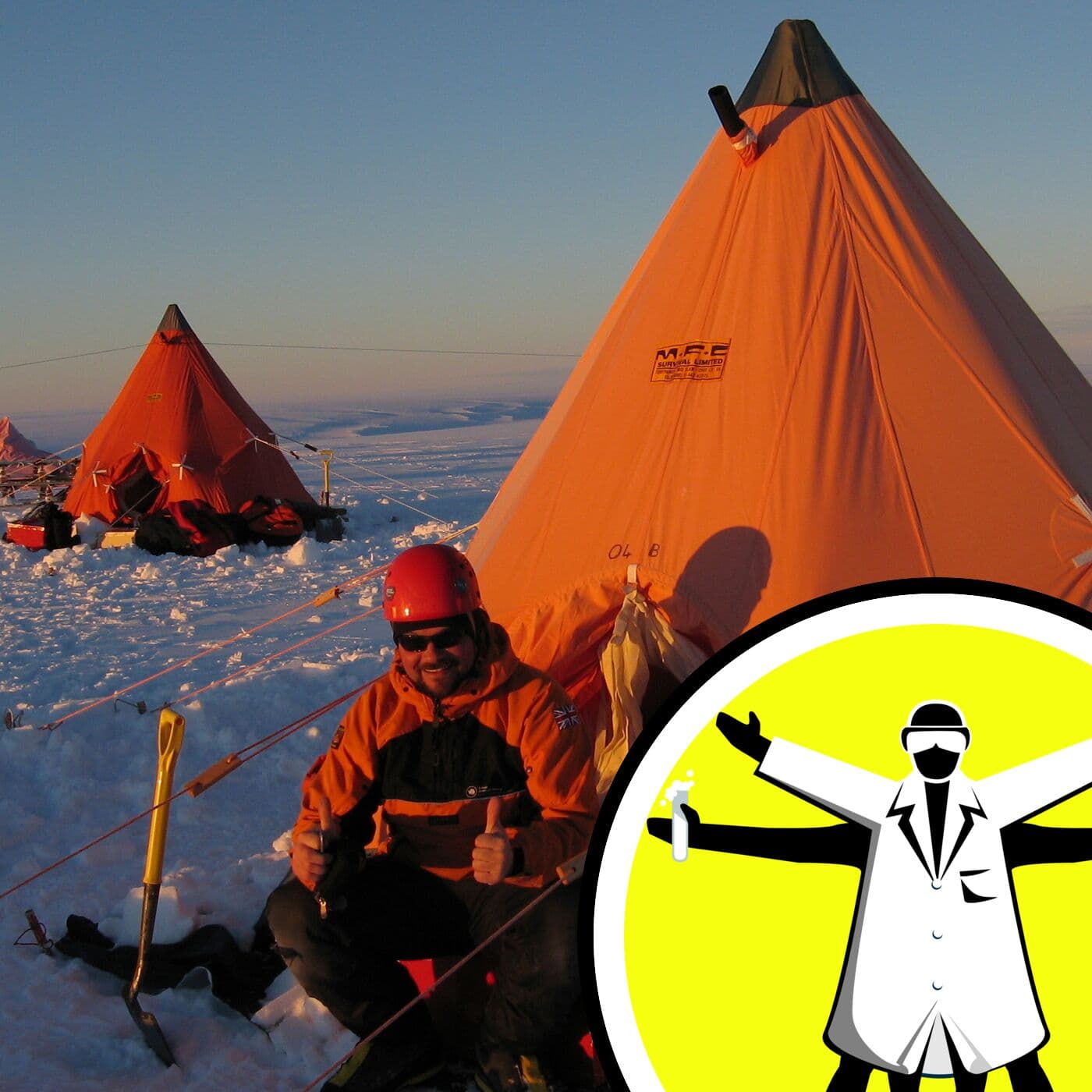
- Michelle McLennan from the British Antarctic Survey discusses extreme weather events in Antarctica and their global implications.
- Climate change causes both long-term effects (temperature rise) and short-term extreme weather events impacting ecosystems and human activity.
- Tipping Points and Future Projections
- Steve Smith from the University of Exeter introduces the concept of "tipping points" - critical thresholds that, once crossed, could lead to irreparable changes in climate systems.
- Positive tipping points, such as the shift towards renewable energy, are highlighted as necessary for future sustainability.
Key Takeaways
- Urgency for Action: The need for immediate and decisive action on climate change is paramount, particularly in light of the COP30 discussions and the alarming projections of emissions.
- International Cooperation: The absence of key countries at global summits poses a significant challenge to collective climate action.
- Public Engagement: Addressing public perceptions and encouraging individual and communal actions toward climate solutions remains critical.
- Focus on Nature: Emphasizing natural solutions, like forest preservation and restoration, is essential for mitigating climate impacts.
Conclusion The episode concludes with reflections on the importance of maintaining hope and momentum in climate discussions, even amidst setbacks. The future of global climate efforts hinges on recognizing both the challenges and the opportunities presented by current technologies and collaborative initiatives.
For more information and to support the Naked Scientists, listeners are encouraged to visit their website.
Written by AI. May contain mistakes. Listen to the episode to check what was said.
Transcript
Automatic transcript. May contain errors.0:18Hello, welcome to the Naked Scientist podcast. This is the programme where we bring you the biggest breakthroughs and talk to the major movers and shakers in the worlds of science, technology and medicine. I'm Chris Smith and today with climate on the agenda with the COP30 meeting in Brazil we ask whether the will to tackle the problem is drying up.
0:45At the opening of this year's COP climate summit in Brazil President Lula warned the world that climate denialism has to be defeated. But the leaders of China, the United States and India weren't in the room to hear it. Those nations currently produce a whopping 50 % of all global emissions and detractors believe that their absence may suggest they're not entirely on board with efforts to curb climate change. Martin Stu is the science correspondent at ITV News. He recently returned from a brief trip to the COP meeting in the Amazonian city of Belem. I started by asking him whether these types of conferences are actually leading to any long-term climate action.
1:26The really big one, I suppose, in more recent memory, if you remember, was Paris, which was 10 years ago. And that's where the world kind of collectively said, right, we will aim to keep global warming to 1.5 degrees above pre-industrial levels with an absolute maximum cap of two degrees. And the idea of this COP, which is in Brazil, was to sort of say, right, we're 10 years on, and it's the end of a trilogy. So we had Dubai three years ago where they said for the first time we're going to agree to transition away from fossil fuels. Then you had Baku where the idea was they would decide who was going to pay for it and how you would pay for it.
2:02And then this one is meant to be kind of the culmination of all that where the people would say we will all pledge our NDCs, our nationally defined contributions. Essentially promises individually from each country what they will do to make sure that we're on track for that 1.5 degree target. But spoiler alert, we're not really on track for that 1.5 degree target. And it does appear that we're losing some momentum, not least because of who is at COP, or more importantly, who's not at COP this year. So there's no President Trump. That's the real big one. And in fact, no senior delegation from the US at all.
2:35No President Xi from China and no Modi from India. And between those three countries combined, contribute about 50 % of the greenhouse gases emitted each year. So without those three, it is extremely difficult. Now, that's not to say there aren't big delegations from China and from India. In fact, China are probably the country who are pushing things further forward faster than others. It's the loss of leadership from the United States, which a lot of people are speaking to in Brazil, were most concerned about, really. Did that dent the mood, the fact that the elephants in the room were not there?
3:10Well, I think the people who are there are committed and therefore want to justify that it is still working. And so they're all talking in very passionate language. You had the head of the UN, you had the Brazilian President Lula, who has got a pretty positive environmental track record talking positively about what can happen. And obviously everyone else combined can have a huge impact. So there is still some positive mood music, but there's no doubting it is much harder when you haven't got the kind of main cheerleaders there in the room. I had this very interesting talk the other day, I'm going a slight sidebar here about what's happening with public perception and public action.
3:47So more and more people, the majority in this country, believe that climate change is real and that our actions are making it much worse. And that line on the curve graph is going up. When you look at the amount of action people want to take, it's going in the opposite direction. And the reason for that is largely a huge number of people sat in the middle just think, this is too big for me. I can't, as an individual, have an impact when the UK is 1 % of global emissions and I'm a tiny part of the UK. And that feeling surely only gets amplified when you realise that 50 % of the world's greenhouse emissions, their leaders aren't even showing up to this conference.
4:25That makes it a really challenging backdrop. There've also been some formerly very loud and big voices who seem to have rode back on their stance a bit. I'm thinking of Bill Gates, for example. He was a staunch advocate for doing something about climate change. And he seems to have watered that down in recent months. Yes, I think he is still in favour of doing something on climate change. His point when you read it is that there are bigger concerns in the medium term which are going to be more devastating, i.e. poverty and disease. Now, both poverty and disease can be made worse by the changing climate.
5:02But there is definitely discussion, and there seems to be a slight mood shift of almost, well, it's going to happen anyway. So rather than spending the money on what we call mitigation, which is where you try and stop more emissions in the first place and prevent the temperature getting even higher, some people are saying, well, it's kind of going to happen anyway. So maybe we should be spending that money on adaptation, which is building the defences, flood defences, getting your health system prepared for the inevitable changes that we're going to see. Now, a lot of climate environmentalists would say, well, no, we need to do both.
5:33And actually, for every small part of the degree that you see in the increase, those adaptations become far greater. So you need to spend money on both things. But that argument is very difficult when everybody is looking domestically. you've got the polarisation of politics of people saying, understandably, we have a limited amount of money. Where should we as individuals and individual countries spend it? What has been highlighted then as the next set of action points or obstacles to be surmounted at this COP? One of the sort of, I suppose, the positive takes the president of Brazil is pushing is called the Tropical Forest Forever Fund, where they're looking to get billions of pounds to preserve and restore natural forests, which is obviously a huge carbon sink and really important for biodiversity.
6:18And in a piece that we did on ITV News, we found that the Cerrado, which is much smaller than the Amazon rainforest, but still eight times the size of the UK in Brazil, it's been deforested at a far faster rate. And where that deforestation happens, it has a knock-on effect. Less water then falls in rainfall, which feeds into the Amazon basin. Temperatures are going up. People can't be fed. It all sort of spirals. So the importance of maintaining those forests is huge. So that is a big push of this conference. There's also generally talk about getting those individual promises from the countries I was talking about.
6:53So what will each individual country do? Plus, who is going to foot the bill? The previous COP, as I mentioned in Baku, was all about finances. Now, really, they want the richer Western nations to put their money where their mouth is and stump up that cash to help developing nations mitigate climate, say, building solar panels, things like that in hotter countries in Africa, but also the adaptation. So being prepared to deal with the effects which are coming down the line, which they would argue are caused by industrialised nations like the UK, like the US and like others, and that therefore we should be helping them pay to deal with the effects.
7:30ITV science correspondent Martin Stu, who was at the first part of the COP meeting in Brazil this month. But are these meetings, like COP, having any tangible impact? A new report suggests that global emissions from fossil fuels are set to reach a record high this year, which is bad news for those leaders who have attended the COP Climate Summit in Brazil. The Global Carbon Project estimates emissions are projected to rise by just over 1 % in 2025. That equates to 38.1 billion tonnes of CO2 this year. Pierre Freelingstein at the University of Exeter helped to compile the report, which was published recently in Nature and generated that number.
8:13So what we do with the global carbon budget is to assemble all the sources of carbon dioxide, primarily burning fossil fuel, burning coal or gas, but also deforestation, mainly the tropics. And also we assess the amount of CO2 carbon dioxide that stays in the atmosphere versus the amount of carbon dioxide which is taken up by the land ecosystems, mainly forests, and also by the ocean. So that number then of 38.1 billion tonnes, is that net, as in when you add up all of the sources and subtract the things that are taking away carbon dioxide, like rocks, like the oceans, like the land, is that a net increase or is that the gross emission at the moment?
8:55It is a gross emissions from human activities. So it's like about 38 billion tonnes of CO2 from fossil fuel burning and about 4 or 5 billion tonnes from deforestation. And about half of it stays in the atmosphere and the other half, about 20 billion tonnes, is taken by the land in the ocean. And where does it go when it ends up in the ocean and ends up in the land? What happens to it? In the ocean, it starts being dissolved into the surface of the ocean, and it's being mixed in the ocean interior over a very long timescale. On land, plant photosynthesis needs carbon dioxide that is taken from the atmosphere to make organic matter, wood, trunk, branches, eventually decomposing into the soil and accumulating into the soil carbon system.
9:46How does that number that you've come up with compared with what we thought the number was going to be by now? We do this estimate every single year. So we try to track the evolution of all of these numbers and whether they go in the right direction or not. And obviously, for fossil fuel emission, the right direction would be to have rejection of these emissions, so declining emissions from inactivities, which is something we don't see yet. I mean, CO2 emissions from fossil fuels are still estimated to increase in 2025. The increase will be about 1%. emissions from land use change are slowly declining.
10:20Deforestation rate is decreasing, especially in countries like Brazil. So that's a good sign. And on the other hand, we look at the land and the ocean carbon sinks and they still continue to absorb a large fraction, about half of the emissions. However, the effects of climate change tend to reduce the efficiency of these systems to absorb CO2. Oh dear. So in some respects then, A, it's getting a bit worse. and we shouldn't make light of the fact 1 % doesn't sound like much. If you add that up, after about 72 years, that's a doubling, isn't it? So it's still a big climb. But if the measures that are currently mitigating the rise, because they're going in the oceans and being soaked up into the land, if those are going to become less efficient with time, what's the outcome going to be then?
11:06How does the model change? I mean, to limit warming well below 2 degrees and possible, I mean, try to achieve 1.5 degrees. At the moment, we are at a warming of about 1.4 degrees above pre-industrial level. So 1.5 is very, very close. And in the report, we say it's virtually impossible that we can stay below 1.5. But 2 degrees, there's still some leeway. I mean, there's still like half a degree of warming. If you convert this into emissions, it's about emitting the same amount of CO2 as we do today for 25 years. So we can do better. I mean, there is no reason why we are stuck with the same level of emissions for the next 25 years.
11:42We could reduce emissions. And if we bring a global CO2 emission to zero by about 2075, we would be broadly in line with keeping warming below 2 degrees. But what did you think when you saw, which I suspect you did, coverage of the meeting in Brazil, and you see that there is no America, there is no India, and there is no Chinese high-level representation? Together accounting, as we heard from Martin Stu earlier in the programme, for 50 % of the number that you've told me, your analysis suggests we've added or are adding every single year. That doesn't really bode well, does it? It doesn't argue that there's high-level buy-in from the major players.
12:25China is the second largest delegation at COP. The largest delegation, of course, is coming from Brazil this year because they added their host. And the second largest is coming from China. So maybe you don't have the top, top, top, high-level delegates, but you have a large delegation. In a sense, that's a good sign. I mean, the fact that the U.S. decided not to go, it wasn't really a surprise. It was announced a while ago already, so it's something we kind of expected. In a sense, it doesn't change the fact that, I mean, the country was still there, which is still a huge number of countries.
12:54I mean, 190-something countries being present in Berlin. They have to continue. They have to act. They have to decide what is the next target and how to get there. It was in 2015 that really this sort of watershed moment was defined, the Paris Agreement, when we said we would try to stick to 1.5 degrees. In your paper, as you pointed out, we're perilously close to that. We're probably going to miss it. So how many more targets are we going to miss? What do you think the real prospects or the realistic outcomes going to be? and do you think that when we've got quite a few quite powerful voices saying this is an inevitability and rather than try to stop it maybe we should put our resources into living with it instead?
13:41I don't think there is a way to live with climate change. We have to limit climate change as much as possible. I mean in the absence of mitigation and before the Paris Agreement the expected warming by the end of the century before the Paris Agreement was more than three degrees And now, maybe 2.5 degrees, we have to do more. If we reinforce, I mean, the ambitions of the countries, we can go below 2.5, we can go to 2 degrees, as recently in the Paris Agreement. And it has to happen. And there is no alternative. There is no plan B. And there's no way we can adapt to large, increasing number of heat waves, increasing number of wildfires, increasing number of floods and hurricanes.
14:19We see the damage already. I mean, the cost, I mean, human costs and costs on the economy are staggering already and they're increasing. I mean, the idea that we can just carry on and adapt, it's just not realistic. So 1.5 might be too late, but 1.7 is better than 1.9, and 1.9 is better than 2.1, and so on. Every tenth of a degree matters. Indeed, every little helps. Pierre Freelingstein there. The Naked Scientist podcast is produced in association with Spitfire, cost-effective voice, internet and IP engineering services for UK businesses. Find out how Spitfire can empower your company at spitfire.co.uk.
15:05Music in the programme is sponsored by Epidemic Sound, perfect music for audio and video productions. This is the Naked Scientist podcast with me, Chris Smith, and today, motivated by the COP30 meeting in Brazil, we're wondering whether global summits have any discernible impact on efforts to curb climate change, or do they just generate, as cynics say, more hot air? So far, we've heard about this year's COP30 summit and the current trajectory of climate change gas emissions reaching a new record in 2025, 38.1 billion tonnes of CO2. But what does that translate into on the ground through the eyes of scientists who study the impact of global warming.
15:45Michelle McLennan is a climate scientist with the British Antarctic Survey. It's hard to learn about Antarctica. It's a very remote environment. It's difficult to reach in person. And so we use products like satellites. Those can tell us about clouds and how warm conditions are, how wavy the ocean is around Antarctica. Just like in the UK, there are weather stations in Antarctica that record information on temperature, air pressure, winds and snow. And then we also use computer models. And that way we can get a sense of the big picture patterns that are happening there. How far back into the past does the data go?
16:28And therefore, how far back can you look in order to inform the future? A lot of information about the past climate up to thousands or even million years ago is stored in the ice in Antarctica. So what happens over time is that you get snowfall that falls on the surface of the ice, and then that compacts into ice. And that also stores some small air bubbles. And those air bubbles can actually tell us about the past climate of the Earth for many, many thousands of years. The work that I specialize in, though, really started in 1979 with the begin of the satellite era. And that's because I look at very short term weather patterns.
17:11So on the scale of maybe a week or a few days and having satellites that give us information about the conditions in Antarctica was really essential for that work to develop. And how are things changing? Because we've just had this enormous hurricane in the Caribbean. and many of the climate community are saying this is probably a product of global warming, higher sea surface temperatures, more energy in the water means more energy in the air, that means more energy in the storm. Is Antarctica falling victim in the same way? Yes, all of those types of extreme weather events also occur in Antarctica and we have found that just like in the rest of the world, climate change has made those types of extreme events far more likely to occur.
18:01And this is important because it shows us that climate change is not just having these impacts on long-term increases in temperature or sea level rise. It's having these very dramatic short-term impacts. Are there knock-on effects from this? As in, Antarctica does lock away a lot of water. It also has interesting things to do with atmospheric chemistry, there's a reason the ozone hole has formed over Antarctica, for example. Obviously, it's important from a biology and wildlife perspective. But if you get this extreme departure in climate conditions, what are the knock-on consequences for people who don't visit or live anywhere near there?
18:42That's a great question. Antarctica has memory in it. So when you have an extreme weather event that comes and impacts the ice, maybe it brings a lot of heat and causes the ice to melt at the surface. The system remembers that. So the next time there is another weather event that comes, if you already had an event that caused a lot of surface melting, the next one is likely to cause much more extensive surface melting. And we should all care because sea level rise is a global issue, right? This impacts all of us. I live in a very low-lying area of the UK, which will be particularly impacted by sea level rise in the centuries to come, and millions and millions of people are in the world.
19:29At the same time, though, these impacts don't only extend to sea level rise, they also cause global changes to things like atmospheric circulation and weather patterns. So we've seen changing patterns of animal migrations that are impacted by the processes happening in Antarctica. And we've also seen changes to ocean circulation, again, controlled by the processes happening in Antarctica. And on the ground in Antarctica, what is happening? And what do you expect to happen based on what you're seeing, the trend you're seeing from your data? What do you expect the next 10 to 20 years to hold? So the data tell us that in the last few years, we've seen a surge in extreme weather events.
20:14in Antarctica. We've had record-breaking heat waves. We've had very intense storms that bring snowfall and rainfall with them, or can cause very stormy conditions in the ocean, leading to storm surges and ice breaking up at the coast. And we've seen all of these events in action, especially in the last few years. Waves can cause ice shelves, so the ice at the coast to totally break apart in the span of a few days. We've also seen that there have been many more frequent heat waves in many regions of the continent, and that causes these giant lakes or ponds of meltwater at the surface. They look like lakes that you would see anywhere else in the world, except they're sitting on the ice, and they cause so much pressure on the ice underneath them.
21:05And we know that all of these effects are going to have long-term consequences for sea level rise. Has it ever happened before? So in other words, if you use that ice clock that you mentioned earlier, where we can capture Earth's past climate, we can interrogate the memory of Antarctica, has it been through phases like this before or is this a new departure? There have been warmer periods and colder periods. And the data tell us that. The difference, though, with today's climate is that we've seen that there have been far more rapid changes in the last 40 years than we've ever seen. And it's the speed of those changes that is making the future so unpredictable.
21:54If we've made it happen this quickly, do you think it's possible that it will be reversible on the same sort of timescale if we can fix the cause that we think is down to us? What scientists have shown from looking at sea level rise and the glaciers in Antarctica and how they're changing is that there is a lot of momentum in the system. So the changes that we've caused at this point, even if we stopped emissions today, will likely still continue to cause massive sea level rise in the future. I do think, though, that any difference we can make now to climate action or emissions would certainly help to give us more time to mitigate climate change and adapt to it, which, of course, is extremely important to everyone in the world.
22:48Michelle McLennan at the British Antarctic Survey there. Finally today, we're going to examine what might be done to help to meet the challenges posed by climate change. The Paris Climate Agreement, which was ratified in 2015, played a major role in working to reduce emissions. China, the US and India were all signatories, but they've shown an apparent diminished interest in this year's COP meeting. So where does that leave an international response to global warming? Steve Smith is from the University of Exeter and he's also the lead author of the Global Tipping Points Report 2025. I started by asking him what those actually are.
23:28Things happen slowly and then all at once. And when things happen all at once, for example, with abrupt changes in weather patterns and ocean circulations and relatively speaking, abrupt collapse of ice sheets and glaciers and things like this, there can be abrupt changes in the rainforest cover and so on. So these are the things that we're concerned about that aren't currently covered in the assessments and the agreements that we have at the moment. We tend to just think of these slow incremental changes. So it's important to have what the worst case scenarios could be in order to plan to how we're going to mitigate them or adapt to things that we can't avoid.
24:16The bottom line is that we really ought to try to avoid the bad tipping points at all costs, because they're things that could fundamentally change the way the world works and affect billions of people. And at the same time, there are also what we call positive tipping points, things that are happening very abruptly and very suddenly for the benefit of humanity, like the renewable energy revolution that's happening at the moment. So the process is not one that often we take into account in our planning. why is that and is there a plan to embrace that because to my mind that is an absolutely critical thing for us to factor in i'm sure to yours too and ignoring it would be something we'd do at our peril because if you do have unplanned unforeseen sudden abrupt changes like sequences of storm systems or flooding that kind of thing there are things we can do something about there things we can plan for but if we fail to plan it's planning to fail effectively isn't it it's a strange thing to do with the culture of financial assessments.
25:17The banks and financial markets, the long term for them is five years ahead. And also to do with governments, you know, the fact that the leaders of the world that we elect tend to be elected for a few years. Generally speaking, these are things that are maybe unlikely and are in the future, and it's too far ahead for politicians or financial people that they think they don't have to worry about them now but the time scales can be quite short term can't they because if one thinks about the example of say thawing of the tundra that starts to evolve lots of methane which is a really potent greenhouse gas if all that stuff starts to come out from frozen material and that massively accelerates the rate of warming which massively accelerates more melting of more tundra and more methane so we could go business as usual for a nice long time thinking things are only changing a little tiny bit and then suddenly there's a catastrophe and that doesn't have to be that far into the future for that to happen does it?
26:16That's correct yeah I mean that can happen fairly quickly and likewise coral reefs are experiencing a unprecedented dieback from a marine heat waves that have been happening over the last couple of years. There are up to a billion people that rely upon the reefs for their livelihoods and for tourism and for coastal protection and so on. Likewise with the rainforest that can happen fairly quickly that you can have a abrupt change in the Amazon and Congo rainforest cover and weather patterns and hundreds of millions of people depend on that. One of the biggest ones also is what they call the AMOC and that's the circulation which is like the central heating system for northwest Europe which brings up 60 or 70 times the total amount of energy that humans produce every year, drag it up from the tropics and cause us in northwest Europe to be much warmer than we otherwise should be and if that goes into its slow mode which it has done in the past that could happen within a couple of decades in which case we would be extremely difficult situation in terms of relatively quickly reverting to the climate of Nova Scotia or northern Canada.
27:27Now you mentioned that it's not all doom and gloom and there are some positive tipping points there are revolutions in provisions of types of energy which are much kinder to the planet so what do you think then the future holds we've witnessed massive rapid progress in the uptake of clean technologies worldwide especially solar power and now electric vehicles the total investment in clean energy has grown almost sort of tenfold in the last 10 years and now we're putting twice as much money into renewable energy as we are into fossil fuels so i think it's the beginning of the end of the fossil fuel era which is very welcome and solar power is growing exponentially doubling in capacity every two years so as i mentioned already it's cheapest form of power already in most countries there's really good things that are happening.
28:22We can't prove yet that there has been a peaking of emissions, but my prediction is that we will see the peaking of global carbon dioxide emissions within the next year or two, I would say, particularly because China could already have peaked its emissions. So even if the United States and a couple of other outliers are being recalcitrant in their policy we will still see overall globally I think emissions start to come down and then accelerate as the phase out of especially coal and then oil and gas proceeds as electrification and clean power take over. Doesn't solve the problem though does it because there's still a trillion tons of the stuff up there that we've already put there and the evidence is it's going to be there for hundreds of years.
Read the full transcript
29:11Indeed yes I mean the way that the calculations work out is that even if we were to become net zero tomorrow or whenever the temperature rise should stop but it won't come down and we're still perilously over the sort of safe operating system for humanity the temperatures do have to come down so we do have to remove carbon dioxide and the the best technology of course for removing those is is nature so we have to plant trees and look after our mangroves and our wetlands and peat and so on and suck as much carbon oxide as possible as back into the natural organic stored materials. There will be some engineered carbon dioxide removals, but I think we ought to try and rely on nature as much as possible.
30:00And as far as triggering tipping points goes, we have to do that as justly, as safely as we can, try to avoid those tipping points. But as you say, we're now in the danger zone of triggering more of these dangerous tipping points, and we can't guarantee that we're going to avoid them all. Steve Smith from the University of Exeter and one of the lead authors of the Global Tipping Points Report 2025. And it's not just the US, India and China that are causing tension at COP30 in Bel-Emb. A tug of war has erupted between Australia and Turkey over who should host next year's event. And if they can't agree, then COP31 will by default be heading to Germany.
30:38We will be sure to have the latest wherever the summit in 2026 takes place. That's it for this week. Do join us on Friday, though, when we'll be finding out why Iran is using a technique called cloud seeding to help ease its worst drought in decades. That and the other major science news stories cropping up this week. Meanwhile, if you enjoy what we do for you every week and would like to help us with our running costs, do please head over to nakedscientist.com forward slash donate. It makes a massive difference if you're able to help us keep the show on the road. You can also leave us a review on your favourite podcasting platform or follow us on Instagram, on LinkedIn and on X.
31:18The Naked Scientist is supported by Rolls-Royce. I'm Chris Smith and from everyone here at the show, thanks for listening and until next time, goodbye.
31:33Thank you.