In short
The Naked Scientists Podcast: Episode Summary
Episode Title
Alzheimer's Fingerprick Test, and Space Debris Sonic Booms
Episode Overview In this episode, the Naked Scientists discuss several scientific advancements including:
- A new fingerprick blood test for early detection of Alzheimer's disease.
- Using sonic booms from space debris reentry to track and analyze space junk.
- Insights into the common cold and rhinoviruses.
- Unique reproductive strategies of ancient plants, specifically cycads, that attract pollinators through heat.
---
Key Topics Discussed
- Alzheimer’s Disease and the Fingerprick Test
- Context: Alzheimer's is a leading cause of cognitive decline, affecting a significant portion of the aging population.
- Current Testing Methods: Traditional diagnostic methods like brain scans are expensive and invasive, with only 2% of patients receiving gold-standard tests.
- Innovative Approach:
- Development of the Fingerprick Test: Giovanna Lally from LifeArc discusses the aim to develop a non-invasive, cost-effective blood test for Alzheimer's.
- Mechanism: Similar to a cholesterol test, it analyzes proteins linked to Alzheimer’s from a few drops of blood, specifically:
- Phosphorylated tau 217
- Neurofilament light
- Glial fibrillar acidic protein (GFAP)
- Accuracy: While promising, the test is not definitive; further cognitive assessment and brain imaging are required for confirmation.
- Future Outlook: Anticipated that this test could become a routine practice in primary care within a few years, facilitating early detection and intervention.
- Tracking Space Debris with Sonic Booms
- Challenge: Space debris poses potential hazards as it reenters the atmosphere, impacting air travel safety.
- Research by Ben Fernando:
- Sonic Booms: High-speed debris creates sonic booms detectable by seismometers, traditionally used for earthquake monitoring.
- Methodology: By analyzing the seismic data from these booms, researchers can determine the trajectory and characteristics of reentering debris.
- Significance: This research helps mitigate risks from debris and understand its impacts on the atmosphere and public safety.
- Understanding the Common Cold
- Overview: The rhinovirus causes the majority of colds, but responses to the virus vary significantly among individuals.
- Research Insights from Ellen Foxman:
- Model Development: Foxman’s lab recreated nasal tissue to study rhinovirus infection.
- Key Findings:
- Not all infections result in illness; some individuals mount stronger antiviral responses.
- Factors like prior exposure and environmental conditions can impact individual responses.
- Possible therapeutic targets identified to enhance immune responses against rhinoviruses.
- Pollination Strategies of Cycads
- Research Findings: Cycads utilize heat to attract pollinators, particularly beetles.
- Biological Mechanism:
- Male cycads warm their cones at dusk to attract beetles, followed by female cones warming up later.
- Beetles detect infrared radiation rather than relying solely on scent or color, a unique adaptation among plants.
- Evolutionary Implications: The study suggests that the reliance on a single signaling method may have limited the diversification of cycads compared to flowering plants that utilize a broader range of attractants.
---
Conclusion This episode of the Naked Scientists showcases significant advancements in various scientific fields, from early disease detection to innovative methods for understanding ecological interactions. It highlights the importance of interdisciplinary research and how insights in one area can inform advancements in others.
Additional Notes
- Next Episode Teaser: Tune in for the next episode featuring John Czarnecki, a leading figure in space science.
Support the Podcast For those who enjoy the content, donations are welcomed to support the Naked Scientists podcast.
Written by AI. May contain mistakes. Listen to the episode to check what was said.
Chapters
Tap a time to open that second in VOAlzheimer's Finger Prick Test Development
0:45 to 7:12
Discussion on the development of a finger prick blood test for early detection of Alzheimer's disease.
“First this week, Alzheimer's disease is one of the leading causes of cognitive decline worldwide.”
Tracking Space Debris with Sonic Booms
7:12 to 14:03
Exploration of how sonic booms from re-entering space debris can help track and study it.
“debris here on the show and the risks that it can pose as it re-enters the earth's atmosphere.”
Understanding Natural Signals
14:03 to 15:10
Learn how techniques for studying meteoroids are applied to societal problems on Earth.
“Can you do the same thing for non-manmade incoming objects?”
Insights into Rhinovirus and Colds
15:22 to 19:32
Explore new findings regarding rhinovirus infections and why some people remain asymptomatic.
“Music in the programme is sponsored by Epidemic Sound, perfect music for audio and video productions.”
Laboratory Studies on Rhinovirus
19:32 to 23:40
Understand how lab-grown nasal cells help in studying rhinovirus infection.
“And that is probably what happens when people get infected, but they don't get sick.”
The Role of Cycads in Pollination
23:40 to 28:04
Discover how cycads use heat to attract pollinators and the implications for plant evolution.
“She also declined to receive a sample of my rhinovirus.”
Diversity of Flowering Plants and Pollination
28:04 to 30:14
Explore why flowering plants are more diverse than cycads and their pollination mechanisms.
“There's about 350 ,000 species of flowering plants and the cycads there's 24 species.”
Transcript
Automatic transcript. May contain errors.0:16Hello, welcome to the Naked Scientist podcast. This is the programme that brings you the biggest breakthroughs and also talks to the major movers and shakers in the worlds of science, technology and medicine. I'm Chris Smith. And coming up, testing a finger prick test for Alzheimer's disease, how sonic booms can help us to keep tabs on space junk, and scientists recreate the nose in a lab dish in pursuit of a cure for the common cold. Music to my ears this week.
0:51First this week, Alzheimer's disease is one of the leading causes of cognitive decline worldwide. Doctors estimate that, as we're now all living longer, as many as 30 % of the population might be at risk. The anticipated costs of care, if that happens, will most likely be unsustainable. On the plus side, we have seen in recent years the development of the first generation of drugs that do appear to be able to really slow down Alzheimer's disease. and researchers suspect that if started sufficiently early the effects and the cost effectiveness of these drugs is likely to be even greater the key will therefore be on spotting who needs to be on them as early and as cheaply as possible now this is where a groundbreaking project comes in to find out if a finger prick blood test could be used to diagnose the condition before symptoms arise giovanna lally is director of strategy and operations at the not-for-profit life sciences organisation, LifeArc.
1:47We are trying to develop a test that is based on a finger prick for Alzheimer's disease. Alzheimer's disease is one of the major causes of dementia. We know that by detecting this disease as early as possible, we can have a better chance to defeat this disorder. So we are trying to develop a way to detect this disease that is cheap, fast and not invasive. can't we do that already we give people memory tests we can even do brain scans if if we've got access to the scanner but we do have ways to diagnose alzheimer's already so what does this add actually only two percent of people are getting the gold standard diagnostic test of alzheimer's disease which rely on very expensive invasive brain imaging scans of the two proteins that accumulate in the brain of Alzheimer's disease patients.
2:37So there is not really a very widespread way of applying this gold standard testing of Alzheimer's disease at the moment. So this would be a way to really make diagnosis of Alzheimer's disease as widely applicable as possible because this test does not require refrigerated chain. It can be shipped at room temperature, could be then applied much more equitably. How does your test work then? What's involved? It's just like a cholesterol finger prick test. Let's say the principle is the same. Only very few drops of blood from the finger prick are applied on a special card that is able to separate the liquid part of the blood, the plasma, into a dry spot.
3:18And this dry spot is then analysed in the lab for three proteins that have been linked to Alzheimer's disease. And what proteins are they? These are phosphorylated tau 217, which according to recent studies is quite a robust biomarker, a protein that correlates very well with the accumulation of the toxic amyloid plaque in the brain of Alzheimer's disease patients. The second protein is neurofilament light which is a sign of neurodegeneration in the brain cells and the third protein is glial fibrillar acidic protein or GFAP which is a sign of inflammation in the brain. Together these three proteins have been associated to Alzheimer's disease and interestingly actually the phosphorylated tau 217 appears to be quite elevated years before symptoms appear in the disease.
4:10These are also things that are building up in the brain but you're measuring peripheral blood. So is it spilling over from the brain into the blood and that's how you're finding it? yes and already there is a blood test for alzheimer's disease that has been approved by the fda last year so this will be a way to detect it in even you know less invasive way than standard venous puncture and the crucial thing is how good the test is in terms of ruling people in you've definitely got alzheimer's disease but also not making false positive diagnoses telling people they've got something they haven't which that could be soul destroying for someone who might think they might be at risk so how good is the test if you if you actually look at real data on real people how how often is it right in the case of the plasma test so in the case of the normal venous puncture it has been shown quite accurately that the levels of phosphatidyl 217 correlate for an accuracy of over 90 % to the cerebral plaques in the brain.
5:14However, we have to remind ourselves that these are not definitive diagnostic tests. So this could be important, for example, to really identify people, even in a pre-screening condition, for people who are at a risk of the disease, right? So in the end, while this could be very accurate, they're not definitively a diagnostic type of a result we will need to then further refer these people for cognitive assessment and potentially to brain imaging but you can imagine that if we can start to measure these proteins as early as possible we could even think about like the cholesterol test you can go to a checkup once you're in your 50s for example from the doctor and you start to see the level of this protein then the doctor even if you don't have symptoms could then refer you for further tests.
6:04And this could enable early detection and early intervention. We know that there are many therapies for Alzheimer's disease on the horizon. Two have already been approved, but others are coming up. There are over 180 clinical trials for Alzheimer's disease at the moment. So the hope is that with this type of test, we can make early detection as equitable, as cheap as possible, so that we can intervene as early as possible and ultimately one day stop the disease altogether. And what's the timeline looking like, Giovanna? When do you think this will be a routine thing that doctors in primary care could use on patients?
6:41For Alzheimer's disease, obviously this is the most advanced disease that is being studied at the moment in the dementia field. I'm quite optimistic because already we have a blood test, for example, for Alzheimer's disease from normal venous puncture that has been approved last year. I'm quite optimistic that in a few years time we may have a test that could be implemented in the clinic. Giovanna Lally at LifeArc on the launch of their trial of a finger prick blood test for Alzheimer's disease and we'll let you know if they succeed. We recently covered a story on space debris here on the show and the risks that it can pose as it re-enters the earth's atmosphere.
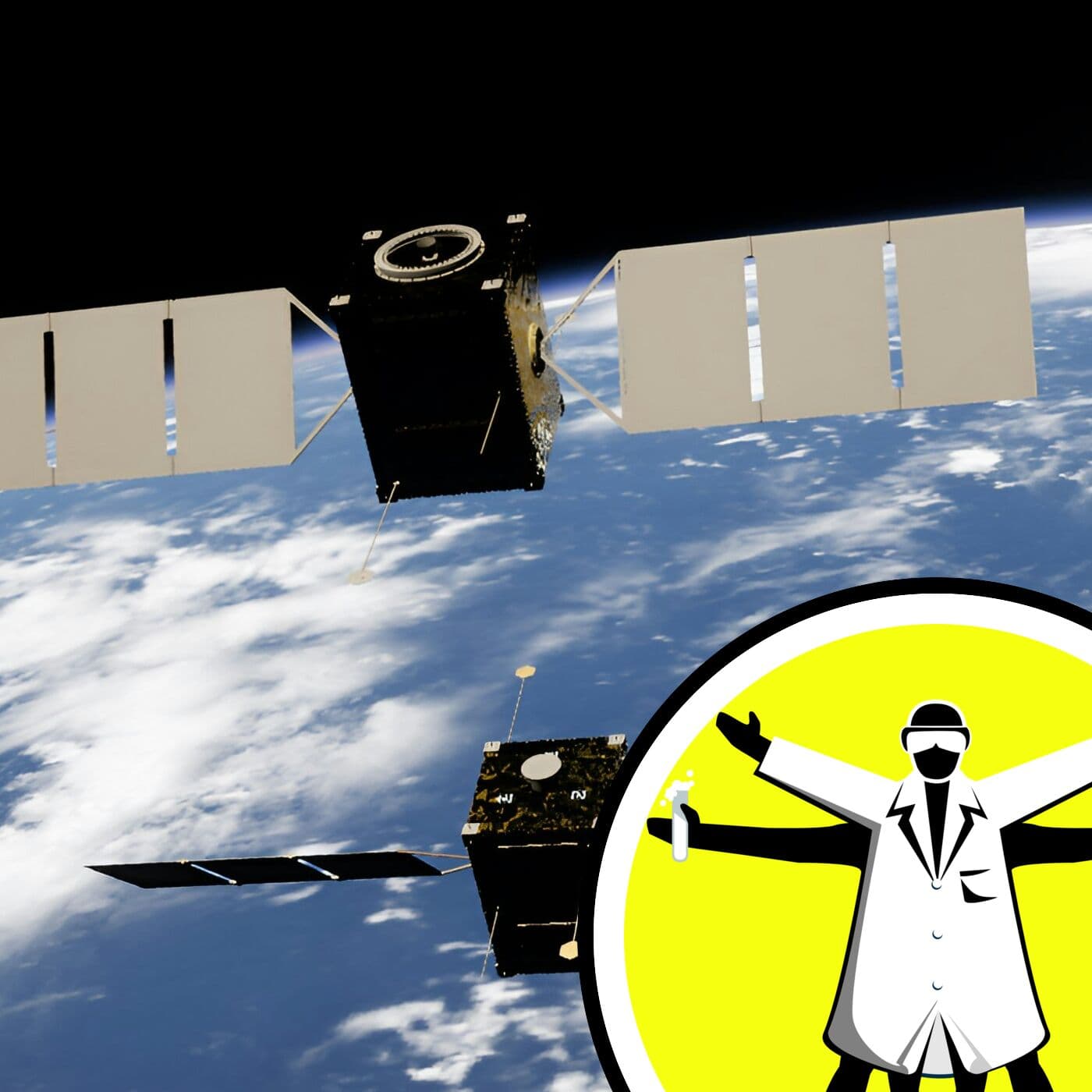
7:19The biggest concerns are largely the disruption to air travel and possible damage to infrastructure But there are maybe millions of bits of junk up there, and there are limits on our ability to track it. That said, Ben Fernando, who's a researcher at Johns Hopkins University, has a cunning solution. Most incoming debris, initially doing up to 5 miles per second, yes you did hear that correctly, is travelling so fast that it triggers sonic booms. These occur when the source of a sound wave is moving faster than the sound itself can, so it builds up into a massive shockwave. Now there's enough energy in those sonic booms that when they reach the ground, they can actually trigger seismometers that we normally deploy to detect earthquakes.
8:03We now live in a world where we have multiple spacecraft re-entering the atmosphere in an almost entirely uncontrolled manner every single day. And the big issue for us is that a lot of these satellites contain pieces of debris that are toxic or flammable or even occasionally radioactive. But once they're actually burning up in the atmosphere, it becomes very difficult to track them and figure out whether any fragments might have survived their passage through the atmosphere or indeed whether any fragments might have struck the ground. So we're trying to work out new ways to track and characterize that space debris once it's in what we call the terminal phase, so that phase where it's burning up in the atmosphere, to try and better understand the impacts it's having on the atmosphere and also the risks it's posing to people in planes, in the air and on the ground.
8:55Indeed, because we heard last week that one model suggests maybe there's a nearly 30 % chance of significant things coming down through some of the world's busiest airspaces now. So this is a big issue, isn't it? What sorts of size of materials, though, are you interested in with this study? In theory, anything that's bigger than a few millimeters across should produce a sonic boom, a shockwave as it passes through the air. Whether we detect something that small is unclear, but certainly we've seen things that are a few tens of centimeters across. And that's sort of a reasonably typical size for fragments of a piece of space debris once it started breaking up in the atmosphere.
9:34that might not sound very large but if you imagine something the size of a football going five or six miles per second that's really not something you'd want punching a hole in the side of your aircraft fuselage or indeed the roof of your house. And you've hinted at your approach that these things are going so fast they are well and truly breaking the sound barrier and that is why you get sonic booms. Exactly so one of the issues is that radar tracking which is what a lot of people do when stuff is in orbit, becomes a little bit more challenging once it's in the atmosphere. But we have this big advantage that once the space debris, the spacecraft has entered the atmosphere, as you say, it's going many, many times the speed of sound.
10:18And therefore, it generates a sonic boom, that sonic boom propagates down to the ground, you could hear it if you were in the right place at the right time. But more importantly, for our purposes, it actually shakes the ground and shakes these seismometers, which are designed to detect earthquakes. And from that, we can figure out what direction the debris was going in, how fast it was going, what angle it was descending through the atmosphere in, and eventually how it broke up. That's amazing. So there's enough energy being dissipated that vibration-sensitive devices to pick up earthquakes will actually see this.
10:51Yes, it's quite spectacular, really, when you think about it. These objects hit the top of the atmosphere going tens of thousands of miles per hour, a few minutes later, any pieces of debris are either completely burnt up or they've hit the ground and they're stationary. It gets incredibly hot. The surface of the debris will get to maybe several thousand degrees centigrade. And all of the rest of that energy is being dumped into the atmosphere. A lot of it goes into heat, but a not insubstantial portion of it is involved in this very complex process that generates a shock wave in front of it simply because the molecules of air basically can't move out of the way in time.
11:30And that sonic boom shockwave, that comes down to the ground and presumably it's going to tickle different seismometers at different times and therefore you can work out roughly where it must have come from. You can triangulate its origin. Exactly. So we see what we call a move out pattern, which basically is a fancy way of describing the fact that different seismometers see the signal from the sonic boom at slightly different points in time. And from that, you can get both the speed in a trajectory, that is a direction, but also we can look at some of the real subtleties in that pattern and discern things like how steeply the debris is descending down through the atmosphere.
12:06So the fact that these different sensors see the shockwave at ever so slightly different points in time allows us to make some very detailed measurements of how this object is passing through the atmosphere. I'm still awestruck that this works. How big is the displacement that the seismometers are picking up? I mean, compared to, say, an earthquake, it must be tiny. It is tiny, but these seismometers are incredibly sensitive. So there's a piece of debris which entered the atmosphere of California in April of 2024. And we see ground velocities, so up and down shakings, that are on the order of a few microns per second.
12:42That's a few millionths of a metre per second. It might not sound like very much, but it's enough that you might be able to feel it if you were standing there. It would be like being a few tens of kilometres away from an intermediate-sized earthquake. And the big advantage of these seismometers as well is it's not just a person, it's not just a feeling. We get really precise timing information as well, so we know down to the fraction of a second what time this wave arrived. And how do you marry up that measurement with, ah, it was that bit of space debris? Yeah, really good question. So what we do is we often try and correlate our seismic recordings with eyewitness accounts of people who both saw a fireball and also heard the shockwave themselves.
13:27The other thing that we can do is we know what orbit a particular piece of debris may have been in. We know it was going around around the planet every, let's say, 90 or so minutes. And so what we can do is if we have a time and a location, we can try and work back to what piece of spacecraft that might have been, if that makes sense. So for this event, we saw a piece of space debris entering the atmosphere over California about one o 'clock in the morning. We saw the seismic readings roughly the same time. And we knew that there was a Chinese spacecraft called Shenzhou 15, which was due to pass overhead a few minutes earlier.
14:02And we can kind of put those all together into one coherent picture of what's caused this signal. Can you do the same thing for non-manmade incoming objects? I'm thinking the things that cause shooting stars, debris, dust, other particles that may even turn into meteorites, things we can pick up on the ground. Absolutely. And actually, that's how we developed a lot of these techniques was for monitoring meteoroids, both on Earth and also on Mars as part of NASA's InSight mission, which I was involved in. So we've actually taken some techniques that we developed for natural objects that we developed for studying Mars and turned them into something that we can use to study a real societally relevant problem here on Earth.
14:48And I also really like that as an angle to take on this because it shows why that research on natural meteoroids was so valuable. We're now applying it to study a really important growing problem here on Earth. Ben Fernando at Johns Hopkins University there. The Naked Scientist podcast is produced in association with Spitfire. Cost effective voice, internet and IP engineering services for UK businesses. Find out how Spitfire can empower your company at spitfire.co.uk. Music in the programme is sponsored by Epidemic Sound, perfect music for audio and video productions. This is the Naked Scientist podcast with me, Chris Smith.
15:32Still to come, how some plants warm themselves up to make themselves more attractive to pollinators. But first, the average adult succumbs to three or four coughs and colds every single year, the vast majority of them caused by viral infections, and the leading actors are the rhinovirus family. But these are tricky to study because humans are their only victims, and bizarrely, some people who catch them show no symptoms whatsoever, while others might be laid low for a week or so. Now, thanks to Yale immunologist Ellen Foxman, we've got some new insights into why this happens, and also what we might do to tackle the problem.
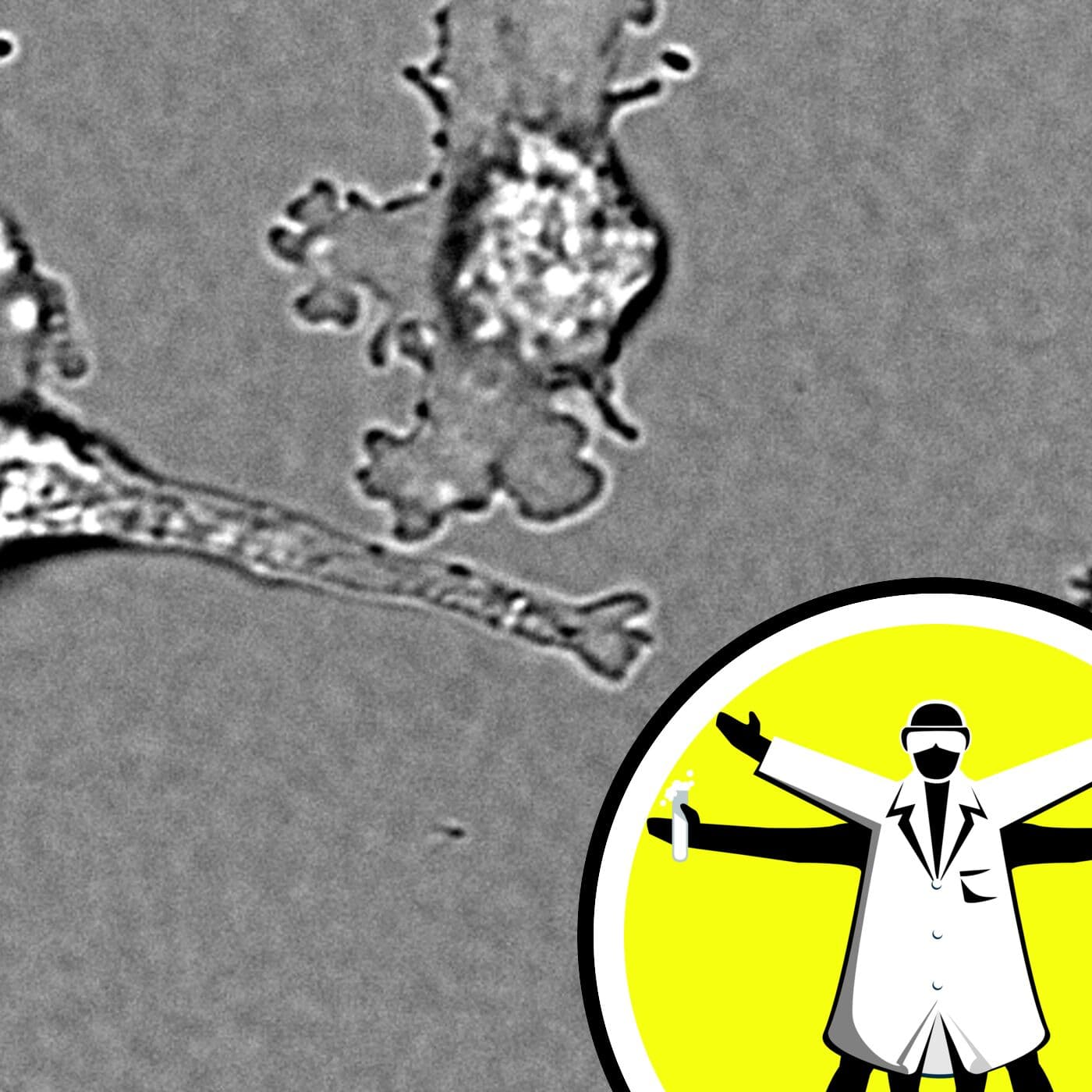
16:10By finding a way to recreate a nose in a culture dish, she can see that a rapid antiviral response in the cultured cells is key to blocking the spread of the virus. But heavy viral exposure or blunting the response by smoking or conditions like asthma leads to viral escape and much more severe symptoms. We're trying to understand how rhinovirus, which is the type of virus that causes common colds, makes you sick. Because something that's come to light in the past 10 years or so is that about half the people who get that virus in their body actually don't get sick. So we thought our body was giving us a big clue on how we can avoid getting colds by just understanding what goes right when we get that virus and we don't get sick and what goes wrong when we get that virus and we do get sick.
17:00Were you doing this in patients or were you doing this in test tubes? People have, you know, struggled with the common cold for a long time. And obviously, people have wanted a cure for a long time. Even the ancient Egyptians had a hieroglyphic of the common cold. But the challenge with studying this particular illness is that in medical research, when you want to come up with a cure, you have to first recreate that illness in the lab somehow. But rhinovirus doesn't infect animals. It's really unique compared to a lot of other viruses like flu or COVID because it really doesn't cause disease in anyone but humans.
17:38So you can't really use the typical lab mice to study it. And then on the other hand, rhinovirus, you can infect, you know, people use like cancer cells which grow really easily in the lab. They use those to study viruses. But that's really not what causes the illness in our bodies. What causes the illness is that rhinovirus causes a reaction among the specialized cells that form the lining of the nose that make mucus and that have an inflammation when they encounter something that isn't good, you know. And so we needed to find a way to study it in that specialized lining of the nose and lining of the lungs.
18:17What we ended up doing was taking human stem cells and growing them for four weeks with the top of them exposed to air. and when you do that they actually form the same kind of specialized community of cells that you find inside our nose and that's what we use to do this study oh i was going to volunteer myself you see because i've come on for this interview with a pre-infection with a rhino virus i'm pretty sure i mean i'll be sniffy today but that's extraordinary so you can actually by culturing the cells and fooling them into thinking they're in a developing nose they will develop the features of nose lining cells.
18:55And does that mean that then they are fully susceptible to rhinovirus infection when they're like that? Yes, exactly. It makes them fully susceptible. And actually, what was really exciting about our study, under different conditions, you could get the same things that happen in people. So I said at the beginning, about half the people who get this virus, they don't actually get sick. Well, that's what we see if we infect these healthy communities of cells that we grow in the lab. If you look in the microscope, everything looks perfect. The little hair like cilia on the top of the cells are beating.
19:29You don't see any cells dying. Everything looks like it's fine. But then if you look really in deep at thousands of cells at once and what's going on inside each cell, you actually realize that about 1 % of the cells are infected with the virus and they've sent out a signal to all the other cells to put up their antiviral defenses so the virus can't spread. And that is probably what happens when people get infected, but they don't get sick. I thought when you first said that, you were going to say, and it turns out those people have met the virus before and they have a really good immune response to it, so it doesn't really go anywhere.
20:05But in fact, they are getting infected then. It's just that this almost like viral burglar alarm signal, which can spread through the cells, is warding off the infection better in some individuals than others. So the virus just doesn't spread very well. If that viral alarm signal, which is called interferon, if that goes on really fast, it shuts it down right at the beginning of the infection. Now, we know just from studying people that certain people have worse rhinoviruses than others. And those people who get worse rhinovirus infections than others are smokers and people with chronic lung conditions like asthma.
20:44And it turns out in those people that their airway cells are not so good at mounting this warning signal. They still do it, but it's kind of delayed and slow. So we just mimicked that in these tissues that we grow in our lab by using a drug to also block that warning signal. And when we did that, all of a sudden we started seeing these cells produce a bunch of mucus and a bunch of molecules associated with inflammation. In fact, the mucus got so thick that those hair like beating cilia couldn't really beat even because the mucus was so thick. So you get a totally different reaction, which looks a lot like what happens in people's noses when they get a cold.
21:29Not everyone who gets nasty run ins with rhinovirus is a smoker, though. You know, I've had some real doozies of cold. So is it just that some of them, some of the forms of them are just very good at getting in and spreading? Or is it that some of us at different times are more vulnerable and then we get a worse infection? Yes, I think that you hit the nail on the head with your second comment, which is that even the same person can be more vulnerable at different times. One of the studies from my postdoctoral work a long time ago was showing that actually the temperature of the air that the cells are exposed to affects interferon, this warning bell.
22:11And if the temperature is even a few degrees cooler than body temperature, it slows down this warning signal. So actually, the airway temperature during the first few hours or first half day of infection might make a difference. There's another factor as well, which is how much virus. You can either get huge exposure or, you know, if you're being really careful, you don't get as much. You might be a little bit exposed to the virus, but not as much of it because you're washing your hands and you're being really careful. The more virus that you're exposed to at the very beginning, the more likely you are to have the bad outcome.
22:49Therefore, what does this tell us about what we can do about it? So, I mean, I can't tell you I found the cure for the common cold with one study, so I'm not going to be able to give you that. But I can tell you that by doing this, by taking observations and turning it into an experiment in the lab, you're then able to ask what molecules are involved in the good response or the bad response. And both of those become therapeutic targets. Like you could promote the good response or block the bad response. So we actually identified a single molecule that if that starts getting activated a lot, you get the mucus hyperproduction and inflammation.
23:28So that represents a target to go after for drugs potentially. So we are at least one step closer to a cure for the common cold. Ellen Foxman from Yale University's School of Medicine there. She's just published that work in the journal Cell Press Blue. She also declined to receive a sample of my rhinovirus. Well, we're now going to examine a remarkable study that has revealed that some of the world's oldest plants don't rely on colour or scent to attract pollinators, but instead they use heat. They found that these cycads, which are ancient seed plants, use a metabolic system linked to the plant's body clock to warm up their cones at just the right time to send infrared cues to beetle pollinators.
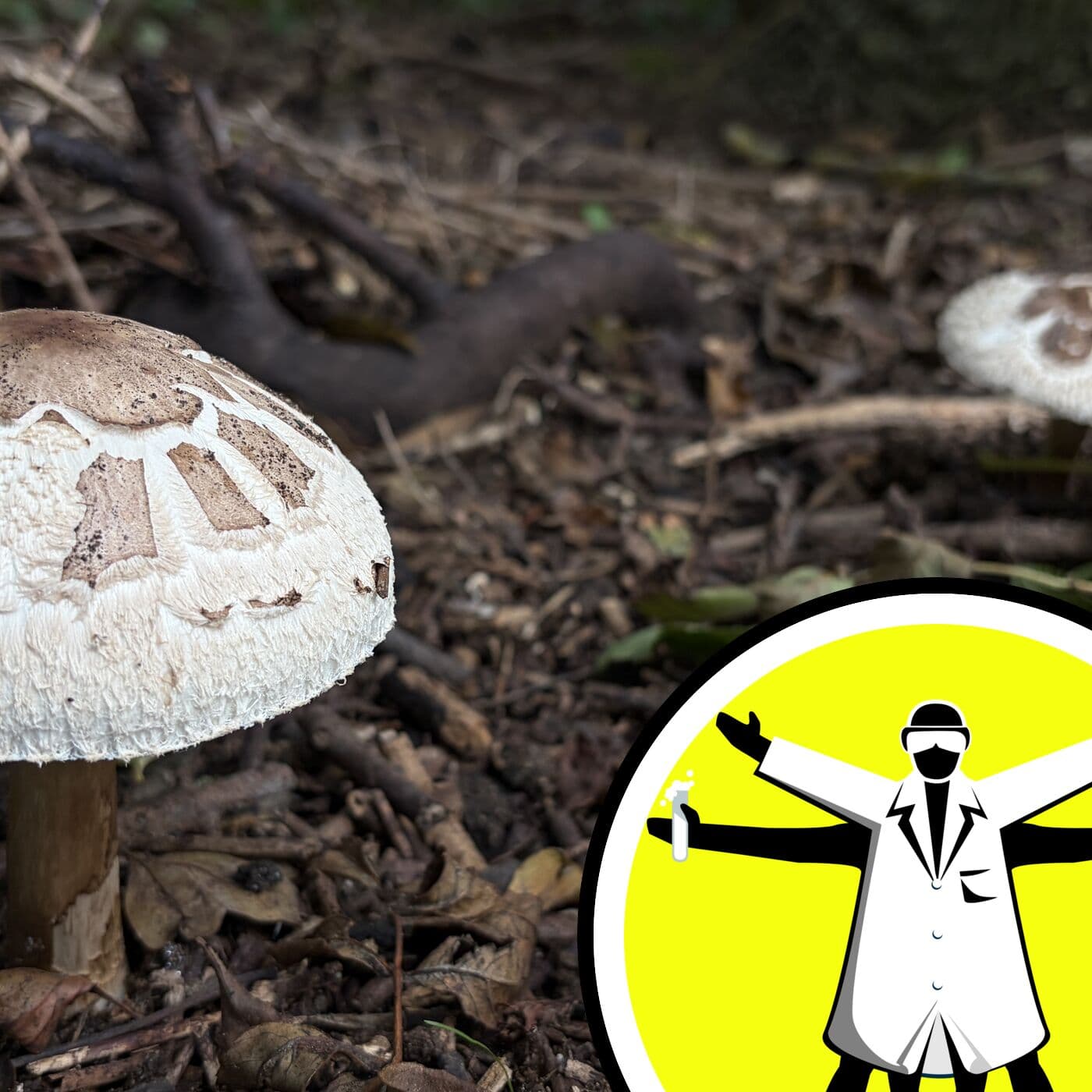
24:10Plant biologist Alex Webb has written a perspective on the piece of work. They found that the reproductive organs of cycads warm up at the beginning of the evening. Now, cycads are a family of plants which are part of the gymnosperms which are plants which produce seeds but they're a very early form of the seed plants. The seeds are naked like you would find in a pine nut whereas later plants like the angiosperms which are the ones that produce flowers have their seeds enclosed like in an apple. So these cycads which are found in the tropics produce cones, and those cones are the reproductive organs.
24:50And just like the later flowering plants, which we're perhaps all more familiar with, the cycads are pollinated by insects. And the authors were interested in the mechanism of this, and they suspected that the warming of the cones attracted beetles, flying beetles, to the cones, first to male plants to get pollen, and then later on in the evening to take the pollen from the male plants to the female plants. How do the plants know what time it is though Alex to do that? Well plants have a circadian clock and in fact what these authors found is that there's just this beautiful timing in that the male plants warm up just after dusk and then three hours later the female plants warm up and the authors think this is due to the circadian clock which is a 24-hour clock inside all living organisms.
25:40We have one, this drives our sleep-wake cycle, makes us want to go to the toilet during the day but not at night. Plants have circadian rhythms, controls movements of leaves, movements of flowers, and the authors speculate that this warming up is controlled by the circadian clock. They actually didn't demonstrate that. It's a reasonable hypothesis. There are some other possibilities. It might be the plants responding directly to light signals, but in either way there's a really interesting question that is raised by the paper is how do the plants know if you like to warm up the male plants three hours before the female plants and that's a really interesting bit of biology that we're working on across all different organisms how you can end up with different timings of events in different organs and different individuals the male parts warm up this lures the the pollinators in they pick up pollen then the temperature presumably drops and meanwhile the females have warmed up so they exit the premises in favour of a hotter venue?
26:43The previous hypothesis around this was that the beetles were gaining warmth or possibly scents were being volatised by the warming of the plants so that the scents spread further and the beetles could detect it. But actually what the authors show here is quite interesting. They show that the beetles are not gaining anything from the warmth. They're directly detecting the infrared radiation produced when an object gets warm. And they're doing this because they have sensors in their antenna very similar to the sensors that are in snakes, which allow snakes to detect their prey through warmth. And they're directly sensing the heat rather than gaining a reward from warming up from the heat or something like that.
27:25So from a distance, they can see the warmed up cones and then fly towards them. And then when they see that the female cones are warmed up, they're attracted to those as well. and why does this matter in evolutionary terms you've said this is a very early process before flowering processes evolve so this is presumably one of the first rudiments of pollination how some of the earliest species that were on the land got pollinated but is that what it is a sort of stepping stone and then plants built on this and developed more efficient or other ways of doing it including flowers there's been a long-held mystery in fact even darwin was interested in this is why are there so many flowering plants?
28:06There's about 350 ,000 species of flowering plants and the cycads there's 24 species. So there's this interesting question that the cycads are pollinated by insects, the flowering plants are pollinated by insects. Why did the flowering plants become so diverse? And this paper led us to conclude myself and my colleague Beverly Glover who's the director of the Botanic Gardens here, looking at this paper, we wondered if there's a reason that the cycads didn't generate so many species, specifically because they used this warming mechanism. With this warming mechanism, they're mostly going to attract beetles at night.
Read the full transcript
28:48The warming mechanism is going to be the best signal early in the night. So you're going to only attract nocturnal beetles. But also this warming signal, you can't do much with it. It's either on or off. Other plants, the flowering plants, develop the ability to attract pollinators using colours. And of course there's more receptors for colours. Insects can see different colours, so you can mix and match those different colours, making a huge variety of signals to attract pollinators. So you can have pink flowers, blue flowers, white flowers, and each one of them might be tuned to attract a specific family of pollinator or a whole group of pollinators.
29:28But also what's interesting is that if you use colour, you can attract insects in the day and in the night because white can be seen at night under moonlight. So by using colour signals, that perhaps the flowering plants were able to interact with a wide range of insects, those active during the day and those active at night and specialise on different insects. And this would drive evolution of new species in the flowering plants. And possibly what we've got is that the cycads got stuck with one pollinator. It works fantastically well. If things are working well, then evolution doesn't need to change it.
30:09Alex Webb and that study came out recently in the journal Science. Well, that's it for today. Do tune in on Tuesday though when Titans of Science returns with John Czarnecki, who's the former director of the International Space Science Institute. He was also the driving force behind the mission that put the Huygens probe on the surface of Titan, which is Saturn's largest moon. Hence, he really is a true Titan of Science. You can hear all about John's amazing colourful space scientific life on Tuesday. Meanwhile, to all of you who support us with very kind donations, a massive thank you. meanwhile if you like what we do and you yourself would like to make a contribution you can do that at nakedscientist.com forward slash donate we really appreciate it and it does make a massive difference i'm chris smith thanks for listening and until next time from all of us here at the naked scientist team goodbye
31:13Thank you.