In short
Mars astrobiology evidence from Perseverance; UK birth-cohort study; fugitive methane leaks from coal exploration boreholes in Australia; Devon fossil reptile evolution; “Question of the Week” on snakes near breastfeeding.
Guests/backgrounds
Sanjeev Gupta (Imperial College London; led Mars Jezero mineral/organic analysis). Alyssa Goodman (UCL Centre for Longitudinal Studies; co-director of Generation New Era). Phil Hayes (University of Queensland; studied methane leaks using LiDAR). Mike Denton (University of Bristol; led Devon fossil study). Dr Fortuna Mafeta Fakka (South Africa herpetologist) and Dr Angela Julian (UK reptile-group coordinator) on snake folklore.
Key claims
Mars rocks show “leopard spots”/“poppy seeds” with organics and redox “reaction fronts,” a potential biosignature but not proof; sample return needed. Generation New Era will follow 30,000+ UK children from 2026 with nationally representative recruitment. Australia’s uncapped coal holes can leak ~235 tonnes CH4/year per surveyed sites; methane emissions vary with weather. Devon fossil Agriodontosaurus pushes lepidosaur origin ~10 million years earlier; solid skull, ~15 large teeth.
Notable examples
Jezero crater mudstones; UCL cohort interviews at 1 year and age 3; Great Artesian Basin coal holes (100–200 m deep); LiDAR trailer surveys; tuatara-related skull features; snake “milk taming” explained as coincidence/rodent attraction.
Written by AI. May contain mistakes. Listen to the episode to check what was said.
Chapters
Tap a time to open that second in VOEvidence of Past Life on Mars
0:55 to 2:27
Discover unusual rocks on Mars that suggest past microbial life.
“First this week, unusual rocks discovered on Mars may hold the most compelling evidence yet of past life on the Red Planet.”
Analyzing Mars' Unique Rock Chemistry
2:27 to 6:39
Explore the chemical features of Martian rocks and their implications.
“And the downside of the work, as he explains, is that although they have samples of the deposits, it's going to be decades before they can bring them back to Earth and analyse them.”
Sample Return Mission Challenges
6:40 to 8:38
Understand the challenges of returning Martian samples to Earth for analysis.
“And we've called it a potential biosignature that has very, very specific meaning.”
Launch of the Generation New Era Study
8:40 to 9:09
Introduction to a new longitudinal study of UK babies set to begin in 2026.
“That study just out in the journal Nature.”
Insights from Longitudinal Studies
9:09 to 11:28
Explore the goals and methods of a large-scale UK study on child development.
“and she co-directs the Generation New Era study.”
Impact of Previous Cohort Studies
11:28 to 14:01
Learn about the significant findings from past UK cohort studies and their societal impacts.
“And we would really encourage anyone to say yes.”
Understanding the Millennium Cohort Study
14:01 to 15:02
Learn about the Millennium Cohort Study and its impact on understanding mental health in the digital age.
“So that you don't die of stress prematurely how many people have you got to do this because 30 ,000 people to follow up with in-depth interviews to probe all of the sorts of things you want to probe with this.”
Understanding the Millennium Cohort Study
15:52 to 16:10
Learn about the Millennium Cohort Study and its impact on understanding mental health in the digital age.
“The Naked Scientist podcast is produced in association with Spitfire, cost-effective voice, internet, and IP engineering services for UK businesses.”
Upcoming Topics and Methane Risks
16:17 to 16:28
Explore the significance of fugitive methane leaks on climate change.
“Still to come, we hear from the paleontologist who's discovered in Devon, England, the fossil of one of the earliest lizard-like animals on Earth.”
Detection of Fugitive Methane Emissions
16:33 to 19:08
Learn about the technology used to detect fugitive methane emissions from coal exploration holes.
“And one such borehole in Queensland produces the methane equivalent of the yearly emissions of around 10 ,000 cars.”
Show all 16 chapters
Impact of Methane Emissions from Exploration Holes
19:10 to 23:06
Understand the environmental impact of methane emissions from old exploration boreholes in Australia.
“The largest system is referred to as the Great Artesian Basin, which covers around 22 % of Australia.”
Broader Applications of Methane Detection Technology
23:08 to 24:12
Discover how methane detection technology can be applied beyond coal holes.
“Finding these holes is not hard and sealing them is actually technically quite straightforward.”
Discovery of Ancient Reptile Fossil
24:16 to 28:00
Learn about the significance of the discovery of a 250 million-year-old lizard-like fossil.
“Scientists say it could be the earliest known member of the reptile group we call Lepidosaurs, pushing back their origins by around 5 million years.”
Uncovering the Skull of an Ancient Lizard
28:00 to 31:10
Learn about the findings from advanced imaging techniques revealing details about ancient lizard evolution.
“size of your thumbnail and in order to see the teeth and all the tiny little bones which we needed to see in the skull we had to get the highest magnification of x-rays that we possibly could.”
Question of the Week: Taming Snakes with Milk?
31:10 to 34:28
Explore the folklore of snakes becoming tame around breastfeeding mothers and the scientific insights behind it.
“because for Question of the Week, James Titko has been taking on this interesting query from listener Svar.”
Autumn Color Variation and Upcoming Topics
34:28 to 35:43
Discuss the upcoming question about autumn leaf color and the importance of gravitational wave detection.
“Next time on Question of the Week, we're answering this from Trent.”
Transcript
Automatic transcript. May contain errors.0:00Hello, I'm Monica Reinagle, host of the Nutrition Diva podcast. Summer is here and with it the hot and sticky weather. A morning working in the garden or maybe on the golf course can leave you more depleted than you realize. And plain water isn't always the most efficient way to restore the balance. That's where Liquid IV comes in. Its science-backed formula is clinically proven to hydrate faster than water alone. Whether you're exercising, playing outside, or simply surviving a summer heat wave, it's an easy way to stay hydrated. Shop now at liquidiv.com. Liquid IV, hydration that goes wherever life takes you.
0:39All engine running. Absolute genius. Get this. Welcome. Welcome. This is the show where we bring you science. What that essentially means is... Discovery. Advances. Research. Technology. Unbelievable. Without further ado, this is The Naked Scientist. Hello, welcome to The Naked Scientist podcast, the programme that brings you the biggest breakthroughs and talks to the major movers and shakers in the worlds of science technology and medicine with me chris smith coming up the strongest hint yet of life on mars so should we get excited or is this just another red planet herring also the first new uk-wide study in 25 years following up babies from cradle to grave we find out why studies like this are so important and an ancient lizard-like fossil that turns out to be the oldest on record gets discovered in Devon.
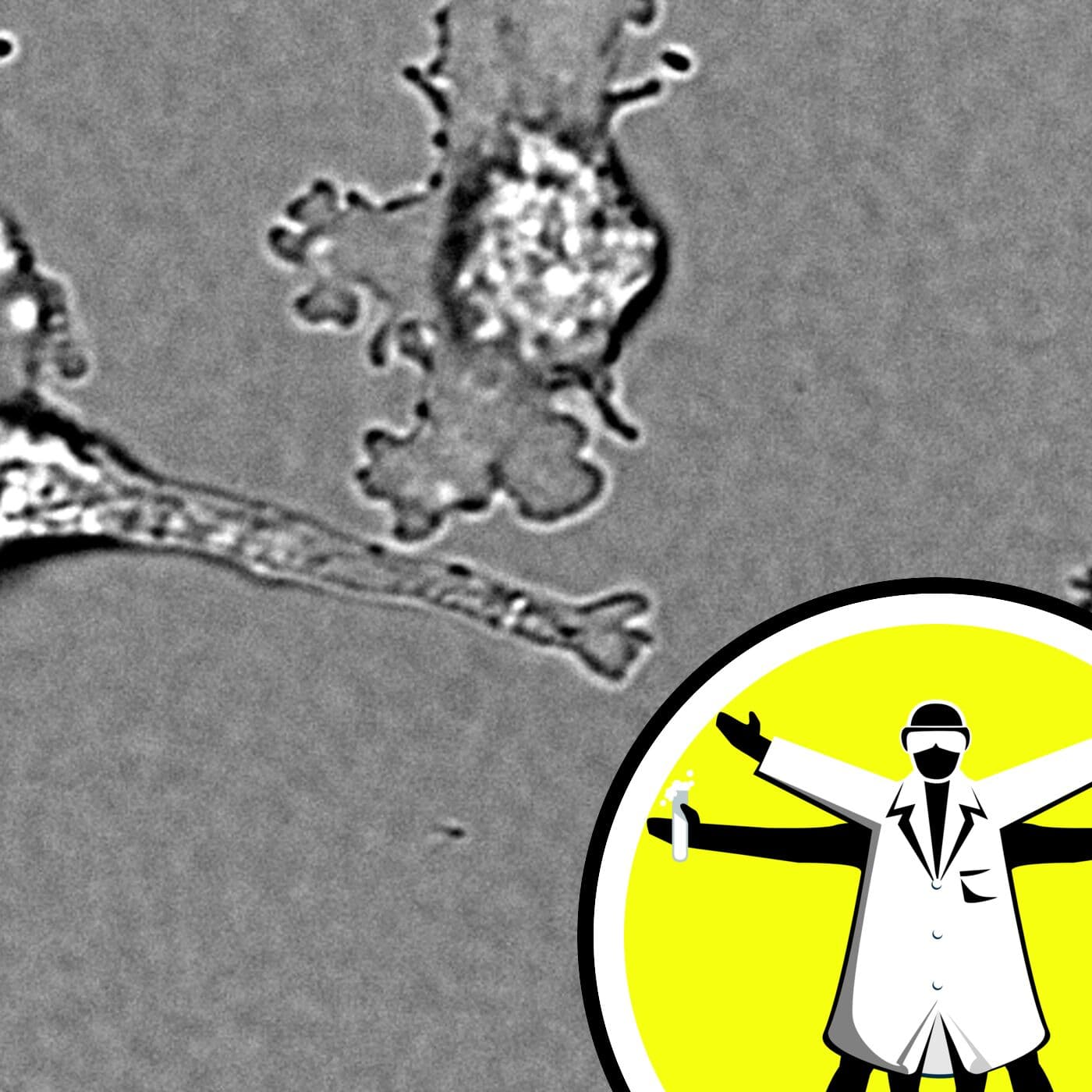
1:40First this week, unusual rocks discovered on Mars may hold the most compelling evidence yet of past life on the Red Planet. The mudstones, which have been found in a dried-up riverbed on a crater called Jezero by NASA's Perseverance rover, are marked with unusual patterns that scientists have dubbed leopard spots and poppy seeds. Researchers say the features are rich in minerals and organic material that could have been formed by communities of microbes billions of years ago, although they do acknowledge that such deposits can also occur naturally, albeit under much more extreme conditions than were thought to have ever existed on Mars.
2:19Consequently, researchers believe the discovery is the clearest sign so far that life once existed on Mars. Imperial College's Sanjeev Gupta is one of the scientists behind the discovery. And the downside of the work, as he explains, is that although they have samples of the deposits, it's going to be decades before they can bring them back to Earth and analyse them. This finding, this result, was not in a place that we actually expected. We'd explored the delta in Jezero Crater. There's a big delta fed by a river valley. So this is the big river valley that cuts through the crater rim. In orbital images, we could see these really light-toned rocks, and they looked really intriguing.
2:57And we decided that we would actually go and have a quick look at them. So we got there, and we found out that they were really fine-grained and had these really fine laminations in them. And we also had some on the sides of the valley. We had some coarser-grained rocks, pebbles, etc. And so our inference is that these are the infill of a lake within an ancient river valley. And when you then began to look at the rocks, when did it emerge that there was some interesting mineralogy there? We have a series of two key instruments attached to the rover arm. One is a Sherlock, which is a Raman spectrometer that can look for organics.
3:38And the other one was pixel, extra fluorescence, which can do mineralogy. But importantly, what it does, it can relate that to the texture and the grains, etc. in the rocks. And so we set about looking at these rocks. Then we started seeing some really interesting chemistry. Like what? What sort of chemicals stood out? Well, firstly, we saw these really little dark spots, which we called poppy seeds. They turned out to be rich in iron sulfides and phosphates. And then the most intriguing features we saw were these spots that we called leopard spots. And we think that those are iron three containing rocks or hematite bearing rocks.
4:23And then when we look at these spots, which are just a few millimeters in diameter, what we could see is that the center of the spot was light toned. and then around it there was a rim of dark toned minerals and this is very very intriguing on earth you find these features and we call them reduction spots that's where you've got these redox reactions taking place is that sort of an interface then so you're saying there's one one group of chemicals is migrating in one direction they meet something or a different environment coming in the other direction and at the battle zone between them as it were that's where you get this line and that's what you're seeing yeah so that's basically a reaction front essentially that's fossilized in the in the rocks and this was the first time we've seen something like this but they're really intriguing and we see them on earth you know you can go up to um i don't know whether you've ever been up to northwest highland scotland where we have some of the oldest sedimentary rocks in britain the torridonian group and you can see these spots So you've got this interesting redox chemistry taking place.
5:26But what drove these redox reactions? On Earth, there's two different mechanisms. You could do this either abiotically, but that often requires higher temperatures, or you can do it biologically by microbes mediating that redox reaction. Also within these rocks, the Sherlock instrument, the Raman spectrometer, has detected organics, you know, carbon compounds. We've got organics, we're in a habitable environment, and then we have these very interesting features that tell a story of past redox reactions. So the microbes are eating some of the minerals. They're producing basically the building blocks of other things that then other microbes can, and you get a community because their microbes are feeding microbes, and that suite of chemical reactions results in the deposition of these minerals with that intriguing pattern.
6:18So you're seeing on Mars what we sometimes see on Earth, sometimes linked to life processes. And so it's intriguing. We have organic material, these minerals and a sort of configuration or confirmation very similar to what we sometimes see here. That's exactly it. And the reason we've called this out is because it's something special. It's not something we've seen before. And we've called it a potential biosignature that has very, very specific meaning. So it's not words being thrown around. It means that we have a feature in the rocks that could have either an abiotic, so non-biological, but also could have a biological explanation.
7:01And we need to analyse it in more detail, study it in Earth laboratories to be able to tease out between those two different hypotheses. Why has it got to come back to Earth though, Sanjeev? Because I thought these rovers are now so damn good with all the instrumentation. Is there no chemical fingerprint or analysis we can do in situ that gets us a step closer, that moves our confidence further down that track to say, yeah, this is looking promising? Perseverance mission was always a sample return mission. So it doesn't have some of the complex instruments that Curiosity has. You know, where these instruments would sit is occupied basically by our sample store, essentially.
7:43And we can't drive Curiosity over there. It's too far, is it? Way too far. Are you not really frustrated now, though? Because you've got this, it's a bit like seeing a pot of gold at the end of a rainbow. and you think, I just so love, it's so tantalising, would love to get there and you can't. Oh, actually not. Actually, for me, certainly it won't be my science that analyses those rocks. That's what I'm getting at. I mean, it's like you think, oh, I've opened the door, there's something really cool to look at and you can't look at it. I know it's the long game, you see. So we're now, I mean, it's like a sweet shop up there, frankly.
8:19We studied these rocks about a year ago and we've been looking at the crater rim and these amazing rocks. So we're well on our way to looking at other things. So it's stored, it's parked, it takes a long time to produce the paper and it's there and that's for future generations. So, yeah, I'm happy to wait. Sanjeev Gupta at Imperial College London there. That study just out in the journal Nature. We're back here down on Earth. The first new UK wide study of babies in 25 years is about to kick off. It's called Generation New Era and it will follow more than 30 ,000 children who are born in 2026, tracking their health, growth and experiences through their early years and onwards.
9:01The study is led by researchers at University College London and it's been funded by the Economic and Social Research Council. Alyssa Goodman is the Director of the UCL Centre for Longitudinal Studies and she co-directs the Generation New Era study. The UK has a very long tradition of longitudinal birth cohort studies, that's studies of people all born together at a particular time and they're followed up not just once but into the future, potentially across the whole of their lives. so we're really excited that there's a new study being launched. They'll be born in 2026. We're going to be enrolling as many as 30 ,000 families into the study and we're hoping to do interviews with them in the first year of their life and again when they're three years old.
9:52What are you hoping to learn from a study like this? These birth cohort studies give evidence for both policy and science across a wide range of domains. So we're looking to begin with about the early years and child development very much at its core. How do they form their cognitive skills? How is their social and emotional learning? How is their health? And what are the factors in their family life and in their wider life that contribute to it? As they age, we'll be relating what happens in their childhood and their early years to that. How will you recruit these people to make sure that what you get is a snapshot of reality rather than a biased sample?
10:34So one of the really important things about this study is that it aims to be nationally representative. The sample is originally drawn from national birth records and we select families based on getting as random a sample as we can with certain characteristics boosted. So we're going to be having study boosts in Scotland, Wales and Northern Ireland to make sure that we can do analysis that's country specific as well as from across the UK. And we're going to be boosting families from ethnic minority backgrounds and from low income areas to make sure that we can really understand issues around ethnicity and low income in particular.
11:18Once we've drawn a sample, families will be receiving letters. If you've had a baby in 2026, you may well be receiving letters around next autumn, inviting you to take part. And we would really encourage anyone to say yes. How do you keep tabs on people across their life course though? Because obviously when you've got little babies, they're plugged into the system. People are highly motivated at the start of a study to get involved in it and stay involved in it but how do you keep hold of them throughout and how many people do you expect to lose to follow up by the time you get to the end of the study?
11:51So we will be in touch with the families regularly. People like to take part because they understand the benefits of the study and why it's for the public good. So although inevitably people do move in and out of studies like this they don't always take part at every sweep we've been remarkably good at keeping hold of our participants and we hope to do that going forward as well. Is this unique in the way it's done or have we got lots of other countries doing similar sorts of things with their populations around the world? So the UK is unique in having such a long series of birth cohort studies.
12:29So the first one of these in the world was in the UK and it was actually from 1946. And we're still in touch with the 1946 cohort families now in their 70s. In the UK, we've then had birth cohorts in 1958, 1970 and the millennium. Around the millennium, there was a great flourishing of studies like this from around the world in New Zealand and Australia and Ireland and France and many other countries beyond. And longitudinal studies are a feature of science now around the world in both developed and developing nations. Are there any highlights that have emerged from that first cohort, the one that you just mentioned are now in their 70s?
13:14Have any things come out of that where you can point to that and say, look at the learning that's emerged. This is why these sorts of studies really matter? For the 1946 cohort, it was really the first study of its kind to capture child development in the way that we think about it now in terms of cognitive skills and social and emotional development and really understanding the precursors of health in midlife and in older age. Each of the studies beyond that has changed the world in different ways. So the 1958 cohort was the first one to establish definitively the link between smoking in pregnancy and baby's health, and that was incredibly formative for public health policies throughout the 1970s.
14:00The millennium cohort has been the first that we've measured growing up through the digital era, and it's been incredibly informative for understanding the mental health of this generation in the new environment in which they've grown up in and also some of the different technologies around them that affect their teenage behaviours like smoking and vaping and other things to do with their teenage lives. So that you don't die of stress prematurely how many people have you got to do this because 30 ,000 people to follow up with in-depth interviews to probe all of the sorts of things you want to probe with this.
14:38That's enormous amounts of information and data and just time sitting down with people. How many people have you got working on this? There's going to be hundreds of interviewers up and down the country who become involved in this study, getting busy to do this next year. It certainly will be. Alyssa Goodman, who's Director of the UCL Centre for Longitudinal Studies and Co-Director of the Generation New Era Study. And we're going to be heading to London to make a full podcast episode with Alyssa and her team when they prepare to kick off next year. So do stay tuned towards the start of 2026.
15:33formula is clinically proven to hydrate faster than water alone. Whether you're exercising, playing outside, or simply surviving a summer heat wave, it's an easy way to stay hydrated. Shop now at liquidiv.com. Liquid IV, hydration that goes wherever life takes you. The Naked Scientist podcast is produced in association with Spitfire, cost-effective voice, internet, and IP engineering services for UK businesses. Find out how Spitfire can empower your company at spitfire.co.uk
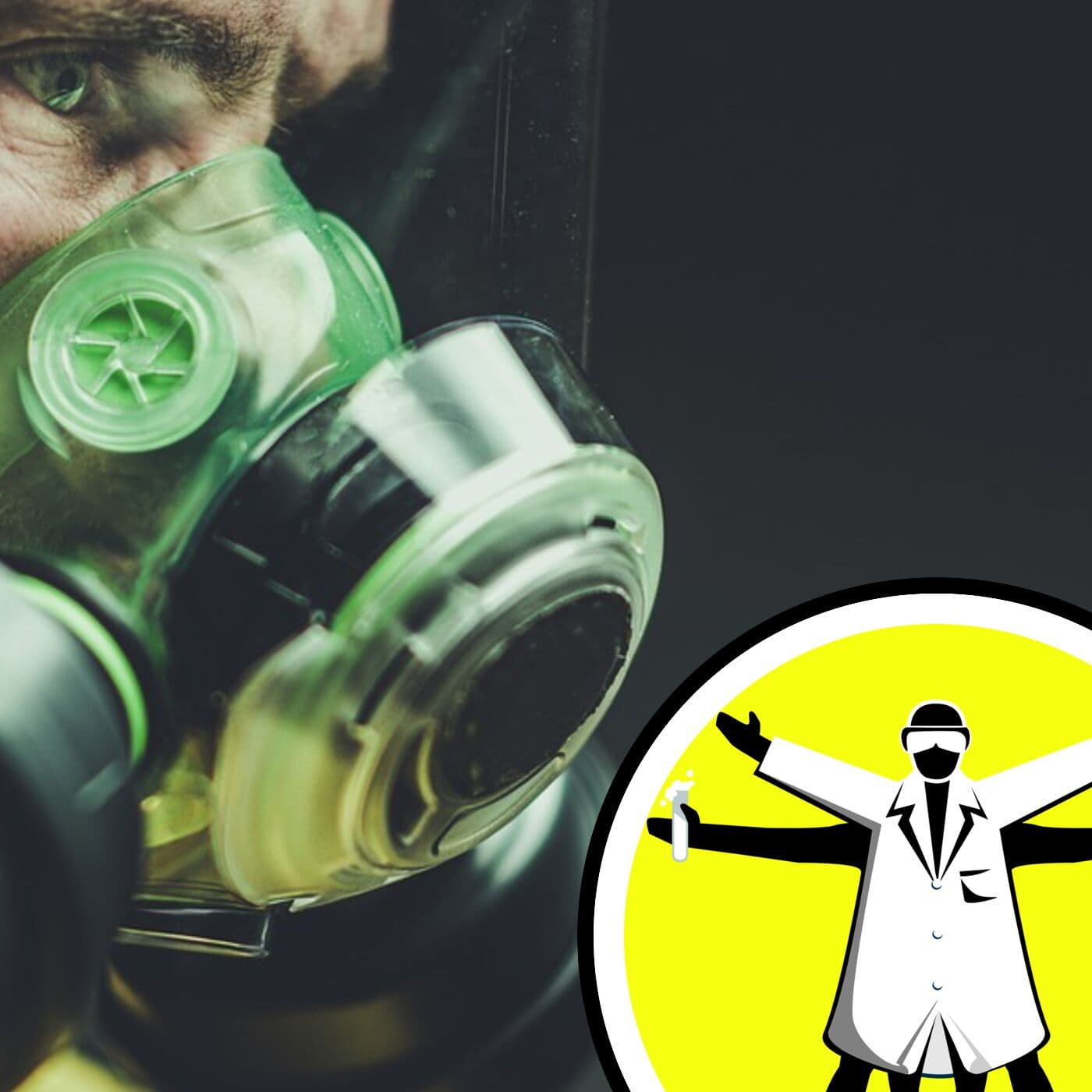
16:10Music in the programme is sponsored by Epidemic Sound. Perfect music for audio and video productions. This is the Naked Scientist podcast with me, Chris Smith. Still to come, we hear from the paleontologist who's discovered in Devon, England, the fossil of one of the earliest lizard-like animals on Earth. What's the significance? Before that though, escaping methane is a major climate change risk because it is much more potent as a greenhouse gas than CO2 so documenting where it's coming from and at what sorts of rates is a high priority for understanding the atmospheric carbon budget and it turns out that in Australia there is a particularly numerous and underappreciated source of the gas in the form of old exploration boreholes sunk by coal prospectors These allow gas that's trapped underground in coal deposits to seep out.
17:01And one such borehole in Queensland produces the methane equivalent of the yearly emissions of around 10 ,000 cars. And there are tens of thousands of these holes across eastern Australia, many of them uncapped and unmonitored. And this means the problem might be far-reaching. Here's the University of Queensland's Phil Hayes, who's been studying the problem with a new bit of kit he's developed. What we've done here is we've taken a piece of technology out that enables us to accurately quantify fugitive methane emissions. And what we've actually found is coal exploration holes that have been drilled historically that are leaking fugitive methane into the atmosphere.
17:40What actually is fugitive methane, though? So this is methane that is not being captured from industrial operations, from digesters, from the oil and gas industry. Really, it's gas that has escaped. And in this case, we're saying it's fugitive coming out of these coal holes because it's gas that's escaping from underground. And presumably the relevance here is that methane is a potent greenhouse gas. And we want to make sure we know exactly how much of it is getting up into the atmosphere at any one time and from where. Yes, absolutely. So this is an emission source that is not accounted for in emission estimates.
18:19These exploration holes have not been identified previously as a significant source. How are you doing it then? Tell us about the tech. Before we look at how much methane is coming out, tell us how you're actually finding it. How does that work? The actual system we use is a laser-based LiDAR camera, and that's tuned in the near infrared such that certain times it would, if there's methane in the air, that laser will be absorbed and other times that laser is not absorbed and it's the difference between those two signals which goes forward into calculations of how much methane is in the air. That laser's then scanned around a field of view and over a minute it picks up a three and a four-dimensional picture of methane in the atmosphere to answer the question how much methane must be being released.
19:09What do you do then drive around with this on the back of a four by four or something? It's more of a static system what we've done is we've integrated this into a trailer so that trailer can be towed around and we've operationalized that for an Australian environment so we can go out into rural areas so we've got solar panels, batteries, communications and compute facilities on board that trailer so that means we can set up in locations and survey over longer periods of time and that's actually what we did with this coal hole so one of the interesting factors here and part of the reason we've written the paper about it is that the emission rate actually varies over time and it's dependent on the weather if the weather is bad as in pressure is low it's rainy you actually get more emission than if it's in fine weather when you said it had been australian operationalized i thought you were going to say it's got a beer cooler and a barbie on the back as well but dwelling on the the actual places you've explored where did you test this then and how did how did the fact that you've got all this methane coming out the ground come to light so australia is big on the eastern portion of the country we have a very large system of geological sedimentary basins so these are areas of sedimentary rock.
20:29They go down many kilometers. The largest system is referred to as the Great Artesian Basin, which covers around 22 % of Australia. The Surat is a smaller sub-basin of that, but it's still the size of a large European country, sort of the size of France or Spain. We've been out there for a number of months, and we're given a tip-off about these coal holes through negotiation with landholders. We managed to get out there to survey a few of these. It's a pretty extensive area. And these are holes that people prospecting for natural resources historically, they've drilled down to do the geology and see what might be down there, and then they've just left the hole there.
21:10That's what you're examining. Yeah, these are coal exploration holes, so they'll typically be drilled 100 to 200 metres down. And what they're after is to get samples of, in this case, coal to find out about the distribution, the quality, the thickness, how much there is. These holes are supposed to be backfilled but historically we know that certainly some of them have not been filled adequately or adequately sealed and the one that we surveyed was there was you couldn't actually see a hole on the surface it was covered in dirt there was a very large amount of methane coming out through the soil.
21:47How many of these holes are there then? We're not entirely sure there is an estimate that in this particular the basin the Surat there's around 30 ,000 exploration holes and probably another 100 ,000 in another basin the bone basin to the north. And how much methane based on your measurements are coming out of holes like this? We surveyed a couple of holes which had similar rates and these numbers might not sound huge but around 235 tonnes a year of methane but that's the equivalent of at least 6 ,500 tonnes of CO2 a year. That's comparable to the distance driven by an average Australian car in a year of around 10 ,000 cars.
22:31So now you can put some numbers on the scale of emissions from sources like this. Is the motivation that now we can quantify this, we know how big the threat is, and this helps to persuade people to come up with mitigation strategies. Is that where you hope this is going to lead? Yes, what I'd be hoping from this work is that we move into a more proactive period where these holes are found and sealed rather than a slightly more reactive mode that only once real problems have been seen is anything done about them. And there is an opportunity here. This is the low hanging fruit of fugitive emissions.
23:09Finding these holes is not hard and sealing them is actually technically quite straightforward. would and there would be some money involved but it's not um it's not tens of millions do we have to stick with just coal holes though because there are lots of places where methane comes from for instance near london there are decades of london waste piled up making artificial mountains that have been grassed over but they're spewing out loads of methane i mean could we use this sort of technology to quantify possible overlooked sources and mitigate those as well beyond just fossil fuels? The same technology absolutely can be used to scan across landfills to identify where leaks are occurring and to quantify those rates and that's an application that we're looking at taking further here in Australia but I'm also aware that it's being done overseas.
24:03Really interesting stuff. Phil Hayes who's at the University of Queensland. Thanks Phil. Their study just out in Science of the Total Environment. A 250 million year old lizard-like fossil has been discovered in Devon. Scientists say it could be the earliest known member of the reptile group we call Lepidosaurs, pushing back their origins by around 5 million years. The find may offer new insights into reptile evolution. The discovery was led by Mike Denton at the University of Bristol. This was a very important time in Earth history. There had just been an enormous mass extinction event at just beyond 250 million years ago that cleared out enormous numbers of species and only about 5 % survived.
24:47So during this time interval, which is called the Triassic, from 250 to 200 million years ago, life was recovering and evolving really fast. and a lot of the modern groups originated at that time. The mammals, lizards it seems, based on the new evidence we're presenting, and the dinosaurs, and all sorts of new groups were emerging. What did life on land look like at that point then? What did these reptiles evolve from? What was their ancestor that would have come upstream of this specimen you've discovered? So around at the time of this beast, and although it's very small, it would sit neatly on the palm of your hand.
25:25we've given it the rather large name of Agriodontosaurus referring to its teeth it would have been a pretty small cousin at the time feeding on cockroaches and other insects in the undergrowth probably pretty terrified of being eaten by some dinosaur ancestors there were some quite active two-legged animals close to dinosaurs but not quite there were also the ancestors of mammals which were warm-blooded already and pretty nifty hunters. So this earliest lizard-like creature would have lived in a bit of fear of all these other creatures of the day, but it was clearly doing something quite important because it then eventually led to such a huge and successful group.
26:09What tells you it is a lizard then and not one of those other erstwhile dinosaur or progenitors? It's still four-legged. One thing lizards rarely do is to go up on their hind limbs. It's got a particular kind of skull which has got very definite features, particularly in the region behind the eye socket, the nature of the teeth. And so this is a close relative, in fact, of a very unusual living lizard-like animal called the tuatara, which lives in New Zealand. And so the big mystery we had to resolve was what would we find with this very earliest representative of the whole lizard-like group? Would it be like the modern lizards and snakes, which have got very mobile skulls, they can throw their jaws open quite wide to capture their prey, which in many cases indeed are quite big, juicy insects, or would it be like the living tuatara with a much more solid, less mobile kind of skull?
27:07Where did this one turn up? It was found on the beach in Devon, And one of our co-authors, Rob Coram, actually collected it a number of years ago. And when he dug it up, he thought, my goodness, what's this? Because normally in these red rocks, you don't find complete skeletons, just isolated teeth and bits and pieces. And he poked about with a needle and then realized that trying to clean it that way wouldn't work. And so, thank goodness, got in touch. And then we discussed what to do. and for this kind of fossil which is concealed in the rock we benefit enormously from ct scanning which is effectively x-ray scanning and in the end we had to take it to the synchrotron this this is one of the big physics machines we we scanned it in grenobla and in diamond at oxford to give us the enormously high detail we needed because it's a tiny animal the skull is about the size of your thumbnail and in order to see the teeth and all the tiny little bones which we needed to see in the skull we had to get the highest magnification of x-rays that we possibly could.
28:14Have you actually extracted it from the rock now or are you going in this publication entirely from those synchrotron and CT images? We wouldn't dare try to get it out of the rock because we'd probably destroy it. And so the glory of X-ray CT imaging, particularly on the synchrotron, is you get so much detail. And we were able to process this in the computer to clean it up in the sense of getting rid of little blobs and fragments of rock that were confusing the scan because it depends on the density of the material. And so in the end, we were able to show from the scan a really beautiful three-dimensional skull, pretty complete slightly squished but when you look at the pictures you can see these enormous choppers so although it's a tiny animal it's got just a limited number about 15 really pretty big teeth and it's not a juvenile and so this is a little adult and it was probably feeding on cockroaches and other insects on the forest floor that were as big as its head or bigger you know it'd be like us biting a rabbit and kind of eating it whole.
29:24What does this tell us? How does this advance knowledge? And what's next on your wish list, apart from corroborating it, obviously, finding more examples, but what next do we need to do to firm this up? So what this tells us is the age of the origin of the whole group of modern lizards and the Tuatara, 12 ,000 species, it pushes their date of origin back about 10 million years earlier than had been thought. And so that has consequences for redating a lot of the other key evolutionary branching points, particularly in the early phases of evolution of the group. Secondly, it tells us that this ancestral form, currently the oldest member of the group, had a solid or firm skull without the kind of additional joints that we see in the modern lizard or snake skull, where they can flip the snout up a little bit and move the jaw joint back in special ways.
30:24It's got these particular fixed teeth in the jaws. They're fused to the bone rather than being somewhat loosely attached, as we see in many modern lizards. And there's also a structure behind the eye sort of running back from the cheek area called the lower temporal bar that is missing unexpectedly in this early form because it had been predicted that this lower temporal bar was a primitive feature that was later lost in all the lizards so it's realigning stuff and giving us a lot of bits of information on which we can reconstruct aspects of functional evolution of these early lizard-like animals.
Read the full transcript
31:04Mike Denton from the University of Bristol, and that study is just out in Nature. Well, now we're going to stay with reptiles, because for Question of the Week, James Titko has been taking on this interesting query from listener Svar. In Africa, there are stories of snakes becoming tame when around breastfeeding babies. There would even be instances when a breastfeeding mother would spray breast milk on the snake to tame it. Is this a legend or is there a scientific explanation to this phenomenon? Thanks for that, Svar. It's quite the image, isn't it? It seems this story is common in this part of the world.
31:38Here's Dr. Fortuna Mafeta Fakka, herpetologist at Northwest University in South Africa. This story comes up a lot and a lot of the stories that do come up, I can put some sort of scientific explanation behind it, but not always. Like the milking part where you spray the snake with milk entertainment, that is something I cannot explain. Typically snakes are feared and a lot of people want to kill them on sight. That creates a problem because the snake, if cornered, it will defend itself and that usually ends up in a snake bite. And if it's a venomous snake, then we have a lot of problems. This is something we learned from childhood.
32:20Snakes are dangerous. But as you interact with hepatologists and people who are happy to share what they know about snakes, the perception sort of changes and people now know that actually if you leave a snake alone, the chance of it biting you becomes really, really low. Biologically speaking, there's nothing to suggest snakes would or would not be attracted to milk. As reptiles, they can't consume it. So what's going on here? Here's Dr Angela Julian, coordinator of Amphibian Reptile Groups of the UK. Snakes are attracted to houses because you get rodents and snakes like to prey on rodents. So I think it's more likely that they happen to be there because there's a ready supply of food, shelter, cool places to maintain their body temperature and the breast milk is entirely incidental.
33:12Obviously, there are venomous snakes in Africa, particularly puff adder can be found around homesteads. Also black mamba, they often live alongside people for a long time and people are unaware of this. If there is an interaction, often it's very negative for the snake, I should say. In reality, unless an animal is provoked, or in the case of the puff adder usually stepped on, it's not going to put itself out of its way to attack somebody. It's just coincidence, not a causal relationship. The snake is there whilst the mother is otherwise engaged and because she's otherwise engaged she's not perhaps paying attention to the snake in the way she normally would be.
33:53Angela Julian, coordinator of amphibian reptile groups of the UK and before her Dr Fortuna Mfeta Fakker, herpetologist at Northwest University in South Africa. Svar, it seems you're not alone in having heard tales of snakes seemingly entranced by mothers feeding their babies. While there's nothing specific about milk that would play a part in interactions between people and snakes, it might be that our preconceived notions of danger mean we seek explanations for the naturally non-aggressive behaviour of these reptiles. Thanks for sending that one in. Next time on Question of the Week, we're answering this from Trent.
34:32Autumn has arrived here in northern Canada where I live. And, like the future, it doesn't appear to be distributed evenly. I'll spot one yellow leaf on a green branch, a yellow branch on a green tree, or a single yellow tree in a forest. Question is, is this variation due to something in the trees or micro variations in temperature or other weather patterns? Thanks. Well, rather than use AI to answer a question, we've got a real-life expert. and if you'd like to send in a question for us to tackle or you have an answer and you'd like to throw your hat in the scientific question of the week ring why not email us it's chris at thenakedscientist.com you can also pop on over to our forum that's at nakedscientist.com forward slash forum where these and all of the past questions of the week from all the years we've been doing this actually are being discussed there that's all we've got time for this week do join us on tuesday though for a very important anniversary because it is a decade since we first detected gravitational waves we're going to be exploring their past their present and their future and very important for me i get to see isaac newton's notebooks where he laid the groundwork for our early understanding of gravity the naked scientists is supported by rolls-royce if you like what we do then do please consider helping us out with a donation to the program you can do that at nakedscientist.com forward slash donate you can also follow us on instagram linkedin and x and if you'd like to write up a review on the podcasting platform where you listen to the program that is very much appreciated as well i'm chris smith from all of us here at the naked scientist team thank you for listening and until next tuesday goodbye
36:29Hello, I'm Monica Reinagle, host of the Nutrition Diva podcast. Summer is here, and with it, the hot and sticky weather. A morning working in the garden, or maybe on the golf course, can leave you more depleted than you realize. And plain water isn't always the most efficient way to restore the balance. That's where liquid IV comes in. Its science-backed formula is clinically proven to hydrate faster than water alone. Whether you're exercising, playing outside, or simply surviving a summer heat wave, it's an easy way to stay hydrated. Shop now at liquidiv.com. Liquid IV, hydration that goes wherever life takes you.