
In short
The episode covers three science stories: Artemis II’s Moon-bound launch, a UK/US-led lab-grown esophagus breakthrough, and research on physical inactivity plus “brain cell” computing.
Guests
Richard Hollingham, science journalist (Space Boffins/Space Muffins) who attended the Artemis II launch near the Florida pad (~3 miles away). Paolo de Coppi, paediatric surgeon leading the lab-grown pig esophagus work (published in Nature Biotechnology). Deb Salvo, University of Texas at Austin researcher on physical activity messaging and health impacts (Nature Medicine). Brett Kagan, co-founder/CSO of Cortical Labs developing brain-cell chips that play games.
Key claims/examples
Artemis II is a test mission with translunar injection, manual control possible but mostly pre-programmed, and success depends on safe parachutes/splashdown. Esophagus: decellularized pig scaffold repopulated with recipient-derived muscle cells; ~8 weeks to colonize 2.5 cm, ~3 months to become indistinguishable. Physical inactivity: ~7.2% of deaths worldwide; “non-coercive” activity (choice, walk/bike infrastructure) is emphasized; walking/biking recommended. Brain chips: induced pluripotent stem cell–derived neural clusters; electricity-based microelectrode input/output; progressed from Pong to Doom-like games with “quarter brain cell power.”
Written by AI. May contain mistakes. Listen to the episode to check what was said.
Chapters
Tap a time to open that second in VOWitnessing History: The Artemis II Launch
0:45 to 2:00
A vivid description of the emotional experience during the Artemis II launch.
“Richard Hollingham from the Space Muffins was at the launch site in Florida and I asked him to describe what it was like to witness history in the making.”
Rocket Specifications and Dynamics
2:00 to 5:00
Detailed insights into the size, specifications, and dynamics of the Artemis II rocket.
“They call it a lawn, which is, it's more a pretty scrubby field, which goes down to a, there's a lake with alligators in it.”
Mission Phases and Astronauts' Journey
5:00 to 7:30
An overview of the Artemis II mission phases and the astronauts' critical tasks.
“Essentially, they have their sleep interrupted.”
Trajectory and Testing Challenges
7:30 to 10:00
Discussion about the trajectory to the moon and testing challenges faced by the astronauts.
“That said, there is a period during the mission, there'll probably be some other periods during the mission, where the astronauts can take manual control of the spacecraft.”
Spacecraft Control: Manual vs. Automated
10:00 to 12:30
Exploration of the balance between manual control and automation in the spacecraft.
“Richard Hollingham from the Space Boffins.”
Lab-grown Esophagus Breakthrough
12:30 to 14:01
Insights into the creation of a lab-grown esophagus and its potential impact.
“Essentially, we took a gullet from a cadaveric pig to strip out all the cells and then we seeded cells from the recipient and then we implanted these esophagus in the recipient.”
Cell Types and Muscle Cell Applications
14:01 to 18:08
Learn about the essential cell types for muscle regeneration and their sourcing.
“There are muscle cells, of course, epithelial cells, so the skin, the inner layer, vessels, and nerves.”
The Role of Pig Esophagus in Research
18:08 to 19:35
Understand why pig esophagus is used in human-related research and its similarities.
“Would it work, though, if you were to do the same thing with human cells?”
The Cost of Physical Inactivity
19:40 to 24:17
Examine the global health implications of physical inactivity and its associated deaths.
“Now estimates are that physical inactivity is responsible for 7.2 % of deaths worldwide each year by driving conditions like obesity, type 2 diabetes, hypertension and fatty liver disease.”
Promoting Physical Activity
24:17 to 26:20
Discover effective strategies and messages to encourage global physical activity.
“But what we do know, put simply is that some physical activity is better than none and that physical activity really benefits almost anybody in the world despite of their circumstances or diseases.”
Show all 12 chapters
Exploring Bioengineered Brain Cells
28:00 to 31:26
Discover how bioengineered brain cells are created and their potential applications.
“We grow them in these little flasks and you provide them the right nutrients and the right signals and you can actually shape and grow these cells into the way you want.”
The Future of Neurotechnology
31:26 to 32:45
Learn about the future directions for neurotechnology and its impact on intelligence and robotics.
“which you can feed back into the game and the cells are effectively playing the game.”
Transcript
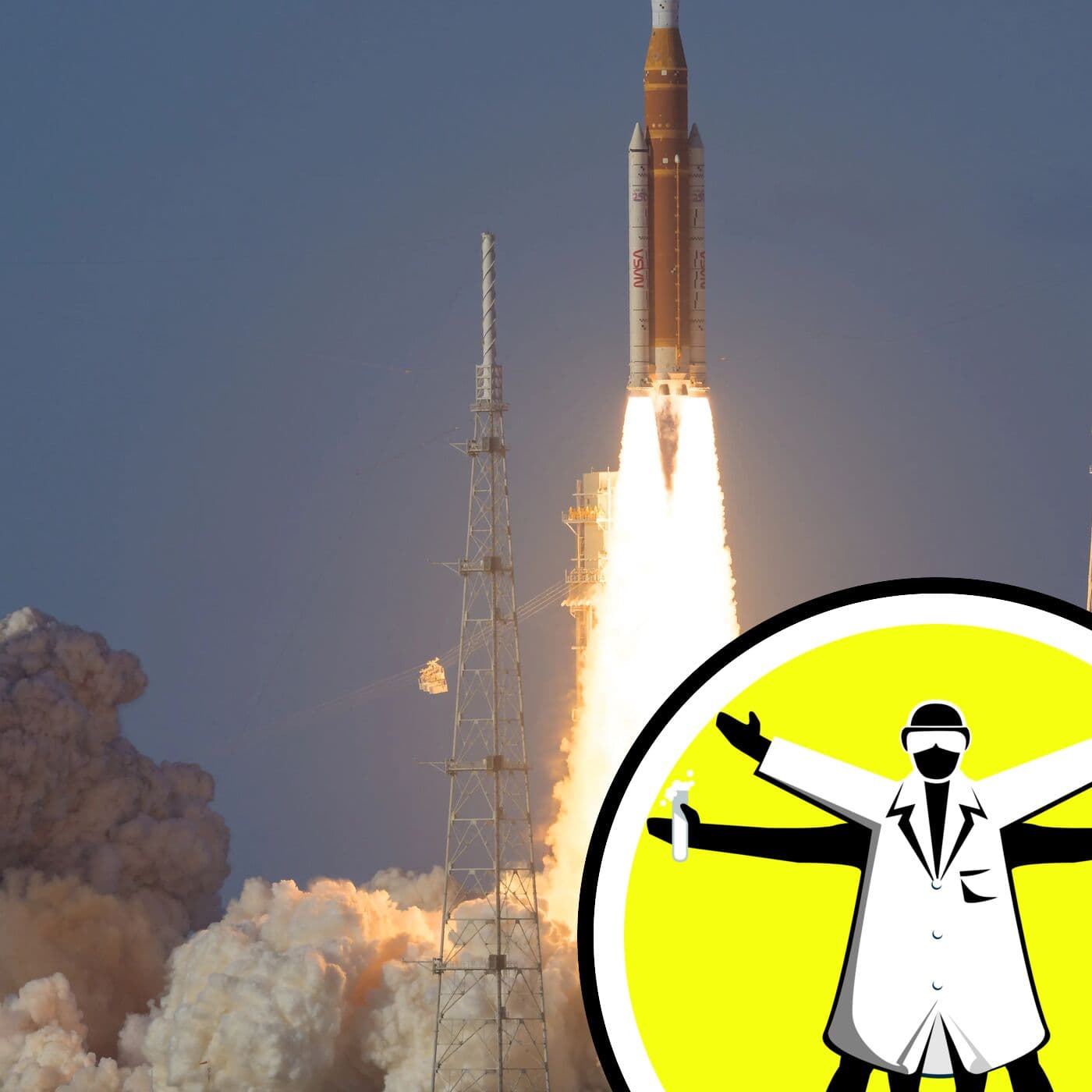
Automatic transcript. May contain errors.0:01And here we go. 10, 9, 8, 7, RS-25 engines, 8, 4, 3, 2, 1, booster ignition, and lift off! The crew of Artemis II now bound for the moon. Humanity's next great voyage begins.
0:27Pretty good, roll pitch. Roger, roll pitch. Hello, welcome to the Naked Scientist podcast. The launch of the Artemis II mission that begins our program this week marks a major step in returning humans to the moon for the first time in over 50 years. It's a milestone that will shape the future of space exploration and the future onward journey to Mars and beyond that. Richard Hollingham from the Space Muffins was at the launch site in Florida and I asked him to describe what it was like to witness history in the making. The sound, the light, it was blinding. This extraordinary quacking noise as the rocket, I mean, really jumped off the pad.
1:09sky was so clear we saw the solid rocket boosters which were making that cracking sound drop away as the rest of the rocket headed into orbit i was actually in tears it was just the emotions were so overwhelming well you've been talking about going for a while richard haven't you you've been saying i'm going to fly out there and then and this time it was a bit of a risk i suppose for you to go you must have had the instinct it was going to come off because you did actually book the ticket and go out this time? Every other science journalist I've spoken to considers me so lucky because yeah I turned up the day before I went to the launch it was 10 minutes late and then I'm going to head back again this so rarely happens and then the big screen that you probably saw on TV the big countdown clock counts down to 10 minutes and then held at 10 minutes they could have held that for the whole two-hour launch window and then get started again the next day perhaps and sort of round it back again but then when it started clicking down from 10 minutes we knew unless something would you know really wrong with it at the last minute it we would go for launch and yeah the atmosphere was just absolutely phenomenal so you were quite close effectively how far because i mean i was watching on the telly and there were all the spectators and that kind of thing there how far away actually is that where you're sitting compared where it's actually going off from?
2:33I think it's about three miles. It's actually as close as you can get. It's the press site. They call it a lawn, which is, it's more a pretty scrubby field, which goes down to a, there's a lake with alligators in it. And then beyond that is the sort of roadway they take the rocket down on and then the launch pad itself. So the rocket is so enormous that you can see it. But once it launches, just because of that, sensory overload, you absolutely feel it's really right next to you. And honestly, I wouldn't want to be any closer than that. How big is it? It is huge. And according to NASA, it's taller than the Statue of Liberty.
3:15But it's not as tall. It's also quite big and fat because you've got this huge tank, which is that orange sort of core, which has the rockets at the bottom of it. Then beyond that, you've got the European Service module at the Orion capsule at the top and then these two enormous solid rocket boosters on this on the side which are really like giant fireworks once you like those you have to go and I mentioned the rockets they're really interesting because they're actually a legacy of the space shuttle program and three of the rocket engines so they're four at the bottom of the core stage there three of them have actually flown in space before on different space shuttles and the fourth one was a spare from the space shuttle program they're now starting to make new ones it's just such a good engine that they're going to use it again and again and again the downside is these engines won't be reused because they will burn up in the atmosphere so none of this rocket is apart from the solid rocket boosters returning to earth to be reused it looks like it goes up really slowly i suppose that's a function of the distance yeah so because of those solid rocket boosters it went pretty quick the first part you know it's apparently quite a kick for the for the astronauts and i think what we're seeing there because it's arching away it does look quite slow i've seen other launches and particularly with soya's launches they they're a lot slower this this looked pretty for considering you know what a massive rocket this is it leapt off the launch pad and it was the light as well it was so bright we were kind of joking afterwards that maybe we should have had goggles issued you know it was like a sun a mini sun i mean the giveaway of how fast it actually was going was within 10 minutes they said they were doing 18 000 miles an hour but then it began to slow down so what is the actual program now it gets to a certain altitude talk us through what happens in each stage over the next 10 days or so in the press conference that i was at they were saying that the first day for the astronauts is really busy they're going to get really tired.
5:20Essentially, they have their sleep interrupted. So they have a sleep period allocated of just four hours. They have to wake up and then fire the engines. Then translunar injection, that's a phrase that has not been used since 1972 and the flight of Apollo 13. And that sends the upper stage, which is the Orion capsule where the astronauts live, and the service module provided by Europe, the European Space Agency, which supplies all the power, the life support. If the trajectory is right, it will go round the moon, capture by the moon's gravity, then ping back round to Earth. So it's not going into orbit around the moon.
6:00It's going up around the moon and then back towards the Earth. And all the way through, all the communications, this is a test mission. And we're seeing, you know, just as you go along, lots of little glitches. When they woke up on the first day, the astronauts were reporting that the capsule was cold. So, you know, work out how to adjust the heating. There was an initial problem with the toilet, for example. So it's a lot of testing along the way. But once they're heading to the moon, that's where they're going. Once they come back around the moon, they're heading back to the Earth. That is what will happen.
6:31But I think we are going to get some incredible imagery as we leave the Earth. And then coming back around the moon, there's the potential there for another Earthrise image, the Earth rising above the lunar surface. Why are they going on a route around the Earth once or twice before they do that lunar injection? Why not just take off and go straight for the Moon? It's all part of the test element of this mission. If there are problems with the spacecraft, if you're in low Earth orbit, you can be rescued. It's a test mission. So they only want to send the astronauts out to the Moon them back and that you know you can't change that once you're going out it's going to be very difficult to sort of turn around and come back so they only want to do that if the spacecraft is in a decent state how much of this will be them controlling and steering things like steering a ship versus a computer program because we're discussing this as a family we're watching it live last night and one of the questions my wife said was well how much actual driving will they do how much is just down to computer power and why that's a really interesting question it's actually one i put to a mission controller um at uh houston and essentially the the astronauts could take almost entire manual control of the spacecraft there's a lot of automatic systems behind that but that said most of the trajectories most of the procedures are pre-programmed it's a question pressing a go button.
8:04That said, there is a period during the mission, there'll probably be some other periods during the mission, where the astronauts can take manual control of the spacecraft. And you've got two phenomenal pilots there, you've got the commander Reid Wiseman, and you've got Victor Glover. They're very much looking forward to taking control, as you can imagine. And it'll be in the same way you know an aircraft an aircraft even when the pilots are controlling it it's fly by wire there's a lot of computer behind the actions the pilots take and it'll be the same case with Orion so in that respect they could fly the whole mission manually they would be absolutely exhausted so a lot of it is is sort of pre-programmed sequences of events that are uploaded from mission control and if all does go to plan they will go around the back of the moon this is a farthest point for a human ever i think isn't it isn't that the claim and then they're on their way back it's a splashdown isn't it recovery yeah the furthest point that's what they're aiming for so they've been slightly downplaying this but if all goes to plan the engines perform exactly as they're hoping it will be the furthest humans have ever traveled from the earth and yes old school splashdown although that is the most common way now of returning to earth a splashdown in the Pacific Ocean.
9:26And they've been doing a lot of training for this. And I gather that very much like the Apollo spacecraft, Orion is an excellent spacecraft and a lousy boat. So, you know, they're going to be bobbing around in the Pacific Ocean, and it's going to be quite unpleasant. They actually get then sort of towed in to the back of a ship. It's called a well deck. So they get sort of pulled in, and then they'll be able to get out. So yeah, I mean, arguably, the most perilous times in any mission are the launch well we know that's been a success and the return to earth and it was interesting i was at the post-launch press conference and that was a point that jared isaacman head of nasa kept making is he won't consider this mission a success until they see the parachutes they see the splashdown and the astronauts are safe on deck of the recovery Appreciate it.
10:21Richard Hollingham from the Space Boffins. And Richard will be putting out a special Space Boffins episode on his experience at the launch in the coming days. So look up Naked Astronomy for details on how you can subscribe to ensure you catch that. And there is, of course, also our recent Race to the Moon Naked Scientist episode on the Naked Scientist website as well. The Naked Scientist podcast is produced in association with Spitfire, Cost-effective voice, internet and IP engineering services for UK businesses. Find out how Spitfire can empower your company at spitfire.co.uk.
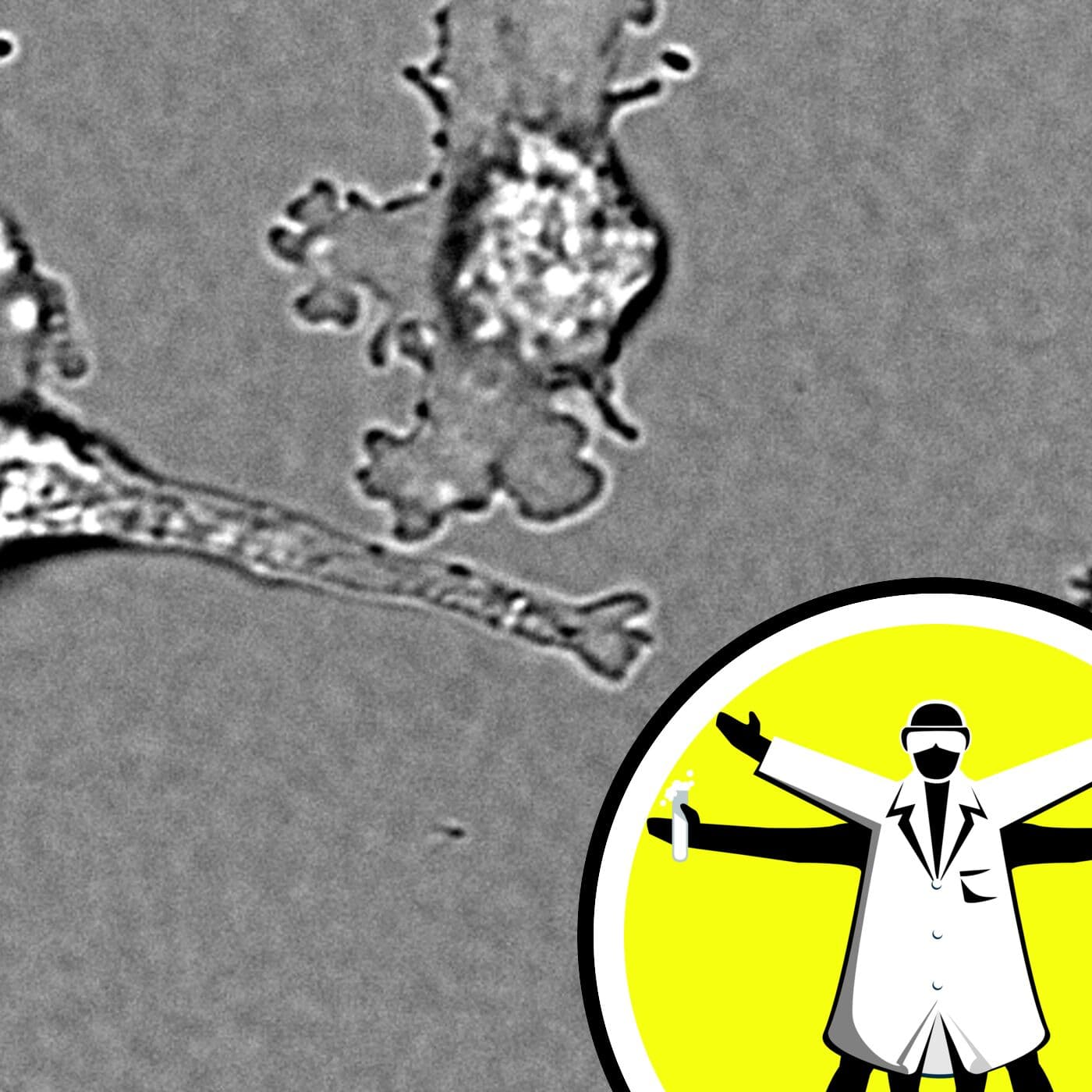
11:00Music in the programme is sponsored by Epidemic Sound. Perfect music for audio and video productions. This is the Naked Scientist podcast with me, Chris Smith. Still to come, the brain cell powered computer chip that's been programmed to play video games. and scientists have put a price of the health cost of our collective couch potatoism and it's quite staggering before that though scientists in the uk have successfully created the first lab-grown esophagus that can be transplanted into pigs which were then able to swallow food normally now the study conducted by researchers at great ormond street hospital and university college london demonstrated that a segment of donor pig esophagus can have its cells removed in other words be decellularised, which leaves behind a scaffold of connective tissue, and this can then be repopulated with cells from the intended recipient, matured in a bioreactor culture vessel, and then successfully implanted.
11:58Now the ultimate goal of doing this is to treat developmental problems like esophageal atresia. This is where babies are born with a significant section of the esophagus missing. Without corrective surgery, this is a lethal condition. but the surgery poses problems all of its own. A new, genetically compatible segment that could be implanted to help bridge the gap would be a game-changer. Paediatric surgeon Paolo de Coppi is leading the team behind the project. We have been able to engineer a fully functional esophagus of about 2.5 centimetre. Essentially, we took a gullet from a cadaveric pig to strip out all the cells and then we seeded cells from the recipient and then we implanted these esophagus in the recipient.
12:49In this way, we avoided the problem of having immunosuppression because these esophagus is recognised by the pig as self. In this instance, you've gone from one pig to another pig. It's a proof of concept, but I suppose the next step would be to say, well, we could start with a pig esophagus, take out the cells and then put human cells in there and make a human compatible piece of esophagus you're absolutely right chris the structure of the peak esophagus is very similar to the structure of the human esophagus the collagen and protein are very similar so the idea is that we put human cells onto the strip out peak esophagus we can create a very similar human esophagus.
13:43What cells do you actually use though to repopulate that scaffold the connective tissue that's left behind after you remove the starting cells and you want to recolonize it with new ones where do you get the new cells from? This is a very important part of the study Ideally, we would love to put all the cell type. There are muscle cells, of course, epithelial cells, so the skin, the inner layer, vessels, and nerves. But if you try to put so many cells, that will make it very unlikely to go into patient because of safety, but also it's very costing because if you have to culture, so expand in the petri dish, shoulder cell type is going to be very constant.
14:31So to make it efficient, we have done a lot of work understanding which cell type is really essential. And the cells that we found essential were the muscle cells and some structure of fibroblasts. So the fibroblasts are cell type that do not function as a muscle, but help the muscle understanding what needs to be done in that specific tissue. Where do you get the muscle cells from though? Do you start with muscle cells from the future recipient or do you start with stem cells and coax them to become muscle cells? That's another essential point. We started with the cells that are easy to derive in the patient that we are interested to apply this technology to, which is essentially muscle cells that derive from the abdominal wall.
15:25So in children that are born without an esophagus, we put a tube in the stomach to be able to feed those children. So in order to do that, we have to cross the abdominal wall. So that's a cell type that will be readily and easily available. How long does it take when you put those starting cells that are going to become the muscle cells in the new esophagus segment, how long does it take for them to colonize that scaffolding and begin to form something that is ready to go into a recipient? So it's surprisingly short. If we count zero as the time of the biopsy, it takes about eight weeks to have a sufficient number of cells derived from that biopsy to colonize 2.5 centimeter of esophagus and then we seed them for about 10 days in the bioreactor to mature them and those 10 days are enough to get the cells embedded in the tissue and then ready to go in vivo.
16:37Once this goes into the recipient how long does it take though to effectively become one and the same with the existing tissue. And do you then see further maturation where skin cells, the lining cells will grow in and cover it, that the nerve cells and other blood vessels grow in, so it sort of becomes as though it were never missing in the first place? And does that mean it ultimately works as though there was always that bit of esophagus there? Yeah, the maturation in vivo is a very important aspect. We see the adaptation in the first three months, which exactly allow what you explain now, Chris, of getting the cells from the recipient migrating into the esophagus that we implanted.
17:27The epithelial cells, so the inner layer, the line cells, then the nerve cells do the same and the vascular cells exactly move in that direction. And we have observed that, that in the first three months, this is a continuum. So the cells keep going, keep going, until we reach about three months when the esophagus is almost indistinguishable from the native esophagus. You've done this by taking a piece of pig esophagus, putting pig cells onto a pig esophagus, having removed the native cells, and then putting that back into a pig. Would it work, though, if you were to do the same thing with human cells?
18:11Or are you intending to use bits of human, decellularize it, put human cells from a recipient onto it and put it back into a human? What's the next step? I'm a fetal neonatal pediatric surgeon. I work with children, and my main interest is to use this technology for newborn without an esophagus. It's very difficult, almost impossible, to get the right-side esophagus from a human donor at that age. And the only readily available esophagus will be an animal that can be used as a cadaver. And therefore, that's why we focused the last 10 years of research on the pig esophagus, because the pig has many structures, many organs that are very similar to humans.
19:00I mean, we know that pig valves have been used in the heart of human for many years. So once the cells are stripped out, so there's no DNA, there's no genetic material, that protein and collagen that form those scaffolds are very preserved among species, particularly between us and pigs. So we believe that this pig esophagus will be able to work very similar to human esophagus once colonised by the human cells. Isn't that great news? Paolo de Coppi there and that work was just published in Nature Biotechnology. Now estimates are that physical inactivity is responsible for 7.2 % of deaths worldwide each year by driving conditions like obesity, type 2 diabetes, hypertension and fatty liver disease.
19:53Despite guidelines set by the World Health Organisation, exercise levels remain strikingly low. Around one in three adults and four in five adolescents fail to meet recommended activity levels and cardiologists often say that if a pill could be made that captured the beneficial effects of exercise, it would be the world's wonder drug. Deb Salvo at the University of Texas at Austin has been investigating and her findings have just been published in the journal Nature Medicine. For several decades now we've known that physical activity which some people call exercise but it's more than that is very good for you and despite this we haven't been able to get the world to become more active.
20:33So the whole point of the paper was trying to see if we need to be thinking of physical activity differently and promote it differently with new messages and better messages so that we can turn this around and get people to become more active and save lives this way. If they're not becoming more active, are we as a population actually becoming less active? It's been stable, unfortunately. It's been stable for the past at least 20 years in that one in three adults are sufficiently active. So two out of three are not. And eight out of 10 adolescents are insufficiently active. And what do you think the impacts of that are?
21:10If you sort of try to put some numbers on that level of inertia and inactivity that most of us manifest, what is that costing us in terms of lost health? Others in the field have quantified that only due to deaths due to chronic disease, meaning things like heart disease, diabetes, cancer, etc. Physical activity costs us about 5.3 million deaths per year across the world. That's the equivalent number of deaths what tobacco or smoking costs us. and we are very shocked anytime we see, I don't know, an underaged minor smoking but we don't seem to take physical activity as seriously for instance and we also believe that that number is underestimated because there are other benefits to physical activity beyond chronic disease prevention.
21:58People do say sitting is the new smoking, don't they? Pointing to the point you're making about physical inactivity. What were you actually trying to flush out with this piece of work though what was the new facet here that you want to emphasize we wanted to emphasize two things one is sort of straightforward and it's a little funny that we're finding ourselves needing to do this which is just to show the world including our own experts in medicine and public health that there are much more benefits to physical activity than obesity prevention diabetes prevention and heart disease prevention. Physical activity has been known for multiple decades to be very good to boost our immunity.
22:39It helped prevent deaths and extreme cases of COVID during the pandemic, for instance. It's really good for mental health to prevent and treat depression, and it's very good to prevent and treat cancer, and we don't exploit all these benefits. The other thing that we were trying to do is to show that possibly not all physical activity is created equal and is equally good for you. And the majority of people of the world are getting the one that is possibly not as good for you, which is the one that is economically coercive, meaning that you're forced to do because you're poor, because you don't have a car or you have to work in things that make you do physical labor.
23:13So what sorts of exercise are good then? And are they good for everybody? So if you're an unhealthy person, as in, I don't know, you're overweight, but you exercise, are you therefore offsetting the effect of the overweight so you can say, well, that's okay, I can be overweight because I'm exercising? Do we know how it works? Yeah, we do. The type of physical activity that is most good for you, because it optimizes all aspects of health, whether it's physical health, mental health, and even societal and planetary well-being, is the one that is done by choice. Meaning, you weren't coerced, you weren't forced into it because of your life circumstance, because you're poor, you don't have a car, you need to work in a certain way.
23:57So whatever you're choosing to do in your free time, or it could be for transport, but because it's really a good choice, you have the environment that supports that, right? So imagine cycling in Amsterdam or in places with great infrastructure. So that one's really good for you. And in terms of it being good for everyone, there are people that could benefit even more from physical activity. But what we do know, put simply is that some physical activity is better than none and that physical activity really benefits almost anybody in the world despite of their circumstances or diseases. There are very few cases where it starts becoming actually dangerous for people to become active.
24:36Now it could be just walking. It doesn't have to be something very extreme if you do have conditions or circumstances that would make that difficult. How do you avoid falling into the trap though, where you say, look, these people do loads of exercise and they live longer, but actually the reason they do loads of exercise is because they can. And actually, if they weren't so healthy, they wouldn't. Yeah, yeah, that's a really great question. There is some of that, but as far as we know so far, the influences and the factors that lead to somebody being able to lead an active lifestyle are mostly social, environmental, political, etc.
25:16It's interesting, like when you see people that move, and they don't move necessarily looking for a more walkable environment, they moved for a job to a different city. If they used to live in a city that was highly car dependent, meaning where you could only get around by driving, and then you moved into, I don't know, New York City or nice walkable European city, all of a sudden, they become very active. And it turns out that they could, even if they had other conditions. So one message that I definitely like to get across is physical activities, not just doing exercise in the gym or doing a sport.
25:48It's as simple as walking in your city or biking to get to a certain location. What do you advocate then in terms of interventions? So changing policies, changing entire urban environments, investing in public transit options and good walking and cycling infrastructures and even in you know working hour policies so that people actually have the right environment and the right time that makes this a true choice and an easy choice and a natural part of life. So there you go take a non-coercive stroll and that will help you to walk off some easter eggs this weekend. Deb Salvo is at the University of Texas at Austin.
26:30An Australian research company called Cortical Labs has developed a computer chip powered by brain cells that is able to play classic computer games. Back in 2021 these chips successfully played the simple bat and ball game Pong but with several more years of development they can now play much more complicated games like Doom and with a quarter of the brain cell power. But why is this bunch of people interested in doing this in the first place? And what does this mean for the future of things like traditional computers? Brett Kagan is co-founder and also chief scientific officer at the company.
27:06So we were really interested in different ways to do computing. Obviously, everyone is super interested at the moment in artificial intelligence, but we really wanted to know, can you achieve this with actual intelligence from biology that's evolved to be able to do things that silicon just can't. We wanted to ask how can you leverage these biological brain cells and there's kind of a few parts to it. The first part is how do you actually grow these cells? There's really ethical and sustainable ways to do it through generating what's called an induced pluripotent stem cell and this sounds very technical but all it is is it's a type of stem cell that you can develop from a blood or a skin.
27:45Some people even use urine and And you can create this type of stem cell that can be turned into anything from the body, but is donated really harmlessly. Same as what you might give any doctor for a simple test. And so we can create these brain cells, these neural cells, and then we can actually integrate them into systems we've built that allow us to interact with them in real time. Do you grow them in a dish then? Yeah, well, we grow them in dishes. We grow them in these little flasks and you provide them the right nutrients and the right signals and you can actually shape and grow these cells into the way you want.
28:23What it is, is it's this type of material essentially that we can grow that has these really special properties in how they process and respond to information. in essence then you've got clusters of nerve cells which you can fashion and guide how they grow and and they make connections as though they would in a brain but but effectively they are a small cluster of nerve cells that you can have inputs and outputs from yeah exactly exactly and what's really really nifty about it these days is you can do what we call bioengineered devices where you can actually shape how those connections grow through either physical or chemical signaling pathways.
29:02We typically use physical pathways. And what are you doing with these cells? You can get them to grow in this way. You can have effectively brains on a chip, as it were. But what are you doing with it? There's a lot of different applications, and that's what makes platform technology so interesting. It's kind of like if I said, what do you do with your computer, right? You may play video games. You may use it to do Excel. You may use it to chat with me over the internet. And for us, with our technology, it's the same. There's a lot of different applications. We look at, of course, how these cells work fundamentally, understanding how they give rise to these really interesting properties of intelligence and information processing.
29:48We look at how if they have a disease state, you might be able to better treat that disease with drug treatments. But we also look at how they process information. And one way we do that is through computer games, because that's one way you can actually understand how these systems might show some basic forms of learning. How do you talk to the cells, though? I mean, with a computer chip, it's got connections and I can plug it into a circuit board and I have inputs and outputs. So what do those analogous structures in your system look like? The real key of it comes down to this shared language, and that's electricity.
30:23electricity is this shared language between silicon and biology when brain cells are active they generate something called an action potential which is the small electrical pulse that will come from the cell body and travel out to other cell bodies and can affect changes and we can measure that through these devices that are called micro electrode arrays or meas and so with these little systems we can actually measure these small electrical pulses and we can deliver small electrical pulses. And when we structure how we put these small electrical pulses in, and when we decode how the brain cells are developing their own small electrical pulses, we can have this closed loop of information coming in and out of the system.
31:07And how they process it is, of course, a big question, but that is exactly what we're aiming to leverage to make this work meaningful. And hence, training them with a computer game. And that's a proof of concept. If you feed them some data from the game, train them what you want the outcome to be, you can then arrive at a circuit that will effectively give you the output you want, which you can feed back into the game and the cells are effectively playing the game. They're reacting to an input with an output. But where do you see this going? I think there's a range of areas and directions it can go.
31:44And again, that's the beauty of a platform technology. And so we have people who are using this to explore basic neuroscience questions. We have people looking to explore how to better treat diseases. Because one really interesting thing is that these brain cells, even as incredibly simple models, much like our brains, they actually respond in different ways when they are in these information-rich environments compared to when they simply sit there and avoid. So that's one really powerful way. And on the far other end of the spectrum, you have people who are looking at different types of intelligence processes or learning or robotics, because again, at the core of it, what is it that biology is really good at that AI and GPUs and machine learning can't do.
Read the full transcript
32:36That's acting in the real world, in real time, with minimal data, with noisy data. And I think the fact that you have these opportunities is really what makes this such a beautiful and exciting field with so many potential benefits to people. But for us, the core of this is actually making the technology accessible. We're dealing with something incredibly complex. And the more people who can get access to it, the better we as a collective are going to be able to use this technology and accelerate it thought provoking stuff in more ways than one brett kagan at cortical labs that is it for this week we're going to be back on tuesday though when we'll be examining time we run our lives by these days but it wasn't always the case at one time in fact london was on a different time to liverpool we'll also look at why time always seems to fly when we're having fun so hopefully this program flew for you thanks to everyone who is supporting us with donations to help with our running costs if you'd like to make a contribution do please head over to nakedscientist.com forward slash donate we'd also welcome being followed on linkedin and instagram and you can leave reviews for us on spotify apple or wherever you get your podcasts i'm chris smith thanks for listening and from all of us here at the naked scientists have a wonderful easter and until next time goodbye
33:58Thank you.