
In short
The Naked Scientists Podcast: Episode Summary
Episode Title
Brain Fats Cleared During Sleep, and Bird Poo Powered Peru
Episode Overview This episode of The Naked Scientists explores significant scientific breakthroughs, including the brain's mechanisms for clearing damaged fats during sleep and the historical significance of seabird guano in ancient Peru. It also features insights into kangaroo locomotion and the unique vocalizations of horses.
---
Key Themes
- Brain Function and Sleep
- Role of Sleep: Sleep is crucial for brain health, yet its precise function remains largely unknown.
- Research Findings:
- Chronic poor sleep links to higher dementia risk, including Alzheimer's.
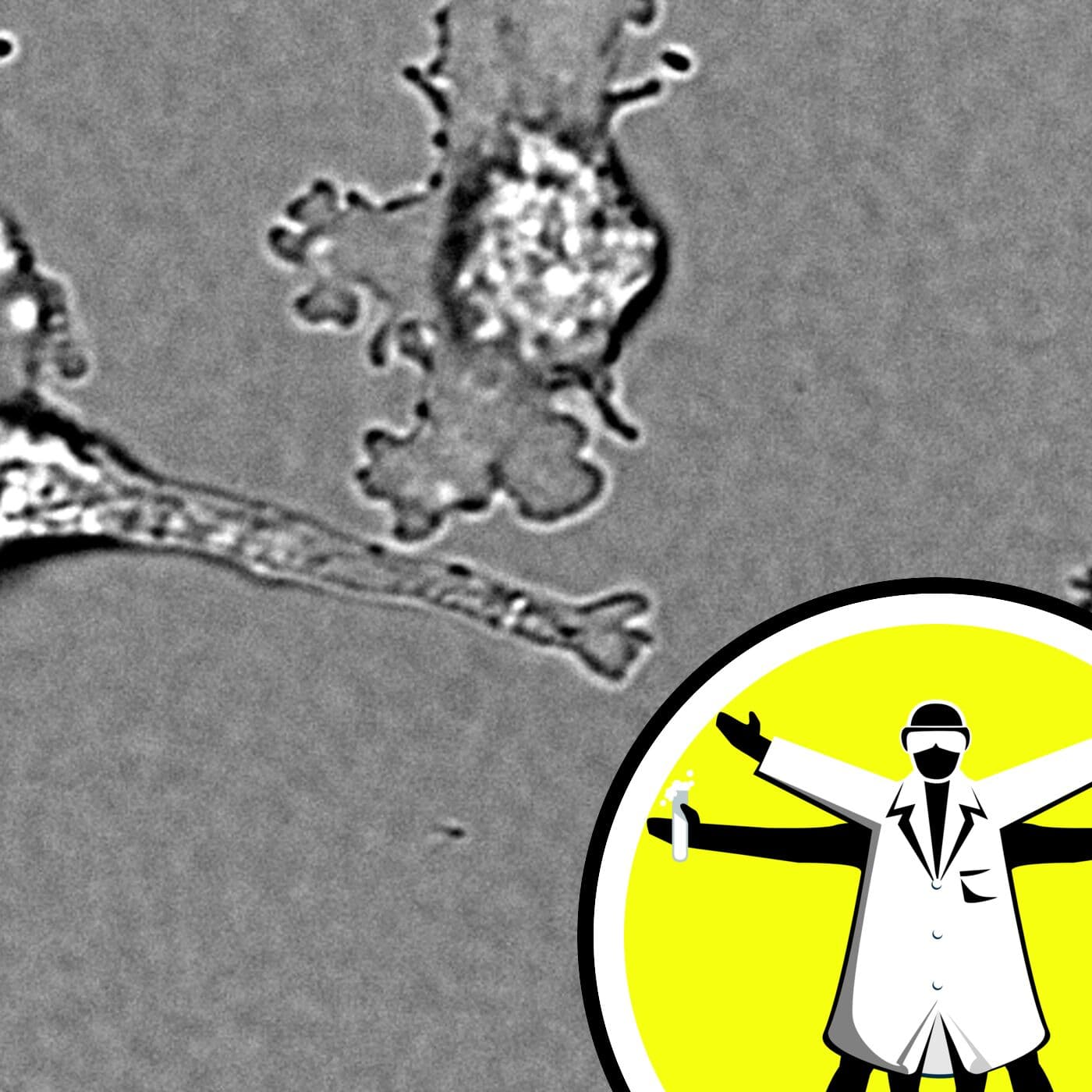
- Research conducted by Amita Segal at the University of Pennsylvania suggests the brain harnesses immune cells during sleep to clear damaged fats.
- The process involves:
- Nerve cells offloading damaged fats to supporting brain cells.
- Those cells transferring fats to immune cells for processing and detoxification.
- Significance: This mechanism could explain the correlation between sleep deprivation and neurodegenerative diseases.
- Seabird Guano and Ancient Peru
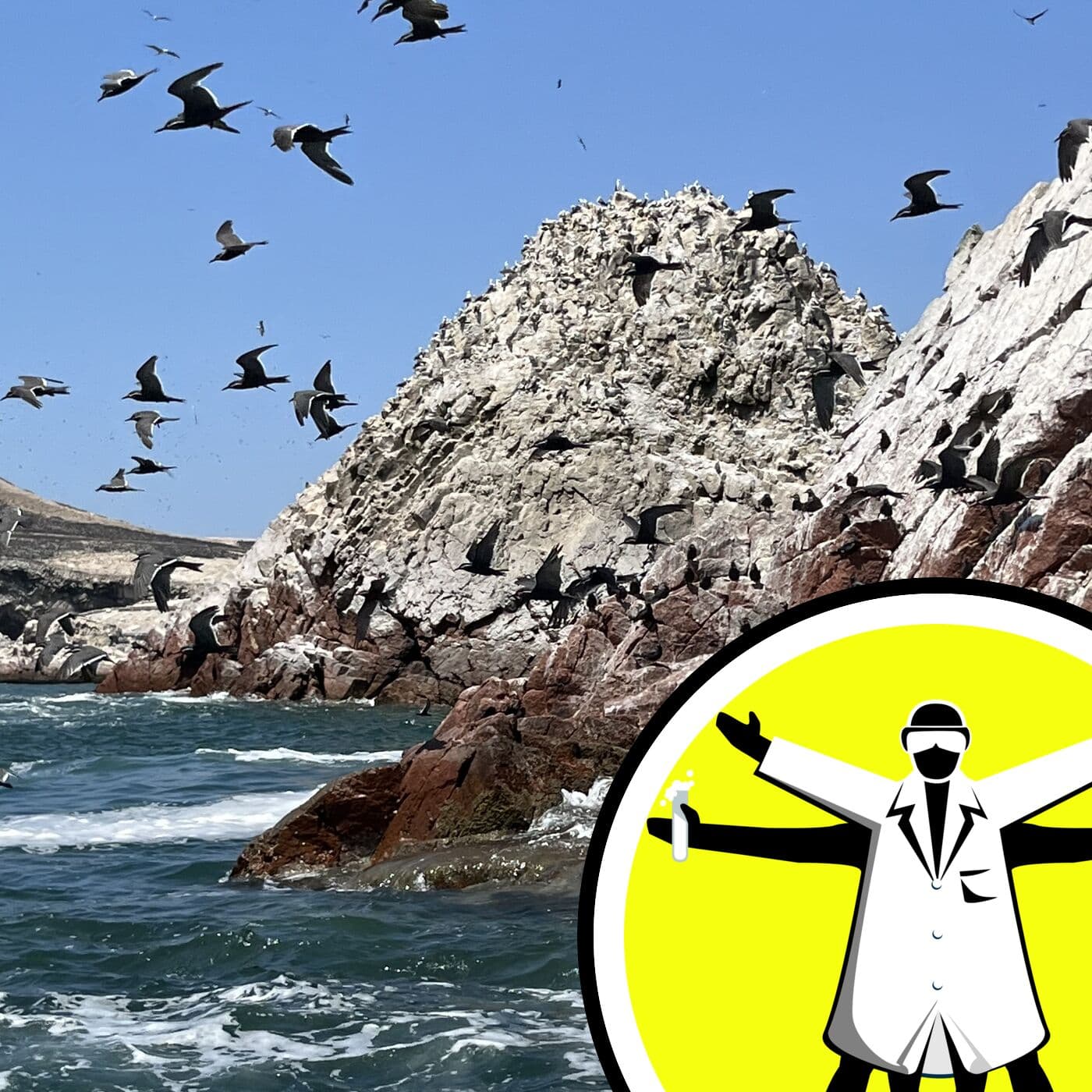
- Historical Context: The Chinchka Kingdom, existing 800 years ago, flourished through the usage of seabird guano as a fertilizer.
- Research Insights:
- Archaeological evidence from maize cobs indicates guano significantly enriched soil fertility.
- Guano's role in agriculture led to economic prosperity and social influence.
- Jacob Bongers from the University of Sydney highlights the importance of guano in sustaining the Chincha Kingdom's agriculture.
- Cultural Impact: The strategic utilization of seabird guano demonstrates ecological knowledge and resource management in ancient societies.
- Kangaroo Locomotion
- Unique Locomotion: Kangaroos are capable of hopping faster without expending extra energy due to anatomical adaptations.
- Research Findings:
- As kangaroos accelerate, they adopt a more crouched posture, enhancing energy efficiency.
- Their long Achilles tendons store and release energy, reducing muscle effort needed at higher speeds.
- Biological Insight: This mechanism showcases evolutionary adaptations for energy-efficient movement in specific animal sizes.
- Horse Vocalizations
- Whinnying Mechanism: Horses produce unique sounds through a combination of high and low frequencies, termed bifonation.
- Research Insights:
- Tecumseh Fitch from the University of Vienna discusses how horses produce these sounds through a combination of normal vocal fold vibrations and a unique whistle mechanism.
- The ability to create dual-frequency sounds may serve communicative functions, providing rich information about the horse's identity and emotional state.
---
Key Takeaways
- Sleep's Crucial Role: Understanding sleep's impact on brain health can lead to insights regarding neurodegenerative diseases.
- Ancient Agricultural Practices: The use of seabird guano illustrates early human ingenuity in resource management and its socio-economic impacts.
- Energy Efficiency in Kangaroos: Anatomical adaptations allow kangaroos to optimize energy use, showcasing evolutionary advantages in locomotion.
- Complexity in Animal Communication: The ability of horses to produce multifaceted sounds highlights the sophistication of animal communication systems.
---
Conclusion This episode of The Naked Scientists Podcast provides fascinating insights into various scientific fields, from neurobiology and archaeology to animal physiology and communication. It emphasizes the interconnectedness of these disciplines and the importance of understanding both historical and modern scientific advancements.
Support the Naked Scientists Listeners are encouraged to support the podcast through donations to help sustain their efforts in delivering scientific content.
Written by AI. May contain mistakes. Listen to the episode to check what was said.
Chapters
Tap a time to open that second in VOLink Between Sleep and Brain Health
0:45 to 2:14
Exploring the connection between sleep, brain metabolism, and dementia risk.
“how and why do horses do that originally we didn't have any idea but thanks to an endoscope all has been revealed sleep is one of the most important things we do although scientists actually have no idea why.”
How Fats are Cleared in Sleep
2:14 to 4:52
Discussion of how the brain clears damaged fats during sleep and its implications.
“And what the brain needs a lot of is energy.”
Immune Cells and Sleep Dynamics
4:52 to 7:44
Investigating the role of immune cells in brain health during sleep.
“And they then cart it off for processing elsewhere around the body where it's out of harm's way.”
Sleep Loss and Alzheimer's Links
7:44 to 8:07
Exploring how disrupted sleep could contribute to Alzheimer's disease.
Alzheimer's and Fat Accumulation
8:07 to 8:46
Connecting fat accumulation in the brain to Alzheimer's disease.
“Alzheimer's because Alzheimer's actually in all forms of dementia, but especially Alzheimer's, sleep is disrupted.”
Discovery of Guano's Role in Ancient Peru
8:46 to 10:40
Unveiling how seabird guano contributed to the prosperity of the Chinchka Kingdom.
“and there are certainly no flies on Amita Segal, who we were listening to there.”
Role of Guano in Agriculture
10:40 to 12:30
Analyzing the impact of seabird guano on agriculture in the Chinchka Valley.
“And we know quite a lot about this society from sources that were written by the Europeans.”
Evidence of Ancient Guano Use
12:30 to 14:12
Discussing archaeological evidence supporting the use of guano as fertilizer.
“So you conduct agriculture, you grow crops, your soils will get exhausted.”
Historical Use of Guano for Agriculture
14:12 to 15:12
Learn how ancient communities utilized bird guano to enhance crop yields.
“It's used to enhance crop yields so you can continuously produce more and more maize.”
Ecological Knowledge of Chinchia Peoples
15:12 to 16:02
Discover the ecological connections understood by ancient civilizations regarding food production.
“But what our paper does not answer is when this practice started and how widespread it was.”
Show all 20 chapters
Kangaroos and Energy Efficiency in Locomotion
16:53 to 17:42
Explore how kangaroos optimize energy usage while hopping at various speeds.
“Back in the 1970s and 80s, a group of scientists at Harvard University actually discovered this unique phenomenon that we see in kangaroos.”
Unique Energy Usage in Kangaroo Hopping
17:42 to 18:25
Understand the mechanics behind kangaroos' unique energy conservation strategy while hopping.
“What they noticed was that as they hopped faster, the kangaroos didn't use any more energy.”
Role of Tendons in Kangaroo Movement
18:25 to 20:08
Examine how kangaroo anatomy, particularly tendons, contributes to their efficient movement.
“And what that allowed us to do is build a computer model of their skeleton as they're hopping along and measure the forces that they're impacting the ground with.”
Posture Changes and Energy Efficiency
20:08 to 22:23
Learn how kangaroos adjust their posture to enhance energy storage during hopping.
“So the way we normally move a joint is we have muscles, right?”
Limitations of Kangaroo Hopping Dynamics
22:23 to 24:46
Discuss the constraints and risks associated with kangaroo's specialized locomotion.
“Why is it that just kangaroos have hit onto this ingenious solution?”
Understanding Horse Whinnies and Bifonation
24:53 to 26:01
Explore the unique vocalization technique of horses and the concept of bifonation.
“And that was Christopher Clemente there that study just came out in the journal eLife.”
Mechanics of Horse Vocalization
26:01 to 28:01
Learn how horses produce two distinct frequencies simultaneously using their anatomy.
“So this is called bifonation, which is a technical term when an animal vocalization has two different independent frequency components at the same time, this high pitch and this low pitch.”
Exploring Horse Vocalizations
28:01 to 29:44
Learn about how horses produce unique vocal sounds and the science behind it.
“But the crucial part of our experiment, the fourth part, was that we actually got larynges from dead horses.”
Hypotheses on Horse Communication
29:44 to 31:33
Discover the theories behind why horses use multiple frequencies in their sounds.
“The first is that it has something to do with communicative bandwidth and it allows the horse to communicate different things in those two different frequency components.”
Research on Animal Vocal Anatomy
31:33 to 32:00
Insights into future research on vocalizations among various large animals.
Transcript
Automatic transcript. May contain errors.0:17Hello, welcome to the Naked Scientist podcast, the programme that brings you the biggest breakthroughs and also talks to the major movers and shakers in the worlds of science, technology and medicine with me, Chris Smith. Coming up, how the brain ditches burned out fats when we sleep and how this might be linked to Alzheimer's. Also, from muck to brass, how seabird poo powered the prosperity of the Chinchka Kingdom in ancient Peru and... how and why do horses do that originally we didn't have any idea but thanks to an endoscope all has been revealed
1:03sleep is one of the most important things we do although scientists actually have no idea why. But, the facts speak for themselves, without regular rest our brains rapidly deteriorate, and there's some evidence linking chronic poor sleep with a higher risk of dementia. So could the link be that the brain makes use of that conscious downtime by inviting in immune cells from elsewhere in the body to help clear up burned out fats damaged by the ravages of the nervous system's ferocious metabolism. Allowed to accumulate, these chemically damaged fats could otherwise turn toxic. This is the tantalising hypothesis that Amita Segal at the University of Pennsylvania has arrived at by working on much simpler organisms, flies, which nonetheless are very similar in their sleep habits to us humans.
1:56We spend a third of our lives sleeping and we still don't really know why we sleep. Sleep improves memory, but exactly how does it do that is the question we were interested in. So we basically started with thinking about sleep being important for the brain. And what the brain needs a lot of is energy. So we started looking at pathways that produce energy in the brain and asking, is there activity influenced by sleep? We found that in the nerve cells, the energy powerhouses are protected from damage. Like typically when these cells are very active, receiving a lot of information about the outside environment, then you would expect that their energy powerhouses would get damaged.
2:46They would be like a buildup also of toxic forms of oxygen from all the energy they've been expending. And what we found was that these cells are protected, these nerve cells, because what they do is they pass on their damage in the form of fats to these other cells in the brain. And those other cells in the brain pass them on to blood cells, which are like immune-like cells in the blood. This is intriguing. So the cells basically offload their damage onto fats, almost like the fats are body armor, the fats are then offloaded into blood cells. How did you actually discover this? What did you do?
3:29The story really took place in two parts. Like in a paper we published a couple of years ago, we found that these nerve cells were protected from damage. So we looked at these supporting cells in the brain and found that they were accumulating these fats that were coming from the nerve cells and we realized it was in order to protect them from damage. And then in this paper, we actually came at the problem from a different angle. We were asking whether immune cells in the blood have any function in sleep. And we were driven in that by previous findings that immune molecules can affect sleep. Immune molecules like build up in flies and in humans even with sleep loss.
4:16Like if you've been awake for a long period of time, there are going to be like inflammatory immune molecules that build up. So we were asking our cells that are involved in the immune system also affected by sleep or do they influence sleep? And what we found was that these immune cells were going to the brain at times of sleep. Wow. So they come in from the periphery, these cells. They go into the brain when we sleep. They grab these fats, which have basically been burned up by damage in the nerve cells because of the oxidative stress that they're under during the day. And they then cart it off for processing elsewhere around the body where it's out of harm's way.
4:58Yes, where it's out of harm's way. We don't know exactly where it goes. Maybe it goes back to fat tissue or gets broken down in those cells, but it protects the brain. We realized that when these immune cells were going to the brain, there was a particular protein on these cells that was important. And that is involved in taking up fats. What summons the immune cells to the brain? In other words, how do they know, in inverted commas, that we're asleep now and it's time to come and grab the detritus that's built up during the day? That is a great question and the focus of our current work. I cannot give you the answer yet.
5:38You don't think it's sort of mass action in the sense the cells are always there, but the brain just lets them in when it wants to. So the gatekeeper is not the cells, it's the brain. It could be the brain, it could be the cells, it could be some other body organ that starts pumping the blood and driving them there. It could be a lot of different things. and we are testing those possibilities. What we do know is it's not just that, you know, the animal changes its posture to go to sleep and somehow then the blood flows towards the brain. It's not a passive process. The obvious question is, if this is the way in which it happens, if you block those cells, then you should see an accumulation of this muck in the brain and you should see an accumulation of damage in the brain.
6:24Now, is that what happens? We have not actually blocked their movement to the brain. But what we have blocked is this particular protein in those cells. And we take that away, then you actually do get less migration to the brain and you do get a buildup of fats, yes. So when I say we haven't blocked their migration, it's not like we directly can control the migration. But what we can do is remove a protein that probably has some function in the migration because when you take it out, they don't go to the brain as much as they do normally, and you get an accumulation of that. The initial observation, as you've alluded to, came from flies, but we see analogous cell types, we see analogous processes happening in higher animals, including us.
7:12So it seems reasonable that probably there's something similar happening in us. So what do you think the disease implications are? If someone's robbed of sleep, do you think there's enough evidence here to argue that that that is going to be destructive. And therefore, this mechanism could account for why you get more problems like dementia under those circumstances. We know that loss of sleep is harmful on many levels for brain function, but even for functions in the periphery. The question is whether what we've identified is one of the processes affected. And I think there's a good chance that it is because other discoveries that we have made about circadian rhythms and the fly or sleep and the fly do tend to be conserved and so have, you know, their counterparts in mammals and humans.
8:01And it's interesting that you should bring up dementia because we're particularly interested in the link between sleep and Alzheimer's because Alzheimer's actually in all forms of dementia, but especially Alzheimer's, sleep is disrupted. And there's a big question about how loss of sleep contributes to the disease. and this could be a way that it contributes. And what's really intriguing in that regard is that the discoverer of Alzheimer's, who was Alois Alzheimer, was this person's name, actually noticed that there was a lot of buildup of fat in the brains of Alzheimer's patients. And now that idea is being resurrected so there are a number of papers being published about fats not being handled properly in Alzheimer's.
8:48Really intriguing. and there are certainly no flies on Amita Segal, who we were listening to there. She's just published that study in the journal Nature. We're next to bird poo. It smells, it's a pain to clear off our cars and even more disgusting when it lands on us. But many believe that getting pooed on by a bird actually brings good luck. And new archaeological findings show that that certainly seems to have been true for the people of the Chinchka Valley in ancient Peru 800 years ago, where bird guano brought booming agriculture, wealth, influence and great power, it turns out. Analysis of maize cobs recovered from ancient tombs in the region has revealed that the Chinchka people were using bird droppings recovered from nearby Pacific islands to boost the fertility of their soils and max out their maize harvests, growing the population and making them extremely rich.
9:44Archaeologist at the University of Sydney, Jacob Bongers, is one of the discoverers. We have some of the strongest evidence yet that people before the Inca Empire used seabird guano or bird poop to grow maize. And this is a really exciting finding because it's helping us understand how people carried out agriculture in a very arid environment, the Peruvian coastal desert. Who were the people concerned and when was all this going on? This is around 800 years ago. And these are communities that were part of the Chincha kingdom. This was a wealthy, very, very powerful society that was based in the Chincha Valley, which is about a four and a half hour bus ride south of Lima.
10:47It's on the coast. And we know quite a lot about this society from sources that were written by the Europeans. There were a lot of people, at least 100 ,000. And we know that there were merchants, there were fisher folk and farmers. And so we've always wondered, what is the source of wealth for this very powerful kingdom? How did they get rich? And we suggest that bird poop actually may have been the primary source of wealth for the Chincha kingdom. Are you suggesting they were selling bird poo or are you suggesting that bird poo was at the root of whatever became the source of their success? What we are proposing is that sea bird guano shaped the rise of the Chintzha Kingdom.
11:40There are many of these offshore islands, and you have colonies of seabirds that inhabit these islands, and they poop. And this is a very arid environment. It doesn't rain that much. And so there's this massive buildup of bird guano. And so what we think is that people would sail out to these islands, get the bird poop, bring it back, and then use it, right? So we know that it was a very powerful fertilizer. But we didn't have direct evidence that Chincha communities used it as a fertilizer. We have that here in this paper. But on top of that, what we think is that bird poop was a very valuable coveted resource.
12:28because it's able to replenish exhausted soils, right? So you conduct agriculture, you grow crops, your soils will get exhausted. You have to replenish them. Guano is used for that purpose. And seabird guano is the best of the best. So we think that the merchants would get the guano from the fisher folk that were sailing out there and they would trade this very highly coveted resource. what's your evidence jacob that the people were actually doing this though we know we do it today we know that this practice still continues today to use guano as a fertilizer but what's the evidence you have that these people from nearly a thousand years ago were doing what you've outlined they were doing we carried out a survey of the chincha valley in 2013 and we found over 500 tombs There's a bunch of tombs in this area.
13:25And what we found in nearly all of these tombs is maize cobs, tons and tons of these cobs that were probably used as offerings for the dead. And so we carried out biochemical analyses of these cobs. And what we found is very, very high nitrogen values associated with these cobs that is consistent with the use of guano. Only guano can produce such high nitrogen values. When you factor that into this story of the Chinchik Kingdom, one of the most powerful pre-Inca societies on the coast, it just makes sense that this is one of the primary sources of wealth. It's used to enhance crop yields so you can continuously produce more and more maize.
14:23Are they alone in exploiting guano at this time? Or was this sort of common knowledge? Were other populations doing this? And how do you think they actually discovered that you could do this? Because it's not intuitive to think I'll sail to an island, scrape up some bird poo, bring it ashore, and it will actually make my food better. Fantastic question. Yes. We know that communities in northern Chile were using guano to cultivate maize at least around AD 1000, so roughly 1000 years ago. And what our paper does is it expands the geographical scope of where this is done. So it's being done in Chile, and it's also being done in the Chincha Valley of southern Peru.
15:12But what our paper does not answer is when this practice started and how widespread it was. And what's really interesting, I want to just quickly point out that on top of the biochemical data that I talked about, we also looked at the art. We looked at imagery on pottery, on textiles, in the architecture. And what we see, we see seabirds, we see fish, and we see what looks to be sprouting maize, sometimes in the same artifact, right? Why is this important? This is important because it's showing that Chinchia peoples had ecological knowledge. They had knowledge of this connection. The seabirds eat fish, the seabirds produce guano, and the guano feeds the maize, and the maize feeds the people, right?
16:12Air, land, and sea. So it seems like it's more Puru than Peru, doesn't it? Jacob Bonga's there at the University of Sydney. That work just came out in the journal PLOS One. The Naked Scientist podcast is produced in association with Spitfire. Cost-effective voice, internet and IP engineering services for UK businesses. Find out how Spitfire can empower your company at spitfire.co.uk.
16:43Music in the programme is sponsored by Epidemic Sound. Perfect music for audio and video productions. This is the Naked Scientist podcast with me, Chris Smith. Still to come, we'll reveal why and how horses winnie. but first to a different animal entirely kangaroos alter their posture as they hop faster to store more elastic energy in their achilles tendons and improve the efficiency of their locomotion in fact as they speed up they burn off almost no extra calories if only our cars could work that way especially with fuel prices being what they now are christopher clementi is at the university of the Sunshine Coast.
17:23Back in the 1970s and 80s, a group of scientists at Harvard University actually discovered this unique phenomenon that we see in kangaroos. They managed to get these kangaroos to hop on a treadmill while wearing a metabolic mask so they could measure how much energy that they were using. What they noticed was that as they hopped faster, the kangaroos didn't use any more energy. Now, the reason that is so interesting is because if I was to run on the treadmill, and as I go faster, I would generally use more energy. It's like, you know, when we're driving a car, we put our foot on the accelerator, we use more petrol to go faster.
18:06That's true of most animals, except for the kangaroos. And what, we knew they were doing it, but we didn't know how. That's right. So what we wanted to try and figure out was, what's changing in kangaroos what are they doing that allows them to decouple energy use from speed so we actually used a little bit of sports science technology so you might see sometimes when sports players are running along and they have you know these segments and angles and high-speed cameras all used to figure out what their skeletons are doing so we had little markers that we would put on these kangaroos and we would get them to hop over force plates.
18:49And what that allowed us to do is build a computer model of their skeleton as they're hopping along and measure the forces that they're impacting the ground with. And at different speeds, presumably. And at different speeds, yeah. And this was the fascinating thing. When we looked at their posture, we noticed something was changing. As these kangaroos are hopping faster, they're starting to become more crouched. And this is our first clue as to what they're doing. When you say more crouched, which joints specifically are they crouching? Their foot design is a little bit different to us. They have a very long foot and their ankle joint is the main joint that they use.
19:39And as they're moving, they're flexing this ankle joint and they're using that to push themselves forward. So as they go faster, they what, flex towards the floor more that ankle joint. How does that translate then into improved efficiency of movement around that joint, which is what this must be. If they're not using more energy, they're not getting a free lunch because physics doesn't do free lunches. So they must be being more efficient with what they're using. So how are they doing that? That's right. So the way we normally move a joint is we have muscles, right? And our muscles shorten and as they contract, they pull on that joint and that joint moves about the axis.
20:24Now the muscle is not the only thing. Kangaroos have ridiculously long Achilles tendon. And it has rather interesting properties. So when we shorten a muscle, we use up energy to do so. But tendons are like an elastic band. If you stretch an elastic band, it takes energy to stretch it. But when you relax it, the elastic band pulls back together by itself. so it's capable of storing energy and when we let it go it releases that energy back so these two things are happening and both of those are clues as to what's actually going on in these kangaroos how does the postural change alter the behavior of the tendon then what we think is going on is as these kangaroos are hopping along, say, at slow speeds, most of the time, because they're hopping relatively slow, that tendon is stretching a little bit, but not much.
21:30And so they have to contract their muscle in order to rotate their ankle joint. But as they hop faster and faster, they will want to try and do less and less muscle work. And the way they can do this is by stretching the tendon more and more. And the trick that they use to stretch this tendon more and more is by becoming more and more crouched, forcing the tendon to be stretched further with each hop. Now when you're stretching the tendon and not the muscle, that means you can tend to store a lot more energy in these tendons and that meant that the leftover bit the amount that the muscles needed to do to push them forward actually doesn't change as they go faster.
22:23Why is it that just kangaroos have hit onto this ingenious solution? Why can't I do this? Yeah why can't we do this? That's a great question. Why wouldn't all animals do this if it's such a neat strategy. There is a cost, of course, to doing this. So when I say we're stretching the tendon more and more, what that means is we're putting it under more and more stress. But the more stress you put something under, the closer it is to its breaking point. So we imagine that these particularly large kangaroos, when they're hopping very, very quick, are probably getting close to the limits of what that tendon can handle before it breaks.
23:09And so we think most animals are probably a little bit more safety biased in that they don't want to use this method because they don't want to risk rupturing those tendons. Does this therefore apply a size constraint? So it's good for animals in a certain range of sizes because they can get away with really cooking things close to that safety margin but once you add more body mass biology just can't cope with the load you would be asking that tendon to deliver yeah exactly so so there's going to be two real um that cons i guess with this approach the first one is you probably can't accelerate very fast too because if you try to you know apply too much load too quickly, you're going to snap these tendons.
23:59And the second is exactly what you were saying. If we put too much weight onto these tendons, then we're going to get to a point where that safety factor is too low and we're really going to rupture these tendons. And that kind of fits with what we see in nature. There are no giant horse-sized kangaroos. Instead, once animals get really big they have to just switch from hopping to another type of gait to something like walking and so maybe what we see in kangaroos is something like the upper limit of locomotion and these kangaroos are choosing a type of gait that maybe lets them be very efficient but it's at the cost of this ability to be very big or maybe very maneuverable.
24:53And that was Christopher Clemente there that study just came out in the journal eLife. Now if I asked you what sound a horse makes you're almost guaranteed to know and to neigh back but horses also communicate by whinnying a unique sound containing a high-pitched as well as a low-pitched component. Effectively, they're making two sounds at once, but from one voice box. So how? Well, now, thanks to University of Vienna biologist Tecumseh Fitch, we have a bit more insight. We've known for many years that horse whinnies are quite unusual in that they have two components, a very high frequency or high-pitched component and a low-pitched component.
25:37So this is a complete whinny.
25:42And at the beginning, you can hear this very high, and that's, here it is excerpted. That's the beginning part. But then it goes, and then ends with this very low. So now I'll play the whole thing again. So you can hear the high at the beginning and the low at the end, but in the middle, they overlap.
26:06So this is called bifonation, which is a technical term when an animal vocalization has two different independent frequency components at the same time, this high pitch and this low pitch. Now the low pitch is not very mysterious because horses are big animals and we expect them to have low frequencies. That's a general principle in the animal world. The high pitch, on the other hand, is quite surprising. So for such a large animal as a horse to have this very high, you know, it's actually about 1 ,500 hertz, which is much higher than we can sing. So the mystery was how can the horse do this? Really?
26:461 ,500? I thought we produced much higher frequencies than that. The frequencies that men and women produce in speech are about 100 hertz for men or about 200 hertz for women that's about all now when you sing of course you can go higher than that but even the highest most impressive female singers are topping out at around 1500 hertz so these horses are doing something a very impressive soprano can barely do and what was the question you wanted to know was it more the how do they do this or is it a why do they do this or is it both? Well our study was focused on the how. Of course we're interested in the why question as well but our paper is really focused on you know what's going on here in terms of physical production mechanism.
27:36If you think of it as a musical instrument how does this musical instrument that can produce two different frequencies at the same time how does that work? So we had several different lines of research that included looking at live horses and putting an endoscope down their noses so we could look into their larynx as they produced vocalizations. We also looked at horses that had a neural disease that disables their larynx and looked at these high and low components in those guys. And we did anatomy. But the crucial part of our experiment, the fourth part, was that we actually got larynges from dead horses.
28:13So that's the voice box where sound is produced. And we blew air through those to produce sounds. What's intriguing me though is that they're producing two different frequencies at the same time. Exactly. When we sing obviously we're making our vocal folds vibrate at a certain frequency which then comes up into our mouths and amplifies those frequencies. How do they do that then? How do they get multiple frequencies out of the same anatomy? So that's what's surprising. it turns out that the low component that I played you earlier, that, that's just normal vocal fold vibration, just like you or I speaking or singing or like a cow mooing or a cat meowing.
28:57So no surprises there. And it's low frequency as predicted for a big animal like a horse. The high frequencies, it turns out, are produced by a whistle mechanism that appears to be unique. So just like a human whistle, except where we were whistling with our lips, the horse is actually producing a whistle with its larynx at the same time as it's vocalizing. Different whinnies have different balances between this. And sometimes the high frequency goes all the way through to the end. I picked out an example where you can hear at the beginning the whistle and at the end the phonations to make it obvious.
29:34But that's something that the horse seems to have a certain amount of control over. Why do you think it's evolved in the first place though? Why do horses do this? Well, we have two hypotheses and they're not necessarily mutually exclusive. The first is that it has something to do with communicative bandwidth and it allows the horse to communicate different things in those two different frequency components. So for example, the low frequency component might include information about the body size or the identity of the horse, while the high frequency component simultaneously says something about how aroused or how excited it is.
30:15On the other hand, it may be about communicating over long distances. So we have other examples where high frequencies are used, say, in mountainous environments to communicate over long distances, like the Wapiti, the North American elk that we have in, say, Colorado. What next? Well, yeah, it's an obvious follow-up from this. Well, what about other relatives of horses? So we've already looked at donkeys or asses and zebra, and neither of those do something like this. Though in both cases, if you've ever heard a donkey, they do this sort of, and that high frequency component is when they're inhaling.
Read the full transcript
30:54So they're actually doing that on the inspiration. So that's not like the horse, but functionally, it may provide a similar kind of message. So those high frequencies might be communicating a different message. But the other, going further away from the horses, so the next nearest relatives to the horses are the tapirs and the rhinoceros. And in both cases, these very large animals make high frequencies. But what we have no idea right now is whether those could also be whistles or whether they're a more normal mechanism. So I think that's going to be an exciting question to answer in the future.
31:32Are you going to endoscope a rhino? highly unlikely no we can do the the excise larynx part we can get uh larynges fresh larynges from a dead rhino it's not easy but we would we would be able to do that and blow air through them i don't think i'll find a vet who's willing to stick an endoscope down a rhinoceros's nose and try and get it to to vocalize still like to see him try though that was tecumsev fitch he's at the University of Vienna. That study just came out in Current Biology. That's it for today. Tune in on Tuesday, though, when AI wizard Mike Waldridge will be our next guest as a Titan of Science.
32:11And meanwhile, thanks to all of you at home who are listening to the programme, as well as supporting us with your very generous donations to help keep the show on the road. This really, really does help. We are really grateful. We really, really appreciate your help. So if you would like to show us your appreciation for the programme we make each week, do please head over to nakedscientist.com forward slash donate and at the same time do please give us a follow on linkedin and instagram and please leave reviews on spotify apple or wherever you get your podcasts i'm chris smith thanks for listening and until next time goodbye
33:00Thank you.