
In short
The Naked Scientists Podcast Episode Summary
Episode Title
China's New London Embassy, and Screen-Time Retards Speech
Overview In this episode, the Naked Scientists discuss various topics, including:
- Security concerns regarding China's new "mega-embassy" in London.
- The UK's ambitious plans for offshore wind farms.
- The impact of screen time on toddlers' speech development.
- NASA's first-ever medical evacuation from the International Space Station.
Key Segments
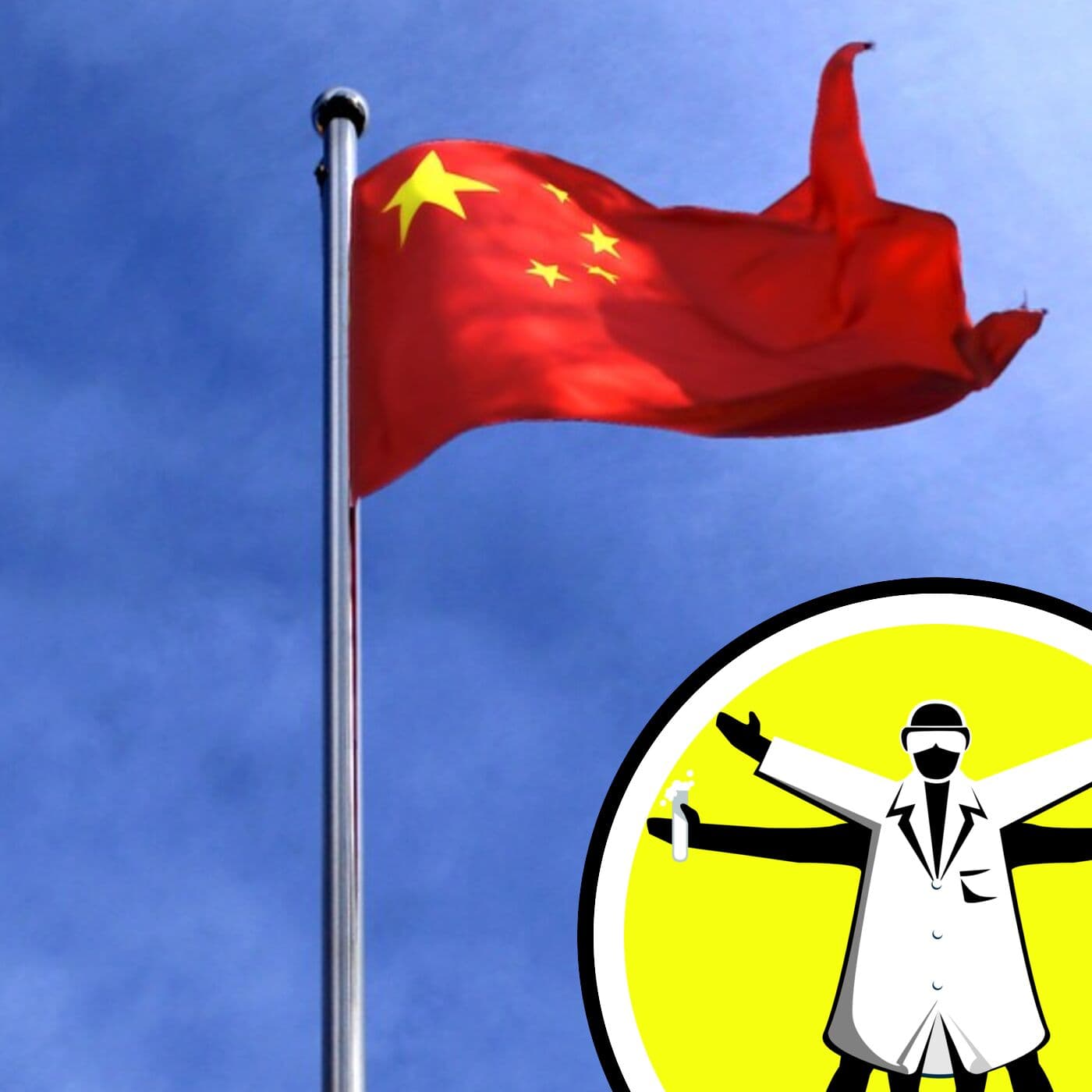
- China's New Mega-Empassy in London
- Background: China plans to relocate its embassy in London, potentially to the old Royal Mint building near Tower Bridge.
- Size and Significance:
- Will be the largest embassy in Europe, larger than the U.S. embassy in London.
- Aims to consolidate various diplomatic facilities.
- Security Concerns:
- Allegations of secret rooms and concealed chambers in the embassy plans, which have raised eyebrows regarding data security.
- Proximity to sensitive data cables that carry vital economic information has been highlighted.
- Concerns that the embassy may serve as a hub for surveillance and control over Chinese nationals abroad.
- Analyst Insights:
- Michael Clarke, a defense and security analyst, discusses the implications of Chinese control and surveillance.
- UK's Offshore Wind Farms Initiative
- Objective: To achieve 95% of the UK's electricity from clean sources by 2030.
- Current Status:
- The renewable share is currently about 55%.
- The UK plans to build 40-45 gigawatts of offshore wind capacity, a significant increase from the current 16 gigawatts.
- Expert Commentary:
- Mark Maslin, a climate expert, emphasizes the potential economic benefits and energy security.
- Concerns over feasibility and cost, alongside criticism about the ambitious targets.
- Criticism and Challenges:
- Addressing days without wind or too much wind as challenges for energy supply.
- The need for integrated systems involving gas, nuclear, hydro, and solar energy to ensure energy continuity.
- Impact of Screen Time on Toddlers' Speech Development
- Current Findings:
- Increased screen time correlates with poorer speech development and limited vocabulary in toddlers.
- Studies indicate that high levels of screen exposure can negatively impact language skills.
- Importance of Interaction:
- Yvonne Wren, director of the Bristol Speech and Language Therapy Research Unit, emphasizes the necessity of interactive communication for language development.
- Critiques of parental screen time are discussed, highlighting the impact on interaction opportunities.
- Recommendations:
- Suggests limiting screen time to one hour for children aged 2-4 and encourages parents to engage with children during screen time.
- NASA's First Medical Evacuation from Space
- Event Details:
- SpaceX Crew 11 was evacuated from the International Space Station (ISS) due to a health concern with one astronaut.
- The evacuation was unprecedented in NASA's history.
- Safety Protocols:
- Emphasizes NASA's commitment to crew safety and the procedures in place for emergencies.
- Future Considerations:
- Discusses the lack of immediate rescue options for missions beyond Earth's orbit, such as Artemis missions to the Moon or Mars.
Conclusion This episode of The Naked Scientists Podcast offers a whirlwind of scientific insights, from geopolitical issues concerning China's embassy plans to the environmental implications of the UK's energy strategy, and health concerns regarding children's development in the digital age. It reflects a blend of current affairs with scientific discourse, underscores the importance of critical discussions around these topics, and invites listeners to engage with the ongoing challenges in science and technology.
---
Additional Notes
- The Naked Scientists Podcast is produced in association with Spitfire, which provides voice, internet, and IP engineering services for UK businesses.
- The program is also supported by Rolls Royce, emphasizing collaboration in advancing scientific knowledge and community engagement.
Written by AI. May contain mistakes. Listen to the episode to check what was said.
Chapters
Tap a time to open that second in VOConcerns Over China's Mega Embassy in London
0:45 to 7:54
Discussion on security implications of China's proposed embassy and its impact.
“We begin with reports that China's London-based diplomats could soon move to a new home in the east of the capital.”
UK's Offshore Wind Farm Ambitions
7:54 to 8:12
Details on the UK's plans for offshore wind farms and their significance for energy.
“That was the defence and security analyst Michael Clarke.”
Challenges and Opportunities in Renewable Energy
8:12 to 14:00
Analysis of renewable energy goals and the practicalities of achieving them.
“The funding is part of a drive to achieve 95 % of the UK's electricity coming from clean sources by 2030.”
The Potential of Wind Power
14:00 to 14:56
Discover the advancements in wind power and the UK's capabilities.
“The reason being is because we know how to do wind power in this country.”
Screen Time and Speech Development
15:36 to 17:07
Explore how screen time affects toddlers' speech development.
“It follows a recent study showing that almost all two-year-olds in the UK use screens daily.”
The Role of Parental Interaction
17:09 to 18:51
Understand the impact of parental screen time on child development.
“I think that's a really important one and it's often missed.”
The Importance of Contingent Interaction
18:52 to 20:08
Learn about how contingent interaction supports language skills.
“Why do you think, though, that screens might have an impact?”
Recommended vs. Toxic Screen Content
20:09 to 21:29
Identify beneficial and harmful apps for children's development.
“And there are others which most definitely aren't.”
Expert Insights from Yvonne Wren
21:30 to 21:42
Hear from Yvonne Wren on maximizing interaction with children.
“Yvonne Wren at the University of Bristol and also Cardiff Metropolitan University there.”
NASA's First Space Evacuation
21:43 to 23:26
Details on NASA's recent evacuation of astronauts from the ISS.
“NASA has carried out its first ever genuine space evacuation this week.”
Show all 13 chapters
Safety Protocols for Astronauts
23:27 to 24:52
Explore NASA's safety protocols and evacuation procedures.
“They have, you know, minor ailments, the sort of things that would happen to us.”
Future Risks of Space Missions
24:53 to 27:20
Discuss the challenges and risks of future deep space missions.
“It's just, well, look, this could be a serious concern.”
Introduction to UK Birth Cohort Study
28:00 to 28:14
Learn about the first UK longitudinal birth cohort study since the millennium.
“This is the first UK longitudinal birth cohort study since the millennium.”
Transcript
Automatic transcript. May contain errors.0:16Hello, welcome to the Naked Scientist podcast, the programme that brings you the biggest breakthroughs and talks to the major movers and shakers in the worlds of science technology and medicine i'm chris smith and coming up are there legitimate security concerns over china's plan for a new mega embassy in london some are calling it the chinese spy center also evidence that screen time on phones and tablets is damaging the speech development of young children and for the first time ever nasa evacuates someone from space but how and why
0:56We begin with reports that China's London-based diplomats could soon move to a new home in the east of the capital. It's been dubbed a mega-embassy, but there are concerns that the plans include secret rooms and a concealed chamber that sit alongside cables carrying data to and from the City of London. These details were redacted from plans originally submitted to London's authorities. but were revealed earlier this week when the Daily Telegraph published what they say are copies of the originals that reveal these formerly hidden details. Michael Clarke used to work for the Royal United Services Institute think tank, and he's now a defence and security analyst.
1:36I asked him what he makes of it. The Chinese want to have a new embassy in London. They're based in a traditional embassy, and they have lots of other facilities around the capital, and they want to bring them all together in a new embassy. and it was suggested that they might take over the old Royal Mint building, which is right opposite Tower Bridge. It's a very iconic part of London. It's a very clear crossroads of the great tourist industry. And the Royal Mint building is very large and this would be, after adaptation, the largest embassy in Europe that the Chinese have got. I think it would be the largest single embassy in Europe.
2:13It would be bigger than the American embassy in London and it would consolidate all of China's diplomatic work in one place. The thing that has bothered a lot of security service people is that it would sit on top of all of the cables that go in and out of the city of London, which is just to the east of this area, and those cables carry the most sensitive and the density of economic material, both consumer material, plus some of the most important economic data that flows backwards and forwards by the trillion bits. every day. And the Chinese have refused to allow plans of the embassy, the new embassy, to be completely transparent.
2:53They've got secret rooms in there that they refuse to reveal why they are there and the plans to be really investigated. And the Chinese have made it a big issue to say that unless you allow us to have this embassy, there will be diplomatic consequences for Britain. And it looks as if Britain is about to agree. What might be the risks? Well, I think the proximity to the data cables is probably not the most important issue. Undoubtedly, the Chinese will try to get into those cables because they do. And they hack all of our material all the time. And one of the arguments is if we're worried about the personal data of our banking details, well, they've already got those.
3:34They've had them for years because they do. They just they hoover up every scrap of personal information they can about every society that they're involved with, even though they can't analyze it. They keep it all so that with the use of AI in future years, they'll be able to go through it. So they've got mountains of haystacks and they will be able, not yet, but at some point, be able to trawl for the needles in all those mountainous haystacks that they've got. I think the bigger issue is not so much the cables, because the security services have said that they can live with that. The other issue is that what we're dealing with here is a Chinese society which is by nature totalitarian, which is to say it believes in the total control of its people and what they should think as well as what they're allowed to think.
4:17and it extends that control to Chinese abroad because they recognize that in the modern world, in the globalized world, if China is to exert the power it plans to exert, then Chinese individuals will need to be everywhere in the world as engineers, as foreign nationals, as students, as visitors, as tourists, and they want them all to be potentially under their control. And this building, which will be bigger than Buckingham Palace, this building will act as a symbol of the power of the Beijing government over the Chinese communities of all types that come and go or live permanently in Britain.
4:54The size aside, how is this different though from what could be going on in any other country's embassy in London? This is not in principle different to what is going on elsewhere and it's not in principle different to what the Chinese are already doing in all of the different buildings that they occupy in different parts of London. and some of the people in the security services are believed to think, well, if they all exist in one place, it's easier for us to monitor them. We can listen to them just as they can listen to us. I'd be very surprised if their cables were completely immune to being hacked, just as the cables in the city are not immune to being hacked.
5:29And of course, yes, the Chinese do this all over the world. They do it in other cities. But it looks as if the Chinese view the future as one in which London is a hub for their activities. And you could say, well, that's either a good thing for London's reputation, because it proves that London is quite an important city in Europe, or you could say it's a bad thing for London's reputation because it proves that the British government is easier to cajole than other European governments. Is it normal, though, for embassies and overseas government infrastructure to, when they submit plans, to redact big chunks of it?
6:05I mean, if China are doing something that everybody else does, then that's perfectly reasonable for them to do that, isn't it? No, it's not normal. When a government looks at plans for an embassy, it's got a right to know what the building is going to be and what it's going to be used for. Of course, that use may be changed, but this happens all the time. And the Chinese, for instance, are bringing pressure to bear. So the British embassy in Beijing, when the plumbing fails, the Chinese won't allow British plumbers or plumbers that the embassy approves of to come in and fix it. So we've got plumbing that is being left unfixed because they're saying, well, only our plumbers are allowed into your embassy to fix your lavatories.
6:42And of course, nobody trusts Chinese nationals coming into the British embassy. And so this sort of erodes the rights of embassies to function as sovereign territory of their governments. And what the Chinese are here requiring, demanding, is that they get sovereign territory in this new embassy, but at an enhanced level that other countries would not be allowed. What do you think the reaction is going to be? People are saying that the diplomatic cost will be greater, therefore we should wave it through. I think that's the view the government is taking. And Keir Starmer is due to go to China later on this year, and that will be a very important visit in terms of Britain's economic development and inward investment into Britain.
7:24Undoubtedly, if this decision on the embassy is not taken or is taken in a way that the Chinese don't like, that visit will be cancelled. And I'm fairly certain, I can't prove this, but I'm fairly certain in my own mind, the Chinese are now saying, you've got to make the decision, make it now, and then your visit will go ahead. But if you delay the decision or you make it in a negative way, then the visit won't go ahead. And the government, I think, are taking the view that overall it is better to let this go ahead and we can take the hitch to our dignity over the longer term. That was the defence and security analyst Michael Clarke.
7:57We did ask the Chinese embassy in London to respond, but for the moment, we haven't heard back. The UK is planning to build a record number of offshore wind farms to provide electricity for 12 million homes across the country. The funding is part of a drive to achieve 95 % of the UK's electricity coming from clean sources by 2030. Now to put that into perspective, the renewable share of UK electricity generation is currently about 55%. So the present ambition is a huge jump and critics are worried that it's not achievable and it will push up prices even further. UCL's Mark Maslin has recently penned a paper on the economics of wind power and he's also the author of Climate Change, a very short introduction.
8:45So we asked him to take a look at the proposals for us. The aspiration is to get the UK energy, particularly electricity, up to 95 % from renewables by 2030. And this is a brilliant aspiration because as we've seen in the past, we've had the cost of living crisis. And that was caused by the fluctuations in fossil fuel prices, mainly driven by the Russian invasion of Ukraine, which pushed gas prices through the roof. But it's also a long-term trend because the cheap gas from the North Sea and other places is running out. So the natural gas that we use now, we have to import from places like America and Qatar.
9:32So that price has been going up. And so this is a way of making sure that we have secure British energy, which we control the price of and is relatively cheap compared with natural gas. if you look at where they want to be then to reach that wind energy target that's what 40 to 45 gigawatts of generating capacity by 2030 looking at the numbers we're at 16 at the moment a massive jump isn't it it isn't it isn't i mean if you think about it this is one auction which is already going to add 8.4 gigawatts to that number. And the interesting thing is that unlike building a new gas firepower station, building offshore wind is relatively quick.
10:21We have the technology, we are incredibly fortunate in the UK, whereby we have a wonderful sort of like shallow sea around us, whereby offshore wind works perfectly. So we have lots and lots of opportunity to expand it. This auction system to allow private investors to come in to build offshore wind started under the Conservatives, and it worked really well. It boosted our wind hugely. What Labour's doing is taking that idea and going, let's put it to the max. Let's see what the market can do. They did an auction and they sold 8.4 gigawatts because that is the amount of money that is there available to invest in this new technology, which is brilliant.
11:11Criticism about, oh, this is going to cost us money. A study we did last year at UCL showed that if we had not had that wind for the last 10 years, we would have had to spend another£104 billion on energy because gas would have had to actually make up that difference. And gas is really expensive at the moment, and we would have had to build new gas-fired power stations. What about though, and I hate starting questions with what about but it because it sounds provocative but what about the days when the wind doesn't blow because it's a wonderful aspiration but we still have to have some way of supporting the energy supply when it isn't windy so you need in parallel some kind of investment that gives you your plan b whether that's long-term storage batteries or other ways of generating energy electricity heat etc so what's the plan b absolutely chris and also it's not as simple as that because if it's too windy you have to actually lock the turbines down otherwise they get damaged and if it's not windy and I have to say the wind has to be really near to close to zero because these are huge wind turbines that can actually pick up any breeze and actually generate electricity so but you've got those ends of spectrum so no wind or too much wind and you have to shut down the actual production.
12:39But that's why we have an integrated energy system across the country. So of course, we still have gas, we still have nuclear, and we are working on things like making sure that there's hydro, storage, and of course, as much solar as we can get. And again, the interesting thing is solar is coming into its own, We now have technology that allows for solar panels to work in the northern hemisphere. So again, the key thing is by doing renewable energy, it means that we, Britain is in control of our own energy. We have secure energy and we're not beholden to foreign powers. And the geopolitics at the moment is getting quite dicey out there.
13:28We control our own energy. And therefore, it means that we can set costs and actually make sure that huge price rises don't occur in the future. Turning to the practicalities for a minute, given how extensive this is, you said it's an over an 8 gigawatt auction, which is 50 % of what we've already got. So we're talking about taking what we've already got and adding another 50 % and doing it in four years. Is that achievable by 2030? That's a very extensive set of wind farms, isn't it? Absolutely. So it's actually possible to do it. The reason being is because we know how to do wind power in this country.
14:07We have the wonderful companies that do all the surveys. We know where we can actually put wind turbines. And the key thing is making sure that we have the fleet of ships to actually service and actually build them. We have that. All those ships and vehicles that have been used for offshore oil and offshore gas, we are now repurposing to actually do wind. People underestimate this country all the time. When we want to do something like this, because there is the finance there, there is the government support for there, industry steps up, and they will be able to deliver that 8.4 gigawatts in four years' time.
14:50But will they make it the rest of the way? We will have to wait and see. Mark Maslin there, he's the author of Climate Change, a very short introduction. The Naked Scientist podcast is produced in association with Spitfire. Cost-effective voice, internet and IP engineering services for UK businesses. Find out how Spitfire can empower your company at spitfire.co.uk.
15:16Music in the programme is sponsored by Epidemic Sound, perfect music for audio and video productions. You're listening to The Naked Scientist podcast with me Chris Smith on the way. What happens when an astronaut becomes unwell in space? How do we get them home? But first, parents across the world seem to fight a never-ending battle with their kids over TVs, screens and tablets and the UK government has said it wants to offer fresh guidance. It follows a recent study showing that almost all two-year-olds in the UK use screens daily. Health experts say that being glued to a TV or tablet is associated with poorer speech development in toddlers and therefore a limited vocabulary.
15:58Yvonne Wren is the director of the Bristol Speech and Language Therapy Research Unit. The evidence out there is suggesting that there is a relationship. The report from the Children of the 2020 study found that when children were exposed to very high levels of screen use, they were likely to show lower levels of vocabulary development. And there have been other studies, for example, in Portugal, showing similar things. But it's not a straightforward relationship because sometimes the children who are exposed to more screens are also the children in families who are dealing with more challenges.
16:37So they're being asked to prepare healthy meals for their children. That takes time. So in order to prepare a healthy meal, what are you going to do? You might put your child in front of a screen while you get on with that meal. So that's also important. So it is about understanding family's unique set of circumstances, working with families to work out how we can improve some of the things which help speech and language and reduce some of those screen times. When we consider screen time though, do we also consider parental screen time? And the reason for asking that question, Yvonne, is I was walking down the street the other day and I saw a lady pushing a baby in a buggy and the buggy had the baby facing mum but mum was walking along with a phone in her hand tap tapping away and looking at the phone not at the baby now historically when there wouldn't have been phones there probably would have been a lot more eye contact and probably would have been a conversation even if it was gurgles and cuckoos going on there would have been interaction there that there isn't so to what extent is this that the child is engaging with screens and to what extent is there a potentially an impact that the parents are engaging with screens more Right, I'm really glad you've asked that question.
17:46I think that's a really important one and it's often missed. Interaction is key. That is how children develop speech, language and communication skills. It's interaction with those around them. So yes, if you have an adult caregiver who is looking at a screen and not engaging with their baby, then it is going to reduce the number of opportunities there are for interaction, which could then have a negative impact on the child's speech and language development. But again, I think we need to be really careful with this. When we see a snapshot of somebody, we see somebody in the high street, on the road or whatever, and they happen to be on the screen when we're looking at them.
18:30We don't know why. We don't know what's happened. We don't know what they're dealing with in their life. So we need to really avoid being judgmental. And we need to really prioritize encouraging all adults that are interacting with children to take every opportunity to talk with children, to interact with them as much as possible. Why do you think, though, that screens might have an impact? Because at the end of the day, if it's presenting children with something that's absorbing and engaging and it involves language, which often they do, they make sounds and they create speech or they have talking animals and that kind of thing on a lot of these things that engage children, why would that be bad for language development?
19:14Yeah, it's another good question and one that people often want to know. Now, I've said that interaction is really important for speech and language development in children. And it's a very specific type of interaction. It's what we call contingent interaction. And what that means is that you are responding very specifically to what the child has said. So if I give a couple of examples, you know, the first thing that children will often, And the kind of sounds that children play with in early childhood, they might say mama. And we hear that and we think, oh, they're saying mom, you know, and we positively reinforce that.
19:49Now, a screen can't do that. A screen doesn't know what the child is looking at. It doesn't know the sounds that the child is making. And even with the most sophisticated voice recognition, it's not going to be able to interpret what the child is looking at in the context of their environment. so it is that contingent interaction and screens don't provide that are there any applications any things that children can view that are therefore particularly good and solve that problem and the converse are there any things that are particularly toxic and parents should think well i'll steer clear there are programs and apps and things which are more suited to children and babies.
20:35And there are others which most definitely aren't. Those that have been developed with children in mind, I mean, I think if I'm allowed to mention something like CBeebies and the Tiny Happy People app that is run by the BBC, there is a lot of input to that from child development experts and speech and language therapists. So I certainly would recommend Tiny Happy People and CBeebies. But it is about this quantity thing. The World Health Organization's advice is no more than one hour of screen time for two to four-year-olds. And I imagine that guidance from the UK government is probably going to be something quite similar to that.
21:11It's about maximizing that contingent interaction. If you're going to look at an app or screen time, wherever you can as a parent, to look at it with the child, to use it as a basis for talking with them, because you can pick up on which bit of the app or which bit of the screen the child is interested in. That's the bit you want to focus on rather than worrying specifically about which app is the right one. So interaction is the key. Yvonne Wren at the University of Bristol and also Cardiff Metropolitan University there. NASA has carried out its first ever genuine space evacuation this week. They've brought back early the SpaceX Crew 11 mission from the International Space Station following concerns about the health of one of their crew members.
21:56The astronaut who had been working and living on the ISS, together with the rest of the crew, splashed down off the coast of California. Richard Hollingham, from the Space Boffins, was watching it as it happened. What we know is, a few days ago, an astronaut, one of this crew, had a medical issue on the space station. This was during the preparation for a spacewalk, but we're told it wasn't actually related to the spacewalk. It was of sufficient concern that NASA felt they needed to return them to Earth. Now, to do that, they have to bring back the entire crew because they'll go in this ferry capsule back to Earth.
22:40If you only brought one person back, you would potentially leave astronauts stranded on the space station. So the only option was to bring the entire crew back. So they are all back on Earth. Stunning splashdown. The images you get now from these splashdowns with drone shots, The capsule splashed down in the water surrounded by dolphins. Absolutely beautiful. It's then hoisted onto the ship, the recovery ship. All the astronauts came out of the capsule. They stood up. They all seem to be smiling. There are no obvious problems with them, but they are going to undergo some more medical examinations.
23:17Has NASA ever done anything like this before? No, this is unprecedented during the entire NASA space programme. I mean, we know astronauts get a bit ill in space. They probably have stomach bugs. They have headaches. They have, you know, minor ailments, the sort of things that would happen to us. They get cuts and bruises on the space station. I mean, there's so much stuff. You've seen pictures the inside of the space station. I'm amazed they don't severely injure themselves, bumping off the walls all the time. But this is the first time they have evacuated astronauts from the space station. You mentioned that they all walked off and everyone looked OK.
23:52Do we have any kind of updates on who it is or what is wrong or whether they're OK now? No, it's the short answer. We know they're all OK. We know they're going to be held overnight in a hospital. That doesn't normally happen. They splash down in the Pacific off the coast of San Diego and they'll be taken to a local hospital, looked after there, see if there's anything that needs immediate attention. and then they'll all head back to Houston. It's all about medical confidentiality. It's up to the individual concerned whether they decide to reveal it was them. Who makes the call about, right, we've got to go home, mission's off?
24:38Well, ultimately, it comes down to the NASA administrator, the head of NASA. But I think this is really a good demonstration of the safety-first culture. that actually if there's any concern, then they will bring the crew back. It's not a big argument about it. It's just, well, look, this could be a serious concern. If they stay there, they could be in serious trouble. Let's bring them back. So NASA has a really impressive lessons learned program. So when something does go wrong, they have lots of debriefs, lots of conversations about it, reports, all the rest of it. and that should feed back into how they operate.
25:20So I think this is a great example of actually the whole system working. It's a positive thing in a way. The ISS is 400 kilometres up there, so it's relatively easy to get people back. I'm thinking, of course, about Artemis, which is scheduled to blast off quite soon if all goes to plan, isn't it? This is the mission that will go in a sort of figure-of-eight pattern from the Earth, well, round the Earth, round the back of the Moon and then come home. presumably with that there is no bailout there's no option to get people back if anything goes wrong no it's a short answer chris once they leave uh low earth orbit they are on this trajectory out and back to earth so if anything goes wrong there is no plan b if anything goes wrong with one of the astronauts they're going to have to wait till they end up coming back down to earth so this is a concern, particularly for spaceflight in the future.
26:16So you look at the space station, for example, there are always enough spacecraft attached to get the crew off at a moment's notice. So, you know, if there was some, you know, catastrophic incident on the International Space Station, so not just a medical incident, maybe a fire or a leak of chemicals or a chunk of space debris knocks into the space station, everyone has to get off. They can do it really quickly. They are so well drilled. Get into their spacecraft, get back to Earth in a matter of hours. That is not the case at all with Artemis. So if something goes wrong with the Artemis 2 spacecraft, there is no Artemis on the ground ready to launch.
26:54There's nothing that can come to rescue them in deep space. So it is a risky mission. And looking ahead to Luna and to moon bases and the like, these are all things that are going to have to be thought of. Once you're on the moon then you know perhaps you can have an emergency shelter like they they do in an antarctic bases but getting to and from the moon you know where are the lifeboats where are the backup systems these are all considerations for the future and then i mean we probably don't want to go on to mars but you think about you know that's months away uh so again you've got all these things to to consider and a medical evacuation from the moon medical evacuation from Mars, a whole lot more complicated than just getting in a spacecraft, undocking and being back on Earth a few hours later.
27:41It really is going boldly, isn't it? That was Richard Hollingham from the Space Boffins, and their latest podcast, Lands Any Minute 2. You can catch that by searching up Naked Astronomy wherever you get your podcasts. Well, that's it for today, but do tune in on Tuesday when Generation New Era will be our focus. This is the first UK longitudinal birth cohort study since the millennium. We'll hear how you set up a study to recruit literally thousands of children who will be born this year and then followed up for the rest of their lives. Meanwhile, thank you to all of you who are supporting us with very kind donations.
28:18If you like what we do and you'd like to make a contribution to keep the Naked Scientist show on the road, you can do so quite safely and securely over at nakedscientist.com forward slash donate. we really are truly grateful The Naked Scientist is also supported by Rolls Royce I'm Chris Smith, thank you for listening and from all of us here at The Naked Scientist team until next time, goodbye