In short
The Naked Scientists Podcast: Episode Summary
Episode Title
Cracking cancer's code, and the cow that scratches its back
Episode Description In this episode, the launch of a world-first cancer gene database is discussed, highlighting its potential to enhance our understanding of cancer development and treatment. Additionally, topics covered include the impact of vitamin D deficiency on respiratory infections, the intriguing behavior of a cow in Austria, and the implications of SpaceX's recent launch of Starlink satellites.
---
Key Topics Covered
- Cancer Gene Database
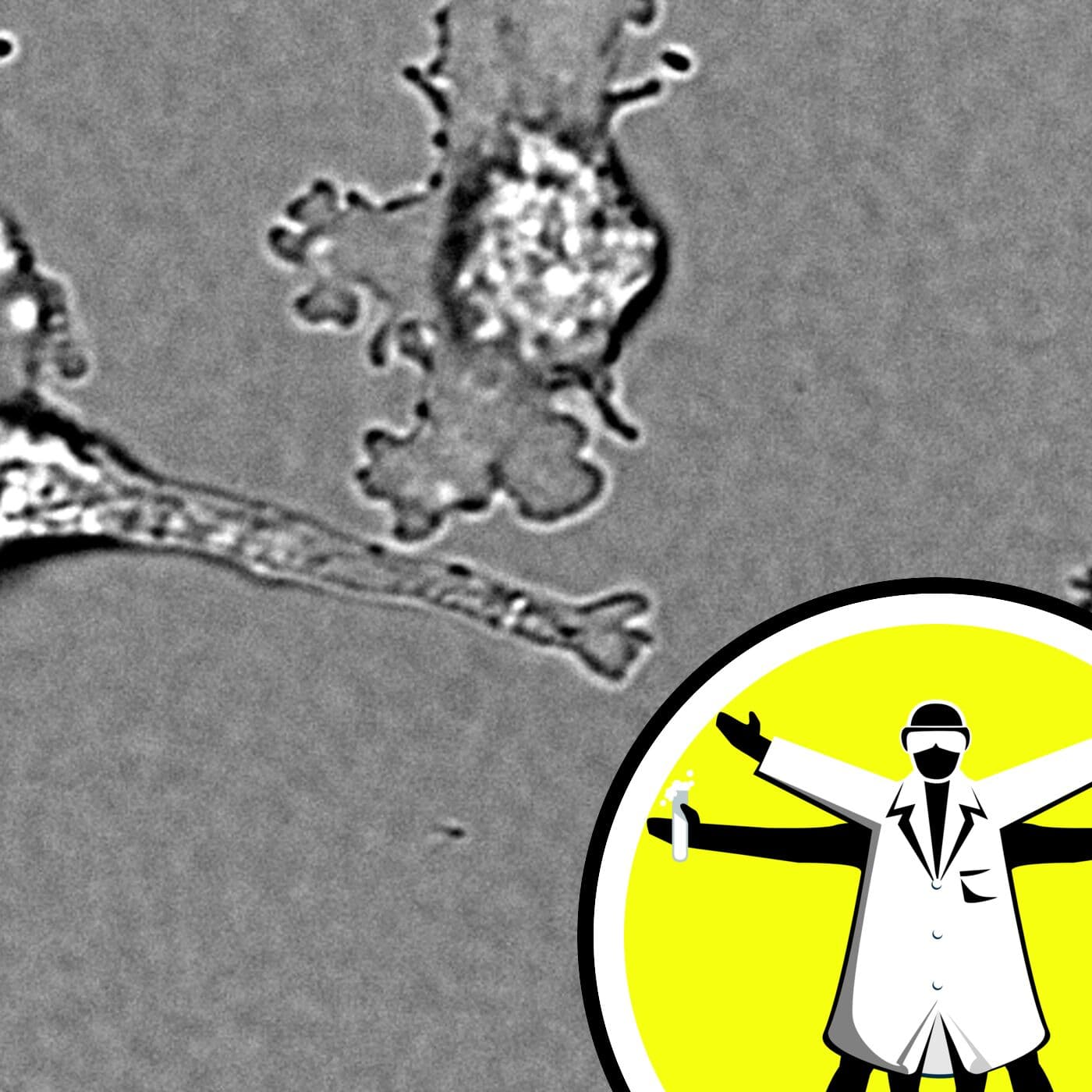
- Overview: A new cancer gene database launched in England aims to unify genetic and patient data to improve cancer research and treatment.
- Goals:
- Support earlier cancer diagnoses.
- Enable more targeted therapies.
- Challenges:
- Collating decades of paper records into a digital format.
- Data collection from over 52,000 individuals, potentially the largest dataset of its kind.
- Research Insights:
- Genetic factors and their correlation with cancer risk.
- Understanding non-genetic factors influencing cancer development.
- Future potential to enhance individual patient care through personalized data.
- Vitamin D and Respiratory Infections
- Importance of Vitamin D:
- Essential for calcium metabolism and bone health.
- Receptors present in many tissues, indicating wider health implications.
- Research Findings:
- A study identified a 33% increased likelihood of hospitalization for respiratory infections in individuals with low vitamin D levels.
- Discussion of seasonal vitamin D deficiency, especially in colder months (October to March).
- Policy Implications:
- Calls for potential food fortification with vitamin D to mitigate deficiency risks in the UK population.
- The Cow That Scratches Its Back
- Introduction to Veronica:
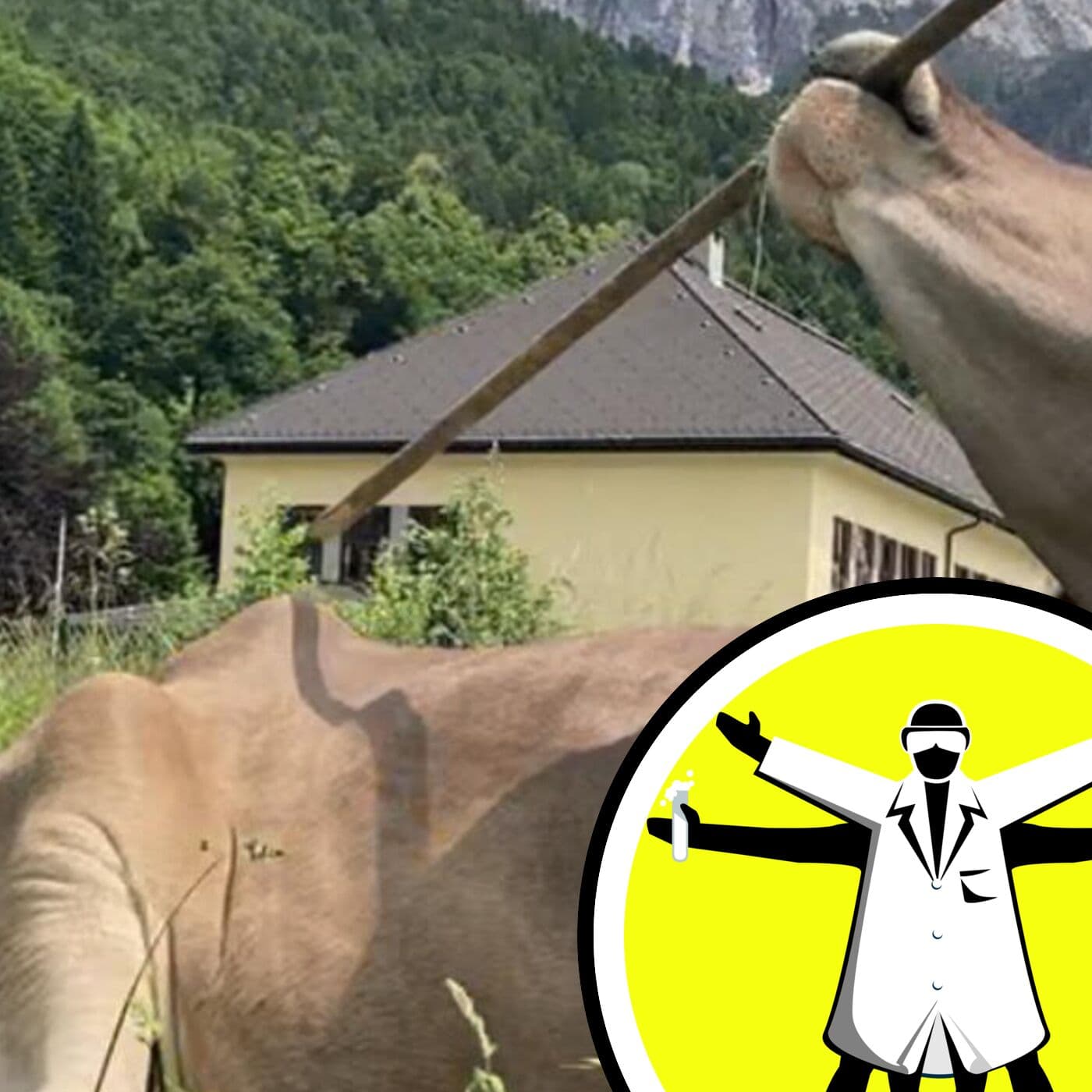
- An Austrian cow, Veronica, has been observed using tools (sticks, brooms, rakes) to scratch herself, challenging previous assumptions about animal intelligence.
- Research Insights:
- Researchers document Veronica's innovative behavior, demonstrating tool use and cognitive flexibility.
- Highlights the need for greater observation of common animals and the potential for discovery of similar behaviors in other species.
- SpaceX's Starlink Satellites
- Overview of Starlink:
- A network of satellites launched by SpaceX to provide internet coverage globally, particularly in remote areas.
- Concerns:
- Increased congestion in Earth’s orbit and potential impacts on astronomical observations.
- Discussions on the ethics of satellite proliferation and its effects on the night sky.
- Future Implications:
- Potential for significant increases in satellite numbers, leading to visual and scientific challenges.
---
Key Takeaways
- Cancer Research: The integration of genetic databases could revolutionize cancer treatment and prevention strategies.
- Public Health: Addressing widespread vitamin D deficiency could help reduce hospitalizations from respiratory infections, calling for policy changes.
- Animal Behavior: Veronica's use of tools highlights the cognitive abilities of cows, inviting further study into animal intelligence and behavior.
- Space Exploration: The growth of satellite networks presents both opportunities for global connectivity and challenges for astronomical research and the visual integrity of the night sky.
---
Conclusion The episode provides a rich exploration of current scientific breakthroughs in genetics, public health, animal behavior, and space technology, underscoring the interconnectedness of these fields and the implications for society at large.
Call to Action Listeners are encouraged to support the Naked Scientists and follow their journey as they continue to explore and disseminate knowledge about significant scientific advancements.
Written by AI. May contain mistakes. Listen to the episode to check what was said.
Chapters
Tap a time to open that second in VOLaunching a Cancer Gene Database
0:45 to 3:50
Exploration of England's new cancer gene database and its implications.
“The NHS in England has created a world-leading cancer gene database, bringing together genetic and patient information to deepen our understanding of how cancers develop and how they can be treated.”
Understanding Genetic Risks
3:50 to 7:20
Discussion on how genetic information can predict cancer risks and outcomes.
Vitamin D and Immune Function
7:20 to 11:25
Investigating the role of vitamin D in immune health and respiratory infections.
“Vitamin D is colloquially called the sunshine hormone.”
Vitamin D Deficiency in the UK
11:25 to 14:00
Statistics on vitamin D deficiency in the UK and its potential health risks.
“And is that what you've done, Abby, with this study?”
Exploring Vitamin D Deficiency and Public Health
14:00 to 16:46
Discussion on the implications of vitamin D deficiency and potential policy changes.
“That's a very important question and I think we are not at the stage yet to be able to give a conclusive answer to that.”
The Story of Cow Tools and Veronica
16:56 to 18:38
Exploring the background of the Cow Tools comic and the tool-using cow Veronica.
“This is the Naked Scientist podcast with me, Chris Smith.”
Veronica's Innovative Tool Use
18:38 to 23:12
Discussion about Veronica the cow's ability to use tools for scratching and its significance.
“And this would be something where I would say it would constitute tool use.”
Implications of Tool Use in Cows
23:12 to 25:17
Discussion on the cognitive capacities of cows and implications of their tool use.
“They're usually in some underneath stable somewhere.”
Starlink Satellites and Global Connectivity
25:17 to 25:59
Overview of SpaceX's Starlink satellite launches and their impact on internet connectivity.
“So I will be really happy if people who have experienced this personally contact me to my personal email and tell me, ask more about these cases so we can keep learning.”
Challenges and Concerns of Satellite Constellations
25:59 to 28:00
Discussion on the challenges and concerns surrounding the growing number of satellites in orbit.
“but critics warn of congestion in Earth's orbit and the impact on astronomical research.”
Show all 13 chapters
The Impact of Satellite Constellations on Astronomy
28:00 to 29:46
Explore how the increasing number of satellites affects our view of the night sky and astronomy.
“and different countries of interest, the European Union has an interest too.”
The Debate Over Sky Preservation
29:46 to 31:35
Discuss the importance of protecting the night sky from satellite interference for future generations.
“You look and you think, there's a satellite, there's a satellite, there's a satellite.”
Challenges of Space-Based Observatories
31:35 to 33:18
Evaluate the practicality and challenges of relocating astronomical observatories to space.
“So long term then are we just basically looking at a future which is all going to be space-based observation then?”
Transcript
Automatic transcript. May contain errors.0:11Hello,
0:17welcome to the Naked Scientist podcast, the programme that brings you the biggest breakthroughs and talks to the major movers and shakers in the worlds of science, technology and medicine. I'm Chris Smith. Coming up, a world-first cancer gene database is launched in England, but what will it deliver? Also, the Austrian cow called Veronica that's the first documented bovine tool user, and what the latest launch of Starlink satellites might mean for our view of the night sky in years to come.
0:52The NHS in England has created a world-leading cancer gene database, bringing together genetic and patient information to deepen our understanding of how cancers develop and how they can be treated. The aim is to support earlier diagnosis and more targeted therapies using data drawn from across the country. The challenge was to convert decades of paper records and spreadsheets into a powerful digital data set that researchers like Mark Tishkowitz, consultant in clinical genetics at Adam Rooks Hospital Cambridge, can mine for diagnostic and prognostic insights. So there are many people who we see who have inherited mutations in genes that increase their risk of cancer.
1:33The problem that we have is we don't know which of those will actually go on to develop cancer and what type of cancer they're going to develop. And what's the solution that presents itself then? What's your approach to dealing with this? In the past, what we've done is collect participants for research studies where we've studied particular genes, for example, the BRCA1 gene or the BRCA2 genes, and we have then followed them up over long periods of time to work out whether or not they develop cancer or who develops cancer. You're marrying a particular genetic makeup with a disease outcome then to see which things are connected?
2:09That's exactly right, yes. And does that give us insights into mechanisms? of diseases then so if you know a gene is linked to a disease you can then ask what does that gene do which might lead us down a pathway towards both understanding the disease itself but also how to treat it better that's exactly what what we can do and we can also then work out what might influence the cancer developing because we know that it's not just genetic there are also non-genetic factors that will increase someone's risk of cancer so it's a combination of both and by collecting all these data it gives us a much better idea if we're doing this then what's not to like because you said in the past we've done this so what do you think we could do better so what we've managed to do now is actually collect this data through nhs genetic services throughout england now many of these genetic services have been testing these genes for many many years going back to the 90s but their records have been kept in different ways paper records excel spreadsheets access spreadsheets and what has happened recently is that all this data has been collated and centralized and this gives us a very powerful national resource to study this in a much more efficient way.
3:17Is there lots of it? Well so far we've got data on over 52 ,000 individuals which is much bigger than any research cohort that we've ever had so this is a pretty impressive number. That must stack up internationally as well I mean compared to what resources there are around the world that must be one of the biggest data sets surely absolutely i mean there are some countries that do this really well like scandinavia australia netherlands but we potentially have got the potential to have the biggest cohort in england and therefore the most powerful way of answering these questions that we need to answer how did you unify all that data then was this just people sitting there and bringing all of this stuff laboriously in and putting it into a common architecture so a lot of the work was done initially through a grant that was funded by cancer research uk and this was then taken on by the nhs who provided additional resource and we actually had a person in each genetic service who actually did the grant work if you like extracted the data and centralized it this is the ultimate product of that work this archive now exists you've basically got the genes the clinical outcome who's going to use this though and how how does this suddenly revolutionize our ability to do cancer genetics better it will help us enormously answering high level questions like what sort of resource do we need to provide how many women out there who carry a you know brca1 mutation for example how much surveillance do we need to offer across the country it will also give us some idea about what sort of other cancers might occur but because this data is all being collected anonymously it doesn't give us the ability to look at great depth and that is the next challenge that we need to solve to really maximize the use of this data set.
5:03What do you mean by great depth? How do you see this progressing then? By great depth I mean looking at it more on an individual basis and so far this data has been collected through the National Disease Registration Service so we don't need direct patient consent and therefore we don't have much information but what we'd like to do is go back to individuals and get them to consent for research so we can then ask them specific questions about their lifestyle for example or other aspects that may help us then solve the puzzle of you know why some people get cancer and others don't. The people that will have ended up on databases like this hitherto will be cases where there is a disease and it stands out for some reason perhaps they got their breast cancer at a very young age for example does this mean it's a biased data set and and therefore as we move into an era where genetic sequencing is very very cheap in comparison and pretty much everyone's getting it these days all newborns are getting it does this mean we're going to begin to to widen the repertoire and possibly see new connections and things that we'd missed before so you've absolutely hit the nail on the head there that's this is a big challenge because the risk figures that we currently have are based on families that have come to us because they have a very strong family history of cancer but now increasingly we're identifying individuals who have mutations in these genes because they have had a whole genome done for a completely different reason and they don't have any history of cancer in their family and therefore their risks are going to be different to the ones that we currently give people.
6:35Is this ready to go? Have you got the framework there so that you can unite a person's genome with their clinical record and their consent of course to then build a really really powerful data set absolutely we could do this at this point and but we do need the participation of the individual as well is this paid up funded and you just have to collect the information or is that the stumbling block that's certainly a stumbling block as ever with these with these projects um but we feel that this is such a powerful and strong you know has so much potential that i think you know we are optimistic that we will get resource and funding for it to take it forward.
7:14Wonderful achievement. We look forward to seeing what that's going to do in the years ahead. Mark Tishkowitz there, he's at Addenbrookes Hospital. Vitamin D is colloquially called the sunshine hormone. Over 80 % of our supplies are made in the skin just through sun exposure, and it plays a crucial role in calcium metabolism and maintaining strong bones. But many other tissues and organs also have vitamin D receptors in their cells, arguing that they too are likely to respond to this hormone so its effects are likely to extend beyond just bones and calcium. The immune system is one such example and this has led to suggestions over the years that vitamin D supplements might boost immunity.
7:56The data though have been mixed without a clear picture. But now, Abbey Bourneau and Susan Lanham-New from the University of Surrey think they know what's going on. We have a nutrient called vitamin D, where our main source of vitamin D, and it's very unusual in that our main source is not one of diet. It is actually from sunlight exposure. And so what that means is during the winter in areas of northern latitude, such as the UK is, between October to March, we make no vitamin D whatsoever. However, we have to get it from our diet. And what happens is that a lot of people become deficient. The best way of telling, your shadow has to be shorter than your height to be in the right sunlight.
8:44So between April and September, we are. But October to March, we're not. In the field of nutritional sciences, there has been a concern that actually if you are low on vitamin D, that you may be at risk, at a higher risk of getting acute respiratory tract infections and that you may also be a higher risk of other health outcomes. For example, rickets as children and ostomalacia as adults. And what we know in the UK is that we have millions of people who have mild ostomalacia during the winter, which presents itself in muscle ache, bone pain, lethargy, susceptibility to infection and tiredness.
9:29And so what we were trying to do in this study is do we see a link that if you are vitamin D deficient, you are more likely to be at risk of hospitalisation from respiratory infections. Vitamin D, as you've just highlighted, Susan, is very much tied up in people's minds with calcium and bones. So when did it become apparent then that there might be some kind of connection to how the immune system is operating? What we've identified over the years, and of course vitamin D was 100 years old in 2022, it was UK scientists who actually identified vitamin D in the first place, is that we have vitamin D receptors, VDRs as they are known, present in immune cells.
10:17What we also know is that vitamin D is very important in metabolising enzymes that are critical to viruses. What does the evidence look like though? Because when I've looked at this in the past, it seems to have a bit of a checkered history. There hasn't been a really strong set of data saying vitamin D drives your immunity and if you don't have enough of it, you're more susceptible to illness. It was always a bit hand-wavy saying yes or no, but never people saying strongly, I know what's going on. The trials have shown up to date and the jury is still or has been very much out as to whether vitamin D is protective against acute respiratory tract infections.
11:02The sorts of studies that we need to do, particularly those randomised controlled trials where you're giving one group of placebo and one group the active vitamin D, they have not given us the conclusive evidence because the people in those trials have enough vitamin D. And so what we need to do are studies looking at people who are vitamin D deficient. And is that what you've done, Abby, with this study? You've managed to capture that group of people? Yeah, absolutely. We did this using the UK Biobank, which includes data for half a million participants. And this meant we were able to include a large number of participants who had very low vitamin D levels.
11:48So we were looking to see whether your vitamin D levels affect how likely you are to be admitted to hospital for a respiratory infection. and what we found was that people with very low vitamin D levels they were actually 33 % more likely to be admitted to hospital for respiratory infections than those with sufficient levels of vitamin D. Could you actually say though that the vitamin D is causing that effect because obviously what you've got is a vitamin D level and you've got a history of being admitted to hospital at some point with a severe infection but they're not necessarily occurring at the same time are they?
12:29No absolutely so we're looking at an association here their vitamin D levels were taken at baseline and then they were followed over time to see whether they developed a severe respiratory tract infection and then went to hospital for it so we aren't able to say this you know, was causation, but we do see an association there. And if one says, well, taking your data and comparing it to the UK population, what fraction of the population does this apply to then? How many of us in winter, when our shadows are taller than we are, are effectively vitamin D deficient and therefore vulnerable to effects like those you may have found?
13:16What we show is that the prevalence, that the number of people who are vitamin D deficient is very high. And we are looking at about 20 % of the UK. That goes up in the winter, where it can actually go to, if not even a third of the UK population. So we know that we have a lot of people who are falling below the level where they should be. And so taking a vitamin D supplement, the recommendation was 10 micrograms or 400 international units per day to be taken, particularly during the winter. That would prevent you from falling below the cutoff for vitamin D deficiency. Have you any feel then Susan for how many infections we could ward off if we got everybody over the line so we didn't have that very significant chunk of the population being functionally deficient for so long over winter how many respiratory infections might we be able to ward off?
14:23That's a very important question and I think we are not at the stage yet to be able to give a conclusive answer to that. I think the fact that we found such hard data that you are 33 % more likely to be hospitalised is something that has not been shown before. I think it's very difficult at this stage to extrapolate that and say this is how many millions of infections that this would solve but that is our next part of the jigsaw that we are taking forward to really try and get answers to that very important question. And what about on the policy front? Because in the same way that we linked folic acid deficiency with birth defects like spina bifida, and that has led to food fortification with folate, and pregnant women are advised to take this during their pregnancy, and we know it's extremely effective.
15:13Are we at the stage yet, based on data like this, where we can say to the government, look, we need to have some kind of policy to get people, all people on vitamin D over winter because we're all running out of it and it's making us all ill. That's an extremely important point. The report has gone to government that went in May 2024 modelling on the options that there would be for food fortification of vitamin D. We know that Finland leads the world for a successful food fortification policy for vitamin D where vitamin D has been put into different foods and that has shifted the whole population of Finland up to a much higher level.
15:57That report has been written by the second panel, the food fortification of options for vitamin D in the UK. Will they go for it? We very much hope that they will. If we can try and get vitamin D through into foods, through food fortification, that would undoubtedly be very helpful to the UK population in its entirety. Abby Borno and Susan Lanham-New from the University of Surrey. That work just came out in the American Journal of Clinical Nutrition.
16:46UK.
16:50Music in the programme is sponsored by Epidemic Sound, perfect music for audio and video productions. This is the Naked Scientist podcast with me, Chris Smith. Still to come, what do we know about SpaceX's latest launch of Starlink satellites? Before that, though, the cartoonist Gary Larson published an illustration titled Cow Tools in his 1982 comic The Far Side, where a cow stood next to a range of different implements. it looked perplexed with the picture feeding the assumption that cows can't make or use tools. The drawing itself caused a stir because many readers didn't understand the joke behind it, but Larsson himself may now have just been proven wrong by Veronica, who's an Austrian cow who uses sticks and rakes, as it turns out, and brooms to scratch her body.
17:39Veronica's antics were brought to the attention of researchers Antonio Osuna Muscaro and Alice Auerzberg from the University of Veterinary Medicine in Vienna. I asked Alice how she first learned about Veronica's penchant for tool use. Yeah well I'm interested in animal innovation so how animals come up with completely new behaviors inventively and I wrote a book about this and after I've written this book I got lots of emails from people sending me examples of their animals using tools and there was quite a range so there were people that told me that their cat was using the Amazon box as a house and people that the dog is using the stick to brush as teeth and then I got this one video which was a little more than interesting because it showed this really nice looking brown cow and it had an old rake horizontally in the mouth and the rake was oriented at her rear end and she was moving her head up and down so her rear end would be scratched with the rakes.
18:38And this would be something where I would say it would constitute tool use. I can tell you that even the scientists are actually arguing about what tool use is. But this cow was making this rake part of her body and creating a sort of mechanic dynamic interface in a body region that is most inconvenient to reach with the mouse. So this could be tool use. Had they trained, in inverted commas, Veronica the cow to do this? Or did the cow spontaneously, by their report, just find a rake, pick it up and use it? So we went to visit Veronica. We found out who the owner was and he invited us over. And we started to talk to him about where this behaviour came from.
19:24And he said that Veronica had started this all by herself. So very importantly, she's not a production cow, but she's a beloved family pet of this family in Carinthia in Austria. And she started picking up sticks that had just fallen from the wind into her meadows and playing with them. And eventually, when she was about four years old, she started what seemed to be self-scratching behavior with natural sticks. and the owner said it was initially very clumsy and not very refined but she did this now for nine years. She is now 13 years old. Not many cows can live that long and now the behaviour has real expertise.
20:09And how did you get involved, Antonio? Yeah, so my goal there was to test if Veronica's behaviour was truly flexible to use and to test this, what we did was to get a broom because a broom has a functional end and a non-functional end and offer this broom to Veronica. So we were predicting that Veronica will have a preference for using the broom end of this tool and she will use it in a functional way so to reach body areas that will be otherwise unreachable. Because the spiky end of the broom looks like the spiky end of a rake so she would sort of cognitively transfer the function that you could get from a broom to the rake and vice versa.
20:51We assume that Veronica has had many tools along her life. She had nine years to develop her technique and she has used branches falling from trees, but also sticks, brooms and rakes. So yeah, her technique is something that has been developed over the years. And did it work? If you gave her a broom or a rake, would she use them interchangeably and do this behaviour? I offered a broom in a horizontal fashion, in a randomised order. And her first impression was the confirmation of her predictions. It was true that Veronica had a preference for the broom end. And it was also true that Veronica was addressing the real hard part of her body, you know, areas of her body that would be unreachable by other means.
21:44Does she interchangeably use each end of the broom? Or is it consistent, just the spiky end to scratch things? From time to time, Veronica was using also the handle end of this tool, so the stick. And we thought this was the result of a mistake. Perhaps Veronica was not careful enough. But after a while, we started noticing a pattern. And Veronica was using the broom end for reaching certain body areas in which her skin is thick. But she was using the stick end, the handle, to reach body areas in which her skin is soft and sensitive. And also, she was using different techniques. When she was using the broom, she was applying a technique similar to the one that any of us will use when cleaning the apartment.
22:31And when she was using the stick end of this tool, she was poking and pushing in a really careful way. So, completely different techniques, different areas, depending on the tool end that she was using. What do you take away from this, Alice? That we haven't observed these animals enough. You know, we studied tool use in these exotic birds in Vienna. We also studied in primates. And we go to the most abroad location, to islands in the ocean, to look for these exotic animals. And then we have this animal, which is all around us. It's one of the largest biomasses on this planet. There are so many cows.
23:10But we hardly get to see them. They're usually in some underneath stable somewhere. and we just assumed that they are non-intelligent and that they are not tool users, as very indicative by Gary Larson's famous cartoon, Cow Tools. And now we know that cows can innovate flexible tool use and this is also not something that has to do with Veronica being some sort of bovine Einstein. We found other videos and Antonio really looked at them and found that some of these videos of cows scratching themselves with sticks were both indicus, so a different kind of cow from Asia that comes from a different domestication event.
23:54So this is something that cows have the cognitive capacity to innovate. It's important to say that tool use is certainly not some sort of latent capability, and all cows would be tool users if kept exactly like Veronica, because cows have personalities and talents just like humans. But Veronica, as an inventor, has the opportunity because she can interact with her environment. She has objects to play with and to explore and the opportunity to learn because she's had a long life. And what are you going to look at next now, Antonio? Are you on the quest like Alice was with her book to find as many exotic, unusual examples of tool use in the animal kingdom as you can?
24:38My next goal is to get funding for a project in which I'm going to be able to study deeper Veronica's capabilities because she has so many amazing things. Her aiming capabilities, her planning capabilities. I would like also to test if she's able to apply tool use to external objects, what we call allocentric tool use. That would be amazing. But we have to be humble. We were really surprised by the discovery of Veronica last summer, as other people are being surprised right now. And we have to recognize that there are probably so many other cases out there to be discovered and so many things to learn.
25:17So I will be really happy if people who have experienced this personally contact me to my personal email and tell me, ask more about these cases so we can keep learning. You heard it here, so send your examples of animals doing extraordinary things with Black & Decker's and other tools to Antonio Asuna Muscaro and Alice Alsberg there, who we were just listening to over in Vienna. They published the story of Veronica in the journal Current Biology. SpaceX has carried out its latest launch of Starlink satellites, adding to a network that already numbers in the thousands and provides internet coverage across much of the world.
25:58Supporters say it's transforming connectivity, particularly in remote areas, but critics warn of congestion in Earth's orbit and the impact on astronomical research. Robert Massey at the Royal Astronomical Society has the story. Starlink is a so-called constellation of satellites working together. In this case, eventually tens of thousands that are designed primarily to deliver internet access to the surface of the Earth. And, you know, the premise of the company is to do that to remote areas that wouldn't be able to get it through ground-based links, although actually also in places that have those links.
26:34And that aspiration to take the internet to remote areas, is that being delivered as in, is the mesh in this constellation comprehensive around the Earth or does it dwell in certain hotspots only? The distribution of satellites, somewhat I can tell, is pretty global because obviously if you put satellites into orbit, you can cover the surface of the Earth fairly quickly, the more of them you have as well. It can't be long before they reach the 10 ,000 number that have been deployed. The challenge, I think, to the kind of model that SpaceX have is that it was sort of being rolled out as a way of reaching places in sub-Saharan Africa and so on.
27:09And of course, whilst that's technically possible, you actually need the money to buy the equipment. And when you look at the kind of income levels in middle-income countries, it's going to be an expensive ask. So I'm not really convinced it's got that impact. It's much more about affluent consumers in the West who happen to live in remote areas. If they've got 10 ,000 satellites already, and this is just one entity, and you think we didn't even have that many satellites in total a few years ago, why do they need more? You're quite right to point to that step change. There's been a huge paradigm shift.
27:40If you look back to 2019, just before the first Starlink satellites launched, there were a couple of thousand operational satellites in orbit around the Earth. We've now gone to a five-fold increase in a few years. And that shows no signs of slowing down because it isn't just SpaceX that are doing this. There are other companies as well. Amazon, Leo system, Guowang in China and so on are all examples of companies that are looking to get in on this and different countries of interest, the European Union has an interest too. It is nothing less than a change in the way we use low Earth orbit. And that brings additional challenges.
28:13You know, this is going to lead to congestion. The risk of collisions is much higher unless there is some really, very good avoidance mechanisms in place to stop that. And then there's the impact on astronomy too. But why so many? Is this just about maximising the quality of a service? Is it resilience? I mean, what's their stated aim? and how many satellites are they going to go to in total? The licences and the plans for Starlink appear to indicate they're heading towards the number of around 40 ,000 if they want to. There is a bit of land grabbing in this in the sense that if you file for a licence with the Federal Communications Commission, which is the body that Starlink uses and many companies use because if they're launching from US soil they need to do that, then they will be aiming to kind of grab an orbital shell, almost like staking a claim, like a pioneer staking the claim in the American analogy in the West, and thereby you deny your competitors access.
29:07Whether or not you go on to deploy that money is another question, but certainly the plans seem to go up to that level. And the more of them you have, I guess the higher your bandwidth, the more customers you can connect to. I must admit that when I've been gazing at the night sky in the last couple of years, where seeing a satellite was a rarity in my youth, I remember doing the same thing, you'd occasionally see something and you'd go hey look I've seen a satellite now it's it's to a penny every every few seconds you can you can spot one what is going to be the impact on our view of the night sky this is a critical concern for the Royal Astronomical Society you know the organization I'm deputy director of and also astronomers around the world what's happening as you rightly point out you see satellites all the time now so if you pick up a pair binoculars and you look at something in the sky it's very very likely a satellite or two will cross through the field if you take if you're an astrophotographer and you take an image of the sky or an object in the sky it's very very likely you'll get satellites crossing the field and that's simply because there are so many more now and they are bright enough they're in low earth orbit that they're visible it's particularly bad in dark sky places i don't think you notice it as much in cities because you've got light polluted skies it's harder to see fainter things but if you're in dark sky places and you look up at on a moonless night with the Milky Way stretching across the sky, let's imagine one of those wonderful late summer evenings when that's possible, you do sort of get this crisscross effect.
30:34You look and you think, there's a satellite, there's a satellite, there's a satellite. And I suppose people would look at that and say, oh, well, it's a trade-off between that and the internet. And I understand that point. But then I would say, look, the sky is not just the domain of private corporations, that actually humanity as a whole is a stakeholder in this as well as astronomers. My argument would be that the night sky is an environment that we should protect in its visual appearance as much as we would protect landscapes on Earth. But also, this is just the start of it. If you look at the plans around the world and the number of license applications, the number of companies that are springing up, we could be heading for, say, half a million satellites.
Read the full transcript
31:09Imagine moving to a world where you have half a million satellites and you have 50 times as many as you see now. Did we sign up for that? Did we say that we wanted the view of our night sky changed forever in this way? I don't think we did. I think it's entirely reasonable that groups like ours and others around the world are arguing in places like the United Nations and arguing with the EU, which has actually been quite receptive, and other bodies to say, hang on a minute, you know, this is something we need to protect. When you think about this, it's damaging the science of astronomy, because if you're trying to take images, particularly of what are called transient phenomena, whereby things vary over time, if a satellite happens to go through the field and go in front of that object at the time it's varying in a critical point you don't get it back you can't go back to it and say to a cataclysmic variable to a nova or something please be at exactly that point in your cycle again so we can do the image again that that data is then lost it may have an impact on things like the detection of near-earth objects that we obviously want to be aware of in case they're coming towards the earth all those kind of things are critical applications and we argue that they shouldn't be compromised that actually the satellite operators even if we accept they need that many and I'm not entirely sure I do accept it but even if we accept they need that many that they should adhere to standards that make them as faint as possible so they do as little damage as possible to our view of the sky and to astronomy.
32:28So long term then are we just basically looking at a future which is all going to be space-based observation then? The problem with the argument that you move your observatories into space is a that's obviously much more expensive they're much harder to maintain and even if you do that some of the lower ones the ones in lower earth orbit for example the hubble space telescope is already quite badly affected by satellites that are a bit higher up and because they're only a bit higher up they appear and they're closer to the telescope than to observers on the ground they actually appear much brighter in the field of view of hubble so it isn't really a great solution actually unless you imagine i don't know trillions and trillions being spent on putting something on the moon but realistically we ought to be protecting the skies from the ground and i think there's a stronger argument or a good argument at least alongside that which is that it's not just for professional astronomers but for humanity as a whole if you said to people in a century's time you'll have a night sky that's full of crisscrossing streets that are incredibly bright which is not necessarily saying that comes to pass but would people sign up to that i'm not sure that they would robert massey from the royal astronomical society there well that's it for this week do tune in on tuesday though when we're going to be unpacking motor neurone disease what is mnd why do people get it and how are neurologists trying to tackle it meanwhile thanks to you very much at home for listening to this program and to those of you who support us with your incredible donations if you like what we do and you'd like to make a contribution to help keep the show on the road do please head to naked scientist.com forward slash donate we really appreciate it please also follow us on linkedin and on instagram and do leave us a review, if you can, on Spotify, Apple or wherever you get your podcasts.
34:10I'm Chris Smith. Thanks for listening. And from all of us here at the Naked Scientist team, until next time, goodbye.