In short
The Naked Scientists Podcast: Episode Summary
Episode Title
Embryos made from skin cells, and remembering Jane Goodall
Episode Overview In this episode of The Naked Scientists Podcast, host Chris Smith discusses groundbreaking scientific advancements, commemorates the legacy of Jane Goodall, and explores a new explanation for the mysterious phenomenon known as will-o'-the-wisp.
---
Key Topics Discussed
- Creating Embryos from Skin Cells
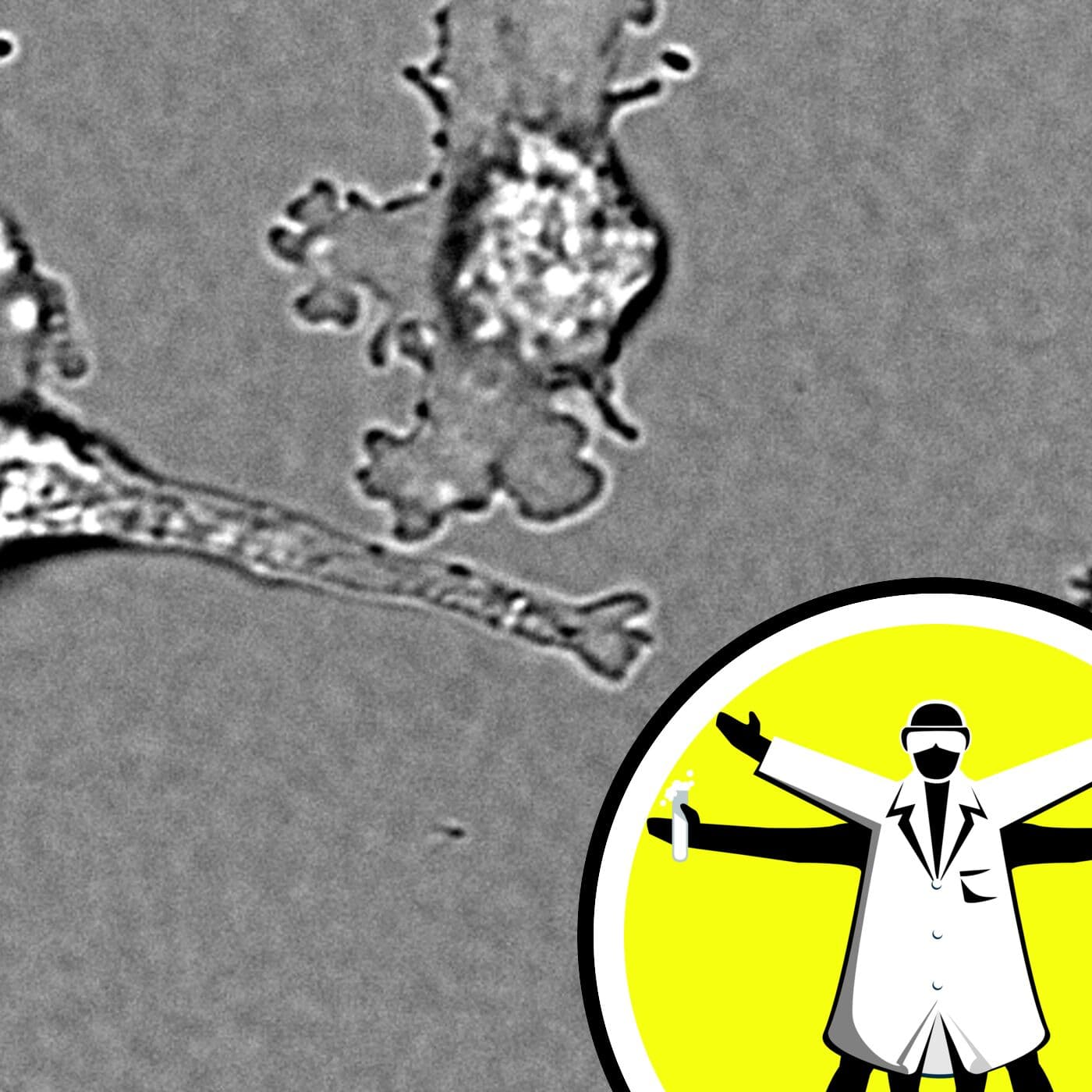
- Research Breakthrough: US scientists have developed a technique to create viable human egg cells from skin cells which can then be fertilized.
- Process Overview:
- A skin cell from a patient is combined with an egg cell from a healthy donor.
- The nucleus of the egg is removed and replaced with the nucleus of the skin cell.
- A significant step involves eliminating half of the chromosomes from the egg to mimic natural egg properties.
- Significance:
- This technique could revolutionize infertility treatments, particularly for women who have lost their eggs due to conditions like cancer or premature menopause.
- Concerns:
- Experts caution that it may take a decade for this technology to be refined and safely implemented in fertility clinics.
- Ethical considerations are raised regarding the implications of creating embryos in this manner.
- Tribute to Jane Goodall
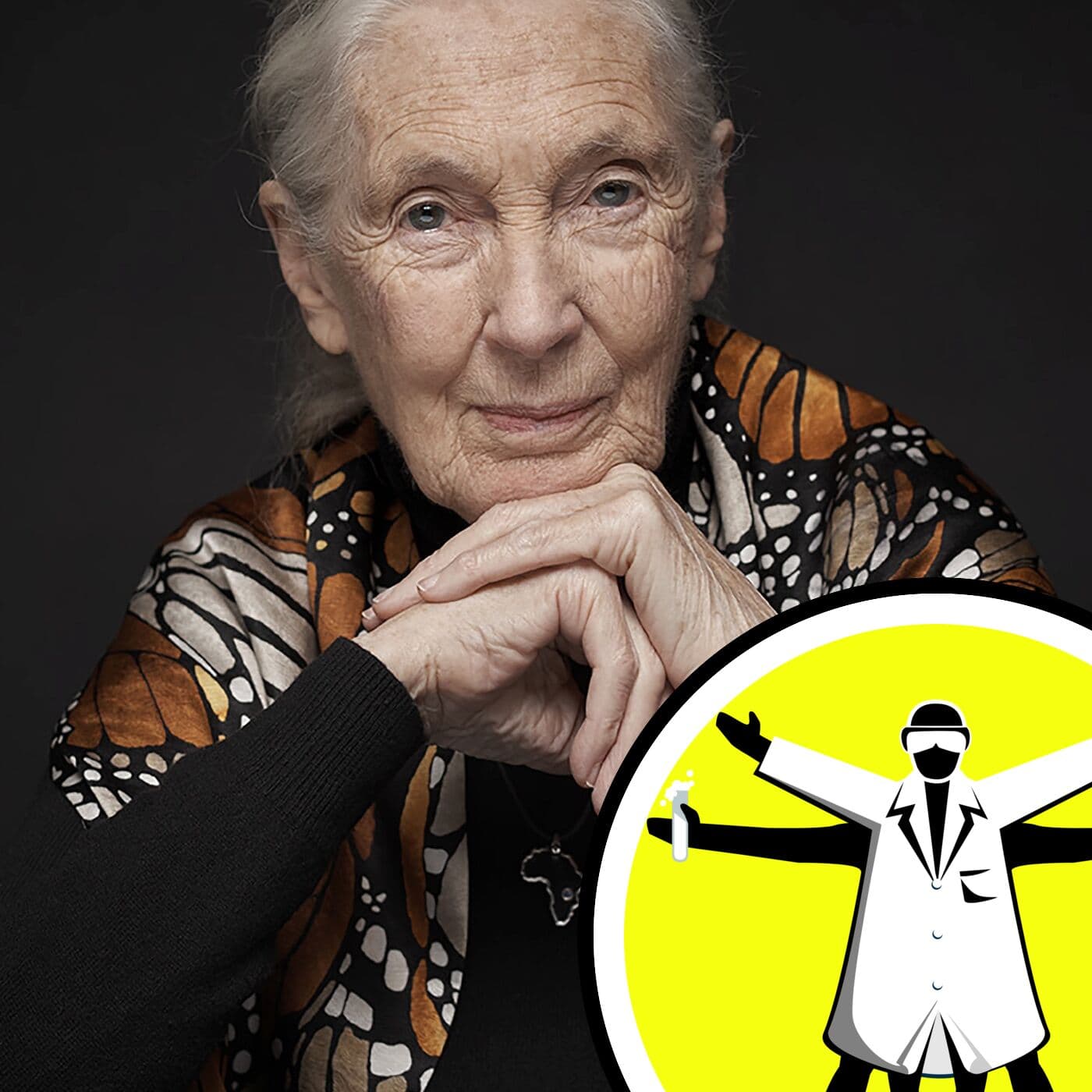
- Legacy: Jane Goodall, renowned primatologist and conservationist, passed away at the age of 91.
- Impact of Work:
- Goodall's studies on chimpanzees at Gombe Stream National Park challenged existing beliefs about animal intelligence and social behavior.
- Established the Jane Goodall Institute in 1977 to promote conservation and educate the public.
- Personal Reflections:
- Colleagues and admirers reflect on her passion for animals and the environment, noting her influence on the field of primatology and conservation.
- Understanding Will-o'-the-Wisp
- Phenomenon: Mysterious lights seen over marshy areas have intrigued people for centuries.
- Scientific Explanation:
- Researchers at Stanford University suggest that these lights could be caused by small electrical discharges (micro-lightning) generated when methane bubbles burst through water.
- Methane bubbles accumulate a charge due to the ions in water, leading to potential ignition and visible sparks.
- Broader Implications:
- This discovery may lead to innovative ways to mitigate greenhouse gas emissions, providing a potential solution to combat global warming.
---
Key Takeaways
- Scientific Innovation: The creation of viable egg cells from skin cells represents a significant advancement in reproductive science, with the potential to assist countless individuals facing fertility issues.
- Cultural Impact: Jane Goodall's legacy continues to inspire future generations in both scientific inquiry and conservation efforts.
- Exploration of Natural Phenomena: The investigation into will-o'-the-wisp not only demystifies a cultural phenomenon but also opens avenues for practical applications in environmental science.
---
Conclusion This episode of The Naked Scientists Podcast highlights the intersection of groundbreaking scientific research, the honoring of influential figures like Jane Goodall, and the exploration of natural mysteries, all while emphasizing the significance of these discussions in advancing our understanding of science and its impact on society.
Written by AI. May contain mistakes. Listen to the episode to check what was said.
Transcript
Automatic transcript. May contain errors.0:17Philippa Garrett:Hello, welcome to the Naked Scientist podcast, the programme that brings you the biggest breakthroughs and talks to the major movers and shakers in the worlds of science, technology and medicine with me, Chris Smith. And coming up, scientists announce a technique to create viable human eggs that can be fertilised and grown into embryos. We unpack the significance. Also, the legacy of the primatologist and conservationist Jane Goodall, who's died at the age of 91, and the chemist who's cracked the mystery of the ghostly lights we call Willow the Wisp.
0:57Philippa Garrett:First this week, US scientists have unveiled a technique to create viable human egg cells that can be fertilised and grown into early embryos. The technique offers a potential breakthrough for infertility, although experts have warned that it might take a decade or more of refinement before it reaches fertility clinics. Richard Anderson is a professor of reproductive science at the University of Edinburgh.
1:20Jane Goodall:They've taken a skin cell and they've merged it with an egg from another person to make effectively an artificial egg using the DNA, the chromosomes from that skin cell, and turn that into an egg that could then be used to make an embryo to make the next generation.
1:38Philippa Garrett:Talk us through then step by step how they've actually gone about it.
1:41Jane Goodall:So the first step is you take a skin cell from your patient who wants to potentially go on and have a baby in the future, and you take an egg from a healthy woman. And the first step is the same as in cloning how Dolly the sheep was made many years ago. You take the nucleus out of the egg and you put the nucleus of the skin cell into the egg. But what's actually the clever bit about this experiment is to make a real egg that can be fertilized, you have to get rid of half the DNA, half the set of chromosomes. And that's what they've achieved here. Because then when a sperm comes along to fertilize that egg, it brings along the other half of the set of chromosomes.
2:22Jane Goodall:and then you put the two together and you have a full set which will be the normal amount to go on and make an embryo and potentially even a baby.
2:30Philippa Garrett:So how have they achieved that? How do they get the egg to then ditch half of the chromosomes so it's got the right number of chromosomes to mimic an egg rather than an adult cell?
2:40Jane Goodall:That is the clever bit and what they've identified is a pathway that controls that by putting in chemical modifiers of the checkpoints that control that process. They can artificially activate it and get that egg, the new egg, to lose half its chromosomes. So that is indeed the clever bit. It wasn't terribly efficient, I think it must be added, but it's certainly a proof of concept.
3:03Philippa Garrett:Does it lose chromosomes randomly? As in, if I look at a real egg and a real sperm, when they're being made, the body randomly ditches one of each pair of the chromosomes to arrive at an independent and random assortment, which is part of how we get genetic diversity. When this process does the same thing, does it achieve a similar process? Do they get a random assortment of each of the pairs of chromosomes in their new egg?
3:31Jane Goodall:Well, I think it's a bit difficult to tell that, to be honest, at the moment, because certainly a lot of the cells that they went on to produce didn't have completely the right set of chromosomes. There were certainly instances where extra ones were lost or one of the pair wasn't completely lost. and so there were a lot of embryos that they made that didn't actually end up with the actual correct set of chromosomes so there's still a lot of errors and inefficiency in this whole process to actually exactly as you say Chris to get rid of precisely the one set of chromosomes which will be random as you say between what had originally come from the father and the mother and I think we're still some way away from being able to actually get that right.
4:12Philippa Garrett:But you said that they did actually get to something that can be fertilised and turn into an embryo. So were it then allowed to continue to develop, might turn into a baby. So this looks like these eggs, when they have got the right number of chromosomes, they look viable.
4:27Jane Goodall:Yeah, absolutely. And some of these embryos were able to carry on and develop in the lab for five days, which is the same as what we normally use clinically in IVF. Embryos are grown in the lab for treatments for five days. So it matches the normal clinical process. So yes, some got to that stage and potentially could have gone on much further.
4:47Philippa Garrett:What are the downsides, though, or the risks here of doing things like this?
4:51Jane Goodall:Well, this is really quite a big step. And I'm sure a lot of people will have serious concerns as to how abnormal, how scary this is. And certainly, if you're going to think about even using it for therapy in future, actually try and make children out of this, then clearly there are a lot of safety guards that one needs to think about of really how we should be testing these embryos to make sure that they really are going to be safe for clinical use.
5:18Philippa Garrett:Do you think this is though just a step too far and although we can do it being able to do something and actually doing it are two different things and perhaps there is a point at which we should draw the line?
5:29Jane Goodall:I think that's an important concept Chris yes but I don't think really that is the case here and indeed that is what people said about IVF when it was first developed, that it was a horrible thing that we should never do. And of course, now we recognize the benefits and there are millions of children around the world who've been born from IVF and brought immense happiness to their families. This is very early days yet, and it is a big step. And I think the important parallel really is that IVF has developed in a highly regulated framework, and this whole field needs to develop in a highly regulated framework.
6:06Jane Goodall:But of course, those regulations only come about when we understand what we can do. And then we need to think about how best to make it done essentially safely and properly.
6:17Philippa Garrett:And what doors does this open? The fact that this looks promising, if this does come to fruition, what will it enable us to do that we currently can't?
6:27Jane Goodall:Well, I think the most important group of people who would benefit from this are women who've lost their own eggs. And that may be as a result of cancer treatment, which can often be very damaging to the ovaries. Or there are a whole range of other conditions where women lose their eggs and essentially go through a premature menopause extremely early, perhaps as teenagers or in their early 20s. So to my mind, to help those women have a genetically related child through producing eggs that we can do through this type of process would be a real boon and hugely acceptable to those patients.
7:02Philippa Garrett:Absolutely fascinating. Richard Anderson from the University of Edinburgh revering that new discovery just published in Nature Communications this week. Health authorities in the Democratic Republic of the Congo are dealing with a new outbreak of Ebola in the country's Kasai province. It's thought that the region's poor transport links might actually help to slow down the spread of the virus but they do also make it harder for response teams to reach those who need urgent medical assistance. Ebola is a rare but serious haemorrhagic fever that can cause severe illness and death. In fact, dozens of people have died since contracting the virus in this recent outbreak.
7:40Philippa Garrett:Bahuma Titangi is an infectious diseases physician and a researcher at Emory University. She's worked extensively on Ebola and other viral outbreaks in Africa.
7:50Chris Smith:There are five Ebola viruses that have been described as causing outbreaks in human populations. Of these five, the Ebola Zaire strain causes the most severe infection, but is also the strain that has been responsible for the largest numbers of outbreaks recorded in history. Particularly in the DRC, Ebola Zaire has been responsible for the 16 outbreaks that have been reported in that country to date. What has caused it?
8:20Philippa Garrett:Because usually there's some kind of trigger. When you see outbreaks, you can usually ascribe it to something. So what do we think is behind this one?
8:27Chris Smith:Using phylogenetic analysis, they were able to pinpoint that the current outbreak has been triggered by a likely spillover event from the virus being introduced from a zoonotic species into the human population. We know that for the Zaire virus, the reservoir host of the virus is the African fruit bat.
8:49Philippa Garrett:But how does a bat virus become a human problem? In other words, how are people catching it?
8:54Chris Smith:This is likely most of the time linked to either people hunting animals for food. And it's not only the fruit bats, but also other animals that can come in contact with these fruit bats in the wild. All of these animals become infected and humans then hunt these animals for food. Then that can be a triggering event for an exposure allowing a human to become infected with the virus.
9:23Philippa Garrett:So once it's into humans, it then goes human to human?
9:26Chris Smith:Yes. And generally, the way in which the virus spreads is through people coming in contact with the bodily fluids of someone who is actively infected with the virus. So when a human being comes in contact with Ebola viruses, they have a very long incubation period that can range anywhere from 2 to 21 days. And once an individual who is infected becomes symptomatic, people who come in contact with the body fluids of this individual, this could be vomit, diarrhea, blood, and in that manner it spreads from person to person.
10:03Philippa Garrett:How eagerly does it spread? I mean, if we have measles at one end of the spectrum, we know that's one of the most infectious viruses we've ever discovered. Probably 20 cases for every infected person. Flu at the other end of the spectrum, not that infectious. Probably two or three cases for each infected person. Where does Ebola sit?
10:21Chris Smith:Ebola sits on the lower scale of infectiousness. It doesn't generally spread through droplets and just very minimal contact, as one would see with a virus that's highly contagious. it requires that close and intimate contact with the bodily fluids of an infected person. So that would put it more kind of in the moderate contagiousness.
10:44Philippa Garrett:So what should they be doing now on the ground to try to get on top of this and stop it getting any worse?
10:50Chris Smith:The upside to this current outbreak being caused by the Ebola Zaire virus is that it is the one strain of Ebola viruses for which we now have two effective vaccines. up to 95 % effective in clinical trials and 85 % effective in real-life scenarios when they've been used in outbreaks. So the first step is making sure that these effective vaccines are being deployed to the region that's currently affected, the Kasai region of the DRC, and that we start making sure that these vaccines are being distributed to protect the healthcare workers who the first respondents, and also implementing strategies like ring vaccination, which have been shown to be effective.
11:36Chris Smith:You vaccinate individuals that are the closest contacts of cases, confirmed cases of Ebola, to form a ring of protection that hopefully then blocks the transmission. Besides vaccination, key to containing Ebola outbreaks is also being able to identify suspected cases, tracing the contacts that come in contact with these suspected cases, and importantly, isolating these individuals so that they do not go on to then spread it or seed the infection to new naive or susceptible communities. Thirdly, safe burial practices of individuals who die from Ebola virus disease, ensuring that these bodies are properly buried to minimise contact.
12:26Chris Smith:Fourth and not the least, in order to be able to identify cases, it's also important to have the ability to test for Ebola virus disease. Fortunately, we also now have rapid diagnostic testing kits that can be deployed even in the most remote parts of the world and can yield a result of yes or no Ebola within 15 minutes.
12:49Philippa Garrett:You don't think that this is 2014 and 30 ,000 cases about to happen all over again?
12:55Chris Smith:Currently, the threat level is considered to be low for the global population, and it's considered to be moderate for the region that is currently being impacted. And by saying that, I mean countries that are neighbouring the DRC. However, I caution that Ebola outbreaks can be unpredictable, And the trajectory of the current outbreak will really depend on if we're able to get the resources that are needed to effectively contain these outbreaks in an effective and efficient manner to the region that's currently experiencing the outbreak.
13:34Philippa Garrett:Let's hope those measures outlined by Bahuma Tatanji are effective.
13:40Jane Goodall:The Naked Scientist podcast is produced in association with Spitfire, cost-effective voice, internet and IP engineering services for UK businesses. Find out how Spitfire can empower your company at spitfire.co.uk.
13:58Philippa Garrett:Music in the programme is sponsored by Epidemic Sound, perfect music for audio and video productions. This is the Naked Scientist podcast with me, Chris Smith. Still to come, has chemistry cracked the mystery of the ghostly marsh lights that we call Willow the Wisp? Before that, though, tributes have been paid to Jane Goodall, the world-renowned primatologist and conservationist who's died at the age of 91. Will Tingle has been looking back at her remarkable life.
14:26Jane Goodall:I had two dreams. One dream, I wanted to work among, study, live among, learn from animals. and as I grew older and read more and more books, I realised that most of all I wanted to go to Africa and work among and learn about African animals. And my second dream, I wanted to write books about them. So I feel that I've been incredibly fortunate to stand here and look back over my life and realise that to a large extent my childhood dreams have already been fulfilled. Jane Goodall was born in London in 1934. From a very young age, she showed a fierce curiosity about the natural world and would spend hours in her garden and nearby parks, notebook in hand, carefully observing the animals around her.
Read the full transcript
15:17Jane Goodall:She even gave names to the birds and creatures she encountered, a habit that would follow her throughout her life. As a child, she dreamed of distant lands and exotic animals, sometimes pretending to be Tarzan swinging through the trees. Later on, she would joke that Tarzan had married the wrong Jane. Jane's passion for animals stayed with her throughout adolescence. She famously taught herself to read the naturalist books she borrowed from the library and was determined to one day travel to Africa. Her family encouraged her curiosity, even though such ambitions were unusual for a young woman at that time.
15:50Jane Goodall:She went on to study at the University of Cambridge in the 1950s, earning a PhD in ethology, a rare accomplishment for someone with no formal university science background. Her early work laid the foundation for her fascination with chimpanzees, the creatures that would define her life's work. In chimp society, and this is quite rare in a lot of the animal societies, any male, whether he's high-ranking, middle-ranking or low-ranking, even if he has a disability, he is able to sire an infant. And I think it is because of this ability of all the males with all their varied genes to sire infants that we find so much individuality.
16:32Jane Goodall:I mean, one chimp is as different from another chimp as one person is from another person. In 1960, Jane travelled to Tanzania to begin her landmark study of chimpanzees at Gombe Stream National Park. She was given the unprecedented opportunity to observe the chimps in their natural environment. Over decades, she revealed intelligence, emotion and social complexities such as tool use that were behaviours previously believed to be solely human. Her work challenged the long-held scientific assumptions and inspired millions around the world. Catherine Hobater, a primatologist at the University of St Andrews, recalled how profoundly Jane inspired her own career.
17:11Jane Goodall:What Jane Goodall meant to me was this idea that you could be a scientist and a good scientist at that without necessarily having to become this idea of a sort of cold, objective observer of other individuals. that actually if you cared about the individuals that you were spending time with, if you got to know them, if you got to know them as having personalities, that that actually meant that you as a scientist could ask deeper, richer, more interesting questions about their world. And it was part of the goal of her mentor, Louis Leakey, when he sent her out there, was to send out somebody with a fresh perspective, to send out somebody who didn't have formal academic scientific training, because you would potentially be going in with an open mind.
18:00Jane Goodall:And it's not to say, you know, you have to be an incredibly good observer to see the details of behavior, you have to just have patience by the bucket load. And that doesn't necessarily have to do with thinking about hypotheses and predictions and scientific training. And actually, it, you know, she herself also talked about the fact that that lack of a scientific, a formal scientific background, really paid off in terms of her ability to see with a fresh perspective. And then she had just that incredible ability to share and connect everybody else to what she saw. Beyond her research, Jane founded the Jane Goodall Institute in 1977, dedicated to protecting endangered species and promoting environmental education worldwide.
18:44Jane Goodall:Jane Goodall's life was one of adventure and discovery. Through persistence and curiosity, she became a leading figure in primatology and a powerful voice for conservation. From her childhood in London to her fieldwork in Tanzania, her story shows how determination can help reshape our understanding of the natural world. If she was here and she was around listening to all of this today, she would be the first person to say, don't be sad. What are you all doing talking about me and my legacy? There is a million things out there to do and we just really need to be cracking on with them to make sure that we're protecting chimpanzees.
19:21Jane Goodall:And I think that sense of urgency, that sense of the fact that every single person can do something, even if it's small, everything adds up, that sense of purpose that she was able to share with that positive message, that's the inspirational legacy she leaves behind. And that's what she would want us all to be doing, would be to make sure that we are not the last generation who will be having the privilege as she did to live alongside wild chimpanzees. She was an inspiration to me and played no small part in my decision to pursue a career in zoology and conservation. And one quote of hers that continues to resonate with me is this.
19:56Jane Goodall:When you study animals in the wild, you realise how they live and understand the interconnection of everything and how every little species has a role to play. So you understand that everything is interconnected on this planet. So to save everything else would be to save ourselves too. Thank you, Jane.
20:15Philippa Garrett:will tingle and cat hobata on the life and legacy of jane goodall who has died she was 91 strange flashes of light colloquially called willow the wisp that have been documented over the centuries including even by shakespeare usually over marshy ground and wetlands may finally have a scientific explanation researchers at stanford led by richard zare have found that when tiny methane bubbles burst through the surface of water, they accumulate a charge, because water contains charged particles called ions, and different numbers of positive and negative charges in some of the bubbles can produce a voltage between them, which can sometimes become sufficiently large to produce sparks of micro-lightning.
21:01Philippa Garrett:And this might just be enough to ignite the gas and produce those legendary blue flashes that people have seen.
21:08Jane Goodall:It's something called ignis fatuus, which I guess is Latin for foolish flame. It's a luminous phenomenon witnessed over the centuries by observers around the world. People have attributed all types of things to it, often pretty scary. Lost souls, babies that haven't been baptized who have died, all types of folklore. It was reported in the literature by the Chinese long ago. William Shakespeare refers to it in Henry IV. Even Charlotte Bronte has it in Jane Eyre, this Ignis Fatuis, or Will of the Wisp, as it's often called.
21:46Philippa Garrett:Folklore aside, the thinkers of the day, what did they speculate might be causing it?
21:52Jane Goodall:Many speculations, great mystery. Pretty clear, though, that it has to be some type of gas that's burning. People think it's related to cemeteries and swamps. and places that have standing water in which there can be organic decay. You get bubbles that are about two-thirds methane, and of course natural gas is methane.
22:18Philippa Garrett:So you're saying that people thought methane could be coming up, something's igniting it, and it's producing a flash of light, and that's what people are seeing.
22:25Jane Goodall:Right. A British chemist by the name of Mills thought, well, maybe it's really phosphine. that's a pH 3 from phosphorus decay that sets it off. And people work to try to make that happen. Indeed, some people have succeeded in getting some mixture of phosphine and methane to combust. But generally, the type of flame that leads to is green, and people really see much more a bluish light. People have also said, well, maybe it's something else. A man by the name of Volta, for which the Volt is named, said he thought it was lightning. I actually think Volta was right, but for reasons he didn't understand.
23:06Jane Goodall:But I'm thinking myself that it is lightning.
23:10Philippa Garrett:So go on then, you reckon you've cracked this or you've got a plausible explanation?
23:14Jane Goodall:I really think I have a very, yes, my group thinks that it has an understanding of how this can happen. We think it's due to something that is a small electrical discharge in the gas surrounding bubbles as they burst when they come out of water. This is because of the charged ions that you find in water, which causes the droplets themselves to become charged. And then when oppositely charged droplets come close together, bang, you have a bolt of micro lightning.
23:46Philippa Garrett:My goodness, so you're arguing that bubbles of gas coming up through a body of water will produce sparks, essentially, microscopic sparks, miniature lightning bolts.
23:57Jane Goodall:That's right. And let me tell you how paradoxical this is. Everybody knows that we use water to put out fire. And now I'm telling you, wait, water droplets or gas bubbles in water can make fire.
24:13Philippa Garrett:Why should the droplets of water or gas be charged in that way though? Just explain that for me.
24:19Jane Goodall:It is because water itself, it's neutral but it's made of ions, negative ions and positive ions. The positive ions are called hydronium ions, H plus surrounded with water. The negative ions are called hydroxide, it's OH minus and the result is when little droplets come off the electrons and the OH - go to the smaller ones much more readily. They're much more mobile. That leads to the droplets themselves being charged.
24:47Philippa Garrett:So you generate some bubbles in water. You're going to have some small ones and some bigger ones. There's going to be a disequilibrium in the charges. So you're going to have a net positive on some and a net negative on others. They're going to issue from the body of the water. And because of that charge difference, you've got an electric field there and electrons are going to jump and give us a spark. so it can effectively water can set fire to itself effectively well set fire to a gas that
25:13Jane Goodall:burns water doesn't burn water's already oxidized hydrogen no i was being facetious but that's
25:18Philippa Garrett:amazing so putting all that together then if we've got bubbles of methane coming up through the water and your theory is right then the bubbles of methane should end up doing the same thing they will produce a spark and they'll auto detonate agreed we've actually seen this by
25:33Jane Goodall:bubbling hydrogen h2 through water and again we see light does it do it at the surface as the bubbles have got to physically escape it's not happening inside the water it's happening it's starting at the surface and then gases above it so it triggers the process can you do it with
25:50Philippa Garrett:methane though so if the if the marsh gas theory is right it should be right now we see light
25:56Jane Goodall:Right.
25:57Philippa Garrett:That nails it then, doesn't it? Is this laid to rest the myth?
26:01Jane Goodall:It is a mechanism for igniting methane. It may not be the only thing that makes methane ever glow, but I mean, I think it's majorly what's happening.
26:10Philippa Garrett:Now, it's wonderful, obviously, to look at a myth that's maybe a thousand years old or so and lay that to rest. But this is amazing chemistry and physics. There must be applications and other things we can explain with this. There are.
26:24Jane Goodall:We think there are. And, you know, this stuff, will-o'-the-wisp, you might say, well, that's not serious. But I'll tell you what's much more serious is I believe it can be used to clean up greenhouse gases in the atmosphere. We're actually using this, for example, to remove methane from the air and turn it into methanol. That could be of value because methane is about 25 times more powerful a greenhouse gas than carbon dioxide. We can also turn carbon dioxide into formic acid and things like this. So there may be a way of actually helping us reverse global warming through this.
27:02Philippa Garrett:Absolutely remarkable and fantastic to hear how pursuit of an ancient legend might lead to a solution to a very modern problem. Richard's there there. He's at Stanford University and that work was just published in PNAS. Well now it's time for question of the week and James Titco has been homing in on the answer to this one from Bavesh, voiced by a member of our team.
27:23Jane Goodall:How do guided missiles reach their targets? Thanks, Bavesh. There are many different types of guided weapon geared towards hitting different kinds of targets. We'll look at a couple of them today. Two of the big considerations for the missile of choice is the range that you need to fly to hit a target and whether it's moving. Let's start with a large stationary target, a military base, say. Because it's not moving, you generally don't worry about having sensors to track the target embedded in the missile. Instead, the missile might use an inertial navigation system. Here to explain is Dr David Galvao-Wall, head of the Air Platforms and Weapons Group at Cranfield University.
28:09Jane Goodall:So you provide the missile with a coordinate in space where it needs to fly prior to the launch of the system, and it will navigate itself in that direction. You might program the missile with GPS coordinates and use a GPS chip to provide positional information, or you might use accelerometers and gyroscopes, which are sensors on board the missile, to determine where in the flight it is. So there are lots of classes of both accelerometers and gyroscopes. The simplest forms are mechanical systems that are operated using some kind of mass inside them that moves on the basis of the motion of the vehicle.
28:43Jane Goodall:And we can use various instrumentation around those masses to detect what the relative motion between the mass and the overall system is. And this allows us to determine how it's rotating or how it's moving in a linear fashion. Inertial navigation systems therefore work on the same principle as the human vestibular system. This is the anatomy located in our inner ear that's responsible for our balance and spatial orientation. If you were sitting blindfolded in a car, it's what allows you to feel which way the vehicle is turning, or whether you're speeding up or slowing down. Modern inertial navigation systems allow some missiles to travel hundreds of kilometres to reach targets just a few metres across.
29:26Jane Goodall:This is all with pre-programmed instructions, making it harder for the target to know what's coming. As mentioned though, this works best for a target that isn't moving. If we're looking at attacking a moving target, we have to track the motion of that target relative to the missile as it's travelling. There's a couple of ways you might do that. You can either use something called remote guidance, where you have an off-missile sensor, which detects the direction to the target and the direction to the missile simultaneously, and then calculates steering instructions, so left, right, up and down, to try and align those two bearings.
30:02Jane Goodall:If you can align those two bearings and the missile is flying towards the target, it'll be on an intercept trajectory. So that's one way you can do it. The other is something called homing guidance, where you embed target tracking sensors in the nose of the missile and they look for the target themselves. Generally this is achieved with infrared or radar sensors and you're looking for radiation that's transmitted to the target and then reflected back, or radiation that's emitted directly from the target to determine where it is. The catch is, unlike with navigational guidance, our target might now be able to detect the light waves shown in its direction by the sensors.
30:43Jane Goodall:So lots of targets have various electronic and physical countermeasures. We also have things like stealth aircraft that are designed to either absorb radiation or to deflect it off in various random directions. Target systems that have countermeasures also often have sensors that will allow them to detect whether they're being targeted by various systems. So, for example, you may have a laser warning receiver or a radar warning receiver that detects those emissions. If it's an aircraft, for example, you'll be using radar anyway. You're likely to be able to detect radio waves that are incoming, as well as the ones that you're transmitting to look out for reflections.
31:20Jane Goodall:So, Bavesh, guided missiles find their targets using different methods. Some are pre-programmed to hit a certain spot and, using modern navigational guidance systems, require no further instructions to travel hundreds of miles. Or a range of sensors embedded within the missile or outside it could be deployed to guide a missile towards a moving target, but this gives the target the potential opportunity to detect the light waves shone in its direction. There are, of course, other ways modern missiles reach a target, and they often use complementary systems to mitigate the weaknesses of certain methods.
31:57Jane Goodall:But many thanks to Dr David Galvao-Wall, head of the Air Platforms and Weapons Group at Cranfield University, for helping walk us through some of the basics. Next time on Question of the Week.
32:10Chris Smith:Ian Madley from Stockport here.
32:13Jane Goodall:Urban heat dumps caused by density of heat sources are well known. Almost all of this heat is generated from fossil fuels. as we move to heat pumps particularly air source units which draw heat from the ambient air my question is will this impact the heat dome effect look forward to hearing about it and we very much look forward to getting back to you ian but if you have any thoughts on the potential
32:41Philippa Garrett:answer or a question of your own for us to put under our microscope in the meantime why not send it in to chris at thenakedscientist.com we also discuss all of these and the past questions over on our website at nakedscientist.com forward slash forum always worth a look that's all we have time for today but do tune in on tuesday when we're going to be looking at covid and immunity now anecdotally some are saying they are constantly ill with something these days and they point to covid suppression measures like lockdowns as having led to an immunity debt that is now leaving us all open to infection again.
33:17Philippa Garrett:Others argue the virus has done something much more maligned to our immune systems and left us vulnerable. But which is it? Well, next time we'll take a look and review where we are with long COVID as well. The Naked Scientist is supported by Rolls-Royce. Thanks to all of you who continue to help us with our production costs. And if you'd like to make a donation to support the programme, we really appreciate that. And you can do it safely and securely at nakedscientist.com forward slash donate. In the meantime, from me, Chris Smith, and from all of us here at the Naked Scientist team, thanks for listening, and until Tuesday, goodbye.