
In short
The Naked Scientists Podcast Summary
Episode Title
Facial Recognition Tech, and Russia Destroys Launchpad
Overview This episode of The Naked Scientists Podcast, hosted by Chris Smith, discusses significant developments in science and technology, including:
- The UK's plans to roll out facial recognition technology.
- The role of volcanic eruptions in the spread of the Black Death.
- Damage to Russia's space launchpad.
- The potential of using bacteria to build habitats on Mars.
---
Segment 1
Facial Recognition Technology in the UK
Key Points
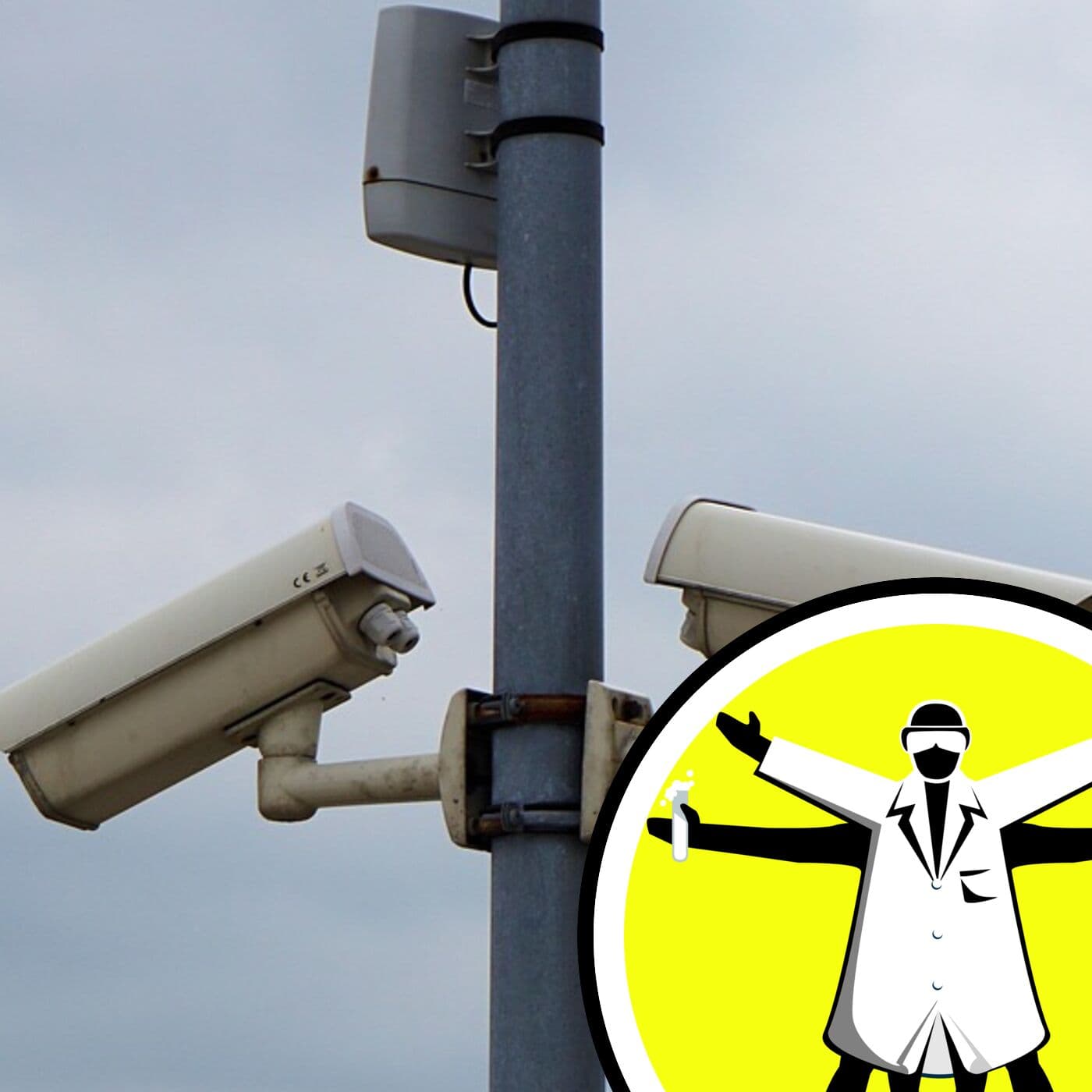
- Announcement: The UK government plans to implement facial recognition technology nationwide, seen by some as a breakthrough in tracking violent criminals.
- Concerns: Critics argue this move parallels authoritarian practices and raises ethical concerns regarding surveillance and civil liberties.
Expert Insight
- John Silverman, Emeritus Professor of Media and Criminal Justice:
- Discussed the mechanism of facial recognition technology which creates a unique biometric "face print."
- Emphasized the lack of regulation surrounding its use, leading to potential misuse and civil rights implications.
Privacy Implications
- Data Retention: Questions were raised about how long data is retained and used by police, leading to concerns over historical tracking.
- Potential for Misuse: Current technologies could lead to real-time tracking of individuals, exacerbating privacy issues.
---
Segment 2
Russia's Space Launchpad Incident
Summary of Events
- Russia's only crewed rocket launch site in Kazakhstan was damaged during a recent launch, affecting their capability to send astronauts to space.
- The incident illustrates the deteriorating state of the Russian space program, which is struggling with outdated technology and resource allocation issues.
Expert Commentary
- Richard Hollingham, Space Boffins:
- Highlighted the historical significance of Russia in space exploration and its current inability to launch missions.
- Discussed potential reasons for the decline, including corruption and the diversion of resources to the Ukraine war.
Future Considerations
- Concerns were raised about Russia's long-term capability in space exploration, with speculations of potential collaboration with China due to declining resources and technology.
---
Segment 3
Volcanic Eruptions and the Black Death
Key Findings
- Research by Ulf Wendgen:
- Identified that a series of volcanic eruptions likely contributed to climate changes that resulted in poor grain harvests in 14th century Europe.
- This led to increased trade routes for grain, inadvertently importing the plague bacteria.
Historical Context
- The research links climatic events to societal changes and migration of disease, illustrating how environmental factors can lead to significant historical outcomes.
---
Segment 4
Bacteria as Building Blocks for Mars Habitats
Innovative Concept
- Shiva Hoshtina, Polytechnic University of Milan:
- Proposed using bacteria to create building materials on Mars, minimizing the need for transporting resources from Earth.
- The bacteria would utilize Martian soil to produce bricks through biomineralization processes.
Challenges and Solutions
- Contamination Concerns: Addressed the necessity for careful stewardship of extraterrestrial environments to avoid contaminating Mars with Earth microbes.
- Efficiency: The bacteria could solidify mortar into bricks rapidly under optimal conditions, suggesting a feasible method for constructing habitats on Mars.
---
Conclusion The podcast episode covers a wide array of topics that intersect science, technology, ethics, and history, providing a thought-provoking discussion on the implications of innovations in facial recognition, the state of space exploration, historical pandemics, and future possibilities for life on Mars.
Support Listeners are encouraged to support The Naked Scientists through donations to help sustain the program.
---
For more detailed discussions and ongoing updates, visit [The Naked Scientists](https://www.thenakedscientists.com).
Written by AI. May contain mistakes. Listen to the episode to check what was said.
Transcript
Automatic transcript. May contain errors.0:11Hello,
0:17welcome to the Naked Scientist podcast. This is the programme that brings you the biggest breakthroughs and talks to the major movers and shakers in the worlds of science, technology and medicine. I'm Chris Smith and this week UK police announced plans to roll out facial recognition technology across the country but what's this actually going to capture? Also evidence that a volcanic eruption might be behind the emergence of the Black Death in 14th century Europe, Russia's launch pad explodes and plans to build on Mars using bacteria.
0:56The UK government has announced plans to roll out facial recognition technology across the country. The policing and crime minister, Sarah Jones, hopes that it will be the biggest breakthrough in catching violent criminals since DNA fingerprinting. But critics have cautioned that this type of technology reeks of totalitarianism. Many are outraged that the country seems to be following in the footsteps of regimes like China, where this sort of technology is widely used to inform a social credit system. John Silverman used to be the BBC's Home Affairs correspondent. He's now Emeritus Professor of Media and Criminal Justice at the University of Bedfordshire.
1:35Facial recognition technology is probably, you know, the biggest step change in police identification of people for many, many years. at its heart is software which works on an algorithm that's trained on thousands and thousands of faces in videos or photographs until it's absolutely sure it can separate out a human face from all the other data that it's presented with. It then makes a code of the geometry of a human face from these pictures that it's given. And that creates a face print which is unique to an individual. So it's basically biometric data which can spot an individual and only that individual which it's looking at.
2:25When we think about, say, the Police National Fingerprint Database, if I get apprehended and I have my fingerprints taken, they will compare my fingerprints. They'll also compare my DNA profile, or did, to that database. Is this the same in the sense that if I have form and I'm on the database, my face is going to be recognised? Or is the system proactively learning it's watching everybody and it's storing even if it doesn't know who they are impressions so it can track a person without actually yet knowing who they are and where they've been over time well in a sense it's both of those things at once when it was being developed the codes that i was talking about the the faces that it can recognize are compared with police watch lists, for example, so that when the cameras are trained on crowds at a football match or a big protest, they can be compared against police databases and they can pick out particular individuals they're interested in.
3:25I think the technology is moving so quickly now with AI, there are fears that it can then provide a sort of live, almost running commentary on people's faces, independent of watch lists and databases that the police are holding. And I guess that raises all sorts of civil liberties implications. But how long will they hold the data for? Because the example I'm giving, say I'm tracked over the next five years, Do the police hold on to all the movements that match me for the next five years? And then when I am eventually identified as Chris, could they retrospectively take the impression of the Chris and then look back and see all the things I've done, all the places I've been over the previous five years?
4:11And therefore, someone could follow me historically as well as into the future? Or are they dispensing with data straight away when they don't get a hit? Interesting questions. They are supposed to dispense with the data. And certainly in the first few years, when a number of police forces were trialing it and then adopting it properly, there were assurances that the data was being deleted as soon as it was no longer being used by the police. Now, there are suggestions it could be used retrospectively, say, to be trained on previously taken CCTV images, which may go back a number of years. That's one reason why there are so many concerns about regulation.
4:55Because it's a major step forward in policing technology, it does remain largely unregulated and there's no Act of Parliament until now which actually specifies how and when it can be used. And so what are the advantages? You're saying it's a major step forward, there will be big advantages from this. What do we think they will be? Ideally, it's the precision of those images because they are unique biometric images of an individual. Now, having said that, there have been tests done which said it depends very much on the setting of the algorithm and the camera as to how accurate the image is. And sometimes it's less effective in identifying people with a darker skin and some women as well.
5:47So, you know, you've always got the possibility of so-called false positives. So I guess the argument is, especially if facial recognition is linked to police body-worn cameras, as is likely to happen, people won't necessarily know that they're under suspicion until a police officer approaches. And by that stage, their image has already been taken. Is this why the current government also want everyone to have a biometric ID? Because then they could potentially link this and what it acquires to that and they'd know who you were straight away. Well, I don't know what's in the minds of the government, but there's a strong suspicion that that may be the case.
6:35I mean, if you look at some of the civil liberties implications and how facial recognition is being used by authoritarian states like North Korea and particularly like China, where it's being used to control so-called subversive elements like the Uyghur population. and it's said that you know it's so sophisticated it can even be able to identify people's mood or if they're in a state of anxiety so you know this is incredibly powerful technology and and you know how the biometric is going to be used say in a decade's time is anybody's guess well it certainly puts me in a state of anxiety and i hope there are no cameras watching either john silverman there at the University of Bedfordshire.
7:20Russia has confirmed that it has accidentally destroyed what is currently the only way it had of sending astronauts into space. Moscow's only crewed rocket launch site, which is based in neighbouring Kazakhstan, suffered major damage following a launch to the International Space Station recently. Richard Hollingham from the Space Boffins has the details. Well, the launch itself was to the International Space Station with two cosmonauts and an American astronaut on November the 27th. That all went to plan, but as the smoke cleared, it became apparent that there is serious damage to the launch pad and much more serious than the Russians initially let on.
8:05They really downplayed what's happened, but it seems a considerable chunk has kind of fallen on the ground. The rocket sits above this flame pit because the enormous flames comes out of the rocket as it launches. There shouldn't be anything there, for obvious reasons. But they need to get to the engines just before launch because they need to attach this launch mechanism. That's then meant to be pushed out of the way, and it always has done. It's always been pushed out of the way. We don't think this has ever happened before, but this time, for some reason, that has either got back in the way, it's not been stowed properly whatever has happened and that's got damage so it essentially means they cannot launch astronauts to space or the supply vehicles that also dock to the international space station but the rocket that took off and damaged the launch pad in the process that was okay um yeah the crew they've gone off they're okay absolutely fine they're on the international space station everyone's happy they can come back from the international space station no drama there but this is just you know it's really illustrative of the state of the russian space program and don't forget this is the country that put the first man in space the first woman in space the first spacewalk the first soft landing of a robotic craft on the moon and now they can't launch astronauts into space and i mean you know you look at the state of the baikonur Cosmodrome which is as you say in neighbouring Kazakhstan and it's just a mess it's littered with debris it's just got this one launch pad the Soyuz the Soyuz rocket I mean it's beautiful engineering but that's practically 60 years old as a technology you know every other country has has moved on but Russia is very much stuck in the past when it when it comes to space.
10:03Is that a symptom of where the resources are going? I mean, we know the Russian economy is largely being driven by the war effort. And is this just a symptom of sucking resources out of everything to force it into the Ukraine war? And as a result, things are literally falling apart? It has been falling apart for an awful long time. They're keeping these plans for, you know, new spacecraft to succeed, Soyuz, new launch pads that have built new launch facilities, but they've been mired in corruption and delays. I wonder whether there will be cosmonauts, there will be Russians in space after the end of the International Space Station, because I can't see that they're going to have the capability to do that.
10:48They've absolutely drained the space program of resources, and with the end of the space station, they'll also lose a lot of that international cooperation as well. they'll no longer be cooperating with the Americans unless things change geopolitically significantly. So yeah I mean I think we're seeing the Russian space program just dying. I thought that they had quite big plans for a successor to the ISS that's due to start in a couple of years time. Yes they've had big plans for a successor to Soyuz since about the 1990s. They've had plans for new space stations, for bases on the moon, for all these things.
11:29I have seen very little evidence that any of this is actually happening, that they've ever got much off the design phase of any of this. Meanwhile, the Chinese are leaping ahead. You know, they're developing new rockets. New rockets are very similar to the SpaceX rockets, where they can have reusable technology. They've got a space station. They've got astronauts up there in orbit right now. So they're really, I'd say, the Chinese are the successor to Russia. I have yet seen very little evidence that Russia is investing or likely to invest significantly in its space program in the future. what's going to happen then do you think that they'll just open up collaborations because we've seen this a bit with with other entities nasa and that kind of thing have begun to embrace commercial providers and collaborate with them or do you think that russians would will probably team up with china and they'll say some of our know-how some of your manpower that's what we're going to do in the short term they will repair this launch pad i have no doubt they'll repair it how quickly they repair it is that is the big question the next scheduled launch of soyuz isn't until the summer.
12:40They will need to launch Progress spacecraft at some point, though. These are the uncrewed, unmanned version of the Soyuz capsule, because they carry supplies and they carry, crucially, fuel, because they can get supplies with American launches, but they can't get the fuel. The fuel is carried in the Progress spacecraft, but there's no evidence there's a big problem for the International Space Station. Long-term, future-wise, in terms of cooperation, with China? Well, the Chinese spacecraft is essentially based on the Soyuz, but it's like a supercharged version of the Soyuz. They've taken that technology and they've advanced it and they've developed it and they've turned it into a bigger, better spacecraft, which Russia has failed to do.
13:25Yes, they will probably work with China on space in future, but, you know, how much of a priority is space? Is human spaceflight to Russia anymore? That's the big question. Richard Hollingham from the Space Muffins there and Richard has just released their latest podcast he's been to the Moon Museum in Pittsburgh and also catching up with the first European commander of the International Space Station so you can grab that episode now if you want to give it a listen it's at nakedscientist.com forward slash astronomy or look up Naked Astronomy wherever you get your podcasts The Naked Scientist podcast is produced in association with Spitfire Cost-effective voice, internet and IP engineering services for UK businesses.
14:07Find out how Spitfire can empower your company at spitfire.co.uk.
14:15Music in the programme is sponsored by Epidemic Sound. Perfect music for audio and video productions. This is the Naked Scientist podcast with me, Chris Smith. Still to come, can we use bacteria to help us to build a home on Mars? I've been talking to one of the scientists behind the idea. Before that though we're heading back now to 14th century Italy and the dawn of the Black Death, the deadly plague caused by the bacterium Yersinia pestis which wiped out we think about 40 % of the European population in the Middle Ages. Historians knew when that happened but they had no firm grip on exactly why.
14:54But now Cambridge scientist Ulf Wendgen, who looks at tree rings, thinks he has an explanation. His tree ring data, together with ice cores dating from the same period, point to a sequence of massive volcanic eruptions that temporarily changed the climate and disrupted harvests, plunging Europe into famine. The problem was tackled at the time by tapping into trade routes connected to Central Asia, where the rodents that are the main reservoir for the Yersinia pestis plague bacteria are endemic. That meant there was a deadly cargo aboard the ships bringing back the much-needed grain, and it wasn't something you wanted to eat.
15:35What our data are showing, we had a series of cold summers that affected harvest, grain production across large parts of southern Europe. And the city-states of Italy were forced to import grain from the Black Sea region, the Sea of Asov, the Crimea, Ukraine, to prevent starvation. And that worked very well. But ironically, at that time, plague was circulating in this region and then infected fleas were also imported into the Mediterranean. So there was an episode of poor harvest which led to a grain shortage, which led to them searching for alternative or exploiting alternative routes of importation.
16:25And it just coincided. They started strengthening import links with places where plague was circulating. So they brought the grain in and plague came too. Yes, that's absolutely correct. I mean, they had no idea that this would happen. So initially they were probably very happy and satisfied that their large scale, long distance Mediterranean grain trade network worked. So they could prevent their population from starvation, which was climate induced. But ironically, it also then introduced plague into the old world. How do you know that the climate changed in that way? I mean, obviously, there are going to be records of harvest, but how do we know that it was the climate that caused the yields to be down and provoked this?
17:14And what do you think therefore caused the climate to change? There are two independent lines of evidence. The first and the simple one is that the reduction in grain productivity was not regionally restricted. It was observed over much of the Mediterranean region. And whenever we see a phenomenon occurring at the same time, so temporally synchronized over large spatial domains, the driver must be climatic. You cannot explain it with local factors. And then the second one, we looked at all of the available tree ring records that are covering the past thousand years in Europe and the Mediterranean region.
17:57And the tree ring data are like thermometers or climate stations. They are recording changes in temperature or changes in summer hydroclimate, so soil moisture availability, precipitation. So if the tree ring record would say this summer was cold or warm, we know exactly which calendar year it is. And we saw a cluster or a sequence of up to three consecutive cold summers exactly preceding the outbreak of the Black Death. And what do you think drove those cold summers? We reached out to ice core eponologists and from ice cores, both from Greenland and Antarctica, one is able to look for spikes of sulfur injection, which then refers to large volcanic eruptions.
18:53So we have evidence for one or several large volcanic eruptions that then caused the climate downturn, the cooler and wetter conditions affected harvest and then there was a change in grain import. Where were these eruptions then? We don't know that. So obviously most of the historical eruptions hundreds and thousands of years back in time are unknown or they are yet unidentified. An absolutely amazing detective story. That was Ulf Buengen in Cambridge. He just published that work in the journal Communications Earth and Environment. Now, from the past to what is very much the future and the dream one day of living on Mars.
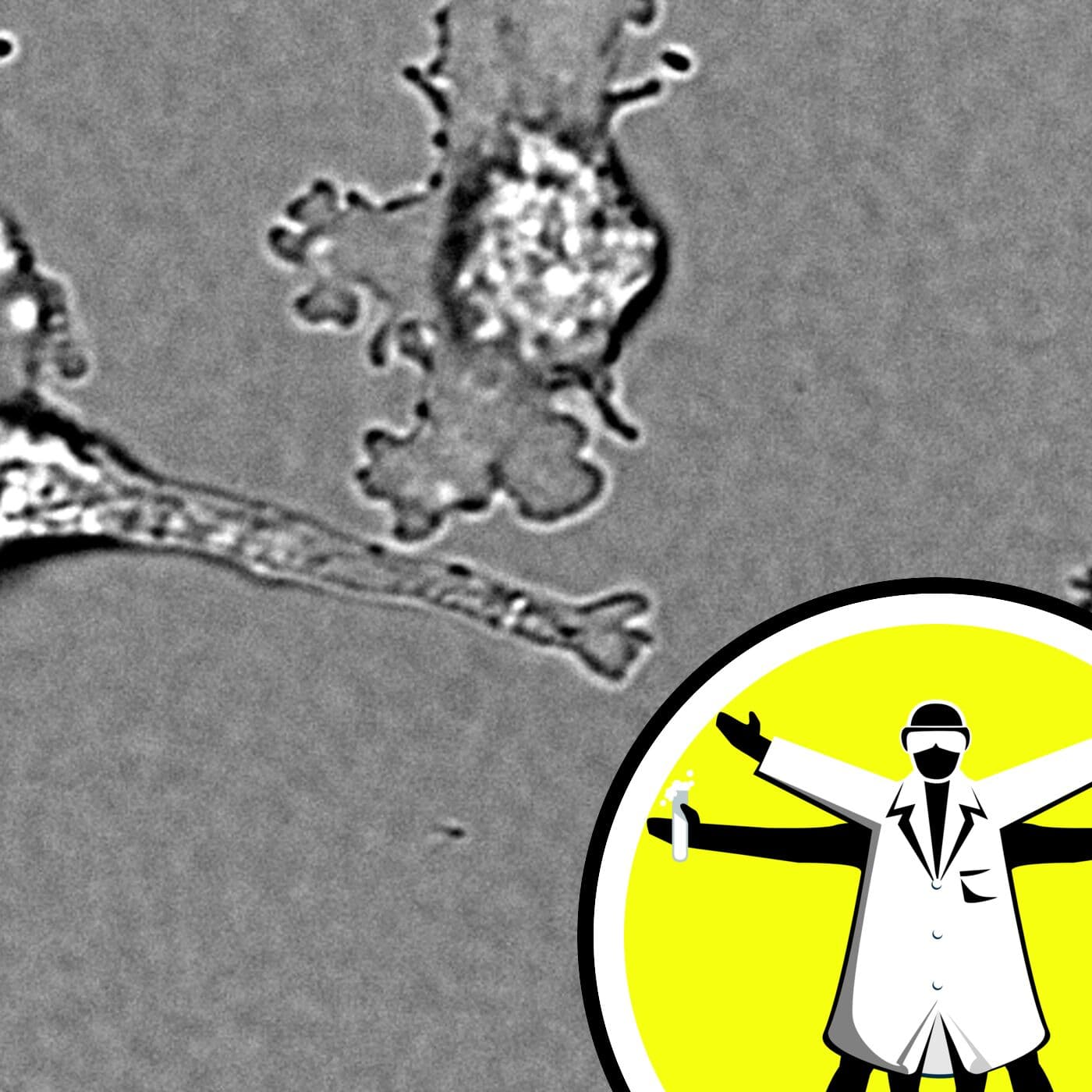
19:37But one of the really big impediments is how to build sustainable shelters there. Energy cost alone of transporting the materials to do that is preclusive. But the vision of Shiva Hoshtinan at Polytechnic University of Milan is to use communities of microbes to do with Martian dust what they do with minerals in the oceans around coral reefs here on Earth. And that is to glue minerals together. In essence, she wants to use bacteria to make bricks. We are always looking up to the sky, hoping that we are going to build a home one day. But the problem at the moment is that all the solutions that we are coming up with are very energy intensive or demand the transportation of the material from Earth to other planets or moon, which are very expensive.
20:31So we are proposing a bold idea of using bacteria to expose this bacteria to Martian condition and try to build with much lower amount of energy and much lower load of material to be transported. So we take the bacteria and they use the stuff that's already on Mars to basically make bricks. Yes. Wow, how on earth can you do that? So if you look around us on Earth, when you go to the seaside and you see the coral reefs, the corals practically are made by bacterias through the process of biomineralisation. Do we understand when bacteria assemble something like a coral, do we understand chemically and biochemically how they're doing it so that we potentially can redeploy that at Mars?
21:25Yes, there are bacterias that use the nutritions and the nutritions that are in surrounding environment for them. And they produce materials that are very similar to the eggshells that is called calcium carbonate. And that is the cementitious material that we are trying to replicate on Mars. Have you got some Martian soil so that you know it won't poison the bacteria? Well, unfortunately, there is no sample of Mars returned to Earth. But thanks to the rovers that are already on Mars, we have a lot of data. Based on these data, they prepared a material that is like the Martian soil. And does it look like it would be compatible with bacteria capable of doing biomineralisation and biosementation along the lines of what you have in mind?
22:23Yeah, actually, there are different components and elements in the Martian soil that are absolutely compatible. And we narrow it down to have the best process to make the next habitat by focusing on biosemitation based on the elements that are present in Martian soil. Is it also possible to harness the fact that microbes have often evolved to live in communities with more than one type of microbe? and you can actually get in the same way that you and I might work together and my skill set complements your skill set and we produce a product better than either of us could produce alone. Is there value in trying to get communities of microbes in on this so that you can get almost a production line there and produce things even faster and even more resilient than you could with a single optimized microbe alone?
23:18Absolutely, especially for Mars because the bacterias we focus on for this publication are aerobic, so they need oxygen. And you don't have that much oxygen on Mars. Putting several bacterias together, that one will create a kind of shelter for the other to survive, and the other will create oxygen for the third one to survive. It's a teamwork of a bacteria, like practically when you go to camp with your friends, that one will assemble the tent another one creates fire another one's going to catch some fish and have a good time together practically is a teamwork of bacteria that can help survive on Mars.
24:03A couple of things spring to mind because this sounds really exciting and it's really made me kind of sit up and take notice but some alarm bells have gone off in the sense that one of the priorities we're trying to do really good stewardship with the solar system and make sure we do not contaminate places with any kind of earth life. And here you are saying, I want to unleash hordes of microbes to build me a shelter on Mars. So how do you think we can get around that one? Well, the bacterias that we are proposing are practically the bacterias that billion years ago helped building earth. These are cyanobacterias that creates oxygen.
24:46The other one is the one that shaped the corals and the material and that and the nature that we see around us. Considering that with the environment of Mars we do not think that it's going to damage or contaminate. We believe that if this bacteria helped us to be here today they are probably going to help us to be on Mars one day. My other question is that obviously the devil's always in the detail how fast are these guys at building a house i've employed some very slow builders in my time this sounds like it might take a while to make microbial bricks how long would i be waiting for my mars home to be built using this technology do they grow fast enough well when you have an environment that is favorable the bacteria that we are proposing is very fast.
25:40In 14 hours, it can solidify the mortar that it was mixed with into bricks. But you have to consider that you have layers and layers of this bacteria. So probably it's going to take much more time than 14 hours immediately. But if you provide the bacteria with the environmental condition that is very good for them, that they thrive in, and you provide them the nutrition, this bacteria is quite fast is known as the fastest bacteria for biocementation Shiva Hoshtina at the Polytechnic University of Milan and she set out the recipe for her vision in her paper which is just out in Frontiers in Microbiology open access if you want to take a look well that's it for today do tune in on Tuesday though for the next outing of Titans of Science when we're going to hear from the physicist writer and broadcaster Paul Davies now he works on the science of the very small quantum mechanics but he makes a very big noise about it which we'll hear about next time thanks meanwhile to everyone who has been supporting us with extremely generous donations this makes a massive difference and it helps us to keep the program going so if you do enjoy and appreciate what we do for you here each week and you'd like to help too please do consider dropping into nakedscientist.com forward slash donate we've made it completely safe secure and very easy to do.
27:05The Naked Scientists are also supported by Rolls-Royce. I'm Chris Smith, thank you for listening and until next time, from all of us here at The Naked Scientists, goodbye.